Maths · Kindergarten–Grade 2
Free Montessori hundred board worksheets
Three printable Montessori hundred board sheets for kindergarten to grade 2: the 1 to 100 control chart, a board with about a third of the tiles missing, and a blank board.
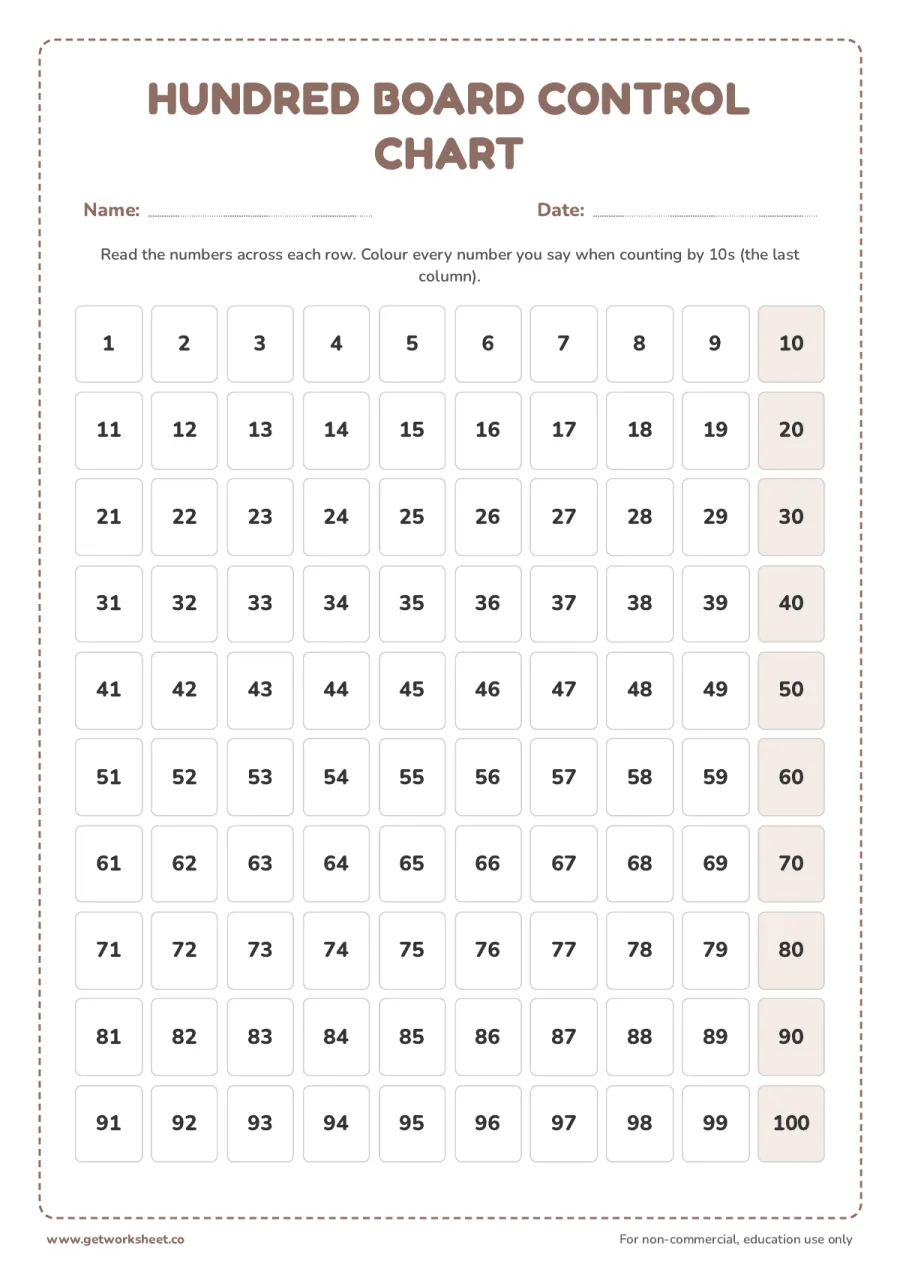
Hundred board control chart
The complete 1 to 100 control chart used to check hundred board work. Free printable PDF.
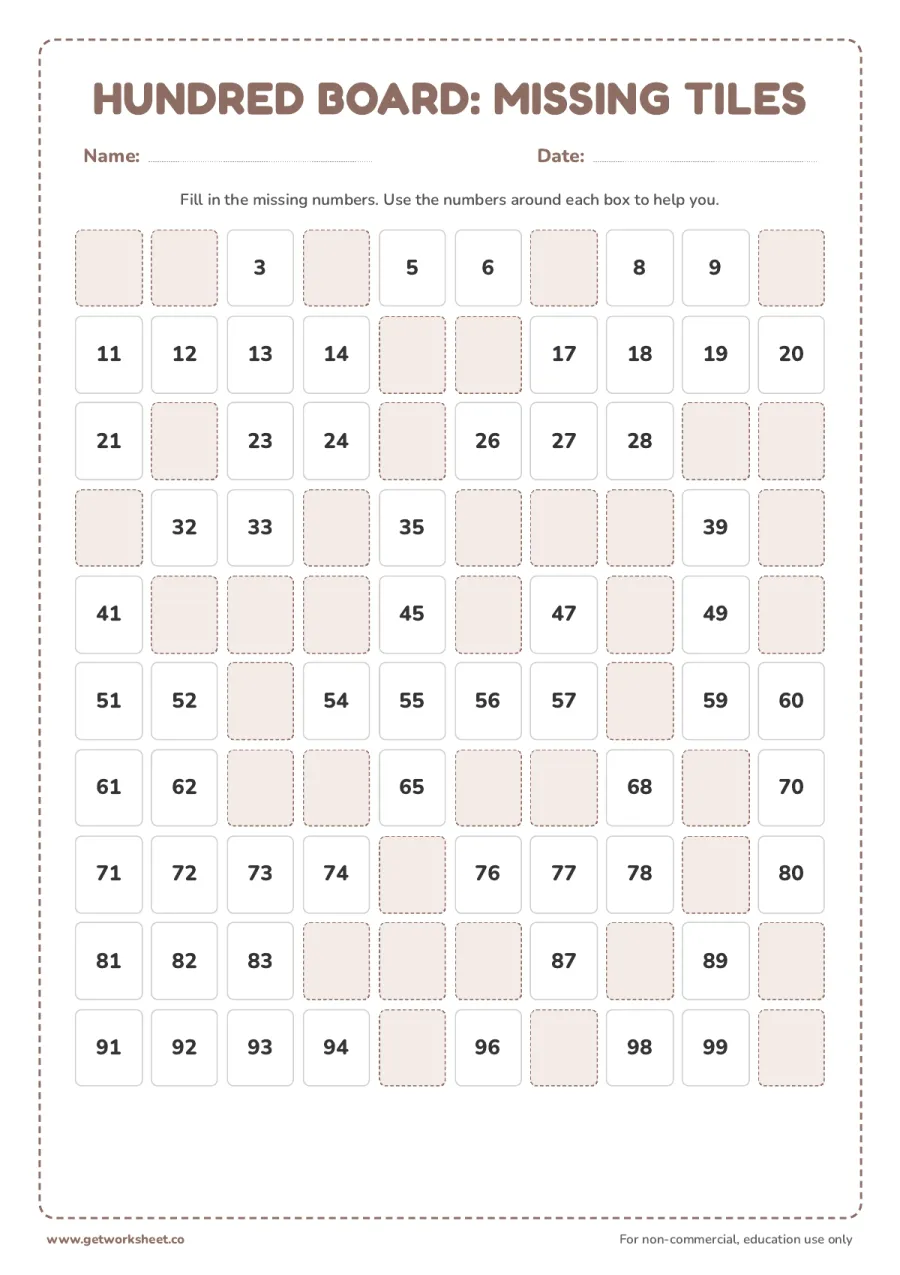
Hundred board: missing tiles
About a third of the tiles are missing; write them in. Free printable PDF.
Whole set
All 3 in one PDF
- Every sheet on this page, one file
- No ads, no countdowns, print as often as you like
- Instant download, ad-free, no account needed
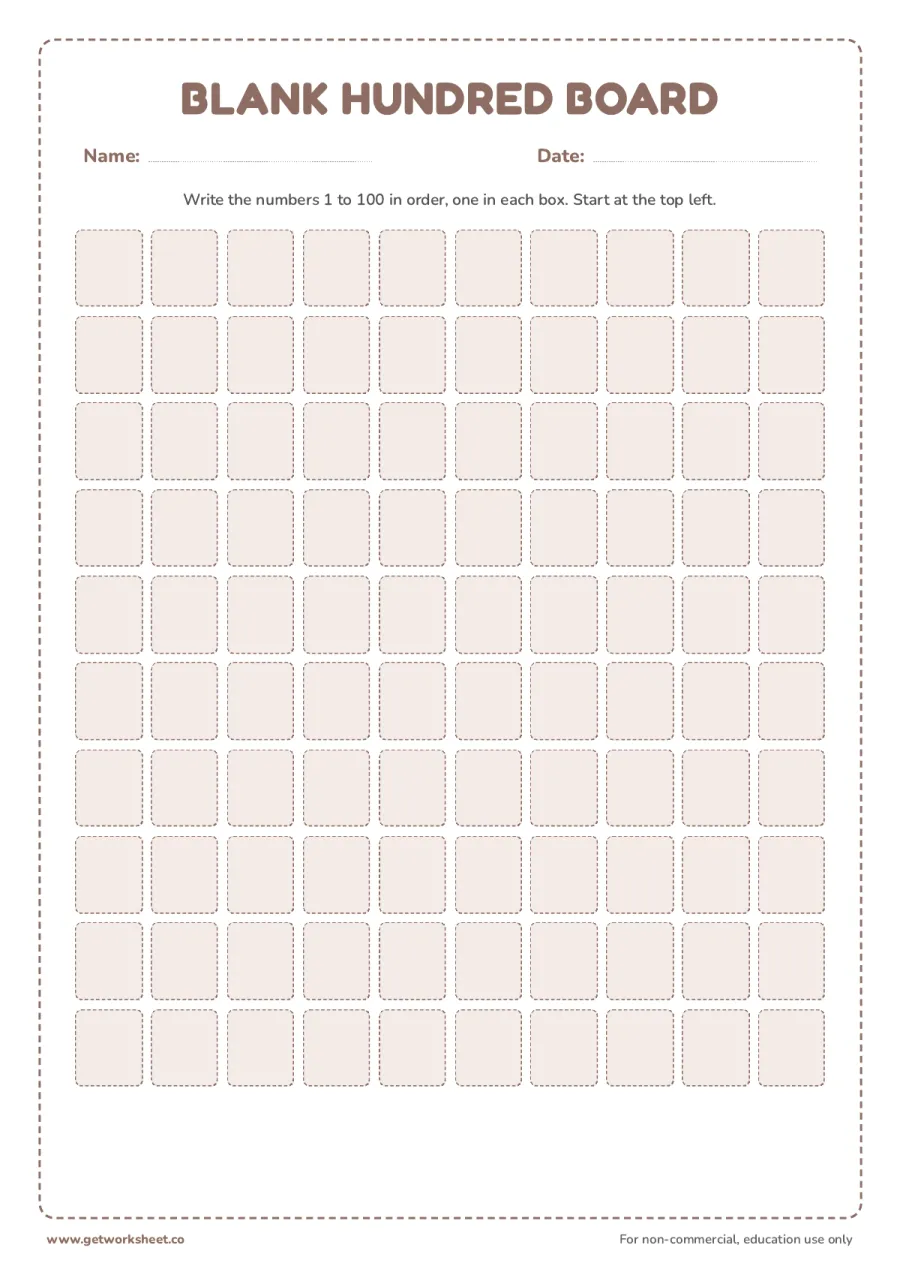
Blank hundred board
An empty hundred board to fill from 1 to 100 or to use for skip-counting patterns. Free printable PDF.
AI worksheet generator
Make a worksheet like this for your class
The 3 sheets above are fixed. The generator writes a new montessori hundred board worksheet for your grade, with the question types and count you choose, in about 20 seconds. Pick a grade to start:
What you get
- A fresh set of questions on montessori hundred board, not a copy of the sheets above
- Multiple choice, fill in the blanks, true or false, open ended
- Answer key and print-ready PDF with Pro
Free account, 1 worksheets a week. No card.
The Montessori hundred board is a wooden grid of 100 squares and a box of 100 number tiles. The child places the tiles in order from 1 to 100, checking against a control chart when unsure. It is the material where counting becomes a pattern: down a column the tens change, across a row the units change. These three printables follow that sequence. Sheet one is the complete 1 to 100 control chart used to check hundred board work. Sheet two is a board with about a third of the tiles missing for the child to write in. Sheet three is a blank hundred board, for laying real tiles on, writing the sequence from 1 to 100, or coloring skip-counting patterns.
What Students Will Practice
- Sequencing the numbers 1 to 100 on the blank board
- Reading two-digit numbers and placing them by their tens and units
- Using the control chart to find and correct their own mistakes
- Filling the missing tiles by reasoning from the neighbors above, below and beside
- Seeing the patterns of 2s, 5s and 10s by coloring the blank board
The hundred board is usually introduced around age 5 to 6, after the teen and ten boards, and it supports the standards K.CC.A.1 (count to 100 by ones and tens) and 1.NBT.A.1 (count to 120 from any number).
Free printable makers
Make your own montessori hundred board sheets
Type your own words or numbers and print in about 30 seconds. No account, no AI, answer key where it applies.
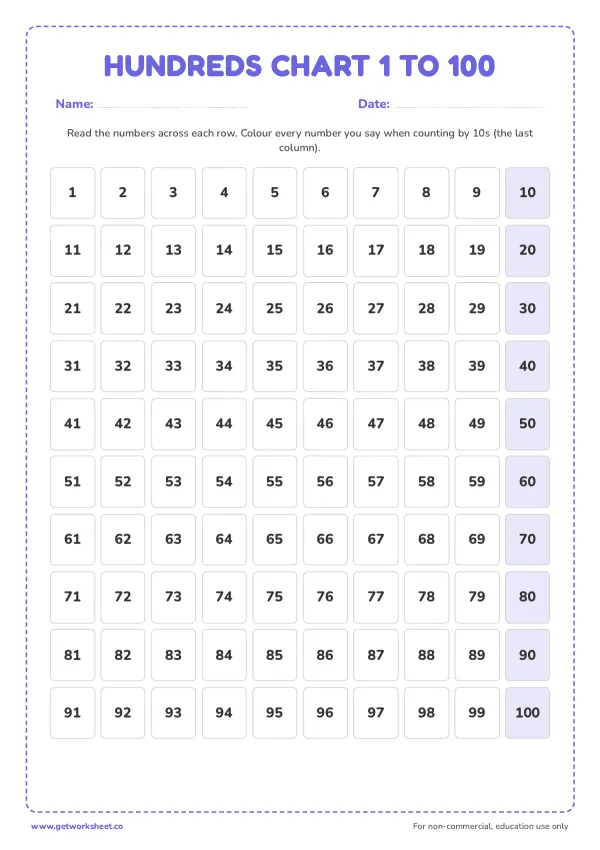
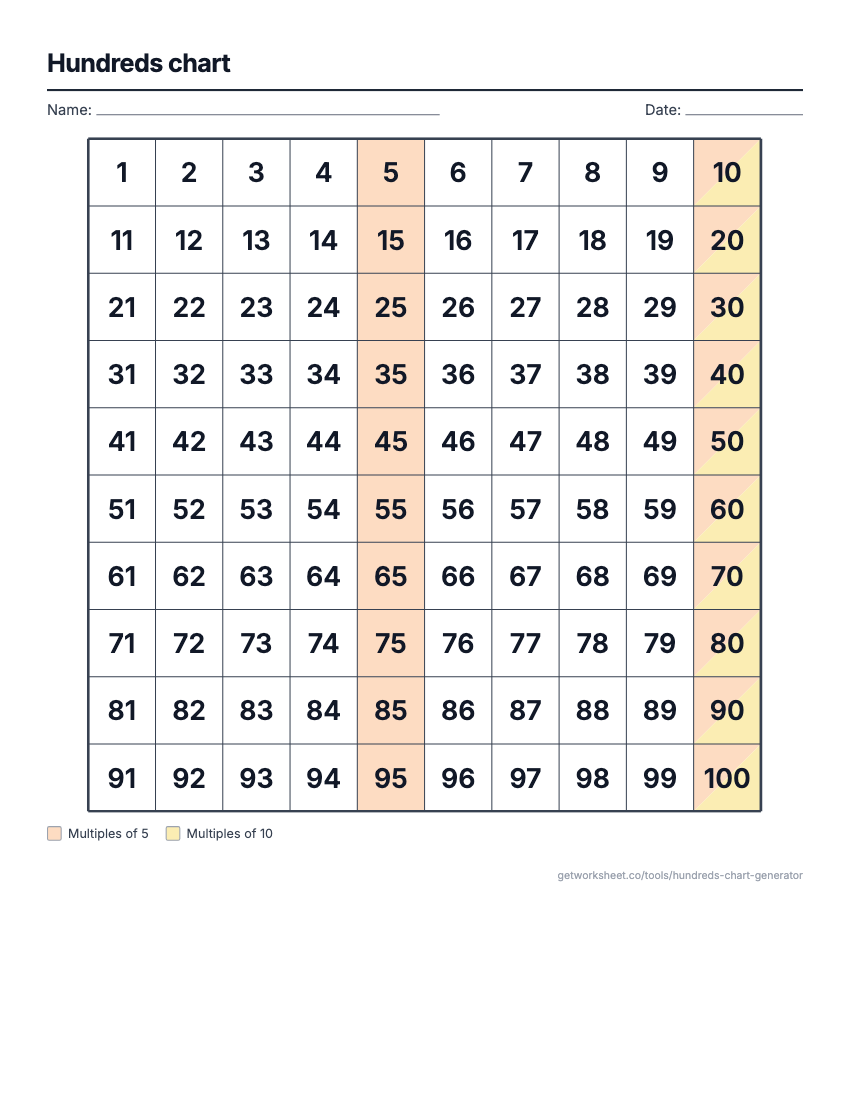 Hundreds chart generator1-100, 1-120 or 0-99, blank or missing numbers, skip-count colours, odd/even. Free to print.
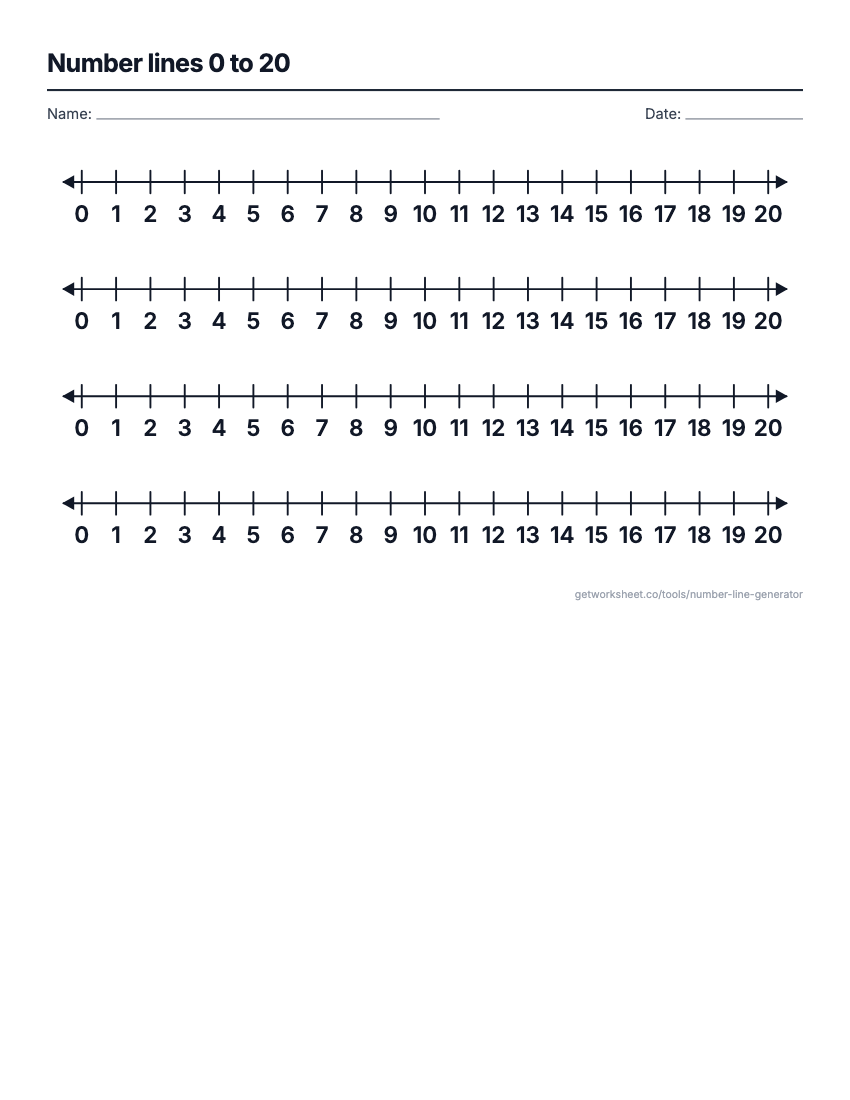 Number line generatorAny range and step, fractions and decimals, blank or missing numbers with a key. Free to print.
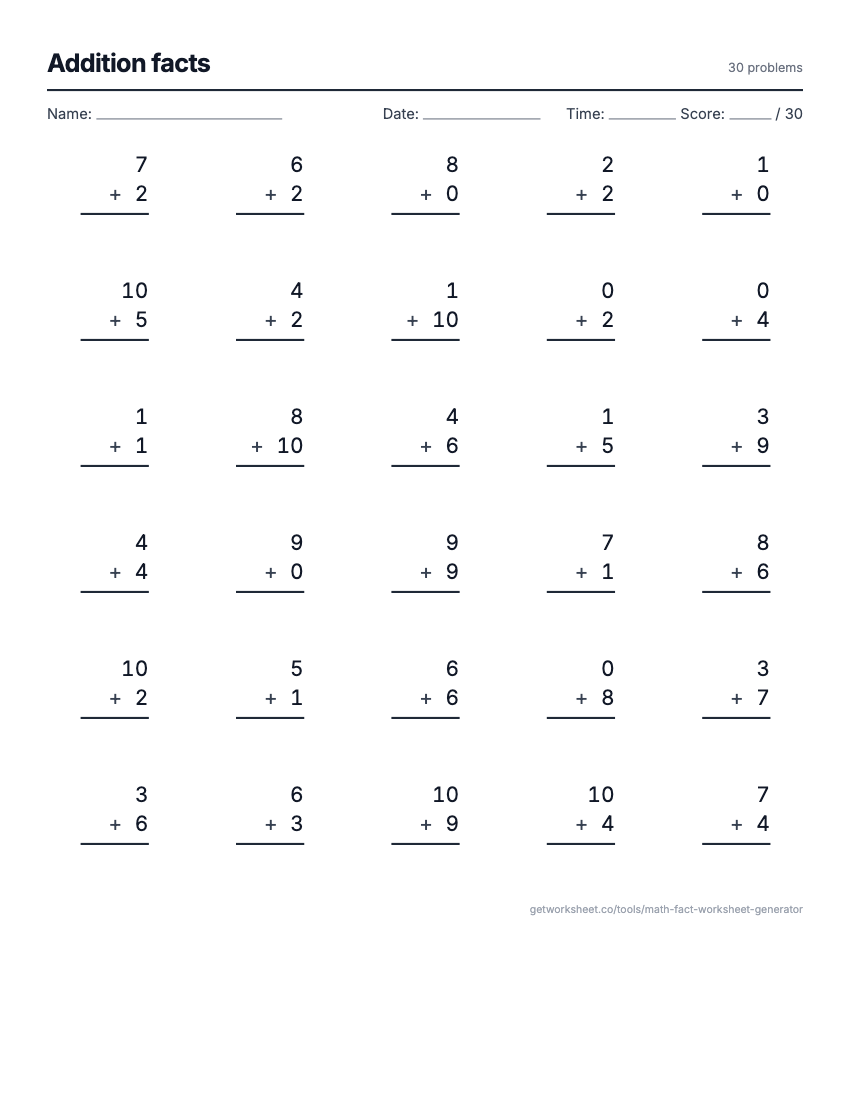 Math fact worksheet generatorAddition to division drills with an answer key. Free to print.
AI worksheet generator
Need a different montessori hundred board worksheet?
Generate a custom montessori hundred board worksheet: pick the grade, question types and count, and print it in about 20 seconds. Free accounts get 1 generation a week.
Teaching tips and common mistakes
How to Use These Worksheets
Print at 100% on A4 or US Letter paper. The control chart is worth laminating; the blank board can be laminated and used with a dry-erase marker.
- Control chart. In a Montessori classroom the child does not ask an adult whether a tile is right; they check the control chart. Keep it face down beside the work and let the child turn it over when they want to check.
- Missing tiles. Fill the gaps using the neighbors: the tile above is ten less, the tile to the left is one less. Say the reasoning out loud the first few times.
- Blank board, three ways. Younger children write 1 to 100 in order as a counting exercise. Children with real tiles place them on the printed grid. Older children color every second, fifth or tenth square and name the pattern.
- Work in rows. If 1 to 100 is too much at once, complete one row per session. Ten rows over two weeks is a normal pace.
- Extensions. Cover a tile and ask what is hidden. Ask for the number ten more than 46. Find all the numbers with a 7 in them.
Common Mistakes to Watch For
- Starting a new row with the wrong tens digit: After 39 the child writes 30 or 50. Point to the tens column on the right edge of the board.
- Reversing teen numbers: Writing 41 for 14 is common. Say “one ten and four” while pointing to the row.
- Filling missing tiles by counting from 1: Works, but slowly. Model using the tile above or to the left.
- Skipping squares on the blank board: Have the child touch each square as they say its number so finger, voice and pencil stay together.
Frequently Asked Questions
What is the Montessori hundred board?
A wooden board with a 10 by 10 grid and a box of tiles numbered 1 to 100. The child arranges the tiles in order, using a control chart to self-correct. It teaches the sequence to 100 and the place value patterns inside it.
What age is the hundred board for?
Usually 5 to 6, once a child can read numbers to 20 or so from the teen and ten boards. Many children return to it for years for skip counting and multiplication patterns.
What is a control chart?
A completed version of the board that the child uses to check their own work. Self-correction is central to Montessori: the child finds the mistake, not the adult.
Is a hundred board the same as a hundreds chart?
The grid is identical. The difference is in use: the Montessori board is built from loose tiles and checked against a control chart, while a hundreds chart is usually printed complete. These printables work either way.
More Montessori Maths
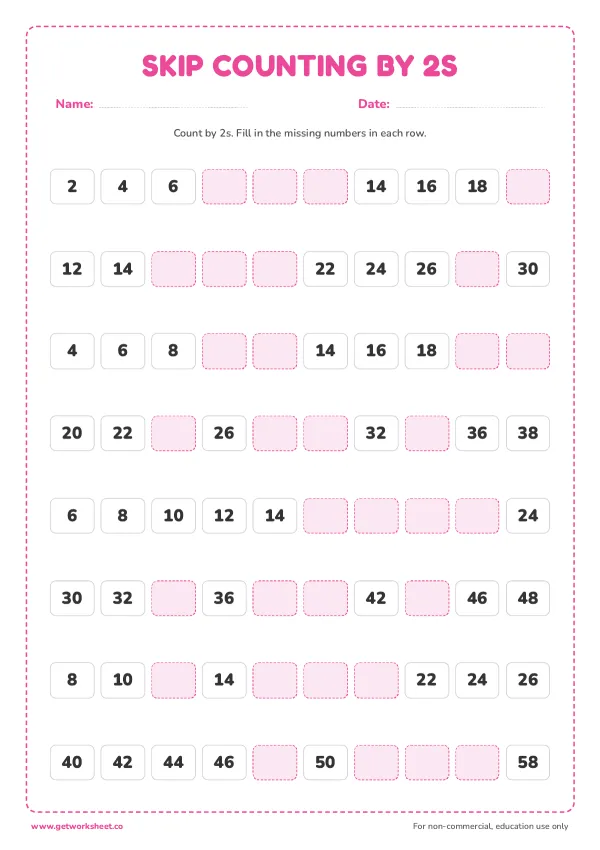
See all the sets on the free Montessori worksheets page. The hundred board comes after the teen board and ten board worksheets and pairs with the golden beads place value worksheets. For the same grid in a standard format with an easy and a hard missing-numbers version, see the hundreds chart printables, and for the patterns it reveals the skip counting worksheets.
Free library
Related collections
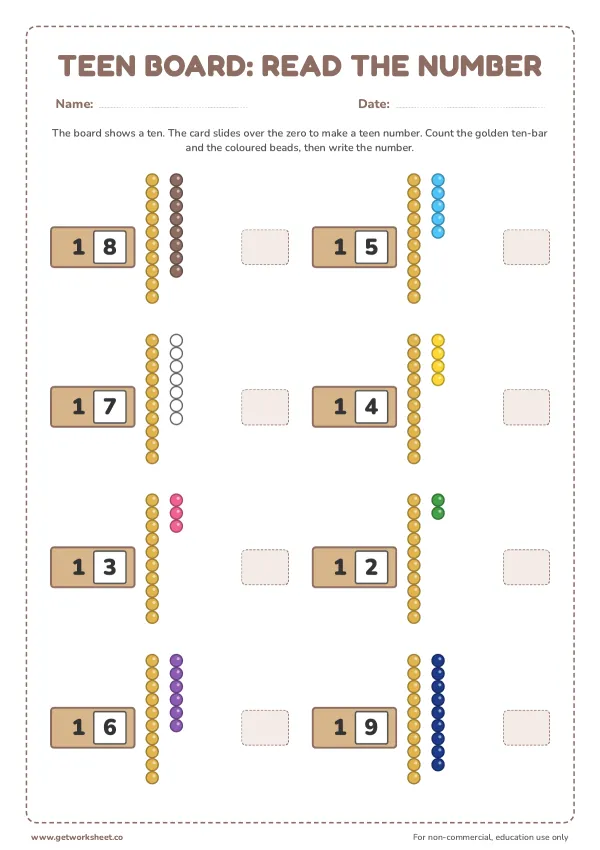
Free Montessori teen board and ten board worksheets
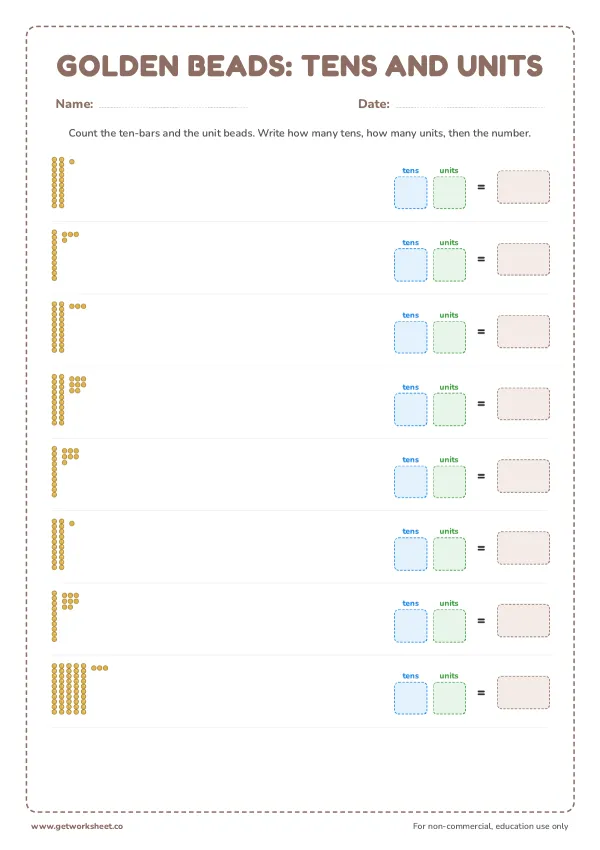
Free Montessori place value worksheets (golden beads)
Free hundreds chart worksheets
Free Montessori addition strip board worksheets
Free Montessori worksheets (PDF)
Free skip counting worksheets
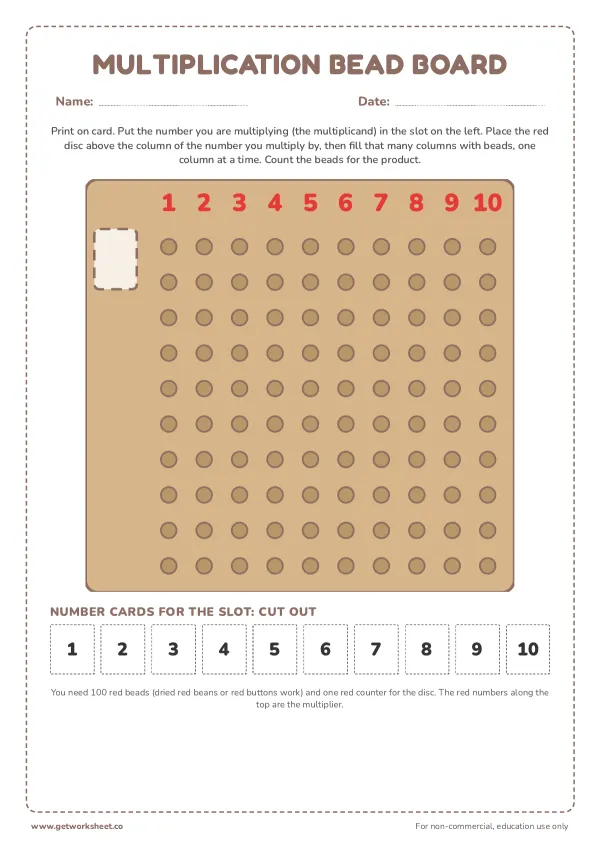
Free Montessori multiplication board worksheets
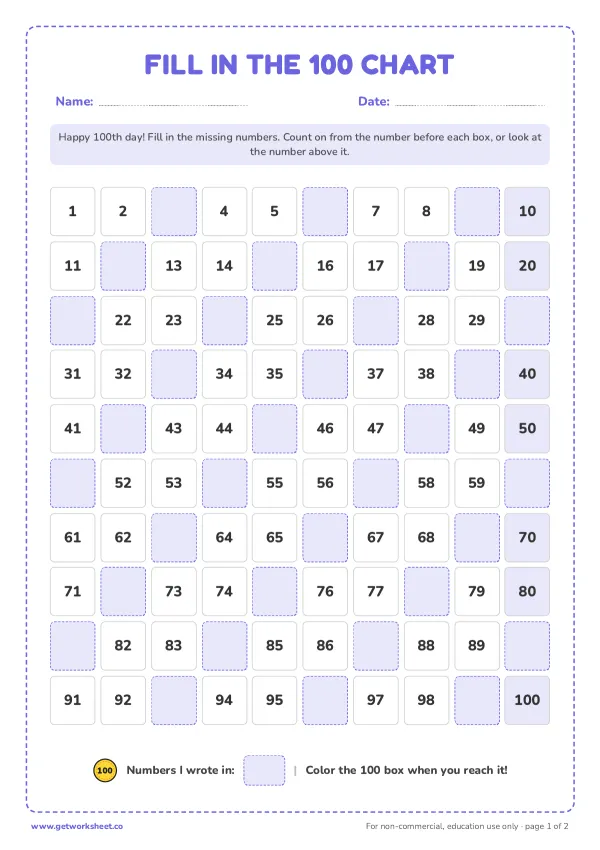
Free 100th day of school worksheets
More worksheets
- Free winter break packet worksheets
- Free Thanksgiving math worksheets
- Free greater than less than worksheets
- Free number line printables
- Free Halloween math worksheets
- Free Christmas math worksheets
- Free ten frame worksheets
- Free repeating patterns worksheets
- Free before and after numbers worksheets
- Free subtraction worksheets (within 10 and 20)
- Free doubles addition worksheets
- Free addition worksheets