Free printable maker
Bingo Card Generator
Up to 30 different printable bingo cards from Dolch sight words, numbers (classic 1–75 with B-I-N-G-O columns), times-table answers or your own words. 3×3 to 5×5 grids, FREE centre, one or two cards per page, and a call sheet at the end. Free, no account.
4 different cards on 4 pages, then the call sheet. Free, no account.
Sight word bingo
Card 1 of 4
Sight word bingo
Card 2 of 4
Sight word bingo
Card 3 of 4
Sight word bingo
Card 4 of 4
Sight word bingo · Call sheet
40 items · tick each one as you call it- a
- and
- away
- big
- blue
- can
- come
- down
- find
- for
- funny
- go
- help
- here
- I
- in
- is
- it
- jump
- little
- look
- make
- me
- my
- not
- one
- play
- red
- run
- said
- see
- the
- three
- to
- two
- up
- we
- where
- yellow
- you
getworksheet.co/tools/bingo-card-generator
Using the cards
Running a bingo game that is actually practice
Bingo works in a classroom because every child checks every call. When you say “where”, twenty-five children scan their cards for the word, reject were and when, and either mark it or move on. That is twenty-five retrieval attempts per call, with instant feedback and no writing, which is why sight word bingo has survived every change in reading instruction. The Dolch pre-primer, primer and first-grade lists are built in; pick the list your class is working on, or all three for a mixed review.
Match the grid to the age. 3×3 cards with large squares suit pre-K and kindergarten and a game lasts about five minutes. 4×4 is the first-grade standard. 5×5 with a FREE centre is the familiar adult layout and gives older children a longer game with more near misses. Two cards per page halves the printing for a big class; one card per page gives the largest squares, which matters for children who are still learning to read the words at all.
Math bingo flips the usual direction of a fact drill. The cards show answers, you read a fact from the call sheet (“6 times 7”), and children have to compute before they can scan. Set the range to the tables you are consolidating, for example 2 to 9, and the generator works out every distinct product. Addition and subtraction work the same way, with the call sheet listing every fact that gives each answer so you can vary what you read.
Ways to play that keep everyone working: call the definition instead of the word for a vocabulary game; call the word and have children write it on a whiteboard before they look for it; play “four corners” or “blackout” (the whole card) to stretch the game; and have the winner read their marked row aloud to claim it, so the check is itself another round of practice. Dried beans, counters or torn paper make reusable markers; laminated cards last a term.
For a number bingo party or hall game, use the Classic 1–75 preset: each column draws from its own fifteen numbers under the B-I-N-G-O header, so cards look and play exactly like a bought set, and the call sheet is laid out in the same five columns. Any other range, from 1–20 for kindergarten counting to 100–200 for place value, spreads the numbers across the whole card.
The sight words worksheets and CVC words worksheets give the same words as written practice, and the multiplication worksheets pair with a times-table bingo. For a quieter follow-up, the word search maker and crossword maker take the same word list.
How it works
How to make bingo cards
Three steps from a word list or number range to a class set with a call sheet.
- 1
Choose the squares
A Dolch sight word list, numbers in any range (or classic 1–75), answers to a set of math facts, or your own words, one per line.
- 2
Set up the cards
3×3, 4×4 or 5×5, FREE centre, B-I-N-G-O header, a title, 1 to 30 cards, one or two per page. Shuffle for a different set.
- 3
Print
Letter or A4. Each card prints large and readable, and the call sheet with a checkbox for every item is the last page.
Good to know
Questions, answered
Yes. Choose what goes in the squares, set the number of cards and print or save as a PDF. No account, no watermark, no limit on how many sets you make. The cards are built in your browser, so your word list is never uploaded.
Yes. Each card is a fresh seeded shuffle of your items and duplicates are rejected, so up to 30 cards in one print run are all different. Printing again without pressing Shuffle gives the identical set, which is useful if a card goes missing; Shuffle makes a completely new set.
A 3×3 card needs 8 or 9 items, a 4×4 needs 16, and a 5×5 needs 24 with a FREE centre or 25 without. More items than that is better: with 40 sight words on a 5×5 card, every card is a different sample of the list and the game lasts longer. The builder tells you when a list is too short for the grid you chose.
Pick Numbers and press Classic 1–75. With the B-I-N-G-O header on a 5×5 grid, each column draws from its own range (B 1–15, I 16–30, N 31–45, G 46–60, O 61–75), exactly like hall bingo, and the call sheet is laid out in the same five columns. For any other range, numbers are spread across the whole card.
Every item that can appear on a card, each with a small checkbox, so you can tick numbers or words as you call them and check a winning card afterwards. For math bingo the cards show the answers and the call sheet lists every fact for each answer, so you read "3 × 4" and players look for 12.
More free printable makers
More sheets you can make right now
Each of these builds the printable in your browser: no account, no AI, no weekly limit, an answer key where one applies.
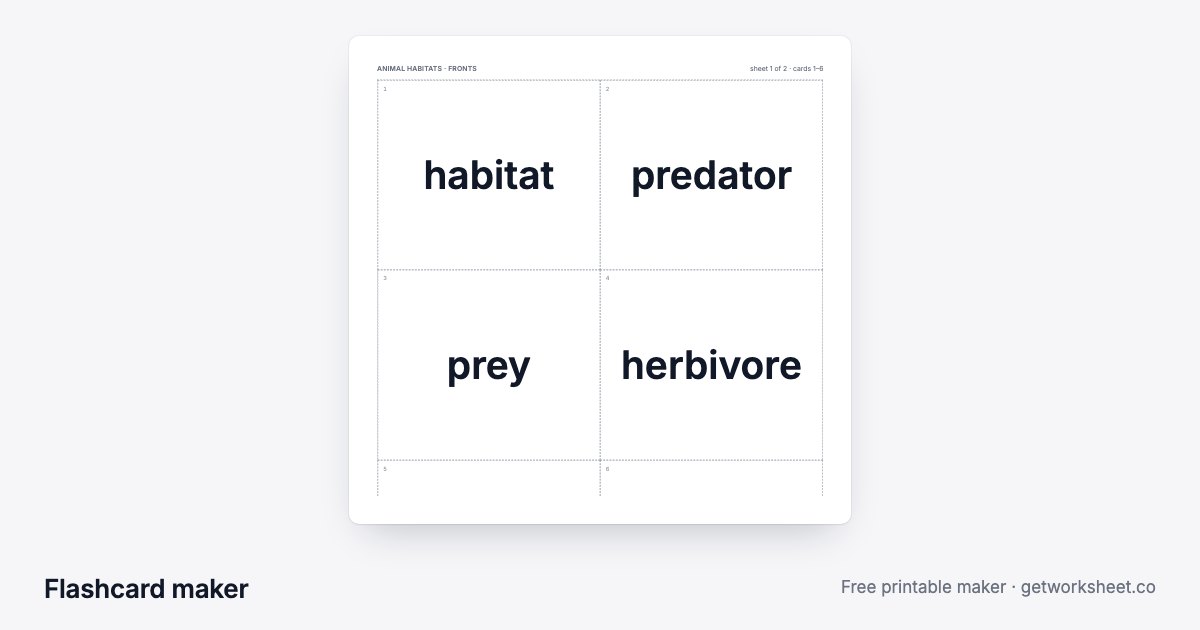 Flashcard makerVocabulary, math fact or sight word cards, 2-8 a page, two-sided or fold-over. Free to print.
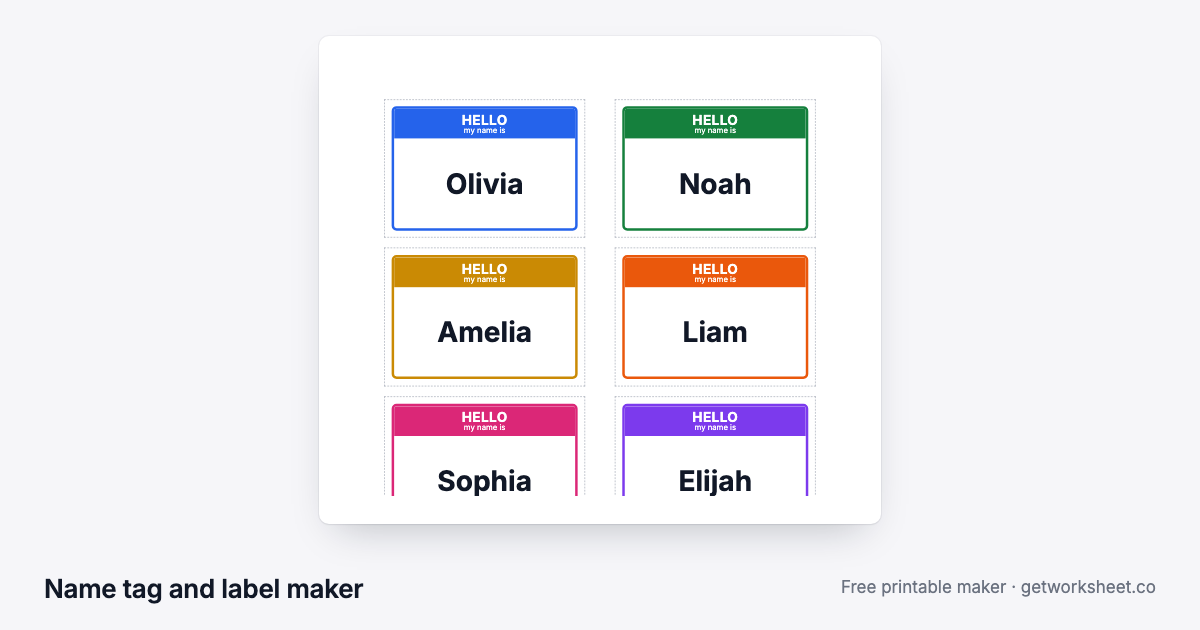 Name tag and label makerDesk name plates, name tags, labels and locker tags from a class list, on Avery grids. Free to print.
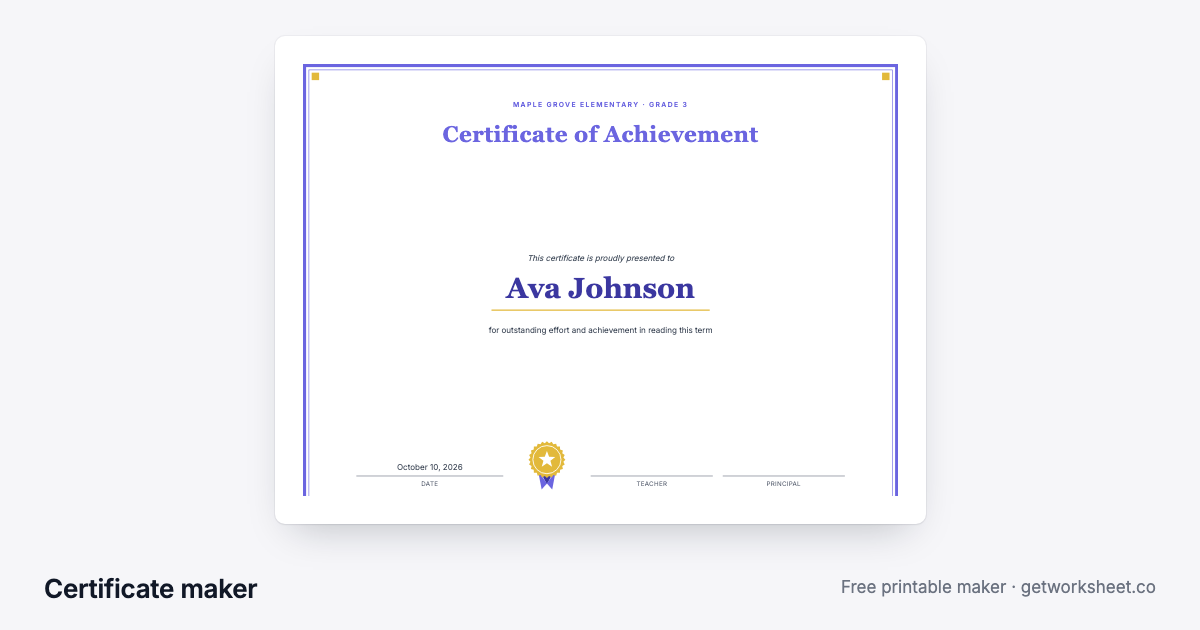 Certificate makerAward certificates for kids: preset titles, one name per page, borders, seal. Free to print.
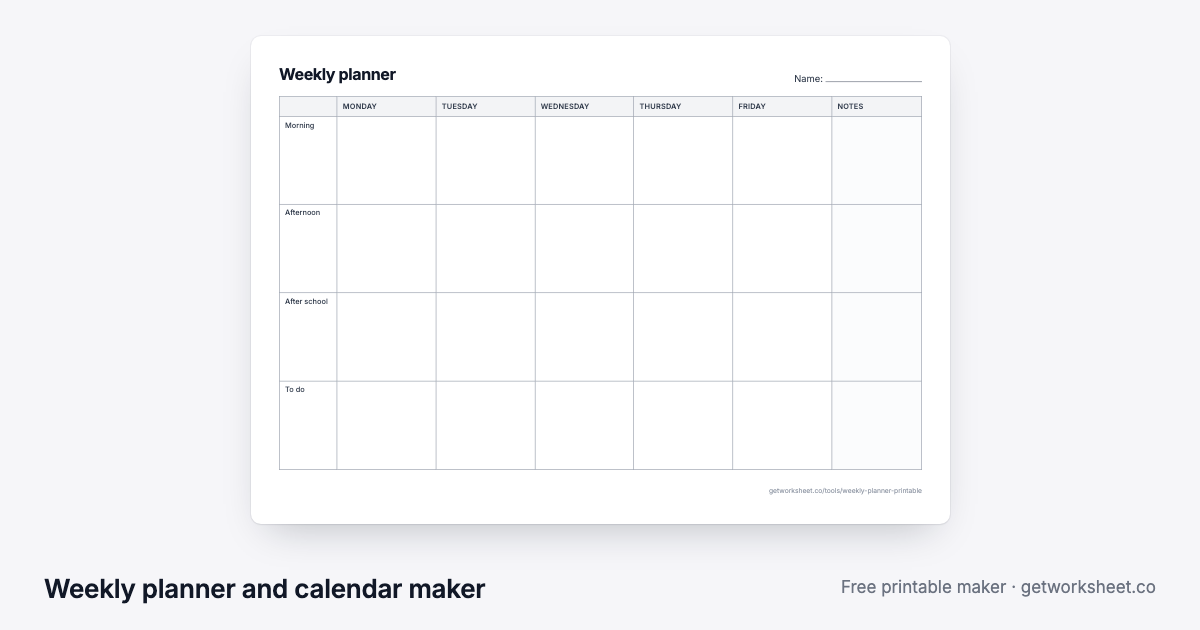 Weekly planner and calendar makerWeekly planner, monthly calendar, daily schedule or lesson-plan grid on one sheet. Free to print.
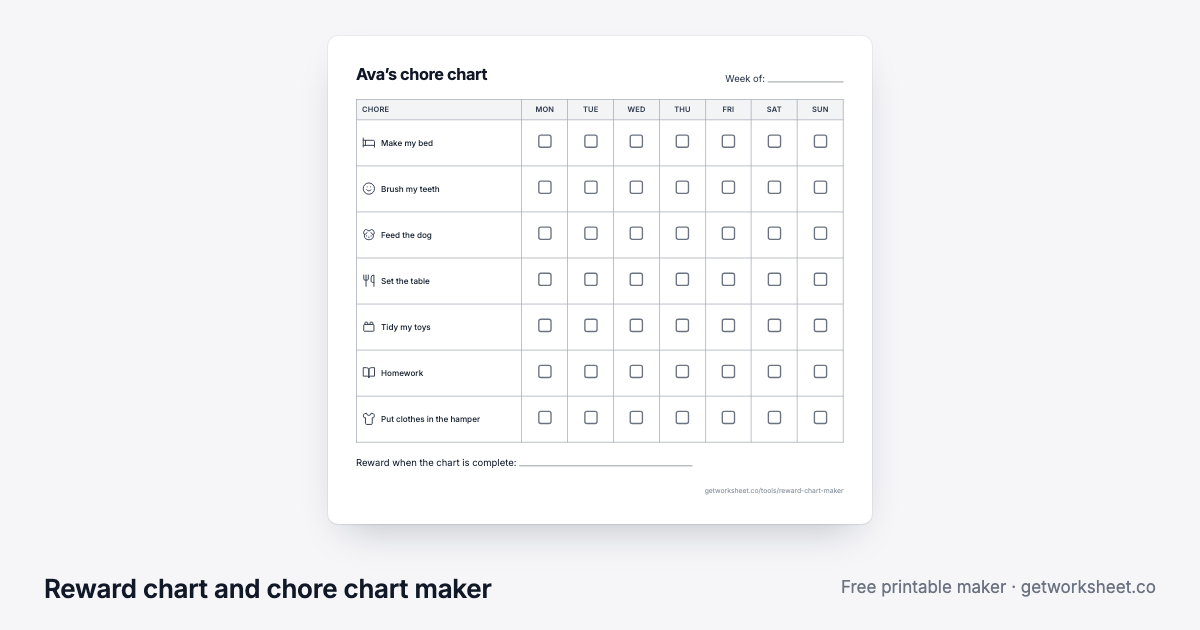 Reward chart and chore chart makerReward or sticker chart with a goal, Mon-Sun chore chart with pictures, behavior chart. Free to print.
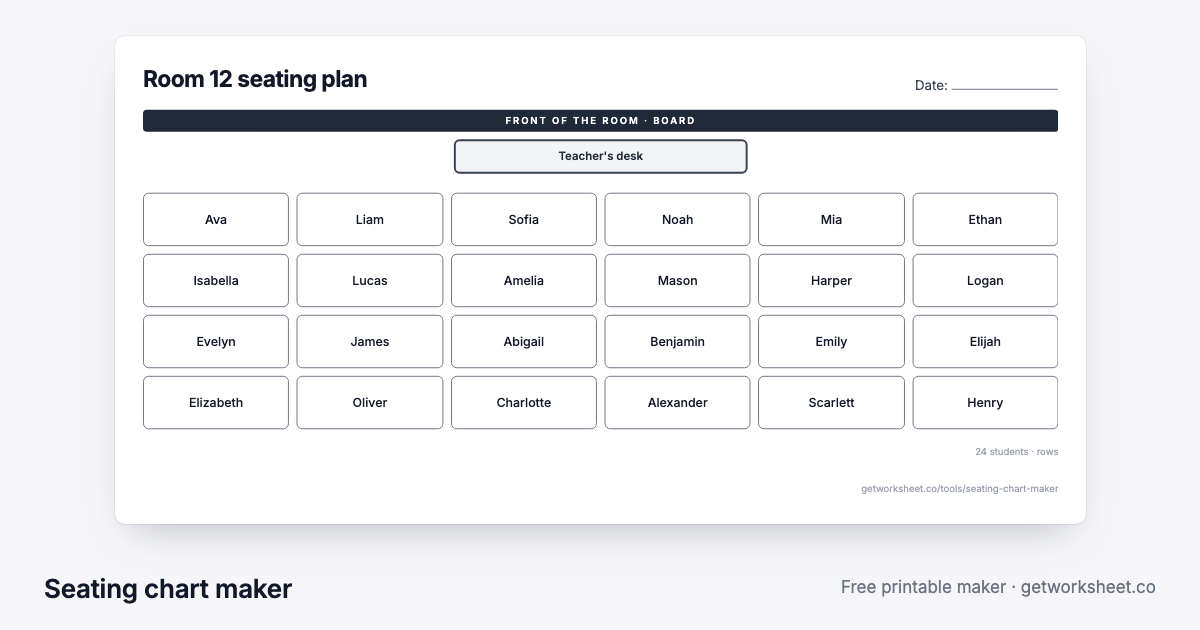 Seating chart makerClass list in, seating plan out: rows, pairs, tables or U-shape, shuffle and lock seats. Free to print.
- Worksheet generatorCustom worksheets for any topic, grade and question type.
- Lesson plan generatorStandards-aligned plans with objectives, activities and assessment.
- Report card commentsPersonalised, professional comments for every student.