Free printable maker
Math Fact Worksheet Generator
Addition, subtraction, multiplication, division or all four mixed. Pick the number range, 20 to 100 problems, vertical drill or horizontal equations, and print with an answer key. Free, no account.
Prints the worksheet, then the answer key on its own page. Free, no account.
Addition facts
30 problems- 7+2
- 6+2
- 8+0
- 2+2
- 1+0
- 10+5
- 4+2
- 1+10
- 0+2
- 0+4
- 1+1
- 8+10
- 4+6
- 1+5
- 3+9
- 4+4
- 9+0
- 9+9
- 7+1
- 8+6
- 10+2
- 5+1
- 6+6
- 0+8
- 3+7
- 3+6
- 6+3
- 10+9
- 10+4
- 7+4
Addition facts · Answer key
30 problems- 7+29
- 6+28
- 8+08
- 2+24
- 1+01
- 10+515
- 4+26
- 1+1011
- 0+22
- 0+44
- 1+12
- 8+1018
- 4+610
- 1+56
- 3+912
- 4+48
- 9+09
- 9+918
- 7+18
- 8+614
- 10+212
- 5+16
- 6+612
- 0+88
- 3+710
- 3+69
- 6+39
- 10+919
- 10+414
- 7+411
getworksheet.co/tools/math-fact-worksheet-generator
Using the drills
Building fact fluency with the right sheet
Fact fluency is recall, not working out: a child who knows 7 × 8 answers in a second and keeps their attention for the long division it sits inside. Drill sheets build that recall when they are short, frequent and matched to the facts the child is still slow on. Three minutes a day on 30 problems beats a weekly hundred-problem sheet.
Keep the range tight. “Facts to 10” for first grade addition and subtraction; “facts to 20” once sums to 10 are automatic; one or two times tables at a time (set both numbers to 1–12 for the full tables, or narrow the second number to 6–6 for the sixes alone). The 2-digit preset is for column addition and subtraction practice, where the vertical layout matters because it mirrors how children line up the digits.
Mixed drills beat single-operation drills once the facts are known. A sheet that is all addition lets the child stop reading the sign; a mixed sheet makes them check the operation every time, which is what real word problems and multi-step work require. Switch to Mixed as soon as single-operation scores are consistently high, and keep “No negative answers” on until integers are taught.
Vertical or horizontal? The vertical column format is the drill-sheet classic and is right for anything with carrying or borrowing. The horizontal “a + b = __” format is better for fact recall and for fact families, and fits more problems on a page. Division in the vertical layout uses the bracket form children meet in long division; in horizontal it is a ÷ b = __.
Use the time and score line for a weekly check: same settings, same number of problems, note the time and the score, and watch both move. Because the sheet comes from a seed, the problems are identical until you press Shuffle, so you can hand out the same drill to a group or give each child a fresh one. The answer key prints as page two with the answers in place, laid out exactly like the worksheet, so students can mark their own.
For worked practice around the facts, the addition worksheets, subtraction worksheets and multiplication worksheets collections are ready to print, and the word problem generator turns the same facts into story problems.
How it works
How to make a math fact worksheet
Three steps from an operation to a drill with its answer key.
- 1
Pick the operation and range
Addition, subtraction, multiplication, division or mixed. Use a preset (facts to 10, to 20, times tables, 2-digit) or type your own minimum and maximum.
- 2
Set the sheet
20 to 100 problems in 4 to 6 columns, vertical drill or horizontal equations, a time and score line, and the answer key page.
- 3
Print
Letter or A4. The worksheet prints first and the answer key follows on its own page. Shuffle for a fresh set with the same settings.
Good to know
Questions, answered
Yes. Choose the operation and number range, print the drill and the answer key. No account, no watermark, no limit on sheets. Problems are generated in your browser.
Addition, subtraction, multiplication, division, or mixed (all four on one sheet). Set a minimum and maximum for each number, or use a preset: facts to 10, facts to 20, times tables 1 to 12, or 2-digit numbers. Subtraction never gives a negative answer unless you allow it, and division is built from a product so every answer is a whole number.
Choose 20, 30, 40, 60 or 100 problems in 4, 5 or 6 columns. Vertical drill layout fits about 30 to 40 problems on one Letter page at 5 columns; the horizontal "a + b = __" layout fits more. Longer sets flow onto a second sheet.
Yes. Leave "Answer key page" ticked and the key prints after the worksheet with the same problems in the same positions and the answers filled in, so marking is a side-by-side glance.
Both. The problems come from a seed, so the same settings always give the same sheet until you press Shuffle. Print on US Letter or A4, or save as a PDF from the print dialog. Tick "Time and score line" for timed drills.
More free printable makers
More sheets you can make right now
Each of these builds the printable in your browser: no account, no AI, no weekly limit, an answer key where one applies.
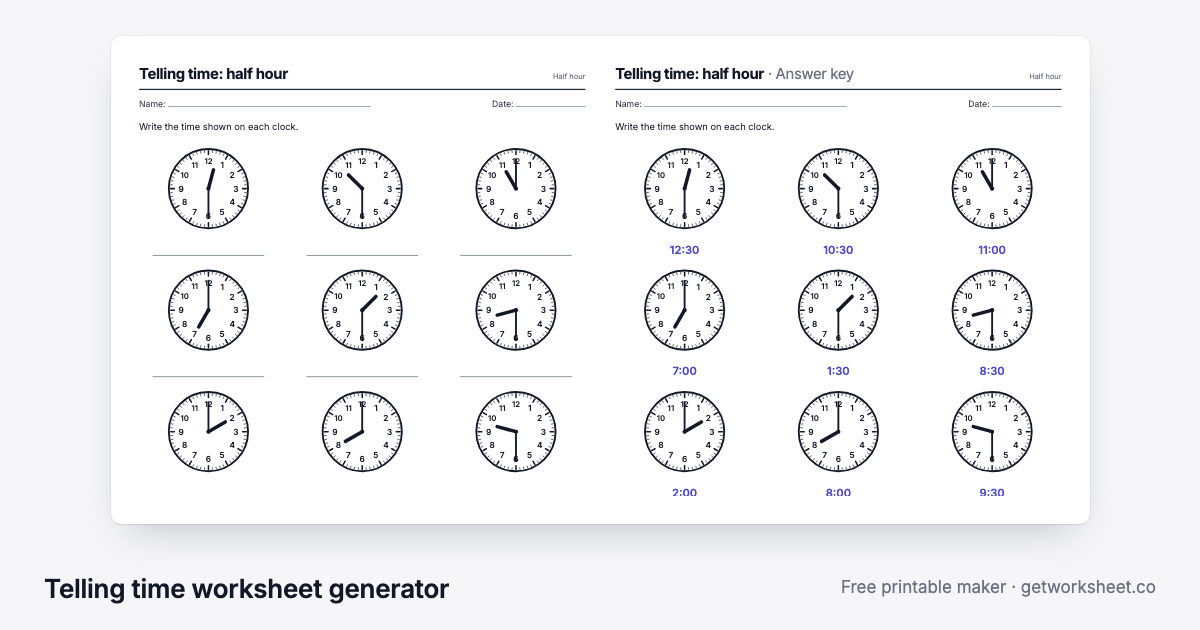 Telling time worksheet generatorAnalogue clocks to read, draw, match or add time to, with answer key. Free to print.
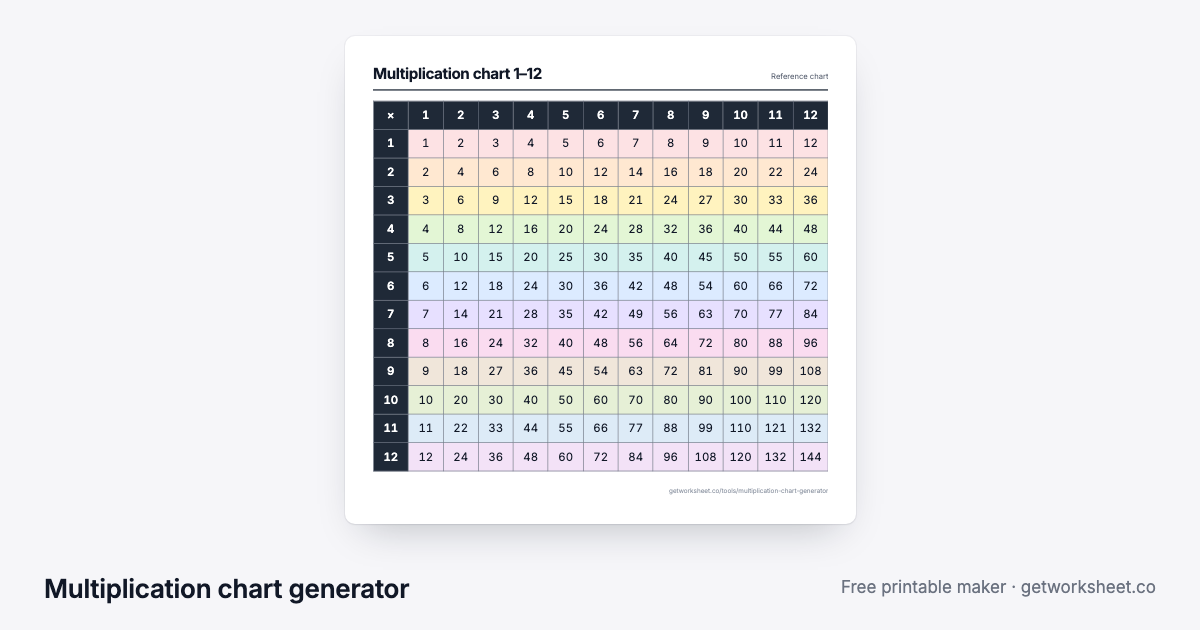 Multiplication chart generatorCharts to 15, full, blank or coloured, and times table tests with key. Free to print.
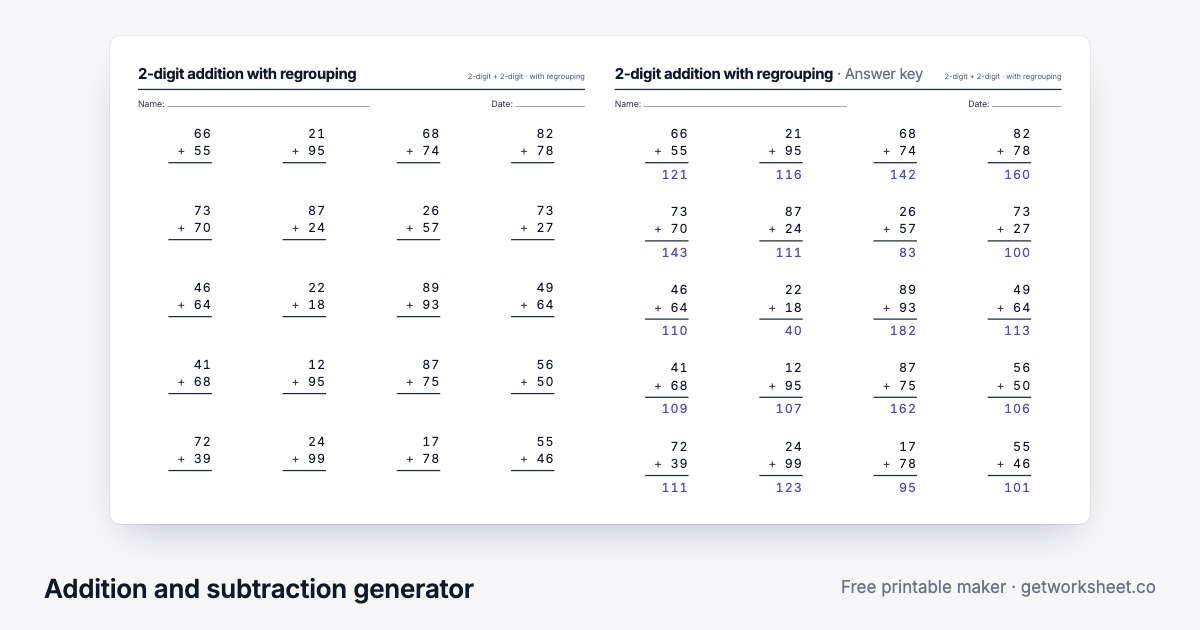 Addition and subtraction generatorColumn add and subtract, regrouping you control, boxes and key. Free to print.
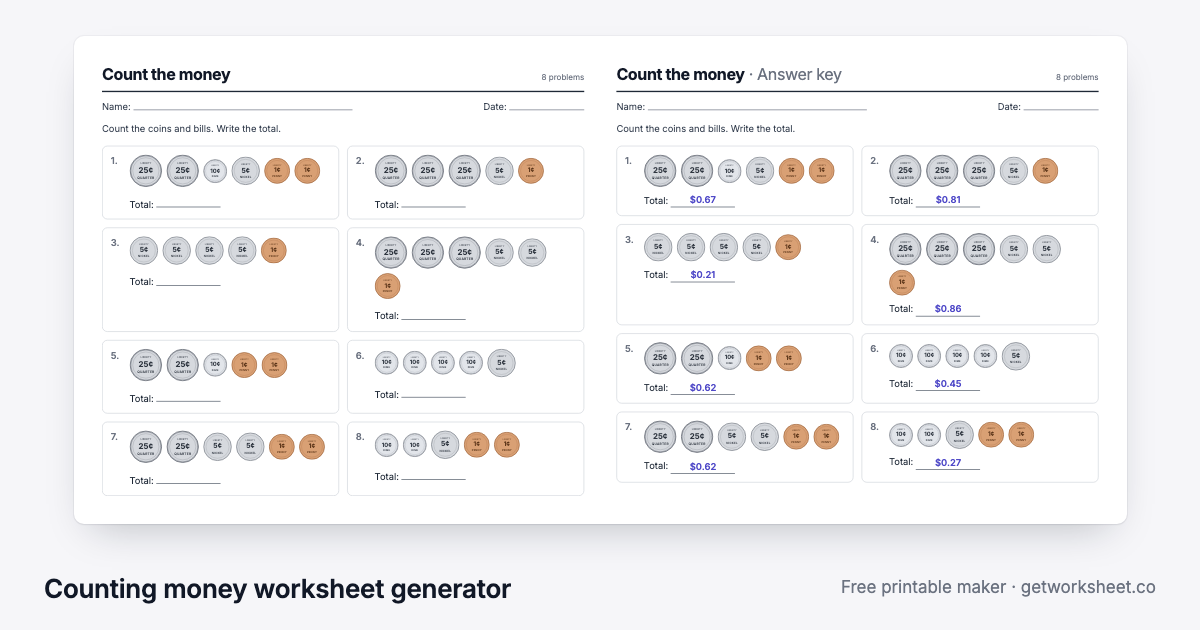 Counting money worksheet generatorCount US coins, make change, compare groups, write amounts. Answer key. Free to print.
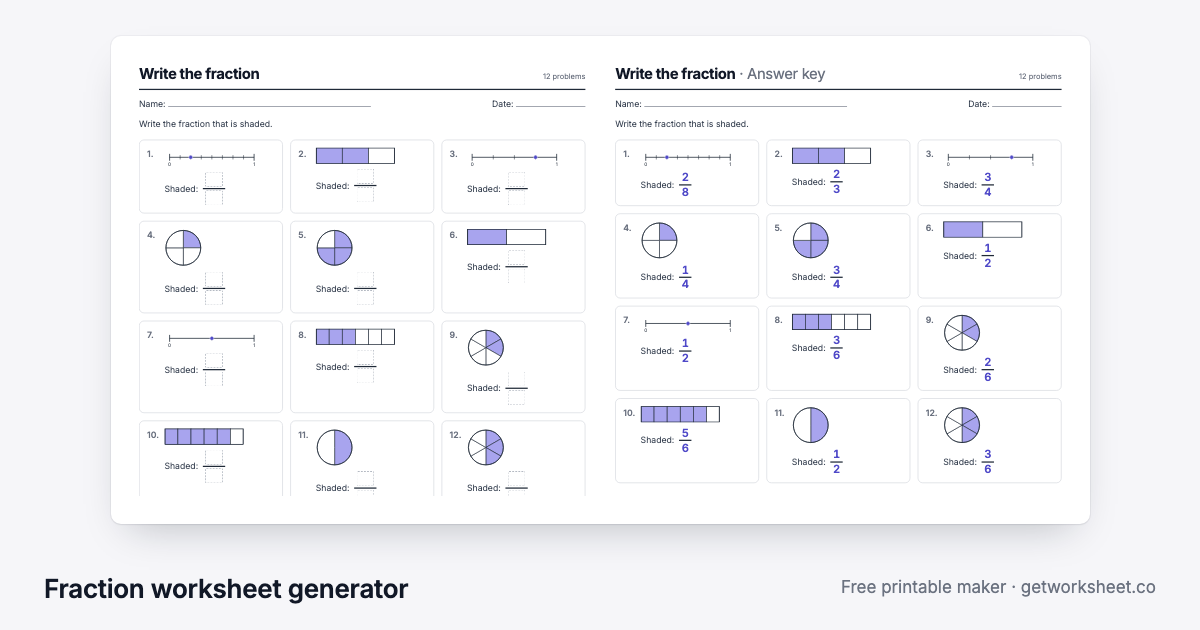 Fraction worksheet generatorVisual pie, bar and number-line models; equivalent, compare, add, subtract. Free to print.
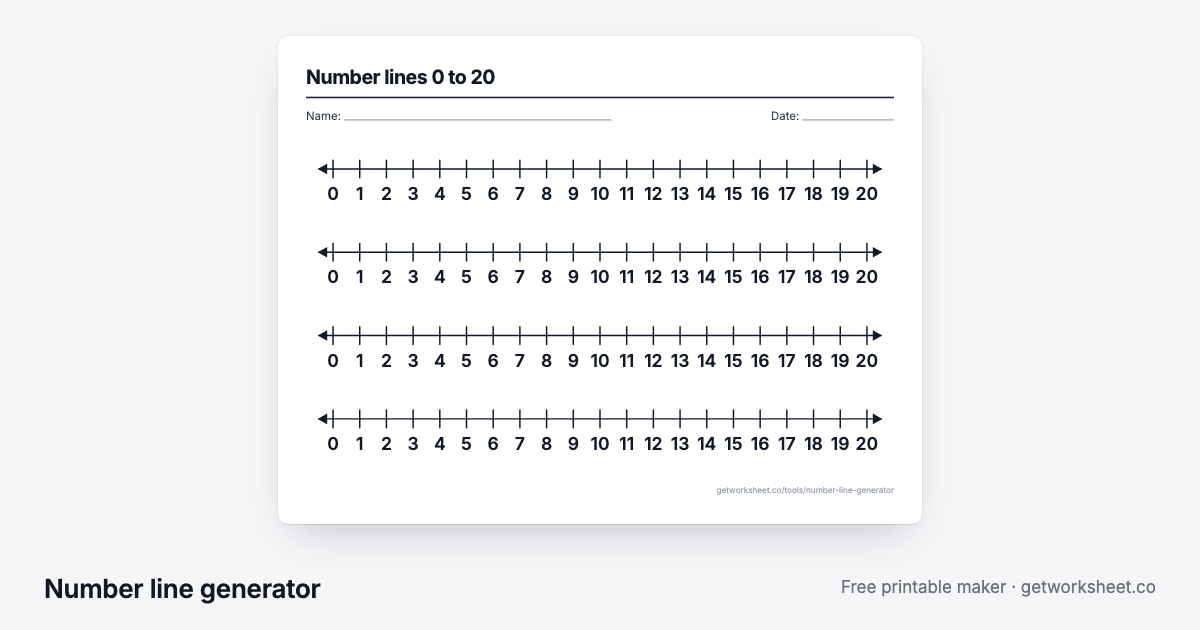 Number line generatorAny range and step, fractions and decimals, blank or missing numbers with a key. Free to print.
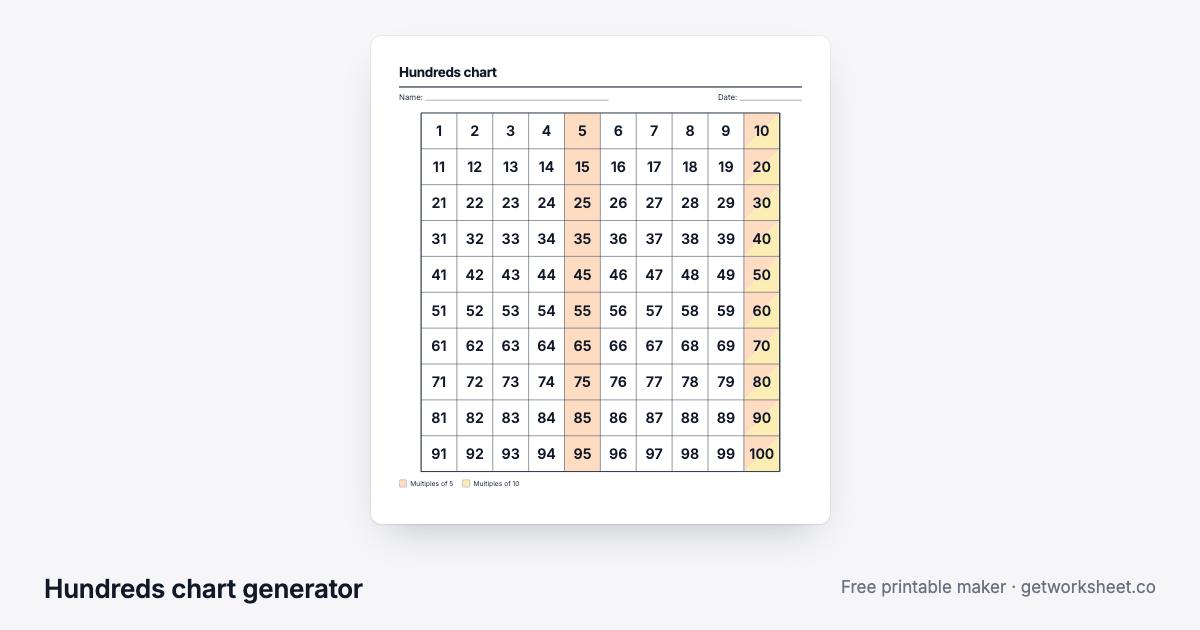 Hundreds chart generator1-100, 1-120 or 0-99, blank or missing numbers, skip-count colours, odd/even. Free to print.
- Worksheet generatorCustom worksheets for any topic, grade and question type.
- Lesson plan generatorStandards-aligned plans with objectives, activities and assessment.