Maths · Grades 1–2
Free skip counting worksheets
Four skip counting sheets for grades 1 and 2: eight sequences by 2s, eight by 5s, eight by 10s up to 200, and a mixed review where each row is labelled 2s, 5s or 10s. Fill in the missing numbers.

Skip counting by 2s worksheet
Eight number sequences counting by 2s with missing numbers to fill in. Free printable PDF.

Skip counting by 5s worksheet
Eight number sequences counting by 5s with missing numbers to fill in. Free printable PDF.
Whole set
All 4 sheets in one PDF
Instant and ad-free. No account needed.

Skip counting by 10s worksheet
Eight number sequences counting by 10s up to 200 with missing numbers to fill in. Free printable PDF.

Skip counting review worksheet (2s, 5s and 10s)
Mixed review: each row counts by 2s, 5s or 10s. Read the label, then fill in the blanks. Free printable PDF.
AI worksheet generator
Make a worksheet like this for your class
The 4 sheets above are fixed. The generator writes a new skip counting worksheet for your grade, with the question types and count you choose, in about 20 seconds. Pick a grade to start:
What you get
- A fresh set of questions on skip counting, not a copy of the sheets above
- Multiple choice, fill in the blanks, true or false, open ended
- Answer key and print-ready PDF with Pro
Free account, 1 worksheets a week. No card.
Skip counting is counting forwards in equal jumps: 2, 4, 6, 8 or 5, 10, 15, 20. It is the bridge between counting one at a time and understanding multiplication, and it is the skill behind reading a clock, counting coins and using a hundreds chart. These four worksheets give focused practice with one jump at a time and then mix them. The first has eight number sequences counting by 2s with missing numbers to fill in, the second eight sequences by 5s, and the third eight sequences by 10s going up to 200. The fourth is a review sheet where each row counts by 2s, 5s or 10s: the child reads the label on the row, works out the jump, and fills in the blanks.
Counting by 10s is usually the easiest, because only the tens digit changes; 5s alternate between a 5 and a 0 in the ones place; 2s are the hardest because the ones digit cycles through five values. Many children do best in the order 10s, 5s, 2s, then the review.
What Students Will Practice
- Counting by 2s, by 5s and by 10s to 200, and writing the missing numbers in a sequence
- Finding a missing number by looking at the numbers on both sides of the gap
- Reading the label on a row (2s, 5s or 10s) and switching between jumps on the mixed review sheet
- Noticing the ones-digit patterns: 10s always end in 0, 5s alternate 5 and 0
- Building the number facts that later become the 2, 5 and 10 times tables
Free printable makers
Make your own skip counting sheets
Type your own words or numbers and print in about 30 seconds. No account, no AI, answer key where it applies.
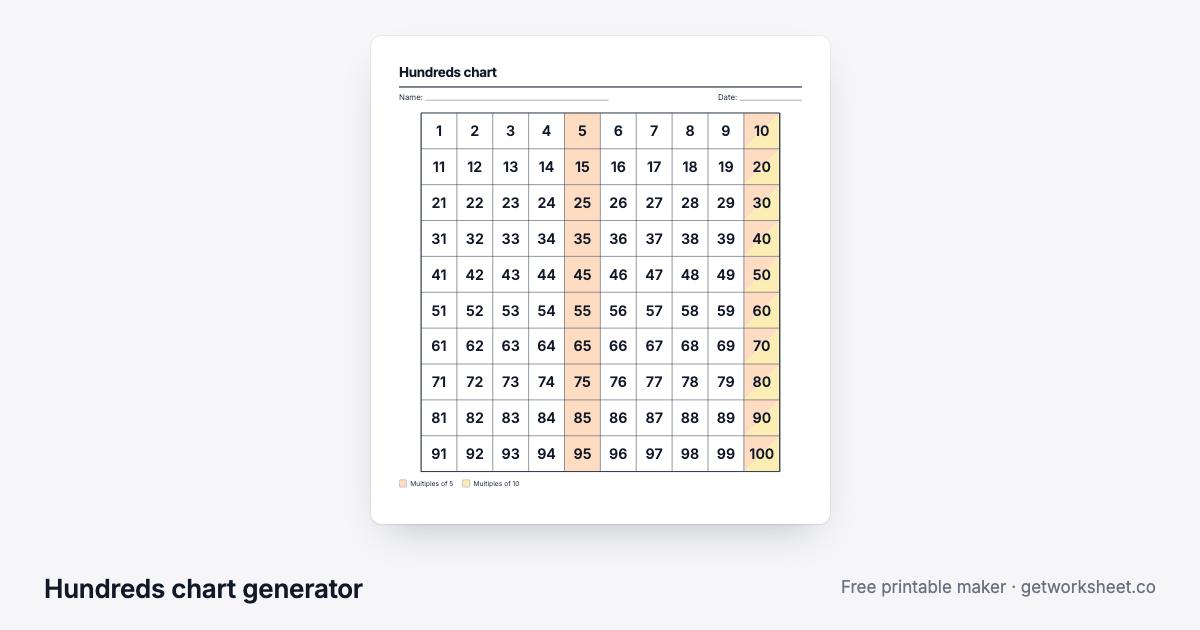 Hundreds chart generator1-100, 1-120 or 0-99, blank or missing numbers, skip-count colours, odd/even. Free to print.
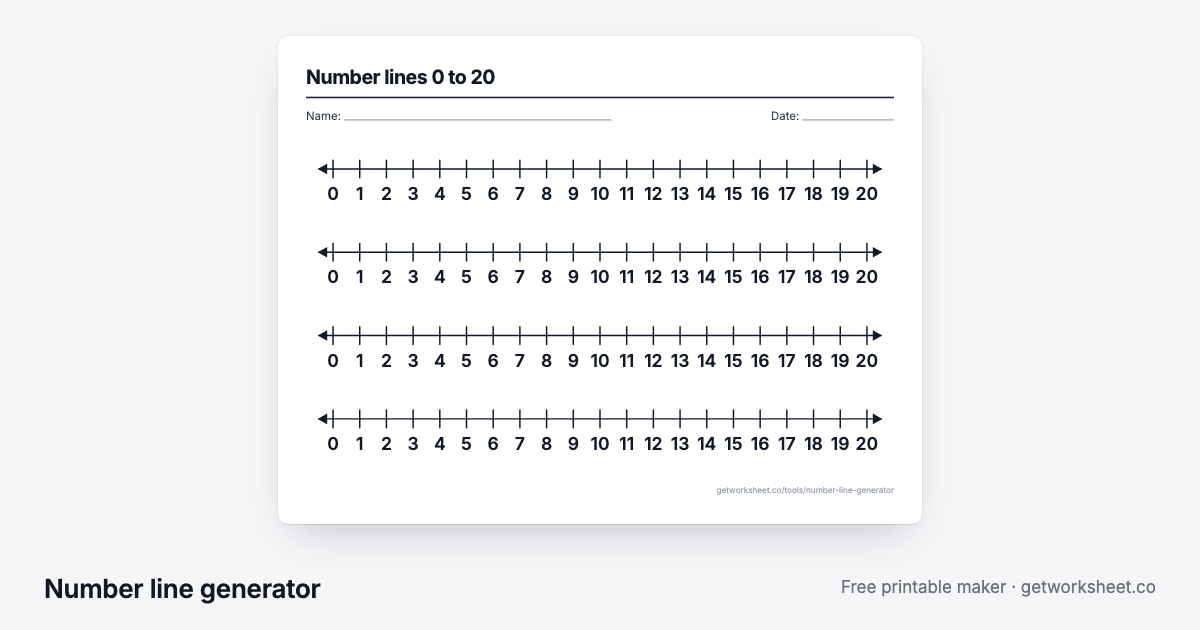 Number line generatorAny range and step, fractions and decimals, blank or missing numbers with a key. Free to print.
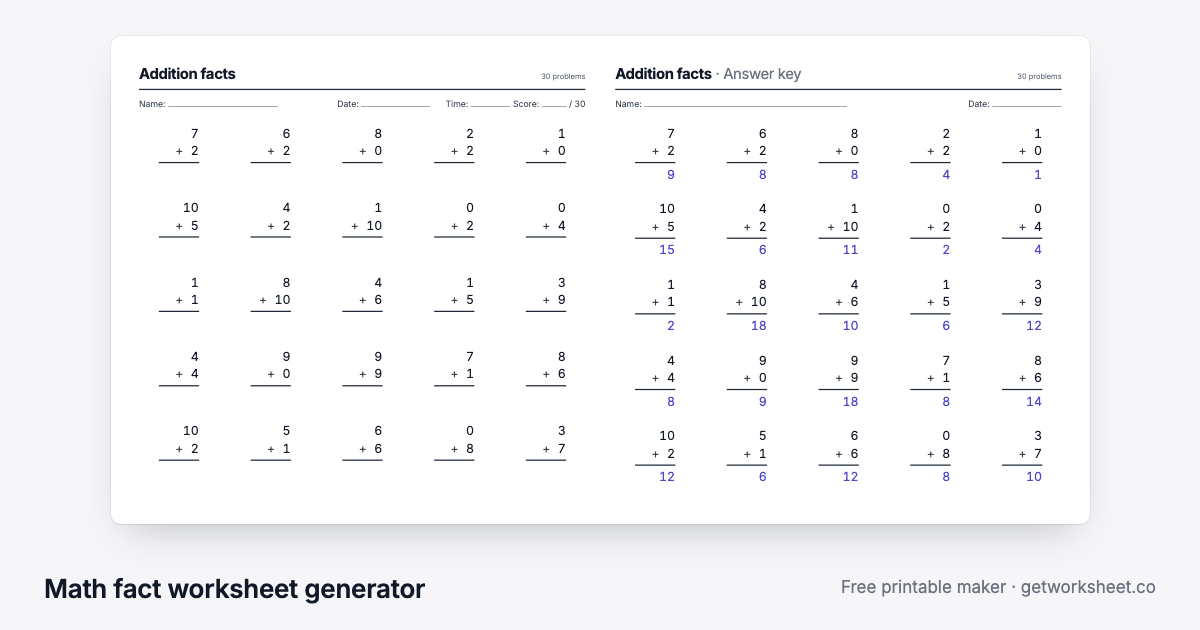 Math fact worksheet generatorAddition to division drills with an answer key. Free to print.
AI worksheet generator
Need a different skip counting worksheet?
Generate a custom skip counting worksheet: pick the grade, question types and count, and print it in about 20 seconds. Free accounts get 1 generation a week.
How to Use These Worksheets
Print at 100% on A4 or US Letter paper. Each sheet has eight rows of ten numbers with four blanks per row.
- Say the row before writing. Have your child read the visible numbers aloud, then say the whole sequence including the gaps. Hearing the rhythm (“two, four, six, eight”) often fills the blank before the pencil does.
- Start with 10s, then 5s, then 2s. Counting by 10s is easiest because only the tens digit changes. Fives alternate between 5 and 0 in the ones place. Twos are hardest because the ones digit cycles through five different values.
- Use the neighbors. If a blank sits between 14 and 18, ask “what is two more than 14?” and check it against 18. Teaching this both-sides check makes children self-correct.
- Finish with the mixed review. The label on each row says which jump to use, but ask your child to work it out from the first two numbers before reading the label.
- Connect it to real things. Count pairs of shoes by 2s, fingers on hands by 5s and dimes by 10s. The worksheets stick better when the pattern has been counted on real objects first.
Common Mistakes to Watch For
- Slipping back to counting by 1s: A child writes 15, 16, 17 instead of 15, 20, 25. Cover the row and clap the rhythm of the jump together.
- Losing the pattern across a tens boundary: 28, 30, 32 trips up many children. Practice the crossing spots (18 to 20, 28 to 30, 48 to 50) on their own.
- Only being able to start from 2, 5 or 10: If a row starting at 12 causes trouble, have your child count from 2 out loud until they reach 12, then keep going.
- Mixing up 5s and 10s: Point out that counting by 10s only ever ends in 0, while 5s alternate 5, 0, 5, 0.
Frequently Asked Questions
What grade are these skip counting worksheets for?
Counting by 2s and 10s is usually introduced in kindergarten and first grade, and counting by 5s in first and second grade. The mixed review sheet suits second grade, or any child who is confident with all three patterns.
Why do some rows start at unusual numbers like 14 or 35?
Children often memorize “2, 4, 6, 8” as a chant without understanding the jump. Starting mid-sequence checks that they can apply the pattern from any point, which is what the grade 2 standard asks for and what real counting situations need.
Do the worksheets come with answers?
Each row is a straightforward sequence, so a parent or teacher can check it by counting on from the first number. The mixed review sheet labels every row with its step so checking is quick.
How does skip counting help with multiplication?
Skip counting by 5s gives the 5 times table in order: 5, 10, 15, 20. A child who can skip count fluently can find 5 × 4 by counting four jumps. It is the most reliable early strategy for times tables.
Keep Counting
Before skip counting, children need to count on and back by ones: our missing number worksheets and before and after numbers worksheets cover that. Once the 2s and 10s are fluent, move on to the 3 times table worksheets and 10 times table worksheets, or practice spotting patterns with the repeating patterns worksheets.
Free library
Related collections
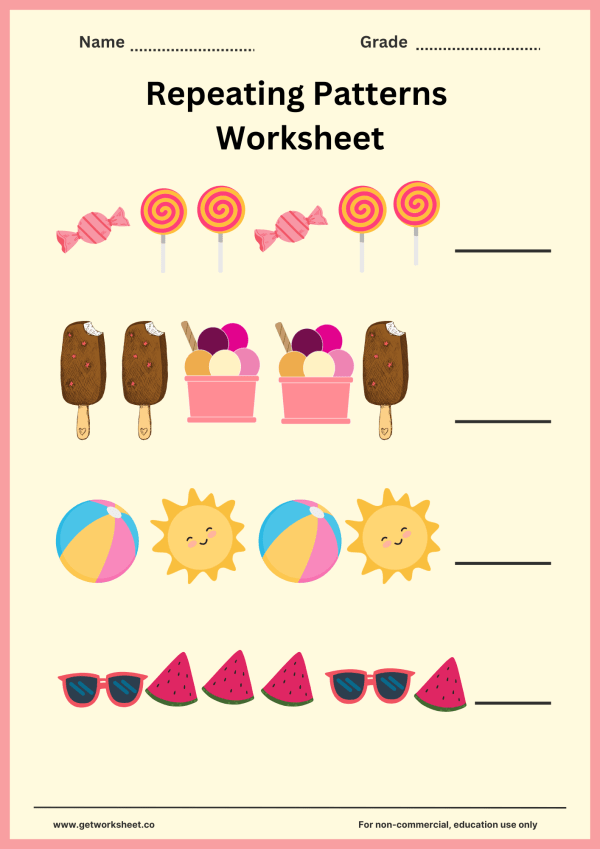
Free repeating patterns worksheets
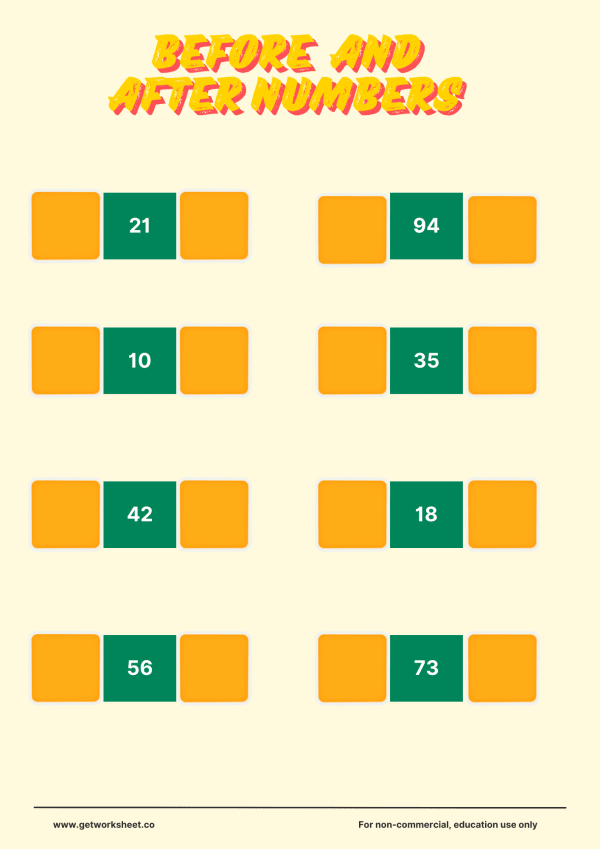
Free before and after numbers worksheets
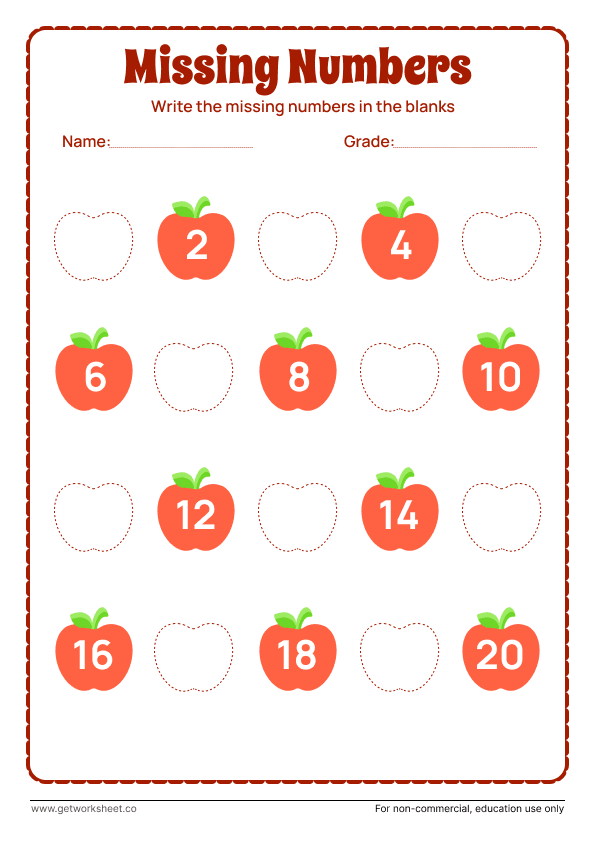
Free missing number worksheets

Free heart tracing worksheets

Free Montessori math worksheets: one from every material

Free shape tracing worksheets
Free Halloween math worksheets

Free number 20 tracing worksheets
More worksheets
- Free number 19 tracing worksheets
- Free number 18 tracing worksheets
- Free number 17 tracing worksheets
- Free number 16 tracing worksheets
- Free number 15 tracing worksheets
- Free number 14 tracing worksheets
- Free number 13 tracing worksheets
- Free number 12 tracing worksheets
- Free number 11 tracing worksheets
- Free number 10 tracing worksheets
- Free number 9 tracing worksheets
- Free number 8 tracing worksheets