English · Grade 2
Free second grade reading comprehension worksheets
Free printable second grade reading comprehension worksheets: three stories, a fable and two nonfiction passages of 134 to 143 words with literal, inference, vocabulary and written questions, plus main idea and sequencing. Answer keys.
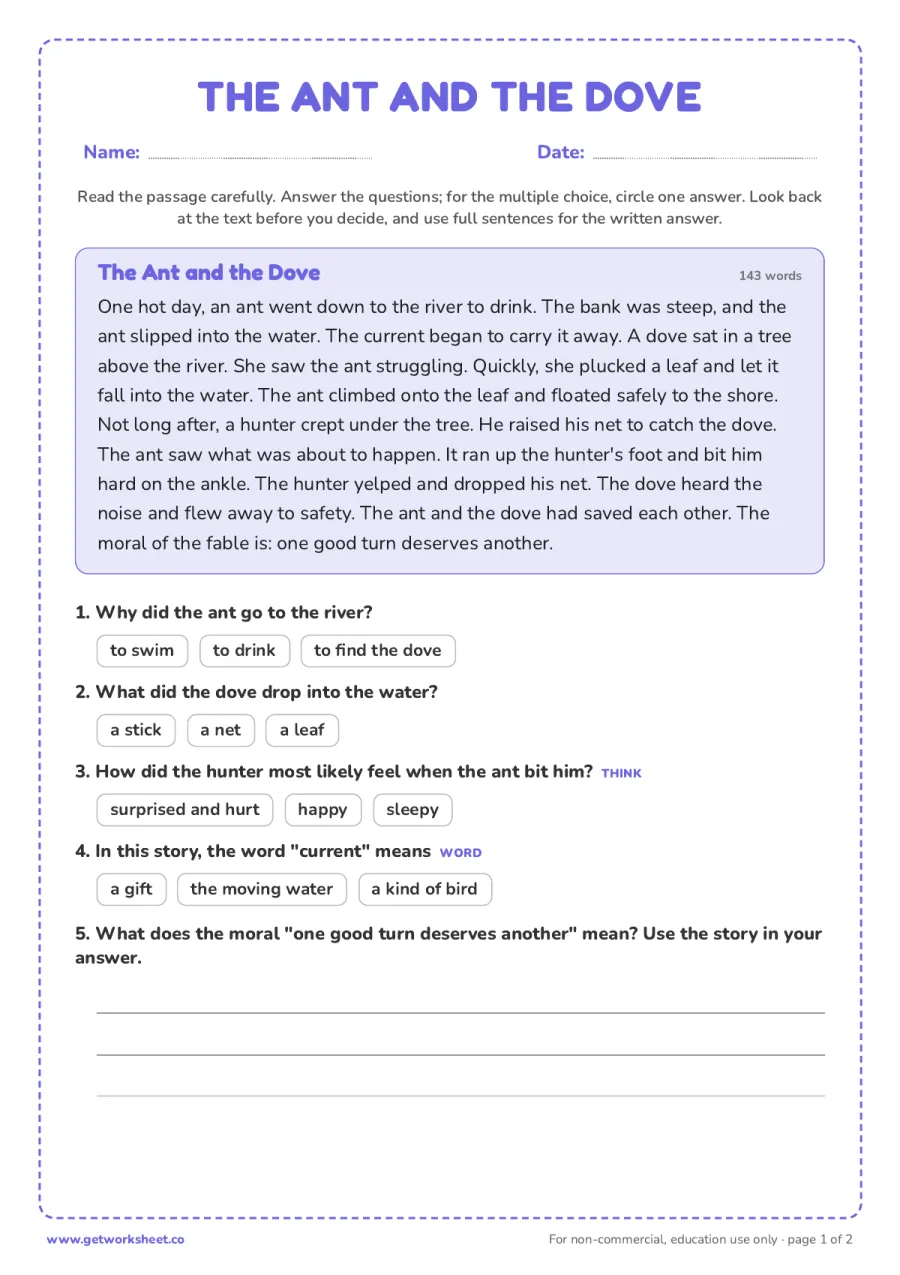
The Ant and the Dove (fable, 143 words)
A fable retold of 143 words with five questions: two literal, one inference, one vocabulary in context and one written response. Answer key on page 2. Free printable PDF.
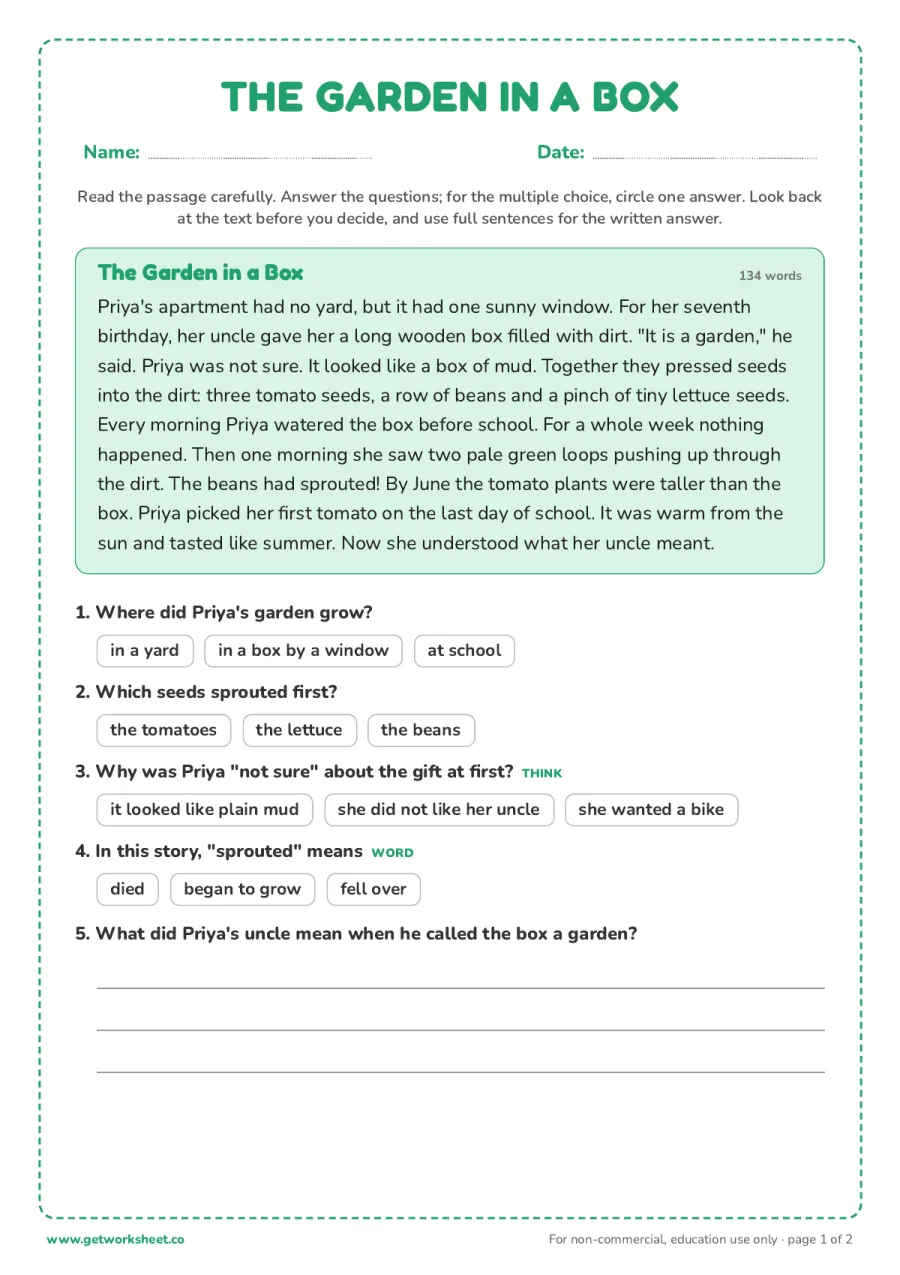
The Garden in a Box (story, 134 words)
A story of 134 words with five questions: two literal, one inference, one vocabulary in context and one written response. Answer key on page 2. Free printable PDF.
Whole set
All 8 sheets in one PDF
Instant and ad-free. No account needed.
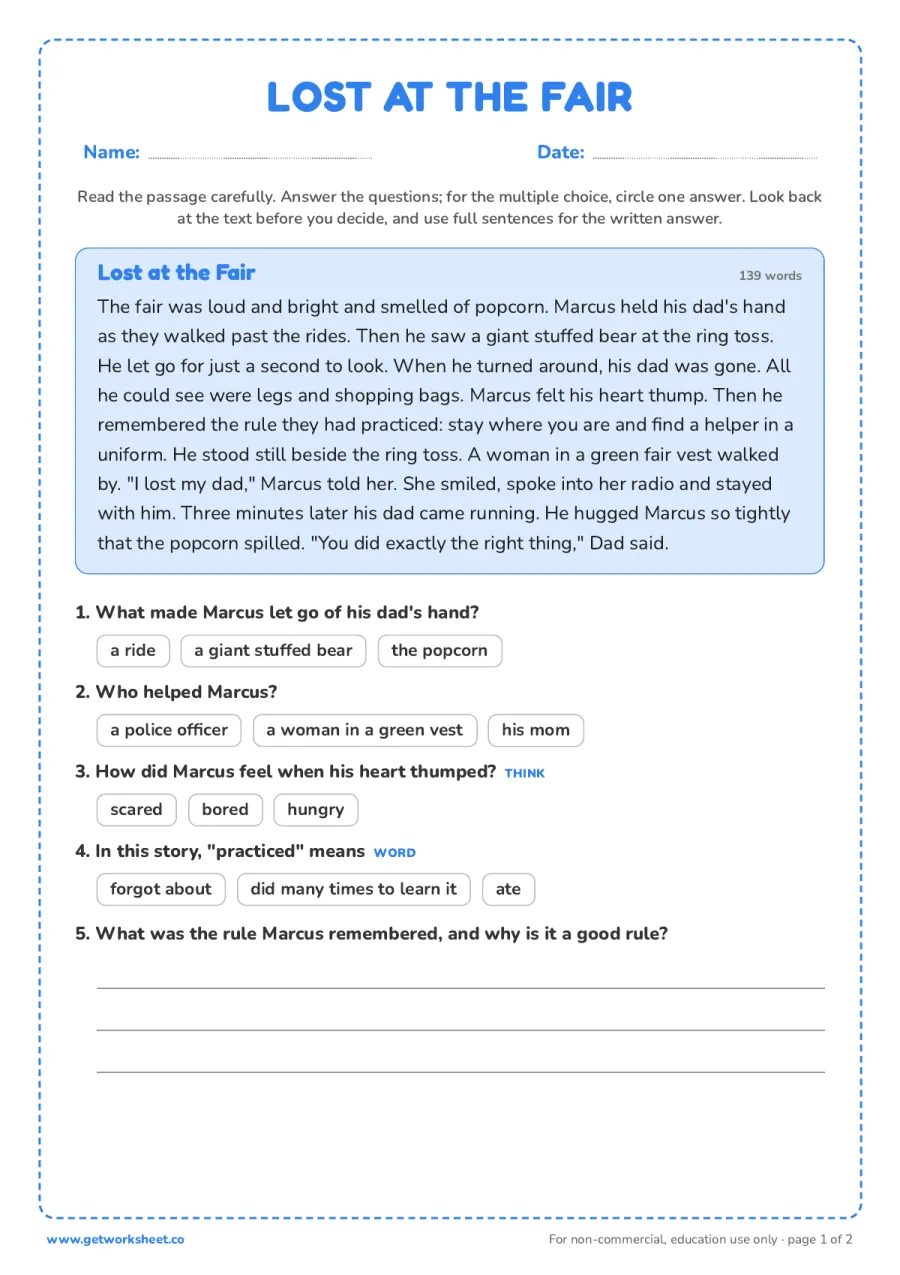
Lost at the Fair (story, 139 words)
A story of 139 words with five questions: two literal, one inference, one vocabulary in context and one written response. Answer key on page 2. Free printable PDF.
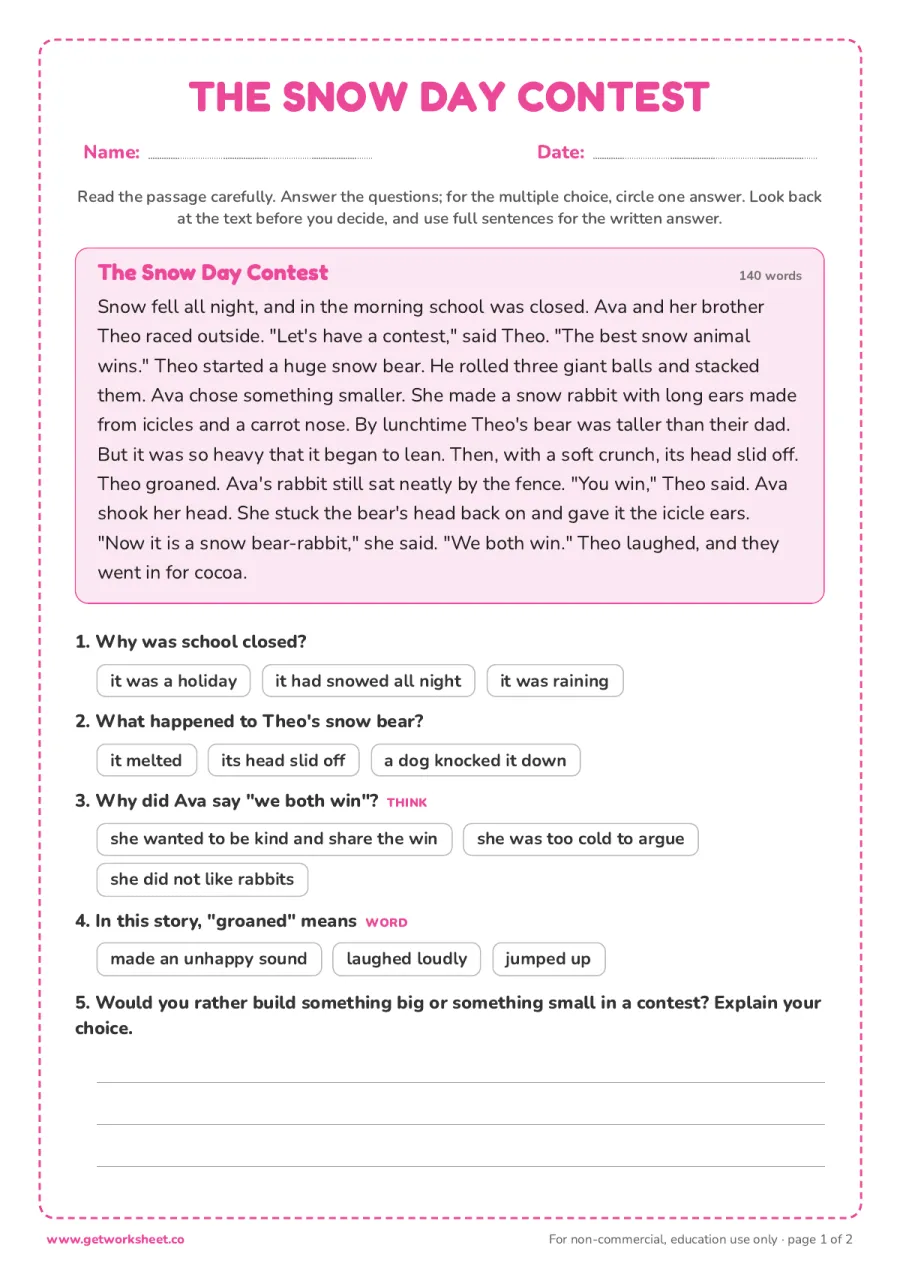
The Snow Day Contest (story, 140 words)
A story of 140 words with five questions: two literal, one inference, one vocabulary in context and one written response. Answer key on page 2. Free printable PDF.
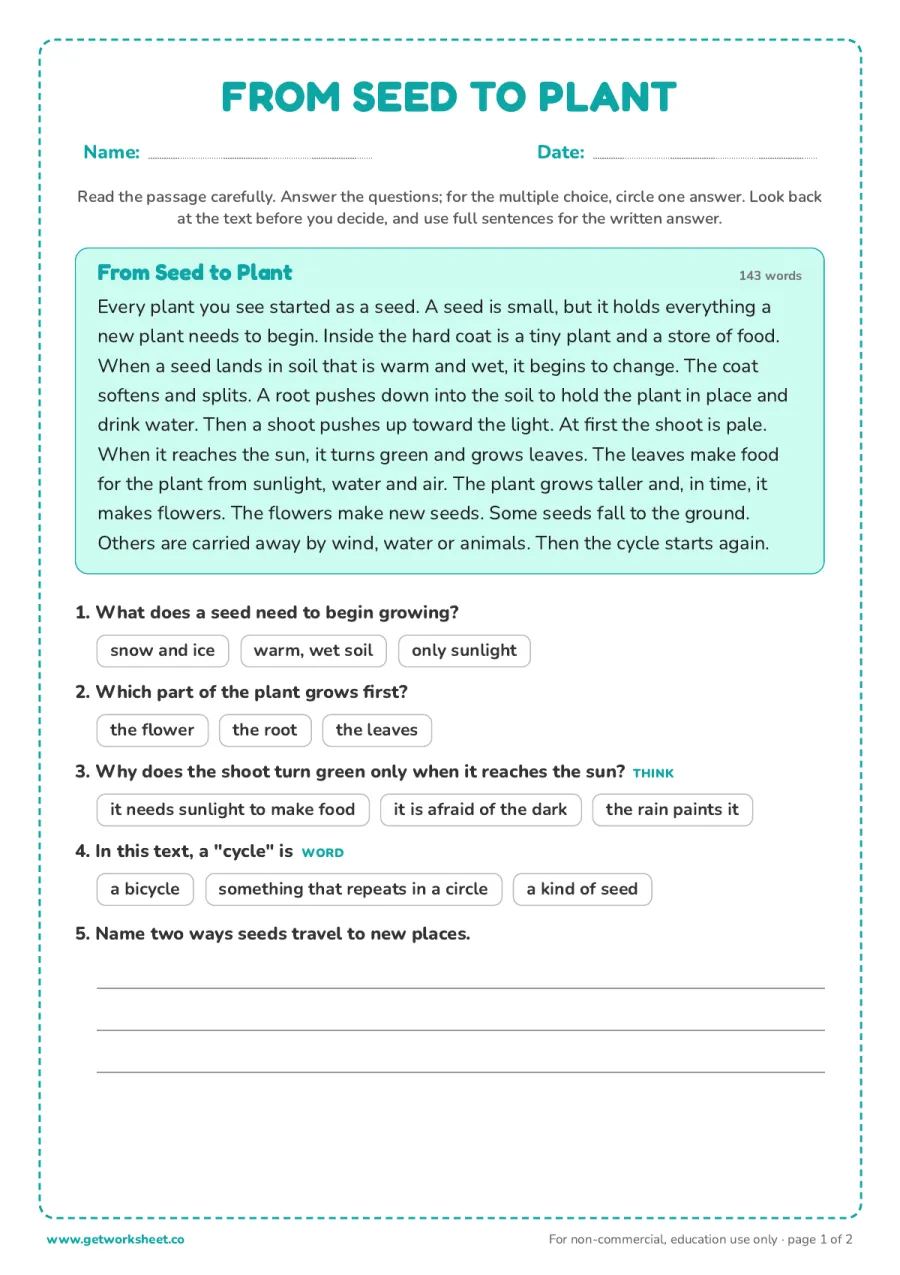
From Seed to Plant (nonfiction, 143 words)
A nonfiction passage of 143 words with five questions: two literal, one inference, one vocabulary in context and one written response. Answer key on page 2. Free printable PDF.
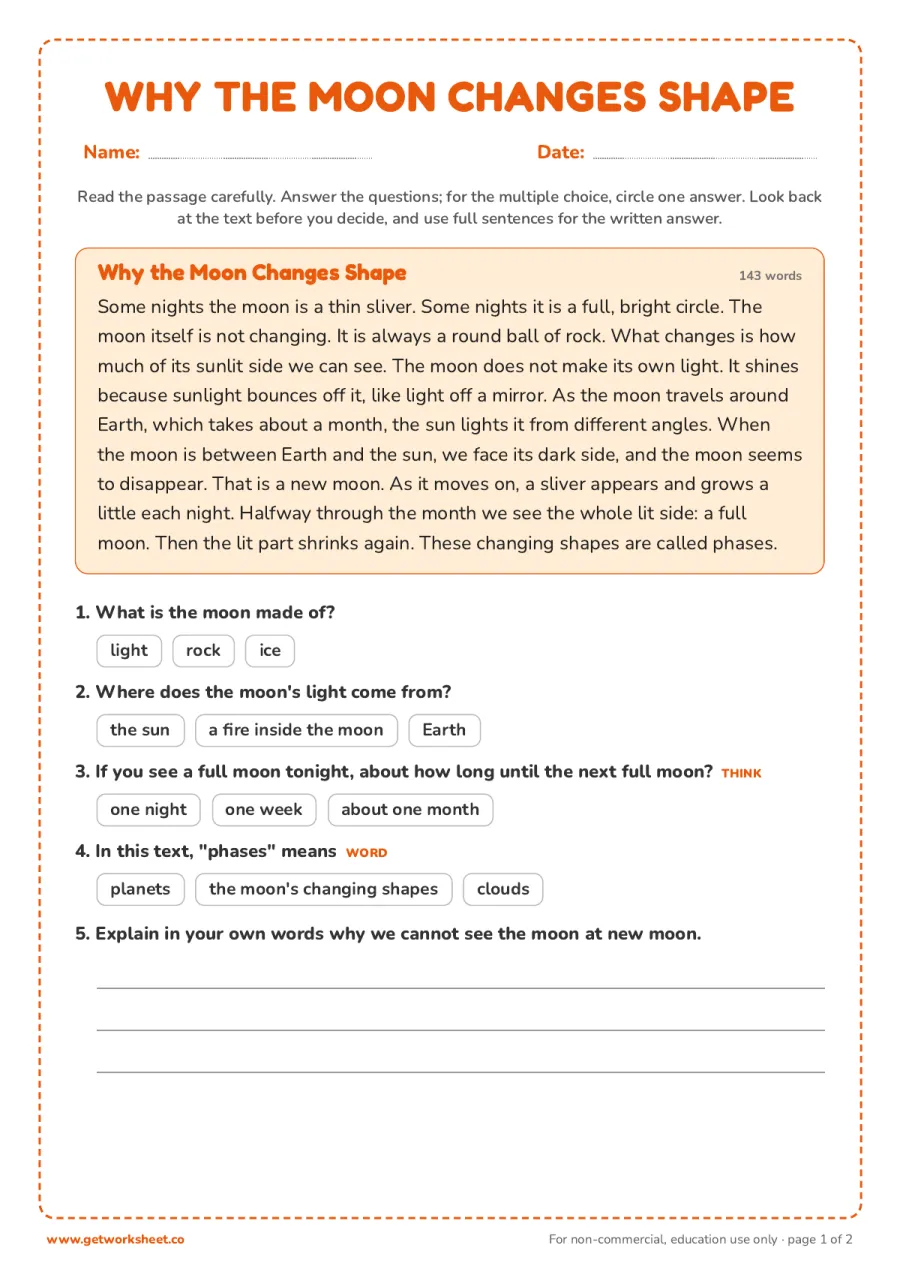
Why the Moon Changes Shape (nonfiction, 143 words)
A nonfiction passage of 143 words with five questions: two literal, one inference, one vocabulary in context and one written response. Answer key on page 2. Free printable PDF.
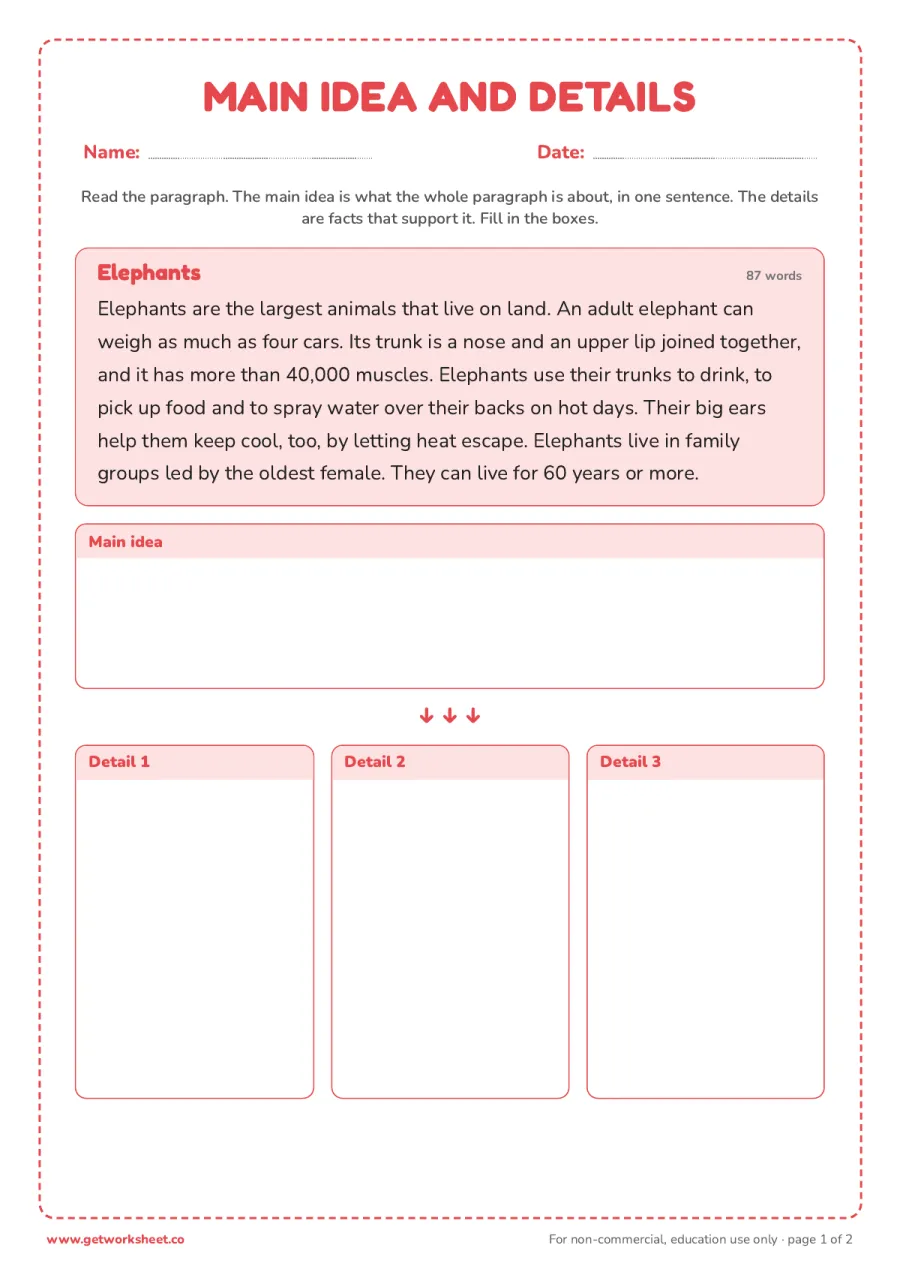
Main idea and details: Elephants
A 87-word nonfiction paragraph with a main idea box and three detail boxes to complete. Answer key on page 2. Free printable PDF.
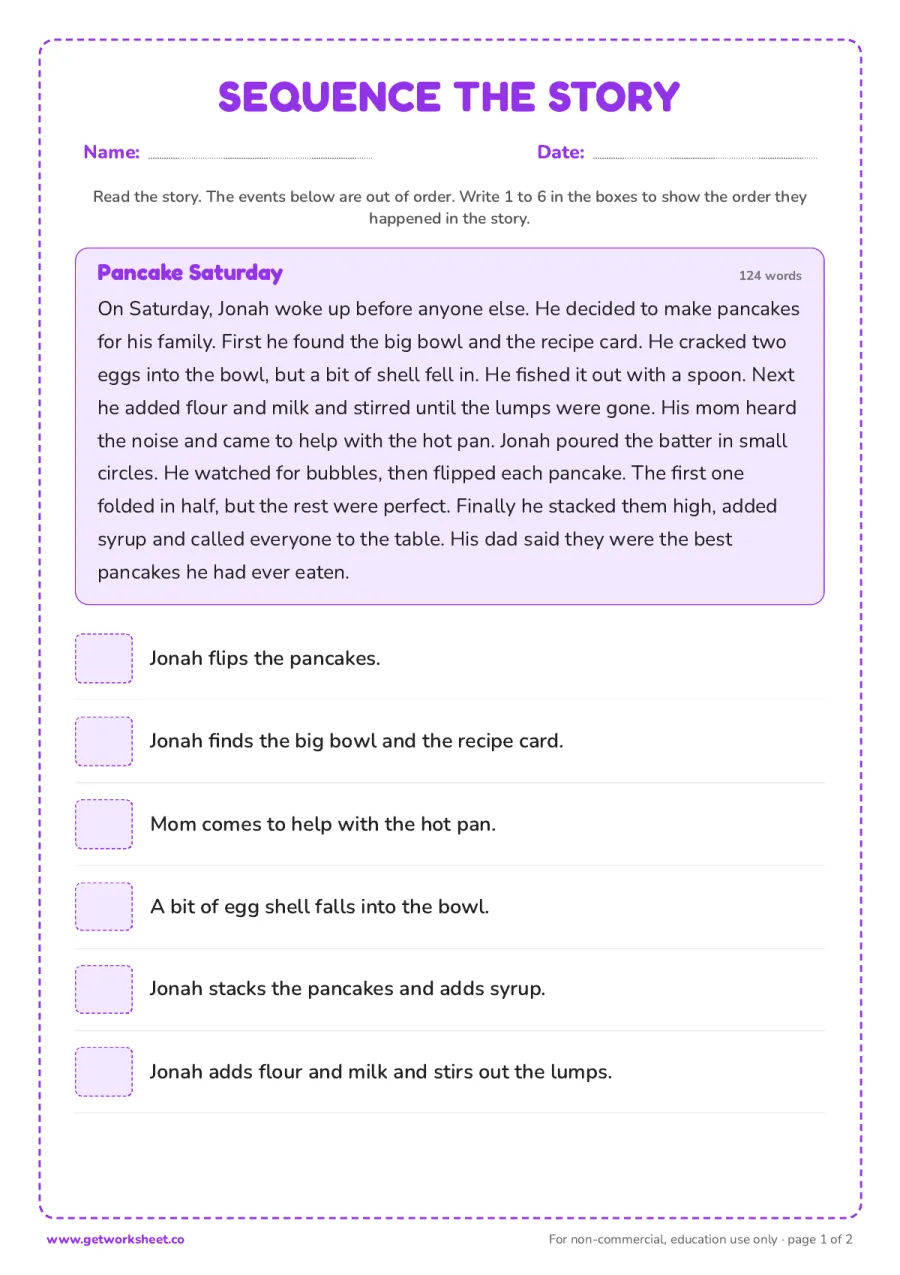
Sequence the story: Pancake Saturday
A 124-word story and six events to number in order. Answer key on page 2. Free printable PDF.
AI worksheet generator
Make a worksheet like this for your class
The 8 sheets above are fixed. The generator writes a new second grade reading comprehension worksheet for your grade, with the question types and count you choose, in about 20 seconds. Pick a grade to start:
What you get
- A fresh set of questions on second grade reading comprehension, not a copy of the sheets above
- Multiple choice, fill in the blanks, true or false, open ended
- Answer key and print-ready PDF with Pro
Free account, 1 worksheets a week. No card.
By second grade the passages get longer and the questions get deeper. These six passages run 134 to 143 words, long enough for a real plot or a real explanation, and each comes with five questions of four kinds: two literal (the answer is in the text), one inference (marked THINK: the answer is between the lines), one vocabulary in context (marked WORD: work out a meaning from the sentence around it) and one written response with three lines. The set has three stories, one fable with a moral question, and two nonfiction passages in science. Two organizer sheets finish it: main idea and details with its own paragraph, and a story to sequence in six events. Every PDF has the answer key on page 2, with model answers for the written questions.
What's in this set
- The Ant and the Dove (fable, 143 words). Aesop retold: two small acts of help. Written question on the moral "one good turn deserves another".
- The Garden in a Box (story, 134 words). Priya's window-box garden from mud to tomato. Inference: why she was not sure about the gift.
- Lost at the Fair (story, 139 words). Marcus loses his dad and remembers the rule. Written question on why the rule is a good one.
- The Snow Day Contest (story, 140 words). A snow bear loses its head and two children share the win. Inference about kindness.
- From Seed to Plant (nonfiction, 143 words). Seed coat, root, shoot, leaves, flower, seeds again. Vocabulary: cycle.
- Why the Moon Changes Shape (nonfiction, 143 words). Reflected light and the month-long orbit. Vocabulary: phases.
- Main idea and details: Elephants. An 87-word paragraph with a main idea box and three detail boxes. Answer key on page 2.
- Sequence the story: Pancake Saturday. A 124-word story and six events to number in order. Answer key on page 2.
Free printable makers
Make your own second grade reading comprehension sheets
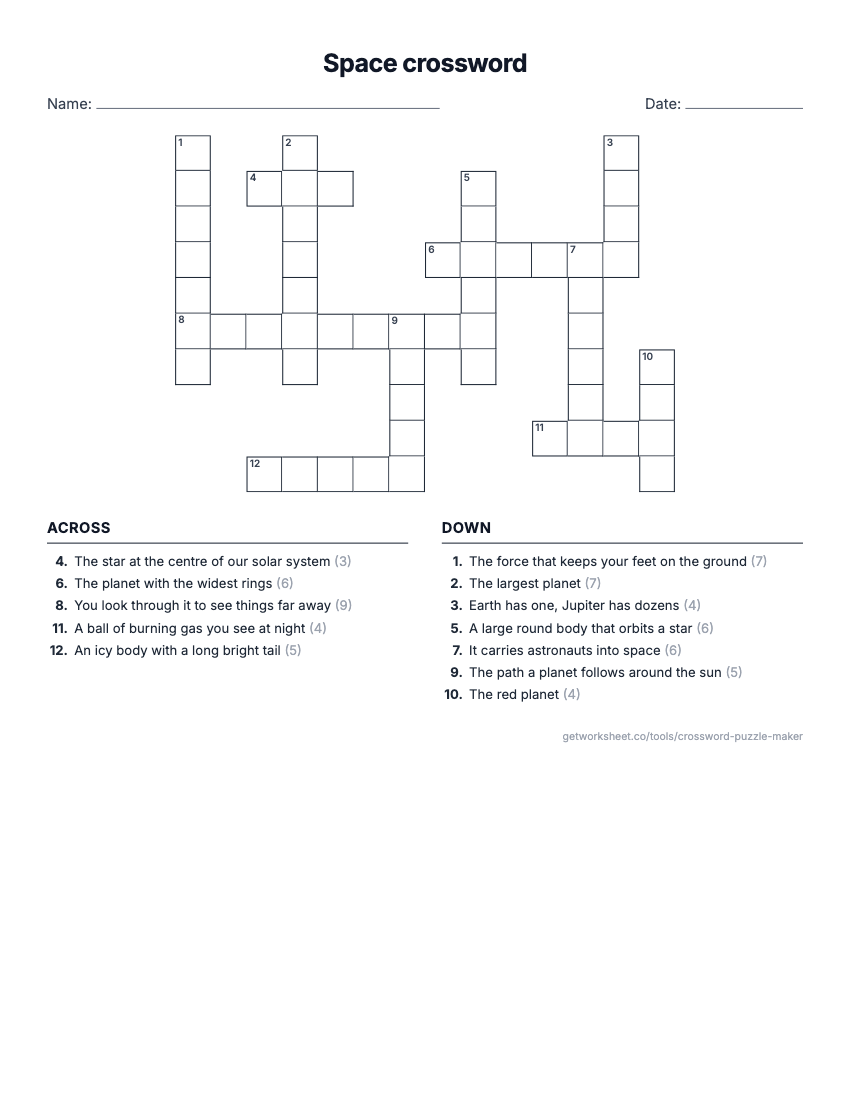
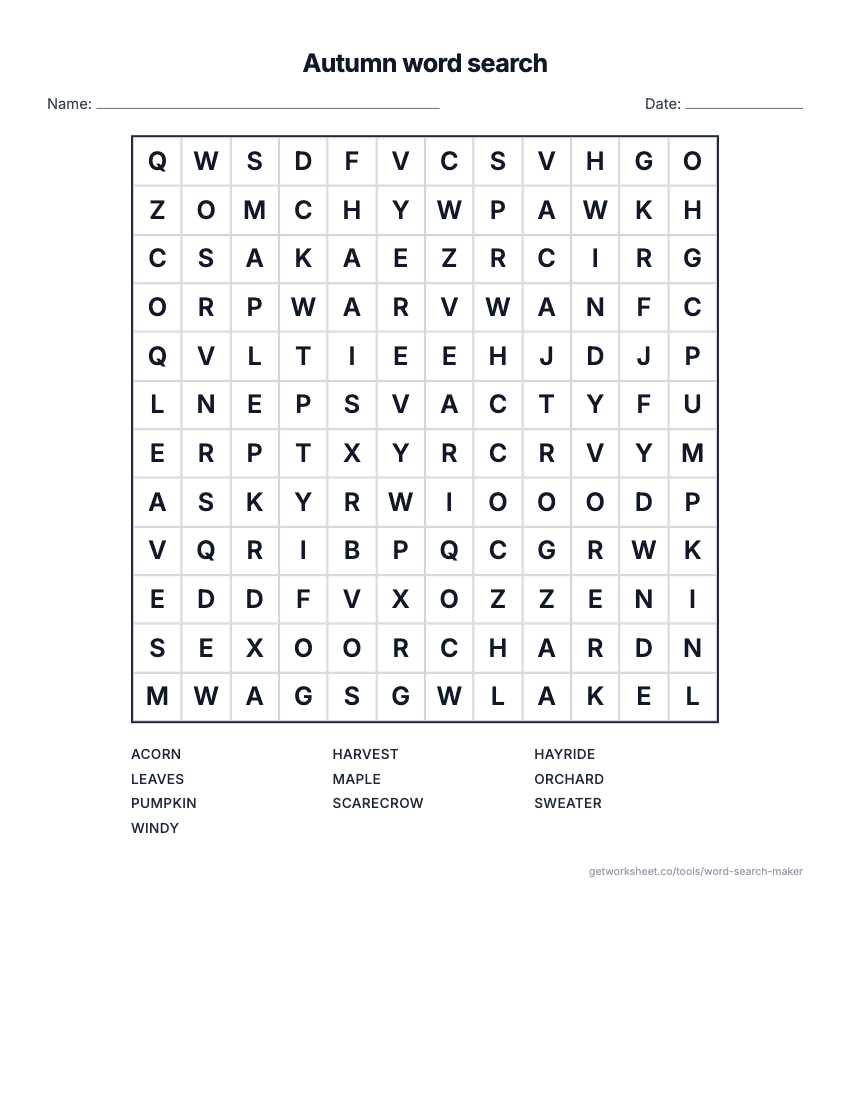
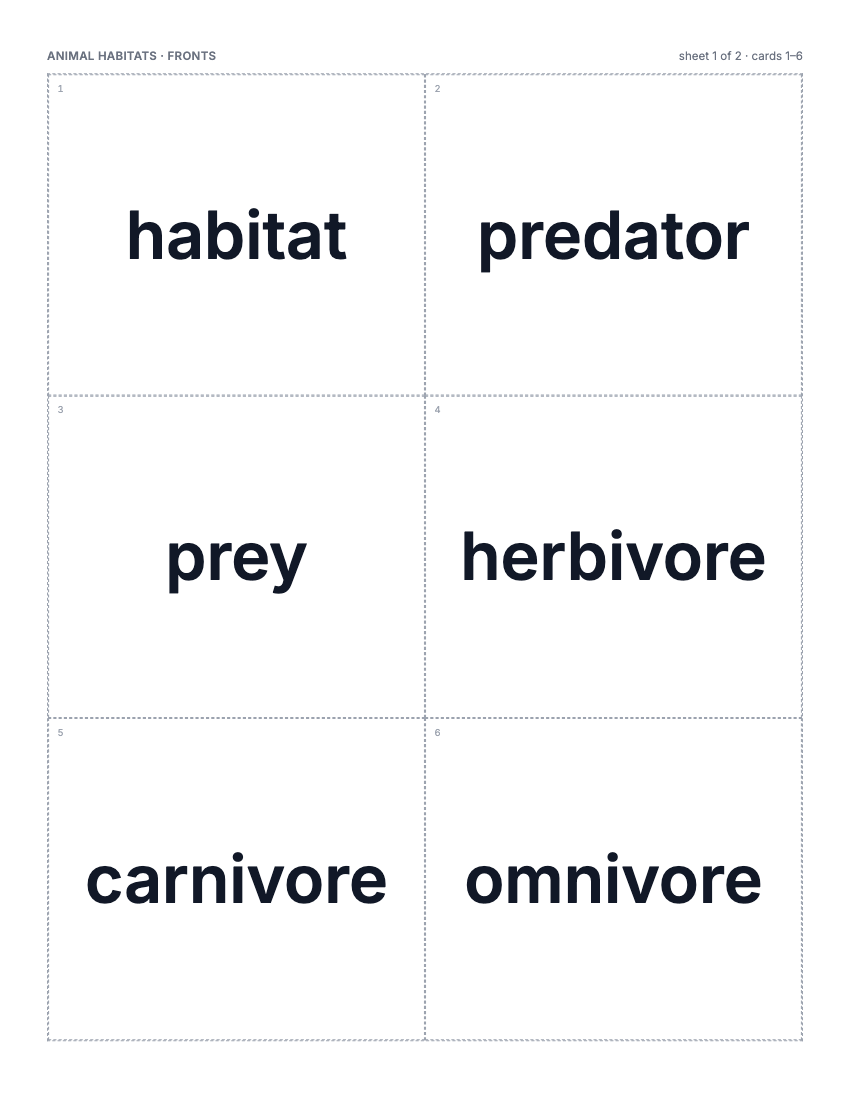
Type your own words or numbers and print in about 30 seconds. No account, no AI, answer key where it applies.
AI worksheet generator
Need a different second grade reading comprehension worksheet?
Generate a custom second grade reading comprehension worksheet: pick the grade, question types and count, and print it in about 20 seconds. Free accounts get 1 generation a week.
How to use these worksheets
One passage a sitting, about twenty minutes including the written answer. Second graders can read these silently; ask them to read the questions first, then the passage, then answer. That is the habit tests will expect later.
- Literal questions (1 and 2). Find the sentence, then circle. Have the child underline the proof in the passage.
- THINK questions. The answer is not written down. Ask "what did the character do, and what does that tell you?" For the fable, the moral question is the whole point of the genre: two characters each helped the other.
- WORD questions. Cover the choices and ask the child to guess the meaning from the sentence first. Words chosen: current, sprouted, practiced, groaned, cycle, phases.
- Written response. Three lines, full sentences, and the answer should mention the text. The key gives a model answer, not the only acceptable one.
- Main idea and details. The main idea is one sentence about the whole paragraph; details are facts that support it. A common check: could the main idea be the title?
- Sequence the story. Read the story, then number the events. Time words in the text (first, next, finally) are the clues; point them out.
Common mistakes to watch for
- Answering the inference question with a detail. "He felt scared because his heart thumped" is right; "he saw a bear" is a detail, not the feeling.
- Choosing the vocabulary answer that is also a real meaning of the word. "Current" can mean electricity, but not in this story. The words "in this story" on the sheet are the reminder.
- Written answers that do not mention the text. Ask for one detail from the passage in every written answer.
- Main idea that is too narrow. "Elephants have big ears" is a detail. The main idea covers the whole paragraph.
Frequently asked questions
What reading level are these second grade passages?
Middle of second grade: 134 to 143 words, sentences up to about 15 words, some two- and three-syllable words (struggling, disappear, sunlight) and a few topic words (current, angles, phases) explained in context. We do not assign Lexile scores because they are not measured for these texts. If a child reads about 90 words a minute with few errors, the level fits.
Do the worksheets have answer keys?
Yes, all eight have the answers on page 2. Multiple choice answers are highlighted; written questions show a model answer in the accent color that a teacher or parent can compare with the child's own words.
Why is there a fable?
Second grade standards ask children to recount fables and folktales and to determine their central message or moral. The Ant and the Dove is short, has two clear events, and its moral is stated at the end, so children can connect the message to what happened.
What is the difference between the THINK and WORD questions?
THINK is an inference: the answer is not stated, it follows from what the text says. WORD is vocabulary in context: the child works out what a word means from the sentence around it. Both are tested from second grade on, so the sheets label them.
More reading practice
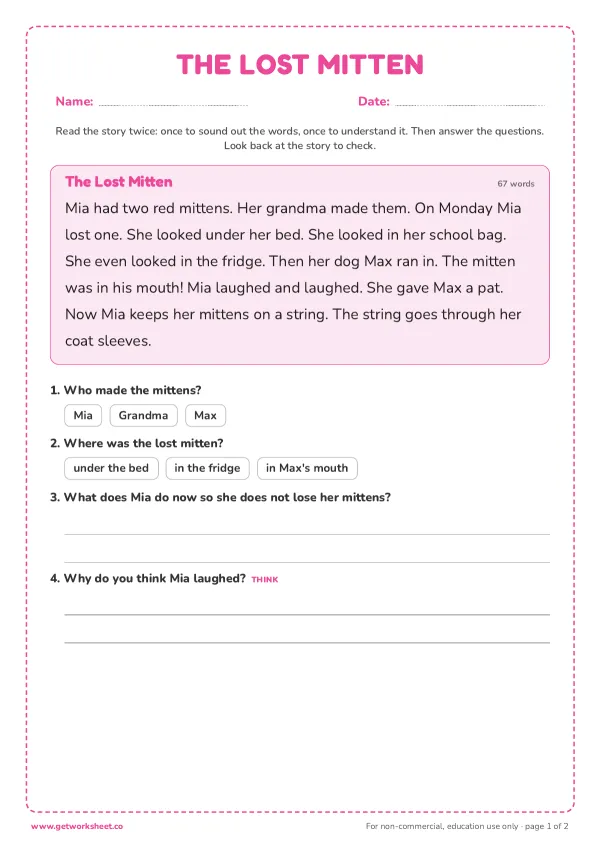
Before these: the first grade reading comprehension worksheets (65 to 75 words, four questions) and the kindergarten set. After: the third grade reading comprehension worksheets. The story elements worksheets practice character, setting and plot on their own, and the sentence fragments worksheets help with full-sentence written answers. For a passage on any topic at this level, try the reading passage generator.
Free library
Related collections
Free first grade reading comprehension worksheets
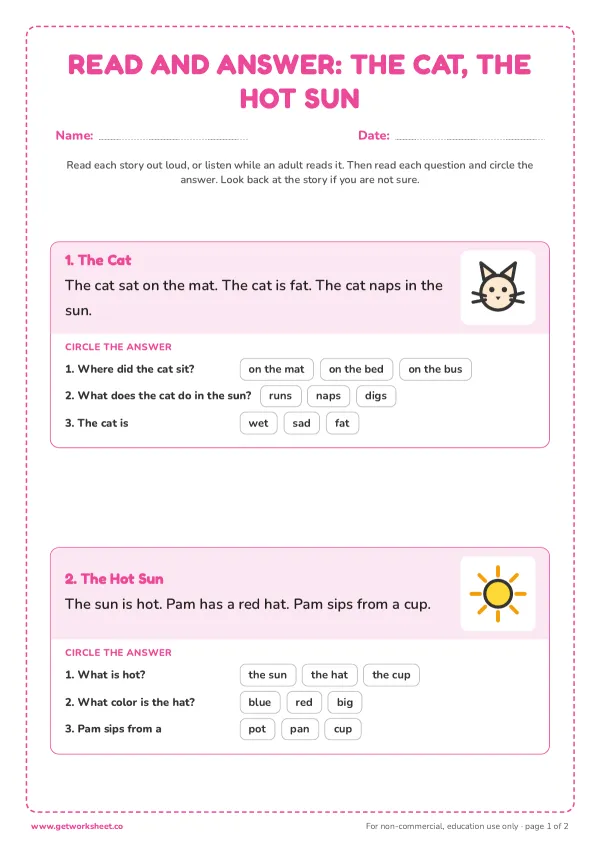
Free kindergarten reading comprehension worksheets
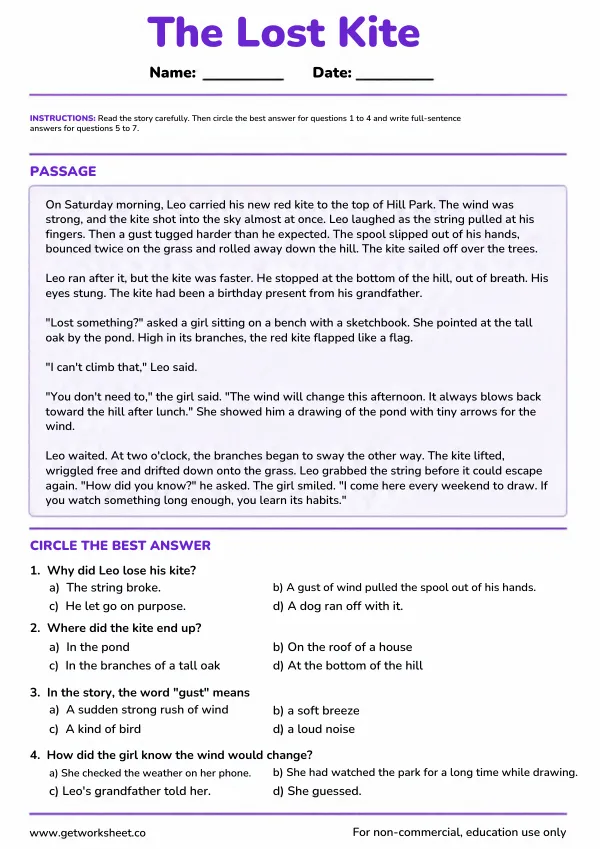
Free third grade reading comprehension worksheets
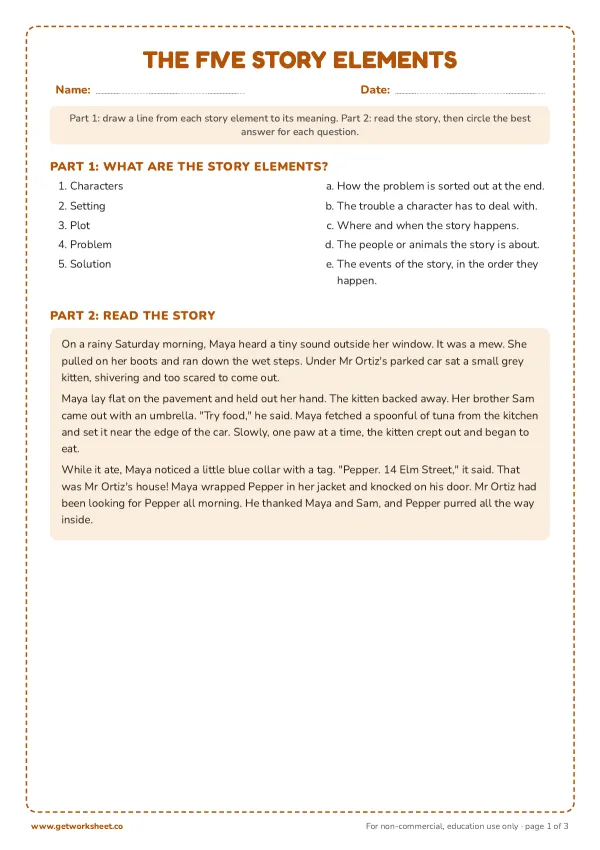
Free story elements worksheets
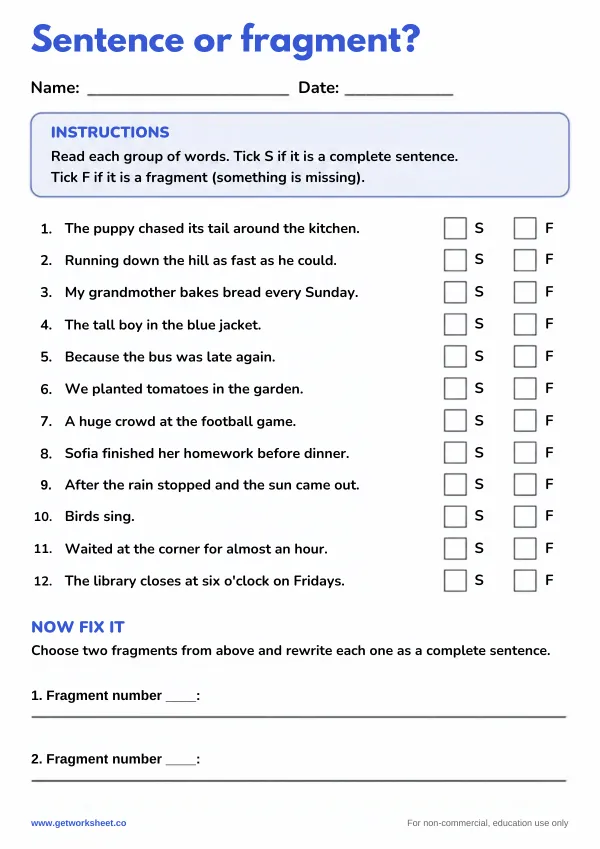
Free sentence fragments worksheets
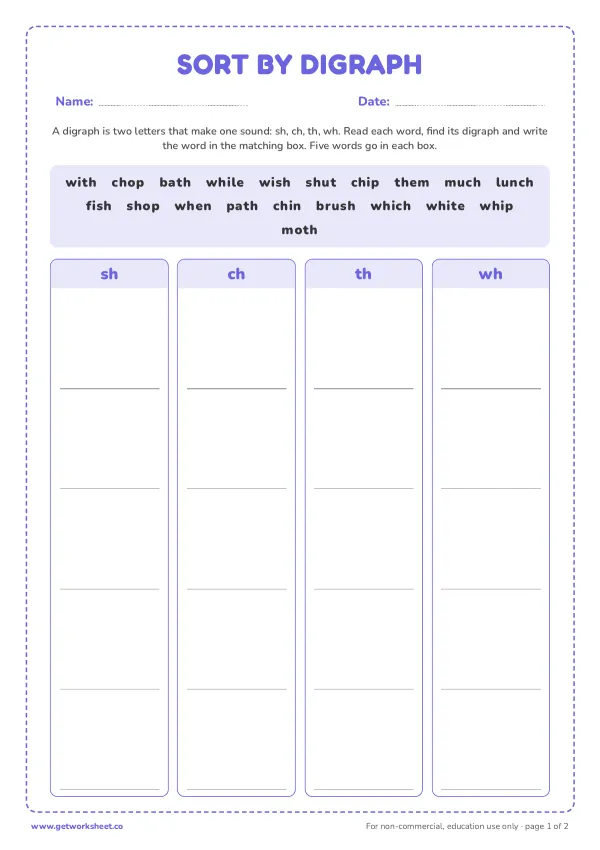
Free digraphs worksheets
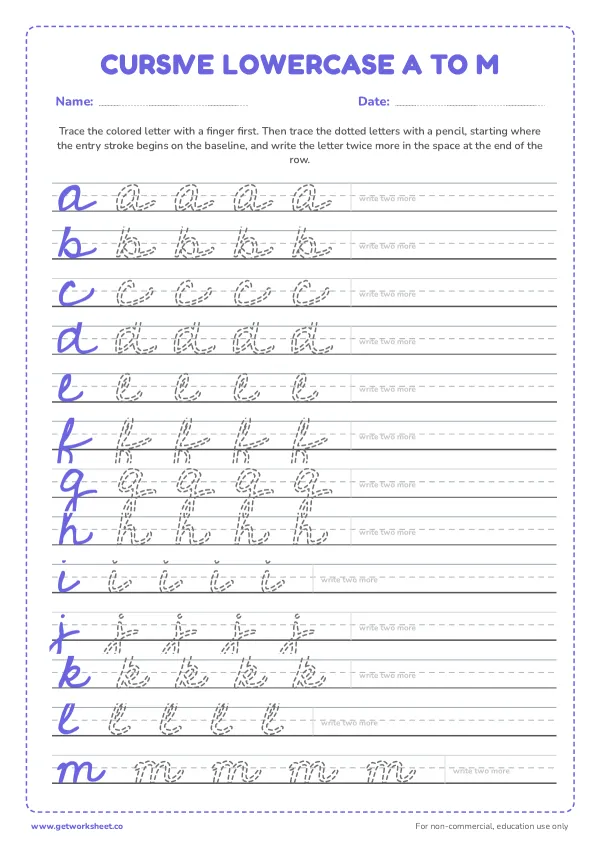
Free cursive writing worksheets
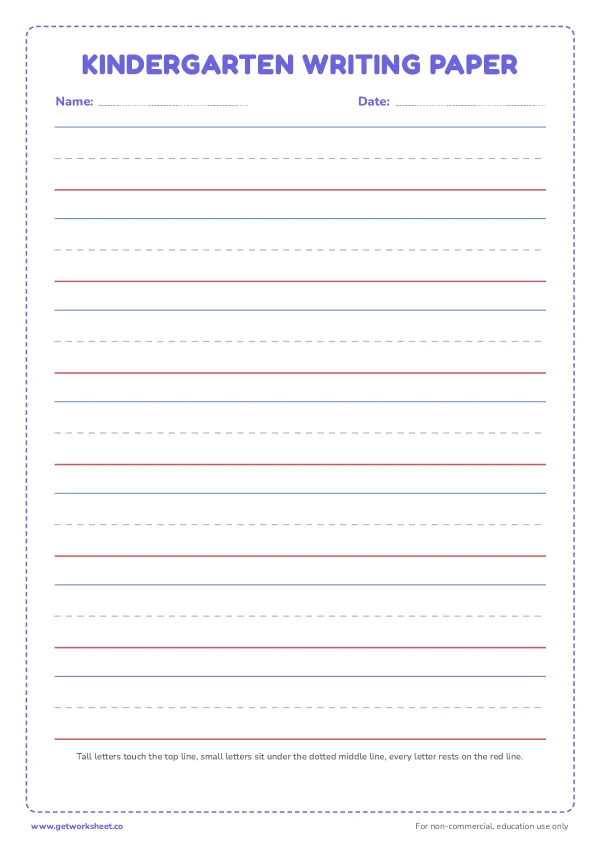
Free handwriting paper printables
More worksheets
- Free word search printables
- Free word families worksheets
- Free Montessori language worksheets
- Free pre-writing worksheets
- Free sight words worksheets (Dolch and Fry)
- Free CVC words worksheets
- Free name tracing worksheets
- Free letter Z tracing worksheets
- Free letter Y tracing worksheets
- Free letter X tracing worksheets
- Free letter W tracing worksheets
- Free letter V tracing worksheets