English · Grade 1
Free first grade reading comprehension worksheets
Free printable first grade reading comprehension worksheets: four stories and two nonfiction passages of 65 to 75 words with multiple choice, short answer and thinking questions, plus a story map and fact or opinion. Answer keys.
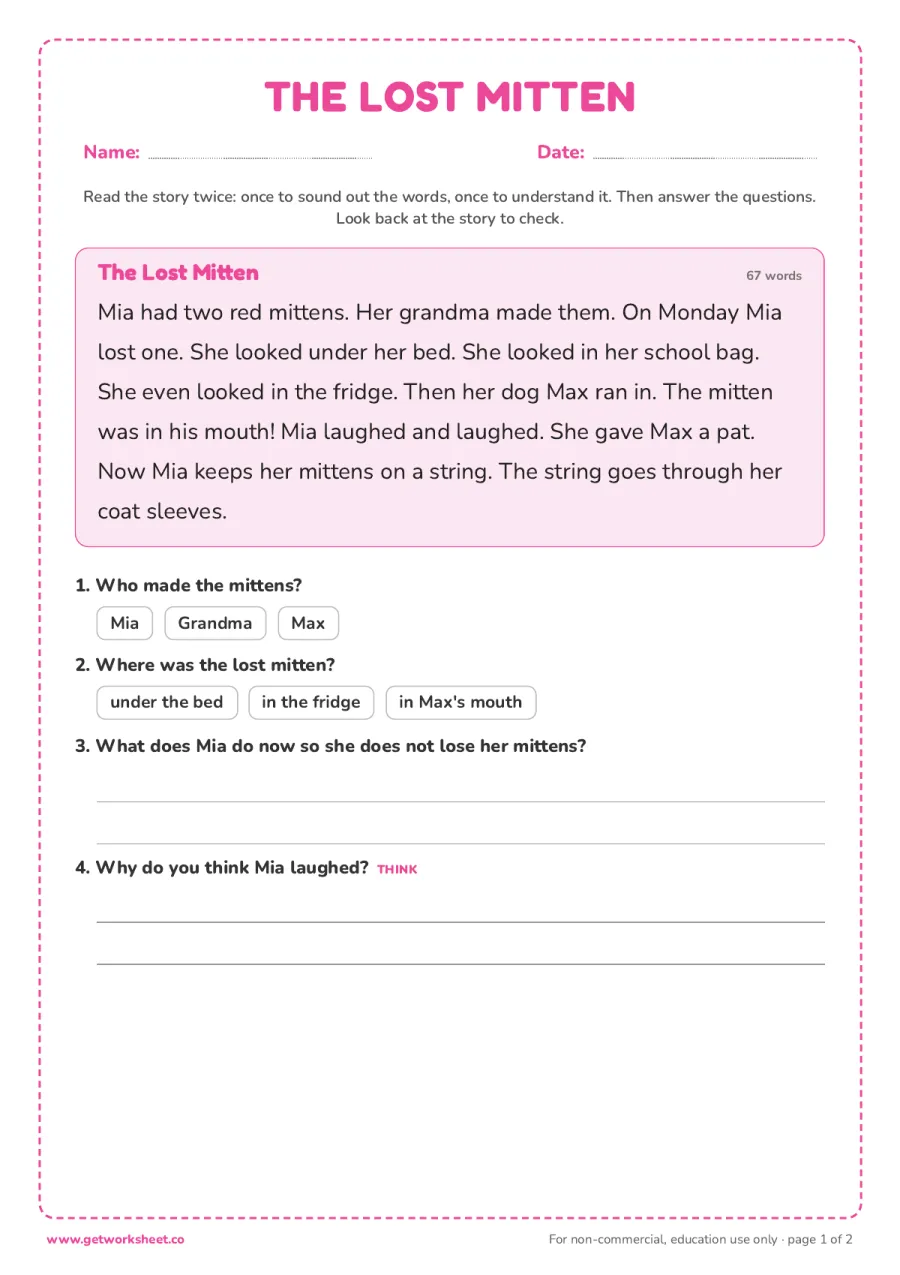
The Lost Mitten (story, 67 words)
A short story of 67 words with four questions: two multiple choice, one short answer and one "why do you think" question. Answer key on page 2. Free printable PDF.
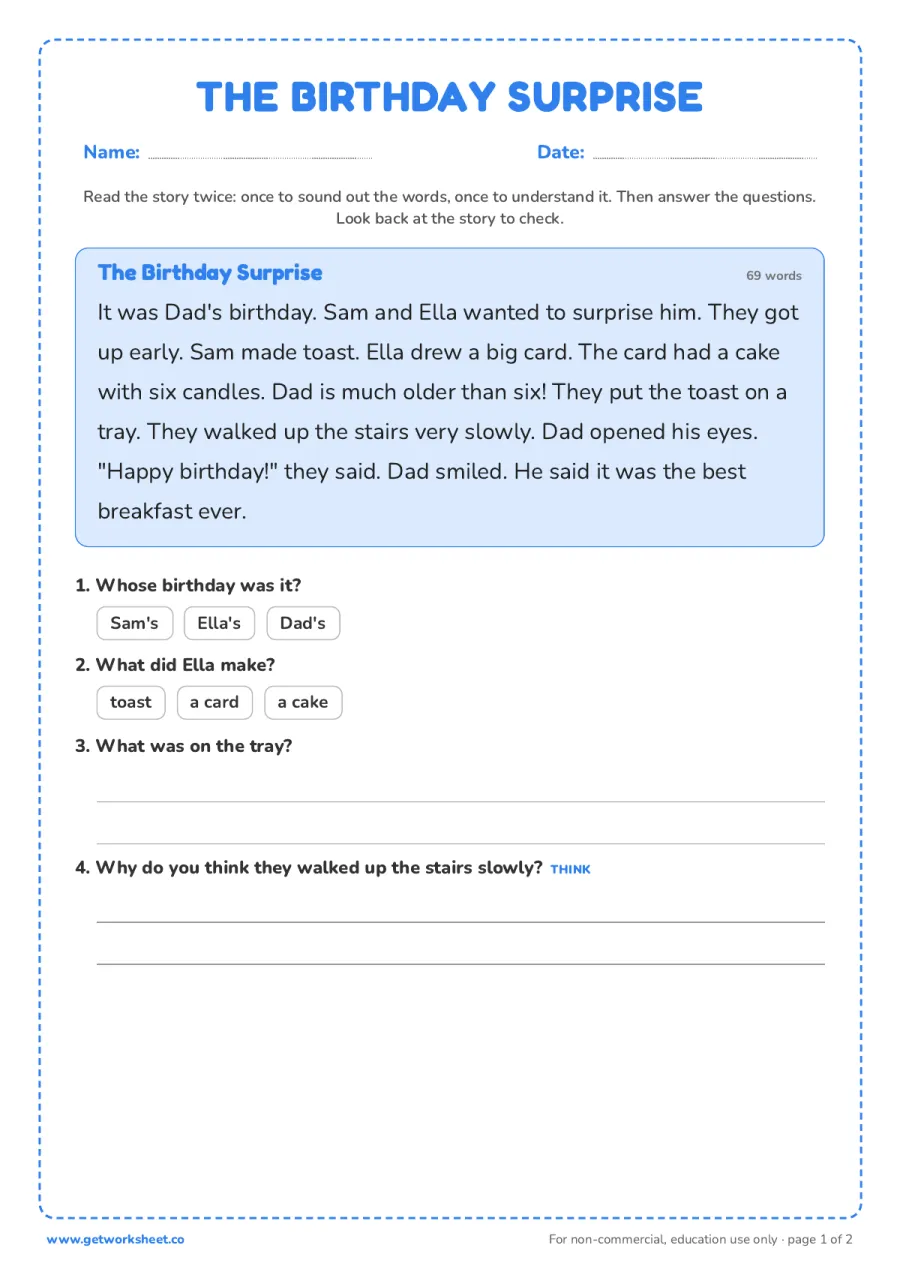
The Birthday Surprise (story, 69 words)
A short story of 69 words with four questions: two multiple choice, one short answer and one "why do you think" question. Answer key on page 2. Free printable PDF.
Whole set
All 8 sheets in one PDF
Instant and ad-free. No account needed.
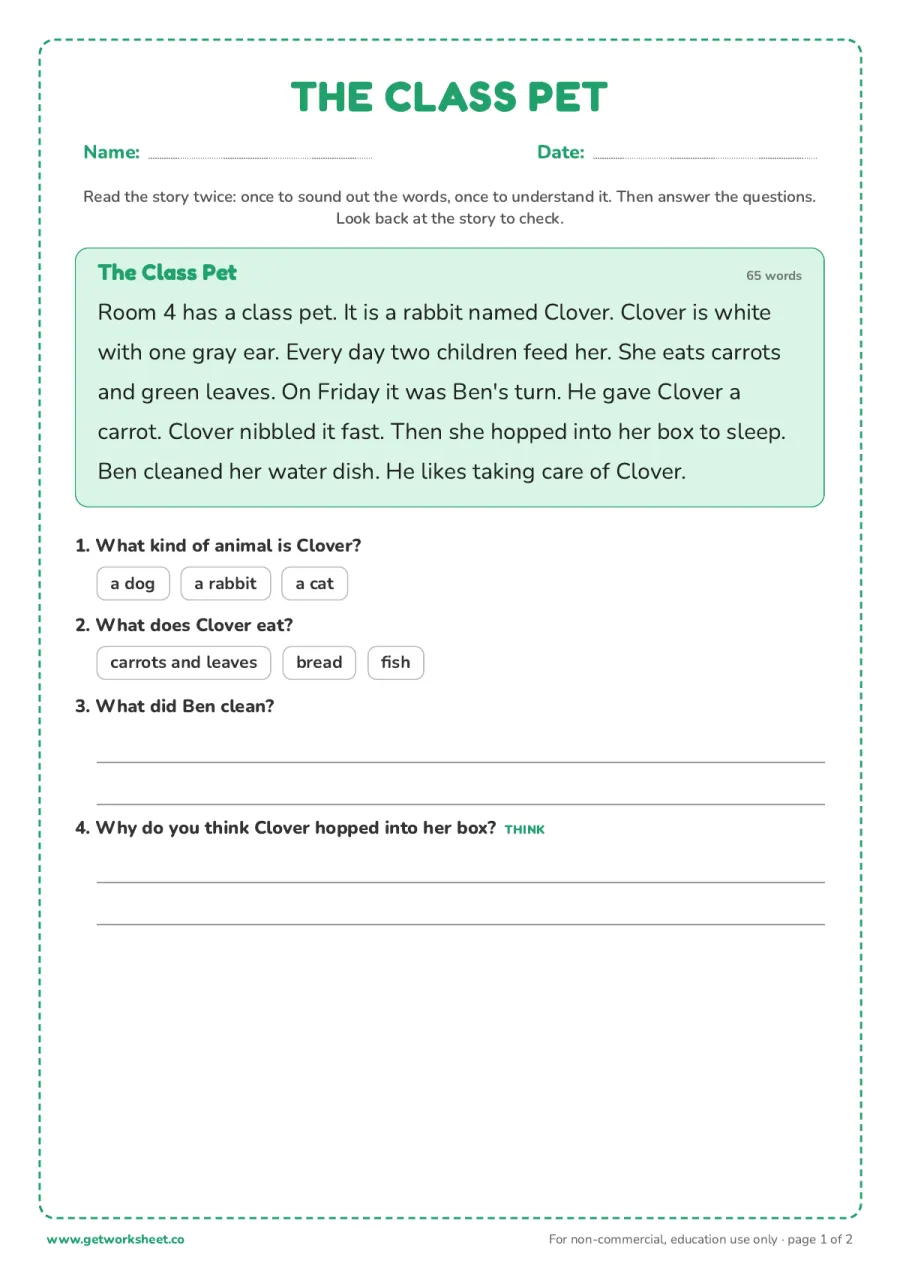
The Class Pet (story, 65 words)
A short story of 65 words with four questions: two multiple choice, one short answer and one "why do you think" question. Answer key on page 2. Free printable PDF.
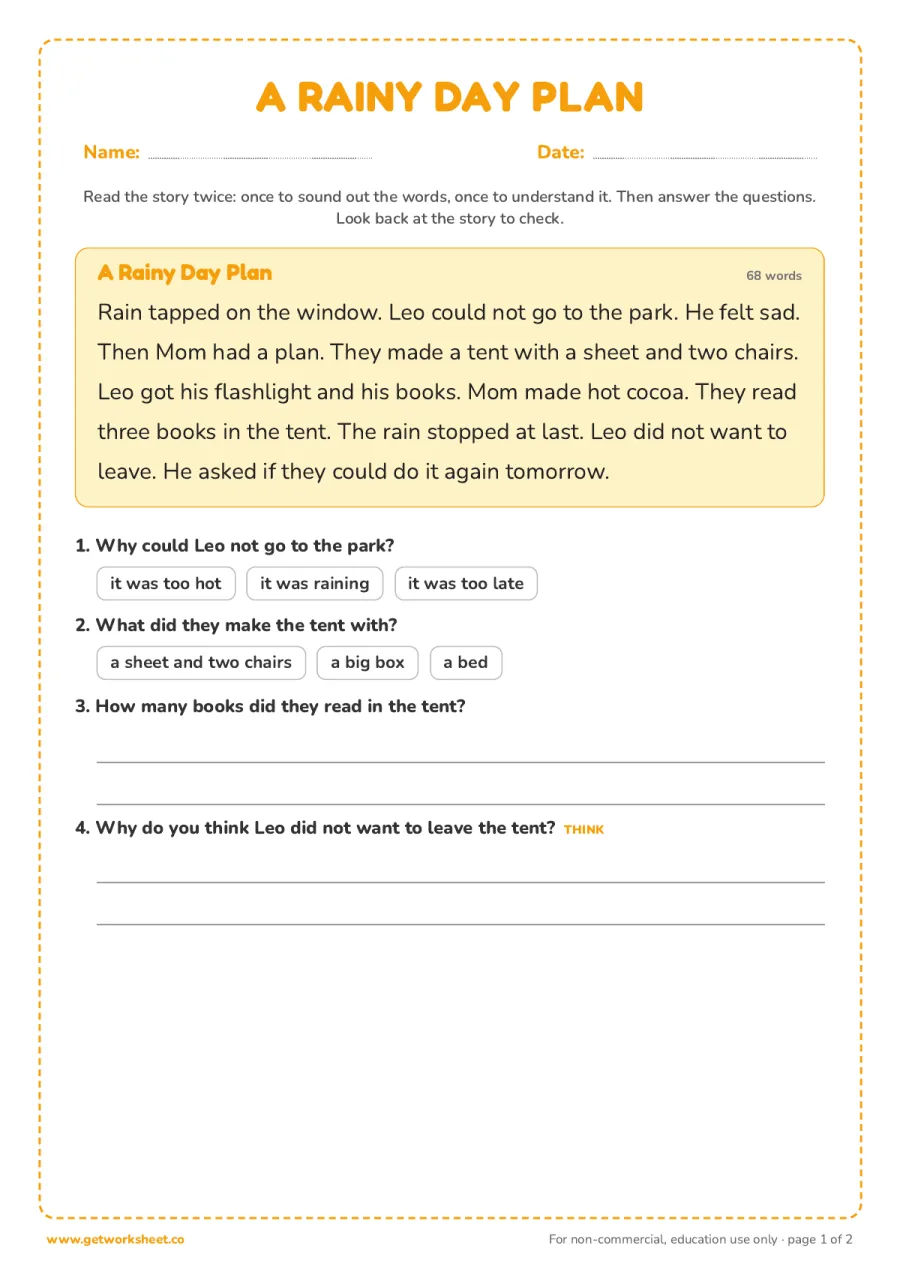
A Rainy Day Plan (story, 68 words)
A short story of 68 words with four questions: two multiple choice, one short answer and one "why do you think" question. Answer key on page 2. Free printable PDF.
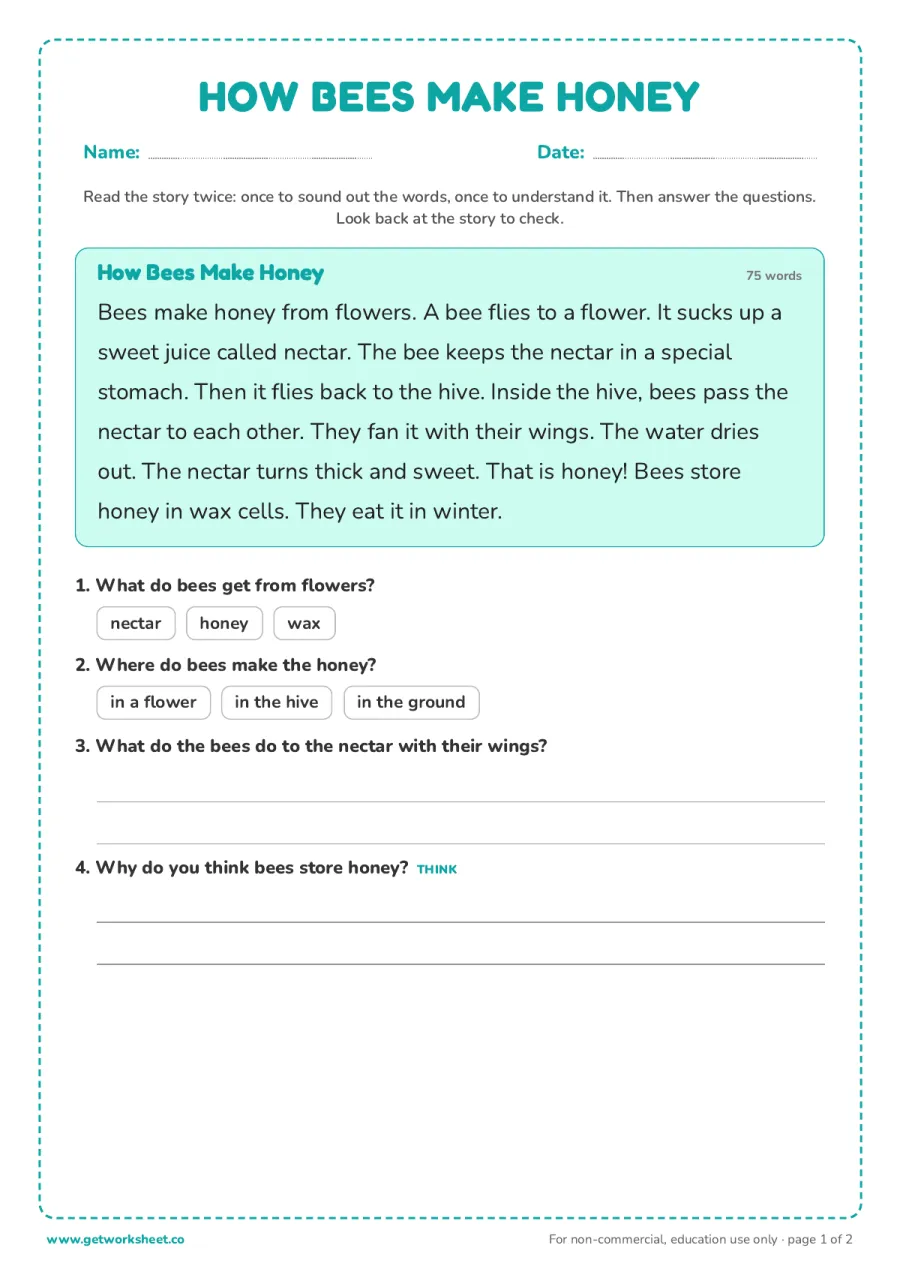
How Bees Make Honey (nonfiction, 75 words)
A nonfiction passage of 75 words with four questions: two multiple choice, one short answer and one "why do you think" question. Answer key on page 2. Free printable PDF.
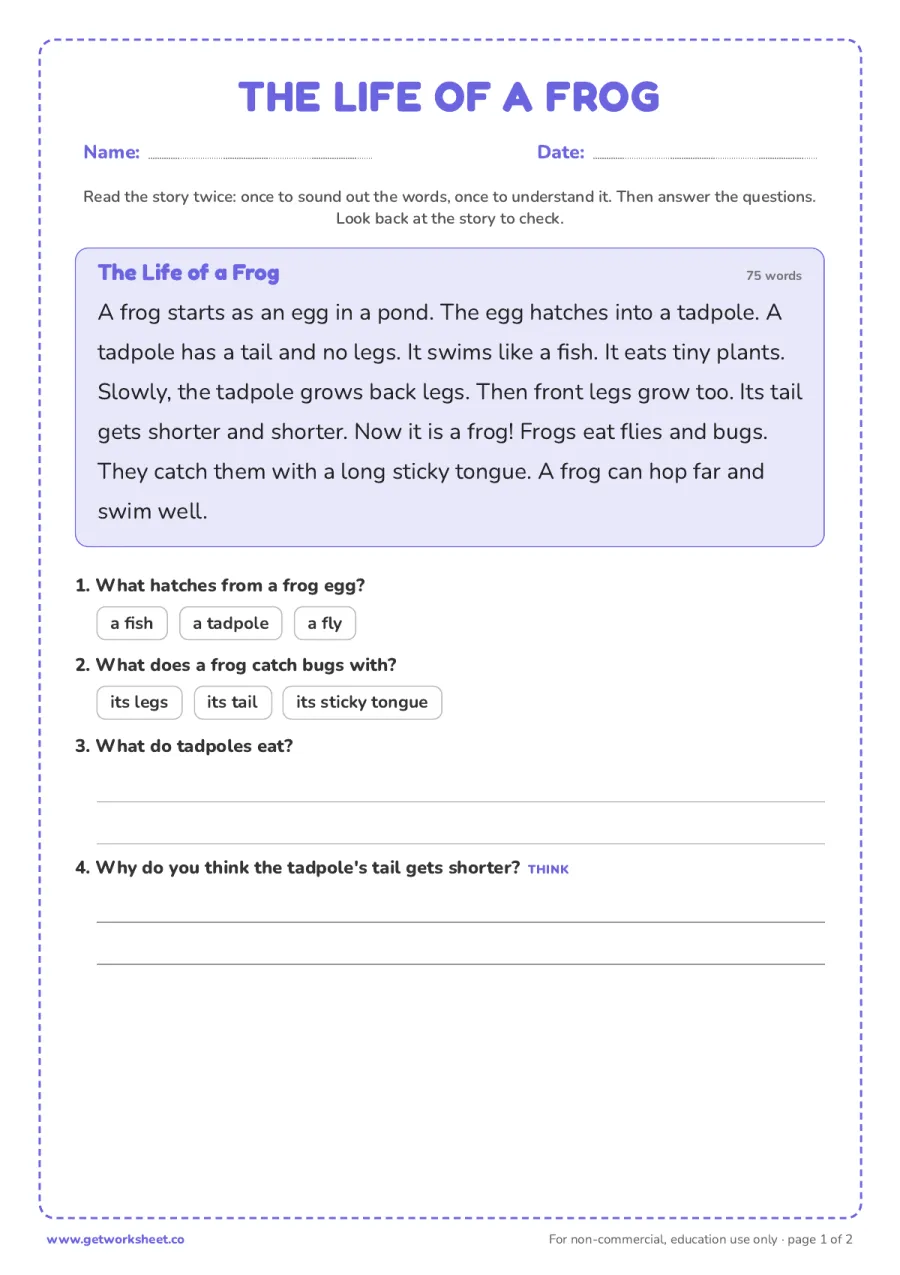
The Life of a Frog (nonfiction, 75 words)
A nonfiction passage of 75 words with four questions: two multiple choice, one short answer and one "why do you think" question. Answer key on page 2. Free printable PDF.
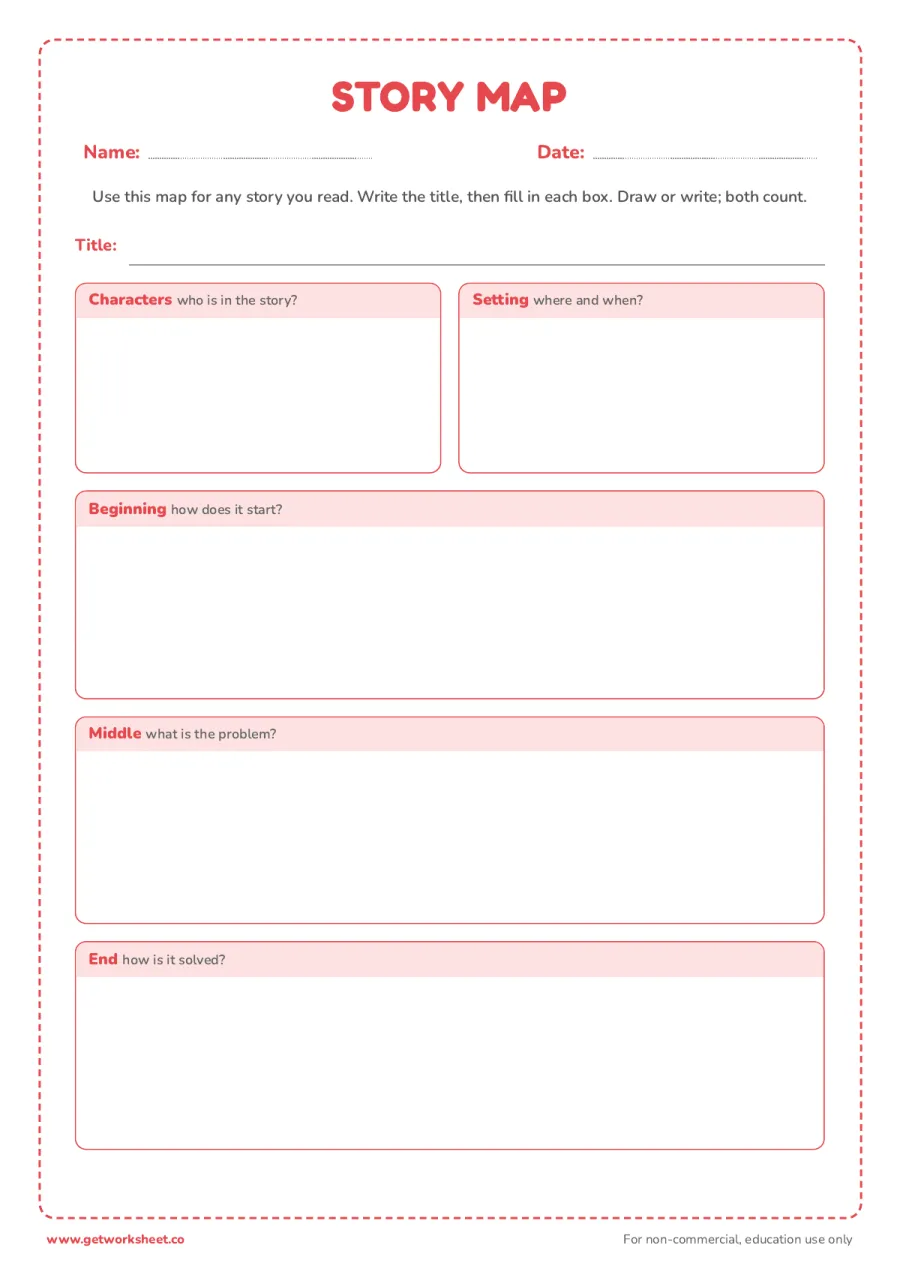
Story map: characters, setting, beginning, middle, end
A graphic organizer to fill in for any story: title, characters, setting and the beginning, middle and end. Free printable PDF.
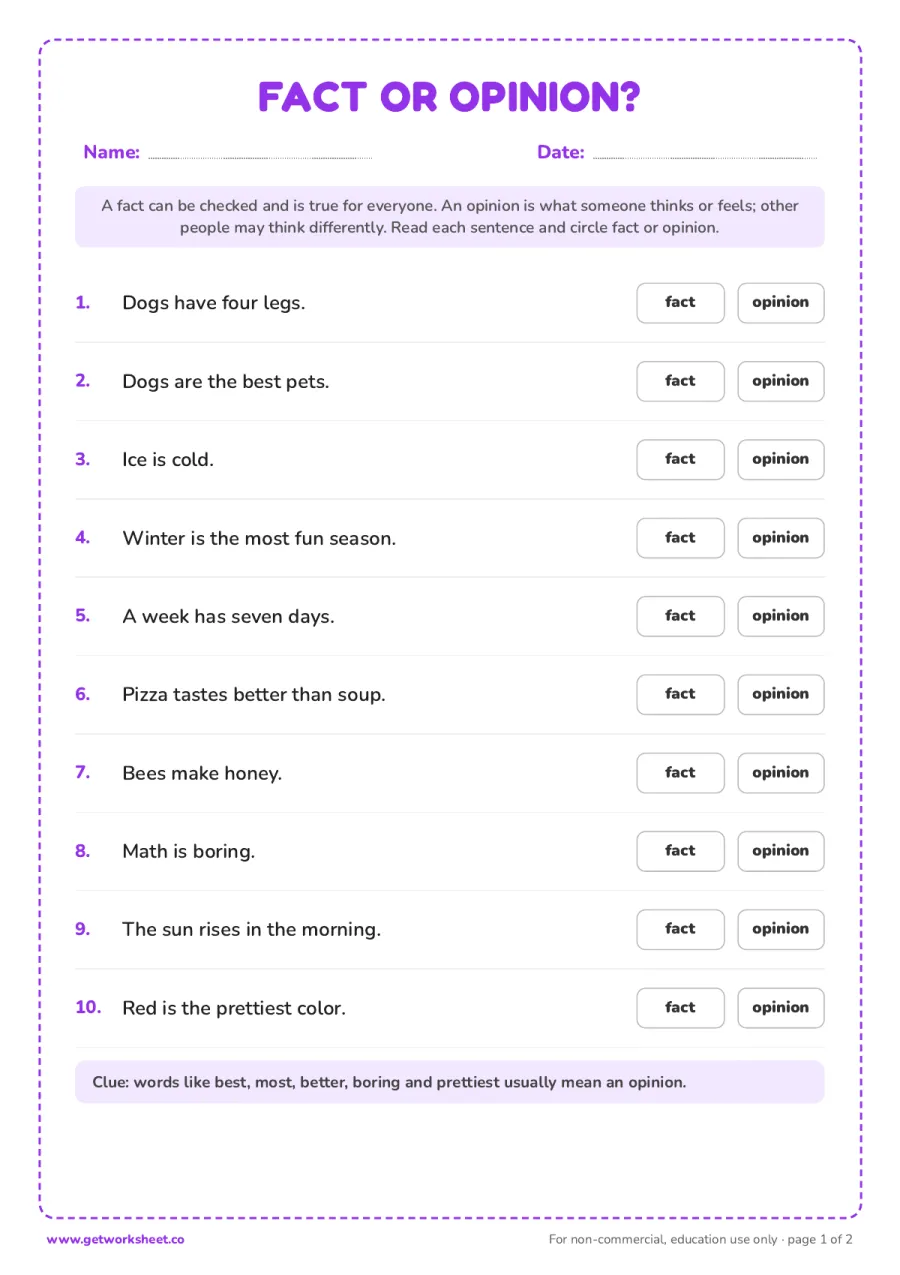
Fact or opinion? Ten sentences to sort
Ten sentences to read and mark as fact or opinion, with a clue box about opinion words. Answer key on page 2. Free printable PDF.
AI worksheet generator
Make a worksheet like this for your class
The 8 sheets above are fixed. The generator writes a new first grade reading comprehension worksheet for your grade, with the question types and count you choose, in about 20 seconds. Pick a grade to start:
What you get
- A fresh set of questions on first grade reading comprehension, not a copy of the sheets above
- Multiple choice, fill in the blanks, true or false, open ended
- Answer key and print-ready PDF with Pro
Free account, 1 worksheets a week. No card.
First graders are moving from sounding out words to reading for meaning, and the passages here are built for that stage: 65 to 75 words, sentences of five to nine words, mostly decodable vocabulary with common sight words, and one clear event per sentence. Each of the six passages comes with four questions that step up in difficulty: two multiple choice (find it in the text), one short written answer (copy or rephrase a detail) and one "why do you think" question that asks the child to reason about the story. Every PDF has the answer key on page 2, with a model answer for the open question. Two more sheets round out the set: a story map to use with any book, and a fact or opinion sort.
What's in this set
- The Lost Mitten (story, 67 words). Mia loses a mitten and her dog finds it. Skills: sequence, detail, inference about a feeling.
- The Birthday Surprise (story, 69 words). Two children make Dad breakfast. Skills: who did what, inference about why they moved slowly.
- The Class Pet (story, 65 words). A rabbit named Clover and her helper Ben. Skills: detail, cause and effect.
- A Rainy Day Plan (story, 68 words). A blanket tent on a rainy day. Skills: problem and solution, counting details.
- How Bees Make Honey (nonfiction, 75 words). Nectar to honey in six steps. Skills: process, vocabulary (nectar, hive), purpose.
- The Life of a Frog (nonfiction, 75 words). Egg, tadpole, frog. Skills: sequence, detail, inference about change.
- Story map. Title, characters, setting, beginning, middle and end boxes for any story the child reads. No key.
- Fact or opinion? Ten sentences to sort, with a clue box about opinion words. Answer key on page 2.
Free printable makers
Make your own first grade reading comprehension sheets
Type your own words or numbers and print in about 30 seconds. No account, no AI, answer key where it applies.
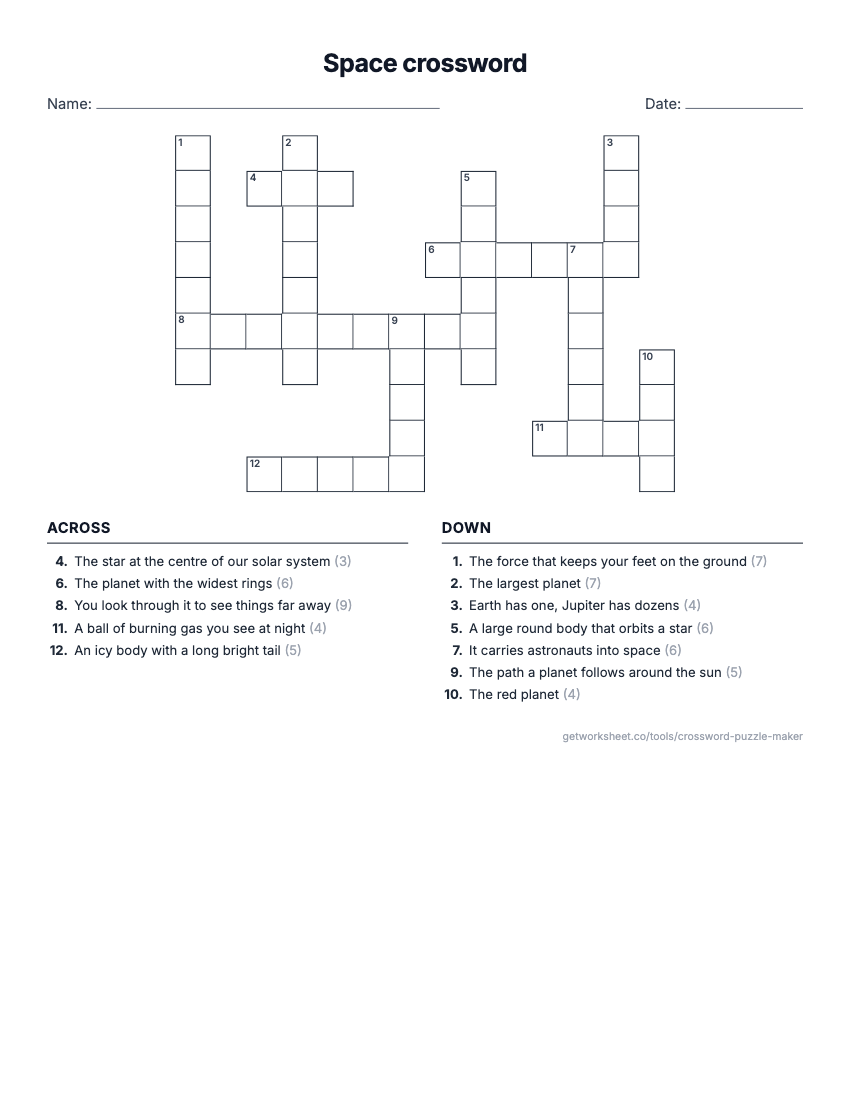
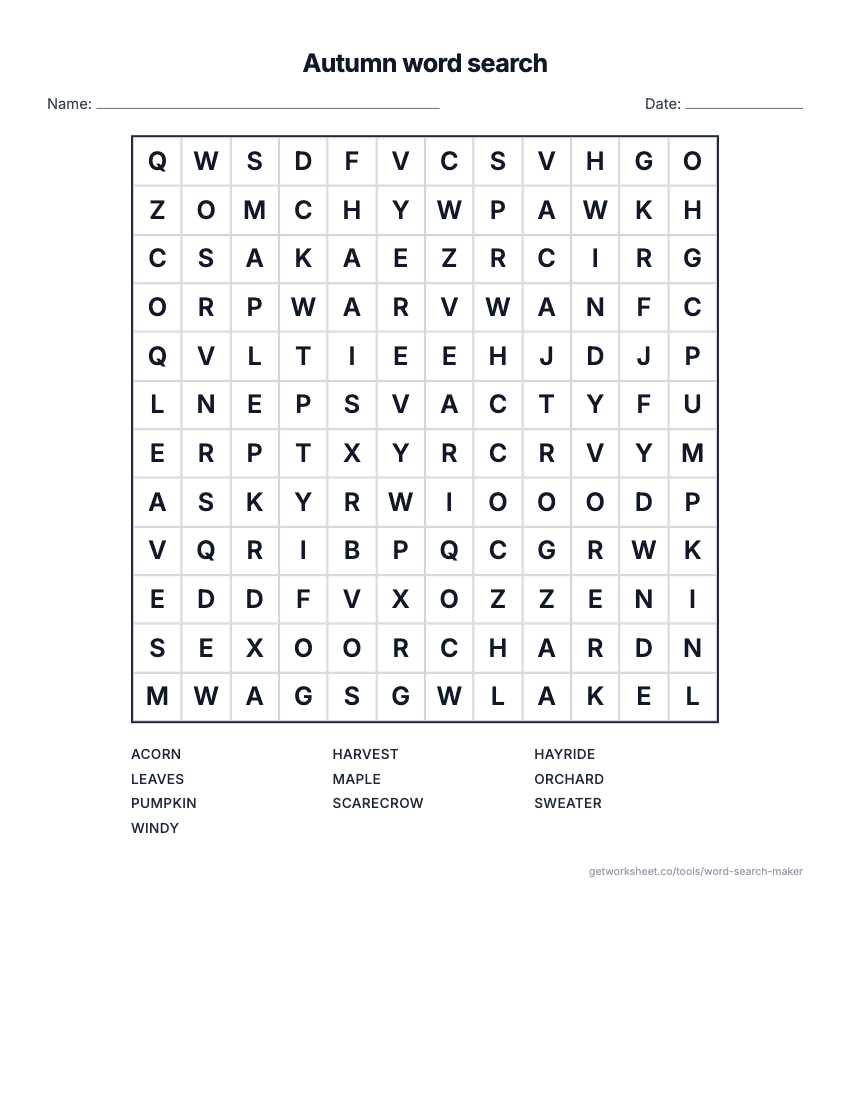
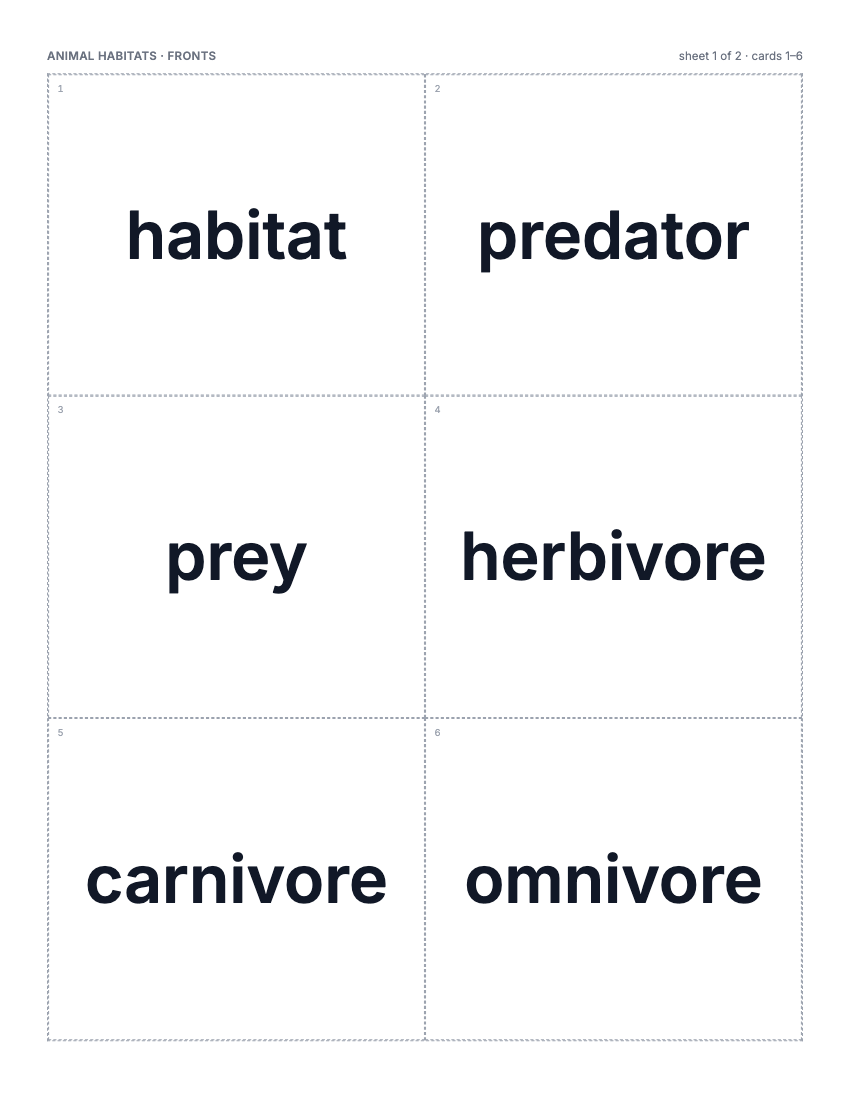
AI worksheet generator
Need a different first grade reading comprehension worksheet?
Generate a custom first grade reading comprehension worksheet: pick the grade, question types and count, and print it in about 20 seconds. Free accounts get 1 generation a week.
How to use these worksheets
One passage per sitting, about fifteen minutes. The child reads aloud first; you listen for whether the decoding is smooth enough that attention is free for meaning. If more than one word in ten is a struggle, read the passage to them and let them answer orally: the comprehension practice still counts.
- Read twice. Once to decode, once to understand. Then the questions. This habit matters more than any single answer.
- Questions 1 and 2 (multiple choice). The answer is in the text. Ask the child to point to the sentence that proves it before circling.
- Question 3 (short answer). A word or a phrase is enough at this grade. Copying the words from the passage is allowed and is how children learn to cite text.
- Question 4 (why do you think). Marked THINK on the sheet. There is no single right answer; the key gives a model. Accept any answer that uses the story. Ask "what in the story makes you think that?"
- Story map. Print several. Use it after a read-aloud or a leveled reader. Drawing in the boxes is fine for children who write slowly.
- Fact or opinion. Read the definitions in the box together first. The clue words (best, most, better, boring, prettiest) give a strategy, not just an answer.
Common mistakes to watch for
- Answering from memory of the first read. "Look back" is the skill. Keep a finger on the passage while answering.
- Picking the first choice that appears in the text. Distractors are often words from the story used in the wrong place. Read all three choices.
- One-word answers to the THINK question. Ask for "because": "Leo did not want to leave because...".
- Calling every sentence a fact. Ask "could someone else think differently?" If yes, it is an opinion.
Frequently asked questions
What reading level are these first grade passages?
Roughly the middle of first grade: 65 to 75 words, short sentences, mostly one- and two-syllable words with common sight words, and a small number of topic words (nectar, tadpole, flashlight) that are explained by context. We do not publish Lexile numbers because they are not measured; use the word counts and sentence length as the guide, and try the kindergarten set first if a passage is too hard.
Do the worksheets have answer keys?
Yes. Seven of the eight have the answers on page 2, including a model answer for each open "why do you think" question. The story map has no key because it is used with a book of your choice.
Fiction or nonfiction first?
Start with a story (The Lost Mitten or The Class Pet), because narrative order helps children follow along. Then try How Bees Make Honey, which introduces the way nonfiction gives information in steps.
How many should a first grader do a week?
Two or three passages a week, plus reading real books, is plenty. Re-reading a passage a few days later, and doing better, is a good use of the same sheet.
More reading practice
Before these: the kindergarten reading comprehension worksheets, with three-sentence stories. After: the third grade reading comprehension worksheets. The story elements worksheets go deeper into characters, setting and plot, and the sentence fragments worksheets help with writing full-sentence answers. Children who stumble on the words need the sight words worksheets and CVC words worksheets first. For a passage on any topic at this level, try the reading passage generator.
Free library
Related collections
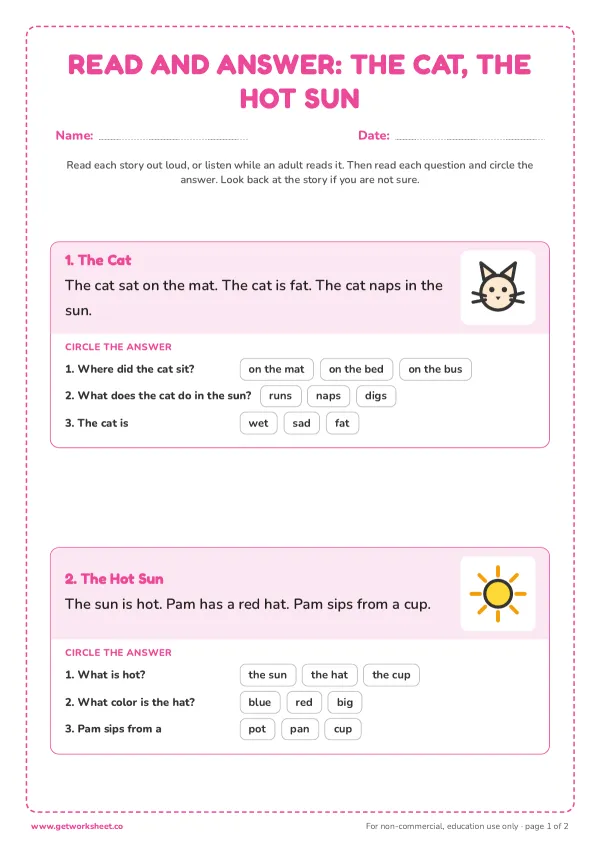
Free kindergarten reading comprehension worksheets
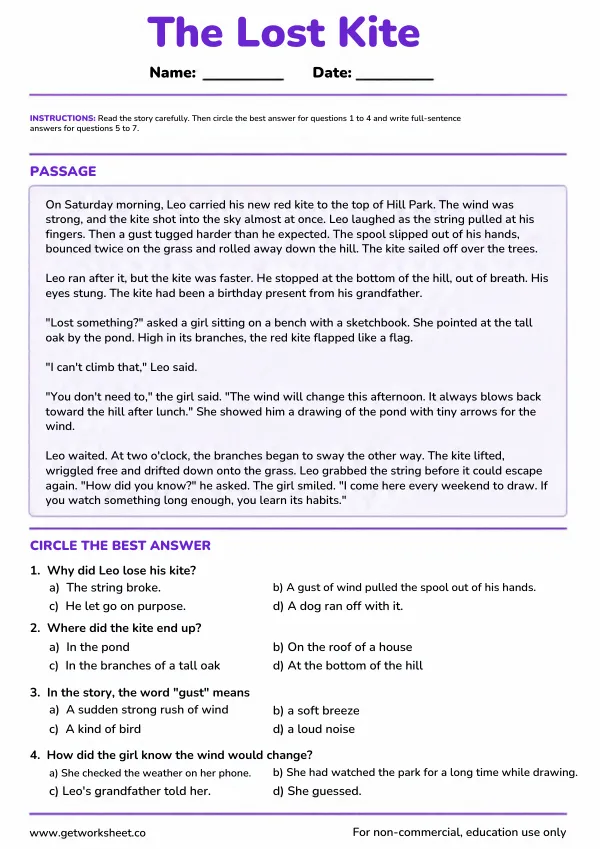
Free third grade reading comprehension worksheets
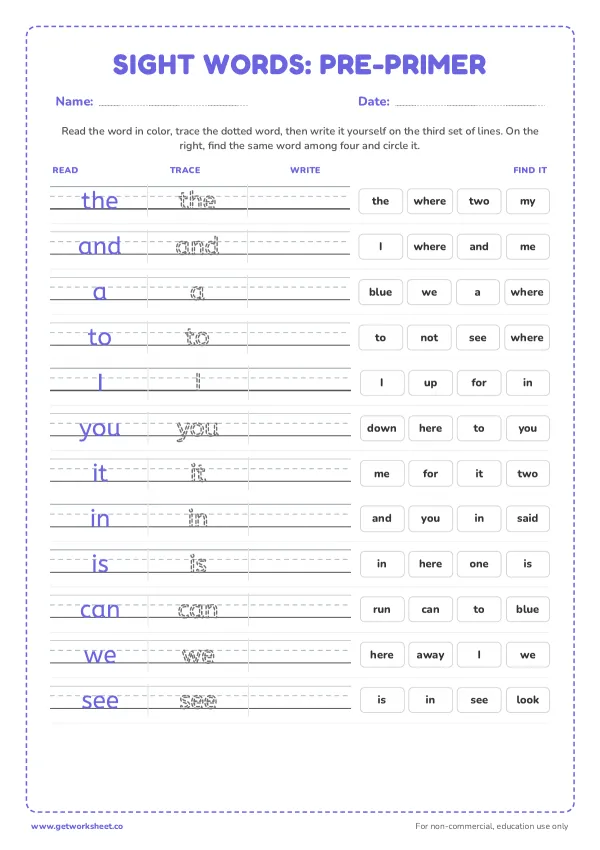
Free sight words worksheets (Dolch and Fry)
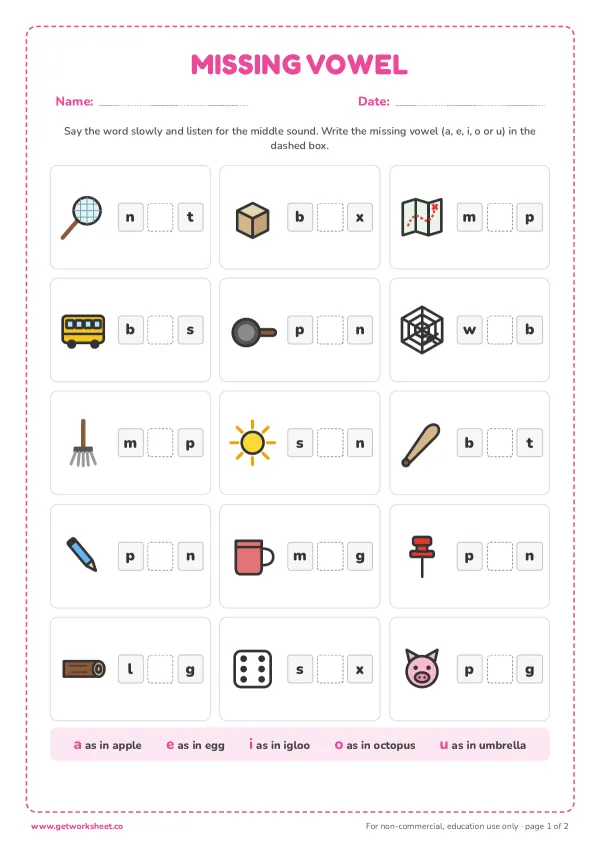
Free CVC words worksheets
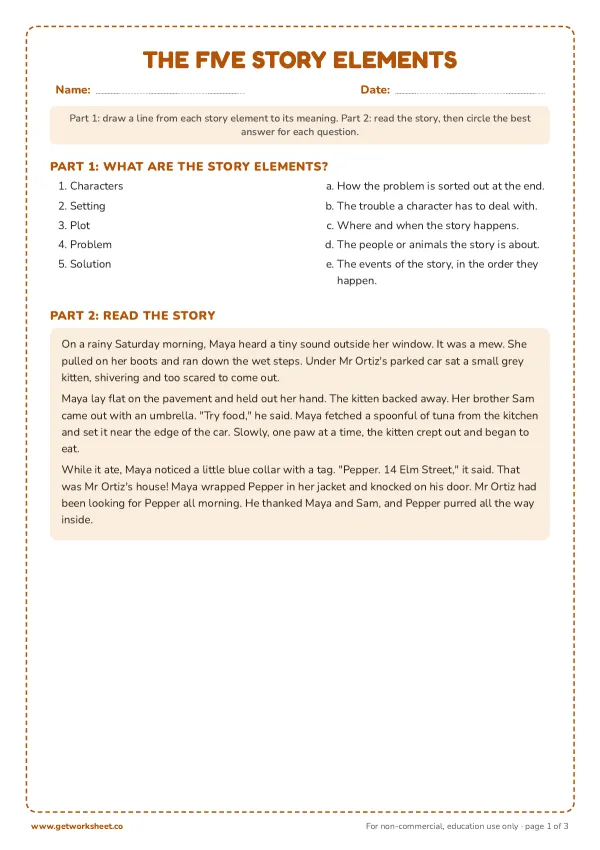
Free story elements worksheets
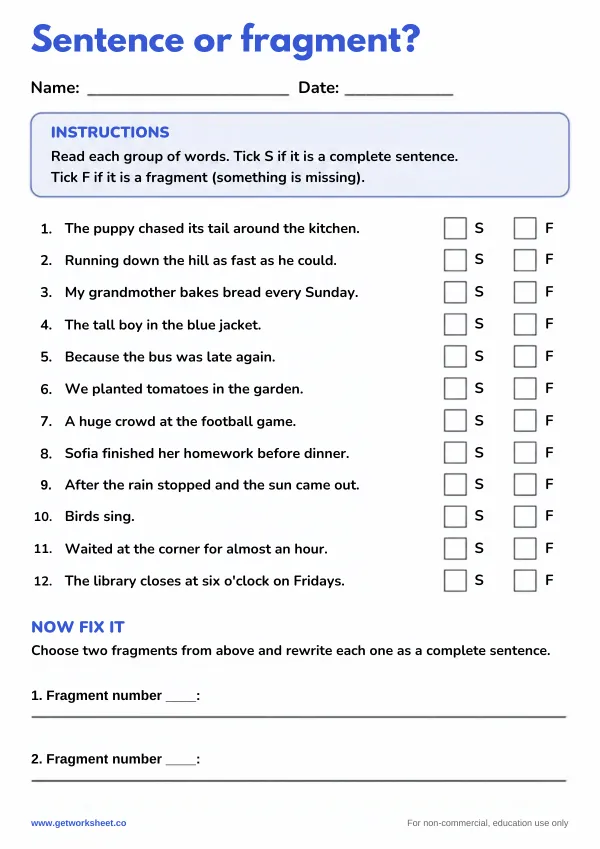
Free sentence fragments worksheets
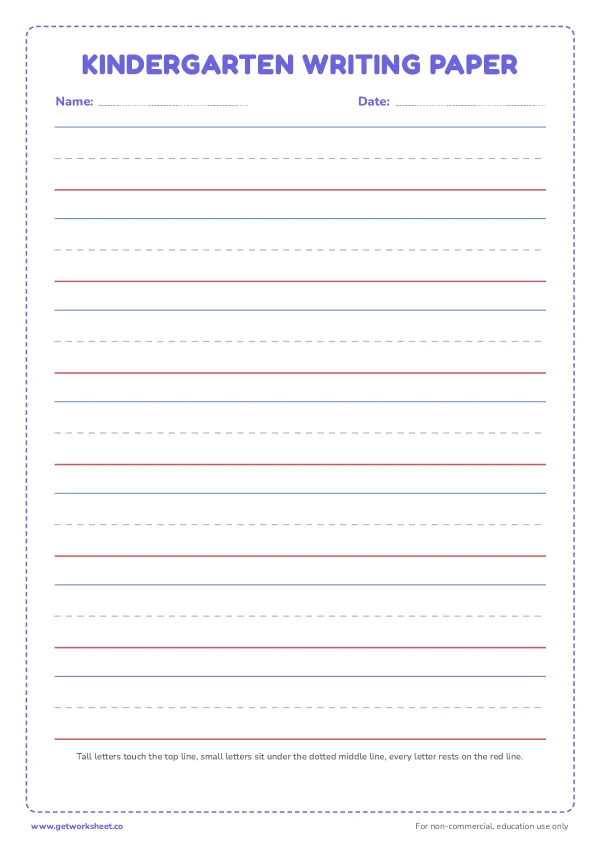
Free handwriting paper printables
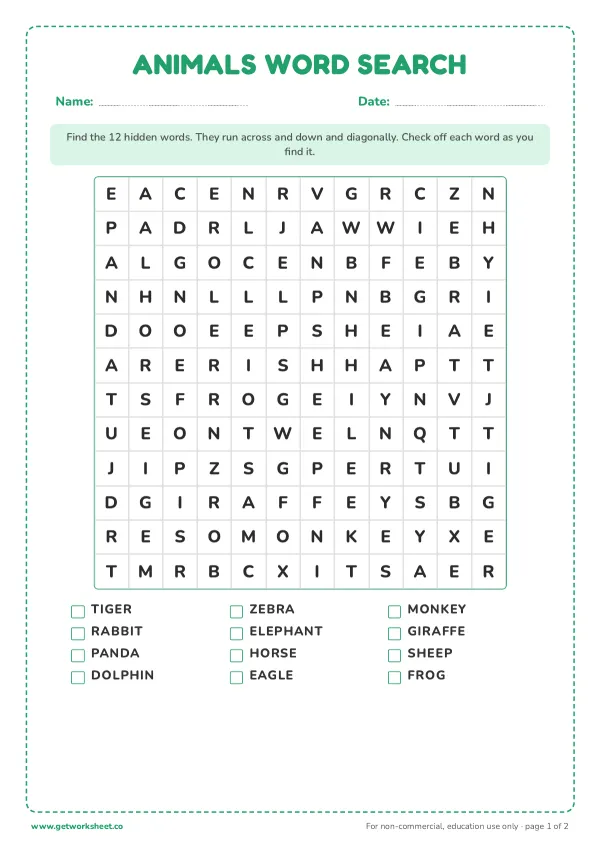
Free word search printables
More worksheets
- Free word families worksheets
- Free Montessori language worksheets
- Free pre-writing worksheets
- Free name tracing worksheets
- Free letter Z tracing worksheets
- Free letter Y tracing worksheets
- Free letter X tracing worksheets
- Free letter W tracing worksheets
- Free letter V tracing worksheets
- Free letter U tracing worksheets
- Free letter T tracing worksheets
- Free letter S tracing worksheets