English · Grades 1–3
Free nouns worksheets
Five printable nouns worksheets for grades 1 to 3: sort twenty nouns into people, places, things and animals, underline the nouns in twelve sentences, tick common or proper and add the capitals, write sixteen plurals from cats to children, and hunt twenty nouns in a short story. Answer keys included.
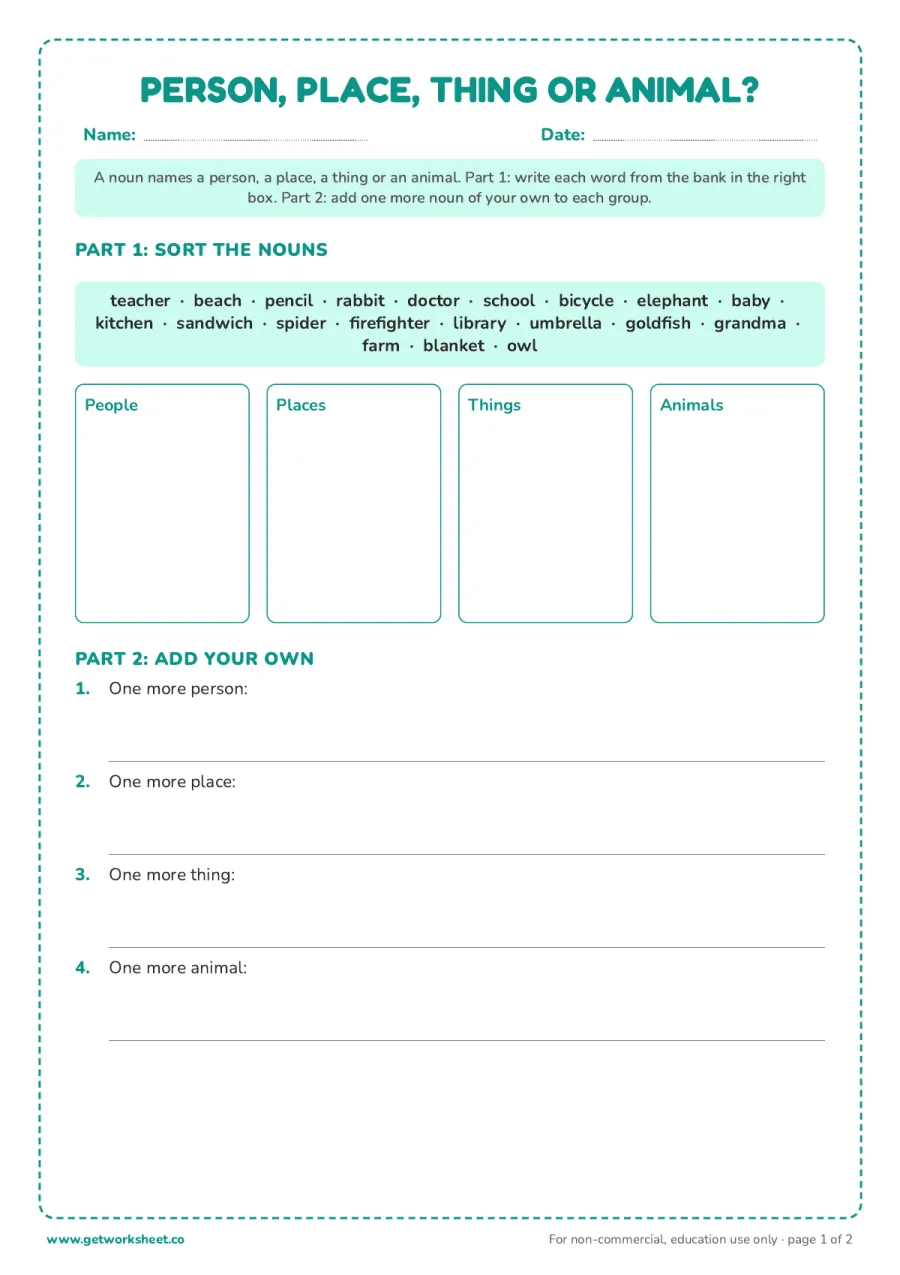
Person, place, thing or animal? Sort 20 nouns into four groups
Twenty nouns to sort into four boxes (people, places, things, animals), then one more noun of the student's own for each group. Answer key on page 2.
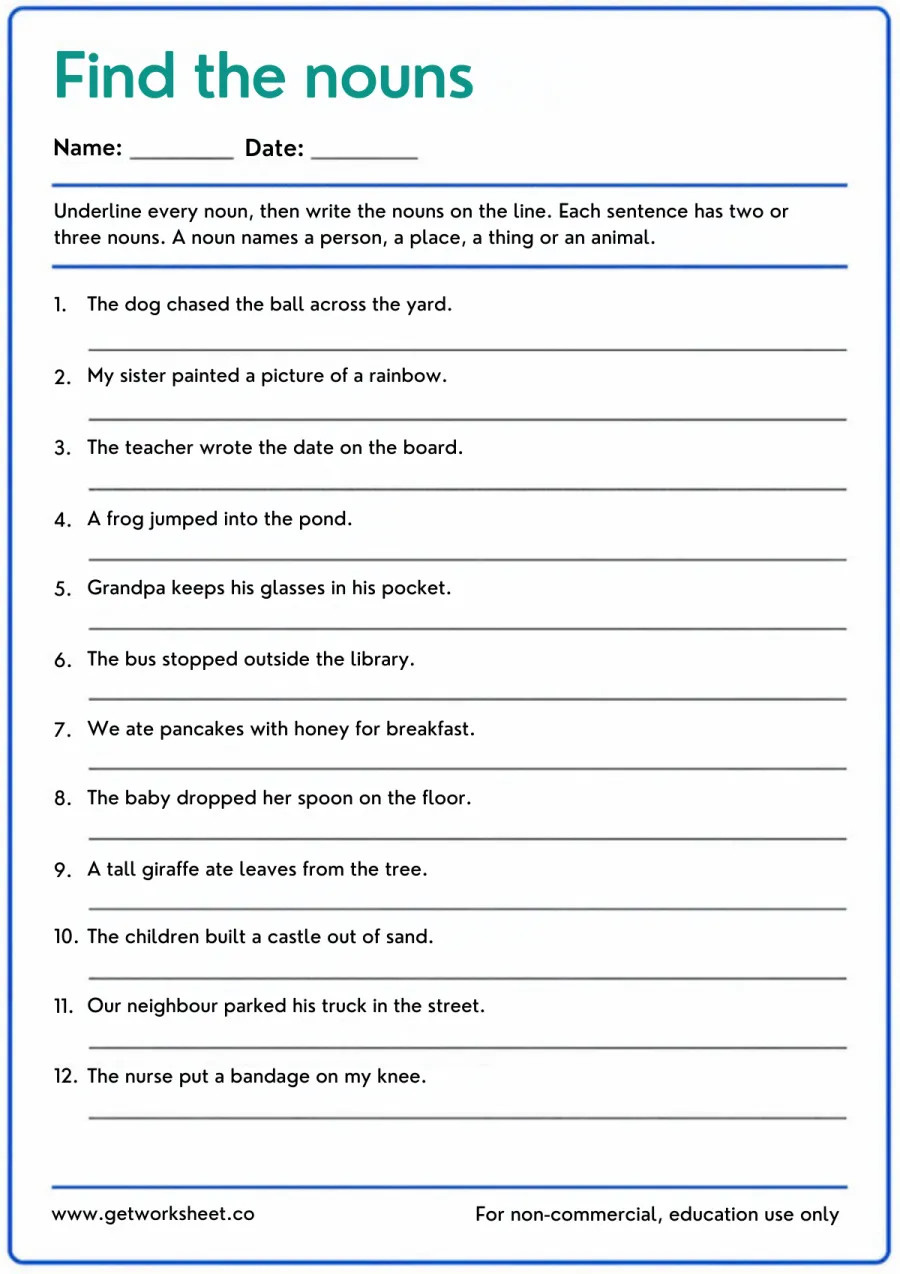
Find the nouns: 12 sentences, write every noun on the line
Twelve sentences with two or three nouns each. Students underline the nouns and write them on the line: 32 nouns in all. Answer key on page 2.
Whole set
All 5 sheets in one PDF
Instant and ad-free. No account needed.
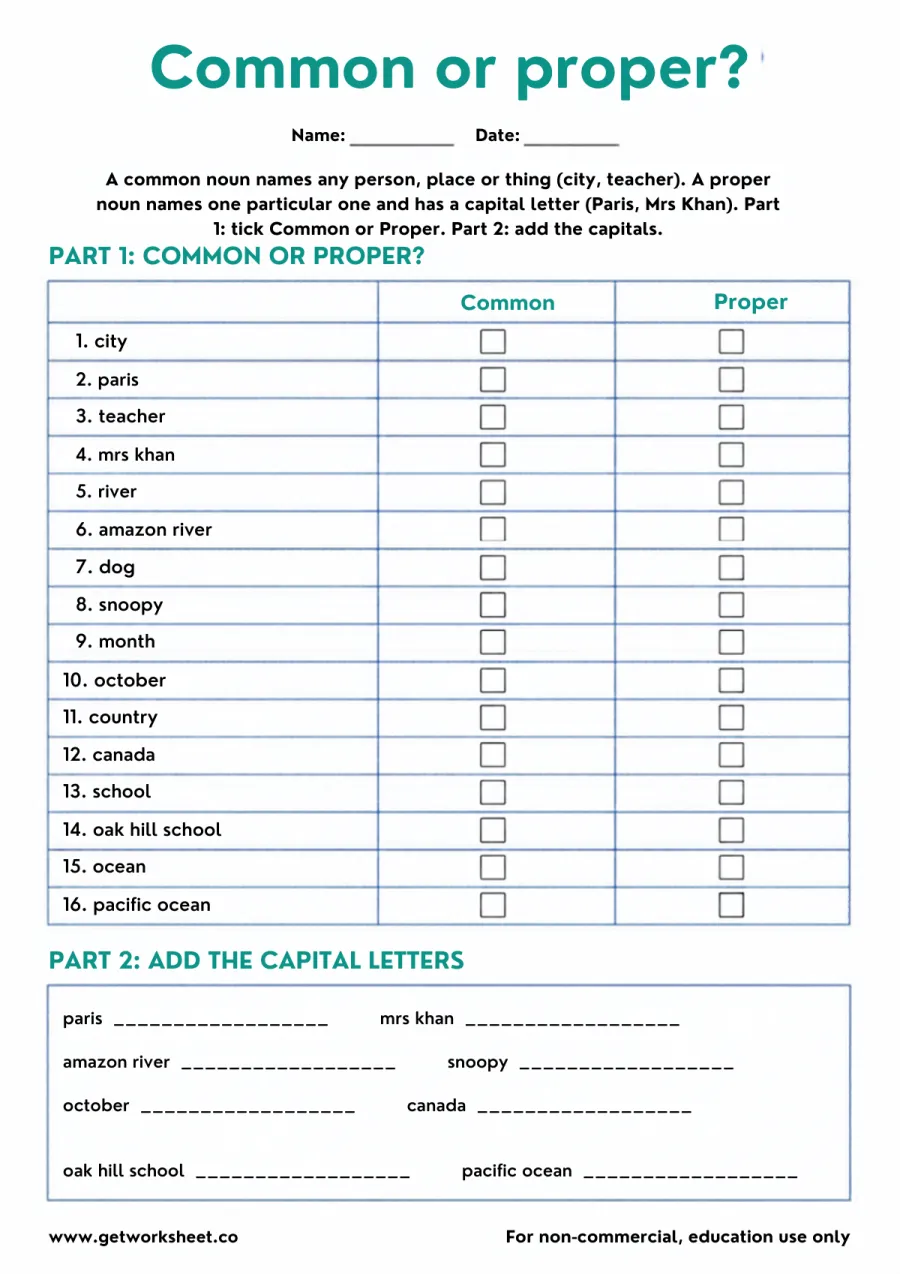
Common or proper? Tick 16 nouns, then give the 8 proper nouns their capitals
Sixteen nouns written in lowercase to tick as common or proper (city / paris, month / october, school / oak hill school ...), then the eight proper nouns to rewrite with capital letters. Answer key on page 2.
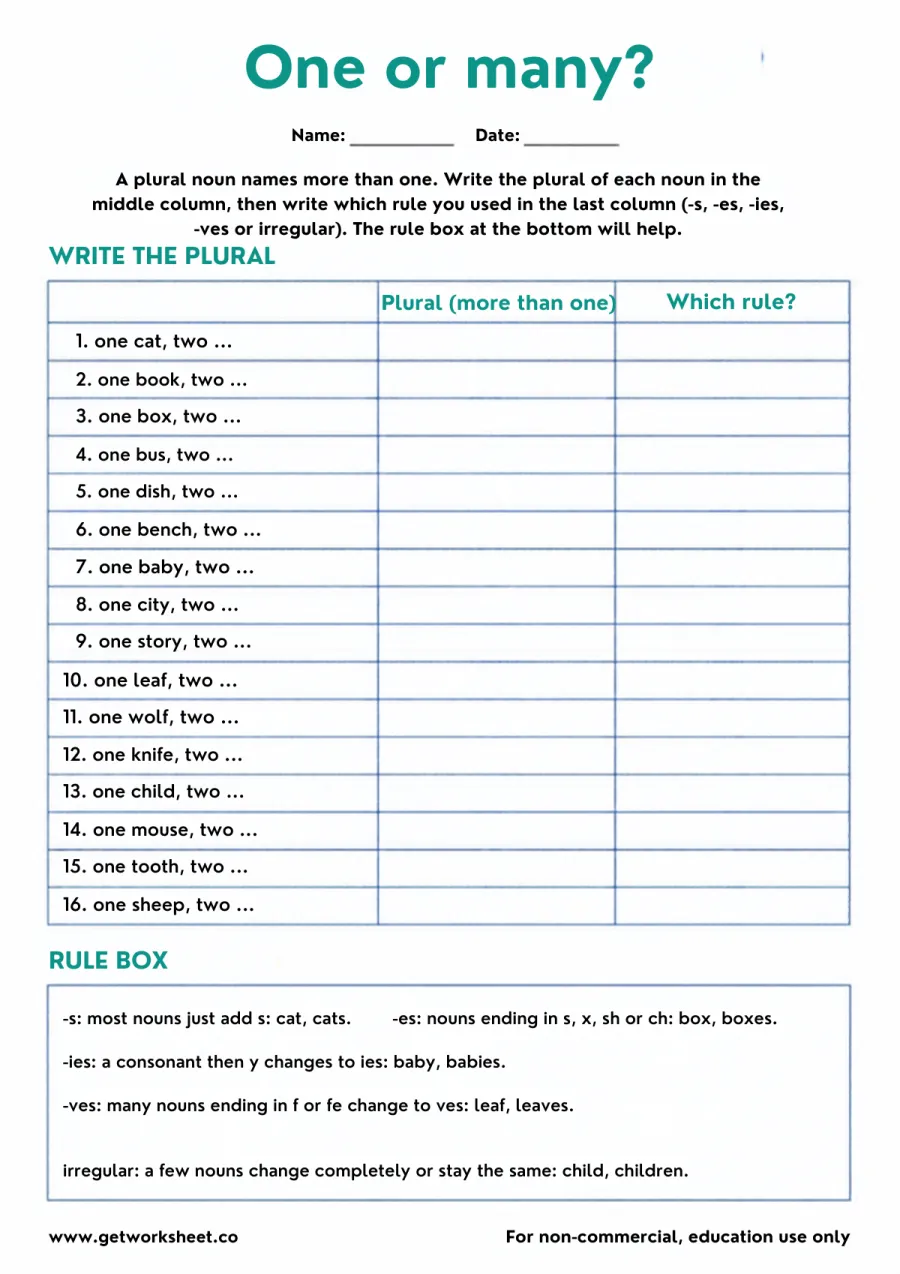
One or many? Write the plural of 16 nouns and name the rule: -s, -es, -ies, -ves or irregular
Sixteen singular nouns to make plural, four of each kind: add -s (cat), add -es (box, bus, dish), change y to -ies (baby, city, story), change f to -ves (leaf, wolf, knife) and irregular plurals (child, mouse, tooth, foot, sheep). Answer key on page 2.
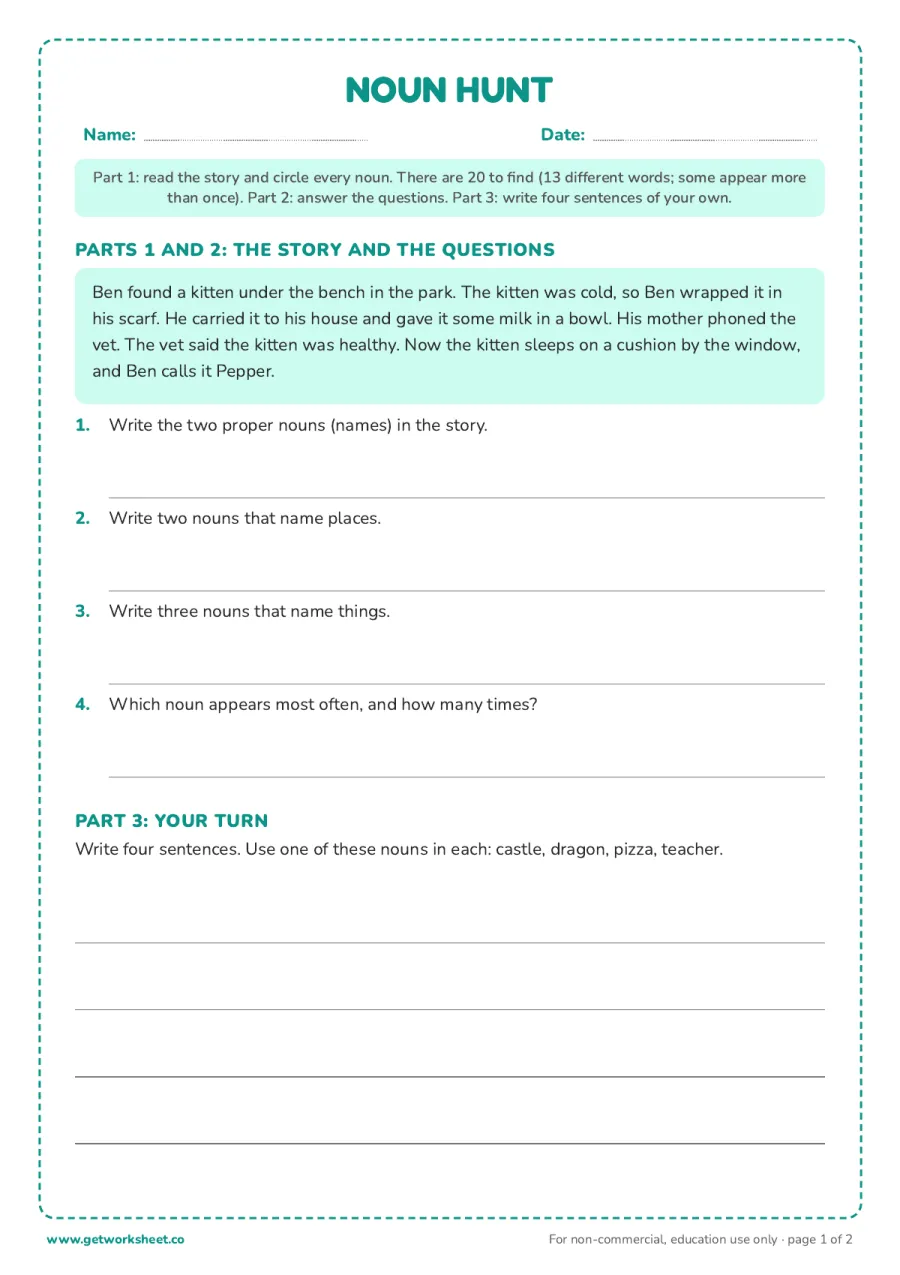
Noun hunt: circle 20 nouns in a story about a lost kitten, then write your own sentences
A short story about Ben and a kitten with twenty nouns to circle (thirteen different ones), four questions that sort them into people, places and things, and four sentences to write with given nouns. Answer key on page 2.
AI worksheet generator
Make a worksheet like this for your class
The 5 sheets above are fixed. The generator writes a new nouns worksheet for your grade, with the question types and count you choose, in about 20 seconds. Pick a grade to start:
What you get
- A fresh set of questions on nouns, not a copy of the sheets above
- Multiple choice, fill in the blanks, true or false, open ended
- Answer key and print-ready PDF with Pro
Free account, 1 worksheets a week. No card.
Nouns are the first part of speech children learn, and the one everything else hangs on: adjectives describe nouns, verbs tell what nouns do, and capital letters mark the proper ones. The definition is easy to recite (a person, a place, a thing or an animal) and surprisingly hard to apply in a real sentence, where ball, yard and breakfast sit among words that are not nouns at all. These five worksheets move from sorting single words, to finding nouns inside sentences, to the two rules that come next: common versus proper, and one versus many.
What's in this set
- Person, place, thing or animal? A word bank of twenty nouns (teacher, beach, umbrella, goldfish ...) to sort into people, places, things and animals, then four lines to add a noun of your own to each group.
- Find the nouns. Twelve everyday sentences (The dog chased the ball across the yard ...) with two or three nouns each to underline and copy onto the line; 32 nouns altogether.
- Common or proper? Eight matched pairs (a river / the amazon river, a dog / snoopy, a country / canada) to tick as common or proper, then the eight proper nouns rewritten with their capital letters.
- One or many? Sixteen nouns to write in the plural and label with the rule used, moving from cats and books through boxes and dishes, babies and cities, leaves and knives, to children, mice, teeth and sheep, with a rule box for reference.
- Noun hunt. A 60-word story with twenty nouns to circle, four questions (Which two nouns are names? Which nouns are places? Which noun appears most?) and four writing lines using the nouns castle, dragon, pizza and teacher.
What students will practice
- Recognising nouns as words that name people, places, things and animals (CCSS L.1.1b)
- Finding two or three nouns inside a sentence, not just in a list
- Telling common nouns from proper nouns and giving proper nouns a capital letter (L.1.2a, L.2.2a)
- Forming regular plurals with -s and -es, changing y to -ies and f to -ves (L.1.1c)
- Using frequently occurring irregular plurals: children, mice, teeth, feet, sheep (L.2.1b)
- Reading a short text for a purpose and sorting what is found
Free printable makers
Make your own nouns sheets
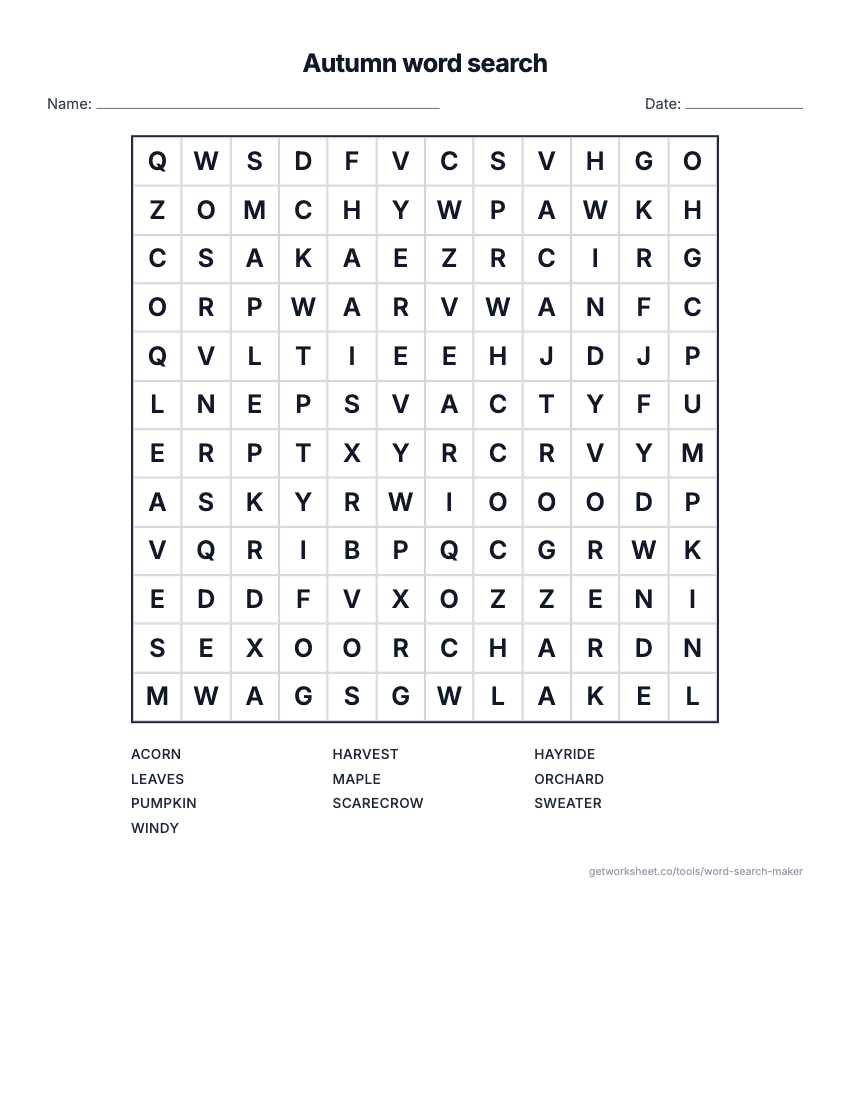
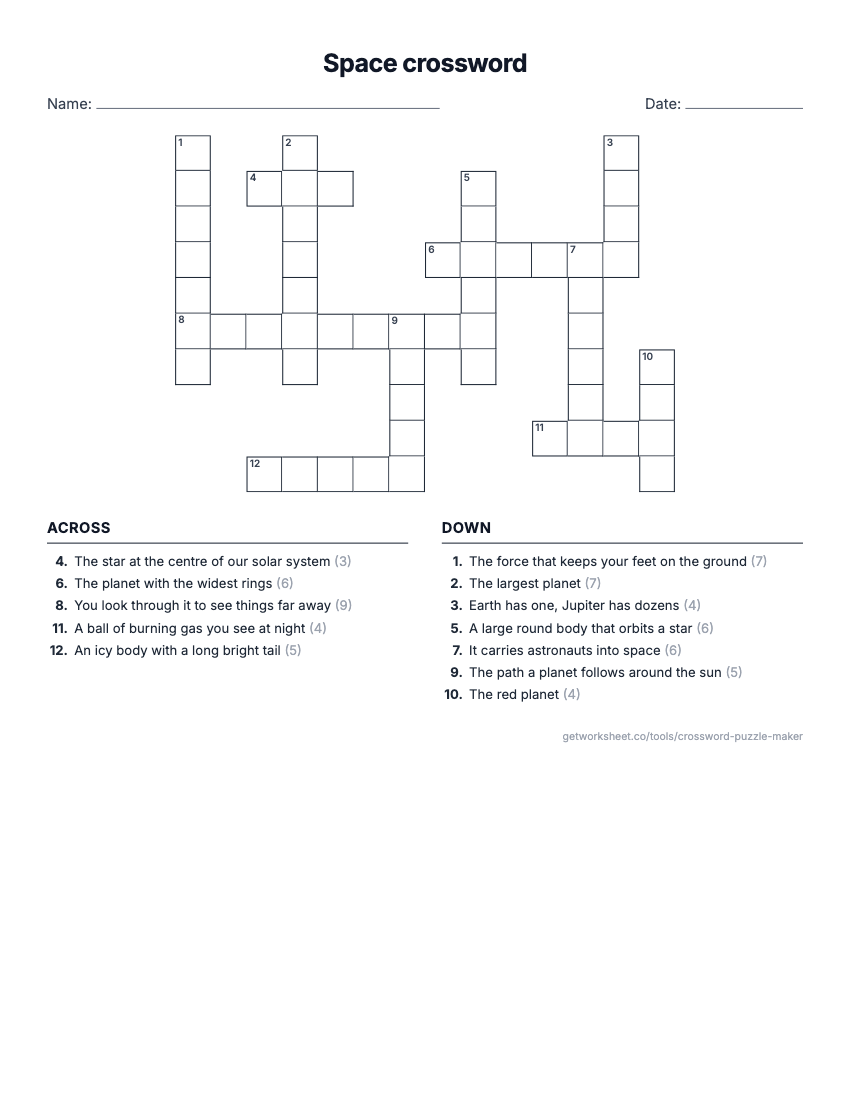
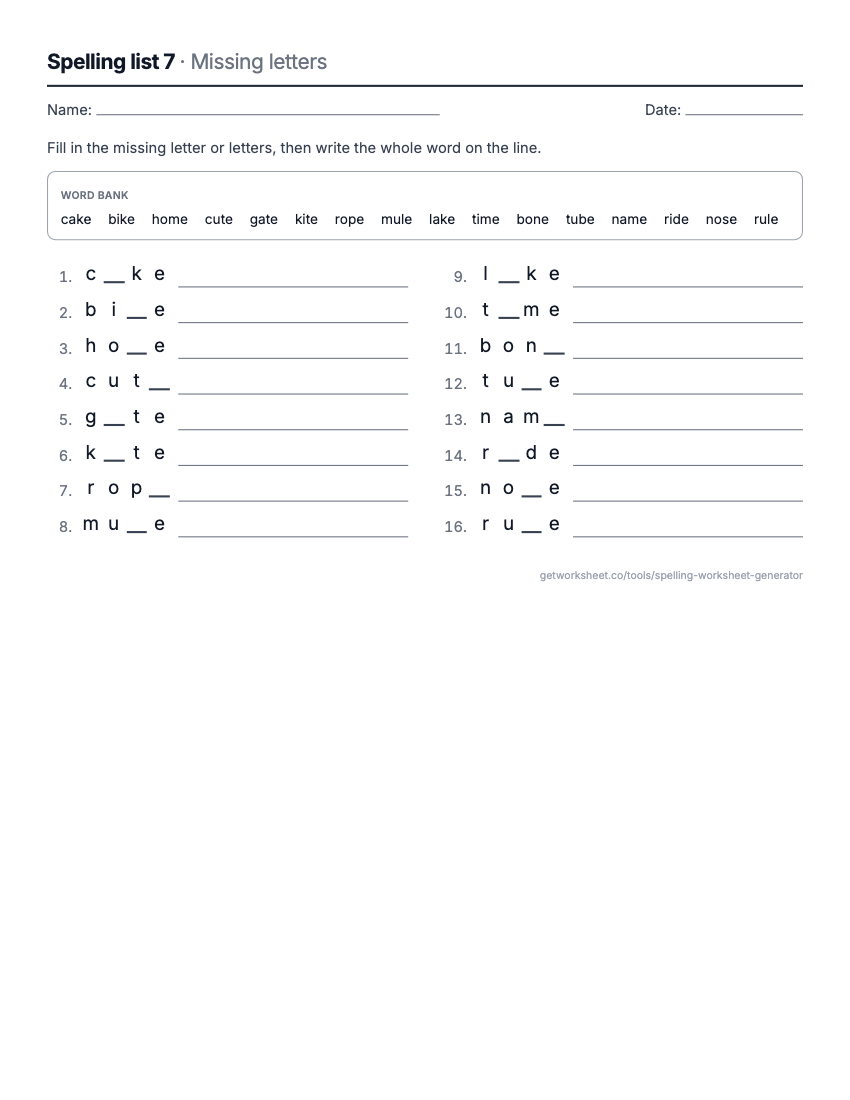
Type your own words or numbers and print in about 30 seconds. No account, no AI, answer key where it applies.
AI worksheet generator
Need a different nouns worksheet?
Generate a custom nouns worksheet: pick the grade, question types and count, and print it in about 20 seconds. Free accounts get 1 generation a week.
How to use these worksheets in class
- Start by sorting. Person, place, thing or animal? asks only “which kind of noun is this?”, so every child can begin. Part 2 (write your own) tells you who has the idea and who is copying the bank.
- Then hunt inside sentences. Find the nouns is where the real learning happens. The test question for each word is “can you put the or a in front of it?”: the yard yes, the chased no.
- Common and proper as pairs. The sixteen items on Common or proper? are eight matched pairs (a river / the Amazon River). Do the first pair together, then let students find the pattern before they tick.
- Plurals need the rule box. One or many? groups the sixteen nouns by rule (four of each), so a child who gets boxes right but writes babys shows you exactly which rule to reteach.
- Finish with the story. Noun hunt gives the count (20 nouns) so students can check themselves; the four questions then reuse the vocabulary of the earlier sheets.
- Grades 1 to 3. Grade 1: sheets one, two and the first half of the plurals sheet. Grade 2 and 3: all five, including irregular plurals.
Answer key
Every practice sheet carries its own answer key on page 2 of the PDF. The keys are repeated here for quick marking.
- Person, place, thing or animal?: Part 1: sort the nouns: People: teacher, doctor, baby, firefighter, grandma Places: beach, school, kitchen, library, farm Things: pencil, bicycle, sandwich, umbrella, blanket Animals: rabbit, elephant, spider, goldfish, owl Part 2: add your own: 1. Sample: nurse, pilot, friend 2. Sample: park, hospital, bedroom 3. Sample: chair, ball, book 4. Sample: horse, frog, penguin
- Find the nouns: 1. dog, ball, yard 2. sister, picture, rainbow 3. teacher, date, board 4. frog, pond 5. Grandpa, glasses, pocket 6. bus, library 7. pancakes, honey, breakfast 8. baby, spoon, floor 9. giraffe, leaves, tree 10. children, castle, sand 11. neighbour, truck, street 12. nurse, bandage, knee
- Common or proper?: 1. Common 2. Proper 3. Common 4. Proper 5. Common 6. Proper 7. Common 8. Proper 9. Common 10. Proper 11. Common 12. Proper 13. Common 14. Proper 15. Common 16. Proper Part 2: add the capital letters: paris | Paris mrs khan | Mrs Khan amazon river | Amazon River snoopy | Snoopy october | October canada | Canada oak hill school | Oak Hill School pacific ocean | Pacific Ocean
- One or many?: Write the plural: 1. cats 2. books 3. boxes 4. buses 5. dishes 6. benches 7. babies 8. cities 9. stories 10. leaves 11. wolves 12. knives 13. children 14. mice 15. teeth 16. sheep
- Noun hunt: Parts 1 and 2: the story and the questions: 1. Ben, Pepper 2. park, house 3. any three of: bench, scarf, milk, bowl, cushion, window 4. kitten, 5 times Part 3: your turn: Part 1, all 20 nouns: Ben (3), kitten (5), bench, park, scarf, house, milk, bowl, mother, vet (2), cushion, window, Pepper. Part 3: any four sentences that each use one of the given nouns.
Common mistakes to watch for
- Circling every long word. Children who are unsure circle adjectives (tall) and verbs (painted). Ask them to try “a ______” or “the ______” in front of the word.
- Missing the second noun. In The nurse put a bandage on my knee most students find nurse; the sheet tells them how many to look for so they keep going.
- Capitalising common nouns. Dog in the middle of a sentence is not a proper noun. The pairs on sheet three make the difference visible: a dog, but Snoopy.
- Adding -s to everything. Childs, mouses and leafs are the classic errors; the plurals sheet puts the rule right above the words.
Frequently asked questions
What grade are these nouns worksheets for?
Grades 1 to 3. Sorting and finding nouns and simple plurals are grade 1 (CCSS L.1.1b, L.1.1c); common versus proper nouns with capitals and irregular plurals are grade 2 (L.2.1b, L.2.2a), and grade 3 uses the set for review.
Do the worksheets have answer keys?
Yes. Every sheet carries its answer key on page 2 of the PDF, and the keys are repeated on this page, including all twenty nouns in the story.
Is a name like Grandpa a noun?
Yes. In “Grandpa keeps his glasses in his pocket” the word is used as a name, so it is a proper noun and takes a capital letter; “my grandpa” would be a common noun.
Which plural rules are covered?
Add -s (cats, books), add -es after s, x, sh and ch (boxes, buses, dishes, benches), consonant + y to -ies (babies, cities, stories), f or fe to -ves (leaves, wolves, knives), and the irregular plurals children, mice, teeth and sheep.
More English practice
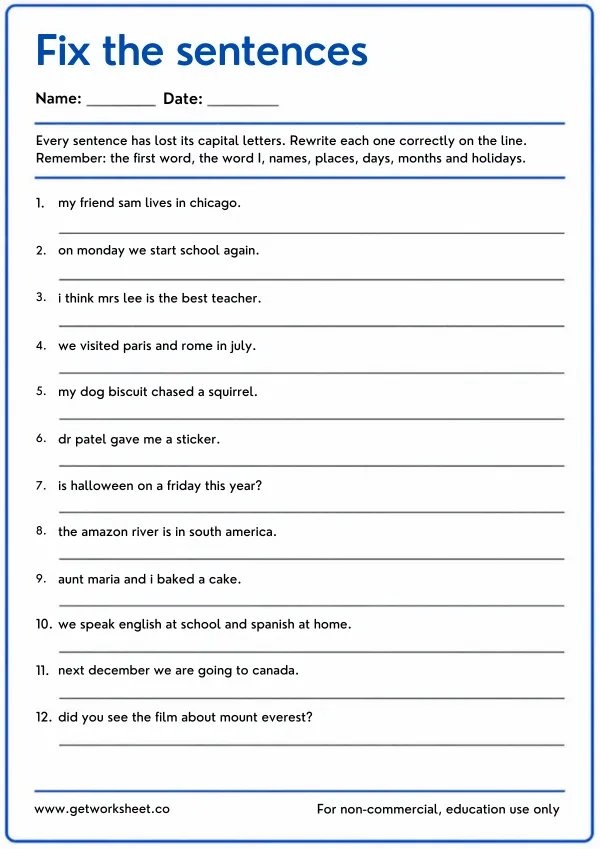
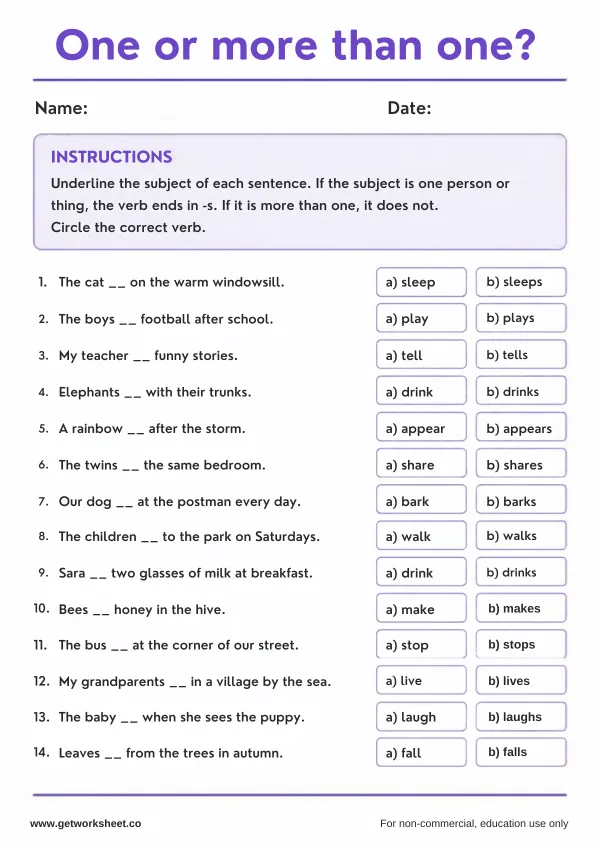
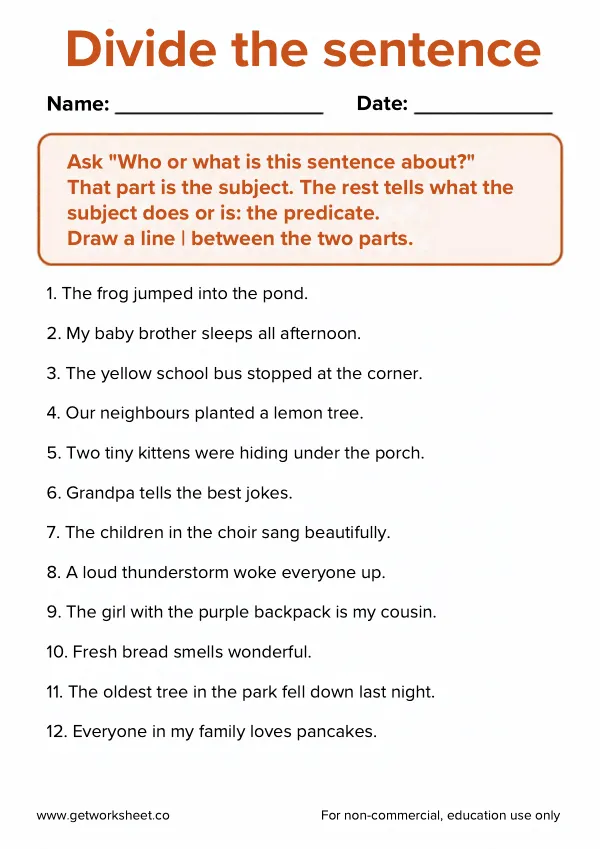
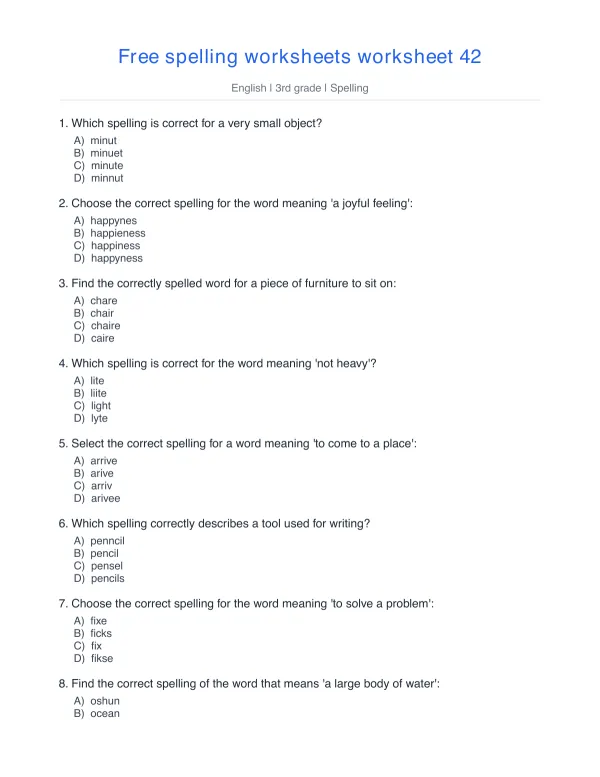
Proper nouns are the biggest group of words that need a capital, so the capitalization worksheets are the natural next step. Once students can find the noun, the subject and predicate worksheets show what the noun does in a sentence, and the subject-verb agreement worksheets use singular and plural nouns to choose the right verb. Younger children can build the words themselves on the spelling worksheets.
Free library
Related collections
Free capitalization worksheets
Free subject-verb agreement worksheets
Free subject and predicate worksheets
Free spelling worksheets
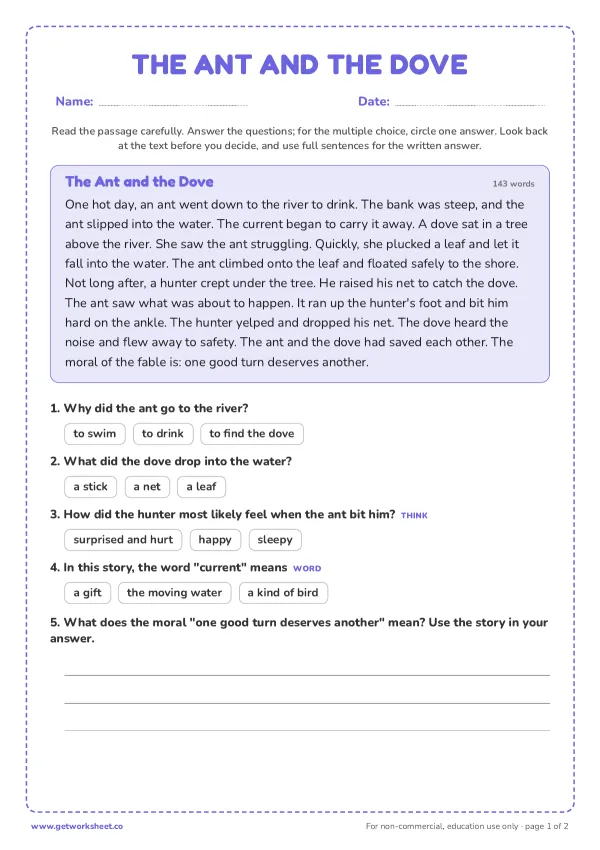
Free second grade reading comprehension worksheets
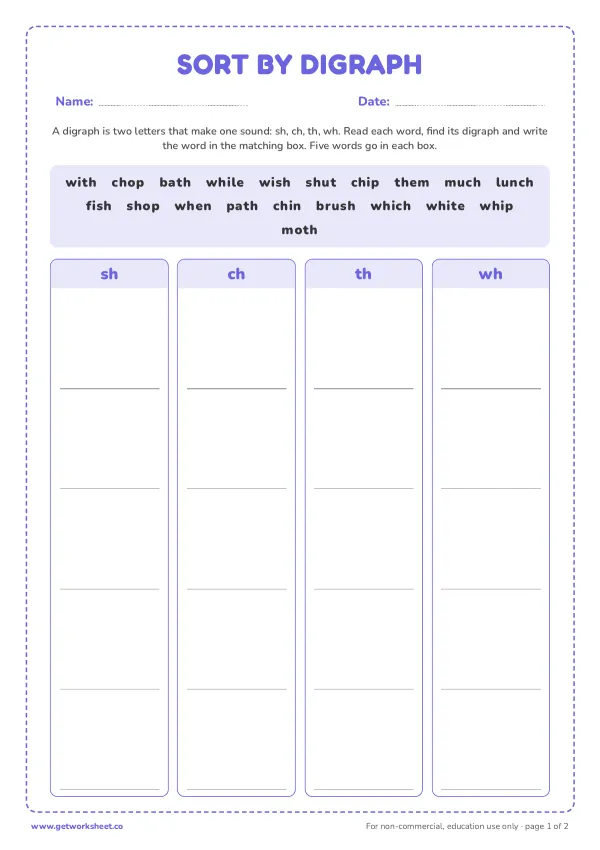
Free digraphs worksheets
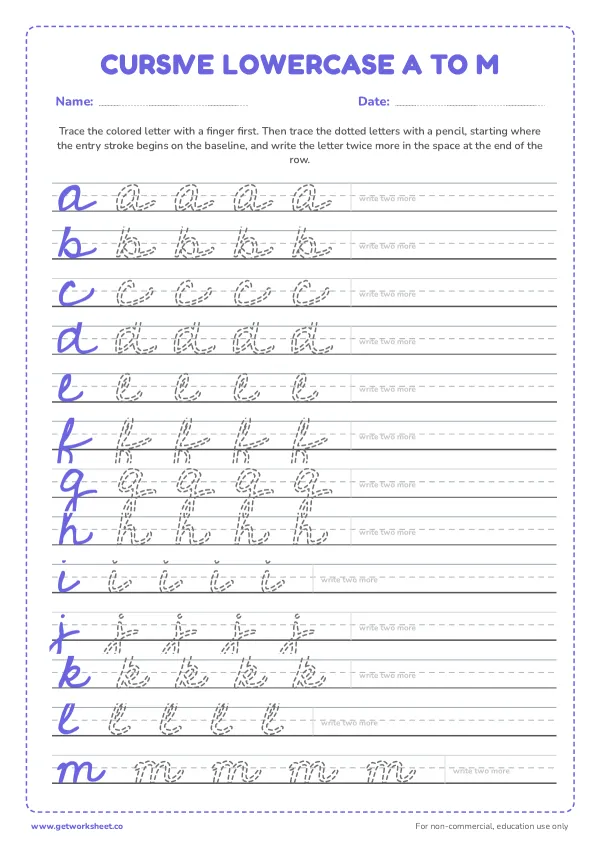
Free cursive writing worksheets
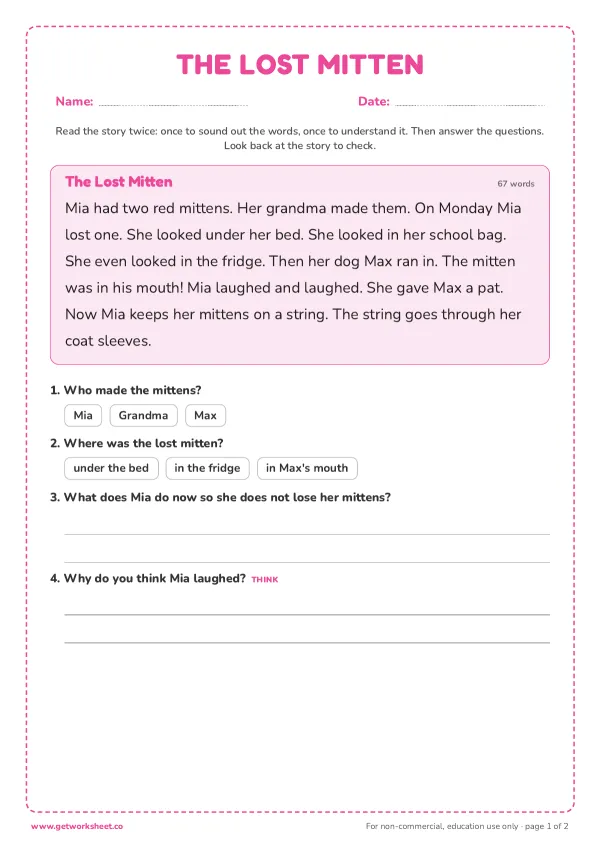
Free first grade reading comprehension worksheets
More worksheets
- Free kindergarten reading comprehension worksheets
- Free handwriting paper printables
- Free word search printables
- Free word families worksheets
- Free Montessori language worksheets
- Free pre-writing worksheets
- Free sight words worksheets (Dolch and Fry)
- Free CVC words worksheets
- Free name tracing worksheets
- Free letter Z tracing worksheets
- Free letter Y tracing worksheets
- Free letter X tracing worksheets