English · Grades 3–6
Free sentence fragments worksheets
Five printable sentence fragments worksheets for grades 3 to 6: sentence or fragment, what is missing, fix the fragment, fragments versus run-ons, and two paragraphs to edit. Each PDF has its answer key on page 2.
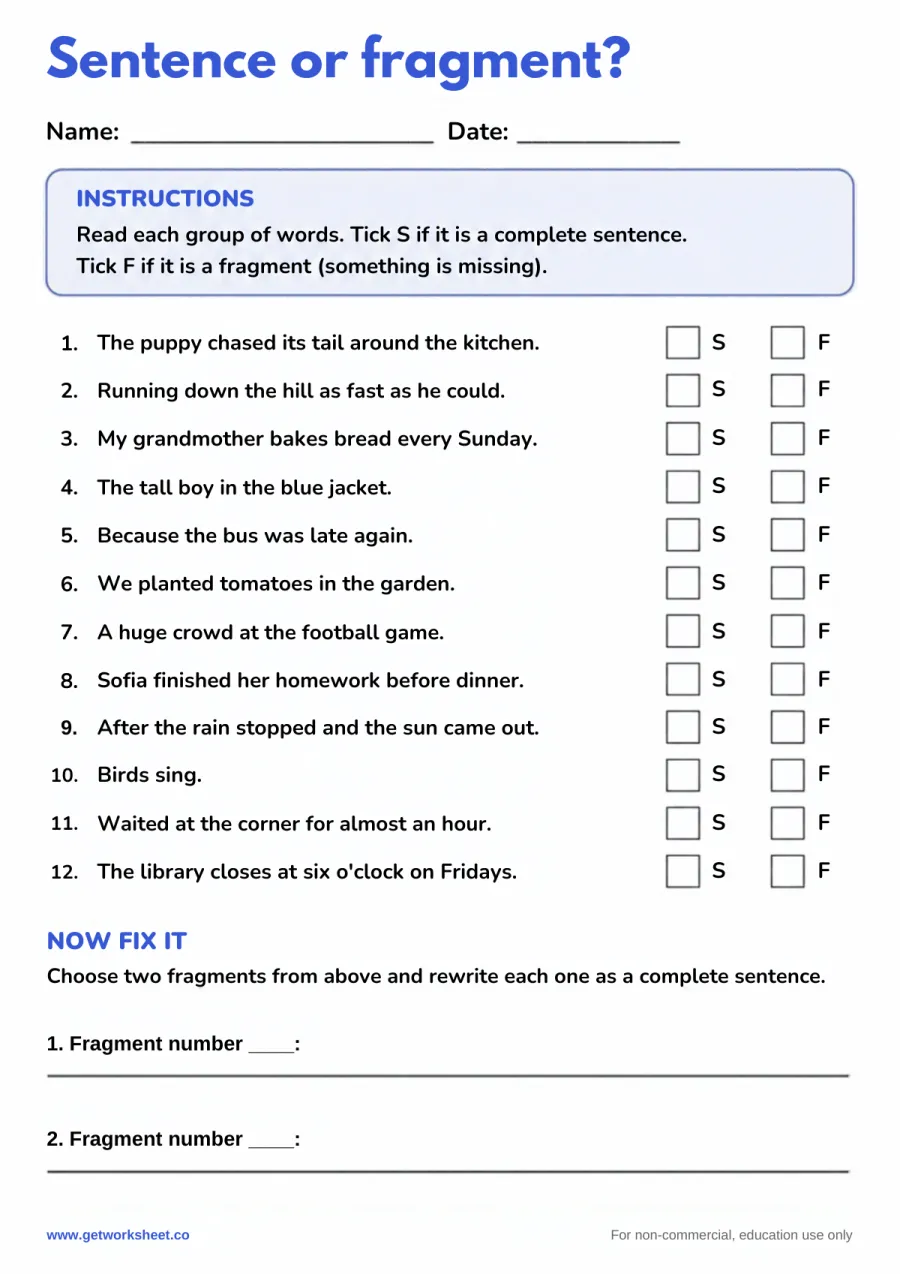
Sentence or fragment? (12 items, grades 3-4)
Decide whether each group of words is a complete sentence or a fragment. Twelve items with an answer key on page 2.
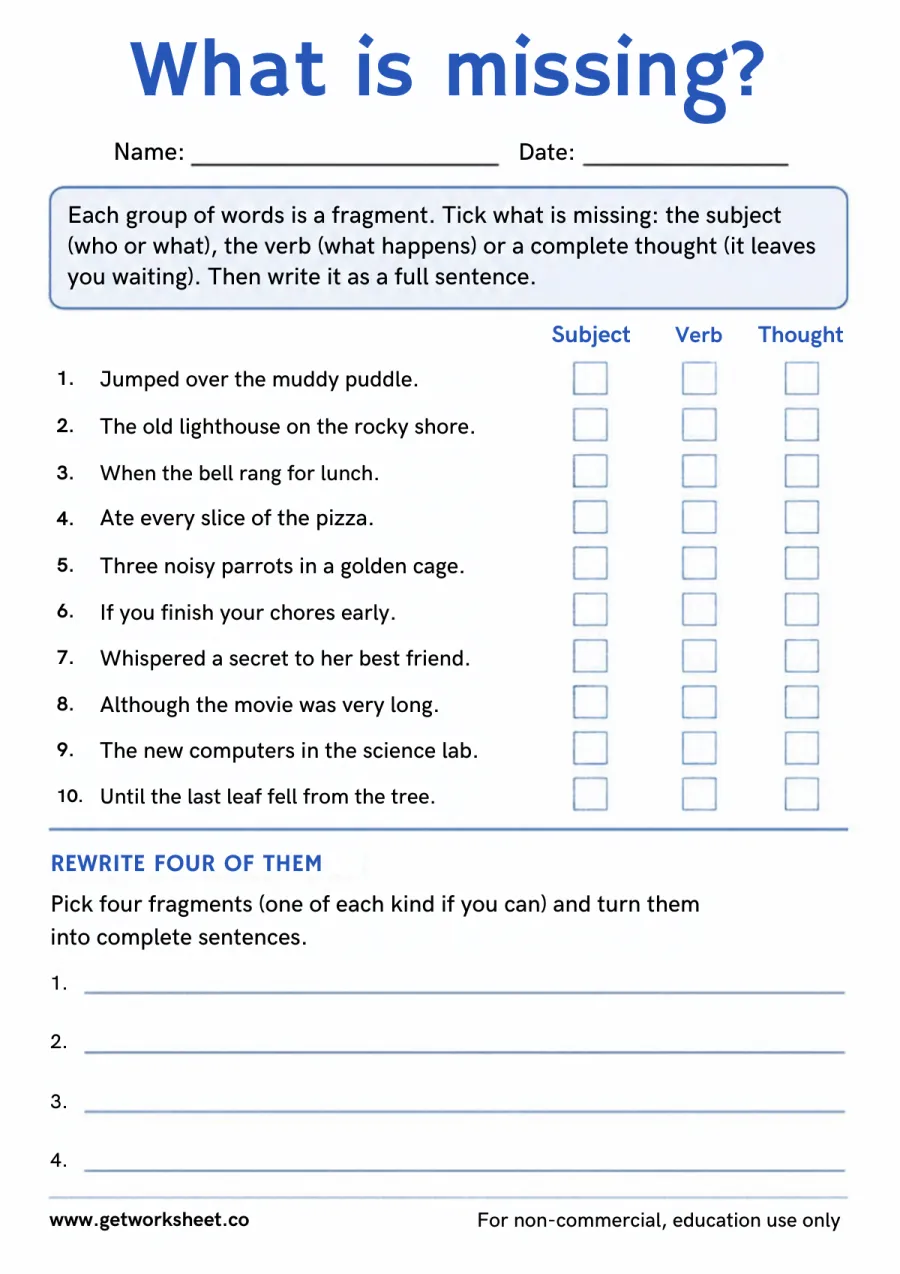
What is missing? Subject, verb or complete thought
Ten fragments. Students name the missing part (subject, verb or complete thought) and then fix each one. Answer key on page 2.
Whole set
All 5 sheets in one PDF
Instant and ad-free. No account needed.
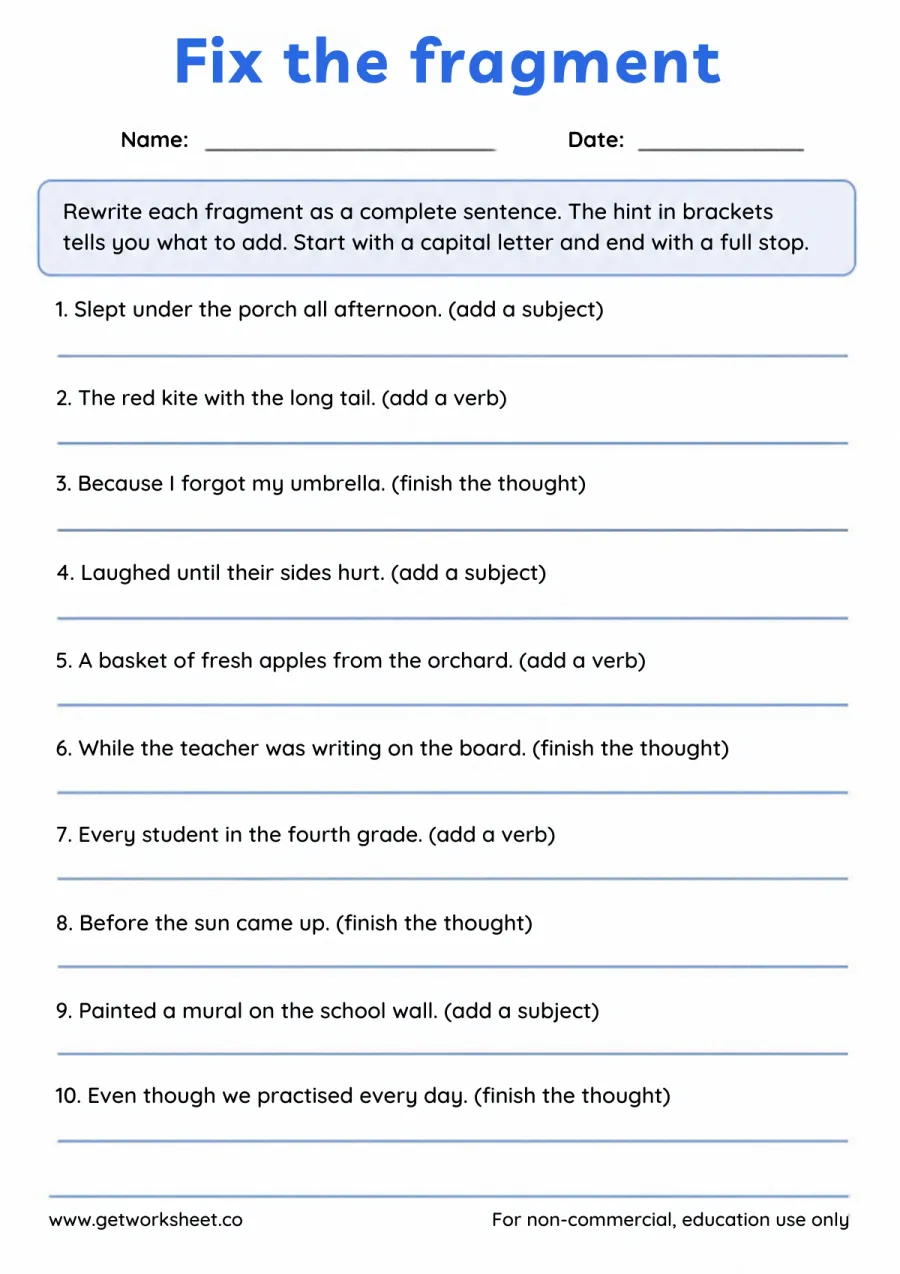
Fix the fragment: rewrite 10 fragments as sentences
Ten fragments to rewrite as complete sentences, plus a bonus row of dependent-clause fragments to join to a main clause. Sample answers on page 2.
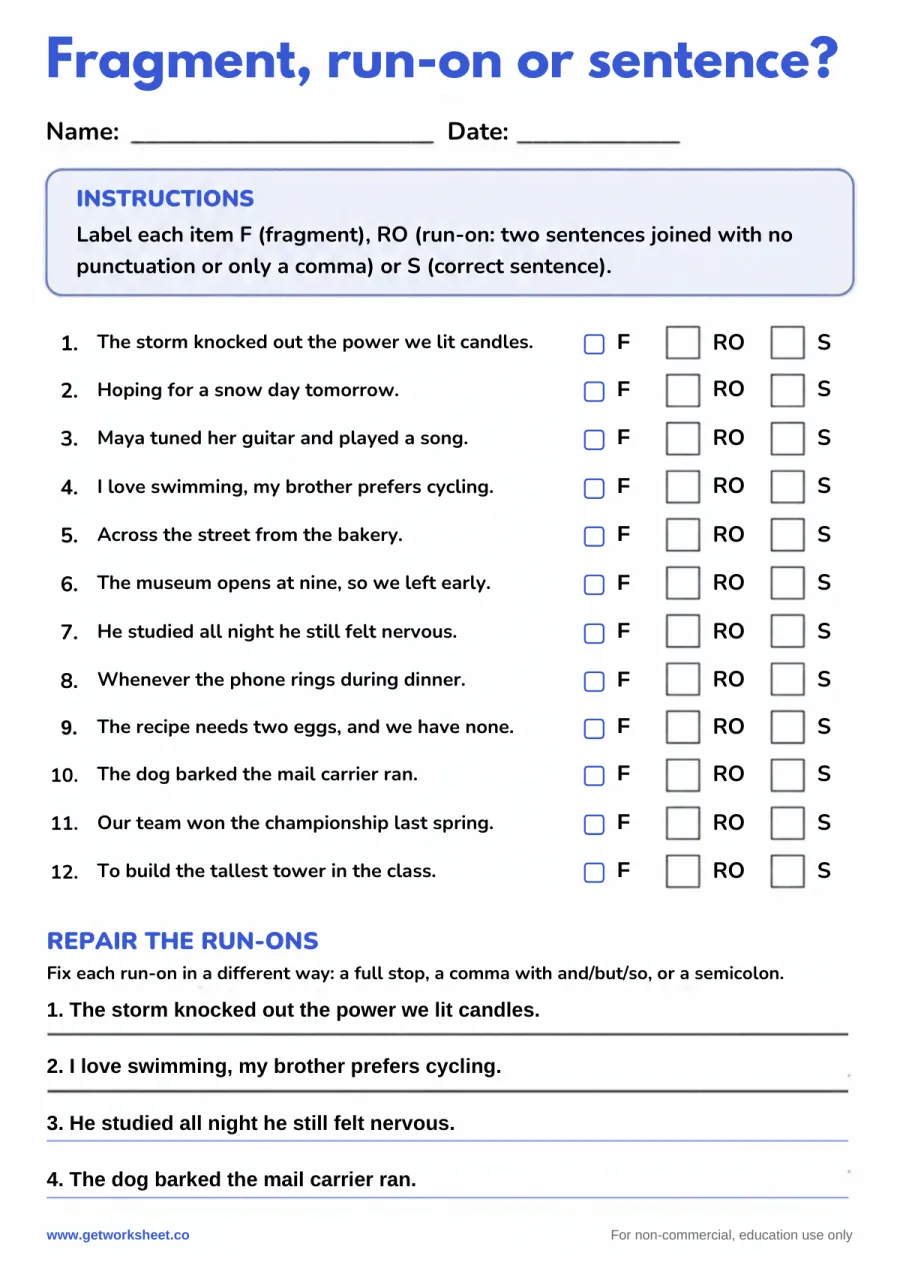
Fragment, run-on or sentence? (grades 5-6)
Twelve items to sort into fragments, run-on sentences and complete sentences, then four run-ons to repair. Answer key on page 2.
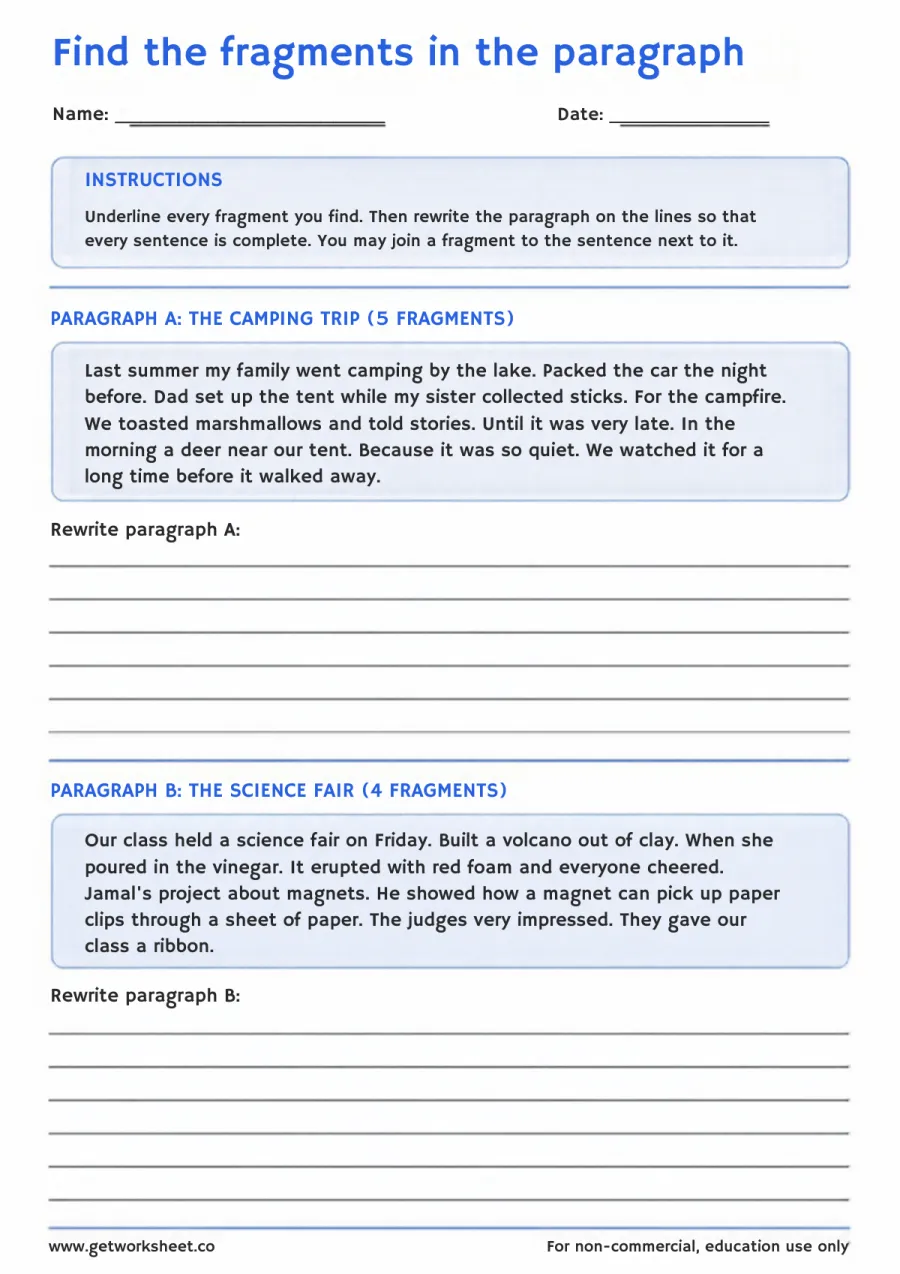
Find the fragments in the paragraph (editing task)
Two short paragraphs with fragments hidden in them. Students underline the fragments and rewrite each paragraph correctly. Answer key on page 2.
AI worksheet generator
Make a worksheet like this for your class
The 5 sheets above are fixed. The generator writes a new sentence fragments worksheet for your grade, with the question types and count you choose, in about 20 seconds. Pick a grade to start:
What you get
- A fresh set of questions on sentence fragments, not a copy of the sheets above
- Multiple choice, fill in the blanks, true or false, open ended
- Answer key and print-ready PDF with Pro
Free account, 1 worksheets a week. No card.
A sentence fragment looks like a sentence, with a capital letter and a full stop, but it is missing a subject, a verb or a complete thought. "Because it was raining." leaves the reader waiting. These five worksheets move students from recognizing fragments to fixing them, and finally to finding them inside their own writing, which is where fragments actually live.
What's in this set
- Sentence or fragment? Twelve word groups; write S for a complete sentence or F for a fragment. Half are fragments, mixing missing subjects, missing verbs and dependent clauses.
- What is missing? Ten fragments; tick whether the subject, the verb or the complete thought is missing, then rewrite each as a full sentence.
- Fix the fragment. Ten fragments to rewrite as complete sentences, with a hint for each (add a subject, add a verb, or finish the thought). Sample answers on the key.
- Fragment, run-on or sentence? Twelve items to label F (fragment), RO (run-on) or S (sentence), then four run-ons to repair with a full stop, a comma and conjunction, or a semicolon. Grades 5-6.
- Find the fragments in the paragraph. Two short paragraphs (a camping trip and a science fair) with five and four hidden fragments. Underline them, then rewrite the paragraph so every sentence is complete.
What students will practice
- Testing a word group with two questions: who or what is this about, and what do they do? (Common Core L.4.1.f: produce complete sentences, recognizing and correcting fragments and run-ons)
- Naming what is missing, not just that something is wrong, so the fix is obvious
- Spotting dependent-clause fragments that start with because, when, if, although, until, while and before
- Telling fragments from run-ons, which students often confuse because both "sound wrong"
- Editing continuous prose, the skill that transfers to their own drafts
Free printable makers
Make your own sentence fragments sheets
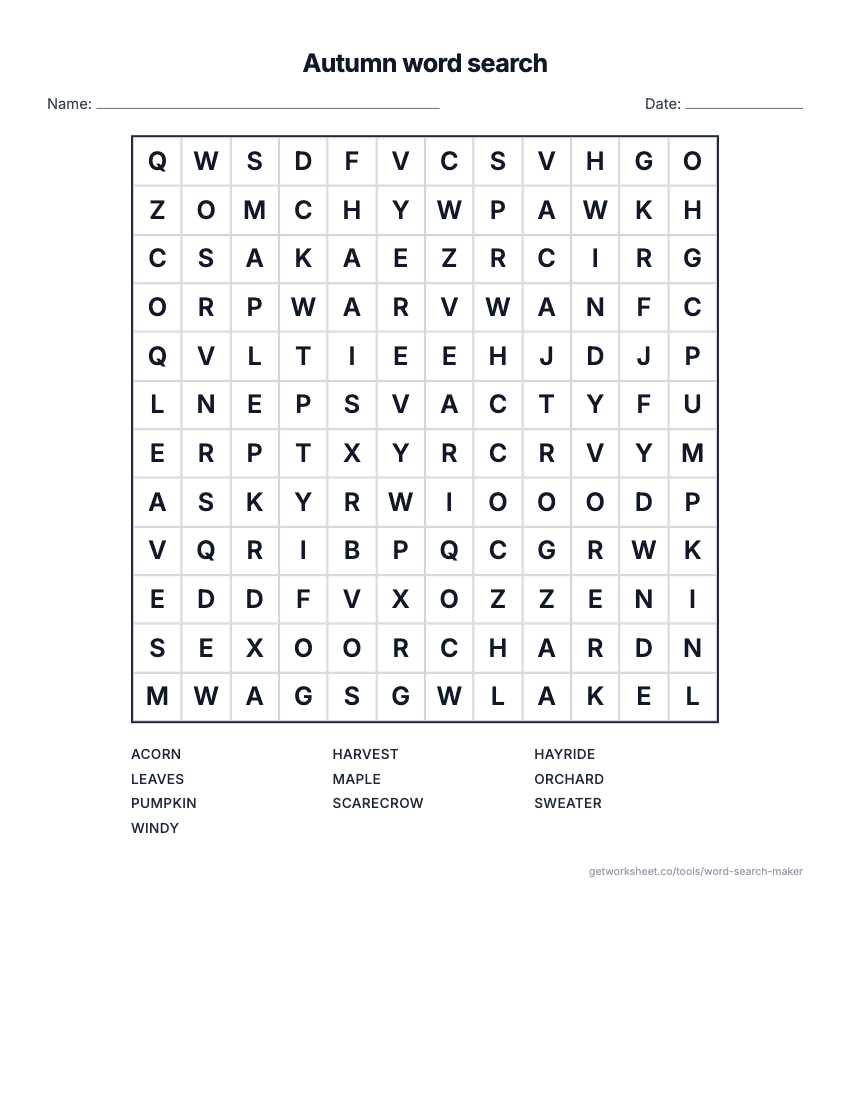
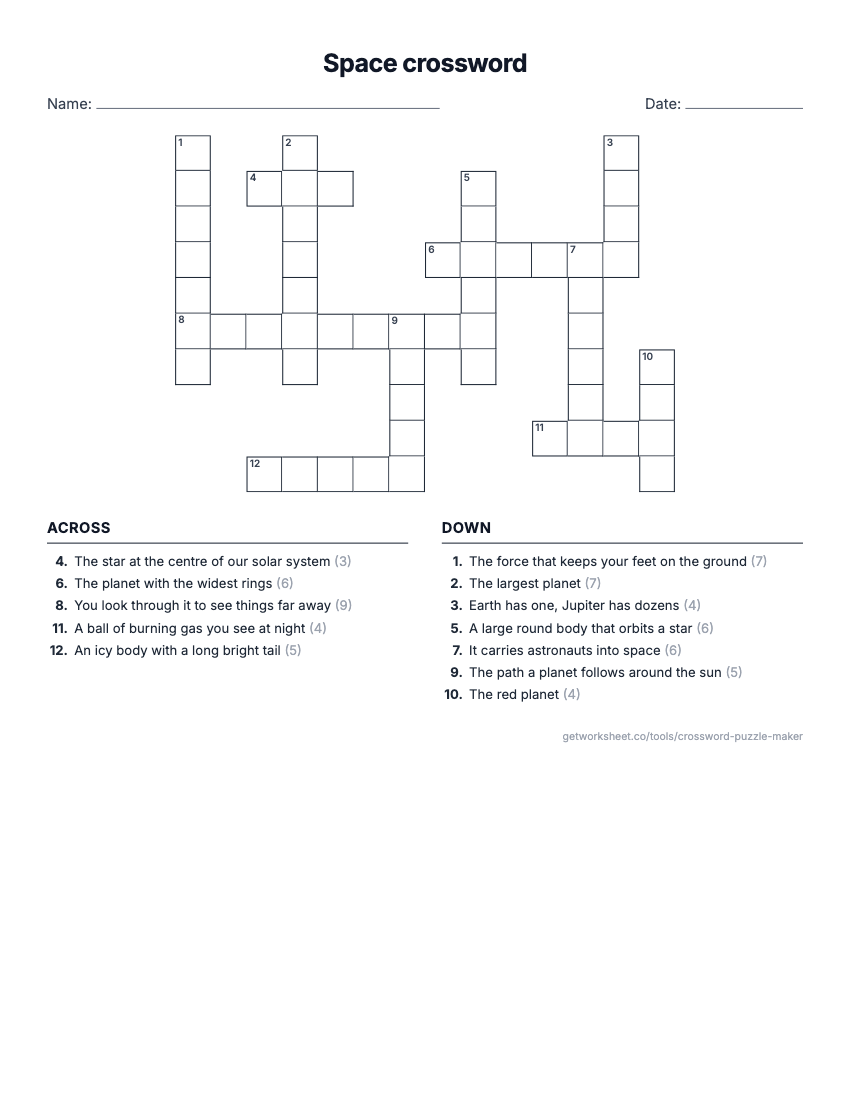
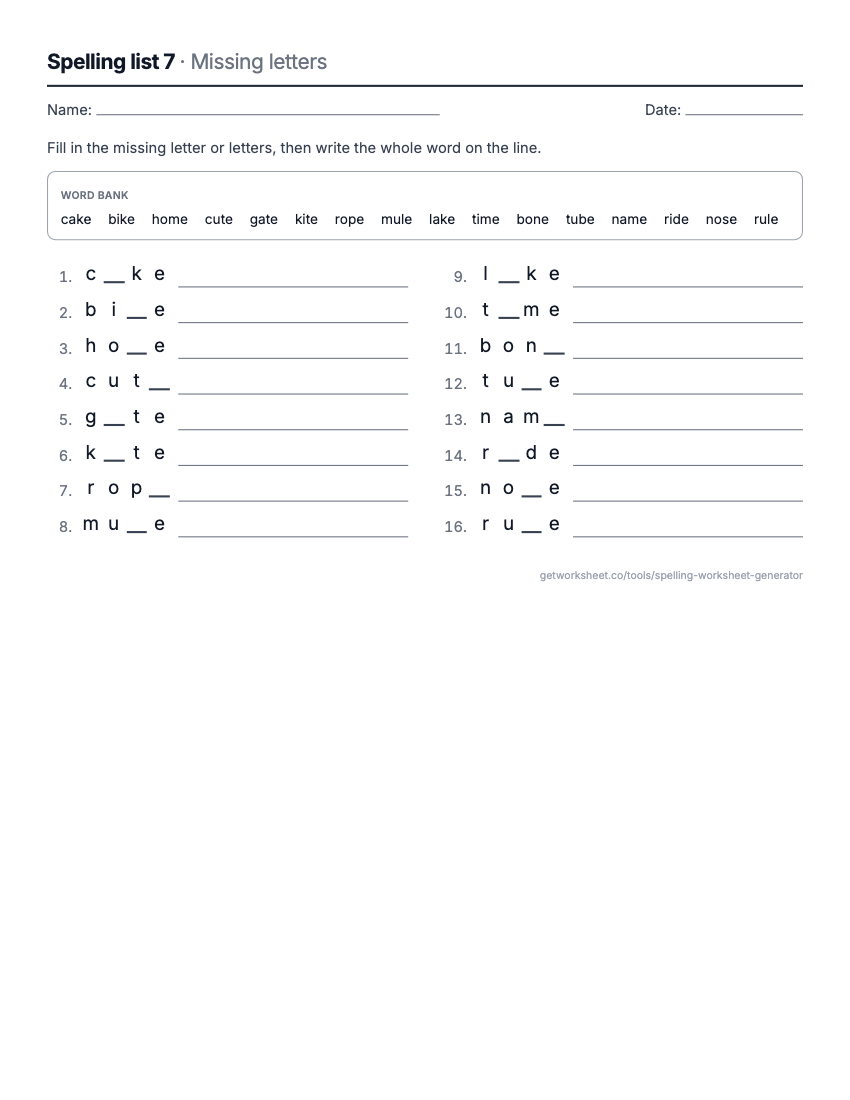
Type your own words or numbers and print in about 30 seconds. No account, no AI, answer key where it applies.
AI worksheet generator
Need a different sentence fragments worksheet?
Generate a custom sentence fragments worksheet: pick the grade, question types and count, and print it in about 20 seconds. Free accounts get 1 generation a week.
How to use these worksheets in class
- Lesson 1 (grades 3-4): the two-question test. Read the twelve items on Sentence or fragment? aloud. For each one ask "Who or what?" and "Did what?". If either question has no answer, it is a fragment. Item 10 ("Birds sing.") is there on purpose: a sentence can be two words long.
- Lesson 2: name the missing part. What is missing? forces the diagnosis before the repair. Group the class by answer: subject-missing fragments usually start with a verb, verb-missing fragments are long noun phrases, and complete-thought fragments start with a joining word. Students who can say which kind they have can fix it without help.
- Lesson 3: repair. Fix the fragment gives a hint with each item. Collect two or three rewrites of the same fragment on the board to show there is never one right answer, only complete ones.
- Lesson 4 (grades 5-6): fragments versus run-ons. Both errors come from not knowing where a sentence ends. The sorting sheet puts them side by side, and the repair section asks for three different fixes so students stop relying on "add a comma".
- Lesson 5: edit a paragraph. The two paragraphs hide nine fragments in ordinary narrative writing. Have students read each paragraph aloud first; the fragments are audible before they are visible. Then set the same task on a piece of their own writing.
Answer key
Every practice sheet carries its own answer key on page 2 of the PDF. The keys are repeated here for quick marking.
- Sentence or fragment?: 1. S 2. F 3. S 4. F 5. F 6. S 7. F 8. S 9. F 10. S 11. F 12. S Now fix it: 1. Any complete sentence, e.g. He was running down the hill as fast as he could. 2. Any complete sentence, e.g. Because the bus was late again, we missed the start of the film.
- What is missing?: 1. Subject 2. Verb 3. Thought 4. Subject 5. Verb 6. Thought 7. Subject 8. Thought 9. Verb 10. Thought Rewrite four of them: 1. Sample: The frog jumped over the muddy puddle. 2. Sample: The old lighthouse on the rocky shore flashed all night. 3. Sample: When the bell rang for lunch, everyone rushed outside. 4. Sample: If you finish your chores early, you can play outside.
- Fix the fragment: 1. Sample: The cat slept under the porch all afternoon. 2. Sample: The red kite with the long tail soared above the beach. 3. Sample: Because I forgot my umbrella, I got soaked on the way home. 4. Sample: The twins laughed until their sides hurt. 5. Sample: A basket of fresh apples from the orchard sat on the table. 6. Sample: While the teacher was writing on the board, a bird flew into the room. 7. Sample: Every student in the fourth grade took part in the play. 8. Sample: Before the sun came up, the farmer had already milked the cows. 9. Sample: The art club painted a mural on the school wall. 10. Sample: Even though we practiced every day, we lost the final.
- Fragment, run-on or sentence?: 1. RO 2. F 3. S 4. RO 5. F 6. S 7. RO 8. F 9. S 10. RO 11. S 12. F Repair the run-ons: 1. Sample: The storm knocked out the power, so we lit candles. 2. Sample: I love swimming, but my brother prefers cycling. 3. Sample: He studied all night; he still felt nervous. 4. Sample: The dog barked. The mail carrier ran.
- Find the fragments in the paragraph: Paragraph A: the camping trip (5 fragments): 1. Fragments: "Packed the car the night before." "For the campfire." "Until it was very late." "In the morning a deer near our tent." "Because it was so quiet." Sample rewrite: Last summer my family went camping by the lake. We packed the car the night before. Dad set up the tent while my sister collected sticks for the campfire. We toasted marshmallows and told stories until it was very late. In the morning we saw a deer near our tent because it was so quiet. We watched it for a long time before it walked away. Paragraph B: the science fair (4 fragments): 1. Fragments: "Built a volcano out of clay." "When she poured in the vinegar." "Jamal’s project about magnets." "The judges very impressed." Sample rewrite: Our class held a science fair on Friday. Priya built a volcano out of clay. When she poured in the vinegar, it erupted with red foam and everyone cheered. Jamal’s project was about magnets. He showed how a magnet can pick up paper clips through a sheet of paper. The judges were very impressed. They gave our class a ribbon.
Common mistakes to watch for
- Calling every short sentence a fragment. "Stop!" and "Birds sing." are complete. Length is not the test; subject and verb are.
- Treating dependent clauses as complete. "When the bell rang for lunch." has a subject and a verb, so students tick S. Teach them that a joining word at the start makes the whole clause wait for a main clause.
- Fixing a fragment by adding a comma. Attaching "Because it was so quiet." to the previous sentence with a comma works only if the result has one subject-verb pair; otherwise a full stop or "so/and/but" is needed.
- Confusing fragments and run-ons. A fragment has too little; a run-on has too much. The sorting sheet exists for this confusion.
Frequently asked questions
What grade are these sentence fragments worksheets for?
Sentence or fragment?, What is missing? and Fix the fragment suit grades 3 and 4. Fragment, run-on or sentence? and the paragraph-editing sheet suit grades 5 and 6, or strong grade 4 writers. The set covers Common Core L.4.1.f and the sentence-level editing expectations of grades 5 and 6.
Do the worksheets include answer keys?
Yes. Every PDF has its answer key on page 2, and the keys are repeated on this page. Rewriting tasks show a sample answer; accept any complete sentence.
What is the difference between a fragment and a run-on?
A fragment is missing a subject, a verb or a complete thought. A run-on joins two complete sentences with no punctuation or with only a comma (a comma splice). The fourth worksheet practices both side by side.
Can a sentence be only one or two words?
Yes. "Birds sing." has a subject and a verb. Commands such as "Stop!" have an understood subject, you. Fragments are defined by what is missing, not by length.
How should students fix a dependent-clause fragment?
Either join it to the sentence next to it ("When the bell rang for lunch, everyone rushed outside") or remove the joining word ("The bell rang for lunch"). Both fixes appear in the sample answers.
Related grammar worksheets
Students who struggle to find the subject and verb should start with the subject and predicate worksheets. The subject-verb agreement worksheets and helping verbs worksheets continue the sentence-level grammar work, and the capitalization worksheets cover the other half of editing for conventions.
Free library
Related collections
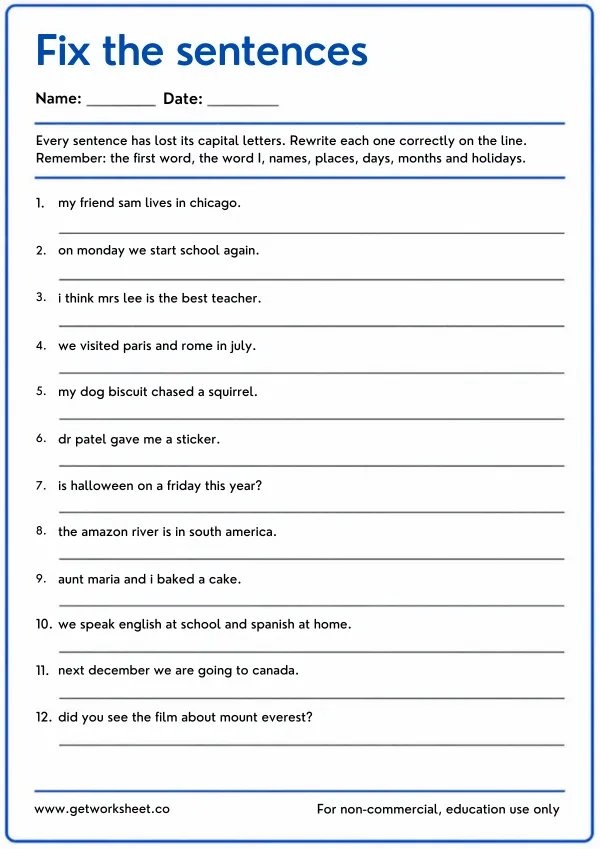
Free capitalization worksheets
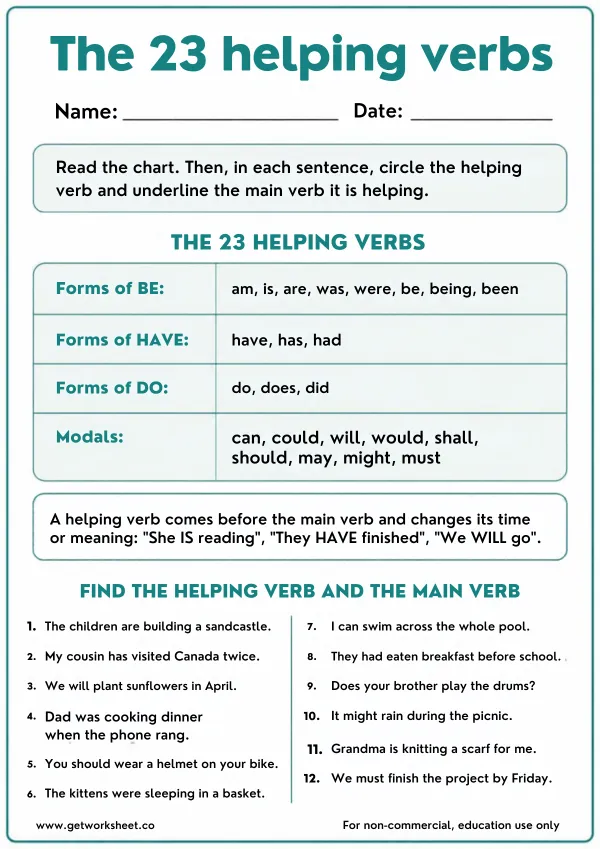
Free helping verbs worksheets
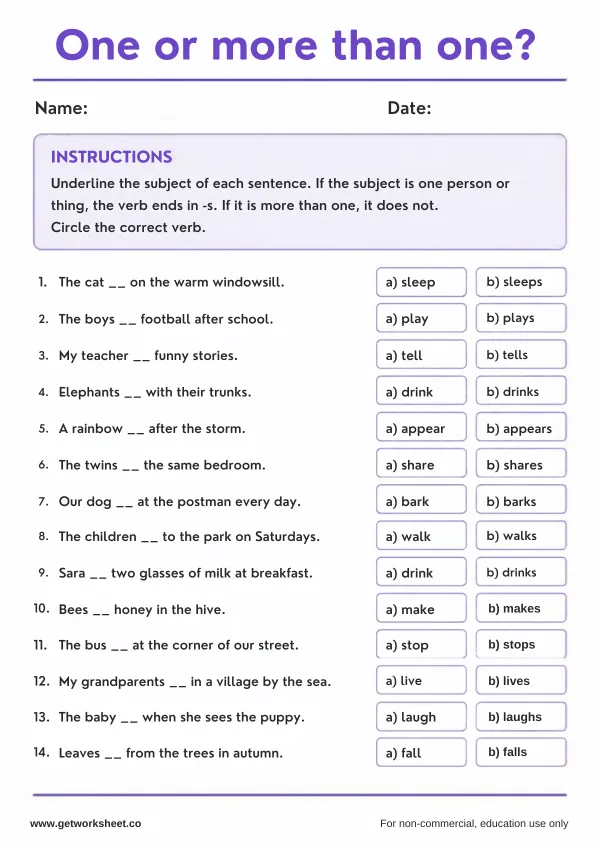
Free subject-verb agreement worksheets
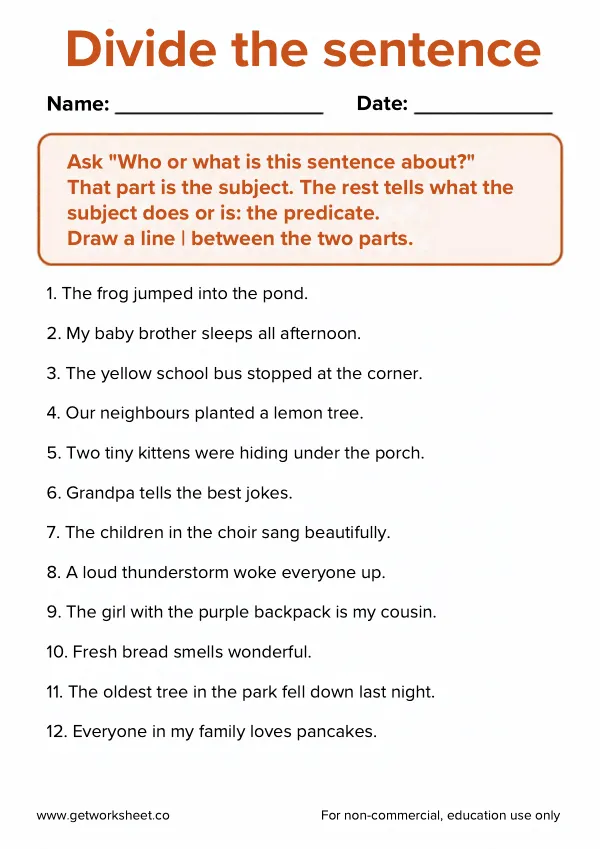
Free subject and predicate worksheets
Free handwriting paper printables
Free word search printables
Free word families worksheets
Free Montessori language worksheets
More worksheets
- Free pre-writing worksheets
- Free sight words worksheets (Dolch and Fry)
- Free CVC words worksheets
- Free name tracing worksheets
- Free letter Z tracing worksheets
- Free letter Y tracing worksheets
- Free letter X tracing worksheets
- Free letter W tracing worksheets
- Free letter V tracing worksheets
- Free letter U tracing worksheets
- Free letter T tracing worksheets
- Free letter S tracing worksheets