English · Kindergarten–Grade 3
Free Christmas reading comprehension worksheets
Free printable Christmas reading comprehension worksheets for kindergarten to grade 3: six original passages (a snow day, decorating the tree, cookies for the neighbors, a gift that cost nothing, how candy canes are made, why some places have snow at Christmas) with multiple choice, short answer, vocabulary and thinking questions. Answer keys included.
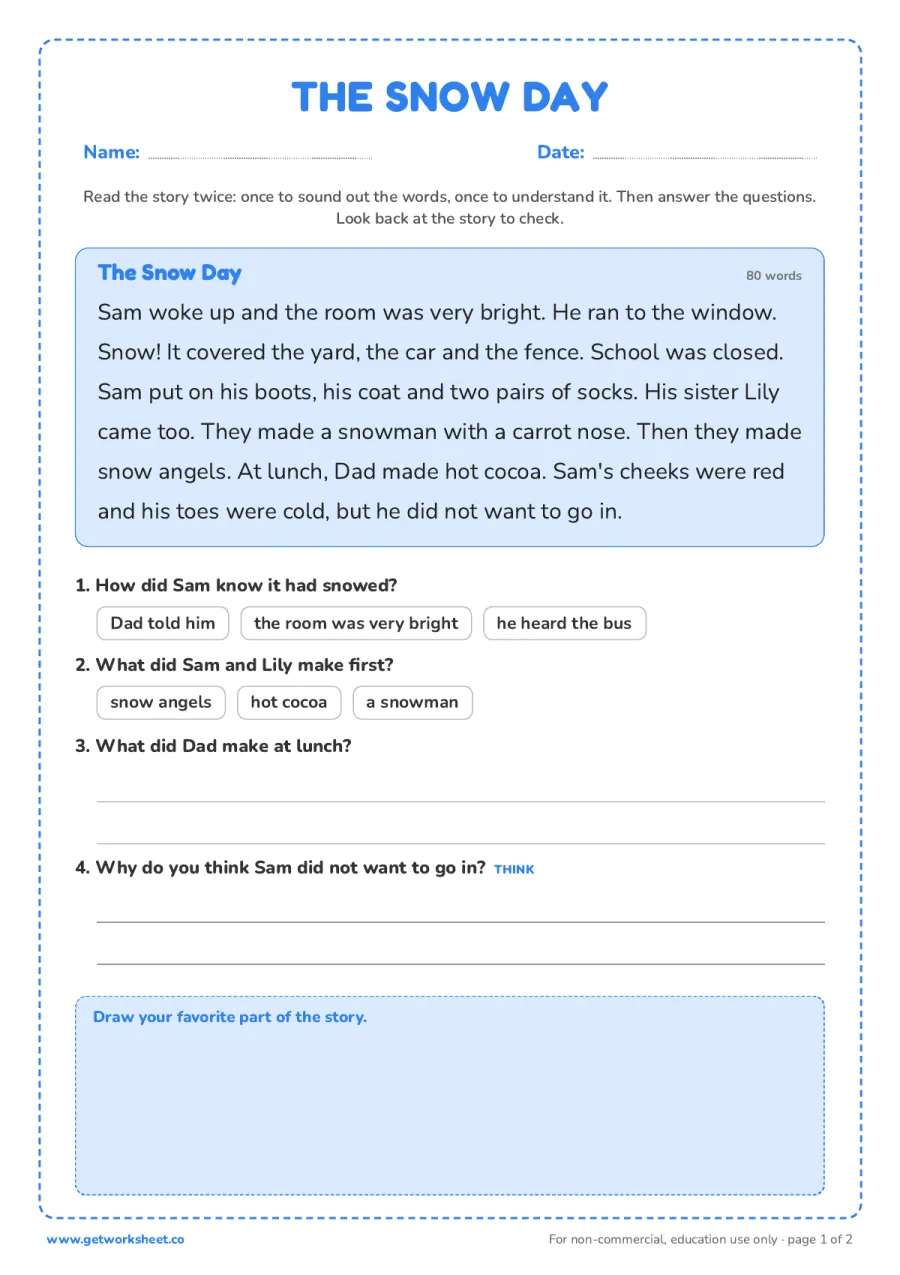
The Snow Day (story, 80 words, K to grade 1)
A 80-word Christmas story for kindergarten and first grade with four questions: two multiple choice, one short answer and one "why do you think" question. Answer key on page 2. Free printable PDF.
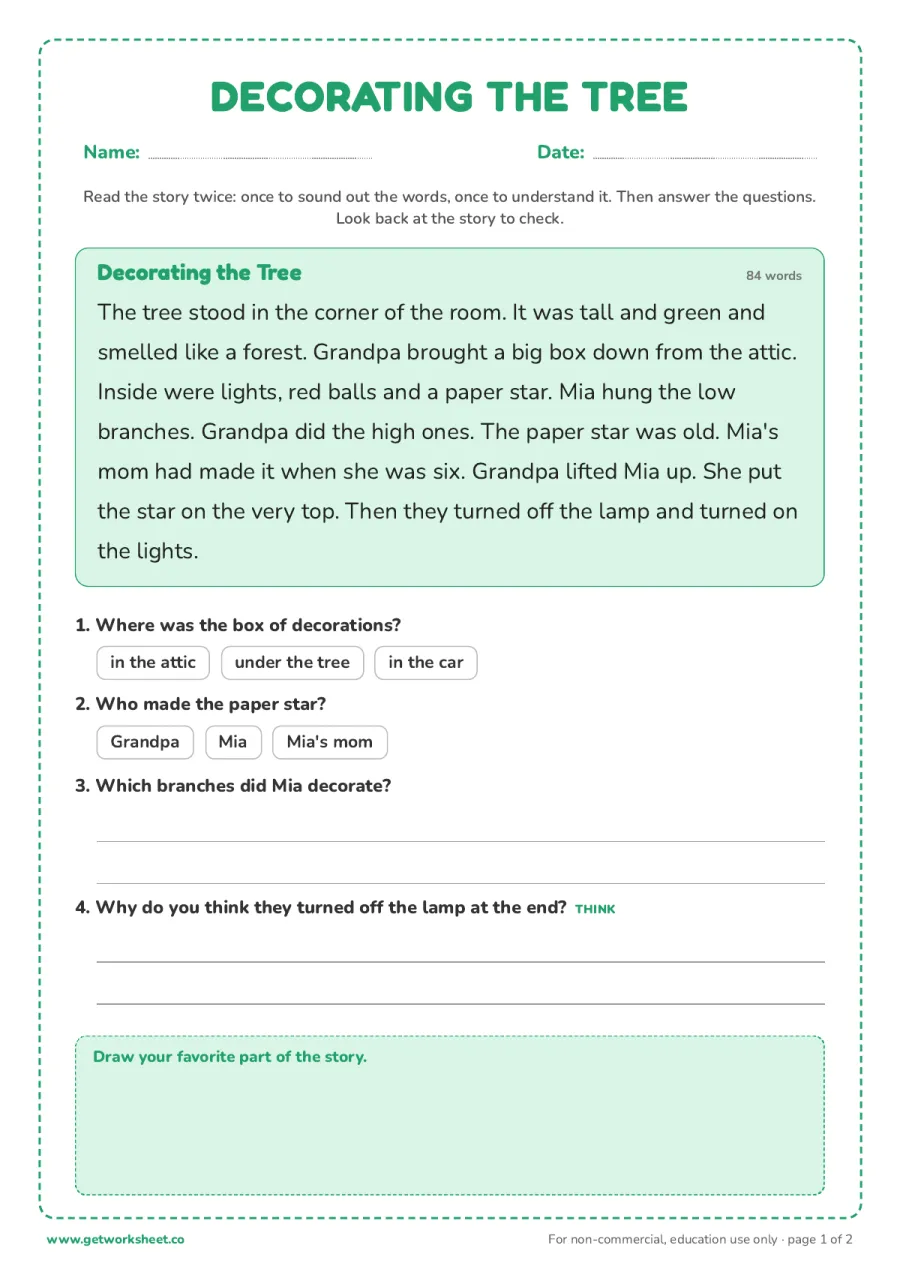
Decorating the Tree (story, 84 words, K to grade 1)
A 84-word Christmas story for kindergarten and first grade with four questions: two multiple choice, one short answer and one "why do you think" question. Answer key on page 2. Free printable PDF.
Whole set
All 6 sheets in one PDF
Instant and ad-free. No account needed.
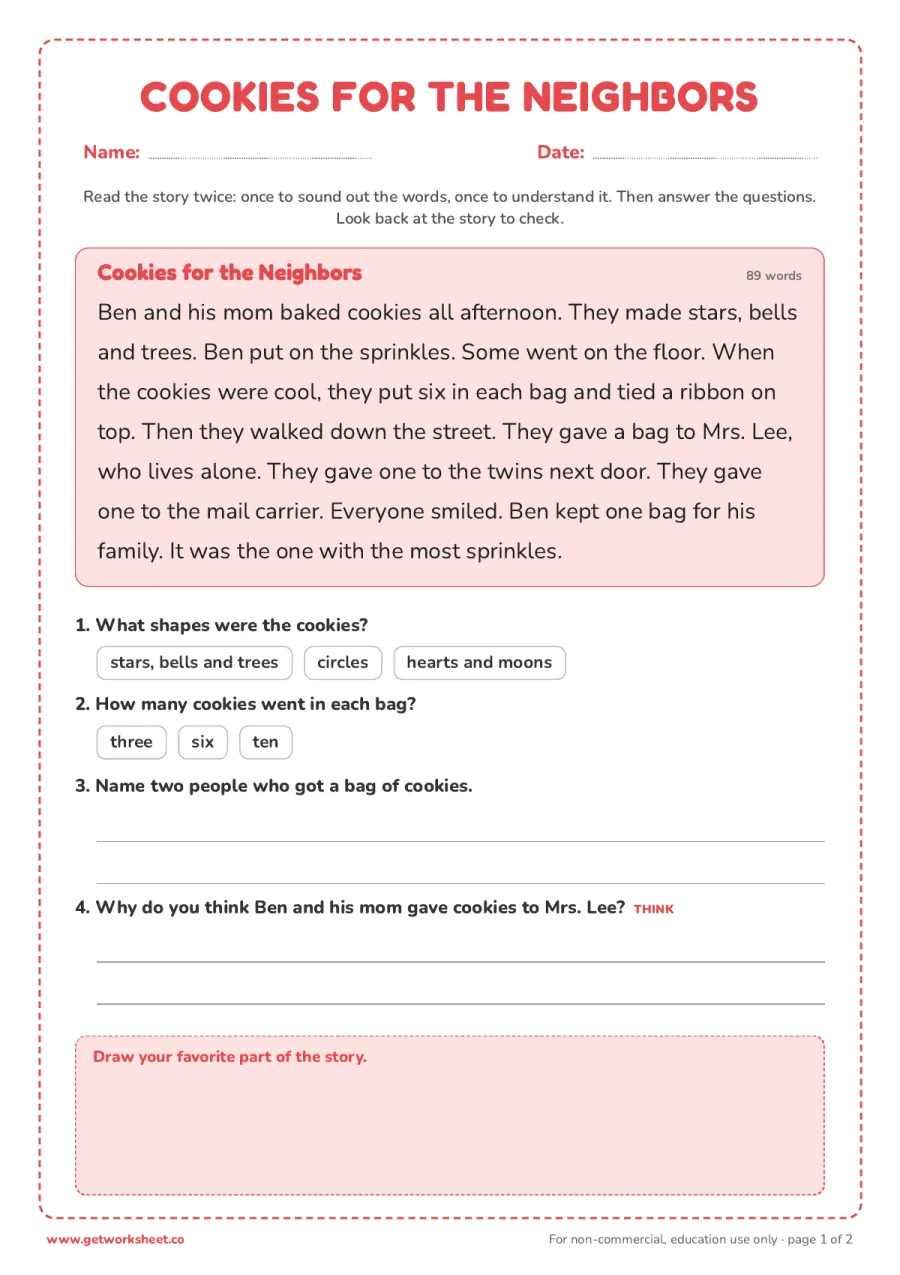
Cookies for the Neighbors (story, 89 words, K to grade 1)
A 89-word Christmas story for kindergarten and first grade with four questions: two multiple choice, one short answer and one "why do you think" question. Answer key on page 2. Free printable PDF.
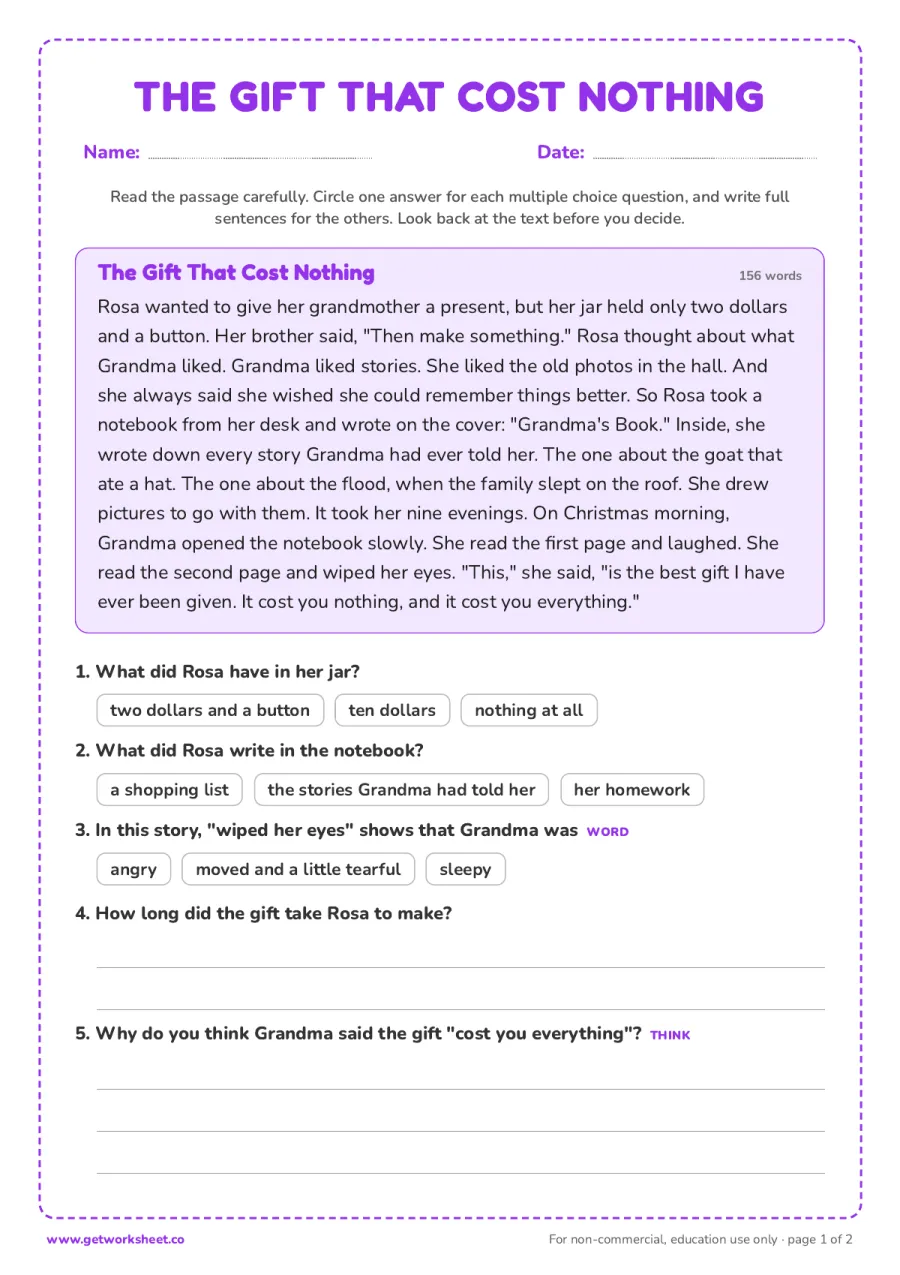
The Gift That Cost Nothing (story, 156 words, grades 2 to 3)
A 156-word Christmas story for second and third grade with five questions: two multiple choice, one vocabulary in context, one short answer and one "why do you think" question. Answer key on page 2. Free printable PDF.
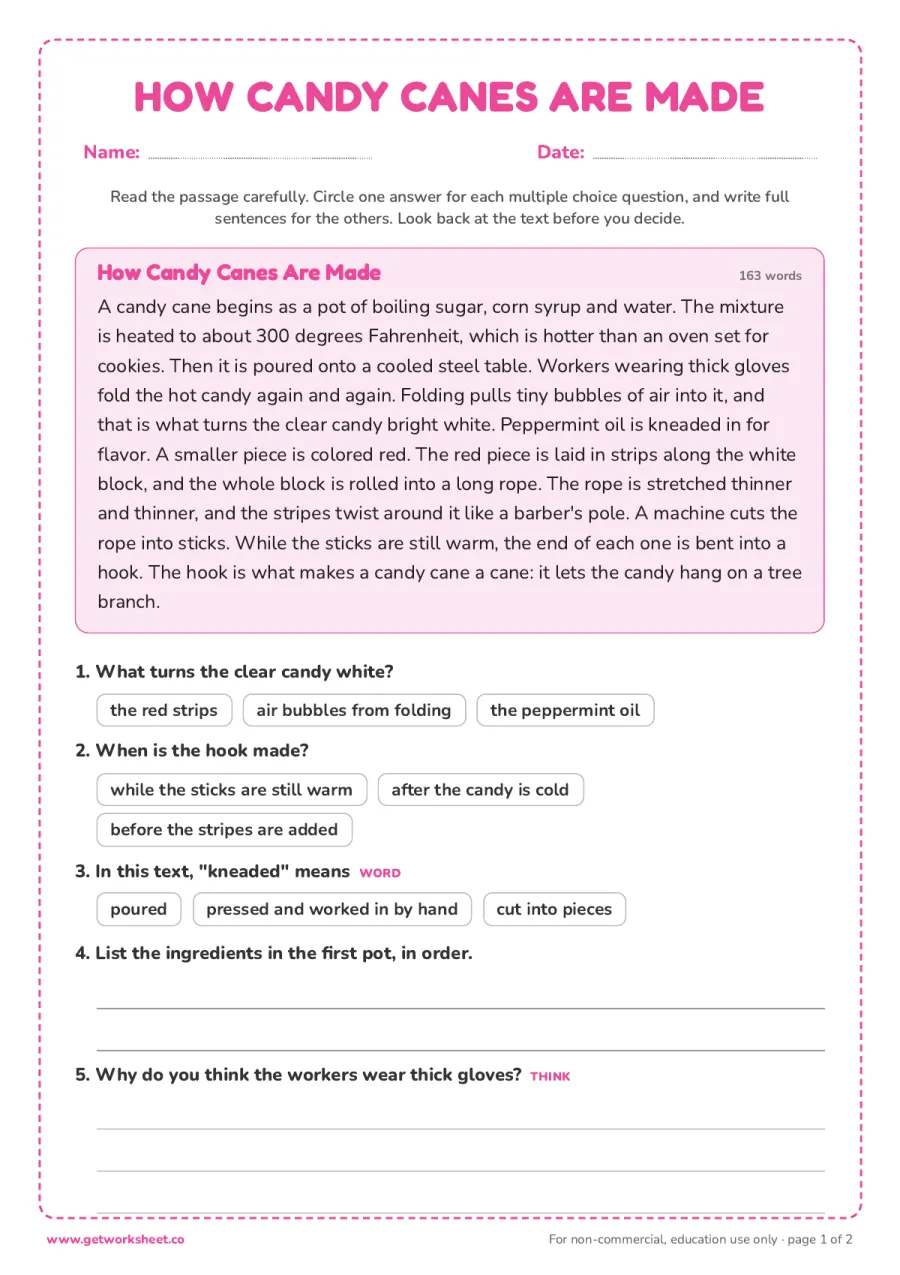
How Candy Canes Are Made (nonfiction, 163 words, grades 2 to 3)
A 163-word nonfiction passage for second and third grade with five questions: two multiple choice, one vocabulary in context, one short answer and one "why do you think" question. Answer key on page 2. Free printable PDF.
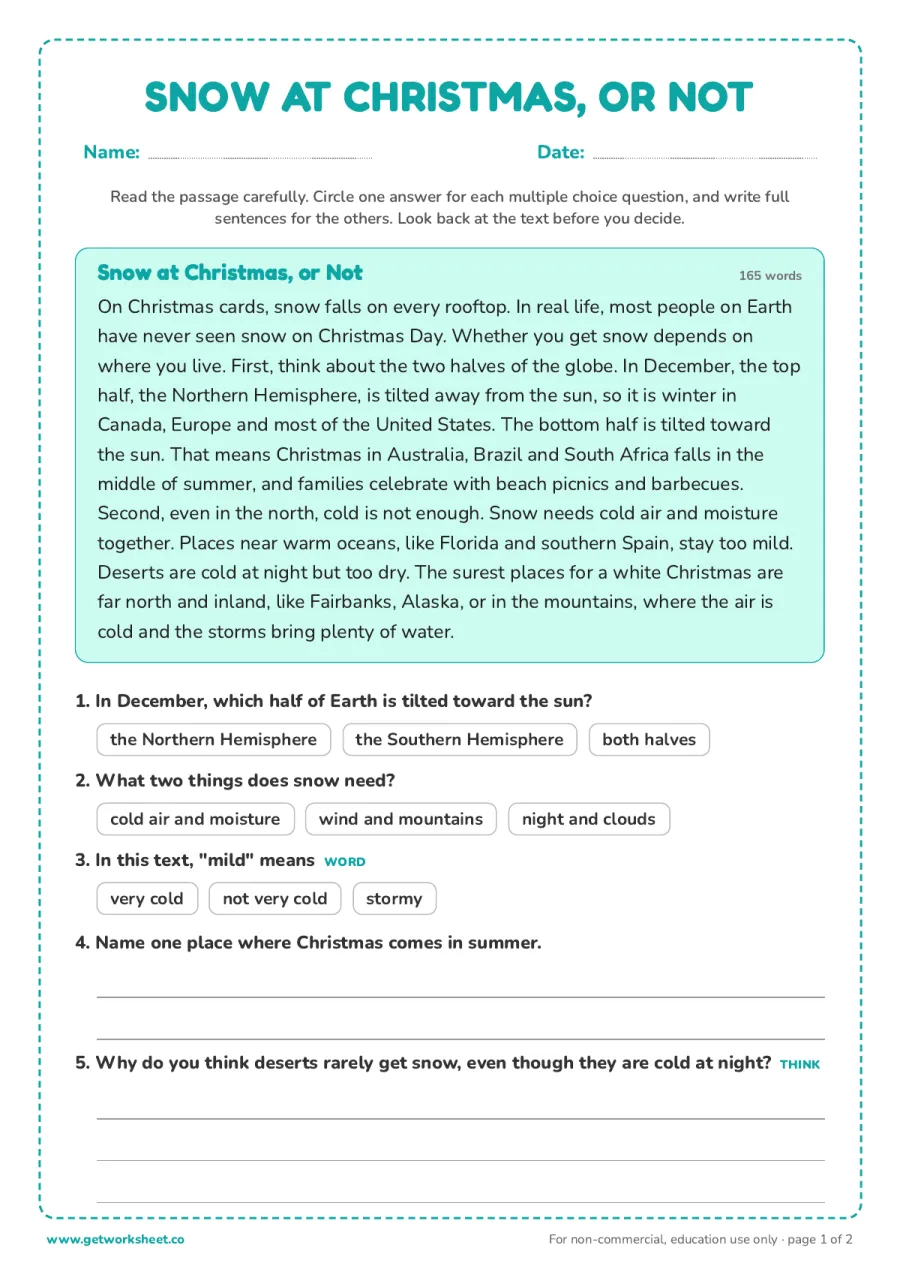
Snow at Christmas, or Not (nonfiction, 165 words, grades 2 to 3)
A 165-word nonfiction passage for second and third grade with five questions: two multiple choice, one vocabulary in context, one short answer and one "why do you think" question. Answer key on page 2. Free printable PDF.
AI worksheet generator
Make a worksheet like this for your class
The 6 sheets above are fixed. The generator writes a new christmas reading comprehension worksheet for your grade, with the question types and count you choose, in about 20 seconds. Pick a grade to start:
What you get
- A fresh set of questions on christmas reading comprehension, not a copy of the sheets above
- Multiple choice, fill in the blanks, true or false, open ended
- Answer key and print-ready PDF with Pro
Free account, 1 worksheets a week. No card.
Six original Christmas reading passages written for the last two weeks of term, when children will read almost anything with snow in it. Three are short stories for kindergarten and first grade (60 to 90 words, large print, four questions) and three are for second and third grade (150 to 170 words, five questions): one story about a homemade gift, and two nonfiction passages, one on how candy canes are made and one on why Christmas is snowy in some places and a beach day in others. The passages are secular-leaning (snow, a tree, cookies, a grandmother, a notebook) so they suit a mixed class, and nothing in them is copied from a published book. Every PDF is two pages: the passage with its questions, then the same page with the right choice highlighted and a model answer printed for each written question.
What's in this set
- The Snow Day (K to grade 1, 80 words). Sam wakes to a bright room, school is closed, and he and his sister build a snowman before Dad's hot cocoa. Two multiple choice, one short answer, one "why do you think" question and a box to draw a favorite part.
- Decorating the Tree (K to grade 1, 84 words). Mia and Grandpa unpack the lights and an old paper star her mom made at six. Questions on where the box was, who made the star, and why they turned off the lamp.
- Cookies for the Neighbors (K to grade 1, 89 words). Ben and his mom bake star, bell and tree cookies and deliver bags to a neighbor who lives alone, the twins next door and the mail carrier. A kindness story with a counting detail (six cookies a bag).
- The Gift That Cost Nothing (grades 2 to 3, 156 words). Rosa has two dollars and a button, so she writes down every story her grandmother has ever told her and draws the pictures. Includes a vocabulary question on "wiped her eyes" and a thinking question on what "it cost you everything" means.
- How Candy Canes Are Made (grades 2 to 3, 163 words, nonfiction). Boiling sugar, folding in air to turn the candy white, laying red strips, rolling and twisting the rope, bending the hook while it is warm. Sequence and vocabulary ("kneaded") questions.
- Snow at Christmas, or Not (grades 2 to 3, 165 words, nonfiction). Why December is winter in the Northern Hemisphere and summer in Australia, Brazil and South Africa, and why cold is not enough: snow needs moisture too. Vocabulary question on "mild" and a thinking question on deserts.
What students will practice
- Answering literal questions about key details in a story or text (RL.K.1, RL.1.1, RI.2.1)
- Making simple inferences and explaining them: "why do you think" questions on every sheet (RL.1.7, RL.3.3)
- Working out the meaning of a word or phrase from the sentences around it (L.2.4a, L.3.4a)
- Finding the sequence of steps in a process and the cause of an effect in nonfiction (RI.2.3, RI.3.3)
- Writing an answer in a full sentence and looking back at the text to check it
Free printable makers
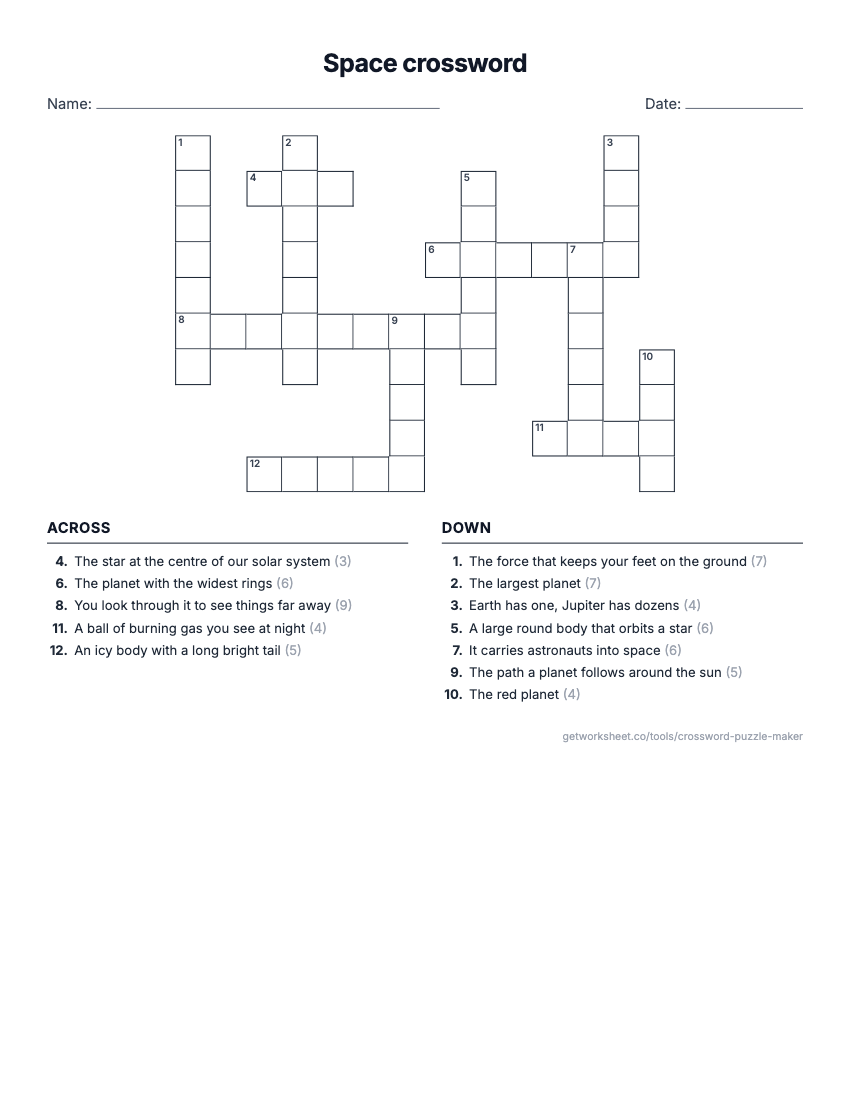
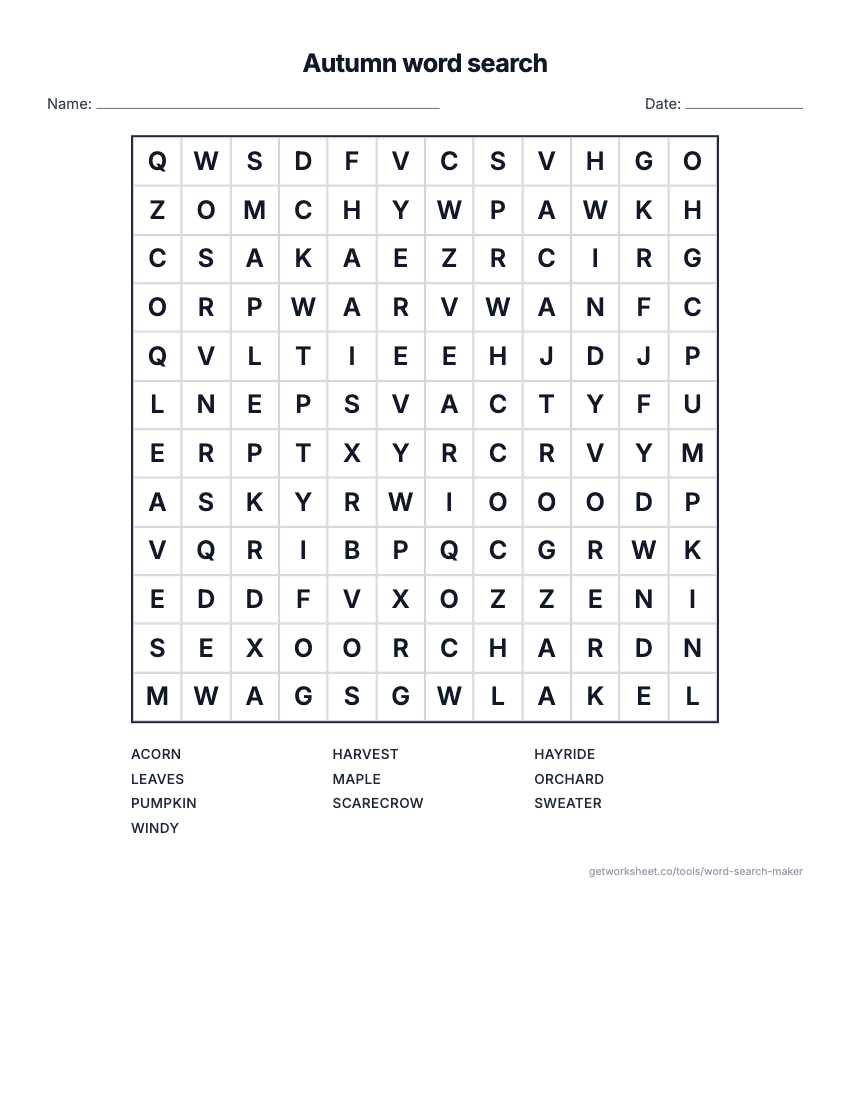
Make your own christmas reading comprehension sheets
Type your own words or numbers and print in about 30 seconds. No account, no AI, answer key where it applies.
AI worksheet generator
Need a different christmas reading comprehension worksheet?
Generate a custom christmas reading comprehension worksheet: pick the grade, question types and count, and print it in about 20 seconds. Free accounts get 1 generation a week.
How to use these worksheets
Print at 100% on A4 or US Letter; print page 1 for children and keep page 2 to mark. The K-1 sheets are set in 15-point type with generous line spacing so emerging readers can track the lines; the grade 2-3 sheets fit a longer passage and five questions on one side. Have children read each passage twice, once for the words and once for the meaning, before they look at the questions.
- The Snow Day. A good first sheet because every answer is a single concrete detail. Ask children to point to the sentence that tells them Sam's cheeks were red before they answer question 4.
- Decorating the Tree. Question 2 (who made the star) has a distractor that is in the story (Grandpa), so it checks careful reading rather than guessing. The lamp question is a nice first inference: nobody says why, but every child knows.
- Cookies for the Neighbors. Question 3 asks for two people, which is a quiet introduction to multi-part answers. Use the Mrs. Lee question to talk about who in your own neighborhood might like a visit.
- The Gift That Cost Nothing. Pause on the last line before children answer question 5. "It cost you nothing, and it cost you everything" is the kind of sentence third grade tests build a question around, and discussing it aloud first makes the written answer stronger.
- How Candy Canes Are Made. Have children number the steps in the margin (boil, pour, fold, flavor, add red, roll, stretch, cut, bend). The folding-makes-it-white fact surprises most adults too; a real candy cane on the desk helps.
- Snow at Christmas, or Not. A globe or a quick sketch of the tilted Earth makes the hemisphere question concrete. The desert question is the hardest on the set because children must combine two facts from different sentences.
Making it a lesson
- Pair the bands. A third grader who finishes Snow at Christmas can read The Snow Day to a kindergarten buddy and ask the questions aloud.
- Write the seventh passage. After the gift story, ask children to write about a present they could make for nothing, using the same shape: the problem, the idea, the making, the giving.
- Fact or story? Lay the six passages side by side and sort them into fiction and nonfiction. Ask what clues gave it away (characters and dialogue versus numbers and explanations).
Frequently asked questions
What reading level are these passages?
The three K-1 stories are 80 to 89 words with short sentences and mostly decodable or common sight words, about a mid-first-grade level. The three grade 2-3 passages are 156 to 165 words with longer sentences and a few content words (hemisphere, moisture, kneaded) that the vocabulary questions deal with.
Are the questions multiple choice or written?
Both. Every sheet has two multiple choice questions with three pill-style choices to circle, one short written answer and one "why do you think" question. The grade 2-3 sheets add a vocabulary-in-context question. The answer key highlights the right choice and prints a model answer for each written question.
Are the passages religious?
No. The stories are about snow, a tree, cookies and a homemade gift; the nonfiction passages are about how candy canes are made and the science of why some places have snow at Christmas. There is no nativity content, so the sheets suit a mixed classroom.
Can I use them for homework over the break?
Yes. Each PDF stands alone and the answer key lets families check the work. Send the K-1 sheets with the drawing box, which makes the page feel like an activity rather than a test.
Are these original passages?
Yes. All six were written for this set and are not excerpts from any published book, so they are safe to copy for a whole class under the non-commercial education licence.
More practice
Follow the K-1 sheets with the kindergarten reading comprehension worksheets and the first grade reading comprehension worksheets; the second grade and third grade reading comprehension worksheets continue the five-question format with fables, nonfiction and sequencing. For the rest of a Christmas week, the Christmas worksheets have word searches, scrambles and writing prompts, the Christmas math worksheets cover counting to facts to 20, and the Christmas coloring pages fill the last ten minutes.
Free library
Related collections
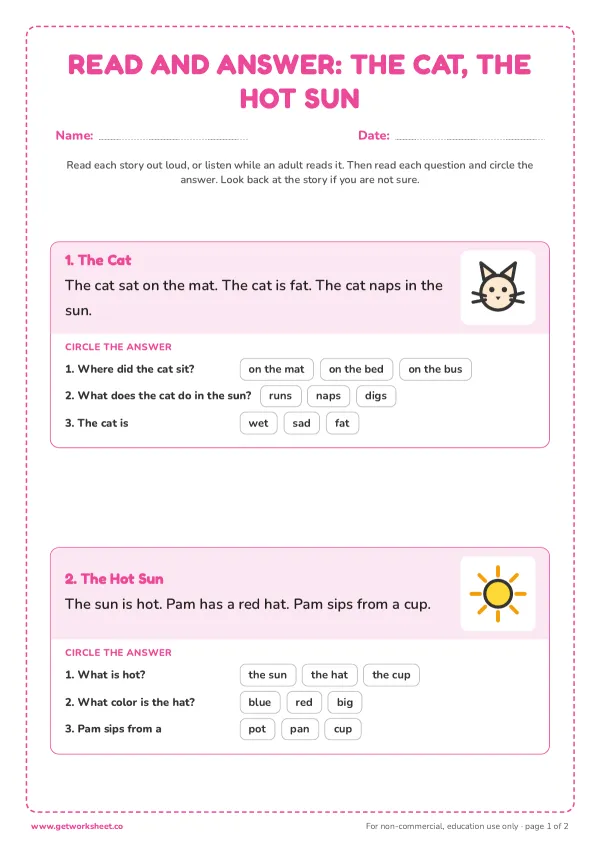
Free kindergarten reading comprehension worksheets
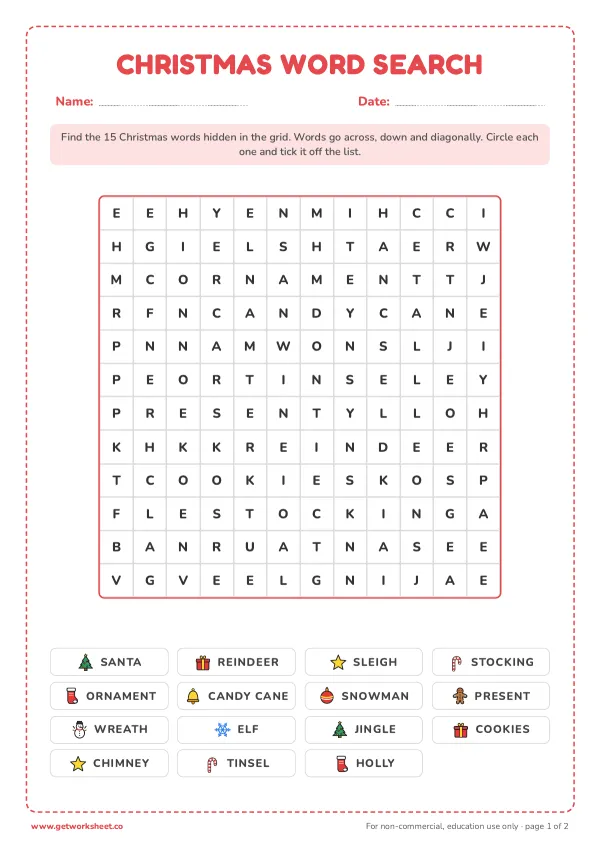
Free Christmas worksheets: word searches, letter to Santa and writing
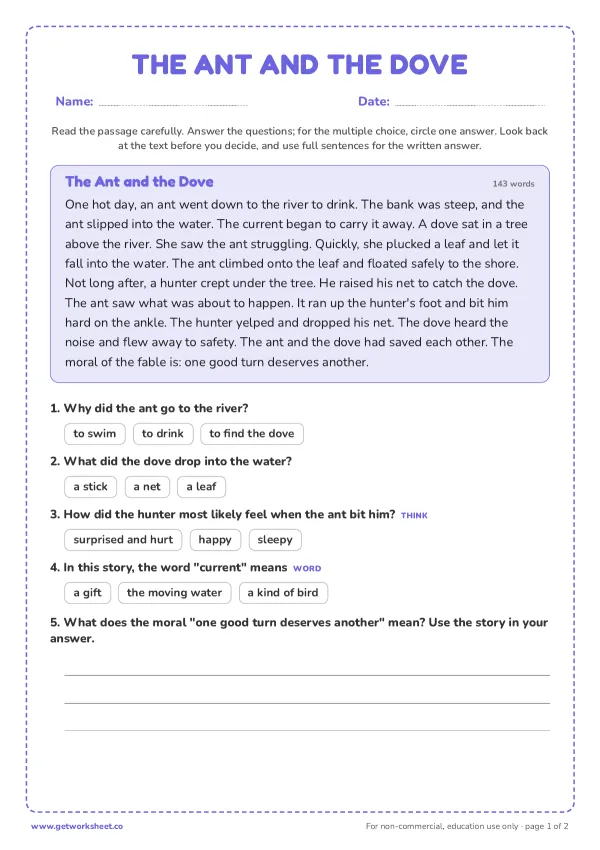
Free second grade reading comprehension worksheets
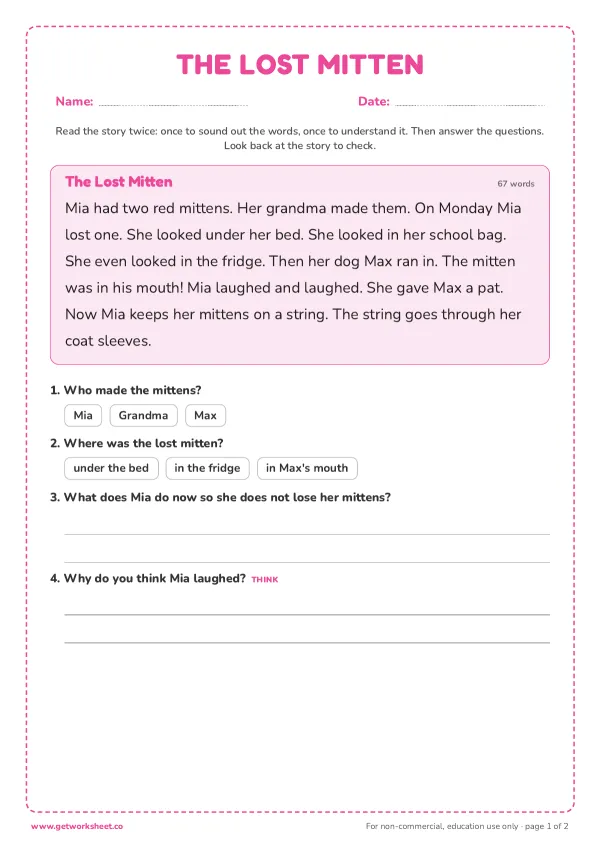
Free first grade reading comprehension worksheets
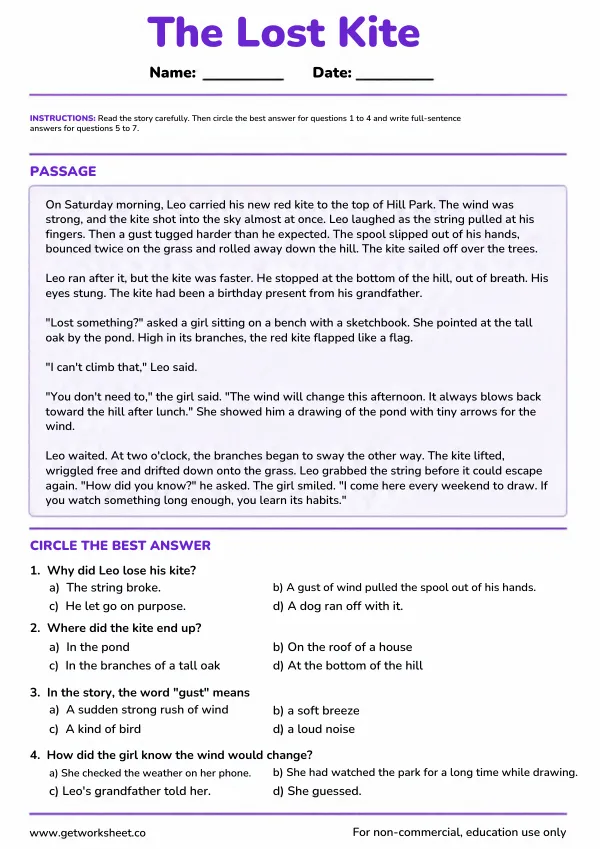
Free third grade reading comprehension worksheets
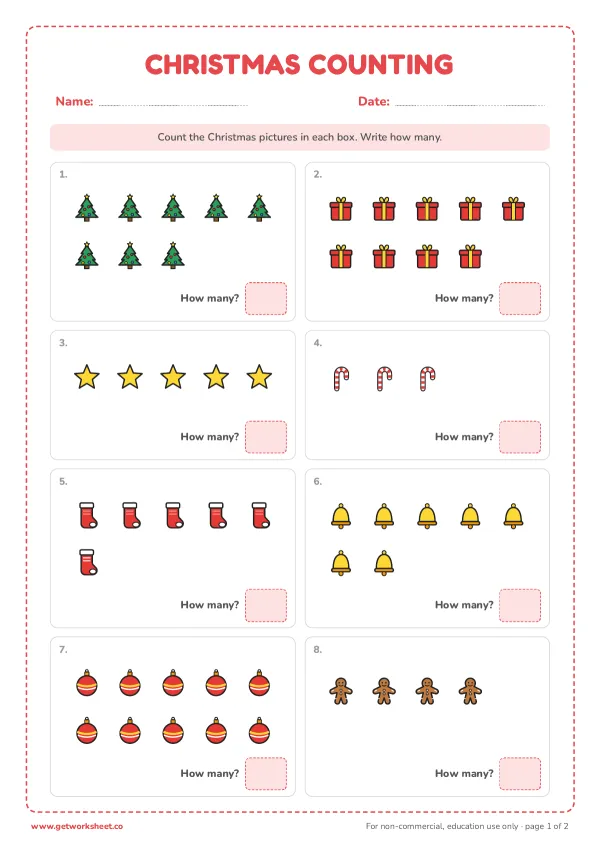
Free Christmas math worksheets
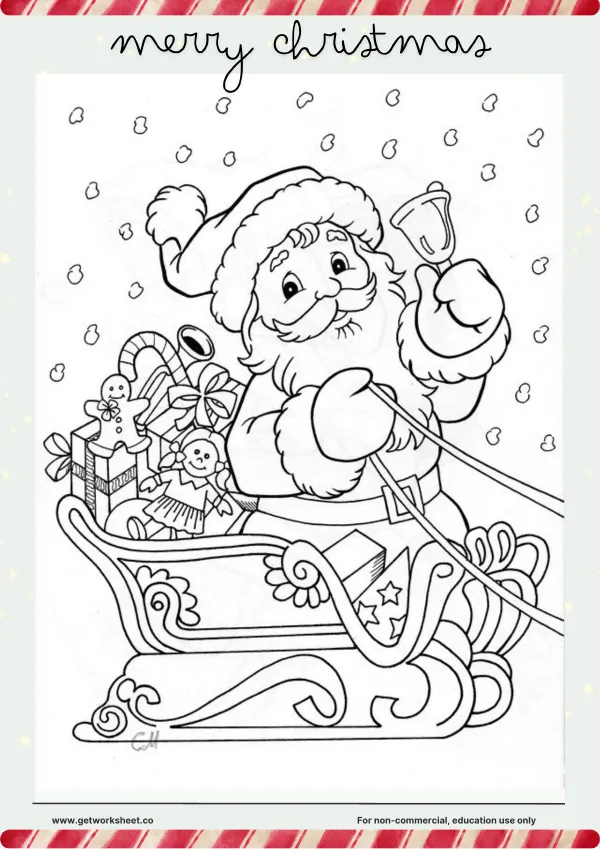
Free Merry Christmas coloring pages
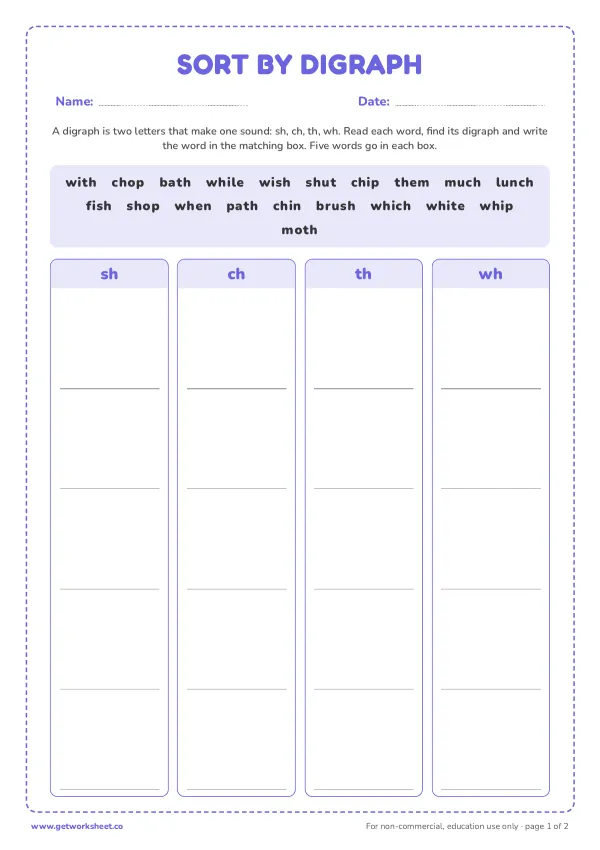
Free digraphs worksheets
More worksheets
- Free handwriting paper printables
- Free word families worksheets
- Free sight words worksheets (Dolch and Fry)
- Free CVC words worksheets
- Free handwriting worksheets
- Free cl blend worksheets
- Free phonics worksheets
- Free reading log printables
- Free winter break packet worksheets
- Free Thanksgiving math worksheets
- Free greater than less than worksheets
- Free number line printables