Life skills · Grade 2–Grade 8
Free goal-setting worksheets for students
Free printable goal-setting worksheets for students in grades 2 to 8: a SMART goal planner, a five-step goal ladder, a weekly goals and check-in table, a monthly goal tracker with 31 day boxes, an end-of-goal reflection and a one-page my big goal sheet for younger students.
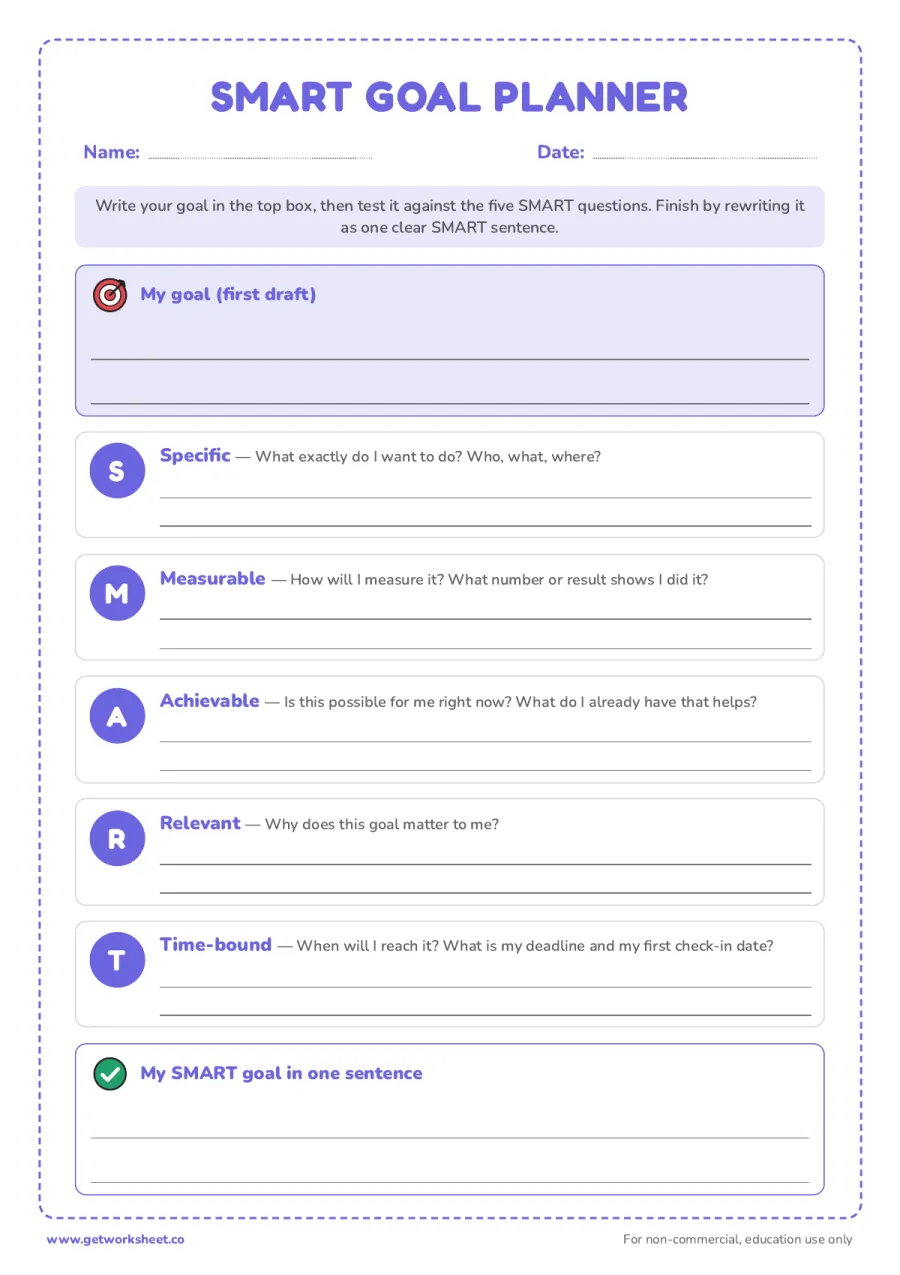
SMART goal planner
One goal worked through the five SMART prompts (specific, measurable, achievable, relevant, time-bound) with a guiding question and two lines each, then rewritten as one SMART sentence. For grades 3 to 8. Free printable PDF.
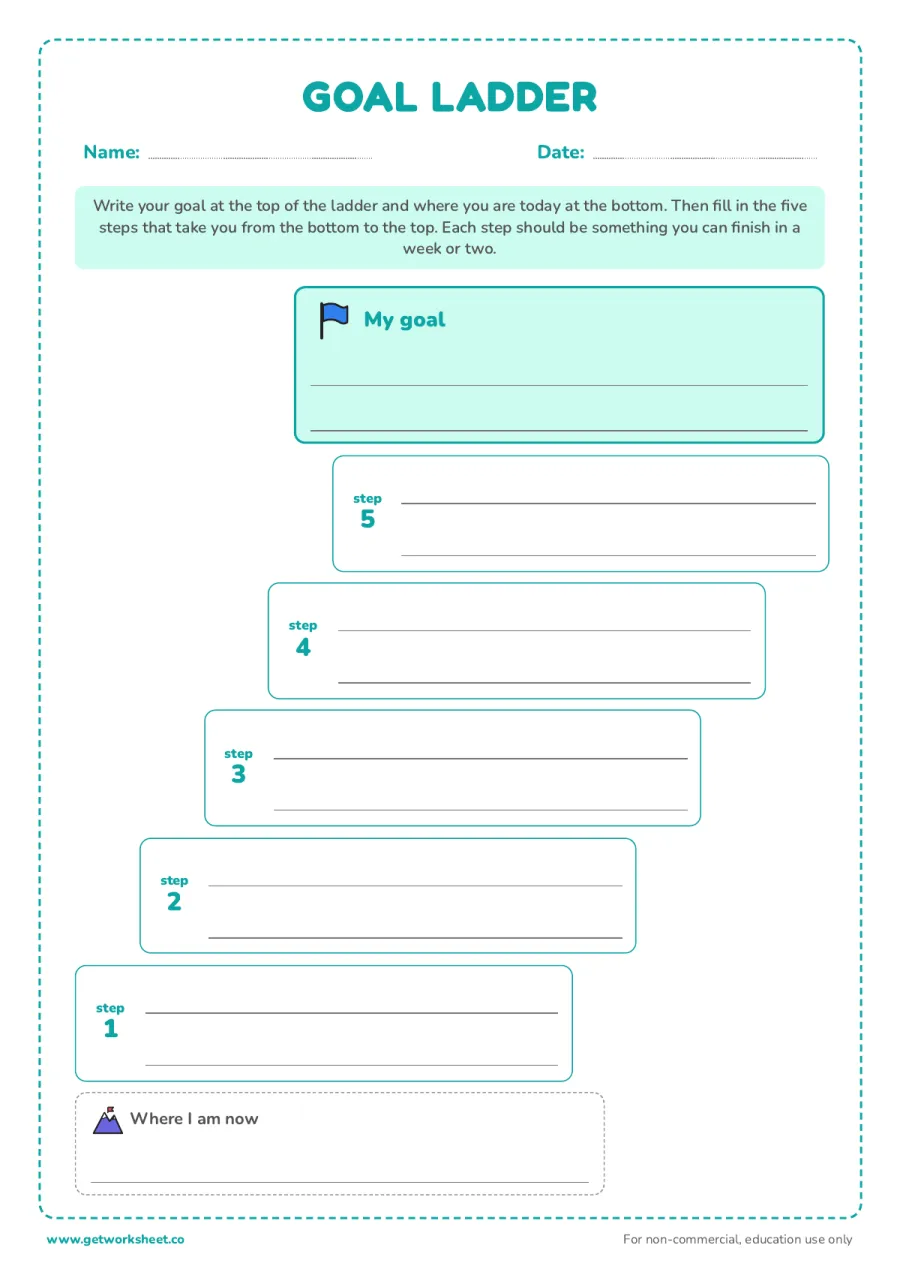
Goal ladder
A goal at the top, five steps climbing up to it and a "where I am now" box at the bottom, laid out as a staircase with two lines per step. For grades 2 to 8. Free printable PDF.
Whole set
All 6 in one PDF
- Every sheet on this page, one file
- No ads, no countdowns, print as often as you like
- Instant download, ad-free, no account needed
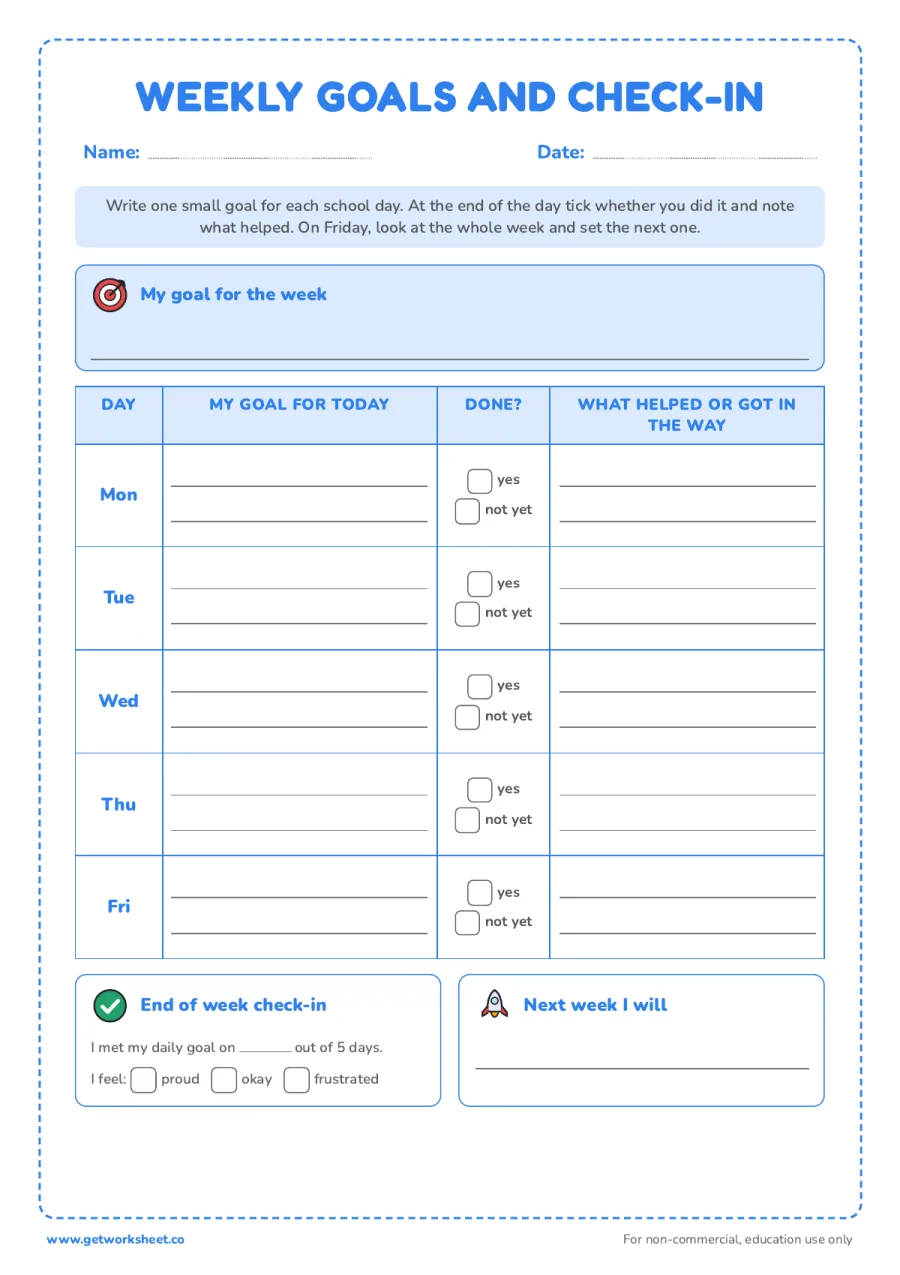
Weekly goals and check-in
Monday to Friday table: a goal for each day, a done / not yet tick, what helped or got in the way, plus a weekly goal line and an end-of-week check-in. For grades 2 to 8. Free printable PDF.
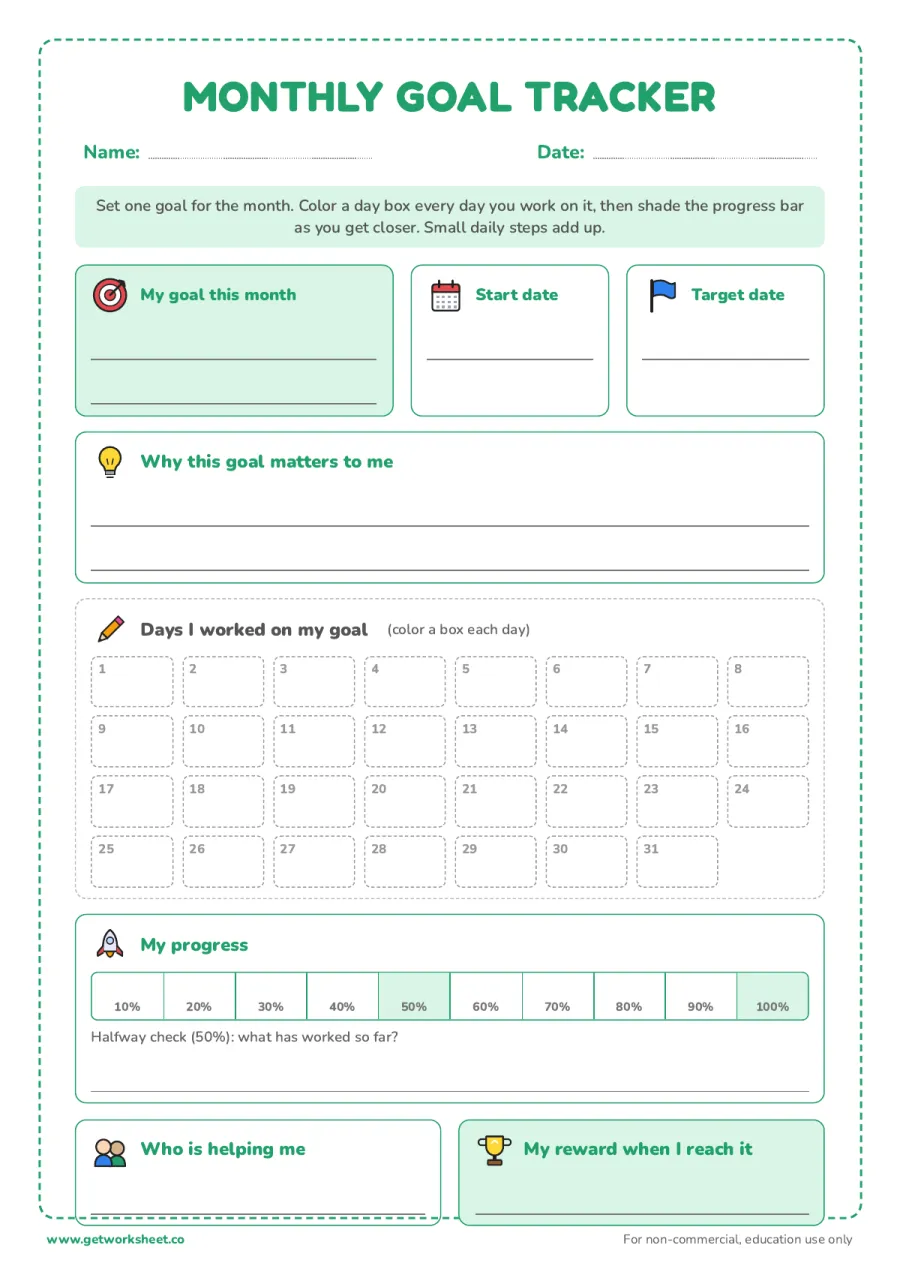
Monthly goal tracker
One goal for the month with start and target dates, why it matters, 31 day boxes to color, a 10-step progress bar with a halfway check, a helper line and a reward line. For grades 3 to 8. Free printable PDF.
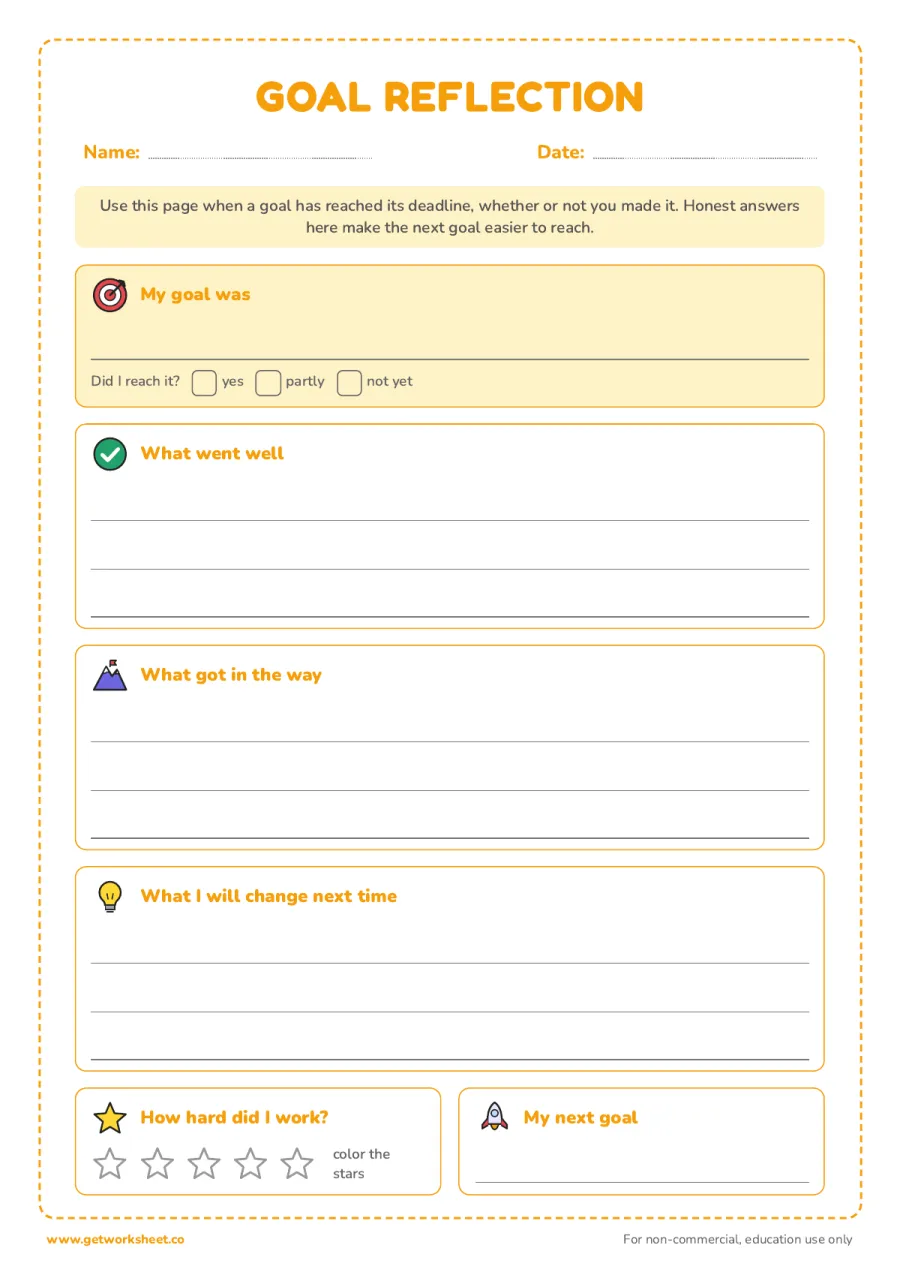
Goal reflection
End-of-goal reflection: did I reach it, what went well, what got in the way, what I will change next time, an effort rating and the next goal. For grades 3 to 8. Free printable PDF.
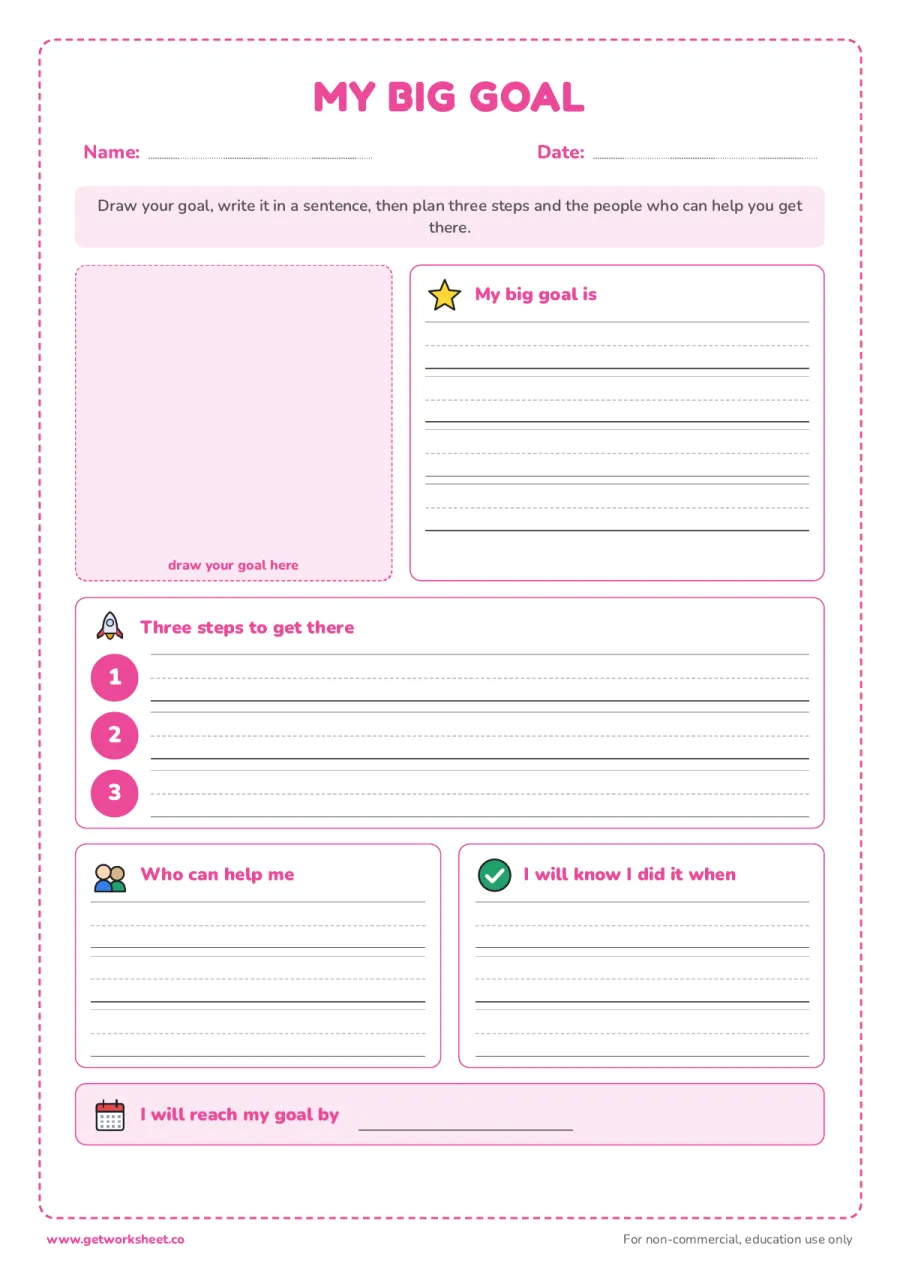
My big goal (one page for younger students)
A picture box, "my big goal is" handwriting lines, three numbered steps, who can help me, how I will know I did it and a target date. For grades 2 to 3. Free printable PDF.
AI worksheet generator
Make a worksheet like this for your class
The 6 sheets above are fixed. The generator writes a new goal setting worksheet for your grade, with the question types and count you choose, in about 20 seconds. Pick a grade to start:
What you get
- A fresh set of questions on goal setting, not a copy of the sheets above
- Multiple choice, fill in the blanks, true or false, open ended
- Answer key and print-ready PDF with Pro
Free account, 1 worksheets a week. No card.
Six goal-setting templates that take a student from a vague wish to a goal with steps, dates and a check-in. The set is built for January and for any fresh start (a new term, a new semester, after a report card), and the sheets chain together: plan a goal on the SMART planner or the goal ladder, work on it with the weekly or monthly tracker, then close it with the reflection page. Five sheets suit grades 3 to 8; the sixth, my big goal, is a simpler one-pager with handwriting lines for grades 2 and 3. Everything prints on A4 or US Letter in black and white.
What's in this set
- SMART goal planner. A first-draft goal, then five rows for Specific, Measurable, Achievable, Relevant and Time-bound, each with a guiding question and two lines, and a box to rewrite the goal as one SMART sentence.
- Goal ladder. The goal at the top, five numbered steps climbing up to it as a staircase, and a "where I am now" box at the bottom. Two lines per step.
- Weekly goals and check-in. A goal for the week, then Monday to Friday rows with a goal for the day, a done / not yet tick and what helped or got in the way, plus an end-of-week check-in and a "next week I will" line.
- Monthly goal tracker. One goal with a start date and target date, why it matters, 31 day boxes to color on the days the student works on it, a ten-step progress bar with a halfway check, who is helping and a reward line.
- Goal reflection. My goal was, did I reach it (yes / partly / not yet), what went well, what got in the way, what I will change next time, an effort rating of five stars and the next goal.
- My big goal. A one-page version for younger students: picture box, "my big goal is" on handwriting lines, three numbered steps, who can help me, how I will know I did it and a target date.
What students will practice
- Writing a goal that is specific and measurable, with a deadline
- Breaking a goal into ordered steps that can each be finished in a week or two
- Daily and weekly self-monitoring: did I do it, and what helped
- Tracking effort over a month and reading progress off a bar
- Reflecting honestly on an outcome and planning the next attempt
- Identifying the people who can help and the evidence that a goal has been met
Free printable makers
Make your own goal setting sheets
Type your own words or numbers and print in about 30 seconds. No account, no AI, answer key where it applies.
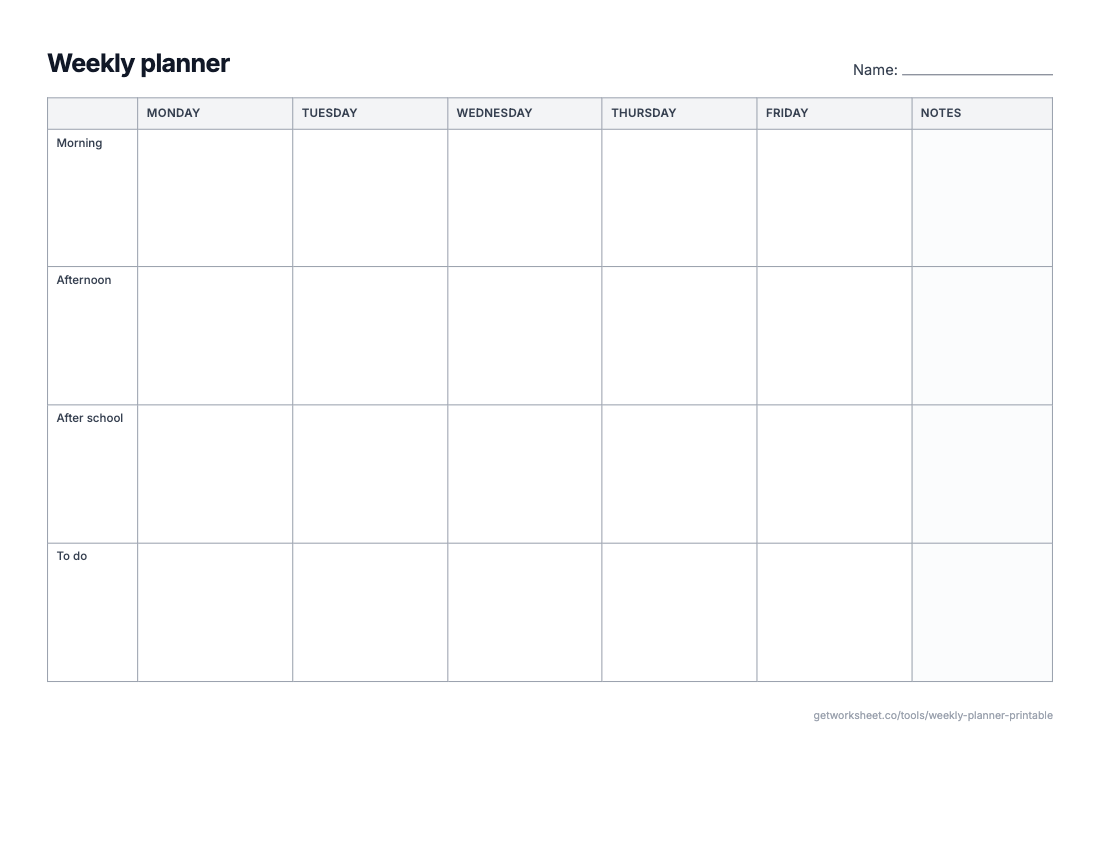 Weekly planner and calendar makerWeekly planner, monthly calendar, daily schedule or lesson-plan grid on one sheet. Free to print.
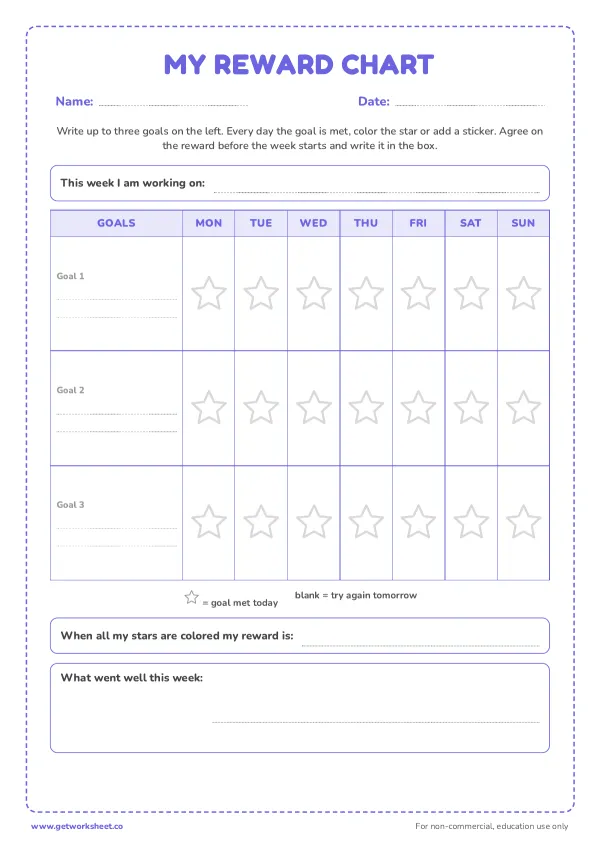
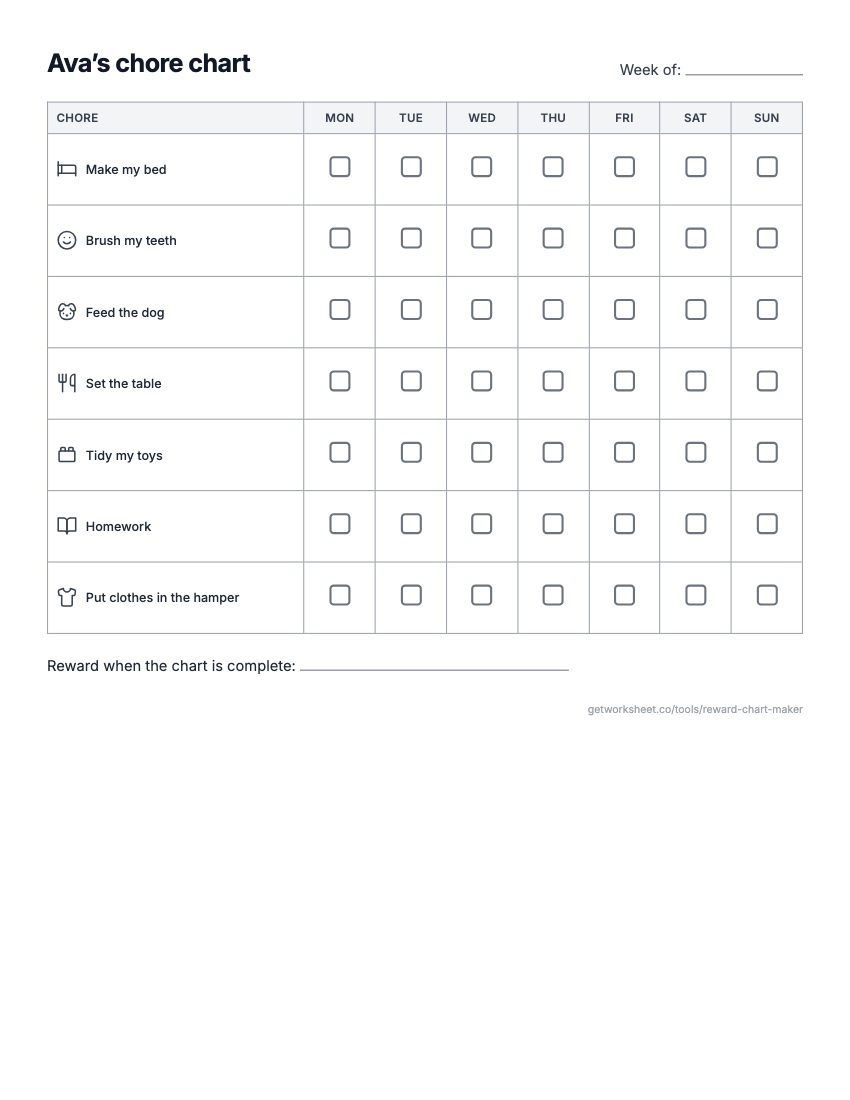 Reward chart and chore chart makerReward or sticker chart with a goal, Mon-Sun chore chart with pictures, behavior chart. Free to print.
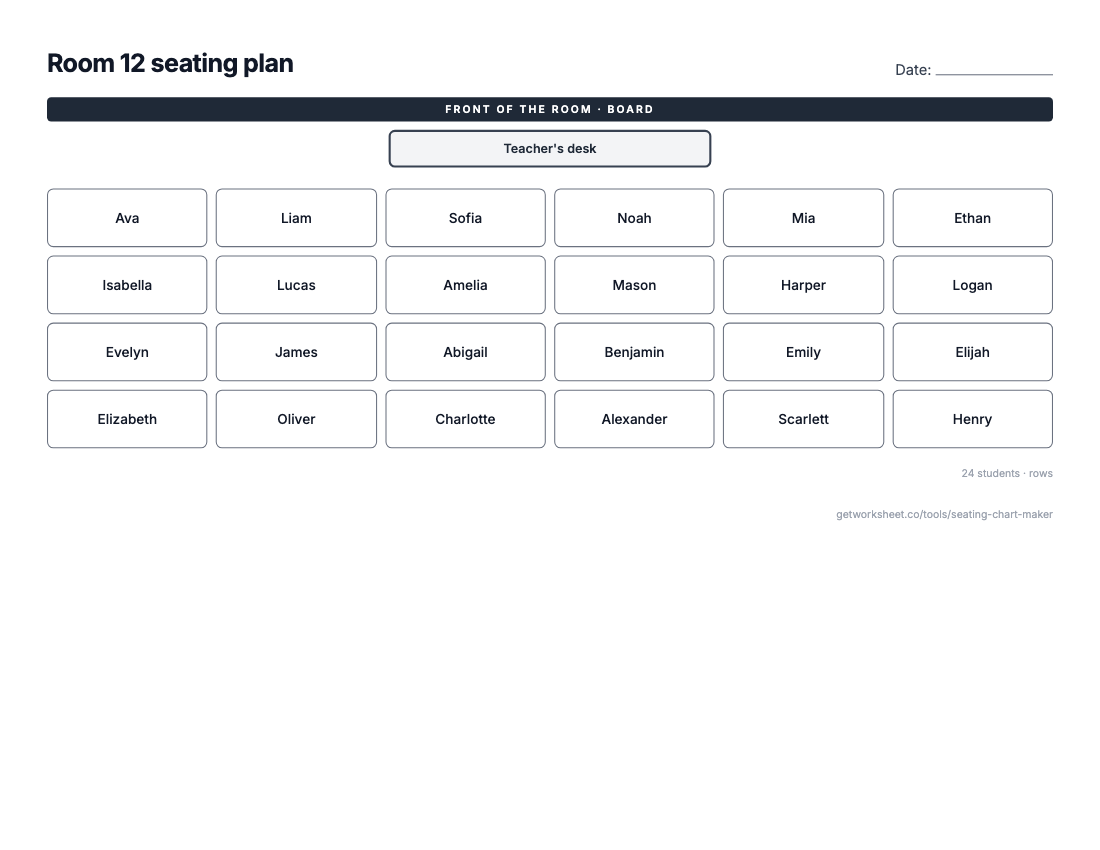 Seating chart makerClass list in, seating plan out: rows, pairs, tables or U-shape, shuffle and lock seats. Free to print.
AI worksheet generator
Need a different goal setting worksheet?
Generate a custom goal setting worksheet: pick the grade, question types and count, and print it in about 20 seconds. Free accounts get 1 generation a week.
Teaching tips and common mistakes
How to use these worksheets
Print at 100% on A4 or US Letter. Start with one planning sheet (SMART planner for grades 5 and up, goal ladder or my big goal for younger students), add one tracker, and keep the reflection sheet for the deadline. One goal at a time; a second goal can start when the first is reflected on.
- SMART goal planner. Model one goal on the board first, failing the test on purpose ("get better at math" is not measurable) and fixing it. Then students test their own first draft row by row. The last box, the one-sentence SMART goal, is the piece to keep.
- Goal ladder. Fill in the top (the goal) and the bottom (where I am now) before any step. Then ask "what is the very first thing?" and work upwards. If a step cannot be done in a week or two, it is really two steps.
- Weekly goals and check-in. Two minutes at the start of each day to write the goal, two at the end to tick it and note what helped. The Friday check-in is where the learning is: look at the five rows together and ask what pattern they show.
- Monthly goal tracker. Suits goals that need daily practice (instrument, reading, a sport, a habit). Coloring a day box every day the student works on the goal matters more than the progress bar; the bar is updated weekly.
- Goal reflection. Use it whether or not the goal was reached. "Partly" is a legitimate answer, and "what got in the way" is often the most useful box on the page.
- My big goal. For grades 2 and 3, draw first and write second. Three steps is the right number; if a child has only one, that is fine too.
Making it a lesson
- Goal buddies. Pair students to read each other's SMART goal and ask one question. Goals get sharper when someone else has to understand them.
- Conference prep. A completed monthly tracker and reflection sheet give a student something concrete to show at a parent conference or a progress meeting.
- Term rhythm. Plan in week one, track weekly, reflect in the last week. The same three sheets can run every term.
Common issues to watch for
- Goals about other people. "Make the team" depends on a coach. Steer students toward the practice they control ("shoot 50 free throws three times a week").
- Steps that are restatements. On the ladder, "try harder" or "practice more" are not steps. Each step should name an action, an amount and a time.
- Blank reflection boxes after success. Students who reach a goal often skip "what got in the way". Something always did; naming it helps the next goal.
Frequently asked questions
What age are these goal-setting worksheets for?
Grades 2 to 8, roughly ages 7 to 14. The SMART planner, weekly check-in, monthly tracker and reflection suit grades 3 and up; the goal ladder works across the range; my big goal is a simpler page with handwriting lines for grades 2 and 3.
Can the sheets be used together?
Yes, that is the intended order: plan a goal (SMART planner, goal ladder or my big goal), track it (weekly check-in or monthly tracker), then close it with the reflection page. Each sheet also stands alone.
Is there an answer key?
No. These are planning templates with no right answer, so each PDF is a single page. Teachers mark them for specificity and follow-through rather than correctness.
Do the worksheets mention a year?
No. There are start-date and target-date lines but no printed year, so the same set works for January, a new school year or any mid-year fresh start.
Is this set free for classroom use?
Yes, for non-commercial educational use: a class set, an advisory group, a counseling office or a homeschool are all fine.
More practice
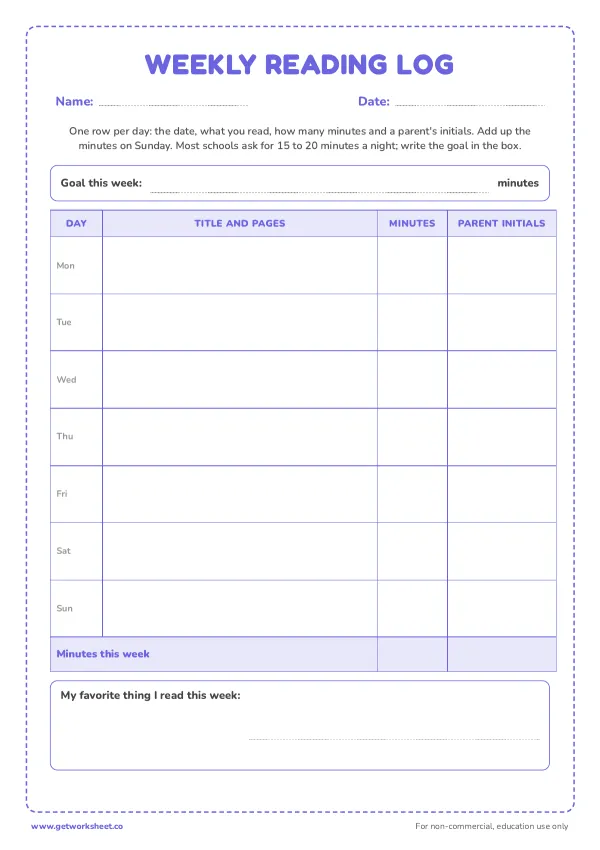
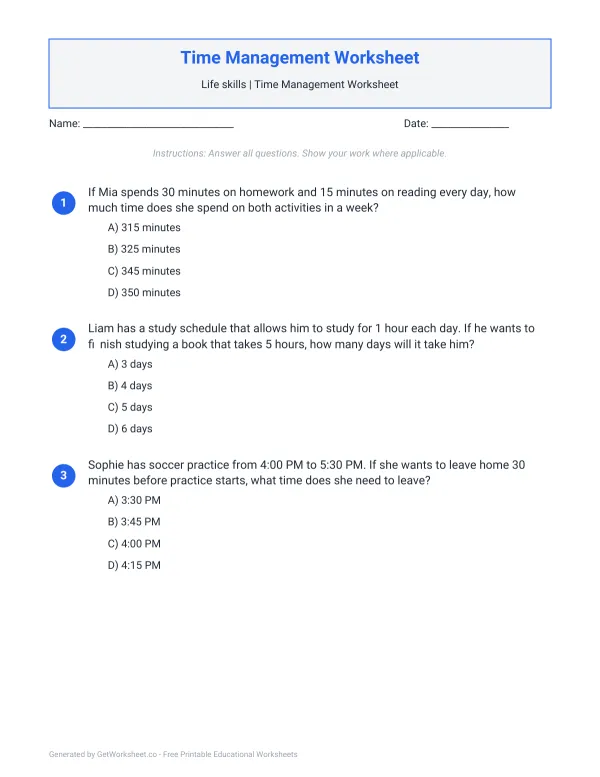
The time management worksheets help students find the hours a goal needs, and the reading log printables are ready-made trackers for a reading goal. Younger students who respond to stickers can pair the goal ladder with a reward chart. For planning the week around a goal, the free weekly planner printable and reward chart maker produce custom pages, and the progress monitoring sheet gives teachers a data sheet for goals that are measured in scores.
Free library