English · Grade 3
Free third grade reading comprehension worksheets
Five printable third grade reading comprehension worksheets: a realistic story, an Aesop fable, two informational passages (honey bees, autumn leaves) and a friendly letter, each with questions.
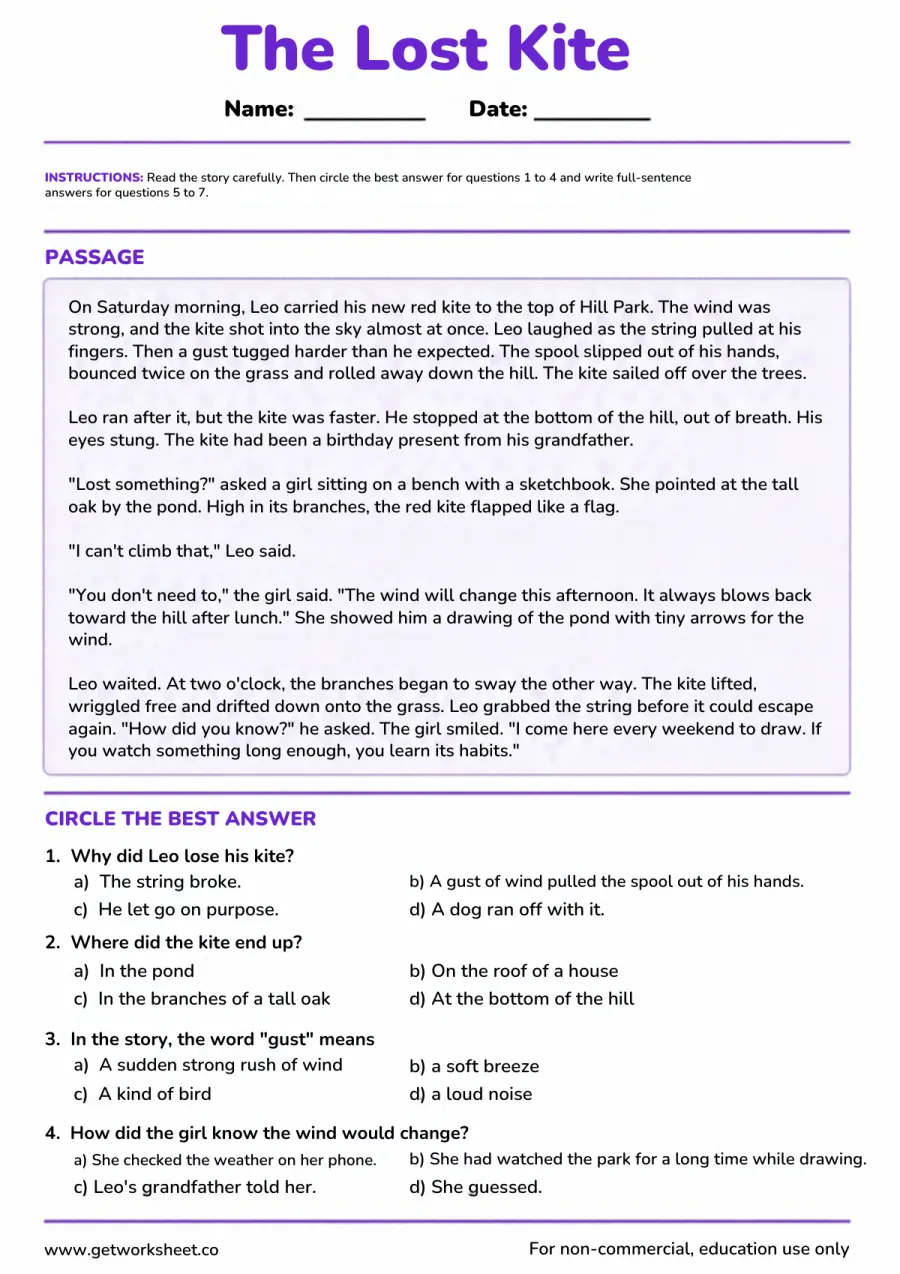
The Lost Kite (realistic fiction): problem and solution, inference
A 250-word story about a boy whose kite blows into a tree and the girl who knows the wind will change. Four multiple-choice and three written questions on problem and solution, inference and vocabulary. Answer key on page 2.
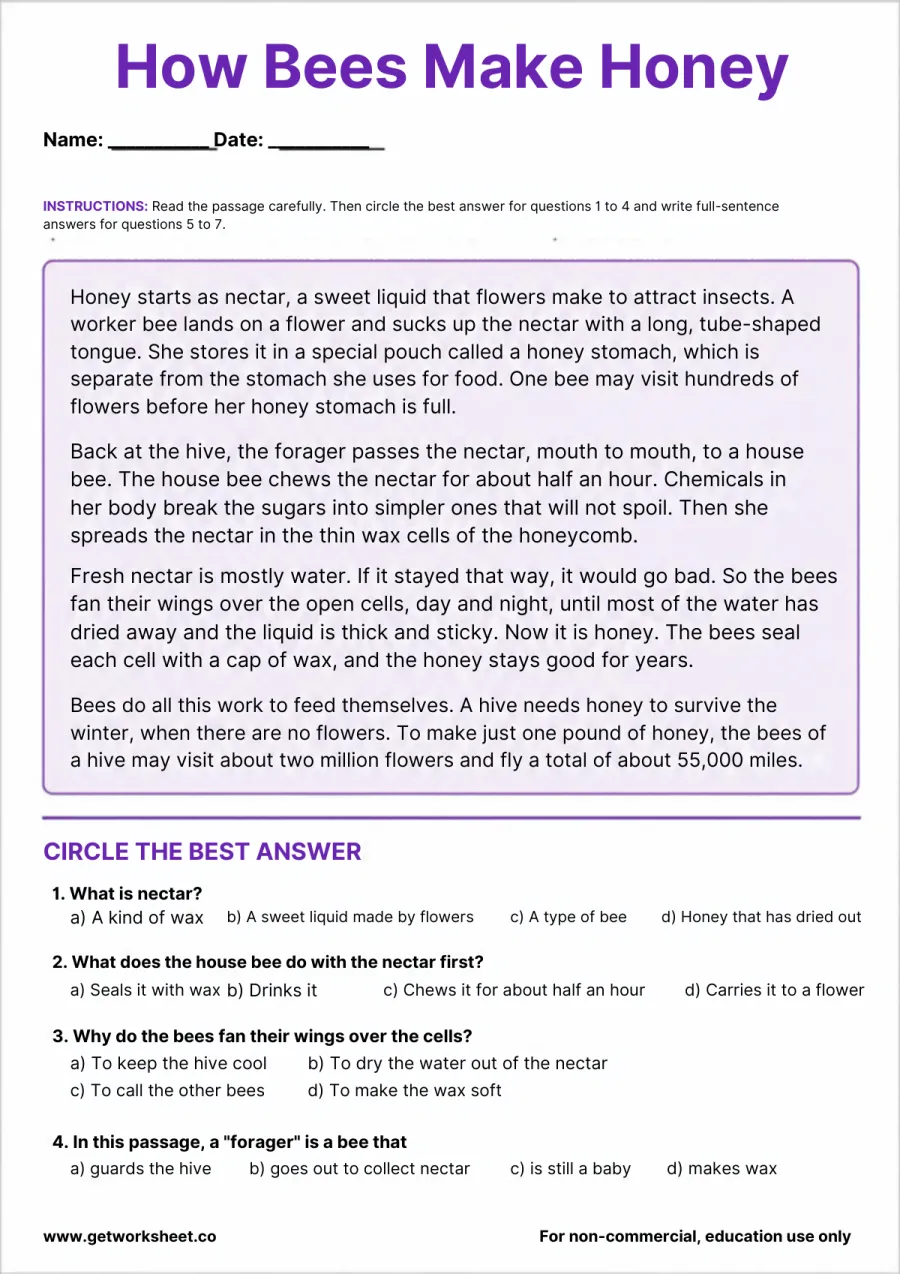
How Bees Make Honey (informational): sequence and vocabulary
A 230-word informational passage on how nectar becomes honey. Questions on main idea, sequence of steps, vocabulary in context (forager) and cause and effect. Answer key on page 2.
Whole set
All 5 sheets in one PDF
Instant and ad-free. No account needed.
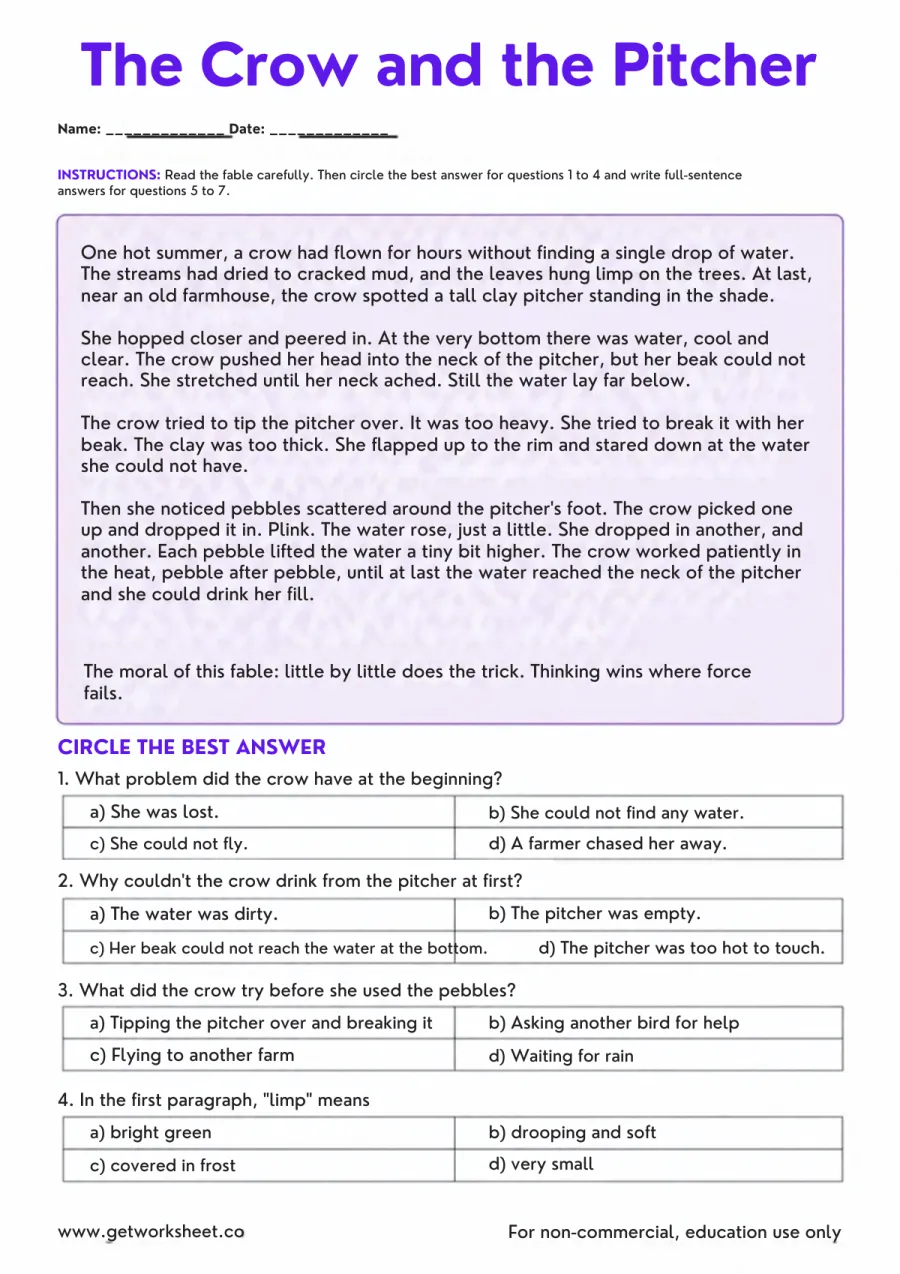
The Crow and the Pitcher (fable): moral and character
A 220-word retelling of the Aesop fable. Questions on the problem, the attempts that failed, vocabulary in context (limp) and explaining the moral in the student's own words. Answer key on page 2.
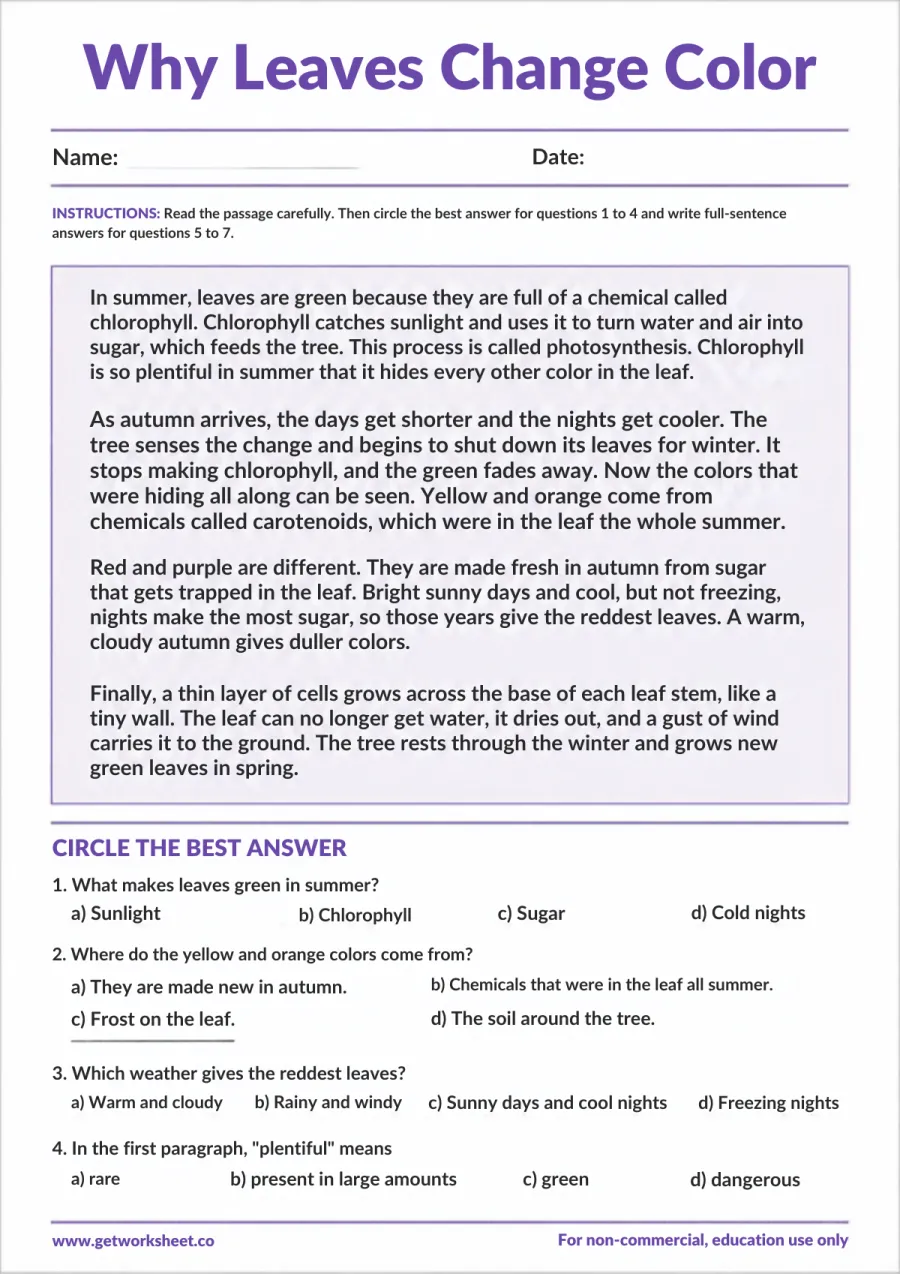
Why Leaves Change Color (science): main idea and cause-effect
A 230-word science passage explaining chlorophyll, hidden yellows and oranges, new reds made from trapped sugar, and why leaves fall. Questions on main idea, cause and effect, and vocabulary (plentiful). Answer key on page 2.
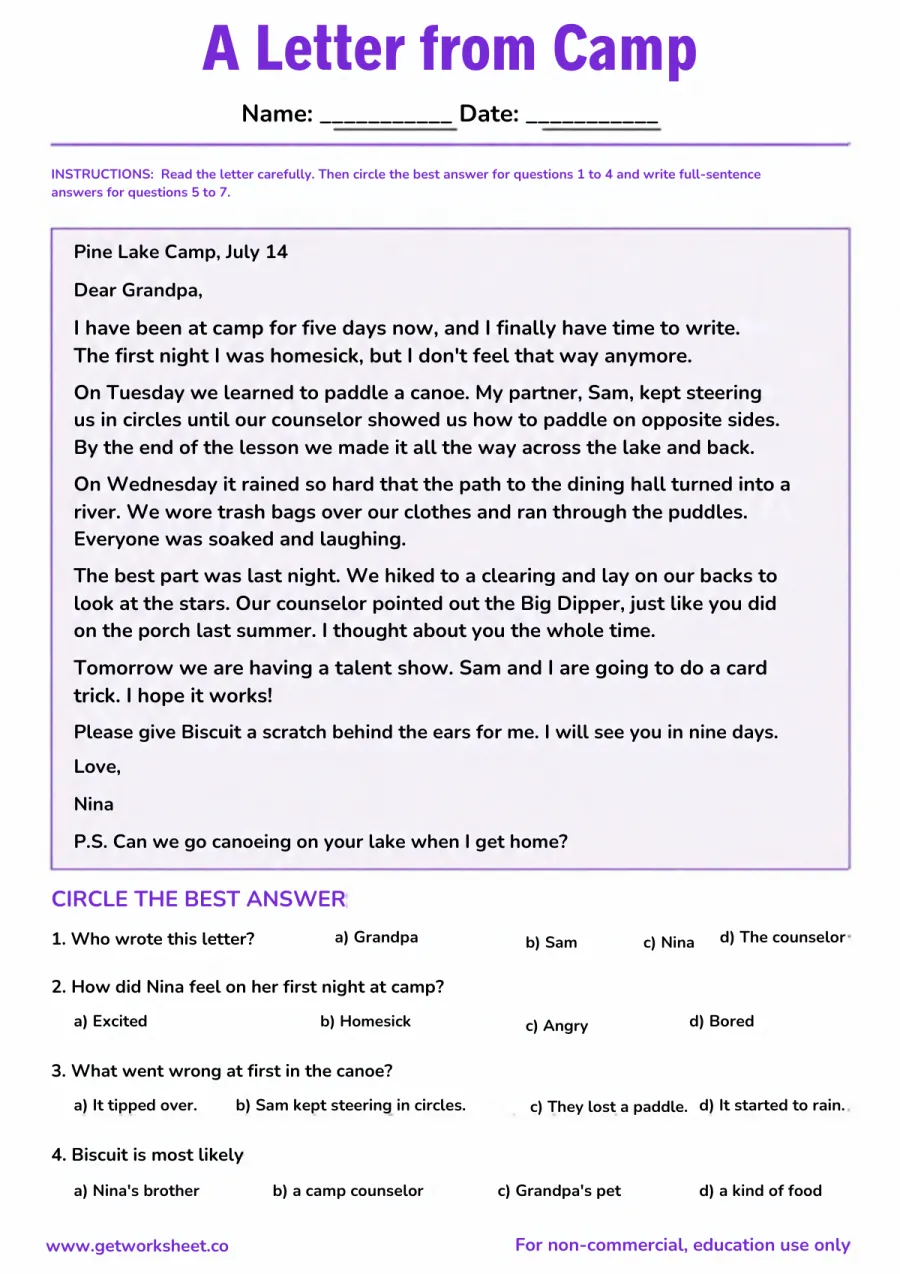
A Letter from Camp (friendly letter): sequence, inference, text features
A 230-word friendly letter from a girl at summer camp to her grandfather. Questions on the parts of a letter, sequence of events, character feelings and an inference about who Biscuit is. Answer key on page 2.
AI worksheet generator
Make a worksheet like this for your class
The 5 sheets above are fixed. The generator writes a new third grade reading comprehension worksheet for your grade, with the question types and count you choose, in about 20 seconds. Pick a grade to start:
What you get
- A fresh set of questions on third grade reading comprehension, not a copy of the sheets above
- Multiple choice, fill in the blanks, true or false, open ended
- Answer key and print-ready PDF with Pro
Free account, 1 worksheets a week. No card.
Third grade is the year reading shifts from decoding words to understanding texts. Students are expected to answer questions with evidence from the passage, work out word meanings from context, follow a sequence of events and say what a text is mainly about. These five worksheets cover the text types a third grader meets most: realistic fiction, a fable with a moral, two informational passages and a friendly letter. Every passage is 220 to 250 words, long enough for real comprehension work and short enough to finish in one sitting.
What's in this set
- The Lost Kite. Realistic fiction, about 250 words. Leo loses his birthday kite to a gust of wind; a girl who sketches in the park every weekend predicts the wind will bring it back. Questions on problem and solution, character feelings, vocabulary (gust) and theme.
- How Bees Make Honey. Informational text, about 230 words: nectar, the honey stomach, house bees, fanning the water out and capping with wax. Questions on details, sequence, vocabulary (forager) and why bees make honey at all.
- The Crow and the Pitcher. A fable, about 220 words: a thirsty crow cannot reach the water at the bottom of a pitcher, tries force, then drops in pebbles one at a time. Questions on problem, attempts, vocabulary (limp), evidence of perseverance and the moral.
- Why Leaves Change Color. Science text, about 230 words: chlorophyll and photosynthesis, why yellow and orange appear when green fades, how sunny days and cool nights make reds, and how a leaf finally falls. Questions on cause and effect, vocabulary (plentiful) and the main idea.
- A Letter from Camp. A friendly letter, about 230 words, from Nina at Pine Lake Camp to her grandfather: canoeing in circles, a rainstorm, star-gazing and a talent show. Questions on the greeting and closing, sequence, feelings and inference.
What students will practice
- Answering literal questions by finding the sentence that proves the answer (RL.3.1, RI.3.1)
- Working out the meaning of a word from the sentences around it: gust, forager, limp, plentiful
- Sequencing events and steps, in both stories and how-it-works texts (RI.3.3)
- Inferring feelings and relationships that the text shows but does not state
- Stating the main idea of an informational text and the moral of a fable in their own words (RL.3.2, RI.3.2)
- Recognizing text features: the greeting, closing and P.S. of a letter
Free printable makers
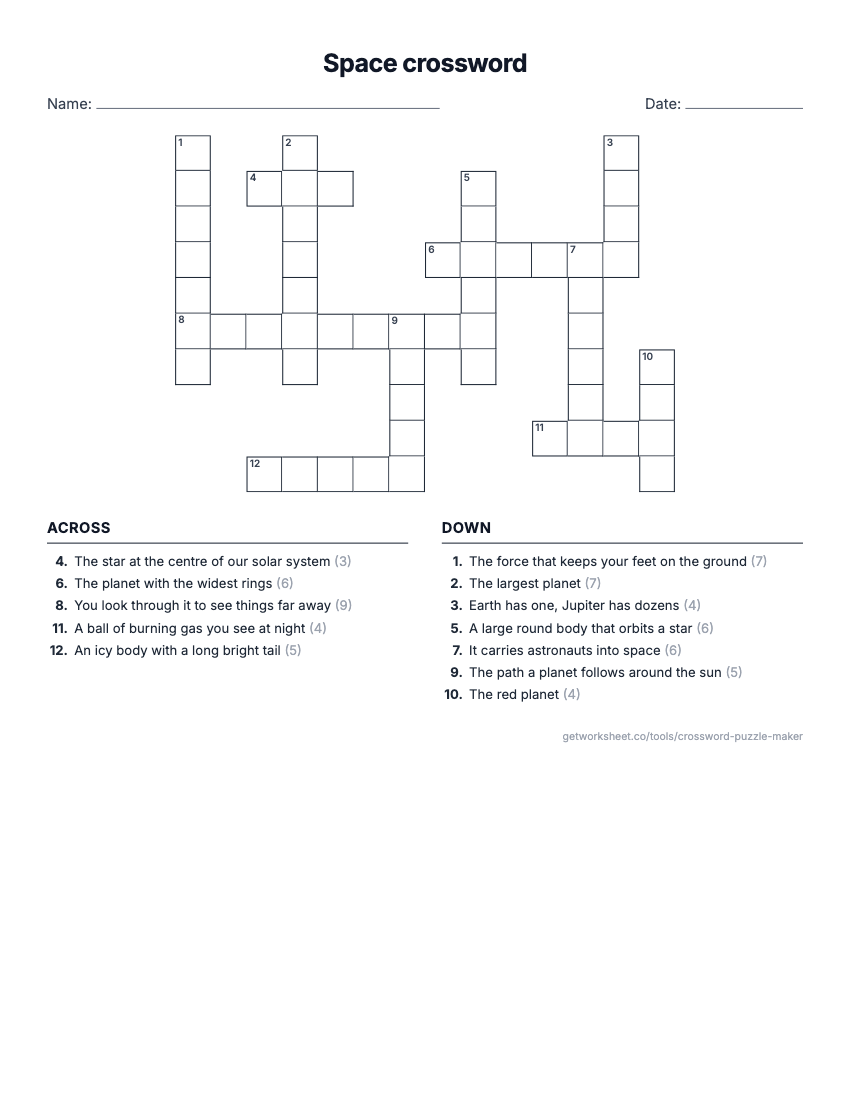
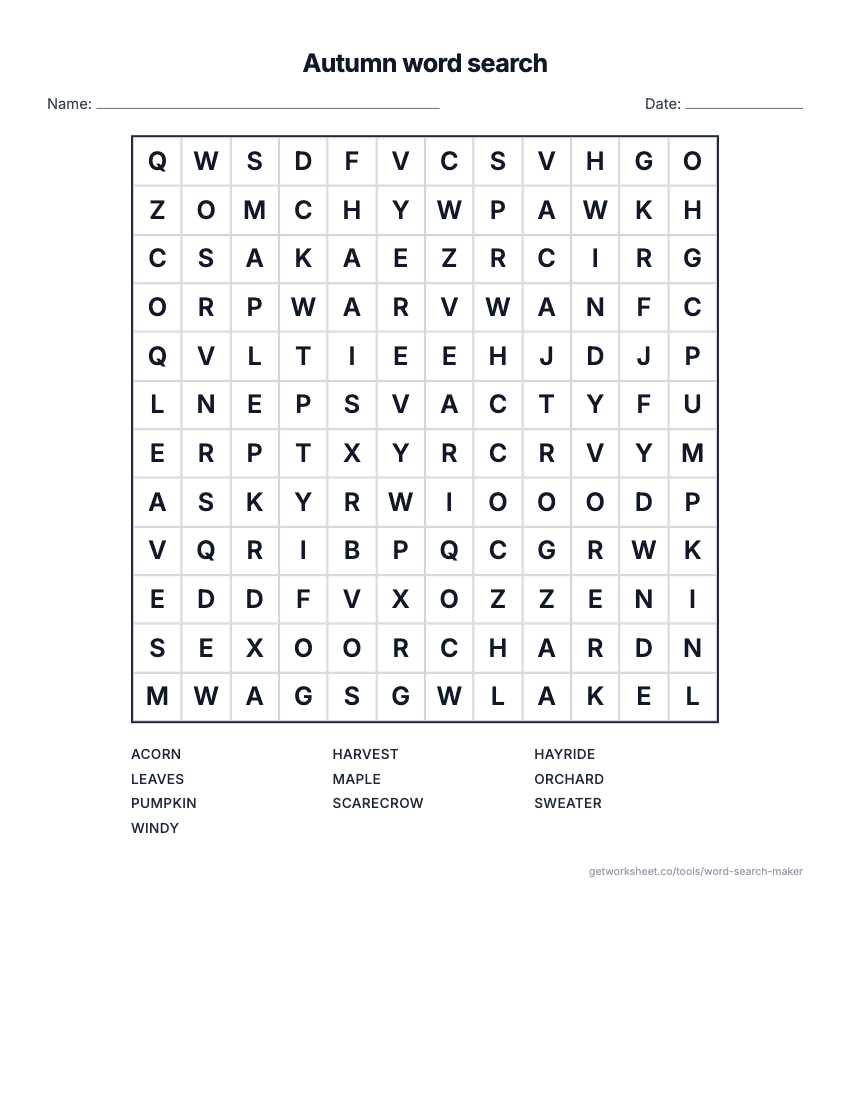
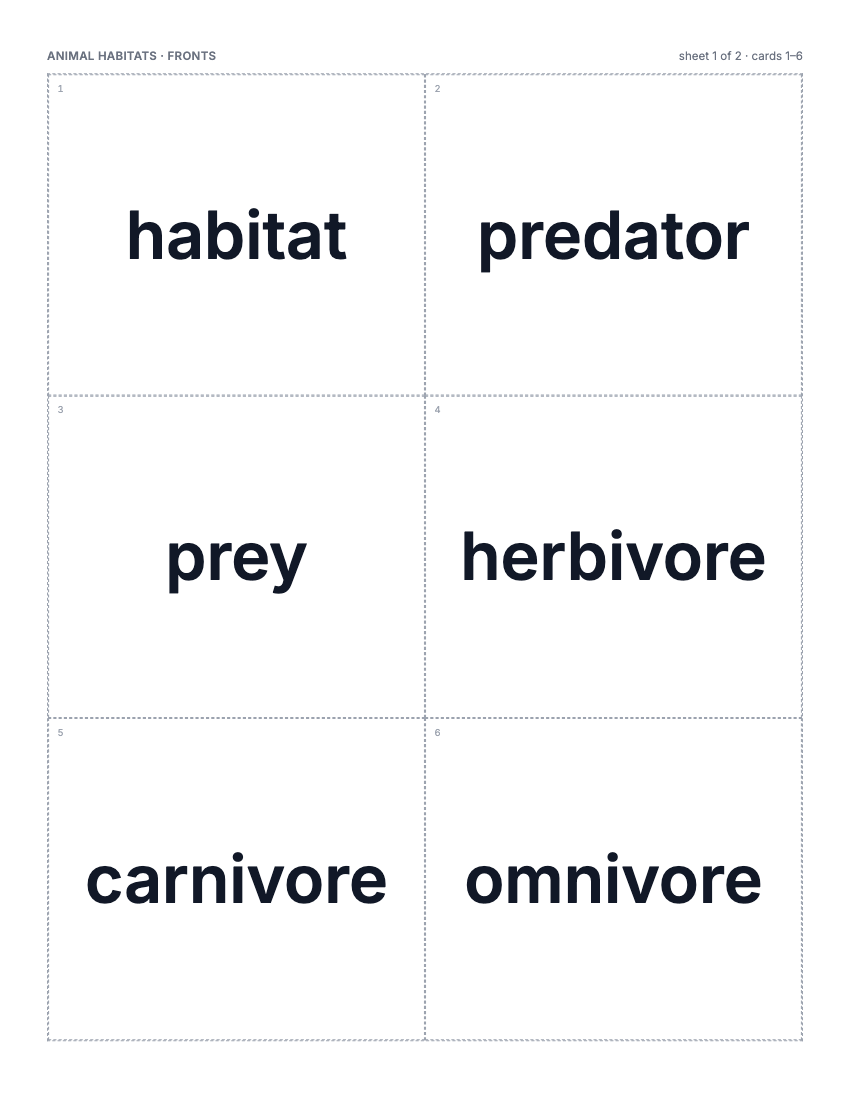
Make your own third grade reading comprehension sheets
Type your own words or numbers and print in about 30 seconds. No account, no AI, answer key where it applies.
AI worksheet generator
Need a different third grade reading comprehension worksheet?
Generate a custom third grade reading comprehension worksheet: pick the grade, question types and count, and print it in about 20 seconds. Free accounts get 1 generation a week.
How to use these worksheets in class
- Read twice. First for the story, then with a pencil to underline. Third graders who answer from memory after one reading make most of their errors on the multiple-choice items, which are written so that the wrong options are plausible.
- Prove it. For each multiple-choice answer, ask students to write the number of the paragraph that proves it. This one habit does more for comprehension scores than any other.
- Full sentences for the written questions. Questions 5 to 7 on every sheet ask for inference, explanation or sequencing. Insist on a complete sentence that reuses words from the question ("The crow could not reach the water because...").
- Pair fiction with nonfiction. The Lost Kite and Why Leaves Change Color both turn on the wind and the seasons; How Bees Make Honey and The Crow and the Pitcher both show patient, step-by-step work. Reading them as pairs lets students compare how a story and an information text handle the same idea.
- Use the letter for writing. After A Letter from Camp, have students write a reply from Grandpa using the same five parts: date, greeting, body, closing, signature.
Answer key
Every practice sheet carries its own answer key on page 2 of the PDF. The keys are repeated here for quick marking.
- The Lost Kite: Circle the best answer: 1. b) A gust of wind pulled the spool out of his hands. 2. c) In the branches of a tall oak 3. a) a sudden strong rush of wind 4. b) She had watched the park for a long time while drawing. Write your answer in full sentences: 1. He was upset and close to crying because the kite was a birthday present from his grandfather and he thought it was gone. 2. Leo's kite is stuck high in an oak tree. It is solved by waiting: the girl predicts the wind will change after lunch, and the kite blows free. 3. If you watch something patiently for long enough, you learn how it behaves; paying attention and being patient can solve problems that force cannot. Vocabulary: 1. Any sentence using gust correctly, e.g. A gust of wind blew my hat into the road. Draw it: Drawing is open-ended.
- How Bees Make Honey: Circle the best answer: 1. b) A sweet liquid made by flowers 2. c) Chews it for about half an hour 3. b) To dry the water out of the nectar 4. b) goes out to collect nectar Write your answer in full sentences: 1. The house bee changes the sugars so they will not spoil, the bees fan out most of the water, and the cell is sealed with wax. 2. To feed themselves. The hive needs honey to survive the winter, when there are no flowers to visit. 3. Collect nectar from flowers (1), chew the nectar (2), fan the cells (3), seal the cell with wax (4). Draw the four steps as a comic strip: Drawings are open-ended; check the order matches the text.
- The Crow and the Pitcher: Circle the best answer: 1. b) She could not find any water. 2. c) Her beak could not reach the water at the bottom. 3. a) Tipping the pitcher over and breaking it 4. b) drooping and soft Write your answer in full sentences: 1. Each pebble took up space in the pitcher and made the water rise a little, until it was high enough for the crow to reach. 2. Words such as "another, and another", "worked patiently in the heat" and "pebble after pebble" show she kept going. 3. Small steps, repeated patiently, can add up to solve a big problem, even when one big effort fails. Vocabulary: 1. Any sentence using patiently correctly, e.g. She waited patiently for her turn. Draw it: Drawing is open-ended.
- Why Leaves Change Color: Circle the best answer: 1. b) Chlorophyll 2. b) Chemicals that were in the leaf all summer. 3. c) Sunny days and cool nights 4. b) present in large amounts Write your answer in full sentences: 1. The process in which chlorophyll uses sunlight to turn water and air into sugar that feeds the tree. 2. A thin layer of cells grows across the base of the stem and cuts off the water, so the leaf dries out and the wind carries it away. 3. Leaves change color in autumn because the green chlorophyll fades, showing the yellows and oranges that were always there, while reds are made from trapped sugar. Draw and label the same leaf in two seasons: Summer: chlorophyll. Autumn: yellow/orange from carotenoids, red/purple from trapped sugar.
- A Letter from Camp: Circle the best answer: 1. c) Nina 2. b) Homesick 3. b) Sam kept steering in circles. 4. c) Grandpa's pet Write your answer in full sentences: 1. Greeting: "Dear Grandpa," Closing: "Love, Nina". 2. Because Grandpa had pointed out the Big Dipper to her on the porch last summer, and the counselor did the same thing. 3. The canoe lesson (Tuesday), the rainstorm (Wednesday), the star hike (last night), the talent show (tomorrow). Write back: 1. Any friendly-letter reply with a greeting, body and closing, e.g. Dear Nina, Thank you for your letter. Biscuit says hello... Yes, we can go canoeing. Love, Grandpa
Common mistakes to watch for
- Choosing an option because it is true, not because it answers the question. In the honey passage, "to keep the hive cool" sounds sensible, but the text says the fanning dries the nectar.
- Retelling instead of finding the main idea. A main idea is one sentence that covers the whole passage, not the first thing that happened.
- Guessing vocabulary from the word alone. Send students back to the sentence: "the leaves hung limp" next to "dried to cracked mud" tells them limp means drooping.
- Answering inference questions with "it doesn't say". Model the reasoning aloud: Biscuit gets "a scratch behind the ears", so Biscuit is an animal, most likely Grandpa's pet.
Frequently asked questions
What reading level are these passages?
They are written for third grade (ages 8 to 9): 220 to 250 words, mostly one- and two-syllable words, some multi-syllable content words explained in context (chlorophyll, photosynthesis, carotenoids). Strong second graders and fourth graders who need practice can use them too.
Do the worksheets include answer keys?
Yes. Every PDF has its answer key on page 2, and the keys are repeated on this page. The written questions show a model answer; accept any answer that makes the same point with evidence from the text.
Which Common Core standards do they cover?
RL.3.1 and RI.3.1 (ask and answer questions using the text), RL.3.2 (central message or moral), RI.3.2 (main idea and key details), RI.3.3 (sequence of steps and cause and effect), RL.3.4 and RI.3.4 (word meaning in context) and RL.3.3 (character feelings and motivations).
Are the passages fiction or nonfiction?
Both. Two are fiction (a realistic story and a friendly letter), one is a fable, and two are informational (how bees make honey and why leaves change color).
Can I use these for homework or assessment?
Yes. Each sheet is a self-contained passage with seven questions and takes 20 to 30 minutes. The multiple-choice items can be scored quickly and the written items show the depth of understanding.
Related worksheets
The story elements worksheets and context clues worksheets isolate two of the skills these passages combine. For sentence-level work in the same grade band, see the sentence fragments worksheets and synonyms and antonyms worksheets. Need a passage on a particular topic? The reading passage generator writes a levelled passage with questions in a minute.
Free library
Related collections
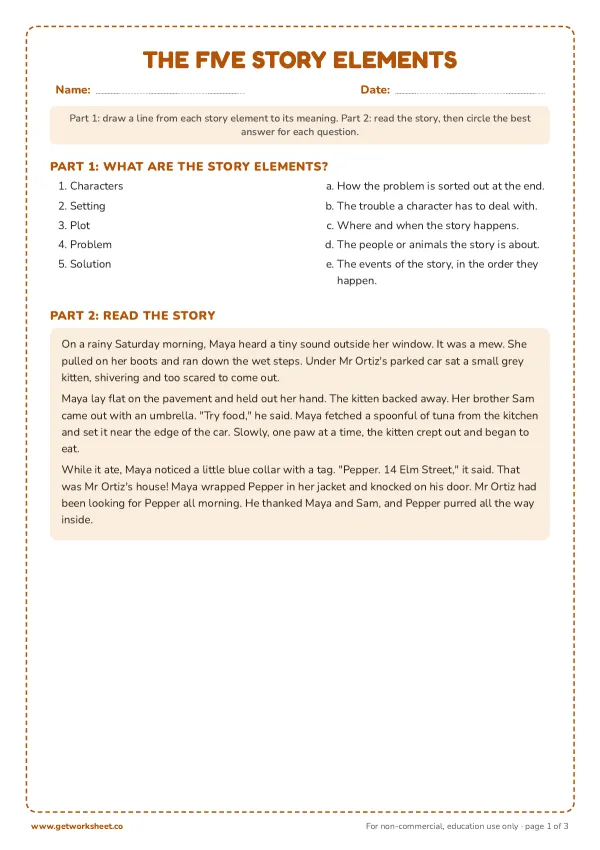
Free story elements worksheets
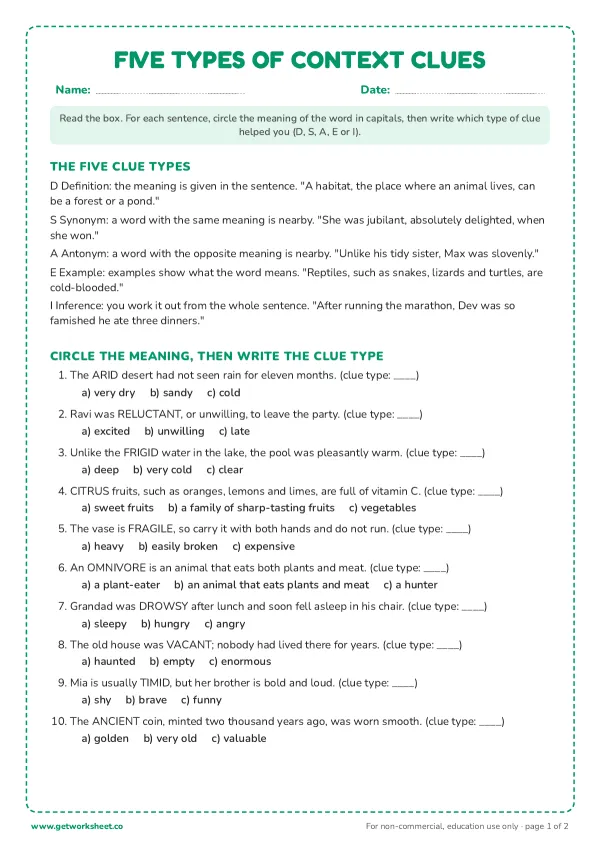
Free context clues worksheets
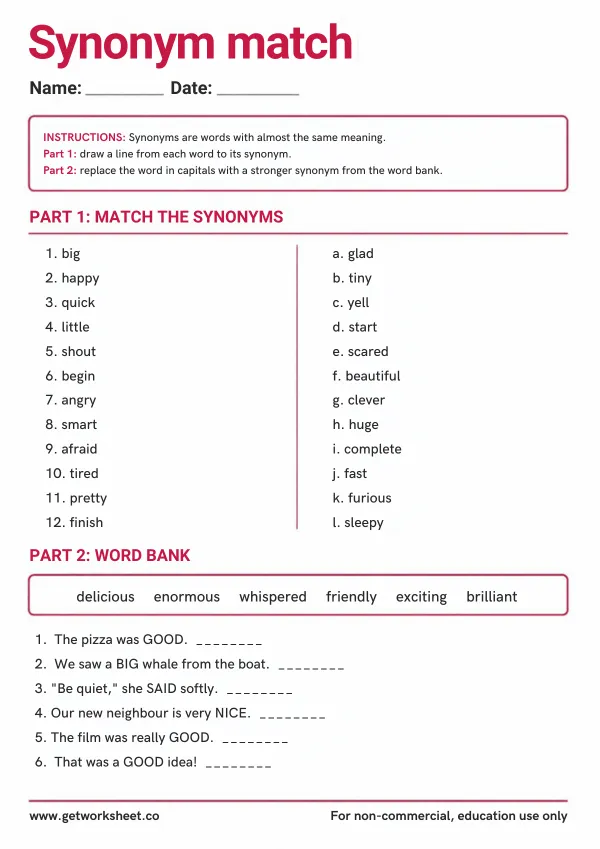
Free synonyms and antonyms worksheets
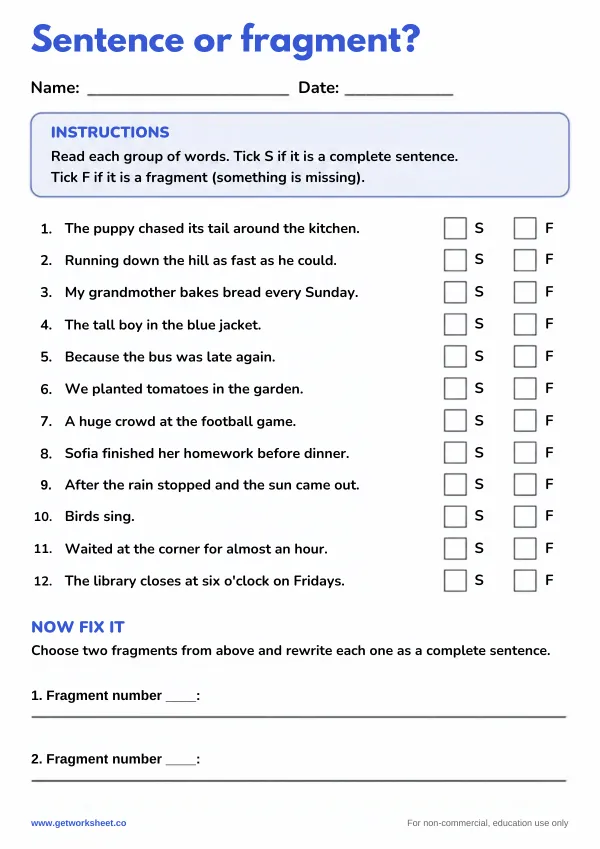
Free sentence fragments worksheets
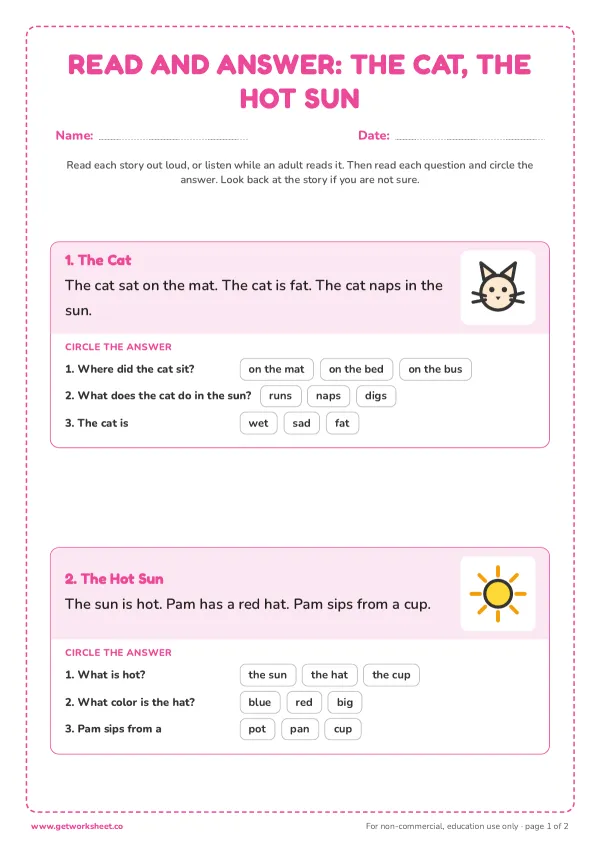
Free kindergarten reading comprehension worksheets
Free handwriting paper printables
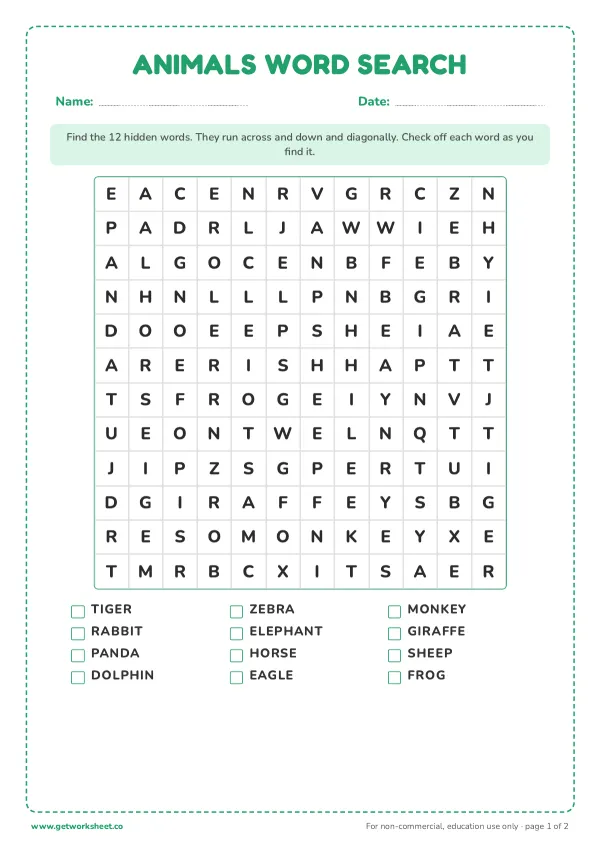
Free word search printables
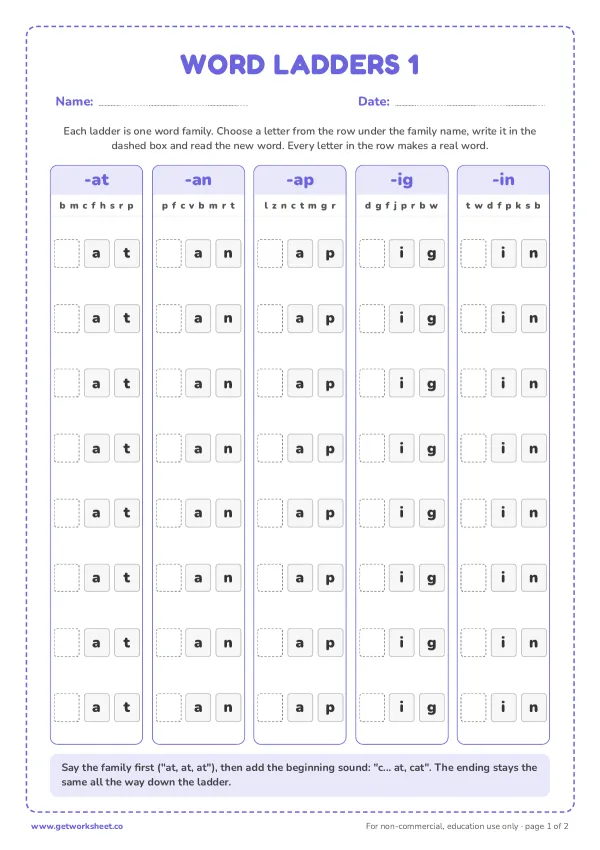
Free word families worksheets
More worksheets
- Free Montessori language worksheets
- Free pre-writing worksheets
- Free sight words worksheets (Dolch and Fry)
- Free CVC words worksheets
- Free name tracing worksheets
- Free letter Z tracing worksheets
- Free letter Y tracing worksheets
- Free letter X tracing worksheets
- Free letter W tracing worksheets
- Free letter V tracing worksheets
- Free letter U tracing worksheets
- Free letter T tracing worksheets