English · Grades 3–6
Free persuasive writing worksheets
Five persuasive writing worksheets for grades 3 to 6. Each gives one question and a writing box for a paragraph with an opinion, two supporting reasons and a closing sentence.
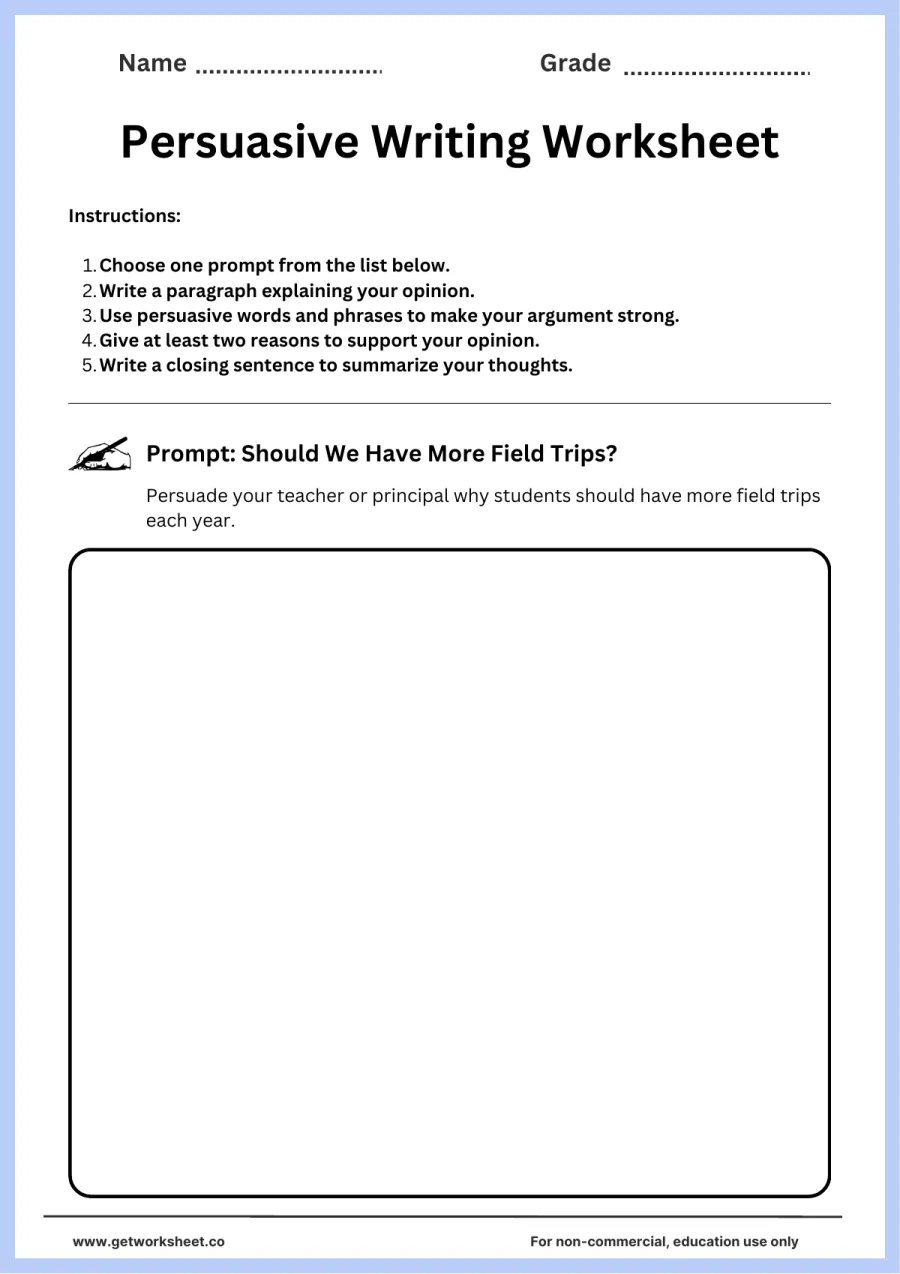
Persuasive writing: should we have more field trips?
Child writes a paragraph persuading their teacher or principal that students should have more field trips, giving two reasons and a closing sentence.
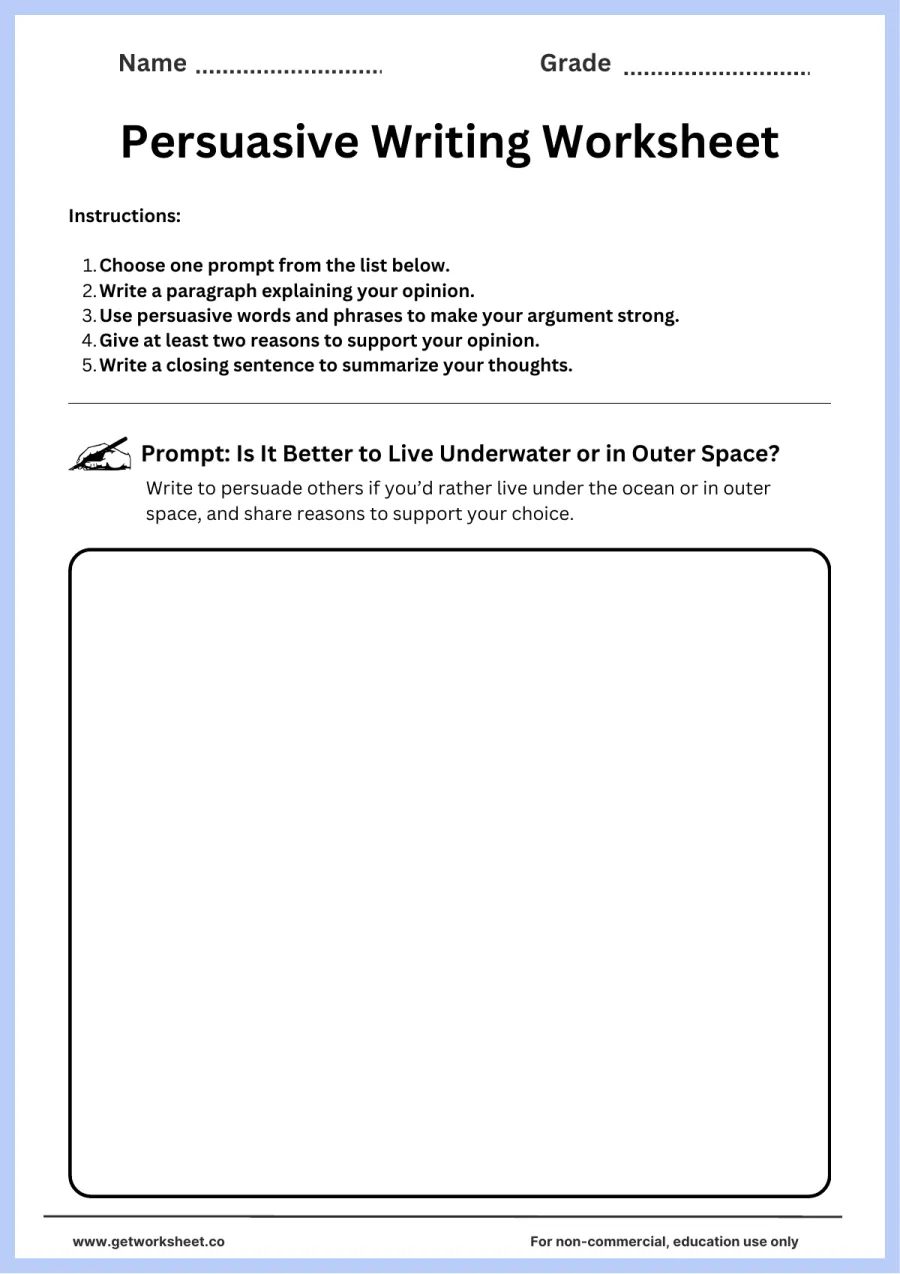
Persuasive writing: live underwater or in outer space?
Child argues whether they would rather live under the ocean or in outer space, with two supporting reasons and a closing sentence in the writing box.
Whole set
All 5 in one PDF
- Every sheet on this page, one file
- No ads, no countdowns, print as often as you like
- Instant download, ad-free, no account needed
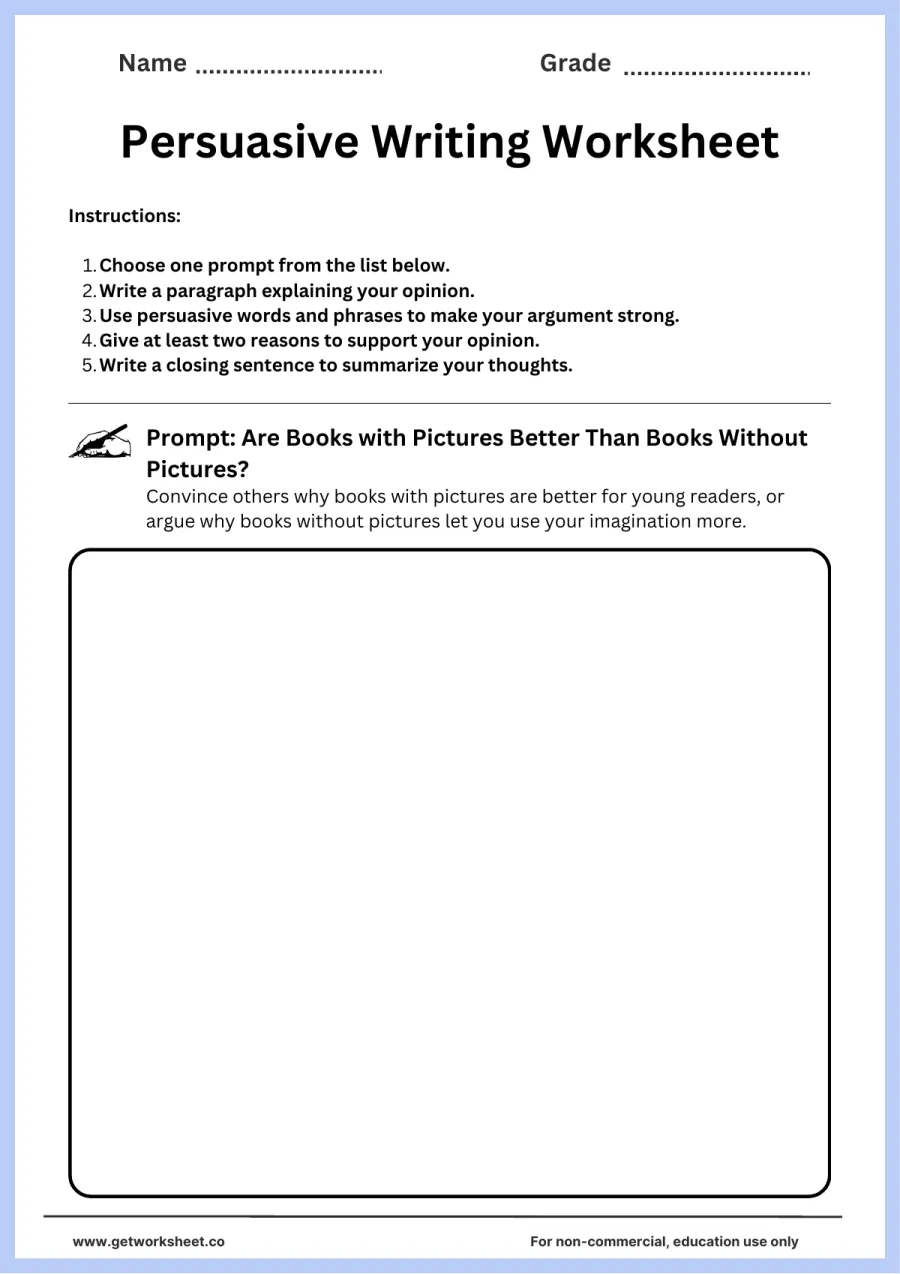
Persuasive writing: are picture books better than text-only?
Child argues either that books with pictures suit young readers or that books without pictures spark imagination, with two reasons and a closing line.
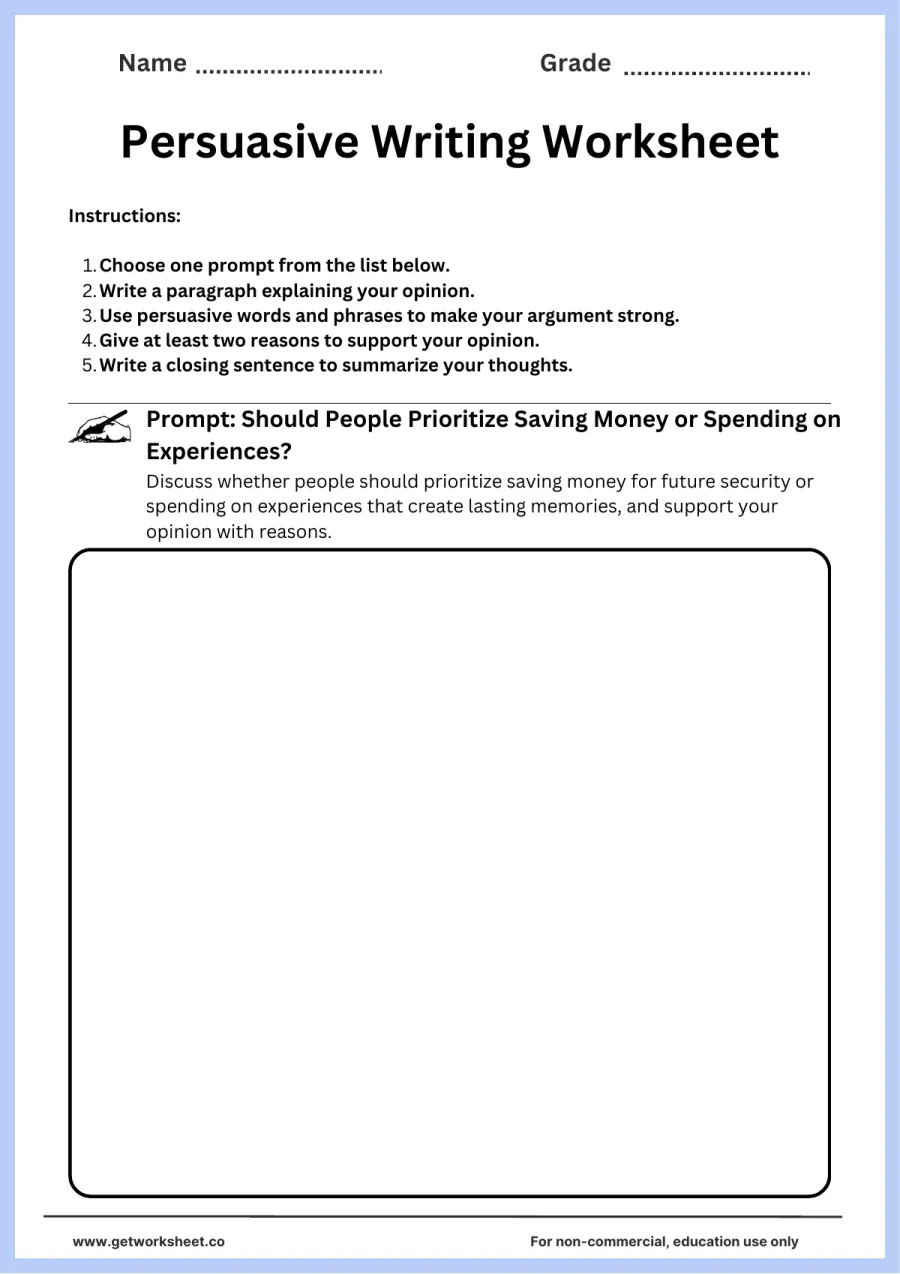
Persuasive writing: save money or spend on experiences?
Child writes a paragraph on whether people should save money for security or spend on memorable experiences, with reasons and a closing sentence.
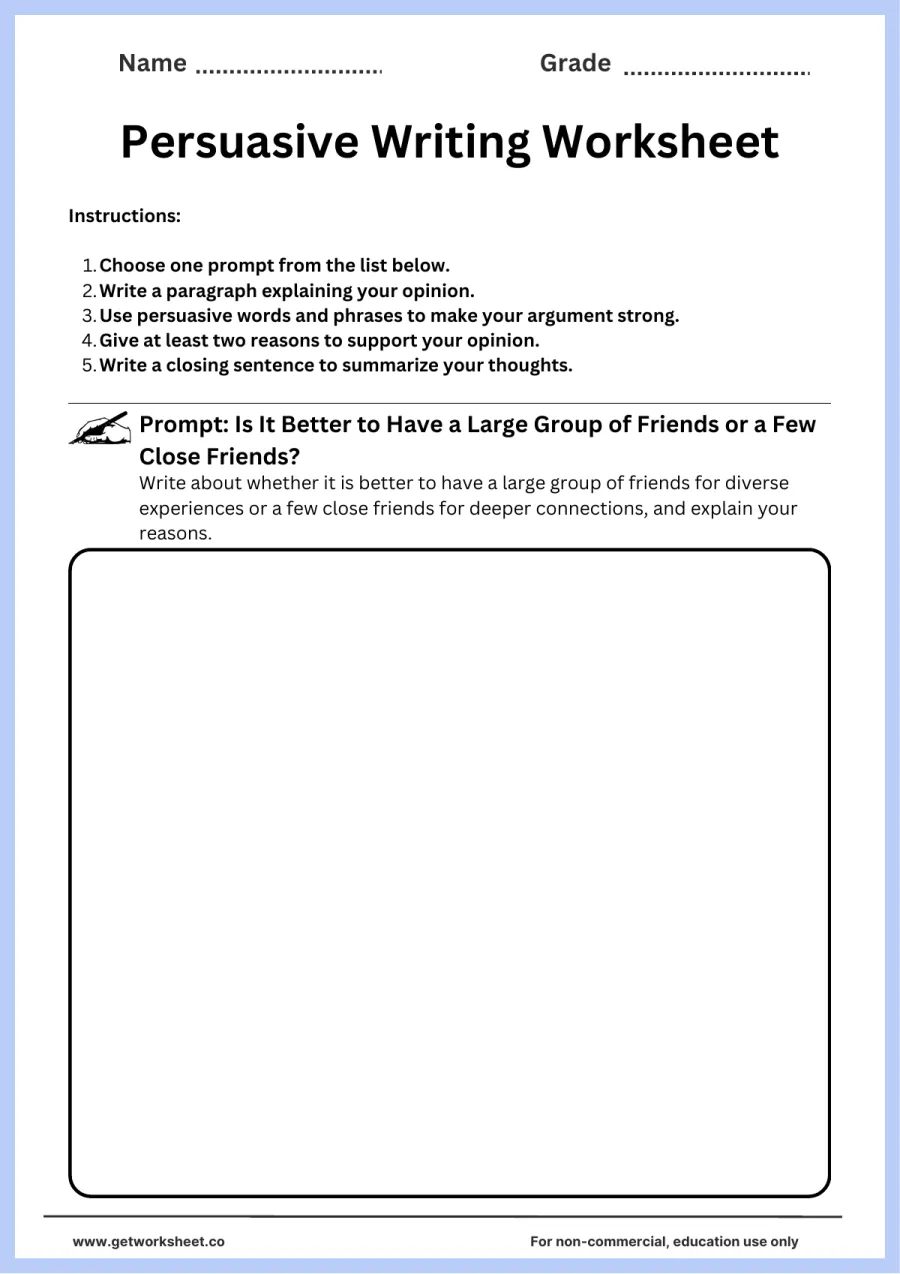
Persuasive writing: many friends or a few close friends?
Child argues whether a large group of friends or a few close friends is better, supporting the opinion with two reasons and a closing sentence.
AI worksheet generator
Make a worksheet like this for your class
The 5 sheets above are fixed. The generator writes a new persuasive writing worksheet for your grade, with the question types and count you choose, in about 20 seconds. Pick a grade to start:
What you get
- A fresh set of questions on persuasive writing, not a copy of the sheets above
- Multiple choice, fill in the blanks, true or false, open ended
- Answer key and print-ready PDF with Pro
Free account, 1 worksheets a week. No card.
These five persuasive writing worksheets each pose a single question and give the child a writing box for one paragraph: state an opinion, give two reasons that support it, and finish with a closing sentence. The prompts are, in order: should we have more field trips (persuading a teacher or principal); would you rather live under the ocean or in outer space; are picture books better for young readers than books without pictures; should people save money for security or spend it on experiences; and is it better to have many friends or a few close friends.
The first prompt has a real audience and a real request, which is the easiest place to start. The other four are either-or questions, so the child must pick a side before writing. Between grades 3 and 6, this move from stating a preference to defending it with reasons is the core of opinion and persuasive writing.
What Students Will Practice
- Choosing a side on an either-or question, such as underwater or outer space, and stating it in the first sentence
- Giving two different reasons that support the opinion, not one reason repeated
- Writing to a specific reader, such as a teacher or principal, on the field trips prompt
- Ending the paragraph with a closing sentence that restates the opinion or asks the reader to act
- Fitting a complete argument into one paragraph inside the writing box
Free printable makers
Make your own persuasive writing sheets
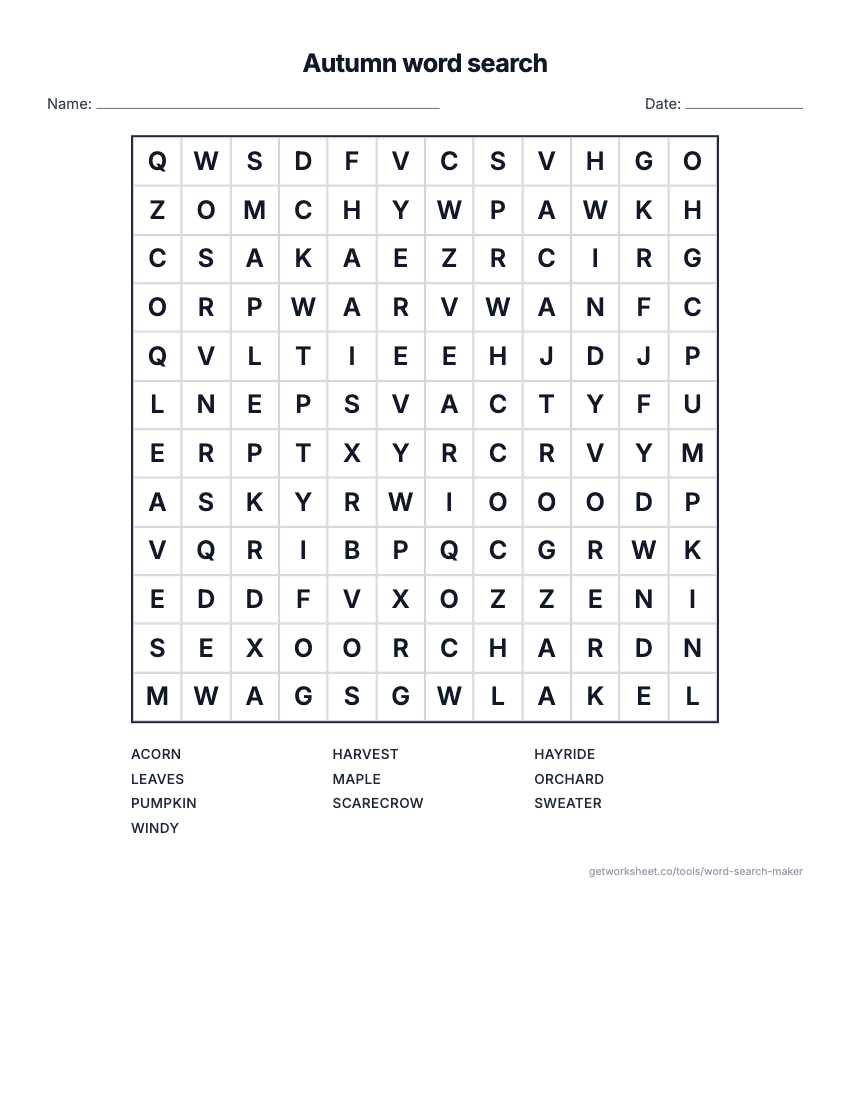
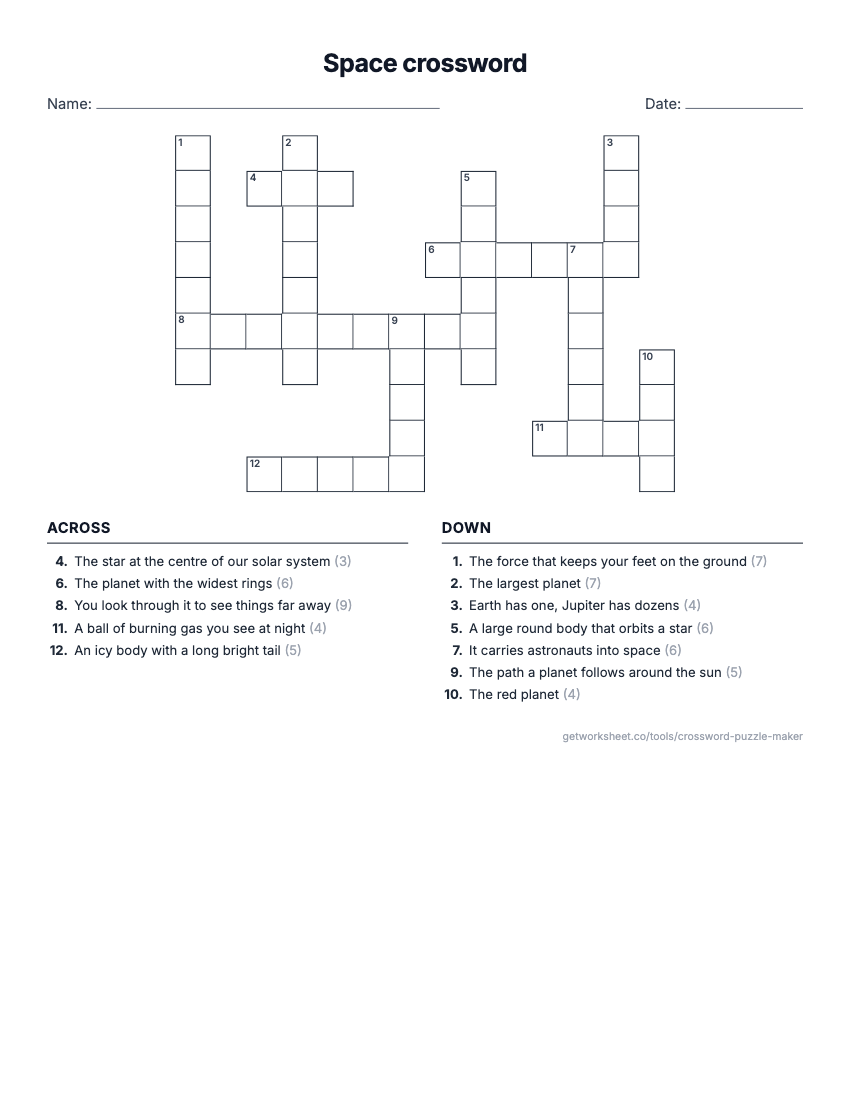
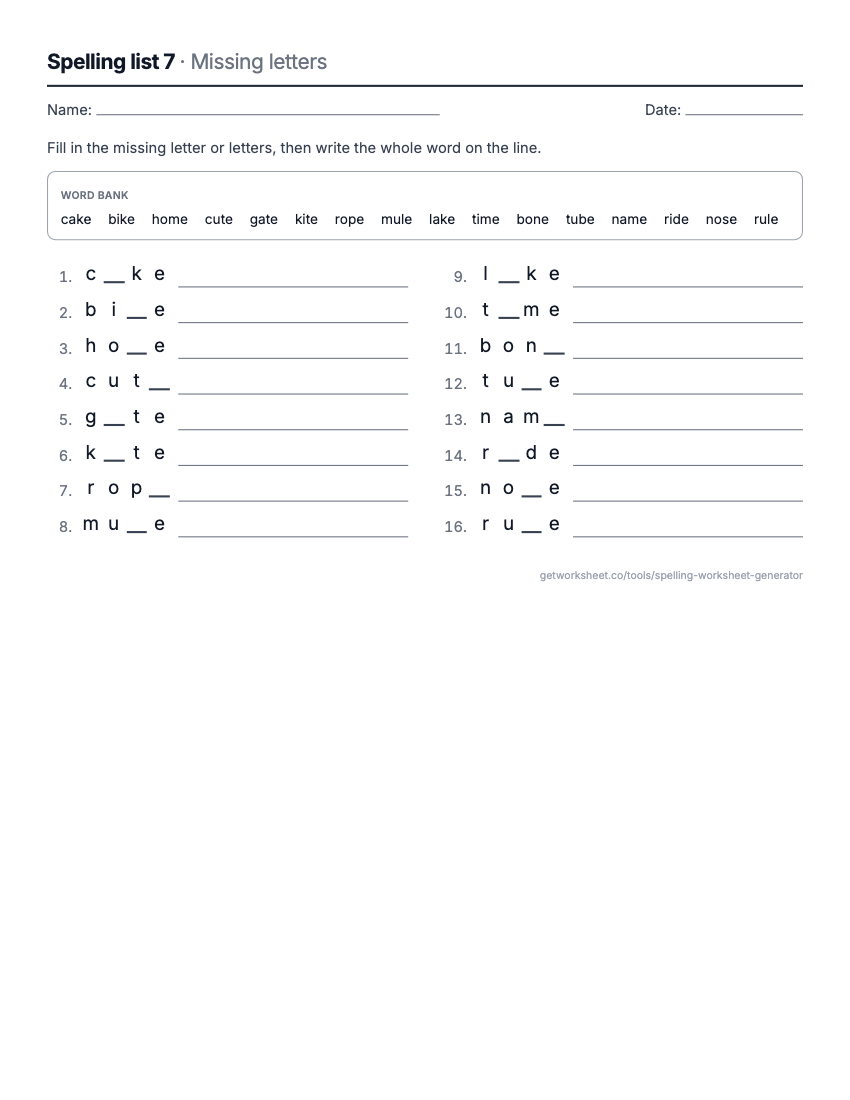
Type your own words or numbers and print in about 30 seconds. No account, no AI, answer key where it applies.
AI worksheet generator
Need a different persuasive writing worksheet?
Generate a custom persuasive writing worksheet: pick the grade, question types and count, and print it in about 20 seconds. Free accounts get 1 generation a week.
Teaching tips and common mistakes
How to use these worksheets
Print at 100% on A4 or US Letter so the writing box keeps its lines and its full height. There is no answer key, because every prompt has more than one defensible answer: what you are marking is whether the opinion is clear and whether two different reasons back it up. One prompt per sitting is plenty, and it helps to talk the argument through out loud before anyone writes.
- More field trips. Start with this one. It has a real reader, a teacher or principal, and a real request, so ask your student who will read the paragraph and what that person cares about. Reasons about learning tend to land better than reasons about missing math.
- Live underwater or in outer space. The first either-or prompt. Insist on a side in sentence one, then have the student list three ideas in the margin and pick the two strongest for the paragraph.
- Picture books or books without pictures. Useful because your student has real evidence: their own reading. Ask for one reason from experience and one reason about other readers.
- Save money or spend on experiences. The most abstract prompt, so it suits grade 5 and 6. Push for a concrete example, a bike saved for or a trip taken, instead of general statements about happiness.
- Many friends or a few close friends. Good for a paired activity: two students take opposite sides, write, then read to each other. Hearing the other case shows why a closing sentence matters.
Common mistakes to watch for
- Two reasons that are really one. "It is fun" and "I would enjoy it" say the same thing twice. Ask your student to name the two reasons aloud in different words before writing.
- No side in the first sentence. Paragraphs that open with "There are good things about both" never recover. The opinion belongs in sentence one.
- A closing that just repeats the opening. The last sentence should restate the opinion in fresh words or ask the reader to do something, especially on the field trips prompt.
- Running out of box. Cramped handwriting at the bottom usually means a long story came before the reasons. Plan the paragraph in four sentences: opinion, reason, reason, close.
Frequently asked questions
What grades are these persuasive writing worksheets for?
Grades 3 to 6. Third graders usually need the prompt read aloud and the reasons talked through first. Fifth and sixth graders can plan and write a paragraph independently in about fifteen minutes.
Is there an answer key?
No, and there cannot be one. Each prompt asks for an opinion, so any side is correct as long as two reasons support it and a closing sentence finishes it.
How long should the paragraph be?
Four to six sentences, which is what the writing box holds: the opinion, two reasons, and a closing sentence. Older students can add one detail per reason.
What is the difference between opinion writing and persuasive writing?
Opinion writing states what you think and why. Persuasive writing aims at a reader and tries to change their mind. The field trips prompt is the persuasive one, since it names an audience.
Can I use these with a whole class?
Yes. They are free to print for classroom use, and the prompts work well as a weekly warm up or as a paired debate then write activity.
More practice
Strong arguments need clean sentences, so pair these with sentence fragments worksheets and capitalization worksheets for editing practice. To build the reading side of the same skill, use third grade reading comprehension worksheets, and for narrative writing try story elements worksheets.
Free library
Related collections
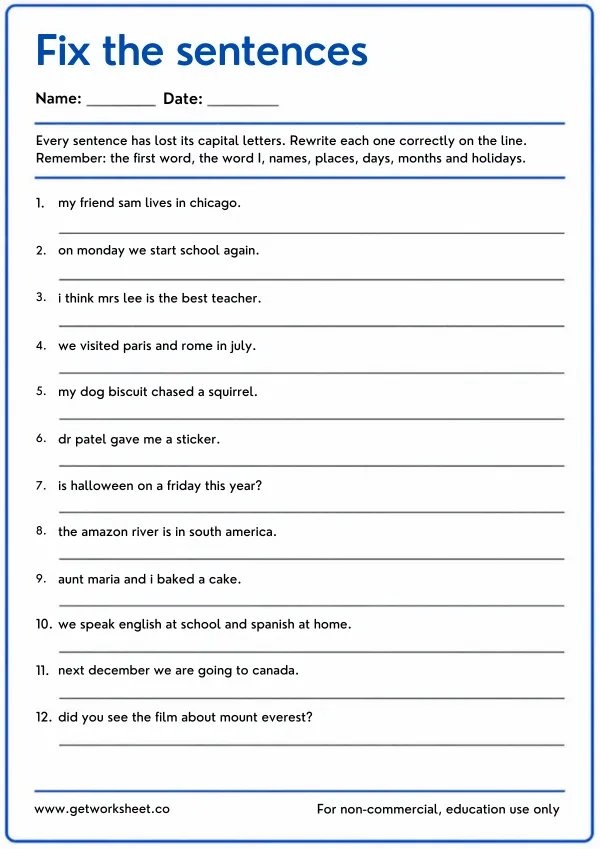
Free capitalization worksheets
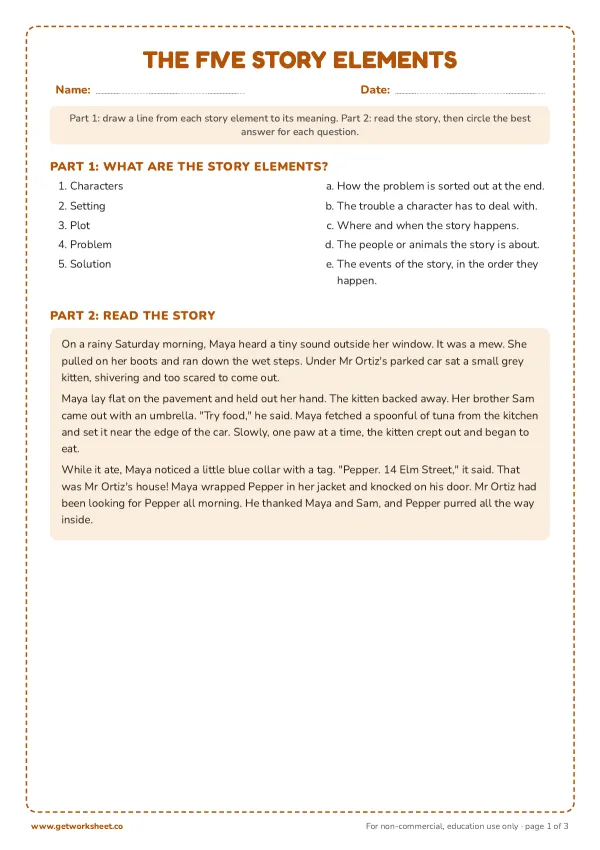
Free story elements worksheets
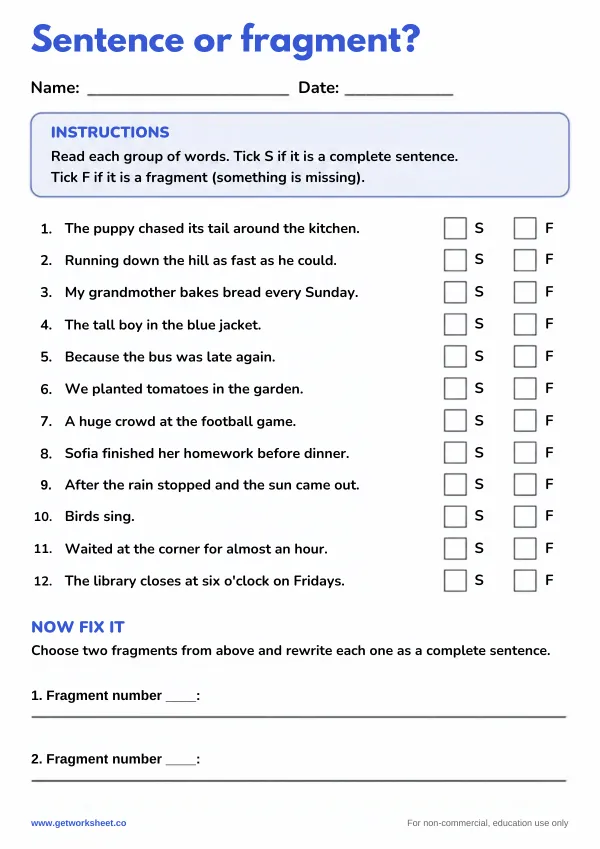
Free sentence fragments worksheets
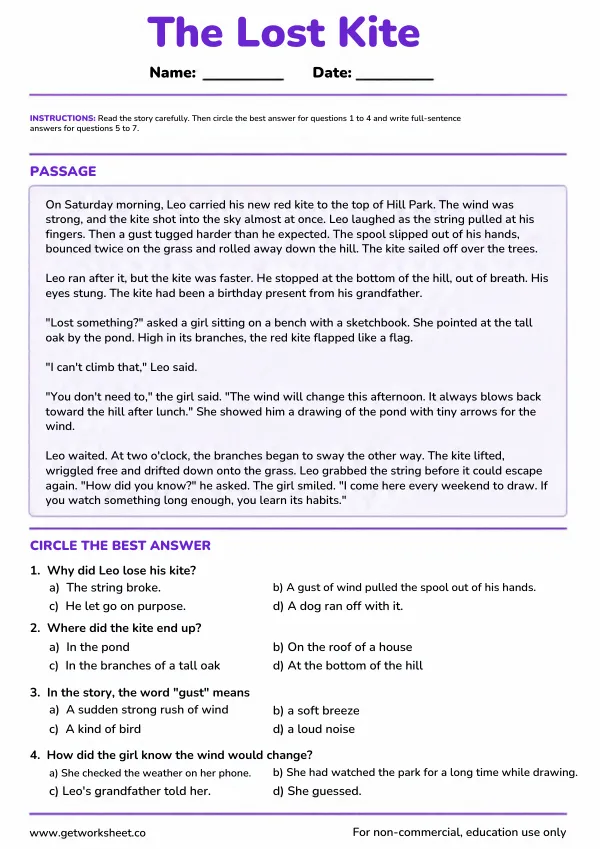
Free third grade reading comprehension worksheets
Free Valentine's Day worksheets: word search, writing and a card to make
Free cursive writing worksheets
Free pre-writing worksheets
Free Christmas worksheets: word searches, letter to Santa and writing
More worksheets
- Free FLOSS rule worksheets
- Free Elkonin boxes worksheets
- Free heart words worksheets
- Free Martin Luther King Jr. worksheets
- Free Christmas reading comprehension worksheets
- Free nouns worksheets
- Free second grade reading comprehension worksheets
- Free digraphs worksheets
- Free first grade reading comprehension worksheets
- Free kindergarten reading comprehension worksheets
- Free handwriting paper printables
- Free word search printables