English · Grades 1–3
Free contractions worksheets
Five printable contractions worksheets for grades 1 to 3: match twelve word pairs to their contractions, write sixteen contractions, expand sixteen back into two words, choose the right contraction in twelve sentences, and sort out it's and its, they're, their and there, you're and your. Answer keys included.
5 printable contractions worksheets in PDF, answer keys included. Free, no sign-up.
Make one like this with the generator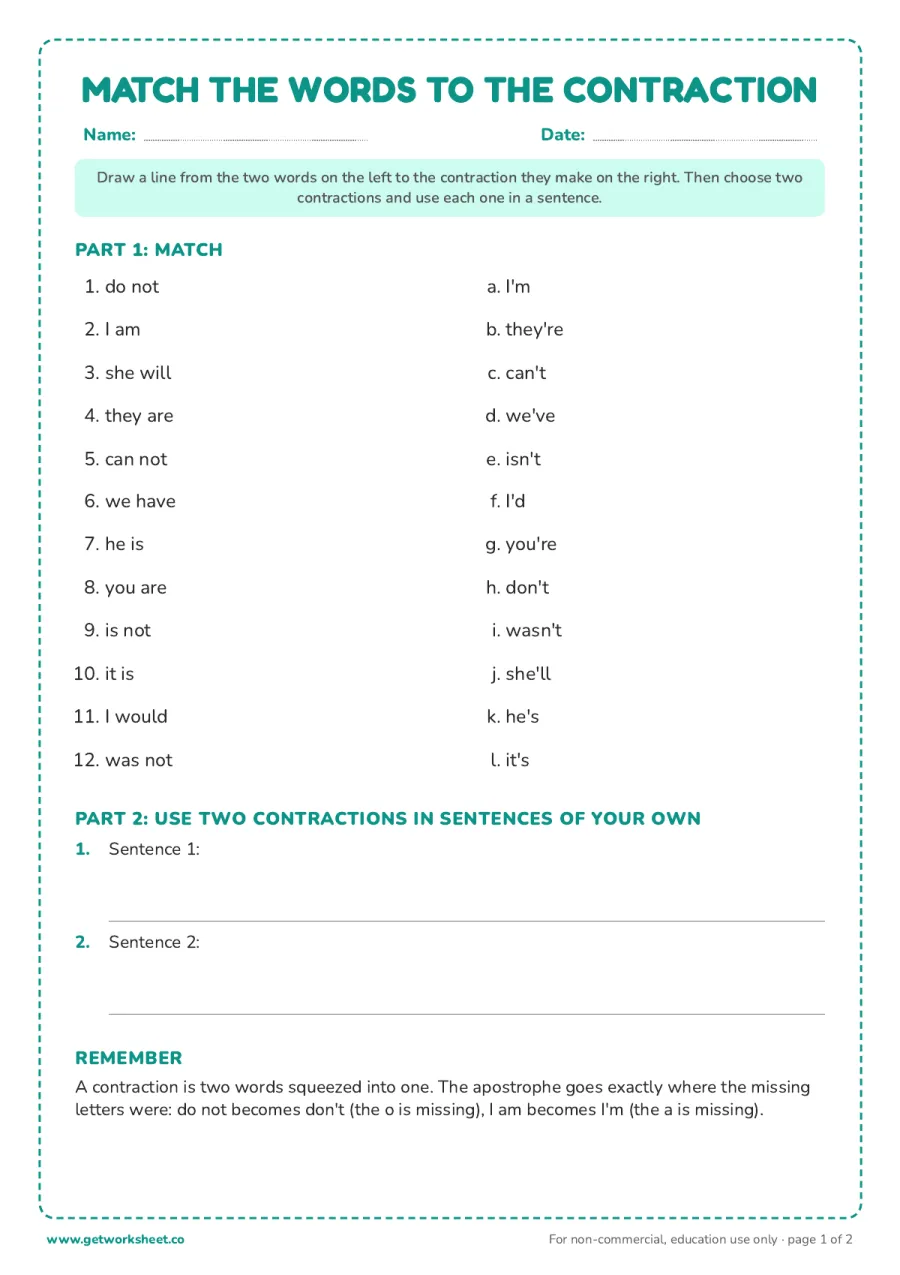
Match the words to the contraction: 12 pairs to join with a line
Twelve word pairs (do not, I am, she will ...) in one column and their contractions shuffled in the other. Students draw a line from each pair to its contraction, then use two contractions in sentences. Answer key on page 2.
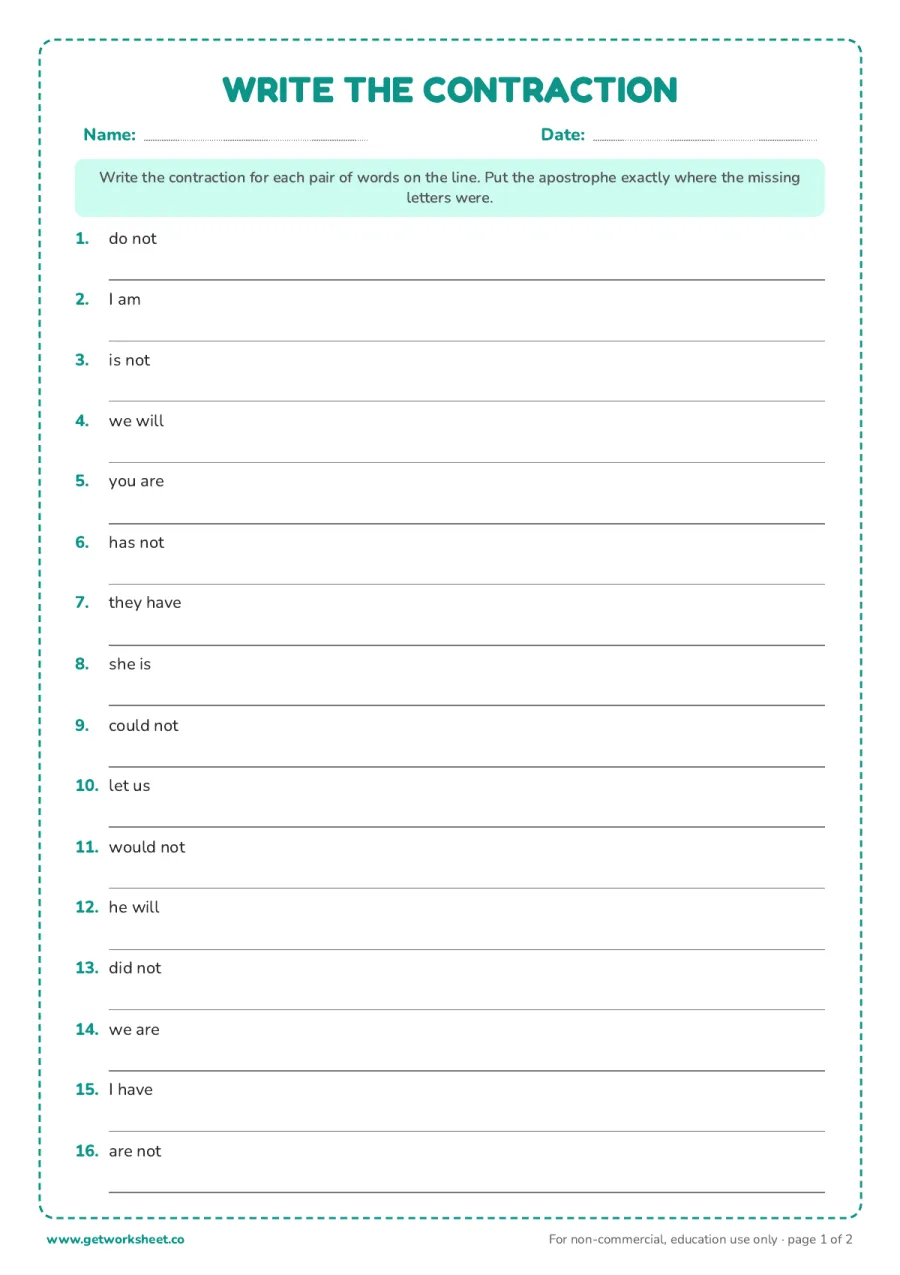
Write the contraction: 16 word pairs such as do not and she will
Sixteen word pairs to turn into contractions on the line beside them, from do not and I am to would not and let us. Answer key on page 2.
Whole set
All 5 in one PDF
- Every sheet on this page, one file
- No ads, no countdowns, print as often as you like
- Instant download, ad-free, no account needed
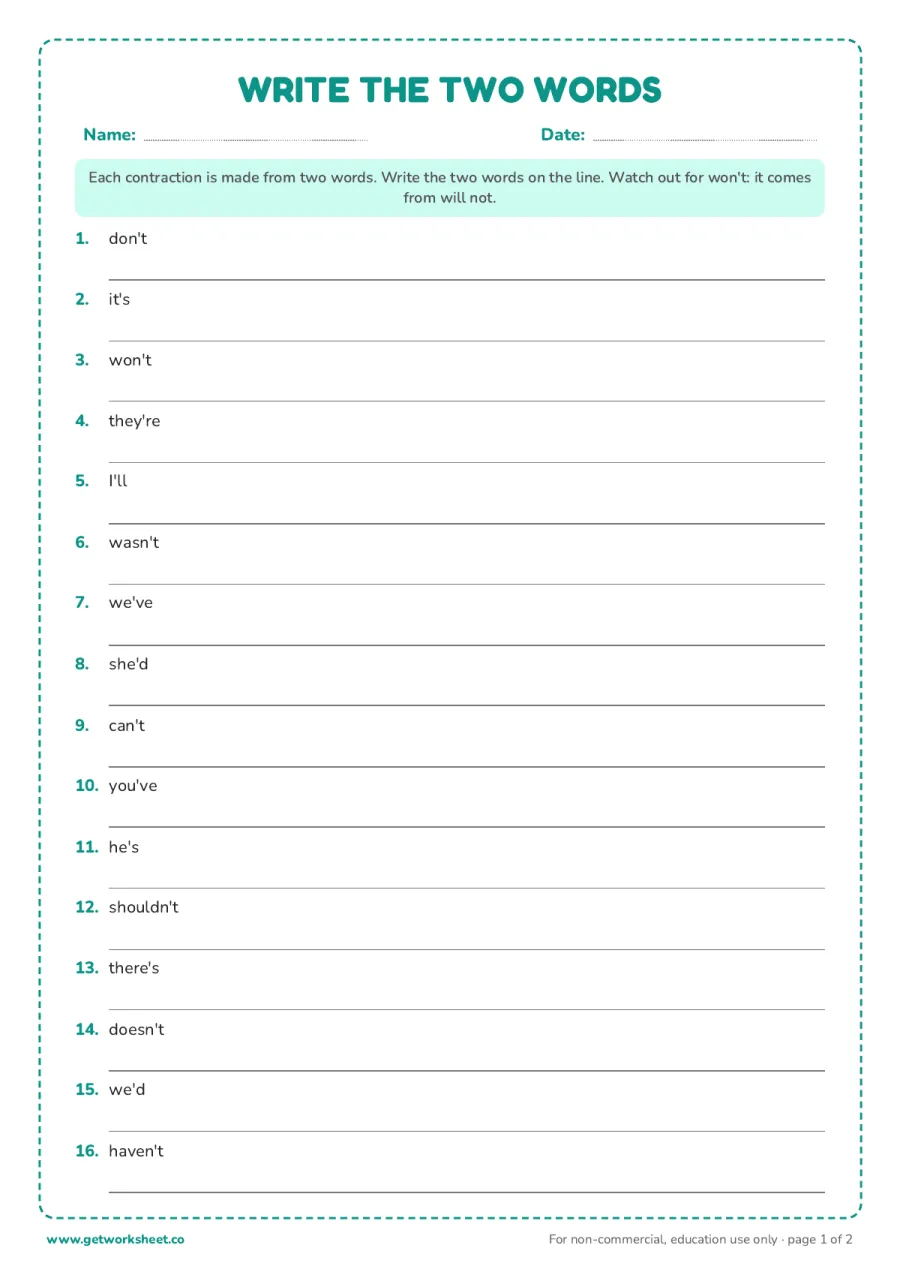
Write the two words: expand 16 contractions such as won't and they'd
Sixteen contractions to expand back into their two words, including the tricky ones: won't (will not), she'd (she would) and I'll (I will). Answer key on page 2.
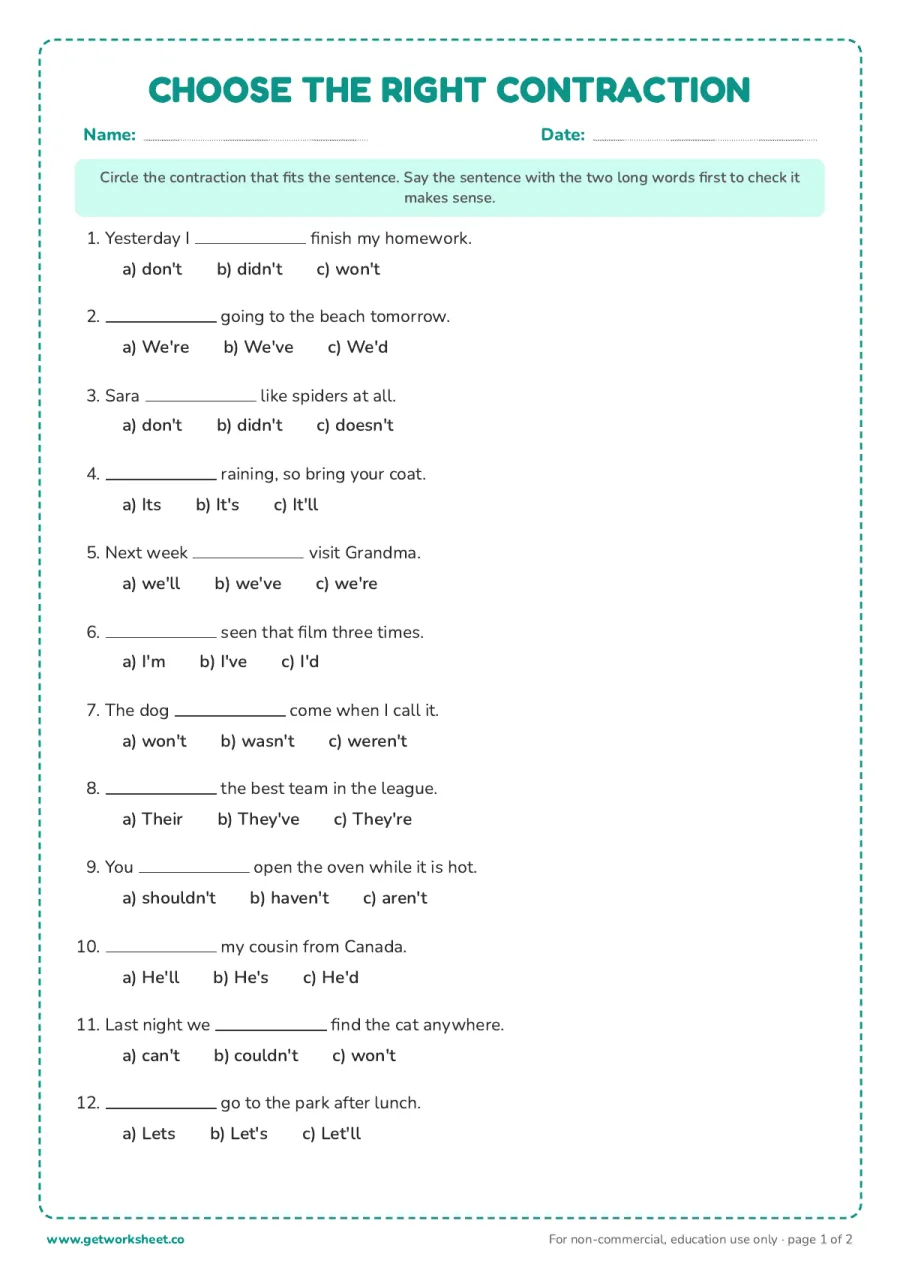
Choose the right contraction: 12 sentences with three choices each
Twelve sentences with a gap where a contraction belongs. Students circle the contraction that fits the meaning and the tense: didn't or don't, we'll or we've, she's or she'll. Answer key on page 2.
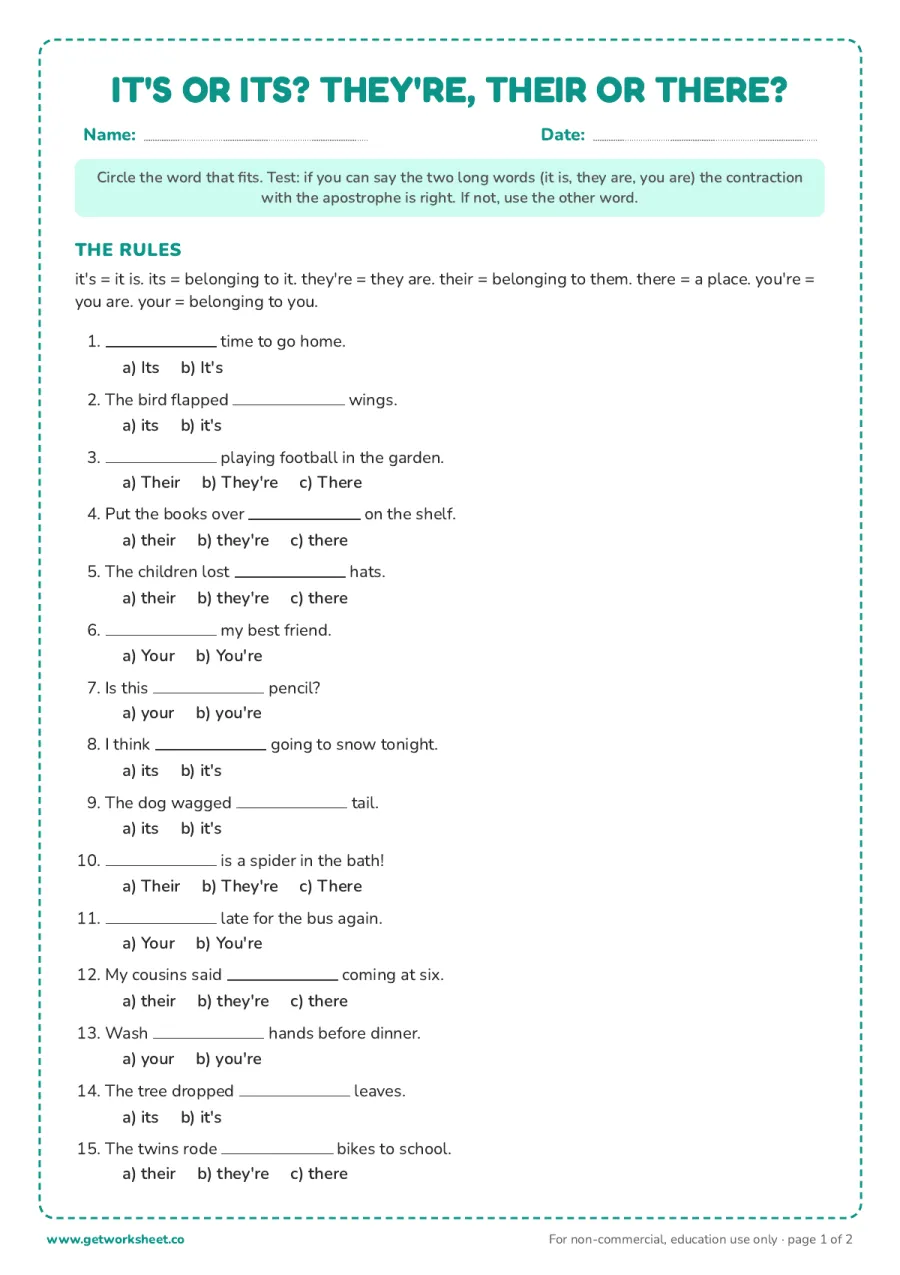
It's or its? They're, their or there? Your or you're? 15 sentences
Fifteen sentences that test the three pairs children mix up most: it's and its, they're, their and there, and you're and your. Students circle the right word; a rule box at the top gives the test for each pair. Answer key on page 2.
AI worksheet generator
Make a worksheet like this for your class
The 5 sheets above are fixed. The generator writes a new contractions worksheet for your grade, with the question types and count you choose, in about 20 seconds. Pick a grade to start:
What you get
- A fresh set of questions on contractions, not a copy of the sheets above
- Multiple choice, fill in the blanks, true or false, open ended
- Answer key and print-ready PDF with Pro
Free account, 1 worksheets a week. No card.
Children use contractions long before they can spell them. “Don’t”, “I’m” and “can’t” are in every conversation a six-year-old has; the writing problem is knowing which two words are hiding inside and where the apostrophe goes. These five worksheets take the skill in order: see the pairs side by side, build contractions from two words, take them apart again, choose the right one for a sentence, and finally sort out the three pairs that cause most of the mistakes in grades 2 and 3: it’s and its, they’re, their and there, you’re and your.
What's in this set
- Match the words to the contraction. Twelve word pairs to join to their contractions with a line, then two contractions to use in sentences of the student's own.
- Write the contraction. Sixteen word pairs (is not, we will, could not, let us ...) to write as contractions, with the apostrophe in the right place.
- Write the two words. Sixteen contractions (don't, won't, she'd, we've, shouldn't ...) to write out as two words.
- Choose the right contraction. Twelve gap sentences with three contractions to choose from, testing meaning and tense (didn't or don't, we'll or we've).
- It's or its? They're, their or there? Fifteen sentences to complete with it's or its, they're, their or there, and you're or your, with a rule box that gives the test for each pair.
What students will practice
- Recognising that a contraction is two words joined, with an apostrophe where letters are missing (CCSS L.2.2c)
- Forming common contractions with not, am, is, are, have, will and would (L.2.2c, L.3.2)
- Expanding contractions back into two words, including the irregular won’t
- Choosing a contraction that matches the tense and meaning of a sentence
- Telling apart it’s and its, they’re, their and there, you’re and your (L.1.1, L.2.2, L.3.1)
Free printable makers
Make your own contractions sheets
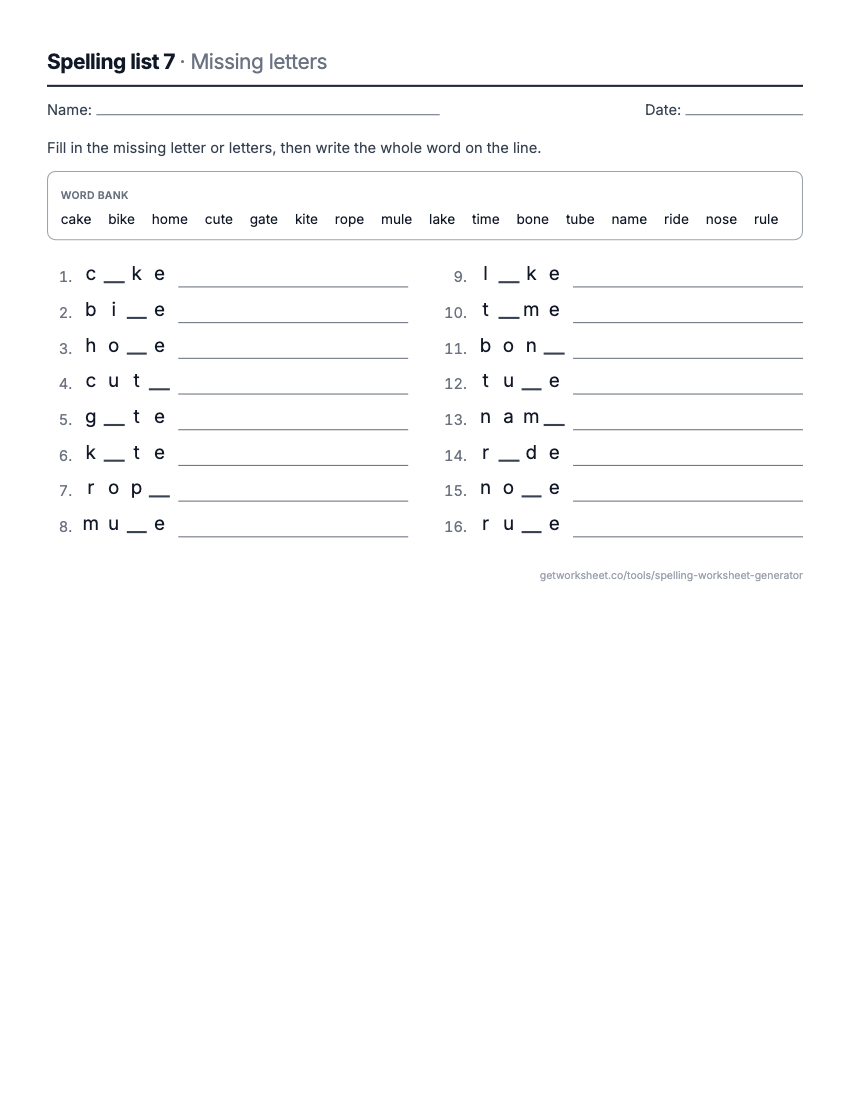
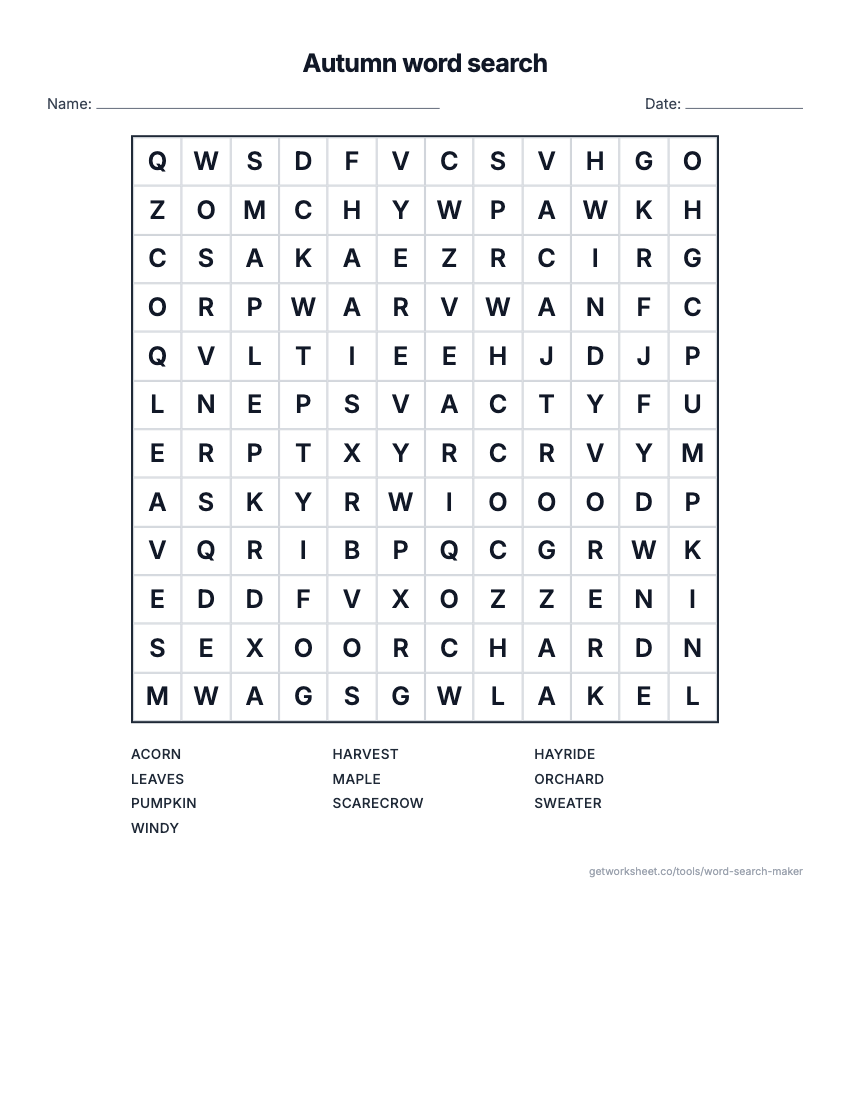
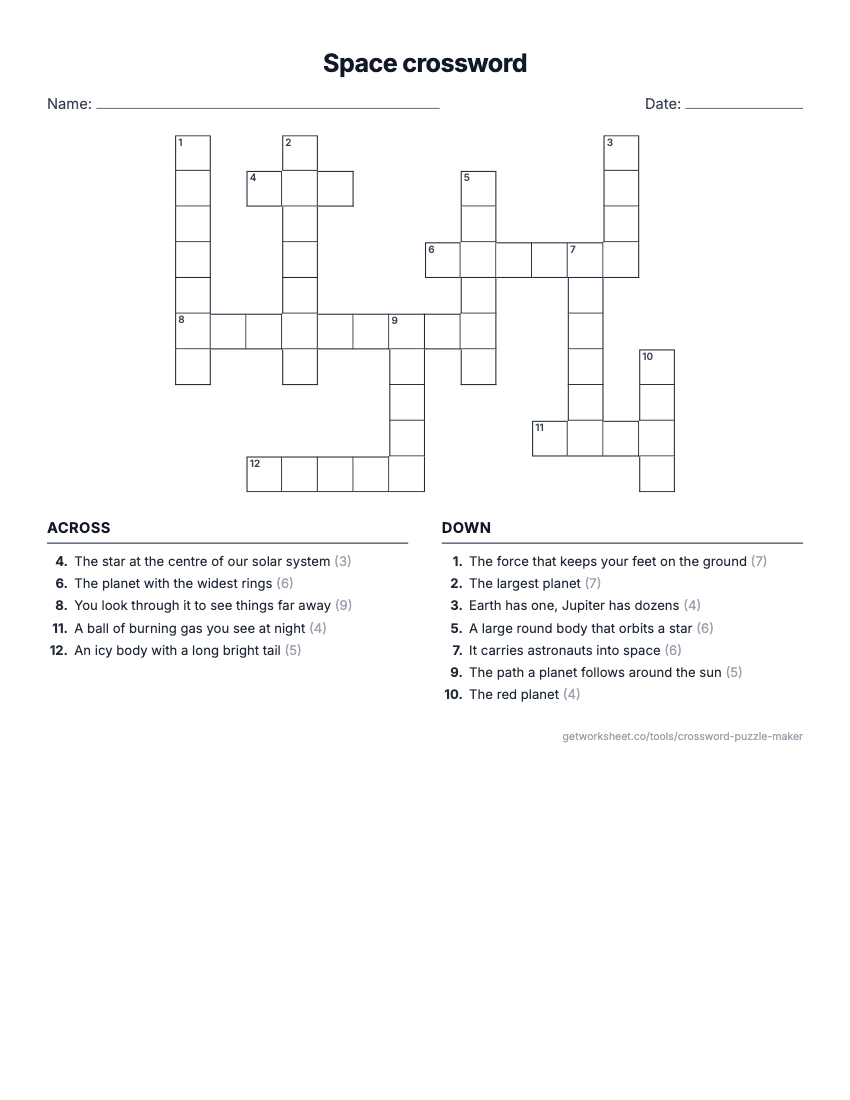
Type your own words or numbers and print in about 30 seconds. No account, no AI, answer key where it applies.
AI worksheet generator
Need a different contractions worksheet?
Generate a custom contractions worksheet: pick the grade, question types and count, and print it in about 20 seconds. Free accounts get 1 generation a week.
Teaching tips and common mistakes
How to use these worksheets
- Start with the match. Match the words to the contraction puts the two forms side by side so students can see which letters disappear. Ask them to cross out the missing letters in the left column before they draw the lines.
- Build, then take apart. Write the contraction and Write the two words are a pair. Do the first one day and the second the next; students who can go both ways have understood the apostrophe rather than memorised a list.
- Say the long form. On Choose the right contraction the test is always to read the sentence with the two long words. “Yesterday I did not finish” sounds right; “Yesterday I do not finish” does not.
- The rule box does the teaching. Read the three rules at the top of the last sheet aloud before students start. The apostrophe test (can you say “it is”?) works every time for it’s, they’re and you’re.
- Grades 1 to 3. Grade 1: the match sheet and the first eight items of Write the contraction. Grade 2: sheets one to four. Grade 3: all five, with the last sheet as the assessment.
Answer key
Every practice sheet carries its own answer key on page 2 of the PDF. The keys are repeated here for quick marking.
- Match the words to the contraction: Part 1: match: do not = don't; I am = I'm; she will = she'll; they are = they're; can not = can't; we have = we've; he is = he's; you are = you're; is not = isn't; it is = it's; I would = I'd; was not = wasn't Part 2: use two contractions in sentences of your own: 1. Sample: I don't like cold soup. 2. Sample: They're coming to my house on Friday.
- Write the contraction: 1. don't 2. I'm 3. isn't 4. we'll 5. you're 6. hasn't 7. they've 8. she's 9. couldn't 10. let's 11. wouldn't 12. he'll 13. didn't 14. we're 15. I've 16. aren't
- Write the two words: 1. do not 2. it is 3. will not 4. they are 5. I will 6. was not 7. we have 8. she would 9. can not 10. you have 11. he is 12. should not 13. there is 14. does not 15. we would 16. have not
- Choose the right contraction: 1. b 2. a 3. c 4. b 5. a 6. b 7. a 8. c 9. a 10. b 11. b 12. b
- It's or its? They're, their or there?: 1. b 2. a 3. b 4. c 5. a 6. b 7. a 8. b 9. a 10. c 11. b 12. b 13. a 14. a 15. a
Common mistakes to watch for
- The apostrophe in the wrong place. “Do’nt” and “ca’nt” come from putting the apostrophe between the two words instead of where the letter is missing. Have students cross out the missing letter first.
- Won’t. It comes from will not, not “woll not”. It is the one contraction children have to learn as a whole word.
- Its with an apostrophe. If “it is” does not fit the sentence, there is no apostrophe. “The dog wagged it is tail” is nonsense, so it is its.
- Their and there by sound. They sound identical, so the test must be meaning: their always belongs to someone; there is a place or starts “there is”.
- Could of. “Could’ve” sounds like “could of”. The expansion is could have; the two-words sheet includes should not and have not to keep have in view.
Frequently asked questions
What grade are these contractions worksheets for?
Grades 1 to 3. Contractions are named in the Common Core language standards for grade 2 (L.2.2c), and the homophone pairs on the last sheet (it’s/its, they’re/their/there, you’re/your) are practised through grade 3 and beyond.
Do the worksheets have answer keys?
Yes. Every sheet has its answer key on page 2 of the PDF and the keys are repeated on this page.
Which contractions are covered?
Contractions with not (don’t, isn’t, can’t, won’t, didn’t, couldn’t, wouldn’t, shouldn’t, hasn’t, haven’t, wasn’t, aren’t, doesn’t), with am, is and are (I’m, he’s, she’s, it’s, there’s, we’re, you’re, they’re), with have (I’ve, we’ve, you’ve, they’ve), with will (I’ll, he’ll, she’ll, we’ll), with would (I’d, she’d, we’d) and let’s.
Is can not one word or two?
Both are used; cannot as one word is more common in print. The sheets write it as two words so that students can see which letters the apostrophe replaces in can’t.
More English practice
Apostrophes have a second job, showing who owns something; the punctuation worksheets practise contraction and possessive apostrophes together, and the nouns worksheets cover possessive nouns. Contractions are made from pronouns and helping verbs; the verbs worksheets follow on with tenses.
Free library
Related collections
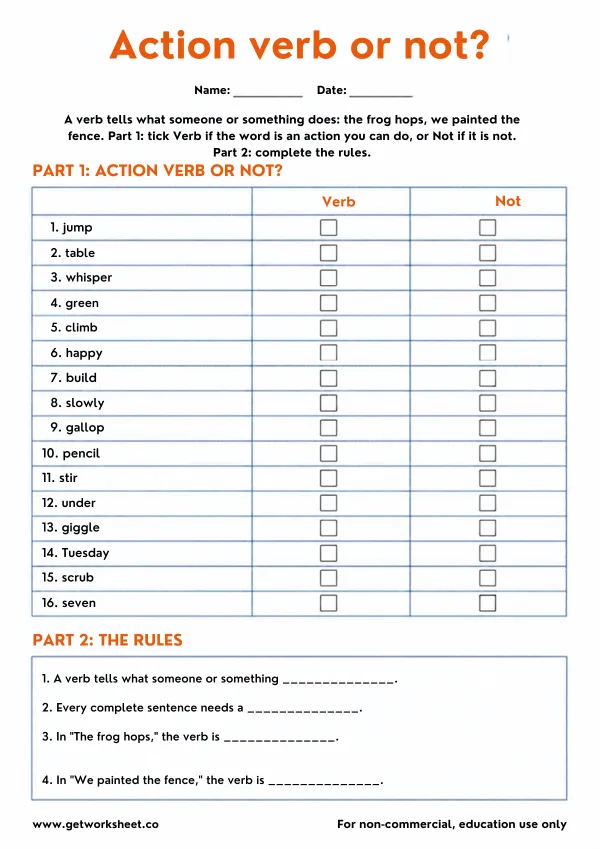
Free verbs worksheets
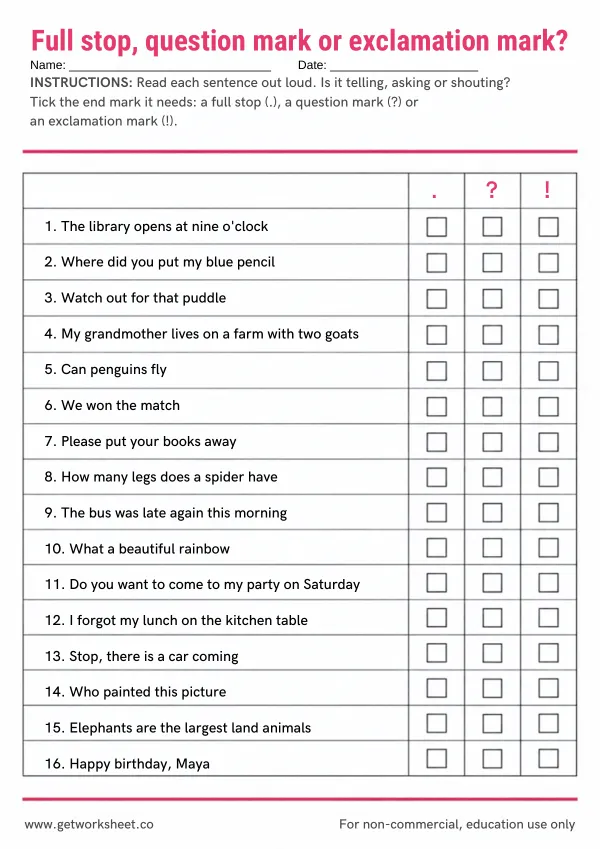
Free punctuation worksheets
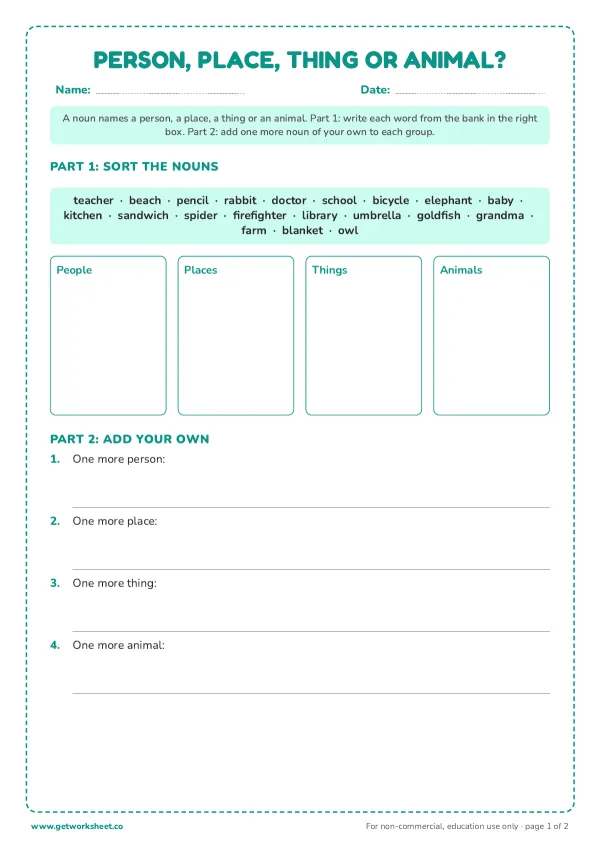
Free nouns worksheets
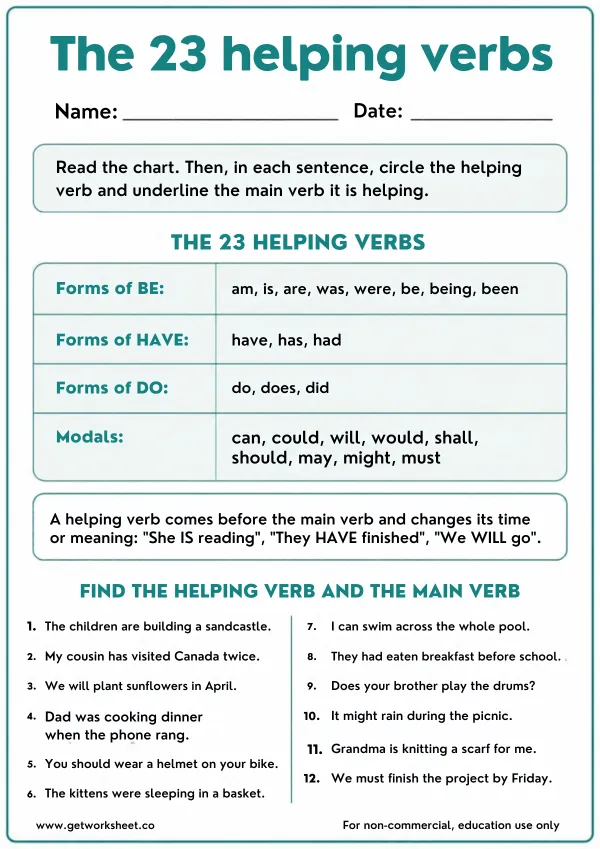
Free helping verbs worksheets
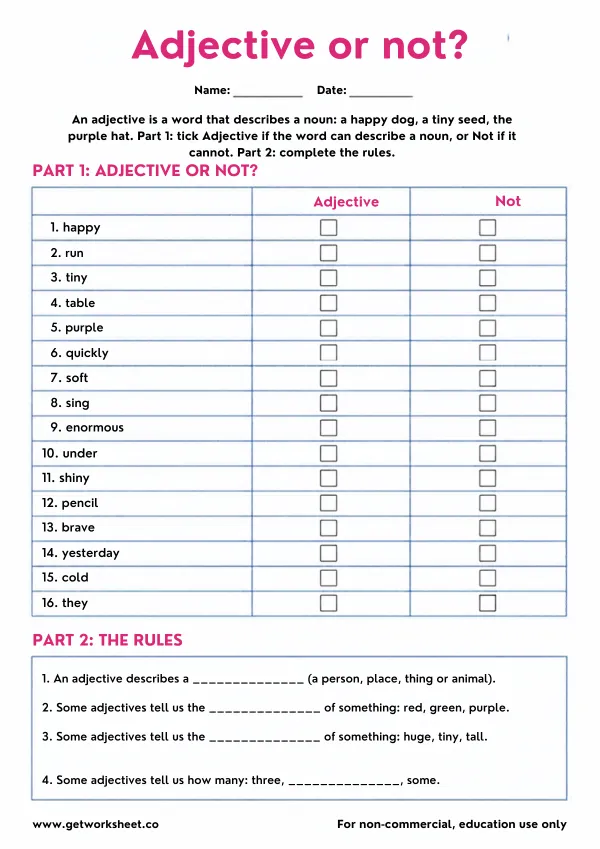
Free adjectives worksheets
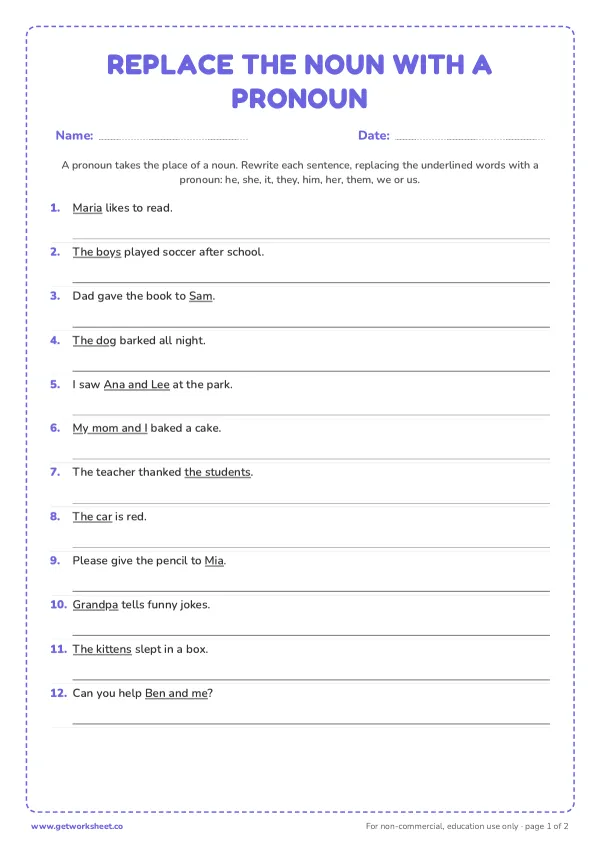
Free pronouns worksheets
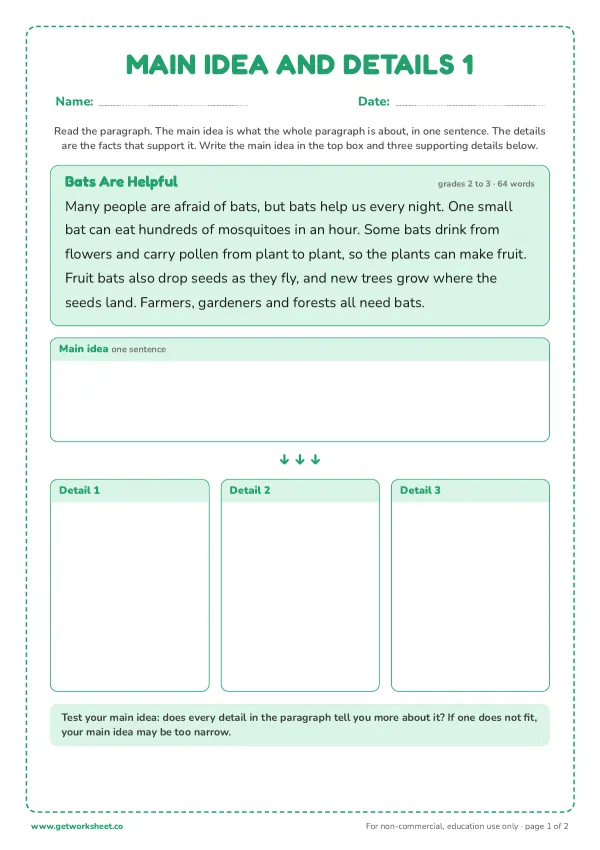
Free main idea worksheets
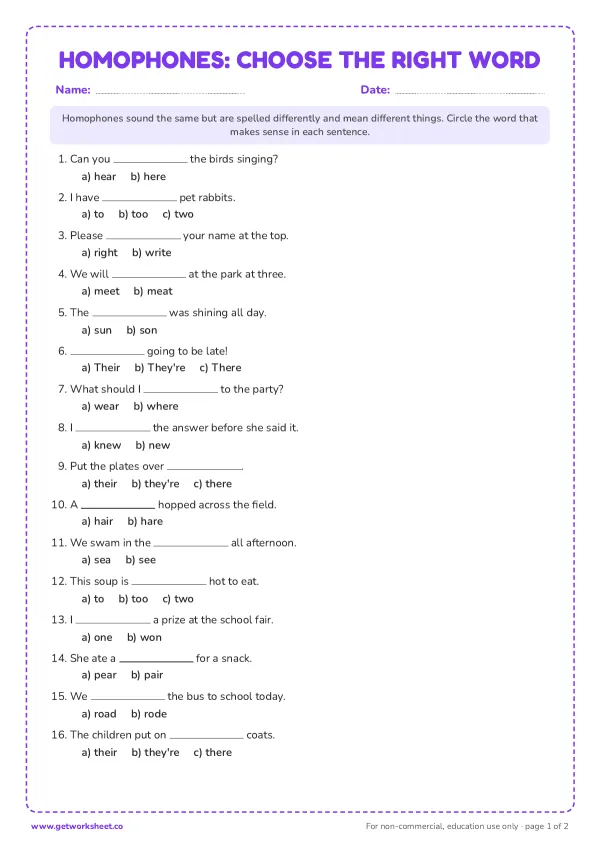
Free homophones worksheets
More worksheets
- Free prefixes and suffixes worksheets
- Free short and long vowel worksheets
- Free Groundhog Day worksheets
- Free Presidents' Day worksheets
- Free Montessori three part cards templates
- Free Montessori grammar symbols worksheets
- Free y as a vowel worksheets
- Free schwa sound worksheets
- Free glued sounds worksheets
- Free FLOSS rule worksheets
- Free Elkonin boxes worksheets
- Free heart words worksheets