English · Grades 2–4
Free cursive writing worksheets
Free printable cursive writing worksheets for grades 2 to 4: every lowercase letter as dotted letters on three-line rules, stroke-family sheets, twelve letter joins, twenty common words, five sentences to trace and copy, blank paper.
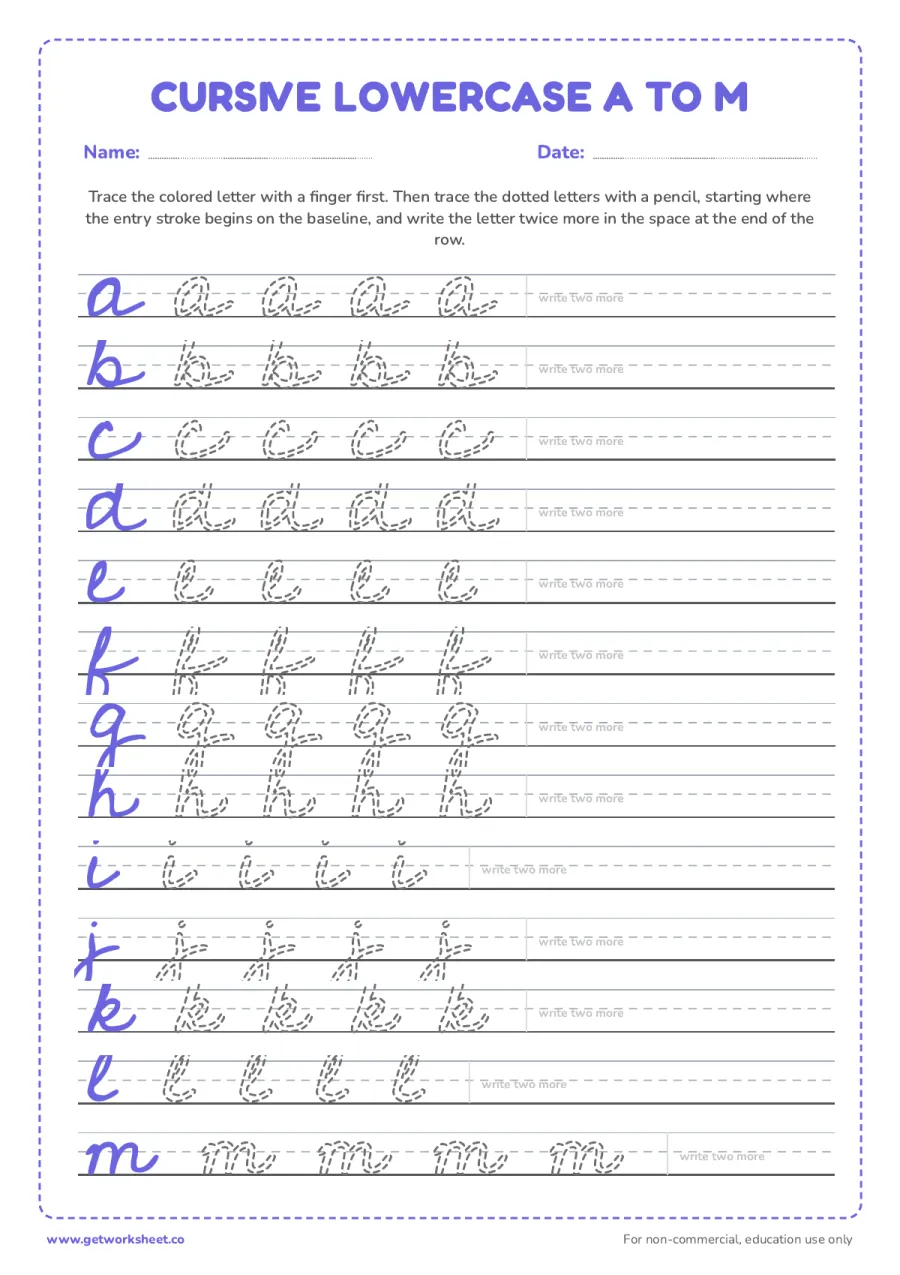
Cursive lowercase letters a to m
Thirteen lowercase cursive letters, each with a colored model, four dotted letters to trace and space to write two more. Free printable PDF.
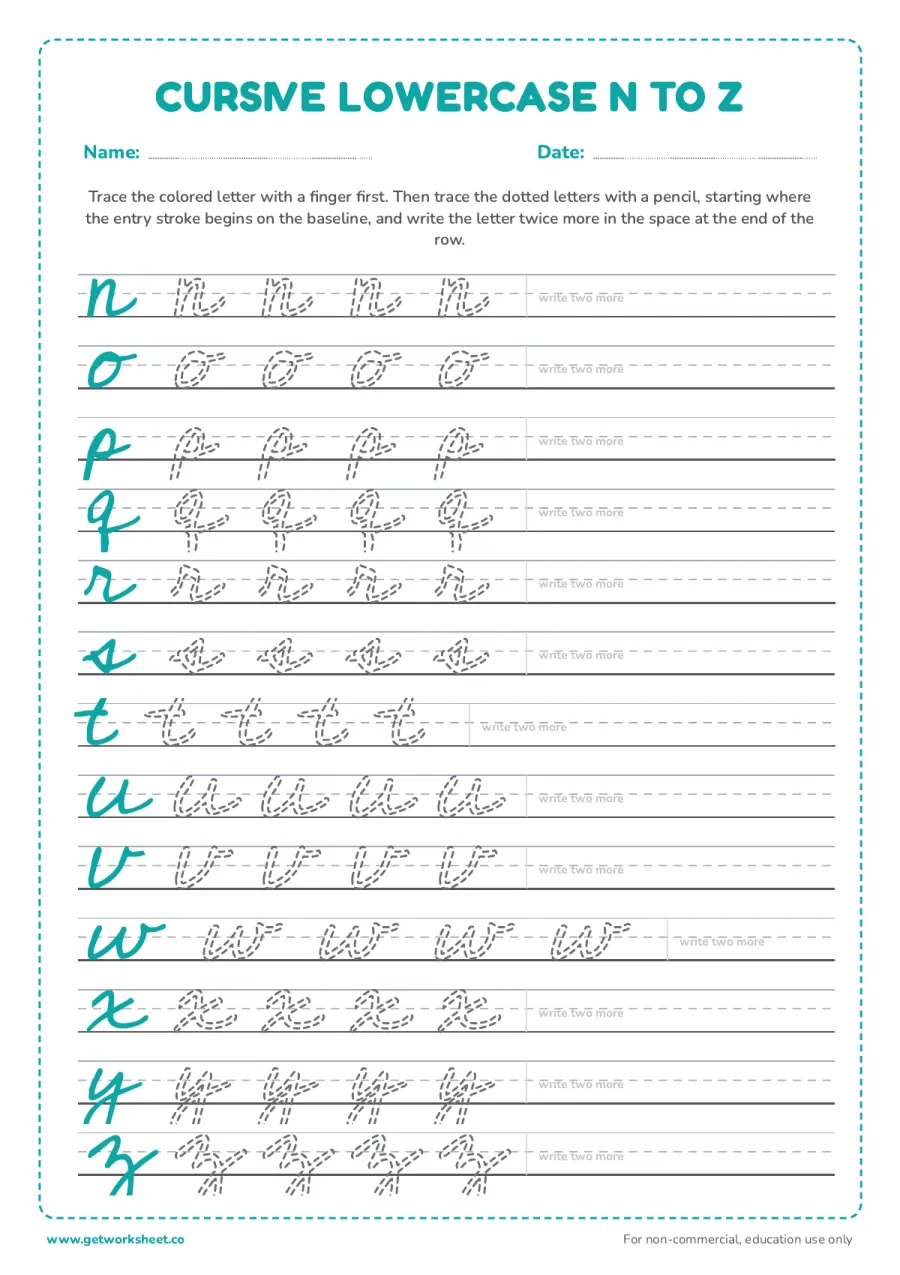
Cursive lowercase letters n to z
The second half of the lowercase cursive alphabet, n to z: model, four dotted letters to trace, then write two more. Free printable PDF.
Whole set
All 9 sheets in one PDF
Instant and ad-free. No account needed.
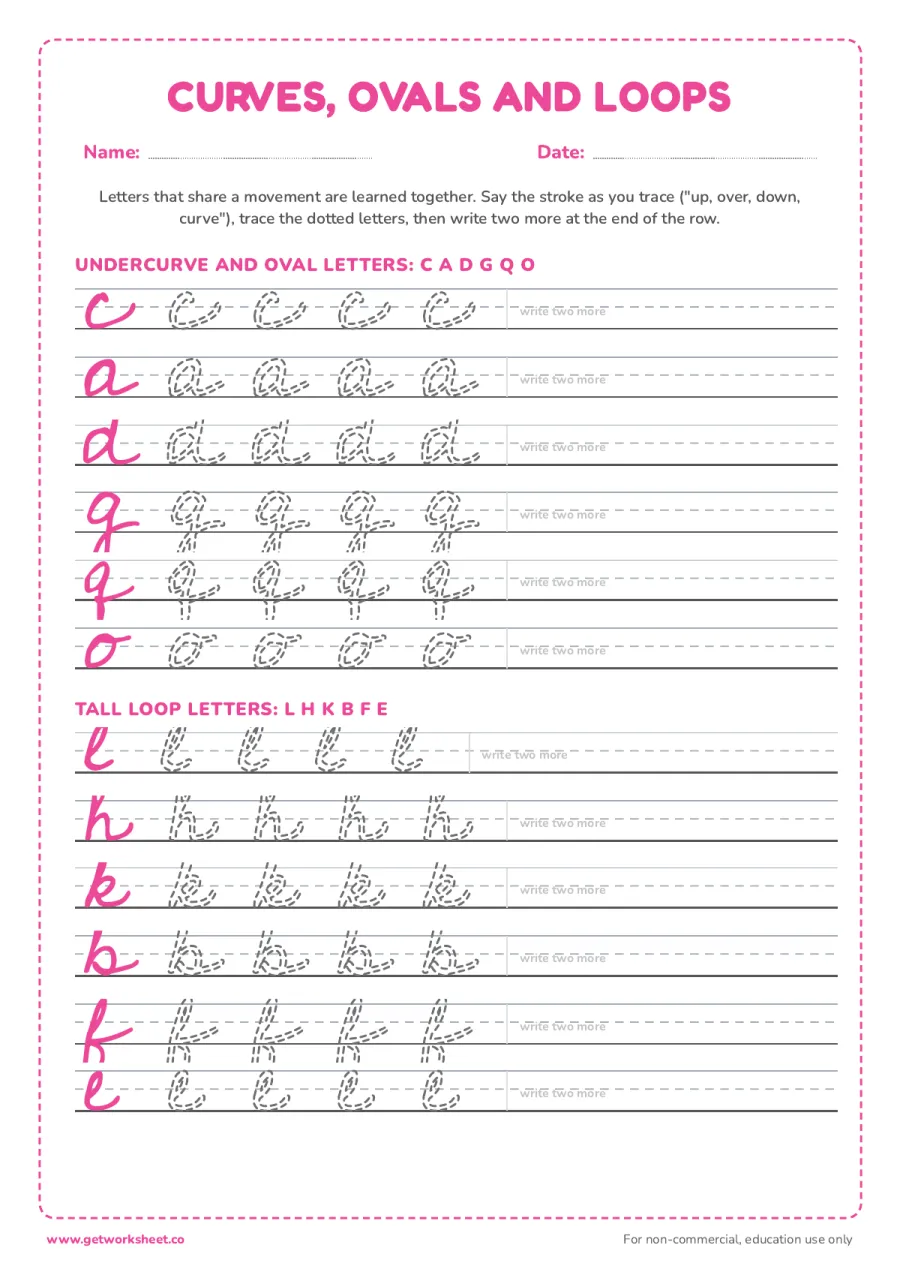
Cursive by stroke family: curves, ovals and tall loops
Twelve lowercase letters grouped by movement: the undercurve and oval letters c a d g q o, then the tall loop letters l h k b f e. Model, dotted letters, write two more. Free printable PDF.
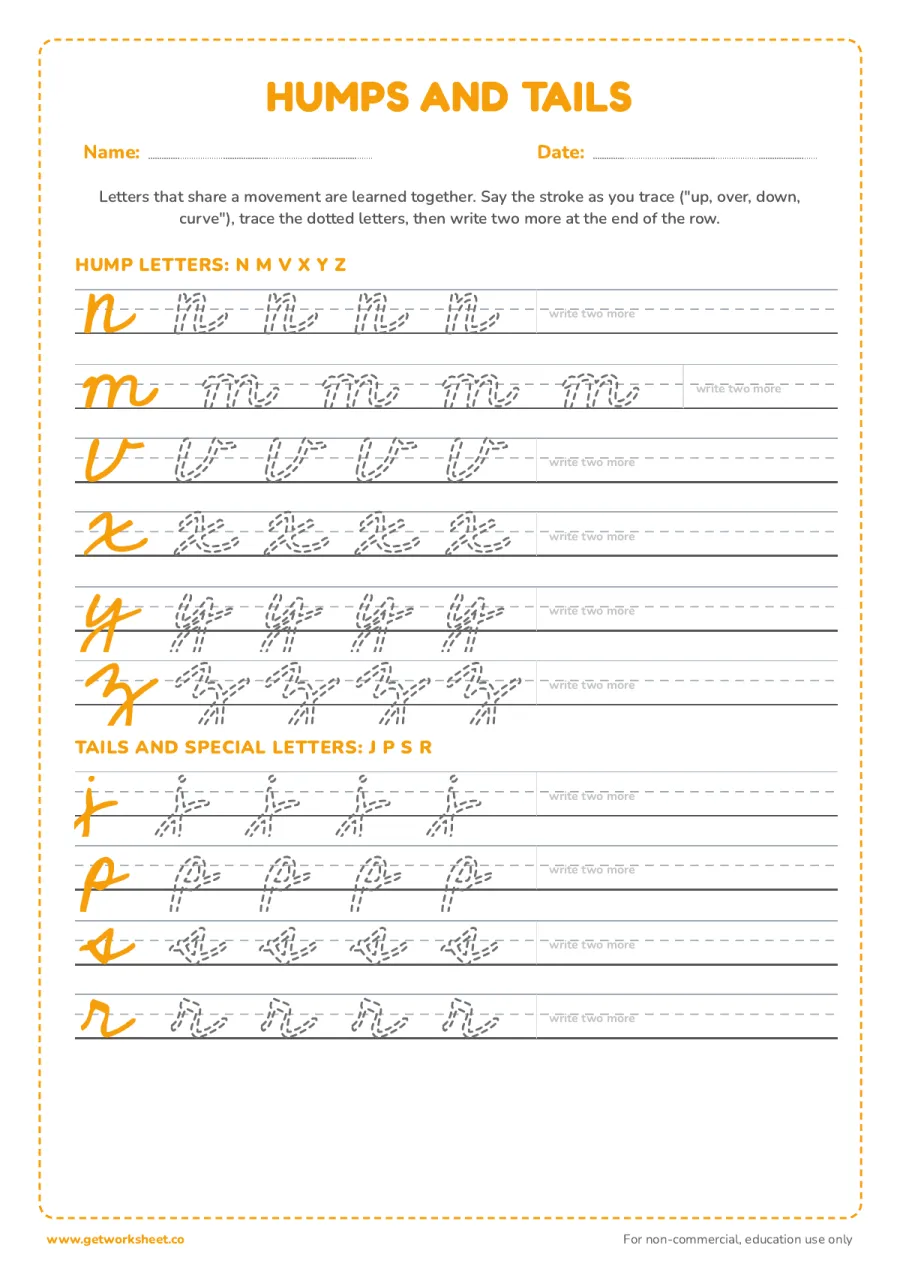
Cursive by stroke family: humps and tails
Ten lowercase letters grouped by movement: the hump letters n m v x y z, then the tail and special letters j p s r. Model, dotted letters, write two more. Free printable PDF.
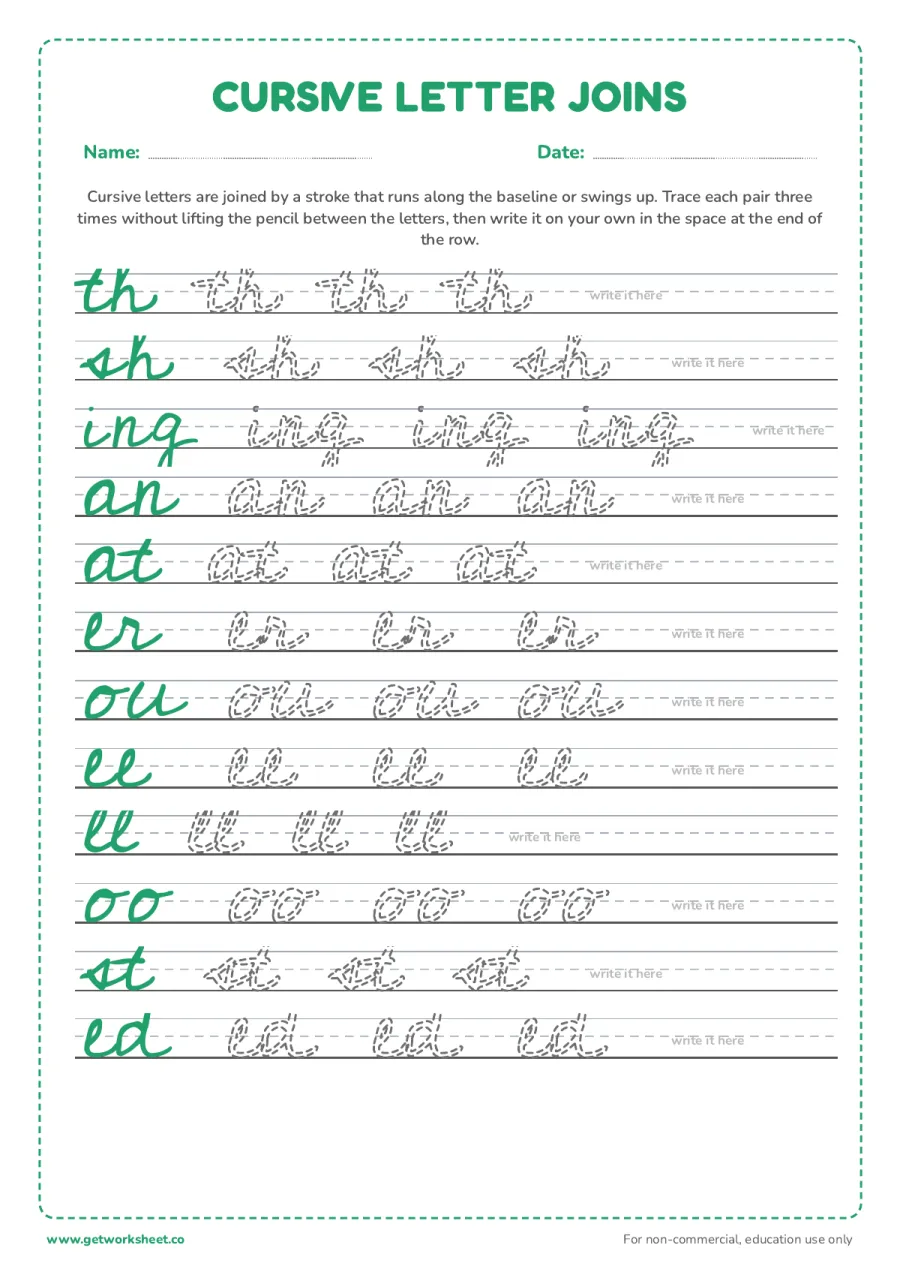
Cursive letter joins: th, sh, ing and 9 more
Twelve common letter pairs and endings (th, sh, ing, an, at, er, ou, ee, ll, oo, st, ed) to trace three times and write once, without lifting the pencil. Free printable PDF.
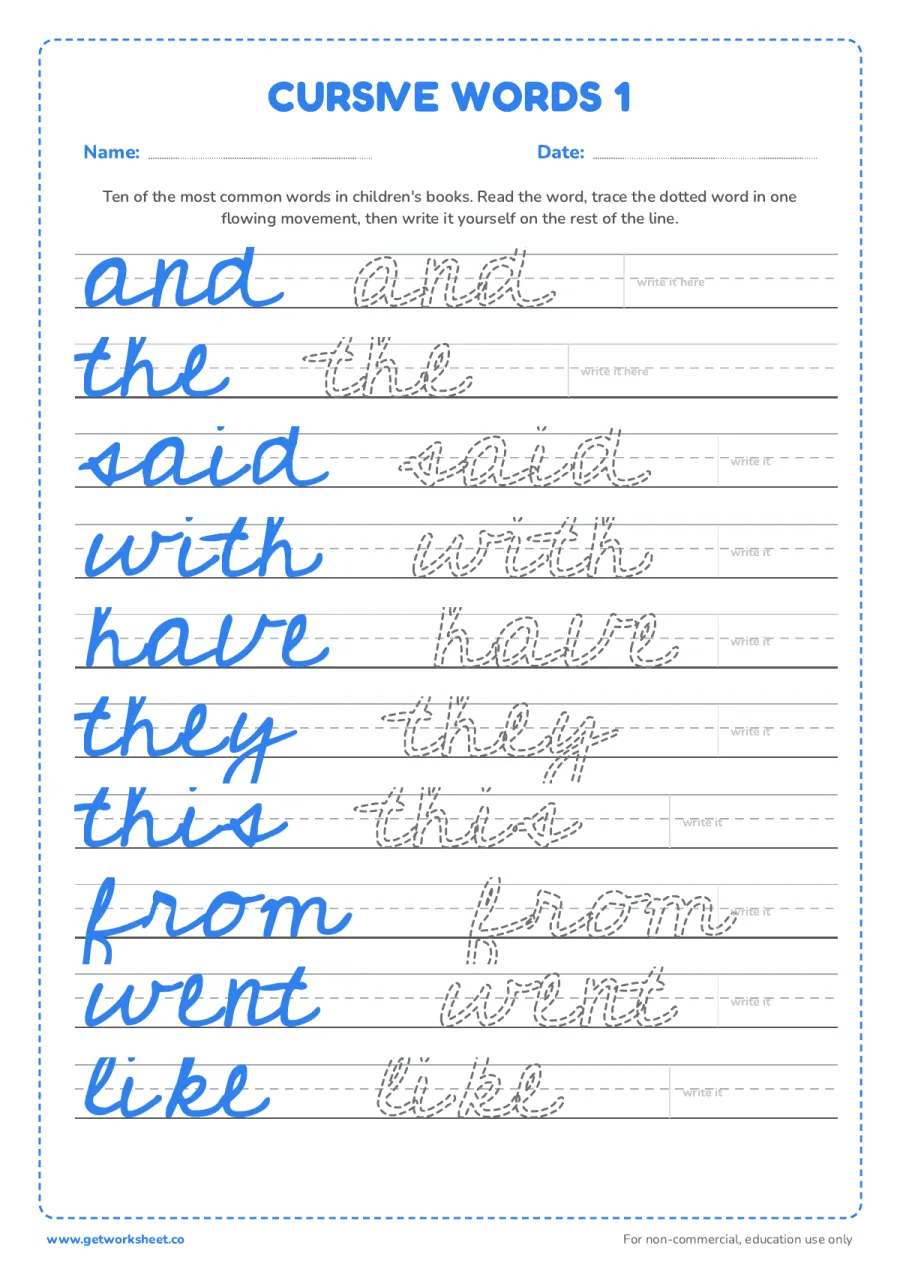
Common words in cursive 1: and, the, said, with...
Ten high-frequency words (and, the, said, with, have, they, this, from, went, like): read, trace, then write each one on the rest of the line. Free printable PDF.
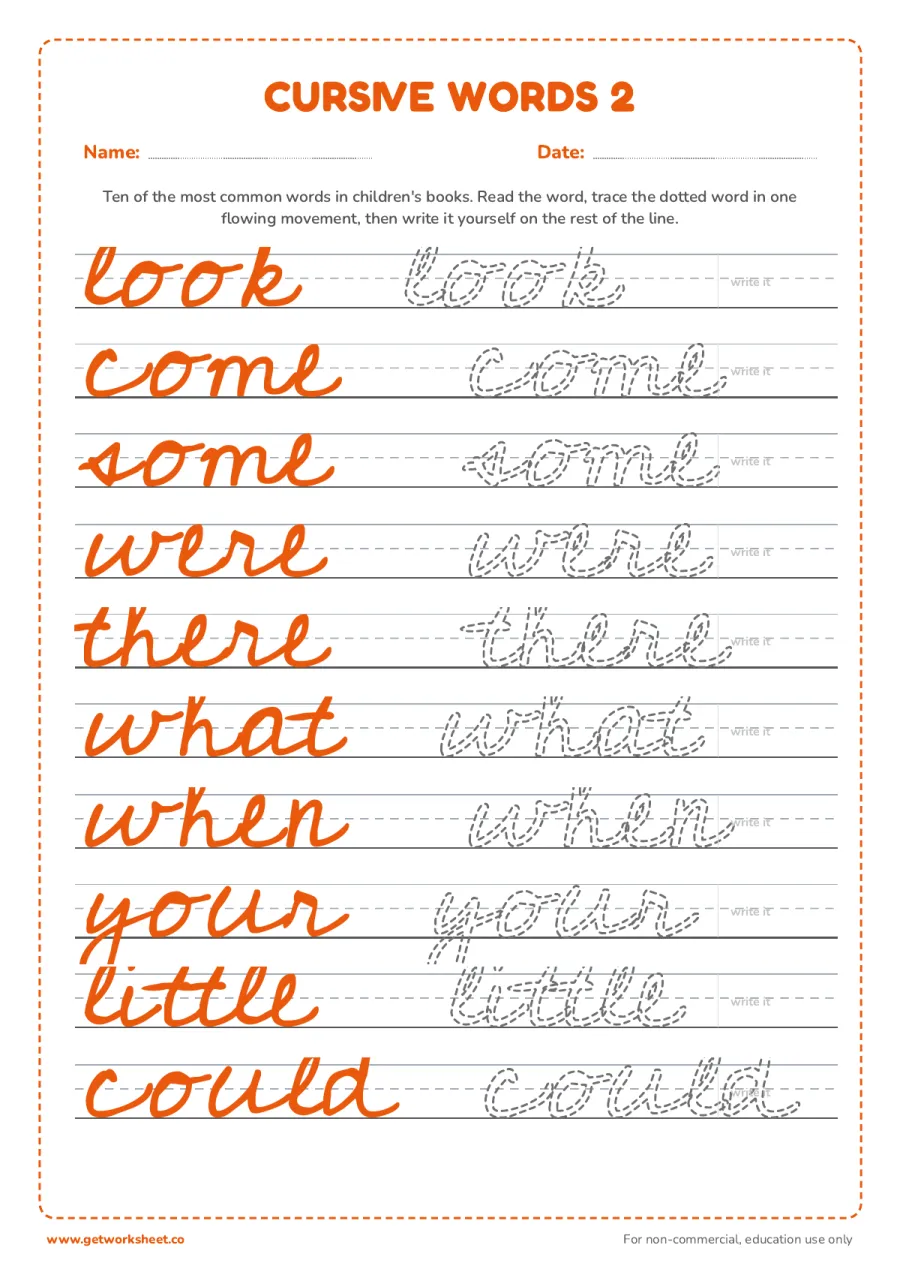
Common words in cursive 2: look, come, some, were...
Ten more high-frequency words (look, come, some, were, there, what, when, your, little, could): read, trace, write. Free printable PDF.
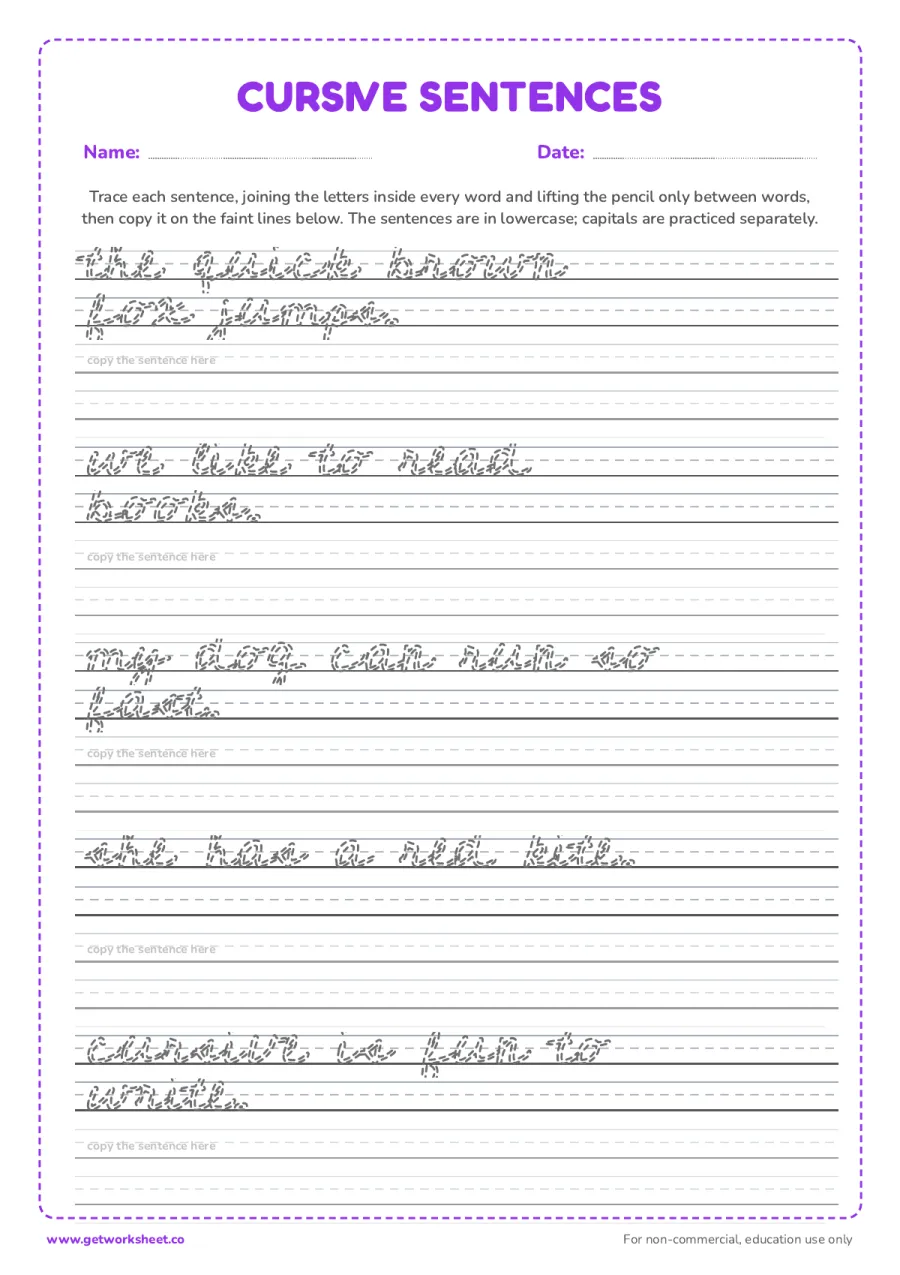
Cursive sentences: trace and copy
Five lowercase sentences in cursive, each traced over two rules and copied on two faint rules below. Free printable PDF.
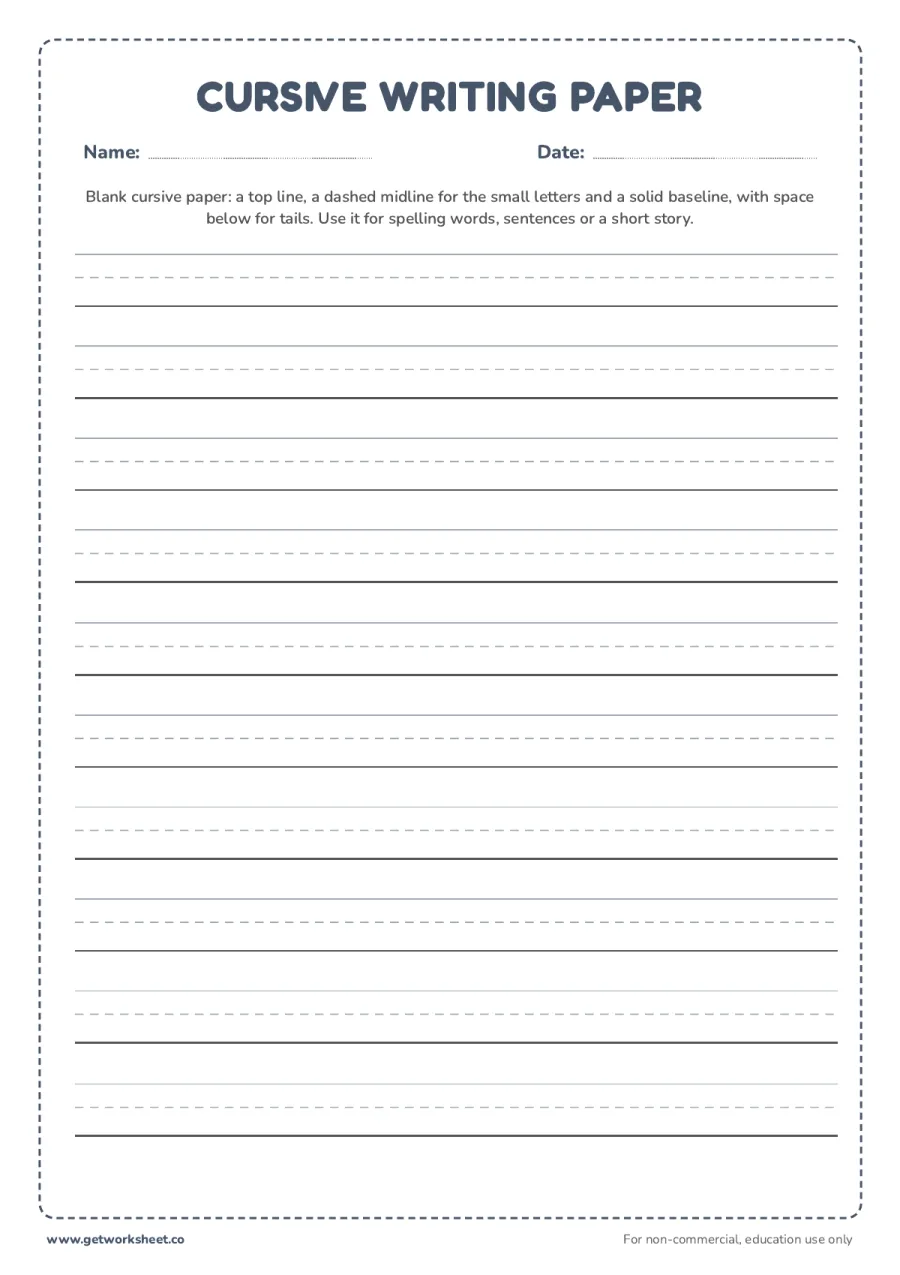
Blank cursive writing paper
Ten sets of three-line handwriting rules with a dashed midline, ready for spelling words, sentences or a story in cursive. Free printable PDF.
AI worksheet generator
Make a worksheet like this for your class
The 9 sheets above are fixed. The generator writes a new cursive writing worksheet for your grade, with the question types and count you choose, in about 20 seconds. Pick a grade to start:
What you get
- A fresh set of questions on cursive writing, not a copy of the sheets above
- Multiple choice, fill in the blanks, true or false, open ended
- Answer key and print-ready PDF with Pro
Free account, 1 worksheets a week. No card.
Cursive is taught again in many states from second or third grade, and children who have only ever printed need three things: the letter shapes, the joins between them, and paper that shows where the small letters stop and the tall ones reach. These nine worksheets give all three for the lowercase alphabet, which is where cursive is learned. Two alphabet sheets cover a to z in order, each letter shown as a colored model, then as dotted letters to trace, then space to write it alone; two more regroup the same letters by stroke family (curves and ovals, tall loops, humps, tails), which is the order teachers actually use. A joins sheet practices the twelve letter pairs and endings children meet most often (th, sh, ing, er, ou and so on), two words sheets cover twenty of the most common words in children's books, a sentences sheet has five sentences to trace and copy, and the last sheet is blank cursive-ruled paper. Capitals are not included: they vary most between school programs, so follow the chart your school uses (see the FAQ).
What's in this set
- Lowercase a to m. One row per letter: colored model, four dotted letters to trace, space for two of your own.
- Lowercase n to z. The rest of the small letters in the same layout.
- Curves, ovals and loops. The undercurve and oval letters (c a d g q o) and the tall loop letters (l h k b f e), grouped with a heading for each family.
- Humps and tails. The hump letters (n m v x y z) and the tail and special letters (j p s r).
- Letter joins. Twelve pairs and endings (th, sh, ing, an, at, er, ou, ee, ll, oo, st, ed): trace each three times without lifting the pencil, then write it.
- Cursive words 1 and 2. Twenty common words over two sheets (and, the, said, with, have, they, this, from, went, like; look, come, some, were, there, what, when, your, little, could): read, trace, then write on the rest of the line.
- Sentences. Five lowercase sentences to trace over two rules each, then copy on two faint rules below.
- Cursive writing paper. Ten sets of three-line rules with a dashed midline.
Free printable makers
Make your own cursive writing sheets
Type your own words or numbers and print in about 30 seconds. No account, no AI, answer key where it applies.
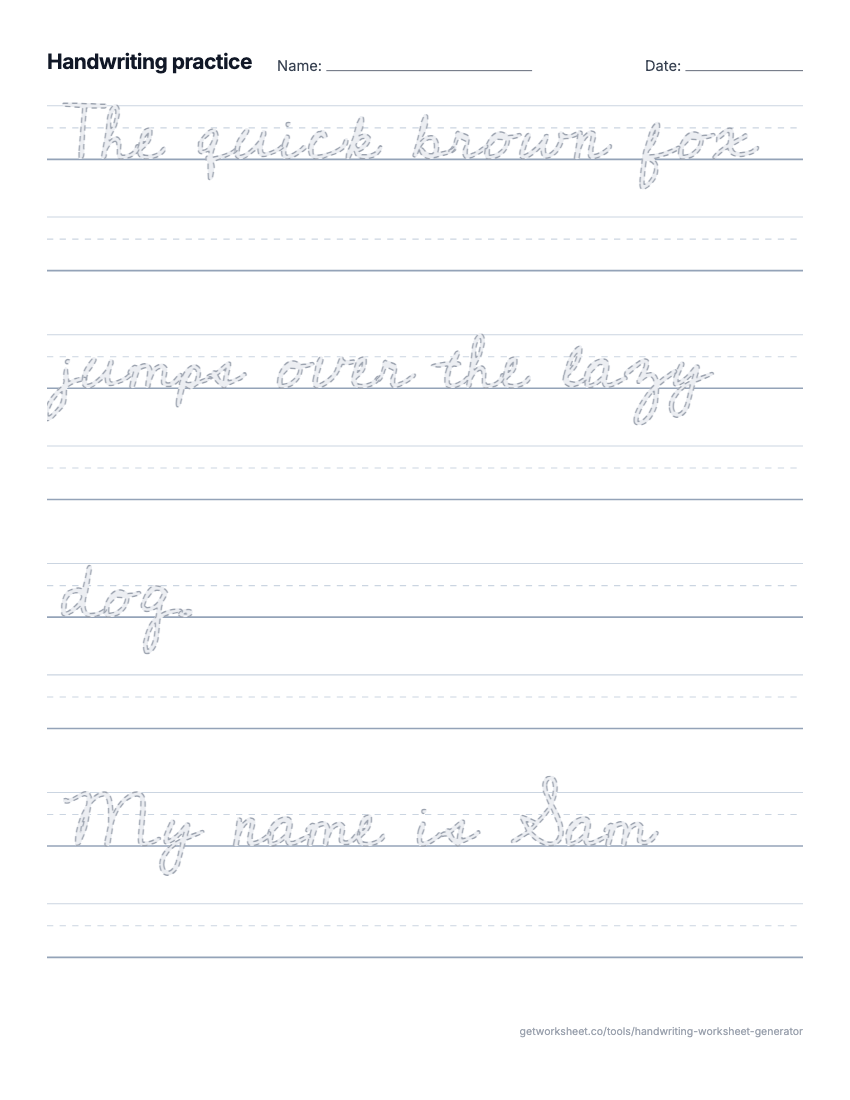 Handwriting worksheet generatorYour sentences as print or cursive tracing rows on guide lines. Free to print.
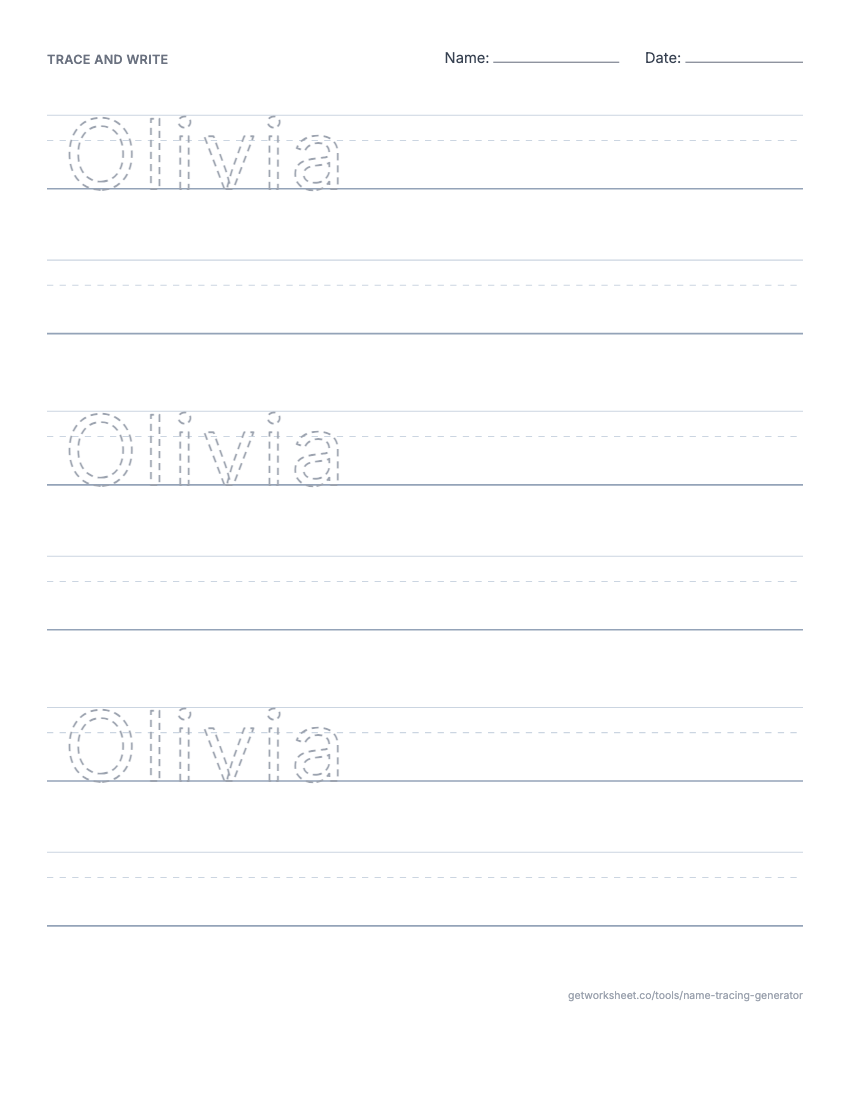 Name tracing generatorDashed, dotted or grey letters on handwriting lines. Free to print.
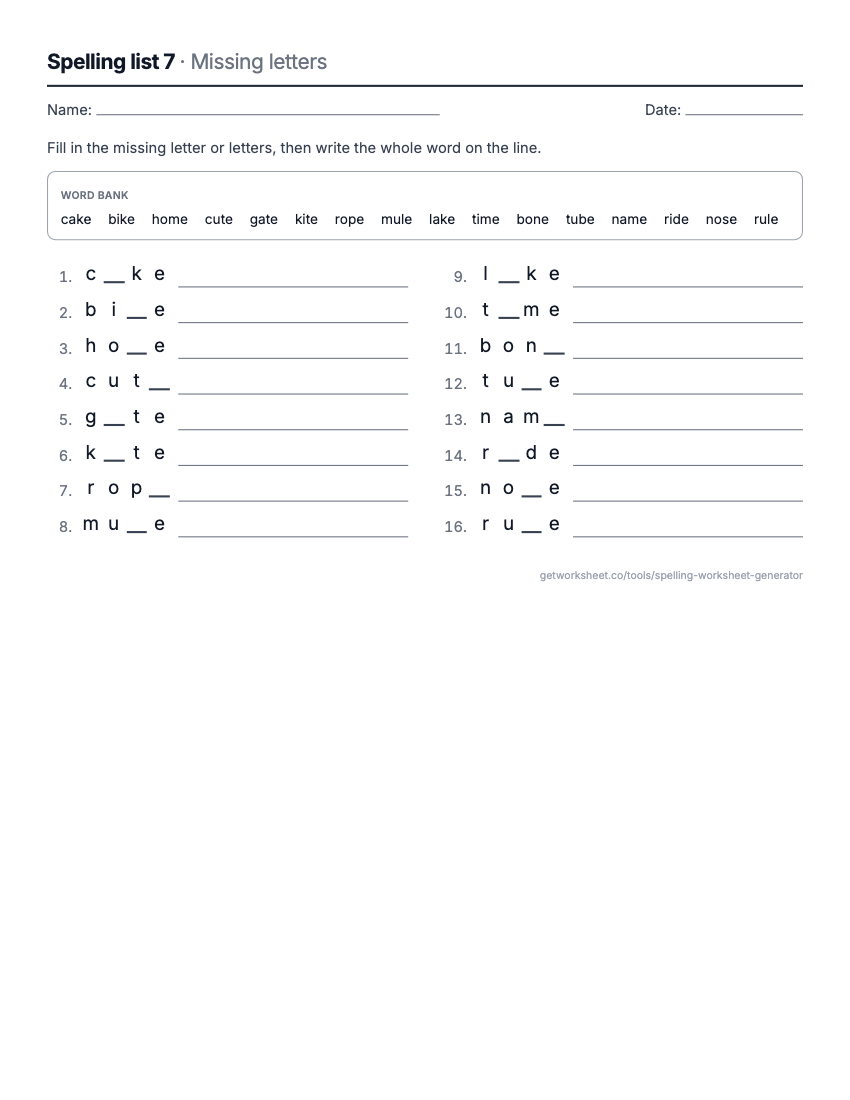 Spelling worksheet generatorTest sheet, scramble, missing letters, ABC order and key from one word list. Free to print.
AI worksheet generator
Need a different cursive writing worksheet?
Generate a custom cursive writing worksheet: pick the grade, question types and count, and print it in about 20 seconds. Free accounts get 1 generation a week.
How to use these worksheets
Print at 100%. A sharp pencil, not a pen, for the first weeks. Ten to fifteen minutes a day beats one long session; cursive is a motor skill and it grows with frequent short practice.
- Posture and paper first. Feet flat, paper tilted slightly toward the writing hand, the other hand holding the page. Letters lean the way the paper is tilted, which is the natural slant of cursive.
- Teach in stroke families, not alphabetical order. The a to z sheets make any letter easy to find; the two stroke-family sheets put the letters in teaching order: undercurve and oval letters (c, a, d, g, q, o), tall loops (l, h, k, b, f, e), humps (n, m, v, x, y, z), then j, p, s and r. Two or three letters from one family per day is a good pace.
- Trace with a finger, then a pencil. Say the stroke as you go: "up, over, down, curve". The entry stroke on every lowercase letter starts on the baseline; that is what later becomes the join.
- Joins. Trace the pair in one movement without lifting the pencil between letters. If a join looks wrong (a pointed connection into an oval letter, for example), slow down at the top of the join.
- Words and sentences. Read the word first, then trace it as one movement, then write it on the rest of the line. The sentences are all lowercase; the copy rules under each traced sentence are the real test.
- Capitals. Not on these sheets. Cursive capitals differ more between programs than any other letters, so use the chart from your child's school and practice them on the blank paper (sheet 9).
- Blank paper. Use it for spelling lists so cursive becomes the everyday way of writing rather than a separate subject.
Common mistakes to watch for
- Lifting the pencil inside a word. The point of cursive is the continuous line. Words are written in one movement, then the dots and crosses (i, j, t, x) added at the end.
- Loops that close up or balloon. The loops of l, h, k and f should reach the top line and stay narrow; e should have a visible small loop. Trace slowly through the loop.
- Small letters that reach the midline unevenly. The dashed midline is the ceiling for a, c, e, i, m, n, o, r, s, u, v, w, x and z. Point to it before the row.
- Backward slant. Usually the paper is square to the desk. Tilt the paper, not the wrist.
Frequently asked questions
What grade are cursive writing worksheets for?
Grades 2 to 4 is typical: many US states and districts introduce cursive in second or third grade and expect fluent use by fourth. Older children and adults who never learned use the same sheets; there is nothing childish on them.
Which cursive style is this?
A simple joined script with slanted, looped lowercase letters, rendered from a school-style handwriting font. The lowercase letters are close to the common US programs (Zaner-Bloser, D'Nealian cursive, Handwriting Without Tears) without being an exact copy of any of them. Capitals are deliberately left out, because they are where programs differ most; use your school's chart for those.
Why are there no capital letters?
Cursive is learned in lowercase: almost every letter a child writes is lowercase, and the joins only happen between lowercase letters. Capital forms vary a lot between programs and the ones in our font are not textbook shapes, so rather than teach the wrong ones we leave capitals to the school chart. The sentences on sheet 8 are written entirely in lowercase for the same reason.
In what order should the letters be taught?
By stroke family, not alphabetically. Sheets 3 and 4 are laid out in that order: undercurve and oval letters (c, a, d, g, q, o), tall loops (l, h, k, b, f, e), humps (n, m, v, x, y, z), then j, p, s and r. Use the a to z sheets for review once the families are known.
Do the worksheets have answer keys?
No. Handwriting is checked by looking. Compare the child's letters with the colored model at the start of each row: same height, same slant, loops open.
Can I get a specific word or name in cursive?
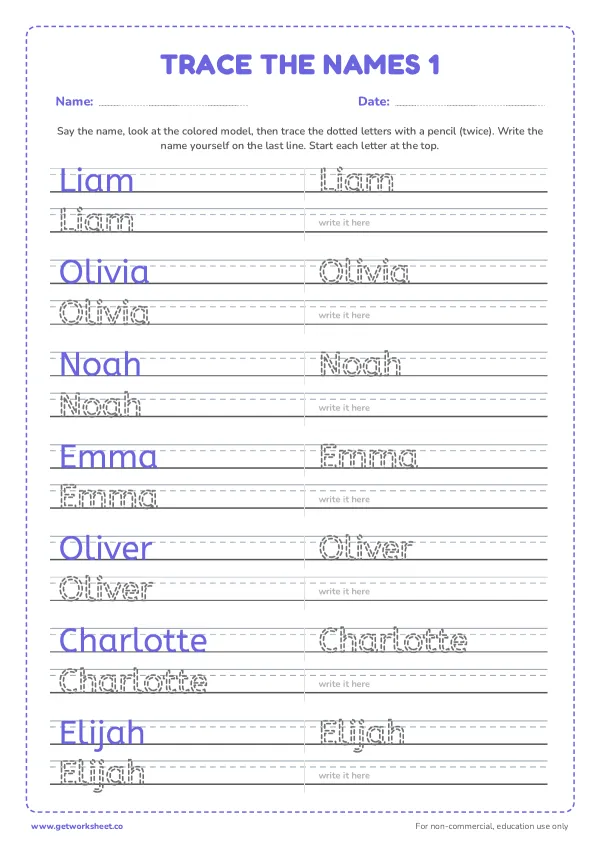
Not yet on this page. Print the blank cursive paper and write the word yourself in pencil for the child to trace; the name tracing worksheets explain the same method for printed names.
More handwriting practice
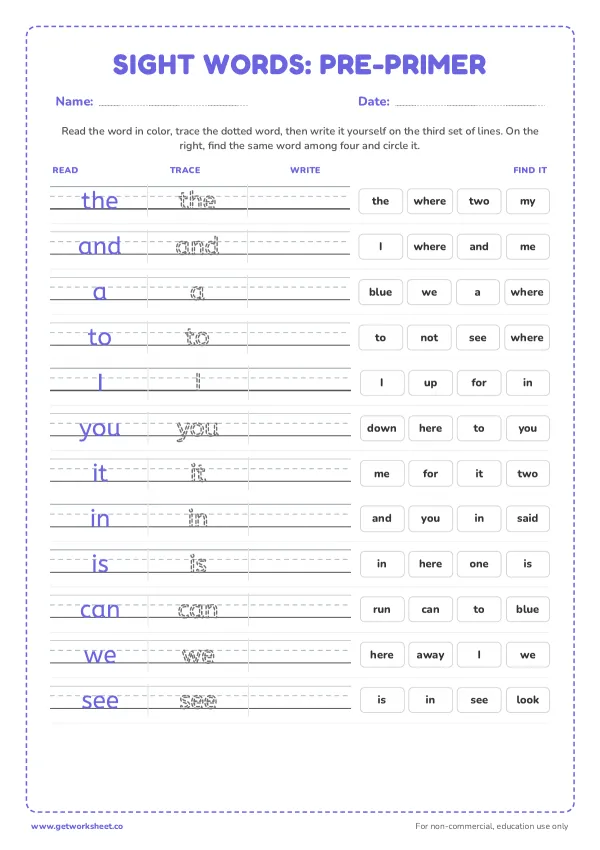
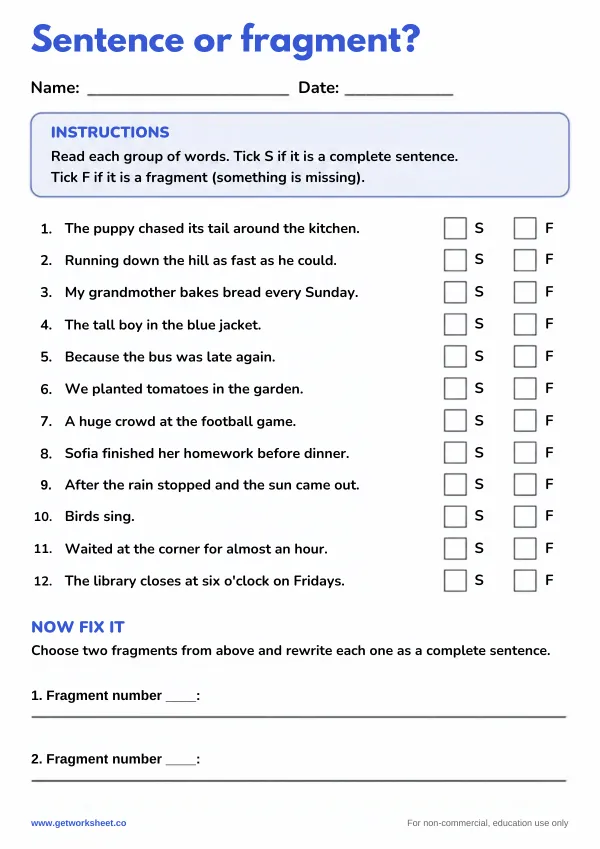
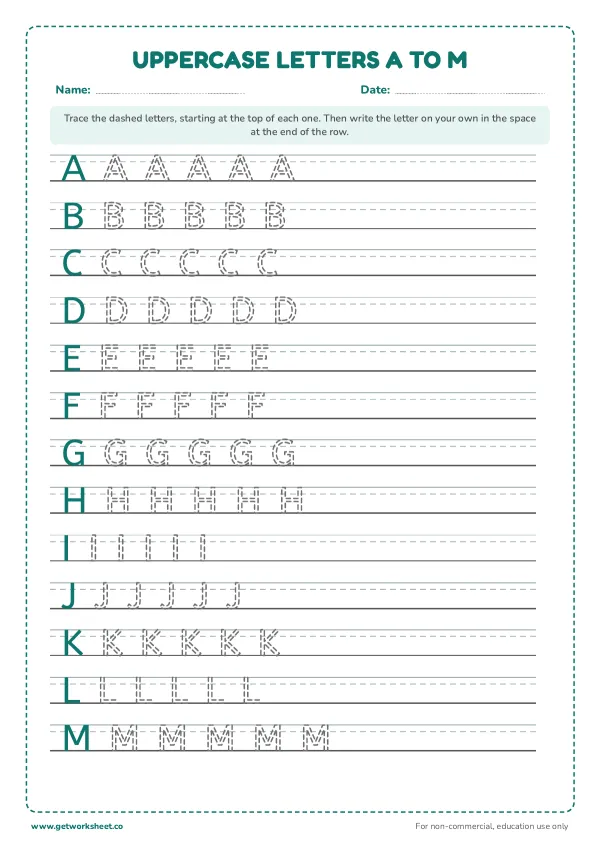
Children who are still forming printed letters should start with the handwriting worksheets and the letter worksheets. The words on sheets 6 and 7 come from the same lists as the sight words worksheets, and the blank paper works well for the spelling worksheets. For sentence practice beyond tracing, see the sentence fragments worksheets.
Free library
Related collections
Free sight words worksheets (Dolch and Fry)
Free name tracing worksheets
Free sentence fragments worksheets
Free handwriting worksheets
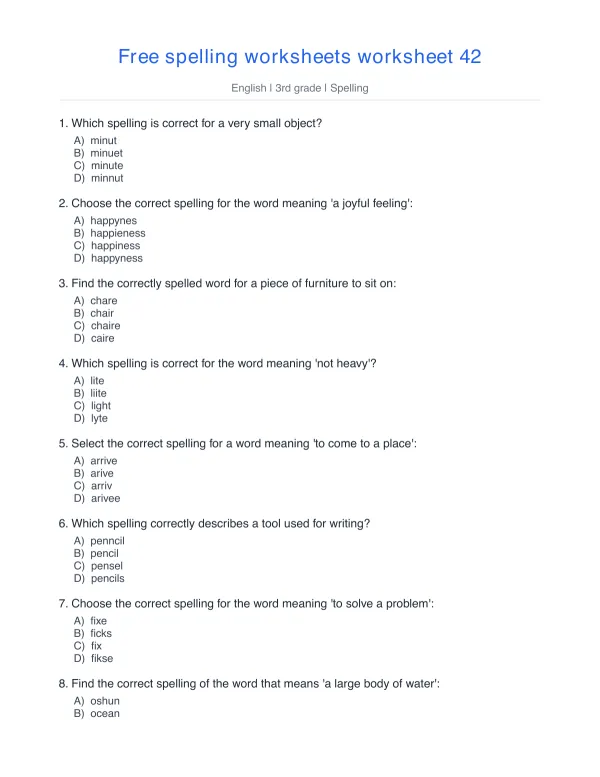
Free spelling worksheets
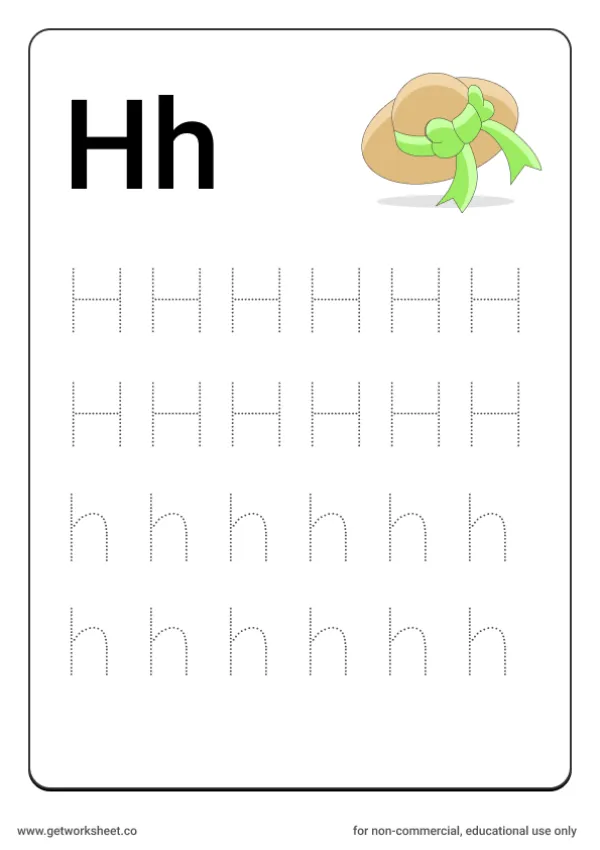
Free letter worksheets
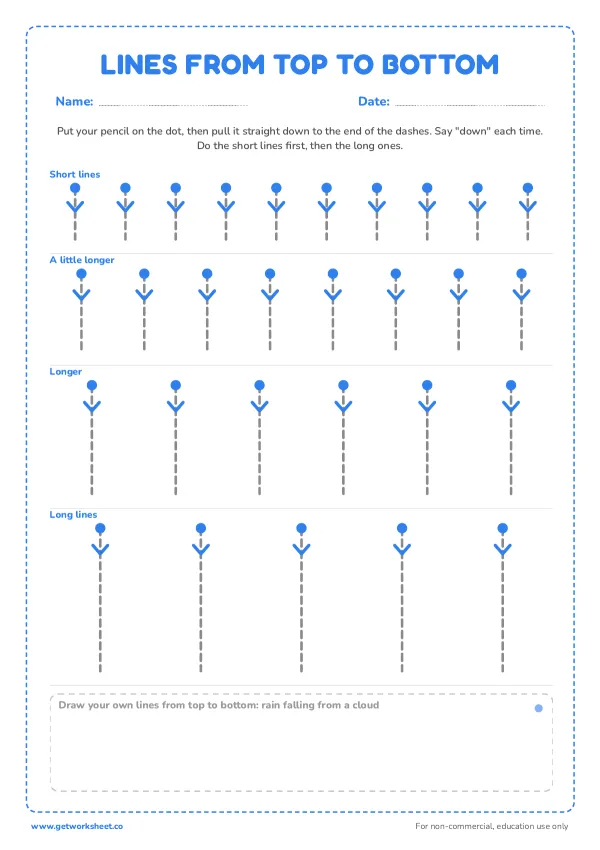
Free pre-writing worksheets
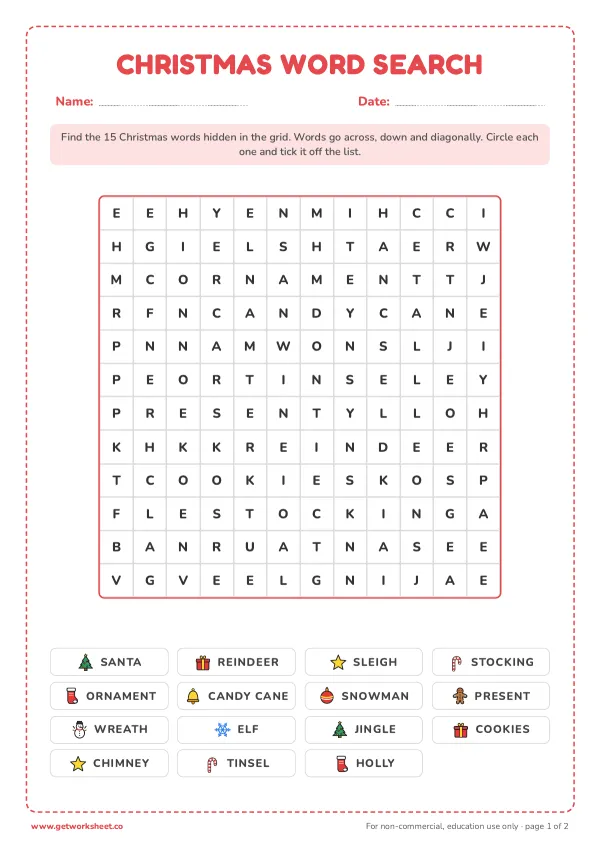
Free Christmas worksheets: word searches, letter to Santa and writing
More worksheets
- Free persuasive writing worksheets
- Free digraphs worksheets
- Free first grade reading comprehension worksheets
- Free kindergarten reading comprehension worksheets
- Free handwriting paper printables
- Free word search printables
- Free word families worksheets
- Free Montessori language worksheets
- Free CVC words worksheets
- Free letter Z tracing worksheets
- Free letter Y tracing worksheets
- Free letter X tracing worksheets