English · Preschool–Kindergarten
Free pre-writing worksheets
Free printable pre-writing worksheets for ages 3 to 5: the pre-writing strokes in developmental order, from lines and circles to diagonals, curves, waves and loops, ending with pencil-control roads. Every stroke has a start dot and arrow.
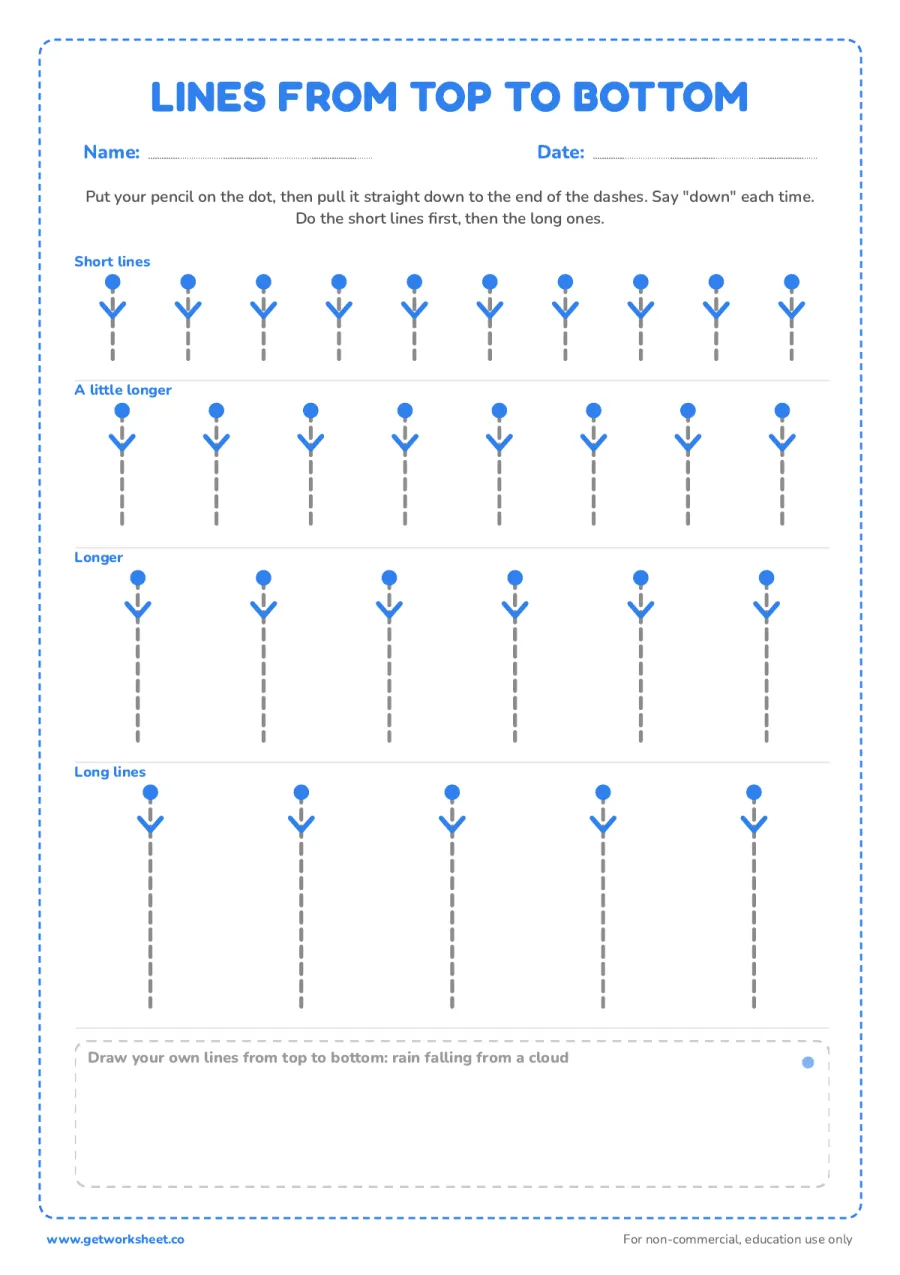
Pre-writing strokes: lines from top to bottom
Four rows of vertical lines from short to long, each with a start dot and a down arrow, plus a draw-your-own rain box. The first pre-writing stroke. Free printable PDF.
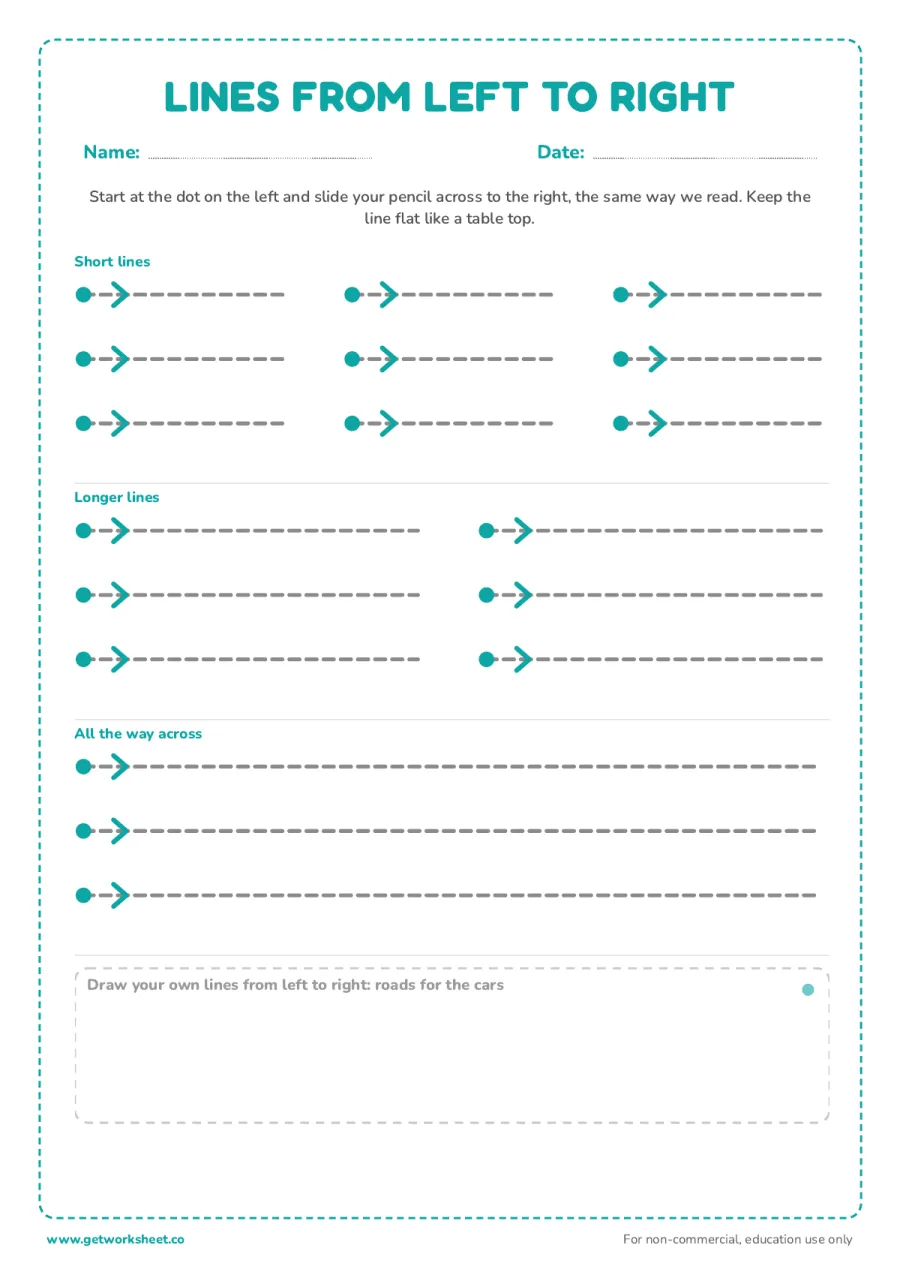
Pre-writing strokes: lines from left to right
Horizontal lines from short segments to full-width lines, every one starting at a dot on the left, plus a roads draw box. Free printable PDF.
Whole set
All 8 sheets in one PDF
Instant and ad-free. No account needed.
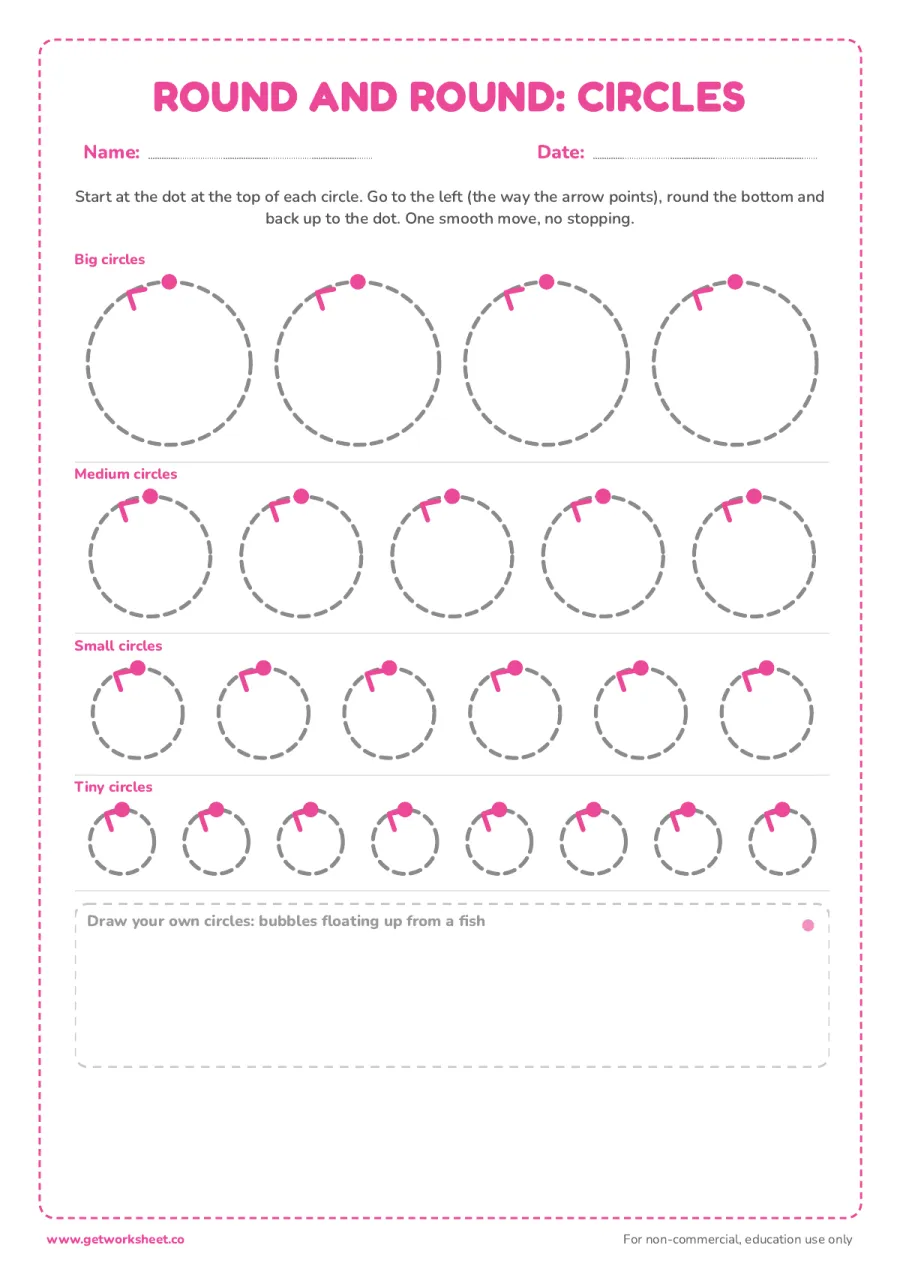
Pre-writing strokes: circles, big to tiny
Twenty-three dashed circles in four rows from big to tiny, each with a start dot at the top and an arrow going left, plus a bubbles draw box. Free printable PDF.
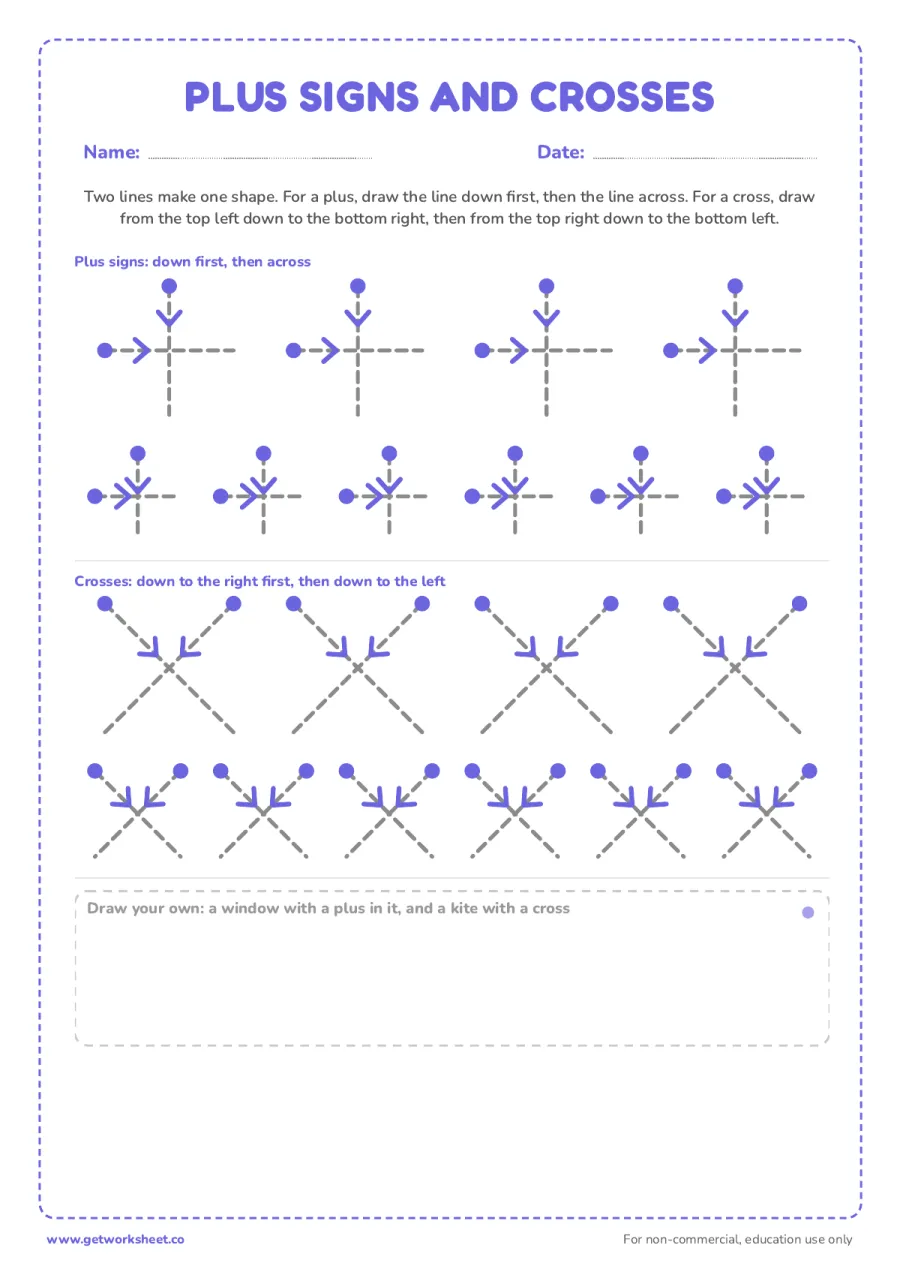
Pre-writing strokes: plus signs and crosses
Two rows of plus signs and two rows of crosses in two sizes, each stroke with its own start dot and arrow, plus a window and kite draw box. Free printable PDF.
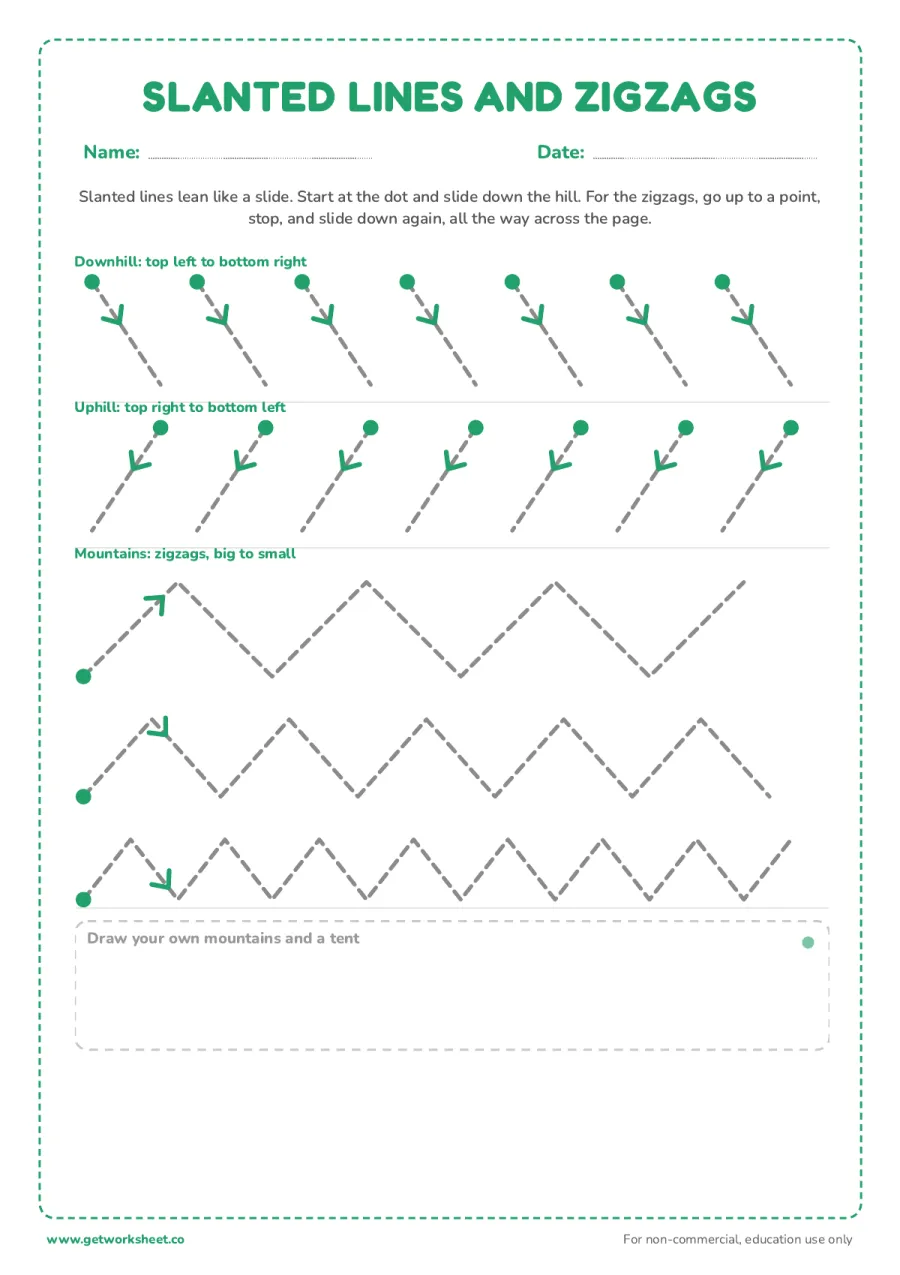
Pre-writing strokes: slanted lines and zigzags
Seven downhill and seven uphill slanted lines, then three zigzag mountain lines from big to small across the page, plus a draw box. Free printable PDF.
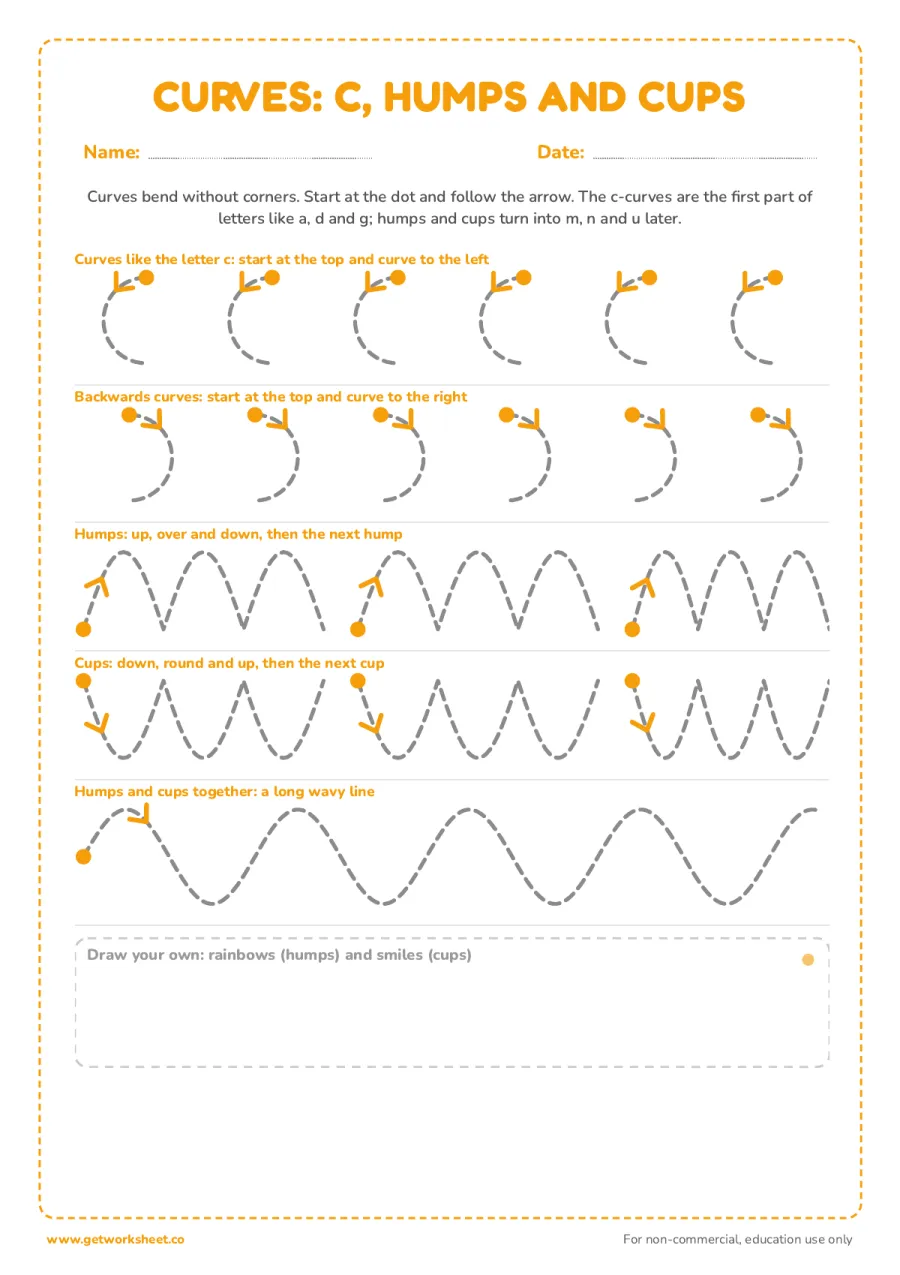
Pre-writing strokes: c-curves, humps and cups
Rows of c-curves, backwards curves, humps and cups, then a long wavy line that joins them, plus a rainbows-and-smiles draw box. Free printable PDF.
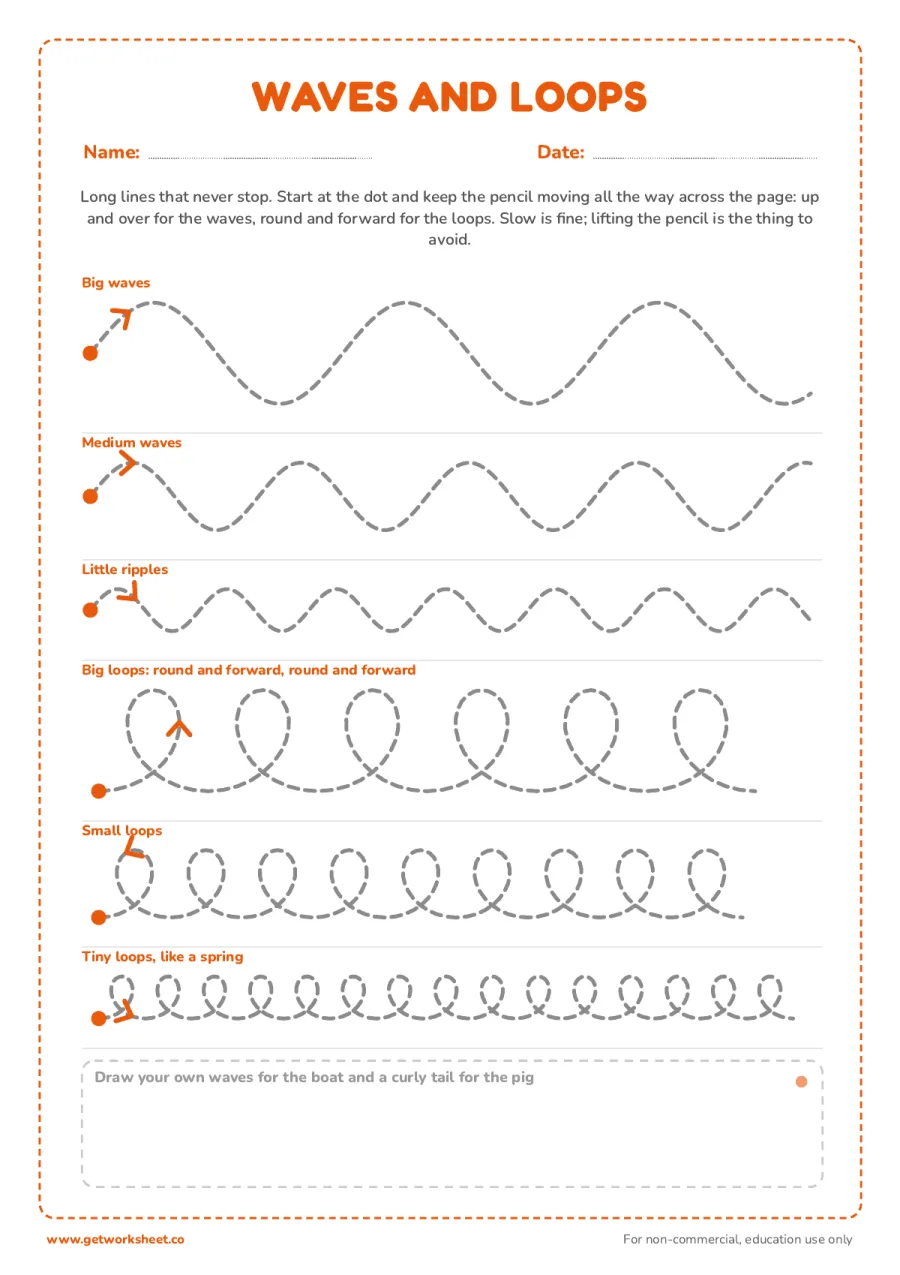
Pre-writing strokes: waves and loops
Six full-width pencil-control lines: big, medium and small waves, then big, small and tiny forward loops, plus a draw box. Free printable PDF.
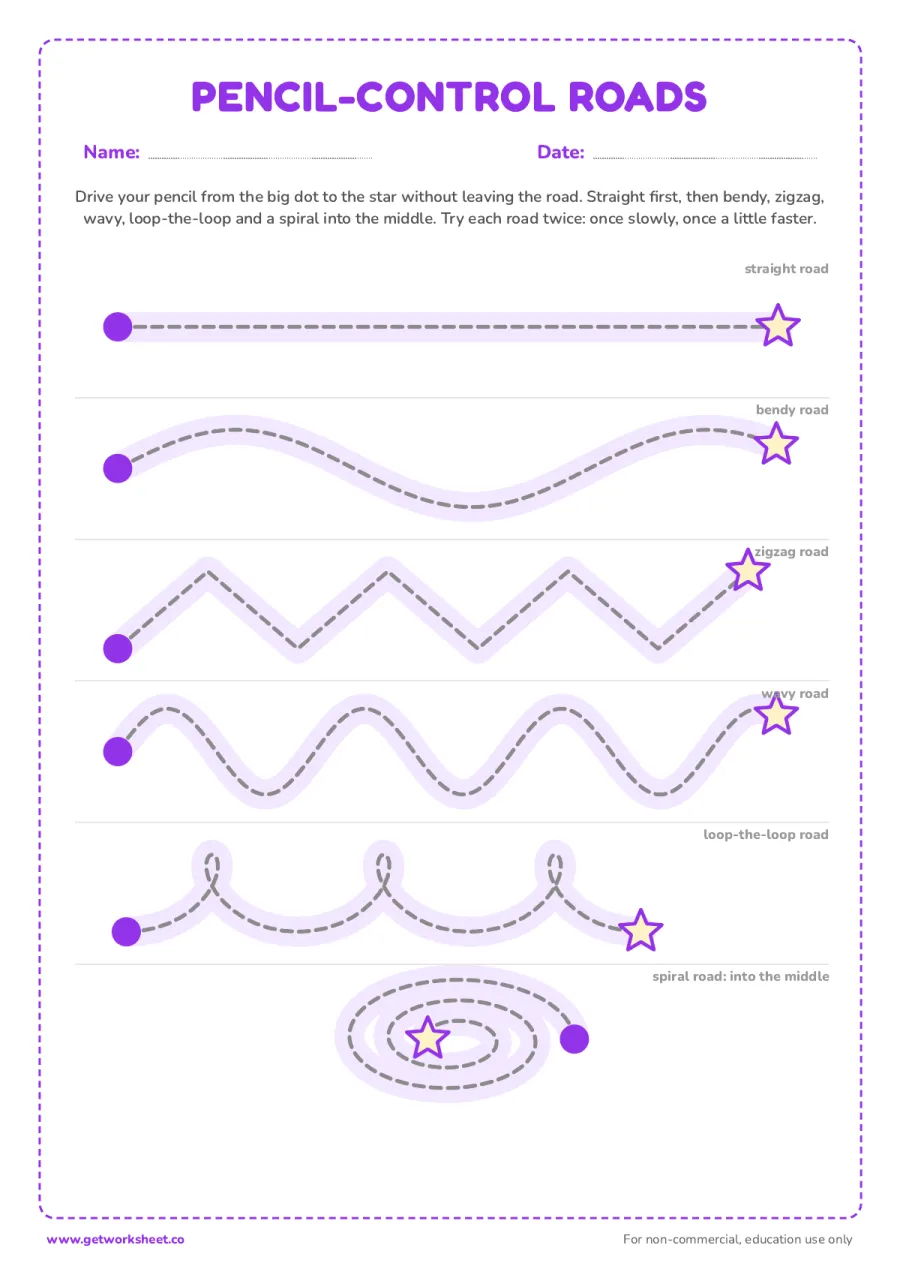
Pencil-control roads: from the dot to the star
Six roads to drive a pencil along without leaving the path: straight, bendy, zigzag, wavy, loop-the-loop and a spiral into the middle. Free printable PDF.
AI worksheet generator
Make a worksheet like this for your class
The 8 sheets above are fixed. The generator writes a new pre writing worksheet for your grade, with the question types and count you choose, in about 20 seconds. Pick a grade to start:
What you get
- A fresh set of questions on pre writing, not a copy of the sheets above
- Multiple choice, fill in the blanks, true or false, open ended
- Answer key and print-ready PDF with Pro
Free account, 1 worksheets a week. No card.
Before a child can write a letter, the hand has to know the strokes that letters are made of: a line down, a line across, a circle, a cross, a slant, a curve. These eight pre-writing worksheets practice exactly those strokes, in the order occupational therapists and preschool teachers expect them to develop. Every stroke is a dashed grey guide with a start dot in color and a small arrow, so the child always begins in the same place and travels in the same direction. Sheets go from big, widely spaced lines to smaller, closer ones, and each page ends with a "draw your own" box so the practice turns into a picture.
What's in this set
- Lines from top to bottom. Four rows of vertical lines, short to long, plus a rain-from-a-cloud draw box. The first stroke most children control.
- Lines from left to right. Short segments, longer lines, then full-width lines, all starting at a dot on the left, the direction of reading and writing.
- Circles, big to tiny. Twenty-three dashed circles in four rows. Start at the top, go left, round and back: the stroke of o, c, a and d.
- Plus signs and crosses. Two strokes that meet. Down then across for a plus; top-left to bottom-right, then top-right to bottom-left for a cross.
- Slanted lines and zigzags. Downhill and uphill slants, then three zigzag mountain lines that shrink across the page.
- Curves: c, humps and cups. C-curves, backwards curves, rows of humps (the start of m and n) and cups (u), then one long wavy line that joins them.
- Waves and loops. Six full-width pencil-control lines: big, medium and small waves, then big, small and tiny forward loops.
- Pencil-control roads. Six roads from a big dot to a star: straight, bendy, zigzag, wavy, loop-the-loop and a spiral into the middle.
Free printable makers
Make your own pre writing sheets
Type your own words or numbers and print in about 30 seconds. No account, no AI, answer key where it applies.
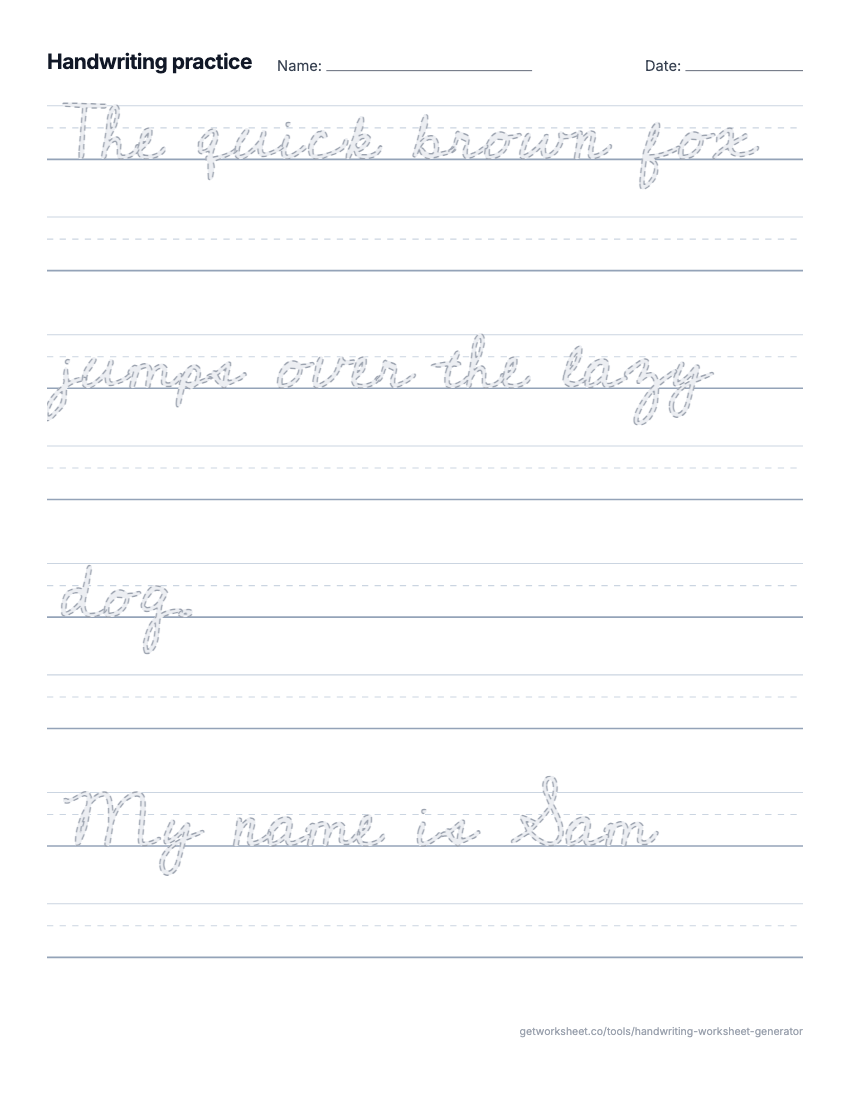 Handwriting worksheet generatorYour sentences as print or cursive tracing rows on guide lines. Free to print.
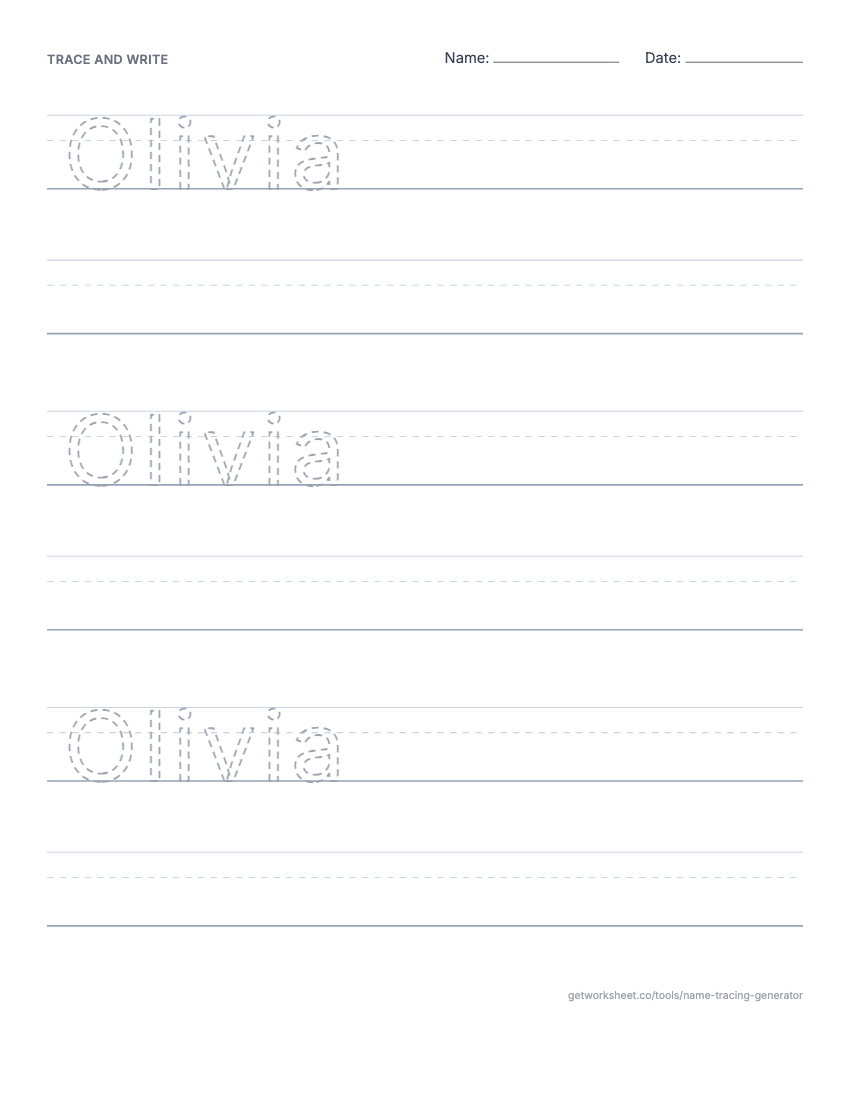 Name tracing generatorDashed, dotted or grey letters on handwriting lines. Free to print.
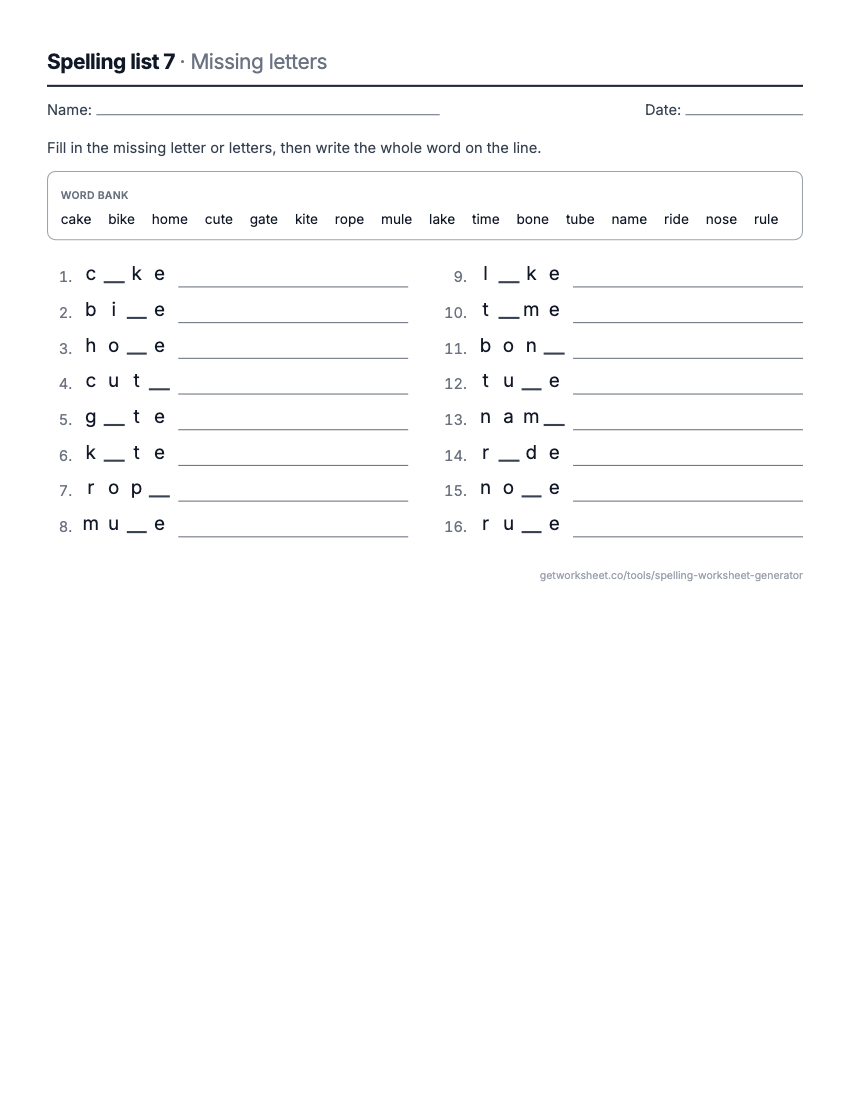 Spelling worksheet generatorTest sheet, scramble, missing letters, ABC order and key from one word list. Free to print.
AI worksheet generator
Need a different pre writing worksheet?
Generate a custom pre writing worksheet: pick the grade, question types and count, and print it in about 20 seconds. Free accounts get 1 generation a week.
How to use these worksheets
Print at 100% on A4 or US Letter. One sheet a day is plenty; the order of the sheets is the order to use them. A thick crayon or a chunky triangular pencil suits sheets 1 to 4; a normal pencil from sheet 5 on. Sitting position matters as much as the pencil: feet on the floor, paper straight, the other hand holding the page still.
- Say the stroke out loud. "Down", "across", "round", "slide". Naming the movement while making it is how the pattern sticks, and the same words come back when the child learns letters.
- Finger first, then pencil. Trace each row with a finger before picking up the crayon. It costs thirty seconds and halves the mistakes.
- Start at the dot every time. The dot and arrow are there so the habit forms: top to bottom, left to right, circles to the left. Point at the dot if the child starts somewhere else.
- Use the draw box. Each page ends with a box that turns the stroke into a picture (rain, roads, bubbles, mountains). Drawing something real with the new stroke is the reward and the test.
- Roads last. The pencil-control roads are for a child who can already make the strokes. Do them twice: once slowly, once a little faster.
Common mistakes to watch for
- Whole-arm movement. If the shoulder does the work, the lines are big and wobbly. Rest the forearm on the table and let the wrist and fingers move.
- Lifting the pencil at every dash. The dashes are a guide, not separate marks. Demonstrate one continuous line.
- Circles drawn clockwise. Not wrong in itself, but the counter-clockwise circle is the one that becomes a, c, d, g and o. Turn the paper if it helps and try again from the dot.
- Zigzags with rounded points. Say "stop, turn, go" at every peak.
Frequently asked questions
What age are pre-writing worksheets for?
Ages 3 to 5. Most children manage vertical lines, horizontal lines and circles by 3, the plus sign and slants around 4, and the cross, square and triangle strokes between 4 and 5. The sheets follow that order, so a three-year-old uses sheets 1 to 3 and a kindergartner can do all eight.
What are the pre-writing strokes?
The vertical line, horizontal line, circle, plus sign, right and left diagonals, square, X and triangle. Letters are combinations of these: an E is one vertical and three horizontals, an A is two diagonals and a horizontal. Curves (c, humps, cups) and loops prepare the round lowercase letters.
Why do the strokes have a start dot and an arrow?
So every stroke starts in the same place and goes the same way each time. Consistent starting points become consistent letter formation later: letters start at the top, circles go to the left, lines go left to right.
Are these fine motor worksheets?
Yes. Pre-writing strokes, pencil control and tracing are fine motor work. Occupational therapists use the same sequence of lines, circles and crosses to check hand development. Pair the sheets with scissor practice and playdough for the pinch and grip strength that holding a pencil needs.
Can I laminate the sheets?
Yes. Laminate a set or slip the sheets into plastic sleeves and trace with a dry-erase marker to reuse them. The PDFs are free for home and classroom use.
More practice
Once the strokes are steady, move to shapes: the shape tracing worksheets hub, or circle tracing and square tracing on their own pages. The line tracing worksheets give more of the long roads and paths. Then letters and numbers: letter worksheets for A to Z, number tracing 1 to 20, and the child's own name on the name tracing worksheets. For the scissor side of fine motor work, try the cutting practice worksheets, and for a puzzle that rewards careful pencil work, the connect the dots printables.
Free library
Related collections
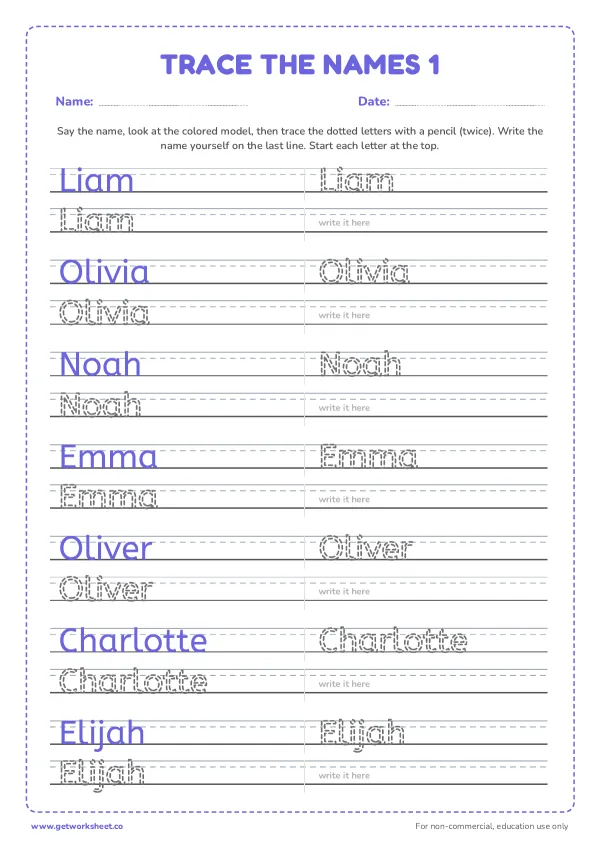
Free name tracing worksheets
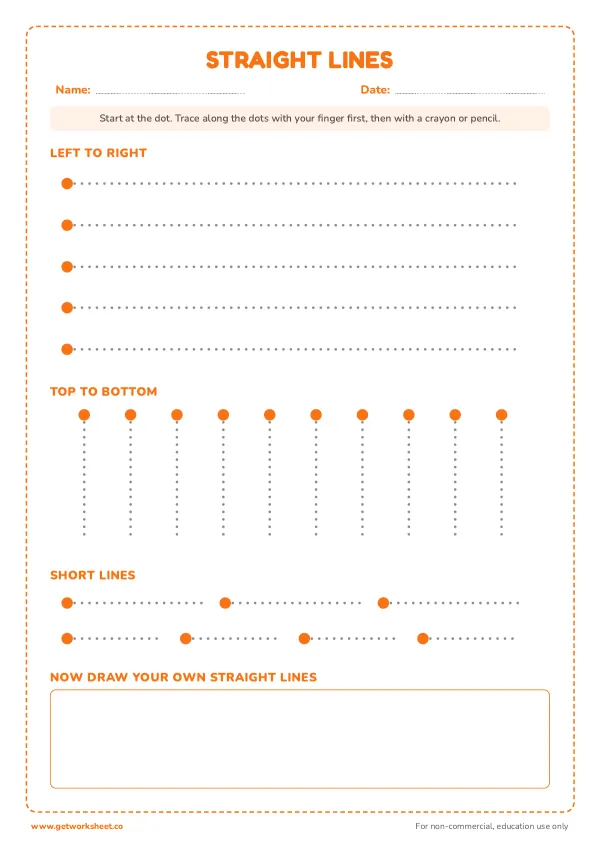
Free line tracing worksheets
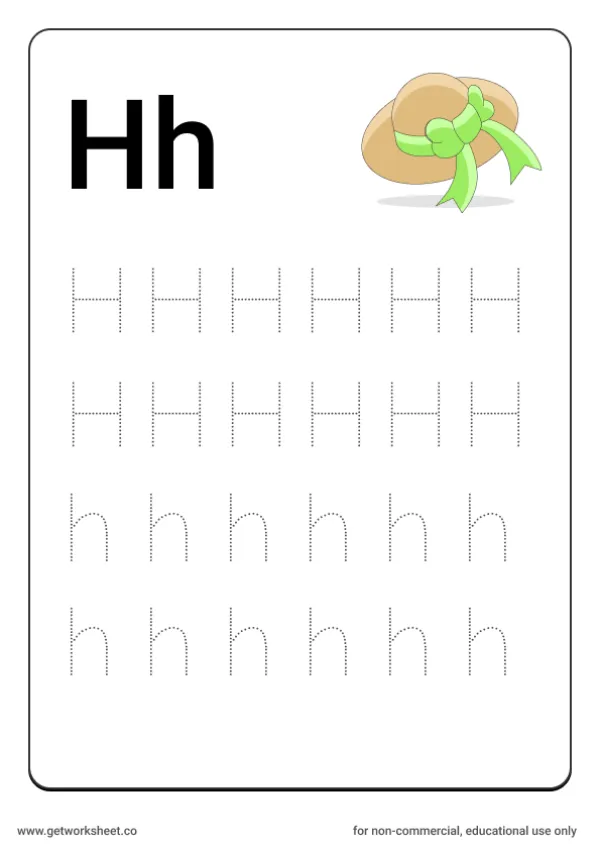
Free letter worksheets
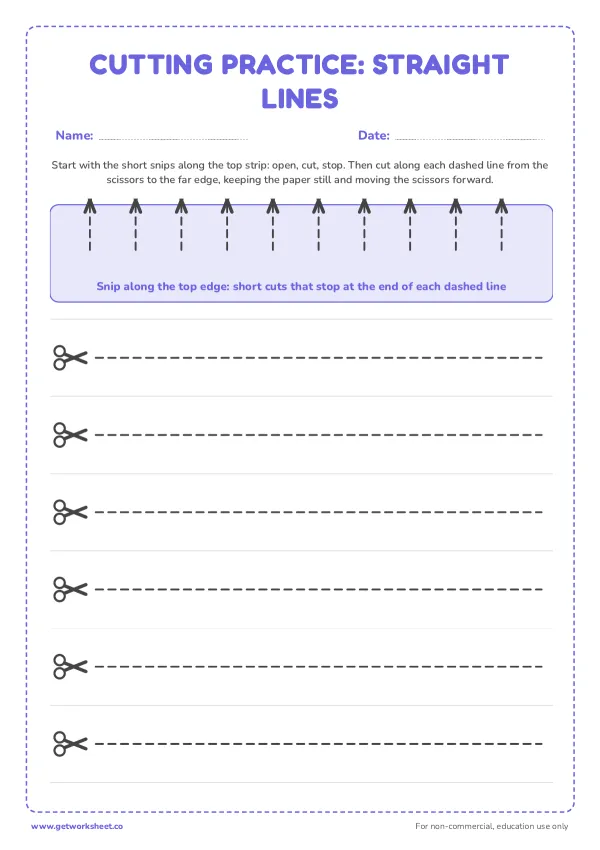
Free cutting practice worksheets
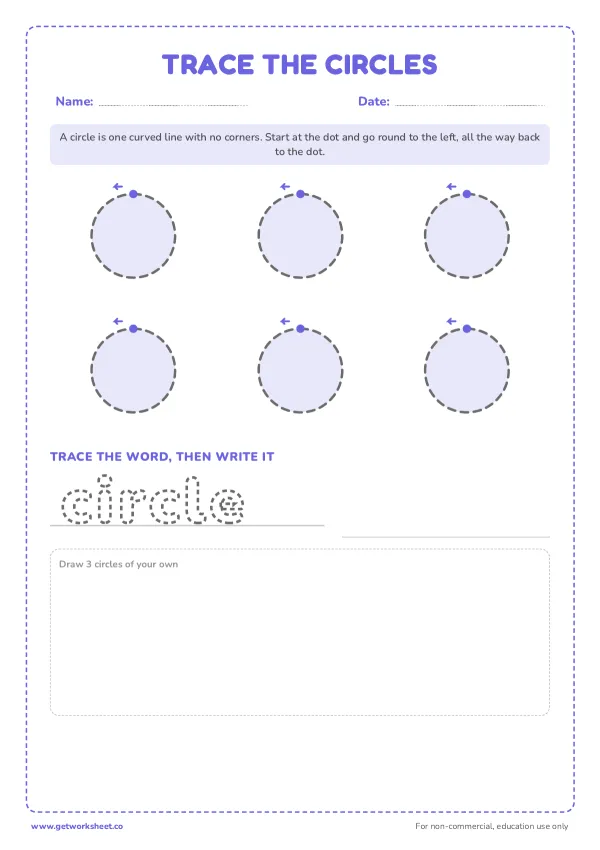
Free shape tracing worksheets
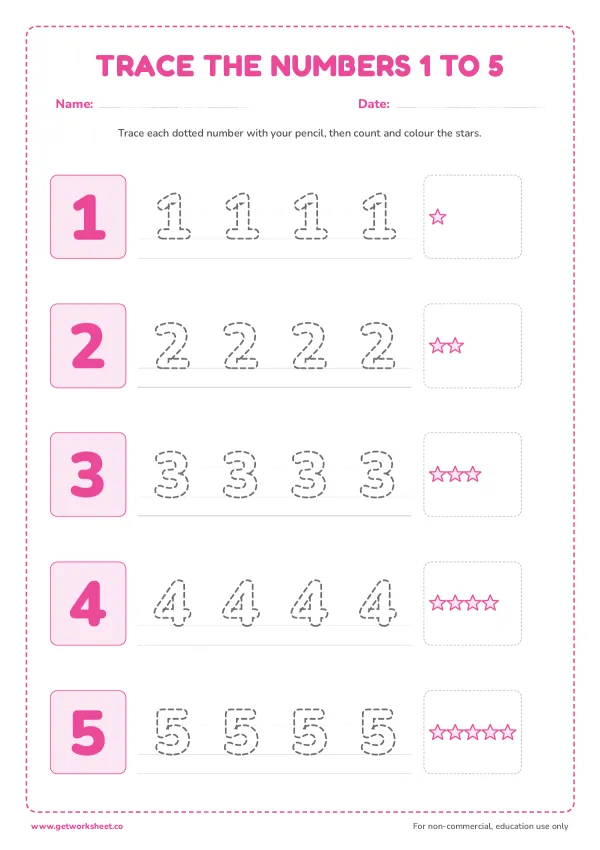
Free number tracing worksheets (1-20)
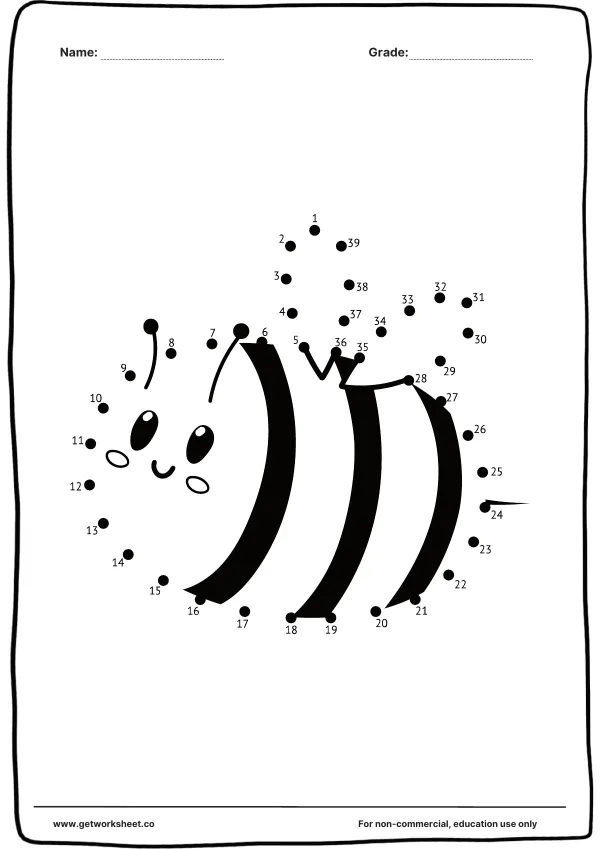
Free connect the dots printable worksheets
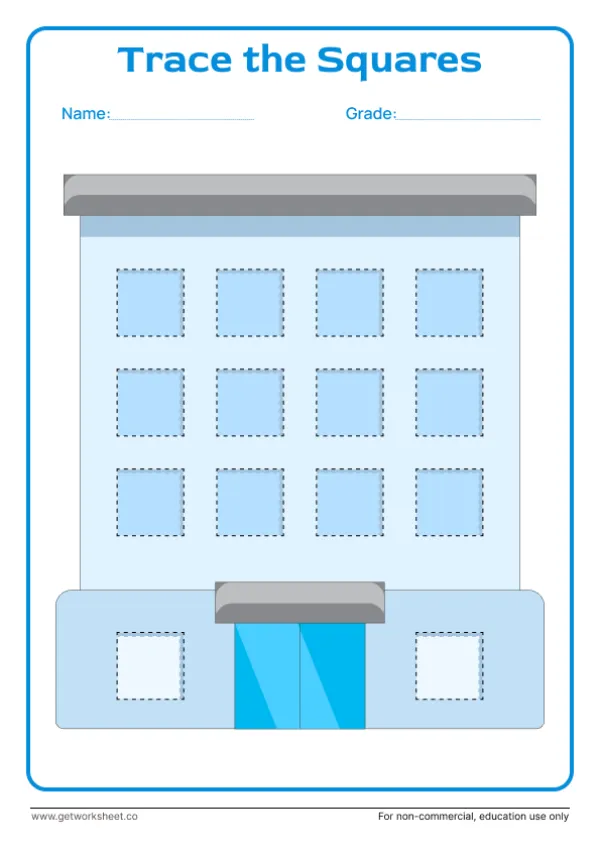
Free square tracing worksheets
More worksheets
- Free circle tracing worksheets
- Free Montessori language worksheets
- Free letter Z tracing worksheets
- Free letter Y tracing worksheets
- Free letter X tracing worksheets
- Free letter W tracing worksheets
- Free letter V tracing worksheets
- Free letter U tracing worksheets
- Free letter T tracing worksheets
- Free letter S tracing worksheets
- Free letter R tracing worksheets
- Free letter Q tracing worksheets