English · Grades 2–4
Free homophones worksheets
Five printable homophones worksheets for grades 2 to 4: choose the right word in sixteen sentences, match twelve homophones to their meanings, fix twelve sentences with the wrong word, write the partner of sixteen words from a word bank, and find six pairs in a word search. Answer keys included.
5 printable homophones worksheets in PDF, answer keys included. Free, no sign-up.
Make one like this with the generator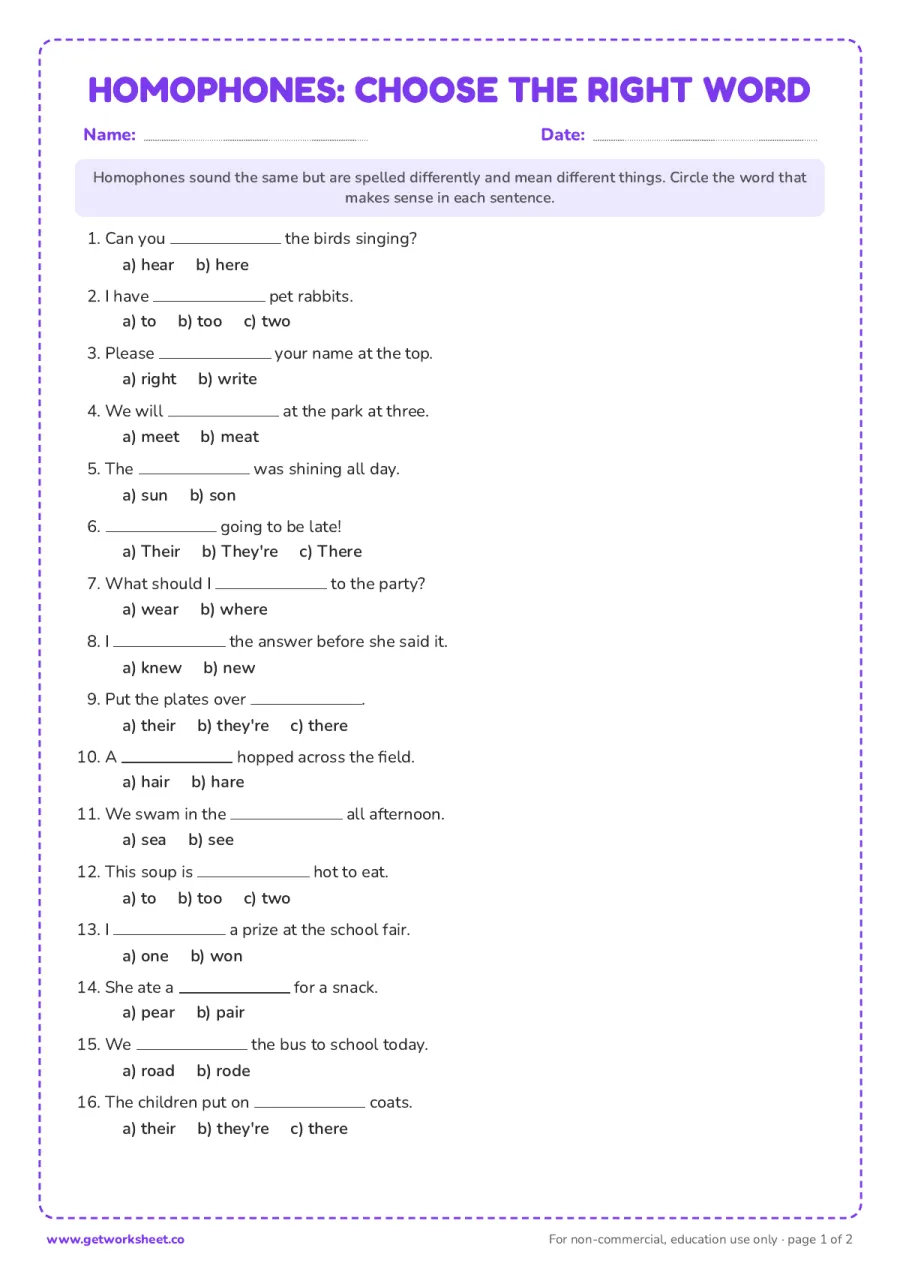
Choose the right word: 16 sentences with two homophones to pick from
Sixteen sentences with a gap and two homophones to choose from: to/too/two, there/their/they're, hear/here, wear/where, knew/new, right/write, meet/meat, sea/see and more. Answer key on page 2.
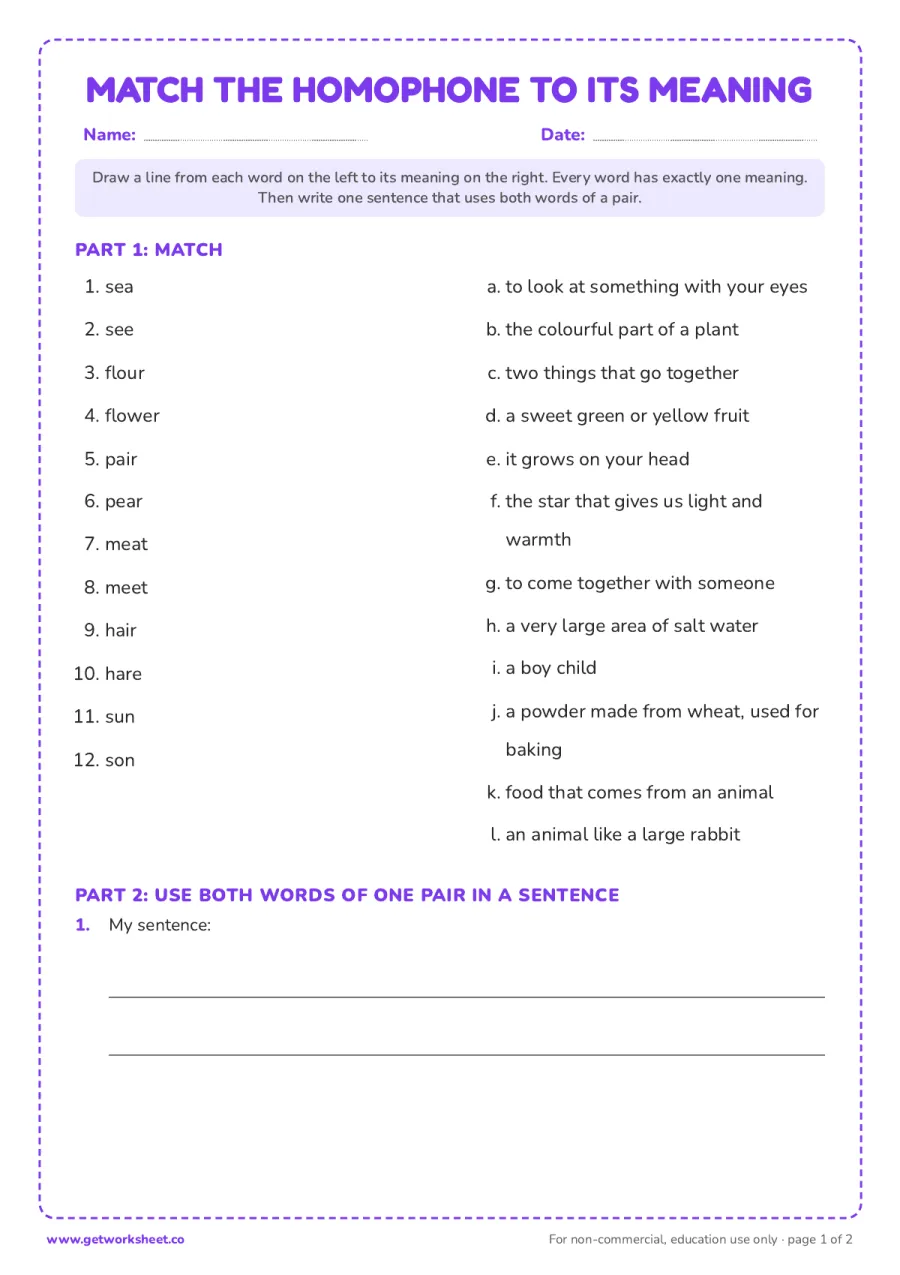
Match the homophone to its meaning: 12 words and 12 definitions
Twelve homophones (six pairs: sea/see, flour/flower, pair/pear, meat/meet, hair/hare, sun/son) in one column and their meanings shuffled in the other. Students draw a line from each word to its meaning, then write both words of one pair in a single sentence. Answer key on page 2.
Whole set
All 5 in one PDF
- Every sheet on this page, one file
- No ads, no countdowns, print as often as you like
- Instant download, ad-free, no account needed
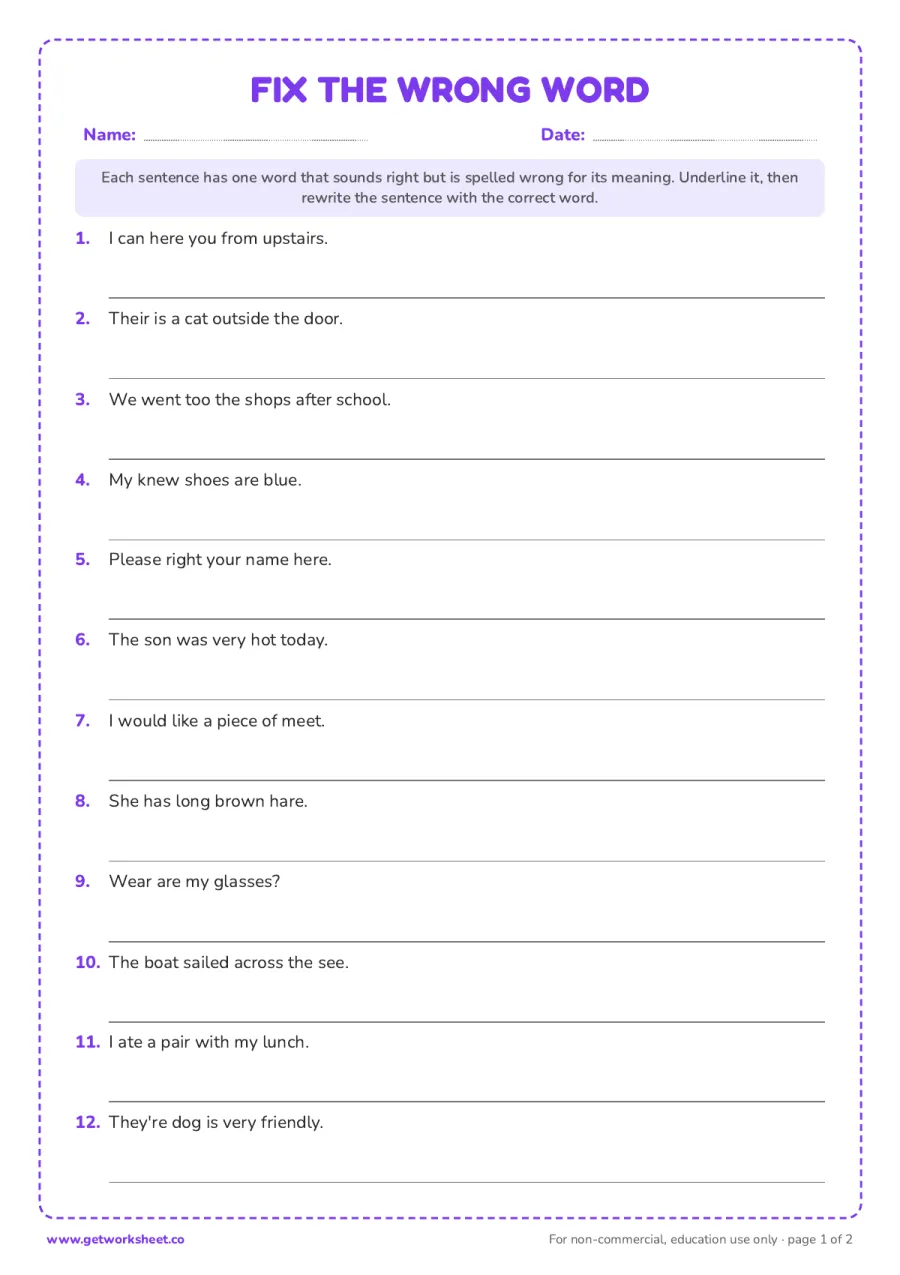
Fix the wrong word: 12 sentences each with one homophone mistake to rewrite
Twelve sentences that each use the wrong homophone (I can here you, Their is a cat outside). Students find the wrong word and rewrite the sentence correctly. Answer key on page 2.
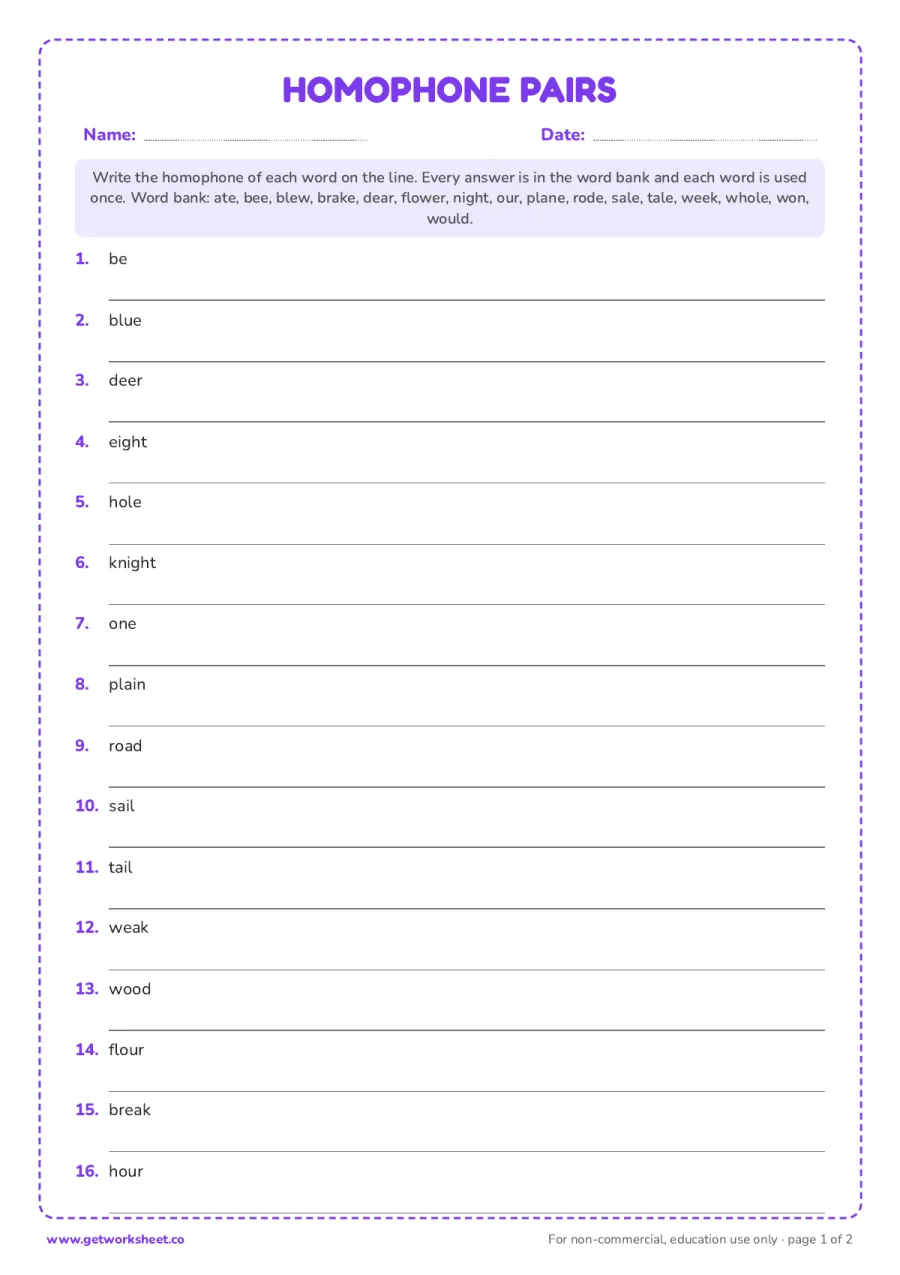
Homophone pairs: write the partner of 16 words using the word bank
Sixteen words with a line beside each; students write the homophone that sounds the same, choosing from a word bank of sixteen partners. Answer key on page 2.
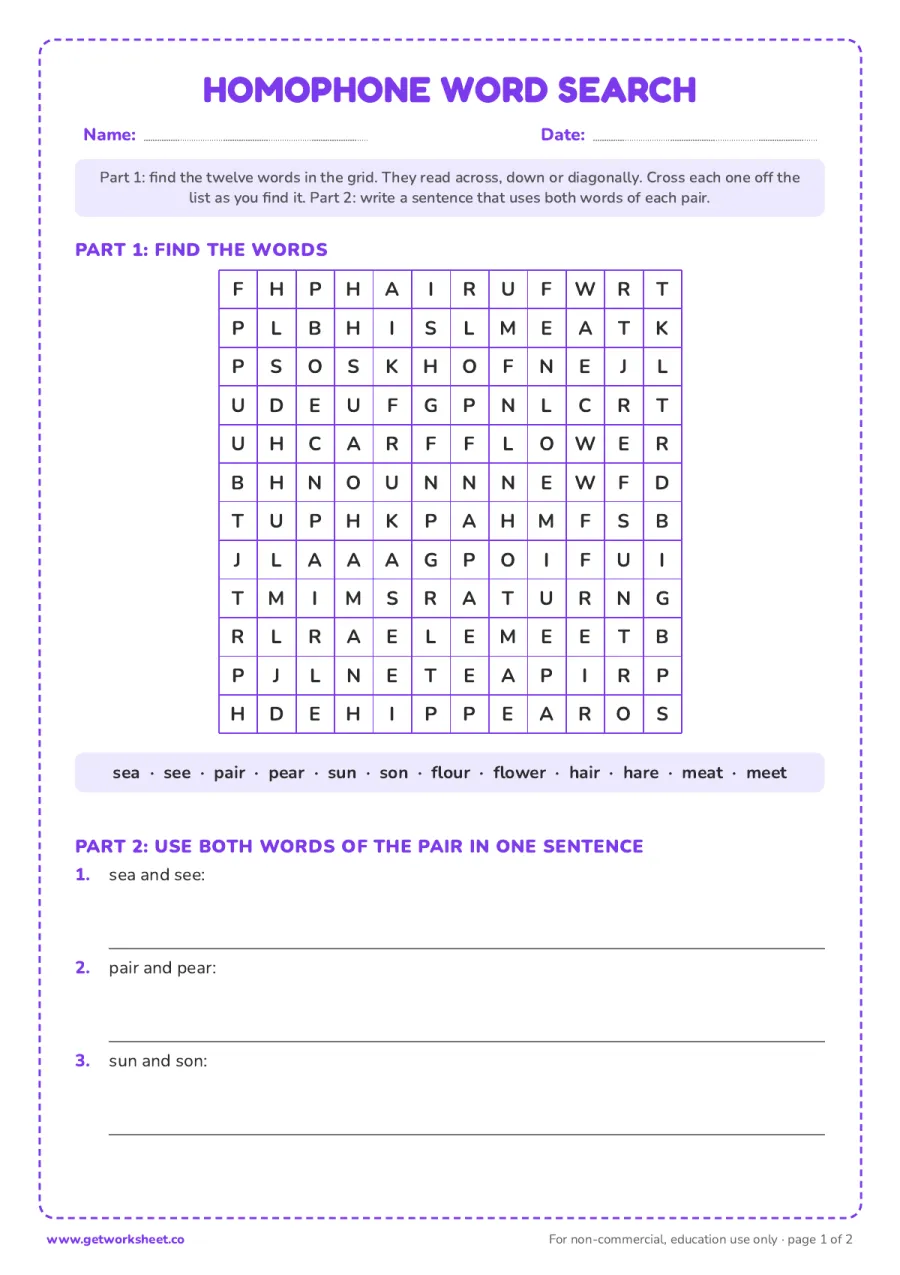
Homophone word search: 12 words to find, then 3 pairs to use in sentences
A 12 by 12 word search hiding six homophone pairs (sea/see, pair/pear, sun/son, flour/flower, hair/hare, meat/meet), then three sentences to write that each use both words of a pair. Answer key on page 2 shows the hidden words.
AI worksheet generator
Make a worksheet like this for your class
The 5 sheets above are fixed. The generator writes a new homophones worksheet for your grade, with the question types and count you choose, in about 20 seconds. Pick a grade to start:
What you get
- A fresh set of questions on homophones, not a copy of the sheets above
- Multiple choice, fill in the blanks, true or false, open ended
- Answer key and print-ready PDF with Pro
Free account, 1 worksheets a week. No card.
Homophones are the spelling mistakes that spell-checkers miss. Their, there and they’re are all real words, so the only way to get them right is to know what each one means and to check the meaning against the sentence. That is what these five worksheets practise: hearing that two words sound the same, learning what each one means, spotting the wrong one in a sentence and, finally, using both words of a pair in a sentence of the student’s own.
What's in this set
- Homophones: choose the right word. Sixteen gap sentences with two (sometimes three) homophones to choose between, covering the pairs children meet most in grades 2 to 4.
- Match the homophone to its meaning. Twelve homophones from six pairs to match to short definitions, then one sentence that uses both words of a pair.
- Fix the wrong word. Twelve sentences with one homophone mistake each, to find and rewrite correctly.
- Homophone pairs. Sixteen words (be, blue, deer, eight, hole, knight, one, plain, road, sail, tail, weak, wood, flour, break, hour) whose homophone partner is written from a word bank.
- Homophone word search. A 12 x 12 word search with six homophone pairs hidden across, down and diagonally, and three sentences to write using both words of a pair.
What students will practice
- Recognising frequently confused homophones and choosing the right one for the meaning (CCSS L.2.2, L.3.2, L.4.1g)
- Matching homophones to their definitions and building vocabulary from the pairs
- Proofreading sentences for a wrong homophone and rewriting them correctly
- Producing the partner of a word from memory with the support of a word bank
- Using both words of a homophone pair correctly in one sentence
Free printable makers
Make your own homophones sheets
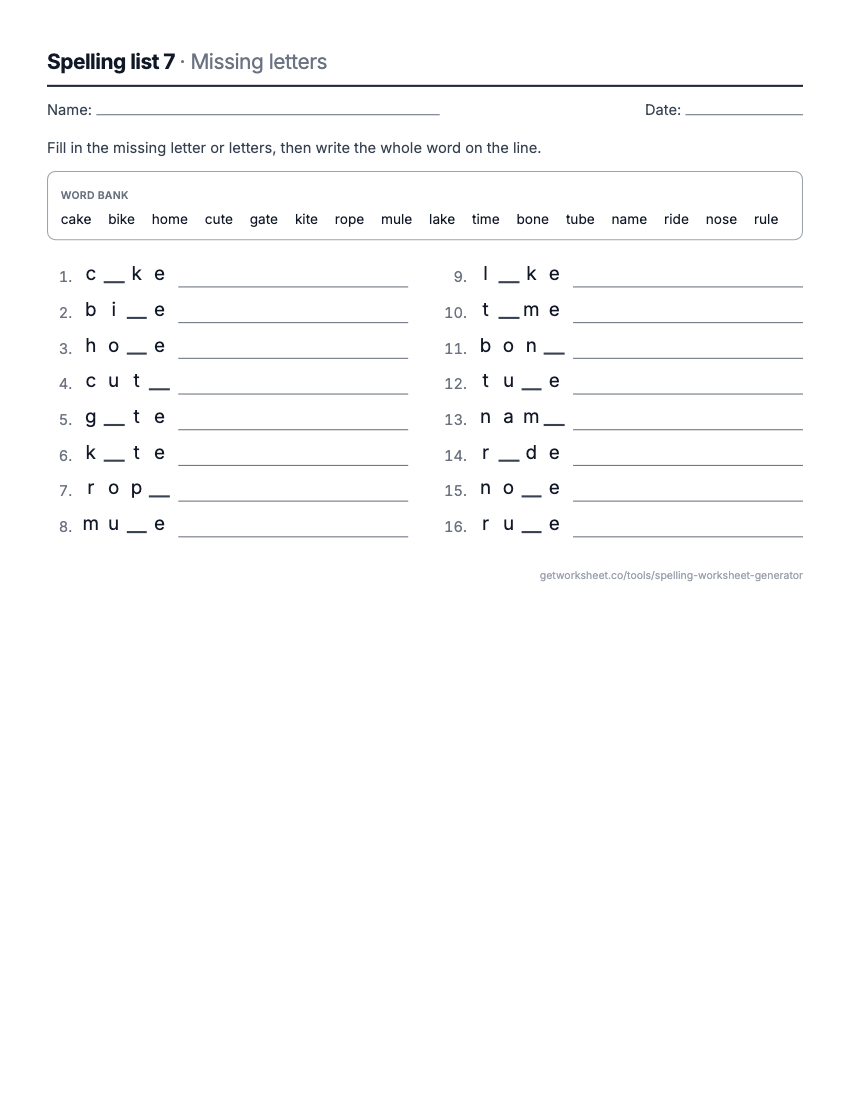
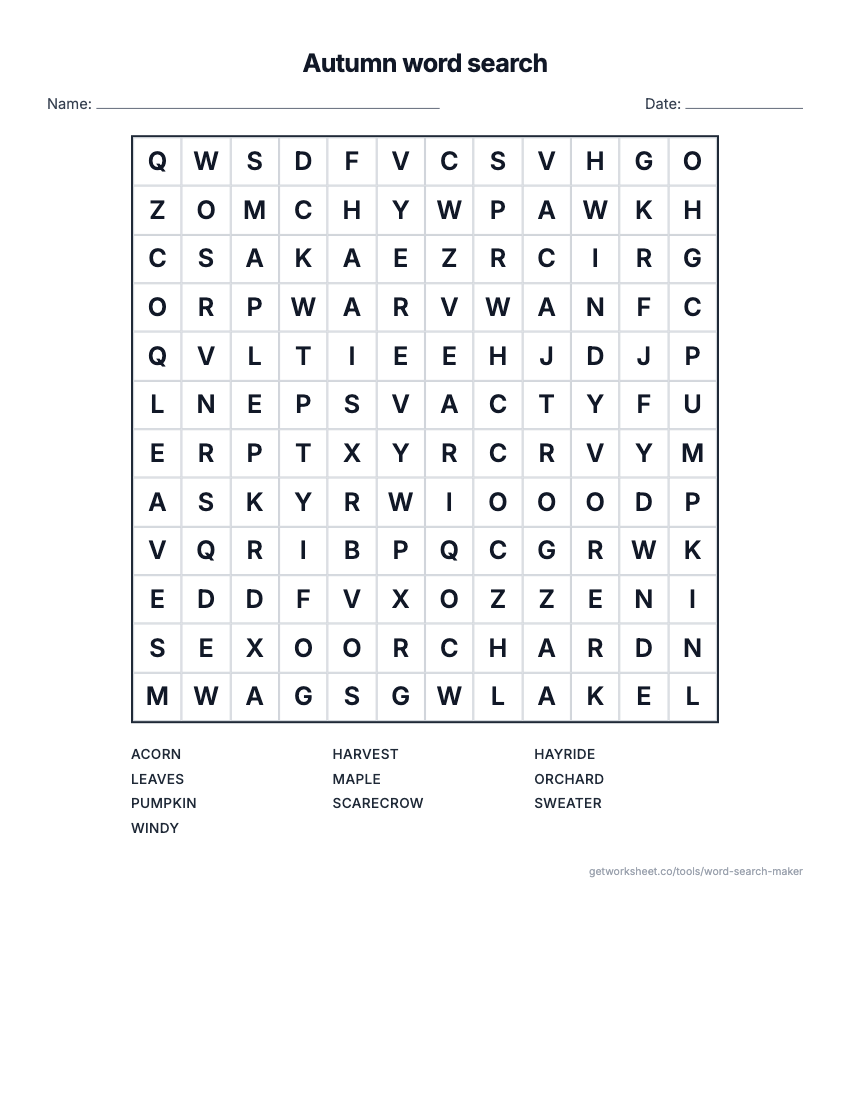
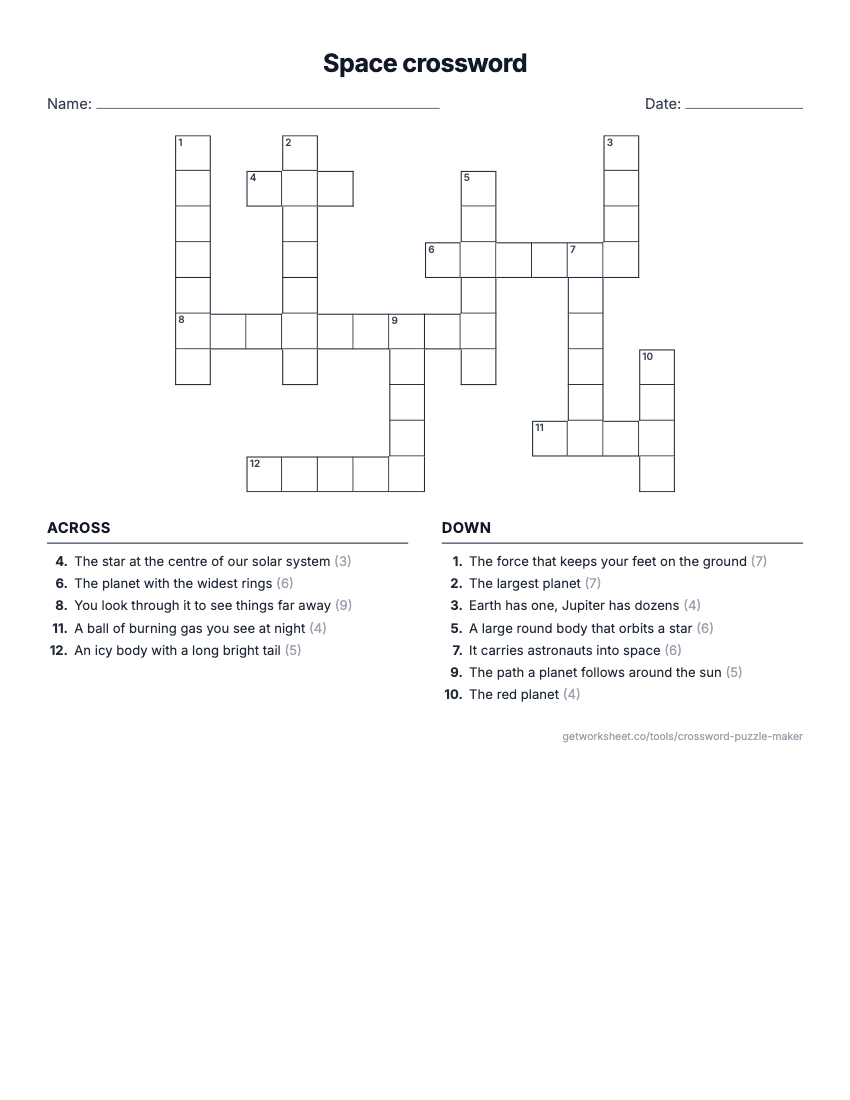
Type your own words or numbers and print in about 30 seconds. No account, no AI, answer key where it applies.
AI worksheet generator
Need a different homophones worksheet?
Generate a custom homophones worksheet: pick the grade, question types and count, and print it in about 20 seconds. Free accounts get 1 generation a week.
Teaching tips and common mistakes
How to use these worksheets
- Meaning first. Choose the right word only works if students know what each option means. Read the two options aloud, ask “which one is the fruit?” (pear) or “which one belongs to someone?” (their), then circle.
- Build the definitions. Match the homophone to its meaning gives twelve short definitions. Have students read the definition first and find the word, not the other way round; it forces them to think about meaning.
- Proofread like an editor. On Fix the wrong word every sentence has exactly one error. Students underline it before rewriting, so you can see whether they found the right word even if the rewrite has other slips.
- The word bank is a checklist. On Homophone pairs each bank word is used once. Students who cross off each word as they use it will find the last few by elimination, which is fine; the aim is exposure to all sixteen pairs.
- Finish with writing. The word search is the reward; the three sentences underneath are the real test. A student who writes “Her son sat in the sun” has understood both words.
- Grades 2 to 4. Grade 2: sheets one, two and five. Grade 3: add Fix the wrong word. Grade 4: all five, with Homophone pairs done without looking at the bank first.
Answer key
Every practice sheet carries its own answer key on page 2 of the PDF. The keys are repeated here for quick marking.
- Homophones: choose the right word: 1. a 2. c 3. b 4. a 5. a 6. b 7. a 8. a 9. c 10. b 11. a 12. b 13. b 14. a 15. b 16. a
- Match the homophone to its meaning: Part 1: match: sea = a very large area of salt water; see = to look at something with your eyes; flour = a powder made from wheat, used for baking; flower = the colourful part of a plant; pair = two things that go together; pear = a sweet green or yellow fruit; meat = food that comes from an animal; meet = to come together with someone; hair = it grows on your head; hare = an animal like a large rabbit; sun = the star that gives us light and warmth; son = a boy child Part 2: use both words of one pair in a sentence: 1. Sample: I can see the sea from my window.
- Fix the wrong word: 1. I can hear you from upstairs. 2. There is a cat outside the door. 3. We went to the shops after school. 4. My new shoes are blue. 5. Please write your name here. 6. The sun was very hot today. 7. I would like a piece of meat. 8. She has long brown hair. 9. Where are my glasses? 10. The boat sailed across the sea. 11. I ate a pear with my lunch. 12. Their dog is very friendly.
- Homophone pairs: 1. bee 2. blew 3. dear 4. ate 5. whole 6. night 7. won 8. plane 9. rode 10. sale 11. tale 12. week 13. would 14. flower 15. brake 16. our
- Homophone word search: Part 1: find the words: Hidden words: sea, see, pair, pear, sun, son, flour, flower, hair, hare, meat, meet (highlighted on the key grid). Part 2: use both words of the pair in one sentence: 1. Sample: I can see the sea from the top of the hill. 2. Sample: I ate a pair of pears. 3. Sample: Her son sat in the sun.
Common mistakes to watch for
- Choosing by sound. The words sound identical, so sounding out cannot help. The habit to build is asking “what does this one mean?” before writing it.
- There, their, they’re. The most common trio. There has here inside it (a place); their has heir (someone owns it); they’re can always be read as they are.
- To, too, two. Two is always the number. Too means also or more than enough (the extra o is “too many”). Everything else is to.
- Homophones and homonyms. Homophones sound alike but are spelled differently (sea/see). Words that are spelled the same with different meanings (bat, bark) are homonyms and are not on these sheets.
Frequently asked questions
What grade are these homophones worksheets for?
Grades 2 to 4. Frequently confused words are named in the Common Core language standards from grade 2 (L.2.2) through grade 4 (L.4.1g, correctly using frequently confused words such as to, too, two and there, their).
Do the worksheets have answer keys?
Yes. Every sheet has its answer key on page 2 of the PDF, including the word search solution, and the keys are repeated on this page.
Which homophone pairs are covered?
Across the five sheets: to/too/two, there/their/they’re, hear/here, wear/where, knew/new, right/write, meet/meat, sea/see, sun/son, hair/hare, pair/pear, flour/flower, be/bee, blue/blew, deer/dear, eight/ate, hole/whole, knight/night, one/won, plain/plane, road/rode, sail/sale, tail/tale, weak/week, wood/would, break/brake and hour/our.
What is the difference between a homophone and a homonym?
Homophones sound the same but are spelled differently and mean different things (sea and see). Homonyms are spelled and sound the same but have different meanings (a cricket bat and a bat that flies). These worksheets cover homophones only.
More English practice
It’s and its, they’re and their, you’re and your get a whole sheet in the contractions worksheets. Choosing a word by its meaning is the skill behind the context clues worksheets and the synonyms and antonyms worksheets, and the spelling worksheets cover the patterns that make homophones look different on the page.
Free library
Related collections
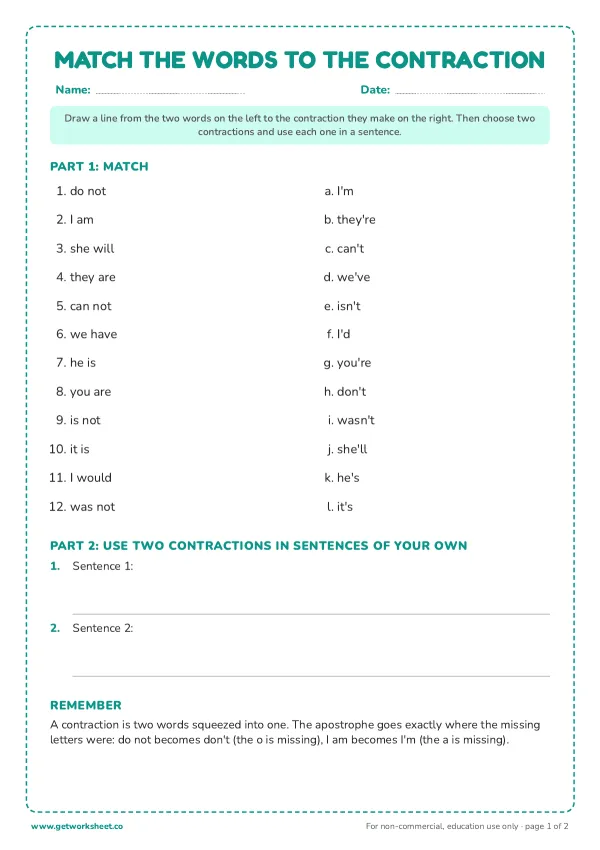
Free contractions worksheets
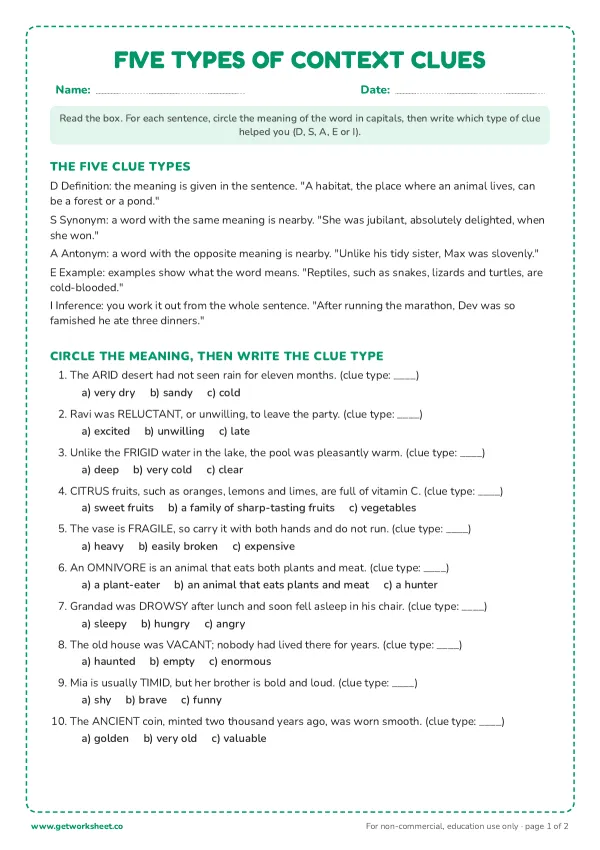
Free context clues worksheets
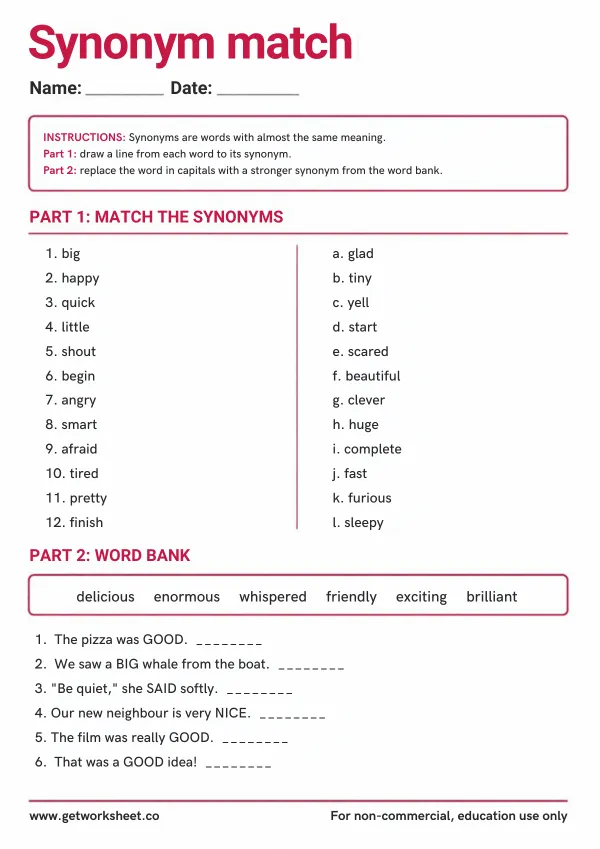
Free synonyms and antonyms worksheets
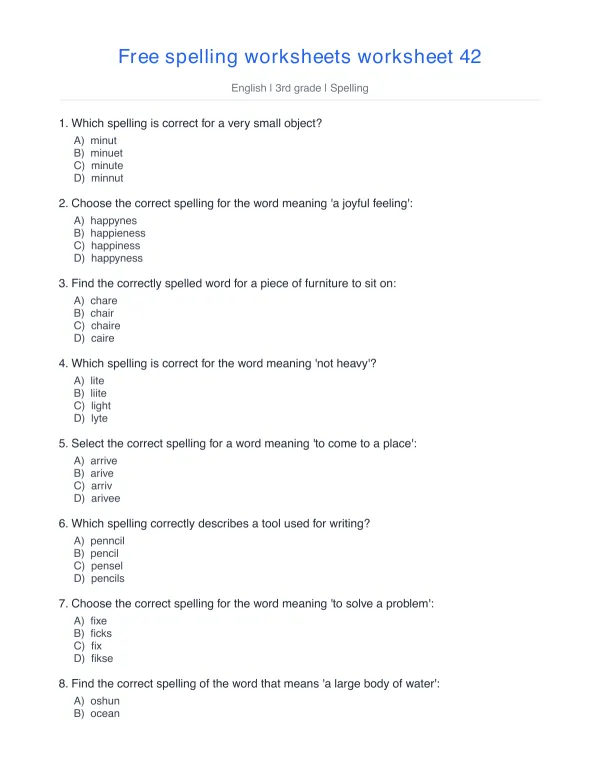
Free spelling worksheets
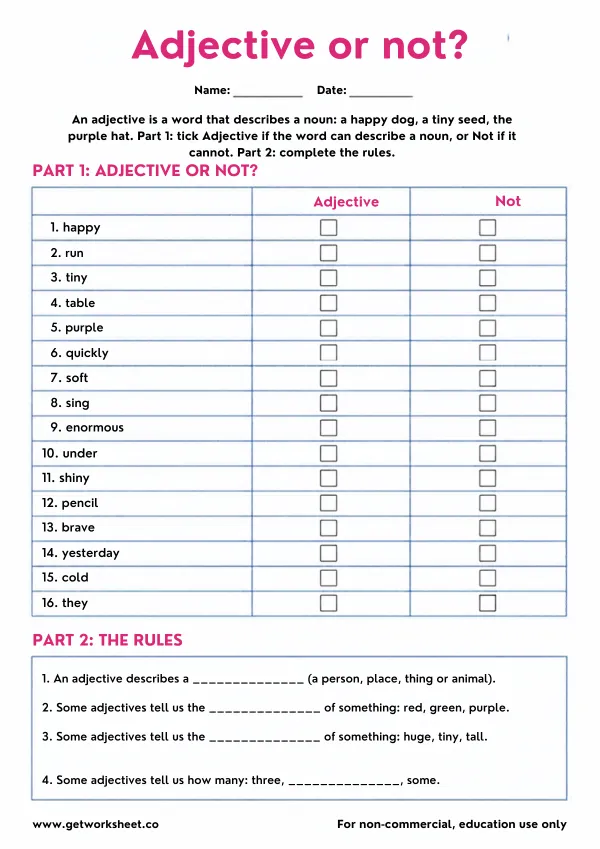
Free adjectives worksheets
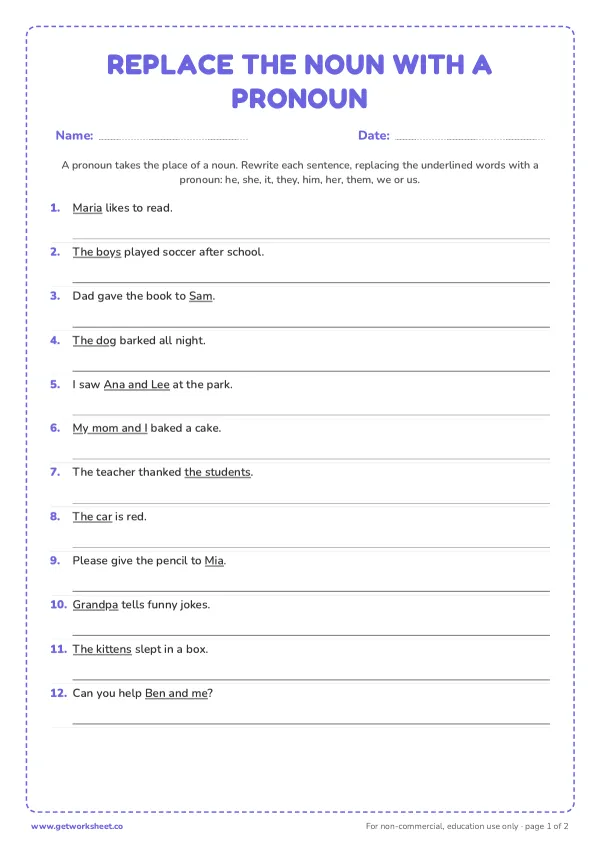
Free pronouns worksheets
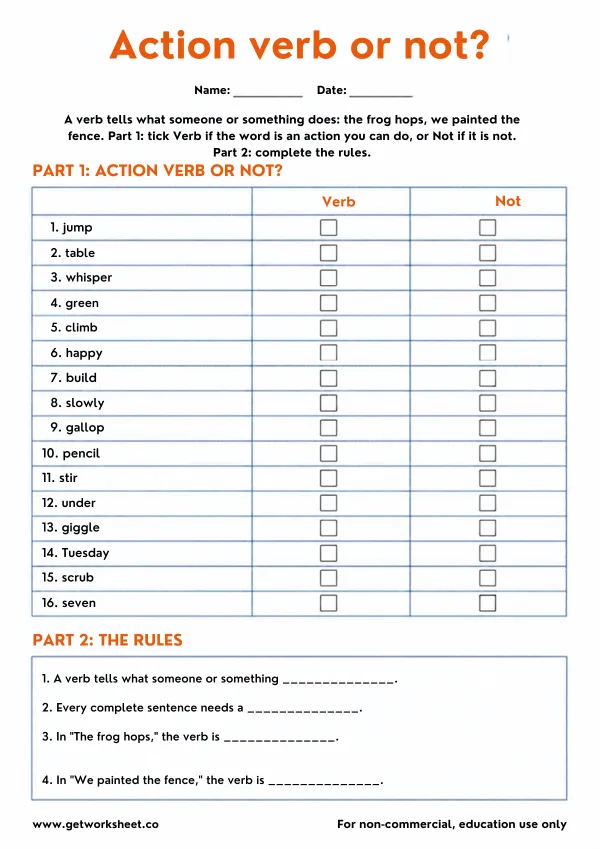
Free verbs worksheets
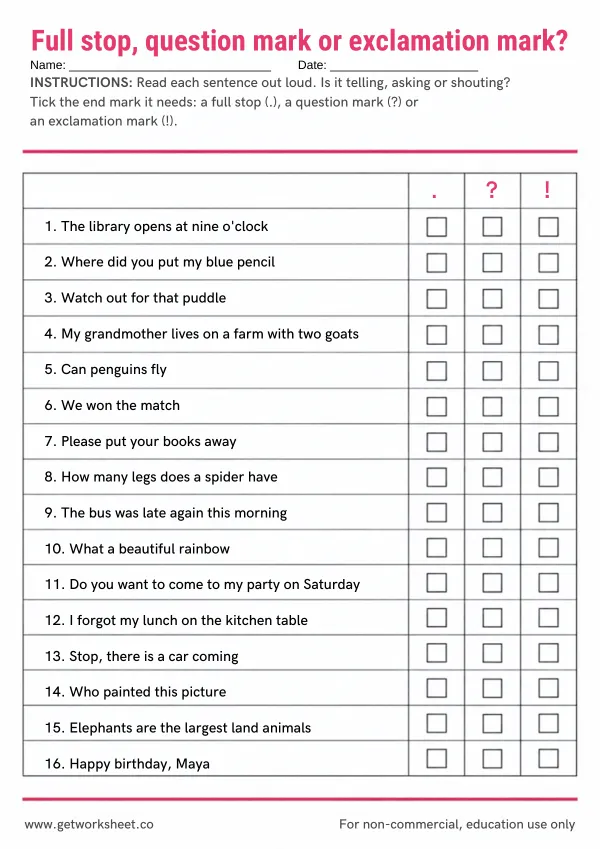
Free punctuation worksheets
More worksheets
- Free main idea worksheets
- Free prefixes and suffixes worksheets
- Free short and long vowel worksheets
- Free Groundhog Day worksheets
- Free Presidents' Day worksheets
- Free Montessori three part cards templates
- Free Montessori grammar symbols worksheets
- Free y as a vowel worksheets
- Free schwa sound worksheets
- Free glued sounds worksheets
- Free FLOSS rule worksheets
- Free Elkonin boxes worksheets