English · Grades 1–5
Free capitalization worksheets
Five printable capitalization worksheets for grades 1 to 5: rewrite twelve sentences with the right capitals, decide capital or lowercase for sixteen tricky words, proofread a letter from camp and more. Answer keys included.
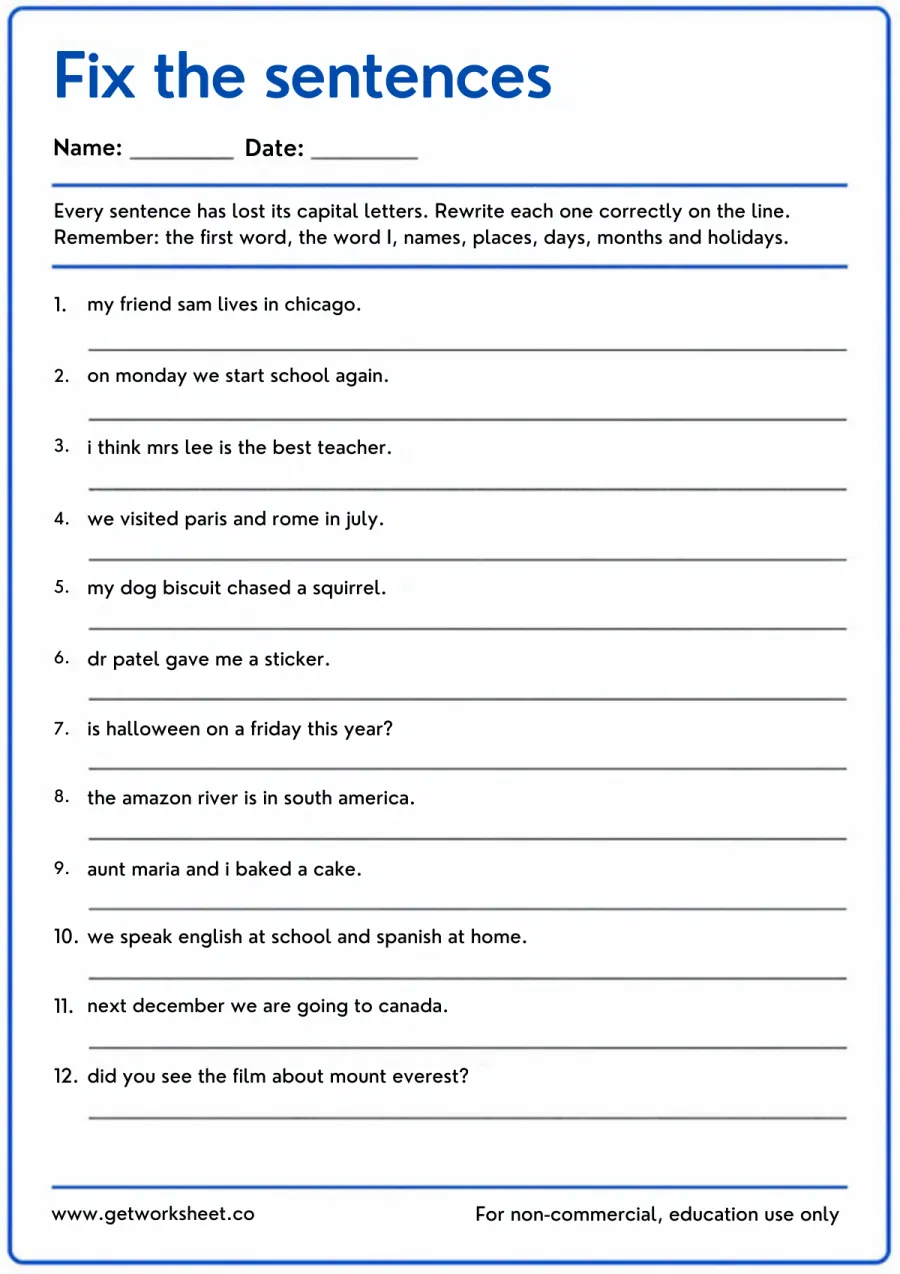
Fix the sentences: rewrite 12 sentences with the right capital letters
Twelve sentences written with no capital letters at all. Students rewrite each one, capitalising the first word, the pronoun I, names, places, days, months and holidays. Answer key on page 2.
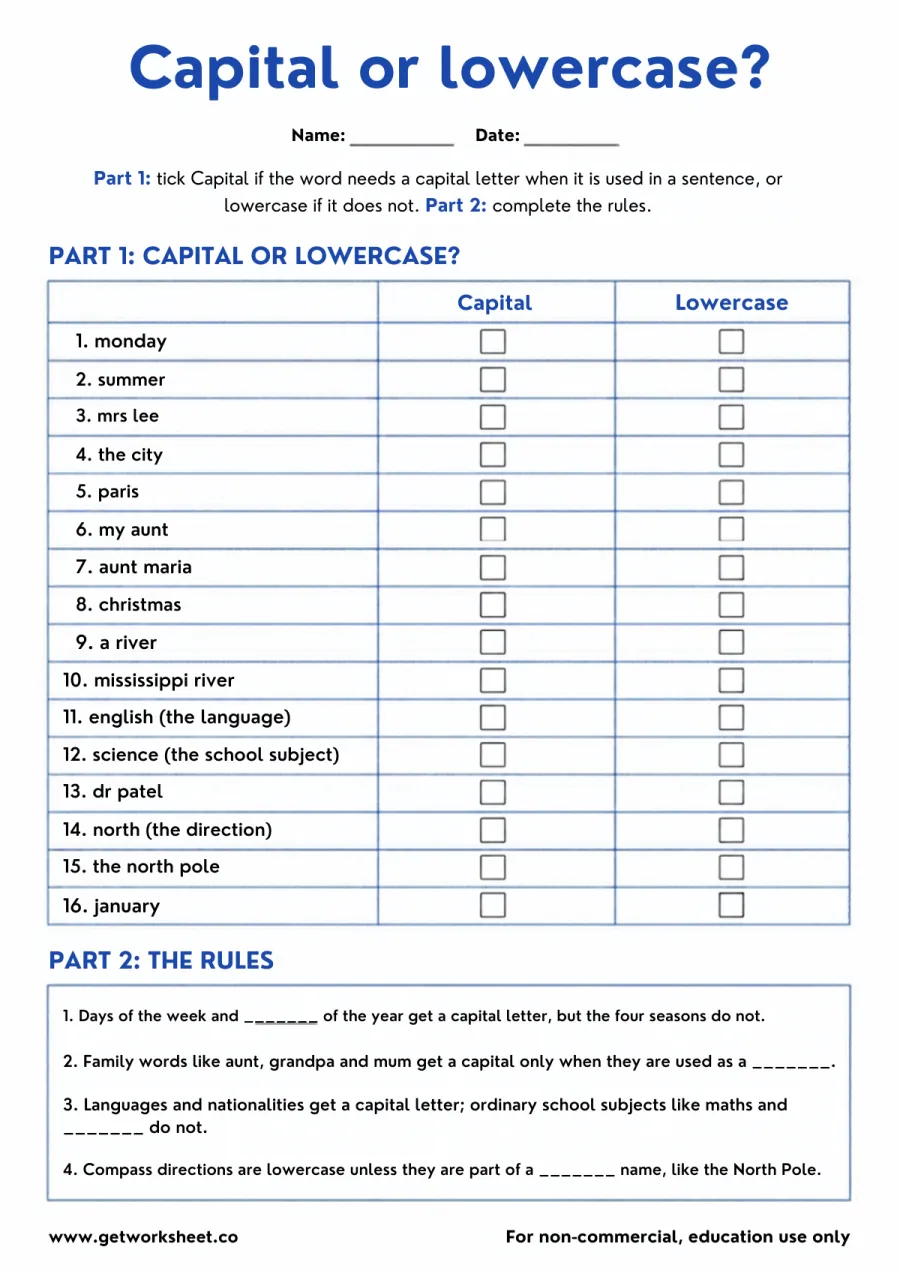
Capital or lowercase? 16 tricky words, then the rule for each
Sixteen words and phrases to tick as needing a capital letter or not (monday, summer, my aunt, Aunt Maria, north, the North Pole ...), then four sentences to complete about the rules. Answer key on page 2.
Whole set
All 5 sheets in one PDF
Instant and ad-free. No account needed.
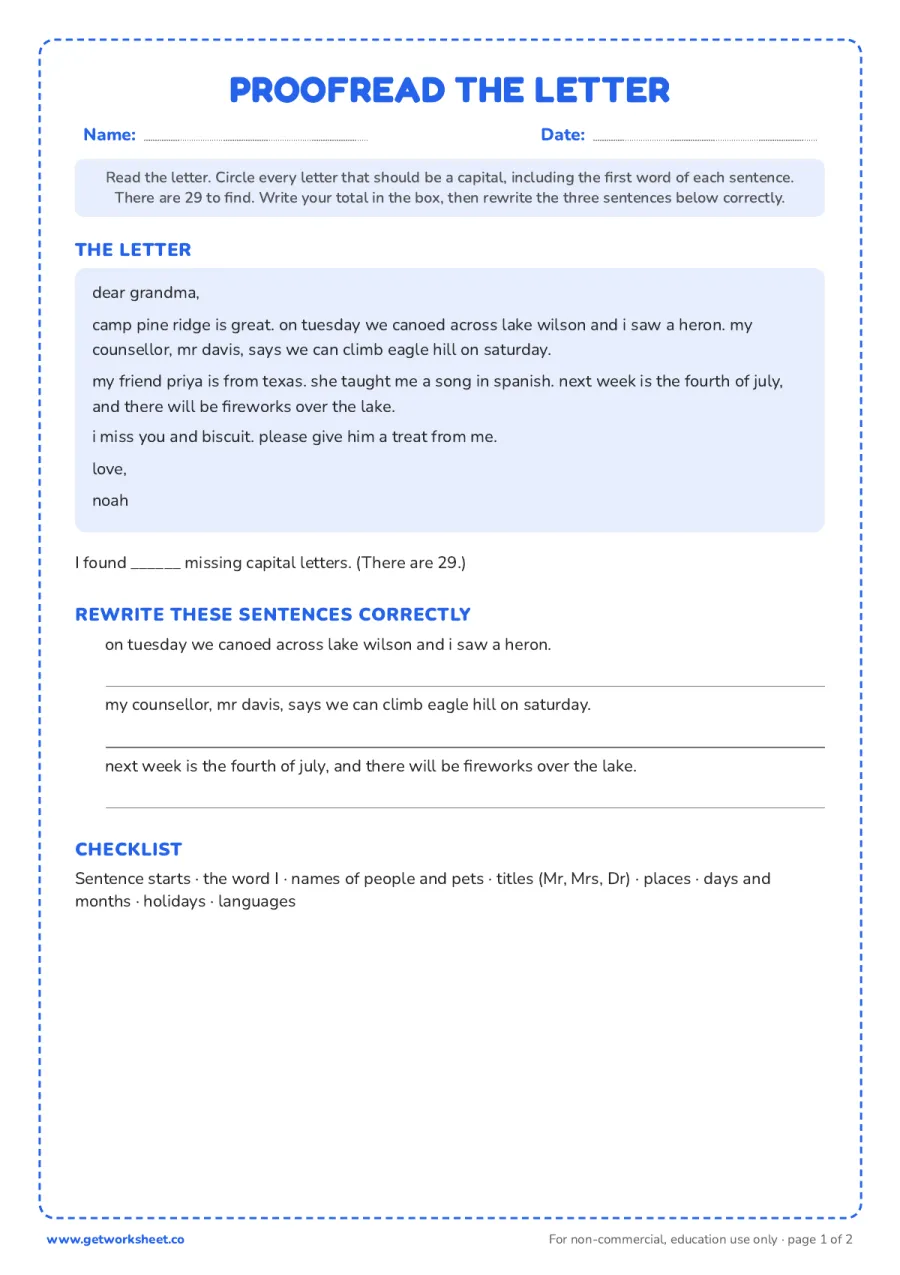
Proofread the letter: find 29 missing capitals in a letter from camp
A friendly letter from summer camp with 29 missing capital letters to find and circle, a tally box, and three of its sentences to rewrite correctly. Answer key lists every correction on page 2.
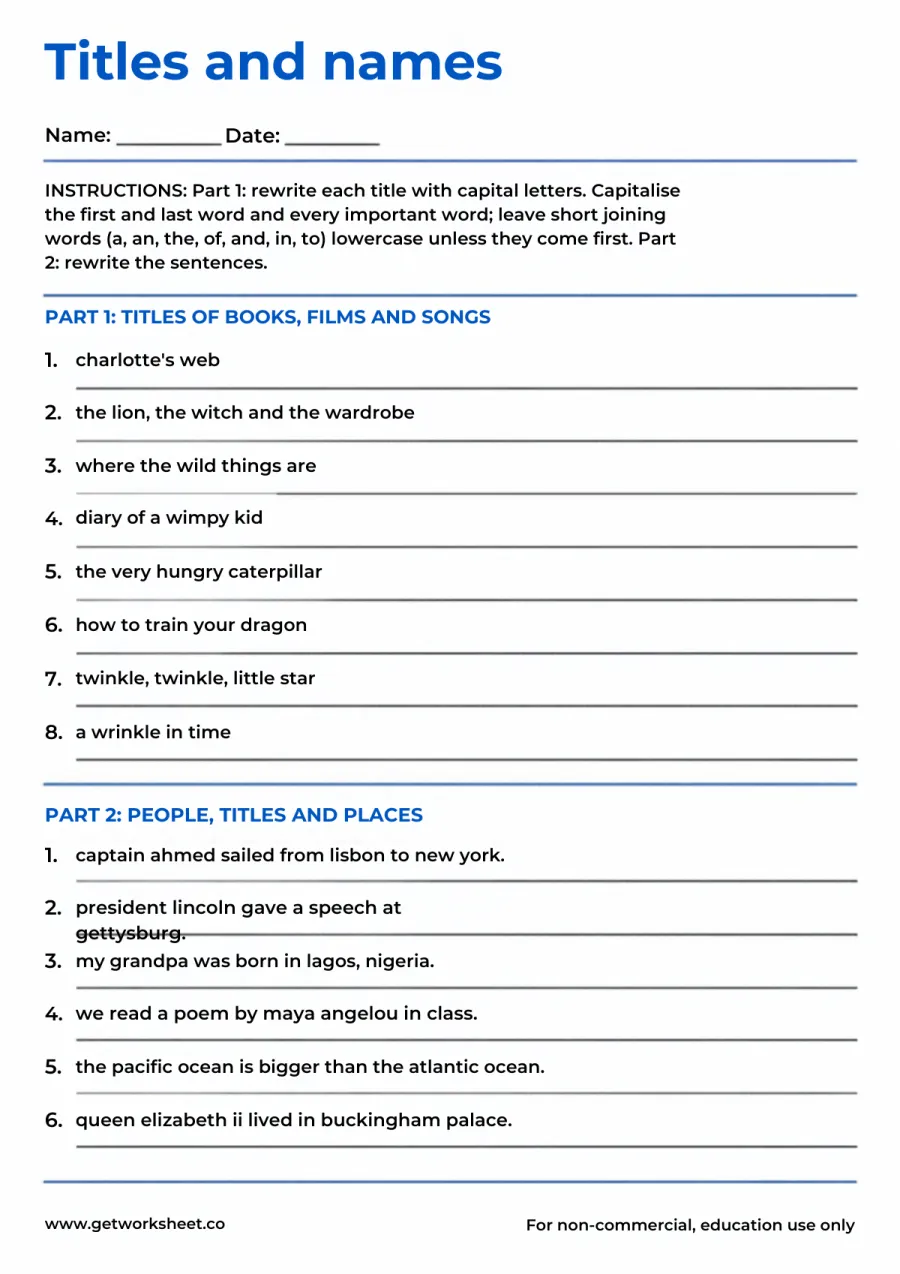
Titles and names: capitalise 8 book and film titles and 6 sentences with names
Eight book, film and song titles to rewrite with title capitals (first word, last word and every important word, not short words like a, of, the) and six sentences with people's names, titles and places. Answer key on page 2.
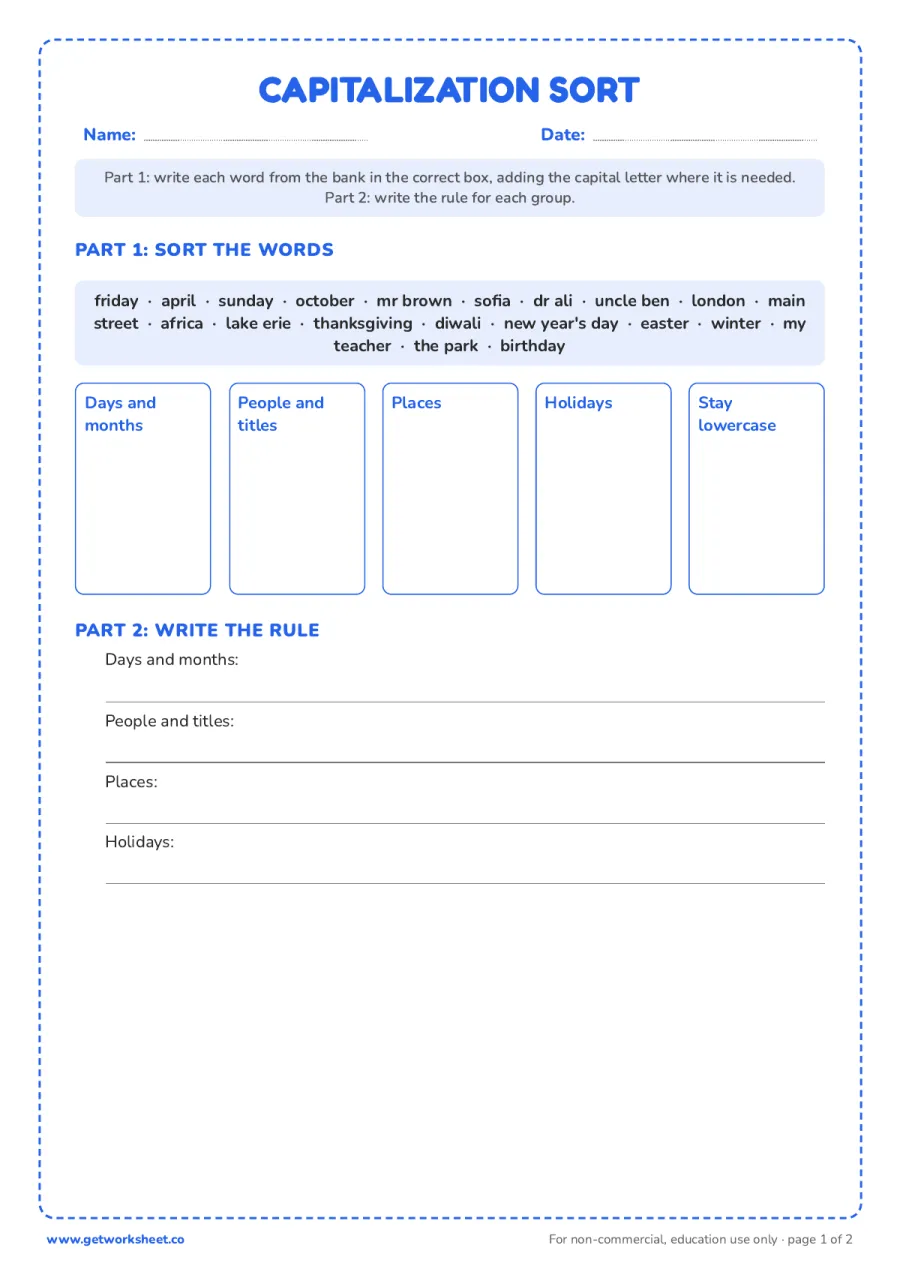
Capitalization sort: 20 words into 5 groups, then write the rule
Sort twenty words into days and months, names and titles, places, holidays, and words that stay lowercase; then write each group's rule in one sentence. Answer key on page 2.
AI worksheet generator
Make a worksheet like this for your class
The 5 sheets above are fixed. The generator writes a new capitalization worksheet for your grade, with the question types and count you choose, in about 20 seconds. Pick a grade to start:
What you get
- A fresh set of questions on capitalization, not a copy of the sheets above
- Multiple choice, fill in the blanks, true or false, open ended
- Answer key and print-ready PDF with Pro
Free account, 1 worksheets a week. No card.
Capital letters look like a small thing, but they are one of the conventions teachers mark most and children forget longest. The rules are few: the first word of a sentence, the word I, and proper nouns (names of people, places, days, months, holidays, languages and titles). The difficulty is the boundary cases: my aunt but Aunt Maria, summer but July, north but the North Pole. These five sheets practice the plain rules first and then those boundaries, ending with proofreading, which is how the skill is actually used.
What's in this set
- Fix the sentences. Twelve all-lowercase sentences to rewrite, covering sentence starts, I, names of people and pets, cities and countries, days, months, holidays and titles like Mrs and Dr.
- Capital or lowercase? Sixteen words that test the boundary cases: days versus seasons, family words with and without a name, compass directions versus place names, languages versus school subjects; then four fill-in sentences that state the rules.
- Proofread the letter. A short letter from summer camp with 29 missing capitals (sentence starts, I, names, places, a day, a holiday, a language, a title), a box to record how many were found, and three sentences to rewrite correctly.
- Titles and names. A rule box for titles, eight titles to rewrite (Charlotte's Web, The Lion, the Witch and the Wardrobe, and others), and six sentences mixing titles like Captain and President with place names.
- Capitalization sort. Twenty words (some already capitalised, some not) to sort into five labelled boxes, and four lines to state the rule for each capitalised group in the student's own words.
What students will practice
- Capitalising the first word of a sentence and the pronoun I (CCSS L.1.2a)
- Capitalising names of people, pets, places, days, months and holidays (L.1.2a, L.2.2a)
- Telling common nouns from proper nouns: a river / the Mississippi River, my aunt / Aunt Maria
- Capitalising titles of books, films and songs correctly, including which small words stay lowercase (L.3.2a)
- Using titles with names: Mr, Mrs, Dr, Captain, President
- Proofreading a real piece of writing for capitalisation and stating the rule behind each correction
Free printable makers
Make your own capitalization sheets
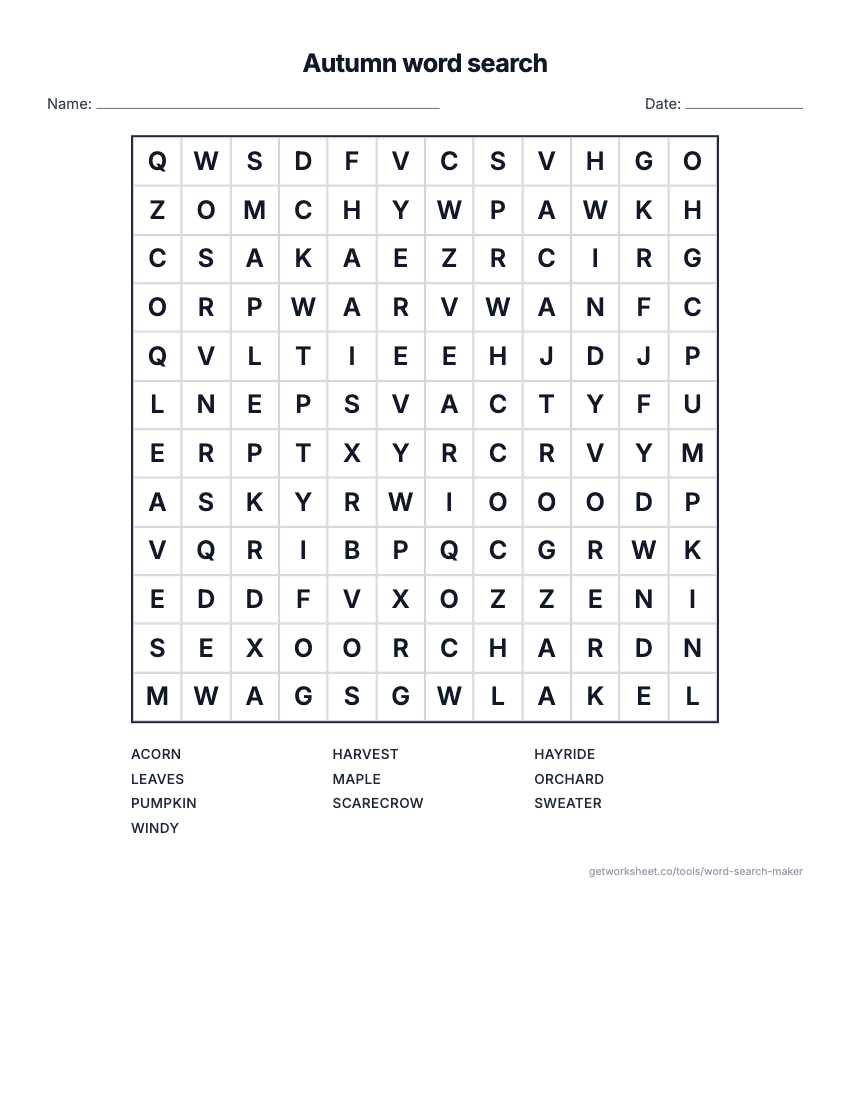
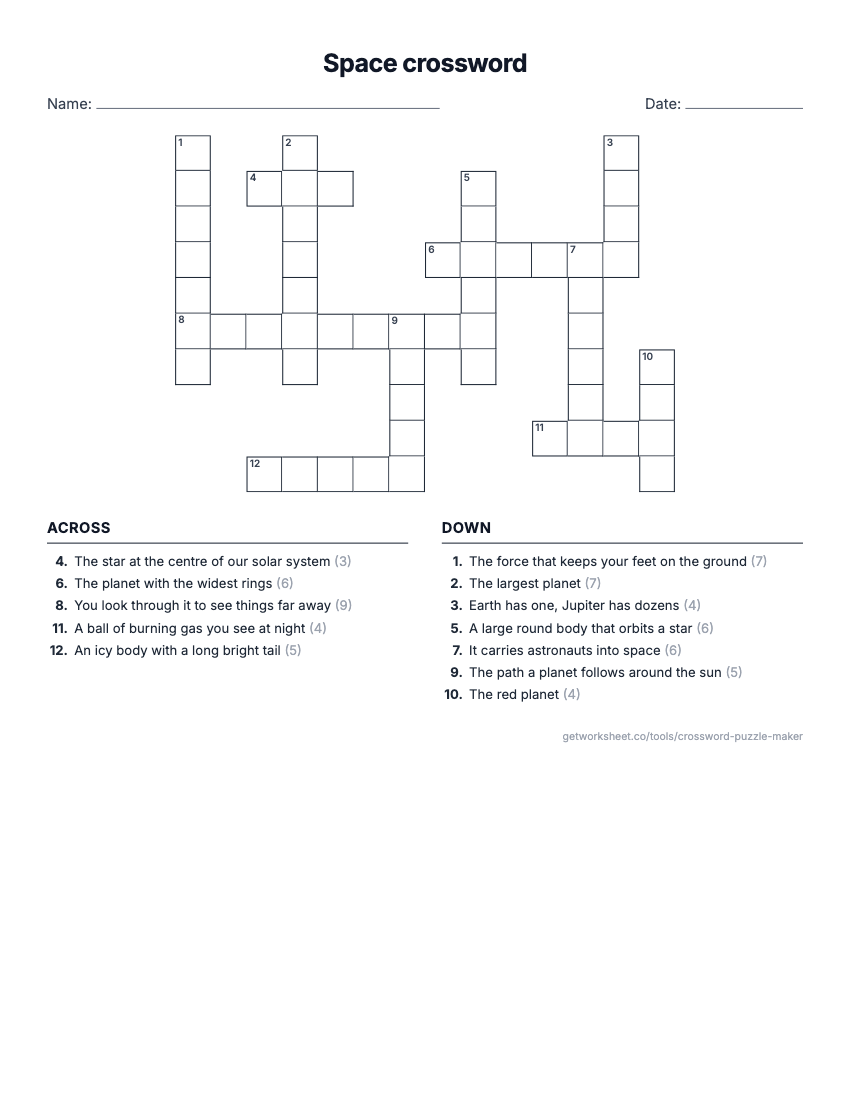
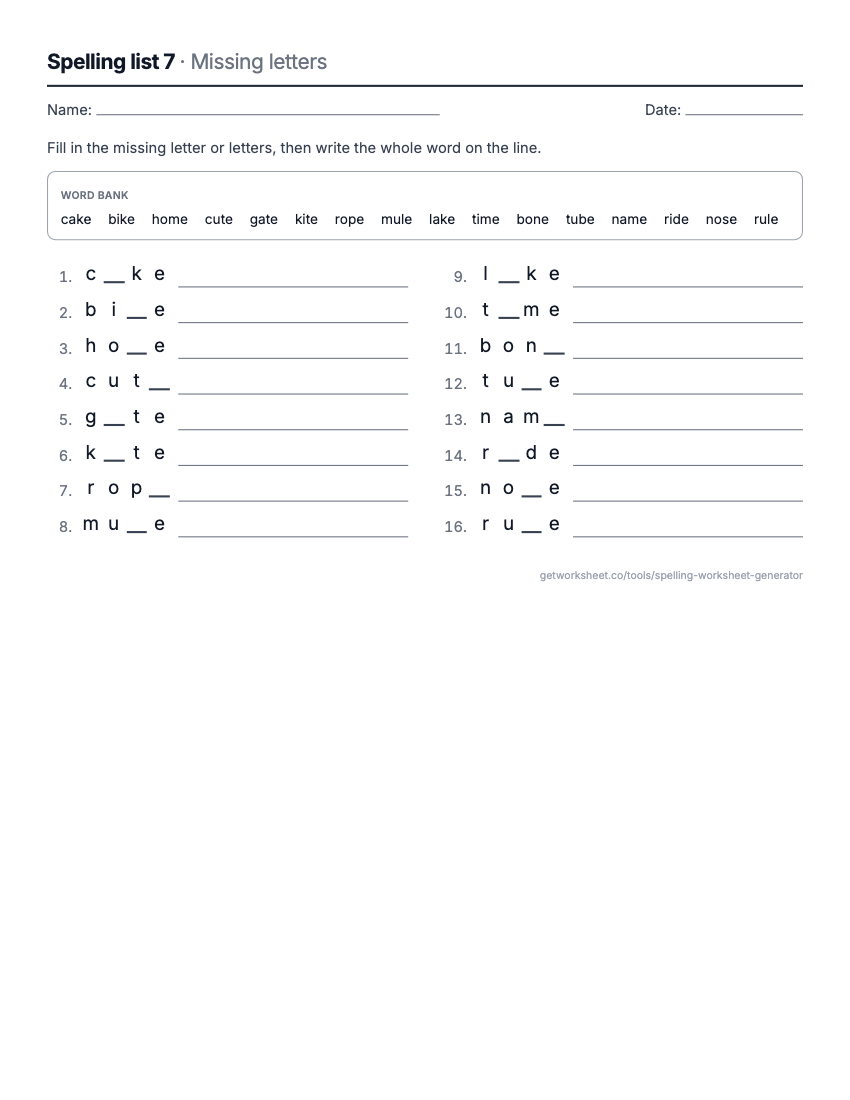
Type your own words or numbers and print in about 30 seconds. No account, no AI, answer key where it applies.
AI worksheet generator
Need a different capitalization worksheet?
Generate a custom capitalization worksheet: pick the grade, question types and count, and print it in about 20 seconds. Free accounts get 1 generation a week.
How to use these worksheets in class
- Start with the sentences. Fix the sentences is the plainest sheet: every capital that is missing is one a grade 2 or 3 student should know. Use it as a diagnostic and mark the pattern of misses (days? place names? I?).
- Boundary cases as a debate. Capital or lowercase? is written so that half the class will argue. Do items 6 and 7 together (my aunt / Aunt Maria) and 14 and 15 (north / the North Pole) aloud before students work alone.
- Proofread with a purpose. Have students read the letter on Proofread the letter once for meaning before hunting for errors, then count. The tally box turns proofreading into a game with a target of 15.
- Titles need the rule box. Title case (first, last and important words) is the rule most adults get wrong. Leave the rule visible on Titles and names; the test is whether students leave the, of and and lowercase in the middle.
- Finish with the sort. Capitalization sort asks students to state the rules in their own words in part 2. Those four sentences are what they should be able to recite by the end of the unit.
- Grades 1 to 5. Grade 1 and 2 use the first sheet and the sort; grades 3 to 5 use all five.
Answer key
Every practice sheet carries its own answer key on page 2 of the PDF. The keys are repeated here for quick marking.
- Fix the sentences: 1. My friend Sam lives in Chicago. 2. On Monday we start school again. 3. I think Mrs Lee is the best teacher. 4. We visited Paris and Rome in July. 5. My dog Biscuit chased a squirrel. 6. Dr Patel gave me a sticker. 7. Is Halloween on a Friday this year? 8. The Amazon River is in South America. 9. Aunt Maria and I baked a cake. 10. We speak English at school and Spanish at home. 11. Next December we are going to Canada. 12. Did you see the film about Mount Everest?
- Capital or lowercase?: Part 1: capital or lowercase?: 1. Capital 2. Lowercase 3. Capital 4. Lowercase 5. Capital 6. Lowercase 7. Capital 8. Capital 9. Lowercase 10. Capital 11. Capital 12. Lowercase 13. Capital 14. Lowercase 15. Capital 16. Capital Part 2: the rules: 1. months 2. name 3. science (or history, art ...) 4. place
- Proofread the letter: Rewrite these sentences correctly: 1. On Tuesday we canoed across Lake Wilson and I saw a heron. 2. My counsellor, Mr Davis, says we can climb Eagle Hill on Saturday. 3. Next week is the Fourth of July, and there will be fireworks over the lake. Checklist: The 29 missing capitals, in order: Dear, Grandma, Camp, Pine, Ridge, On, Tuesday, Lake, Wilson, I, My, Mr, Davis, Eagle, Hill, Saturday, My, Priya, Texas, She, Spanish, Next, Fourth, July (of stays lowercase), I, Biscuit, Please, Love, Noah.
- Titles and names: Part 1: titles of books, films and songs: 1. Charlotte's Web 2. The Lion, the Witch and the Wardrobe 3. Where the Wild Things Are 4. Diary of a Wimpy Kid 5. The Very Hungry Caterpillar 6. How to Train Your Dragon 7. Twinkle, Twinkle, Little Star 8. A Wrinkle in Time Part 2: people, titles and places: 1. Captain Ahmed sailed from Lisbon to New York. 2. President Lincoln gave a speech at Gettysburg. 3. My grandpa was born in Lagos, Nigeria. 4. We read a poem by Maya Angelou in class. 5. The Pacific Ocean is bigger than the Atlantic Ocean. 6. Queen Elizabeth II lived in Buckingham Palace.
- Capitalization sort: Part 1: sort the words: Days and months: friday, april, sunday, october People and titles: mr brown, sofia, dr ali, uncle ben Places: london, main street, africa, lake erie Holidays: thanksgiving, diwali, new year's day, easter Stay lowercase: winter, my teacher, the park, birthday Part 2: write the rule: 1. Days of the week and months of the year always start with a capital letter (seasons do not). 2. A person's name, and a title used with a name (Mr, Dr, Uncle), start with capitals. 3. The name of a particular place (city, street, continent, lake) starts with a capital. 4. Names of holidays and festivals start with capitals.
Common mistakes to watch for
- Capitalising seasons. Summer, winter, autumn and spring are lowercase; days and months are not. Two items on the second sheet test exactly this.
- Capitalising every noun in a title. Small joining words stay lowercase unless they begin the title: Diary of a Wimpy Kid, The Lion, the Witch and the Wardrobe.
- School subjects. Maths, science and history are lowercase; English, French and Spanish are capitalised because they are languages.
- Family words. "My grandpa" is lowercase; "Grandpa Joe" is a name. The test is whether you could replace the word with the person's name.
Frequently asked questions
What grade are these capitalization worksheets for?
Grades 1 to 5. Sentence starts, I and simple names are grade 1 and 2 (CCSS L.1.2a, L.2.2a); title case and the trickier proper-noun boundaries are grade 3 and up (L.3.2a).
Do the worksheets include answer keys?
Yes. Every sheet has its answer key on page 2 and the keys are repeated on this page, including all fifteen corrections for the letter.
Which capitalization rules are covered?
First word of a sentence; the pronoun I; names of people and pets; titles used with names (Mr, Mrs, Dr, Captain, President, Aunt); cities, countries, rivers, mountains and streets; days, months and holidays; languages and nationalities; and title case for books, films and songs. Seasons, compass directions, school subjects and family words used generally are covered as the things that stay lowercase.
Do you use full stops after Mr and Dr?
The sheets follow British style (Mr, Mrs, Dr without a full stop). Students taught American style should add the full stop; the capital letter is the point being tested.
Related English worksheets
Capital letters are half of sentence mechanics; the sentence fragments worksheets cover the other half. The spelling worksheets and handwriting worksheets practice the letters themselves, and the subject and predicate worksheets follow on for grades 3 to 5.
Free library
Related collections
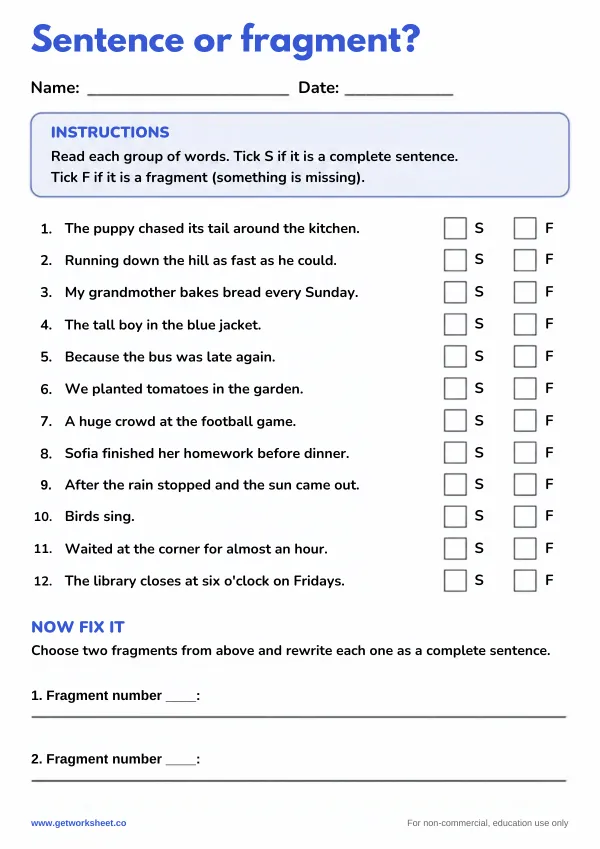
Free sentence fragments worksheets
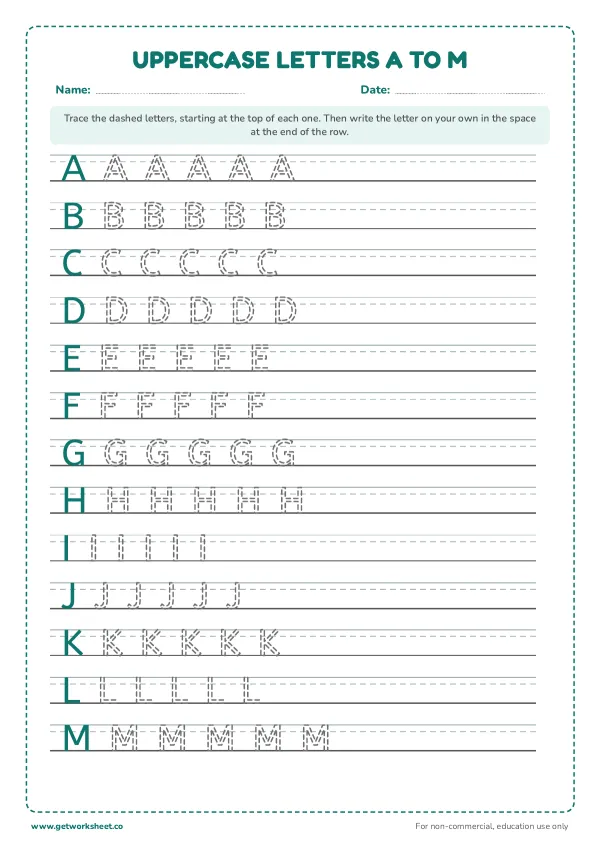
Free handwriting worksheets
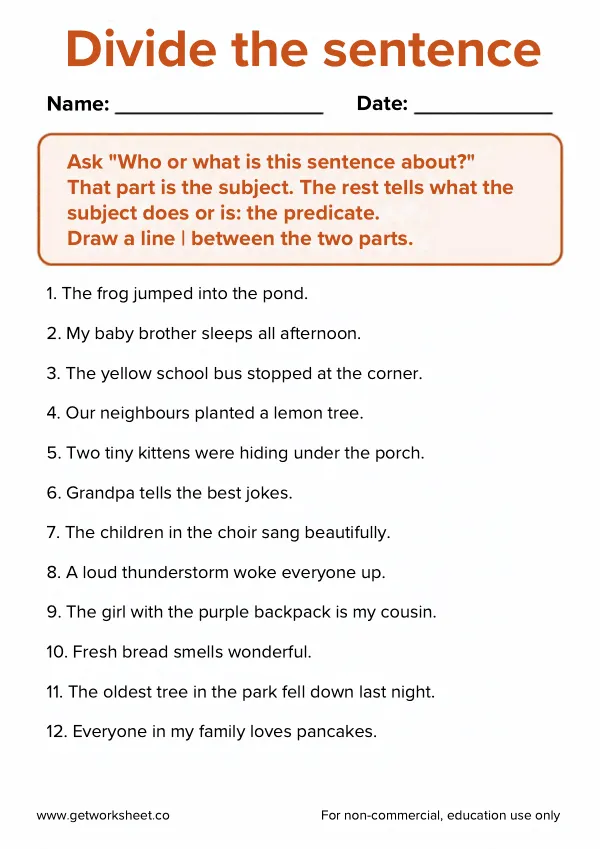
Free subject and predicate worksheets
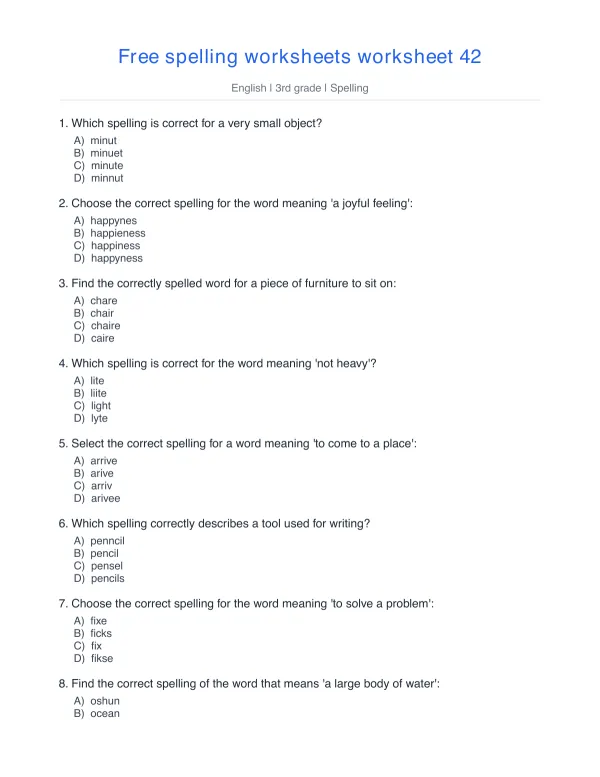
Free spelling worksheets
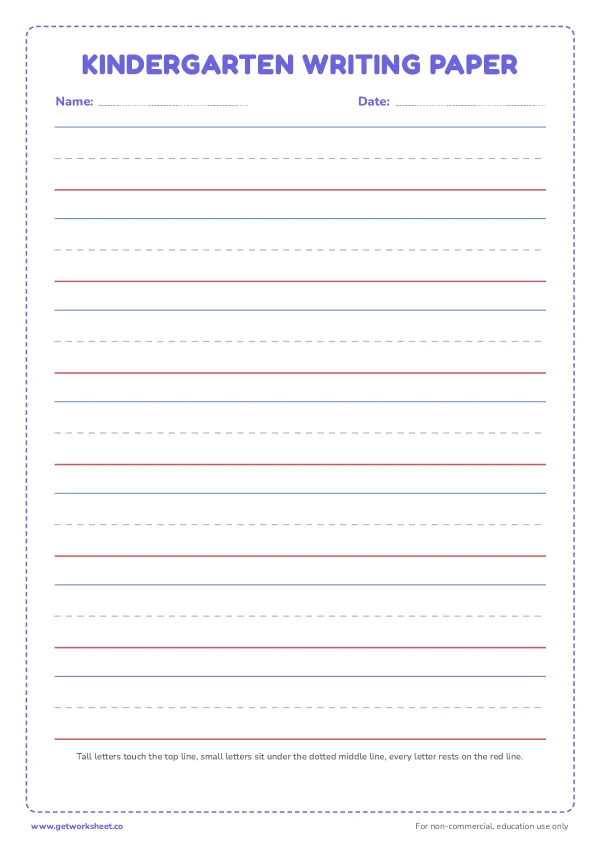
Free handwriting paper printables
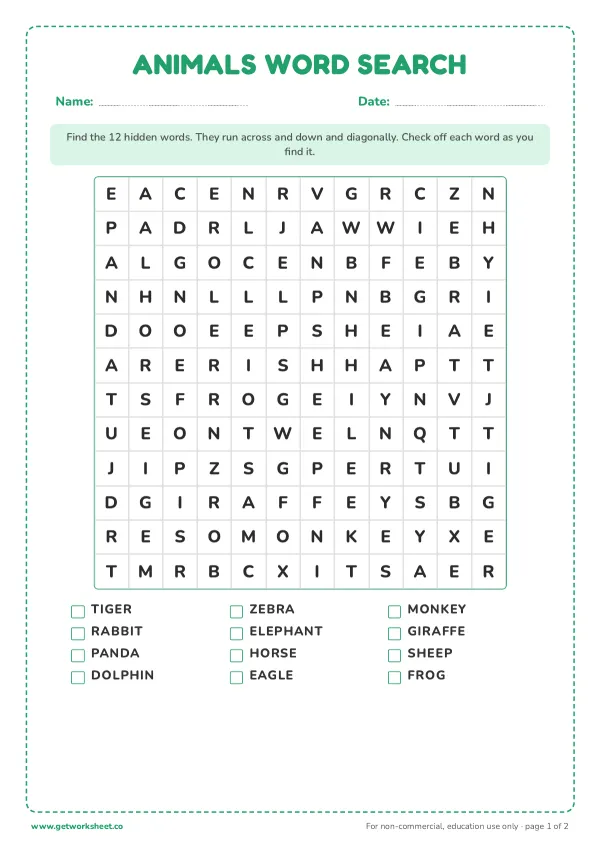
Free word search printables
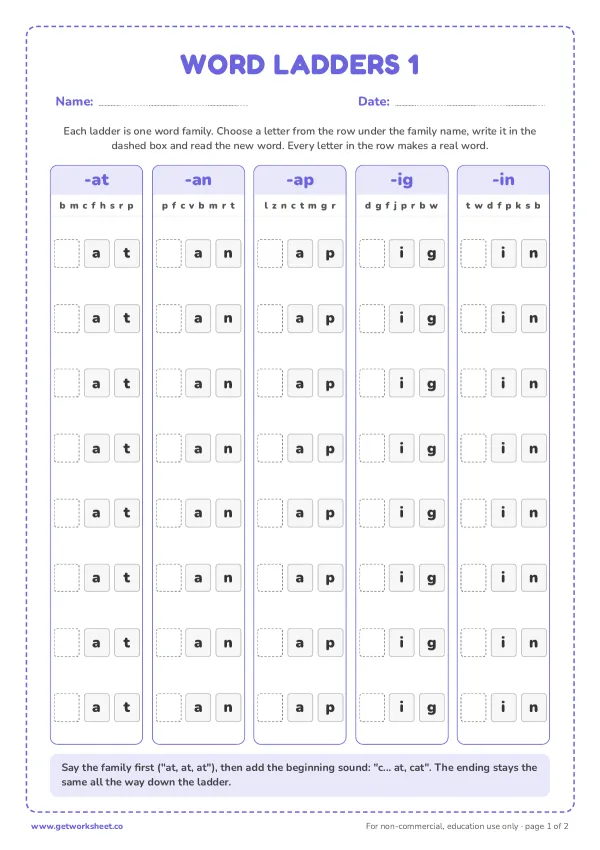
Free word families worksheets
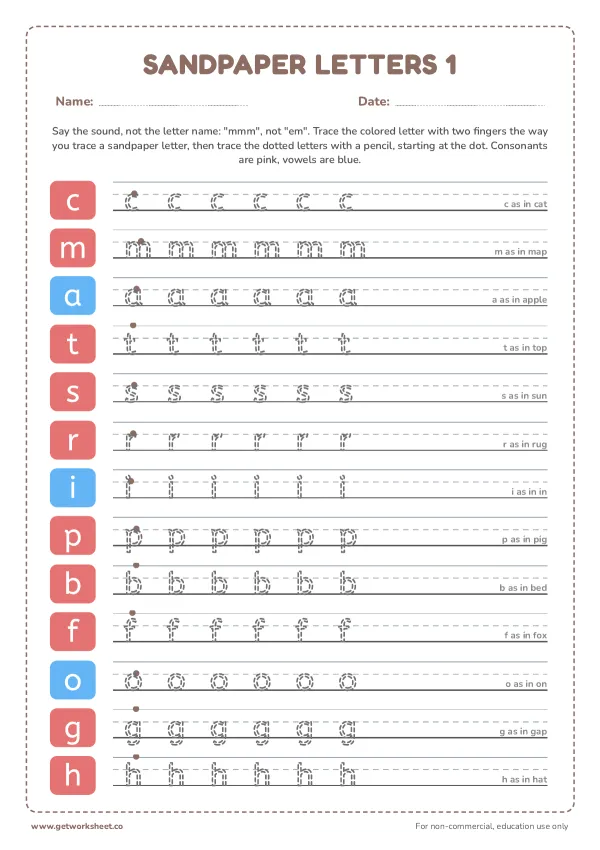
Free Montessori language worksheets
More worksheets
- Free pre-writing worksheets
- Free sight words worksheets (Dolch and Fry)
- Free CVC words worksheets
- Free name tracing worksheets
- Free letter Z tracing worksheets
- Free letter Y tracing worksheets
- Free letter X tracing worksheets
- Free letter W tracing worksheets
- Free letter V tracing worksheets
- Free letter U tracing worksheets
- Free letter T tracing worksheets
- Free letter S tracing worksheets