English · Grades 1–4
Free verbs worksheets
Five printable verbs worksheets for grades 1 to 4: tick sixteen words as action verb or not, underline the verb in twelve sentences, sort fifteen sentences into past, present and future, complete sixteen irregular past tenses from went to caught, and rewrite ten sentences in the past tense. Answer keys included.
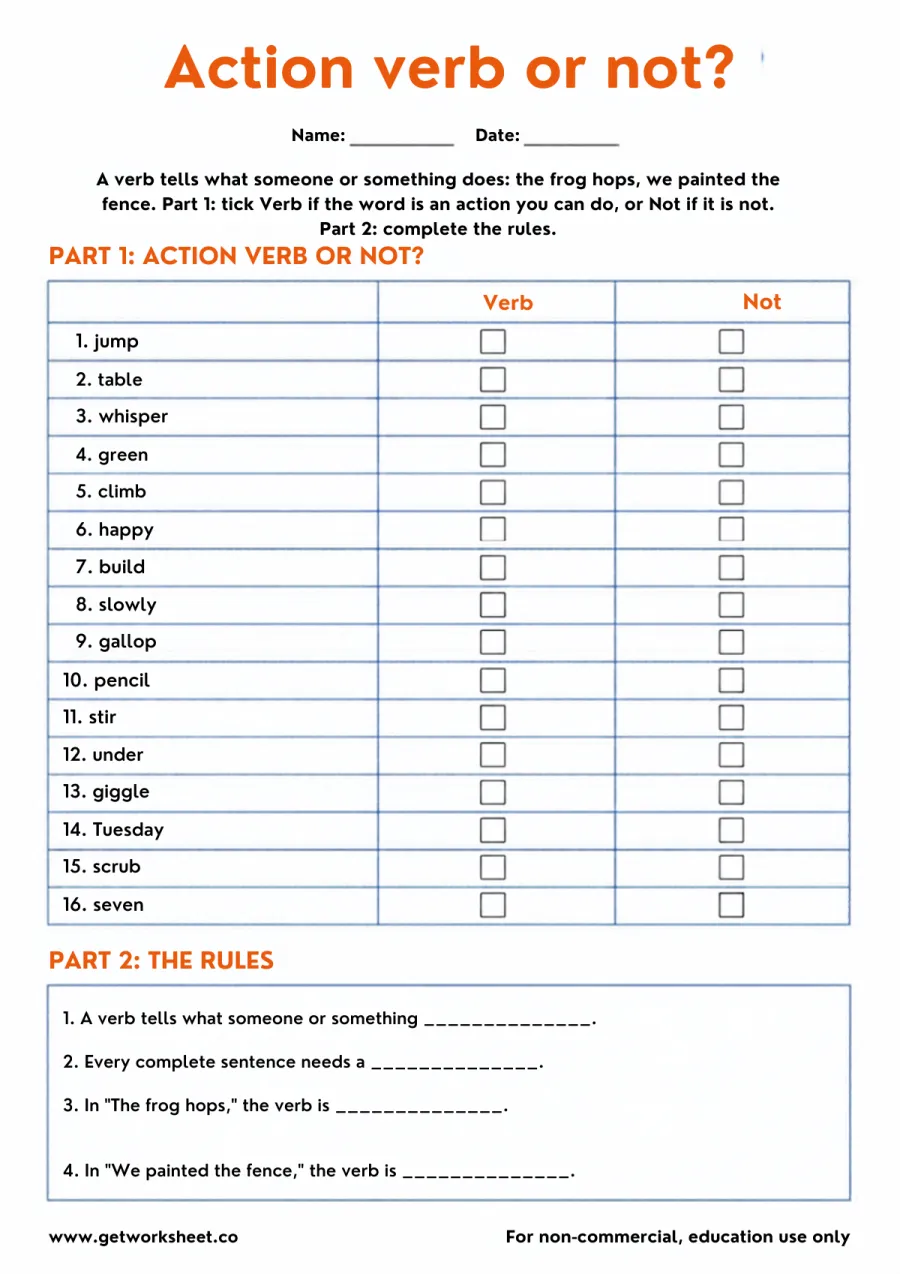
Action verb or not? Tick 16 words, then complete the four rules
Sixteen words to tick as an action verb or not (jump, table, whisper, green, climb, happy ...), mixing verbs with nouns, adjectives and adverbs, then four sentences that state what a verb does. Answer key on page 2.
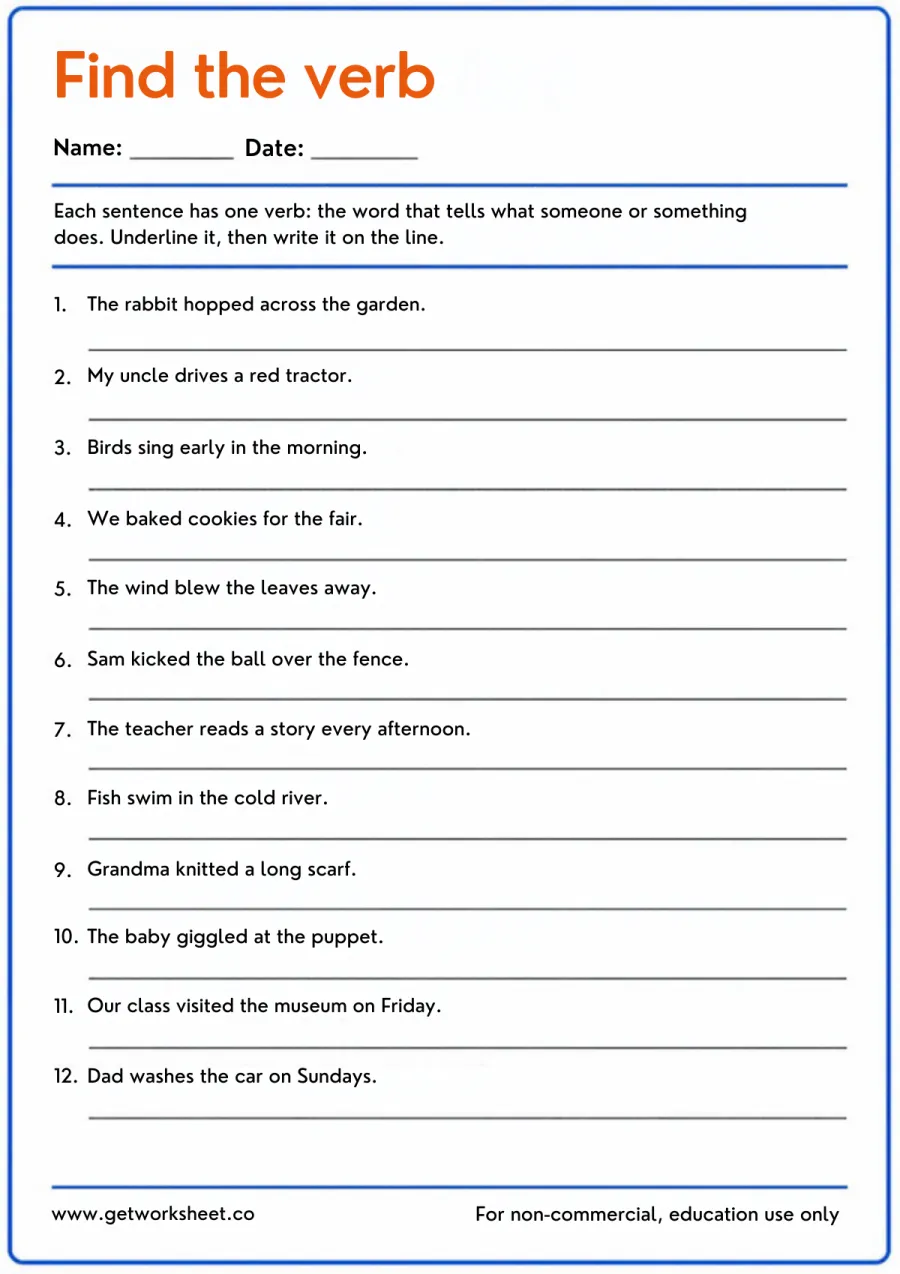
Find the verb: 12 sentences, underline the verb and write it on the line
Twelve sentences with one verb each (The rabbit hopped across the garden ...). Students underline the verb and write it on the line. Answer key on page 2.
Whole set
All 5 in one PDF
- Every sheet on this page, one file
- No ads, no countdowns, print as often as you like
- Instant download, ad-free, no account needed
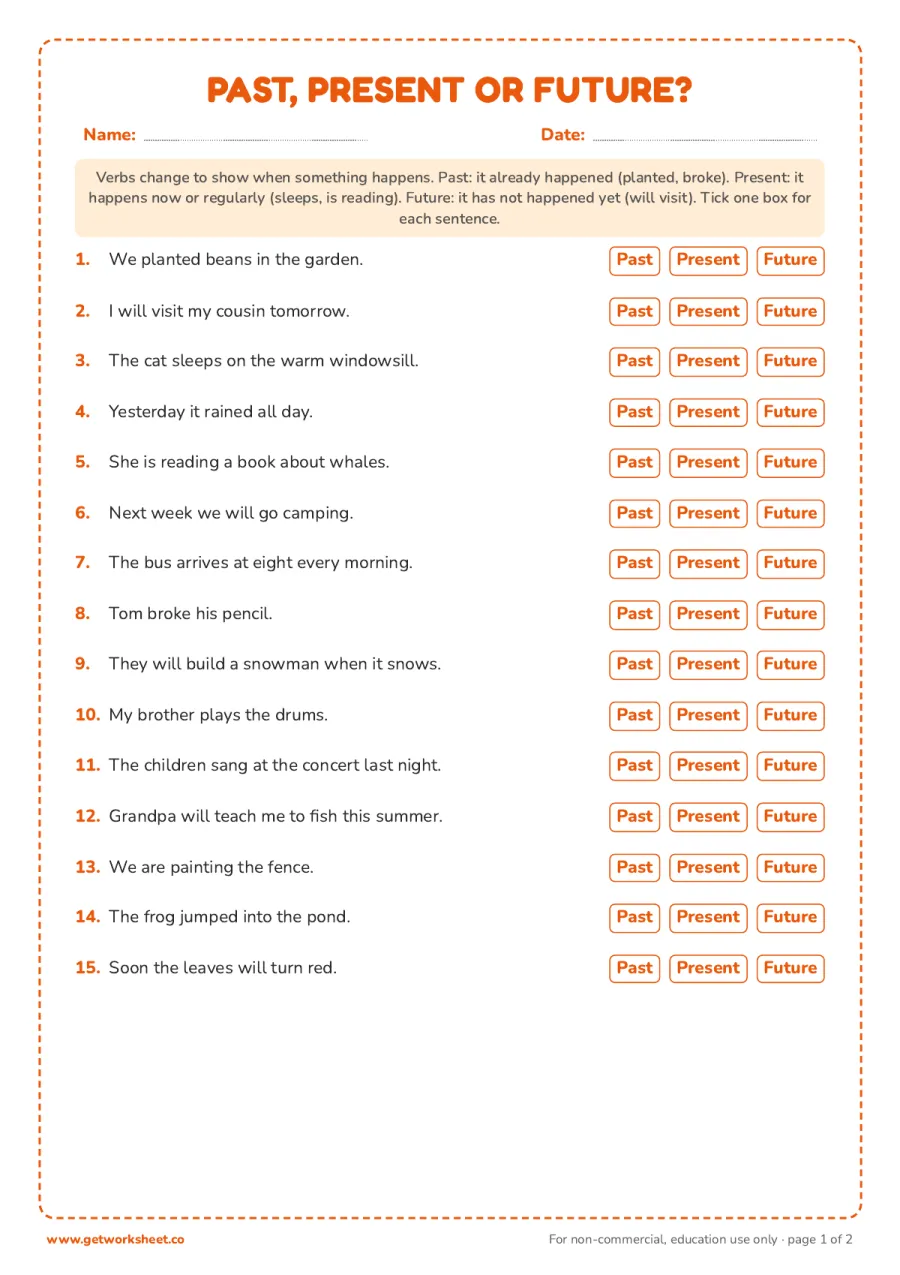
Past, present or future? Tick the tense of 15 sentences
Fifteen sentences to tick as past, present or future (We planted beans in the garden; The cat sleeps on the warm windowsill; Next week we will go camping), five of each. Answer key on page 2.
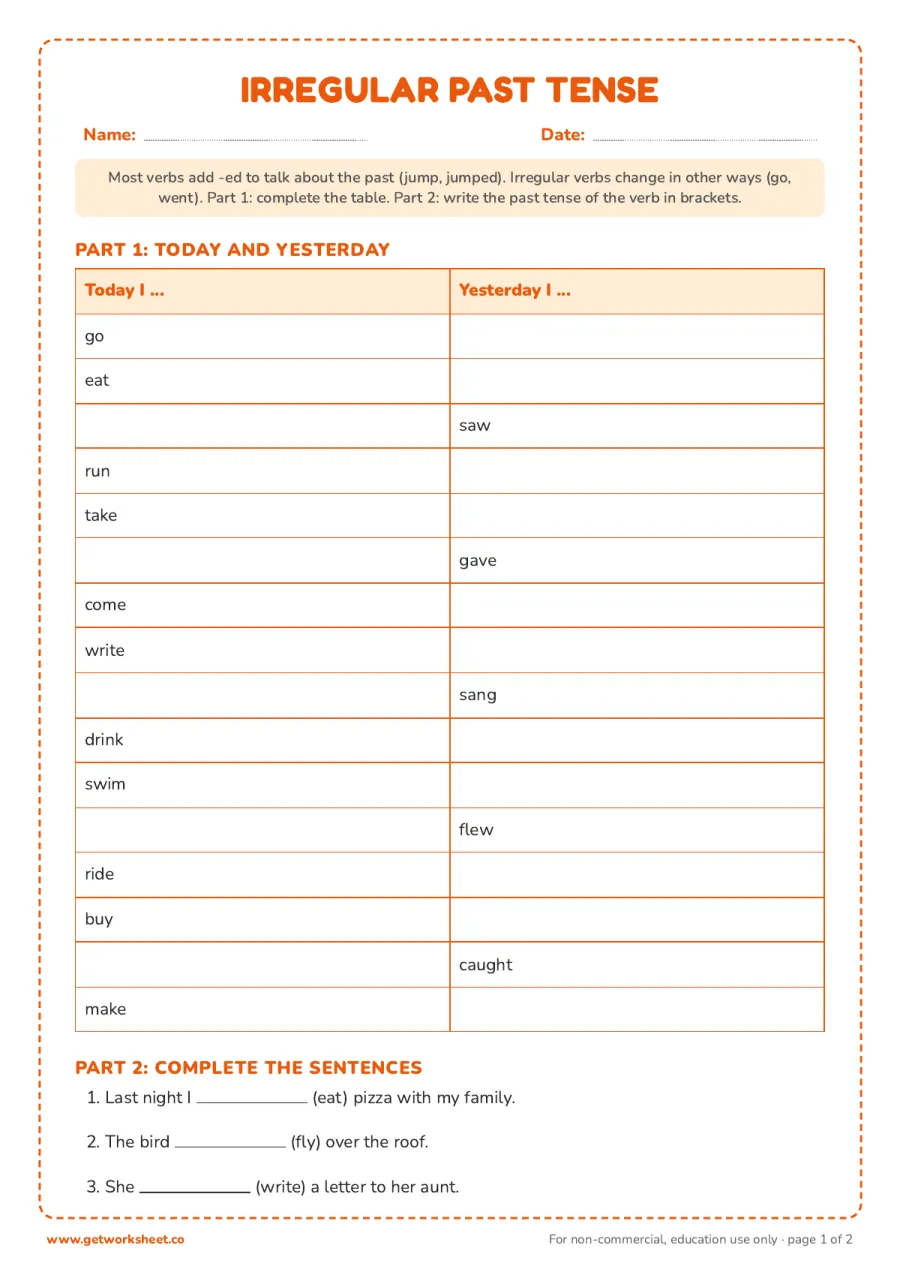
Irregular past tense: complete 16 pairs from go and went to catch and caught
A two-column table (Today I ... / Yesterday I ...) with sixteen irregular verbs to complete: go/went, eat/ate, see/saw, run/ran, take/took, give/gave, come/came, write/wrote, sing/sang, drink/drank, swim/swam, fly/flew, ride/rode, buy/bought, catch/caught, make/made; then three sentences. Answer key on page 2.
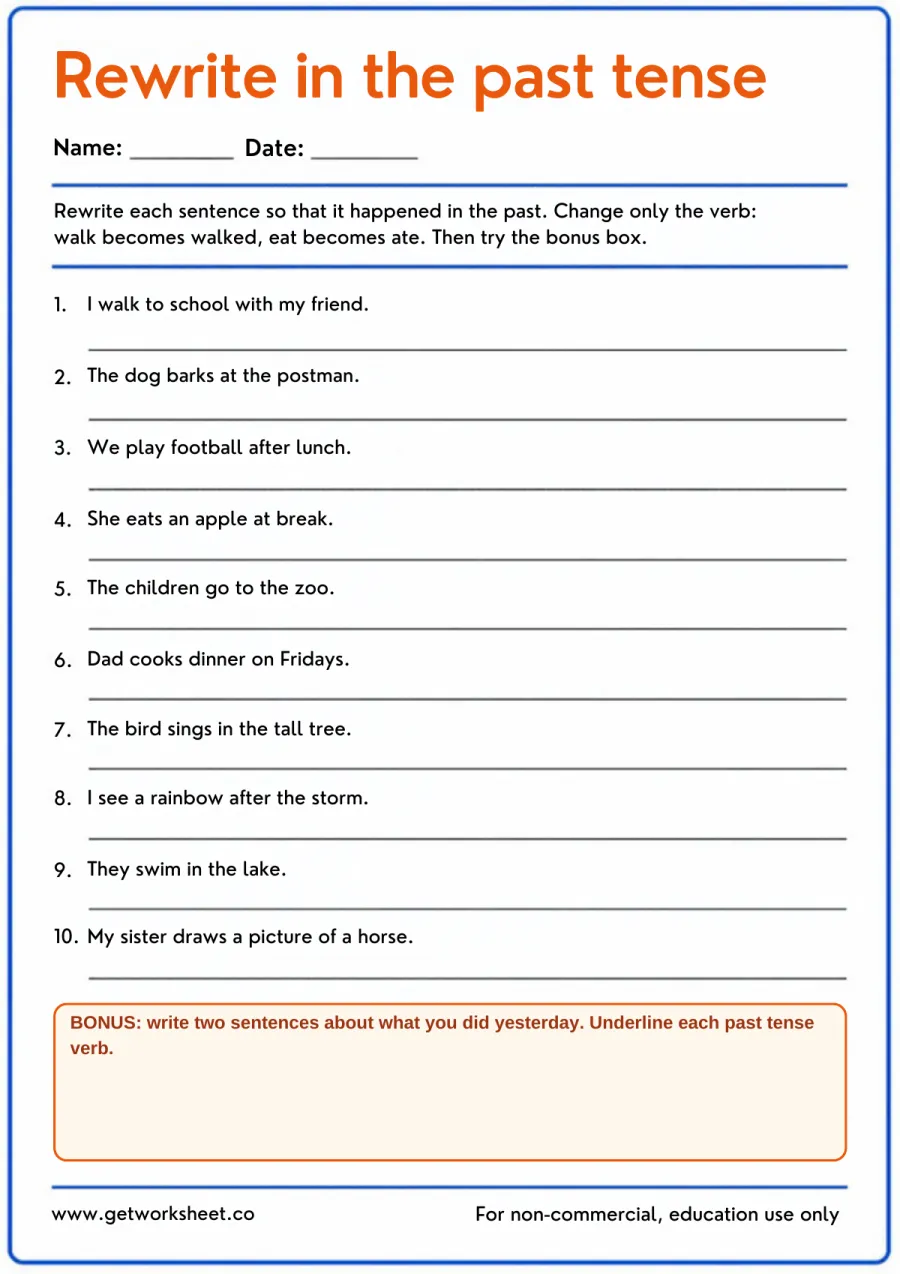
Rewrite in the past tense: 10 sentences, regular and irregular verbs, plus a bonus box
Ten present-tense sentences to rewrite in the past (I walk to school with my friend; The children go to the zoo), mixing regular -ed verbs with irregular ones, then a bonus box for two sentences about yesterday. Answer key on page 2.
AI worksheet generator
Make a worksheet like this for your class
The 5 sheets above are fixed. The generator writes a new verbs worksheet for your grade, with the question types and count you choose, in about 20 seconds. Pick a grade to start:
What you get
- A fresh set of questions on verbs, not a copy of the sheets above
- Multiple choice, fill in the blanks, true or false, open ended
- Answer key and print-ready PDF with Pro
Free account, 1 worksheets a week. No card.
Every sentence has a verb, and every verb carries a time. That is why verbs get two lessons in early grammar: first “which word is the action?”, then “when did it happen?”. These five worksheets cover both. The first two identify verbs among nouns, adjectives and adverbs and inside real sentences. The last three deal with tense: sorting sentences into past, present and future, learning the irregular past forms that no rule predicts (went, ate, caught), and finally rewriting whole sentences in the past.
What's in this set
- Action verb or not? Sixteen words to tick as action verb or not (jump, whisper, climb, gallop, stir, giggle, scrub against table, green, happy, slowly, pencil, under, Tuesday, seven), then four fill-in rules.
- Find the verb. Twelve sentences with exactly one verb each, a mix of present and past forms (hopped, drives, sing, baked, blew ...), to underline and copy onto the line.
- Past, present or future? Fifteen sentences, five in each tense, to tick as past, present or future, with the clue words (yesterday, every morning, tomorrow, will) that signal each one.
- Irregular past tense. Sixteen irregular verbs in a today/yesterday table with some cells given and some missing (go/went, eat/ate, fly/flew, buy/bought ...), then three sentences to complete with the past form.
- Rewrite in the past tense. Ten present-tense sentences to rewrite in the past tense, five regular (walked, barked, played, cooked) and five irregular (ate, went, sang, saw, swam, drew), plus a bonus box for the student's own sentences about yesterday.
What students will practice
- Recognising verbs as words that tell what someone or something does (CCSS L.1.1e)
- Finding the one verb in a sentence and telling it from nouns and adjectives
- Using verbs to convey past, present and future and spotting the clue words for each (L.1.1e, L.3.1e)
- Forming and using frequently occurring irregular past-tense verbs: went, ate, saw, ran, took, gave, came, wrote, sang, drank, swam, flew, rode, bought, caught, made (L.2.1d)
- Rewriting sentences in a different tense while keeping everything else the same (L.3.1e)
Free printable makers
Make your own verbs sheets
Type your own words or numbers and print in about 30 seconds. No account, no AI, answer key where it applies.
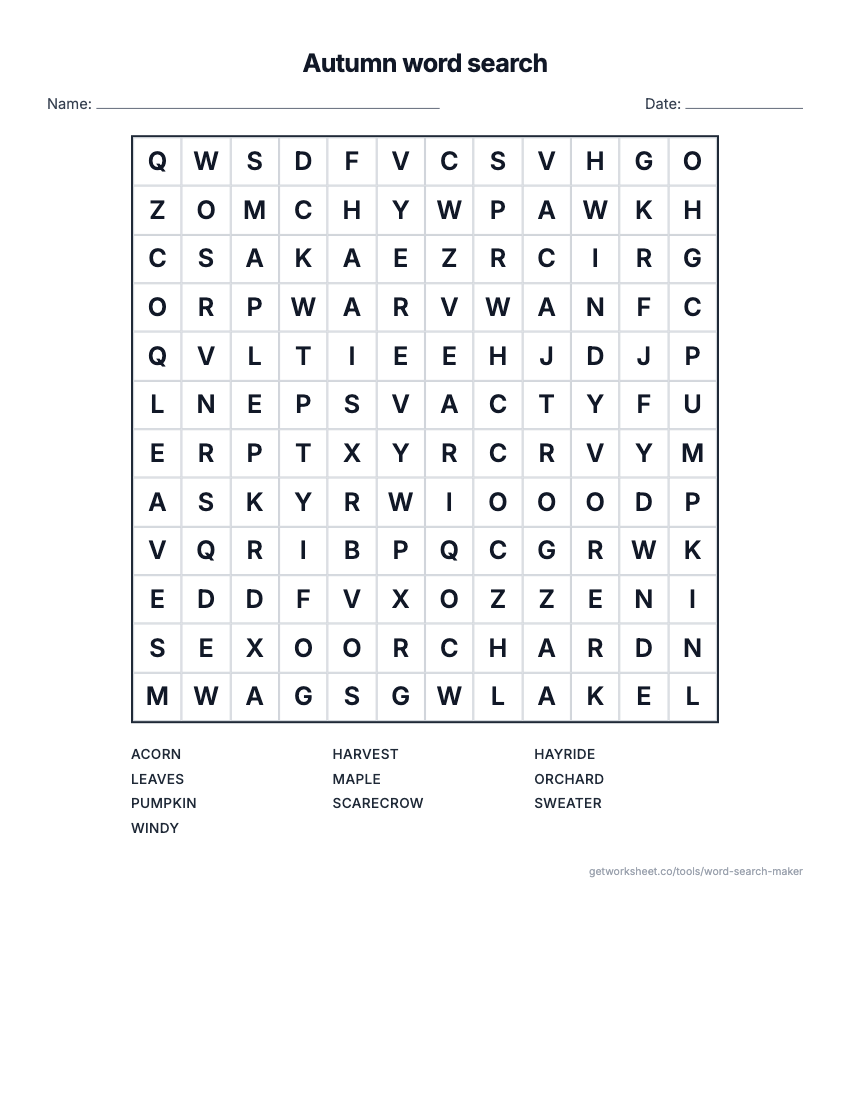
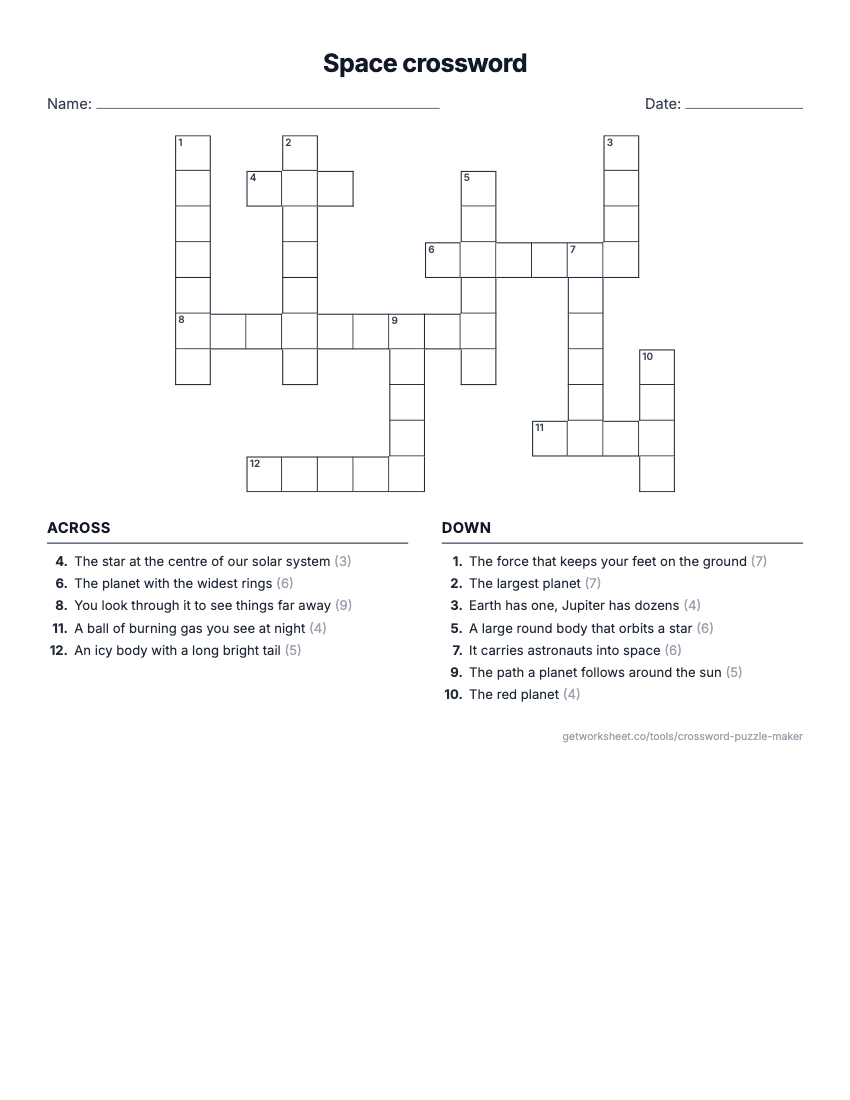
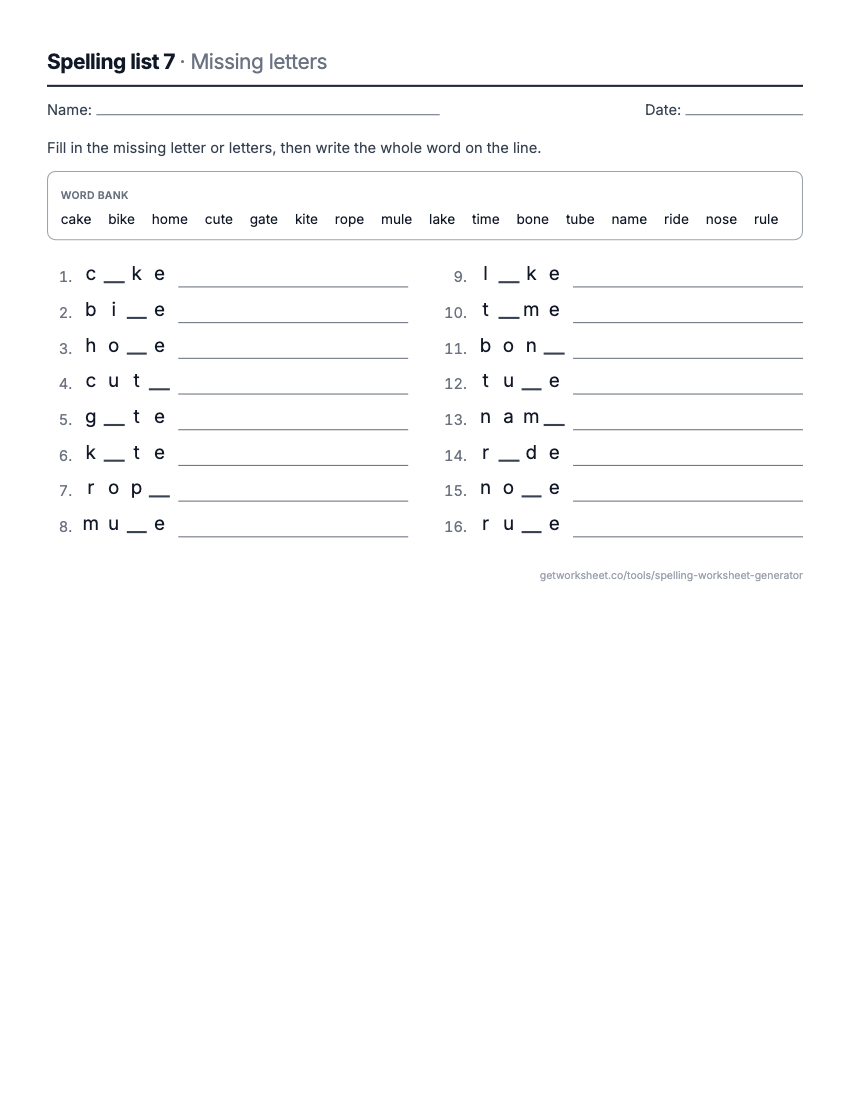
AI worksheet generator
Need a different verbs worksheet?
Generate a custom verbs worksheet: pick the grade, question types and count, and print it in about 20 seconds. Free accounts get 1 generation a week.
Teaching tips and common mistakes
How to use these worksheets in class
- Act it out first. Action verb or not? works best after a two-minute game: call a word, children do it if it is an action (jump, whisper, stir) and freeze if it is not (table, green, Tuesday).
- One verb per sentence. Find the verb promises exactly one verb in each sentence, so children learn to keep looking until they find the action word rather than underlining the first long word. The sentences mix present and past on purpose.
- Circle the clue words. On Past, present or future? have students circle yesterday, last night, every morning, tomorrow, next week and will before ticking. Five sentences of each tense makes self-checking easy.
- Chant the pairs. The sixteen verbs on Irregular past tense are the ones children use most; go, went; eat, ate; see, saw. Read the table aloud as call and response before and after the sheet.
- Rewrite, then write. Rewrite in the past tense alternates regular and irregular verbs so students cannot just add -ed to everything; the bonus box asks for their own past-tense sentences about yesterday.
- Grades 1 to 4. Grade 1: sheets one and two. Grade 2: add the tense sort and the irregular table. Grades 3 and 4: all five, with the rewrite sheet as the assessment.
Answer key
Every practice sheet carries its own answer key on page 2 of the PDF. The keys are repeated here for quick marking.
- Action verb or not?: Part 1: action verb or not?: 1. Verb 2. Not 3. Verb 4. Not 5. Verb 6. Not 7. Verb 8. Not 9. Verb 10. Not 11. Verb 12. Not 13. Verb 14. Not 15. Verb 16. Not Part 2: the rules: 1. does 2. verb 3. hops 4. painted
- Find the verb: 1. hopped 2. drives 3. sing 4. baked 5. blew 6. kicked 7. reads 8. swim 9. knitted 10. giggled 11. visited 12. washes
- Past, present or future?: 1. Past 2. Future 3. Present 4. Past 5. Present 6. Future 7. Present 8. Past 9. Future 10. Present 11. Past 12. Future 13. Present 14. Past 15. Future
- Irregular past tense: Part 1: today and yesterday: go | went eat | ate see | saw run | ran take | took give | gave come | came write | wrote sing | sang drink | drank swim | swam fly | flew ride | rode buy | bought catch | caught make | made Part 2: complete the sentences: 1. ate 2. flew 3. wrote
- Rewrite in the past tense: 1. I walked to school with my friend. 2. The dog barked at the postman. 3. We played football after lunch. 4. She ate an apple at break. 5. The children went to the zoo. 6. Dad cooked dinner on Fridays. 7. The bird sang in the tall tree. 8. I saw a rainbow after the storm. 9. They swam in the lake. 10. My sister drew a picture of a horse. Bonus: Bonus: any two sentences in the past tense, for example: Yesterday I played in the park. Then I ate an ice cream.
Common mistakes to watch for
- Goed, eated, catched. Adding -ed to an irregular verb is the most common tense error in grades 1 and 2 and is exactly what the table and the rewrite sheet target.
- Treating is, are and was as “not verbs”. Sheet one asks about action verbs only, so being verbs are not included; they come up on the tense sheet (is reading, are painting) as part of a verb phrase.
- Confusing present with future. The bus arrives at eight every morning is present (it happens regularly) even though it sounds like a plan. The clue words settle it.
- Changing more than the verb. When rewriting in the past, children often alter other words too. Insist that only the verb changes: The children went to the zoo, nothing else.
Frequently asked questions
What grade are these verbs worksheets for?
Grades 1 to 4. Identifying verbs and simple tense is grade 1 (CCSS L.1.1e); irregular past tense is a grade 2 standard (L.2.1d); forming and rewriting tenses is grade 3 (L.3.1e), and grade 4 uses the set for review.
Do the worksheets include answer keys?
Yes. Every sheet has its answer key on page 2 of the PDF and the keys are repeated on this page. The bonus box on the last sheet is open-ended and has sample sentences.
Which irregular verbs are covered?
Sixteen of the most frequent: go, eat, see, run, take, give, come, write, sing, drink, swim, fly, ride, buy, catch and make, plus draw on the rewrite sheet. Regular verbs on the same pages show the contrast with the -ed rule.
Are helping verbs like is and will covered here?
They appear on the tense sheet as part of verb phrases (is reading, will visit) so students can tick the tense, but they are taught in their own right on our helping verbs page linked below.
More English practice
Verbs need a subject, so the nouns worksheets and subject and predicate worksheets pair naturally with this set. The helping verbs worksheets cover is, are, was, will and have, and the subject-verb agreement worksheets take the present tense further (he runs, they run). Describing words for the nouns in these sentences are on the adjectives worksheets.
Free library
Related collections
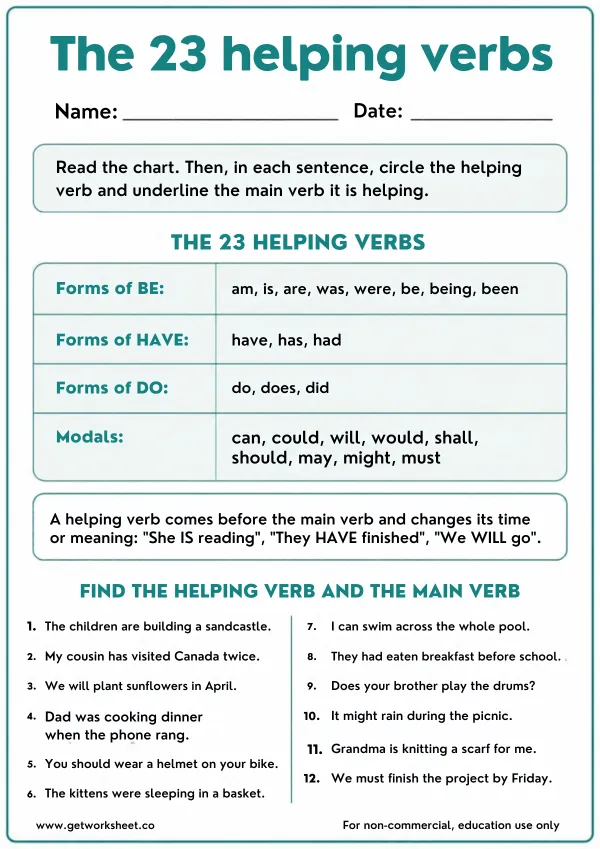
Free helping verbs worksheets
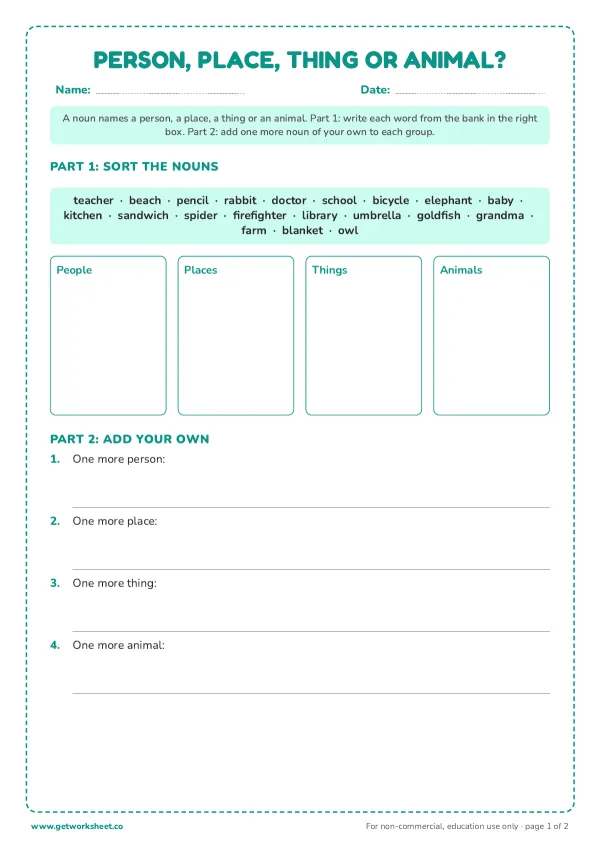
Free nouns worksheets
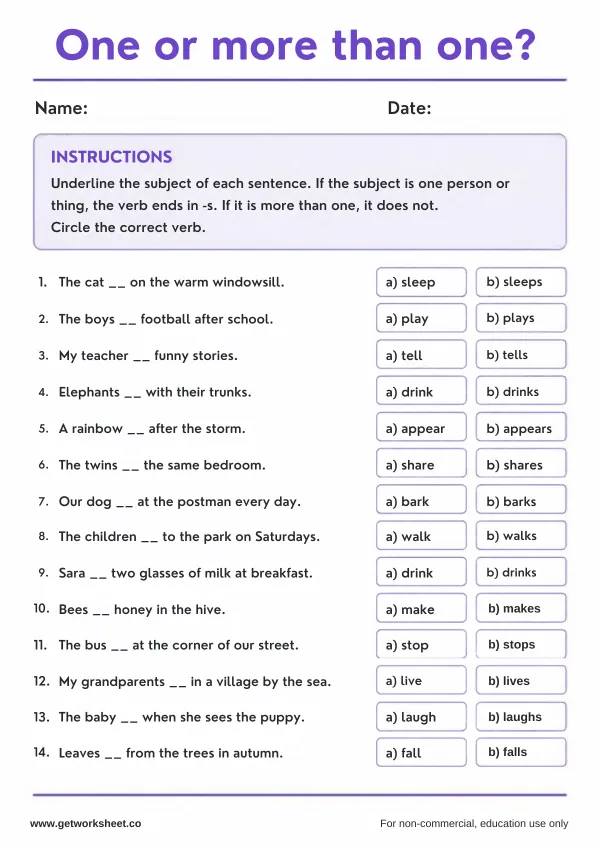
Free subject-verb agreement worksheets
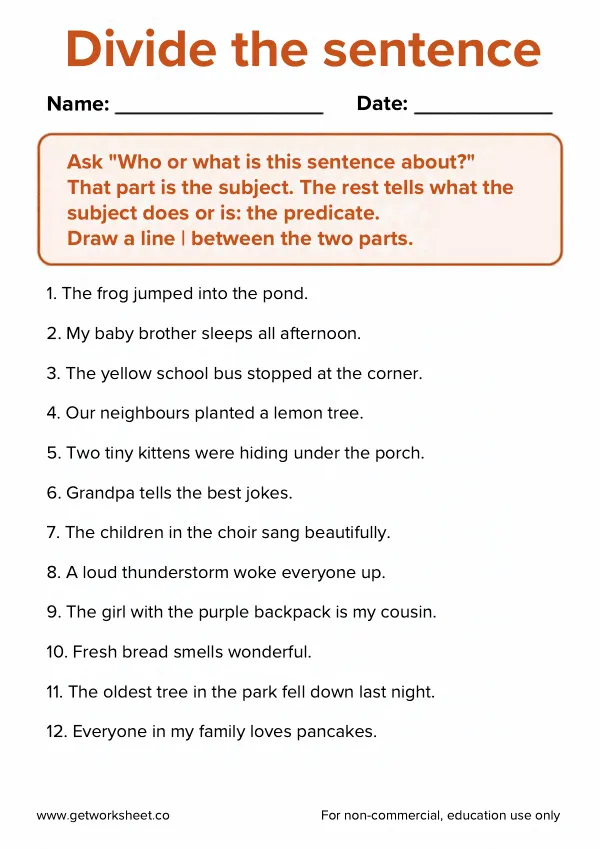
Free subject and predicate worksheets
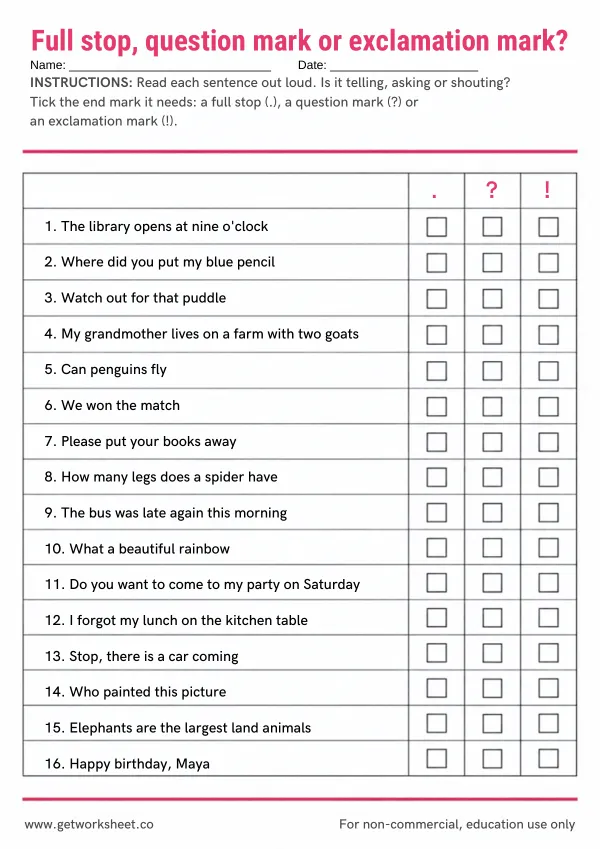
Free punctuation worksheets
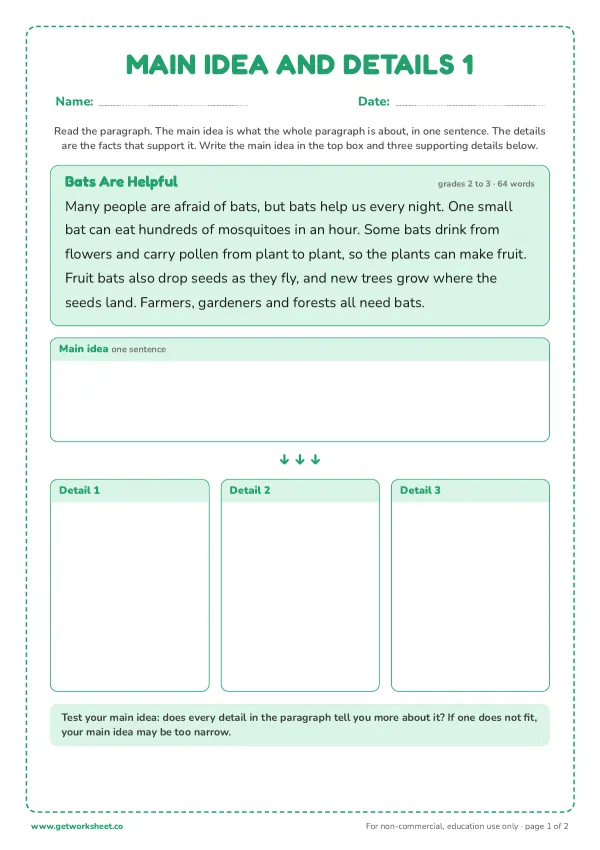
Free main idea worksheets
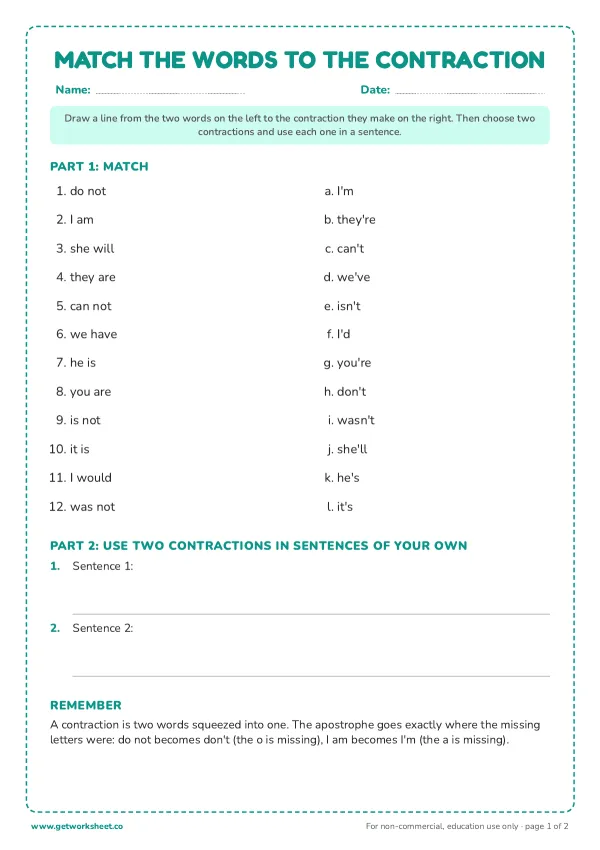
Free contractions worksheets
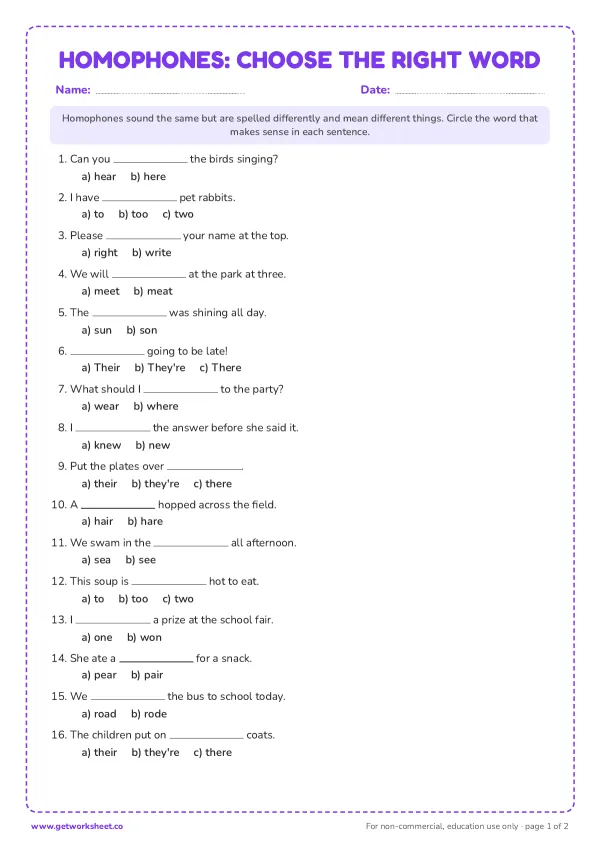
Free homophones worksheets
More worksheets
- Free prefixes and suffixes worksheets
- Free short and long vowel worksheets
- Free Groundhog Day worksheets
- Free Presidents' Day worksheets
- Free Montessori three part cards templates
- Free Montessori grammar symbols worksheets
- Free y as a vowel worksheets
- Free schwa sound worksheets
- Free glued sounds worksheets
- Free FLOSS rule worksheets
- Free Elkonin boxes worksheets
- Free heart words worksheets