English · Kindergarten–Grade 2
Free handwriting worksheets
Six printable handwriting worksheets for kindergarten to grade 2: uppercase A to Z, lowercase a to z, twelve short words and six sentences, all on three-line guides with a solid model, dashed letters to trace and space to write alone.
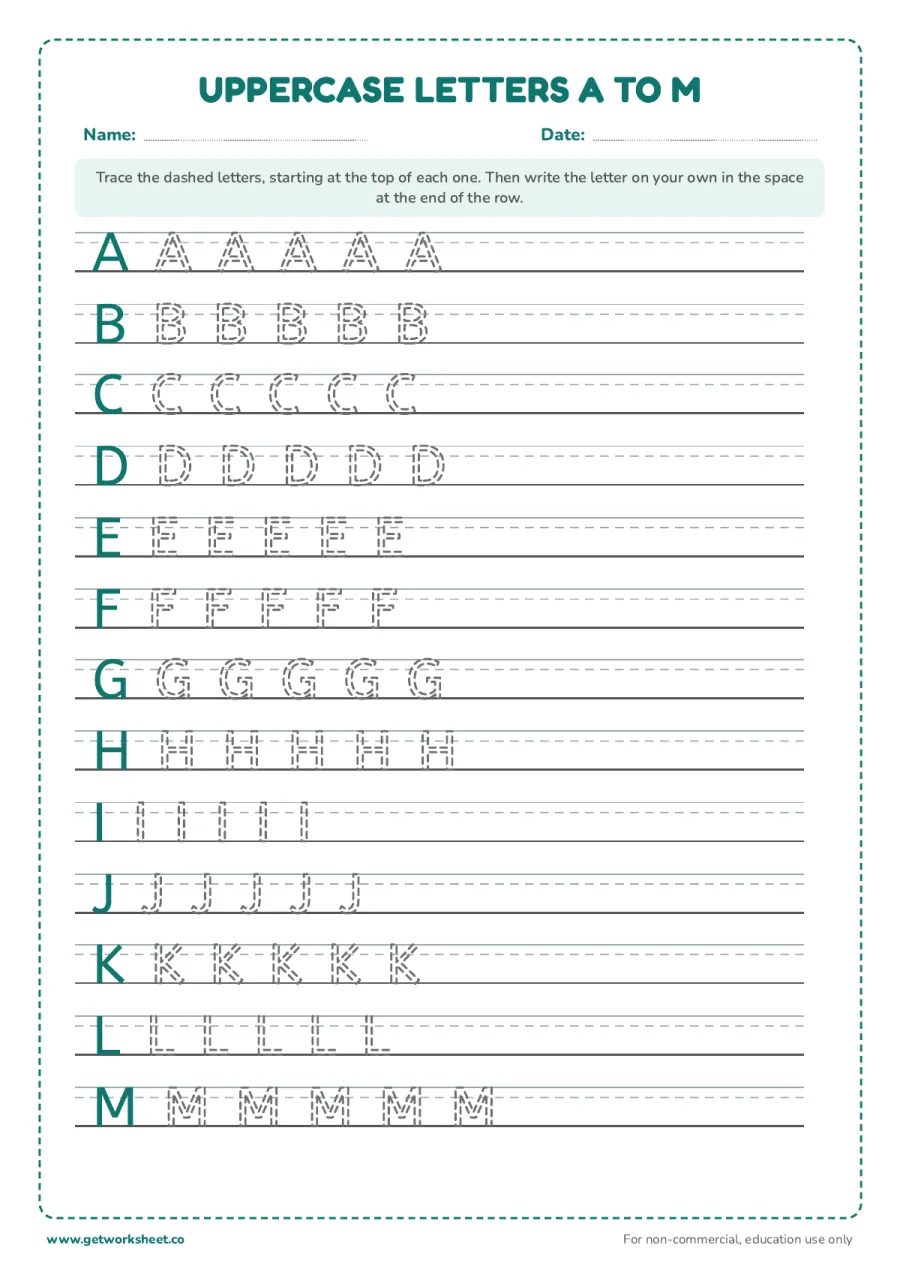
Uppercase letters A to M: trace and write
Capital letters A to M on three-line handwriting guides. Each row shows the letter once, then five dashed letters to trace, then space to write it alone.
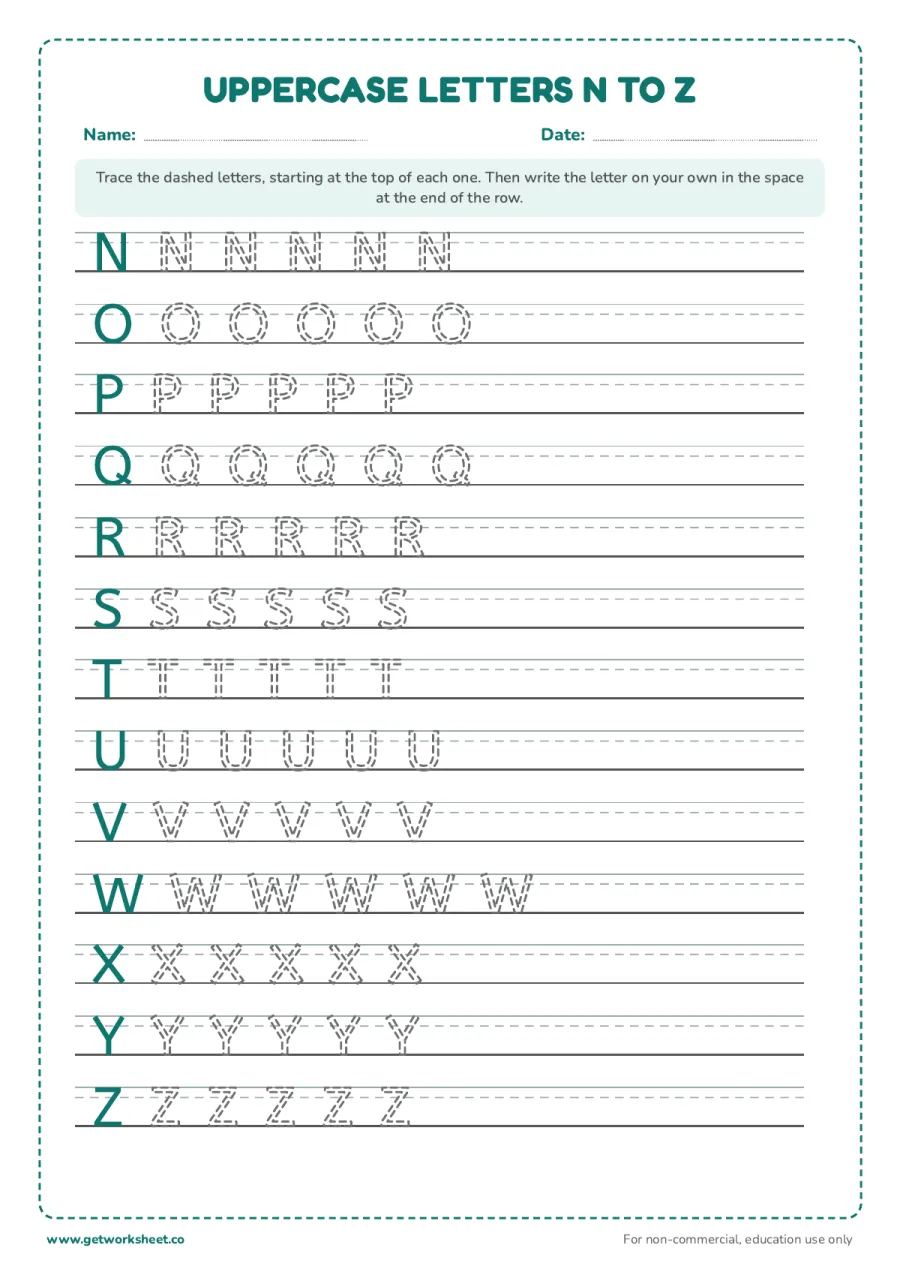
Uppercase letters N to Z: trace and write
Capital letters N to Z on three-line handwriting guides. Each row shows the letter once, then five dashed letters to trace, then space to write it alone.
Whole set
All 6 sheets in one PDF
Instant and ad-free. No account needed.
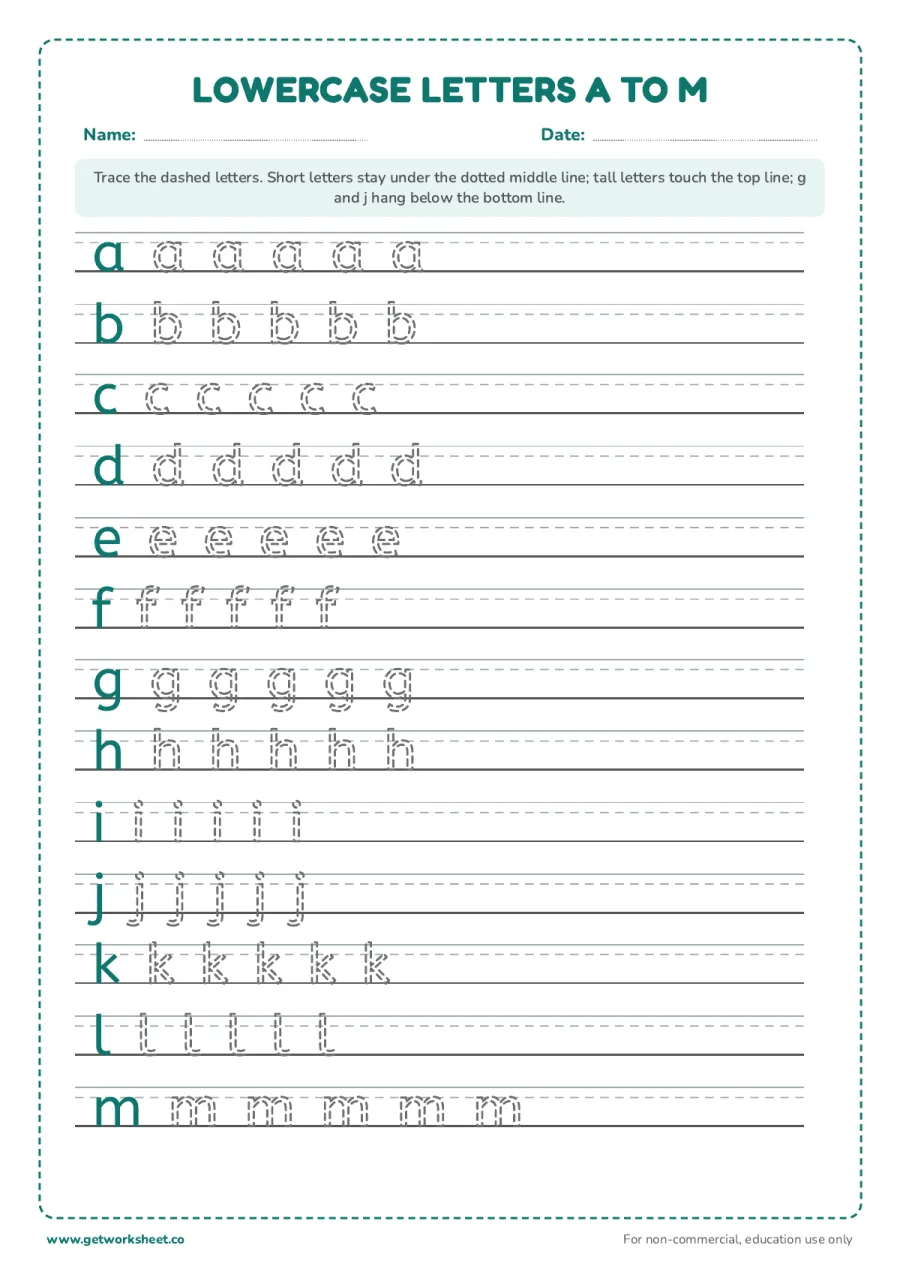
Lowercase letters a to m: trace and write
Lowercase a to m on three-line guides with a dashed midline, so children see which letters are short (a, c, e), tall (b, d, h, k, l) and which hang below the line (g, j).
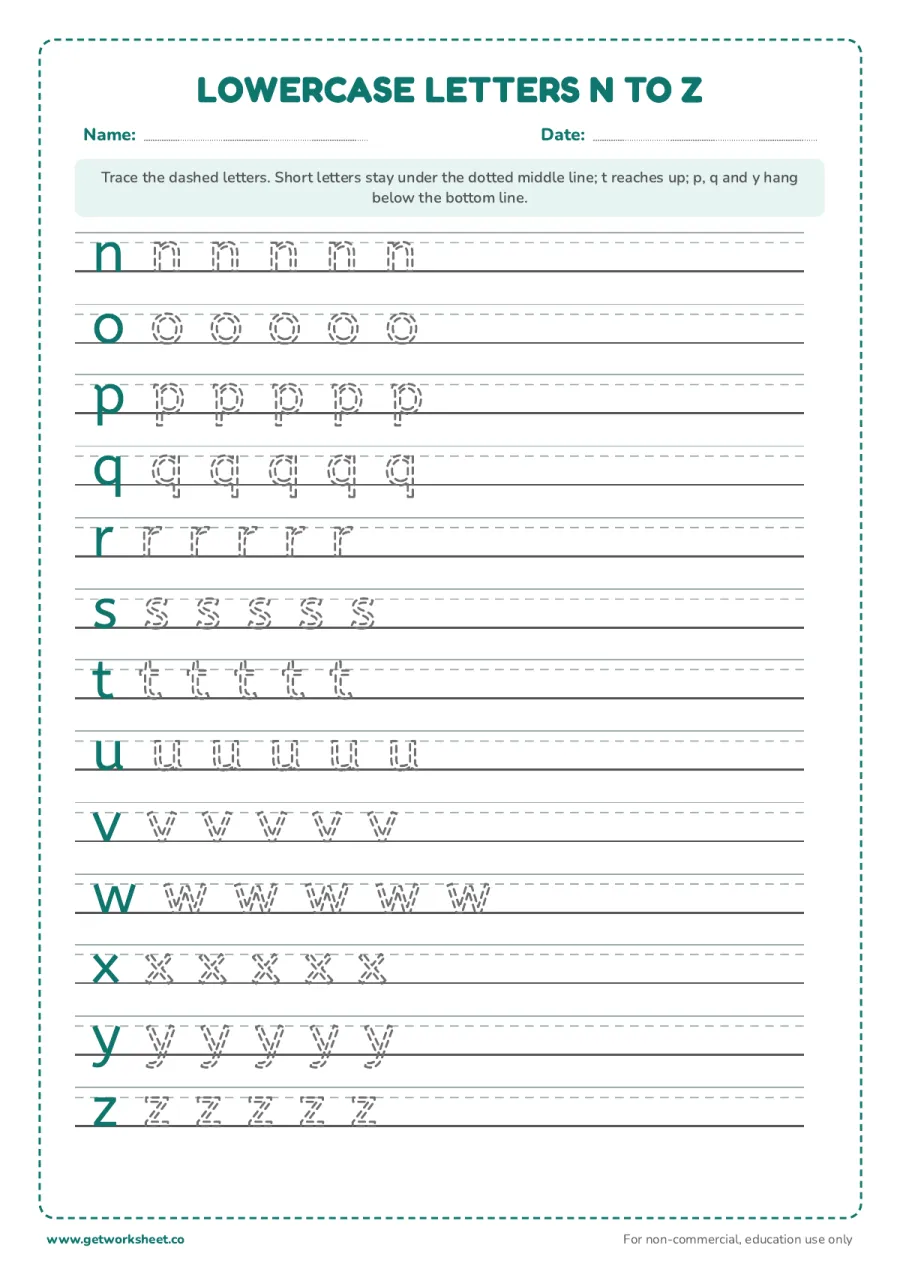
Lowercase letters n to z: trace and write
Lowercase n to z on three-line guides with a dashed midline. Includes the letters that hang below the line (p, q, y) and the tall t.
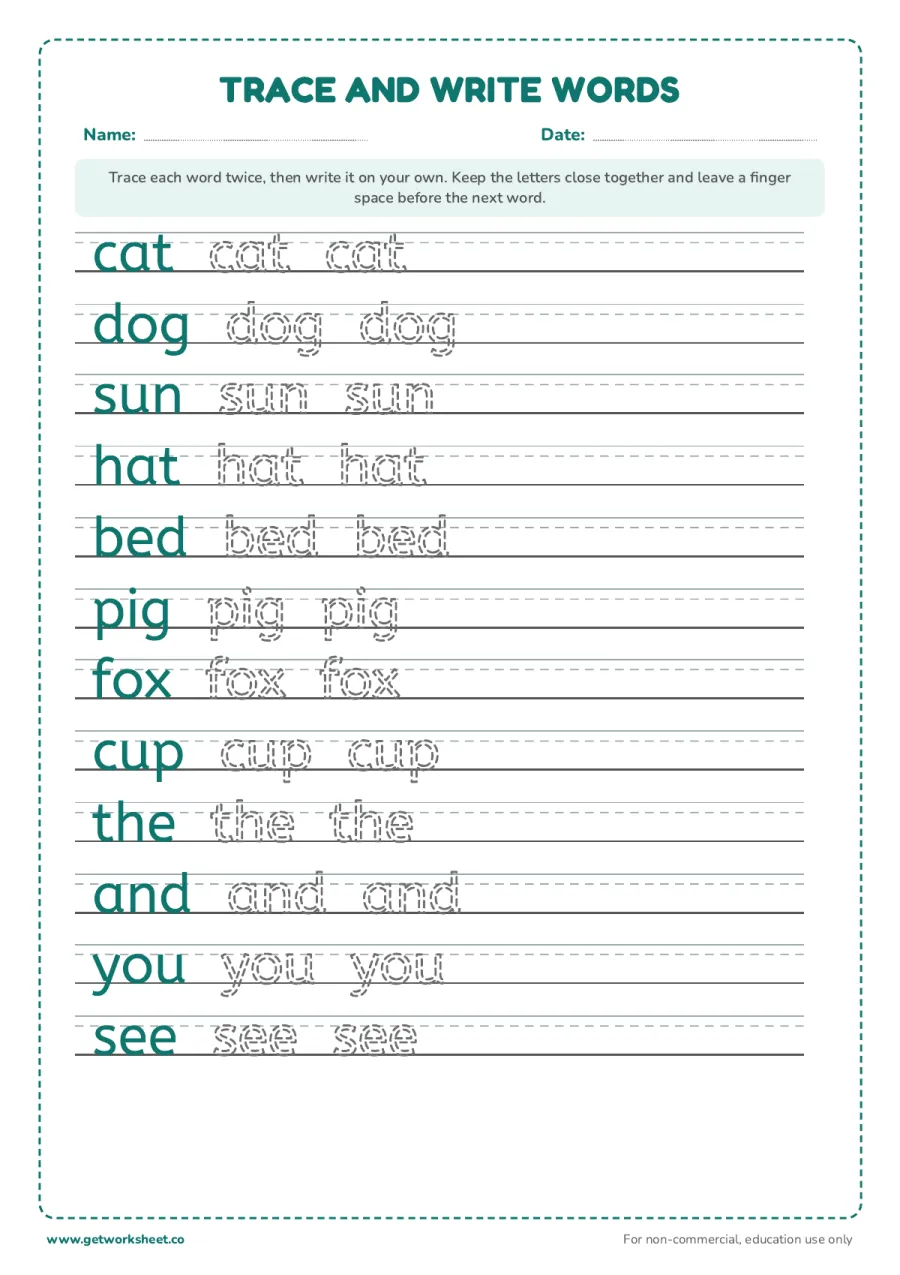
Trace and write words: 12 short words on guides
Twelve short words (cat, dog, sun, hat, bed, pig, fox, cup, the, and, you, see) to trace twice and then write alone, with even spacing between letters.
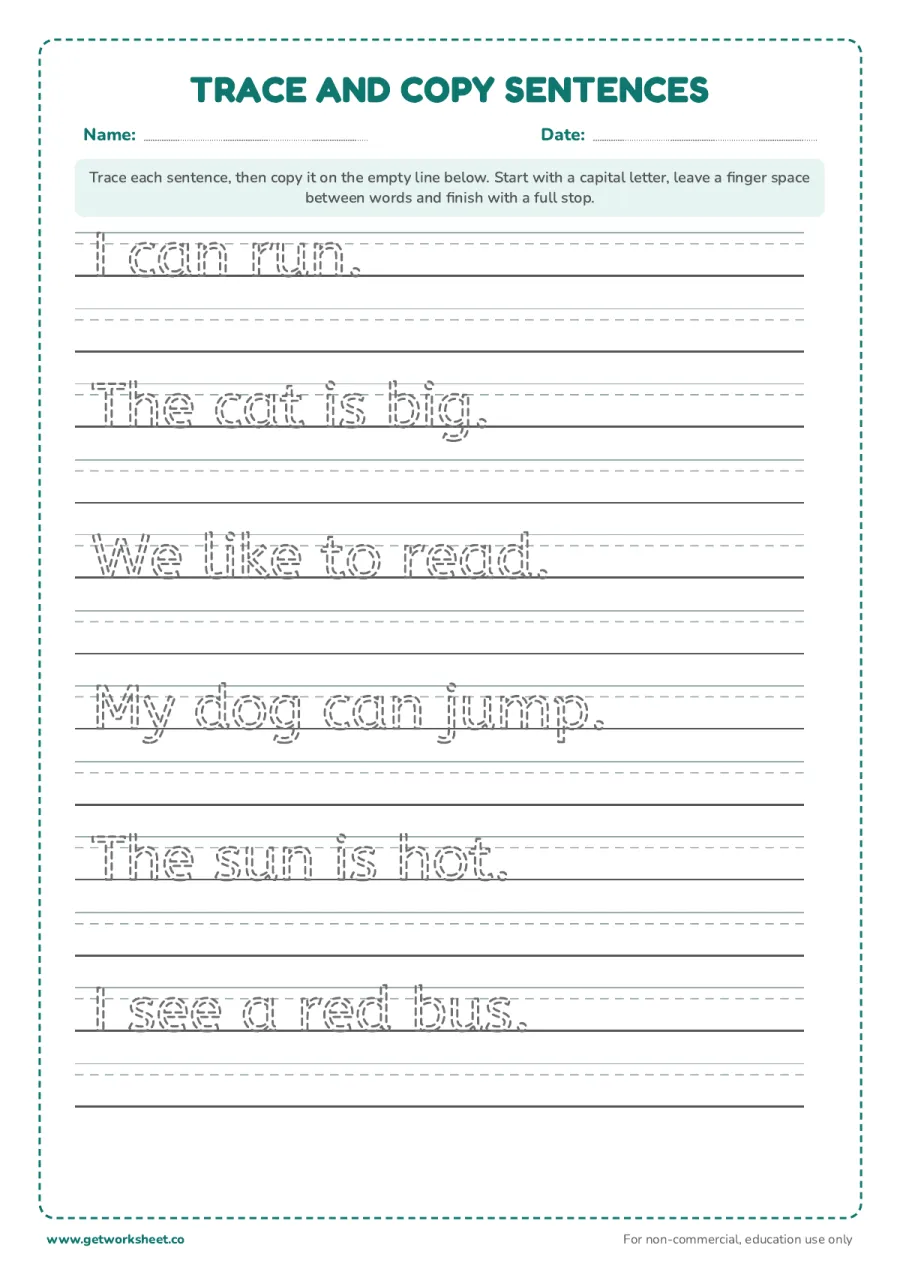
Trace and copy sentences: 6 sentences with copy lines
Six short sentences to trace, each followed by an empty guide line to copy it. Practises capital letters at the start, finger spaces between words and a full stop at the end.
AI worksheet generator
Make a worksheet like this for your class
The 6 sheets above are fixed. The generator writes a new handwriting worksheet for your grade, with the question types and count you choose, in about 20 seconds. Pick a grade to start:
What you get
- A fresh set of questions on handwriting, not a copy of the sheets above
- Multiple choice, fill in the blanks, true or false, open ended
- Answer key and print-ready PDF with Pro
Free account, 1 worksheets a week. No card.
Handwriting is taught in three steps: see the letter, trace the letter, write the letter. Every row on these sheets follows that order: a solid model in color, dashed letters to trace, then empty guide space for the child's own attempt. The guides are the standard three lines (top, dashed middle, bottom) so that letter height and position are practiced from the start, not corrected later.
What's in this set
- Uppercase letters A to M. Capitals A to M, one letter per row on three-line guides: a solid model, five dashed letters to trace, then room to write the letter without help.
- Uppercase letters N to Z. Capitals N to Z in the same format: model, five dashed letters, space to write.
- Lowercase letters a to m. Lowercase a to m on guides with a dashed midline: short letters sit under it, tall letters reach the top line, g and j hang below. Model, five dashed letters, space to write.
- Lowercase letters n to z. Lowercase n to z in the same format, including the tail letters p, q and y.
- Trace and write words. Twelve short words, six CVC words and six sight words, each shown once as a model and twice dashed, with space to write the word alone.
- Trace and copy sentences. Six short sentences on guides, each dashed to trace and followed by an empty line to copy it. Capital at the start, finger spaces, full stop at the end.
What children will practice
- Forming each capital and lowercase letter with the correct start point and stroke order
- Letter size and position: short letters under the midline, tall letters to the top line, tail letters (g, j, p, q, y) below the bottom line
- Consistent spacing within a word and a finger space between words
- Sentence conventions: a capital at the start, a full stop at the end
- Moving from tracing to independent writing on the same row, so the model is always in view
Free printable makers
Make your own handwriting sheets
Type your own words or numbers and print in about 30 seconds. No account, no AI, answer key where it applies.
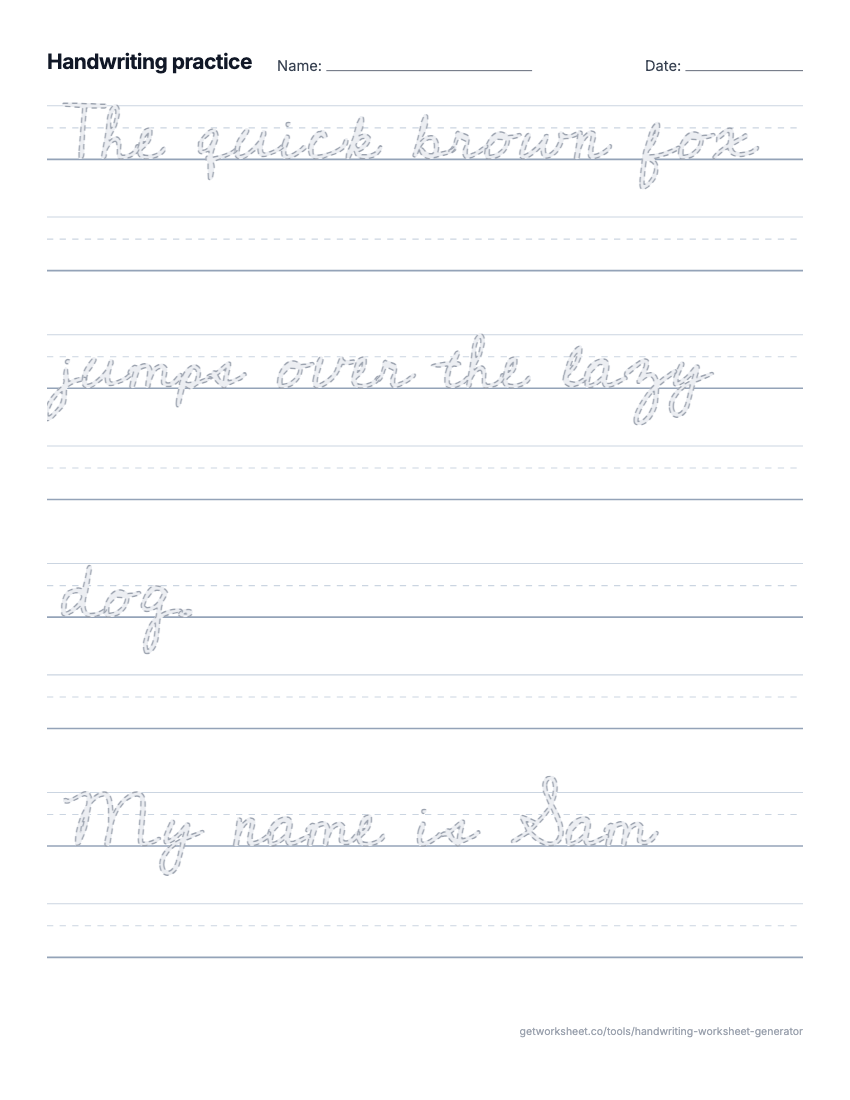 Handwriting worksheet generatorYour sentences as print or cursive tracing rows on guide lines. Free to print.
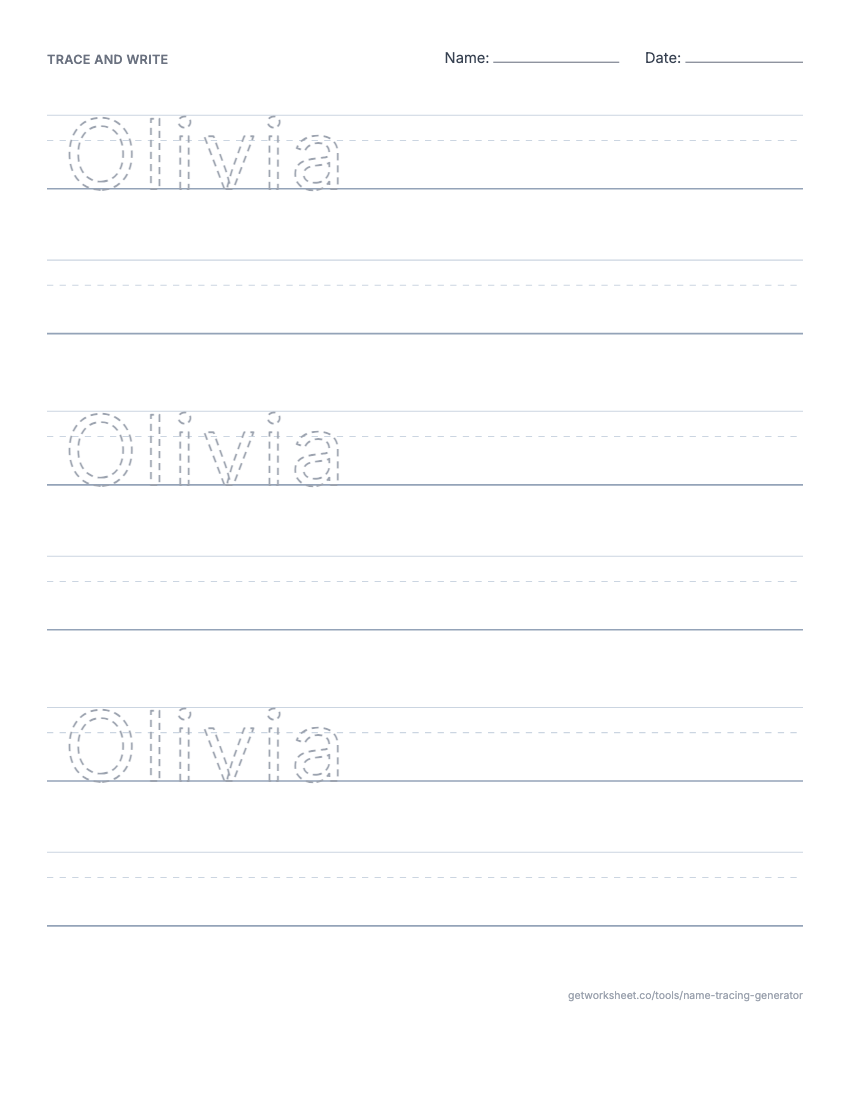 Name tracing generatorDashed, dotted or grey letters on handwriting lines. Free to print.
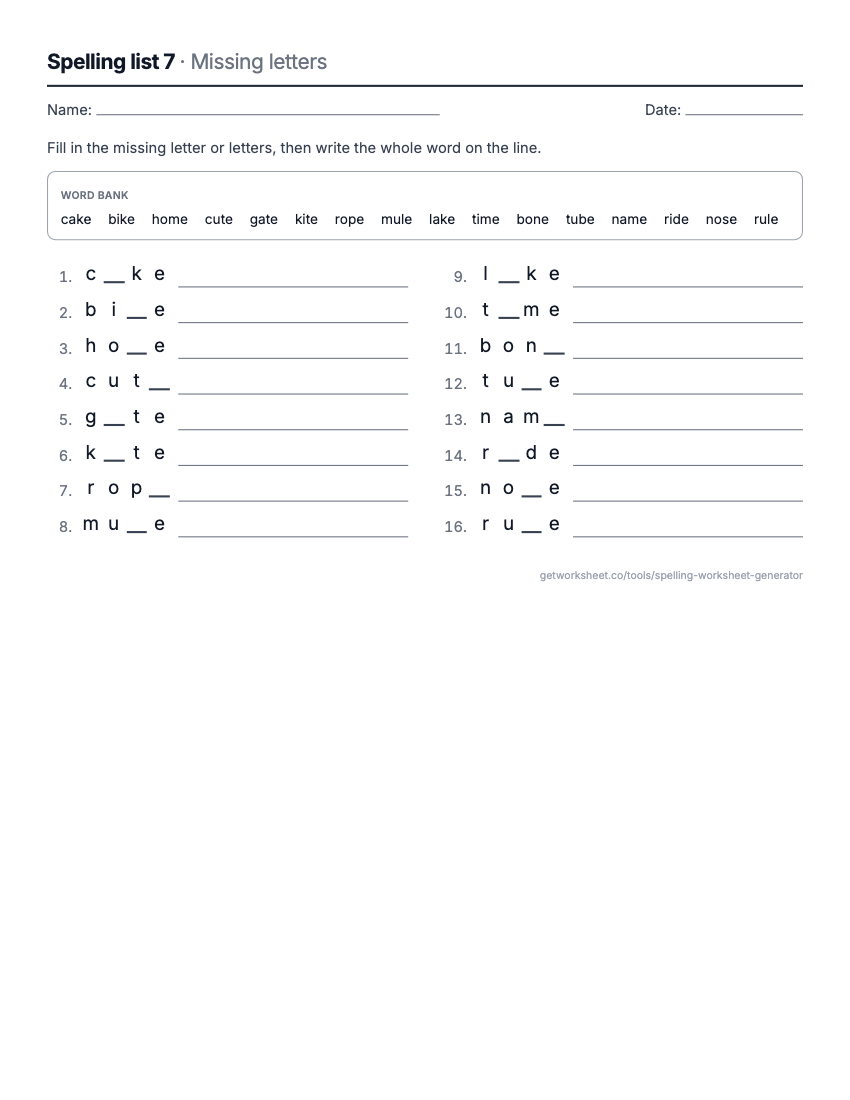 Spelling worksheet generatorTest sheet, scramble, missing letters, ABC order and key from one word list. Free to print.
AI worksheet generator
Need a different handwriting worksheet?
Generate a custom handwriting worksheet: pick the grade, question types and count, and print it in about 20 seconds. Free accounts get 1 generation a week.
How to use these worksheets
- Before letters, check pencil control. A child who cannot yet trace a zigzag or a wave will struggle with A and s. Start with the line tracing worksheets and come back when the strokes are steady.
- Capitals first, then lowercase. Capitals are made of simple straight lines and big curves, all starting at the top line, which is why most programs teach them first. Lowercase letters need the midline and introduce tails and tall letters.
- Talk through the strokes. "Start at the top, big line down, jump back to the top, little line across." Verbal paths make stroke order stick far better than watching alone. Trace the model letter with a finger while saying the path, then pick up the pencil.
- Two or three rows a day beats a whole sheet. Handwriting is a motor skill; short, frequent practice with attention to accuracy works, long tired sessions build bad habits. Circle the child's best letter in each row so they know what "good" looks like.
- Words and sentences last. Once single letters are secure, the word sheet adds spacing and the sentence sheet adds capitals and full stops. Read each word or sentence aloud before writing it so the task is also reading practice.
Common problems and quick fixes
- Letters floating above the line. Point to the bottom line before each row: "every letter sits on this line".
- Tall and short letters the same height. Use the lowercase sheets and name the groups: short (a c e m n o r s u v w x z), tall (b d f h k l t) and tail letters (g j p q y).
- Reversed b and d, p and q. Normal until about age 7. Practice the pair on the same day with a memory hook ("b has a bat before the ball").
- Gripping too hard or pressing through the page. Try a shorter pencil or a triangular grip, and shake the hands out between rows.
- Words squashed together. A finger placed after each word on the sentence sheet gives the spacing rule a physical cue.
Frequently asked questions
What ages are these handwriting worksheets for?
Kindergarten to grade 2 (ages 5 to 8). Kindergarten children usually work on the capital and lowercase letter sheets; grades 1 and 2 use the word and sentence sheets and revisit any letters that are still uneven.
Which font or letter style do the sheets use?
A plain print (manuscript) style with a single-storey a and g, the shapes children are taught to write, on standard three-line guides with a dashed midline. The sheets are not cursive.
Is there an answer key?
No. Handwriting sheets are checked by eye: does each letter start at the top, sit on the bottom line and match the model in height? Circle the best letter in each row rather than marking errors.
How often should a child practice handwriting?
Ten minutes a day is more effective than one long weekly session. Two or three rows done carefully, with the strokes said aloud, is a good daily target.
Can I reuse the sheets?
Yes. Print as many copies as you need for home or classroom use, or put a sheet in a plastic sleeve and use a dry-wipe marker.
Related worksheets
Before letters, build pencil control with the line tracing worksheets and the shape tracing sets (circles, squares, triangles). Alongside letters, the number tracing worksheets 1 to 20 use the same trace-then-write format, and the letter worksheets and phonics worksheets connect each letter to its sound.
Free library
Related collections
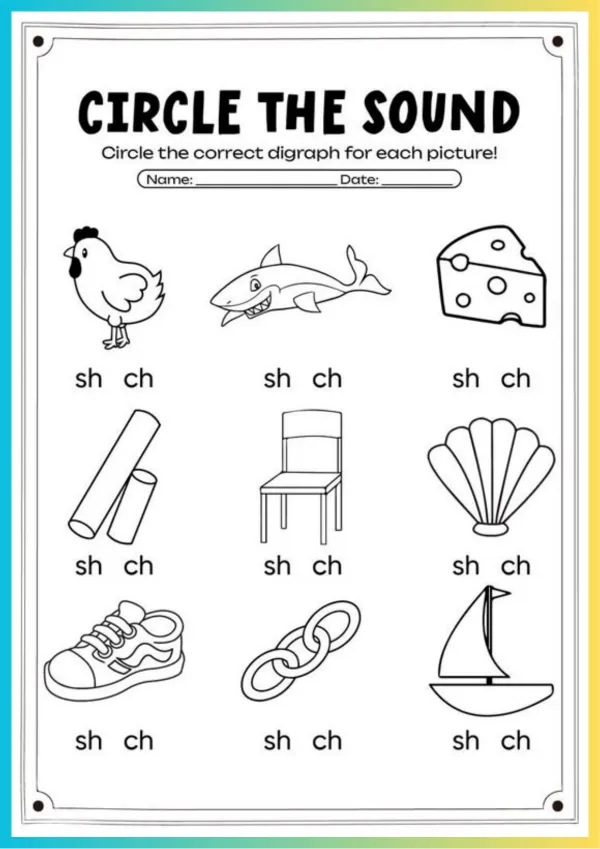
Free phonics worksheets
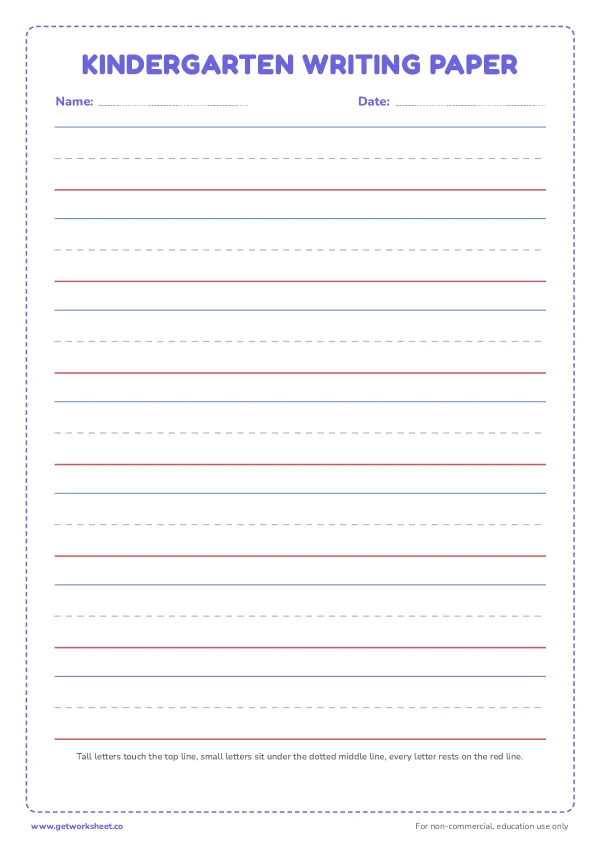
Free handwriting paper printables
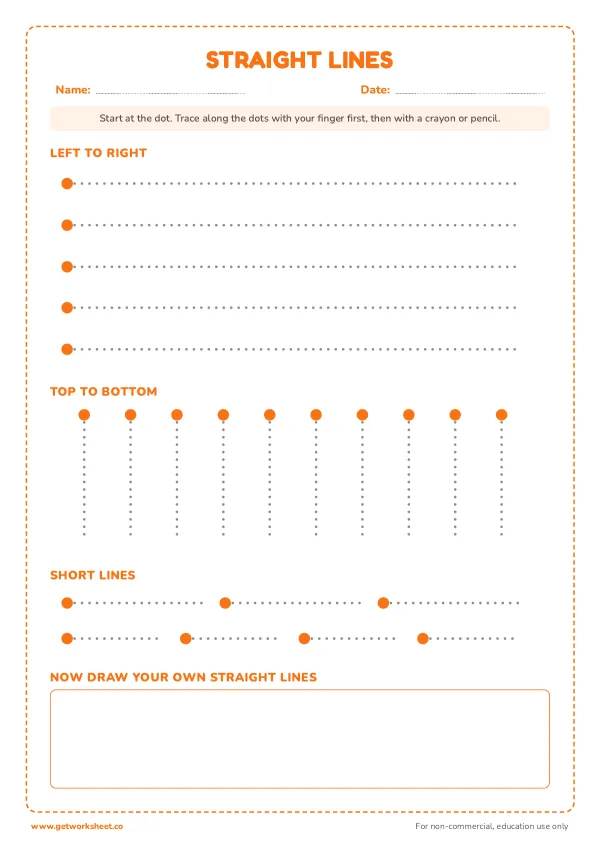
Free line tracing worksheets
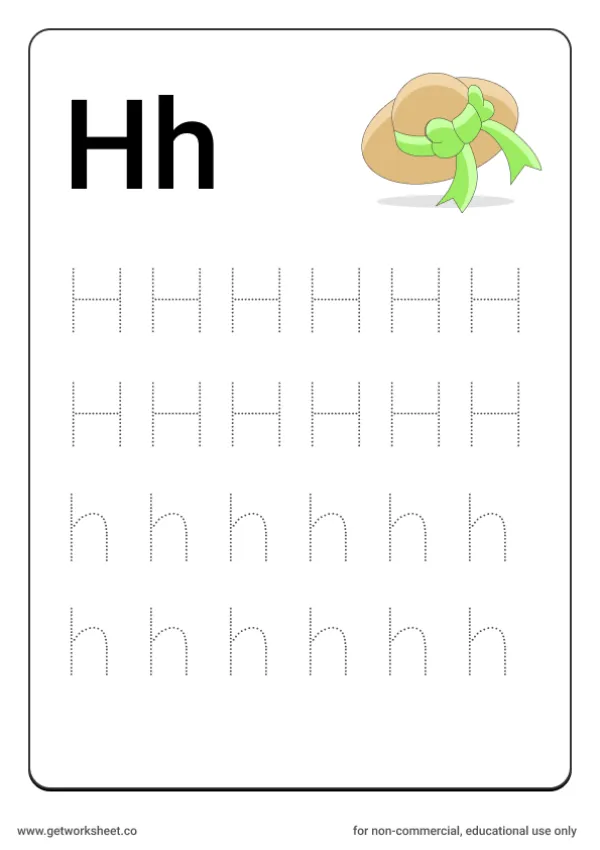
Free letter worksheets
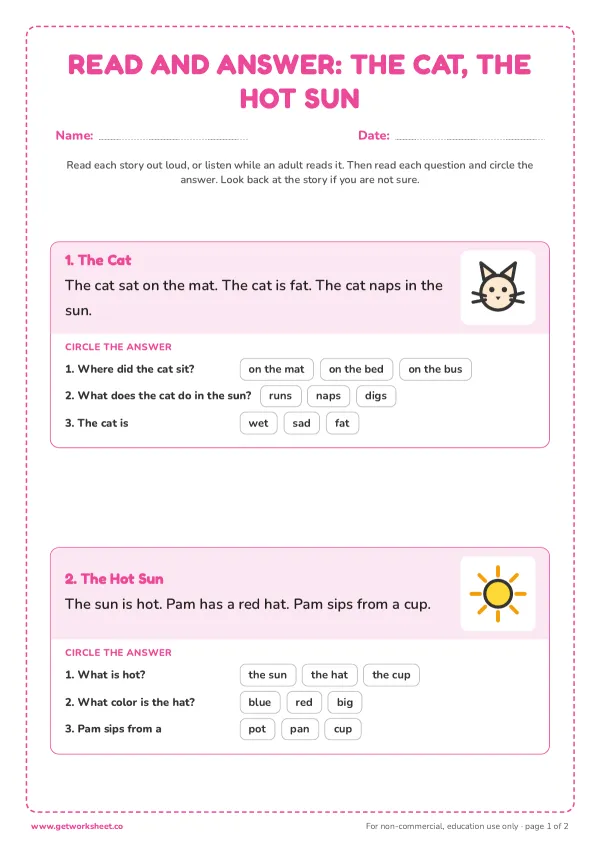
Free kindergarten reading comprehension worksheets
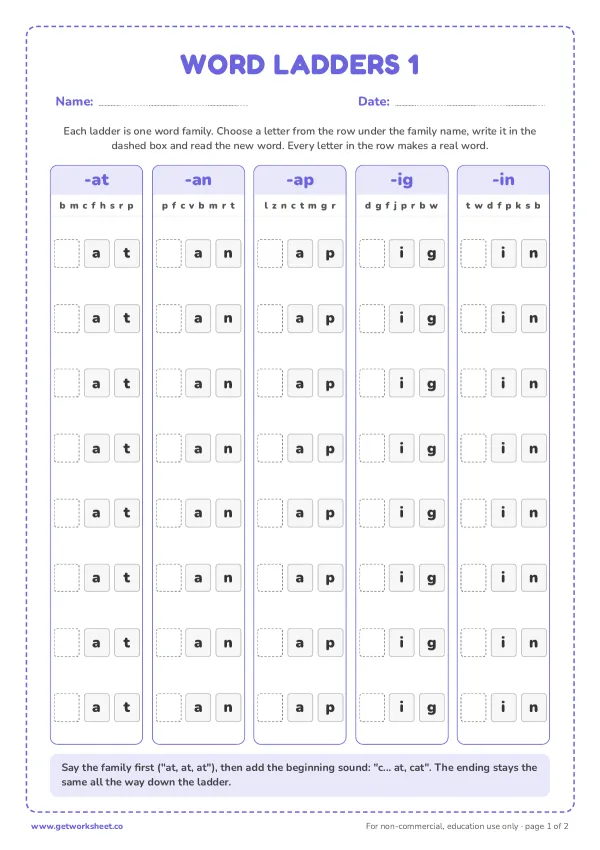
Free word families worksheets
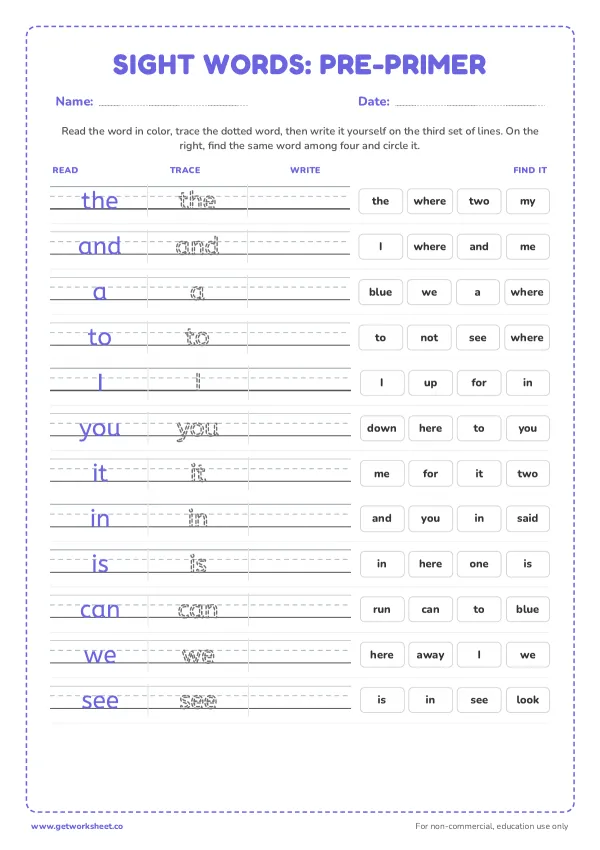
Free sight words worksheets (Dolch and Fry)
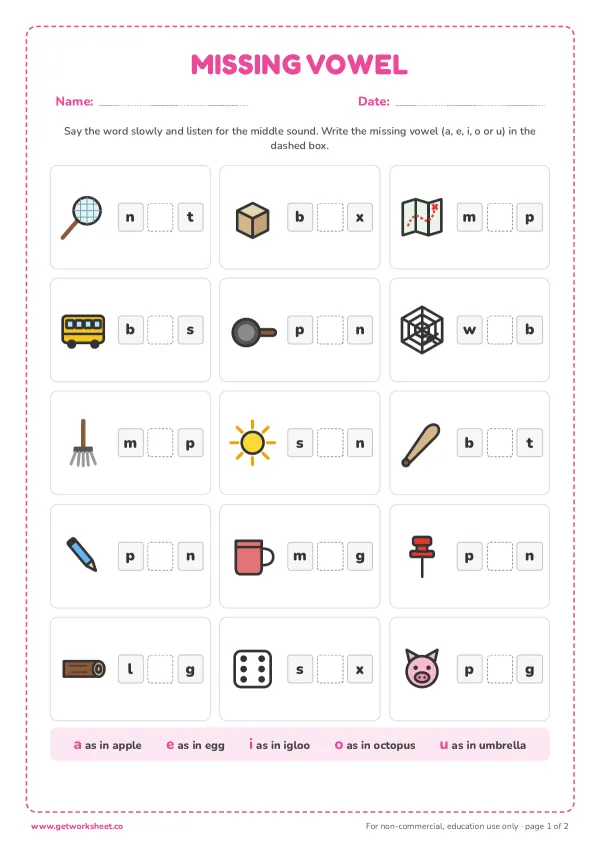
Free CVC words worksheets
More worksheets
- Free Christmas worksheets: word searches, letter to Santa and writing
- Free cl blend worksheets
- Free number tracing worksheets (1-20)
- Free square tracing worksheets
- Free triangle tracing worksheets
- Free circle tracing worksheets
- Free number line printables
- Free Halloween math worksheets
- Free Christmas math worksheets
- Free hundreds chart worksheets
- Free ten frame worksheets
- Free Montessori teen board and ten board worksheets