Maths · All ages
Free graph paper printables
Free printable graph paper in eight styles: 1 cm and 5 mm metric grids, 1/4 inch and 1/2 inch grids, a 5 mm dot grid, isometric paper with 10 mm triangles, a four-quadrant coordinate plane from -10 to 10 and a first-quadrant grid from 0 to 20. All drawn to exact size for printing at 100%.
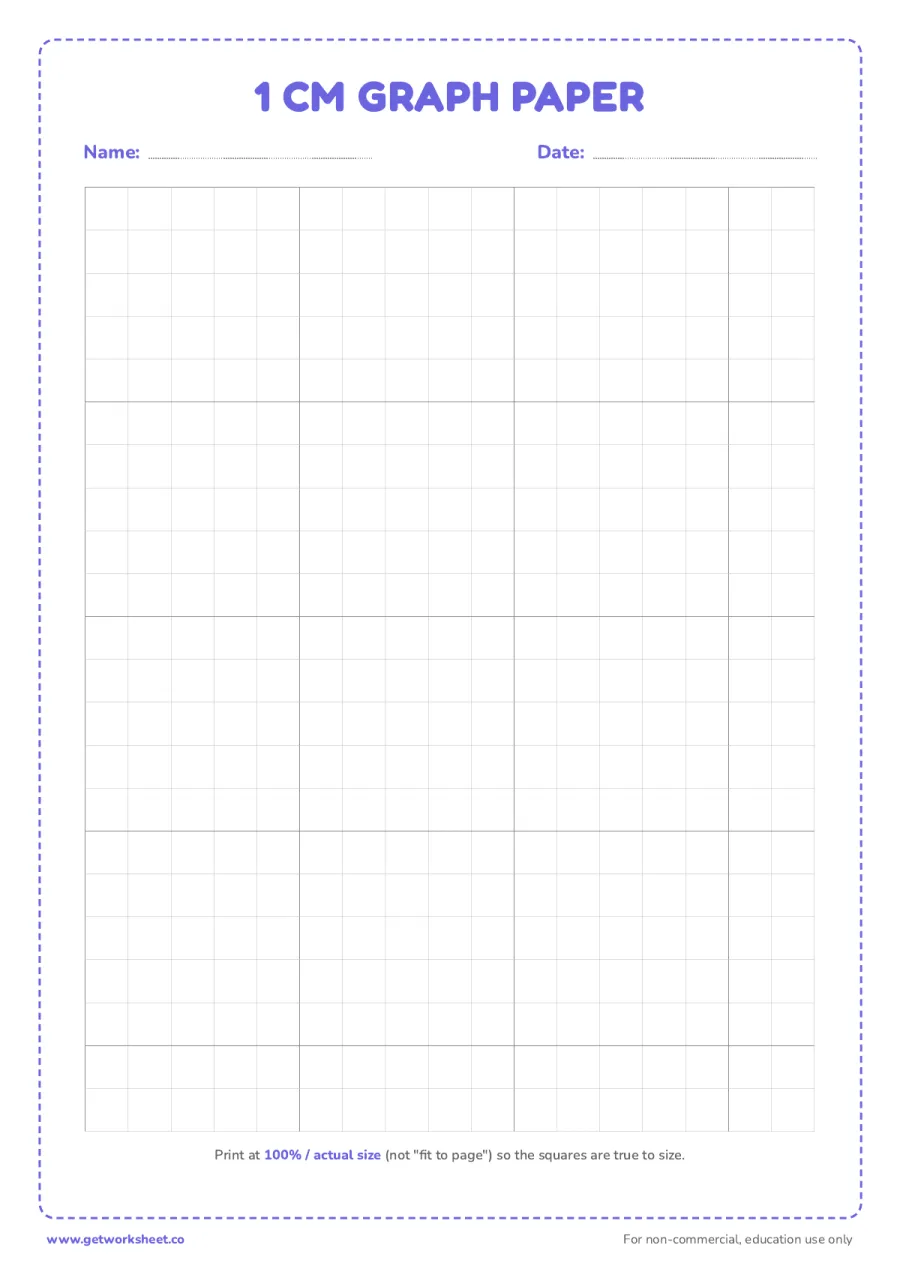
1 cm graph paper
A 17 x 22 grid of true 1 cm squares with a slightly heavier line every 5 cm, for plotting, area work and scale drawing. Free printable PDF.
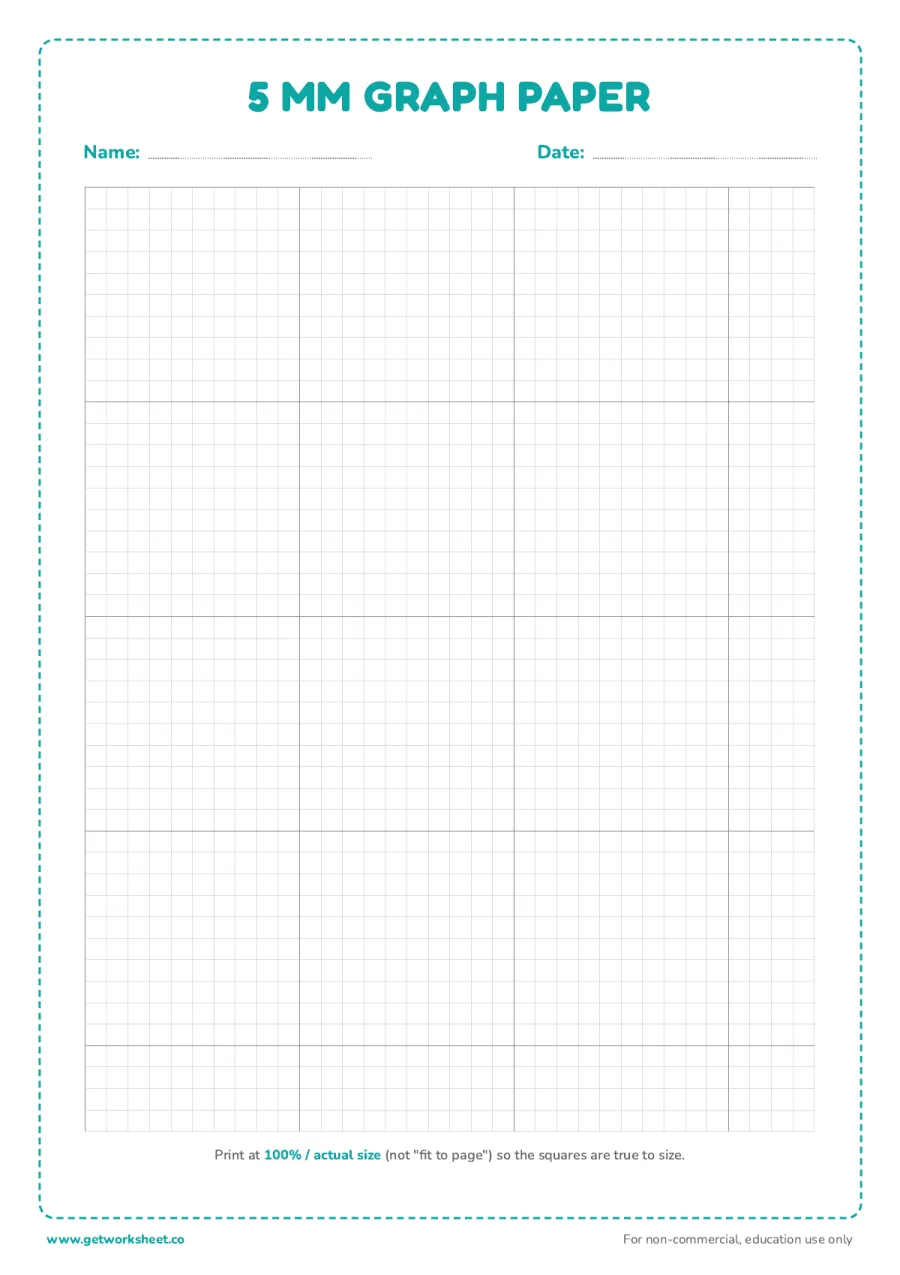
5 mm graph paper
A fine 34 x 44 grid of 5 mm squares with a heavier line every 5 cm; the standard metric squared paper for maths exercise books. Free printable PDF.
Whole set
All 8 sheets in one PDF
Instant and ad-free. No account needed.
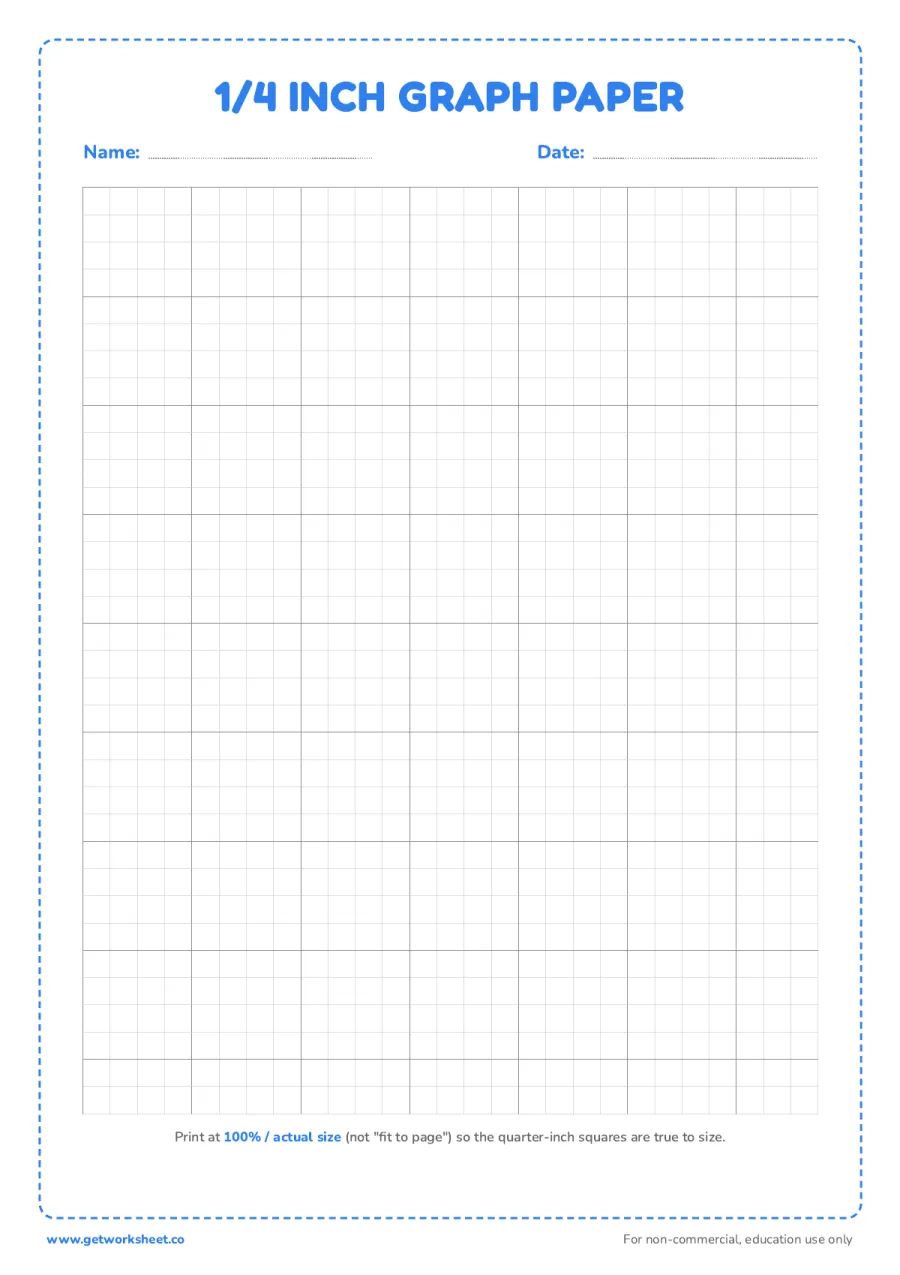
1/4 inch graph paper
Quarter-inch squares (27 x 34) with a heavier line every inch, the usual US classroom grid for graphing and arrays. Free printable PDF.
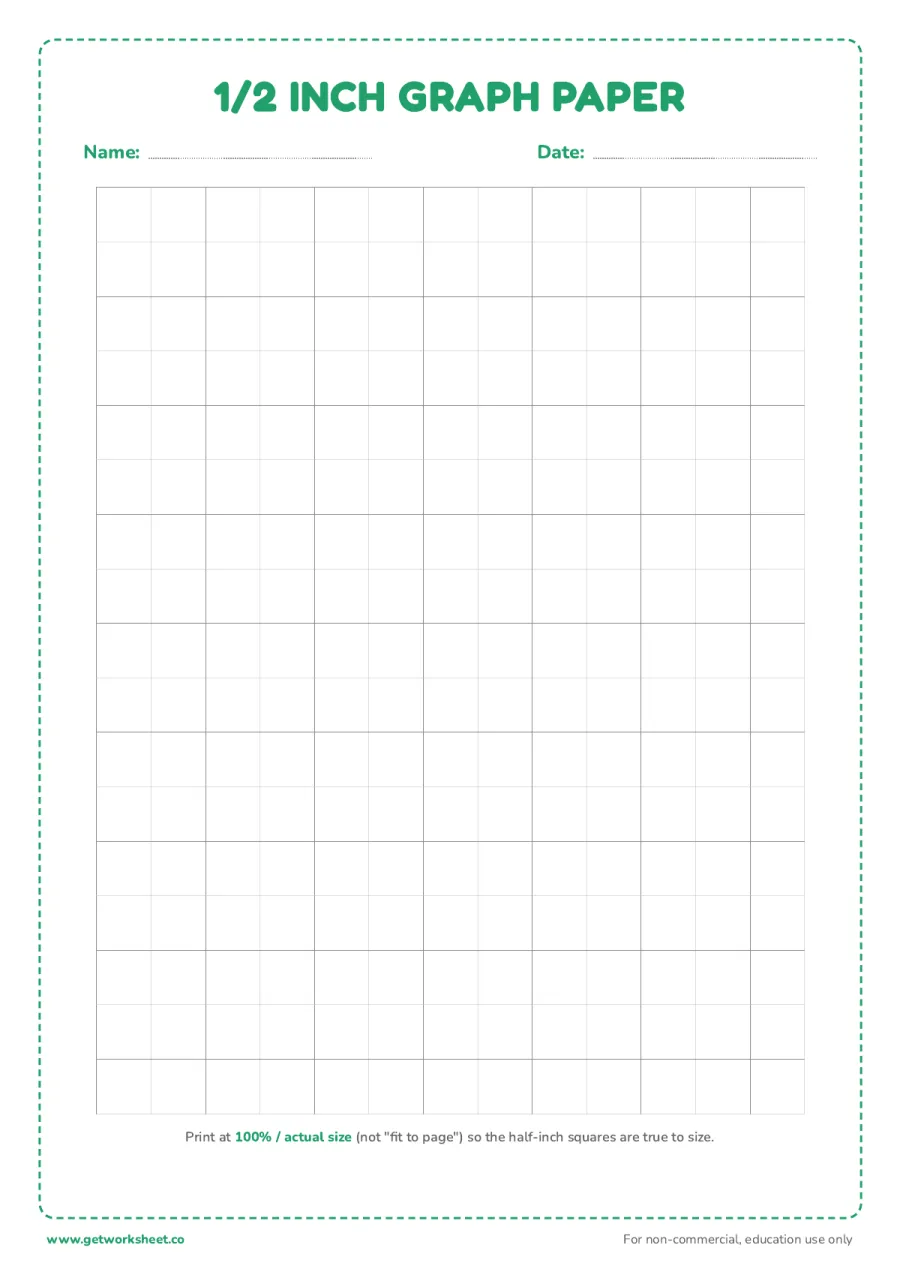
1/2 inch graph paper
Large half-inch squares (13 x 17) for younger children: counting squares, drawing shapes, bar graphs and place value work. Free printable PDF.
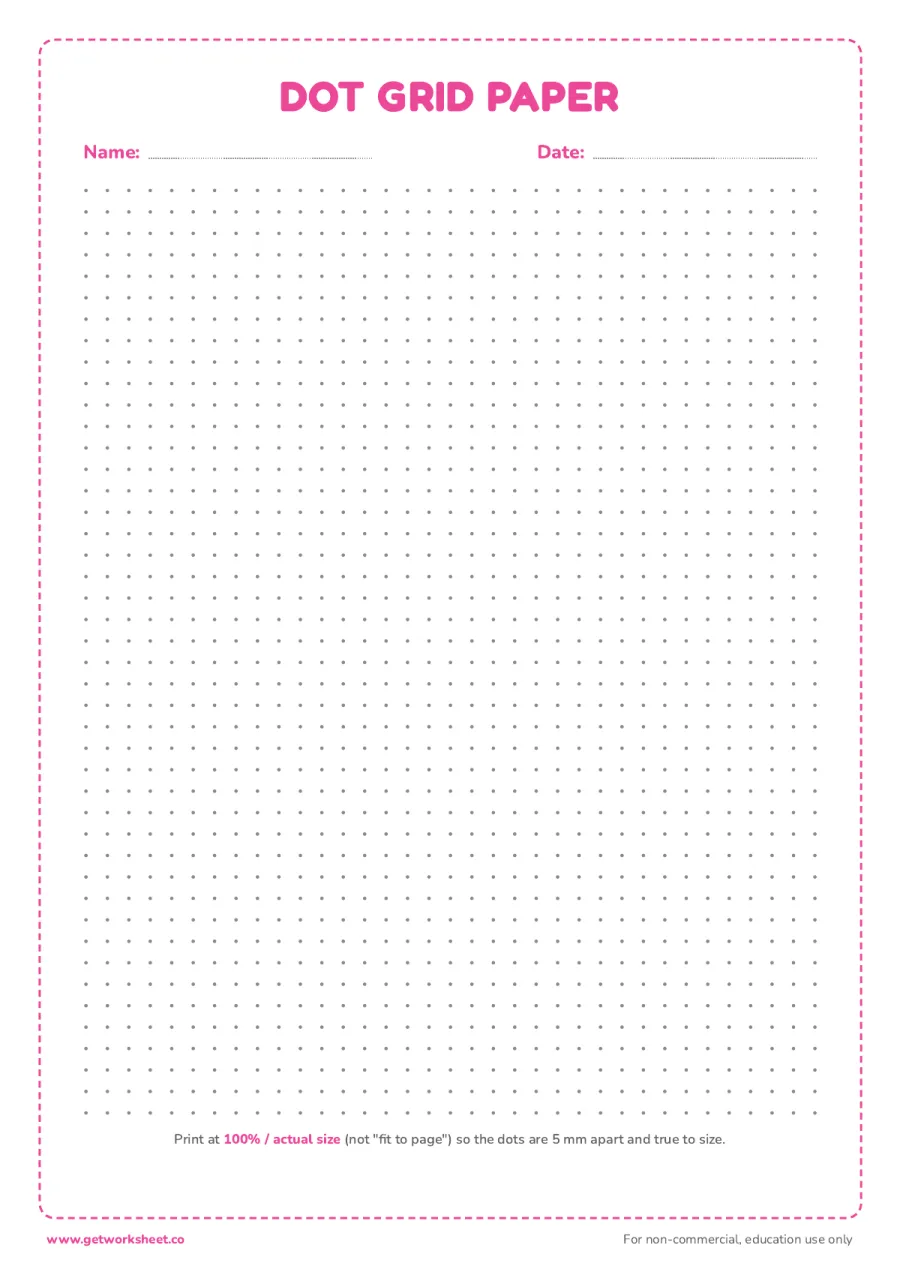
Dot grid paper (5 mm)
Dots at 5 mm spacing instead of lines, for geometry sketches, dot-to-dot shapes, bullet journals and neat handwriting without ruled lines. Free printable PDF.
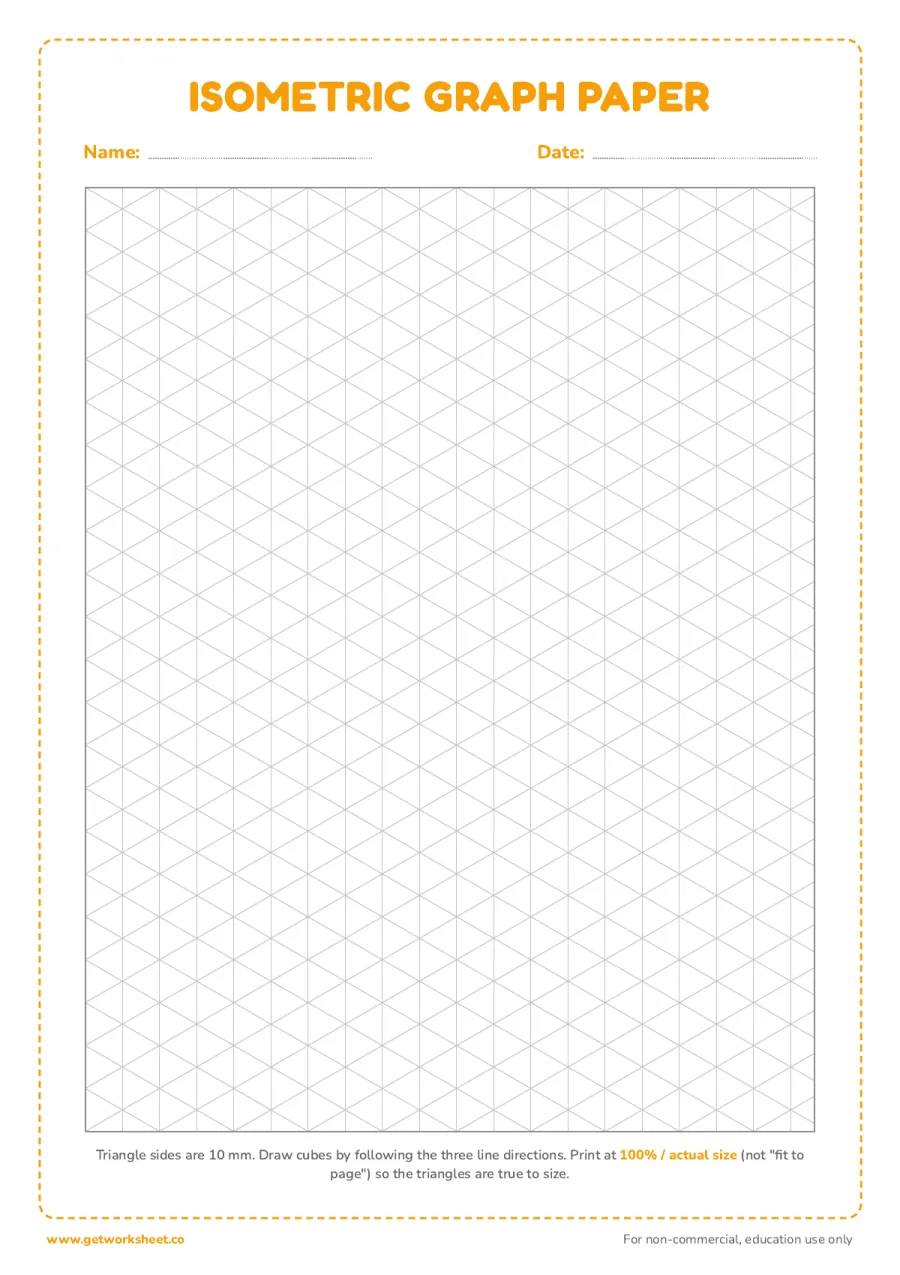
Isometric graph paper
Equilateral triangles with 10 mm sides (vertical lines plus two sets at 30 degrees) for drawing 3D shapes, cubes and isometric views. Free printable PDF.
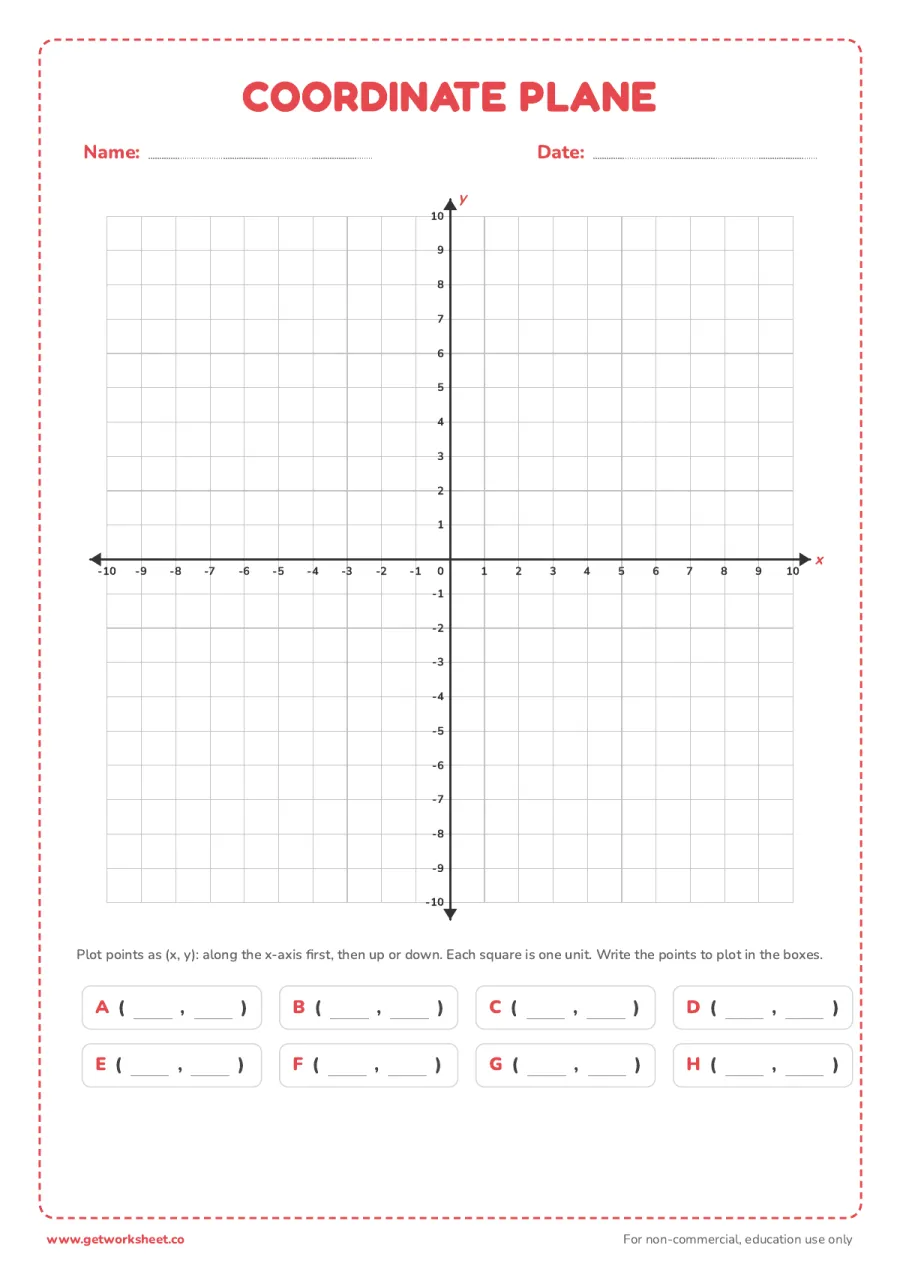
Coordinate plane graph paper (four quadrants, -10 to 10)
A four-quadrant coordinate grid with both axes labelled from -10 to 10, arrows on the axes and x and y marked, for plotting points and simple graphs. Free printable PDF.
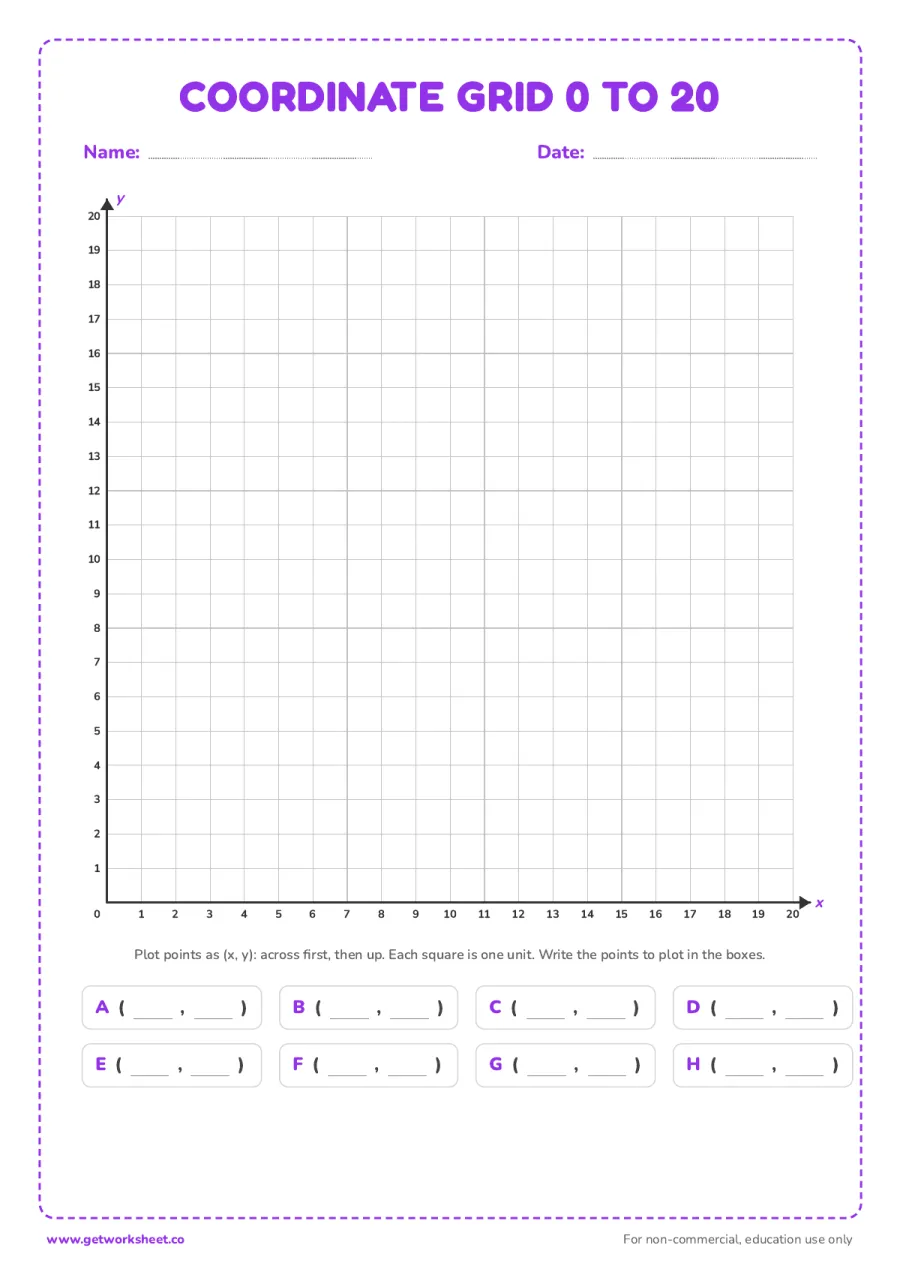
First quadrant coordinate grid (0 to 20)
A single-quadrant grid with x and y labelled 0 to 20, for younger students plotting positive coordinates, mystery pictures and simple line graphs. Free printable PDF.
AI worksheet generator
Make a worksheet like this for your class
The 8 sheets above are fixed. The generator writes a new graph paper printables worksheet for your grade, with the question types and count you choose, in about 20 seconds. Pick a grade to start:
What you get
- A fresh set of questions on graph paper printables, not a copy of the sheets above
- Multiple choice, fill in the blanks, true or false, open ended
- Answer key and print-ready PDF with Pro
Free account, 1 worksheets a week. No card.
Graph paper is the printable people run out of most often: for plotting points, drawing bar graphs, working out area, sketching a floor plan, keeping long division in columns. This set has eight versions so you do not have to hunt for the right one. The four plain grids come in the two metric and two imperial sizes schools actually use, there is a dot grid for anyone who finds ruled squares too busy, an isometric sheet for drawing cubes and 3D shapes, and two coordinate planes with the axes already numbered. Every grid is drawn to its true size: print at 100% ("actual size", not "fit to page") and a 1 cm square measures 1 cm with a ruler.
What's in this set
- 1 cm graph paper. A 17 x 22 grid of centimetre squares with a slightly heavier line every 5 cm, so counting squares for area and perimeter is quick.
- 5 mm graph paper. The fine squared paper used in maths exercise books: 34 x 44 small squares with a heavier line every 5 cm.
- 1/4 inch graph paper. The standard US classroom grid, 27 x 34 squares with a heavier line every inch.
- 1/2 inch graph paper. Large squares (13 x 17) for younger children drawing shapes, making arrays and colouring in bar graphs.
- Dot grid paper (5 mm). Dots instead of lines, for geometry sketches, dot-to-dot shapes, handwriting without rules and bullet journals.
- Isometric graph paper. Equilateral triangles with 10 mm sides (vertical lines plus two families at 30 degrees) for drawing cubes, cuboids and isometric views.
- Coordinate plane, four quadrants. Both axes labelled from -10 to 10 with arrows and x and y marked, plus eight boxes to list the points to plot.
- First-quadrant coordinate grid, 0 to 20. Positive coordinates only, for younger students plotting points, mystery pictures and simple line graphs.
Printing at the right size
The grids are only true to size if your printer does not scale the page. In the print dialog choose 100% or Actual size and switch off Fit to page or Shrink to fit. The pages are A4; on US Letter paper the grid still prints at true size, with slightly less white space at the bottom. After the first print, check one square with a ruler.
Free printable makers
Make your own graph paper printables sheets
Type your own words or numbers and print in about 30 seconds. No account, no AI, answer key where it applies.
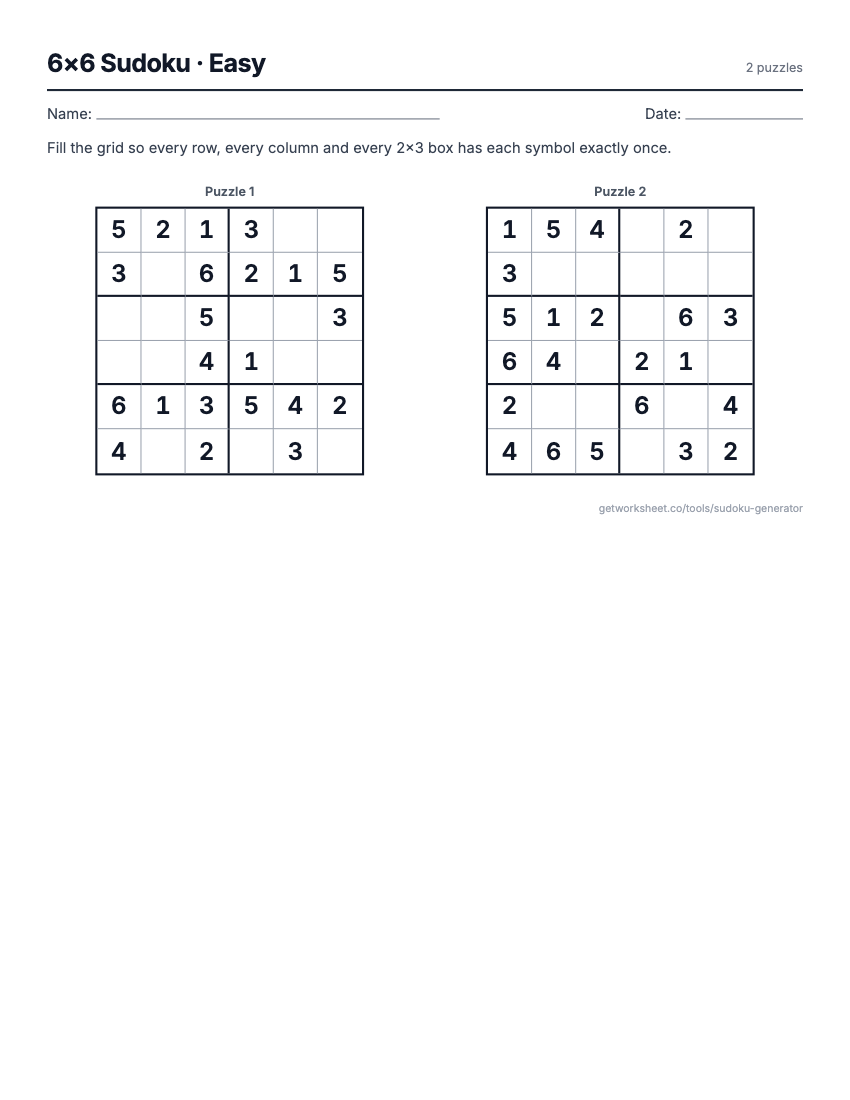 Sudoku generator4x4, 6x6 and 9x9 sudoku with numbers, letters or shapes, one solution each. Free to print.
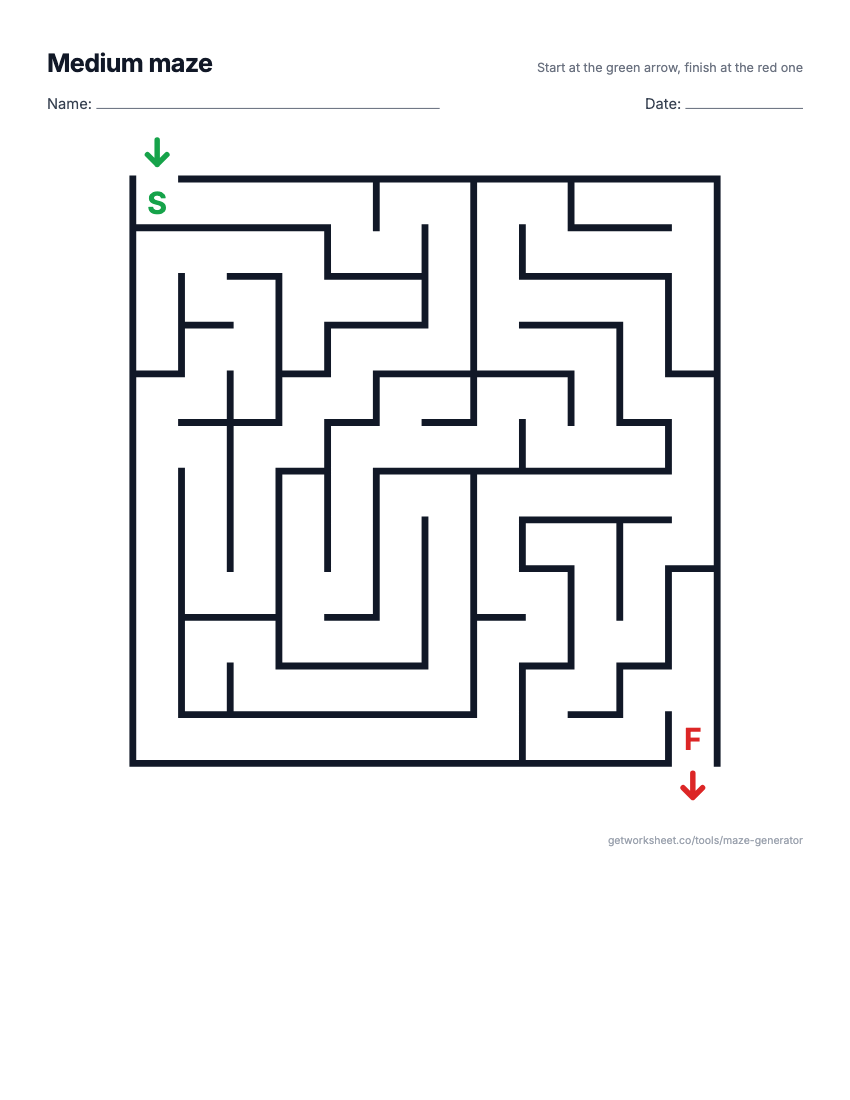 Maze generatorEasy to expert mazes, square or circle, with a solution page. Free to print.
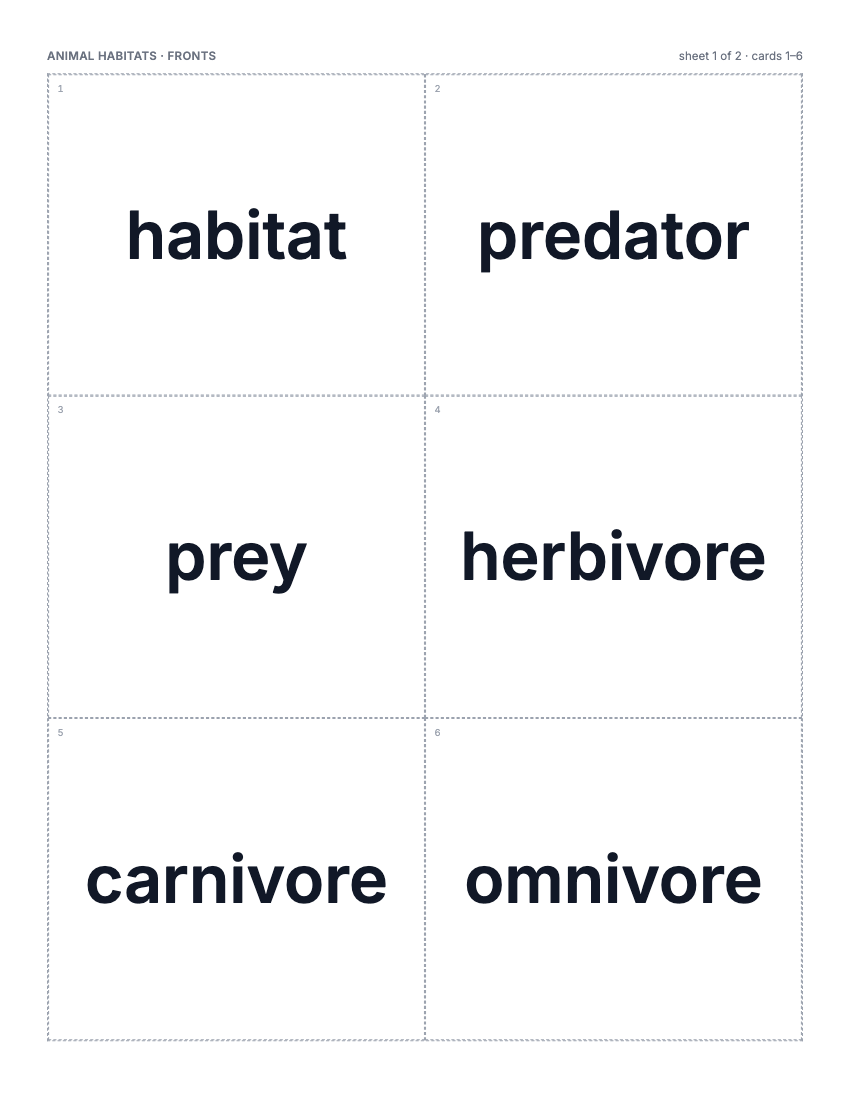 Flashcard makerVocabulary, math fact or sight word cards, 2-8 a page, two-sided or fold-over. Free to print.
AI worksheet generator
Need a different graph paper printables worksheet?
Generate a custom graph paper printables worksheet: pick the grade, question types and count, and print it in about 20 seconds. Free accounts get 1 generation a week.
Which graph paper for which job
- Area and perimeter (grades 3 to 5): the 1 cm grid. Children draw rectangles and count squares, and the answer is in square centimetres with no conversion.
- Bar graphs and pictographs (grades 1 to 3): the 1/2 inch grid. The squares are big enough to colour and label by hand.
- Column arithmetic: the 1/4 inch or 5 mm grid, one digit per square, keeps long multiplication and long division lined up.
- Plotting points and functions (grades 5 to 8): the two coordinate planes. Start with the 0 to 20 grid, where every coordinate is positive, and move to the four-quadrant plane once negative numbers are familiar.
- 3D drawing (grades 5 and up, and art): the isometric paper. Vertical edges go along the vertical lines and the two horizontal directions follow the 30 degree lines, so a cube is three rhombuses.
- Design, lettering and journals: the dot grid. It guides without taking over the page.
Tips for teachers
- Photocopy the plain grids on light paper; the lines are pale grey on purpose so pencil work stands out, and a dark photocopy setting will fill them in.
- For a quick coordinates game, give pairs the four-quadrant plane and have each child hide three "ships" and call out points, battleship style.
- On the 1 cm grid, a shape with an area of 12 square centimetres can be drawn many ways; asking for every rectangle with that area is a solid ten-minute task.
- Laminate one isometric sheet and keep it under a plain sheet as a guide for freehand drawing.
Frequently asked questions
How do I print graph paper at the correct size?
Open the PDF, choose Print, and set the scale to 100% or Actual size. Turn off Fit to page, Shrink to fit and any "fit printable area" option. Then measure one square: on the 1 cm sheet it should be exactly 1 cm. If it is slightly small, your printer driver is still scaling; look for a page scaling setting in the printer's own dialog.
Is this graph paper A4 or US Letter?
The PDFs are A4 (210 x 297 mm). On US Letter paper (8.5 x 11 inch) the grid still prints at true size because Letter is slightly wider and shorter; you lose a little margin at the bottom and gain some at the sides. Do not let the printer scale the page to fit.
What is the difference between 1/4 inch graph paper and 5 mm graph paper?
A quarter inch is 6.35 mm, so the 1/4 inch squares are about a quarter larger than 5 mm squares. US schools mostly use 1/4 inch; UK, Australian and most other schools use 5 mm or 1 cm. For arithmetic either works; for measuring and area, use the grid that matches the units the child is learning.
What is isometric paper used for?
Drawing three-dimensional objects without perspective. The three line directions (vertical and two at 30 degrees) stand for the three axes, so a cube is drawn as three equal rhombuses and a stack of cubes keeps its proportions. It is used in school geometry for 3D shapes and nets, in technical drawing, and in game and level design.
Can I use these for the classroom and photocopy them?
Yes. All the sheets on this page are free for non-commercial educational use at home and in school, and you can photocopy as many as you need. Please link to this page rather than re-uploading the files.
More maths printables
Children who are counting squares for area are often also working with the hundreds chart and skip counting worksheets. For column arithmetic on the fine grids, see the addition, subtraction and multi-digit multiplication worksheets. The isometric paper pairs with the 3D shapes worksheets, and the coordinate planes with the Pythagorean theorem worksheet for older students.
Free library
Related collections
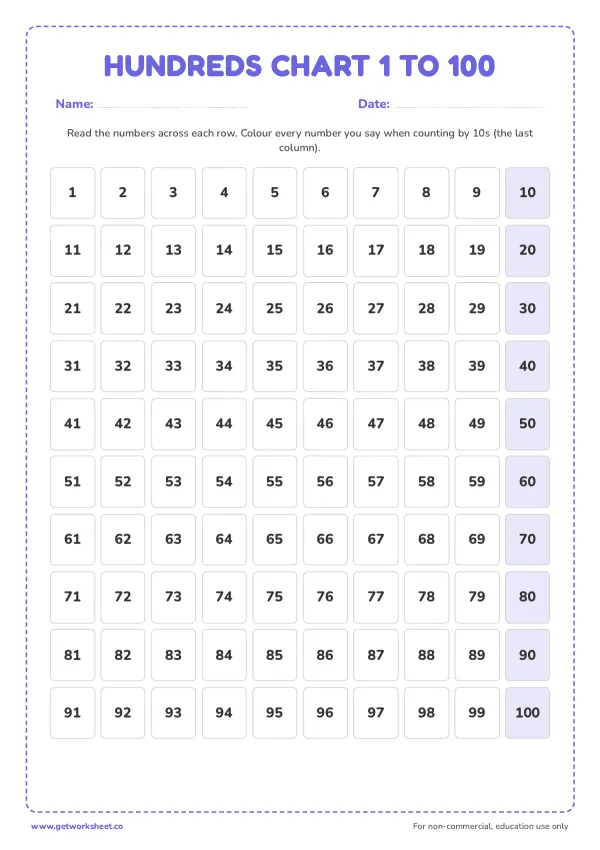
Free hundreds chart worksheets
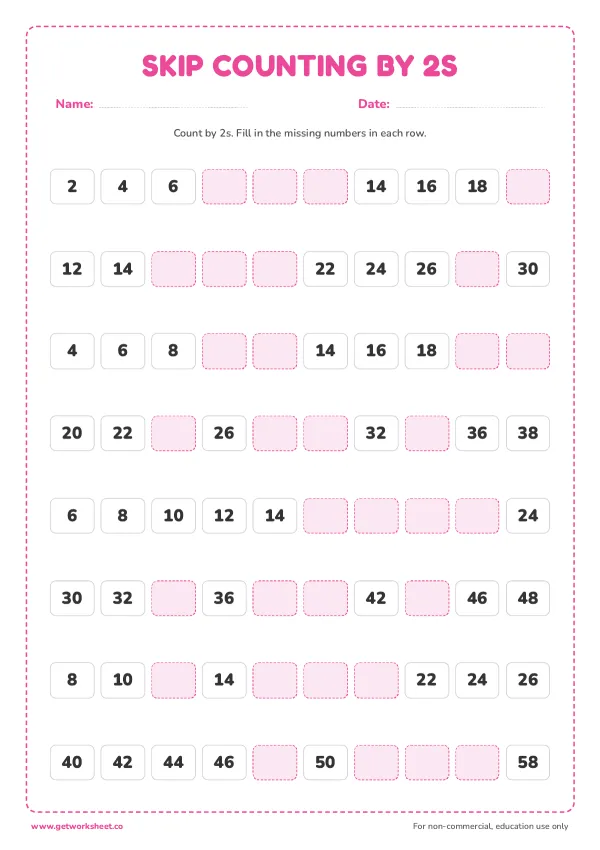
Free skip counting worksheets
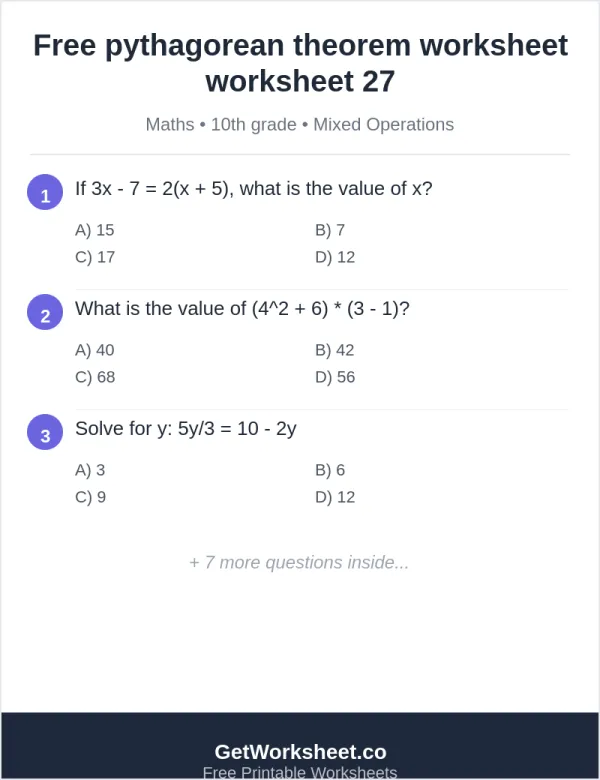
Free Pythagorean theorem worksheets
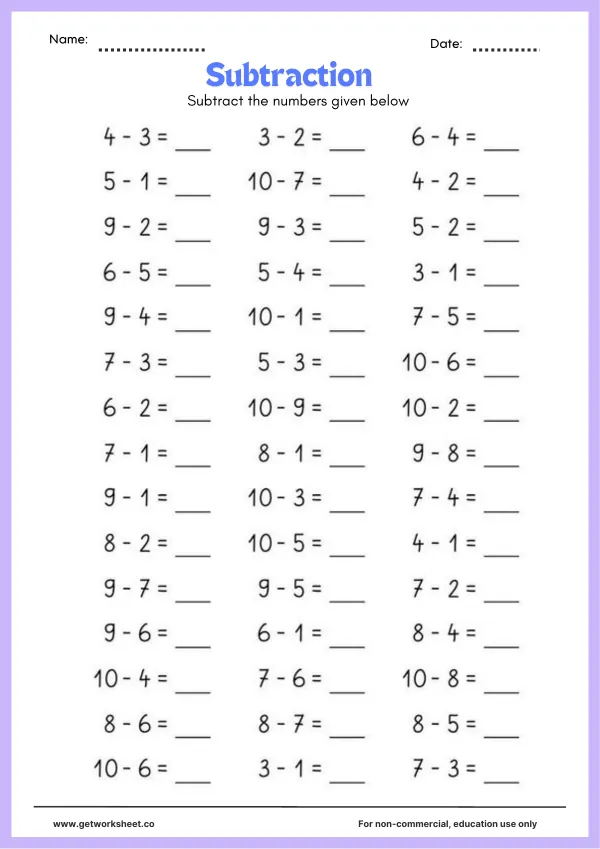
Free subtraction worksheets (within 10 and 20)
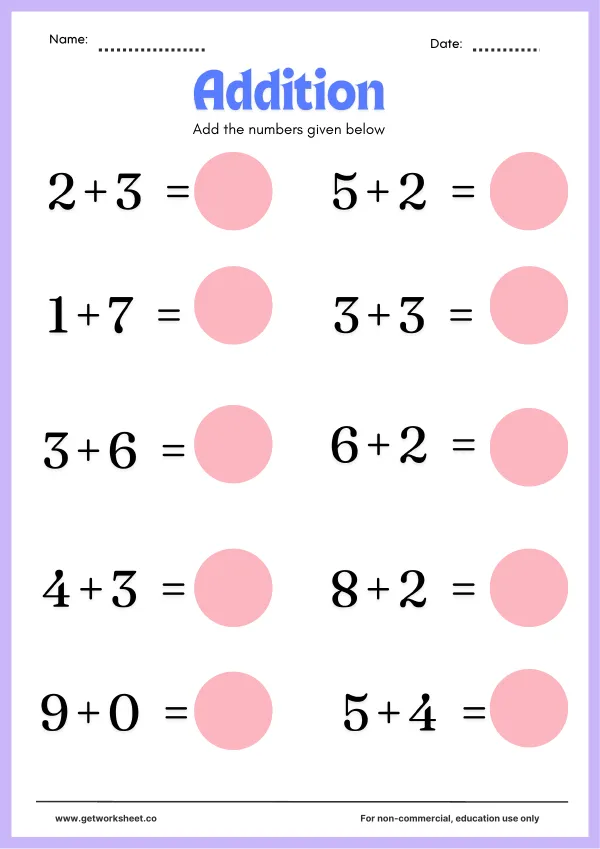
Free addition worksheets
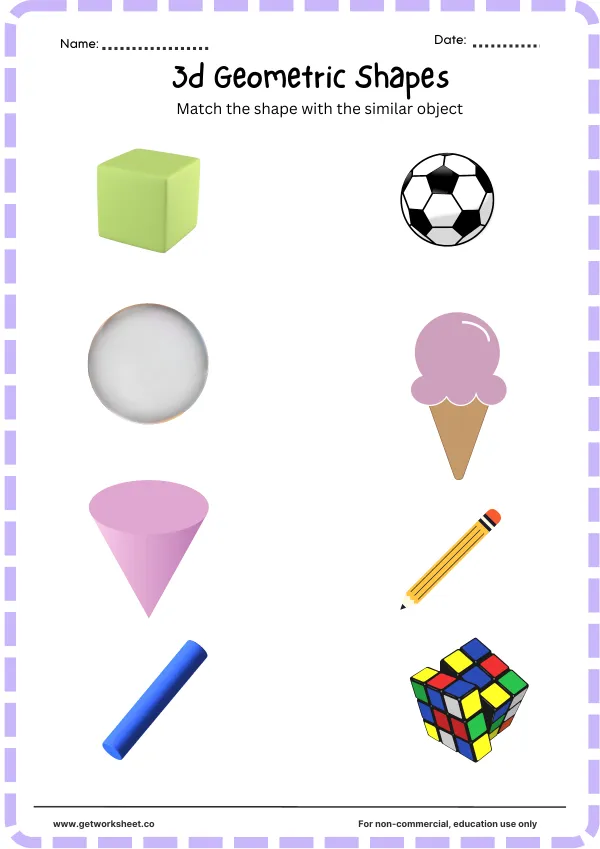
Free 3D shapes worksheets
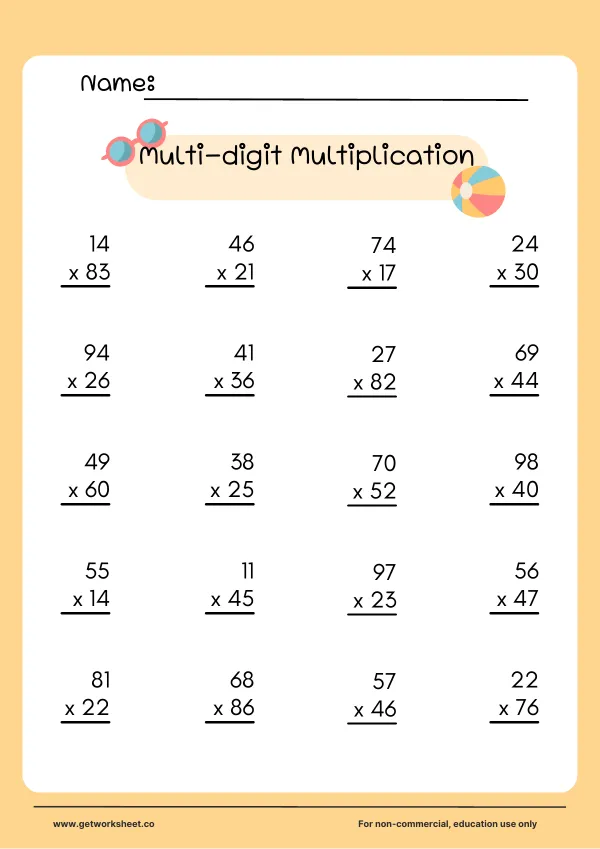
Free multi-digit multiplication worksheets
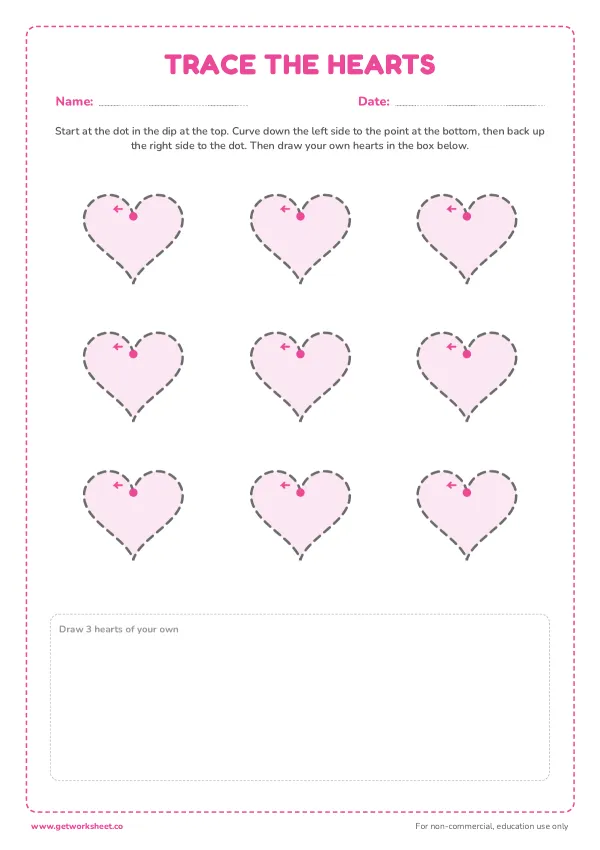
Free heart tracing worksheets
More worksheets
- Free Montessori math worksheets: one from every material
- Free shape tracing worksheets
- Free Halloween math worksheets
- Free number 20 tracing worksheets
- Free number 19 tracing worksheets
- Free number 18 tracing worksheets
- Free number 17 tracing worksheets
- Free number 16 tracing worksheets
- Free number 15 tracing worksheets
- Free number 14 tracing worksheets
- Free number 13 tracing worksheets
- Free number 12 tracing worksheets