Maths · Kindergarten–Grade 2
Free 3D shapes worksheets
Five printable 3D shapes worksheets for kindergarten to grade 2: match cubes, spheres, cones and cylinders to everyday objects, name the solids, and sort 2D shapes from 3D shapes.
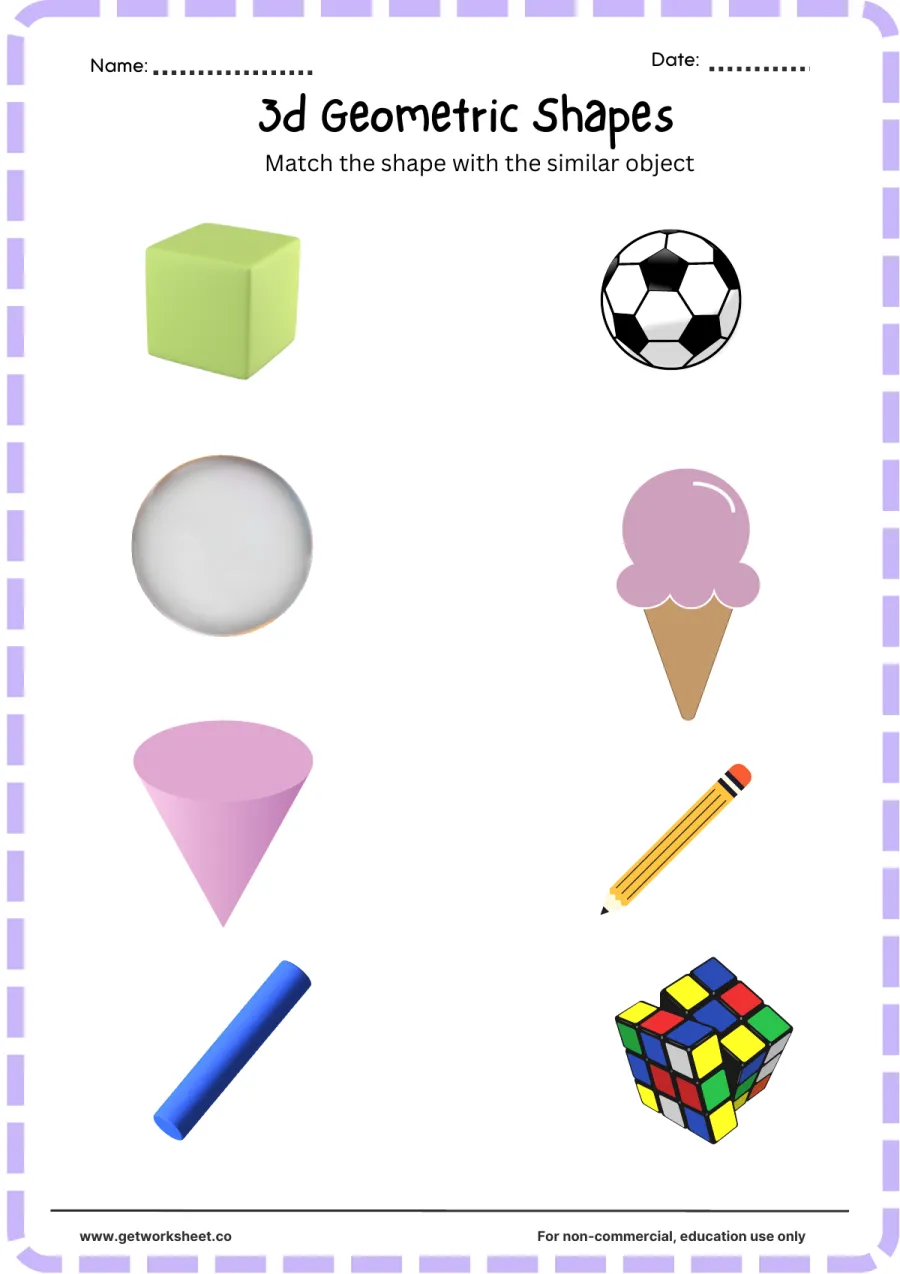
Match the 3D shape to a real object
Draw lines from a cube, sphere, cone and cylinder to a Rubik’s cube, football, ice cream and pencil. Kindergarten.
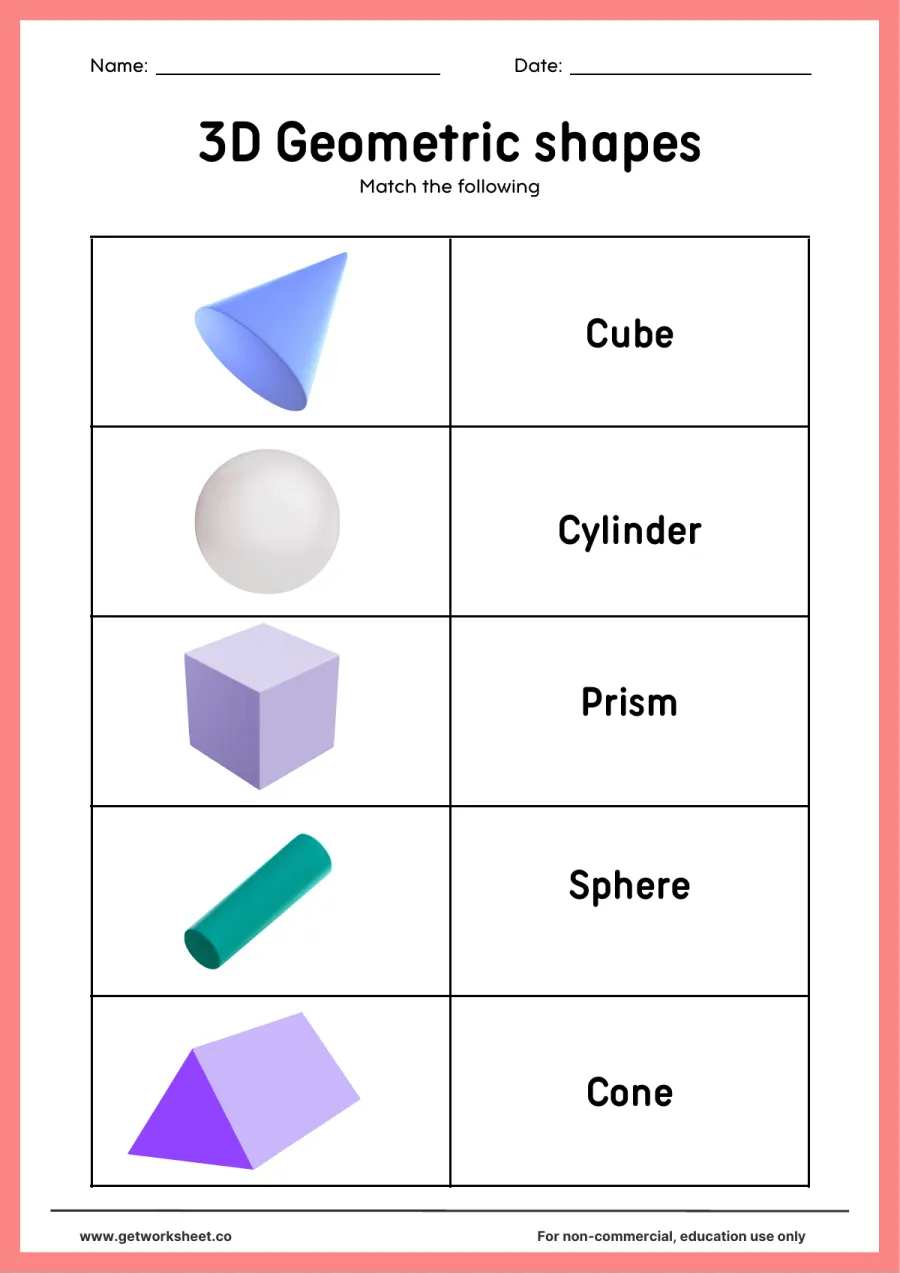
Match the solid to its name
Cone, sphere, cube, cylinder and triangular prism in a table; connect each to its name. Kindergarten to grade 1.
Whole set
All 5 sheets in one PDF
Instant and ad-free. No account needed.
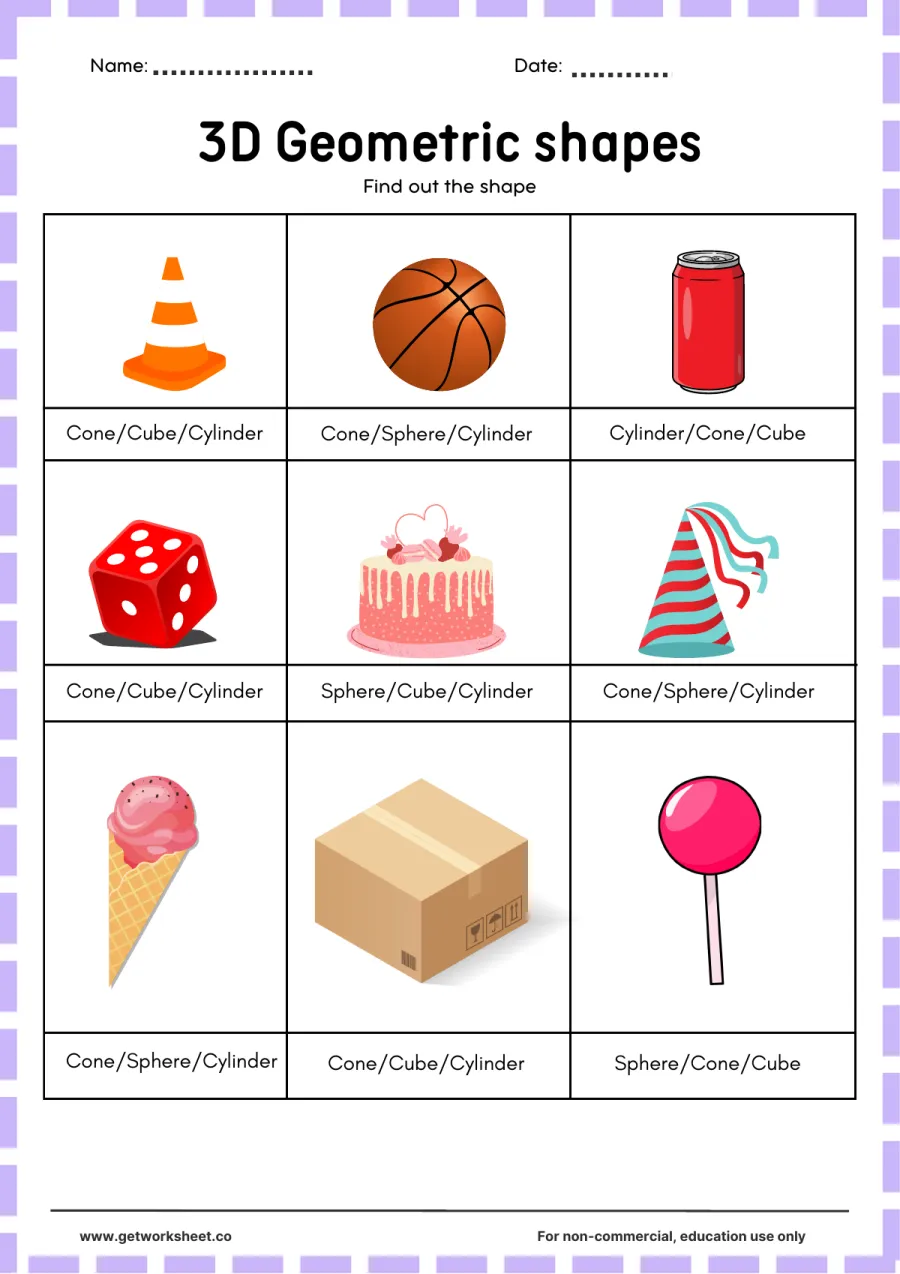
Find the shape in nine photos
Circle cone, sphere, cube or cylinder under photos of a traffic cone, basketball, tin, dice, cake, party hat and more.
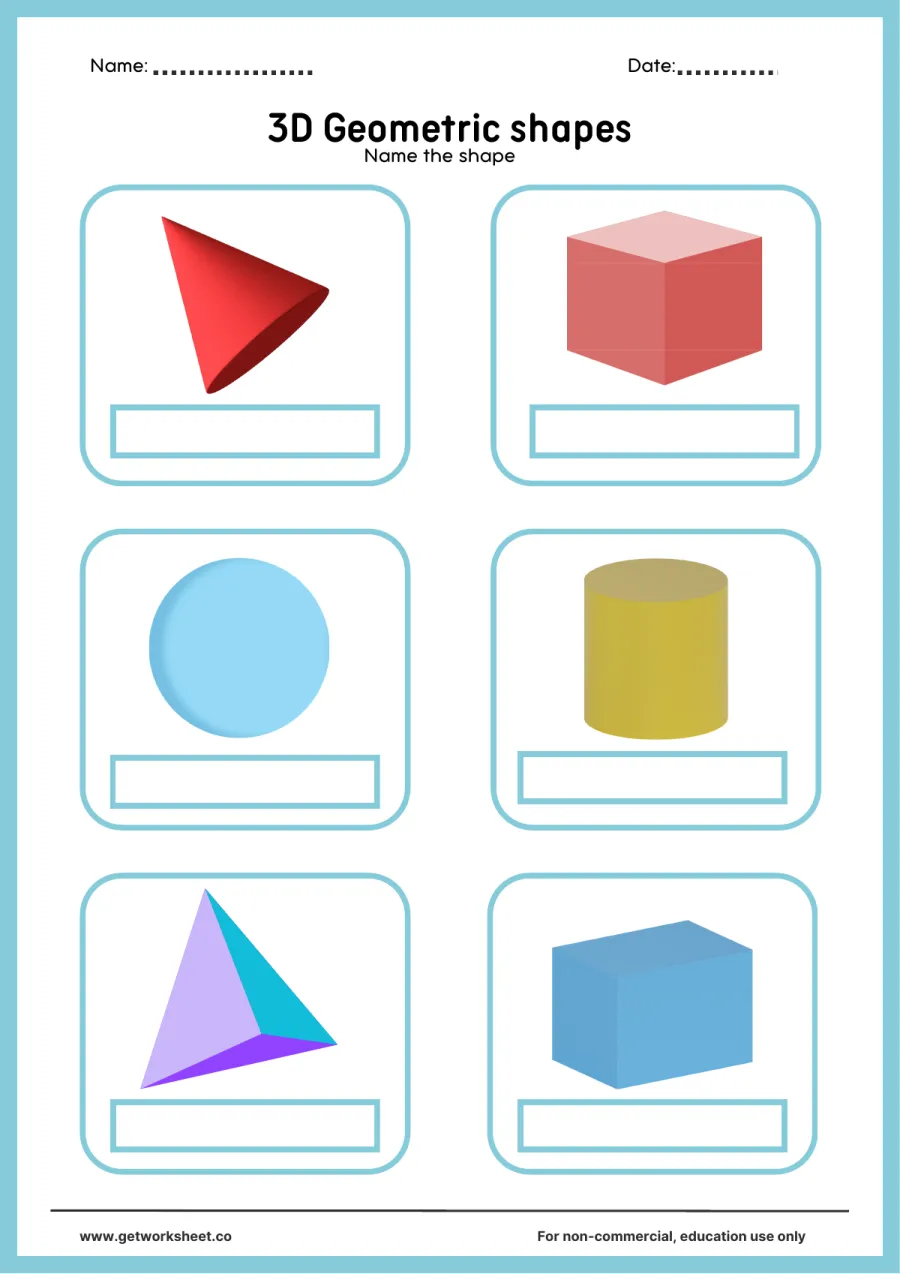
Name the shape (write the word)
Six drawn solids (cone, cube, sphere, cylinder, pyramid, cuboid) with a box to write each name. Grade 1 to 2.
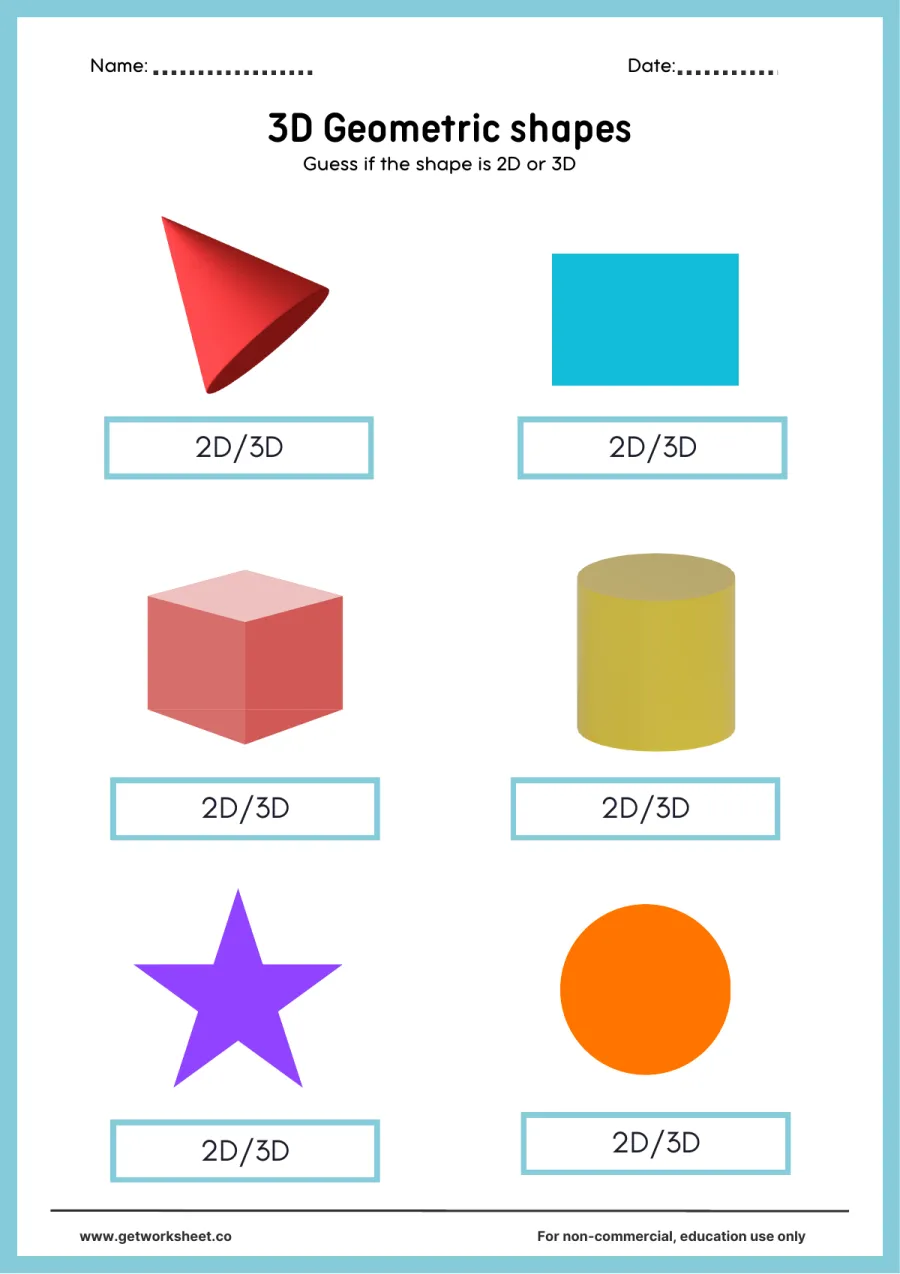
2D or 3D? Sort six shapes
Write 2D or 3D under a cone, square, cuboid, cylinder, star and circle. Flat versus solid, grade 1 to 2.
AI worksheet generator
Make a worksheet like this for your class
The 5 sheets above are fixed. The generator writes a new 3d shapes worksheet for your grade, with the question types and count you choose, in about 20 seconds. Pick a grade to start:
What you get
- A fresh set of questions on 3d shapes, not a copy of the sheets above
- Multiple choice, fill in the blanks, true or false, open ended
- Answer key and print-ready PDF with Pro
Free account, 1 worksheets a week. No card.
These five worksheets take a class from "a ball is a sphere" to naming and sorting the six solid shapes children meet in the early grades: cube, cuboid (rectangular prism), sphere, cylinder, cone and pyramid. Each page is a single task with big, clear pictures, so a lesson can move from real objects to the page to independent work in about twenty minutes.
What's in this set
- Match the shape to the object. Four solids (cube, sphere, cone, cylinder) on the left, four everyday objects on the right (a Rubik's cube, a football, an ice-cream cone, a pencil). Draw a line to match.
- Match the solid to its name. Five solids in a table (cone, sphere, cube, cylinder, triangular prism) with the names cube, cylinder, prism, sphere and cone to connect.
- Find the shape. Nine photographs (traffic cone, basketball, tin can, dice, cake, party hat, ice cream, cardboard box, lollipop) with three shape names under each; circle the correct one.
- Name the shape. Six drawn solids (cone, cube, sphere, cylinder, pyramid, cuboid) each with a box to write the name.
- 2D or 3D? Six shapes (cone, square, cuboid, cylinder, star, circle); write 2D or 3D under each. This is the sheet that catches the children who call every picture "a shape".
What students will practice
- Naming solids by their mathematical names rather than "box" or "ball" (Common Core K.G.A.2, 1.G.A.1)
- Connecting a drawn solid to the real object it models, which is the whole point of geometry at this age
- Telling flat (2D) shapes from solid (3D) shapes, and using the vocabulary "flat" and "solid" (K.G.A.3)
- Recognizing a shape from different viewpoints: the cylinder appears as a can, a pencil and a drawn tube
- Reading and spelling the shape words, which double as high-frequency vocabulary for the math word wall
Free printable makers
Make your own 3d shapes sheets
Type your own words or numbers and print in about 30 seconds. No account, no AI, answer key where it applies.
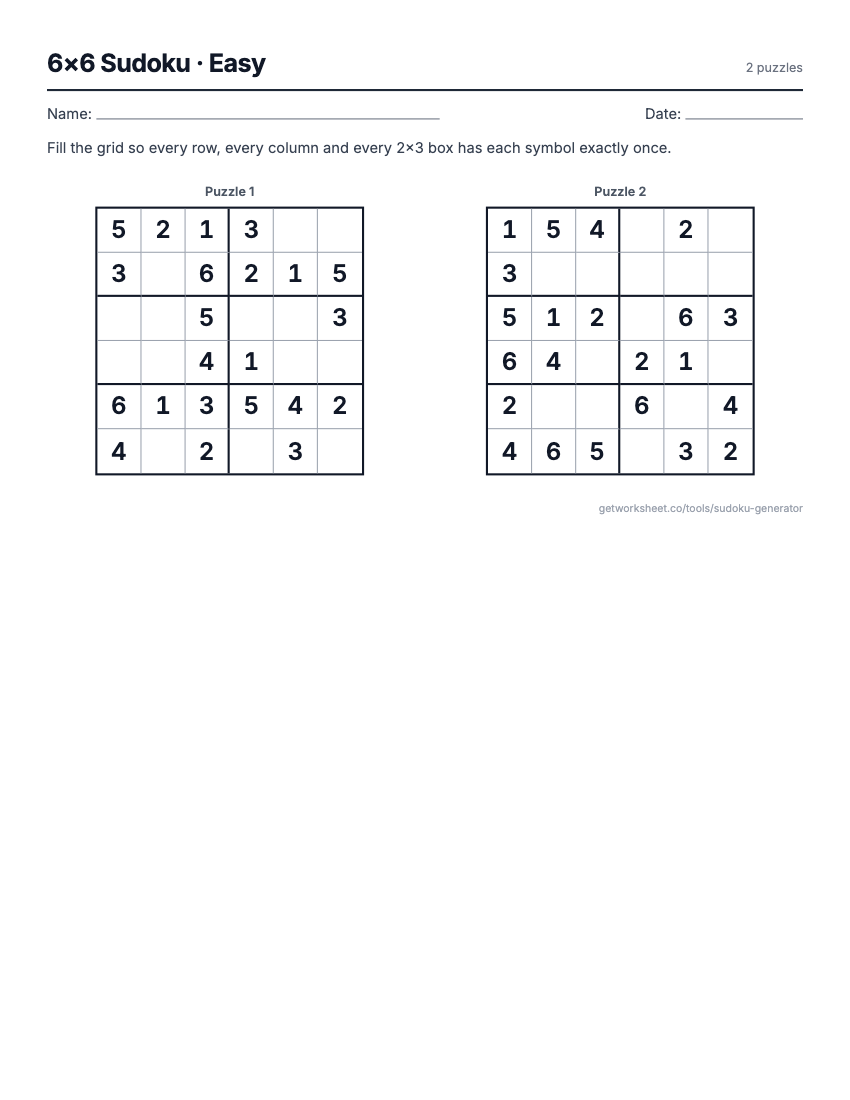 Sudoku generator4x4, 6x6 and 9x9 sudoku with numbers, letters or shapes, one solution each. Free to print.
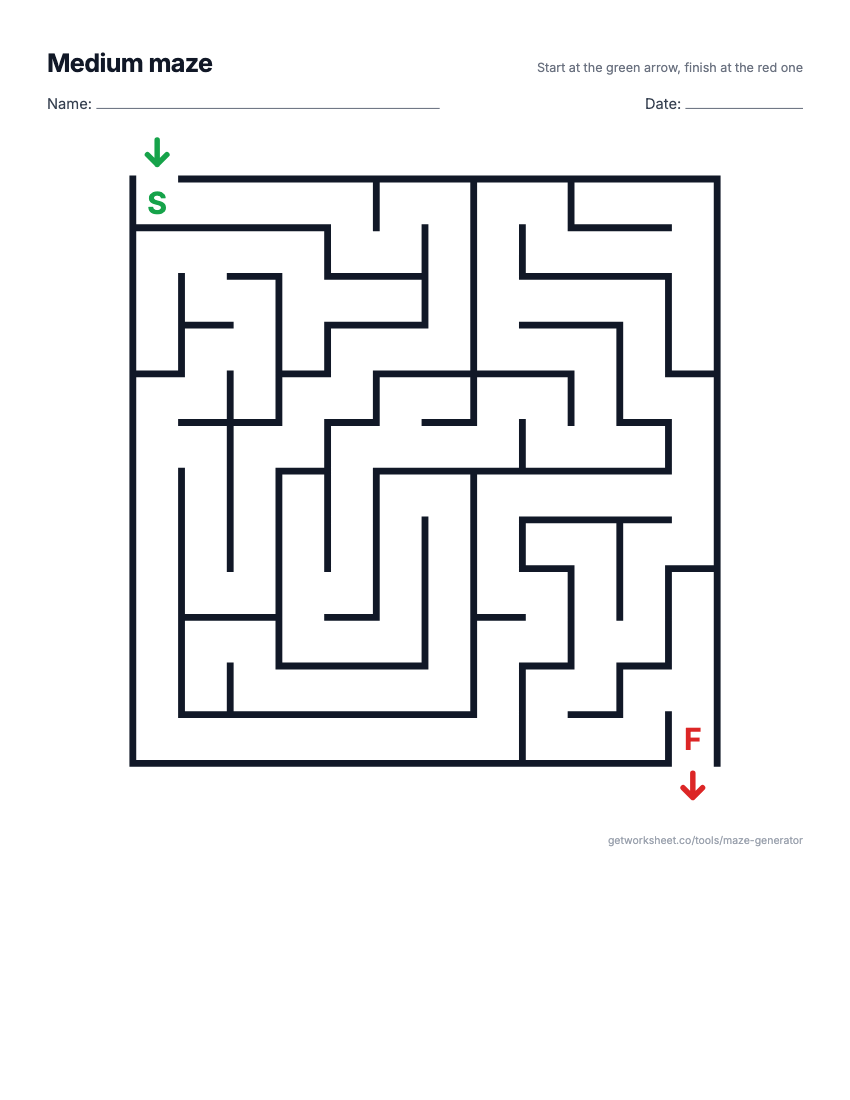 Maze generatorEasy to expert mazes, square or circle, with a solution page. Free to print.
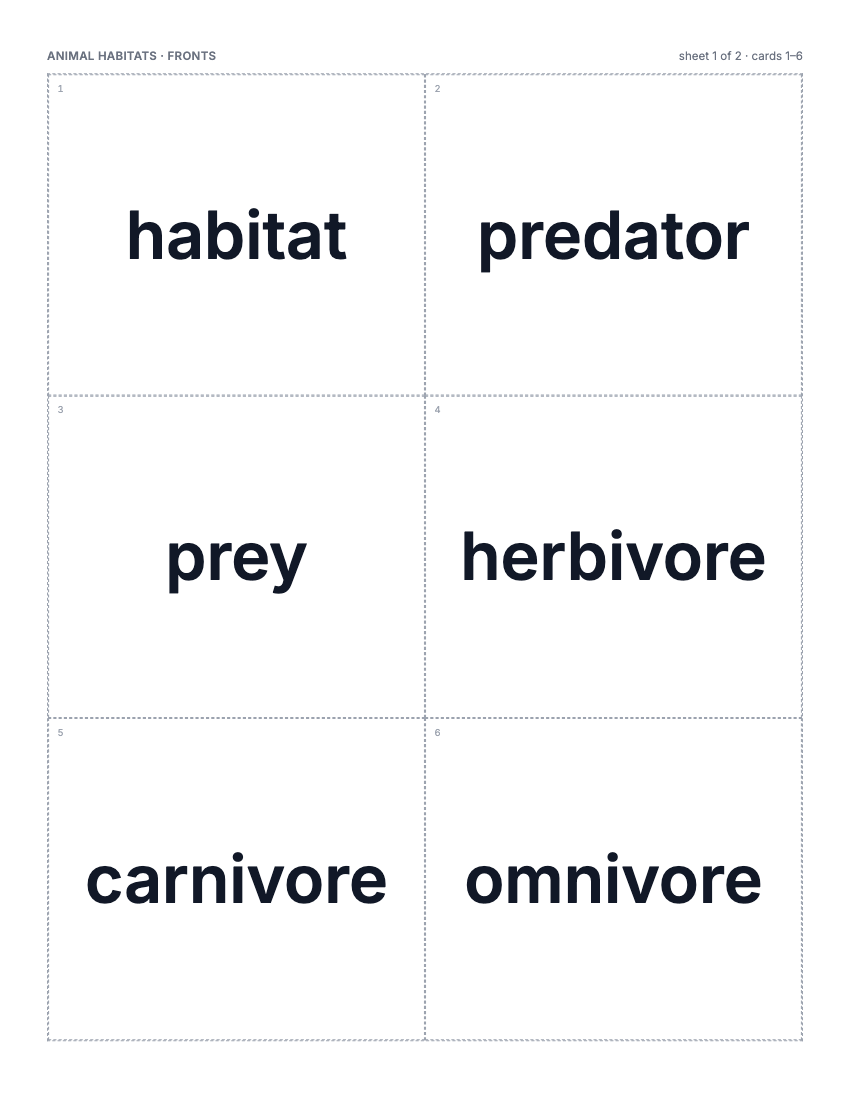 Flashcard makerVocabulary, math fact or sight word cards, 2-8 a page, two-sided or fold-over. Free to print.
AI worksheet generator
Need a different 3d shapes worksheet?
Generate a custom 3d shapes worksheet: pick the grade, question types and count, and print it in about 20 seconds. Free accounts get 1 generation a week.
How to use these worksheets in class
Print at 100% on A4 or US Letter. The pictures are large enough to project on a whiteboard for whole-class discussion before children work alone.
- Lesson 1 (kindergarten): real objects first. Put a dice, a ball, a tin, a party hat and a cereal box on the table. Children hold each one, roll it, stack it, and you name the solid. Then hand out sheet 1. Because the pictures show the same kinds of objects, the transfer is immediate.
- Lesson 2: vocabulary. Sheet 2 is a matching task, so it works as a partner activity: one child reads the name, the other points to the solid before either draws a line. Follow with sheet 4 for spelling practice; keep the names on the board for the first attempt.
- Lesson 3: shapes in the world. Sheet 3 has nine photographs with three choices each. Use it as the assessment for the week, then send children on a "shape hunt" round the classroom with a tally chart of cubes, cylinders, spheres and cones they find.
- Lesson 4 (grade 1 to 2): flat or solid? Sheet 5 mixes 2D and 3D. Ask children to say why before they write: "It's 3D because I could pick it up" or "It's flat because it only has a front". This is where the words face, edge and vertex can be introduced for the more able.
Answer key
- Sheet 1: cube = Rubik's cube, sphere = football, cone = ice cream, cylinder = pencil.
- Sheet 3: traffic cone = cone, basketball = sphere, tin = cylinder, dice = cube, cake = cylinder, party hat = cone, ice cream = cone, box = cube (a cube-shaped box; accept cuboid), lollipop = sphere.
- Sheet 4: cone, cube, sphere, cylinder, pyramid, cuboid (accept rectangular prism).
- Sheet 5: cone 3D, square 2D, cuboid 3D, cylinder 3D, star 2D, circle 2D.
Common mistakes to watch for
- Calling a sphere a circle and a cube a square. Children name the face they can see. Hold the object side-on and ask "Is this a circle? Can a circle roll?" The 2D-or-3D sheet exists for exactly this confusion.
- Thinking every "pointy" shape is a cone. Pyramids have flat triangular faces and a square base; cones have one curved face and a circular base. Let children feel the difference before sheet 4.
- Cuboid versus cube. Both have six faces; a cube's are all squares. Ask children to count the square faces on the cereal box (usually none or two).
Frequently asked questions
What grade are these 3D shapes worksheets for?
Sheets 1 to 3 suit kindergarten and grade 1 (ages 5 to 7); sheets 4 and 5 suit grade 1 and 2, or kindergarten with the shape names written on the board. They match Common Core K.G.A.2, K.G.A.3 and 1.G.A.1, and the shape-and-space strand of the English Year 1 curriculum.
Which 3D shapes are covered?
Cube, cuboid (rectangular prism), sphere, cylinder, cone and pyramid, plus a triangular prism on the matching sheet. Faces, edges and vertices are not on the sheets; they are the natural next lesson once the names are secure.
Do the worksheets include an answer key?
The PDFs are single pages without a key. The answers are listed in the "Answer key" section above so you can mark quickly or let children self-check.
Can I use these for a homework or a substitute lesson?
Yes. Each sheet is self-contained with the instruction printed at the top, and sheets 1, 2 and 5 need no reading beyond the shape names. Sheet 3 works well as a sub-plan because it needs no equipment.
Related shape worksheets
For the 2D shape names first, use the shapes flashcards. Children who are still drawing shapes benefit from the circle tracing, square tracing, rectangle tracing and triangle tracing worksheets. The copy the picture worksheets are a good follow-up for drawing solids on a grid.
Free library
Related collections
Free shapes flashcards
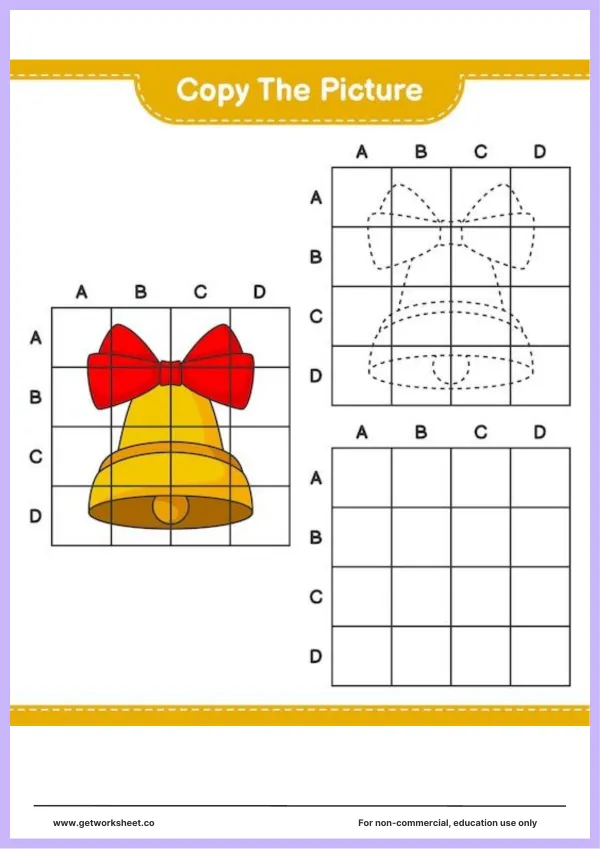
Free copy the picture worksheets
Free rectangle tracing worksheets
Free square tracing worksheets
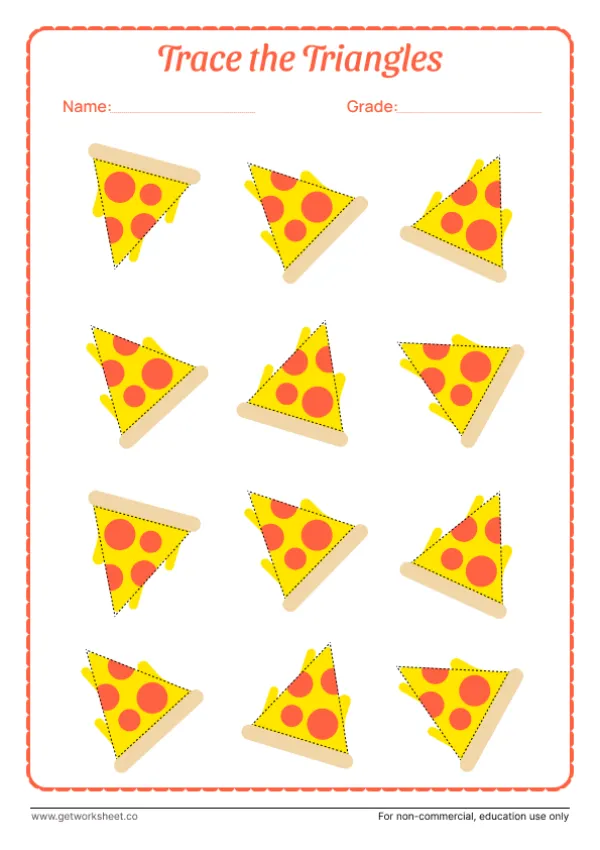
Free triangle tracing worksheets
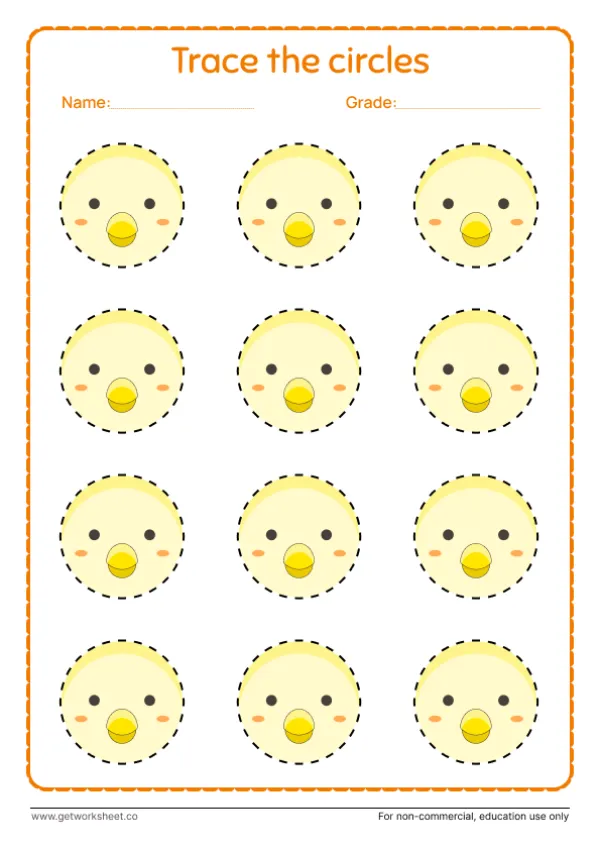
Free circle tracing worksheets
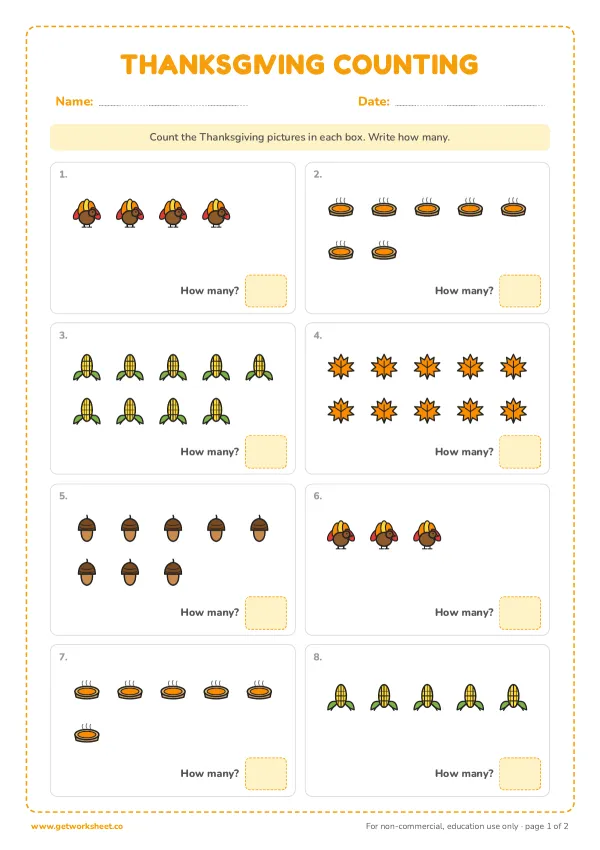
Free Thanksgiving math worksheets
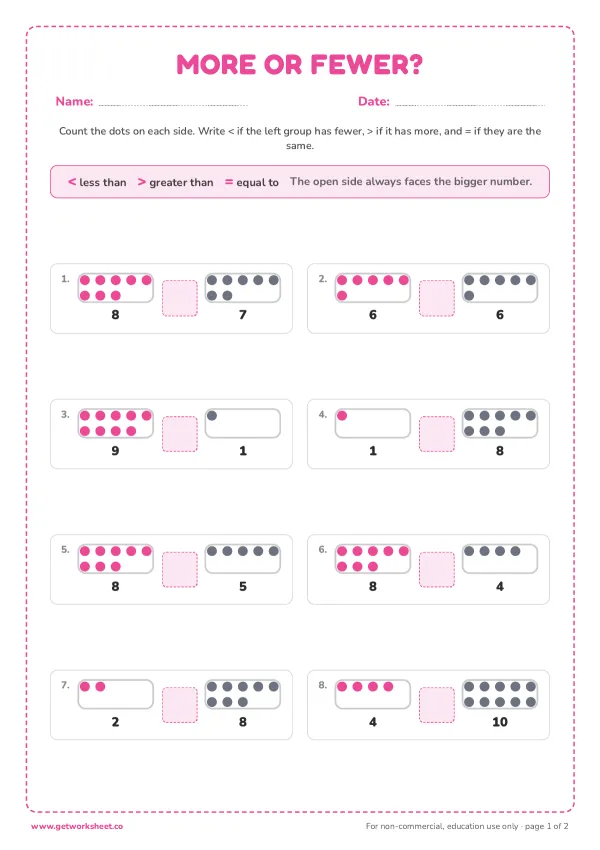
Free greater than less than worksheets
More worksheets
- Free number line printables
- Free Halloween math worksheets
- Free Christmas math worksheets
- Free hundreds chart worksheets
- Free ten frame worksheets
- Free Montessori teen board and ten board worksheets
- Free Montessori place value worksheets (golden beads)
- Free Montessori hundred board worksheets
- Free repeating patterns worksheets
- Free before and after numbers worksheets
- Free subtraction worksheets (within 10 and 20)
- Free doubles addition worksheets