Maths · Kindergarten–Grade 2
Free abacus worksheets
Free printable abacus worksheets for kindergarten to grade 2: read two-digit numbers from a tens-and-ones abacus, show a number by colouring beads, add with carrying, and tie the abacus to a hundreds-tens-ones place value chart. Answer keys included.
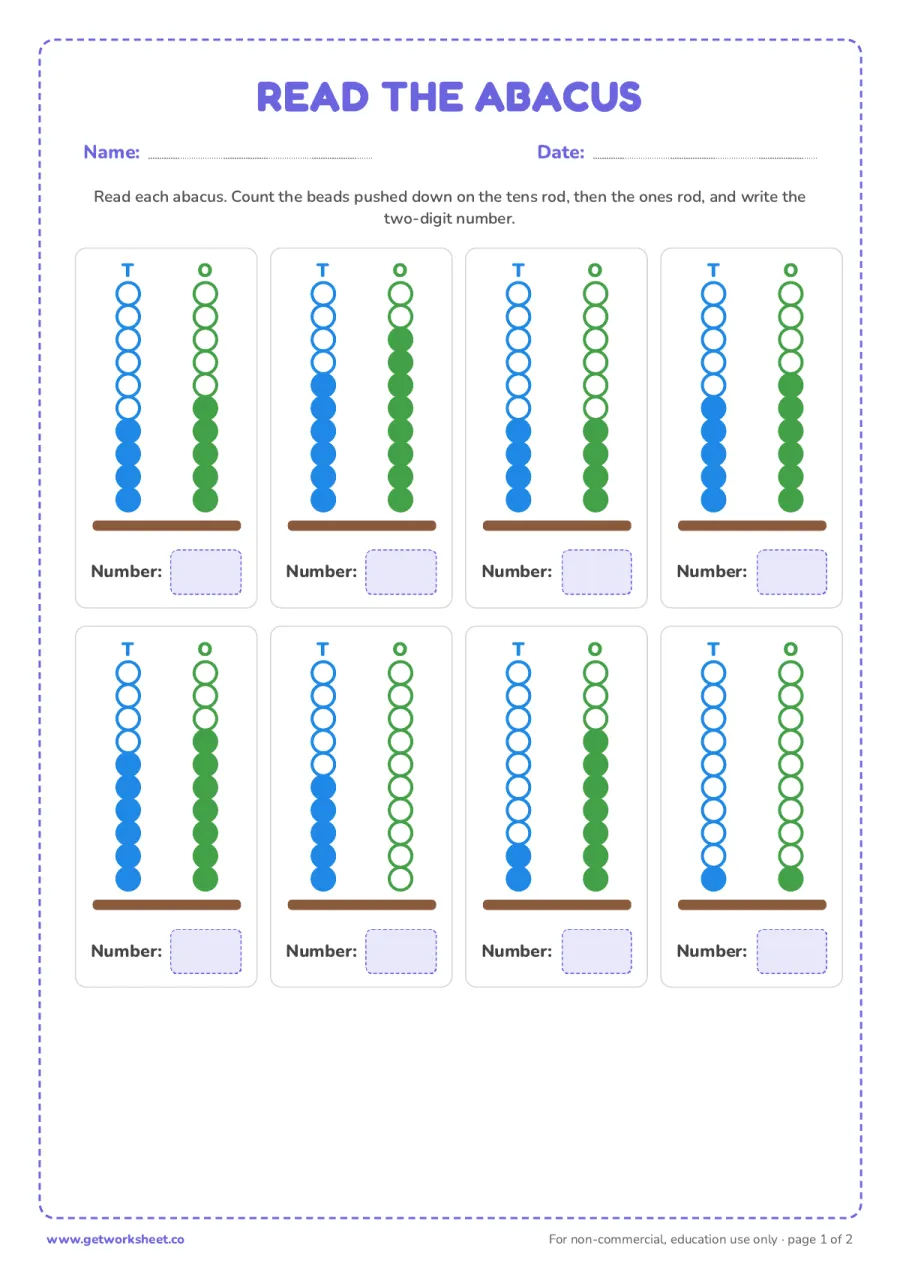
Read the abacus (tens and ones)
Eight two-rod abacus diagrams with beads already pushed down; count them and write the two-digit number. Answer key on page 2. Free printable PDF.
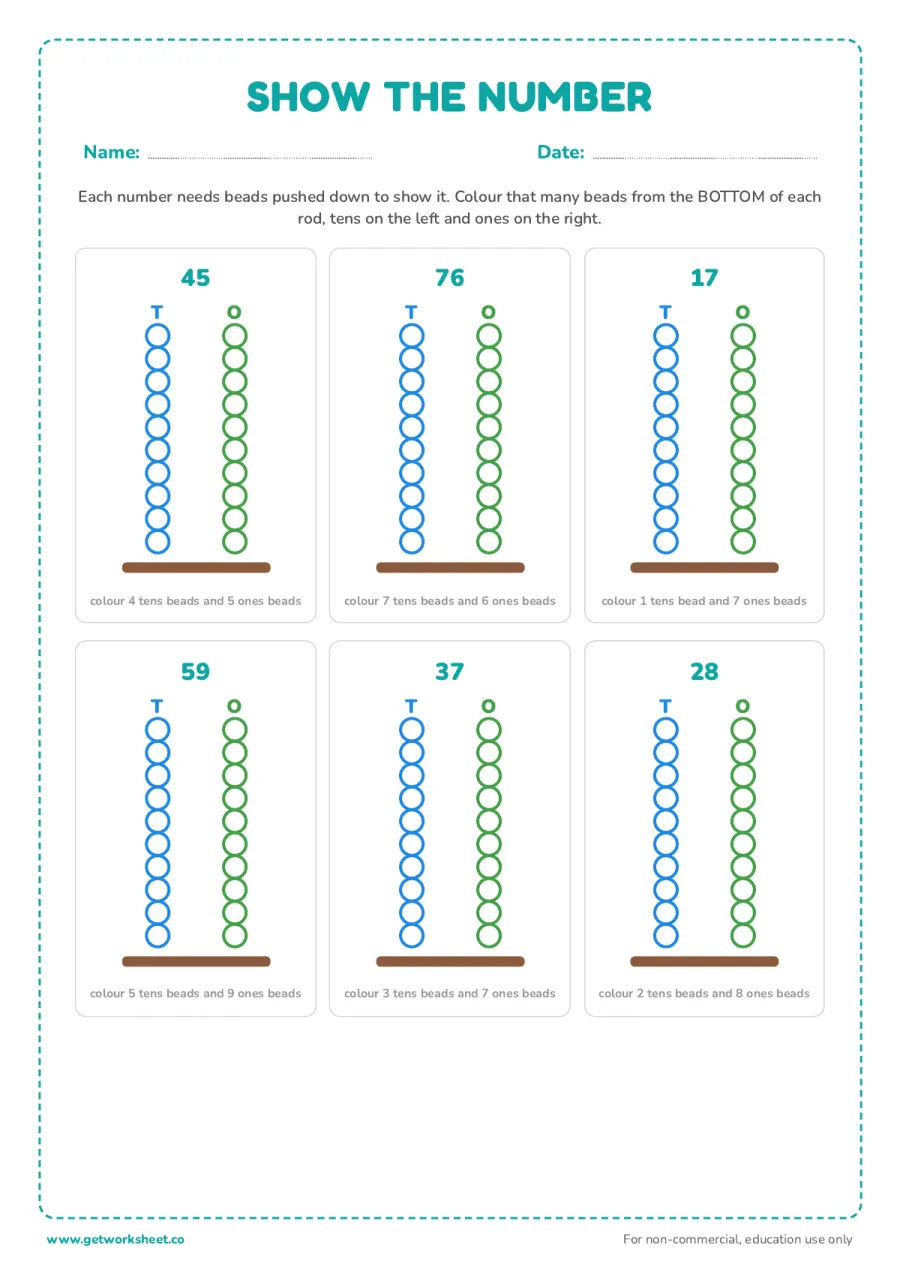
Show the number on the abacus
Six two-digit numbers to show by colouring the correct beads on a blank tens-and-ones abacus. Free printable PDF.
Whole set
All 4 in one PDF
- Every sheet on this page, one file
- No ads, no countdowns, print as often as you like
- Instant download, ad-free, no account needed
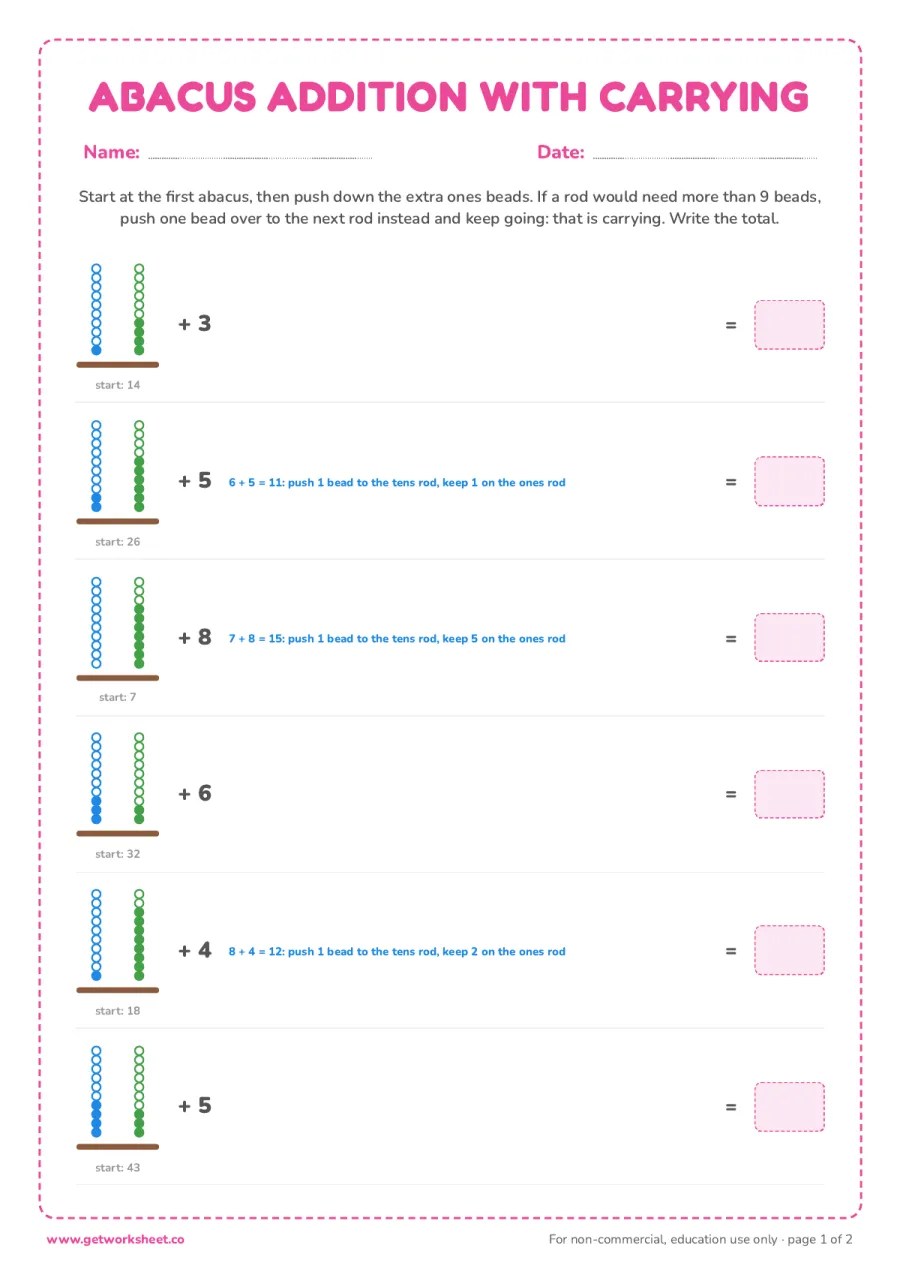
Abacus addition with carrying
Six addition problems shown as beads pushed down on a tens-and-ones abacus, including examples where a full rod carries one bead to the next rod over. Answer key on page 2. Free printable PDF.
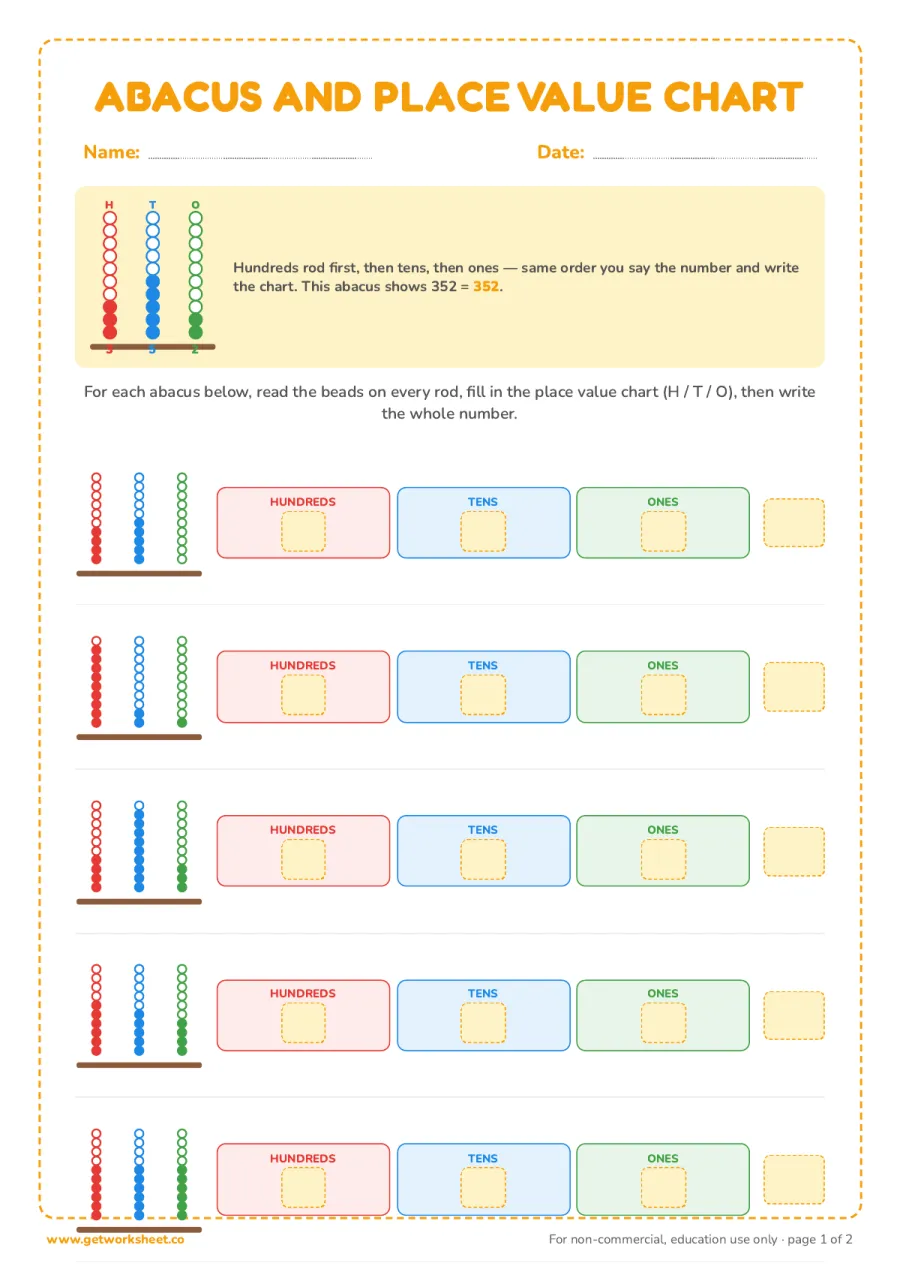
Abacus and place value chart
A labelled hundreds-tens-ones abacus next to its place value chart, then five numbers to read from the abacus and record in the chart and in digits. Answer key on page 2. Free printable PDF.
AI worksheet generator
Make a worksheet like this for your class
The 4 sheets above are fixed. The generator writes a new abacus worksheet for your grade, with the question types and count you choose, in about 20 seconds. Pick a grade to start:
What you get
- A fresh set of questions on abacus, not a copy of the sheets above
- Multiple choice, fill in the blanks, true or false, open ended
- Answer key and print-ready PDF with Pro
Free account, 1 worksheets a week. No card.
An abacus turns place value into something a child can see: beads pushed down on a rod are counted, beads left at the top are not. These four worksheets use one simple drawing all the way through — vertical rods, up to ten beads each, read left to right the same way the number itself is written (hundreds, then tens, then ones) and coloured one fixed colour per rod (green for ones, blue for tens, red for hundreds) so a child never has to re-learn which rod is which. The set starts by reading numbers off a filled abacus, moves to colouring beads to show a given number, adds two numbers with real carrying from one rod to the next, and finishes by tying the whole idea to a written place value chart.
What's in this set
- Read the abacus. Eight two-rod (tens and ones) abacus diagrams with beads already pushed down. Count them and write the two-digit number. Answer key on page 2.
- Show the number on the abacus. Six two-digit numbers; colour the correct number of beads on a blank tens-and-ones abacus to match.
- Abacus addition with carrying. Six addition problems shown as beads on a tens-and-ones abacus, including examples where the ones rod fills past nine and one bead has to move over to the tens rod. Answer key on page 2.
- Abacus and place value chart. A labelled hundreds-tens-ones abacus next to its place value chart, then five three-digit numbers to read from the abacus and record in both the chart and digits. Answer key on page 2.
Free printable makers
Make your own abacus sheets
Type your own words or numbers and print in about 30 seconds. No account, no AI, answer key where it applies.
 Math fact worksheet generatorAddition to division drills with an answer key. Free to print.
 Multiplication chart generatorCharts to 15, full, blank or coloured, and times table tests with key. Free to print.
 Telling time worksheet generatorAnalogue clocks to read, draw, match or add time to, with answer key. Free to print.
AI worksheet generator
Need a different abacus worksheet?
Generate a custom abacus worksheet: pick the grade, question types and count, and print it in about 20 seconds. Free accounts get 1 generation a week.
Teaching tips and common mistakes
How to use these worksheets
Print at 100% on A4 or US Letter. Before the first sheet, show the child a real abacus or counting frame if you have one, or just point at the printed rods: beads pushed to the bottom are "used", beads left at the top are "not yet used".
- Read the abacus. Always count the LEFT rod (tens) first, then the right rod (ones), the same order as reading the number. Touch each coloured bead as you count it.
- Show the number. Say the number out loud, split it into tens and ones first ("46 is 4 tens and 6 ones"), then colour from the bottom of each rod upward, never from the top down or from the middle.
- Addition with carrying. Work the ones rod first. If pushing down the extra beads would need more than 9, that rod is full: push all ten back up, add one bead to the tens rod instead, and put down whatever is left over on the ones rod. The worked note under each problem spells this out.
- Place value chart. Read hundreds, then tens, then ones, filling in the matching chart box each time before moving to the next rod. The worked example at the top shows the order.
Common mistakes to watch for
- Counting beads from the top. Only the bottom beads are "counted"; a child who counts from the top will get the complement of the right answer (10 minus the true value) if the rod is partly full.
- Mixing up which rod is which. The colour is the anchor: green is always ones, blue is always tens, red is always hundreds, on every sheet in this set and on the Montessori golden beads worksheets.
- Forgetting to carry. A child writes a ones digit of 12 or 13 instead of carrying. Stop at the rod, point out it cannot hold more than 9 beads, and move one over physically before continuing.
- Reading the chart out of order. Hundreds, tens, ones, left to right, every time — reading right to left gives a mirrored, wrong number.
Frequently asked questions
What is an abacus used for?
An abacus is a counting tool: beads threaded on rods represent place value, so moving beads instead of carrying a number in your head makes addition, subtraction and reading large numbers concrete. It is still used to teach place value and mental math in classrooms today, well beyond its original use as a calculating device.
Which direction do the beads count?
On these worksheets, a bead counts once it has been pushed to the bottom of its rod; beads left at the top are not yet counted. The rods themselves read left to right as hundreds, tens, ones — the same order the number is written and spoken in.
What age are abacus worksheets for?
Kindergarten through grade 2. Reading and showing two-digit numbers fits kindergarten and grade 1 place value standards (K.NBT.A.1, 1.NBT.B.2); the addition-with-carrying and three-digit place value chart sheets suit grade 1 to 2 (1.NBT.C.4, 2.NBT.A.1).
Do these worksheets have answer keys?
Yes. Read the abacus, abacus addition and the place value chart sheet each have an answer key on page 2 of their PDF. Show the number is a colouring page with nothing to mark.
More place value practice
The Montessori golden beads worksheets teach the same tens-and-units idea with ten-bars and unit beads, and the Montessori teen board worksheets cover the teen numbers in between. For blocks instead of beads, see the base ten blocks worksheets. The hundred board worksheets are good follow-on practice once two-digit place value is solid.
Free library
Related collections
Free base ten blocks worksheets
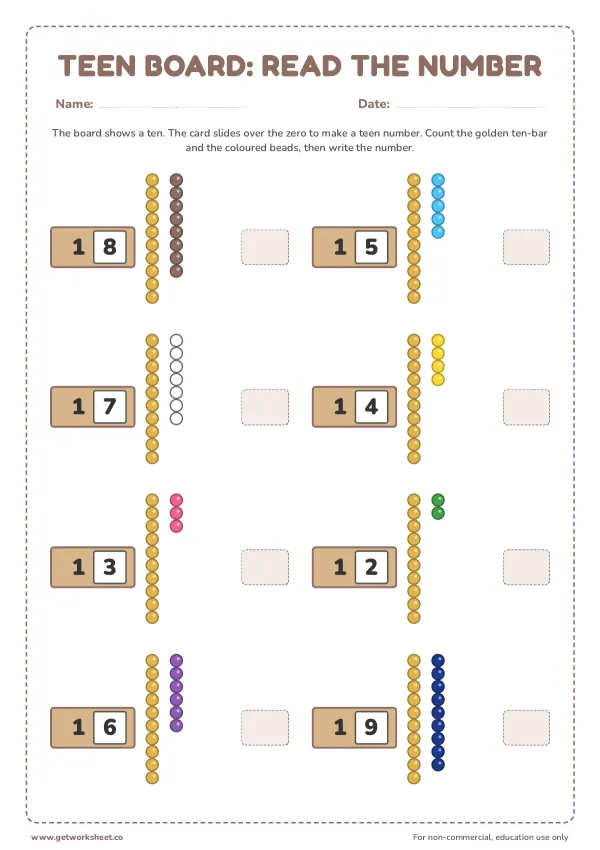
Free Montessori teen board and ten board worksheets
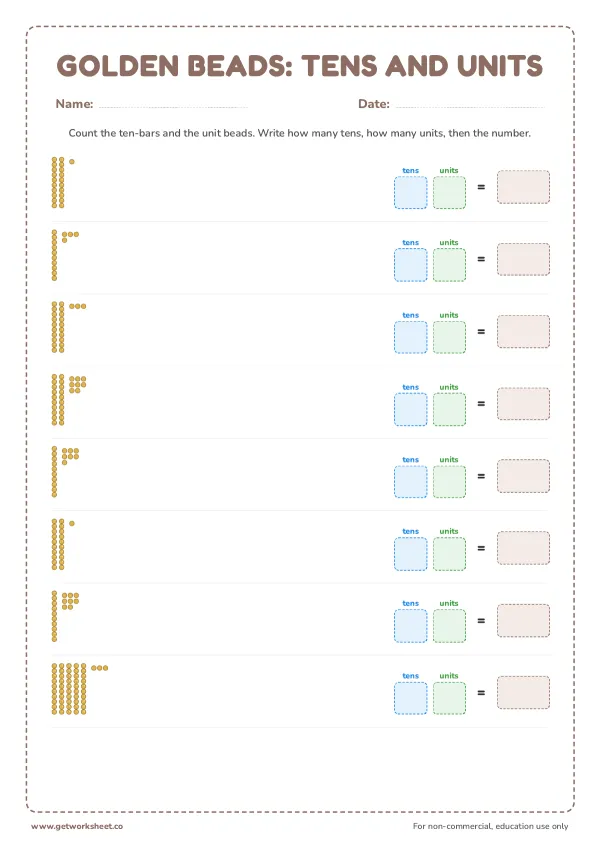
Free Montessori place value worksheets (golden beads)
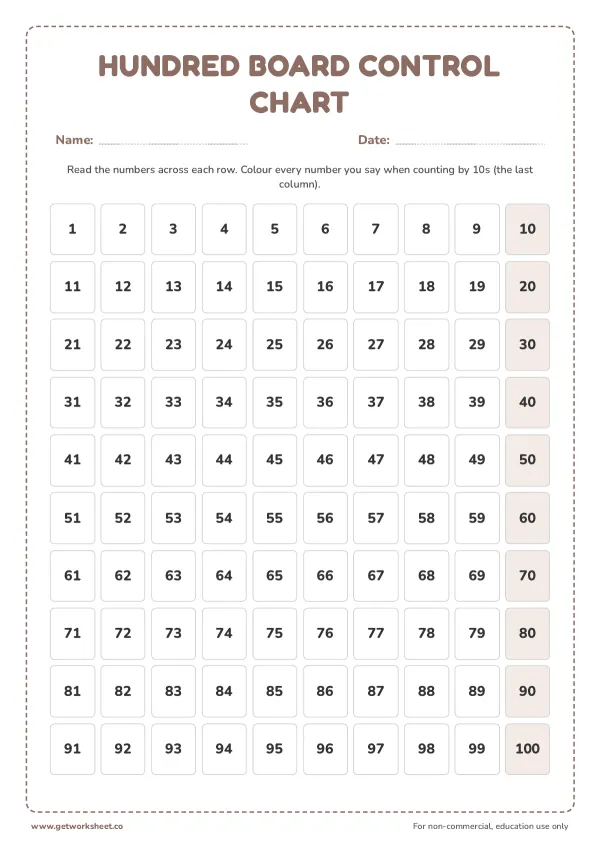
Free Montessori hundred board worksheets
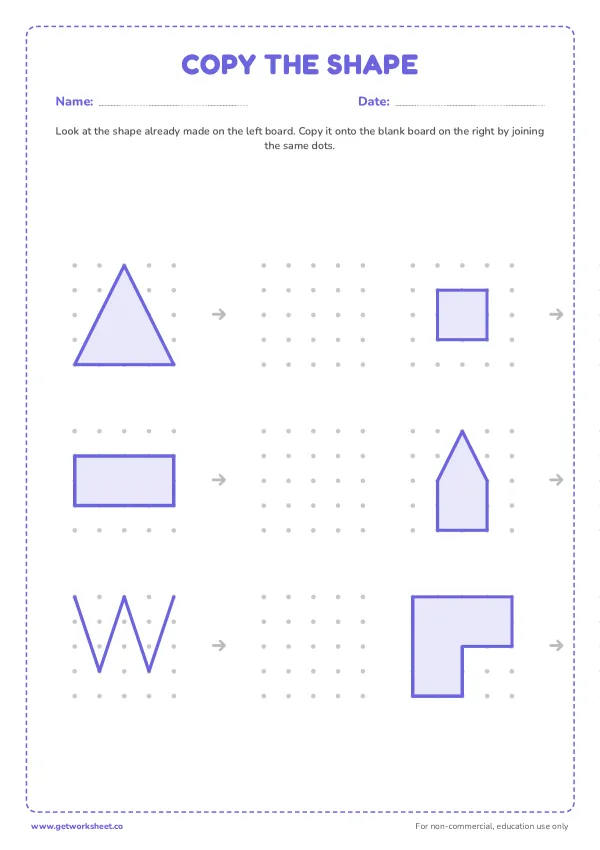
Free geoboard worksheets
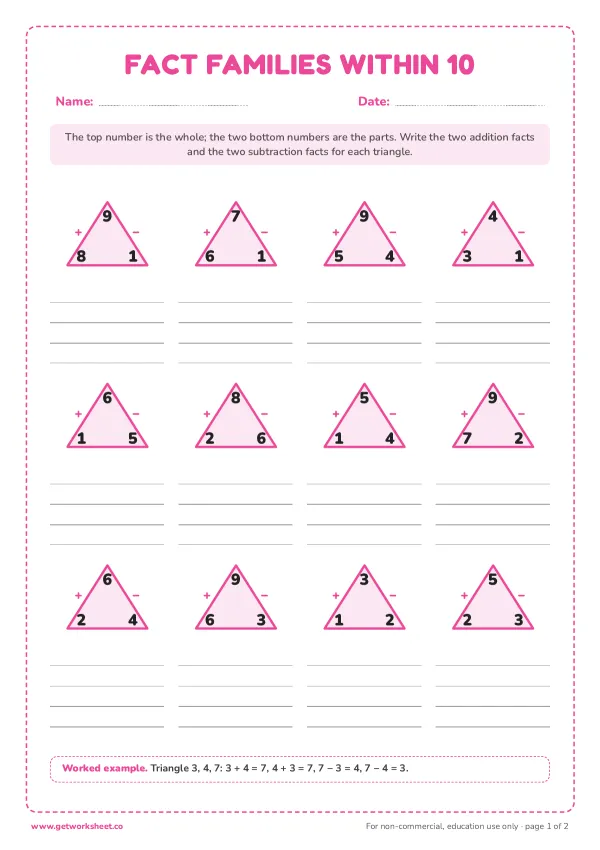
Free fact families worksheets
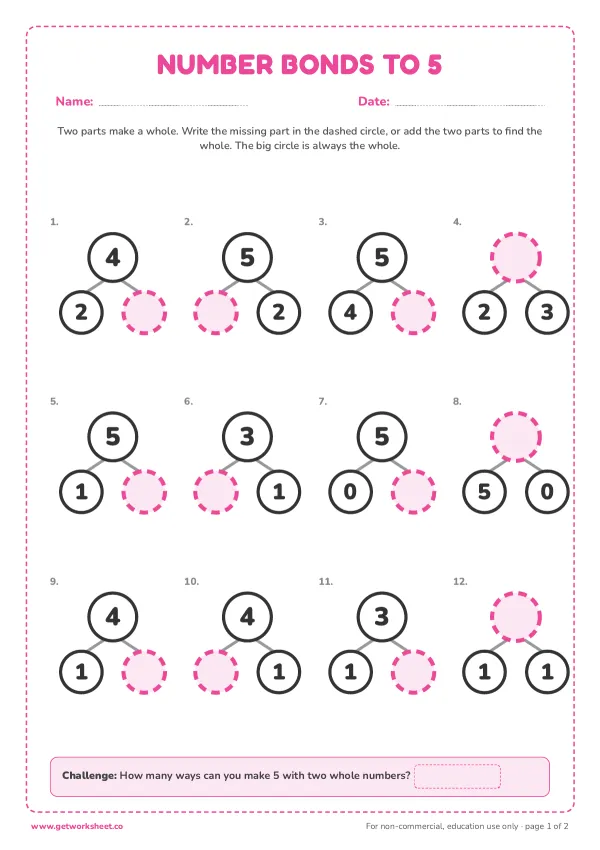
Free number bonds worksheets
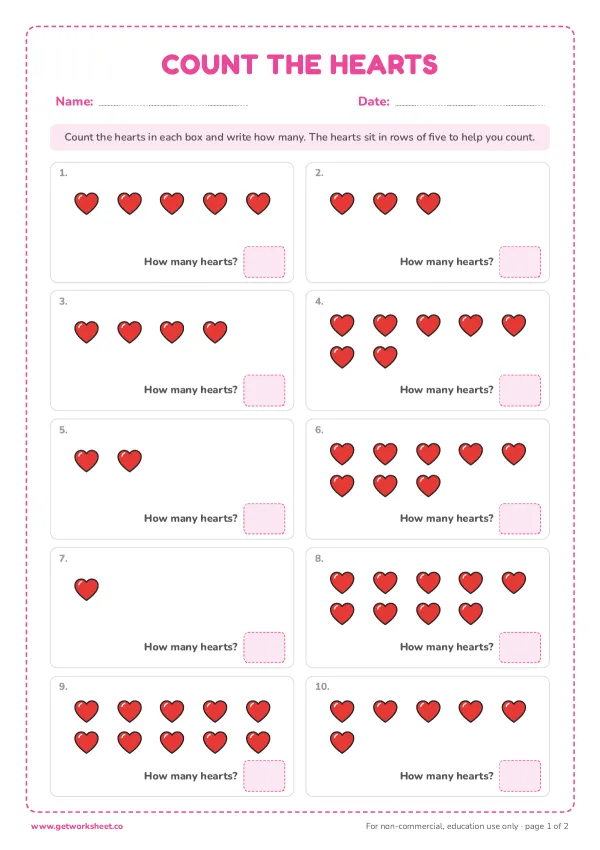
Free Valentine math worksheets
More worksheets
- Free rekenrek worksheets
- Free Montessori geometric solids worksheets
- Free Montessori addition strip board worksheets
- Free 100th day of school worksheets
- Free winter break packet worksheets
- Free Thanksgiving math worksheets
- Free greater than less than worksheets
- Free number line printables
- Free Halloween math worksheets
- Free Christmas math worksheets
- Free hundreds chart worksheets
- Free ten frame worksheets