Maths · Kindergarten–Grade 3
Free addition worksheets
Five addition worksheets covering single-digit facts: sums within 10 and within 12 in horizontal rows, 12 column sums up to 8 + 8, 15 sums adding 2, 3 or 4, and 11 plus-four facts.
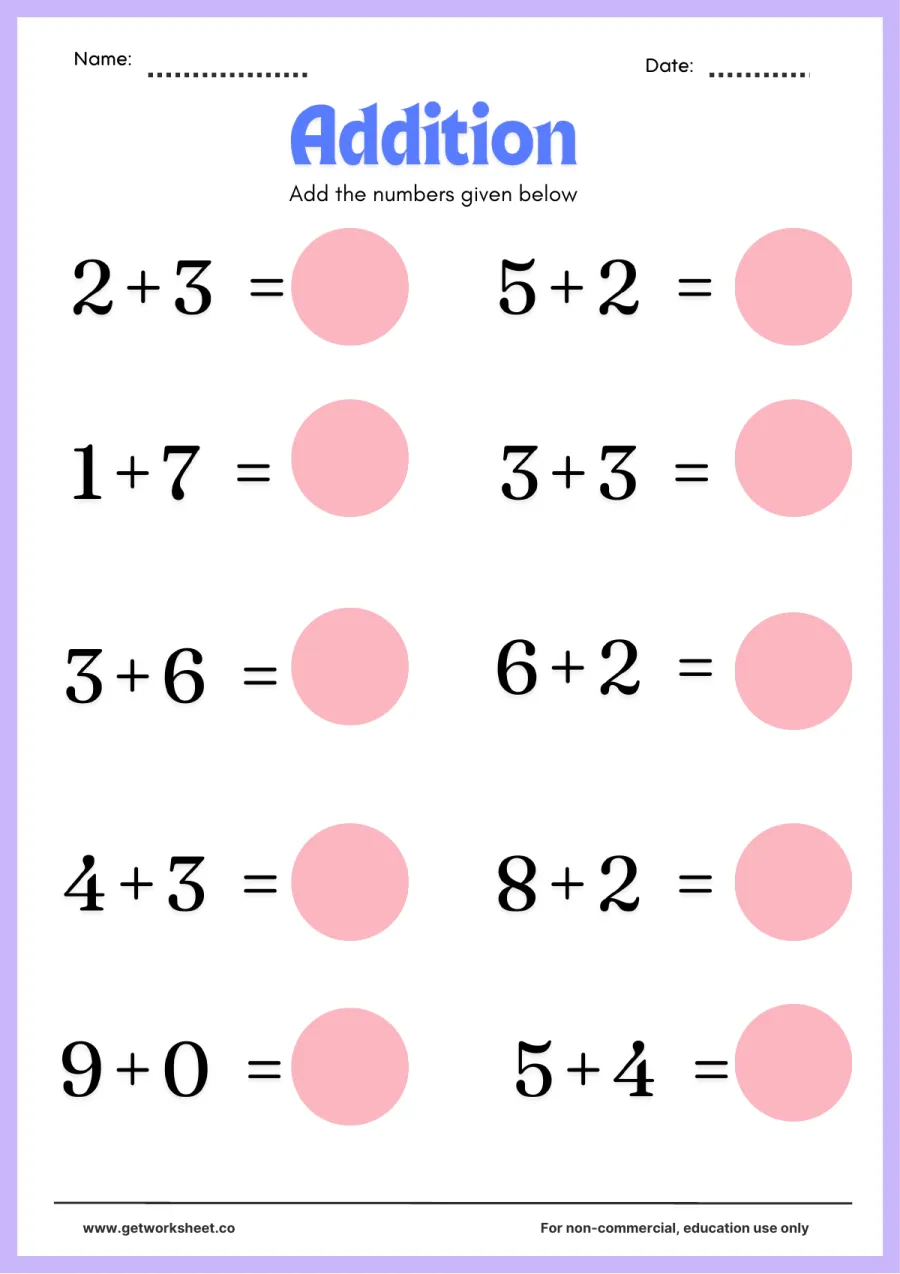
Add within 10: 10 horizontal sums with answer circles
Add single-digit pairs such as 2 + 3 and 9 + 0 and write each total in a pink circle; 10 horizontal problems in two columns.
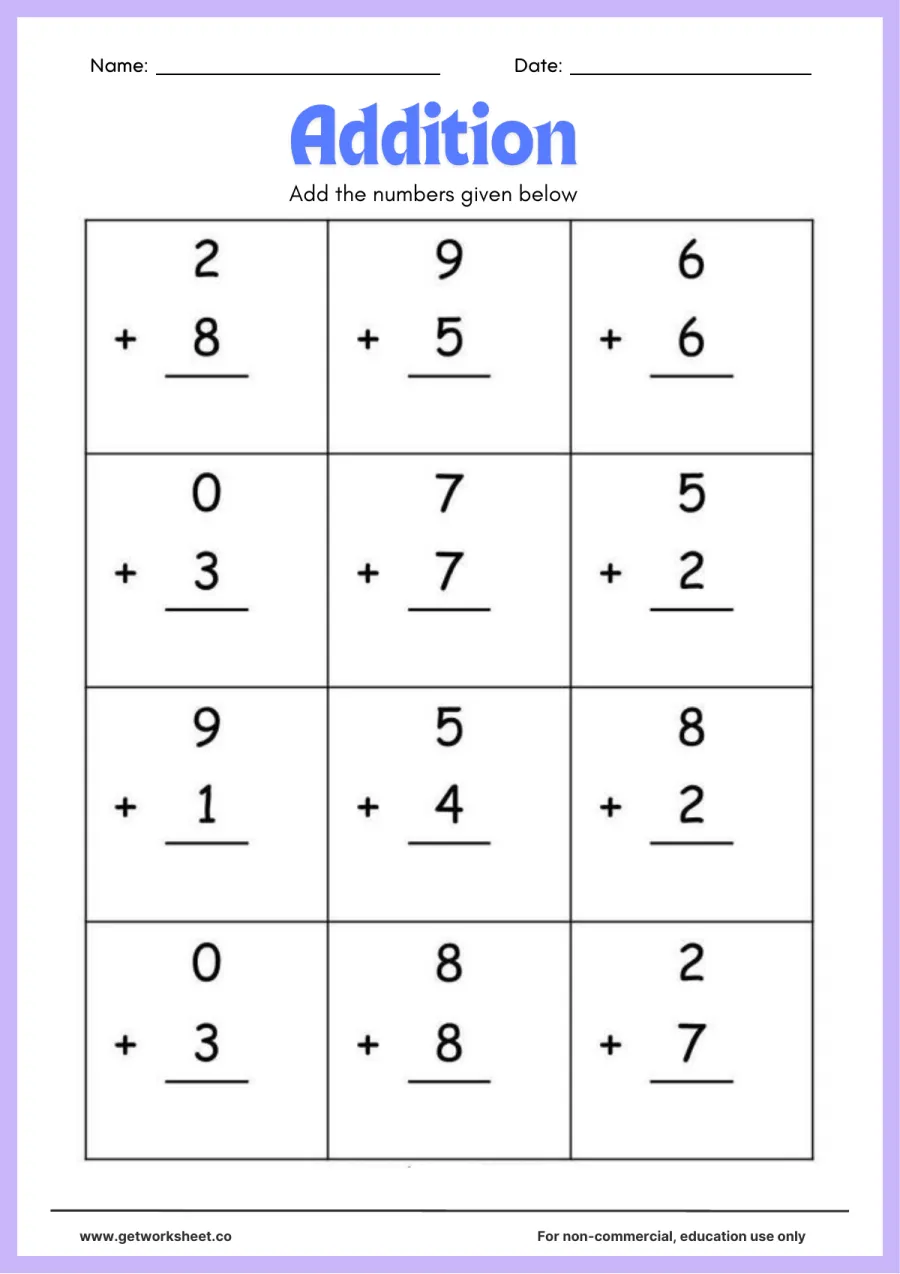
Column addition: 12 single-digit sums up to 8 + 8
Add two single-digit numbers written vertically, from 0 + 3 to 8 + 8 and 9 + 5; 12 column problems in a 3-by-4 grid.
Whole set
All 5 in one PDF
- Every sheet on this page, one file
- No ads, no countdowns, print as often as you like
- Instant download, ad-free, no account needed
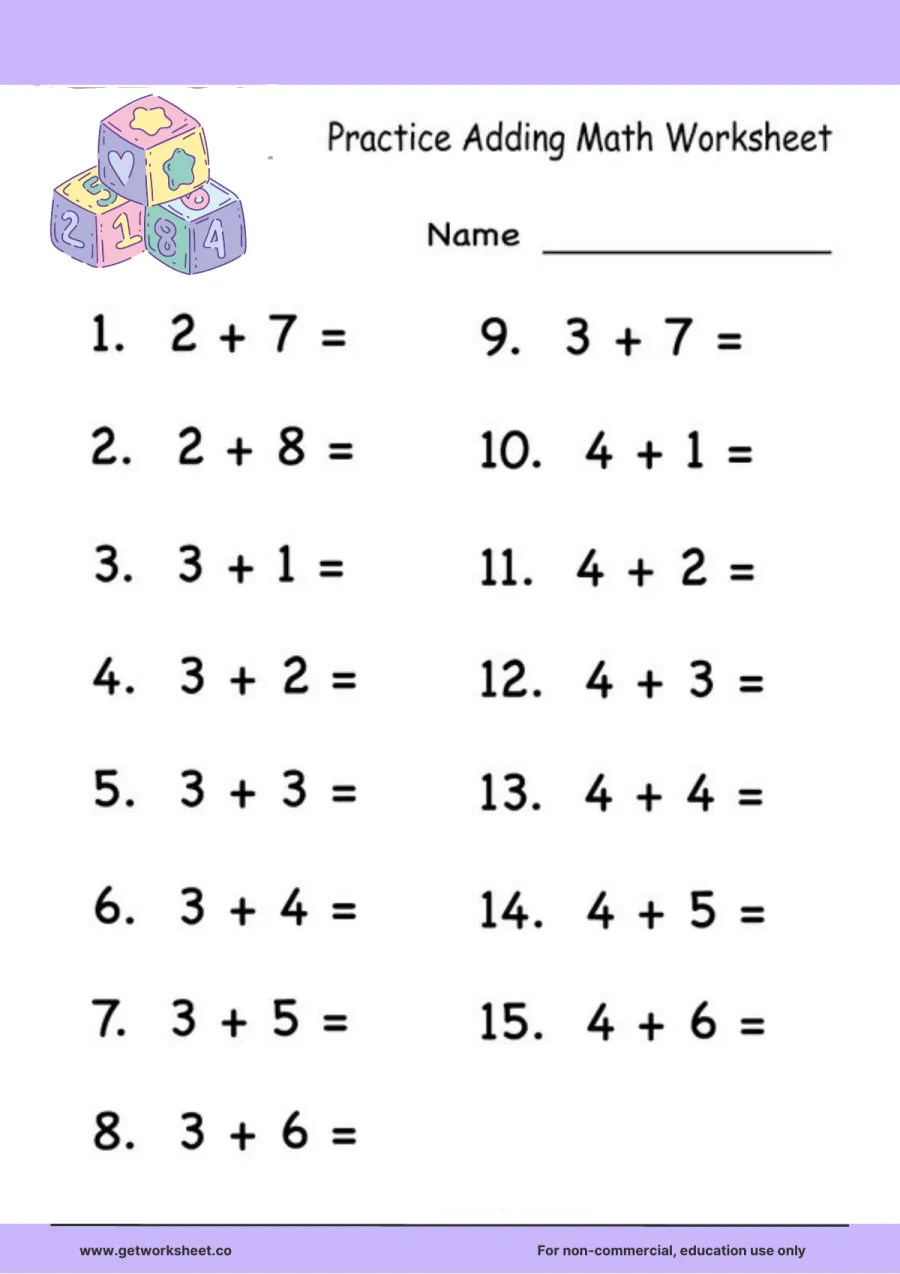
15 numbered sums adding 2, 3 and 4 to numbers up to 8
Work through 15 numbered horizontal sums that add 2, 3 or 4 to a number from 1 to 8, such as 2 + 7 and 4 + 6, with totals up to 10.
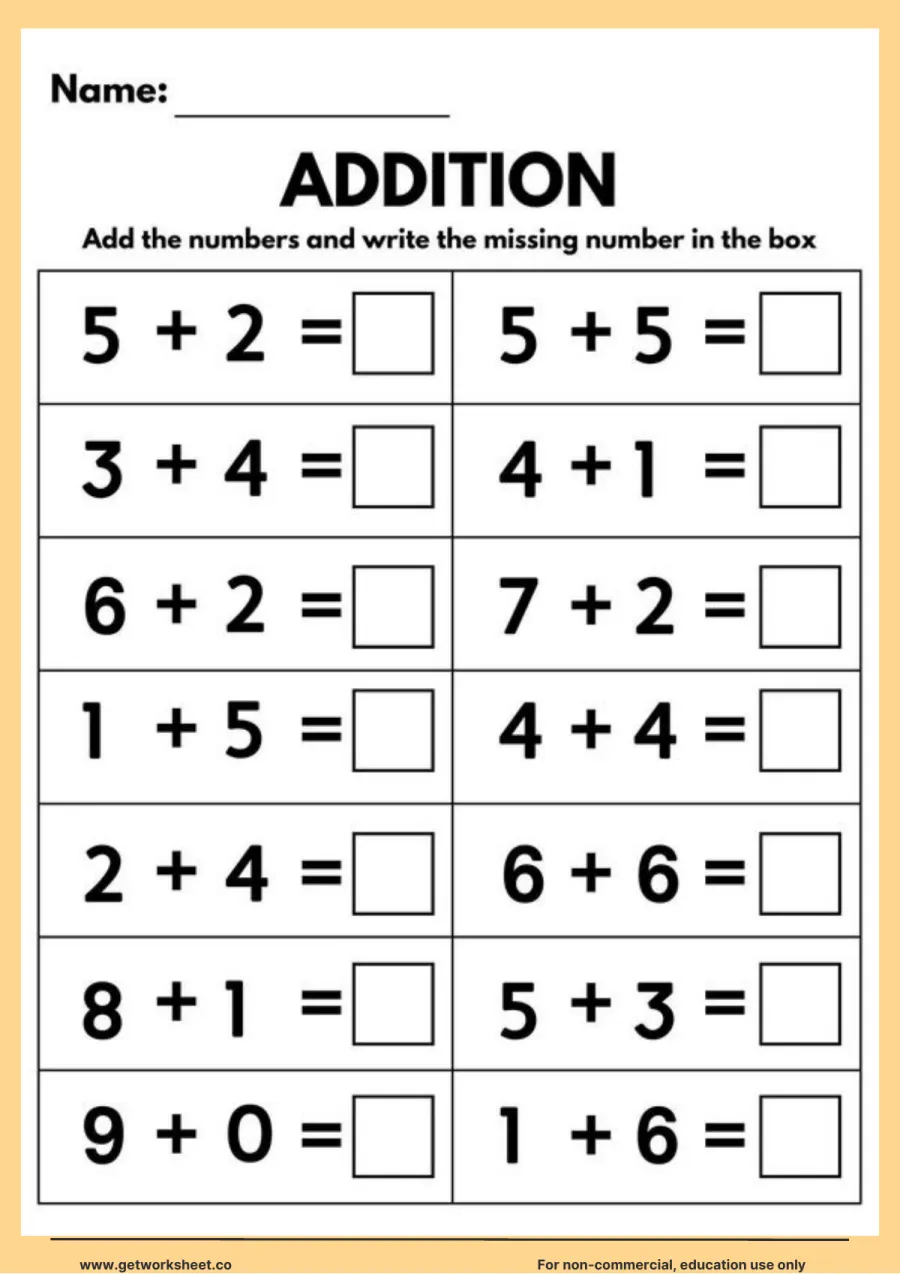
Add within 12: 14 horizontal sums with answer boxes
Add single-digit pairs such as 5 + 2, 6 + 6 and 9 + 0 and write each total in a box; 14 problems in a two-column table.
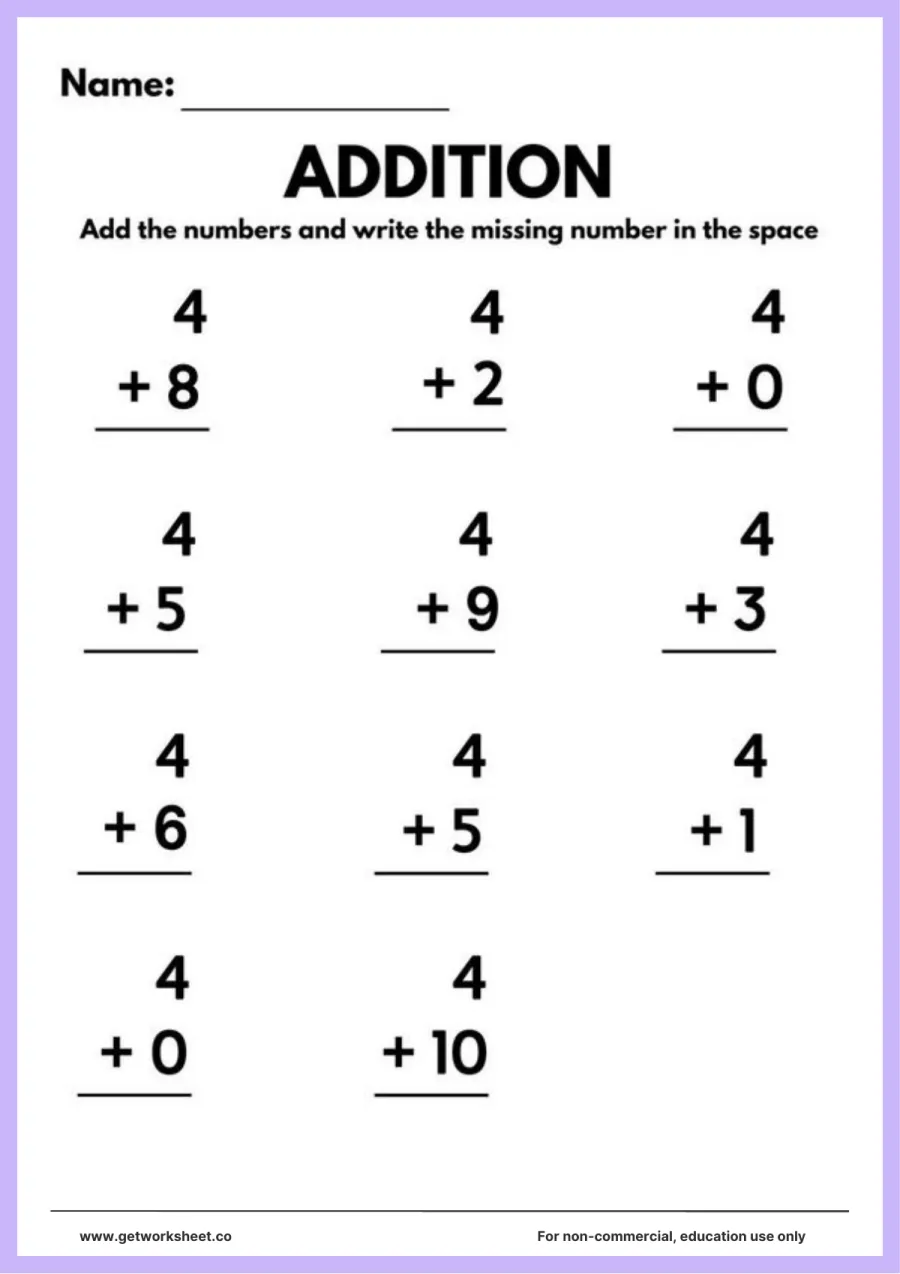
Adding 4: 11 column sums from 4 + 0 to 4 + 10
Add 4 to each number from 0 to 10 in vertical format; 11 column problems that practise the plus-four facts.
AI worksheet generator
Make a worksheet like this for your class
The 5 sheets above are fixed. The generator writes a new addition worksheet for your grade, with the question types and count you choose, in about 20 seconds. Pick a grade to start:
What you get
- A fresh set of questions on addition, not a copy of the sheets above
- Multiple choice, fill in the blanks, true or false, open ended
- Answer key and print-ready PDF with Pro
Free account, 1 worksheets a week. No card.
These five addition worksheets all stay within single-digit facts and total 62 problems. The first sheet has 10 horizontal sums within 10, such as 2 + 3 and 9 + 0, with a pink circle for each answer. The second switches to column format: 12 vertical sums from 0 + 3 up to 8 + 8 and 9 + 5 in a 3 by 4 grid. The third has 15 numbered sums that add 2, 3 or 4 to a number from 1 to 8, with totals up to 10. The fourth returns to horizontal sums, 14 of them within 12 with answer boxes, including doubles such as 6 + 6. The last sheet drills one fact family: adding 4 to every number from 0 to 10 in column form, 11 problems in all.
Together the sheets suit kindergarten and first grade, when children move from counting objects to knowing sums by heart. Seeing the same facts written both across and in columns prepares them for the vertical layout used in two-digit addition later.
What Students Will Practice
- Adding two single-digit numbers with totals within 10, then within 12
- Reading and answering sums written vertically as well as horizontally
- Adding 0, as in 9 + 0 and 4 + 0, and recognizing that the number does not change
- Building the plus-two, plus-three and plus-four facts through repeated practice
- Writing totals neatly in answer circles, boxes and under the line in column sums
Free printable makers
Make your own addition sheets
Type your own words or numbers and print in about 30 seconds. No account, no AI, answer key where it applies.
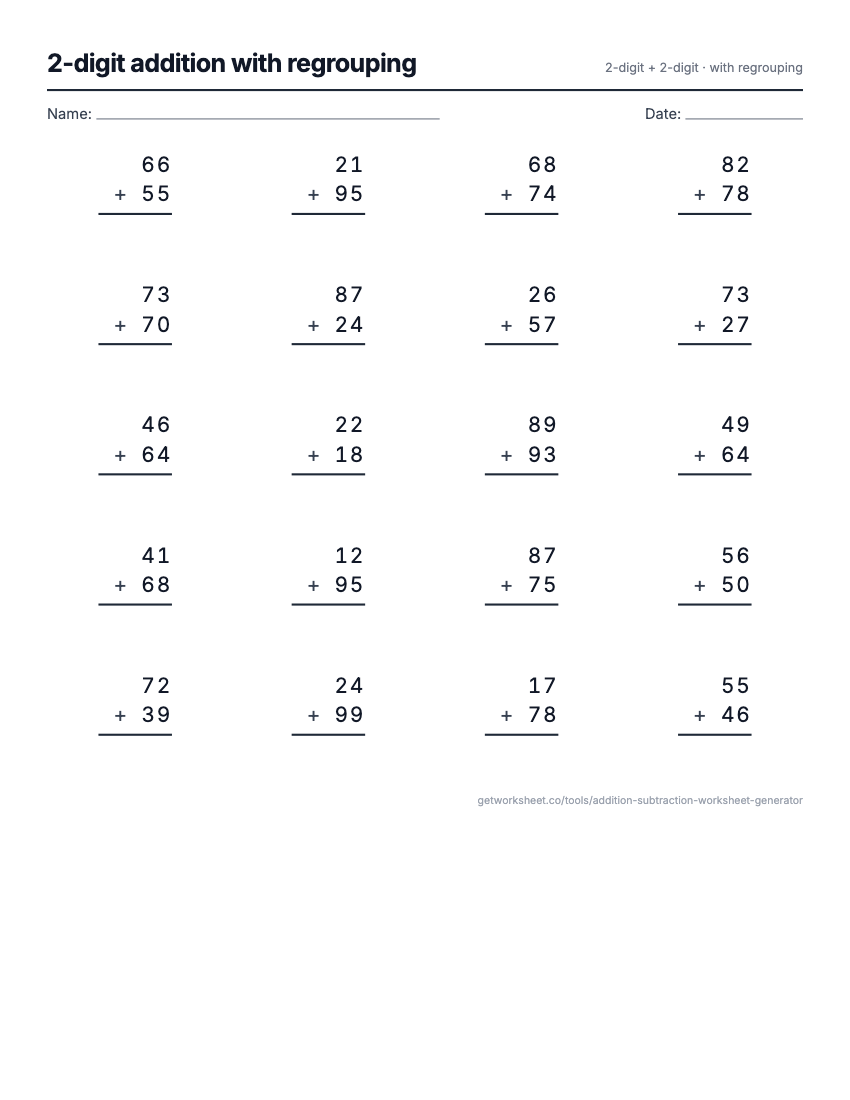 Addition and subtraction generatorColumn add and subtract, regrouping you control, boxes and key. Free to print.
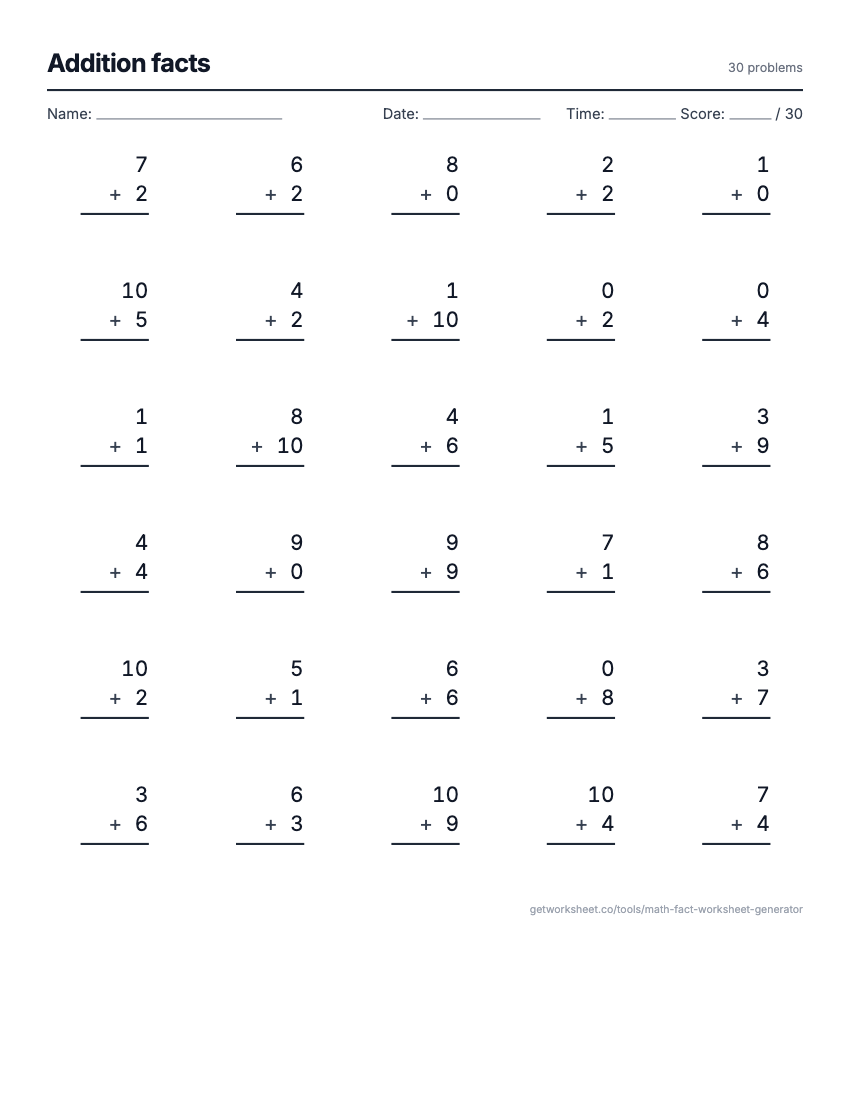 Math fact worksheet generatorAddition to division drills with an answer key. Free to print.
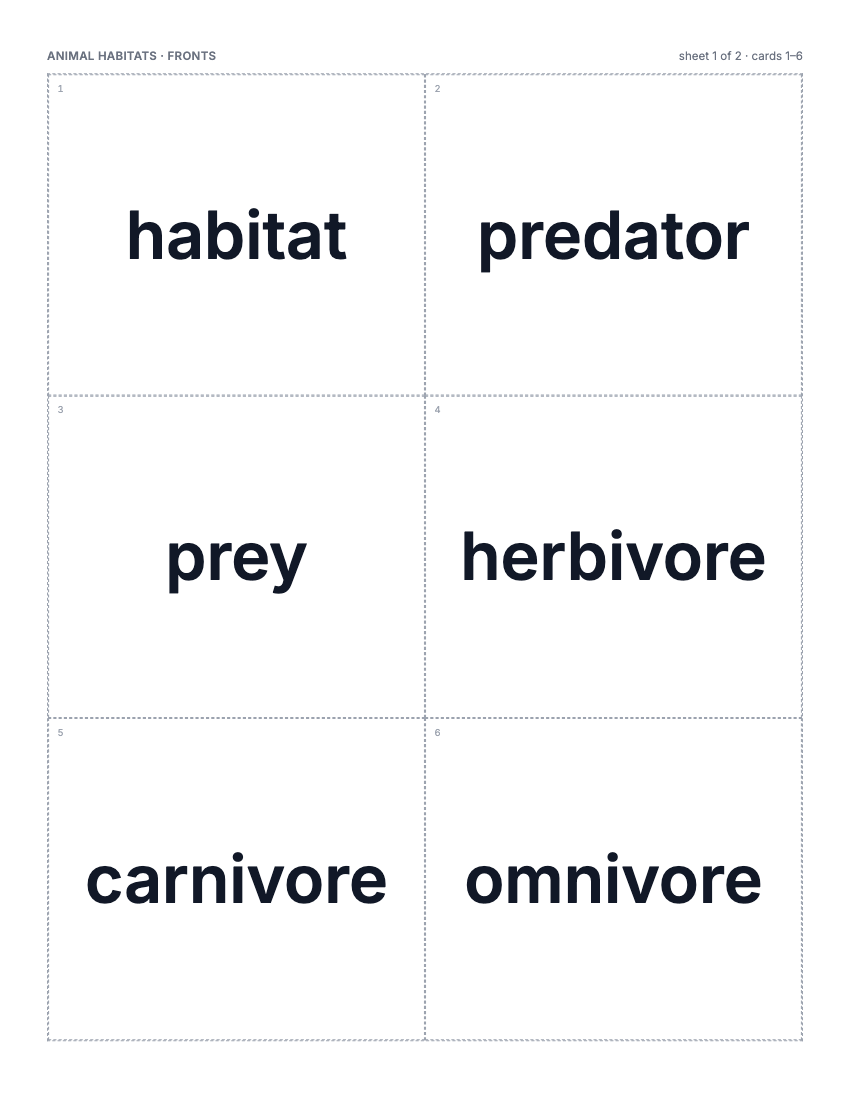 Flashcard makerVocabulary, math fact or sight word cards, 2-8 a page, two-sided or fold-over. Free to print.
AI worksheet generator
Need a different addition worksheet?
Generate a custom addition worksheet: pick the grade, question types and count, and print it in about 20 seconds. Free accounts get 1 generation a week.
Teaching tips and common mistakes
How to use these worksheets
Print at 100% on A4 or US Letter so the answer circles, the boxes and the column lines stay big enough for a beginner's pencil. None of the five sheets has an answer key, so plan to check the work sitting beside your child, and keep counters on the table for facts they cannot recall yet. One sheet per sitting is plenty at this age.
- Add within 10, 10 horizontal sums. Start here. The pink answer circles give a clear target, and facts such as 2 + 3 can be built with counters on the first pass, then answered from memory on a second pass later.
- 15 numbered sums adding 2, 3 and 4. Use this one for strategy work. Have your child say the larger number out loud, then count on two, three or four. Because the amount added repeats, children begin predicting the total before they count.
- Add within 12, 14 horizontal sums. Save this for after totals above 10 feel comfortable. When 6 + 6 comes up, stop and name it as a double, then ask what 6 + 7 has to be.
- Column addition, 12 sums up to 8 + 8. The point of this sheet is layout, not difficulty. Ask for the total written directly under the line with the digit under the ones. That habit is what makes carrying work in two-digit addition later.
- Adding 4, 11 column sums. Read the answers down the page as a pattern: 4, 5, 6, 7 and on to 14. Noticing that each total climbs by one turns eleven problems into a single idea.
Common mistakes to watch for
- Counting the first number again. For 5 + 3 a child often counts "5, 6, 7" on fingers and writes 7. Teach them to hold the 5 in their head and count on from 6.
- Adding zero. 9 + 0 appears on two of these sheets, and some children write 10 because they expect adding to make a number bigger. Show it with an empty hand: nothing arrives, so nothing changes.
- Losing track on doubles. 6 + 6 and 8 + 8 are slow and error prone on fingers. Learn the doubles as facts, then use them for near doubles.
- Ignoring the sign in column format. Children new to vertical sums sometimes read them as subtraction. Ask them to touch the plus sign before starting each column.
Frequently asked questions
What grade are these addition worksheets for?
Kindergarten through grade 3. Kindergarten and first grade will use all five sheets. A second or third grader who still counts on fingers can use them as fact practice, since every problem stays within single digits.
Are the answers included?
No. The sheets give answer circles, boxes and column lines but no answer key. All 62 problems are single-digit facts, so they take a minute to check by hand.
Do they print in black and white?
Yes. The answer circles on the first sheet are pink and some tables are shaded, but every problem and every writing space is still clear from a mono printer.
Which sheet should we do first?
Start with the 10 sums within 10, then the 15 sums that add 2, 3 and 4. Move to the 14 sums within 12 once totals above ten are easy, and use the two column sheets when your child is ready to read sums written vertically.
Can I print these for my class?
Yes. Print as many copies as you need for your own classroom, tutoring group or home use at no cost.
More practice
Once these sums are quick, the same facts show up everywhere else. Build the doubles with doubles addition worksheets, make ten visually with ten frame worksheets, then work the reverse operation on the subtraction worksheets. For sums with a gap in the middle, such as 4 + __ = 9, try the missing number worksheets.
Free library
Related collections
Free doubles addition worksheets
Free ten frame worksheets
Free subtraction worksheets (within 10 and 20)
Free Montessori addition strip board worksheets
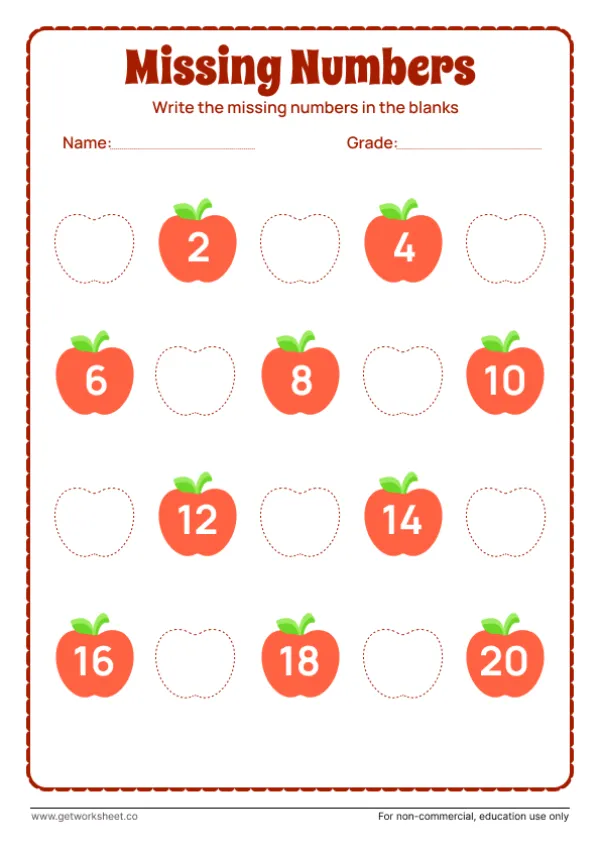
Free missing number worksheets
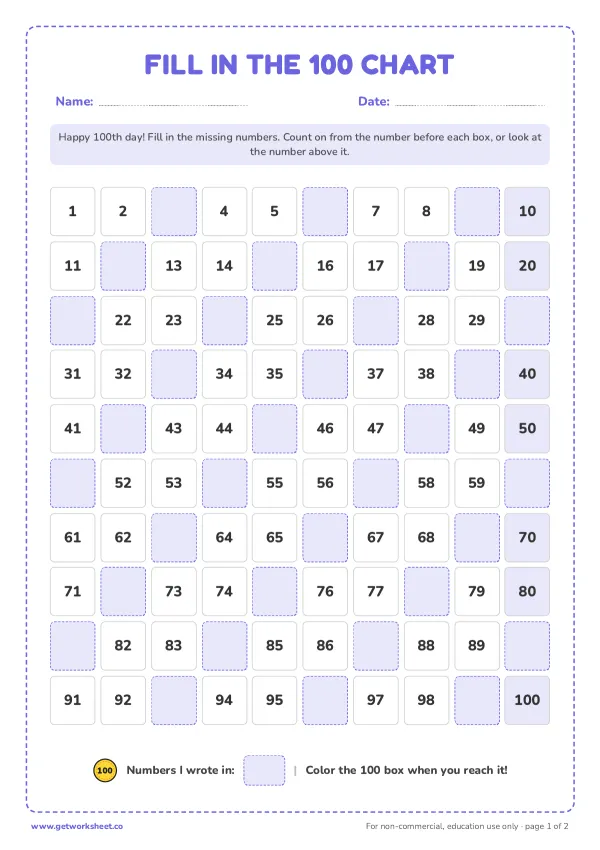
Free 100th day of school worksheets
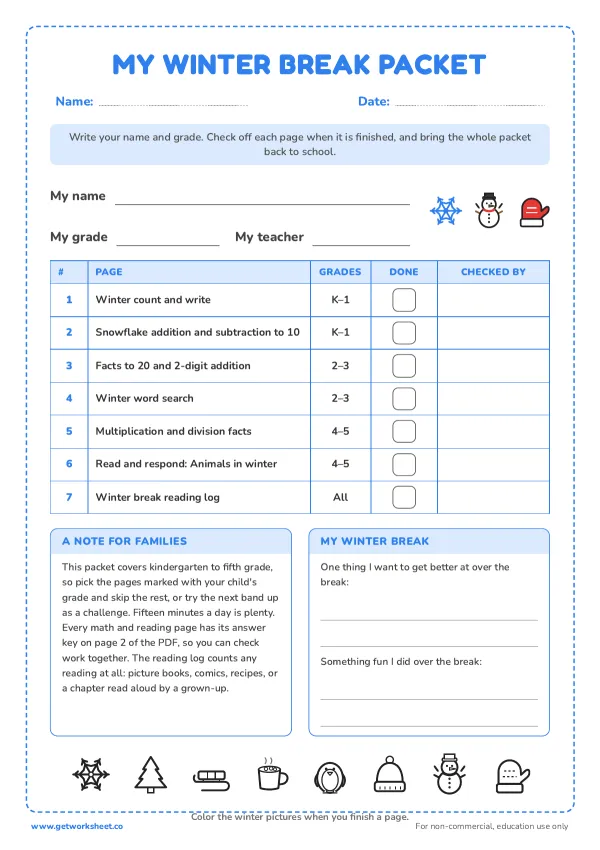
Free winter break packet worksheets
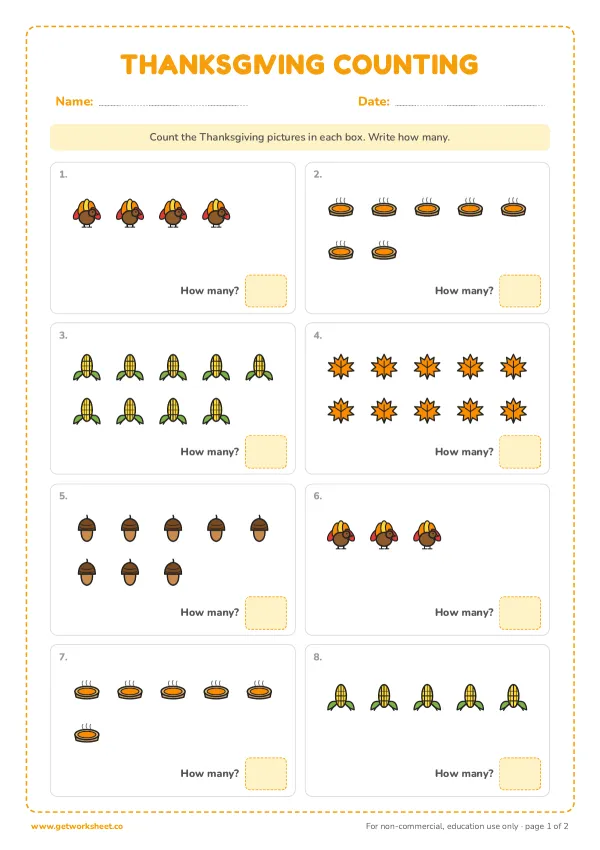
Free Thanksgiving math worksheets
More worksheets
- Free greater than less than worksheets
- Free number line printables
- Free Halloween math worksheets
- Free Christmas math worksheets
- Free hundreds chart worksheets
- Free Montessori teen board and ten board worksheets
- Free Montessori place value worksheets (golden beads)
- Free Montessori hundred board worksheets
- Free repeating patterns worksheets
- Free before and after numbers worksheets
- Free 3D shapes worksheets
- Free 2-digit addition worksheets