Maths · Preschool–Grade 2
Free missing number worksheets
Ten missing number sheets for preschool to grade 2, all within 1 to 10 or 1 to 20: write the evens between printed odds, the odds between printed evens, or the gaps in a 20-box grid.
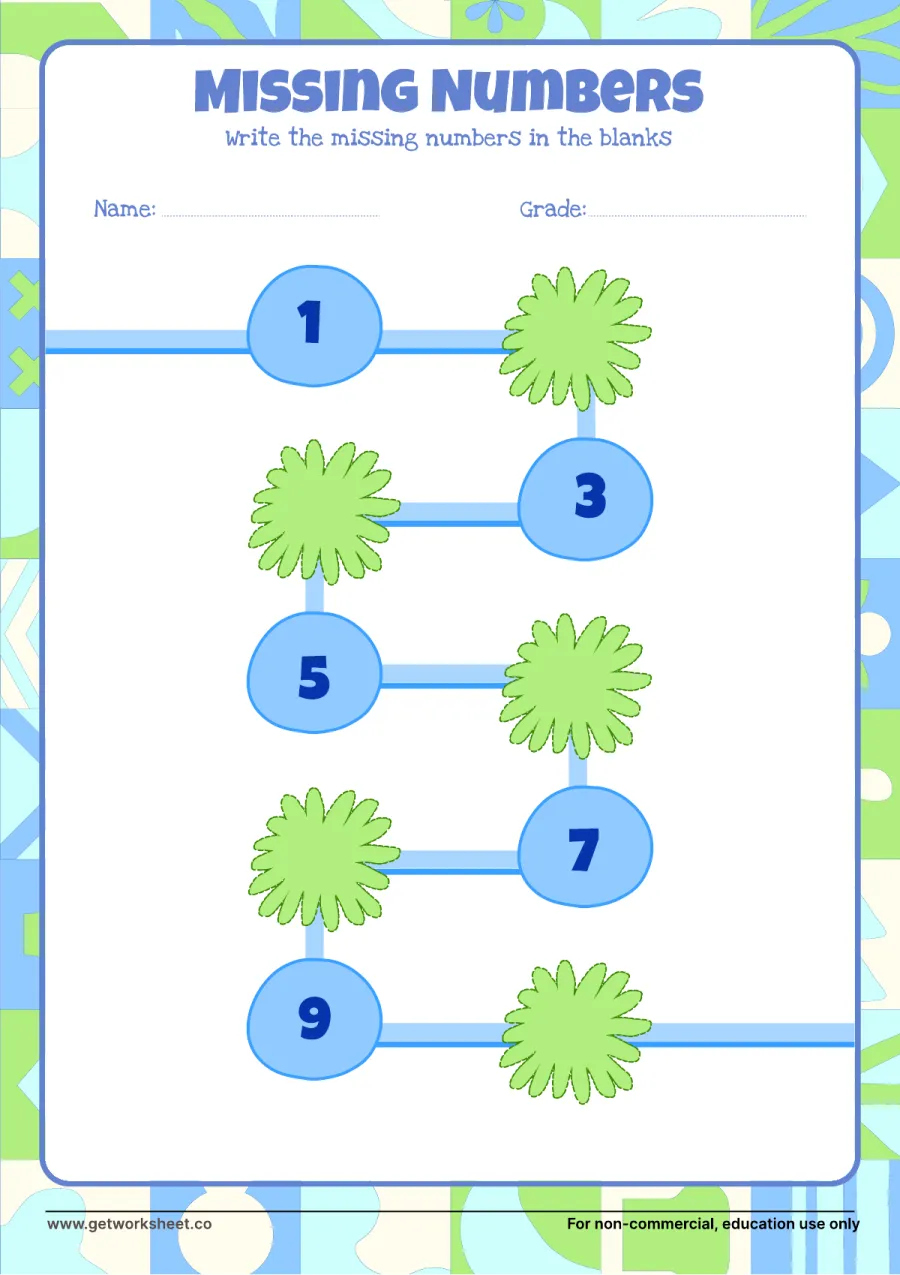
Missing numbers 1 to 10: odd numbers given, fill the evens
Write 2, 4, 6, 8 and 10 in the flower-shaped blanks along a winding path where 1, 3, 5, 7 and 9 are already filled in.
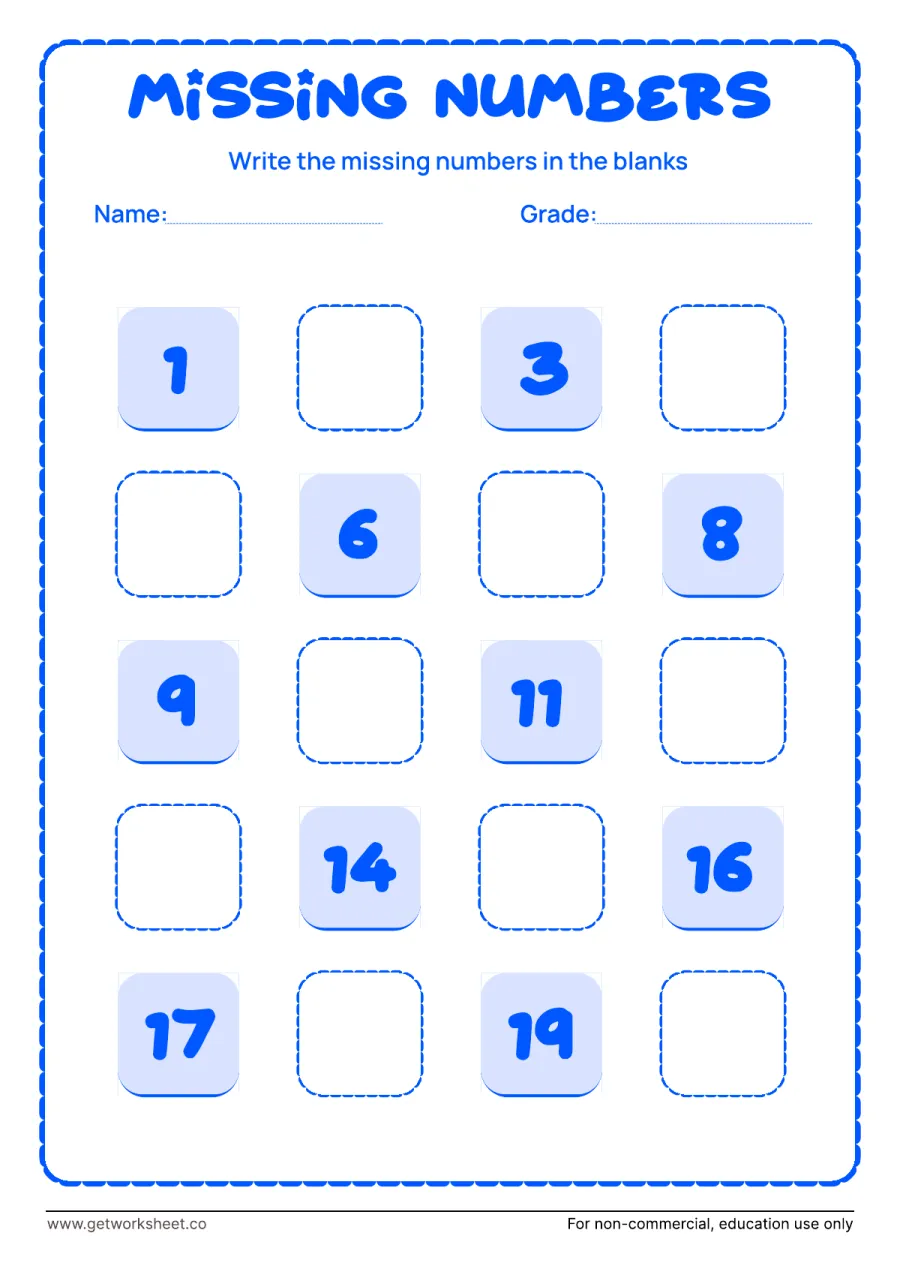
Missing numbers 1 to 20: fill 10 blanks in a blue grid
Write the missing numbers in a 4-column grid of 20 boxes where 1, 3, 6, 8, 9, 11, 14, 16, 17 and 19 are given and the rest are blank.
Whole set
All 10 sheets in one PDF
Instant and ad-free. No account needed.
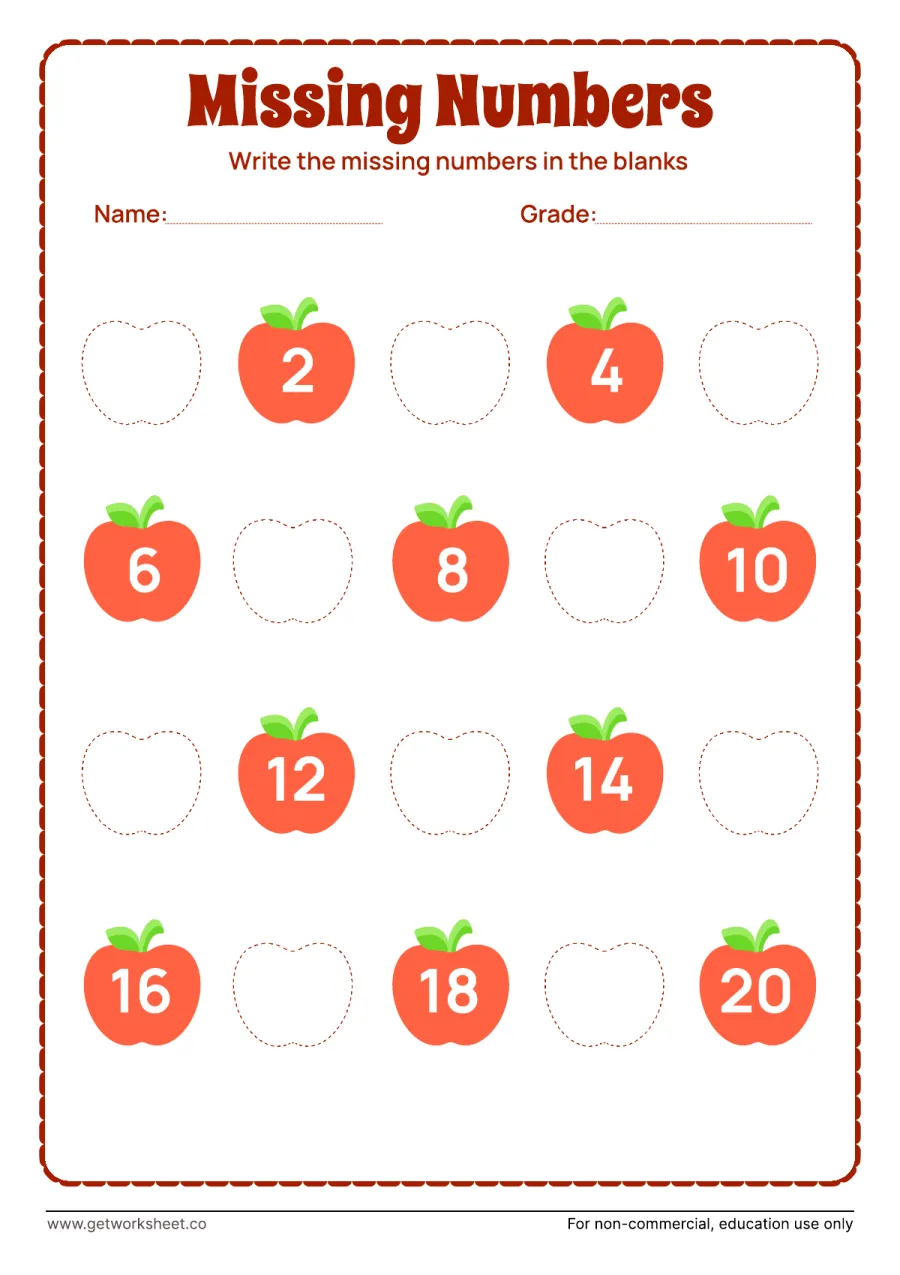
Missing numbers to 20: apples show the evens, fill the odds
Write the odd numbers 1 to 19 in the empty dotted apples; the even numbers 2 to 20 are printed on the red apples.
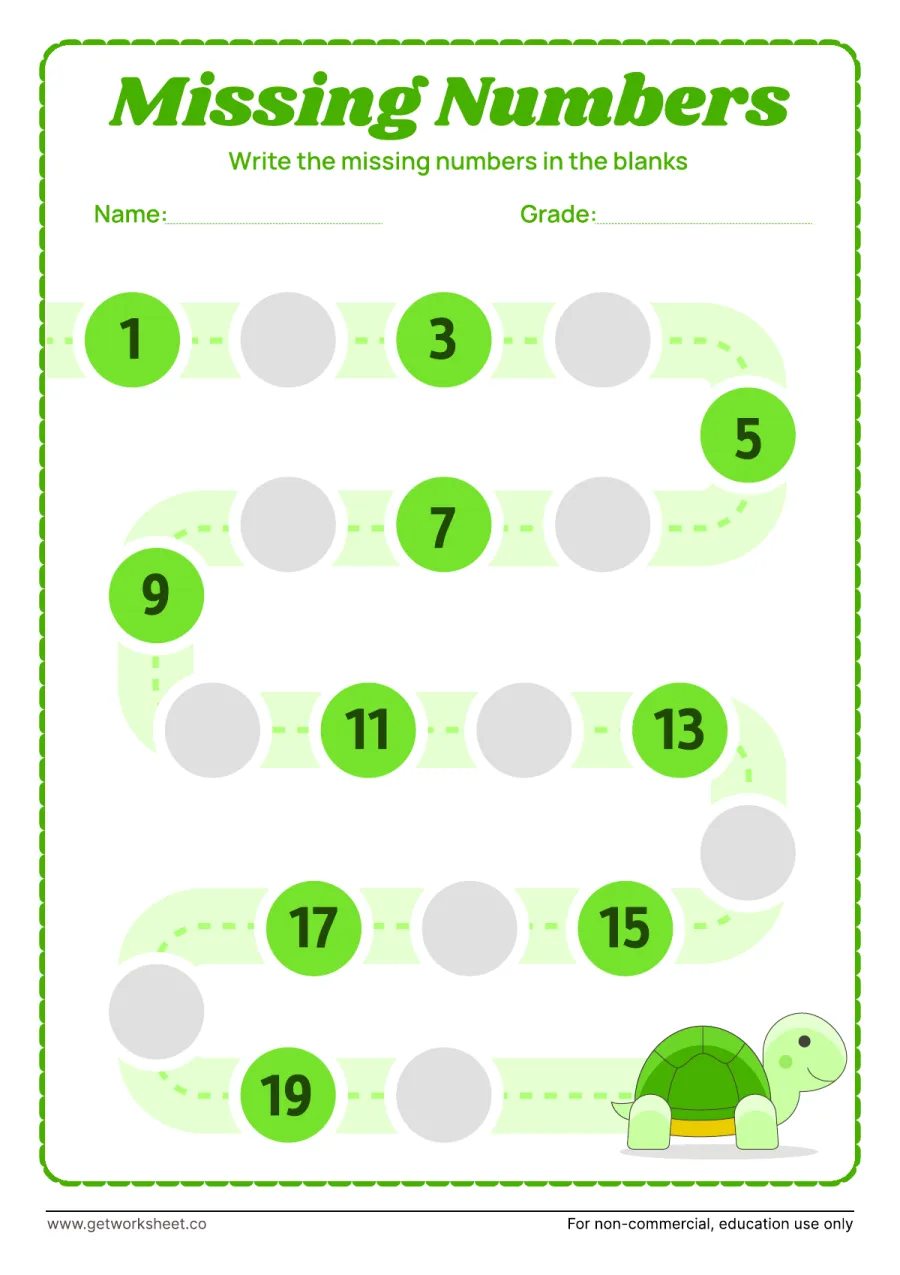
Missing numbers to 20: turtle path, odds given, fill evens
Follow the winding turtle path and write the even numbers 2 to 20 in the grey circles between the printed odd numbers 1 to 19.
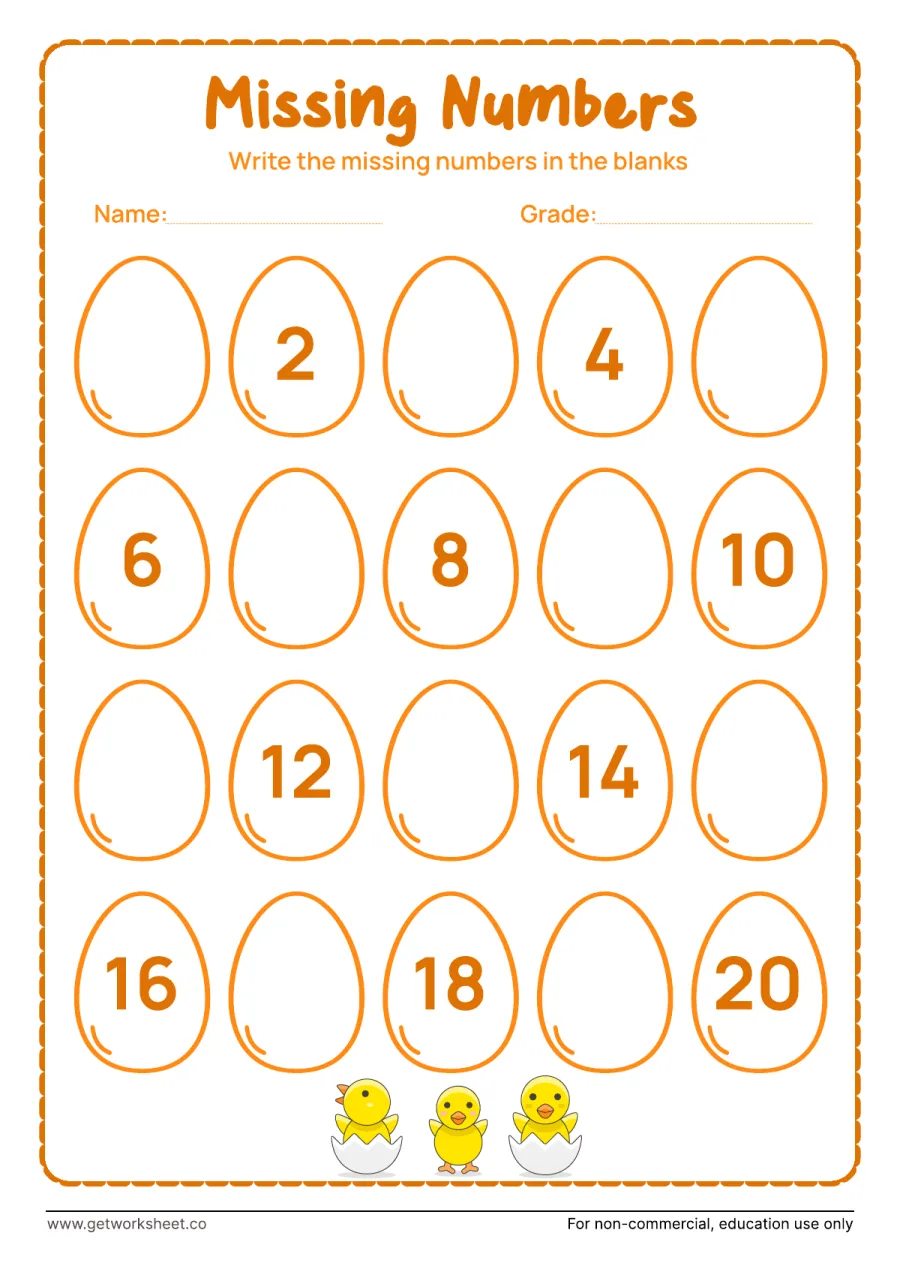
Missing numbers to 20: eggs show the evens, fill the odds
Write the odd numbers 1 to 19 in the empty eggs; the even numbers 2 to 20 are printed on the orange eggs, with chicks below.
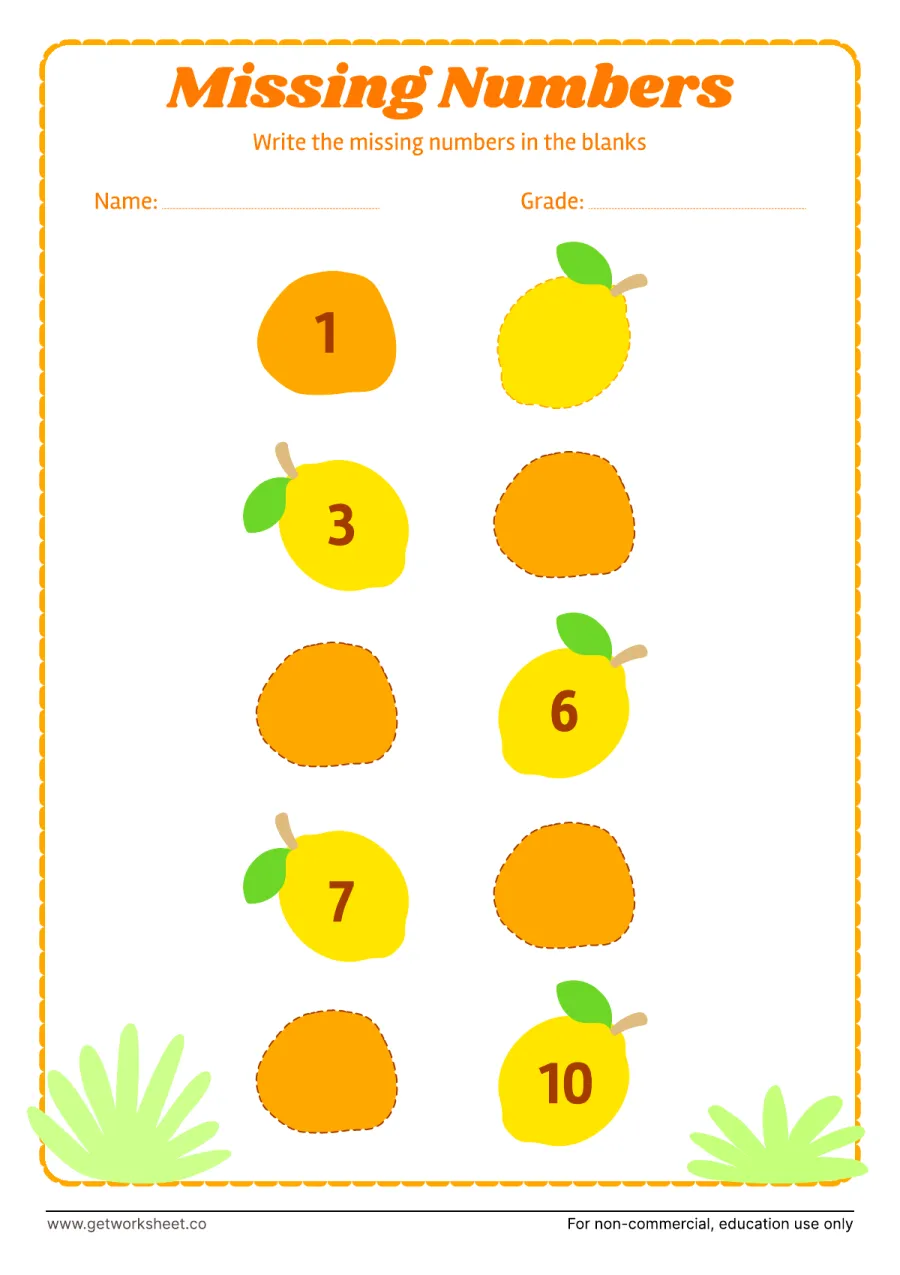
Missing numbers 1 to 10: fruit trail, 1, 3, 6, 7, 10 given
Write 2, 4, 5, 8 and 9 on the blank oranges in a zigzag trail of ten fruits where 1, 3, 6, 7 and 10 are printed on the lemons.
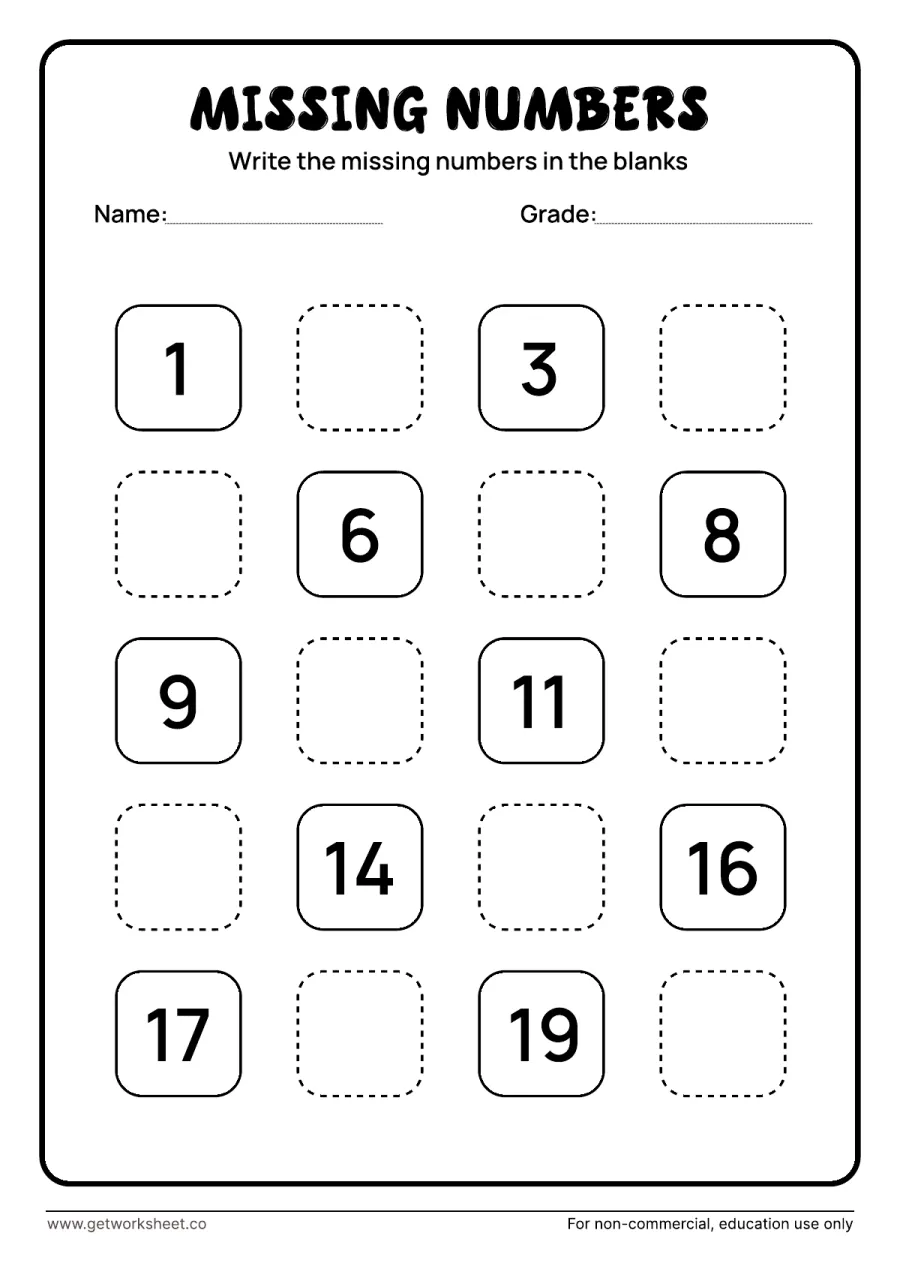
Missing numbers 1 to 20: 10 blanks, black-and-white grid
Write the missing numbers in a plain 4-column grid of 20 boxes where 1, 3, 6, 8, 9, 11, 14, 16, 17 and 19 are given, in black and white.
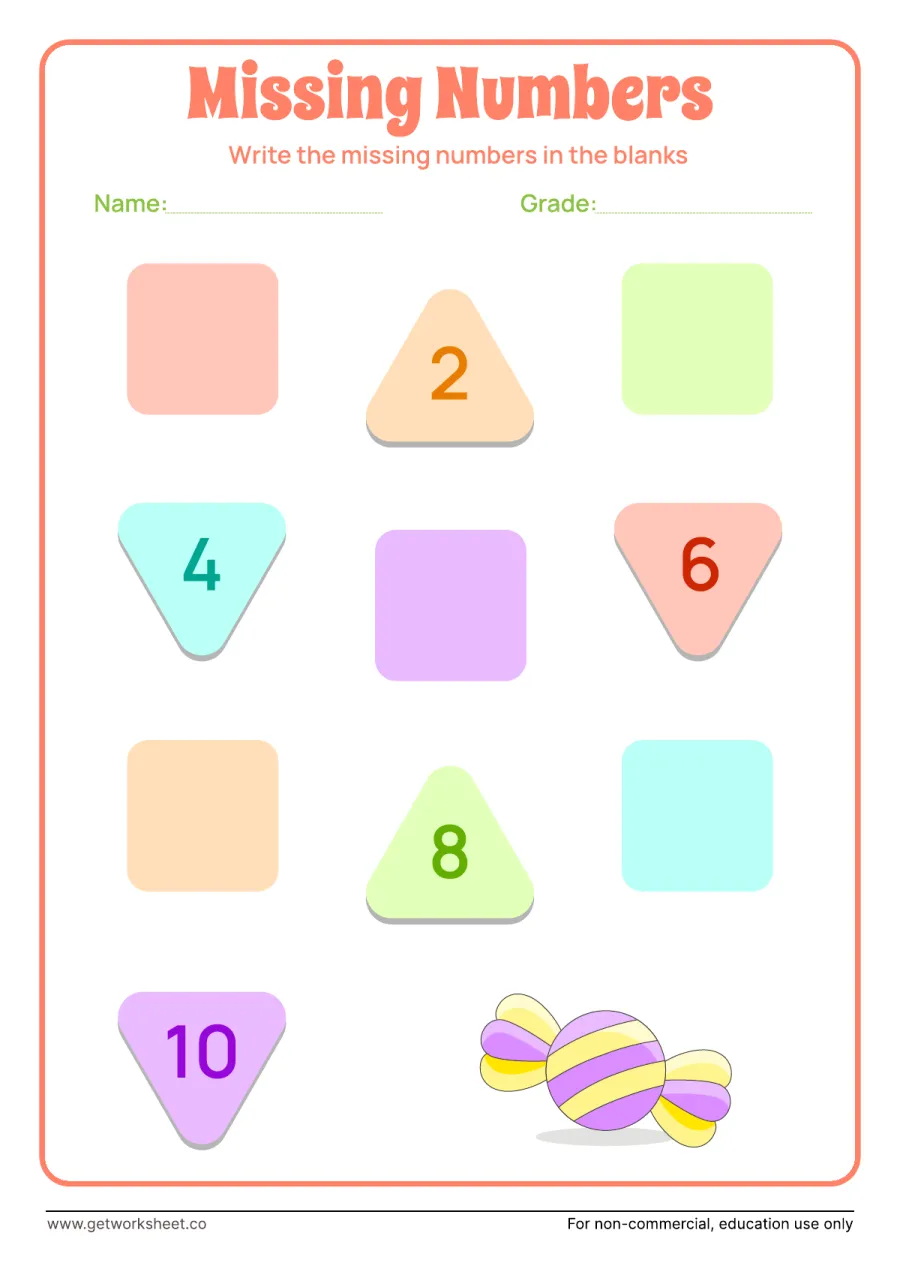
Missing numbers 1 to 10: shapes with 2, 4, 6, 8 and 10 given
Write the odd numbers 1, 3, 5, 7 and 9 on the blank pastel squares and triangles; the even numbers 2 to 10 are printed on the shapes.
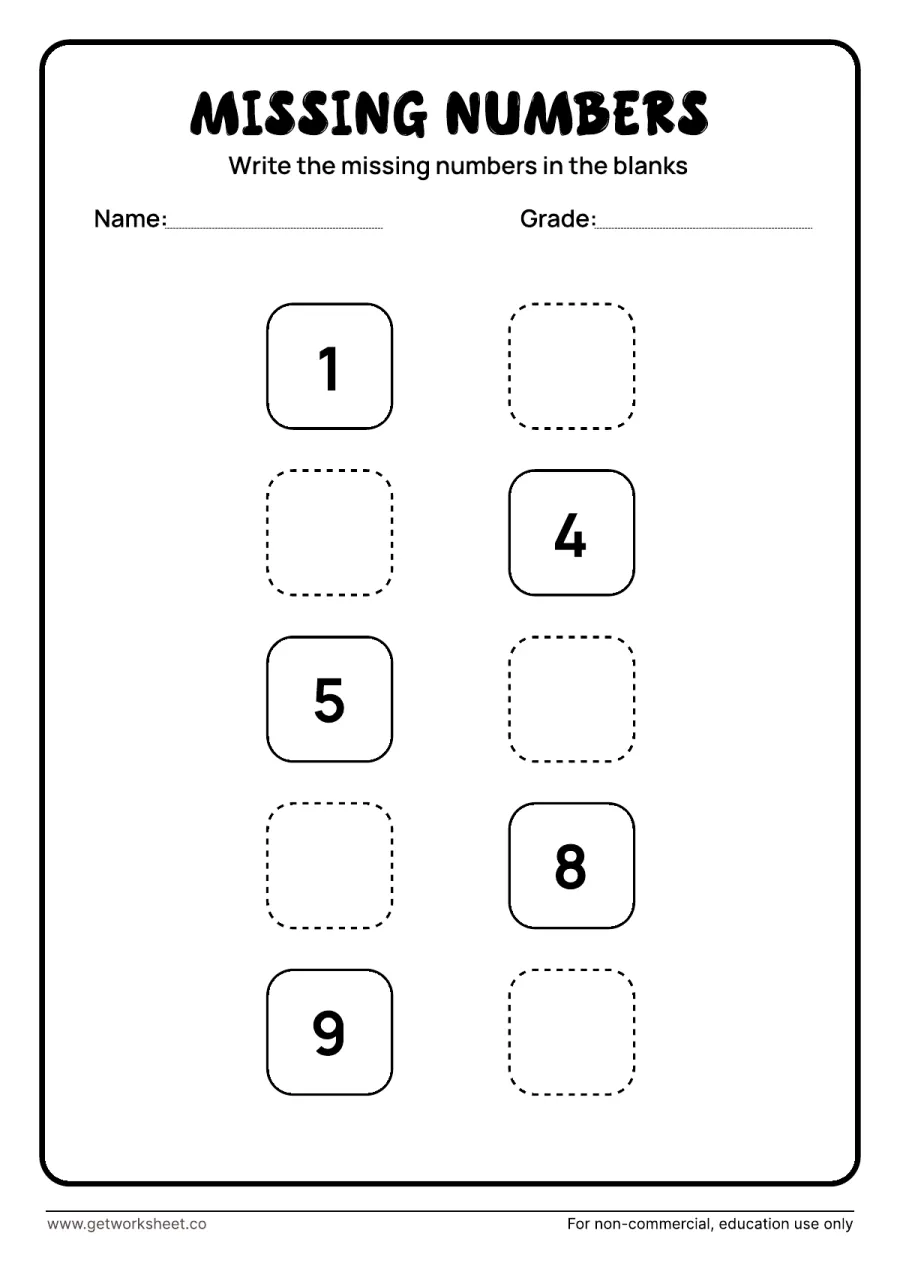
Missing numbers 1 to 10: two columns, 1, 4, 5, 8, 9 given
Write the five missing numbers in a black-and-white two-column grid of ten boxes where 1, 4, 5, 8 and 9 are already printed.
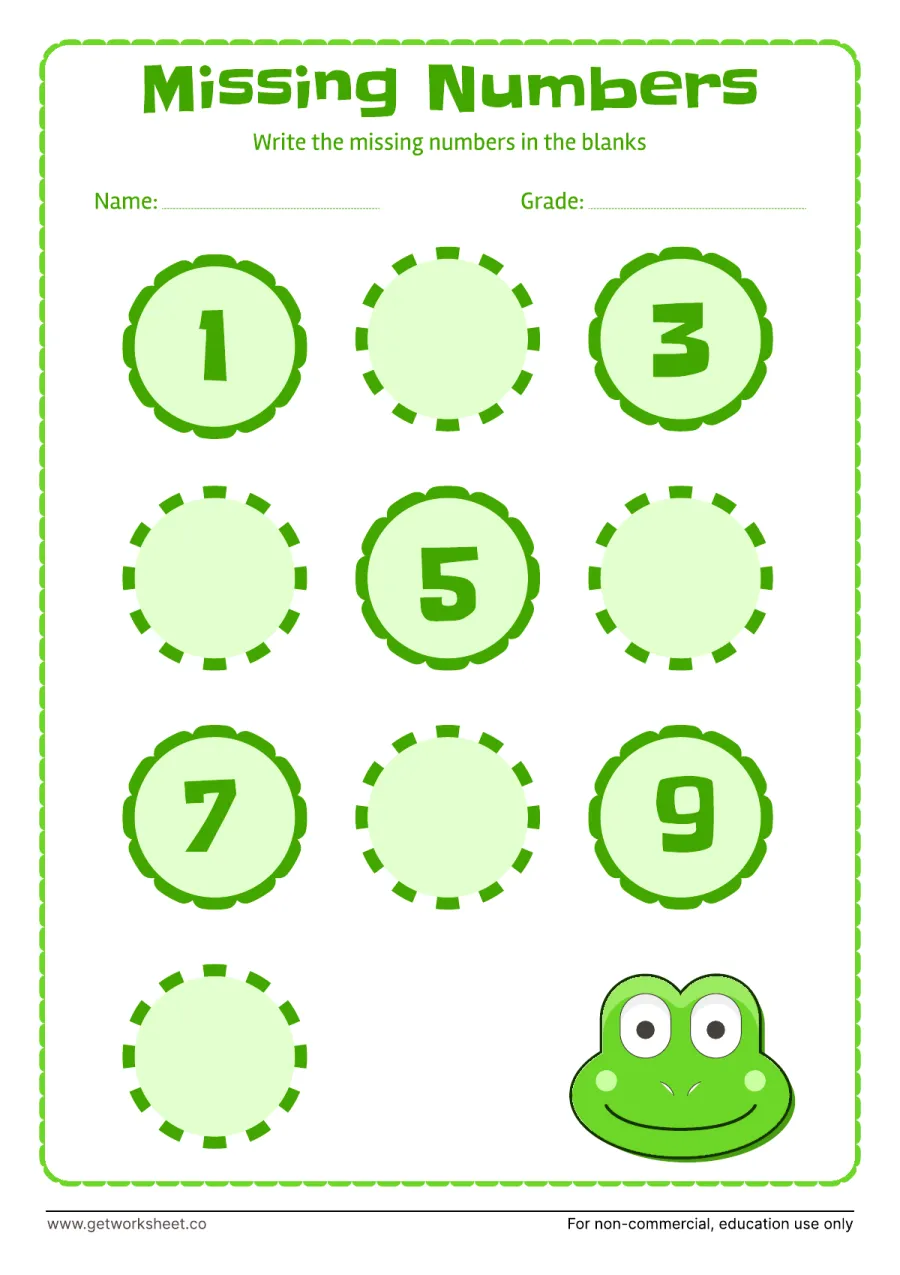
Missing numbers 1 to 10: green circles, odd numbers given
Write 2, 4, 6, 8 and 10 in the dotted green circles; 1, 3, 5, 7 and 9 are printed in a 3-column layout with a frog at the bottom.
AI worksheet generator
Make a worksheet like this for your class
The 10 sheets above are fixed. The generator writes a new missing number worksheet for your grade, with the question types and count you choose, in about 20 seconds. Pick a grade to start:
What you get
- A fresh set of questions on missing number, not a copy of the sheets above
- Multiple choice, fill in the blanks, true or false, open ended
- Answer key and print-ready PDF with Pro
Free account, 1 worksheets a week. No card.
These ten missing number worksheets all stay within 1 to 20. Five work with the numbers 1 to 10: a winding flower path, a zigzag fruit trail, pastel squares and triangles, a plain two-column grid and green circles with a frog. The other five go to 20: two 4-column grids of 20 boxes (one blue, one black and white) with ten blanks each, a page of apples, a page of eggs with chicks, and a winding turtle path. On six sheets the pattern is odds and evens: either the odd numbers are printed and the child writes the evens (flower path, turtle path, green circles), or the even numbers are printed and the child writes the odds (apples, eggs, shapes). The other four have mixed gaps, such as 1, 3, 6, 7 and 10 given on the fruit trail, or 1, 4, 5, 8 and 9 given in the two-column grid.
Filling a gap is different from reciting numbers. The child has to read the numbers on either side and work out which one is missing, which builds the sense of number order that addition and subtraction depend on.
What Students Will Practice
- Writing the numbers 1 to 10 and 1 to 20 in order, using the printed numbers as anchors
- Counting on by one from a printed number to find the blank next to it
- Noticing the every-other-one pattern when only odds or only evens are given
- Reading a 4-column grid of 20 row by row, and following themed trails that wind across the page
Free printable makers
Make your own missing number sheets
Type your own words or numbers and print in about 30 seconds. No account, no AI, answer key where it applies.
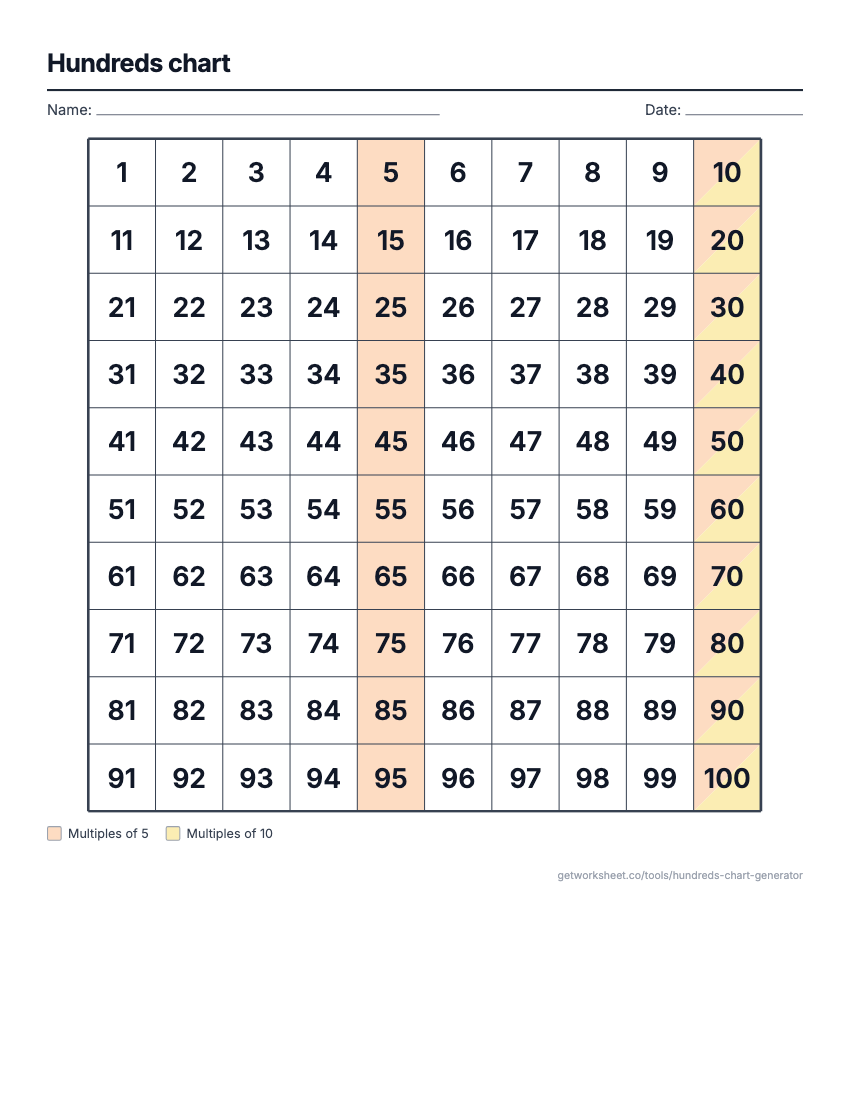 Hundreds chart generator1-100, 1-120 or 0-99, blank or missing numbers, skip-count colours, odd/even. Free to print.
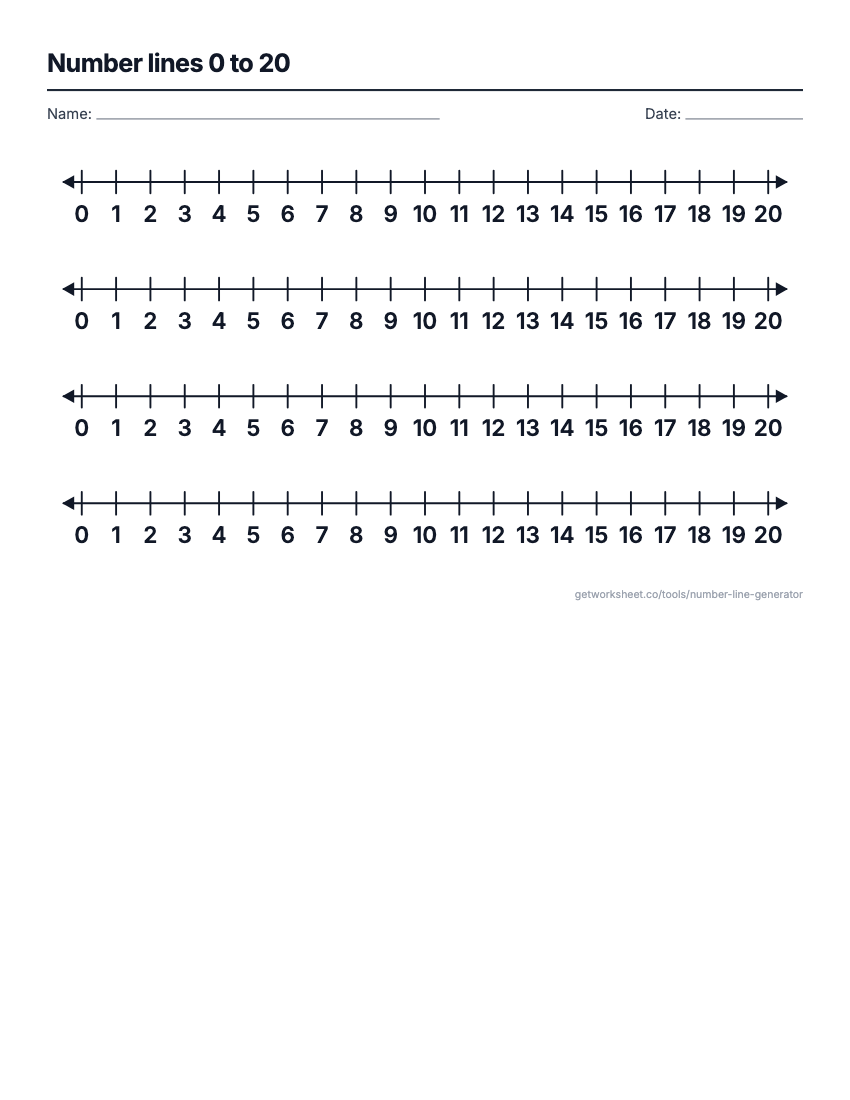 Number line generatorAny range and step, fractions and decimals, blank or missing numbers with a key. Free to print.
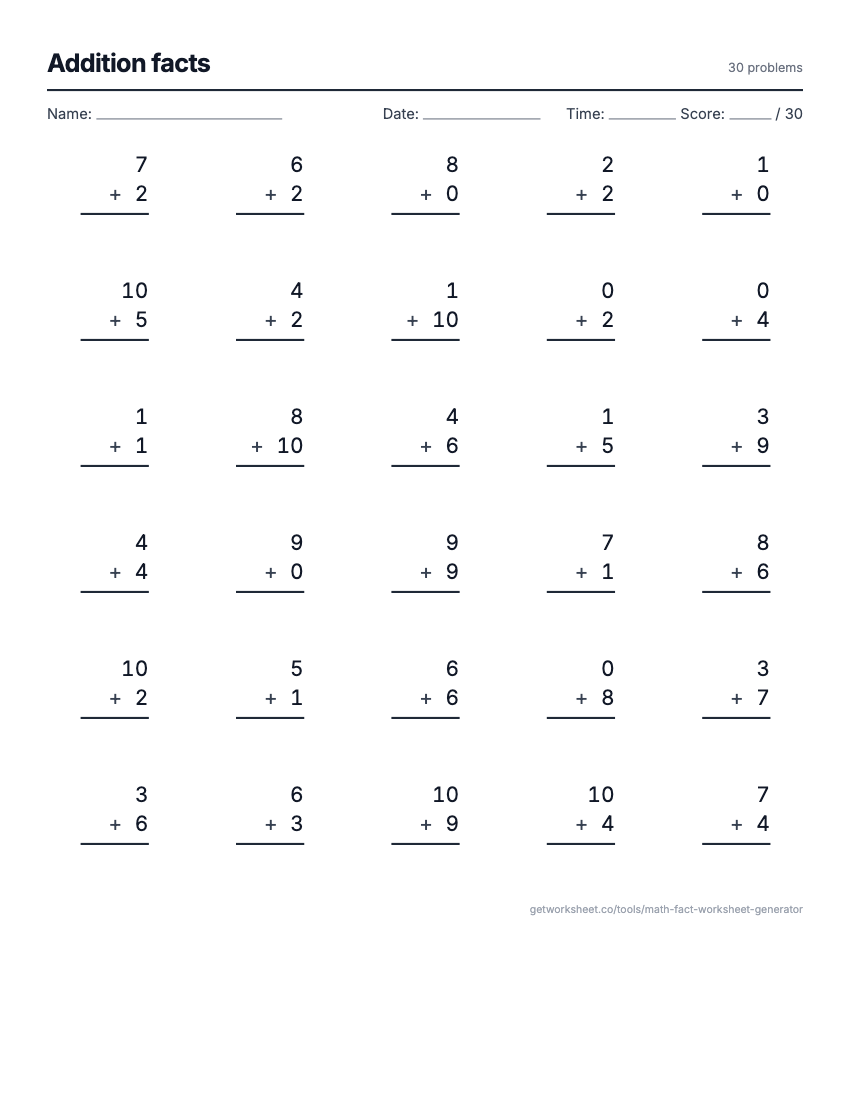 Math fact worksheet generatorAddition to division drills with an answer key. Free to print.
AI worksheet generator
Need a different missing number worksheet?
Generate a custom missing number worksheet: pick the grade, question types and count, and print it in about 20 seconds. Free accounts get 1 generation a week.
How to use these worksheets
Print at 100% on A4 or US Letter so the dotted boxes and circles stay big enough to write in. There is no separate answer key, but the printed numbers on each page tell you what every blank should be. Keep the 1 to 10 sheets and the 1 to 20 sheets in two piles.
- Flower path, turtle path and green circles. Odds are printed, so your child writes 2, 4, 6, 8 and 10, or up to 20 on the turtle page. Count the whole sequence out loud together first, then fill the blanks. A winding path also practices reading left to right.
- Apples, eggs and pastel shapes. Here the evens are printed and the odds are missing, which is harder: counting by twos does not produce the answers. Point at the printed even number before each gap and count on one.
- Blue grid of 20 and plain grid of 20. The same ten blanks appear in both. Use the colored one first and keep the black and white one for a week later, as a check on whether the order is really known.
- Fruit trail with 1, 3, 6, 7 and 10 given. The gaps are mixed rather than a pattern, so your child has to read both neighbors. Ask what comes after 1 and before 3, then fill that one lemon.
- Two-column grid with 1, 4, 5, 8 and 9 given. The shortest sheet: five blanks, no pictures. Good as a two minute check, or for a child who is distracted by illustrations.
Common mistakes to watch for
- Reciting instead of reading. A child who chants one to twenty will write numbers in a blank that do not match the neighbors. Cover the rest of the page and look only at the number before the gap.
- Reversed and swapped numerals. A backwards 6, or 21 written for 12, is a writing problem, not a counting one. Have your child read the number back to you after writing it.
- The teens. Thirteen through nineteen are where the 1 to 20 sheets break down. Practice that stretch out loud before the grid pages.
- Losing the place in a 4-column grid. Some children read down the columns instead of across the rows. Run a finger along each row first so the order is clear.
Frequently asked questions
What grade are these for?
Preschool through second grade. The 1 to 10 sheets suit preschool and kindergarten; the 1 to 20 grids and the apple, egg and turtle pages suit kindergarten through second grade.
Is an answer key included?
There is no separate key. You do not need one: the printed numbers around each blank give the answer, so any missing number can be read straight off the page.
Which sheet should we start with?
Start with a 1 to 10 page where the odd numbers are printed, such as the flower path or the green circles, then move to a page where the evens are printed, then to the 1 to 20 grids.
Do they print in black and white?
Yes. Two sheets are already black and white, and the rest lose only their color fills, which does not affect the task. Print at 100% on plain paper.
Can I reuse a sheet?
Yes. Slide it into a plastic sleeve and use a dry erase marker, or print the plain grid twice and time the second attempt.
More practice
Next to this, before and after numbers worksheets ask the same question one number at a time, and number tracing worksheets for 1 to 20 tidy up the numeral shapes. To go past 20, use hundreds chart worksheets, and skip counting worksheets turn the odds and evens pattern into counting by twos, fives and tens.
Free library
Related collections
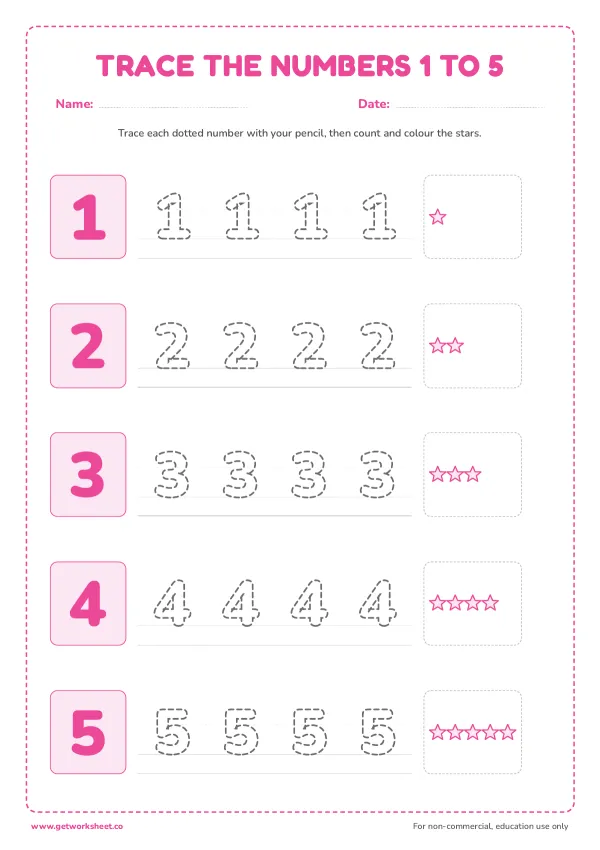
Free number tracing worksheets (1-20)
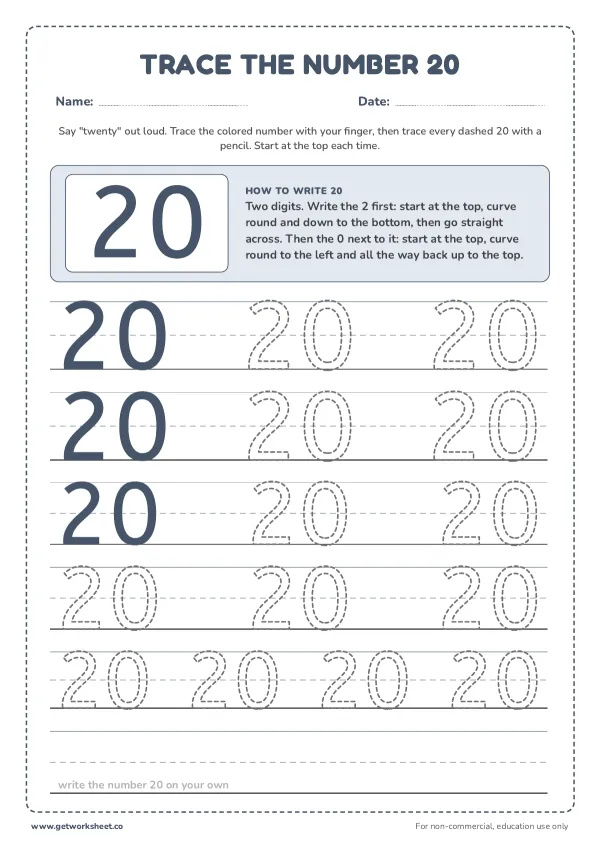
Free number 20 tracing worksheets
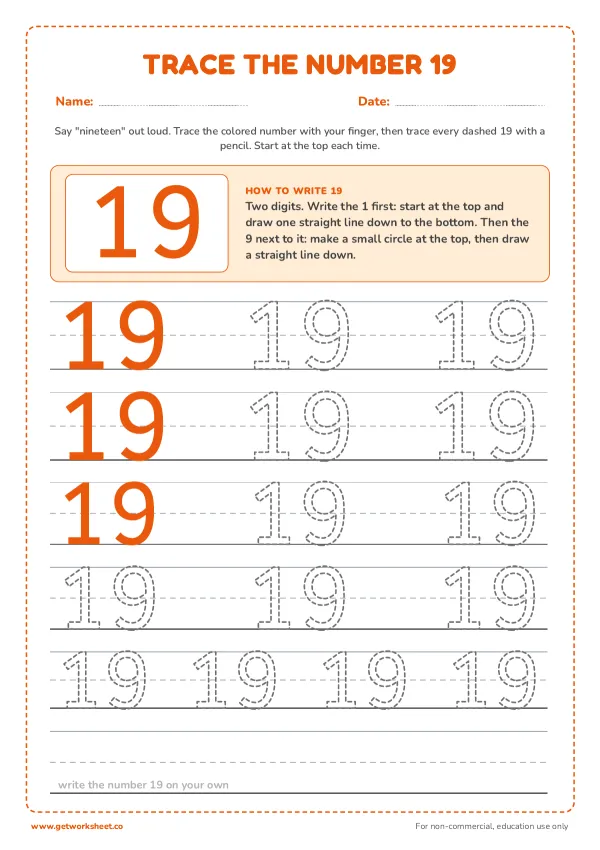
Free number 19 tracing worksheets
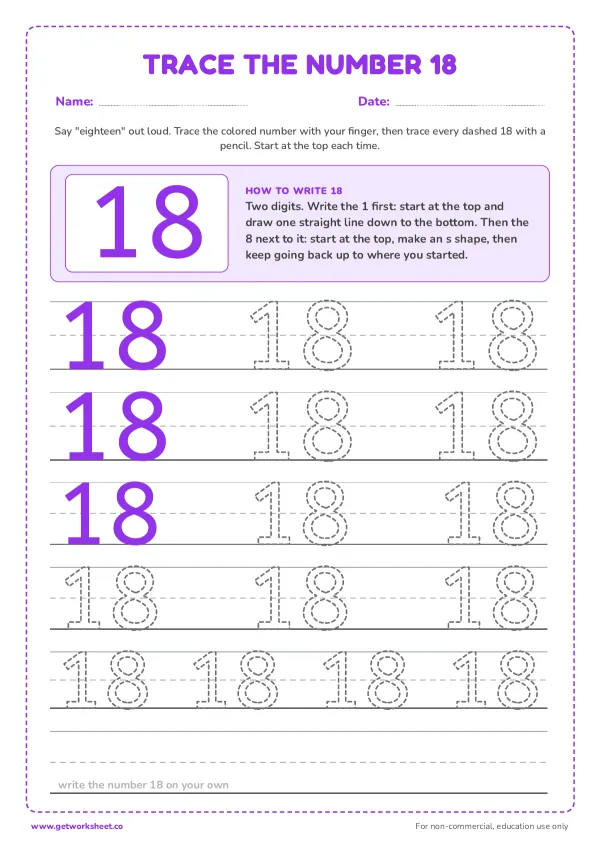
Free number 18 tracing worksheets
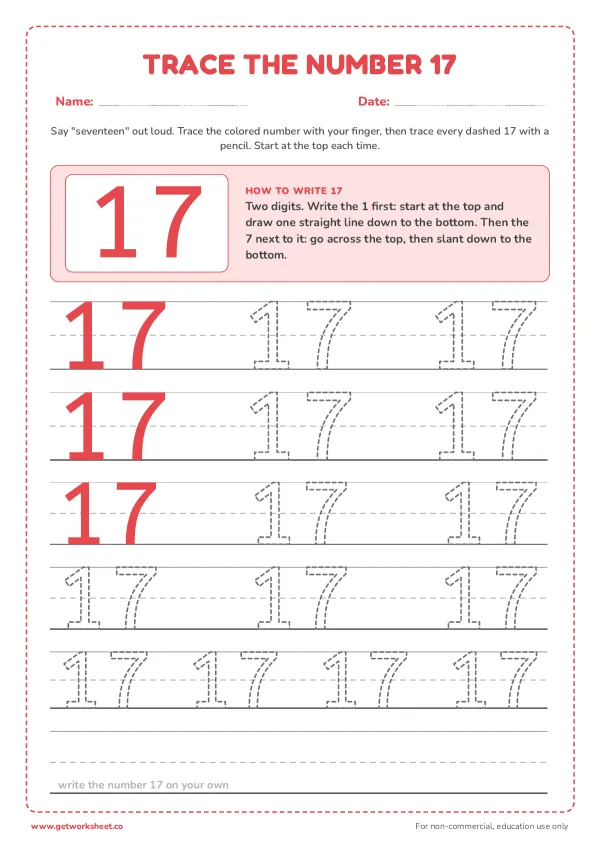
Free number 17 tracing worksheets
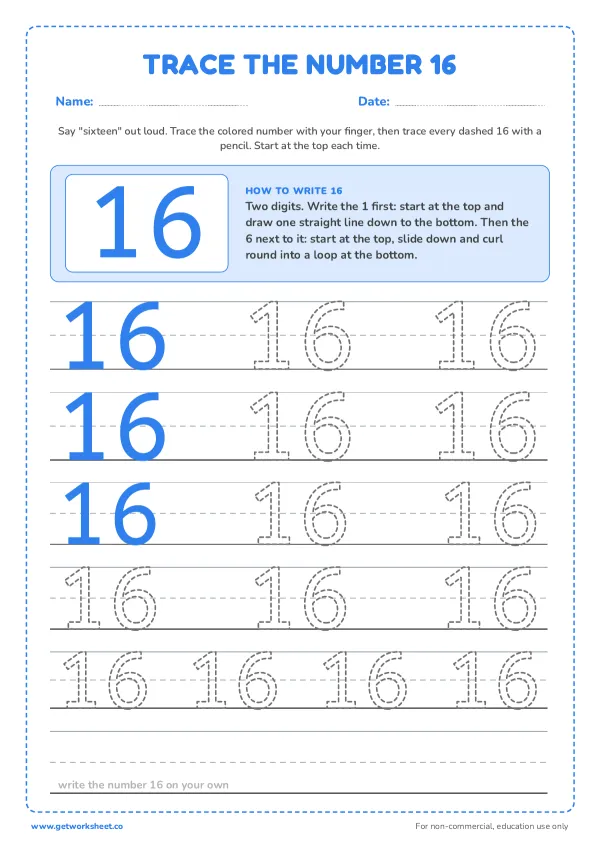
Free number 16 tracing worksheets
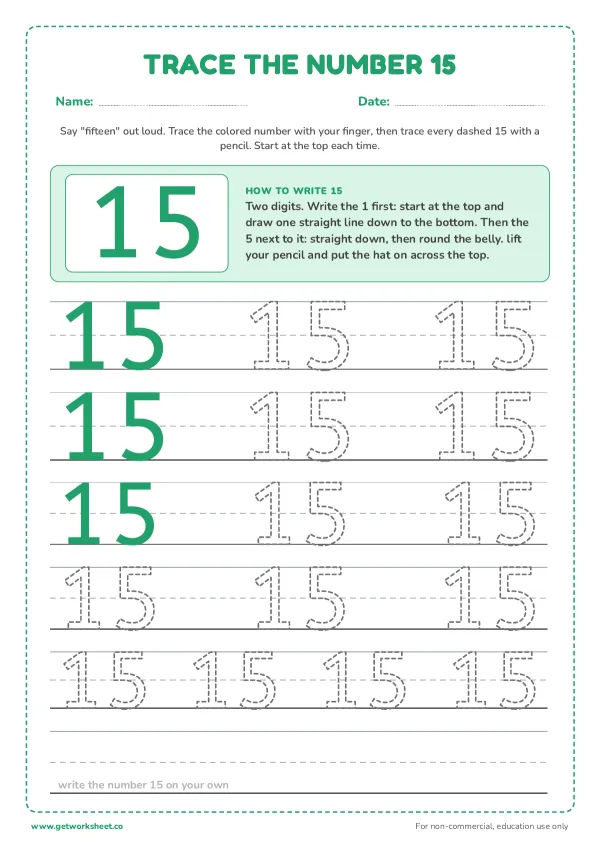
Free number 15 tracing worksheets
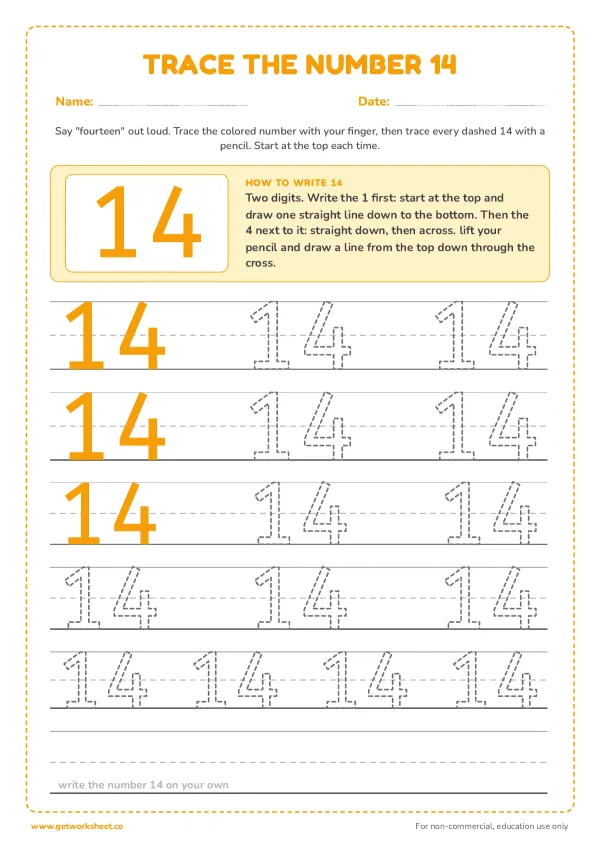
Free number 14 tracing worksheets
More worksheets
- Free number 13 tracing worksheets
- Free number 12 tracing worksheets
- Free number 11 tracing worksheets
- Free number 10 tracing worksheets
- Free number 9 tracing worksheets
- Free number 8 tracing worksheets
- Free number 7 tracing worksheets
- Free number 6 tracing worksheets
- Free number 5 tracing worksheets
- Free number 4 tracing worksheets
- Free number 3 tracing worksheets
- Free number 2 tracing worksheets