Maths · Kindergarten–Grade 2
Free repeating patterns worksheets
Five repeating patterns worksheets for kindergarten to grade 2. Children look at rows of pictures or shapes, work out the repeat, and draw or circle what comes next.
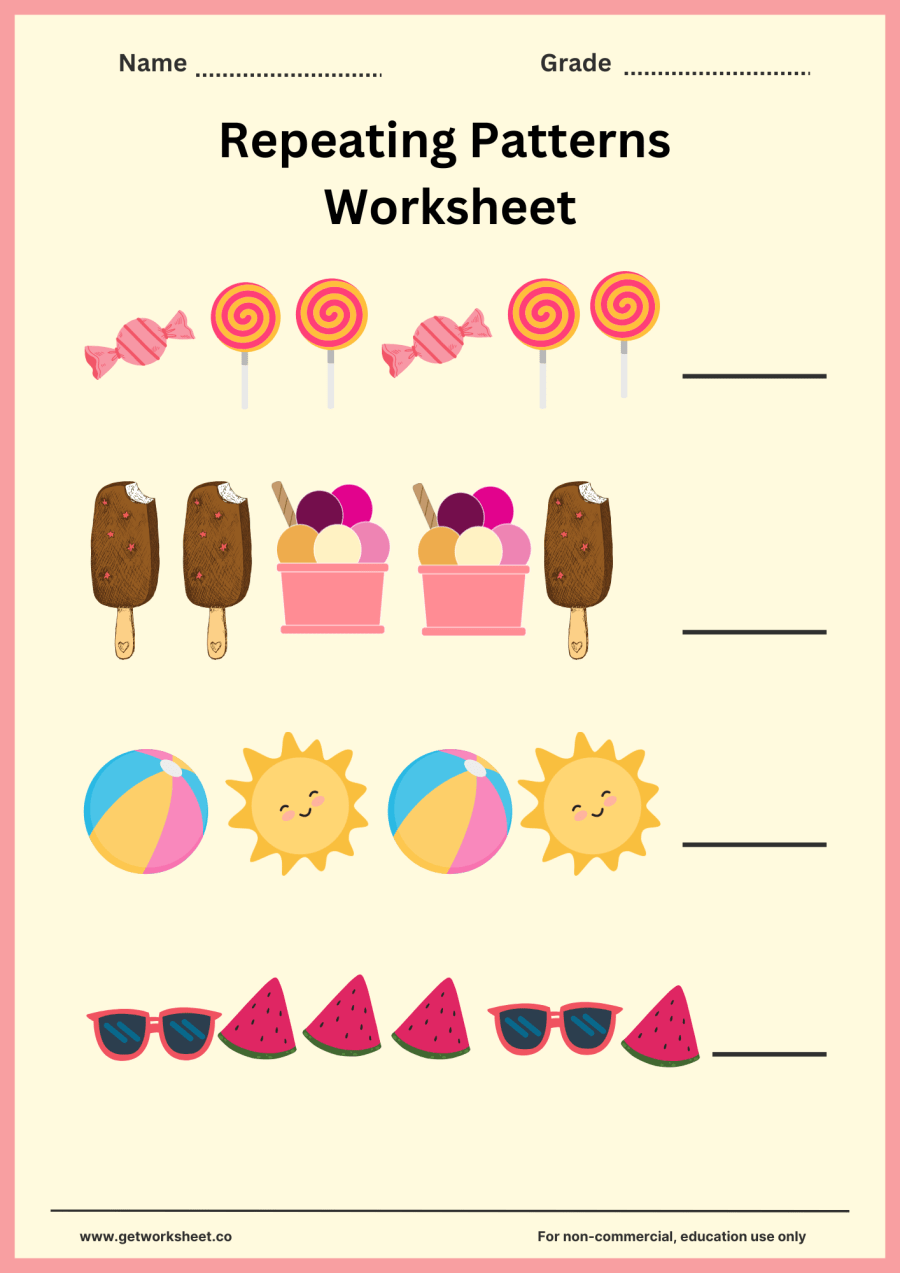
Repeating patterns: summer sweets and beach balls
Look at four colored picture patterns (candy and lollipops, ice creams, beach balls and suns, sunglasses and watermelon) and draw what comes next.
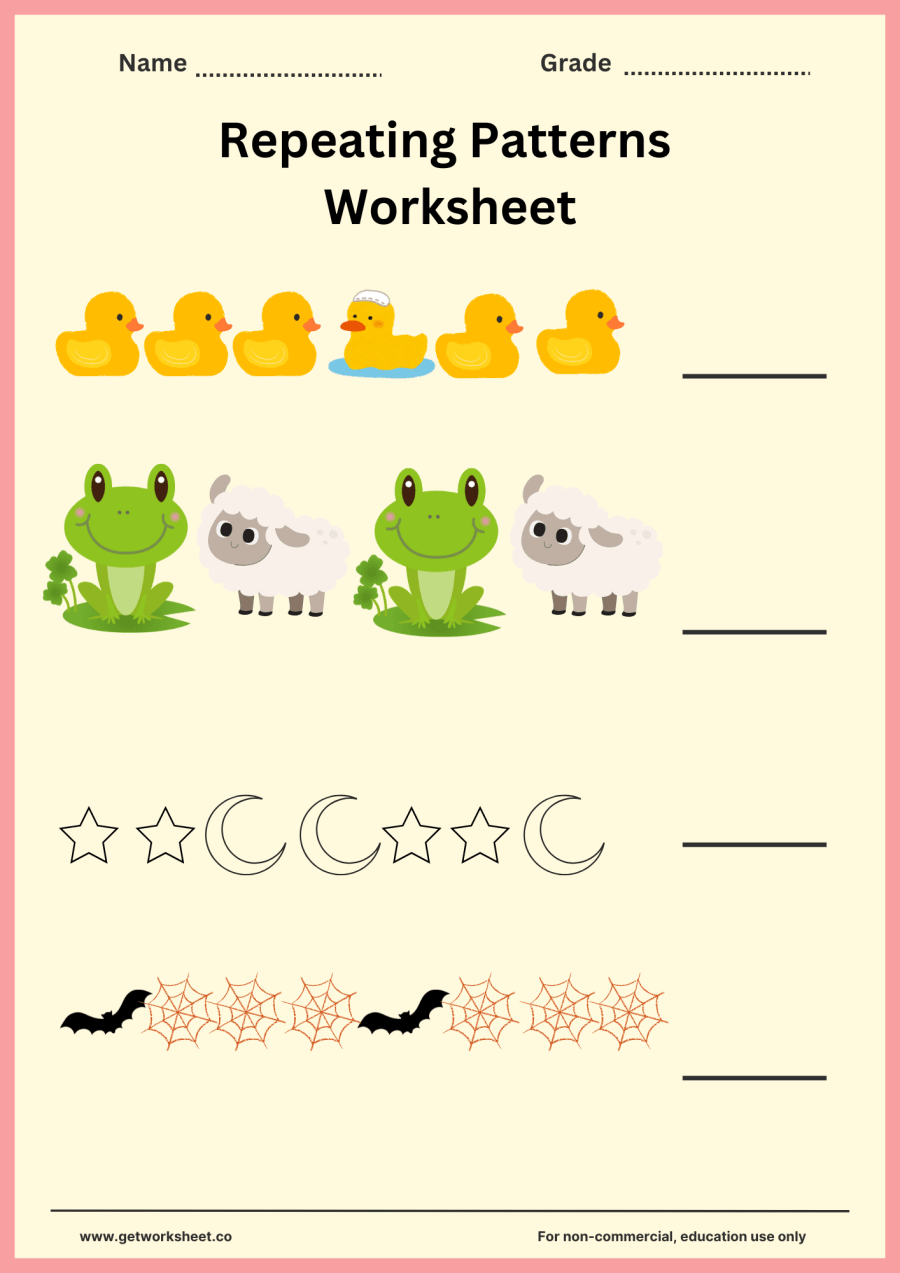
Repeating patterns: ducks, frogs, sheep, stars and bats
Work out four repeating picture patterns of ducks, frogs and sheep, stars and moons, bats and cobwebs, then fill in the next item on the line.
Whole set
All 5 sheets in one PDF
Free with an account, after a short wait.
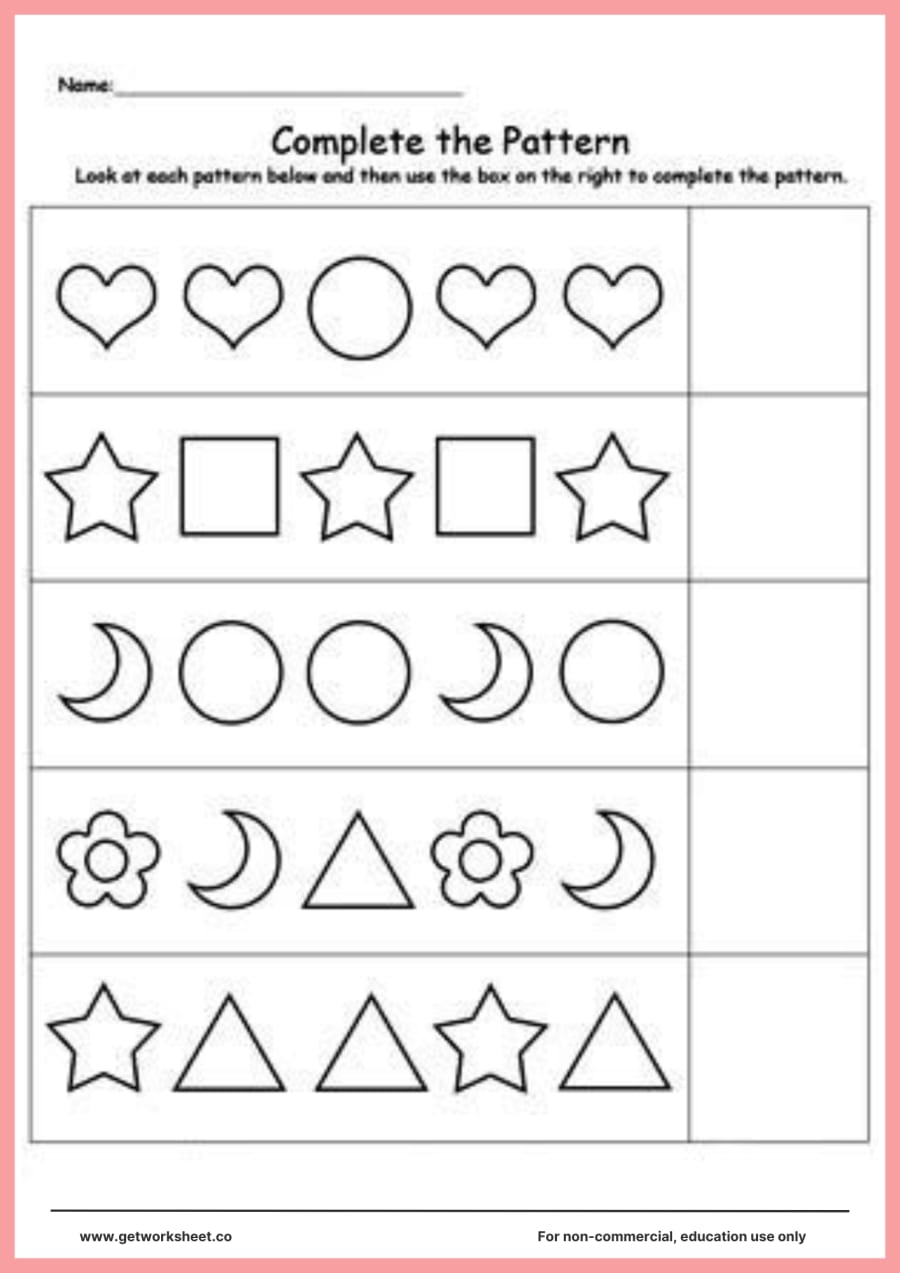
Repeating patterns: complete the shape pattern
Look at five rows of black-and-white shapes (hearts, circles, stars, squares, moons, flowers, triangles) and draw the next shape in the box.
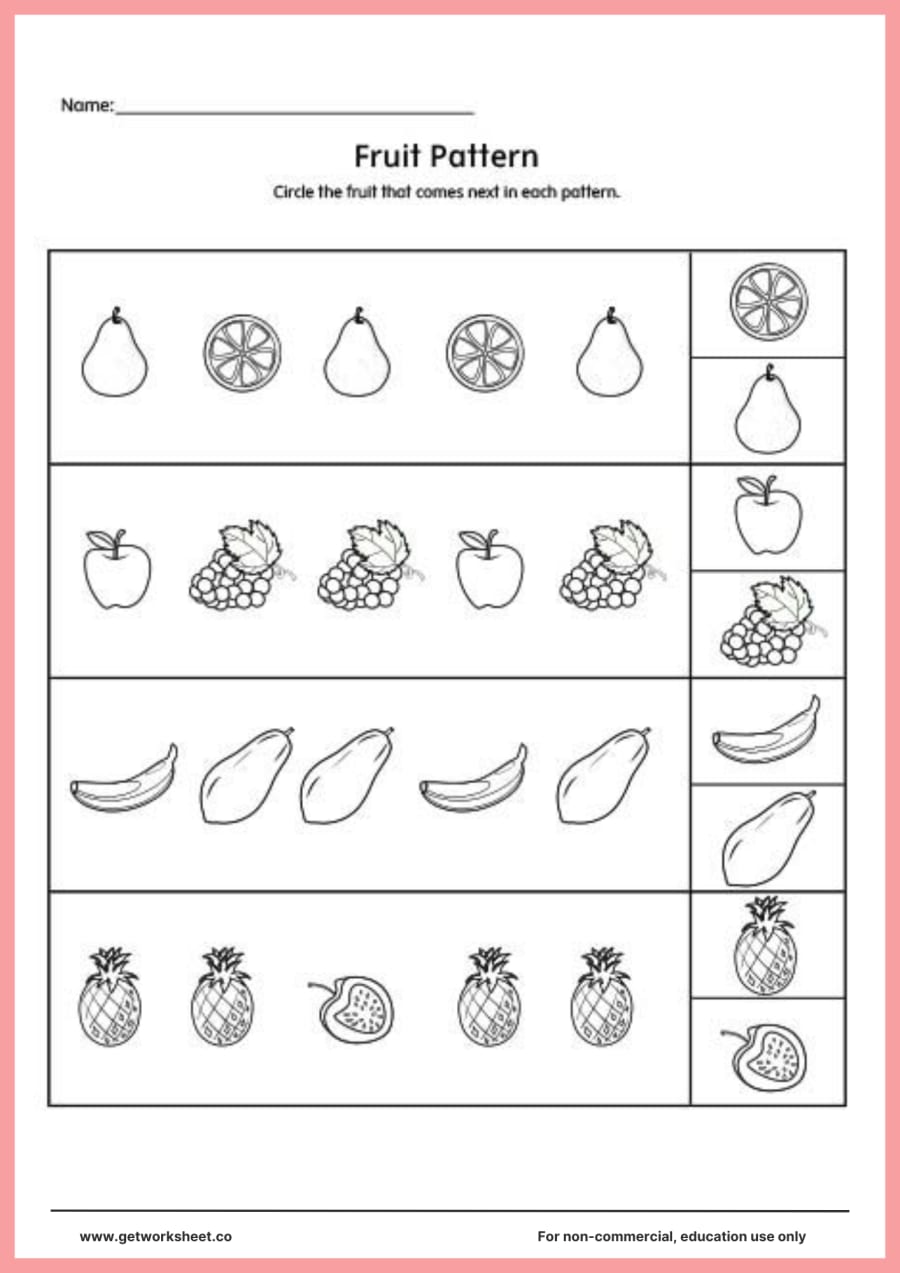
Repeating patterns: circle the next fruit
Look at four rows of fruit patterns (pears and oranges, apples and grapes, bananas and papayas, pineapples and kiwis) and circle what comes next.
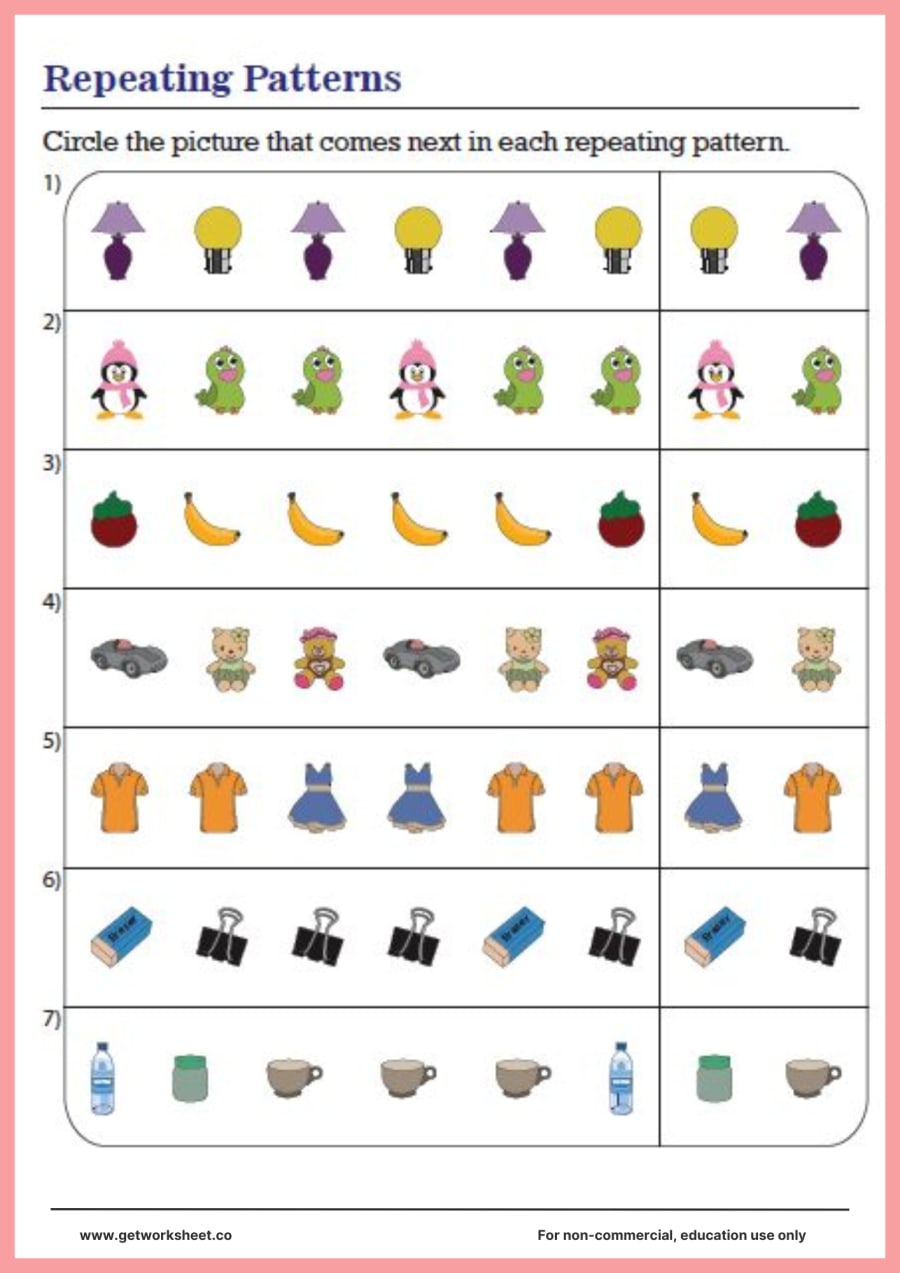
Repeating patterns: circle what comes next, 7 rows
Circle the picture that comes next in seven repeating patterns of lamps and bulbs, penguins, bananas and tomatoes, cars, shirts, clips and cups.
AI worksheet generator
Make a worksheet like this for your class
The 5 sheets above are fixed. The generator writes a new repeating patterns worksheet for your grade, with the question types and count you choose, in about 20 seconds. Pick a grade to start:
What you get
- A fresh set of questions on repeating patterns, not a copy of the sheets above
- Multiple choice, fill in the blanks, true or false, open ended
- Answer key and print-ready PDF with Pro
Free account, 3 worksheets a week. No card.
These five repeating patterns worksheets all ask the same question, what comes next, in two ways. On the first three sheets the child draws the next item. Summer sweets and beach balls has four colored picture patterns: candy and lollipops, ice creams, beach balls and suns, sunglasses and watermelon. Ducks, frogs, sheep, stars and bats has four more picture rows, including stars and moons and bats and cobwebs. Complete the shape pattern has five rows of black-and-white shapes (hearts, circles, stars, squares, moons, flowers and triangles) with a box to draw the next shape. On the last two sheets the child circles the answer instead: circle the next fruit has four rows of fruit pairs such as pears and oranges, and the final sheet has seven rows of everyday objects, from lamps and bulbs to penguins, cars, shirts, clips and cups.
Spotting the repeat and predicting the next item is one of the earliest forms of mathematical reasoning, and the same skill later drives skip counting and times tables.
What Students Will Practice
- Saying a picture pattern aloud to find the part that repeats
- Drawing the next picture or shape in a row on the first three sheets
- Circling the correct next item from a choice on the fruit and seven-row sheets
- Moving from colored pictures to plain black-and-white shapes on the shape pattern sheet
- Working through longer sets, up to seven rows on one page
AI worksheet generator
Need a different repeating patterns worksheet?
Generate a custom repeating patterns worksheet: pick the grade, question types and count, and print it in about 20 seconds. Free accounts get 3 generations a week.
How to use these worksheets
Print at 100% on A4 or US Letter so each picture row stays on one line and the answer box keeps its size. There is no answer key, so check each row by having your child read the pattern aloud: that is where you hear whether they found the repeat or copied a picture. A pencil is enough, plus crayons for the two color sheets.
- Summer sweets and beach balls. The friendliest start, with four colored rows of candy, ice creams, beach balls and sunglasses. Ask your child to point and say the row out loud, candy, lollipop, candy, lollipop, before drawing anything.
- Ducks, frogs, sheep, stars and bats. Four more picture rows, and the stars and moons and the bats and cobwebs rows make it useful in October. The drawings do not need to be neat, so accept a rough shape that is clearly the right item.
- Complete the shape pattern. Five rows of plain black-and-white shapes, so there is no color to lean on. Name the shapes first, hearts, circles, stars, squares, moons, flowers and triangles, then let your child draw the next one in the box.
- Circle the next fruit. Four rows of fruit pairs where the child circles instead of drawing. Use it with a child who knows patterns but finds drawing slow.
- Circle what comes next, seven rows. The longest sheet, with lamps and bulbs, penguins, cars, shirts, clips and cups. Fold it in half and do three or four rows at a time so the last rows still get careful attention.
Common mistakes to watch for
- Copying the item just before the blank. This is the most common error and it looks like an answer. Ask your child to say the whole row aloud, including their answer, and the mistake usually corrects itself.
- Assuming every pattern repeats after two. Some rows repeat in threes. Have your child mark where the repeat starts again with a light pencil line before answering.
- Working silently. Patterns live in the ear as much as the eye. Saying the row out loud, or clapping it, finds the repeat faster than staring at the page.
- Circling before reading the whole row. On the two circling sheets the choices sit right next to the pattern, which invites a guess. Cover the choices with a finger until the row has been read.
Frequently asked questions
What grades are these repeating patterns worksheets for?
Kindergarten to grade 2. Kindergarten children do well on the colored picture sheets and the circling sheets. The black-and-white shape sheet and the seven-row sheet suit grade 1 and grade 2.
Is there an answer key?
No. Each row has one correct next item and you can check it in seconds by reading the pattern aloud with your child, which is better practice than comparing against a key.
Does my child have to draw?
On three sheets, yes, though a rough drawing is fine. Two sheets ask the child to circle the right picture instead, so a child who finds drawing slow can still show what they know.
Do the sheets print in black and white?
The shape sheet and the circling sheets print perfectly. The first two sheets use color to show the repeat in some rows, so print those in color if you can, or tell your child to go by the shape.
What comes after repeating patterns?
Number patterns. A child who can continue a picture pattern is ready to count on by twos, fives and tens, which is the same skill applied to numbers.
More practice
Take the skill to numbers with skip counting worksheets, then to multiplication with 2 times table worksheets. For the shape names used on the shape pattern sheet, use shapes flashcards, and for number order try before and after numbers worksheets.
Free library
Related collections
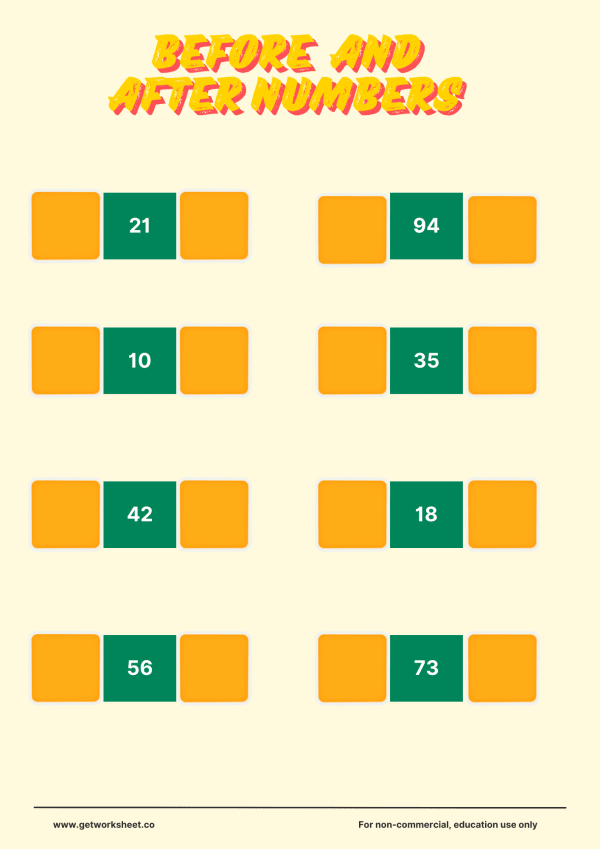
Free before and after numbers worksheets

Free 2 times table worksheets

Free skip counting worksheets
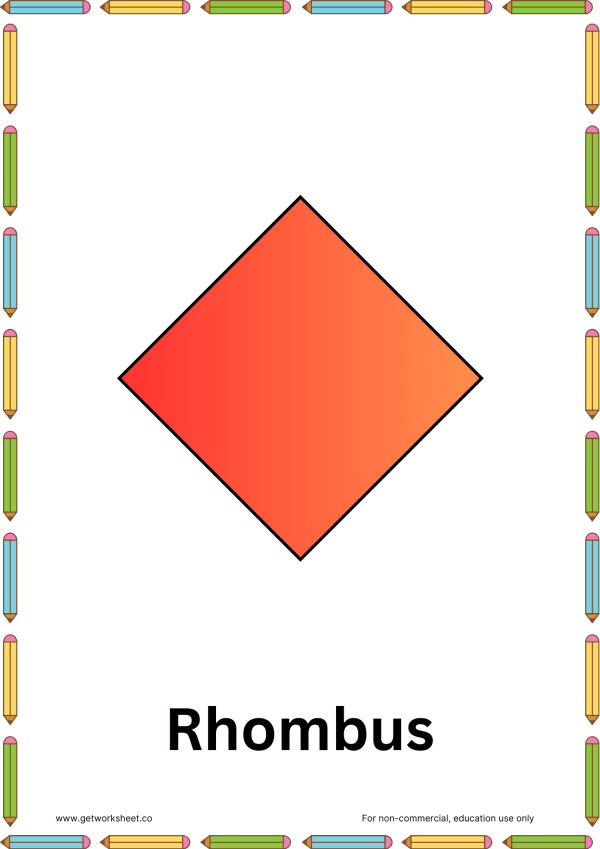
Free shapes flashcards
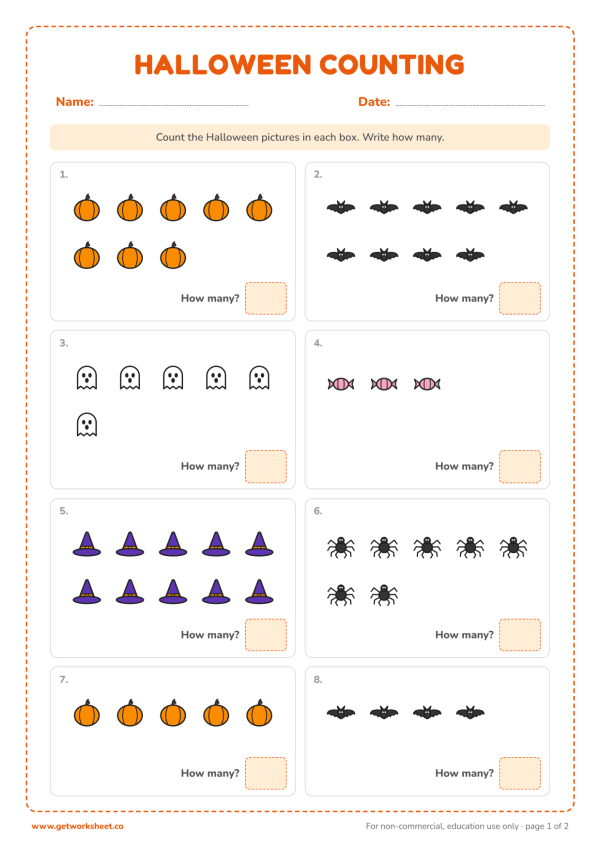
Free Halloween math worksheets
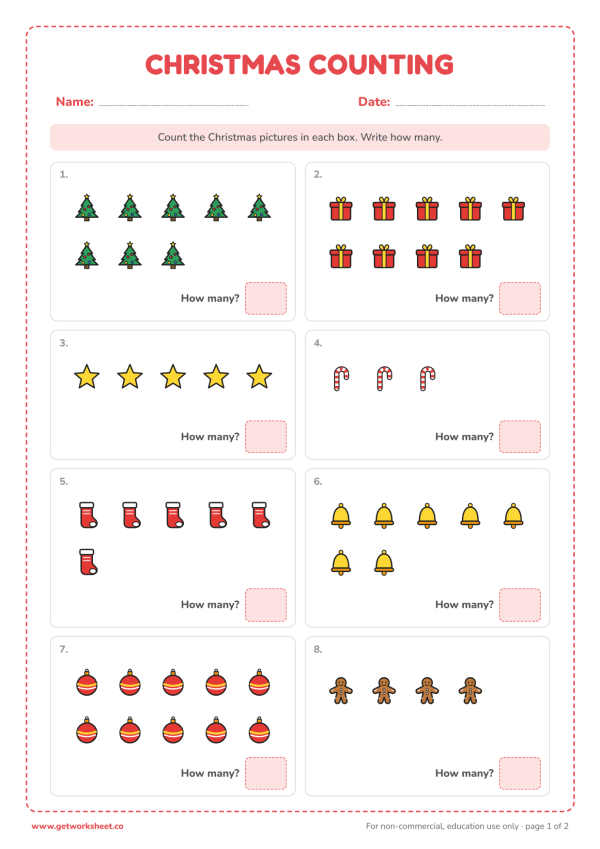
Free Christmas math worksheets
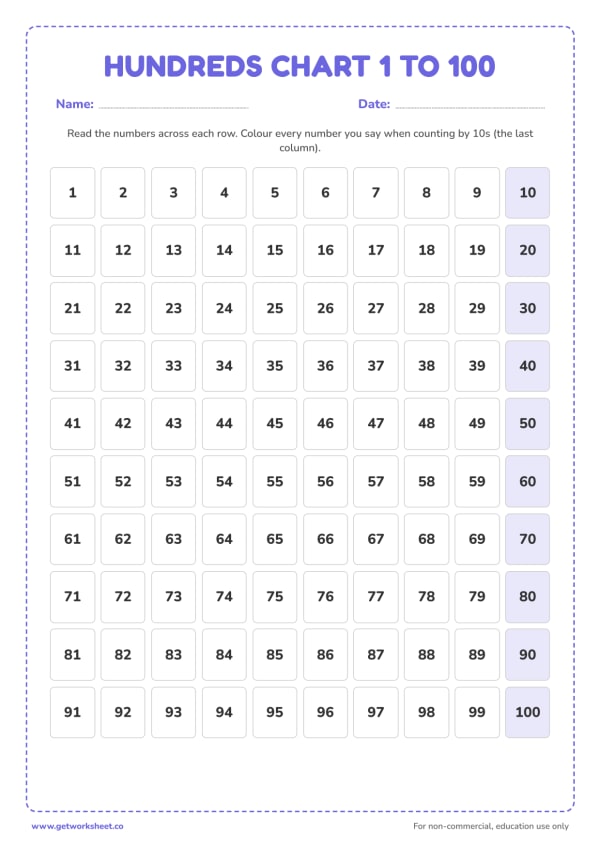
Free hundreds chart worksheets
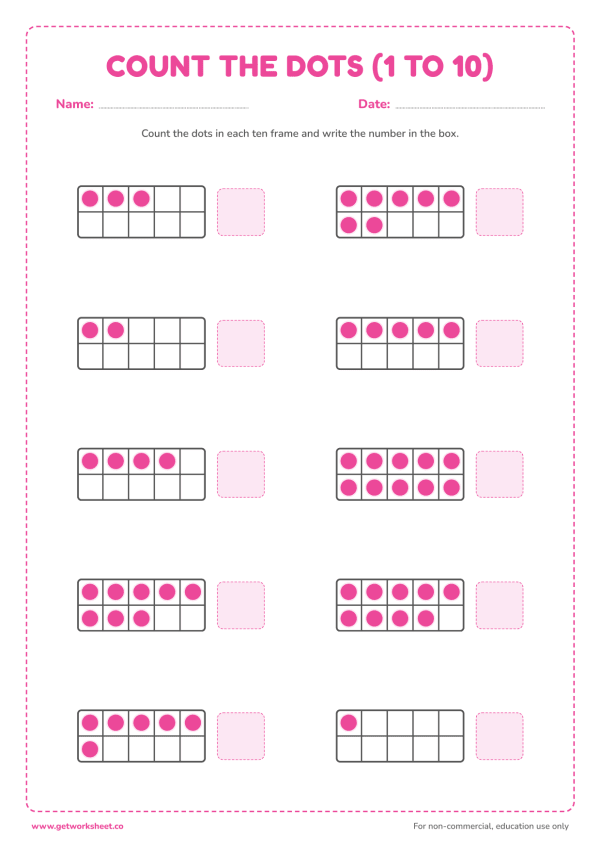
Free ten frame worksheets
More worksheets
- Free Montessori teen board and ten board worksheets
- Free Montessori place value worksheets (golden beads)
- Free Montessori hundred board worksheets
- Free subtraction worksheets (within 10 and 20)
- Free doubles addition worksheets
- Free addition worksheets
- Free 3D shapes worksheets
- Free sight words worksheets (Dolch and Fry)
- Free CVC words worksheets
- Free Christmas worksheets: word searches, letter to Santa and writing
- Free handwriting worksheets
- Free safety signs worksheets