Maths · Kindergarten–Grade 2
Free before and after numbers worksheets
Five before and after sheets for kindergarten to grade 2: aeroplane strips within 10, box strips for 1 to 14, before, between and after within 20, and two-digit numbers up to 94.
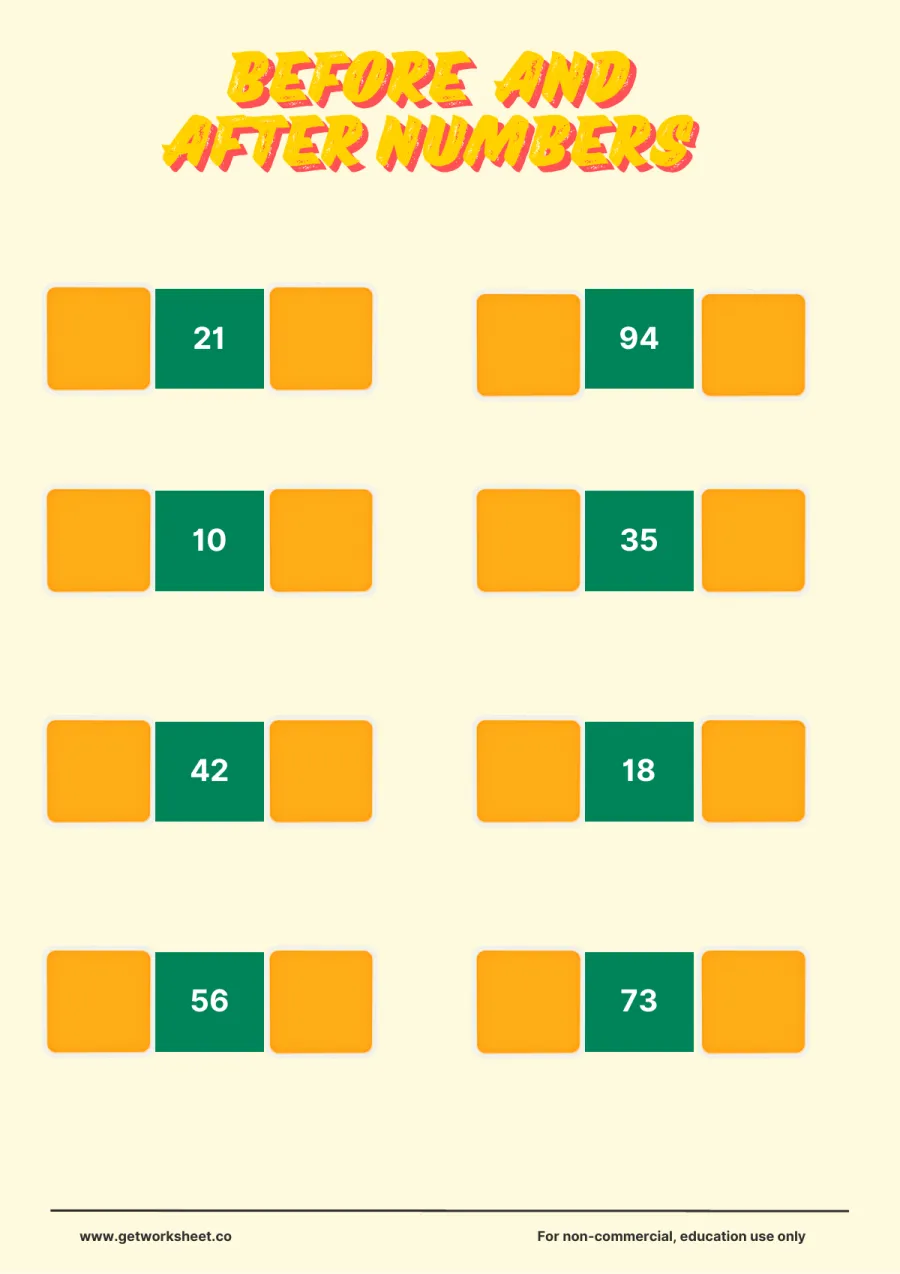
Before and after: 8 two-digit numbers from 10 to 94
Write the number one less and one more in the orange boxes beside each of 8 green number tiles: 21, 94, 10, 35, 42, 18, 56 and 73.
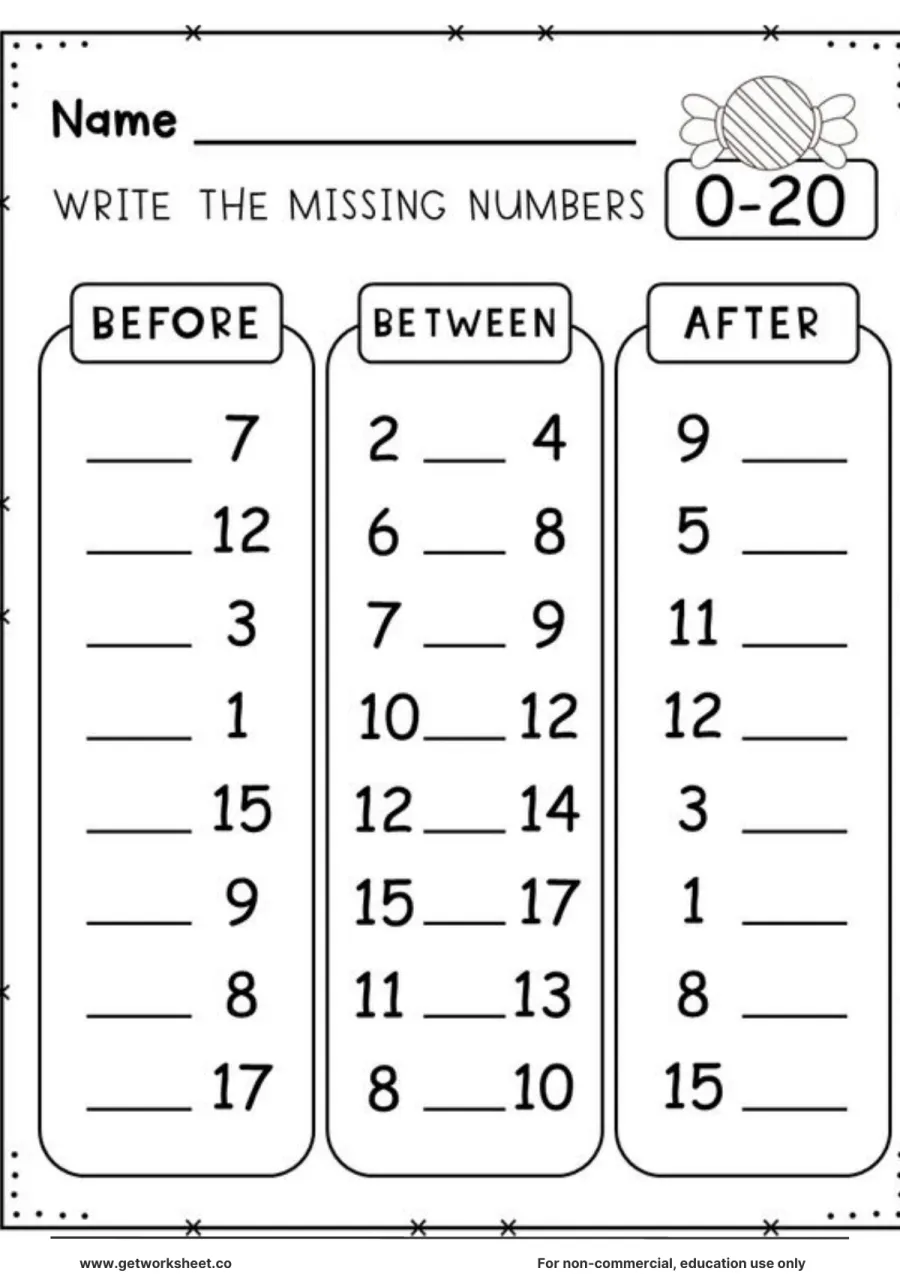
Before, between and after: 24 problems within 0 to 20
Fill in the number that comes before, between or after the given numbers in three columns of 8 problems, all within 0 to 20.
Whole set
All 5 sheets in one PDF
Instant and ad-free. No account needed.
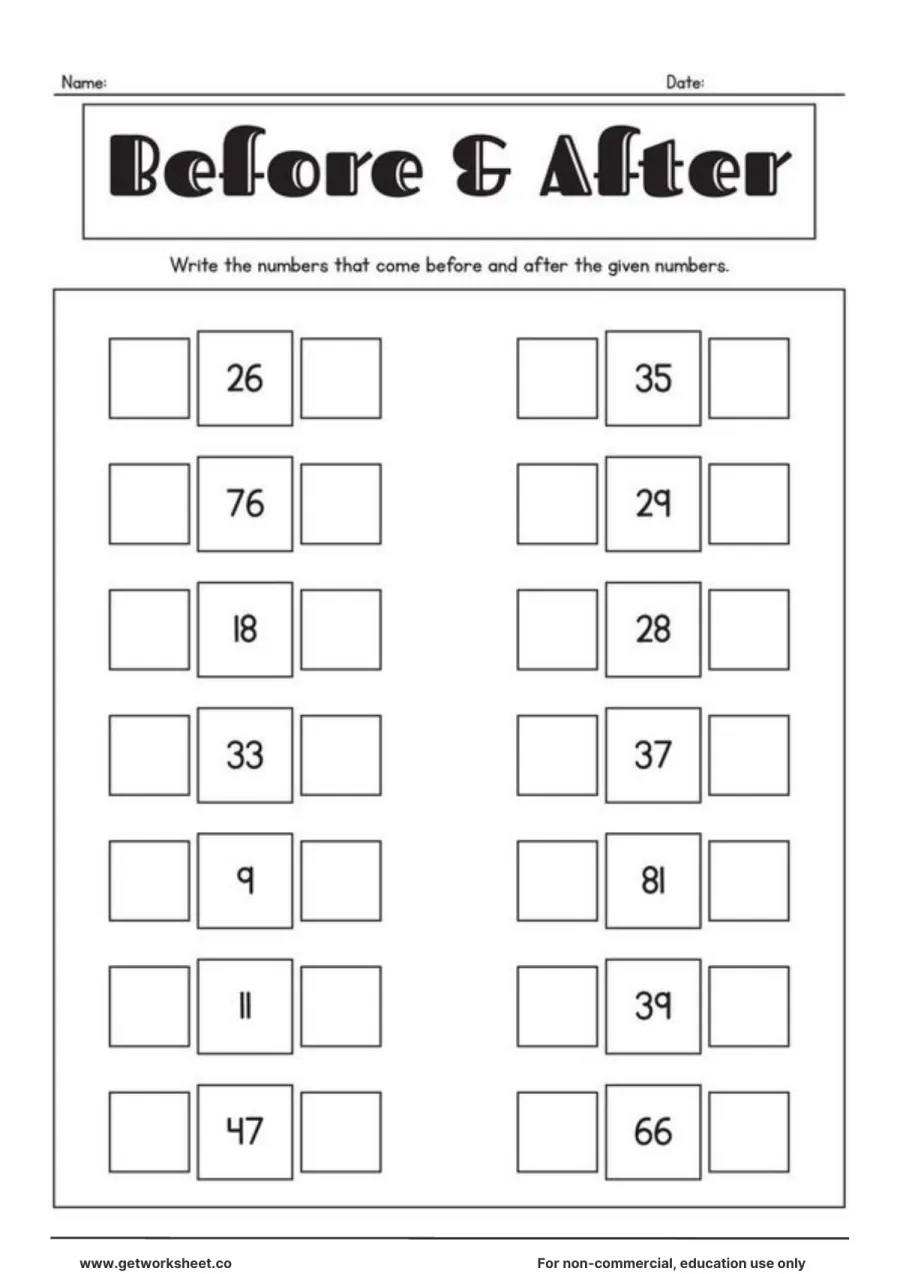
Before and after: 14 numbers up to 81 in box strips
Write the number before and the number after each of 14 given numbers, from 9 to 81 (including 26, 76, 33 and 47), in box strips.
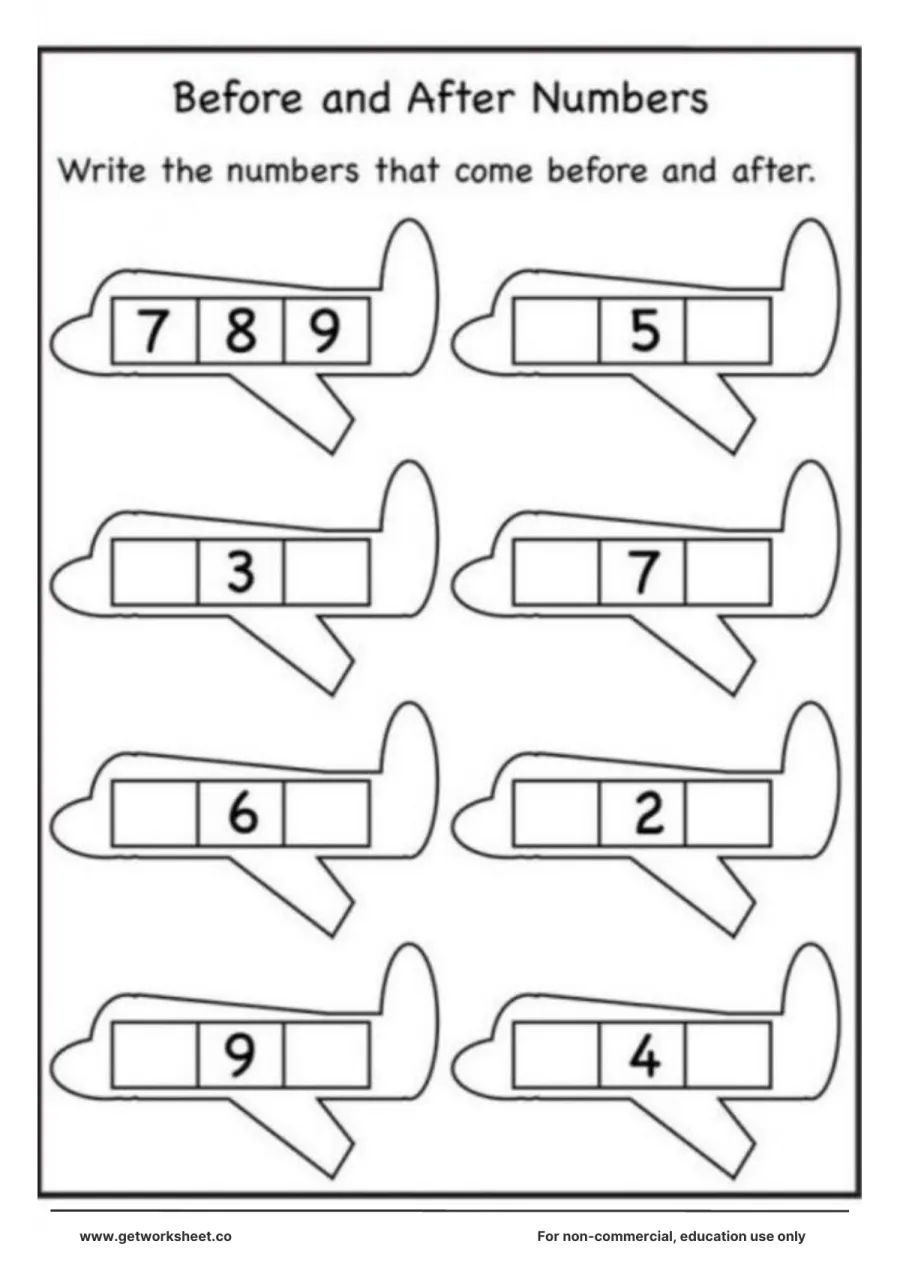
Before and after within 10: aeroplane number strips
Write the numbers before and after 5, 3, 7, 6, 2, 9 and 4 on aeroplane-shaped strips; the first plane shows 7, 8, 9 as an example.
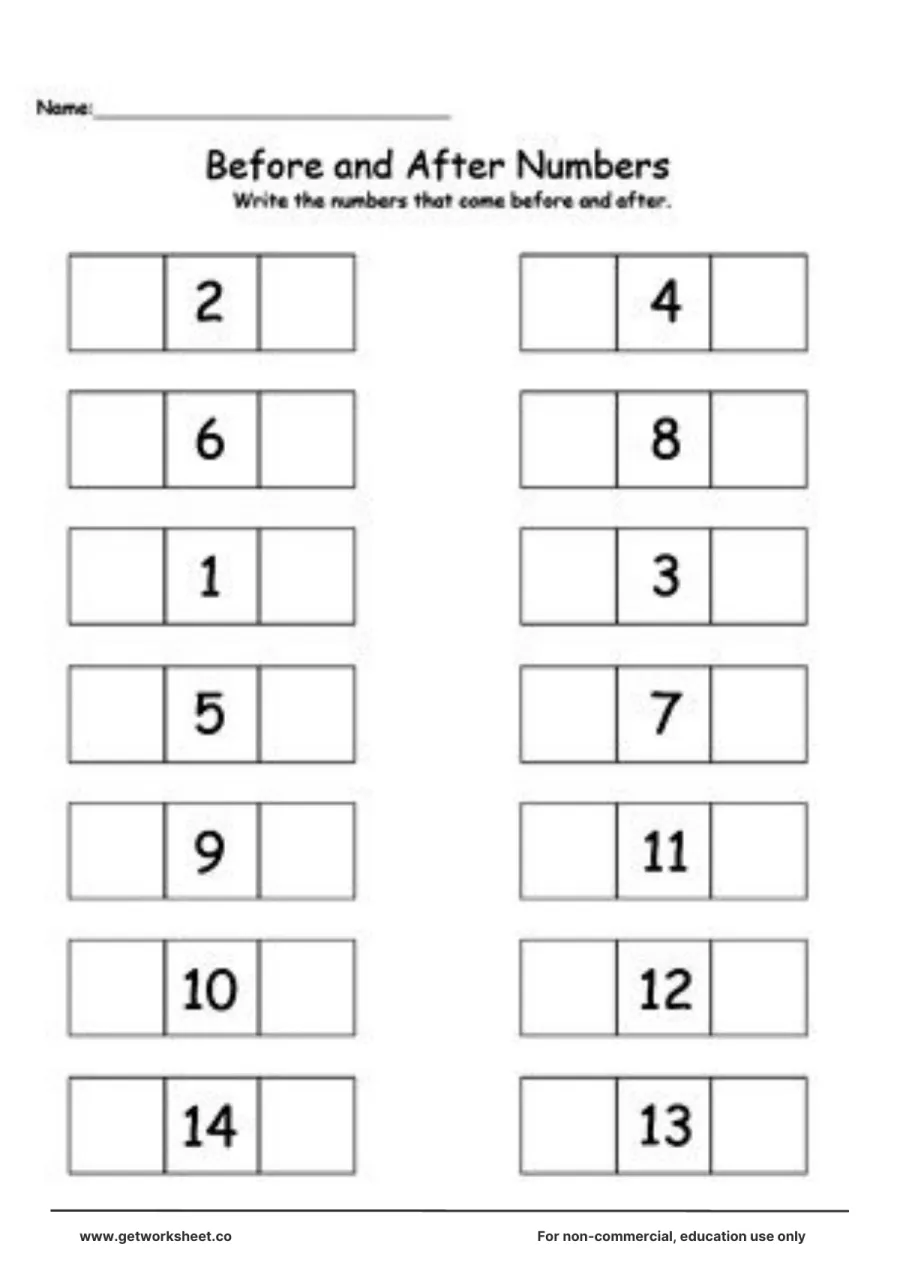
Before and after: 14 numbers from 1 to 14 in box strips
Write the number before and the number after each of 14 given numbers from 1 to 14, in two columns of three-box strips.
AI worksheet generator
Make a worksheet like this for your class
The 5 sheets above are fixed. The generator writes a new before and after numbers worksheet for your grade, with the question types and count you choose, in about 20 seconds. Pick a grade to start:
What you get
- A fresh set of questions on before and after numbers, not a copy of the sheets above
- Multiple choice, fill in the blanks, true or false, open ended
- Answer key and print-ready PDF with Pro
Free account, 1 worksheets a week. No card.
These five before and after numbers worksheets ask children to write the number that is one less and one more than a given number. In page order: eight two-digit numbers from 10 to 94 (21, 94, 10, 35, 42, 18, 56 and 73) on green tiles with an orange box on each side; 24 before, between and after problems within 0 to 20, in three columns of eight; 14 numbers up to 81 in box strips, including 26, 76, 33 and 47; before and after within 10 on aeroplane-shaped strips for 5, 3, 7, 6, 2, 9 and 4, with 7, 8, 9 shown as a worked example on the first plane; and 14 numbers from 1 to 14 in two columns of three-box strips.
Start with the aeroplane sheet (within 10) and the 1 to 14 strips, then the within-20 sheet. The two sheets with numbers up to 81 and 94 are for children who count confidently to 100.
What Students Will Practice
- Writing the number one less and one more than numbers within 10, then within 20
- Filling in the number that comes between two given numbers, on the 24-problem sheet
- Counting back by one, which is harder than counting on and is needed for every "before" box
- Handling two-digit numbers such as 21, 35, 42, 56, 73 and 94, including the number before 10
- Reading a worked example (7, 8, 9 on the first aeroplane) and applying the same pattern to the rest of the sheet
Free printable makers
Make your own before and after numbers sheets
Type your own words or numbers and print in about 30 seconds. No account, no AI, answer key where it applies.
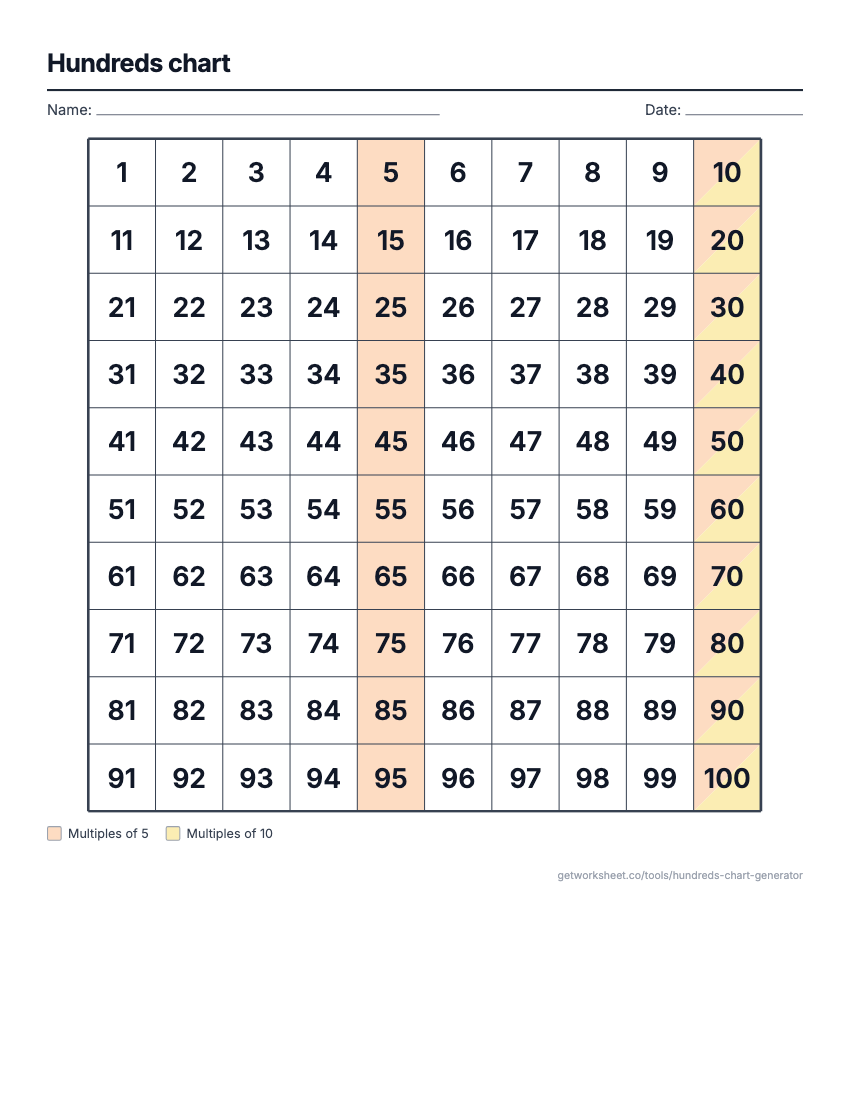 Hundreds chart generator1-100, 1-120 or 0-99, blank or missing numbers, skip-count colours, odd/even. Free to print.
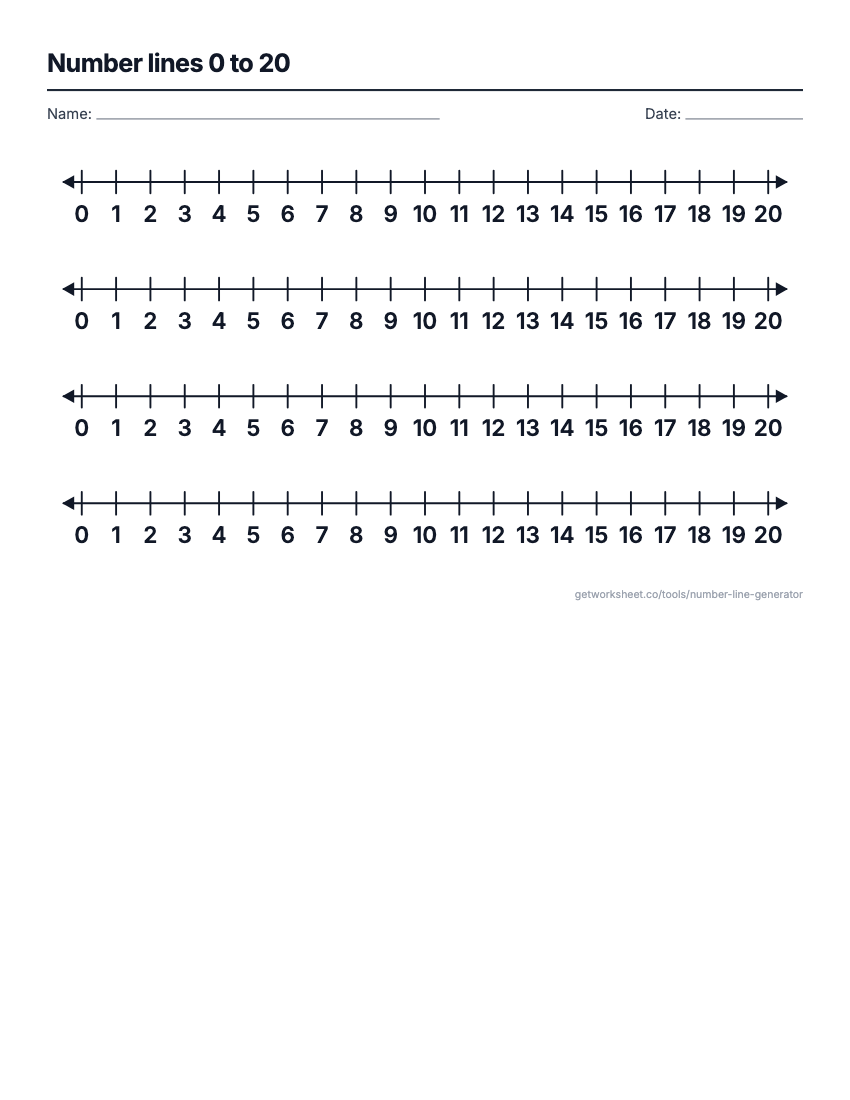 Number line generatorAny range and step, fractions and decimals, blank or missing numbers with a key. Free to print.
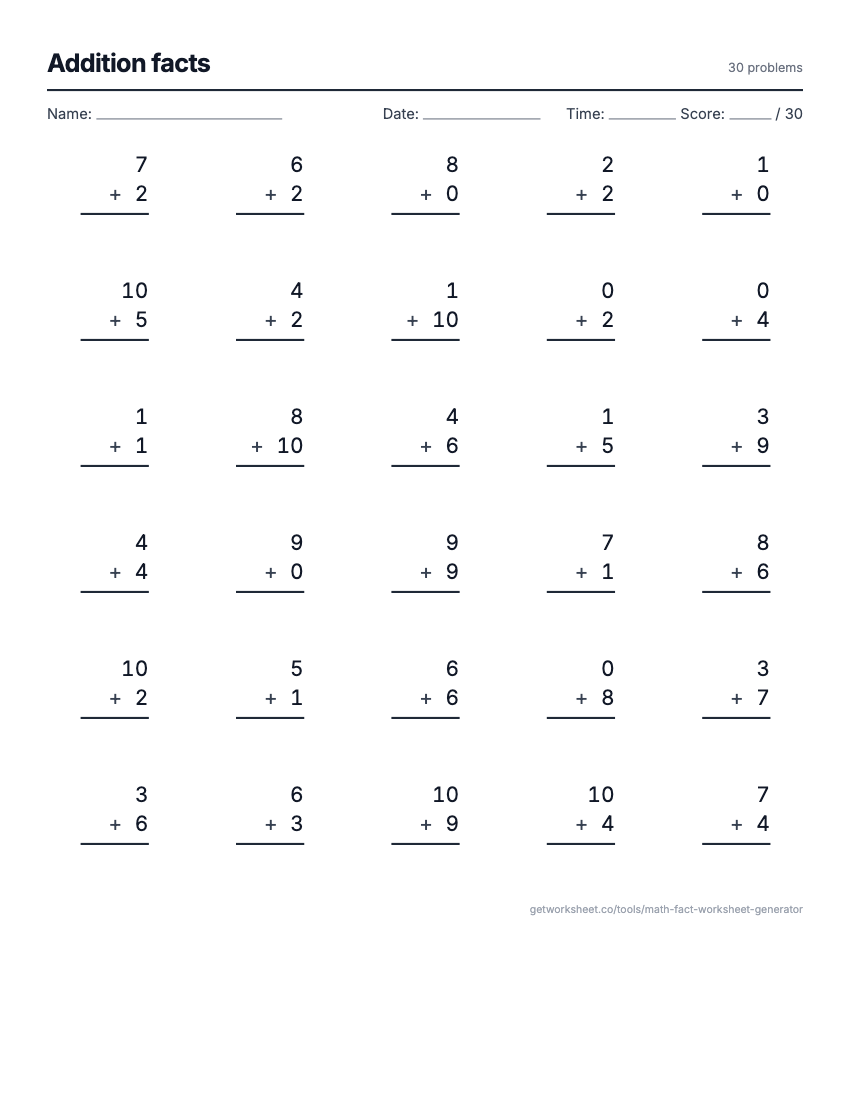 Math fact worksheet generatorAddition to division drills with an answer key. Free to print.
AI worksheet generator
Need a different before and after numbers worksheet?
Generate a custom before and after numbers worksheet: pick the grade, question types and count, and print it in about 20 seconds. Free accounts get 1 generation a week.
How to use these worksheets
Print at 100% on A4 or US Letter so the boxes on each strip are wide enough for a five year old to write a two-digit number inside. No sheet includes an answer key, but each answer is one less or one more than the printed number, so checking takes seconds. Keep a number line or a hundreds chart nearby for the first attempt, then take it away.
- Before and after within 10, airplane strips. Start here. The first plane already shows 7, 8, 9, so point at that example and ask what the pattern is before your child writes anything. Every number stays small enough to count on fingers.
- 14 numbers from 1 to 14, box strips. The natural second sheet. The three-box strips make the order visible left to right, so say the trio out loud before writing. Watch the numbers that cross ten.
- Before, between and after within 20, 24 problems. This one adds a new job in the middle column. Do the before column, then the after column, then come back for between, so your child is not switching rules every line.
- 14 numbers up to 81, box strips. Use this only once counting to 100 is secure. Numbers such as 26, 33, 47 and 76 test whether the child can count back across a ten as well as forward.
- Eight two-digit numbers up to 94. The shortest sheet and the hardest. The green tile sits between two orange boxes, and 10, 21, 42 and 94 each require counting back over a ten boundary.
Common mistakes to watch for
- Filling both boxes with the same number. A child who reads the printed number and copies it into both sides has not registered that one box means less. Say "one step back, one step forward" while pointing.
- Counting back over a ten. Before 30 and before 10 trip up most children, since counting down through 29 or 9 is much harder than counting up. Practice those out loud.
- Left and right confusion. Before goes in the left box because we read left to right. Mark the left box with a small arrow on the first sheet if the two keep swapping.
- Guessing in the between column. With 12 and 14 given, some children write 15 out of habit. Ask them to count from the first number until they reach the second one.
Frequently asked questions
What grade are before and after worksheets for?
Kindergarten through grade 2. Kindergarten uses the within 10 and 1 to 14 sheets, first grade handles the within 20 sheet, and the two-digit sheets up to 81 and 94 suit the end of first grade or second grade.
Is there an answer key?
No key is included. Each answer is simply one less or one more than the printed number, so any adult can check a full sheet in under a minute.
What does before, between and after mean on these sheets?
Before is one less, after is one more, and between is the number that fits in the gap when two numbers two apart are given, such as 12 and 14. Only the 24-problem sheet asks for between.
Do they print fine in black and white?
Yes. The green tiles, orange boxes and airplane shapes print as light gray outlines on a mono printer, and every writing space stays clear.
What should we do before these sheets?
Your child should be able to count aloud to 20, and to 100 for the two-digit sheets. If counting back by one is shaky, practice that verbally first, since every "before" box depends on it.
More practice
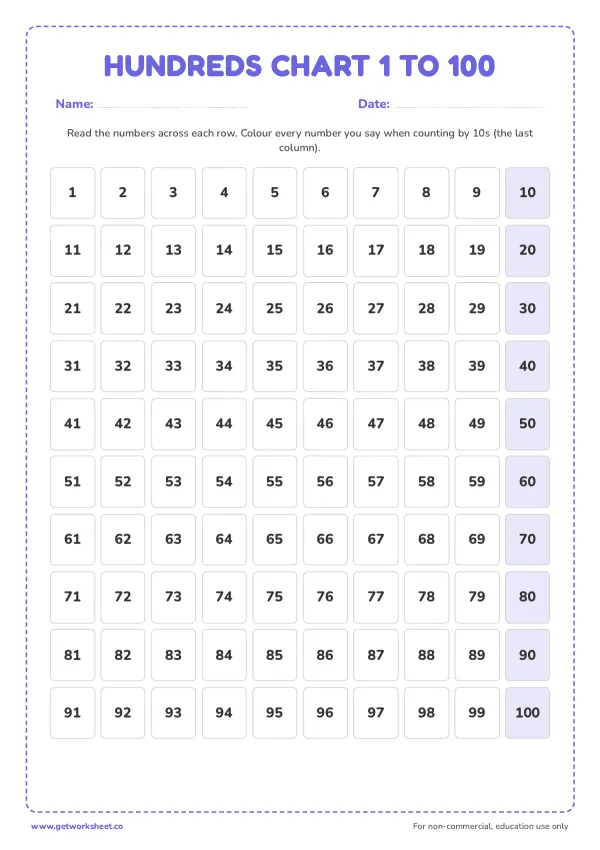
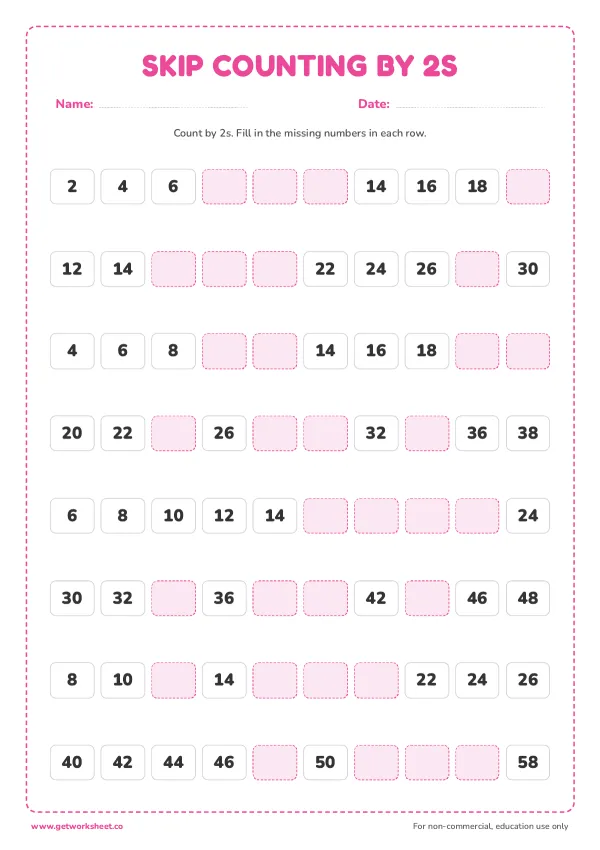
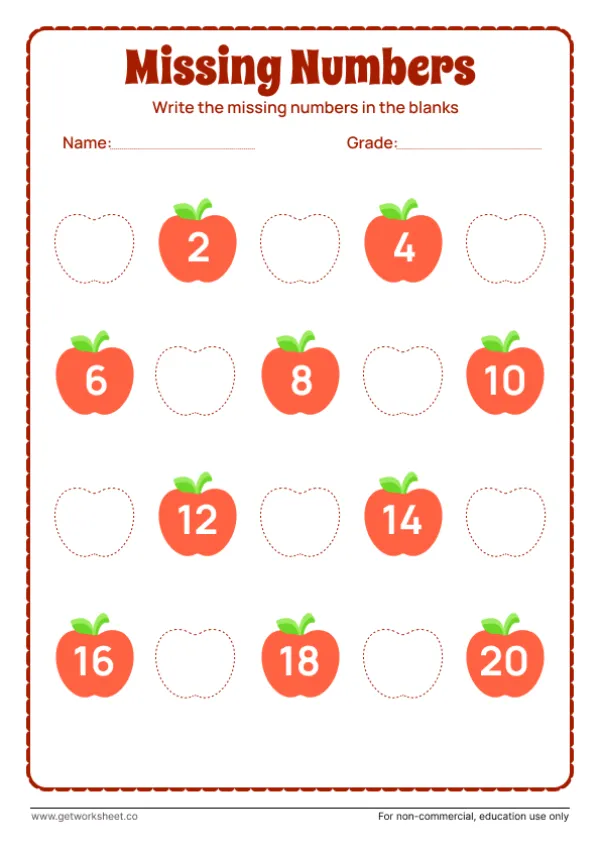
Before and after is the entry point to number order, so keep going with missing number worksheets for longer gaps in a sequence, and a hundreds chart to see every ten boundary at once. Then move on to skip counting worksheets and single-digit addition worksheets, where counting on by one becomes counting on by two or three.
Free library
Related collections
Free hundreds chart worksheets
Free addition worksheets
Free skip counting worksheets
Free missing number worksheets
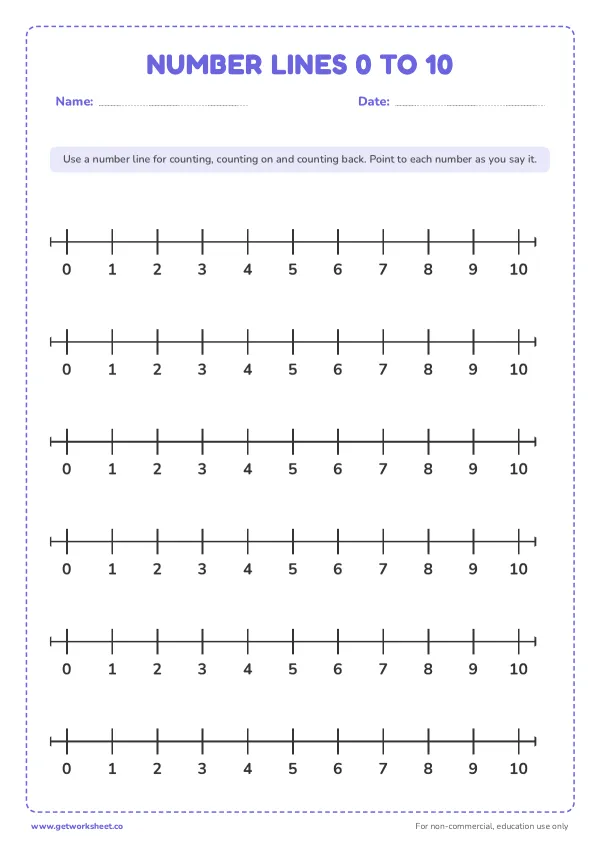
Free number line printables
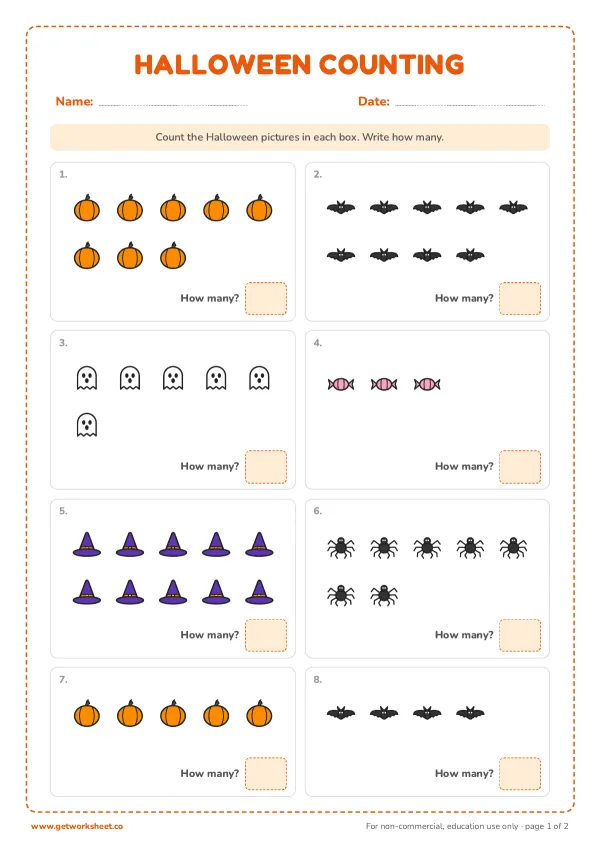
Free Halloween math worksheets
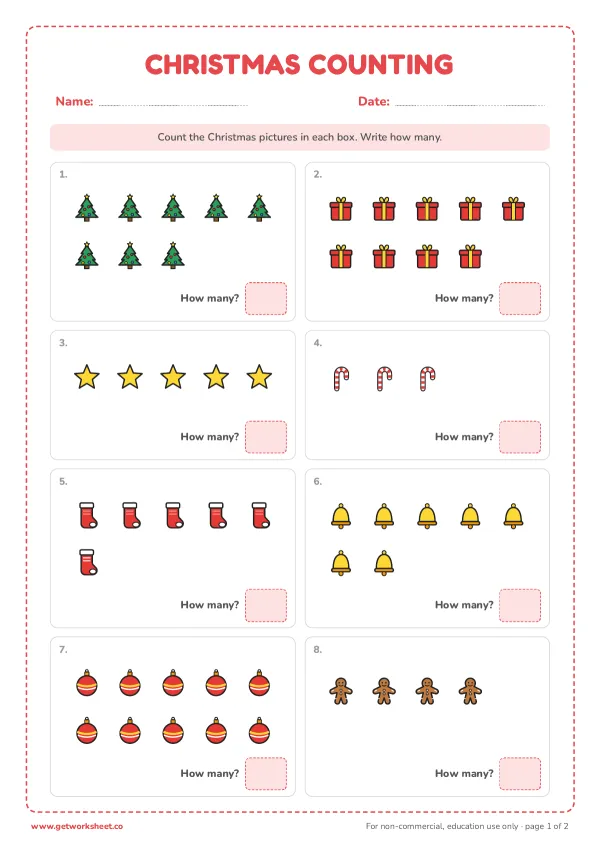
Free Christmas math worksheets
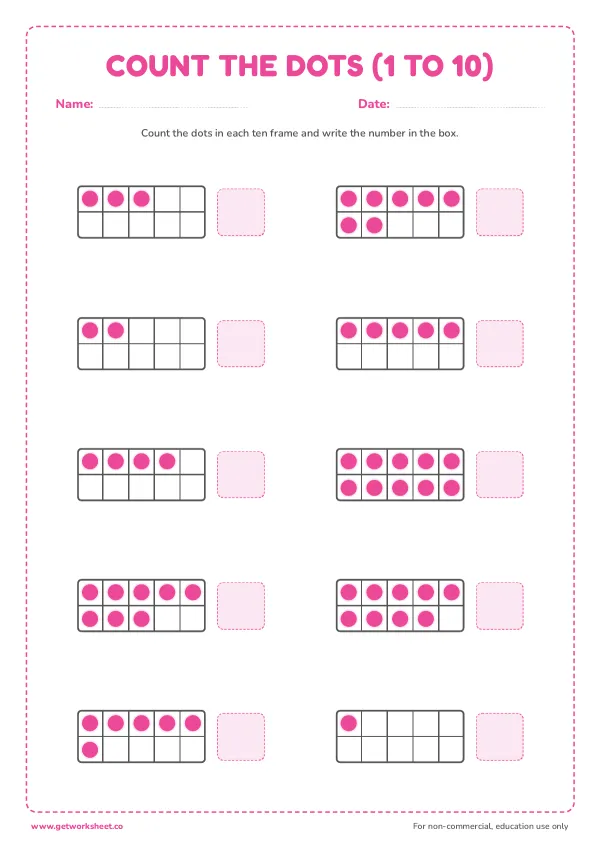
Free ten frame worksheets
More worksheets
- Free Montessori teen board and ten board worksheets
- Free Montessori place value worksheets (golden beads)
- Free Montessori hundred board worksheets
- Free repeating patterns worksheets
- Free subtraction worksheets (within 10 and 20)
- Free doubles addition worksheets
- Free 3D shapes worksheets
- Free handwriting paper printables
- Free word families worksheets
- Free sight words worksheets (Dolch and Fry)
- Free CVC words worksheets
- Free Christmas worksheets: word searches, letter to Santa and writing