English · Grades 2–5
Free helping verbs worksheets
Five printable helping verbs worksheets for grades 2 to 5: a chart of all 23 helping verbs with a find-the-helper task, choosing the right helping verb, helping verb or main verb and more. Answer keys on page 2 of each PDF.
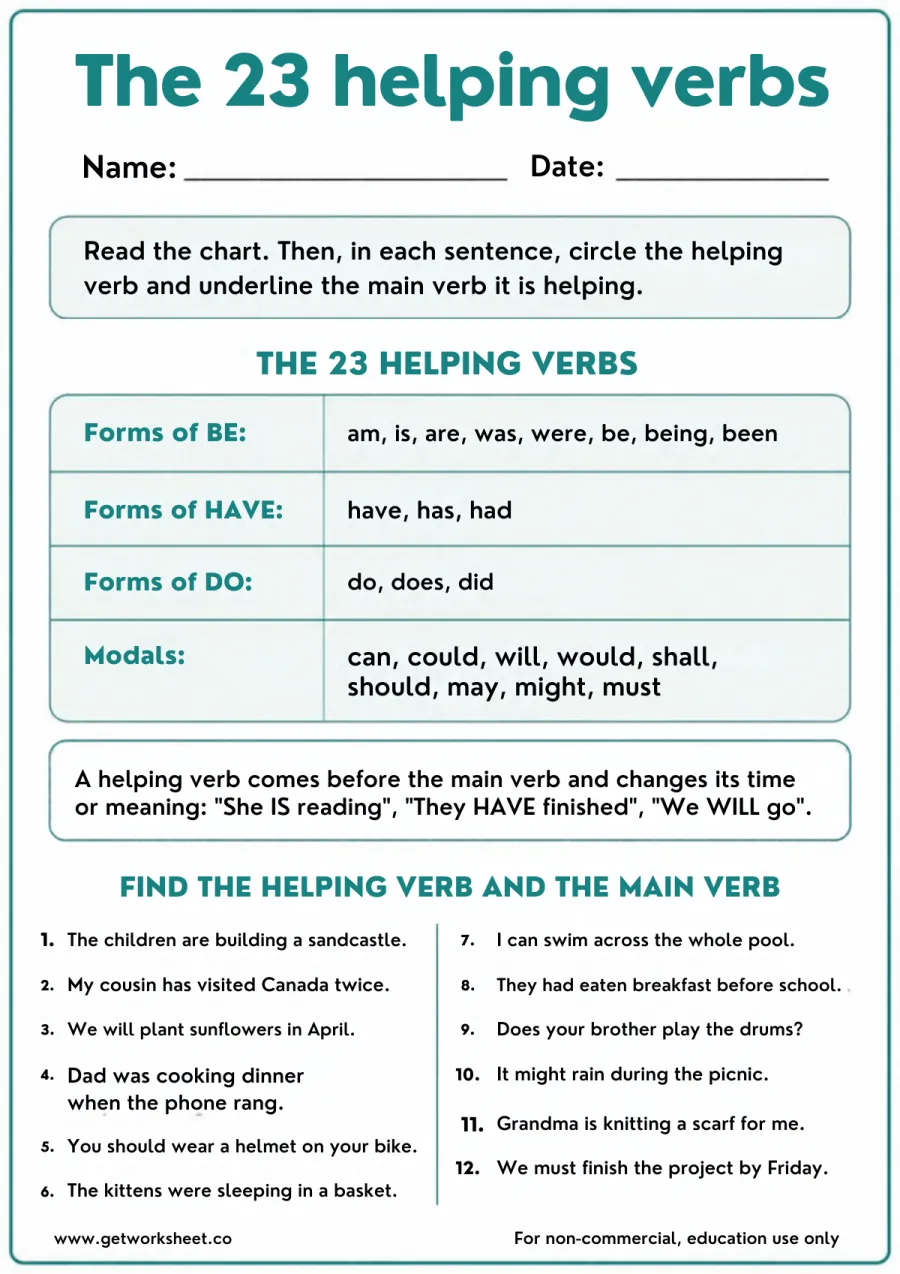
The 23 helping verbs: chart plus find-the-helper
A reference chart of all 23 helping verbs, then twelve sentences in which students circle the helping verb and underline the main verb. Answer key on page 2.
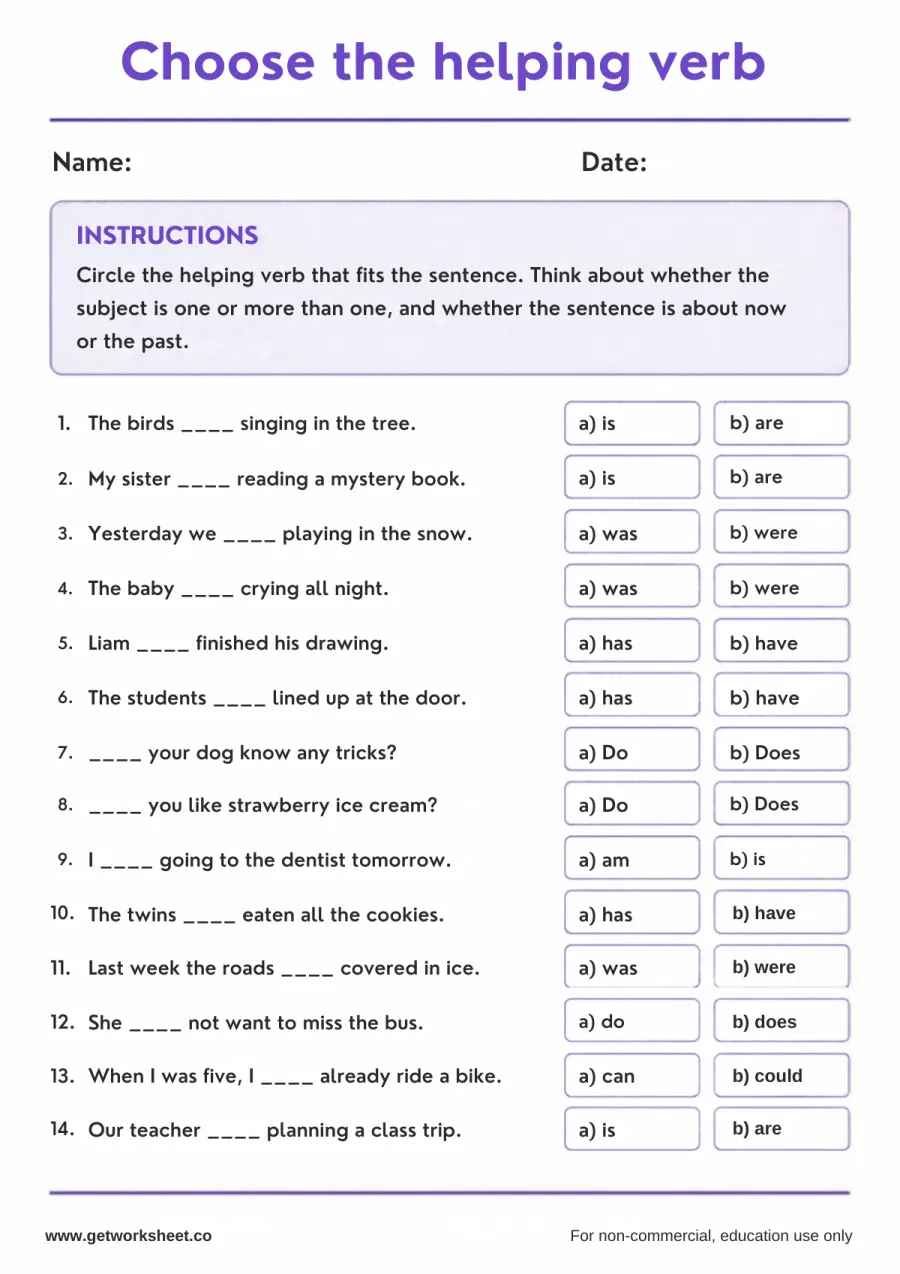
Choose the helping verb: is/are, was/were, has/have, do/does
Fourteen sentences with two helping verbs to choose from; students pick the one that agrees with the subject and the time. Answer key on page 2.
Whole set
All 5 sheets in one PDF
Instant and ad-free. No account needed.
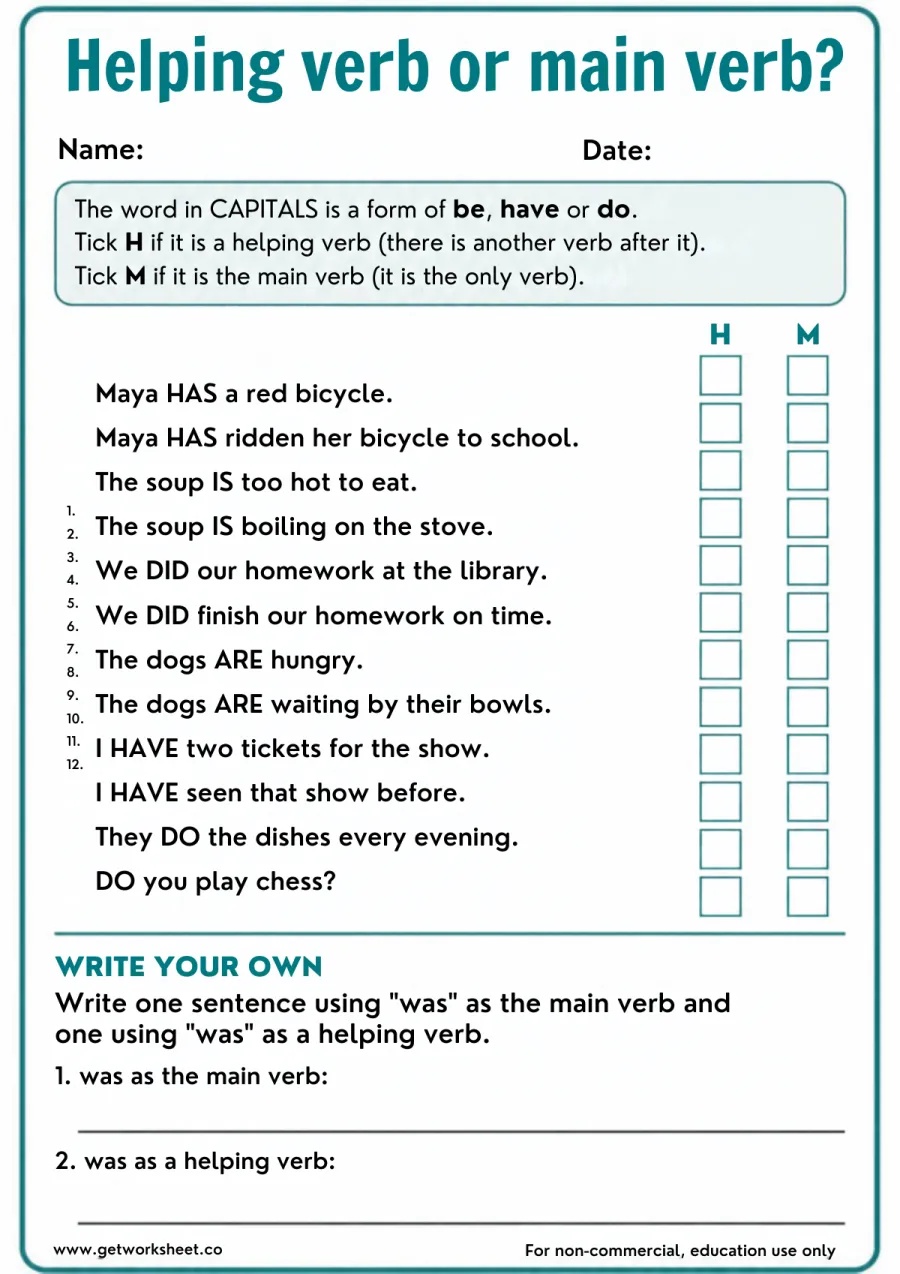
Helping verb or main verb? Is, has, do and will in both jobs
Twelve sentences where is, are, has, have, do and did appear either as a helping verb or as the main verb. Students label each bold word H or M. Answer key on page 2.
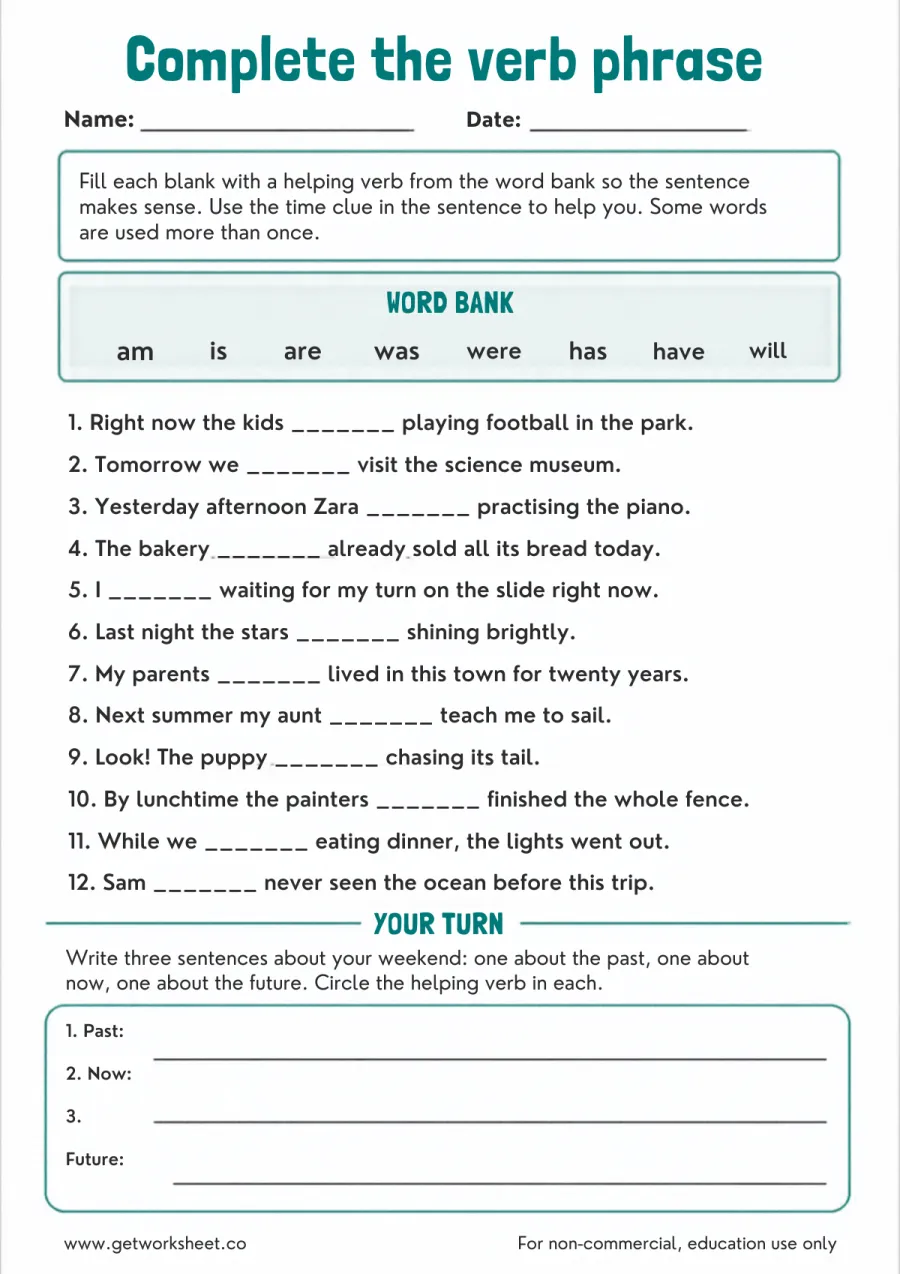
Complete the verb phrase from the word bank (past, present, future)
Twelve sentences with a missing helping verb and a word bank; the time word in each sentence points to the right choice. Answer key on page 2.
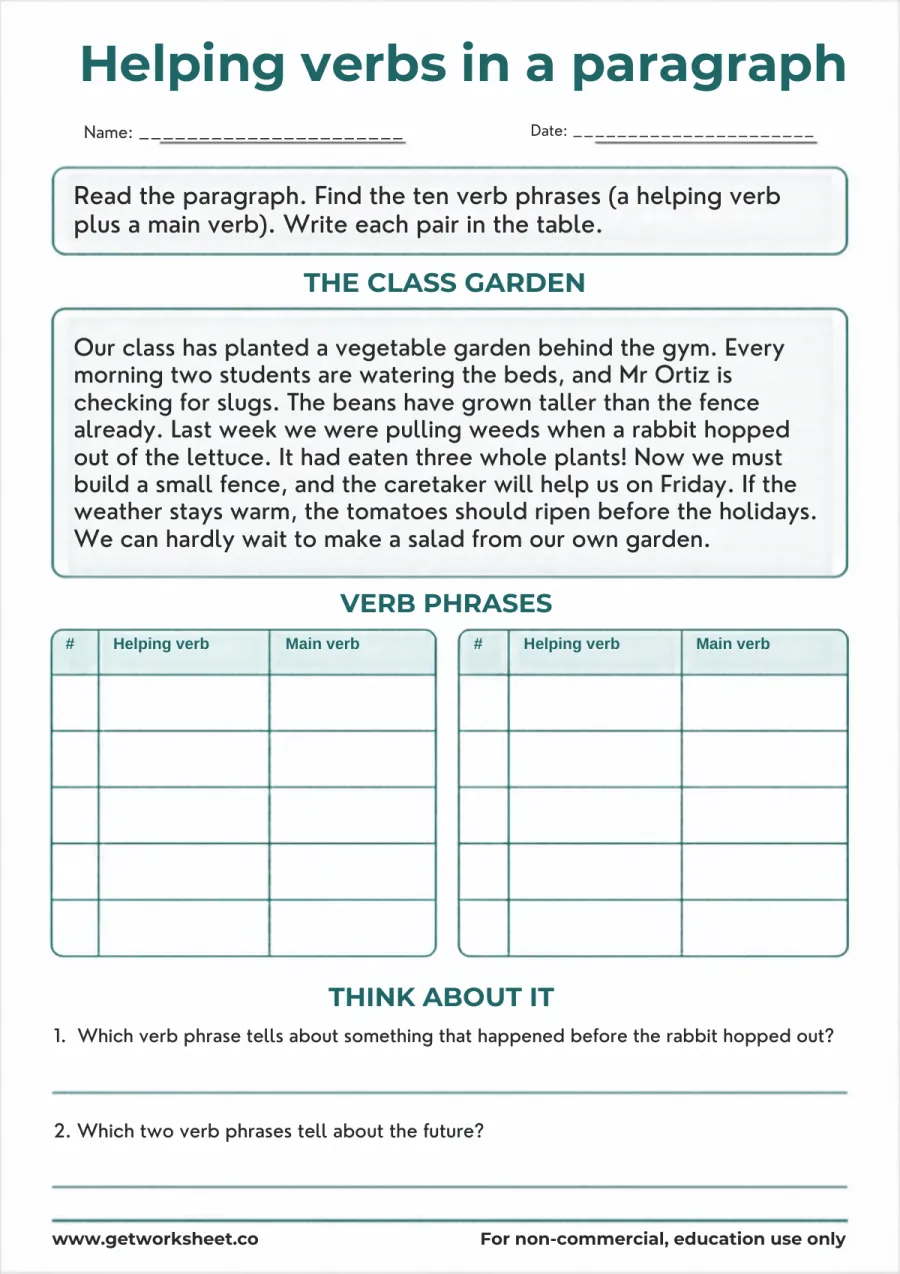
Helping verbs in a paragraph: find the 10 verb phrases
A short paragraph about a school garden containing ten verb phrases. Students find each helping verb and its main verb and record them in a table. Answer key on page 2.
AI worksheet generator
Make a worksheet like this for your class
The 5 sheets above are fixed. The generator writes a new helping verbs worksheet for your grade, with the question types and count you choose, in about 20 seconds. Pick a grade to start:
What you get
- A fresh set of questions on helping verbs, not a copy of the sheets above
- Multiple choice, fill in the blanks, true or false, open ended
- Answer key and print-ready PDF with Pro
Free account, 1 worksheets a week. No card.
Helping verbs (auxiliary verbs) sit in front of a main verb and change its time or meaning: she is reading, they have finished, we will go. Children use them correctly in speech long before they can find them on a page, so the hard part is recognition, and the classic trap is that is, has and do can also be main verbs. These five worksheets go from the chart of 23 helping verbs to finding verb phrases inside a paragraph.
What's in this set
- The 23 helping verbs. The chart of all 23 helping verbs grouped by family (be, have, do, modals), then twelve sentences: circle the helping verb, underline the main verb.
- Choose the helping verb. Fourteen sentences with a choice of two helping verbs (is/are, was/were, has/have, do/does, can/could); circle the one that fits the subject and the time.
- Helping verb or main verb? Twelve sentences in which a form of be, have or do is in capitals; label it H if it is helping another verb or M if it is the main verb of the sentence.
- Complete the verb phrase. Twelve sentences with a blank before the main verb and a word bank of eight helping verbs; the clue words (yesterday, tomorrow, right now, already) decide the answer. Then three sentences of their own.
- Helping verbs in a paragraph. A 110-word paragraph about a class garden with ten verb phrases hidden in it; list every helping verb with its main verb in a two-column table. Grades 4-5.
What students will practice
- Recognizing the 23 helping verbs and their four families: be, have, do and the modals (Common Core L.3.1.a, L.4.1.c)
- Finding the verb phrase, helping verb plus main verb, even when a word like not or already sits between them
- Choosing a helping verb that agrees with the subject (is/are, was/were, has/have, do/does)
- Telling a helping verb from the same word used as a main verb
- Reading time clues (yesterday, right now, tomorrow, already) to choose past, present or future forms
Free printable makers
Make your own helping verbs sheets
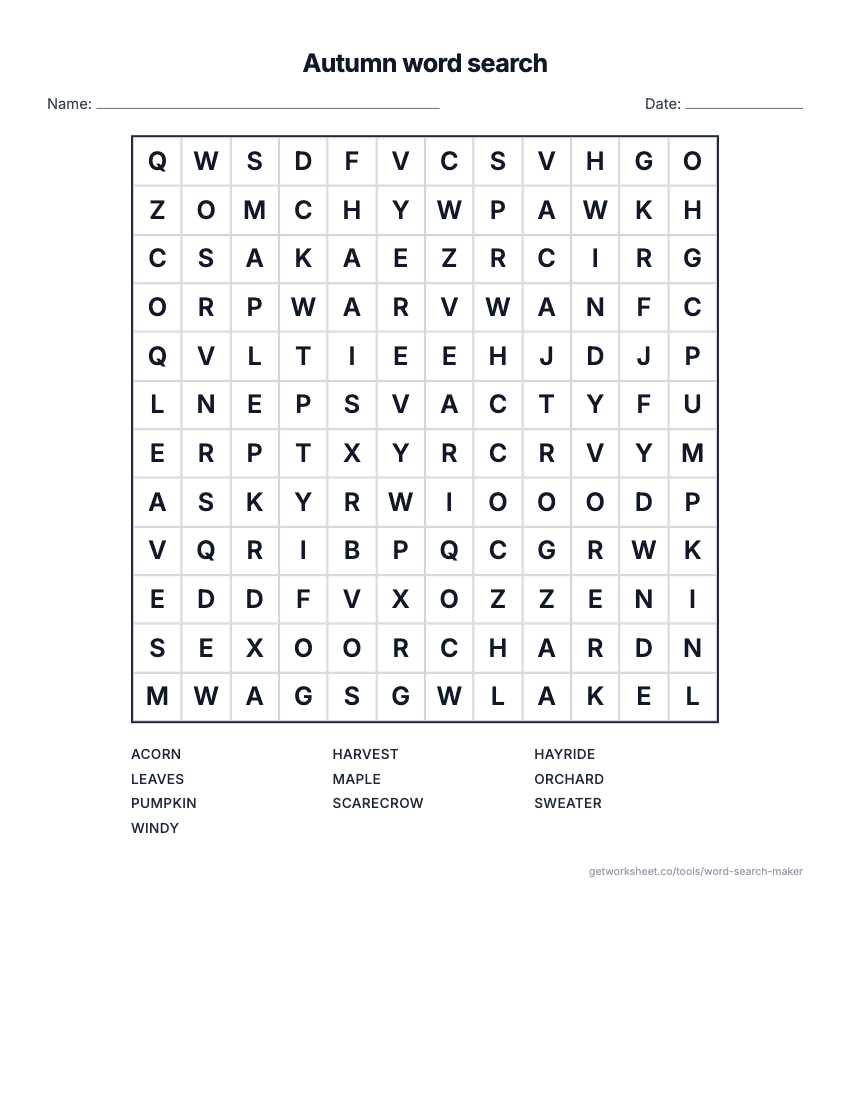
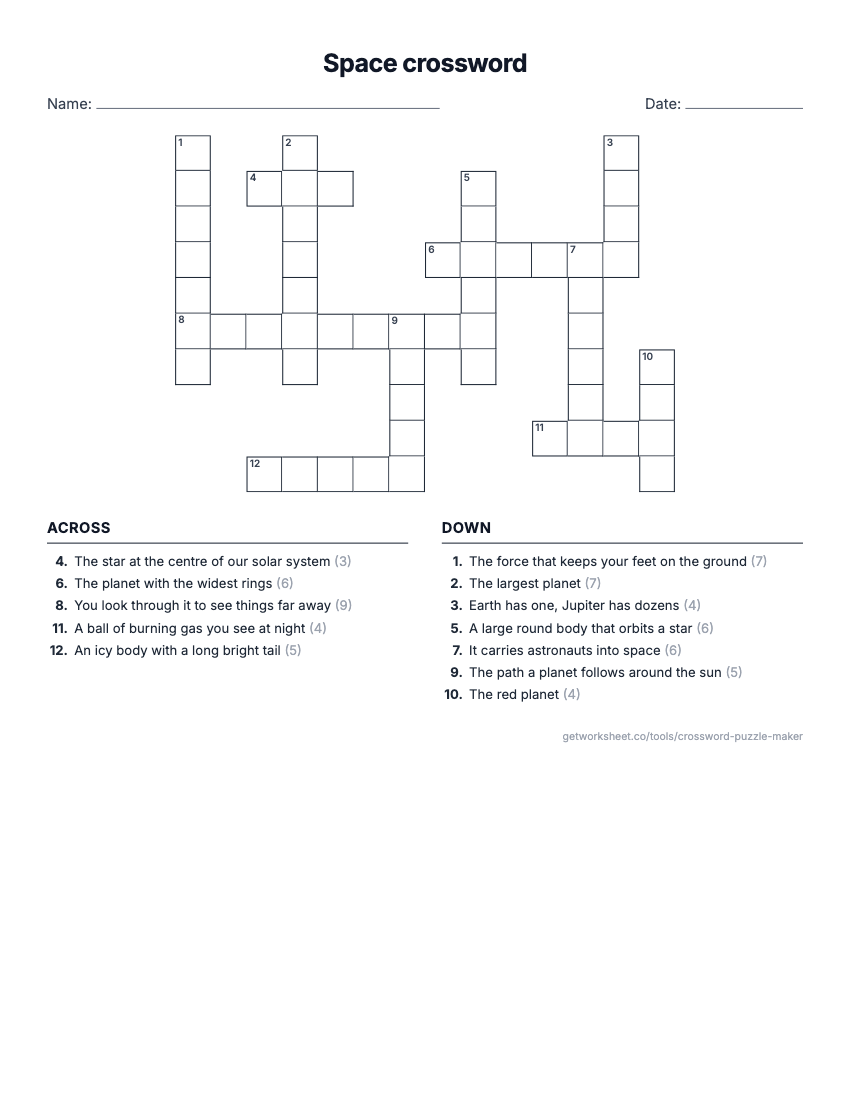
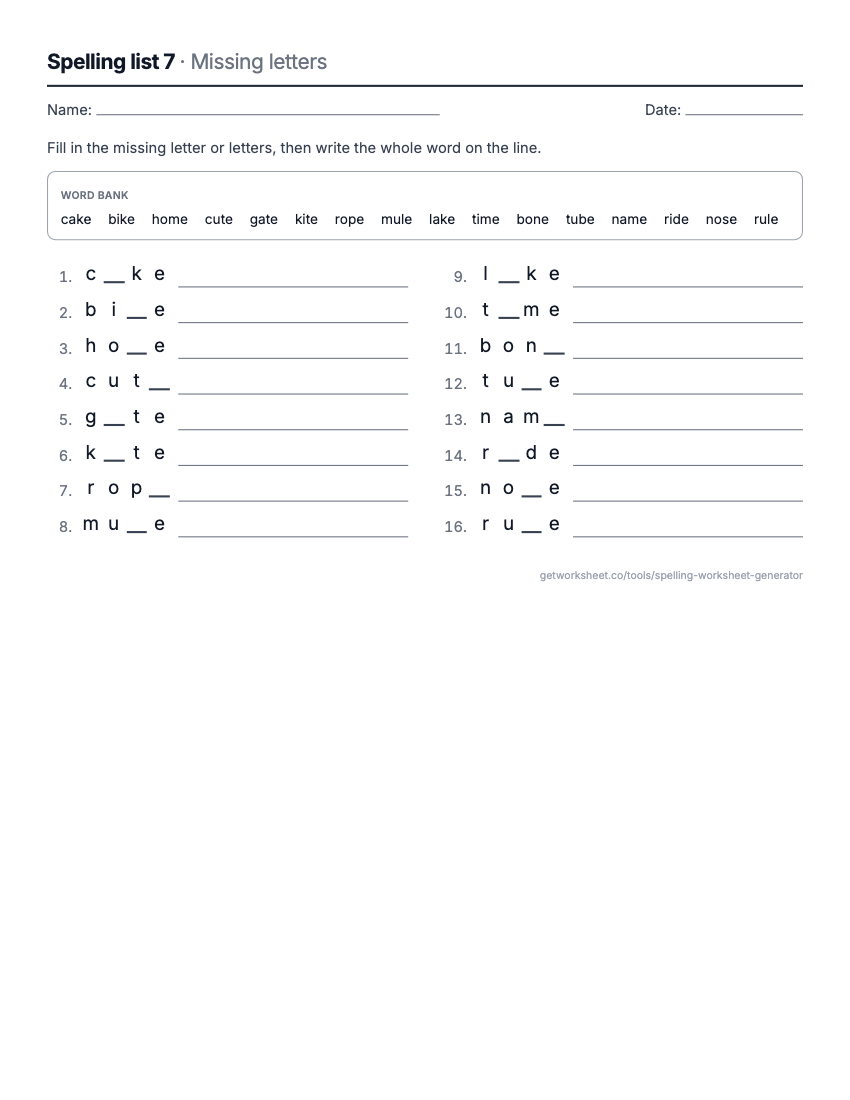
Type your own words or numbers and print in about 30 seconds. No account, no AI, answer key where it applies.
AI worksheet generator
Need a different helping verbs worksheet?
Generate a custom helping verbs worksheet: pick the grade, question types and count, and print it in about 20 seconds. Free accounts get 1 generation a week.
How to use these worksheets in class
- Lesson 1: the chart. Many classes chant the 23 helping verbs to a tune; the chart on the first sheet groups them by family so the chant has a structure. Then work the twelve sentences together: the test for a helping verb is "is there another verb straight after it?"
- Lesson 2: agreement. Choose the helping verb is really a subject-verb agreement sheet in disguise. Have students underline the subject first and write 1 or 2+ above it before circling.
- Lesson 3: helping or main? The pairs on the third sheet use the same word in both jobs ("Maya HAS a bike" / "Maya HAS ridden her bike"). Read each pair aloud and ask "What did Maya do?" If the answer is the capitalised word itself, it is the main verb.
- Lesson 4: tense. Complete the verb phrase uses time clues. Ask students to circle the clue before filling the blank; item 10 ("By lunchtime the painters ____ finished") is deliberately open to have or had, which is a good discussion for grade 5.
- Lesson 5: real text. The paragraph hunt is the assessment. Ten verb phrases, one table. Students who find eight or more have the concept; the two they miss are usually the modals (must build, can wait).
Answer key
Every practice sheet carries its own answer key on page 2 of the PDF. The keys are repeated here for quick marking.
- The 23 helping verbs: Find the helping verb and the main verb: 1. helping: are; main: building 2. helping: has; main: visited 3. helping: will; main: plant 4. helping: was; main: cooking 5. helping: should; main: wear 6. helping: were; main: sleeping 7. helping: can; main: swim 8. helping: had; main: eaten 9. helping: does; main: play 10. helping: might; main: rain 11. helping: is; main: knitting 12. helping: must; main: finish
- Choose the helping verb: 1. b) are 2. a) is 3. b) were 4. a) was 5. a) has 6. b) have 7. b) Does 8. a) Do 9. a) am 10. b) have 11. b) were 12. b) does 13. b) could 14. a) is
- Helping verb or main verb?: 1. M 2. H 3. M 4. H 5. M 6. H 7. M 8. H 9. M 10. H 11. M 12. H Write your own: 1. Sample: The party was fun. 2. Sample: The band was playing all night.
- Complete the verb phrase: 1. are 2. will 3. was 4. has 5. am 6. were 7. have 8. will 9. is 10. have (accept had) 11. were 12. has Your turn: 1. Sample: I was playing at the park. 2. Sample: I am writing this sentence. 3. Sample: I will visit my grandparents.
- Helping verbs in a paragraph: Verb phrases: 1 | has | planted 2 | are | watering 3 | is | checking 4 | have | grown 5 | were | pulling 6 | had | eaten 7 | must | build 8 | will | help 9 | should | ripen 10 | can | wait Think about it: 1. had eaten 2. will help; should ripen (accept must build)
Common mistakes to watch for
- Circling every "is" and "has". They are only helping when another verb follows. The third sheet exists for this.
- Missing the modals. Can, could, will, would, shall, should, may, might and must do not change form, so students do not notice them as verbs. The chart lists them separately.
- Treating "not" or "already" as part of the verb. "She does not like spinach": the verb phrase is does like; not is an adverb.
- Calling "to" verbs helping verbs. In "I want to go", to go is an infinitive, not a helping verb plus a main verb.
Frequently asked questions
What are the 23 helping verbs?
am, is, are, was, were, be, being, been (forms of be); have, has, had; do, does, did; and the modals can, could, will, would, shall, should, may, might and must. All 23 are on the chart on the first worksheet.
What grade are these helping verbs worksheets for?
The chart, Choose the helping verb and Complete the verb phrase suit grades 2 and 3. Helping verb or main verb? and the paragraph hunt suit grades 4 and 5. The set matches Common Core L.3.1.a and L.4.1.c and the auxiliary-verb objectives of the English national curriculum for Years 3 to 5.
Is "is" a helping verb or a main verb?
Both, depending on the sentence. In "The soup is hot" it is the main verb (a linking verb). In "The soup is boiling" it helps the main verb boiling. The third worksheet practices exactly this.
Do the worksheets have answer keys?
Yes, on page 2 of every PDF and in the "Answer key" section above.
What is the difference between a helping verb and a linking verb?
A linking verb (is, seems, becomes) is the main verb and connects the subject to a description. A helping verb is never the main verb; it always has another verb after it.
Related grammar worksheets
The subject-verb agreement worksheets practice the is/are and has/have choices in more depth. Students who cannot find the verb at all should start with the subject and predicate worksheets, and the sentence fragments worksheets show what happens when a verb is missing altogether.
Free library
Related collections
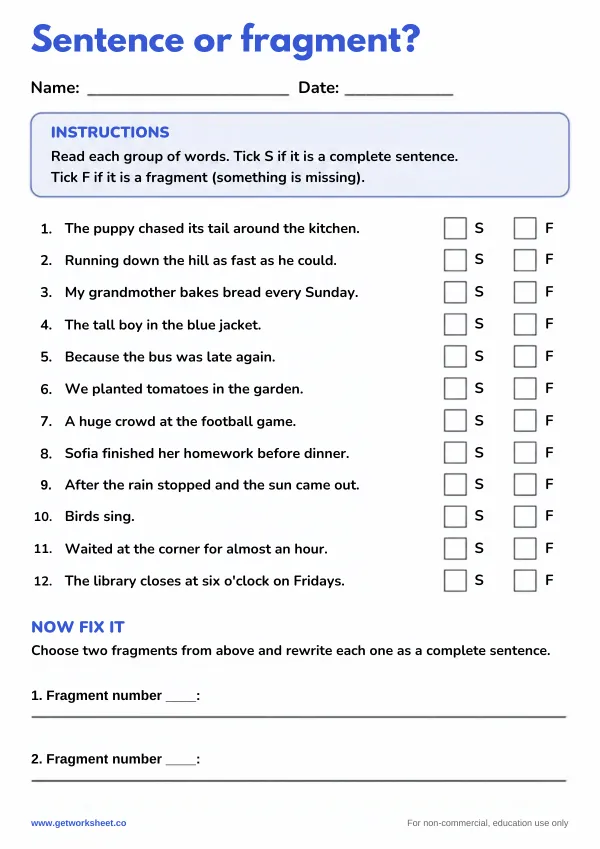
Free sentence fragments worksheets
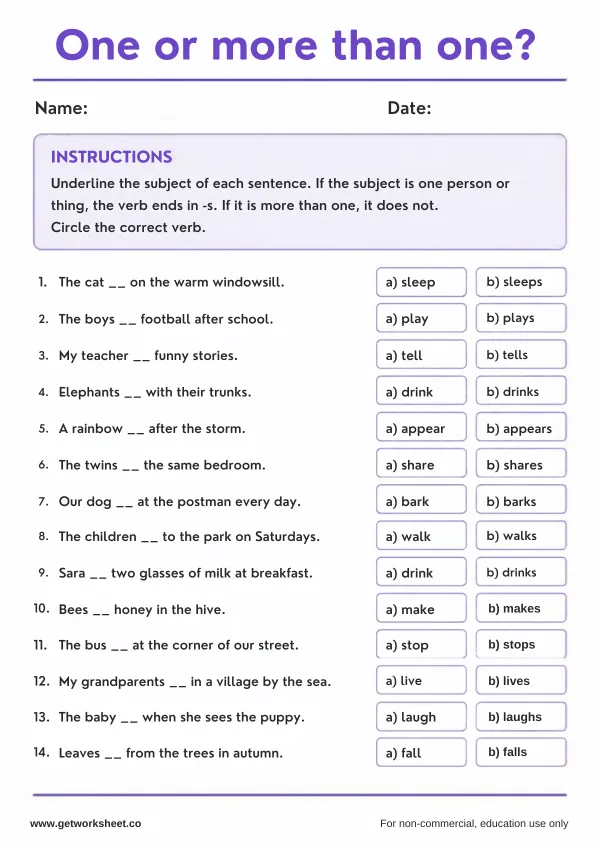
Free subject-verb agreement worksheets
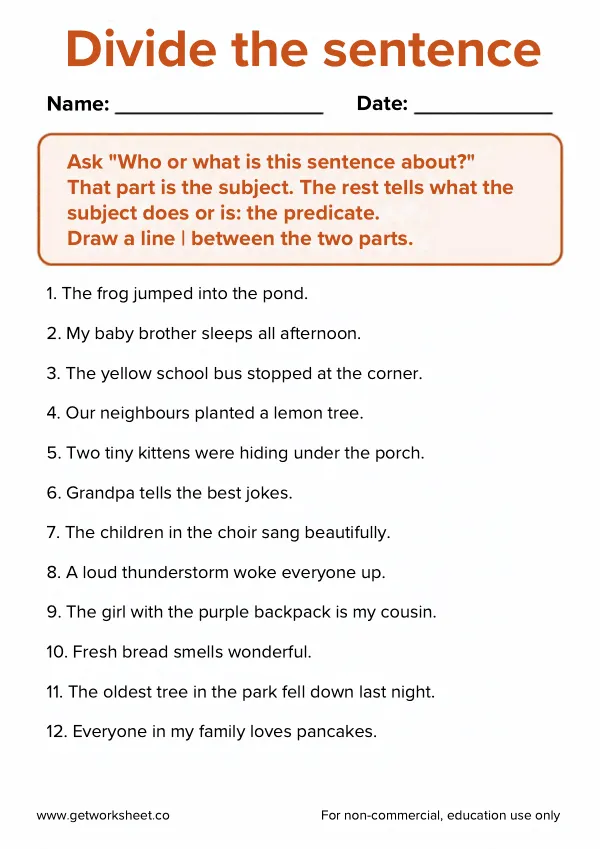
Free subject and predicate worksheets
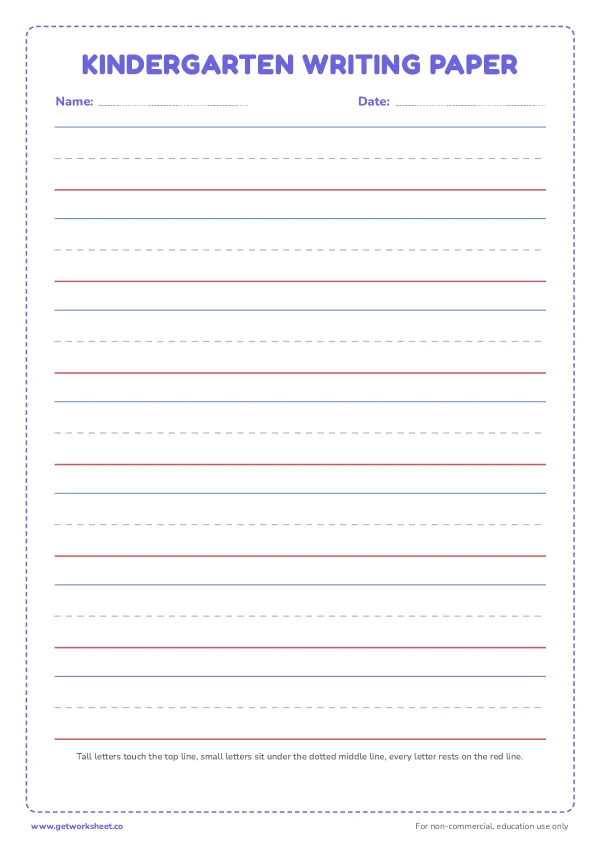
Free handwriting paper printables
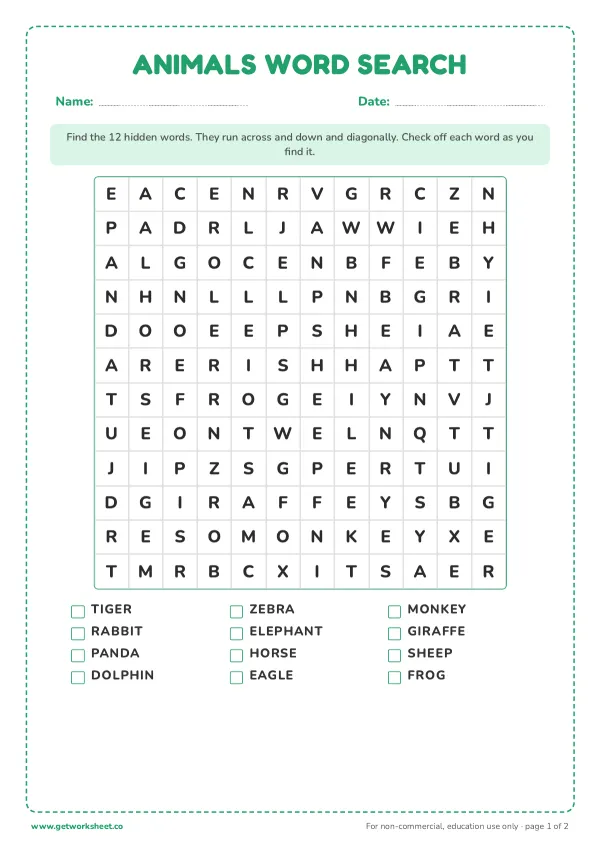
Free word search printables
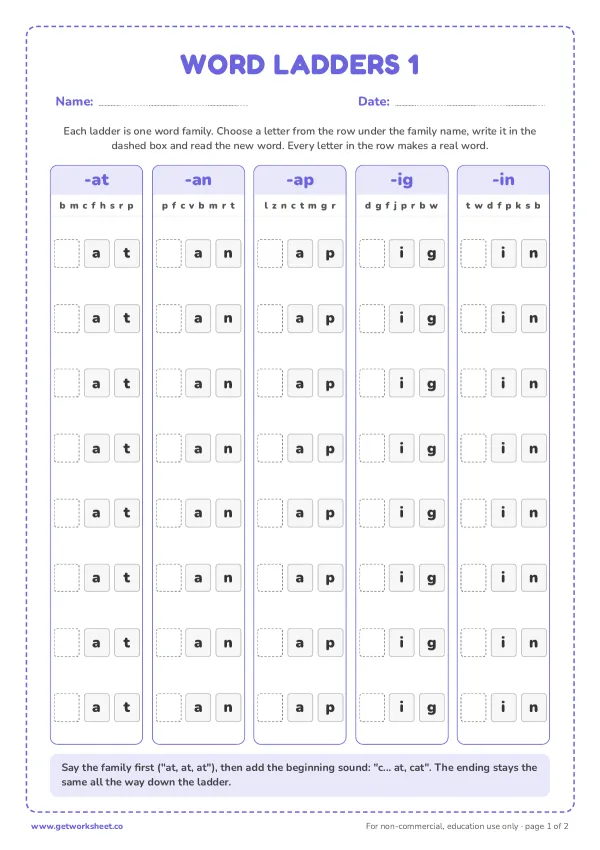
Free word families worksheets
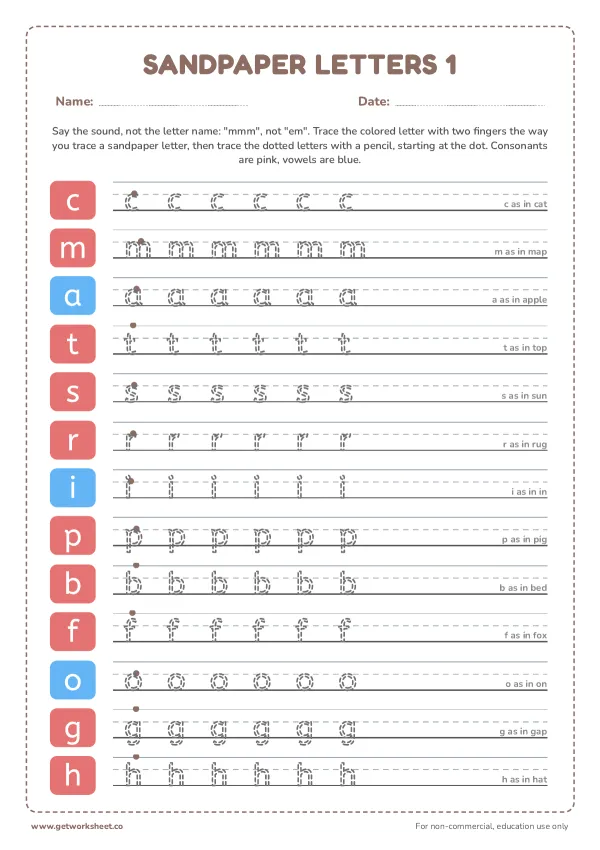
Free Montessori language worksheets
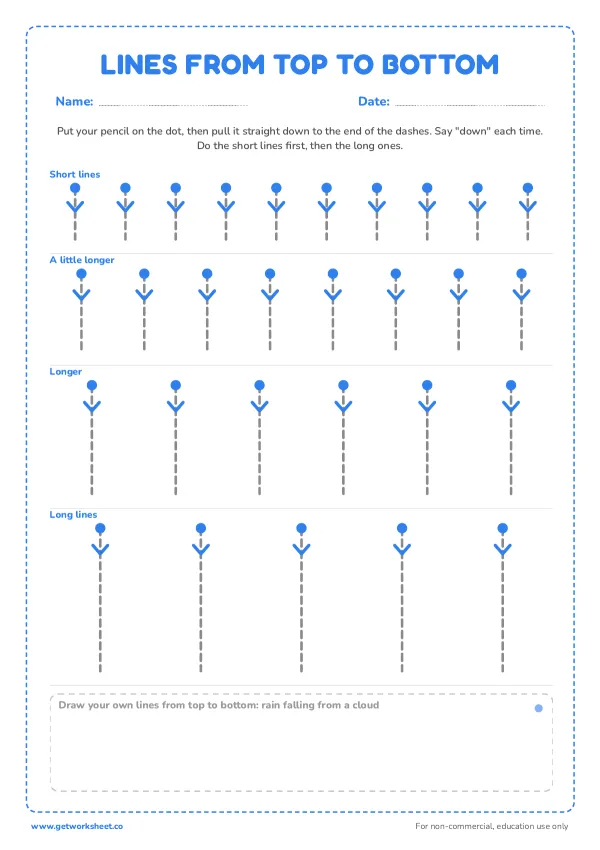
Free pre-writing worksheets
More worksheets
- Free sight words worksheets (Dolch and Fry)
- Free CVC words worksheets
- Free name tracing worksheets
- Free letter Z tracing worksheets
- Free letter Y tracing worksheets
- Free letter X tracing worksheets
- Free letter W tracing worksheets
- Free letter V tracing worksheets
- Free letter U tracing worksheets
- Free letter T tracing worksheets
- Free letter S tracing worksheets
- Free letter R tracing worksheets