Maths · Grades 2–3
Free subtraction with regrouping worksheets
Six free printable subtraction with regrouping worksheets for grade 2 and grade 3: 2-digit column subtraction with and without borrowing, 3-digit subtraction, subtracting across zeros and word problems. Answer keys on page 2. PDF download.
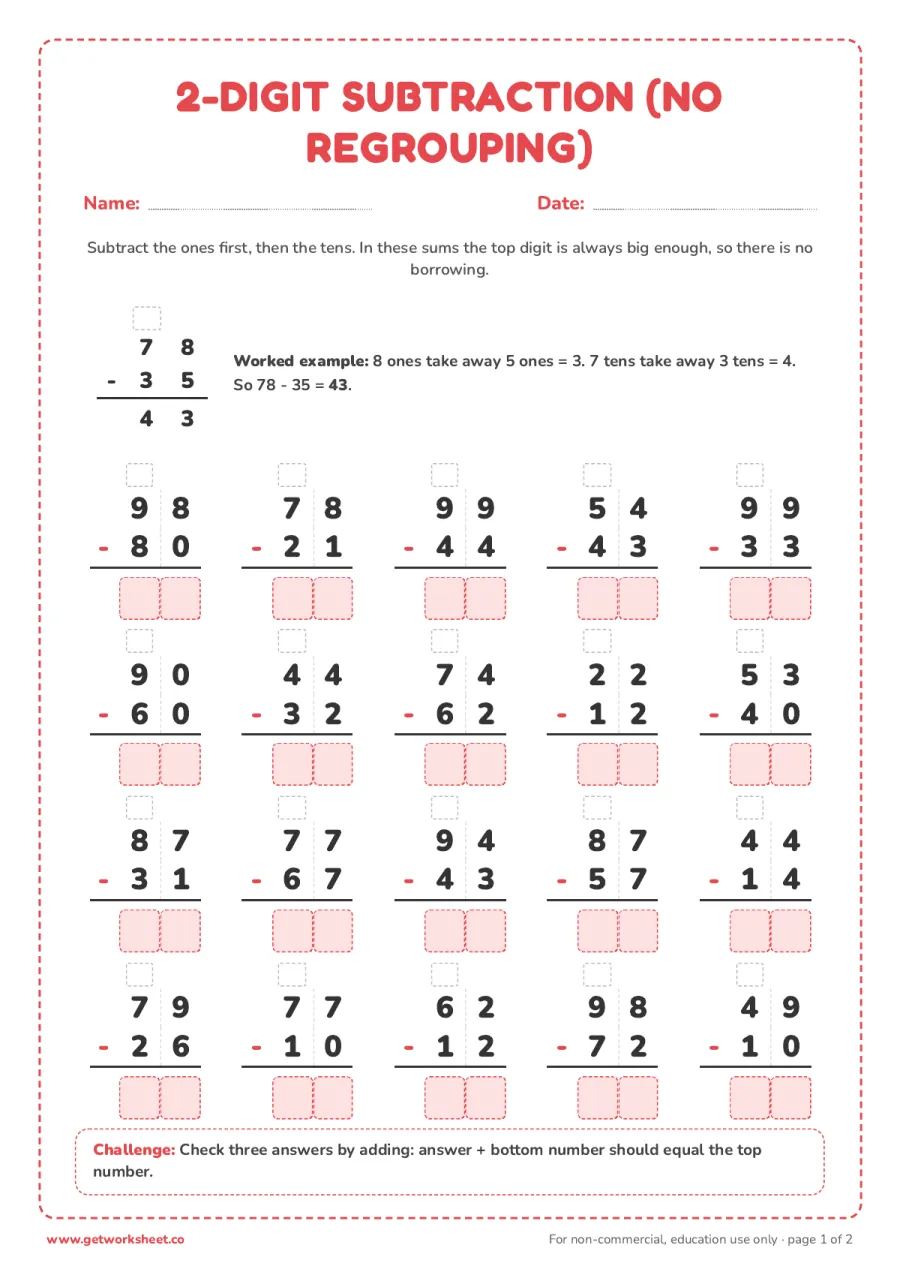
2-digit subtraction without regrouping: 20 column sums
A warm-up of twenty 2-digit subtractions where every top digit is bigger than the one below, so nothing needs to be borrowed. Answer key on page 2.
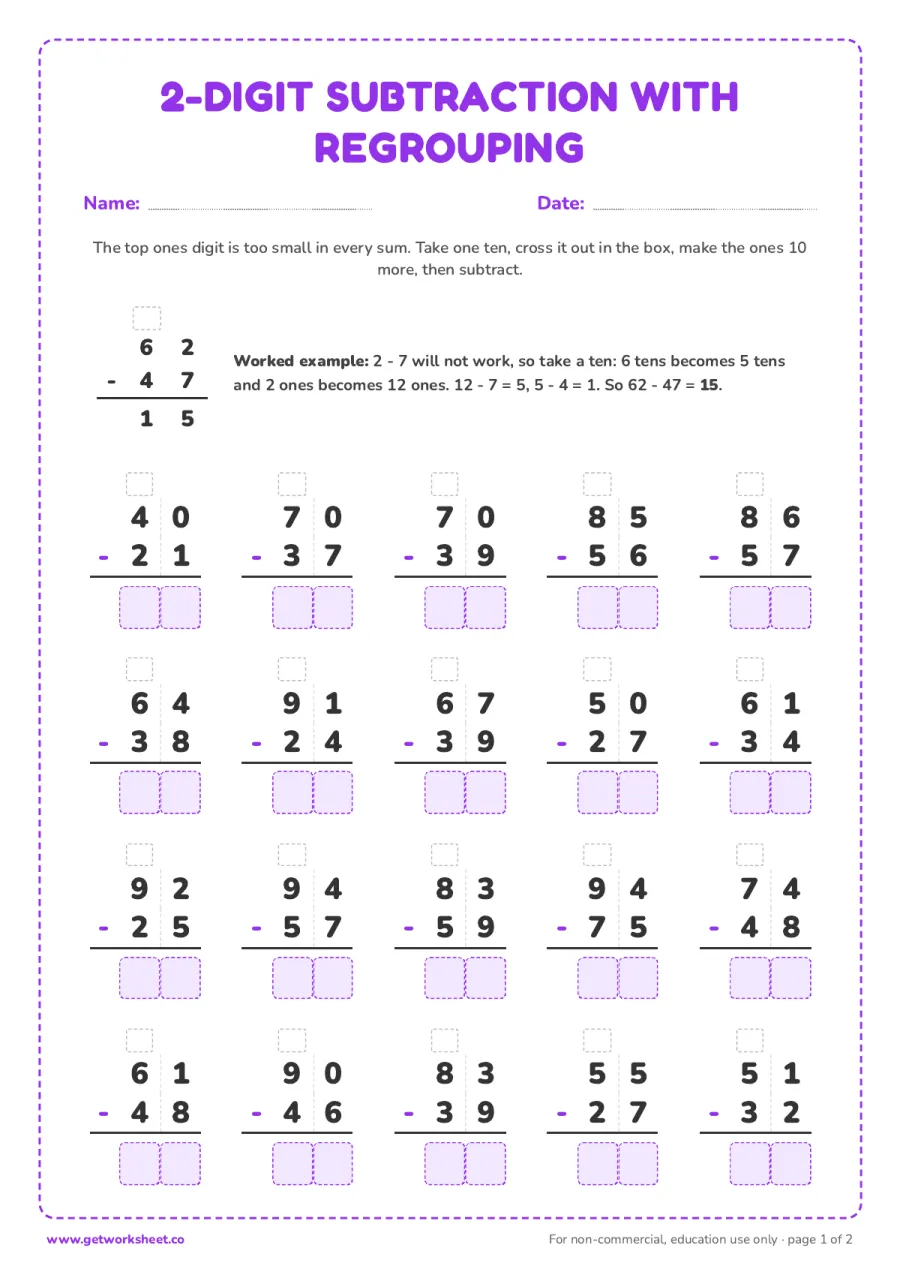
2-digit subtraction with regrouping from the tens: 20 column sums
Twenty 2-digit subtractions where the ones digit on top is too small, so one ten must be regrouped into ten ones. Dashed boxes above the columns for the crossing out. Answer key on page 2.
Whole set
All 6 in one PDF
- Every sheet on this page, one file
- No ads, no countdowns, print as often as you like
- Instant download, ad-free, no account needed
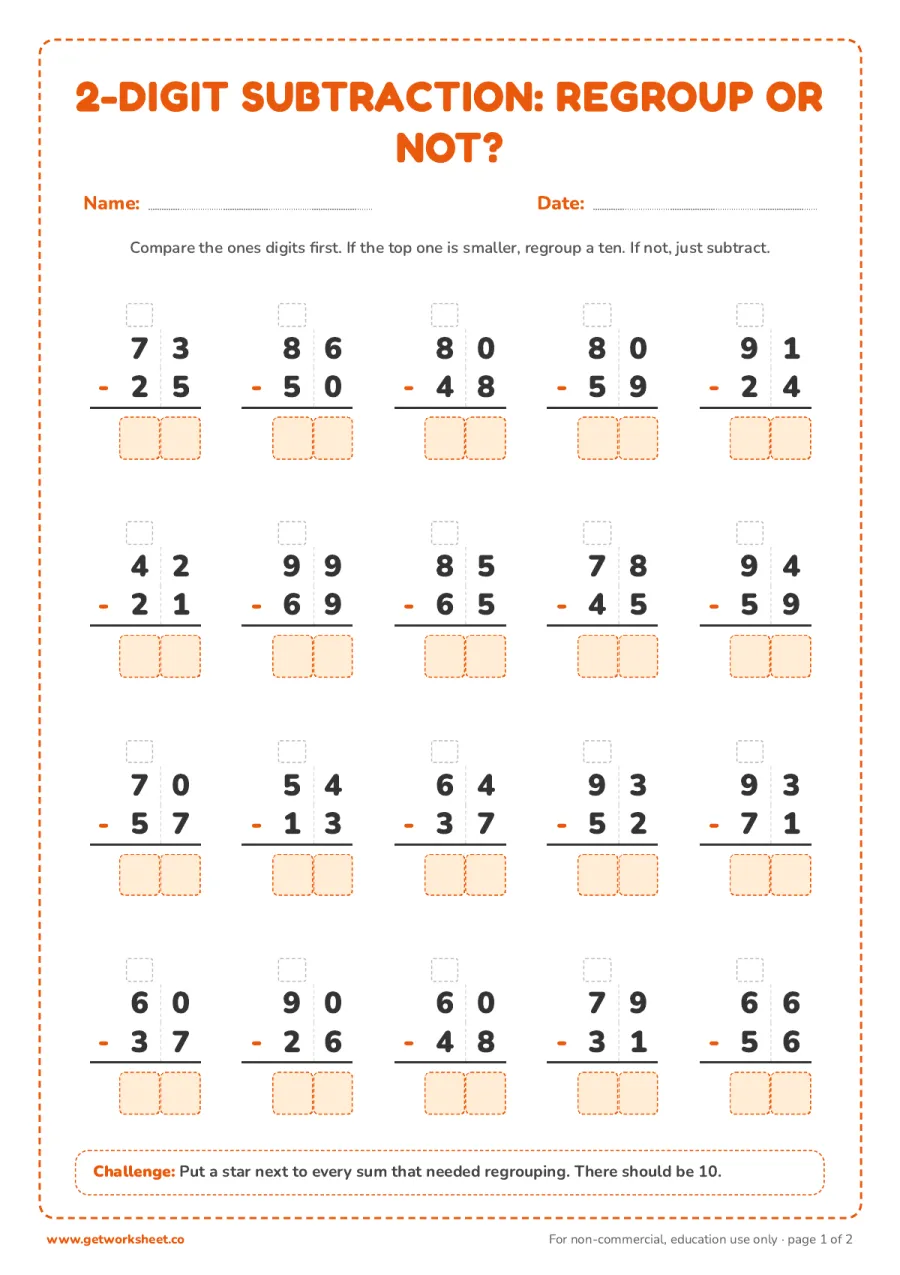
2-digit subtraction, mixed: 20 sums with and without regrouping
Twenty 2-digit subtractions in random order; ten need regrouping and ten do not, so children compare the ones digits before starting. Answer key on page 2.
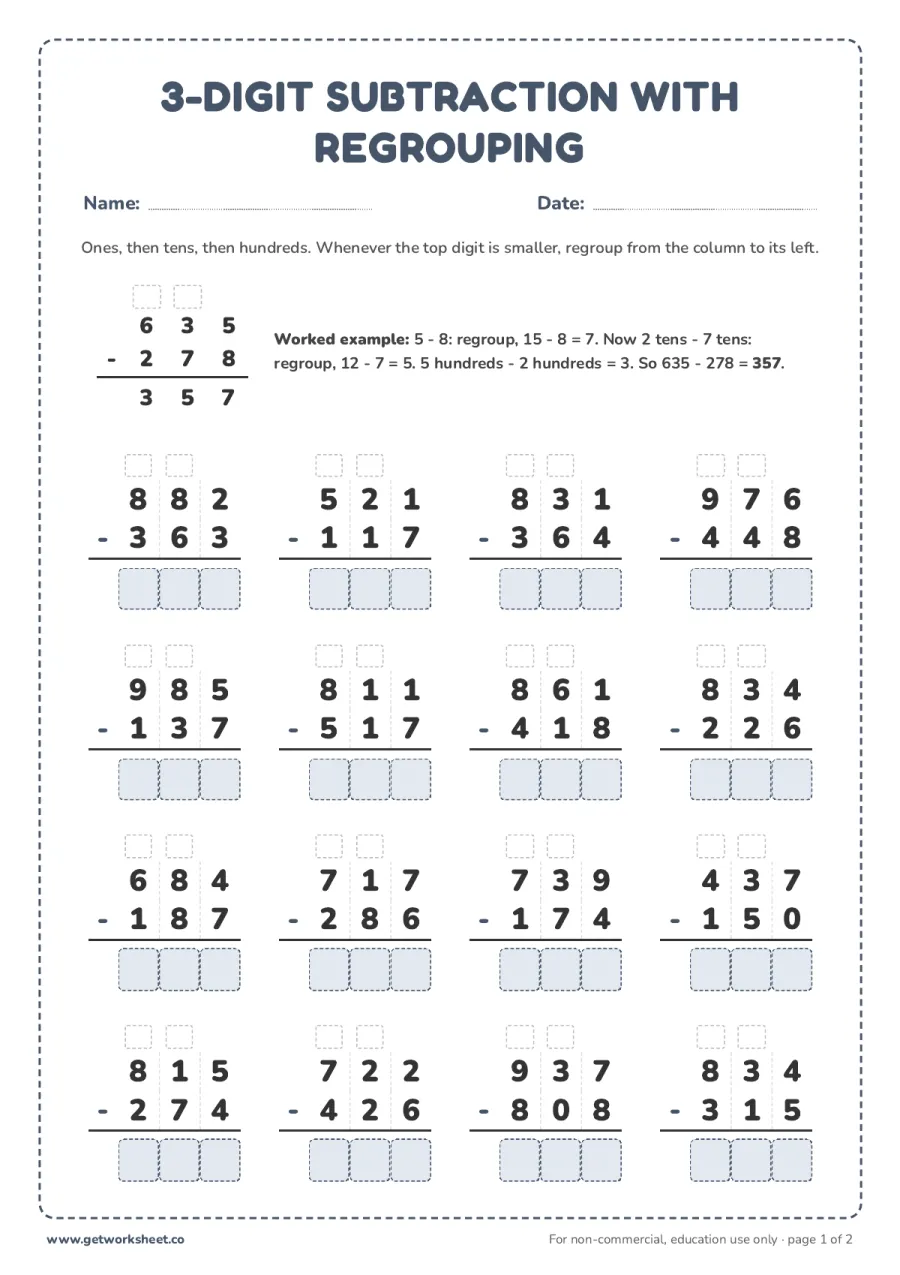
3-digit subtraction with regrouping: 16 column sums
Sixteen 3-digit subtractions that regroup at least once, from the tens or the hundreds or both, with regrouping boxes above each column. Answer key on page 2.
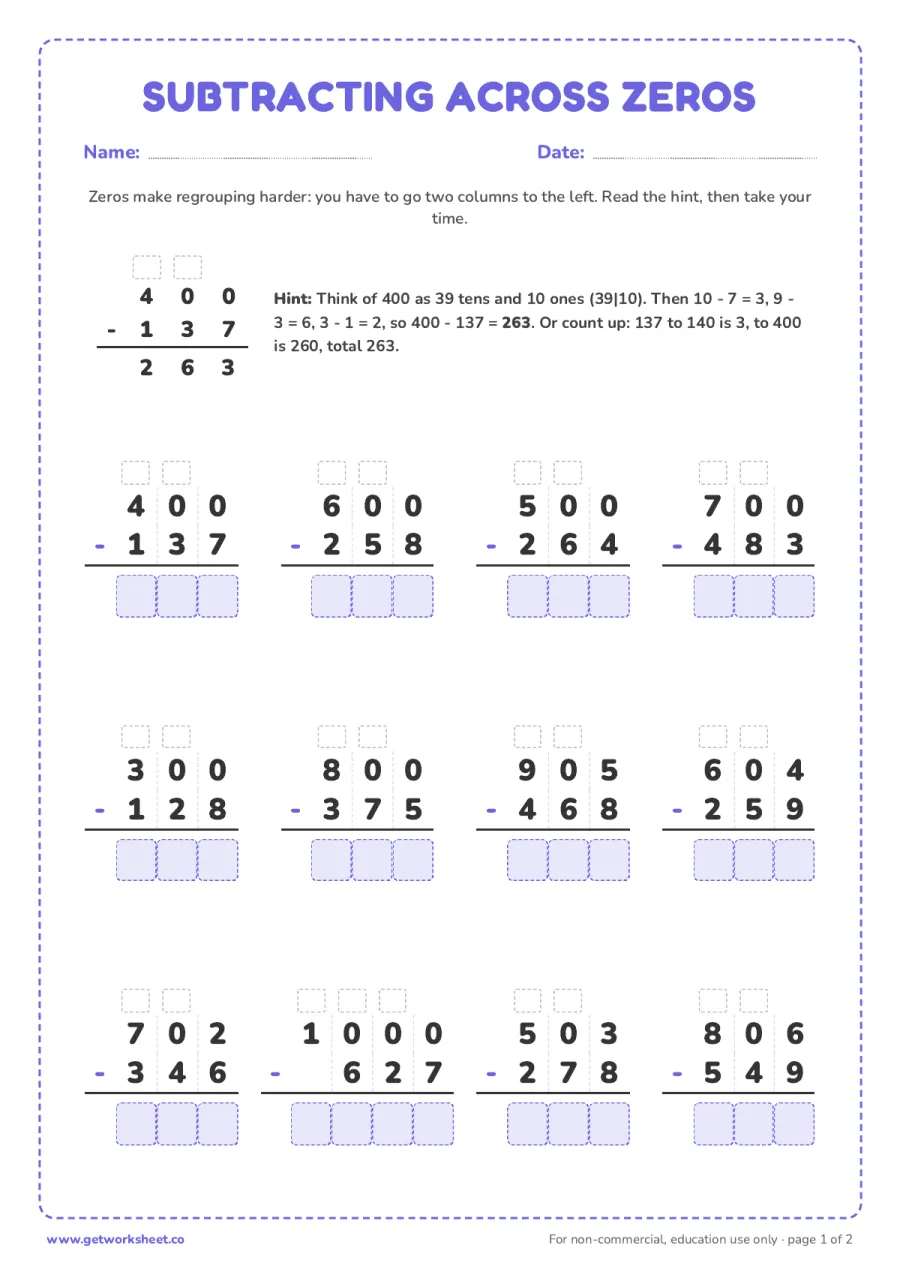
Subtracting across zeros: 12 sums like 400 - 137
Twelve subtractions where the top number has zeros in the tens or ones, so regrouping has to travel across a column. A hint box explains the two ways to think about it. Answer key on page 2.
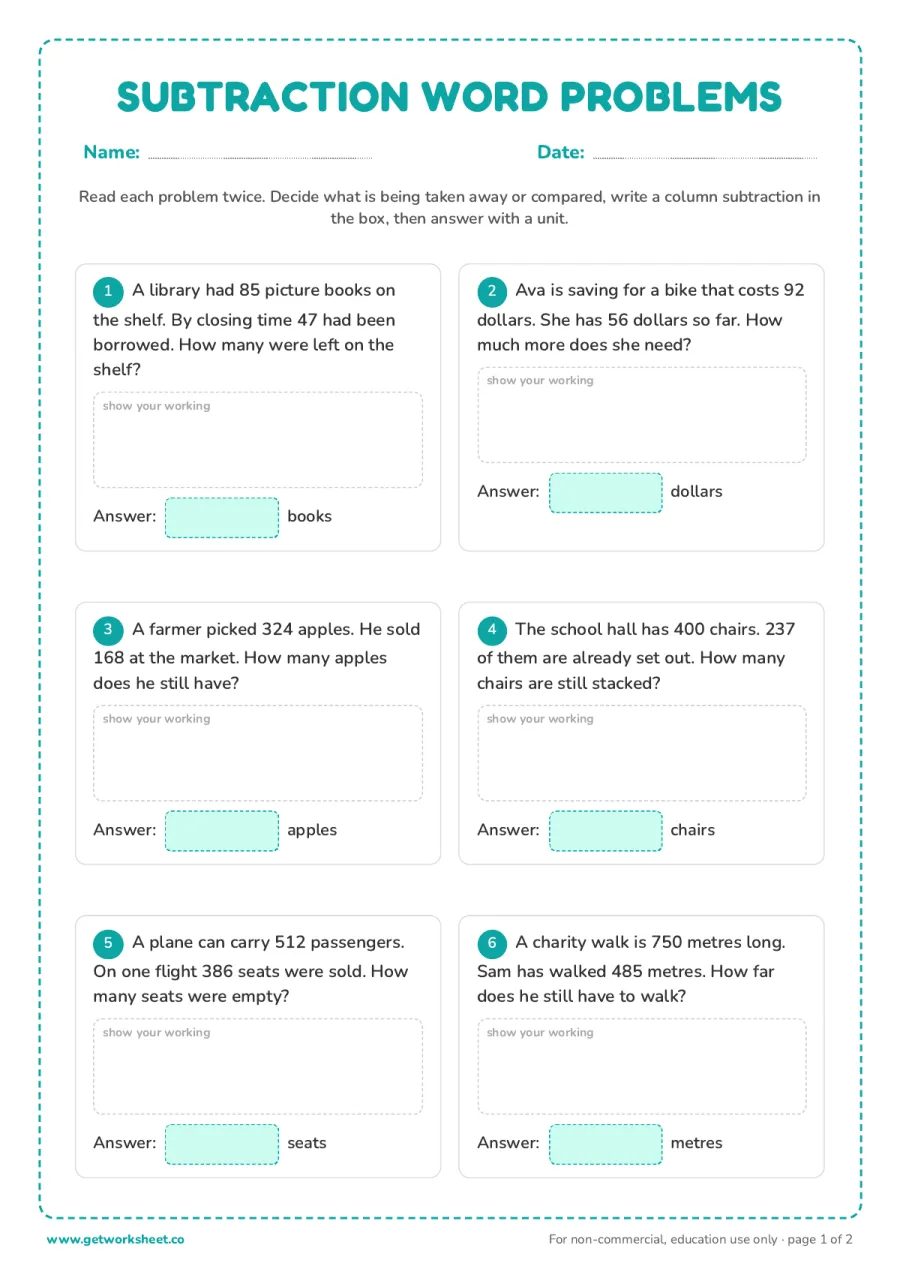
Subtraction with regrouping word problems: 6 real-life problems
Six word problems with 2- and 3-digit numbers (books borrowed, money saved, empty seats), each needing regrouping, with working space and answer boxes. Answer key with number sentences on page 2.
AI worksheet generator
Make a worksheet like this for your class
The 6 sheets above are fixed. The generator writes a new subtraction with regrouping worksheet for your grade, with the question types and count you choose, in about 20 seconds. Pick a grade to start:
What you get
- A fresh set of questions on subtraction with regrouping, not a copy of the sheets above
- Multiple choice, fill in the blanks, true or false, open ended
- Answer key and print-ready PDF with Pro
Free account, 1 worksheets a week. No card.
Subtraction with regrouping (borrowing) is the hardest part of written arithmetic in the early grades, because it asks children to change the top number before they subtract: 62 becomes 5 tens and 12 ones. Children who learn it as a routine of crossing out tend to fall apart when a zero appears; children who understand that a ten is being exchanged for ten ones can handle 400 - 137 as well. These six worksheets move from sums with no regrouping, through borrowing from the tens, mixed practice, 3-digit subtraction, subtracting across zeros and finally word problems.
Each sum has dashed boxes above the columns for the crossing-out and light guide lines between the digits. The first sheet of each new step carries a worked example in words, and every sheet has its answer key on page 2.
What’s in this set
- 2-digit subtraction without regrouping: 20 column sums. Every top digit is bigger than the one below it, so children practise the layout and the right-to-left order first.
- 2-digit subtraction with regrouping from the tens: 20 column sums. The ones digit on top is always too small. Worked example 62 - 47 at the top.
- 2-digit subtraction, mixed: 20 sums with and without regrouping. Ten of each in random order; the child must compare the ones digits and decide.
- 3-digit subtraction with regrouping: 16 column sums. Each sum regroups at least once, from the tens, the hundreds or both.
- Subtracting across zeros: 12 sums like 400 - 137. A hint box explains the two ways to handle a zero in the tens column (think of 400 as 39 tens and 10 ones, or count up).
- Subtraction with regrouping word problems: 6 real-life problems. Books borrowed, money still to save, empty seats; each with a working box and an answer with its unit.
What students will practice
- Subtracting 2-digit numbers with the column method, decomposing a ten when needed (CCSS 2.NBT.B.5)
- Subtracting 3-digit numbers, decomposing tens and hundreds (2.NBT.B.7, 3.NBT.A.2)
- Subtracting from numbers with zeros, where a regroup passes through an empty column
- Explaining the regrouping using place value (2.NBT.B.9)
- Solving one-step take-away and comparison word problems (2.OA.A.1)
Free printable makers
Make your own subtraction with regrouping sheets
Type your own words or numbers and print in about 30 seconds. No account, no AI, answer key where it applies.
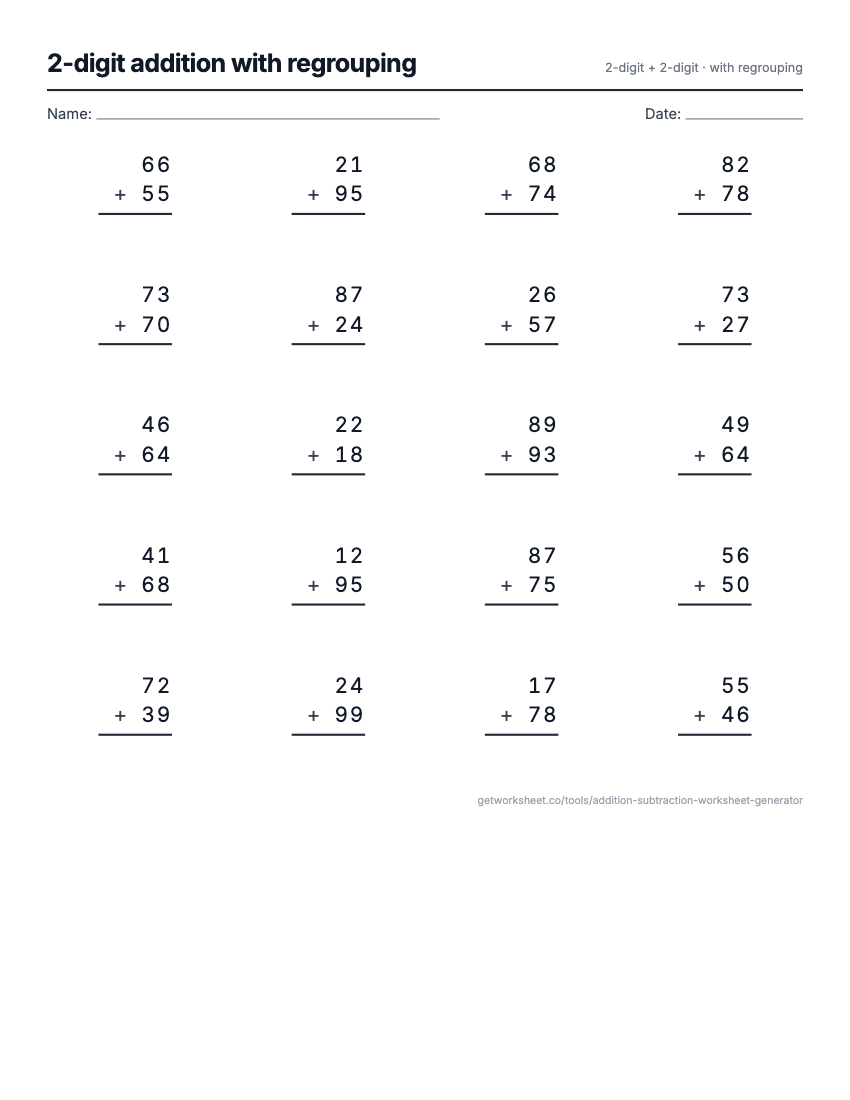 Addition and subtraction generatorColumn add and subtract, regrouping you control, boxes and key. Free to print.
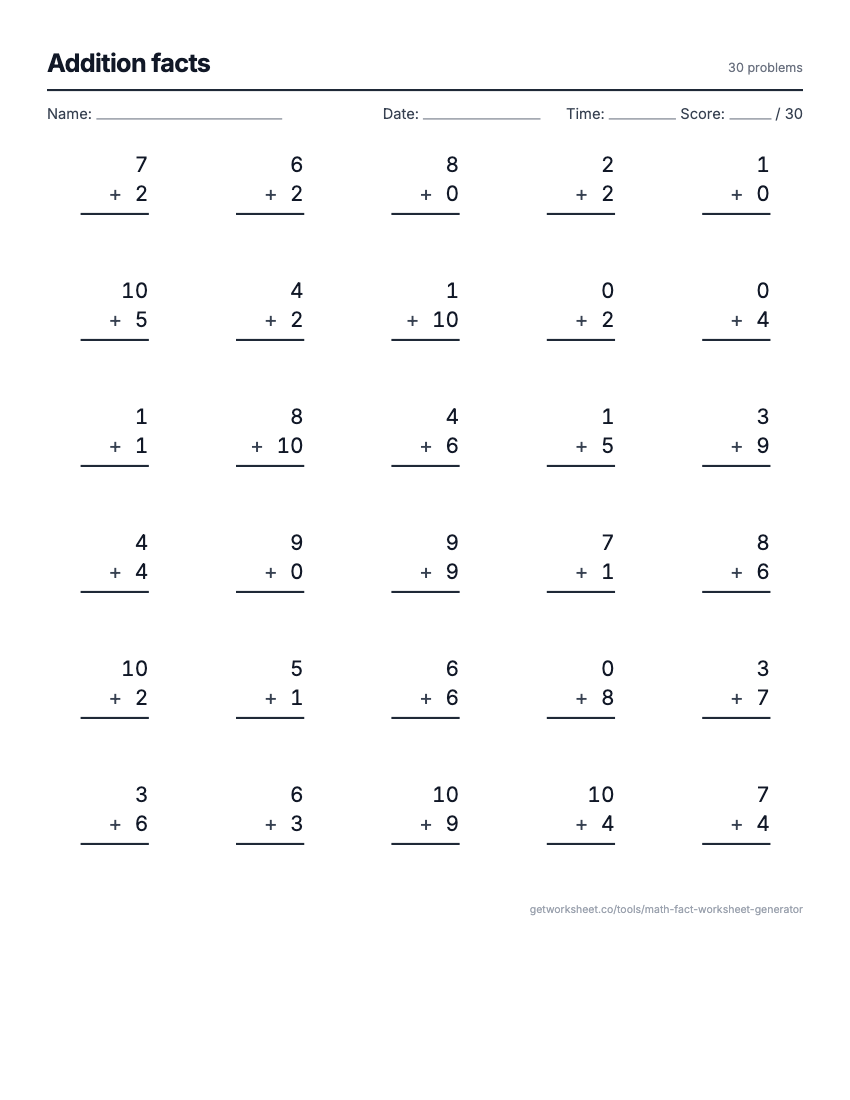 Math fact worksheet generatorAddition to division drills with an answer key. Free to print.
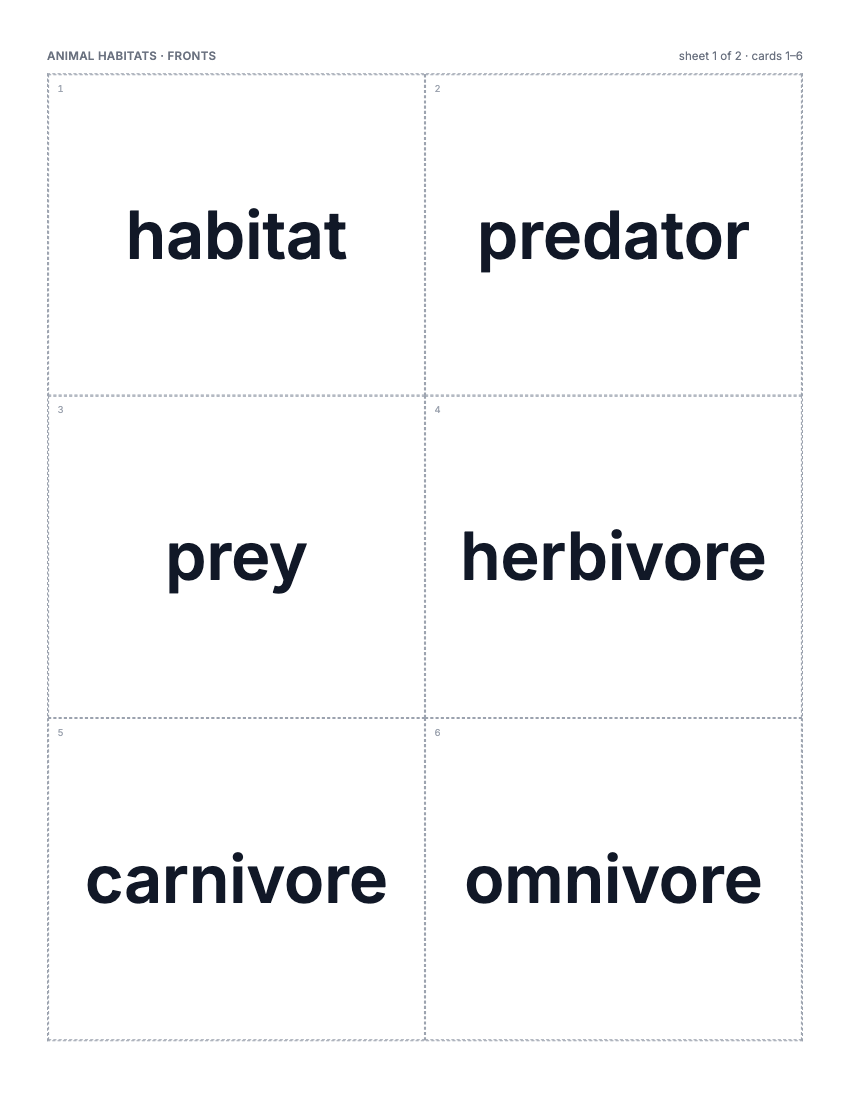 Flashcard makerVocabulary, math fact or sight word cards, 2-8 a page, two-sided or fold-over. Free to print.
AI worksheet generator
Need a different subtraction with regrouping worksheet?
Generate a custom subtraction with regrouping worksheet: pick the grade, question types and count, and print it in about 20 seconds. Free accounts get 1 generation a week.
Teaching tips and common mistakes
How to use these worksheets
Print at 100% on A4 or US Letter. Base-ten blocks are the best partner for the first regrouping sheet: physically swapping a ten-rod for ten unit cubes makes the crossing-out meaningful.
- No regrouping first. Even confident children benefit from twenty quick sums that fix the habit: ones column first, one digit per box.
- Regrouping from the tens. Talk through the example: “2 take away 7 will not work. Open a ten: 6 tens becomes 5 tens, 2 ones becomes 12 ones. Now 12 - 7 = 5 and 5 - 4 = 1, so 62 - 47 = 15.” The child writes the new digits in the dashed boxes above the sum.
- Regroup or not? The child compares the ones digits before writing anything and says “regroup” or “no regroup”. Ten sums of each; the challenge box asks them to mark the ones that needed it.
- 3-digit sums. For 635 - 278: 5 - 8 needs a regroup (15 - 8 = 7); now 2 tens - 7 tens needs another (12 - 7 = 5); 5 hundreds - 2 hundreds = 3. Answer 357.
- Across zeros. Two methods are given in the hint box. Regroup twice: 400 becomes 3 hundreds, 9 tens and 10 ones. Or count up from 137 to 140 (3), then to 400 (260), total 263. Let the child pick one and stick with it for the whole sheet.
- Word problems. Ask “is something being taken away, or are two amounts being compared?” Both are subtraction. Write the column sum in the working box, answer with a unit.
Common mistakes to watch for
- Subtracting the small digit from the big one whichever is on top (so 62 - 47 becomes 25). This is the classic error and the reason the regrouping sheet says every sum needs a regroup: the child cannot get away with it.
- Forgetting to reduce the tens after regrouping. The child adds 10 to the ones but still uses 6 tens. The dashed box above the tens is for writing the new smaller digit.
- Regrouping when it is not needed. Once children learn to borrow they sometimes do it everywhere. The mixed sheet exists to catch this.
- Zeros. “I can’t borrow from 0” ends the sum for many children. The 39 tens and 10 ones picture in the hint box is worth drawing with blocks once.
Answer key
Page 2 of each PDF shows every answer in colour under its sum. Checking by adding back (answer + bottom number = top number) is a habit worth teaching on the first sheet.
Frequently asked questions
What is the difference between regrouping and borrowing?
Nothing in the method; the words describe it differently. “Borrowing” is older and slightly misleading (nothing is given back). “Regrouping” says what happens: one ten is regrouped as ten ones. Use whichever word the child’s school uses, but explain it as an exchange either way.
What grade is subtraction with regrouping taught in?
Second grade for 2-digit numbers, late second and third grade for 3-digit numbers and for subtracting across zeros. The order of the six sheets follows that progression.
Why is subtracting across zeros so hard?
Because the regroup has to travel two columns. To take a ten from 400 you first have to break a hundred into ten tens and then one of those tens into ten ones. Children who see 400 as “39 tens and 10 ones” (as in the hint box) find it much easier, and counting up from the smaller number avoids the problem completely.
How can my child check a subtraction?
Add the answer to the number that was taken away; it should give the top number. 62 - 47 = 15 because 15 + 47 = 62. Every answer key can be checked this way.
More practice
Children who are still learning facts within 20 should start with the subtraction within 10 and 20 worksheets. Regrouping in subtraction is easier after addition with regrouping, and both rely on the tens-and-ones understanding built by the place value worksheets.
Free library
Related collections
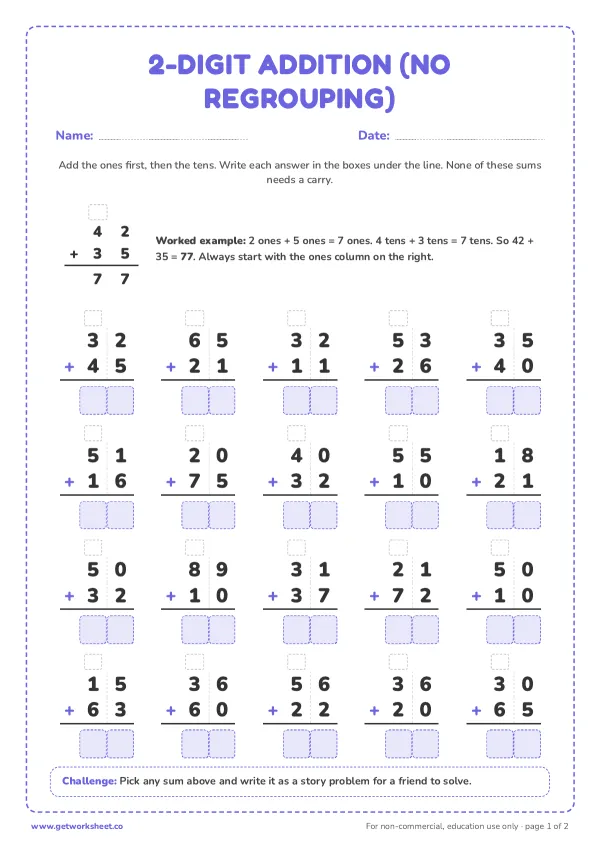
Free addition with regrouping worksheets
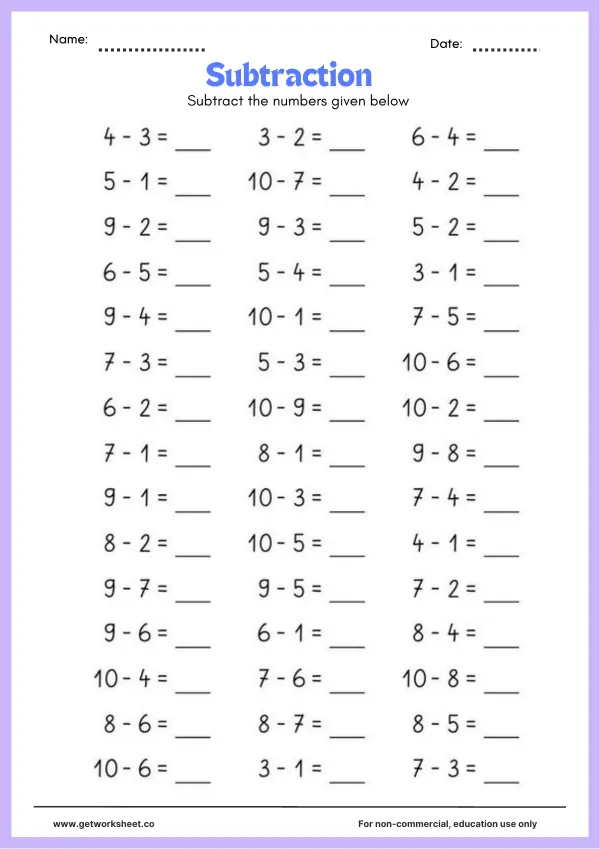
Free subtraction worksheets (within 10 and 20)
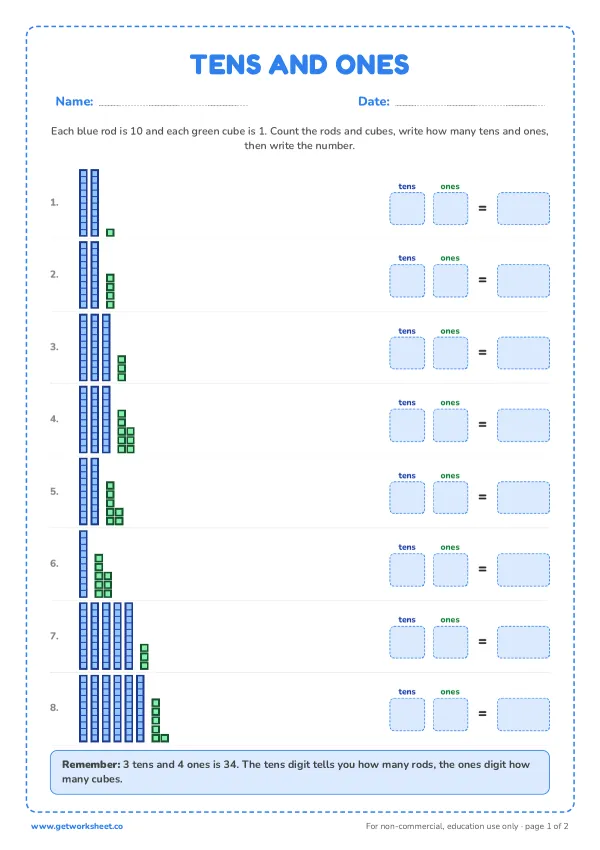
Free place value worksheets
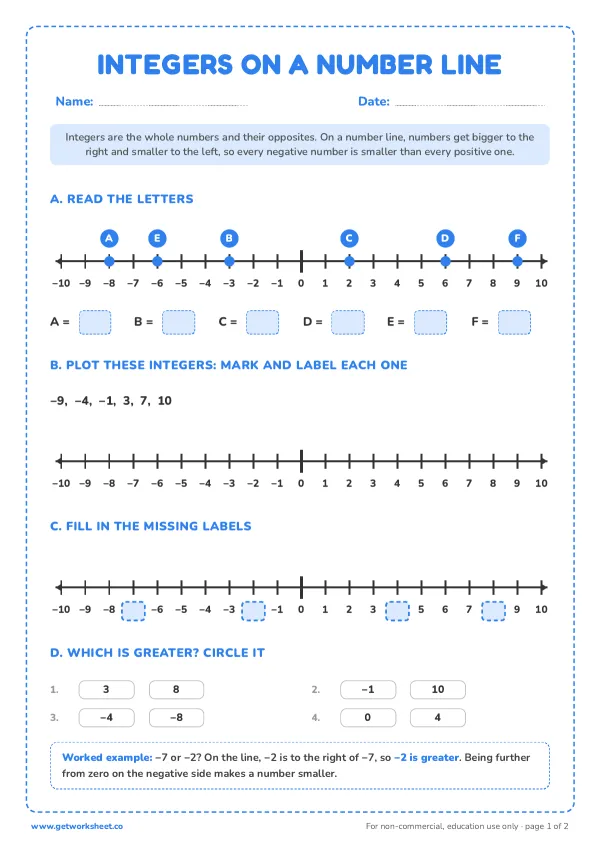
Free integers worksheets
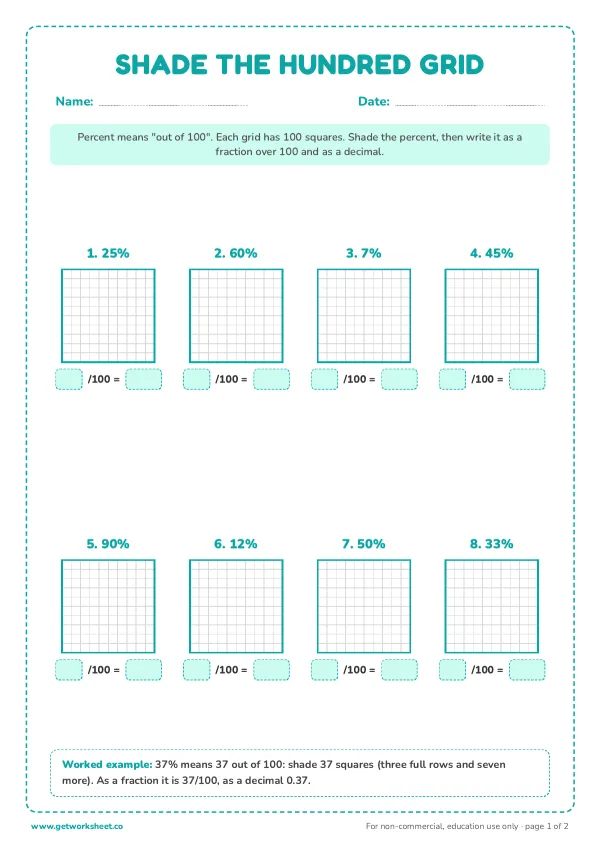
Free percent worksheets
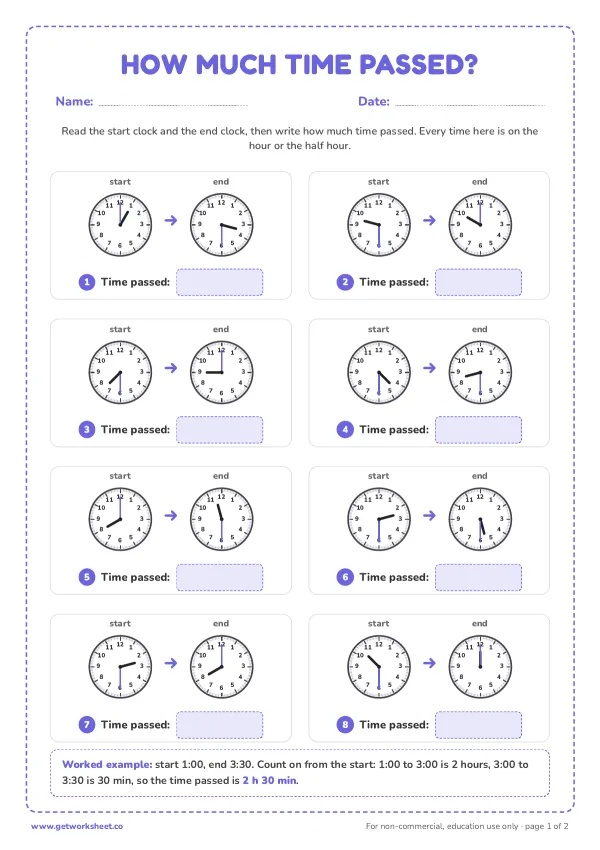
Free elapsed time worksheets
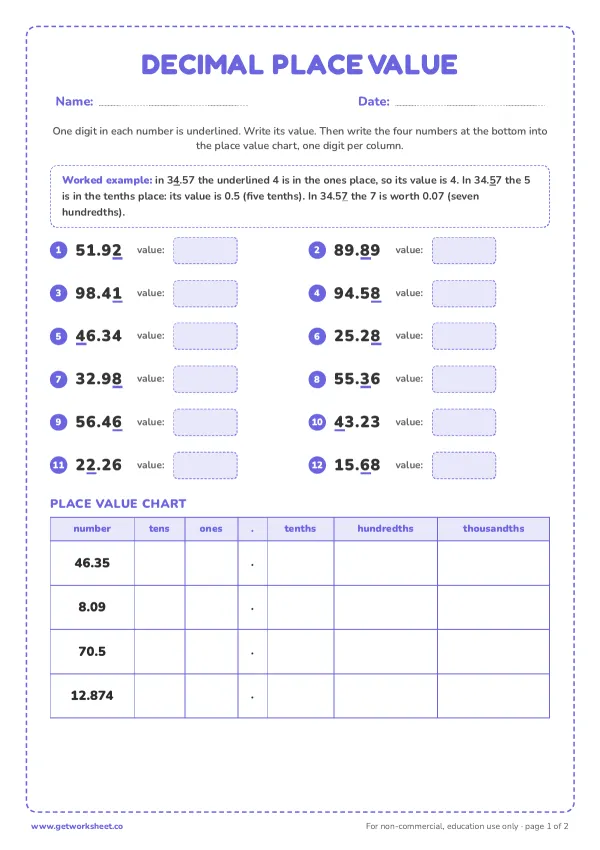
Free decimals worksheets
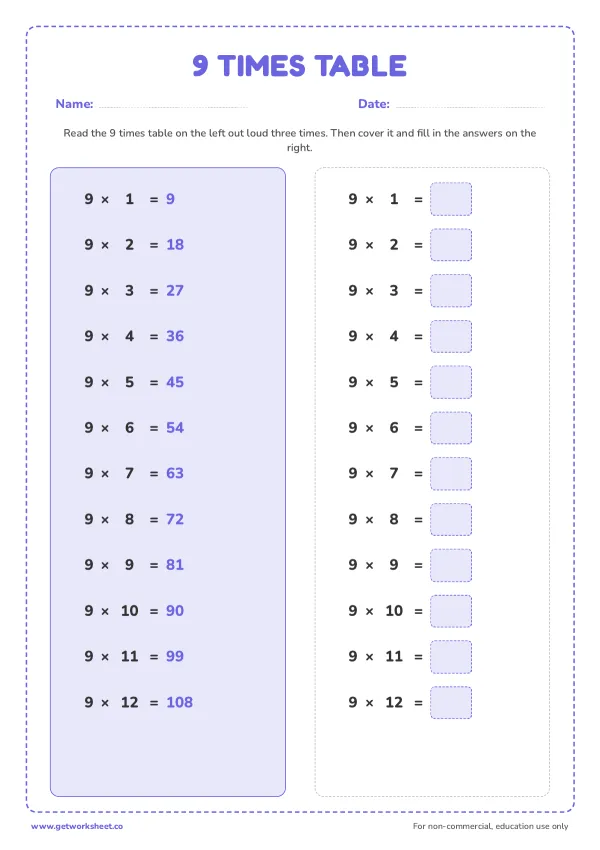
Free 9 times table worksheets
More worksheets
- Free 12 times table worksheets
- Free 11 times table worksheets
- Free 8 times table worksheets
- Free 6 times table worksheets
- Free multiplying and dividing fractions worksheets
- Free square numbers worksheets
- Free 10 times table worksheets
- Free 7 times table worksheets
- Free abacus worksheets
- Free pattern blocks worksheets
- Free geoboard worksheets
- Free base ten blocks worksheets