Free printable maker
Addition and Subtraction Worksheet Generator
Column addition and subtraction with the regrouping you ask for: carrying or borrowing on every problem, on none, or mixed. One to four digits per number, three addends, place-value boxes, 12 to 40 problems and an answer key. Free, no account.
20 of 20 problems regroup. Prints the worksheet, then the answer key on its own page. Free, no account.
2-digit addition with regrouping
2-digit + 2-digit · with regrouping- 66+55
- 21+95
- 68+74
- 82+78
- 73+70
- 87+24
- 26+57
- 73+27
- 46+64
- 22+18
- 89+93
- 49+64
- 41+68
- 12+95
- 87+75
- 56+50
- 72+39
- 24+99
- 17+78
- 55+46
2-digit addition with regrouping · Answer key
2-digit + 2-digit · with regrouping- 66+55121
- 21+95116
- 68+74142
- 82+78160
- 73+70143
- 87+24111
- 26+5783
- 73+27100
- 46+64110
- 22+1840
- 89+93182
- 49+64113
- 41+68109
- 12+95107
- 87+75162
- 56+50106
- 72+39111
- 24+99123
- 17+7895
- 55+46101
getworksheet.co/tools/addition-subtraction-worksheet-generator
Teaching the column method
Why controlling the regrouping matters
Most addition and subtraction worksheets pick their numbers at random, which means a sheet labelled “2-digit addition” is a jumble of problems that carry and problems that do not. That is fine for review but wrong for teaching. When a child is first meeting carrying, they need a sheet where every problem carries, so the new step is practised twenty times, not seven. When they are learning to line up the digits, they need a sheet with no carrying at all, so the only thing to think about is place value.
This generator builds the numbers so the regrouping is exactly what you asked for. “Every problem” forces at least one column to ten or more (for addition) or a bottom digit larger than the top one (for subtraction). “None” keeps every column under ten and every bottom digit at or below the top. “Mixed” is the sheet for the week after: children have to look at each problem and decide, which is what stops the habit of regrouping everything or nothing.
Subtraction across zeros (405 − 127) appears naturally in the 3- and 4-digit sheets with regrouping on; if you want to introduce it deliberately, start with 3-digit minus 2-digit so there is only one zero to borrow through.
Place-value boxes give each digit its own cell, which is the single most effective support for children who drift columns or write the carried digit in the wrong place. The carrying row adds a strip of small boxes above the problem for the carried ones, and the same row serves for the crossed-out digits in borrowing. Both are worth switching off as soon as the child can keep columns straight without them.
Three addends turn 2-digit addition into a genuinely harder task: a column can total more than 19, so the carry can be a 2. Keep that for after two-addend carrying is solid. For mixed sheets, “Mixed” operation plus “Mixed” regrouping is the fullest review; the horizontal layout suits mental-maths practice with 1- and 2-digit numbers, where the point is a strategy rather than the column algorithm.
For ready-made sheets, the addition worksheets and subtraction worksheets collections are printable now, and the doubles addition set covers the near-doubles strategy. The math fact generator handles single-digit fact drills, and the word problem generator puts the same operations into stories.
How it works
How to make an addition and subtraction worksheet
Three steps from an operation and digit count to a column worksheet with its answer key.
- 1
Choose the operation and digits
Addition, subtraction or mixed. Pick 1 to 4 digits for each number separately, and add a third addend if you want.
- 2
Set the regrouping
Every problem, none, or mixed. Then the count (12 to 40), columns, vertical or horizontal layout, place-value boxes and the carrying row.
- 3
Print
Letter or A4. The worksheet prints first and the answer key follows on its own page. Shuffle for a fresh set with the same settings.
Good to know
Questions, answered
Yes. Set the digits and regrouping, print the worksheet and its answer key. No account, no watermark, no limit on sheets. Problems are generated in your browser.
The numbers are built column by column, not filtered afterwards. "Every problem" guarantees at least one carry (or borrow) in each problem; "None" keeps every column total under ten, so no carrying or borrowing is ever needed; "Mixed" decides per problem, which stops children regrouping by habit. The builder shows how many problems on the sheet regroup.
Yes. Choose 1 to 4 digits for each number separately, for example 3-digit plus 2-digit. For subtraction the longer number always goes on top, and the answer is never negative or zero. Tick "Three addends" for addition with a third number.
Vertical column method with tabular digits lined up by place value, optional place-value boxes (one cell per digit, including the answer row), and an optional row of small boxes above the problem for carried or borrowed digits. Or the horizontal "a + b = __" form. 12, 20, 30 or 40 problems in 3 to 5 columns; number the problems and add a time and score line if you want.
Yes to both. The answer key prints after the worksheet with the same problems in the same positions and the answers filled in. Problems come from a seed, so the same settings give the same sheet until you press Shuffle. Print on US Letter or A4, or save as a PDF.
More free printable makers
More sheets you can make right now
Each of these builds the printable in your browser: no account, no AI, no weekly limit, an answer key where one applies.
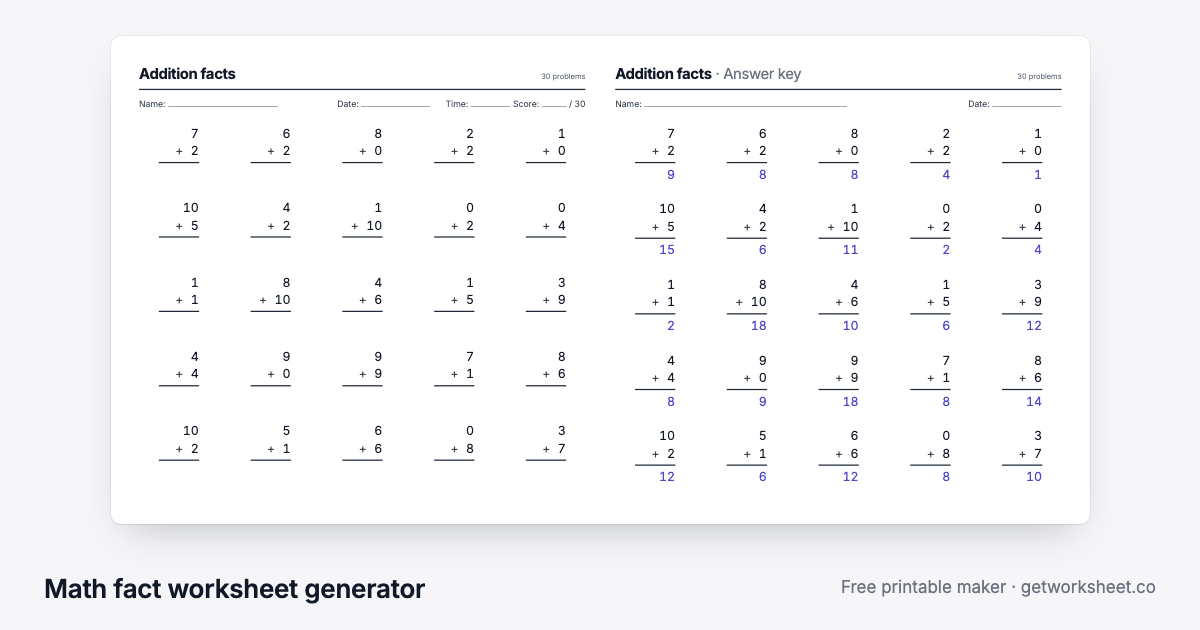 Math fact worksheet generatorAddition to division drills with an answer key. Free to print.
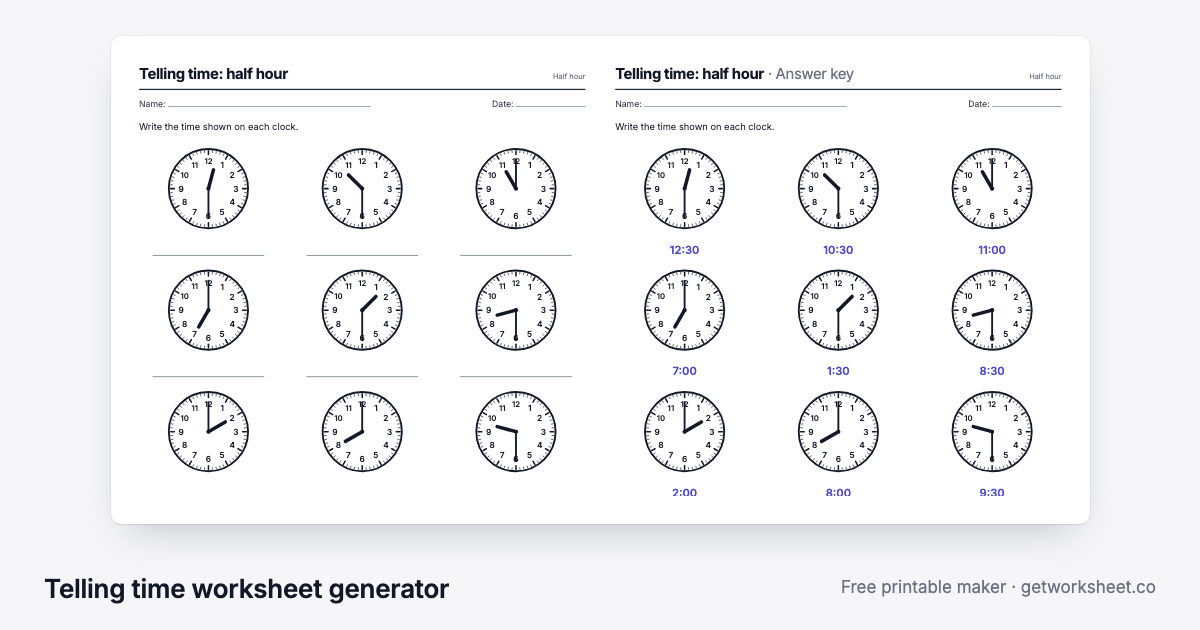 Telling time worksheet generatorAnalogue clocks to read, draw, match or add time to, with answer key. Free to print.
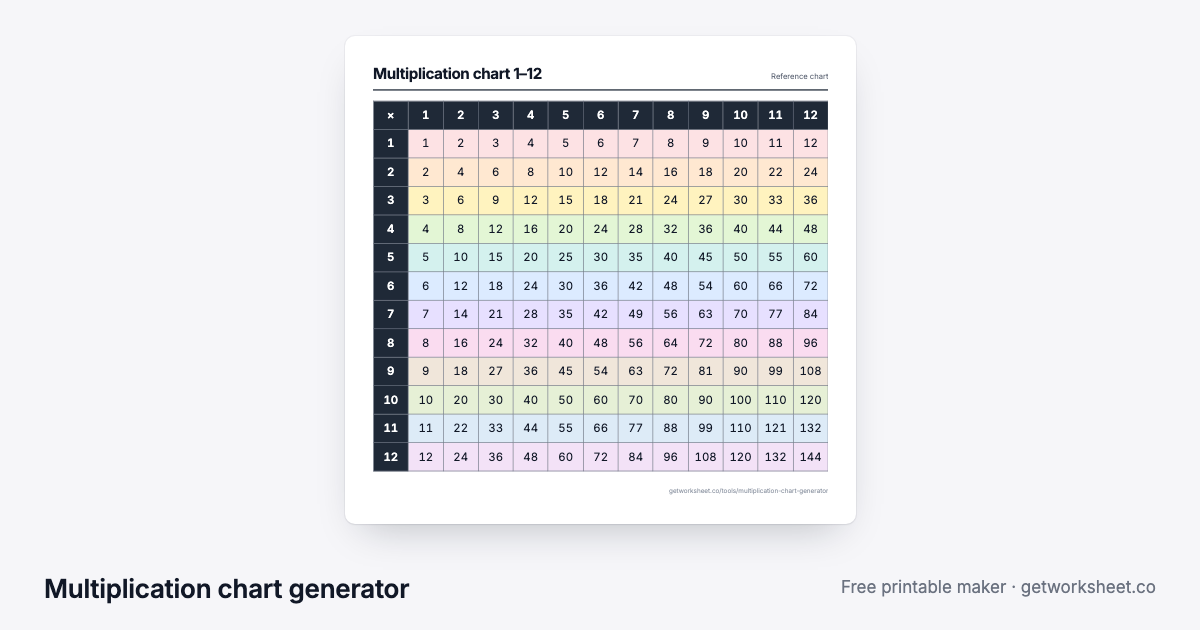 Multiplication chart generatorCharts to 15, full, blank or coloured, and times table tests with key. Free to print.
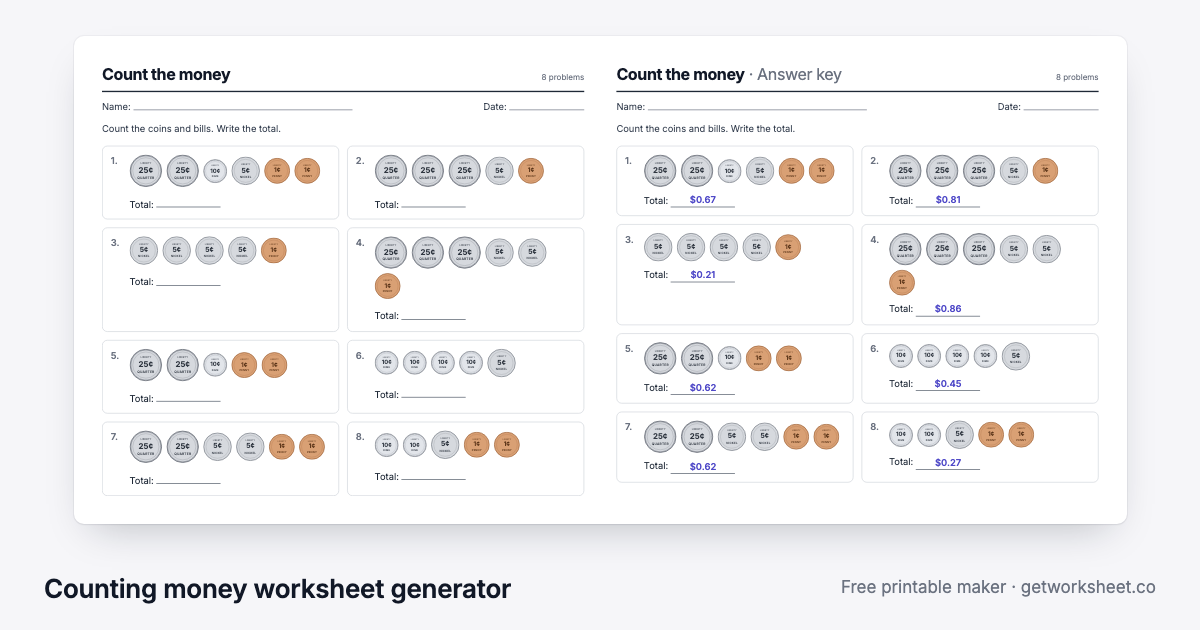 Counting money worksheet generatorCount US coins, make change, compare groups, write amounts. Answer key. Free to print.
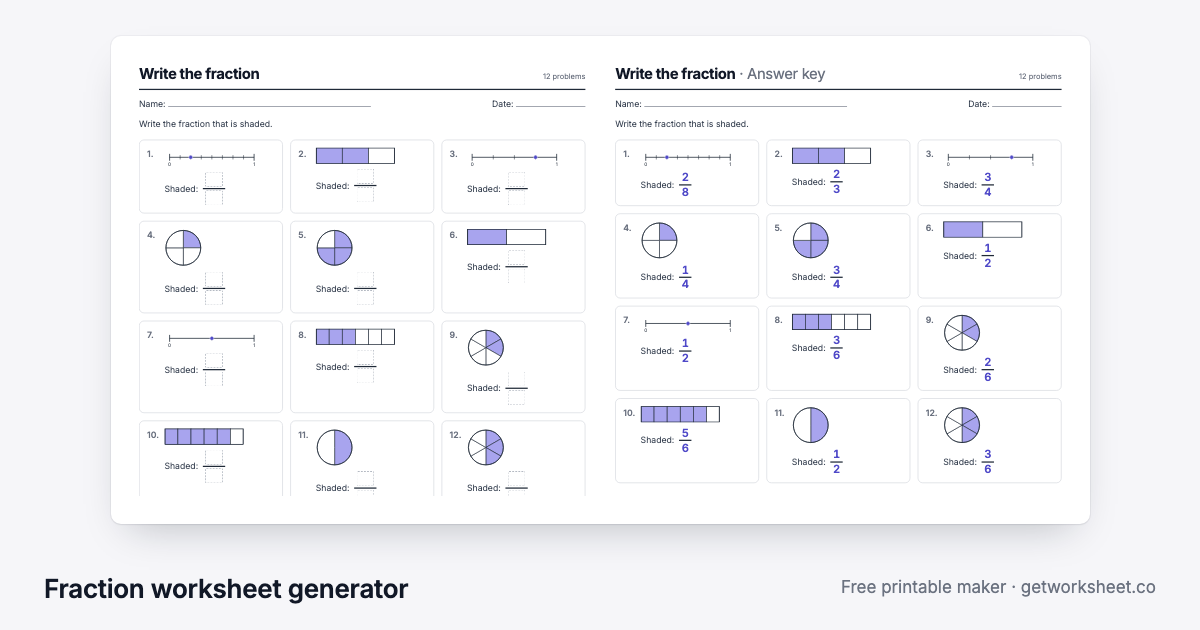 Fraction worksheet generatorVisual pie, bar and number-line models; equivalent, compare, add, subtract. Free to print.
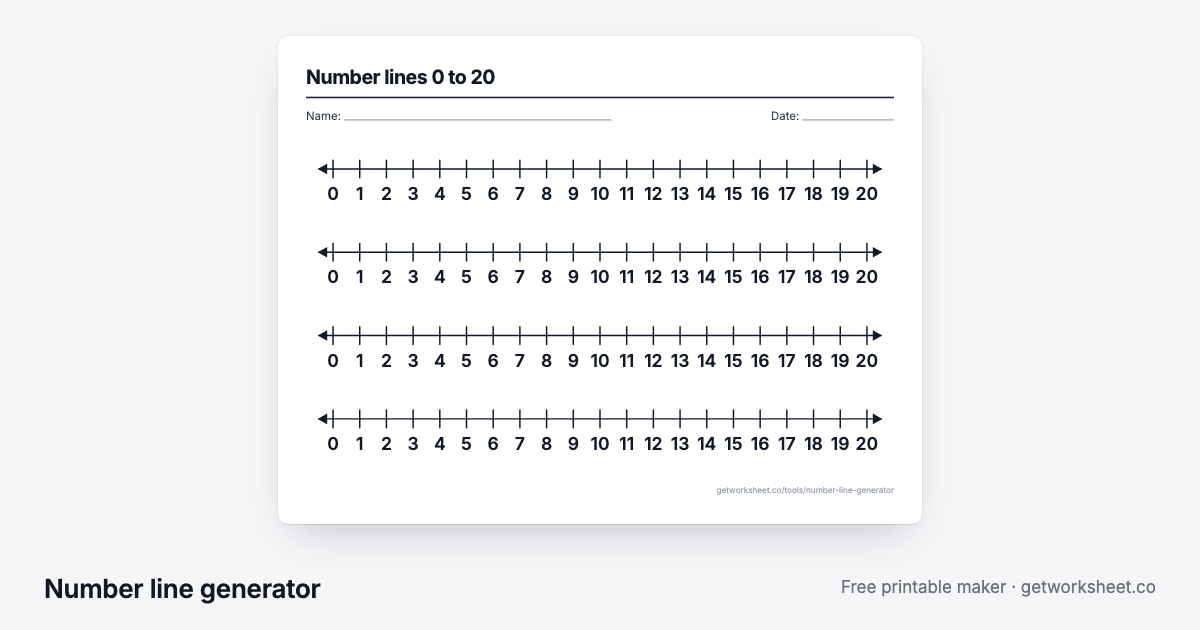 Number line generatorAny range and step, fractions and decimals, blank or missing numbers with a key. Free to print.
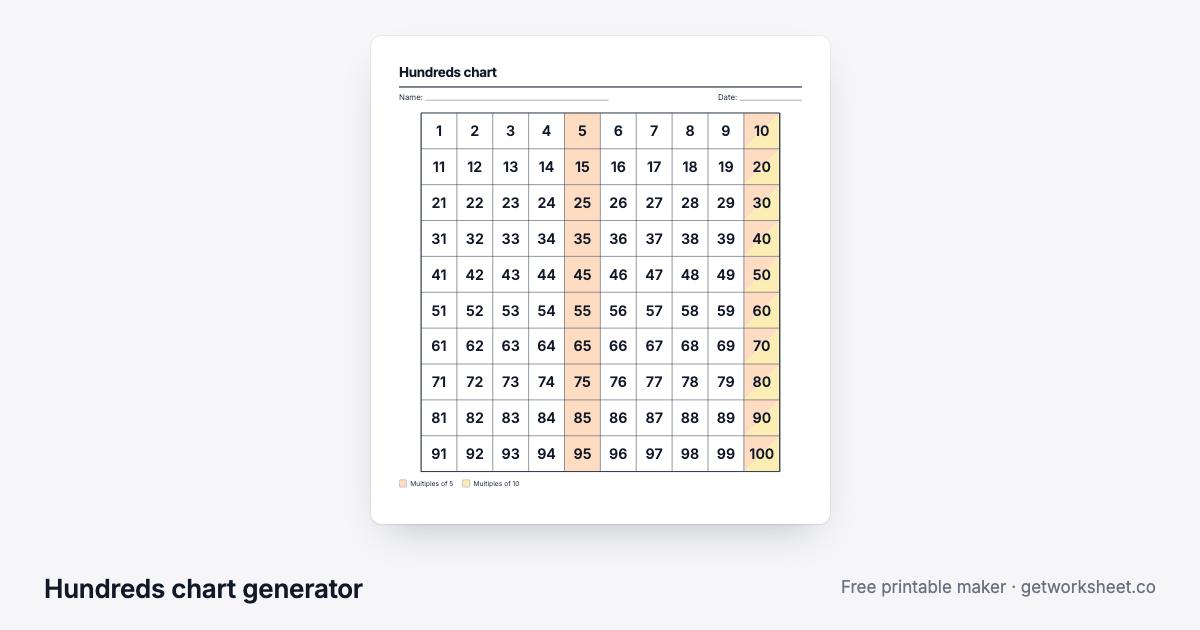 Hundreds chart generator1-100, 1-120 or 0-99, blank or missing numbers, skip-count colours, odd/even. Free to print.
- Worksheet generatorCustom worksheets for any topic, grade and question type.
- Lesson plan generatorStandards-aligned plans with objectives, activities and assessment.