Maths · Grades 4–6
Free decimal division worksheets
Five printable decimal division worksheets for grades 4 to 6, 52 problems in all: long division by tenths, dividing by 10, 100 and 1000, by decimals 0.2 to 0.6, and by whole numbers.
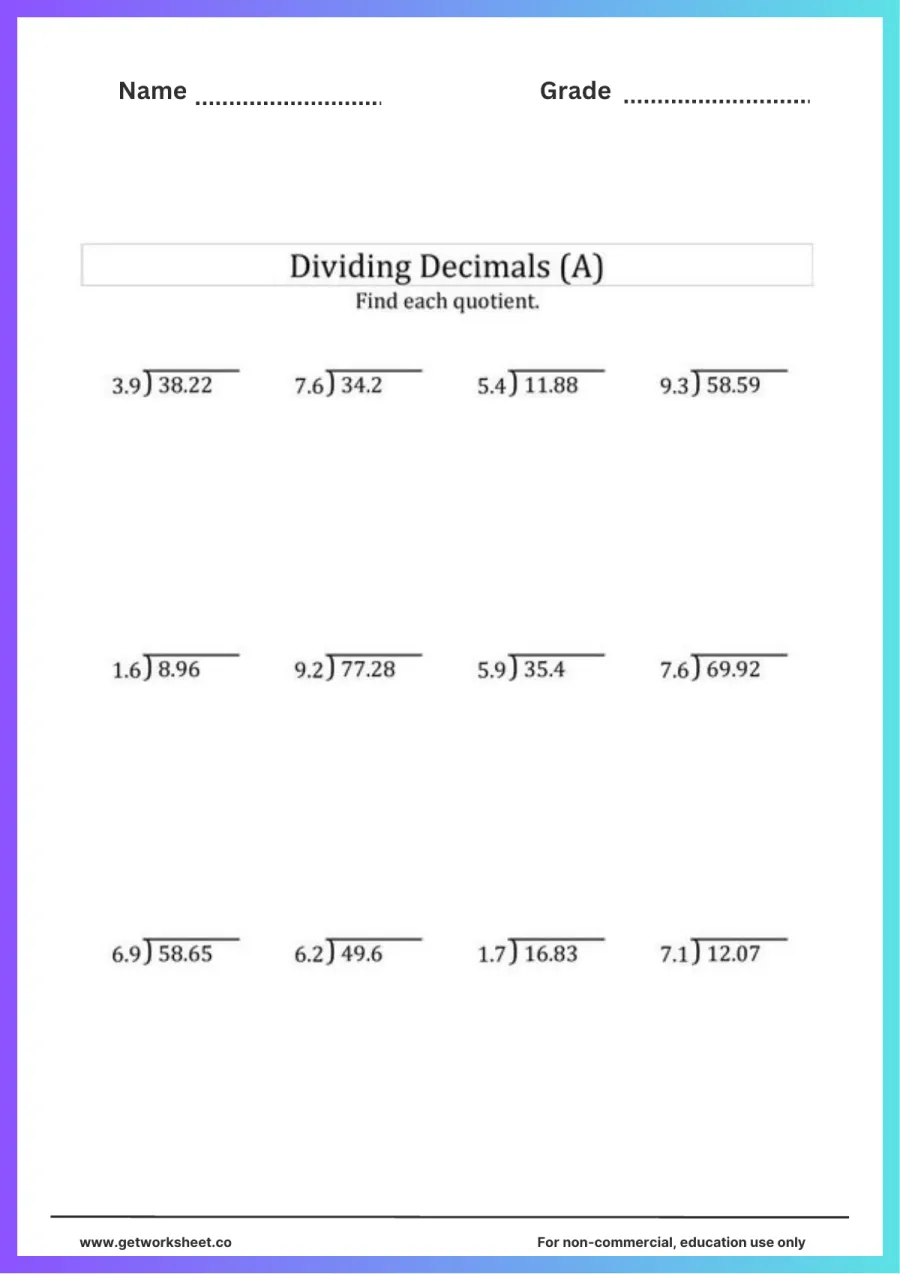
Long division: decimals divided by tenths, 12 problems
Find each quotient with long division, dividing hundredths such as 38.22 by tenths such as 3.9; 12 problems with space to work.
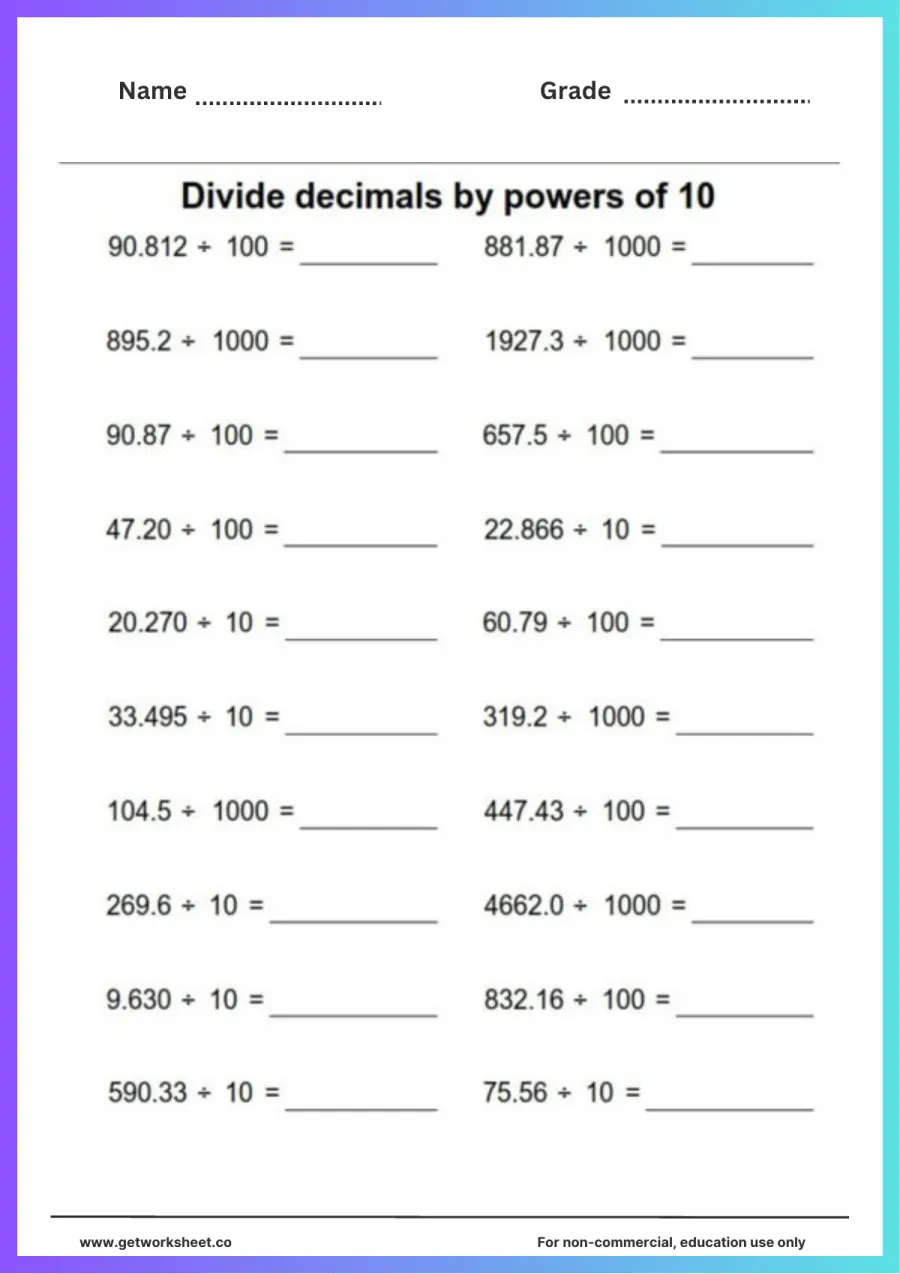
Divide decimals by 10, 100 and 1000: 20 problems
Divide decimals such as 90.812, 1927.3 and 9.630 by 10, 100 or 1000 and write the answer on the line; 20 horizontal problems.
Whole set
All 5 sheets in one PDF
Instant and ad-free. No account needed.
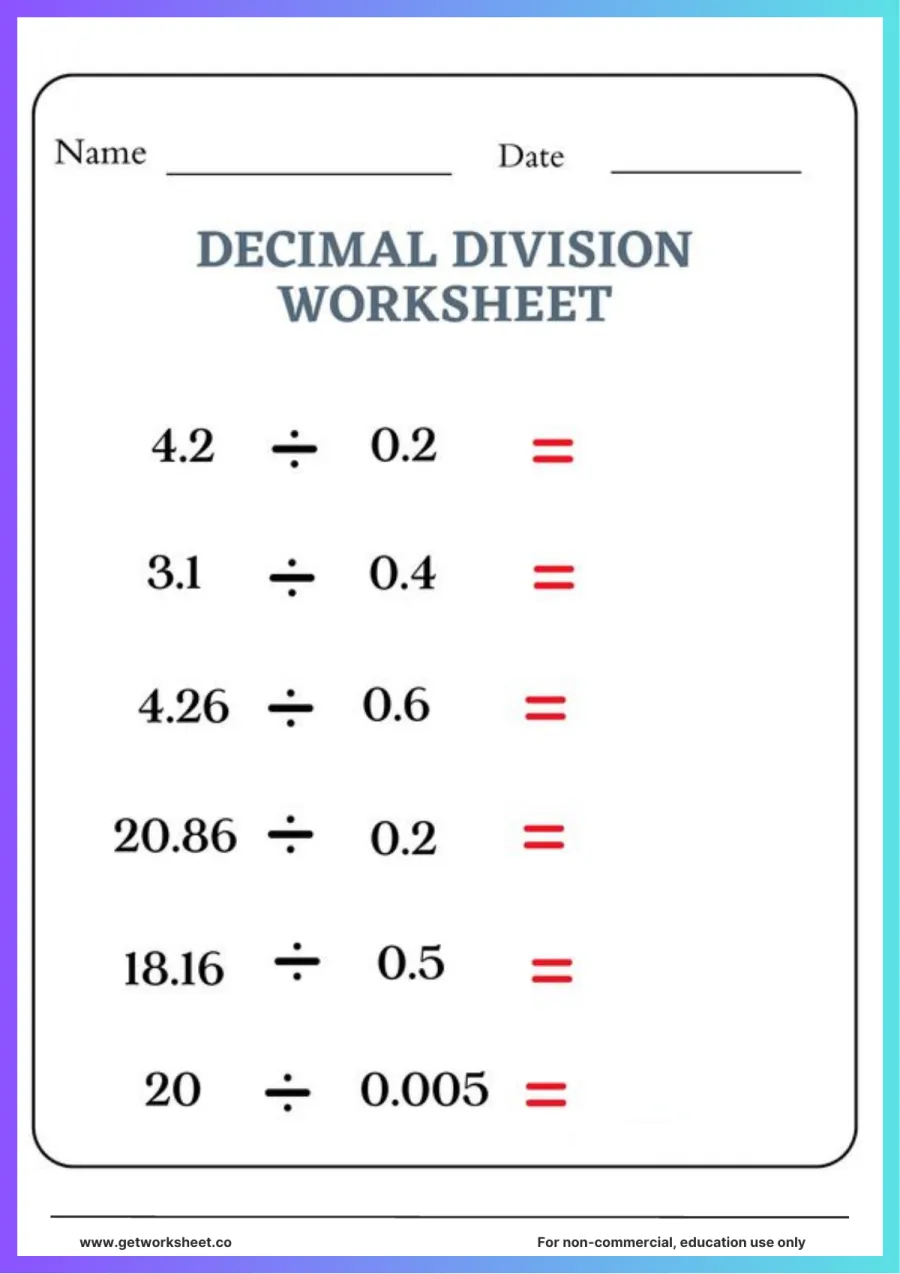
Divide decimals by decimals: 6 problems, divisors 0.2 to 0.6
Divide 4.2, 3.1, 4.26, 20.86 and 18.16 by 0.2 to 0.6, then 20 by 0.005; 6 large-print horizontal problems.
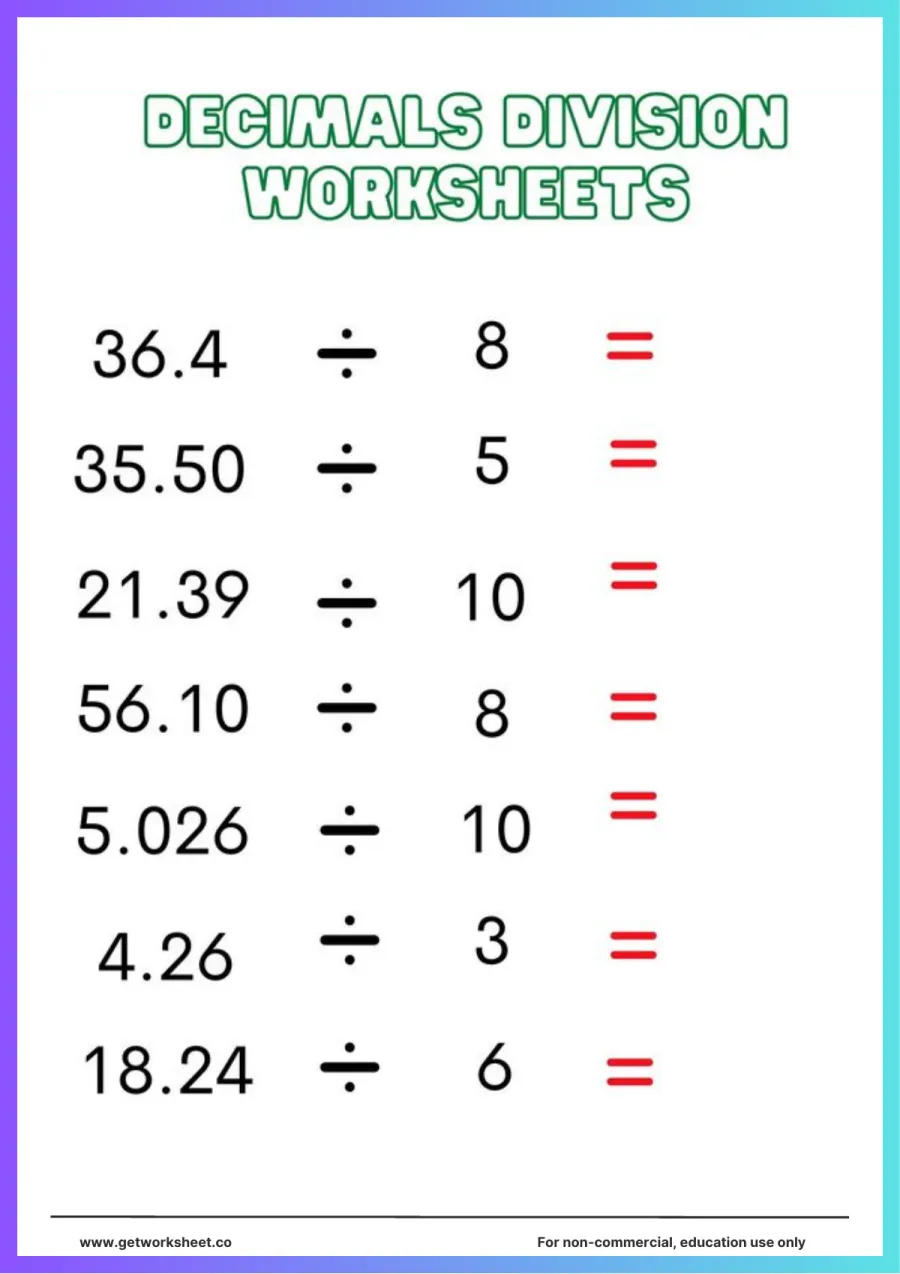
Divide decimals by whole numbers 3 to 10: 7 problems
Divide decimals such as 36.4, 35.50, 5.026 and 18.24 by single-digit whole numbers or 10; 7 large-print horizontal problems.
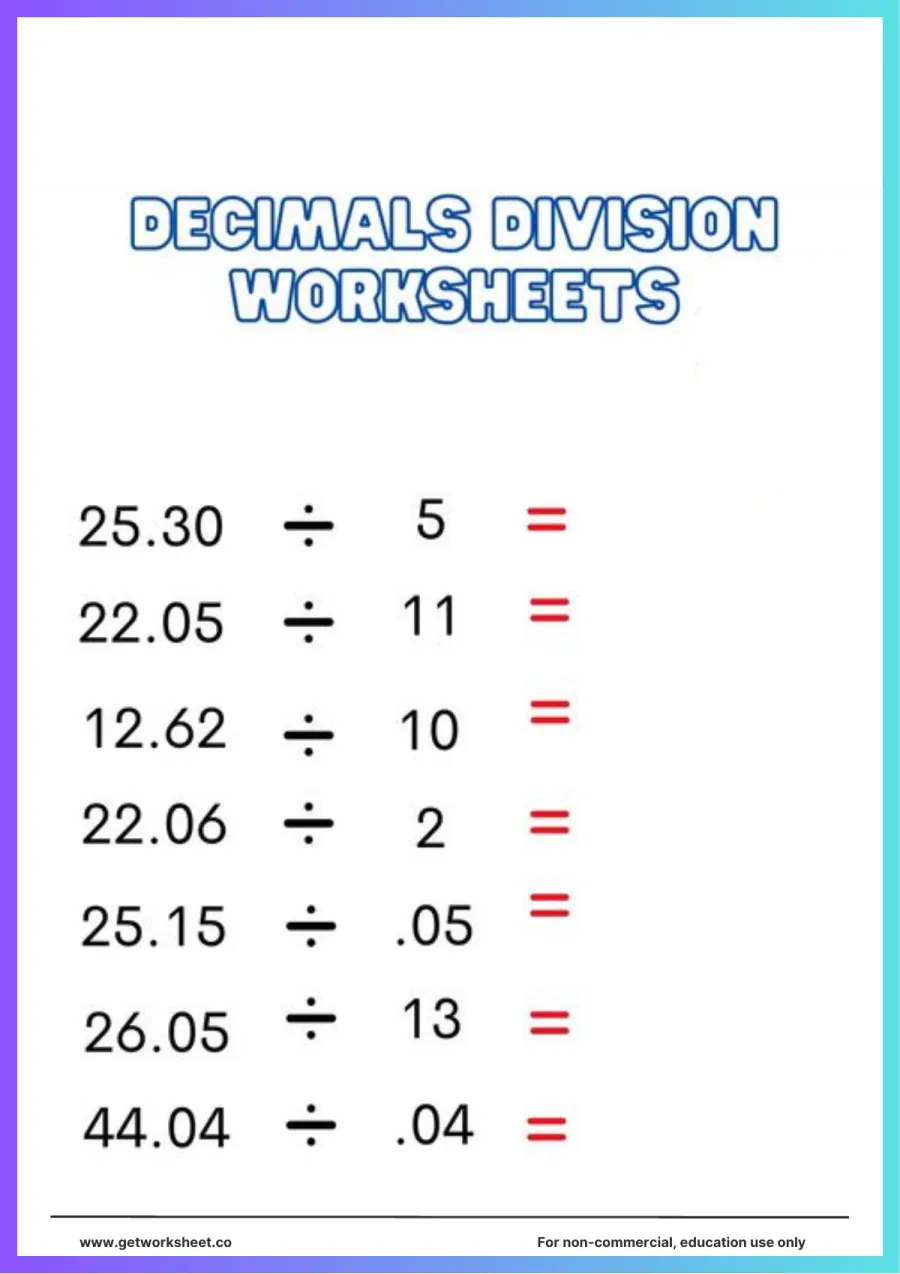
Divide decimals by whole numbers and by .05 or .04 (7)
Divide 25.30, 22.05, 12.62, 22.06 and 26.05 by 2 to 13, plus 25.15 by .05 and 44.04 by .04; 7 large-print horizontal problems.
AI worksheet generator
Make a worksheet like this for your class
The 5 sheets above are fixed. The generator writes a new decimal division worksheet for your grade, with the question types and count you choose, in about 20 seconds. Pick a grade to start:
What you get
- A fresh set of questions on decimal division, not a copy of the sheets above
- Multiple choice, fill in the blanks, true or false, open ended
- Answer key and print-ready PDF with Pro
Free account, 1 worksheets a week. No card.
These five decimal division worksheets cover the main forms the skill takes in grades 4 to 6, 52 problems in all. Sheet one is long division: 12 problems dividing hundredths such as 38.22 by tenths such as 3.9, with space to work under each. Sheet two is place value: 20 horizontal problems dividing decimals such as 90.812 and 1927.3 by 10, 100 or 1000. Sheet three has 6 large-print problems dividing 4.2, 4.26, 20.86 and 18.16 by decimals from 0.2 to 0.6, then 20 by 0.005. Sheet four has 7 large-print problems dividing decimals such as 36.4 and 5.026 by single-digit whole numbers or 10. Sheet five has 7 more: 25.30, 22.05 and 26.05 divided by 2 to 13, plus 25.15 by .05 and 44.04 by .04.
The step most children miss is shifting the decimal point in the divisor and the dividend by the same amount; sheet two isolates that shift and sheets one, three and five apply it.
What Students Will Practice
- Long division with a decimal divisor, rewriting 38.22 ÷ 3.9 as 382.2 ÷ 39
- Dividing by 10, 100 and 1000 by moving the decimal point one, two or three places left
- Dividing by a decimal smaller than 1 (0.2 to 0.6, 0.005, .05, .04) and seeing that the quotient is larger than the dividend
- Dividing a decimal by a whole number from 2 to 13 and placing the decimal point directly above its position in the dividend
If long division is still slow, start with sheets two and four.
Free printable makers
Make your own decimal division sheets
Type your own words or numbers and print in about 30 seconds. No account, no AI, answer key where it applies.
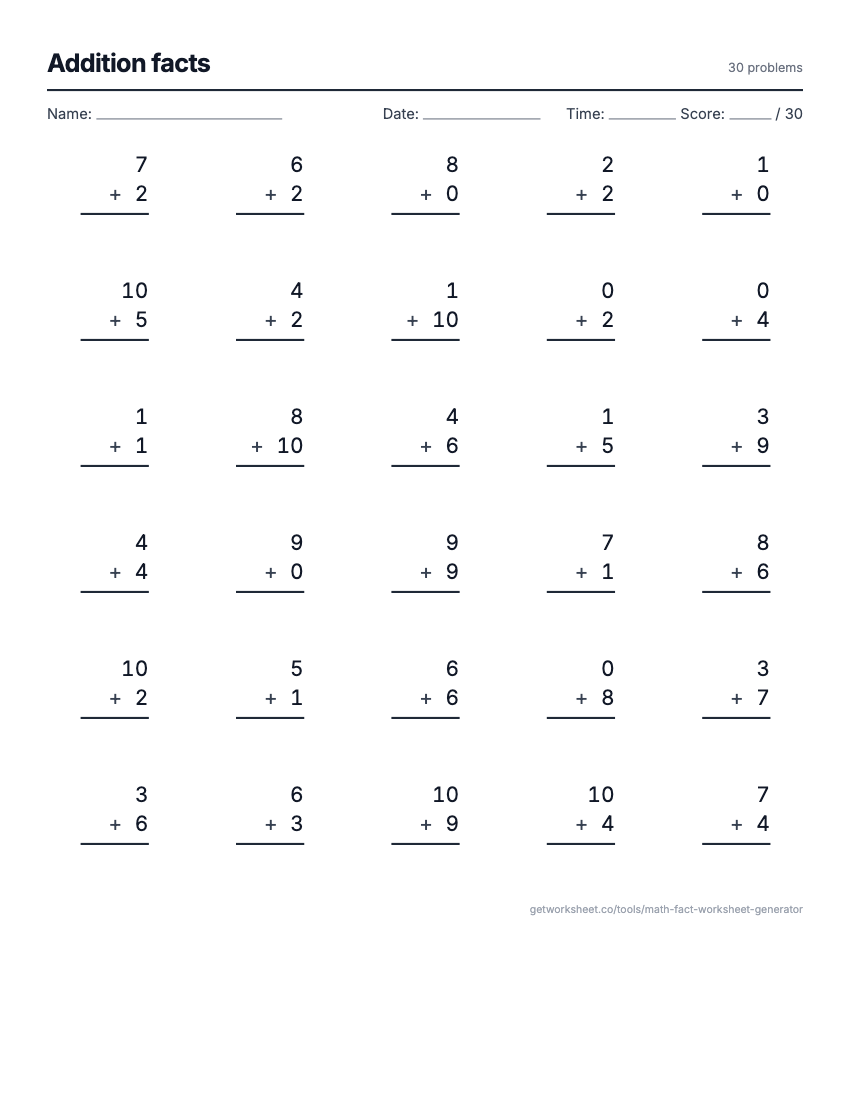 Math fact worksheet generatorAddition to division drills with an answer key. Free to print.
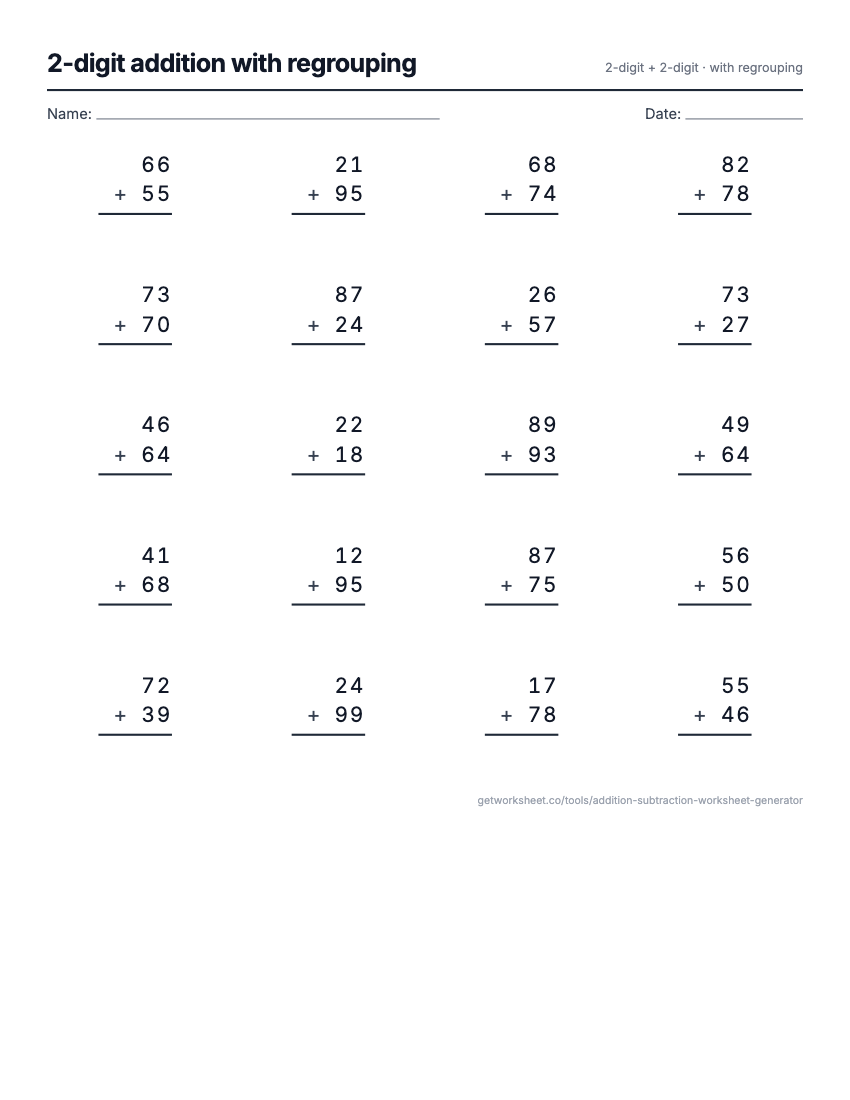 Addition and subtraction generatorColumn add and subtract, regrouping you control, boxes and key. Free to print.
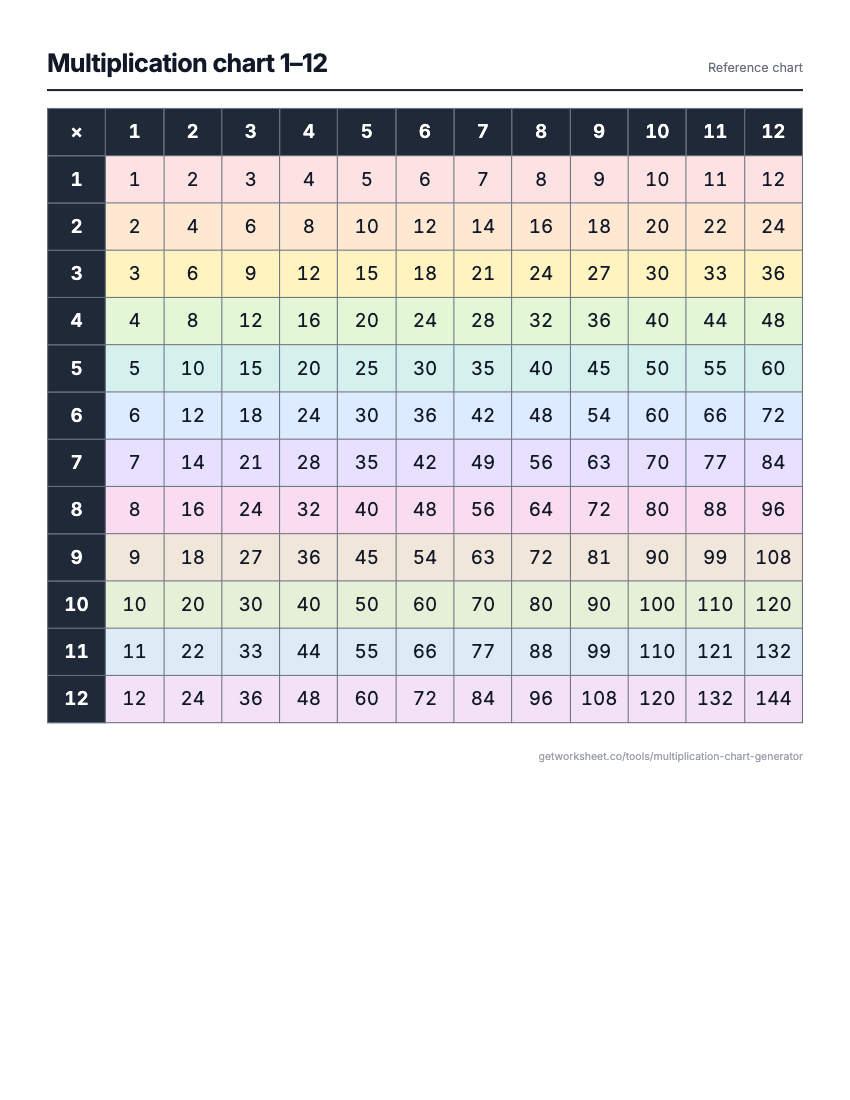 Multiplication chart generatorCharts to 15, full, blank or coloured, and times table tests with key. Free to print.
AI worksheet generator
Need a different decimal division worksheet?
Generate a custom decimal division worksheet: pick the grade, question types and count, and print it in about 20 seconds. Free accounts get 1 generation a week.
How to use these worksheets
Print at 100% on A4 or US Letter so the long division brackets on sheet one keep their working space and the decimal points stay visible. No sheet carries an answer key, so work a copy yourself or have students check with multiplication: quotient times divisor should return the dividend. Graph paper beside the sheet helps keep digits in columns.
- Divide by 10, 100 and 1000, 20 problems. Start here even with older students. It isolates the decimal shift with no division to do: 90.812 divided by 100 just moves the point two places left. Ask for the rule in words.
- Divide by whole numbers 3 to 10, 7 problems. The natural second step. The decimal point in the quotient sits directly above its place in the dividend, so have students write that point first, before dividing any digit.
- Long division by tenths, 12 problems. The core sheet. For 38.22 divided by 3.9, move the point one place in both numbers to get 382.2 divided by 39, then divide as usual. Have students write the rewritten problem first.
- Divide by decimals 0.2 to 0.6, 6 problems. Only six problems, so use it for a discussion. Dividing 4.2 by 0.6 gives an answer larger than 4.2, and 20 divided by 0.005 is dramatic. Ask why before you ask how much.
- Mixed divisors plus .05 and .04, 7 problems. Use this last as a check. Divisors run from 2 to 13 and then jump to .05 and .04, so students decide for themselves whether a decimal shift is needed.
Common mistakes to watch for
- Shifting only one number. Turning 3.9 into 39 without turning 38.22 into 382.2 changes the answer by a factor of ten. Both numbers move the same number of places, every time.
- Misplacing the point in the quotient. Students divide correctly and then guess where the point goes. Write it above the dividend's point before dividing and the digits land in the right places.
- Expecting division to make numbers smaller. With divisors of 0.2, 0.005 and .04 the quotient grows. If a student writes an answer smaller than the dividend on those problems, the decimal shift went the wrong way.
- Stopping at a remainder. In decimal division you add zeros after the point and keep going. A remainder means the work is unfinished, not that the answer is messy.
Frequently asked questions
What grade is decimal division for?
Grades 4 to 6. Fourth grade can manage dividing by 10, 100 and 1000 and dividing a decimal by a whole number. Dividing by a decimal, including the long division sheet, is usually fifth and sixth grade work.
Are answer keys included?
No. The five sheets give 52 problems with working space but no key. Students can check each answer by multiplying the quotient by the divisor and comparing it to the dividend.
Which sheet should we start with?
Start with the 20 problems dividing by 10, 100 and 1000, then the 7 problems with whole number divisors. Move to the long division sheet once the decimal shift is automatic.
Should students use a calculator?
Not on these. The point of the set is placing the decimal point by hand. A calculator is useful afterwards, for checking a page of finished work quickly.
Can I print these for a class?
Yes. Print a class set at no cost for your own students, or one sheet as homework after a lesson.
More practice
Decimal division rests on fluent multiplication, so if the long division is slow, go back to multiplication worksheets for the facts and multi-digit multiplication worksheets for the column method. Factor work pairs well with dividing, so try the prime number worksheets. When your students are ready for algebra, move on to two step equations worksheets.
Free library
Related collections
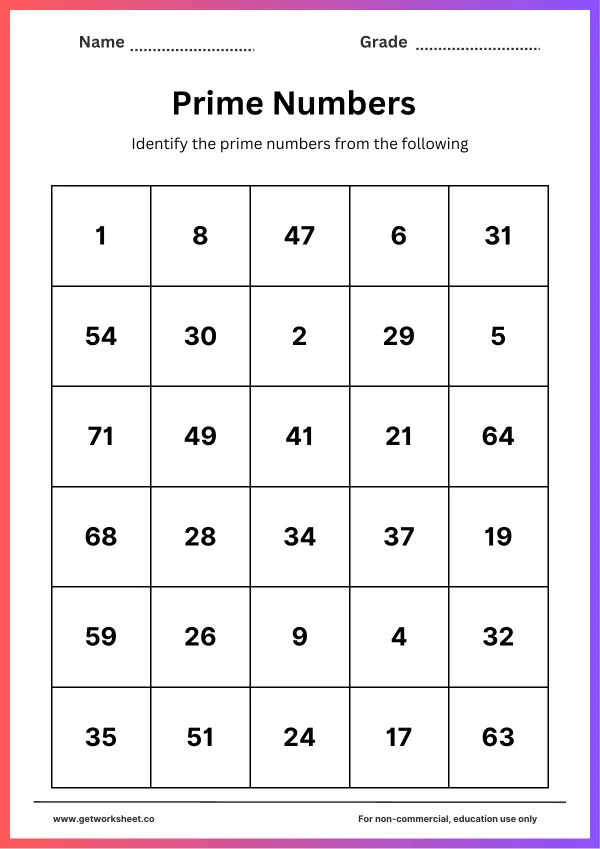
Free prime number worksheets
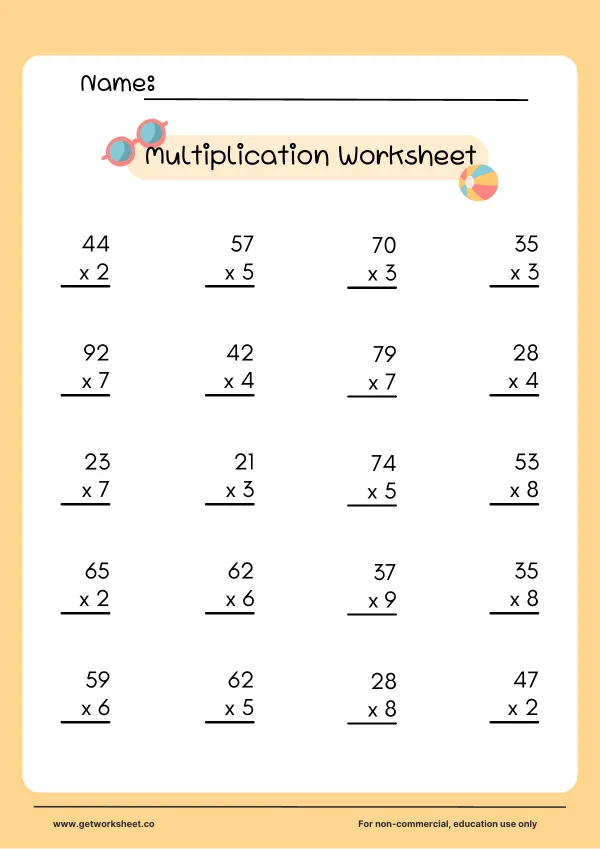
Free multiplication worksheets
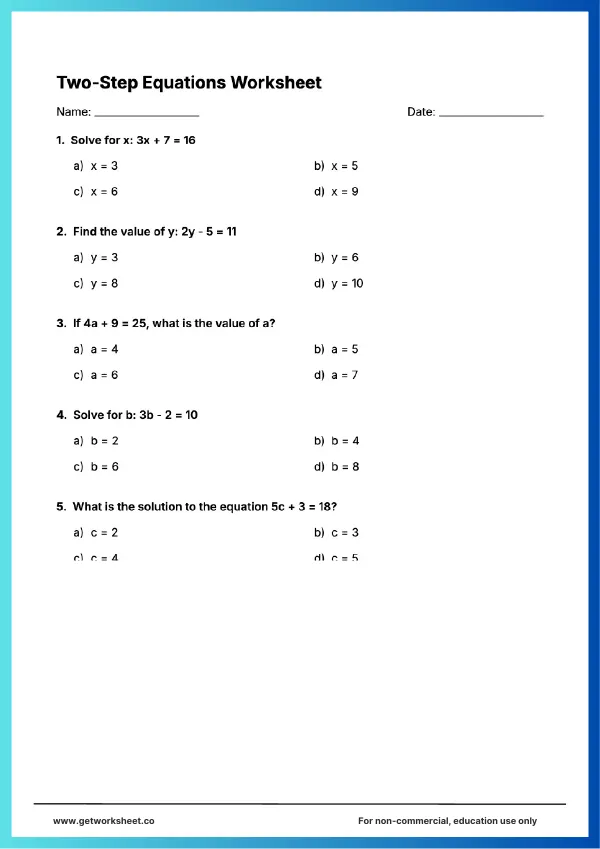
Free two step equations worksheets
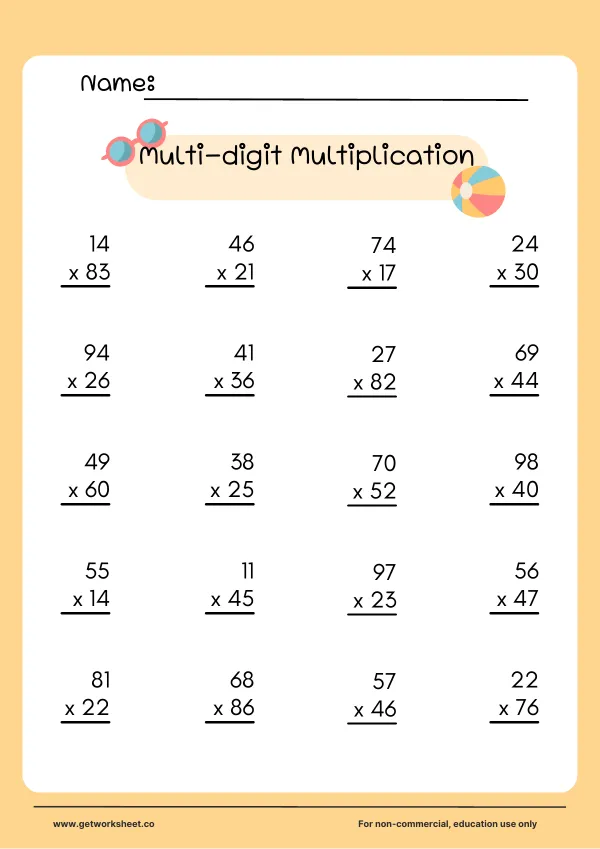
Free multi-digit multiplication worksheets
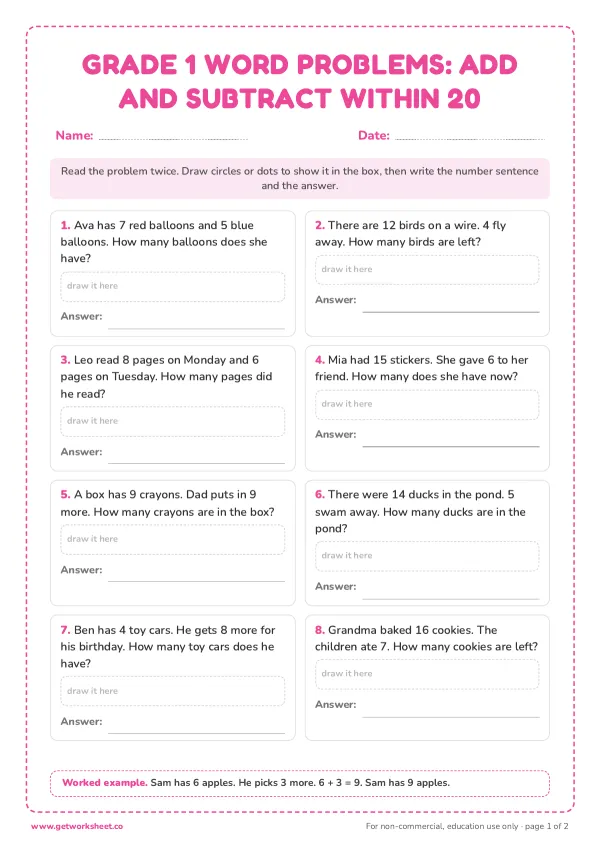
Free math word problems worksheets (grades 1 to 5)
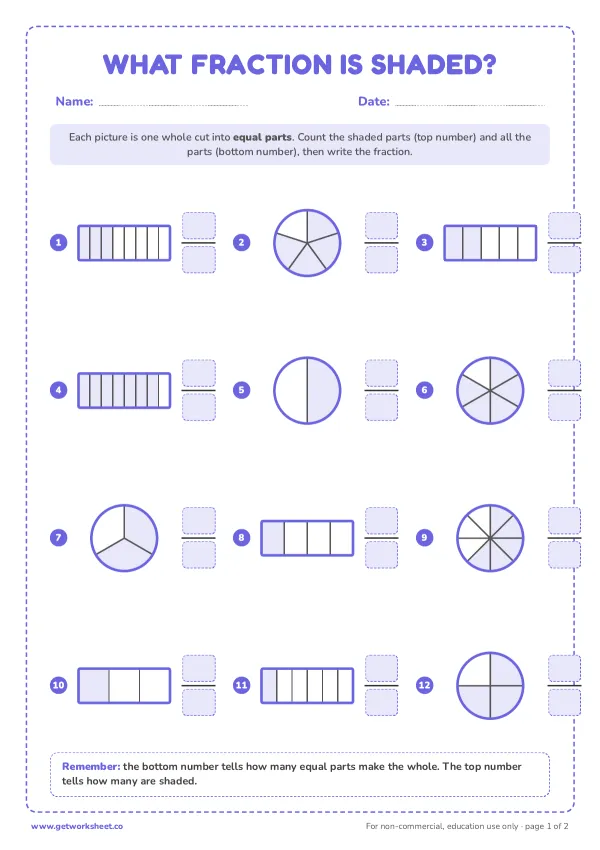
Free fractions worksheets
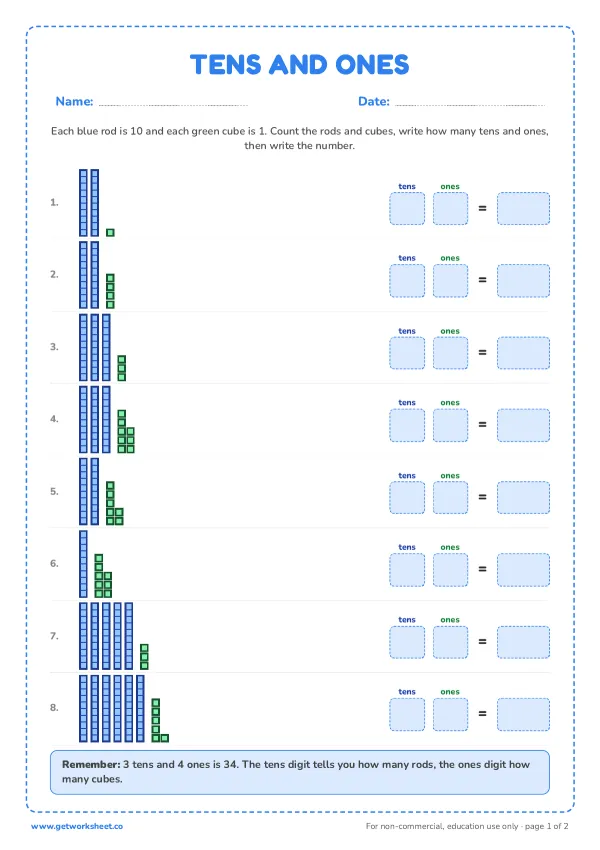
Free place value worksheets
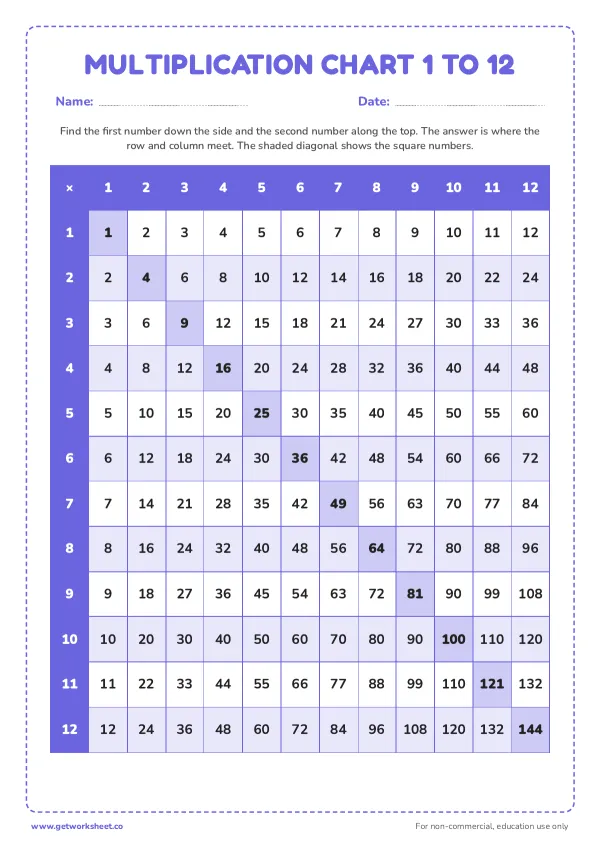
Free printable multiplication charts
More worksheets
- Free angles worksheets
- Free number line printables
- Free graph paper printables
- Free heart tracing worksheets
- Free Montessori math worksheets: one from every material
- Free shape tracing worksheets
- Free Halloween math worksheets
- Free number 20 tracing worksheets
- Free number 19 tracing worksheets
- Free number 18 tracing worksheets
- Free number 17 tracing worksheets
- Free number 16 tracing worksheets