Maths · Grades 1–3
Free place value worksheets
Free printable place value worksheets for grades 1 to 3: count and draw base-ten blocks for tens and ones, hundreds, tens and ones, expanded form, the value of an underlined digit, and comparing and ordering 3-digit numbers. Answer keys included. PDF download.
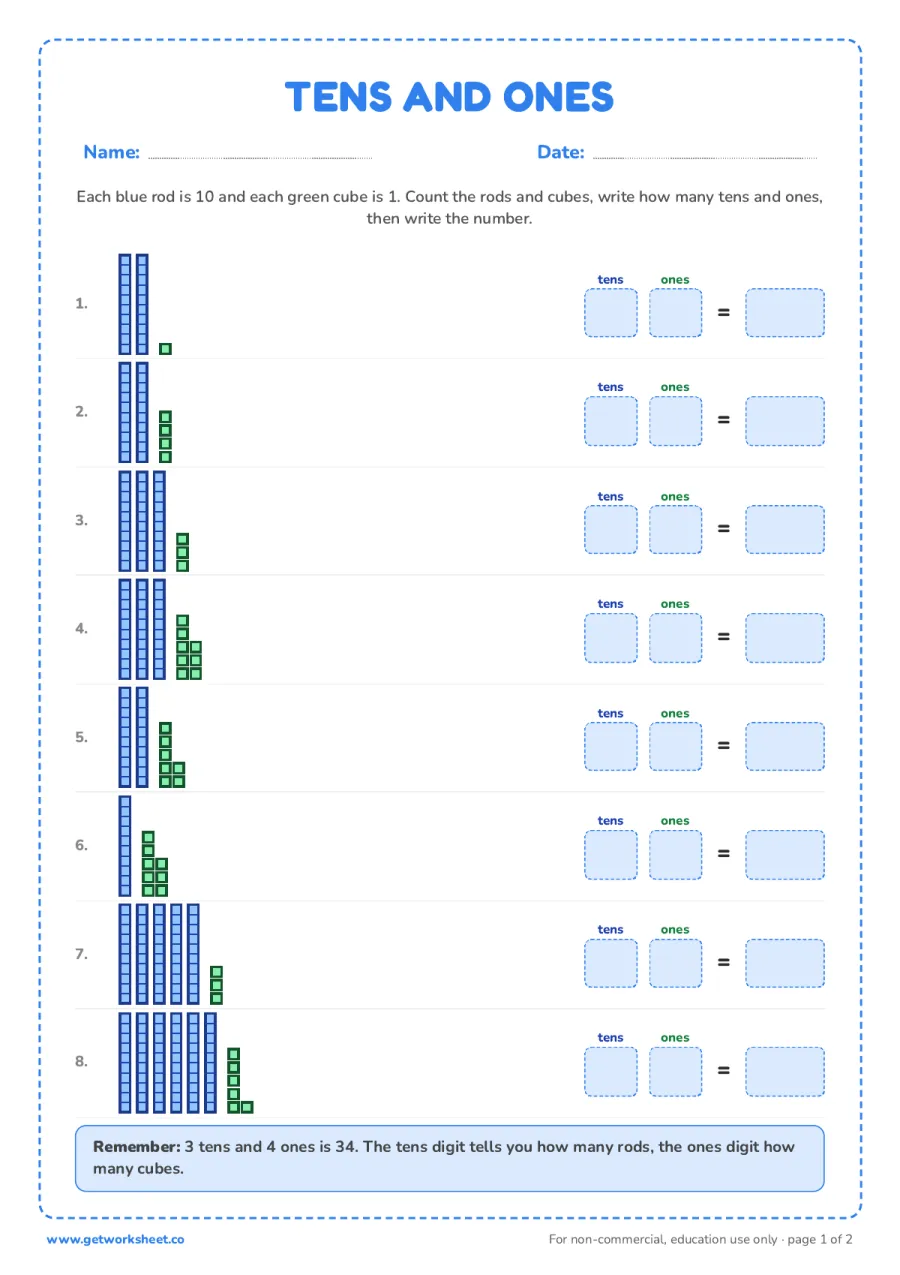
Tens and ones: count 8 sets of base-ten blocks
Eight groups of rods and cubes to count; write the tens, the ones and the two-digit number. Answer key on page 2.
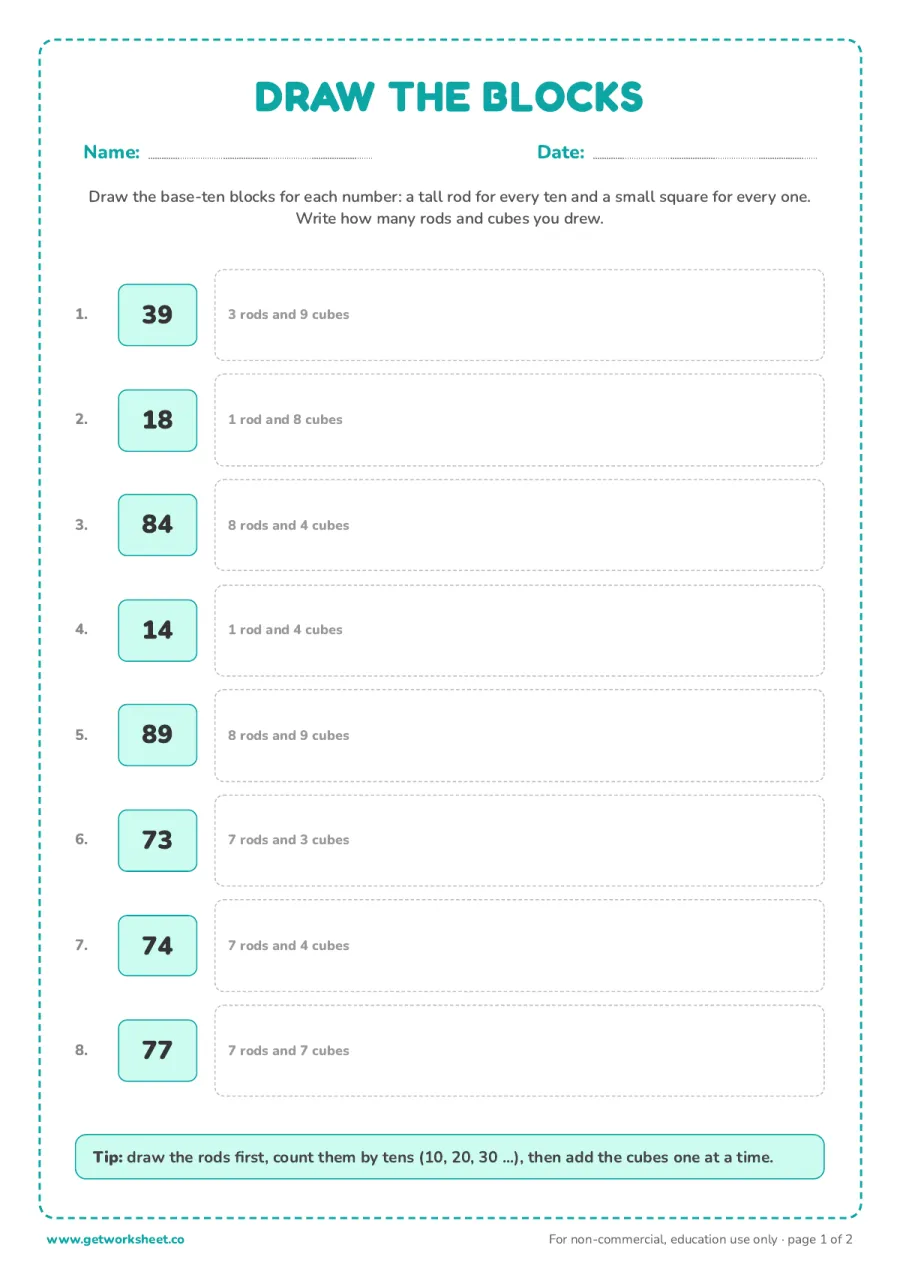
Draw the blocks: show 8 two-digit numbers with rods and cubes
Eight two-digit numbers to build by drawing tens rods and ones cubes, then recording how many of each. Answer key on page 2.
Whole set
All 6 sheets in one PDF
Instant and ad-free. No account needed.
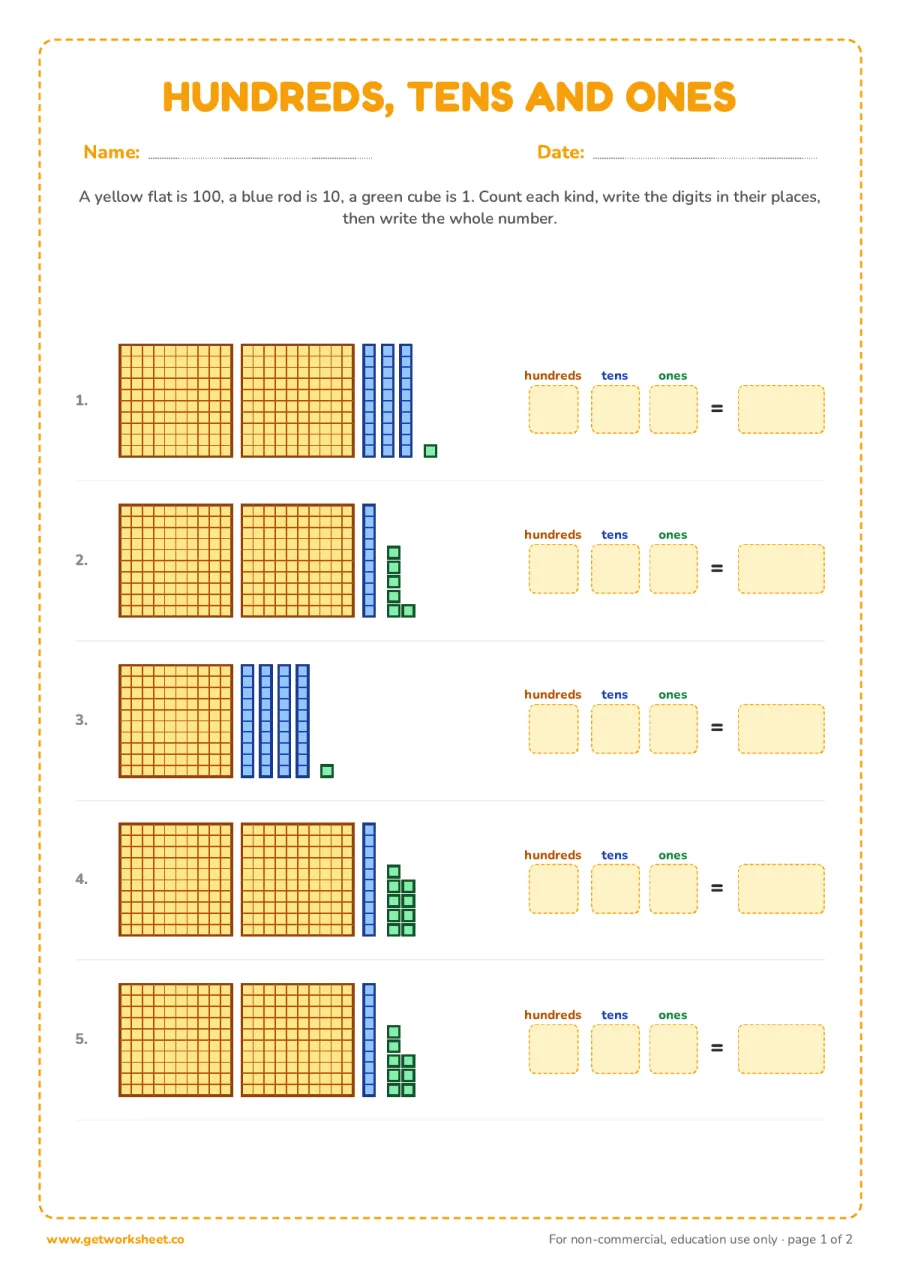
Hundreds, tens and ones: 5 sets of flats, rods and cubes
Five three-digit quantities shown with hundred flats, ten rods and unit cubes; write each digit in its place and the number. Answer key on page 2.
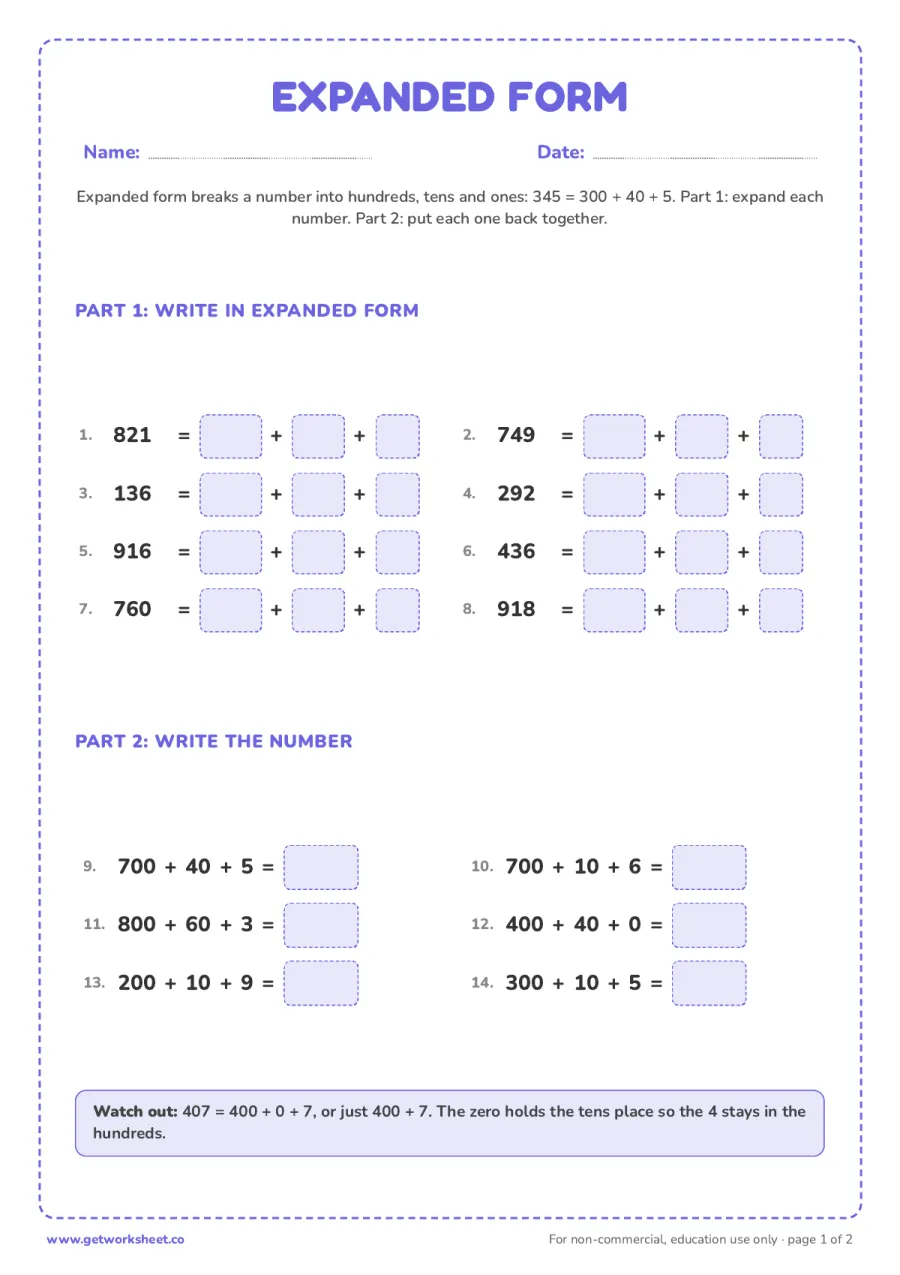
Expanded form: expand 8 numbers and rebuild 6 more
Write eight three-digit numbers as hundreds + tens + ones, then turn six expanded forms back into numbers. Answer key on page 2.
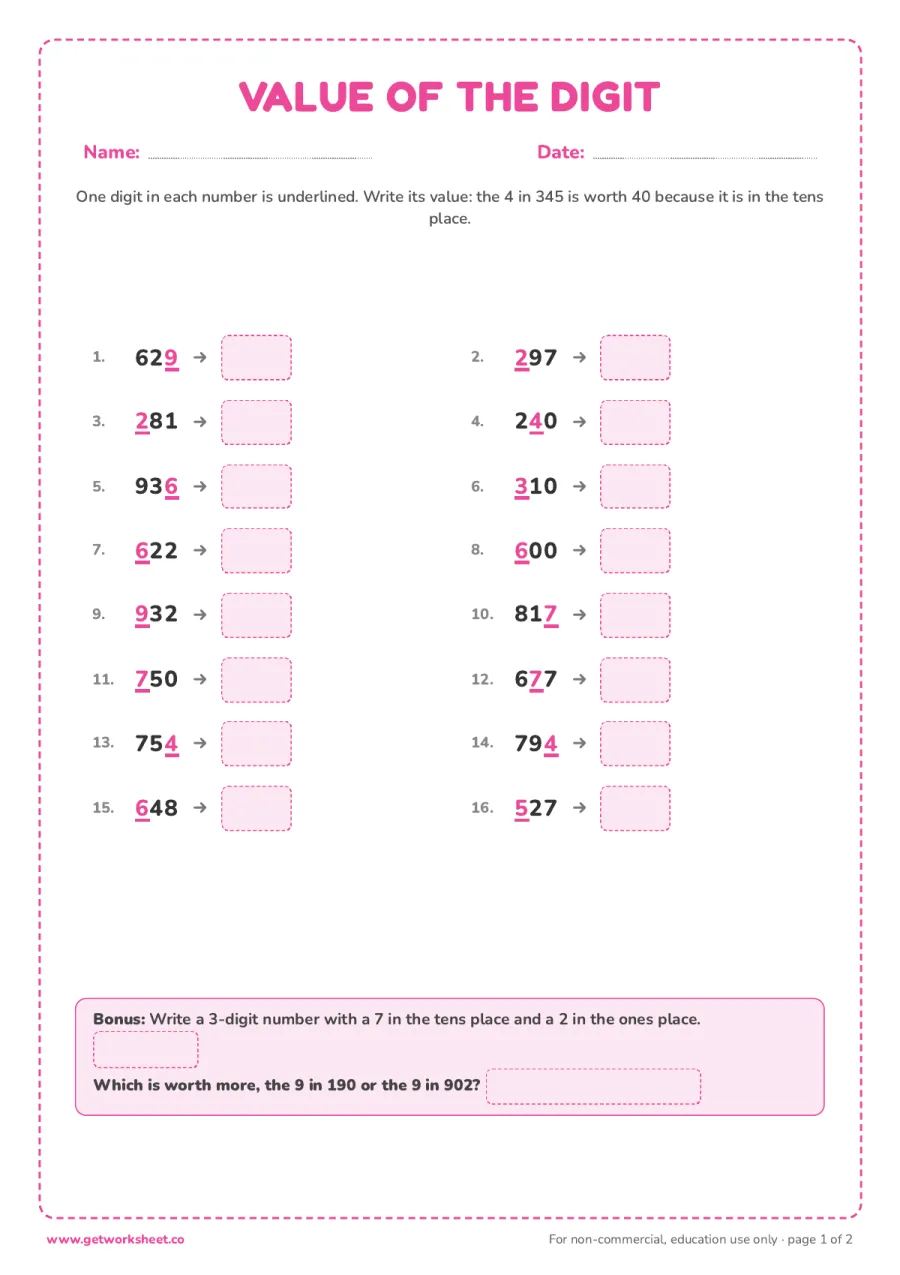
Value of the underlined digit: 16 three-digit numbers
Sixteen three-digit numbers with one digit underlined; write what that digit is worth (400, 40 or 4). Two bonus questions. Answer key on page 2.
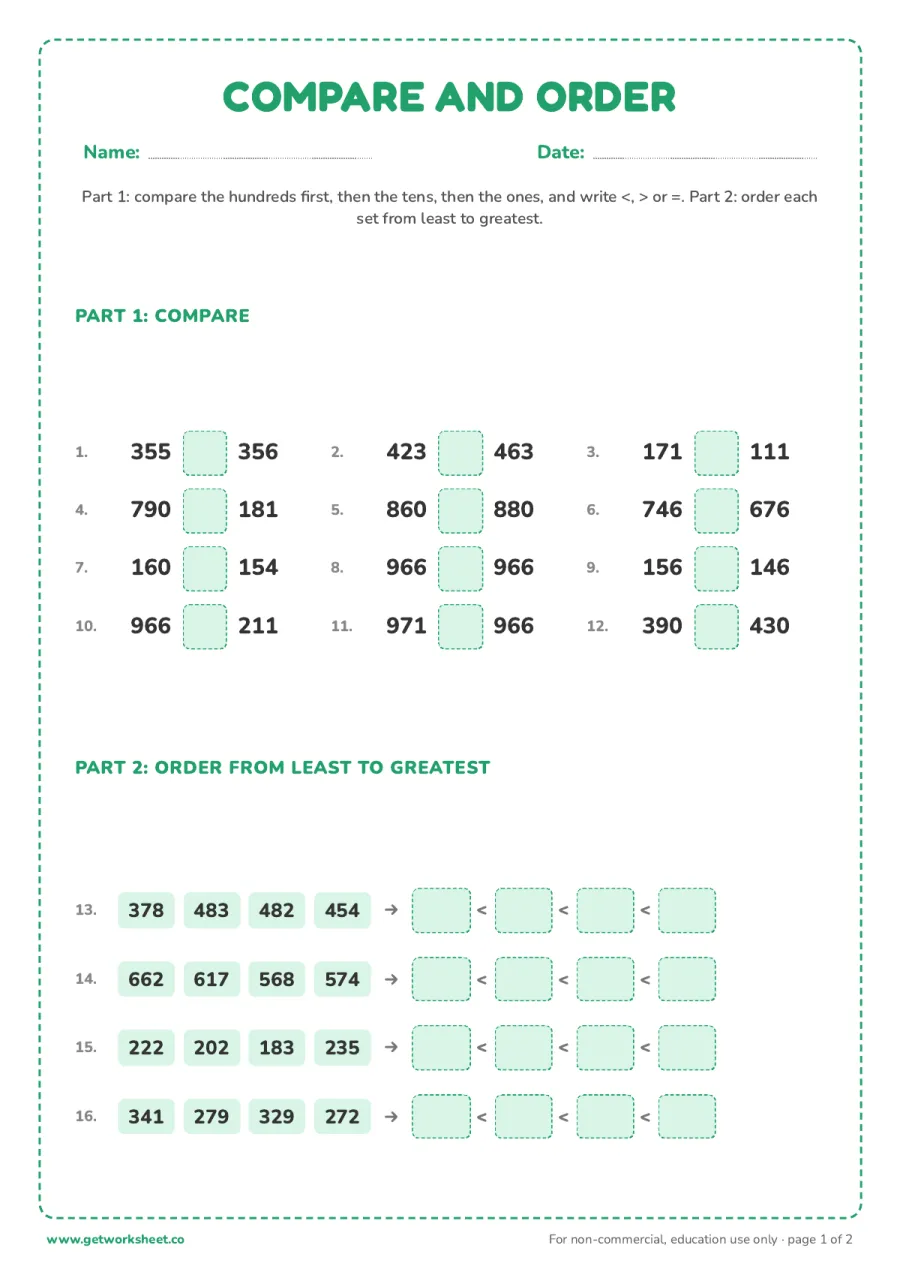
Compare and order: 12 pairs with < > = and 4 sets to order
Twelve pairs of three-digit numbers to compare with the correct symbol, then four sets of four numbers to order from least to greatest. Answer key on page 2.
AI worksheet generator
Make a worksheet like this for your class
The 6 sheets above are fixed. The generator writes a new place value worksheet for your grade, with the question types and count you choose, in about 20 seconds. Pick a grade to start:
What you get
- A fresh set of questions on place value, not a copy of the sheets above
- Multiple choice, fill in the blanks, true or false, open ended
- Answer key and print-ready PDF with Pro
Free account, 1 worksheets a week. No card.
Place value is the idea that the 4 in 42 is worth forty, not four. It is the foundation of every written method children will meet: column addition, regrouping, multiplication, rounding and decimals all depend on it. These six worksheets use base-ten blocks (a flat for 100, a rod for 10, a cube for 1) because the blocks make the idea visible: two rods and three cubes look like twenty-three. Children count blocks, draw blocks, write numbers in expanded form, find the value of a digit and finally compare and order three-digit numbers using what they know about places.
What’s in this set
- Tens and ones: count 8 sets of base-ten blocks. Rods and cubes for numbers 10 to 69; write how many tens, how many ones and the number.
- Draw the blocks: 8 two-digit numbers. The reverse task: read the number, draw a rod for every ten and a cube for every one, then record how many of each you drew.
- Hundreds, tens and ones: 5 sets of flats, rods and cubes. Three-digit quantities up to 399; write each digit in its coloured place and the whole number.
- Expanded form. Eight numbers to expand (821 = 800 + 20 + 1) and six expanded forms to put back together, including 400 + 40 + 0.
- Value of the underlined digit: 16 numbers. Write what the underlined digit is worth (600, 60 or 6), then two bonus questions that compare a 9 in the tens with a 9 in the hundreds.
- Compare and order: 12 pairs and 4 sets. Compare three-digit numbers with <, > or =, then order four numbers from least to greatest.
What students will practice
- Understanding a two-digit number as tens and ones (1.NBT.B.2) and a three-digit number as hundreds, tens and ones (2.NBT.A.1)
- Reading and writing numbers in standard and expanded form (2.NBT.A.3)
- Recognising that a digit’s value depends on its position
- Comparing two three-digit numbers with <, > and = by comparing hundreds, tens and ones in turn (2.NBT.A.4)
- Ordering a set of numbers from least to greatest
Free printable makers
Make your own place value sheets
Type your own words or numbers and print in about 30 seconds. No account, no AI, answer key where it applies.
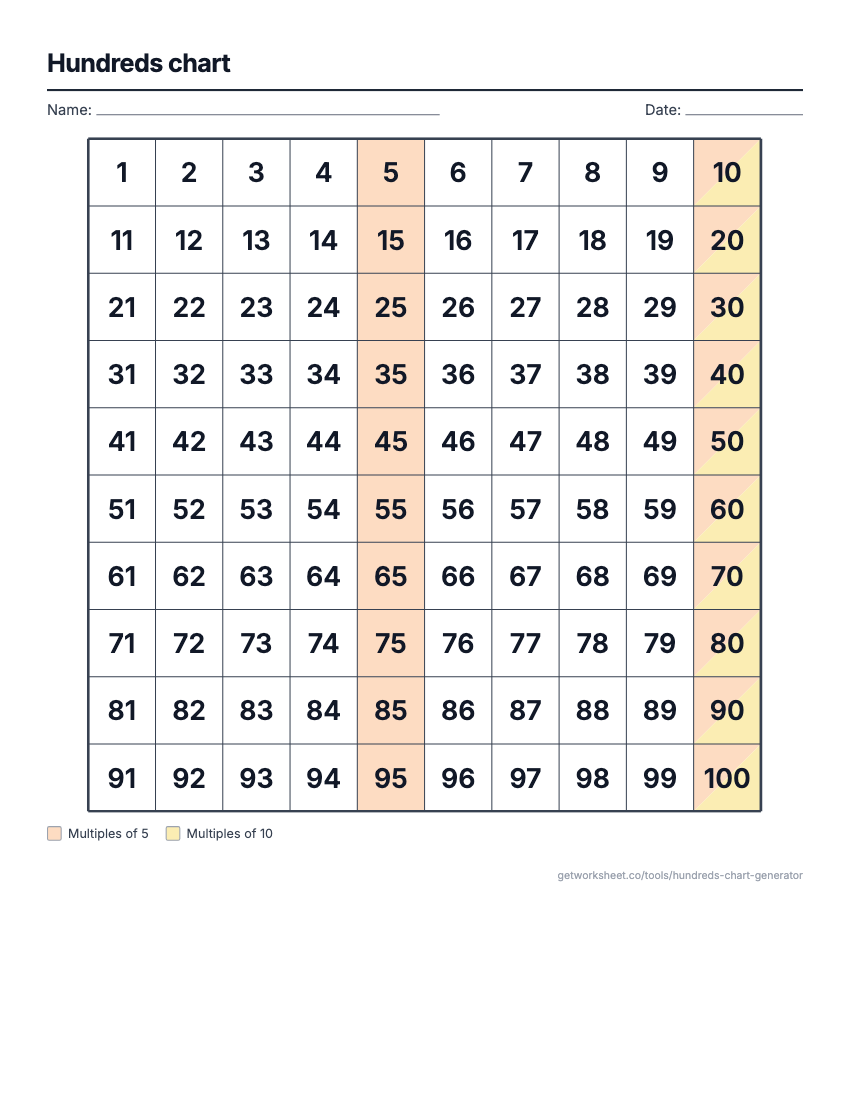 Hundreds chart generator1-100, 1-120 or 0-99, blank or missing numbers, skip-count colours, odd/even. Free to print.
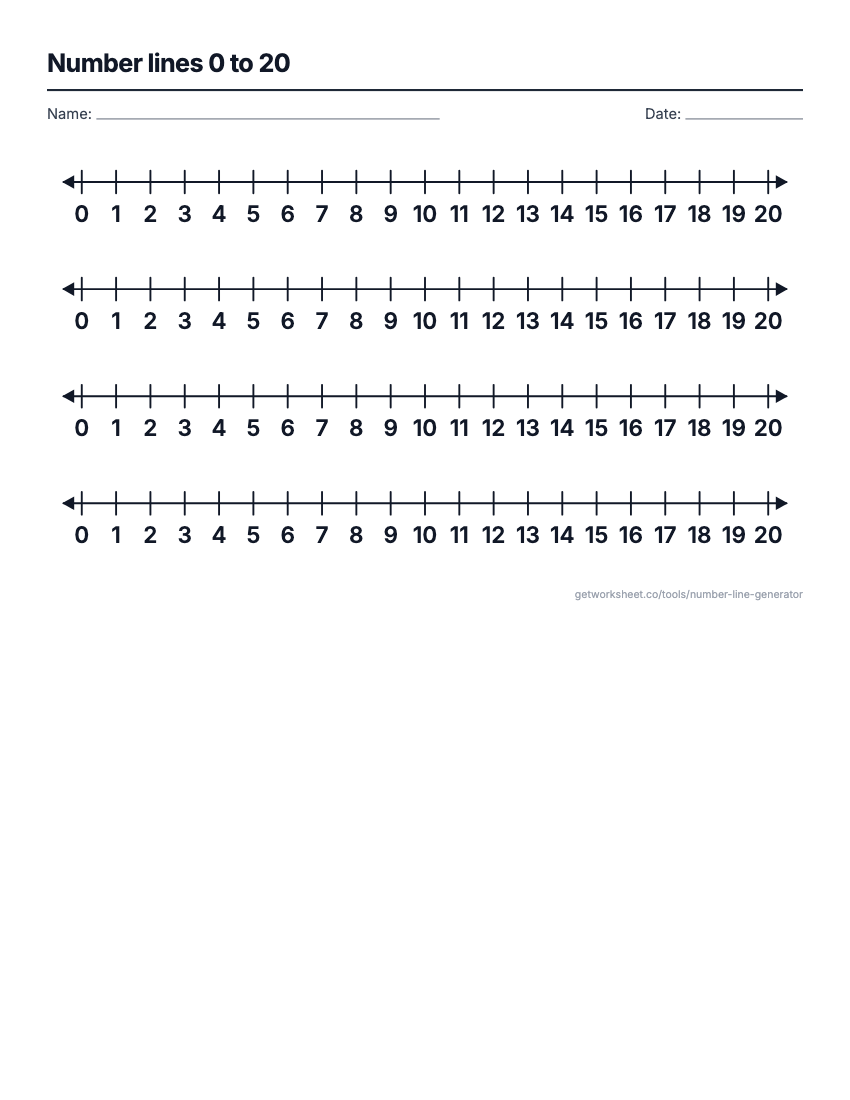 Number line generatorAny range and step, fractions and decimals, blank or missing numbers with a key. Free to print.
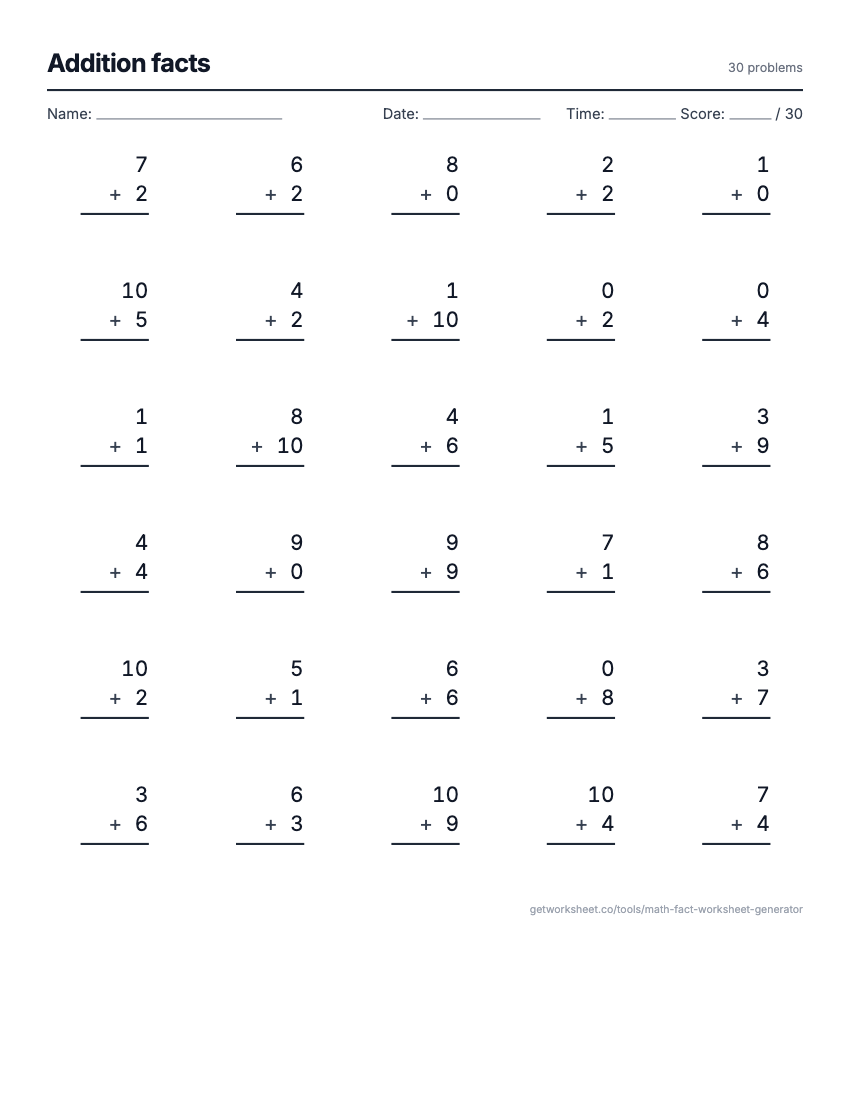 Math fact worksheet generatorAddition to division drills with an answer key. Free to print.
AI worksheet generator
Need a different place value worksheet?
Generate a custom place value worksheet: pick the grade, question types and count, and print it in about 20 seconds. Free accounts get 1 generation a week.
How to use these worksheets
Print at 100% on A4 or US Letter paper. Answer keys are on page 2 of each PDF. If you have real base-ten blocks, build the first two sheets with them before writing; if not, straws bundled in tens and loose straws work just as well.
- Tens and ones. Count the rods by tens out loud (10, 20, 30) and then the cubes by ones. Write the tens digit and the ones digit in their boxes before writing the number, so children see that the number is made of the two digits.
- Draw the blocks. Insist on tall rods and small squares that look different from each other. A row of 34 identical dots misses the point.
- Hundreds, tens and ones. The flats are big, so there is room for only five items, which is deliberate: each one takes a while to count. The colours (yellow hundreds, blue tens, green ones) are repeated in the answer boxes.
- Expanded form. Read expanded form as a sum: “eight hundred plus twenty plus one”. In Part 2 the item 400 + 40 + 0 catches children who drop the zero and write 44.
- Value of the digit. Say the place before the value: “the 6 is in the tens place, so it is worth 60”. The bonus question about 190 and 902 checks that children compare values, not digits.
- Compare and order. Model the routine: hundreds first, then tens only if the hundreds match, then ones. For ordering, find the smallest, write it, cross it off, and look again.
Common mistakes to watch for
- Writing 3 for the value of the 3 in 342: the digit is 3, its value is 300. Both sheets 5 and 6 target this.
- Reading 17 as 71: the tens are written first even though we say “seventeen” with the seven first. The tens/ones boxes on sheet 1 keep the order straight.
- Comparing the first digits only: 291 and 301 differ in the hundreds even though 9 is bigger than 0 in the tens. Hundreds always win.
- Dropping zeros in expanded form: 407 is 400 + 7, not 47.
Answer key
Page 2 of every PDF shows the completed student page: block counts, expanded forms, digit values, comparison symbols and ordered lists, with the bonus answers written in.
Frequently asked questions
What grade are these place value worksheets for?
Tens and ones is first grade (ages 6 to 7). Hundreds, expanded form and comparing three-digit numbers are second grade. Third graders who struggle with regrouping or rounding often need to revisit the hundreds sheets.
What are base-ten blocks?
Wooden or plastic blocks in three sizes: a small cube for one, a rod of ten cubes for ten and a flat square of one hundred cubes for a hundred. Ten cubes line up exactly along one rod, so the relationship between places is something children can hold. The sheets draw them in the standard colours used in many classrooms.
What is expanded form?
Writing a number as the sum of the value of each digit: 345 = 300 + 40 + 5. It shows what each digit is worth and prepares children for adding and subtracting large numbers by place.
Where does Montessori fit in?
The Montessori golden beads teach the same idea with beads instead of blocks: a single bead, a bar of ten, a square of a hundred. Our Montessori place value worksheets use that material if your child learns that way.
More practice
The hundreds chart worksheets show the tens and ones pattern across a whole chart, and the number bonds worksheets cover “ten and some more” for teen numbers. Once place value is solid, move on to the multiplication chart and multi-digit work. Browse all maths worksheets.
Free library
Related collections
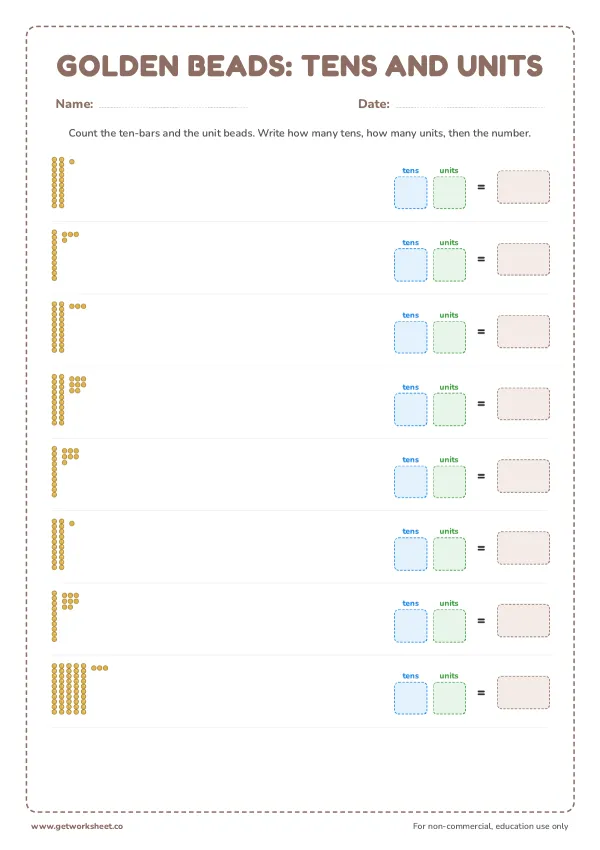
Free Montessori place value worksheets (golden beads)
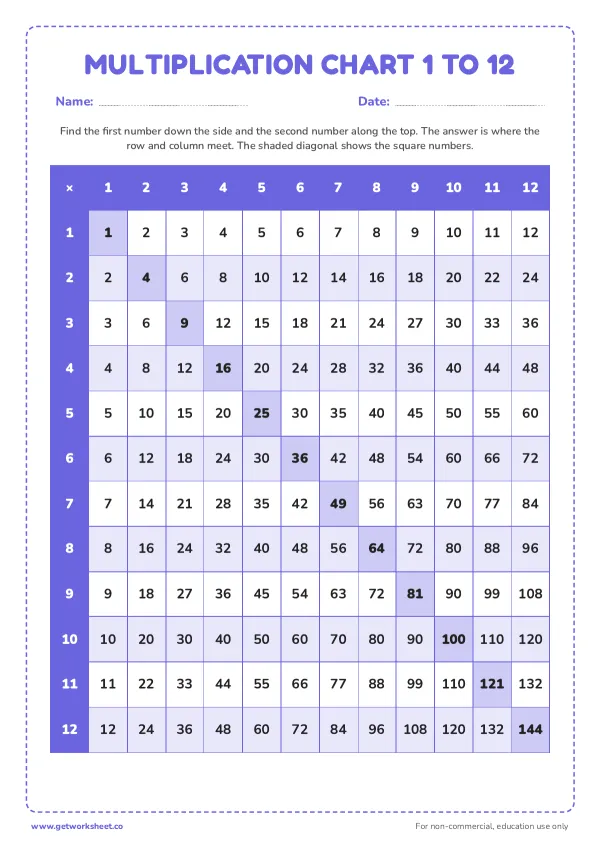
Free printable multiplication charts
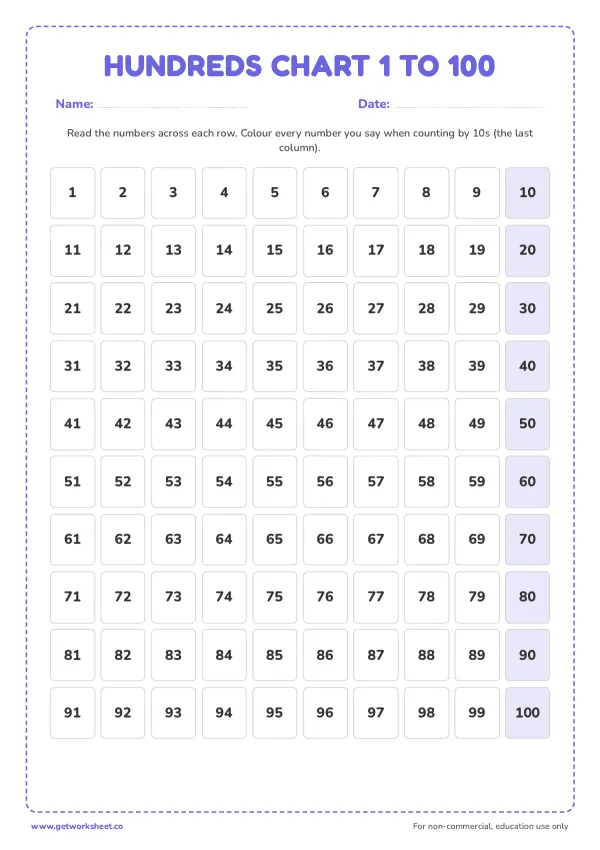
Free hundreds chart worksheets
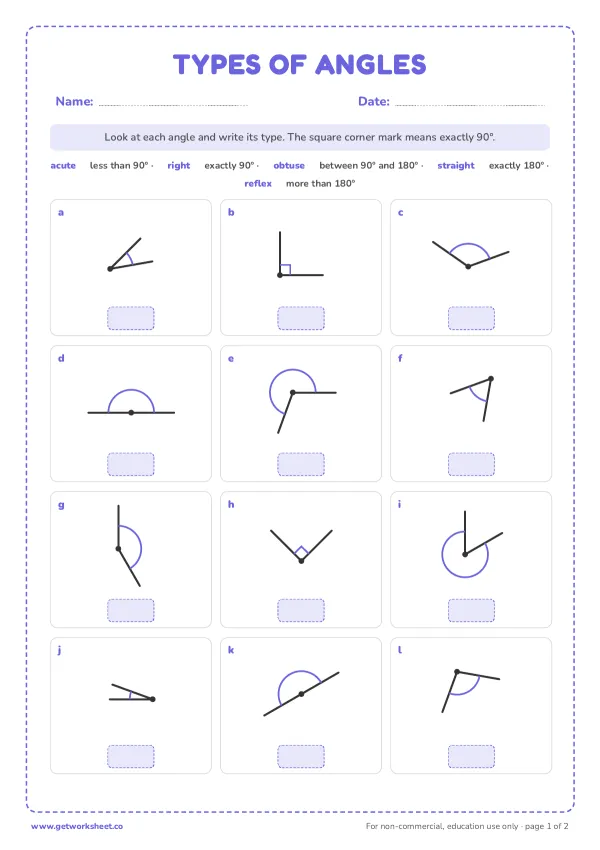
Free angles worksheets
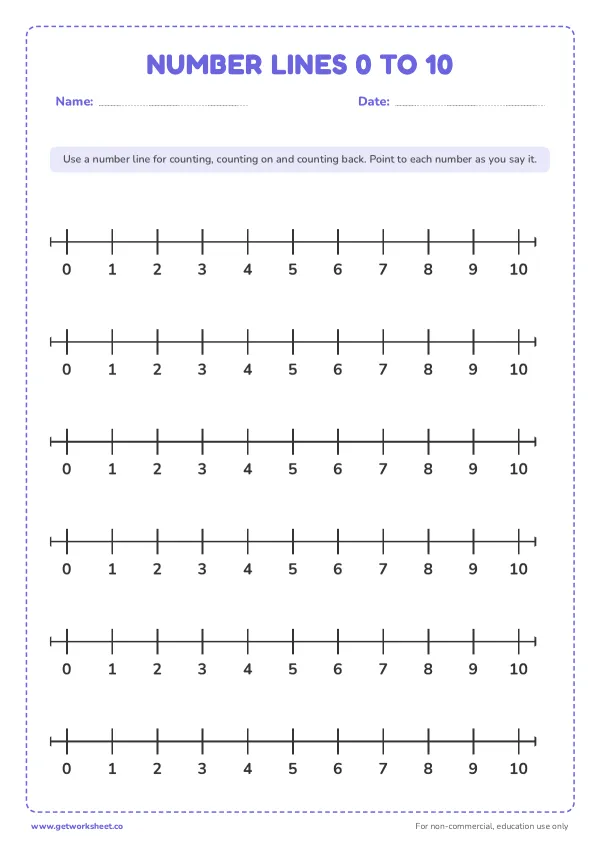
Free number line printables
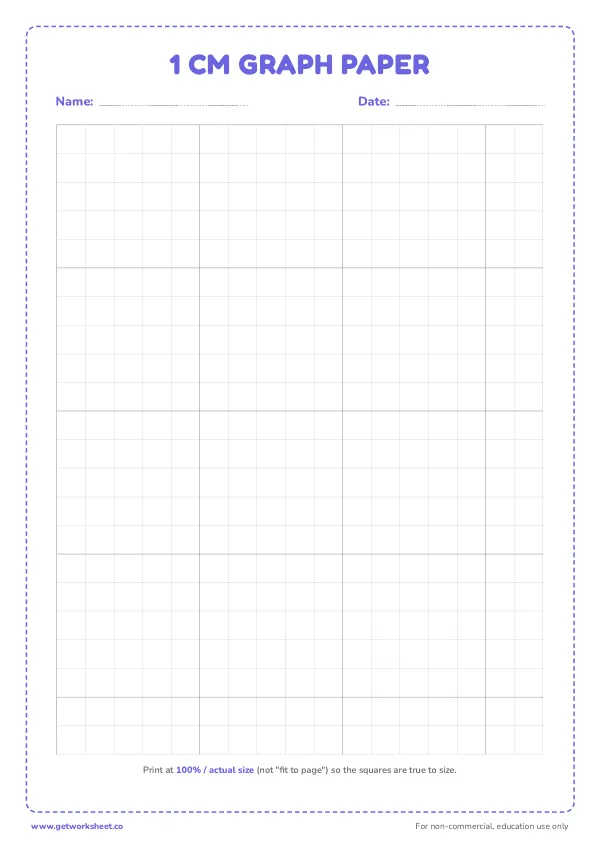
Free graph paper printables
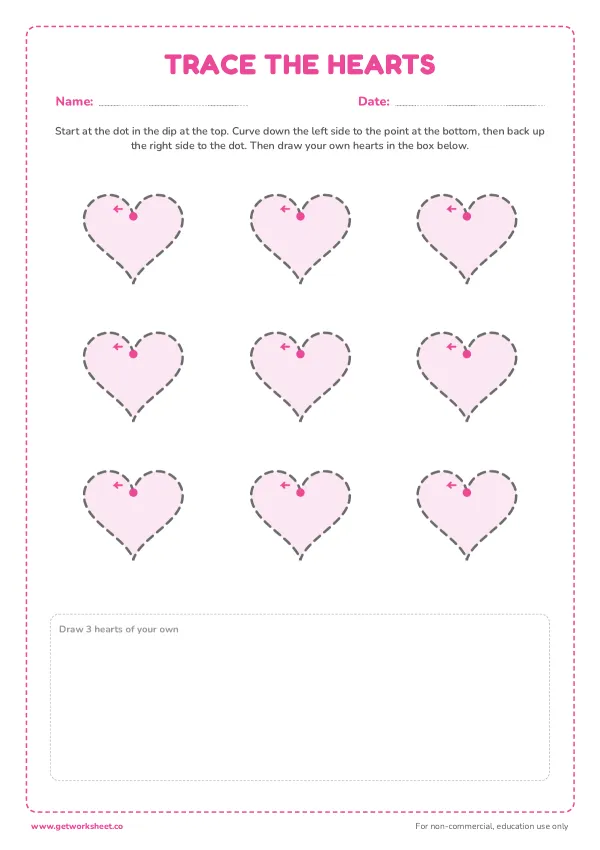
Free heart tracing worksheets
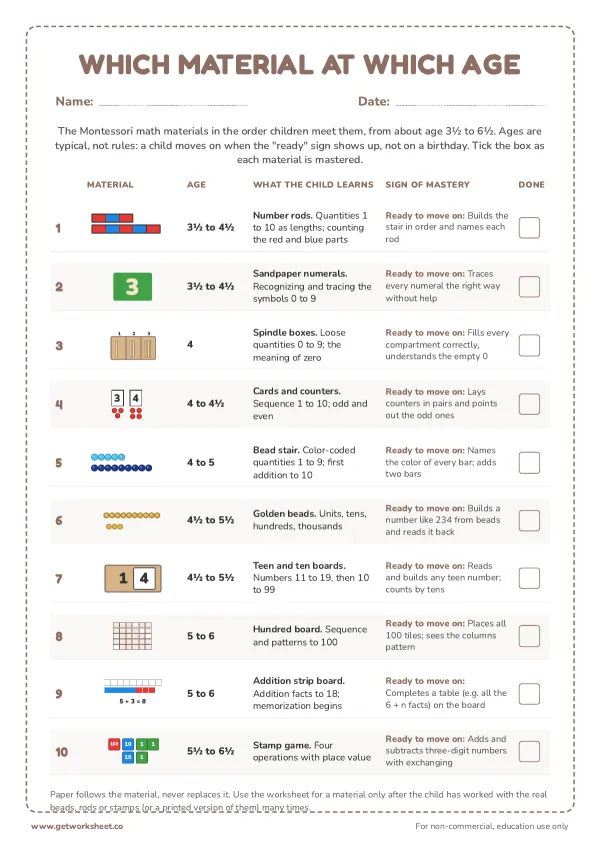
Free Montessori math worksheets: one from every material
More worksheets
- Free shape tracing worksheets
- Free Halloween math worksheets
- Free number 20 tracing worksheets
- Free number 19 tracing worksheets
- Free number 18 tracing worksheets
- Free number 17 tracing worksheets
- Free number 16 tracing worksheets
- Free number 15 tracing worksheets
- Free number 14 tracing worksheets
- Free number 13 tracing worksheets
- Free number 12 tracing worksheets
- Free number 11 tracing worksheets