Maths · Grades 2–3
Free addition with regrouping worksheets
Six free printable addition with regrouping worksheets for grade 2 and grade 3: 2-digit column sums with and without carrying, 3-digit sums that regroup twice, adding three numbers and word problems. Answer keys included. PDF download.
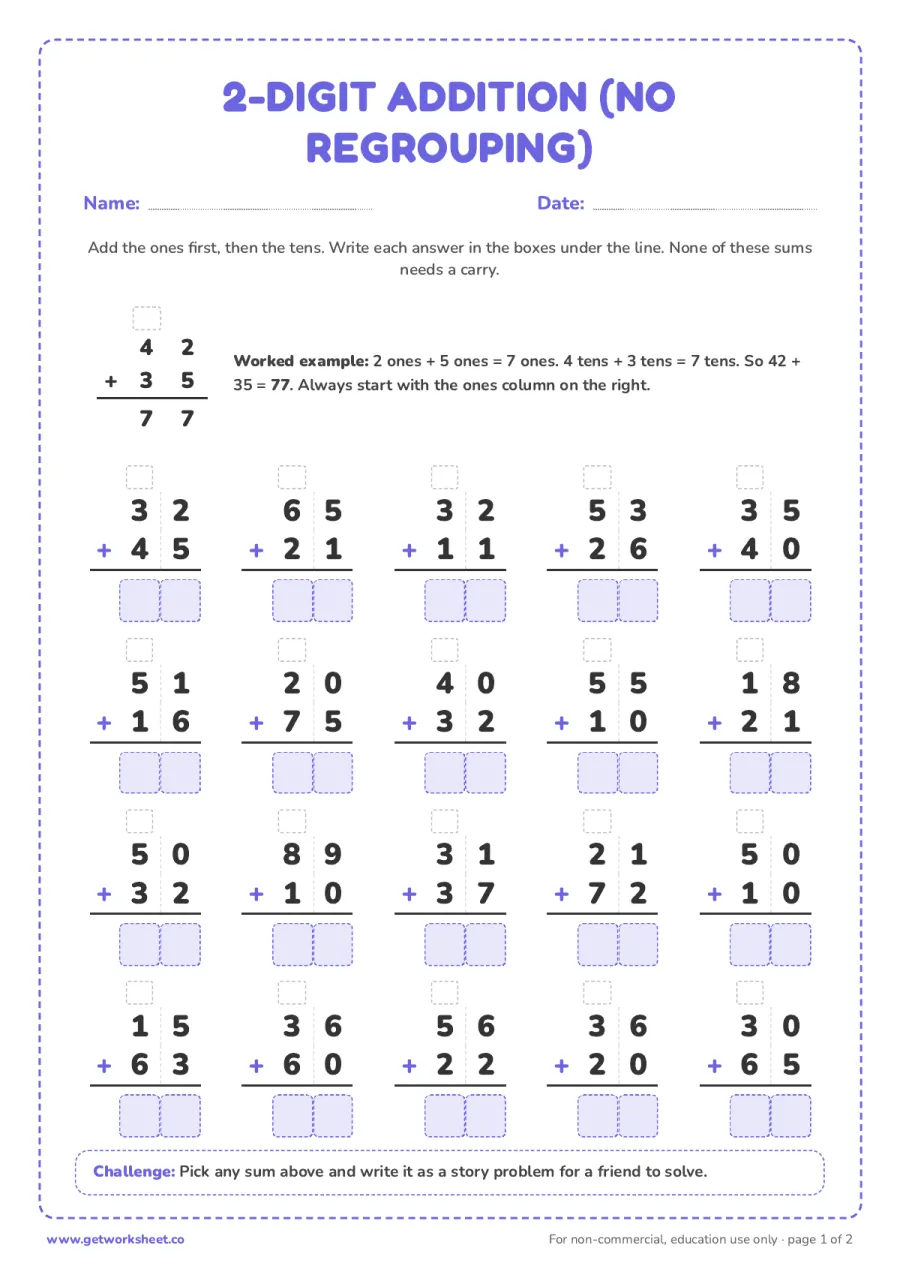
2-digit addition without regrouping: 20 column sums
A warm-up of twenty 2-digit sums where no column adds to 10 or more, so children can practise the column layout before regrouping. Answer key on page 2.
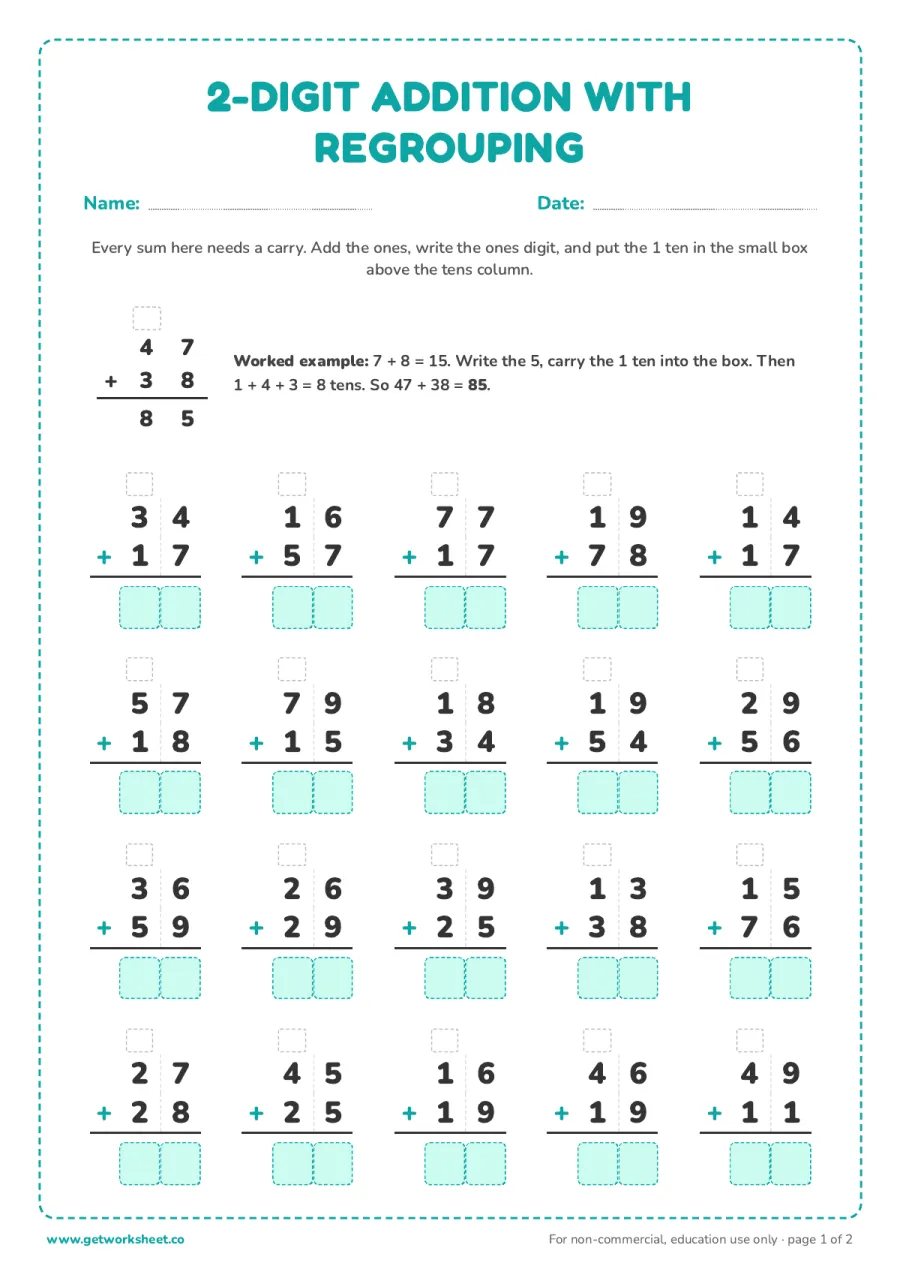
2-digit addition with regrouping the ones: 20 column sums
Twenty 2-digit sums where the ones column always adds to 10 or more, with a dashed carry box above the tens. Worked example at the top. Answer key on page 2.
Whole set
All 6 in one PDF
- Every sheet on this page, one file
- No ads, no countdowns, print as often as you like
- Instant download, ad-free, no account needed
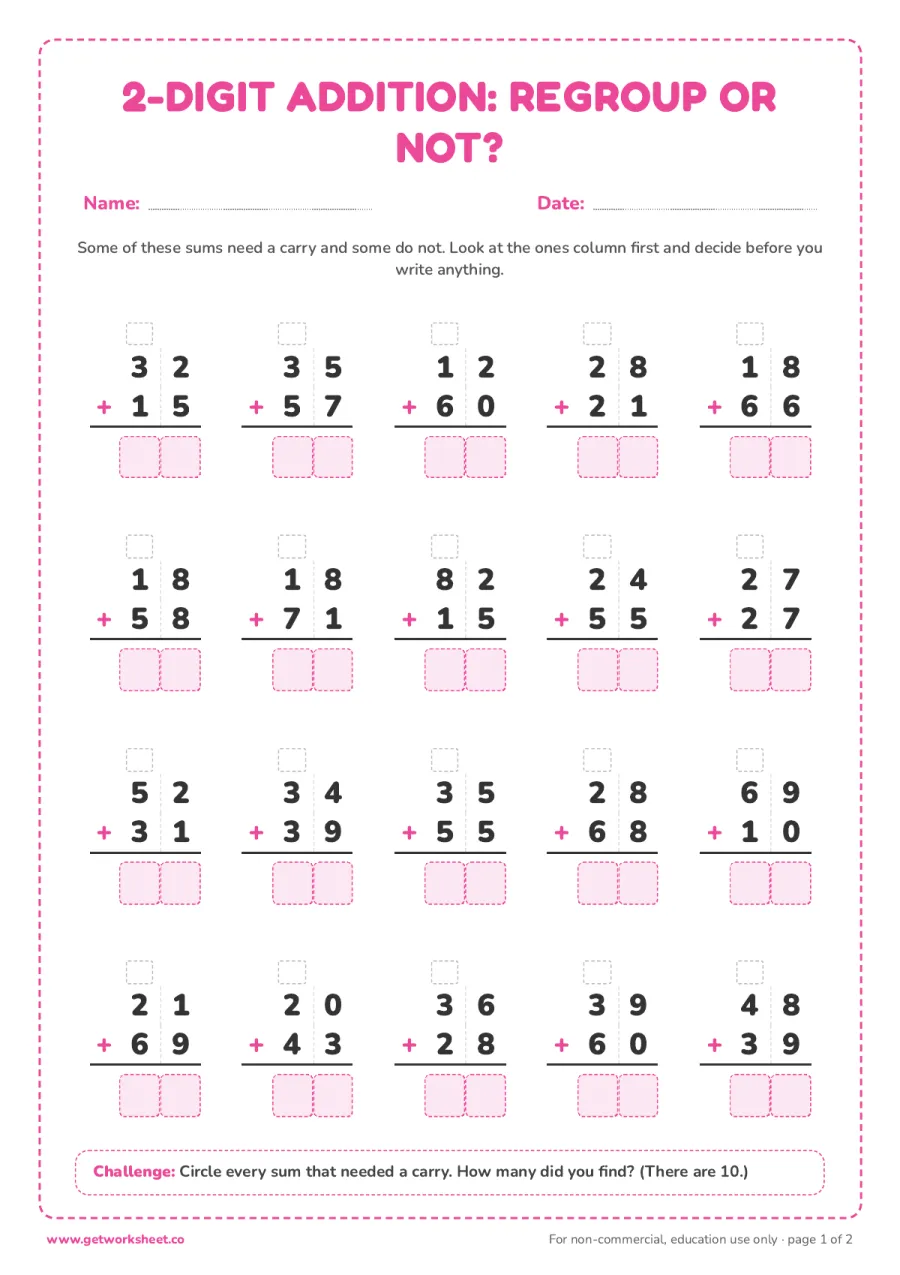
2-digit addition, mixed: 20 sums with and without regrouping
Twenty 2-digit sums in random order; half need a carry and half do not, so children must look at the ones column and decide. Answer key on page 2.
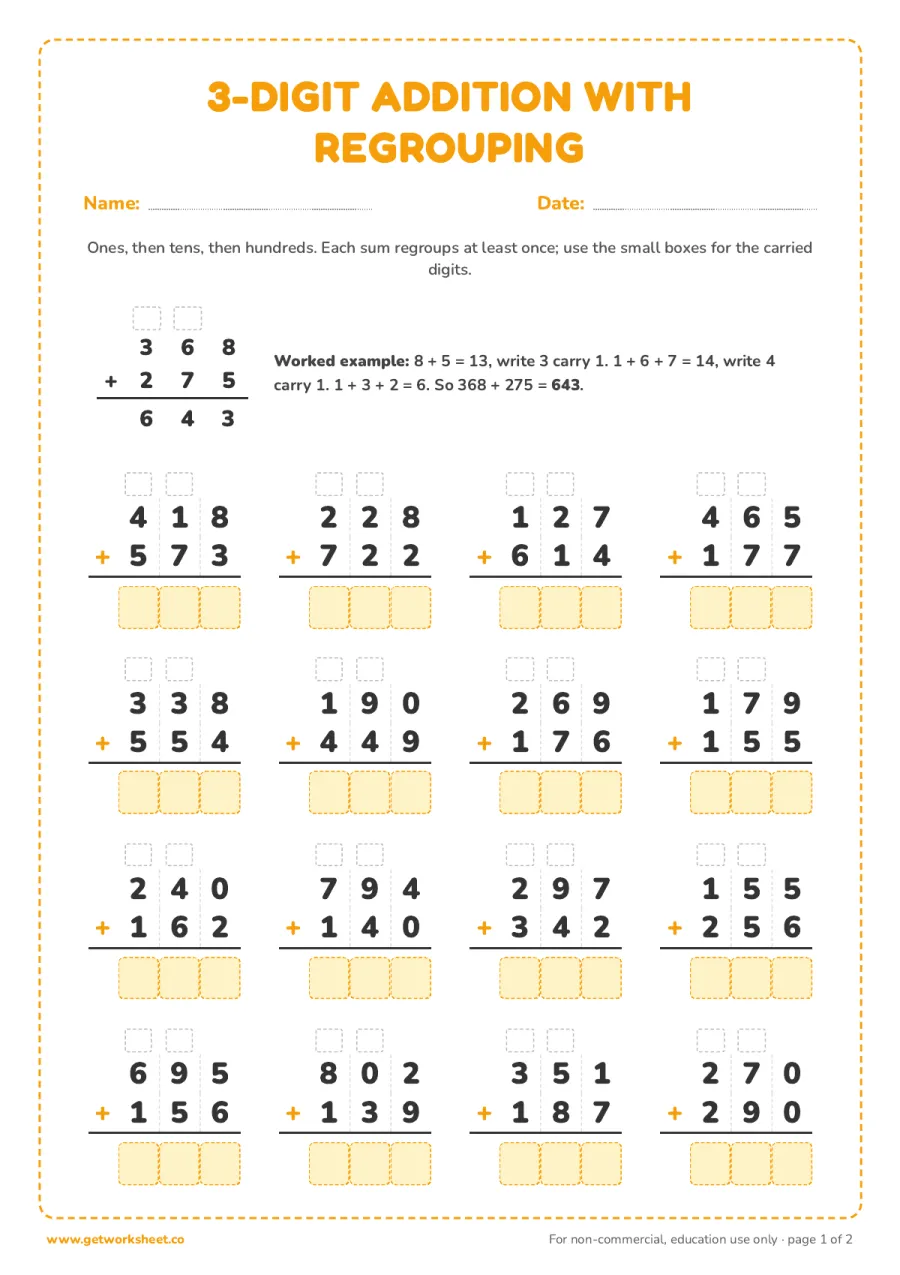
3-digit addition with regrouping: 16 column sums
Sixteen 3-digit sums that regroup once or twice (ones into tens, tens into hundreds), with carry boxes above every column. Answer key on page 2.
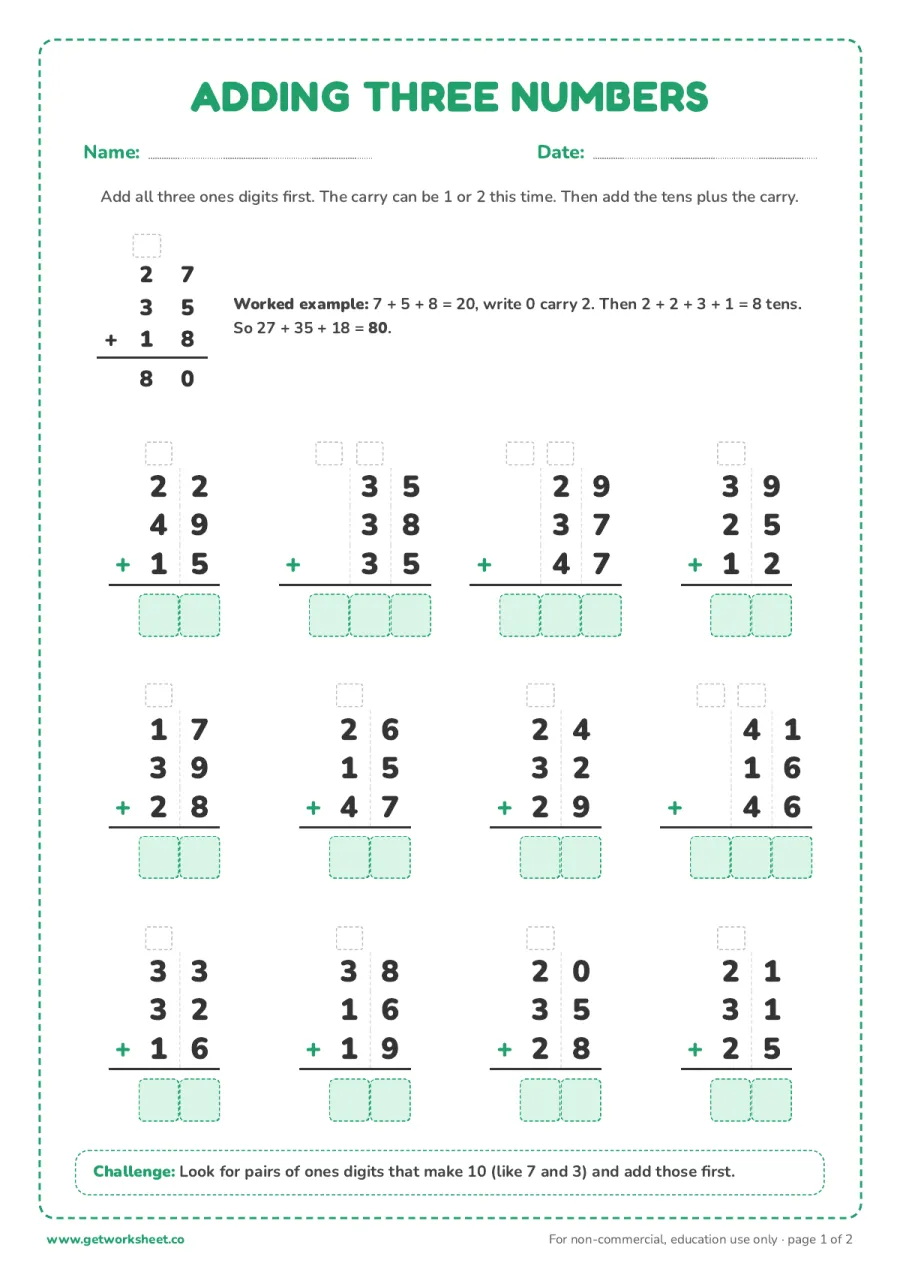
Adding three 2-digit numbers: 12 column sums
Twelve sums with three 2-digit addends stacked in columns, where the ones column can carry 1 or 2 tens. Answer key on page 2.
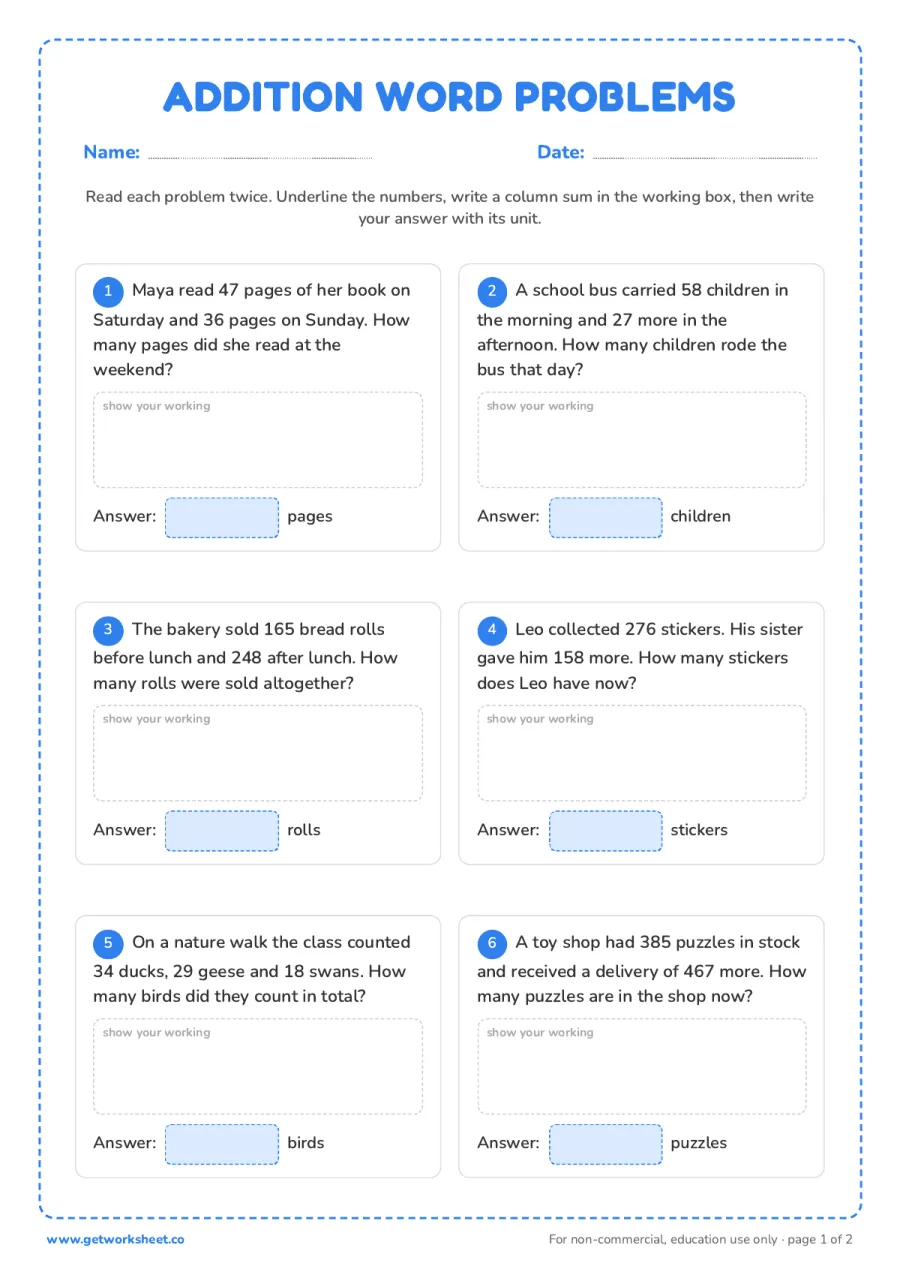
Addition with regrouping word problems: 6 real-life problems
Six two-step-free word problems using 2- and 3-digit numbers (pages read, birds counted, stock delivered), each with working space and an answer box. Answer key with number sentences on page 2.
AI worksheet generator
Make a worksheet like this for your class
The 6 sheets above are fixed. The generator writes a new addition with regrouping worksheet for your grade, with the question types and count you choose, in about 20 seconds. Pick a grade to start:
What you get
- A fresh set of questions on addition with regrouping, not a copy of the sheets above
- Multiple choice, fill in the blanks, true or false, open ended
- Answer key and print-ready PDF with Pro
Free account, 1 worksheets a week. No card.
Regrouping, or carrying, is the moment column addition stops being a counting trick and starts using place value. A child who can explain why the 1 from 7 + 8 = 15 moves into the tens column understands tens and ones; a child who just “carries the one” will get 3-digit sums wrong the first time two columns regroup at once. These six worksheets build that understanding in order: sums with no carry, sums where the ones always carry, a mixed page where the child has to decide, 3-digit sums, three addends and finally word problems.
Every sum has a dashed carry box above the tens (and hundreds) column and light guide lines between the columns, so the carried digit has somewhere to live and the digits stay lined up. The first sheet of each new skill opens with a worked example written out in words, and every sheet has its answer key on page 2.
What’s in this set
- 2-digit addition without regrouping: 20 column sums. A warm-up where no column adds to 10 or more, to practise the layout: ones first, then tens.
- 2-digit addition with regrouping the ones: 20 column sums. Every sum carries a ten. Worked example 47 + 38 at the top.
- 2-digit addition, mixed: 20 sums with and without regrouping. Ten of each in random order; the challenge box asks the child to circle the ones that carried.
- 3-digit addition with regrouping: 16 column sums. Each sum regroups once or twice (ones into tens, tens into hundreds); two carry boxes per sum.
- Adding three 2-digit numbers: 12 column sums. The ones column can carry 1 or 2, which is the first time the carry is not simply “the one”.
- Addition with regrouping word problems: 6 real-life problems. Pages read, birds counted, stock delivered; each with a working box and an answer box with its unit.
What students will practice
- Adding 2-digit numbers using the standard column algorithm, with and without composing a ten (CCSS 2.NBT.B.5)
- Adding up to three 2-digit numbers (2.NBT.B.6)
- Adding 3-digit numbers, composing tens and hundreds (2.NBT.B.7, 3.NBT.A.2)
- Explaining why a digit is carried, using place-value language (2.NBT.B.9)
- Choosing a column sum to solve a one-step word problem and answering with a unit (2.OA.A.1)
Free printable makers
Make your own addition with regrouping sheets
Type your own words or numbers and print in about 30 seconds. No account, no AI, answer key where it applies.
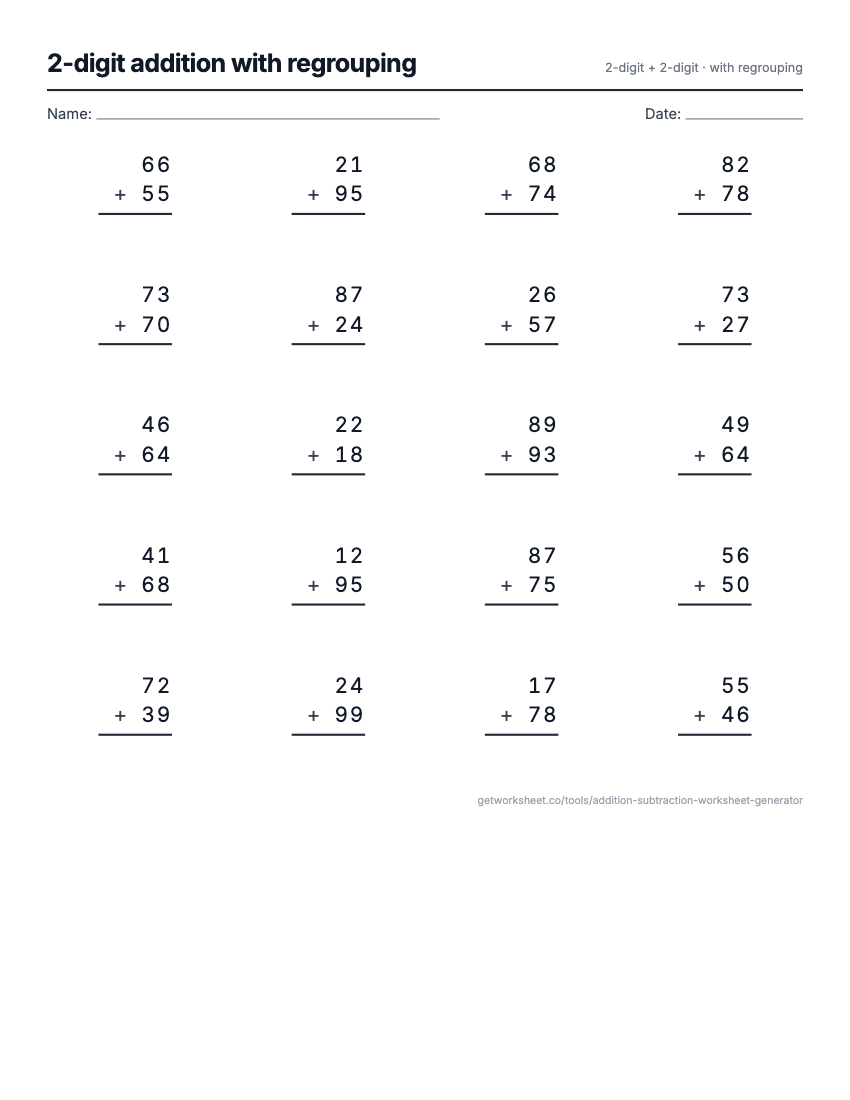 Addition and subtraction generatorColumn add and subtract, regrouping you control, boxes and key. Free to print.
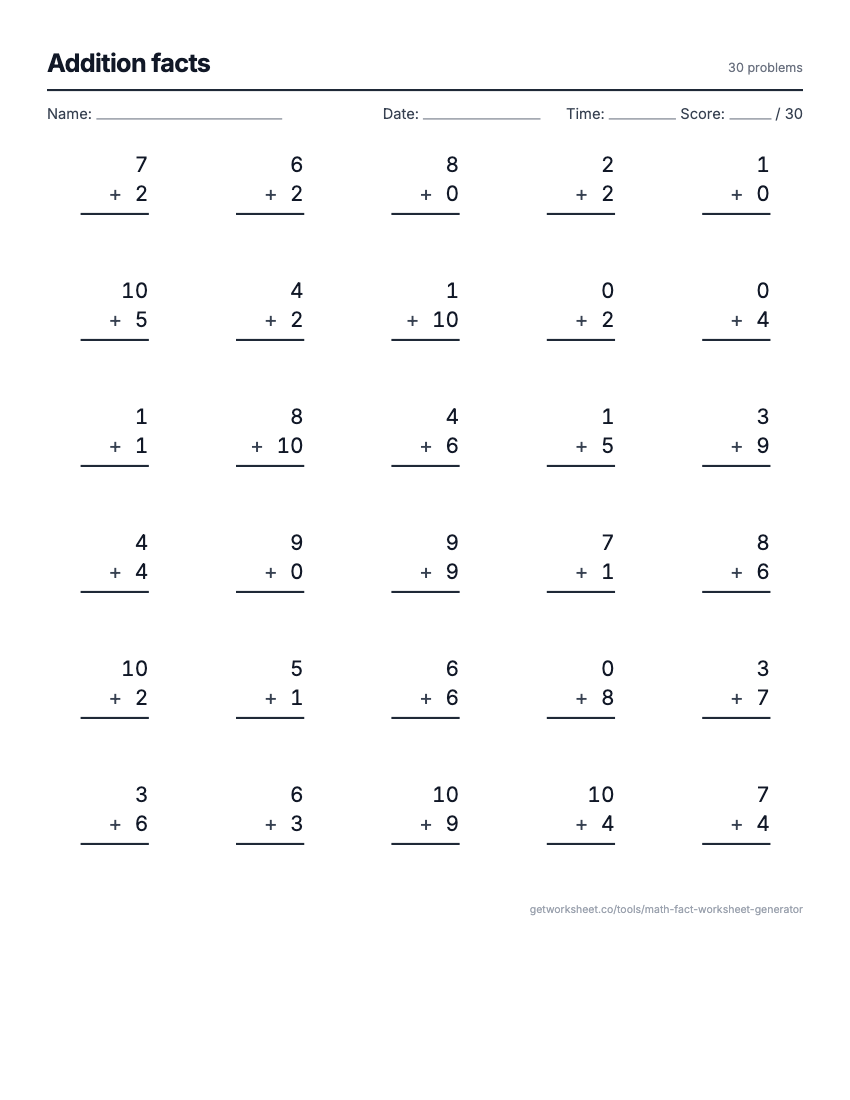 Math fact worksheet generatorAddition to division drills with an answer key. Free to print.
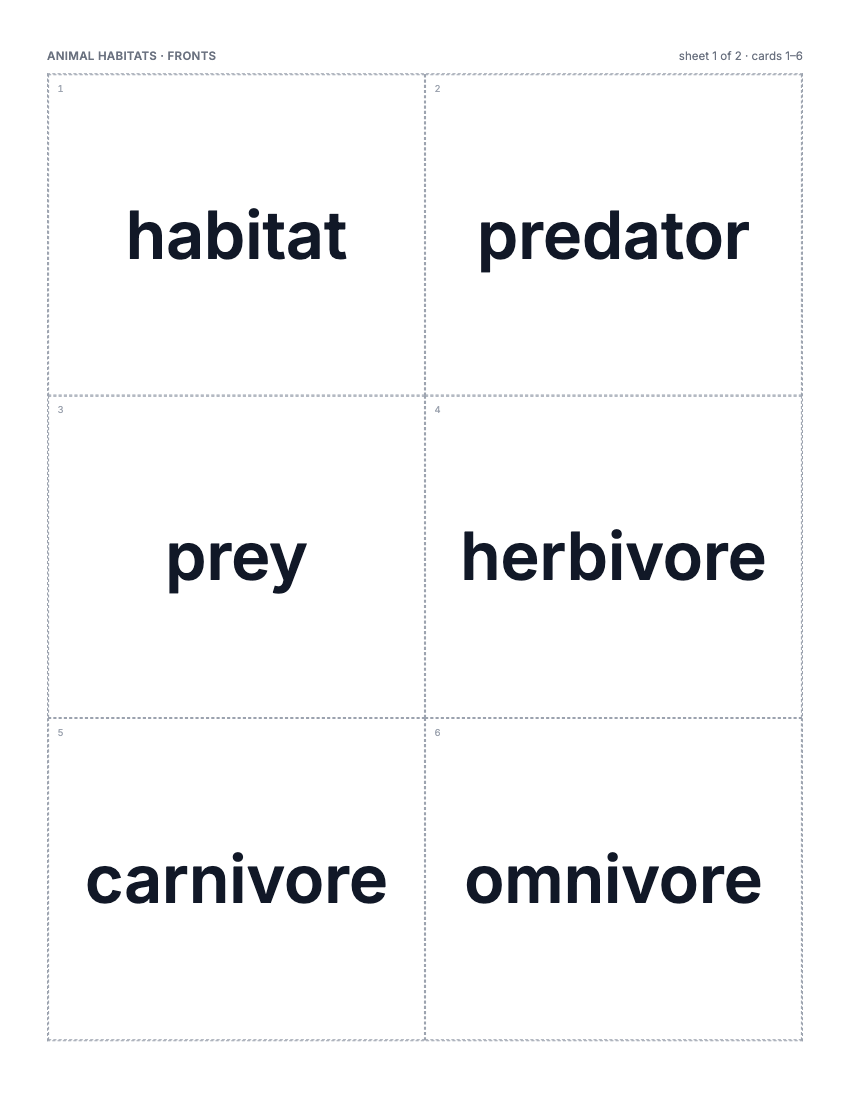 Flashcard makerVocabulary, math fact or sight word cards, 2-8 a page, two-sided or fold-over. Free to print.
AI worksheet generator
Need a different addition with regrouping worksheet?
Generate a custom addition with regrouping worksheet: pick the grade, question types and count, and print it in about 20 seconds. Free accounts get 1 generation a week.
Teaching tips and common mistakes
How to use these worksheets
Print at 100% on A4 or US Letter. Base-ten blocks or a hundreds chart next to the page help children who are still building the idea that ten ones make a ten.
- Start with the no-regrouping sheet even for children who can already carry. It fixes the habit of working right to left and writing one digit per box.
- Regrouping the ones. Say the example out loud together: “7 + 8 is 15. That is 1 ten and 5 ones. The 5 stays in the ones column and the ten goes up into the box.” Insist the carried 1 is written in the box, not remembered in the head.
- Regroup or not? Before writing anything, the child looks at the ones column and says “carry” or “no carry”. This is the sheet that tells you whether the idea has landed.
- 3-digit sums. Two carry boxes. For 368 + 275: 8 + 5 = 13, write 3 carry 1; 1 + 6 + 7 = 14, write 4 carry 1; 1 + 3 + 2 = 6. Answer 643.
- Three addends. Encourage children to look for a pair of ones digits that make 10 first (7 and 3, 4 and 6). The carry can be 2, which surprises many children the first time.
- Word problems. Read twice, underline the numbers, set the column sum out in the working box, then write the answer with its unit. The key gives one number sentence per problem.
Common mistakes to watch for
- Writing 15 in the ones column (so 47 + 38 becomes 715). The child has not yet split 15 into 1 ten and 5 ones; go back to base-ten blocks for a few sums.
- Forgetting the carried 1 when adding the tens. The carry box is there to be looked at; ask “is there anything in the box?” before each tens column.
- Starting from the left. A child who adds the tens first will carry into a column already finished. The guide lines and the instruction “ones first” on every sheet are there for this.
- Misaligned digits. On plain paper 47 + 8 often becomes 4 + 8 and 7 + nothing. The column layout on these sheets prevents it; when the child moves to plain paper, squared paper is the next step.
Answer key
Page 2 of every PDF repeats the sheet with the answers in colour, so a parent can mark quickly or a child can self-check. The word problem key also shows a number sentence for each problem.
Frequently asked questions
What grade is addition with regrouping taught in?
In most curricula it is a second-grade skill (age 7 to 8) for 2-digit numbers, extended to 3-digit numbers late in second grade and secured in third grade. The first two sheets suit the start of that journey; the 3-digit and three-addend sheets are for children who are already confident carrying once.
Is it called regrouping or carrying?
They are the same thing. “Carrying” describes the movement of the digit; “regrouping” describes what actually happens, ten ones being regrouped as one ten. Most schools now say regrouping because it also covers subtraction (borrowing).
Should my child learn the column method or mental strategies first?
Both, but understanding comes first. Children who can already add 47 + 38 in their heads by making 47 + 40 - 2 find the column method easy to trust. Children who only know the column method often cannot spot when an answer is wrong. Use the mixed sheet to ask “is that answer sensible?”
Why do the sums have dashed boxes above them?
They are carry boxes. Writing the carried digit in a fixed place stops it being forgotten or added to the wrong column, and it lets you see exactly where a mistake happened when you mark.
More practice
Children who are not yet adding within 20 fluently should start with the basic addition worksheets and the doubles addition worksheets. The place value worksheets build the tens-and-ones idea that regrouping depends on, and a hundreds chart is a good aid for checking answers by counting on.
Free library
Related collections
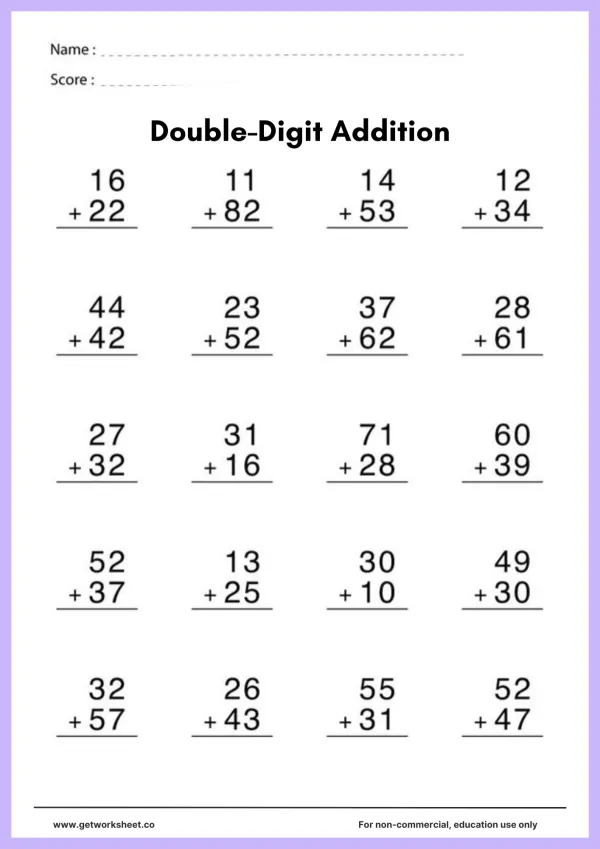
Free doubles addition worksheets
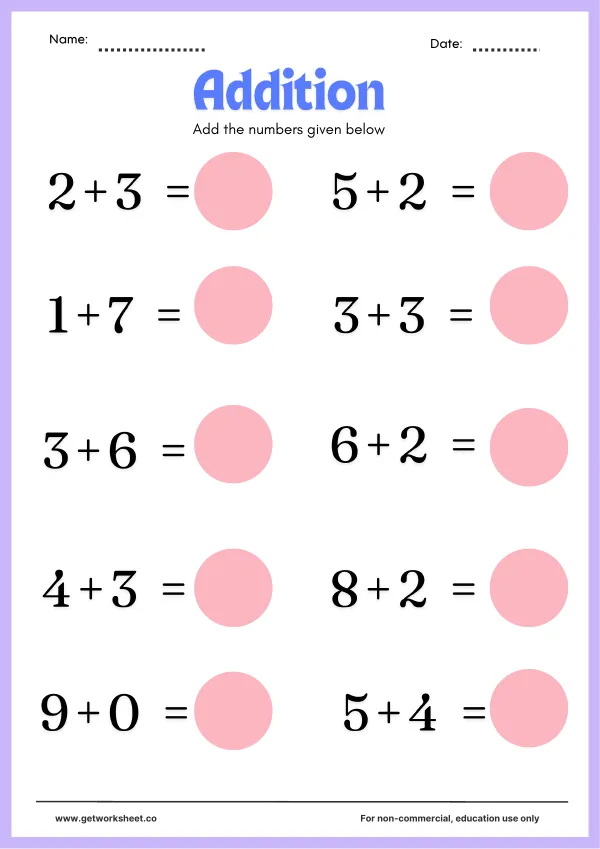
Free addition worksheets
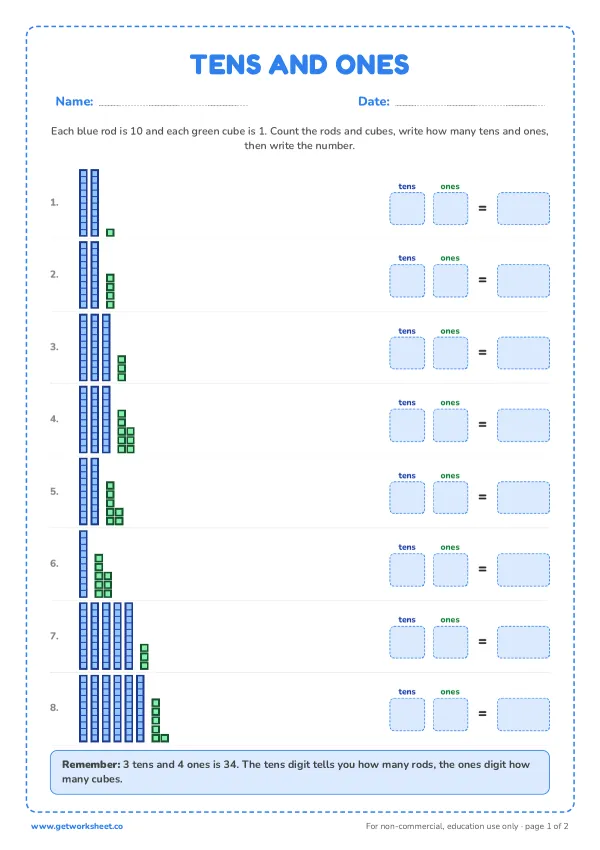
Free place value worksheets
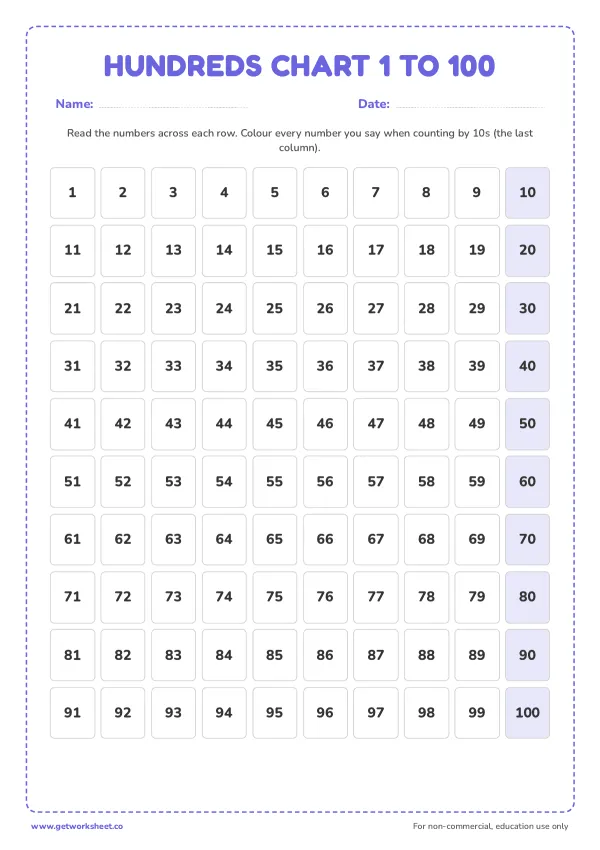
Free hundreds chart worksheets
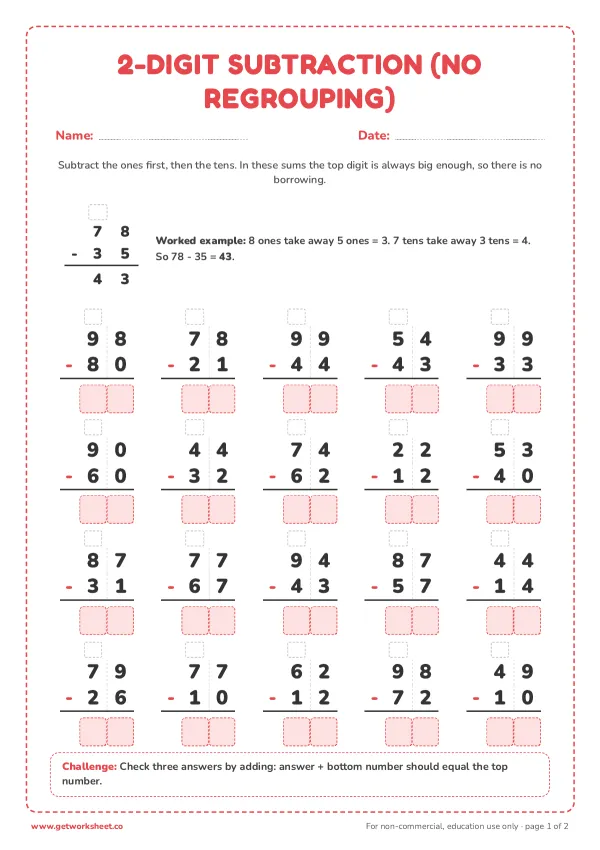
Free subtraction with regrouping worksheets
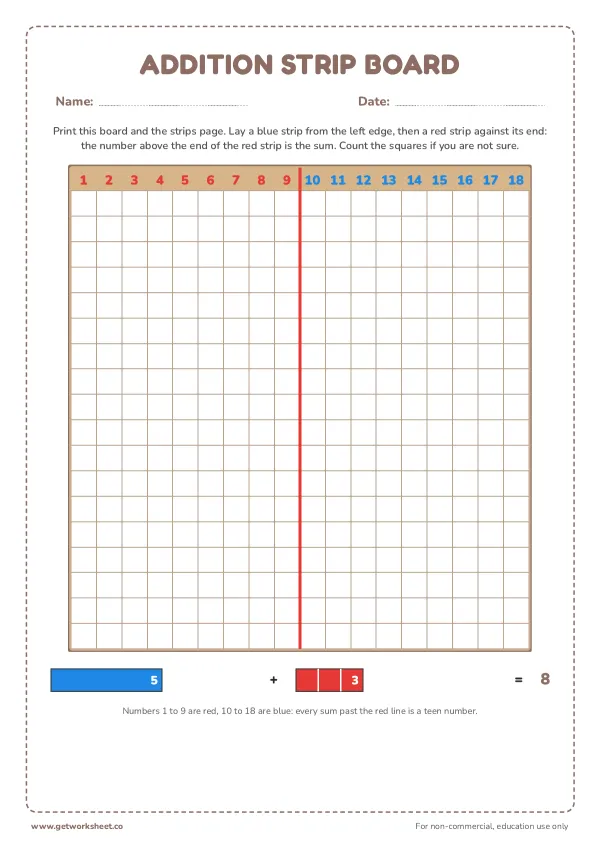
Free Montessori addition strip board worksheets
Free 2-digit addition worksheets
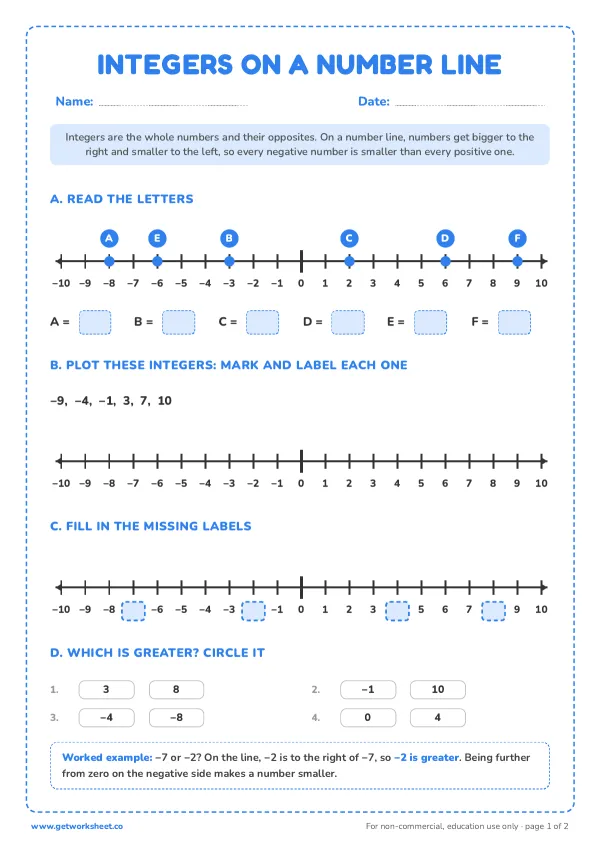
Free integers worksheets
More worksheets
- Free percent worksheets
- Free elapsed time worksheets
- Free decimals worksheets
- Free 9 times table worksheets
- Free 12 times table worksheets
- Free 11 times table worksheets
- Free 8 times table worksheets
- Free 6 times table worksheets
- Free multiplying and dividing fractions worksheets
- Free square numbers worksheets
- Free 10 times table worksheets
- Free 7 times table worksheets