Maths · Grades 2–5
Free printable multiplication charts
Free printable multiplication charts: 1-12 in colour and in black and white, a large-cell 1-10 chart, a blank 12 x 12 chart to fill in, a chart with 40% of the answers missing (answer key included), and a compact 1-15 chart. PDF download.
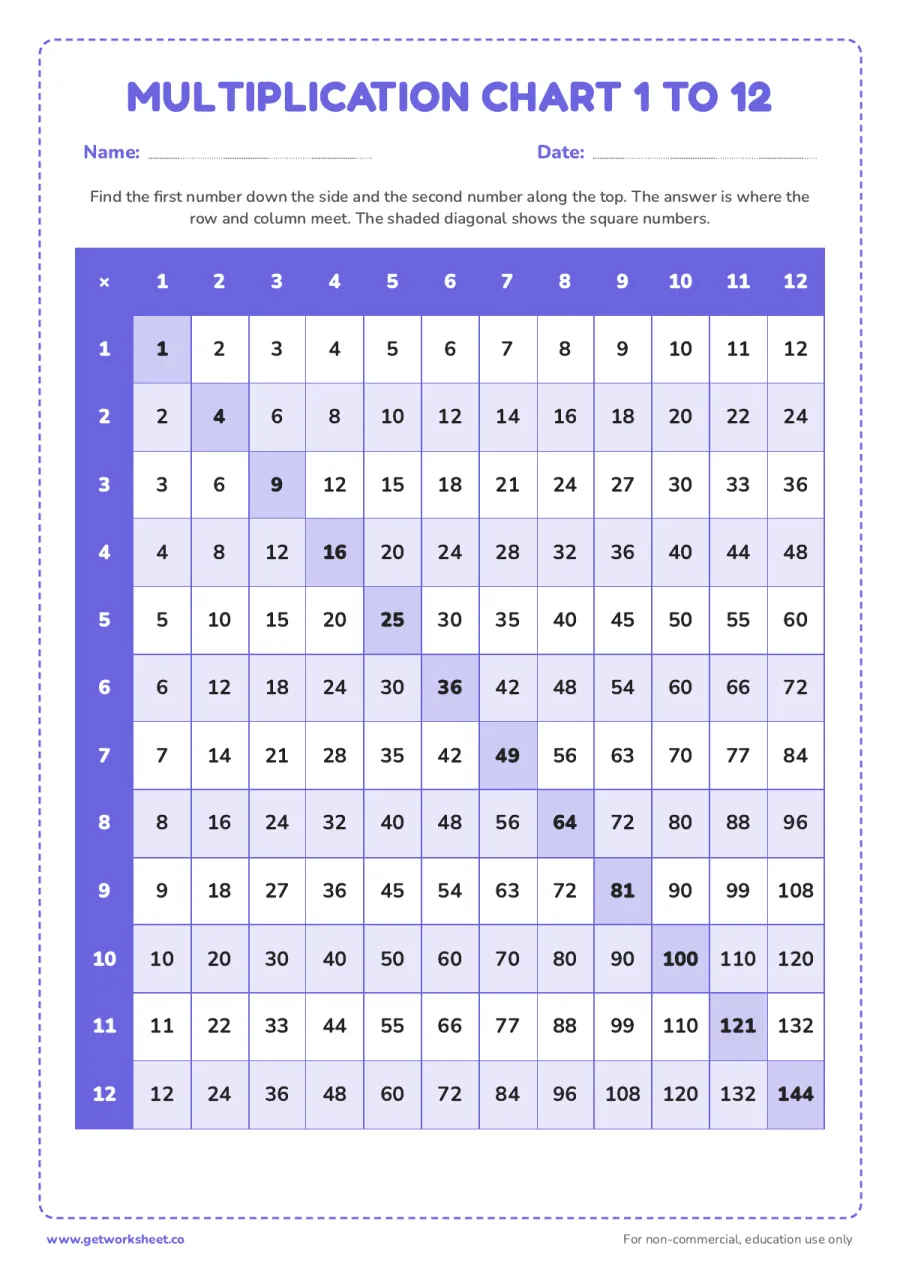
Multiplication chart 1-12 in colour with the square numbers highlighted
The full 12 × 12 chart with shaded rows and the square numbers marked on the diagonal, for the wall or the desk. Free printable PDF.
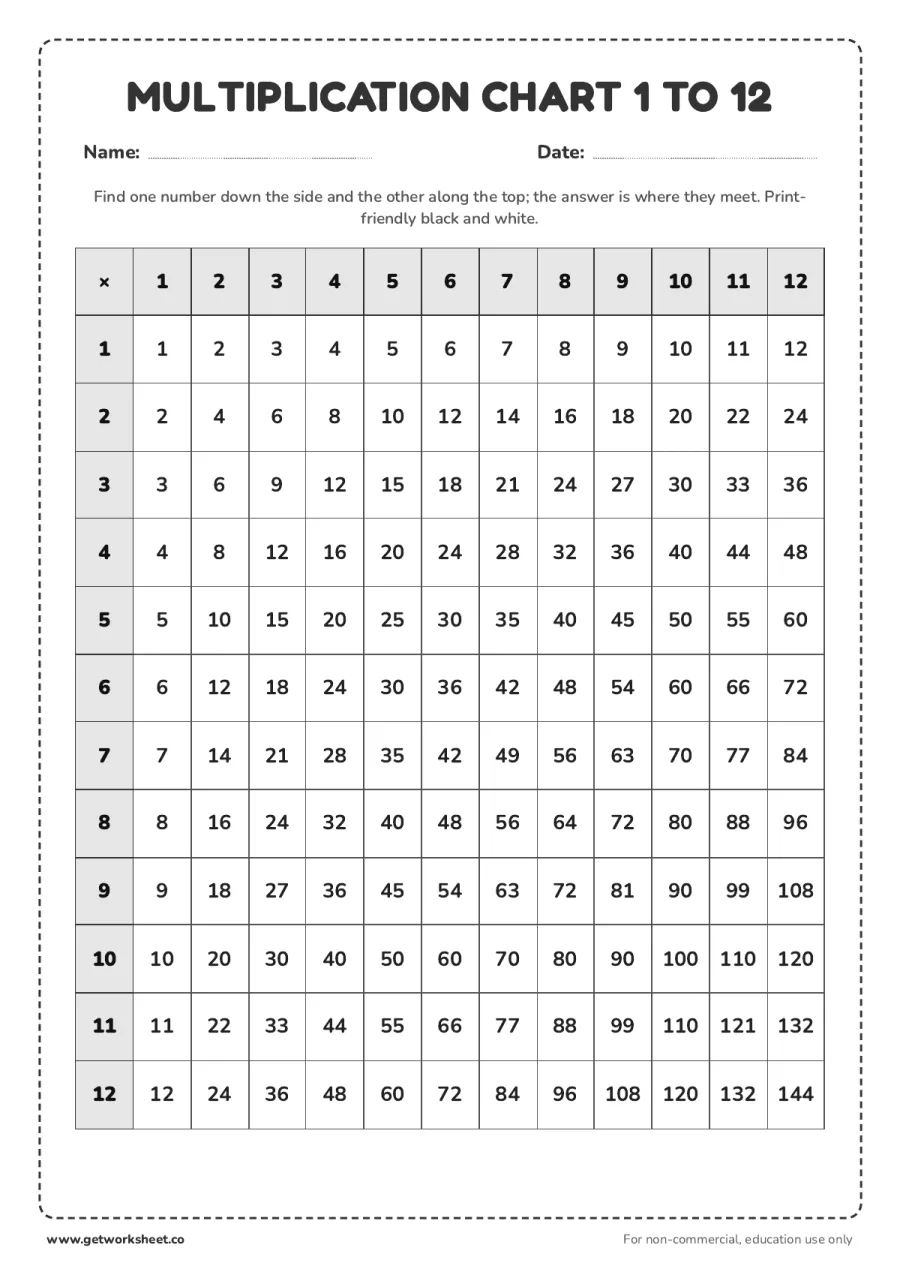
Multiplication chart 1-12 in black and white (print-friendly)
The same 12 × 12 chart with no colour, for cheap printing and photocopying. Free printable PDF.
Whole set
All 6 sheets in one PDF
Instant and ad-free. No account needed.
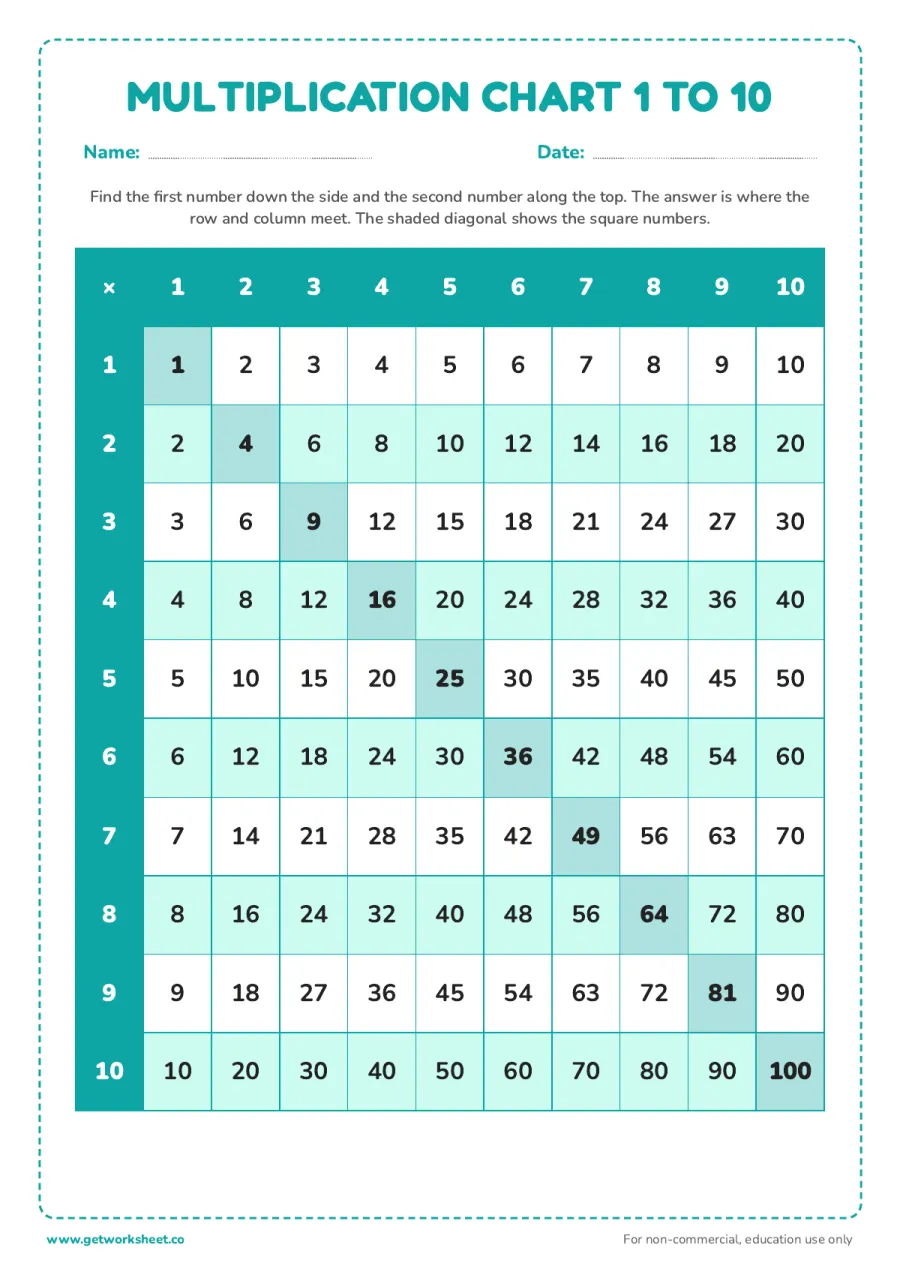
Multiplication chart 1-10 with big cells for younger children
A 10 × 10 chart with large, easy-to-read cells for children who are just starting their tables. Free printable PDF.
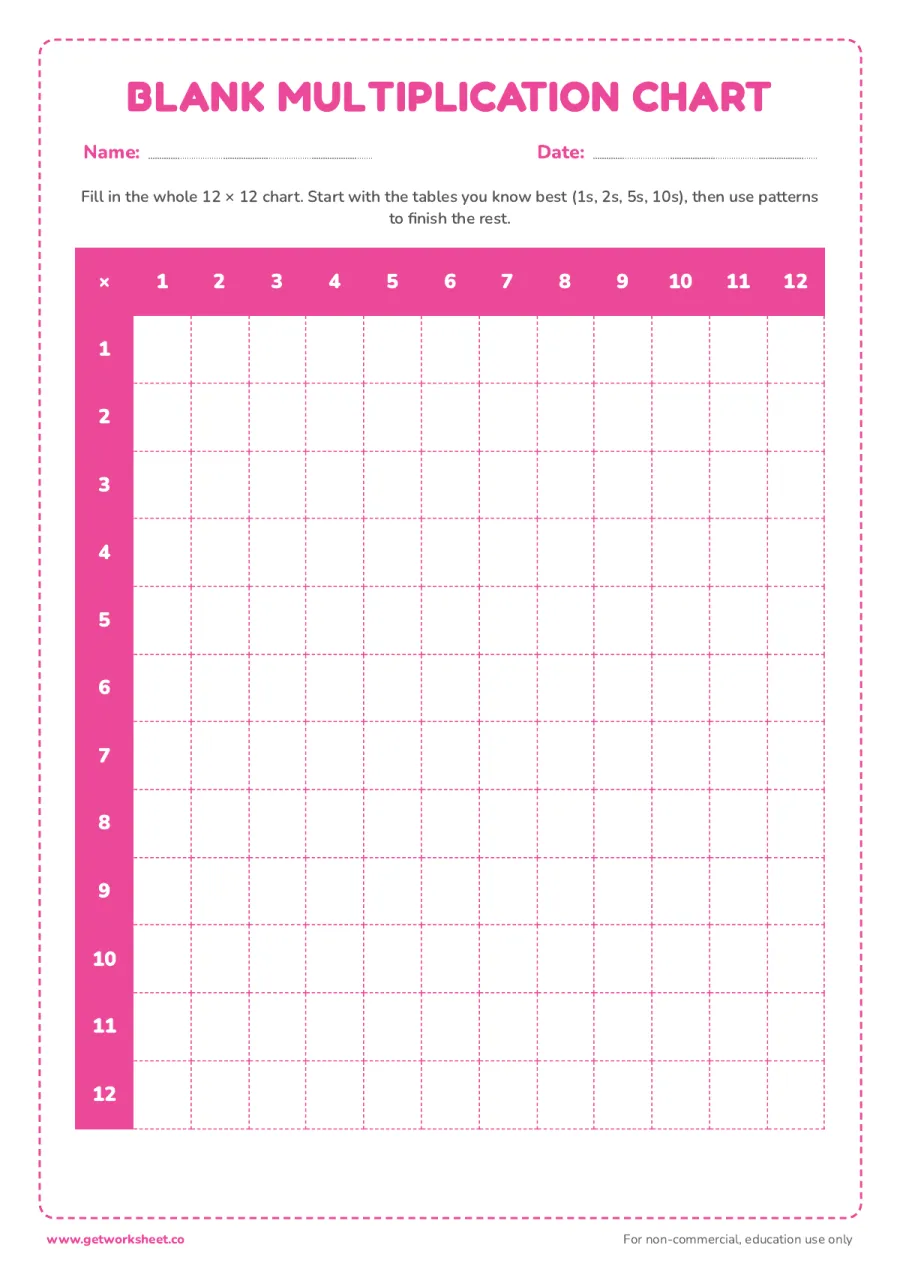
Blank multiplication chart 1-12 to fill in
An empty 12 × 12 grid with the headers filled in; children complete the whole chart from memory or with counting. Free printable PDF.
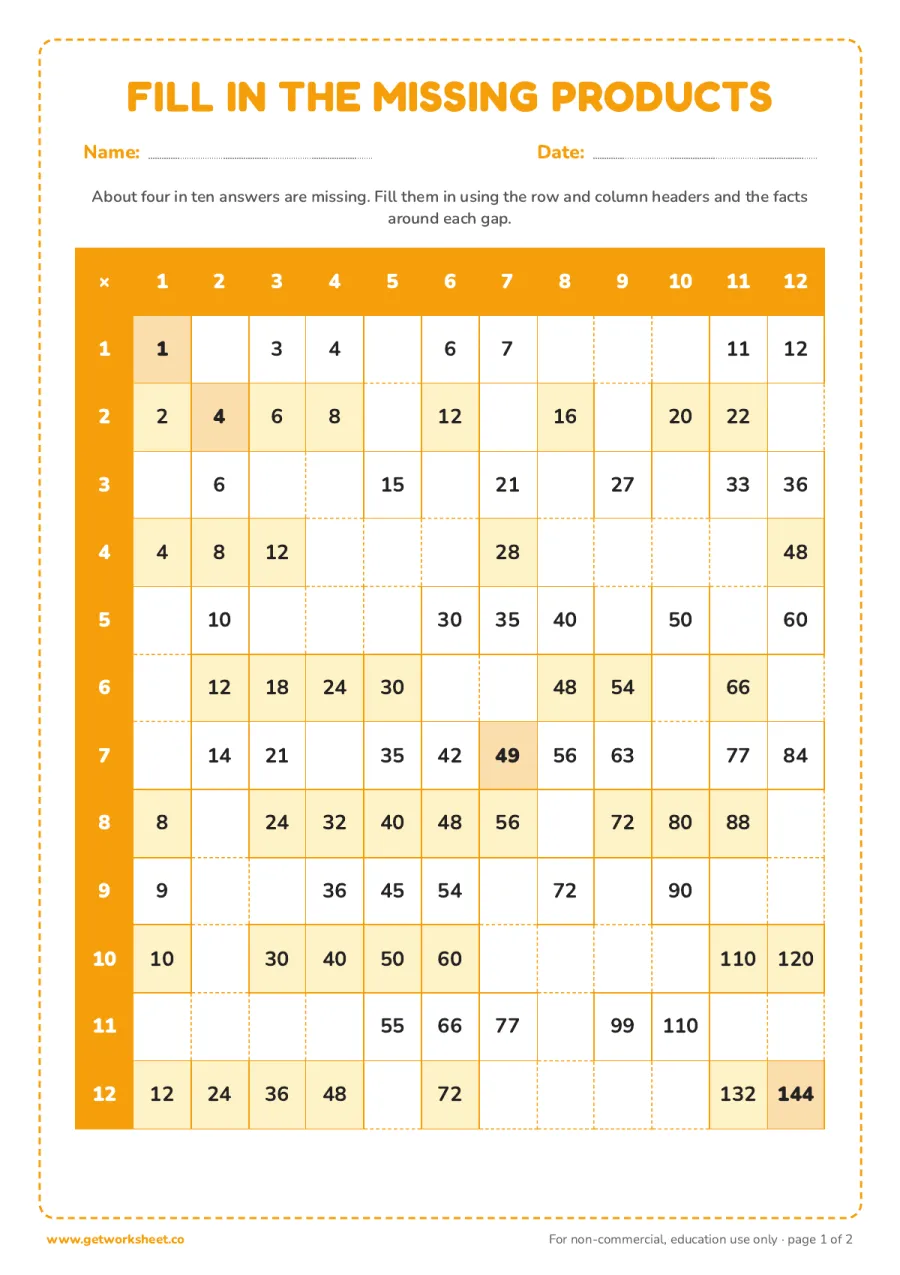
Multiplication chart with 40% missing: fill in the gaps
A 12 × 12 chart with about four in ten answers missing; fill them in using the patterns around each gap. Answer key on page 2.
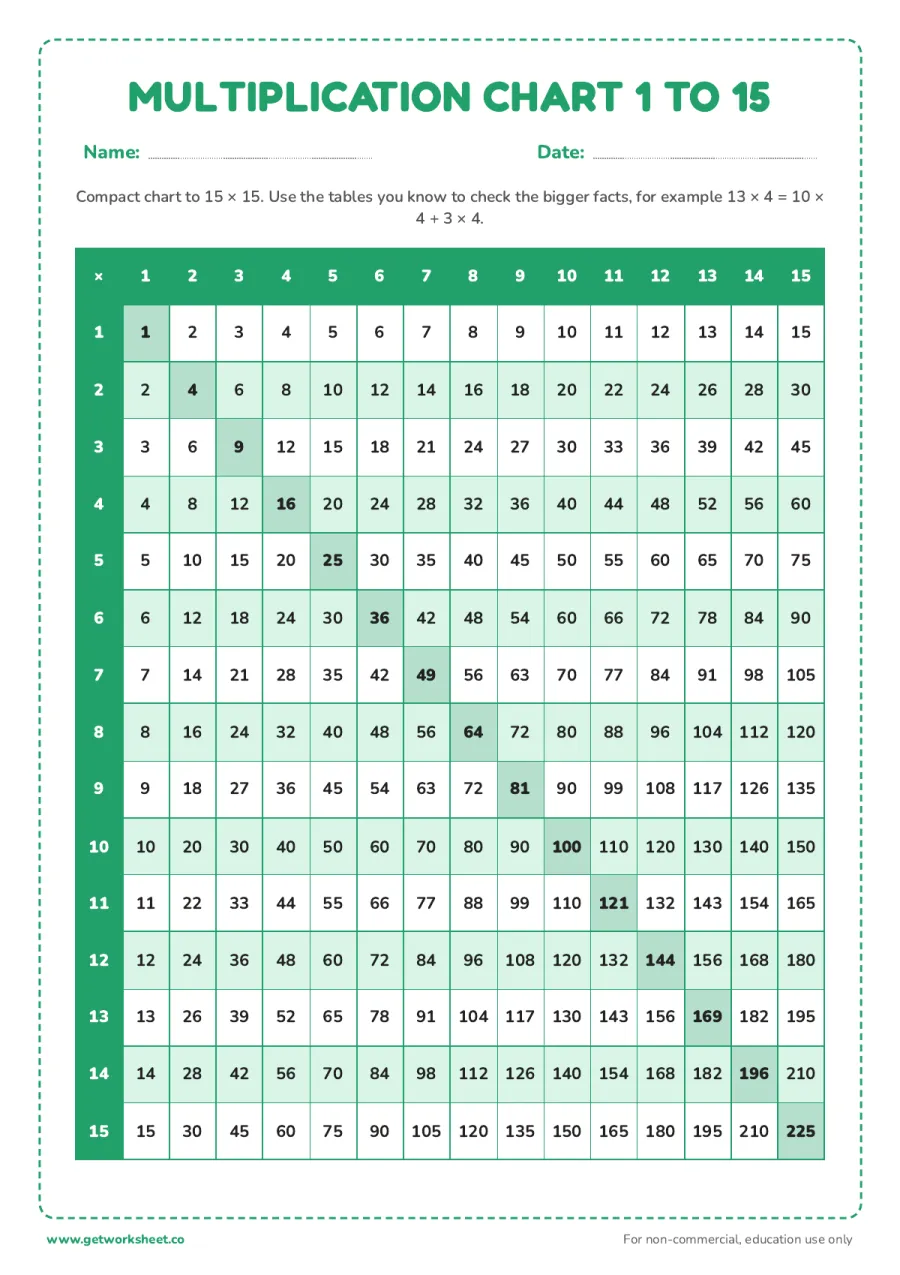
Multiplication chart 1-15 for upper primary
A compact 15 × 15 chart to 225 for children who know the 12s and want to see the tables continue. Free printable PDF.
AI worksheet generator
Make a worksheet like this for your class
The 6 sheets above are fixed. The generator writes a new multiplication charts worksheet for your grade, with the question types and count you choose, in about 20 seconds. Pick a grade to start:
What you get
- A fresh set of questions on multiplication charts, not a copy of the sheets above
- Multiple choice, fill in the blanks, true or false, open ended
- Answer key and print-ready PDF with Pro
Free account, 1 worksheets a week. No card.
A multiplication chart is the one maths printable every classroom and kitchen drawer seems to need: a reference while children are learning their tables, a checking tool once they know most of them, and, when it is blank, a fifteen-minute test of the whole lot. This set gives you six versions of the chart so you can pick the right one for the child in front of you: a colourful 1 to 12 chart for the wall, a plain black and white copy for photocopying, a big-cell 1 to 10 chart for younger children, a blank chart, a chart with gaps to fill, and a 1 to 15 chart for children who have run out of tables to learn.
What’s in this set
- Multiplication chart 1-12 in colour with the square numbers highlighted. Alternate rows are shaded so the eye can follow a row, and the diagonal of square numbers (1, 4, 9 ... 144) is picked out.
- Multiplication chart 1-12 in black and white. The same chart with no colour at all, for cheap printing and photocopying.
- Multiplication chart 1-10 with big cells. Ten by ten with larger numerals for children in second grade who are only working within 100.
- Blank multiplication chart 1-12. Headers filled in, every product empty. Fill it from memory, or fill the easy tables first and work out the rest from patterns.
- Multiplication chart with 40% missing. About four in ten answers are blanked out; children fill them in using the row and column headers and the neighbouring facts. Answer key on page 2.
- Multiplication chart 1-15. A compact 15 by 15 chart to 225 for upper primary children who want to see the tables continue.
What students will practice
- Finding a product from two factors by reading across and down (and finding a factor from a product by working backwards)
- Commutativity: 4 × 7 and 7 × 4 land on the same number, mirrored across the diagonal
- Recognising square numbers along the diagonal
- Spotting patterns in the 5s (0, 5), the 9s (digits summing to 9) and the 10s and 11s
- Fluent multiplication within 100 (Common Core 3.OA.C.7) and pattern work in 3.OA.D.9 and 4.OA.C.5
Free printable makers
Make your own multiplication charts sheets
Type your own words or numbers and print in about 30 seconds. No account, no AI, answer key where it applies.
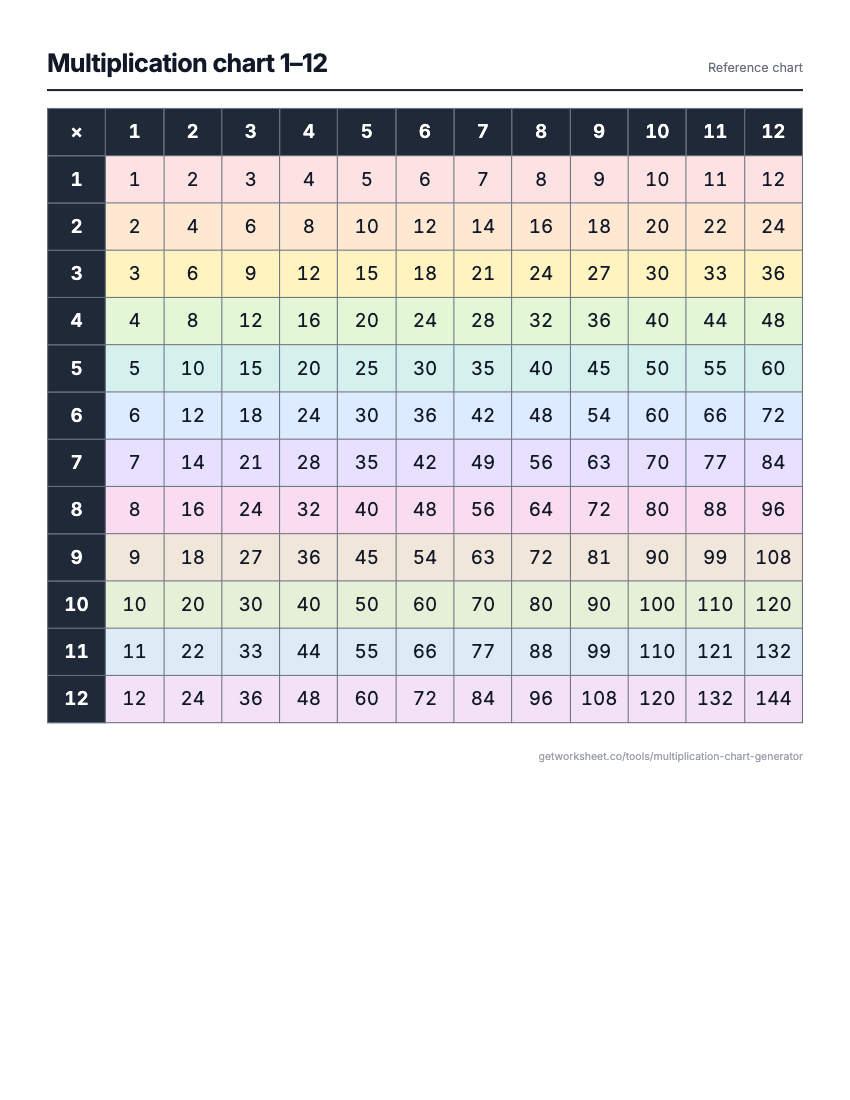 Multiplication chart generatorCharts to 15, full, blank or coloured, and times table tests with key. Free to print.
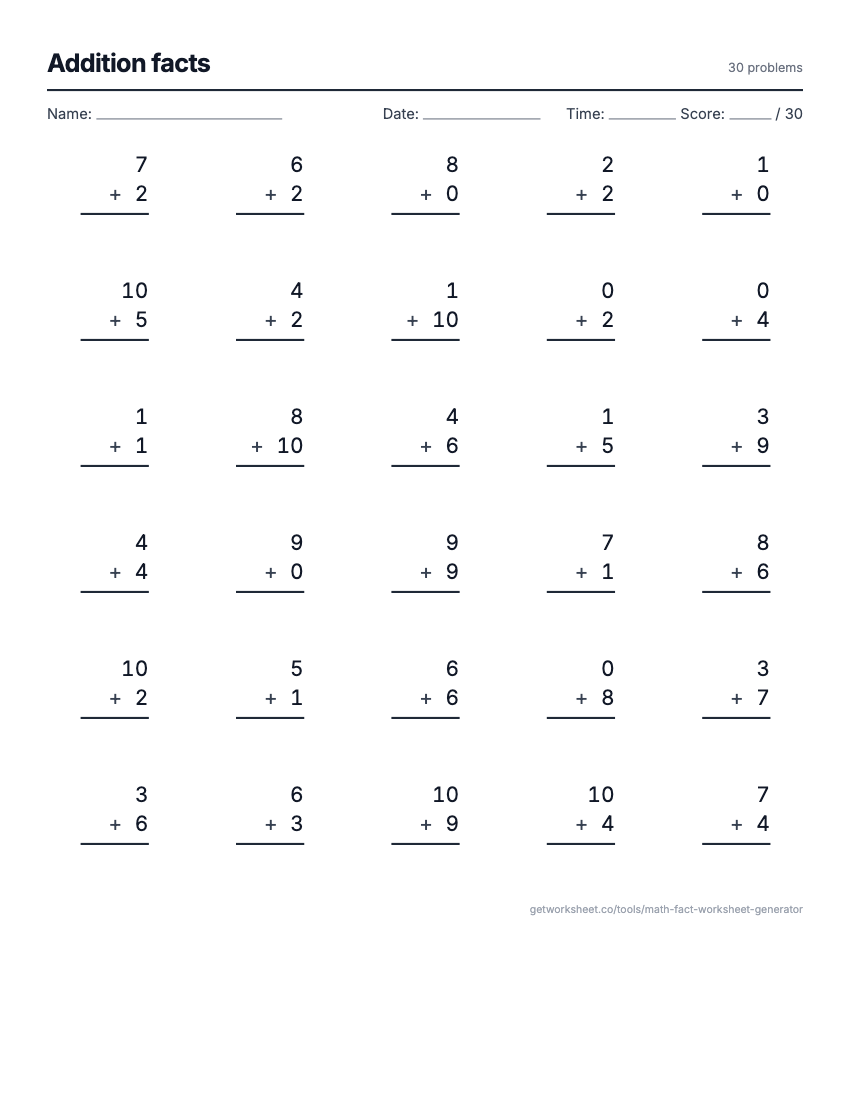 Math fact worksheet generatorAddition to division drills with an answer key. Free to print.
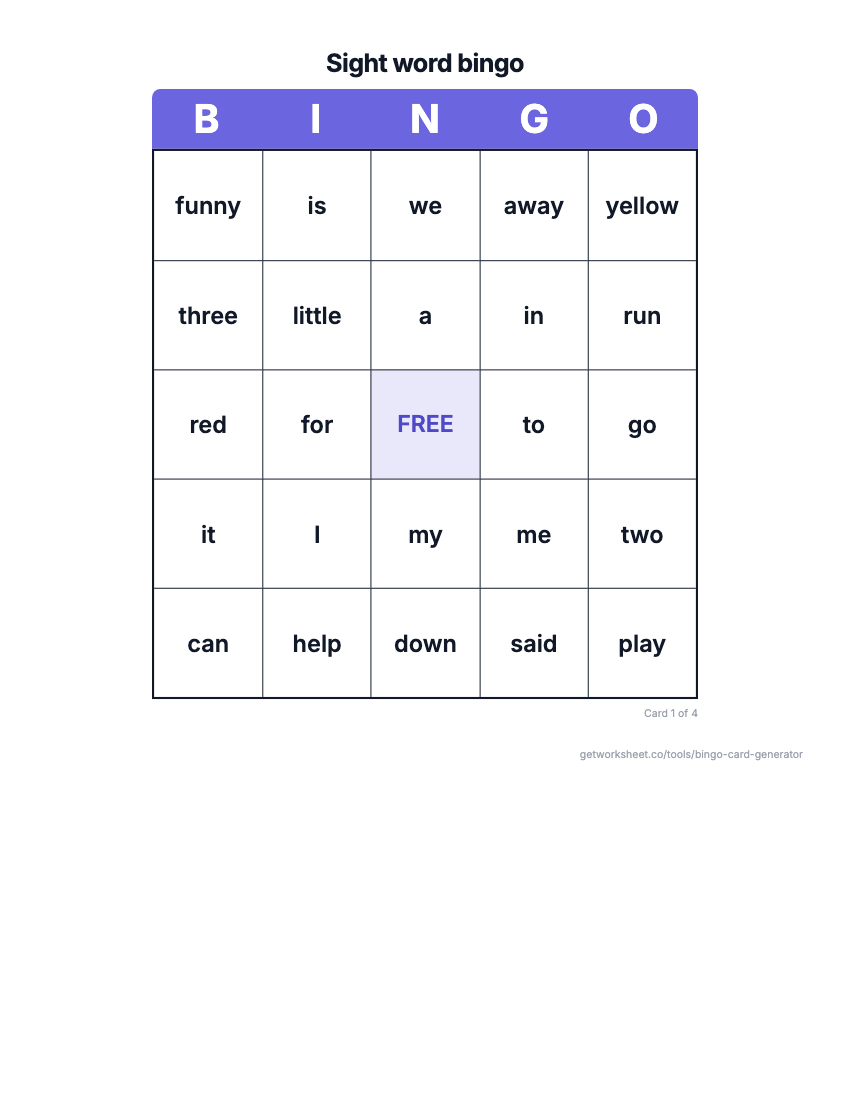 Bingo card generatorSight word, number, math fact or custom bingo cards with a call sheet. Free to print.
AI worksheet generator
Need a different multiplication charts worksheet?
Generate a custom multiplication charts worksheet: pick the grade, question types and count, and print it in about 20 seconds. Free accounts get 1 generation a week.
How to use these worksheets
Print at 100% on A4 or US Letter. The colour charts look best on a heavier paper and can be laminated for the desk; the black and white chart is designed to survive a photocopier.
- Reading the chart. Put one finger on the first number down the side and another on the second number along the top. Slide them together; the answer is where they meet. Do this for 6 × 7 and 7 × 6 to show that the answer is the same both ways.
- The colour chart. Ask children to follow the shaded diagonal and read the numbers out: these are the square numbers. Then ask what they notice about the two halves either side of it (they are mirror images).
- The 1 to 10 chart. Use with children who are still learning their first tables. The large cells make it easy to run a finger along the row of a single table while reciting it.
- The blank chart. Time it once a month and keep the sheets. Encourage the child to fill in the 1s, 2s, 5s and 10s first, then the squares, then use doubling (the 4s are the 2s doubled, the 8s the 4s doubled) to finish. A full correct chart in under ten minutes is a good target by the end of fourth grade.
- The missing-numbers chart. Point out that each gap can be worked out from the fact above or beside it (one more or one less group), so a child does not need to know every fact to complete it.
- The 1 to 15 chart. Show how 13 × 6 = 10 × 6 + 3 × 6 so the chart is not a new set of facts to memorise but a place to practise splitting numbers.
Common mistakes to watch for
- Reading the wrong row: A finger slipping down one row gives an answer in the next table. The shaded alternate rows on the colour chart are there to prevent this; teach children to use a ruler on the plain chart.
- Treating the chart as the answer, not the tool: A child who checks every fact on the chart forever will not memorise them. Move from the full chart to the missing-numbers chart to the blank chart over a term.
- Filling the blank chart row by row from 1: Slow and error-prone. Fill the easy tables first and use them as anchors.
- Ignoring commutativity: Children sometimes learn 3 × 8 and 8 × 3 as separate facts. Showing them as mirror images across the diagonal halves the work.
Answer key
The complete 1 to 12 chart on sheet one is the answer key for the blank chart, and the missing-numbers chart carries its own completed chart on page 2 of the PDF.
Frequently asked questions
Which multiplication chart should I print?
For a child in second grade who is learning the 2s, 5s and 10s, print the 1 to 10 chart. From third grade on, the 1 to 12 chart in colour for the wall and the black and white copy for their folder. Use the blank chart to test and the 1 to 15 chart for children who have finished their tables.
Why are the square numbers highlighted?
The diagonal from 1 to 144 shows where each number is multiplied by itself, and it splits the chart into two mirror halves. Children who notice this realise there are far fewer facts to learn than the 144 cells suggest.
Does a multiplication chart stop children learning their tables?
Not if it is used as a step. Children look up facts, then check facts, then fill in a blank chart from memory. This set has a chart for each stage.
Are these charts free to print for a class?
Yes, for non-commercial classroom and home use. The black and white version is designed for photocopying.
More multiplication practice
Once the chart is familiar, practise single tables with the 2 times table worksheets and 5 times table worksheets, then move on to the multiplication worksheets and the multi-digit multiplication worksheets, where the chart becomes a checking tool rather than a crutch. The prime number worksheets use the chart too: a prime is a number that appears in the chart only in the 1 times row and column.
Free library
Related collections
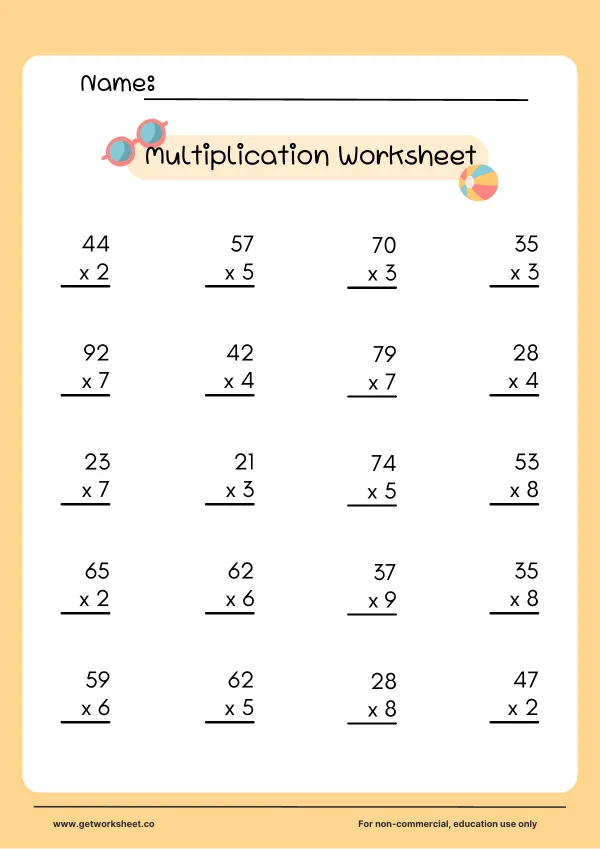
Free multiplication worksheets
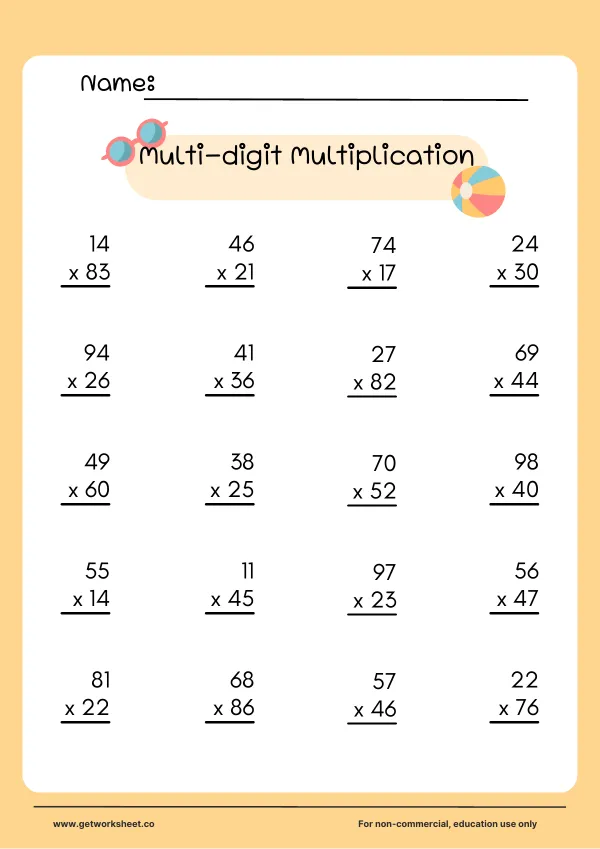
Free multi-digit multiplication worksheets
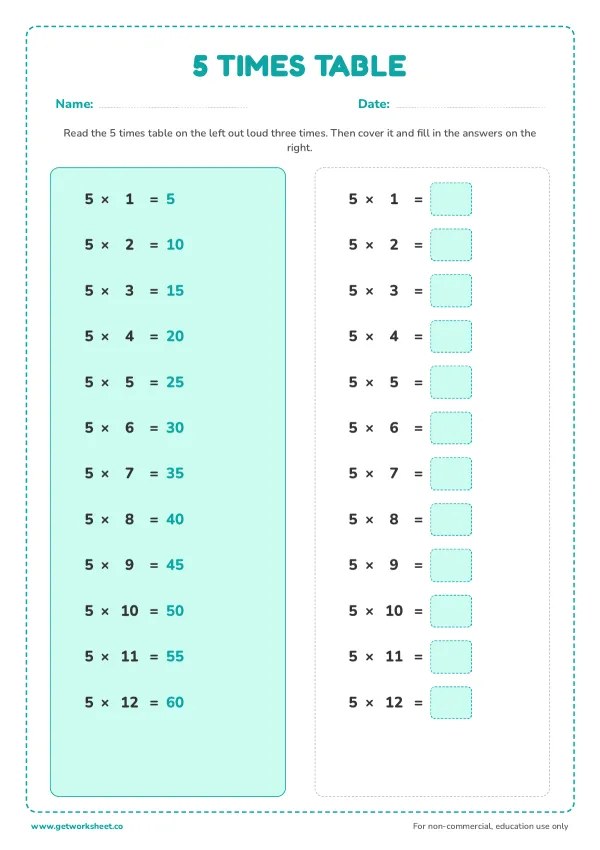
Free 5 times table worksheets
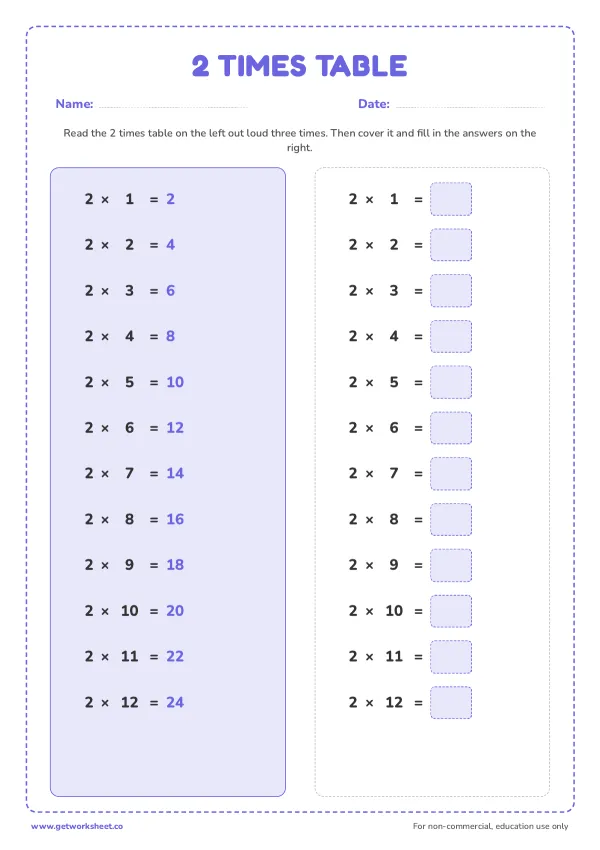
Free 2 times table worksheets
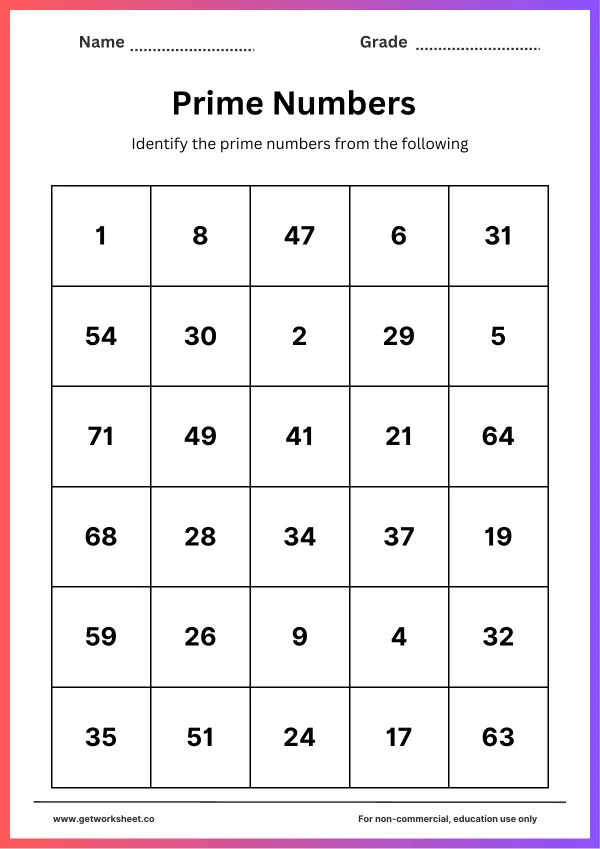
Free prime number worksheets
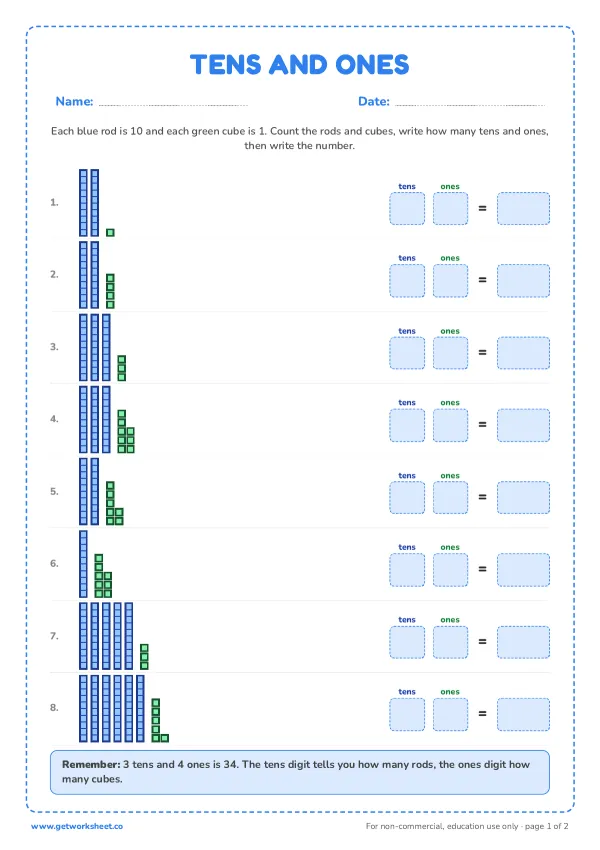
Free place value worksheets
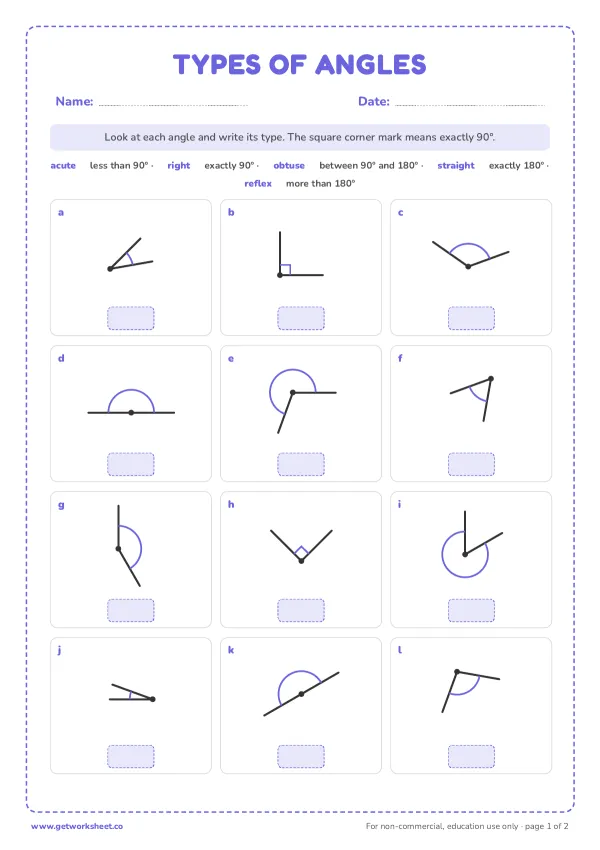
Free angles worksheets
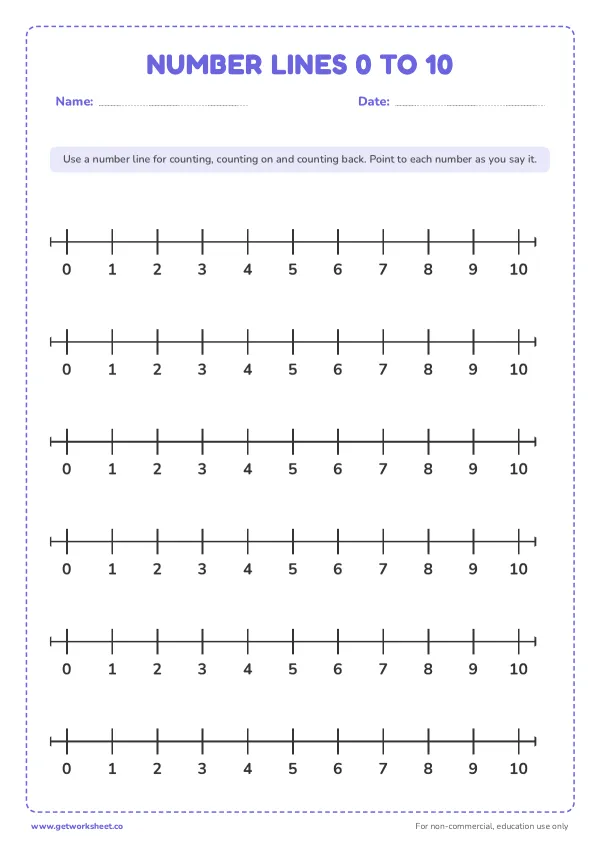
Free number line printables
More worksheets
- Free graph paper printables
- Free heart tracing worksheets
- Free Montessori math worksheets: one from every material
- Free shape tracing worksheets
- Free Halloween math worksheets
- Free number 20 tracing worksheets
- Free number 19 tracing worksheets
- Free number 18 tracing worksheets
- Free number 17 tracing worksheets
- Free number 16 tracing worksheets
- Free number 15 tracing worksheets
- Free number 14 tracing worksheets