Life skills · Grades 4–8
Time Management Worksheets
Three time management worksheets for grades 4 to 8, each with three multiple-choice elapsed-time problems: adding weekly hours, finding a finish time and working out when to leave.
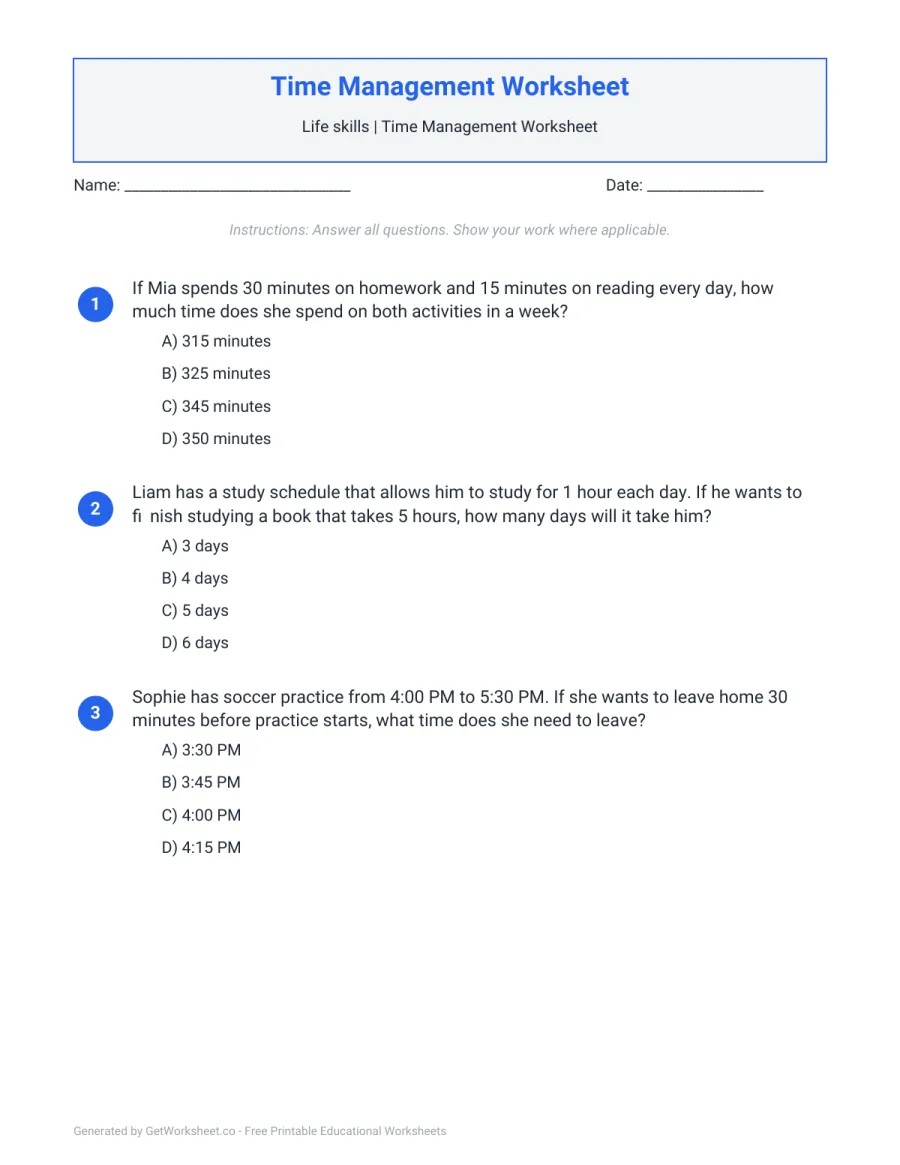
Time management: 3 problems on weekly time and leaving early
Three multiple-choice problems: weekly minutes of homework and reading, days to finish a 5-hour book, and when to leave for soccer practice. Free printable PDF.
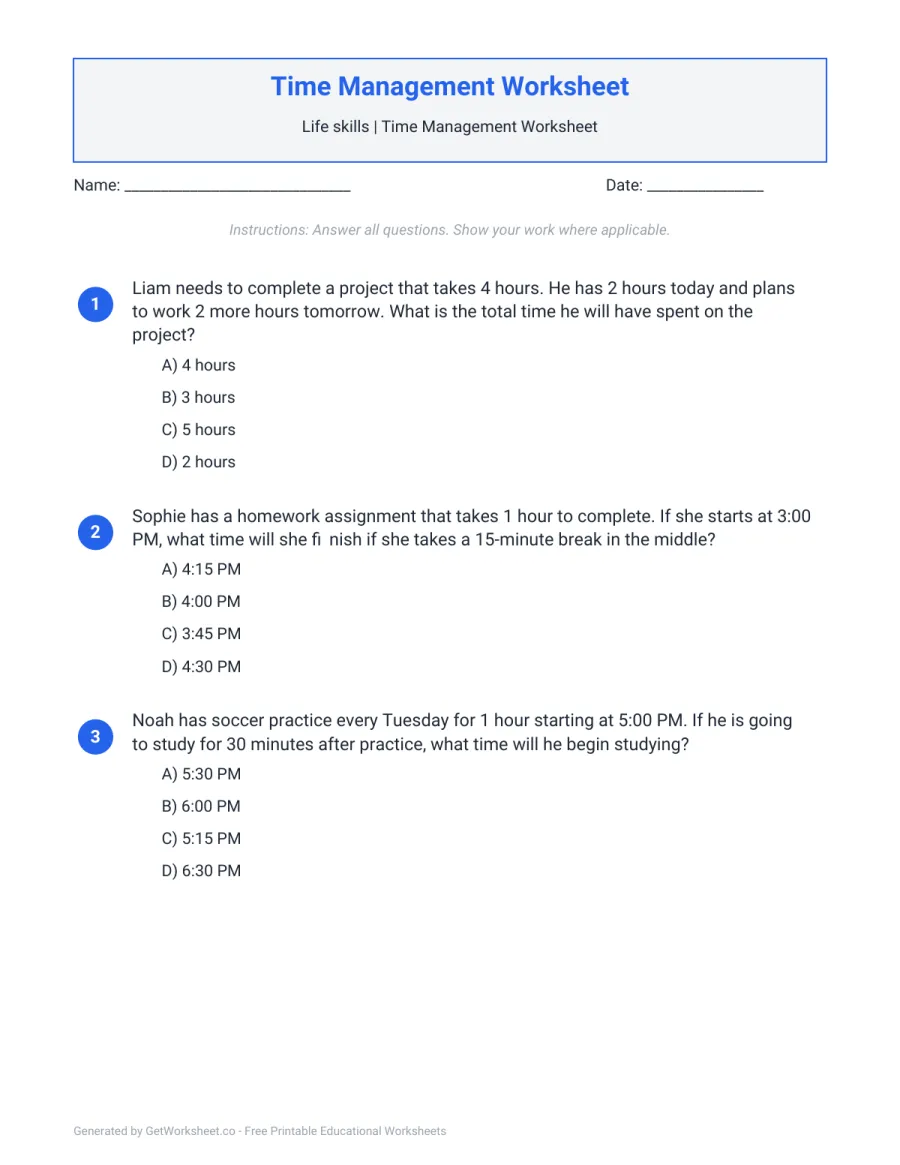
Time management: 3 problems adding hours and end times
Three multiple-choice problems: project hours over two days, homework finish time with a 15-minute break, and study start after practice. Free printable PDF.
Whole set
All 3 sheets in one PDF
Instant and ad-free. No account needed.
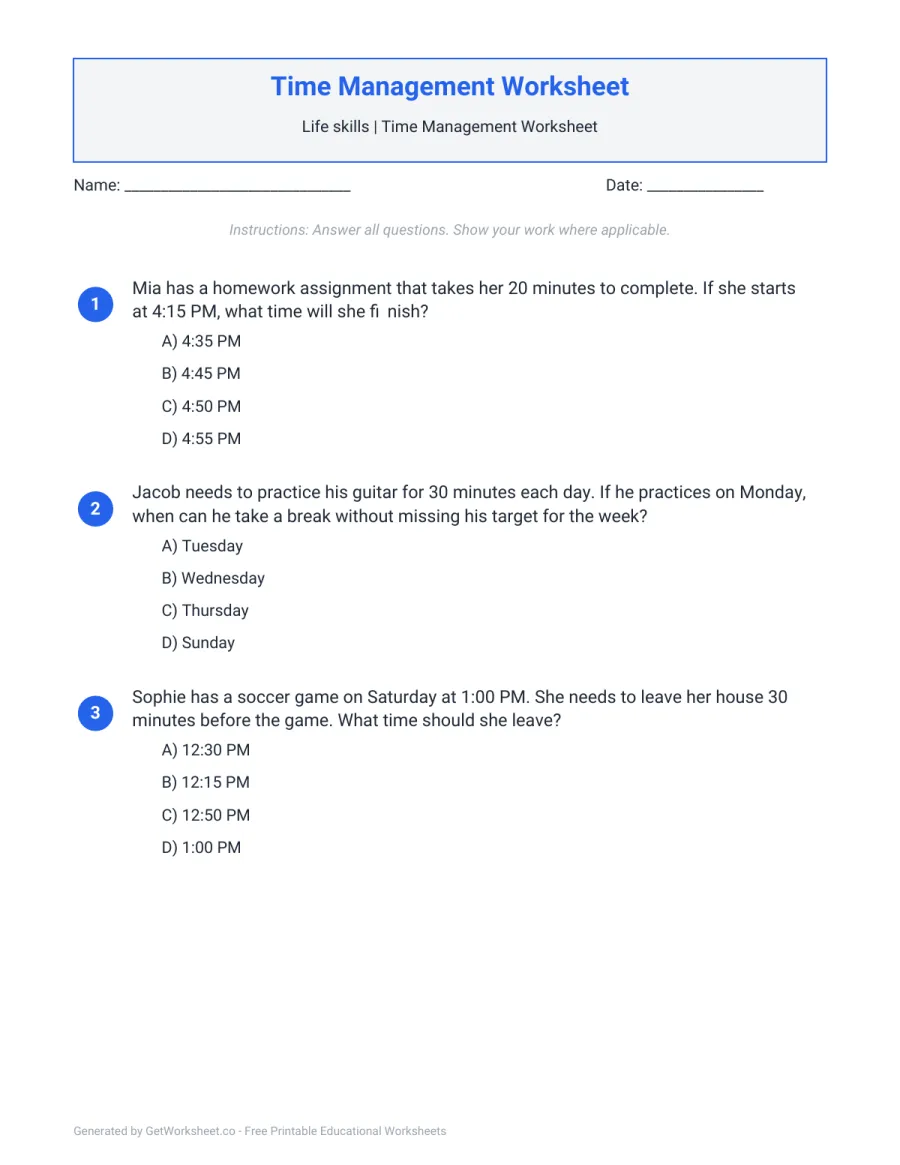
Time management: 3 problems on finish and leaving times
Three multiple-choice problems: homework finish time from 4:15 PM, a rest day in a practice week, and when to leave for a 1:00 PM game. Free printable PDF.
AI worksheet generator
Make a worksheet like this for your class
The 3 sheets above are fixed. The generator writes a new time management worksheet for your grade, with the question types and count you choose, in about 20 seconds. Pick a grade to start:
What you get
- A fresh set of questions on time management, not a copy of the sheets above
- Multiple choice, fill in the blanks, true or false, open ended
- Answer key and print-ready PDF with Pro
Free account, 1 worksheets a week. No card.
This page has three time management worksheets for grades 4 to 8, and each one is three multiple-choice elapsed-time problems. The first totals weekly minutes of homework and reading, asks how many days a five-hour book takes and when to leave for soccer practice. The second adds project hours across two days, finds a homework finish time with a 15-minute break and works out when study starts after practice. The third finds a finish time from a 4:15 PM start, picks the rest day in a practice week and asks when to leave for a 1:00 PM game. The sheets are text only, with no planner or timetable to fill in and no answer key.
These are the calculations behind real time management: how long things take, when they end and how early to start. Once a child can do them on paper, a weekly planner makes far more sense.
What Students Will Practice
- Adding minutes and hours across several days to a weekly total
- Finding a finish time from a start time and a duration, including a break
- Working backwards from a fixed time, such as a 1:00 PM game, to a leaving time
- Reading a short word problem and choosing the one correct answer from four
Free printable makers
Make your own time management sheets
Type your own words or numbers and print in about 30 seconds. No account, no AI, answer key where it applies.
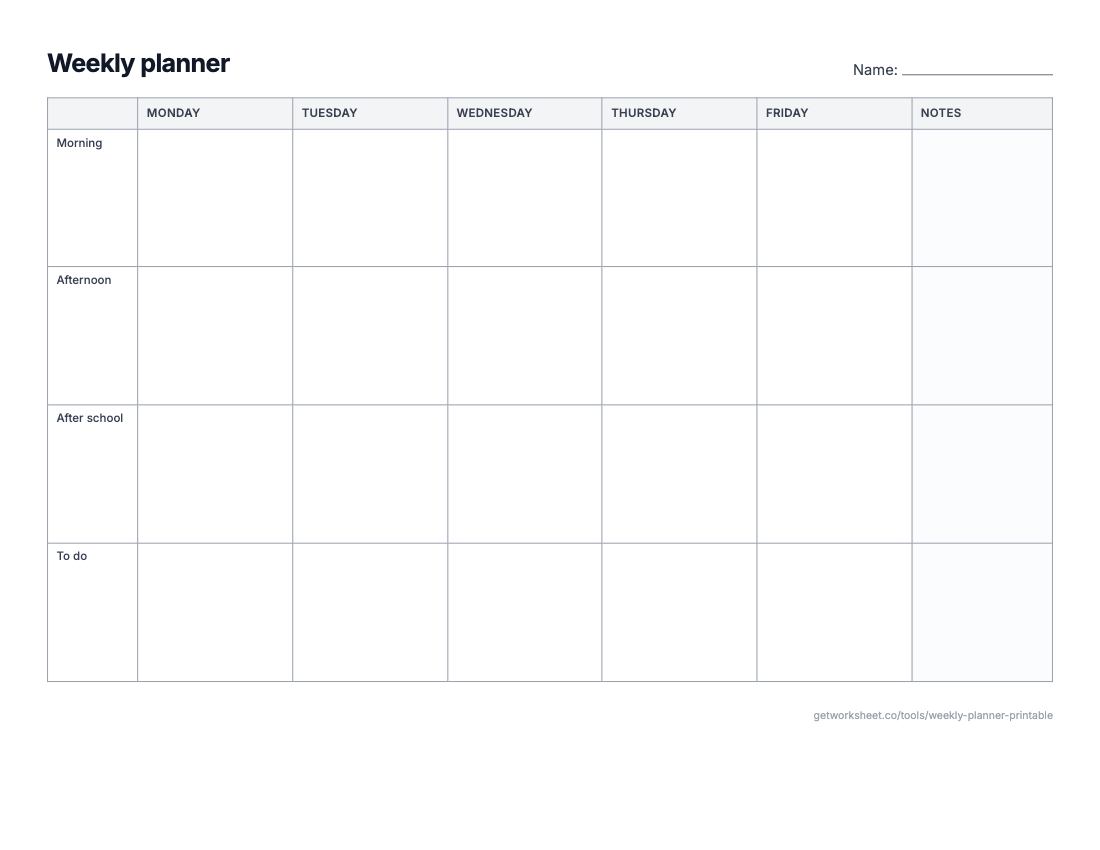 Weekly planner and calendar makerWeekly planner, monthly calendar, daily schedule or lesson-plan grid on one sheet. Free to print.
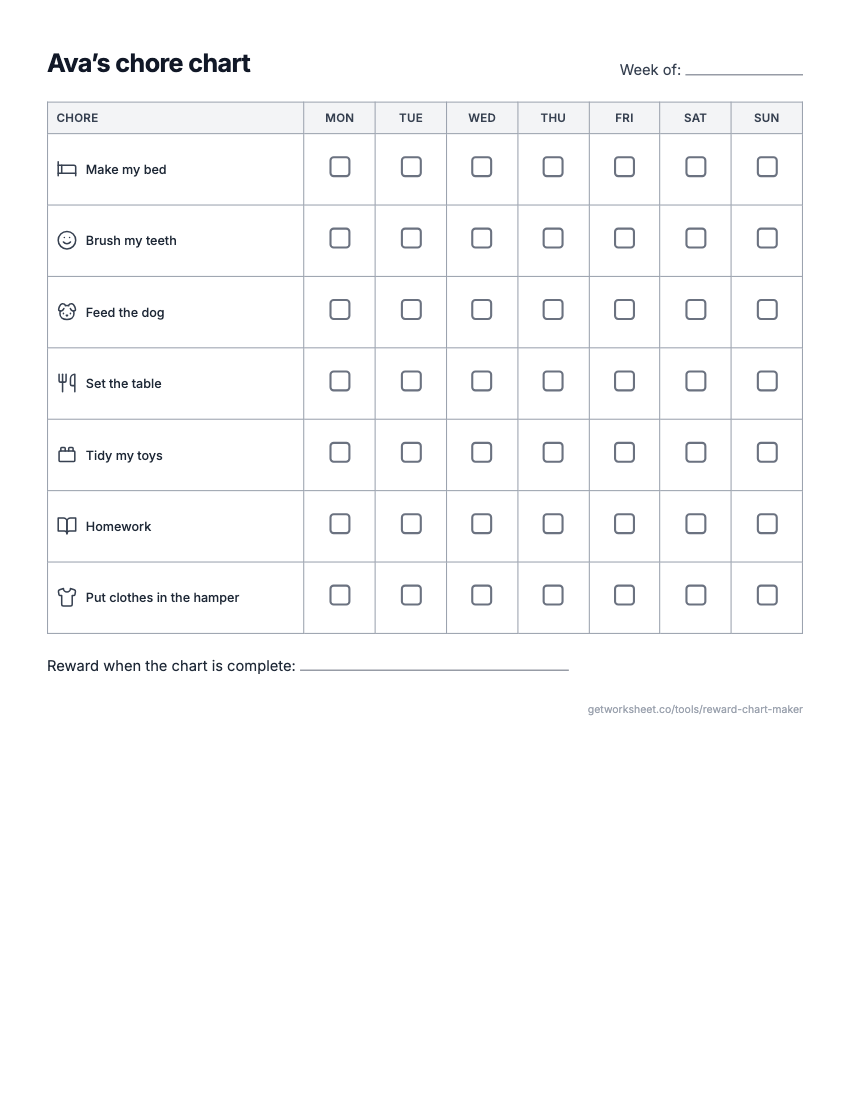 Reward chart and chore chart makerReward or sticker chart with a goal, Mon-Sun chore chart with pictures, behavior chart. Free to print.
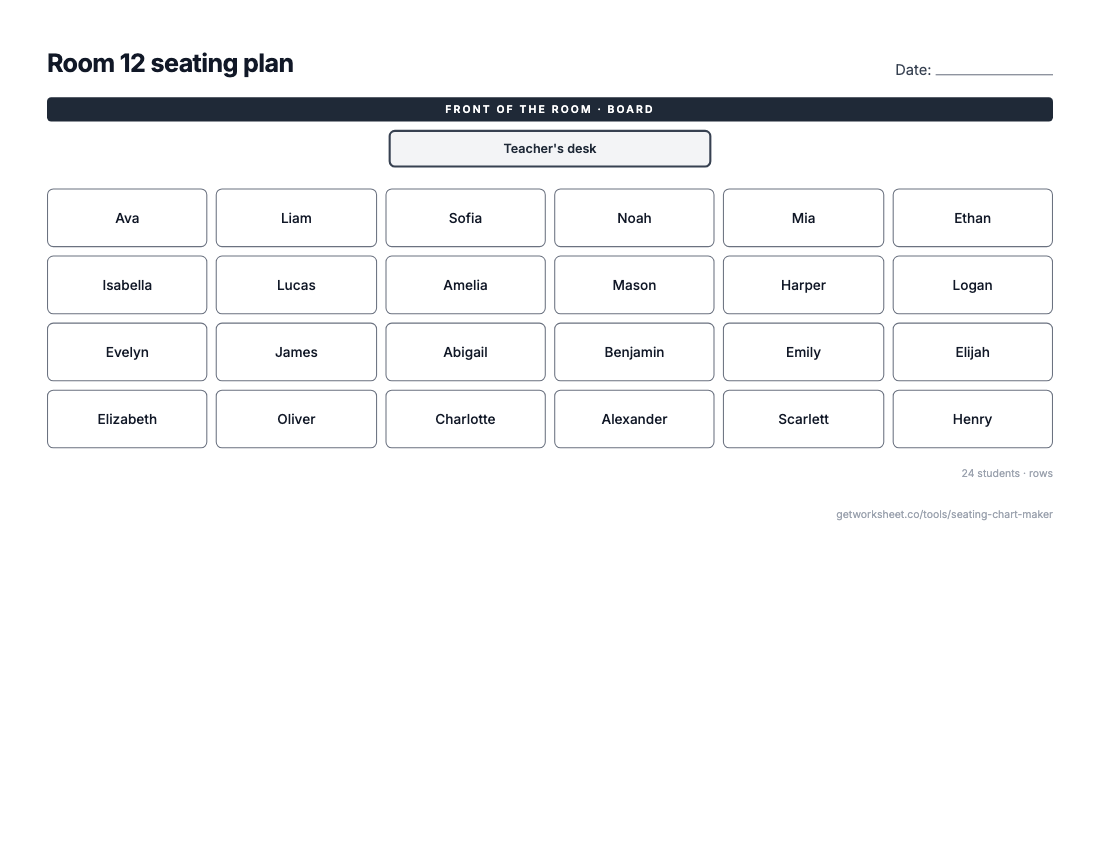 Seating chart makerClass list in, seating plan out: rows, pairs, tables or U-shape, shuffle and lock seats. Free to print.
AI worksheet generator
Need a different time management worksheet?
Generate a custom time management worksheet: pick the grade, question types and count, and print it in about 20 seconds. Free accounts get 1 generation a week.
How to use these worksheets
Print at 100% on A4 or US Letter. Each sheet is three multiple-choice word problems on a single page, so it fits a ten minute warm up or an exit ticket rather than a whole lesson. There is no answer key, so work the three problems yourself first, or have students trade papers and defend the option they chose. A blank clock face or a scrap number line beside the sheet helps anyone who still counts on in jumps.
- Weekly time and leaving early. Start here. The first problem totals minutes of homework and reading across a week, so make students list the daily amounts in a column before adding. The soccer question is their first taste of working backwards from a fixed time.
- Adding hours and end times. Use this second. Project hours spread over two days, then a homework finish time that includes a 15 minute break, then a study start after practice. Ask for the break to be added as its own step so it does not disappear.
- Finish and leaving times. The hardest of the three: a finish time from a 4:15 PM start, a rest day picked out of a practice week, and when to leave for a 1:00 PM game. Have students say whether the answer must be earlier or later than the time given before they calculate.
Common mistakes to watch for
- Treating hours like decimals. Two hours 45 minutes plus 30 minutes is 3 hours 15 minutes, not 2.75 plus 0.30. Keep hours and minutes in separate columns.
- Running past 60. A 4:15 start plus 50 minutes is written 5:05. A student who answers 4:65 has the arithmetic right and the regrouping wrong.
- Losing the break. A 15 minute break pushes the finish time 15 minutes later. It is the step students drop most often on these sheets.
- Adding when the question means subtract. Deciding when to leave for a 1:00 PM game runs backwards from the start. Ask which way the clock has to move before any numbers go on the page.
Frequently asked questions
What grades are these for?
Grades 4 to 8. The arithmetic is adding and subtracting minutes and hours, so a fourth grader who can tell time on an analog clock can start. Older students who rush through elapsed time make useful mistakes here.
Are the answers included?
No. The sheets are the questions only, with no answer key and no marks printed on the page. Every problem gives four options, so they are quick to check once you have solved them yourself.
Is there a planner or timetable to fill in?
No. These three pages are word problems in text only. They build the calculations a planner depends on: how long a task takes, when it ends, and how early to start.
What should students do before and after these?
Before: reading an analog clock and counting on to the hour. After: hand them a real weekly planner and have them budget their own homework, practice and reading time using the same arithmetic.
Can I use these with a whole class?
Yes, at no cost. Print a set for your class, tutoring group or homeschool, or project one problem at a time as a warm up. Please link to this page rather than reposting the PDF files.
More practice
Students who trip over the clock work should spend a session on telling time worksheets first. For the same kind of real world math, try money management worksheets and cooking basics worksheets, and older students can push into two step equations worksheets.
Free library