Life skills · Ages 4–12
Free daily checklist printables for kids
Free printable daily checklists for kids ages 4 to 12: a picture checklist with ten everyday jobs across Monday to Sunday, a school day checklist in morning, school and evening sections, a Saturday and Sunday weekend checklist, a summer or holiday checklist (read, move, create, help, outside) and a blank twelve-row checklist to write your own.
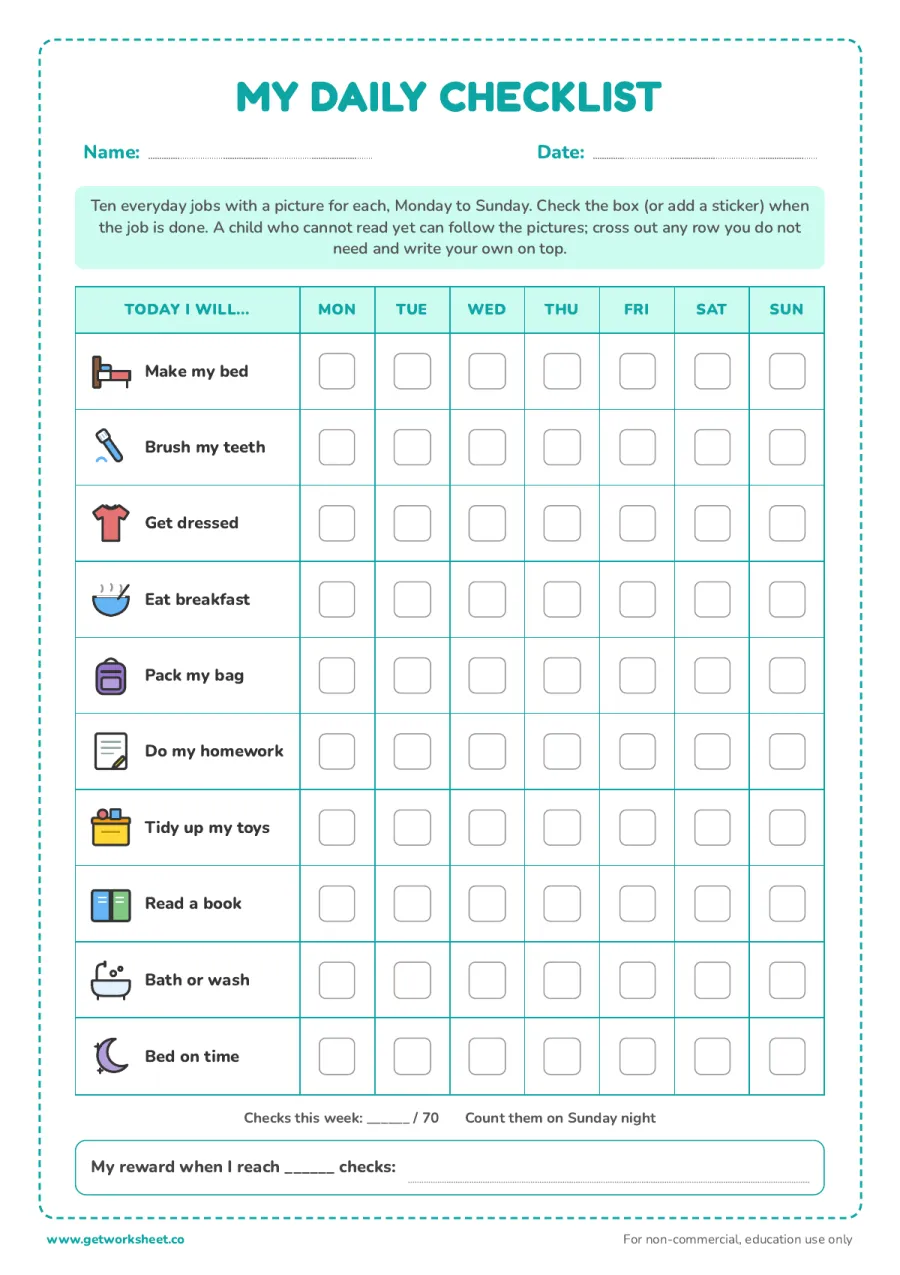
Picture daily checklist (10 items, Mon to Sun)
Ten everyday jobs with a picture each (bed, teeth, dressed, breakfast, bag, homework, toys, reading, bath, bedtime) across Monday to Sunday, with a weekly count and reward line. Free printable PDF.
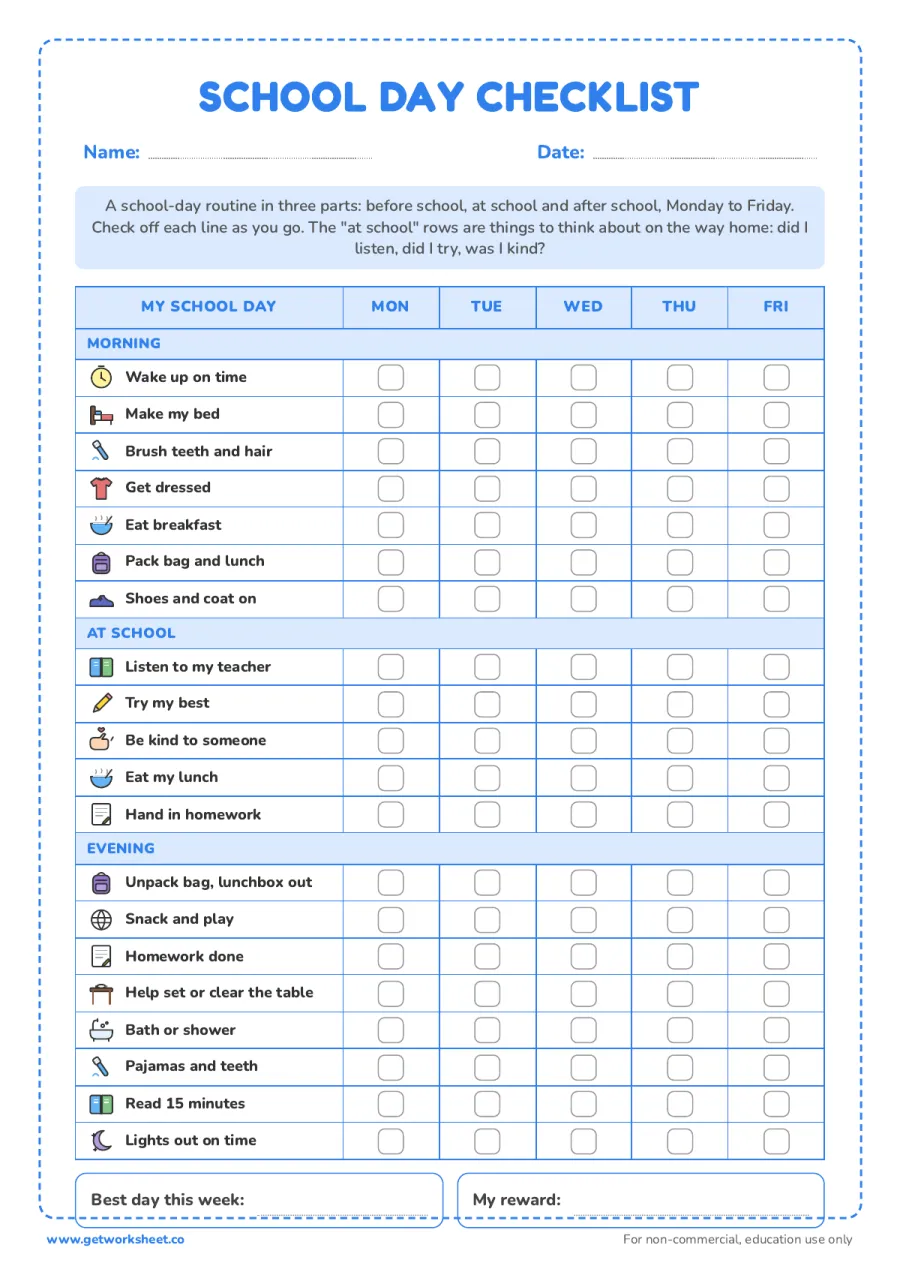
School day checklist (morning, school, evening)
Monday to Friday routine checklist in three sections: seven morning steps, five at-school habits and eight evening steps, each with a small picture. Free printable PDF.
Whole set
All 5 in one PDF
- Every sheet on this page, one file
- No ads, no countdowns, print as often as you like
- Instant download, ad-free, no account needed
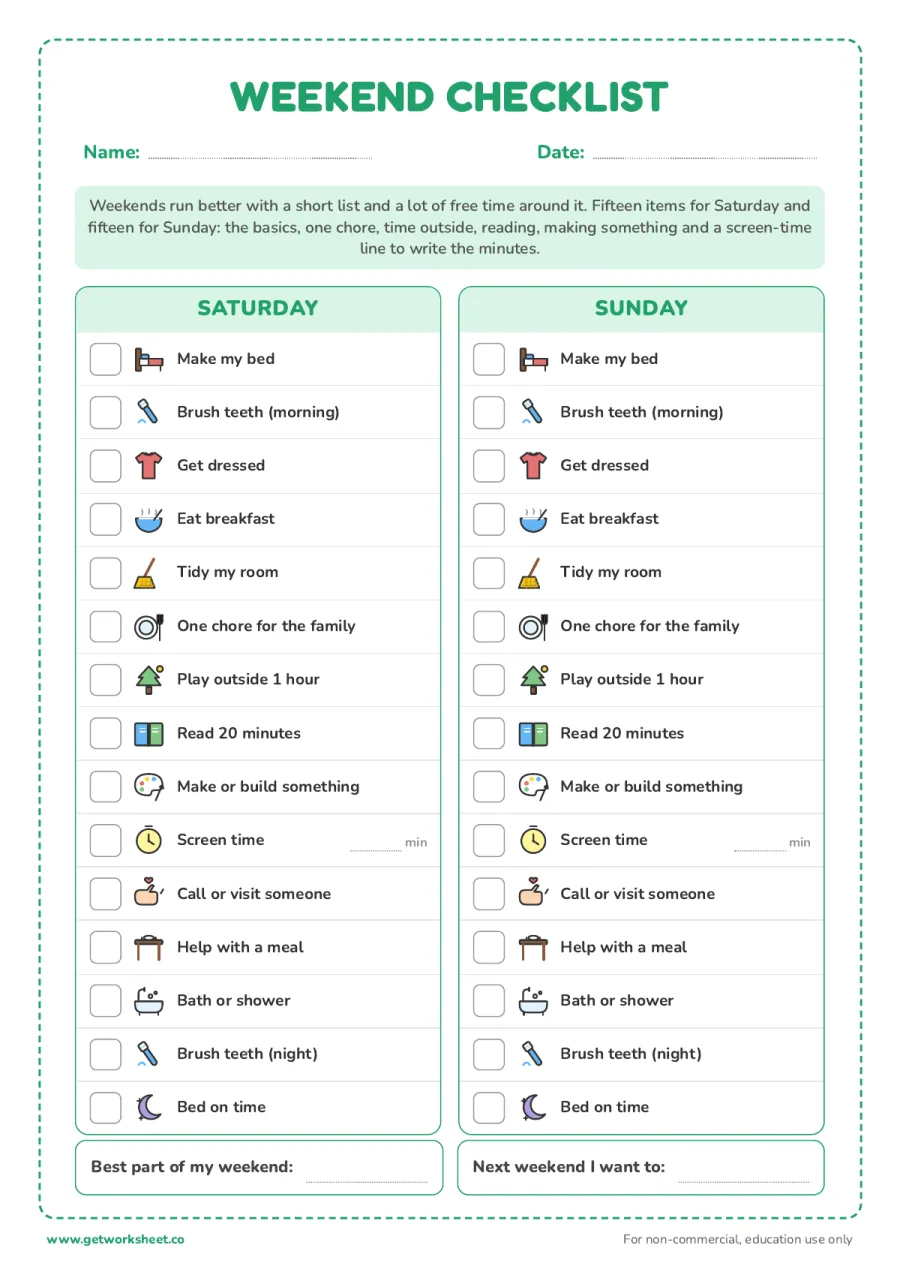
Weekend checklist (Saturday and Sunday)
Fifteen weekend items for Saturday and Sunday side by side: the basics, one chore, outside time, reading, making something, a screen-time minutes line and bedtime. Free printable PDF.
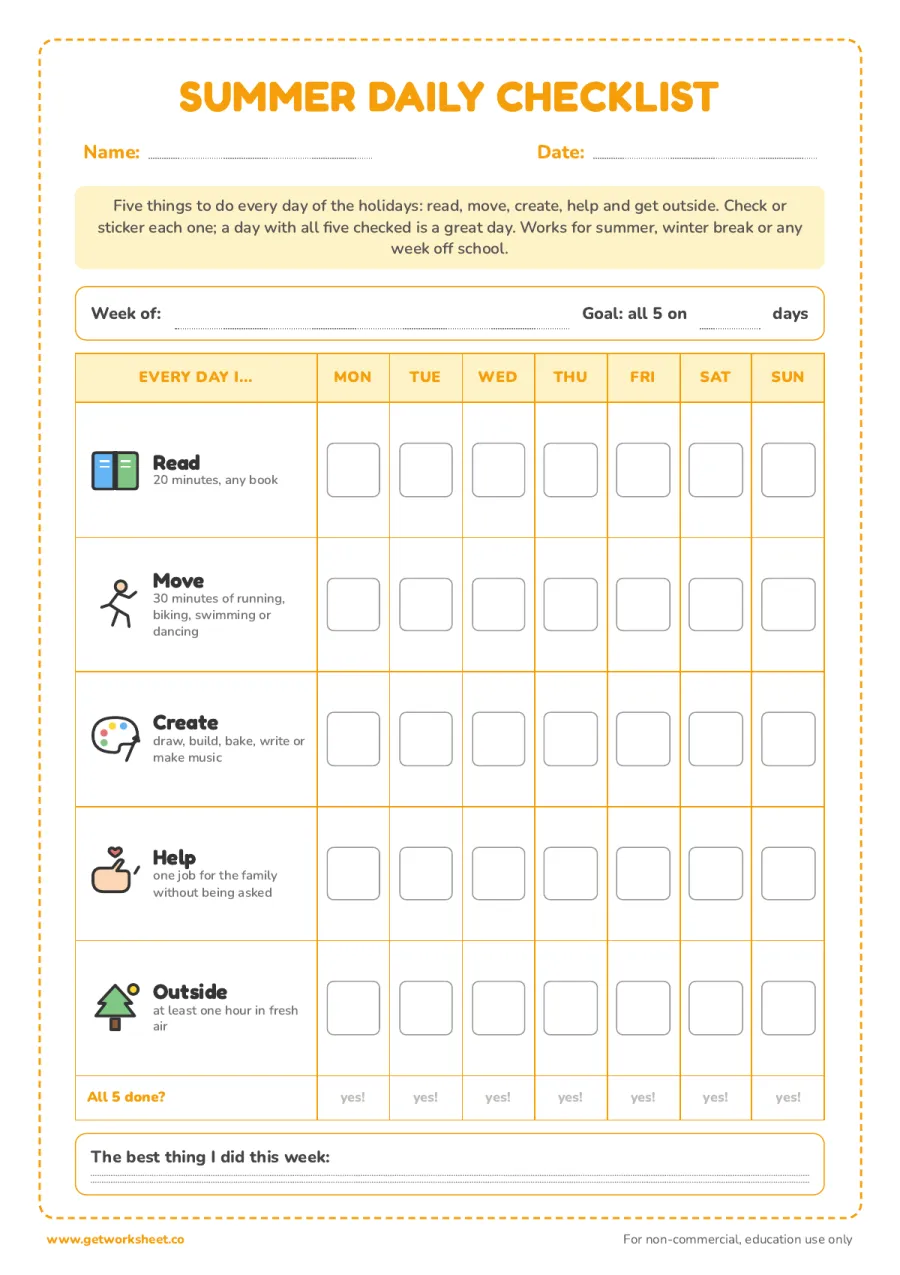
Summer or holiday daily checklist (read, move, create, help, outside)
Five daily holiday habits (read, move, create, help, outside) with big sticker boxes for seven days, an all-five-done row and a best-thing-this-week line. Free printable PDF.
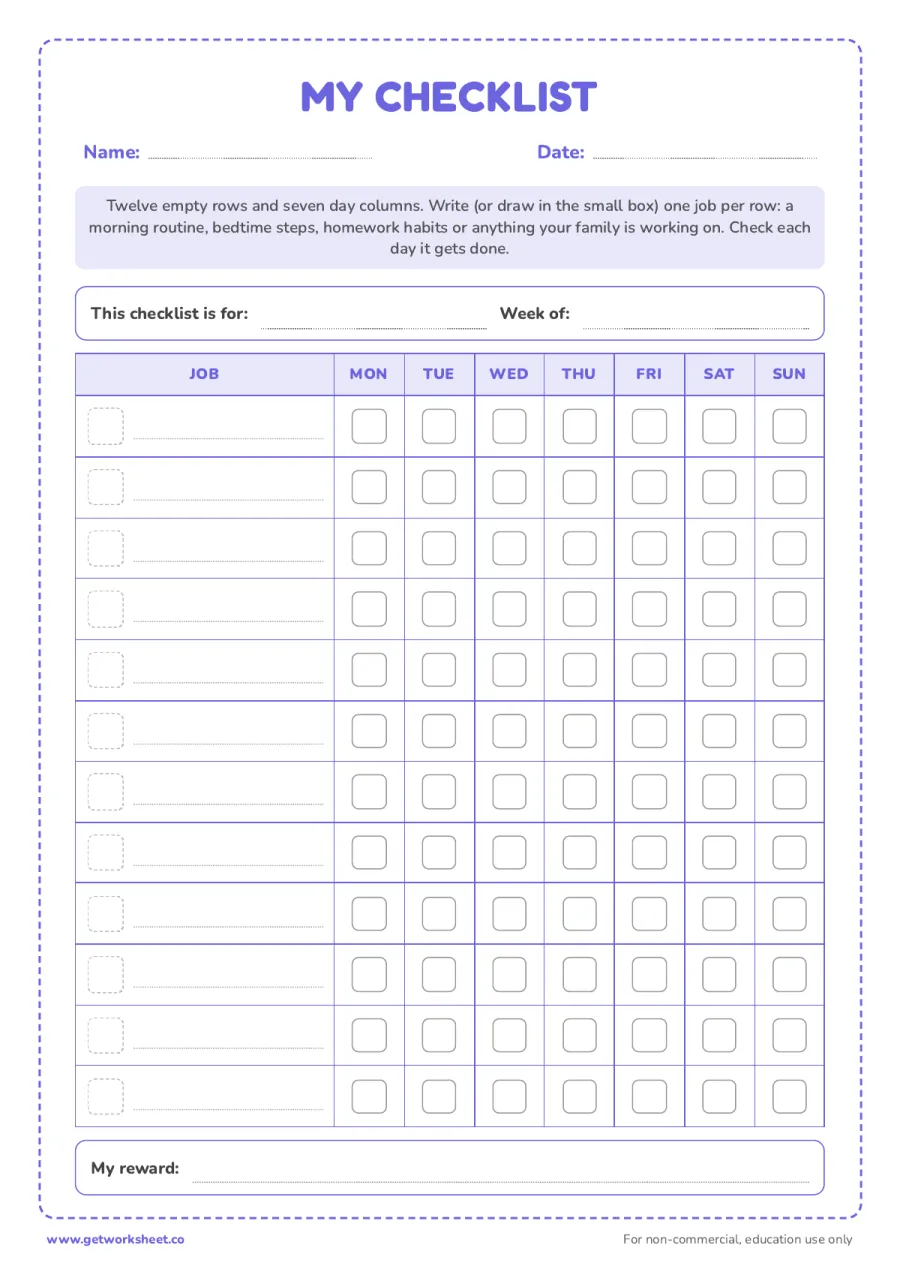
Blank daily checklist (12 rows, 7 days)
Empty checklist with twelve write-your-own rows (each with a small box to draw a picture) and seven day columns of checkboxes, plus a reward line. Free printable PDF.
AI worksheet generator
Make a worksheet like this for your class
The 5 sheets above are fixed. The generator writes a new daily checklist printables worksheet for your grade, with the question types and count you choose, in about 20 seconds. Pick a grade to start:
What you get
- A fresh set of questions on daily checklist printables, not a copy of the sheets above
- Multiple choice, fill in the blanks, true or false, open ended
- Answer key and print-ready PDF with Pro
Free account, 1 worksheets a week. No card.
A daily checklist does one thing a parent's voice cannot: it says the same thing every day without getting tired. Children who can see the morning routine on paper stop needing to be told it, and the arguments about whether teeth were brushed end when there is a box to check. These five printable checklists cover a normal week for a child of 4 to 12: an everyday picture list, a school day, a weekend, a holiday and a blank one for anything else. Rows are tall enough for a small sticker, the pictures let a pre-reader follow along, and every sheet prints on A4 or US Letter in color or black and white.
What's in this set
- Picture daily checklist. Ten everyday jobs with an icon each (make my bed, brush my teeth, get dressed, eat breakfast, pack my bag, do my homework, tidy up my toys, read a book, bath or wash, bed on time) across Monday to Sunday, with a weekly count out of 70 and a reward line.
- School day checklist. Monday to Friday in three sections: seven morning steps (wake up on time through shoes and coat), five at-school habits (listen, try my best, be kind, eat lunch, hand in homework) and eight evening steps (unpack through lights out). Small pictures on every row.
- Weekend checklist. Saturday and Sunday side by side, fifteen items each: the basics, tidy my room, one chore for the family, play outside an hour, read 20 minutes, make or build something, a screen-time line to write the minutes, call or visit someone, help with a meal and bedtime.
- Summer daily checklist. Five holiday habits (read, move, create, help, outside) with a one-line hint each, big sticker boxes for seven days, an "all 5 done?" row and a best-thing-this-week line. Works for summer, winter break or any week off school.
- Blank daily checklist. Twelve empty rows, each with a small box to draw a picture and a line to write the job, and seven day columns of checkboxes. A name and week line at the top, a reward line at the bottom.
What children practice
- Following a routine independently, without reminders
- Reading a picture sequence (ages 4 to 6) and a written list (ages 7 and up)
- Self-checking: did I do it, and marking it honestly
- Balancing a day: reading, moving, creating, helping and time outside
- Counting checks toward a weekly goal
Free printable makers
Make your own daily checklist printables sheets
Type your own words or numbers and print in about 30 seconds. No account, no AI, answer key where it applies.
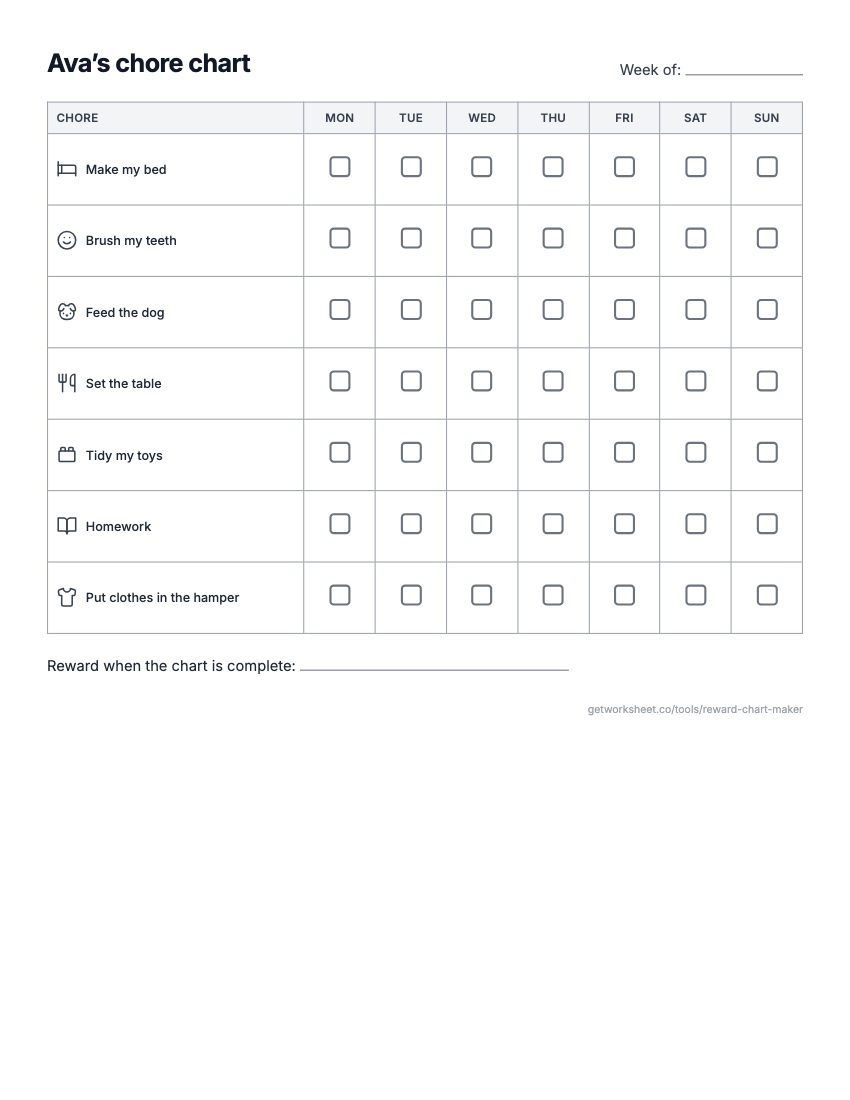 Reward chart and chore chart makerReward or sticker chart with a goal, Mon-Sun chore chart with pictures, behavior chart. Free to print.
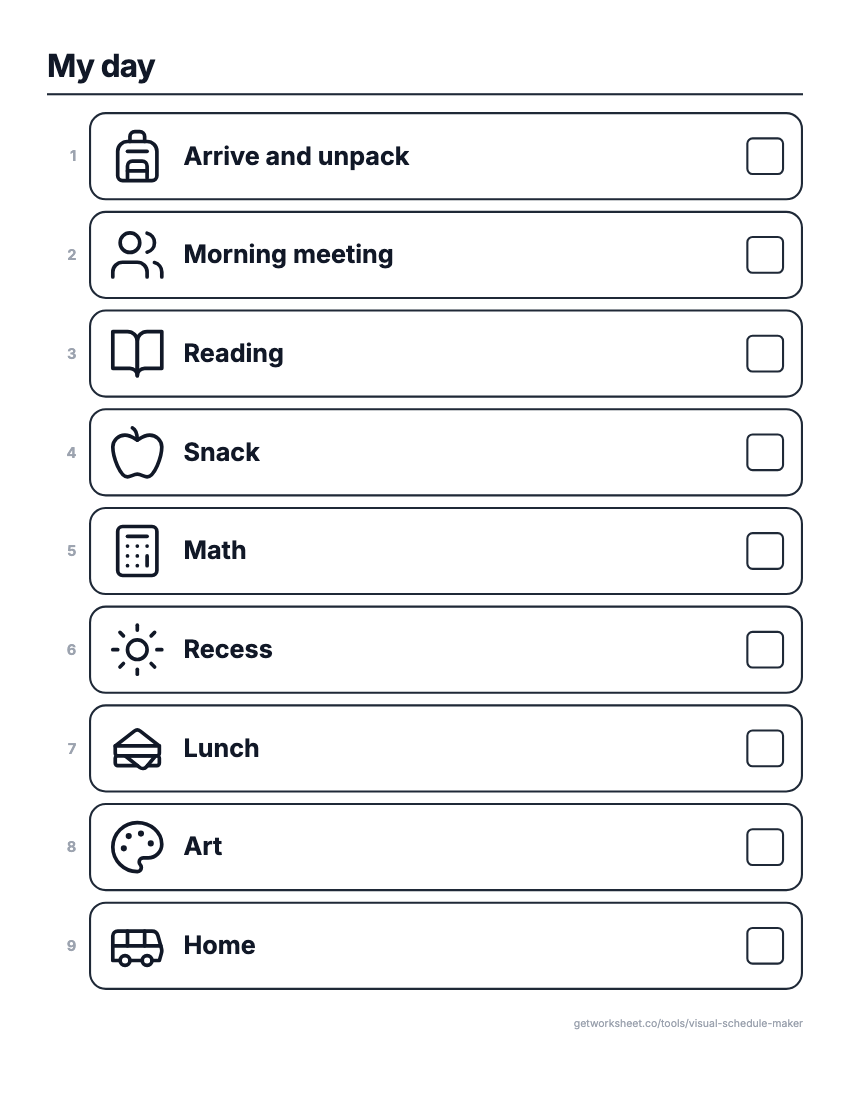 Visual schedule makerPicture schedules, First/Then and token boards. Free to print.
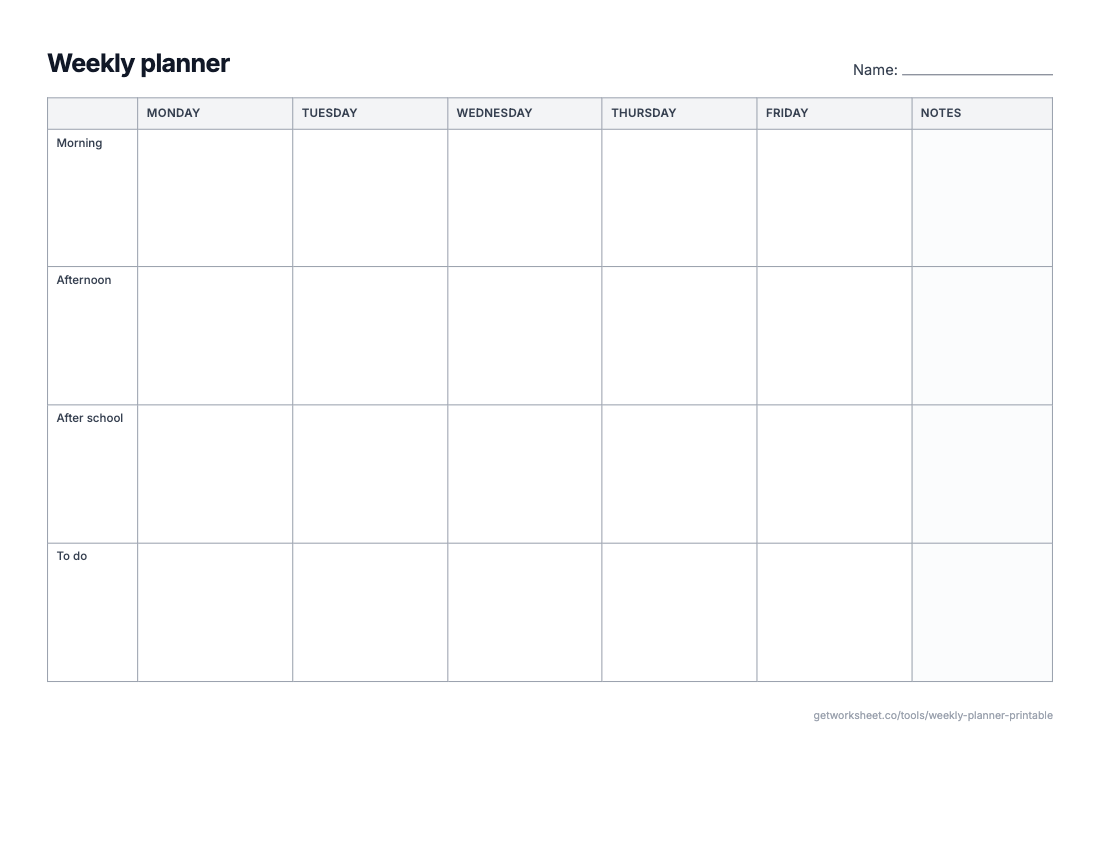 Weekly planner and calendar makerWeekly planner, monthly calendar, daily schedule or lesson-plan grid on one sheet. Free to print.
AI worksheet generator
Need a different daily checklist printables worksheet?
Generate a custom daily checklist printables worksheet: pick the grade, question types and count, and print it in about 20 seconds. Free accounts get 1 generation a week.
Teaching tips and common mistakes
How to use these checklists
Print at 100% on A4 or US Letter. Tape the checklist where the routine happens: the picture checklist on the bedroom door, the school day list by the front door, the weekend list on the fridge. A pen on a string or a sheet of small stickers next to it means the child can mark it without asking. Laminate and use a dry-erase marker if you want one copy to last.
- Picture daily checklist. For ages 4 to 8. The first week, do the list together and let the child make every check; after that, step back and only ask "what does your list say?" Cross out any row that does not apply and write your own on top. Teachers can send this one home at the start of the year to support the morning routine, and it suits children with additional needs who rely on a visual sequence.
- School day checklist. For ages 6 to 12. The morning and evening sections are checked at home; the five "at school" rows are for the walk home or dinner: did I listen, did I try, was I kind to someone? That conversation is worth more than the checks. Teachers can use just the middle section as a Friday reflection in class.
- Weekend checklist. The point of this list is to protect free time, not fill it: fifteen short items, then the rest of the day is the child's. The screen-time line asks for minutes rather than a check, which makes the number visible without a fight. The two boxes at the bottom (best part of my weekend, next weekend I want to) are a good Sunday dinner conversation.
- Summer daily checklist. For any school break. Five things a day: read 20 minutes, move for 30, make something, help with one job, get outside for an hour. Print one per week and keep them in a folder; by the end of the summer the child has a record. A day with all five checked earns the "yes!" in the bottom row. Camp counselors and summer programs can use it as a daily reflection.
- Blank daily checklist. Write (or let the child draw) the twelve things your family is working on right now: a bedtime routine, a homework habit, a medication reminder, piano practice. Twelve rows is the maximum; four to six is usually right. Counselors and teachers can fill it in with a student as a self-monitoring chart for the week.
Making a checklist stick
- Fewer items, done daily, beats more items done sometimes. If a row is missed three days in a row, take it off the list and try again next month.
- The child checks the box, not the parent. Marking it themselves is the habit being built.
- Count on one fixed day. Sunday night is on the sheets: count the checks, say well done, decide on any reward, start a fresh sheet.
- Expect the chart to fade. After a few weeks the routine runs without the paper. That is the goal, not a failure of the chart.
Frequently asked questions
What age are these daily checklists for?
Ages 4 to 12. The picture checklist and the summer checklist have a picture on every row and suit ages 4 to 8; the school day and weekend checklists are written lists for ages 6 to 12; the blank checklist works at any age because you write the items yourself.
What is the difference between a daily checklist and a chore chart?
A chore chart tracks jobs done for the household (dishes, trash, pet care) and often pays an allowance. A daily checklist tracks the child's own routine (teeth, dressed, homework, bed), which is not a chore and should not be paid for. Many families run one of each; the chore chart printables are linked below.
Can the lists be changed?
Yes. Every printed row has room to cross out and write over, and the blank checklist lets you write all twelve rows yourself. The picture rows are the ten most common routine steps, chosen so most families only need to change one or two.
Do I need stickers or a reward?
No. The boxes are sized for a pen check as well as a small sticker, and the reward line can be left blank. For most children over 6, the check itself and a Sunday count is enough; for younger children a sticker helps for the first few weeks.
Is this set free for classrooms and summer programs?
Yes, for non-commercial educational use: a class set of the school day checklist, a summer program's daily reflection or a family fridge are all fine.
More printables
For household jobs with an allowance line, see the chore chart printables; to add a reward to any of these checklists, the reward charts and sticker charts work alongside them. The reading rows pair with the reading log printables, and older children who want to plan their own week can use the free weekly planner and the time management worksheets. For a child who needs the routine in pictures only, the visual schedule maker builds a custom picture schedule.
Free library
Related collections
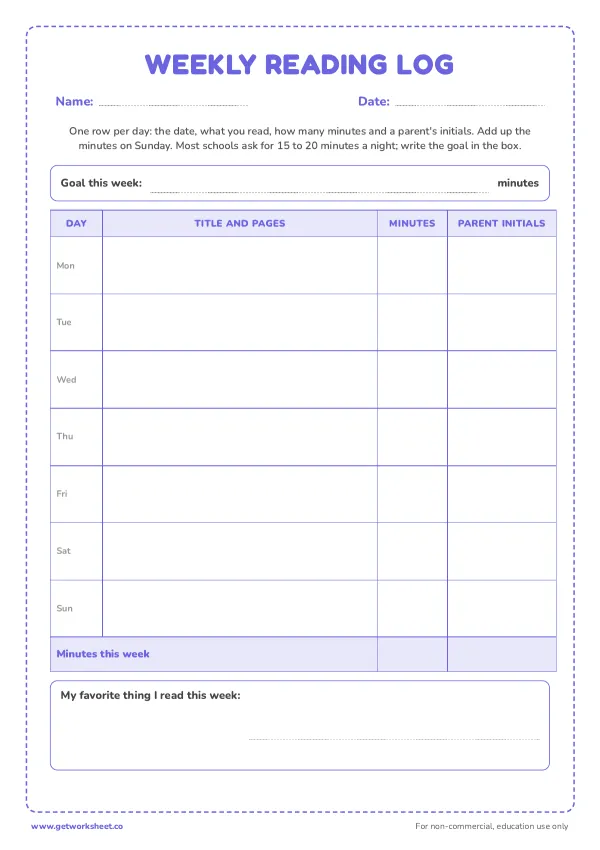
Free reading log printables
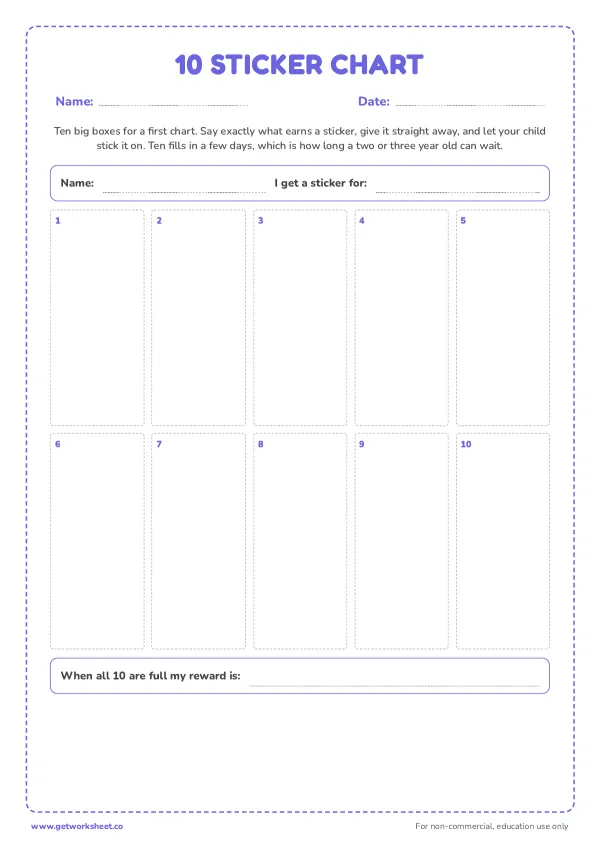
Free sticker chart printables
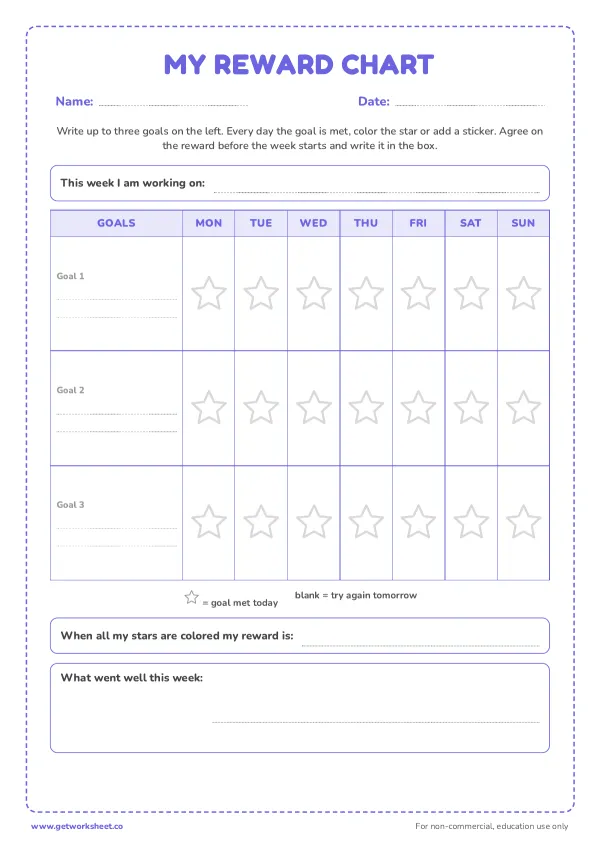
Free reward chart printables
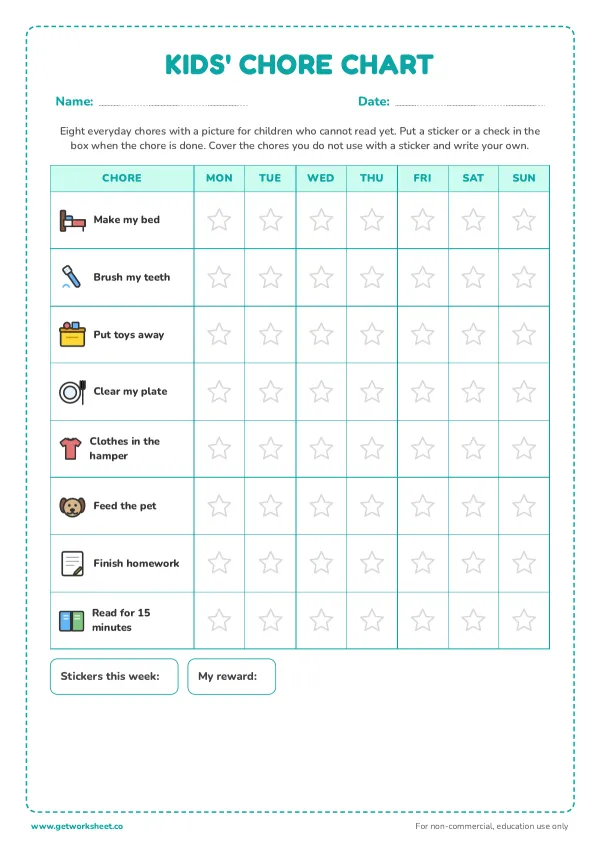
Free chore chart printables
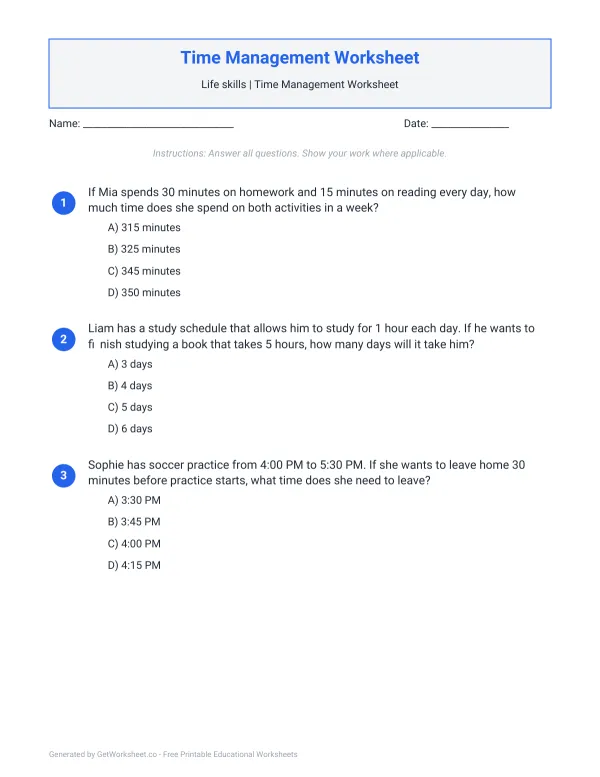
Time Management Worksheets
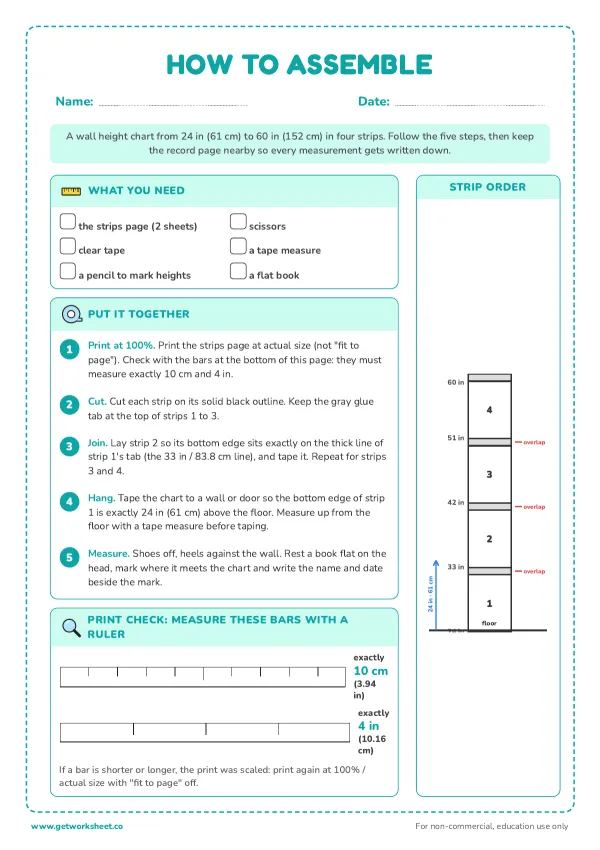
Free growth chart printables
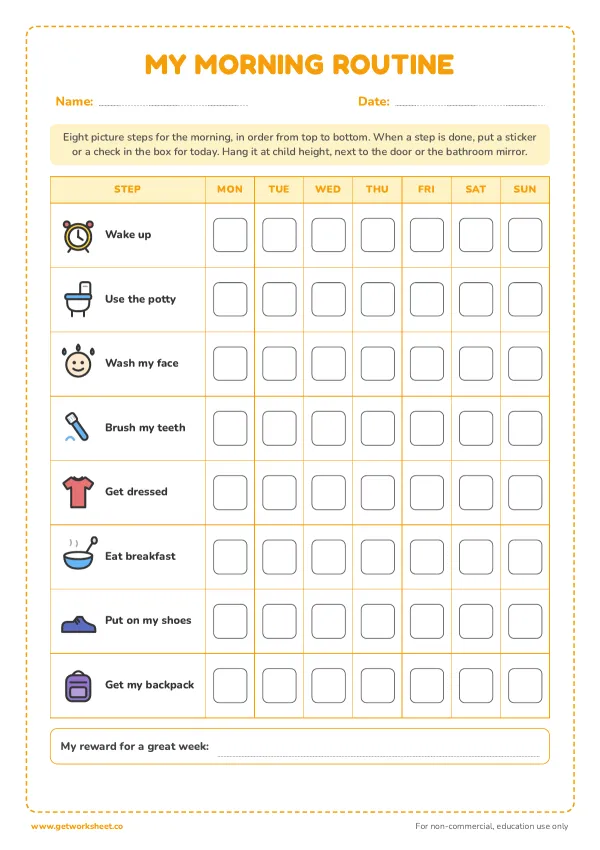
Free morning routine chart printables
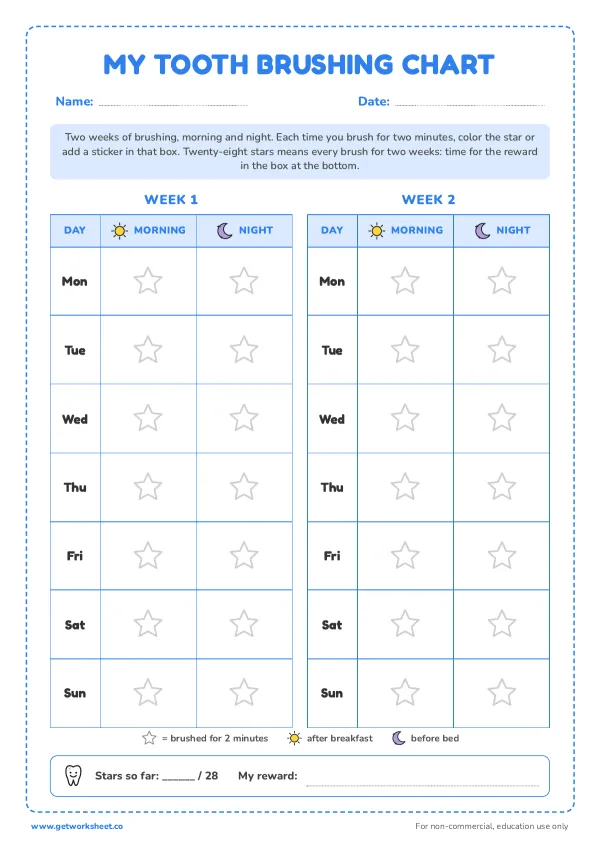
Free tooth brushing chart printables
More worksheets
- Free behavior chart printables
- Free feelings chart printables
- Free bedtime routine chart printables
- Free emotion thermometer printables
- Free break card printables
- Free ABC data collection sheets
- Free token board printables
- Free First-Then board printables
- Free emergency sub plans templates
- Free goal-setting worksheets for students
- Free New Year's resolution worksheets
- Free cutting practice worksheets