English · Grades 2–6
Free context clues worksheets
Five printable context clues worksheets for grades 2 to 6: identify the five types of clue, define ten words from their sentences, work out six words in a passage about lighthouse keepers and more. Answer keys included.
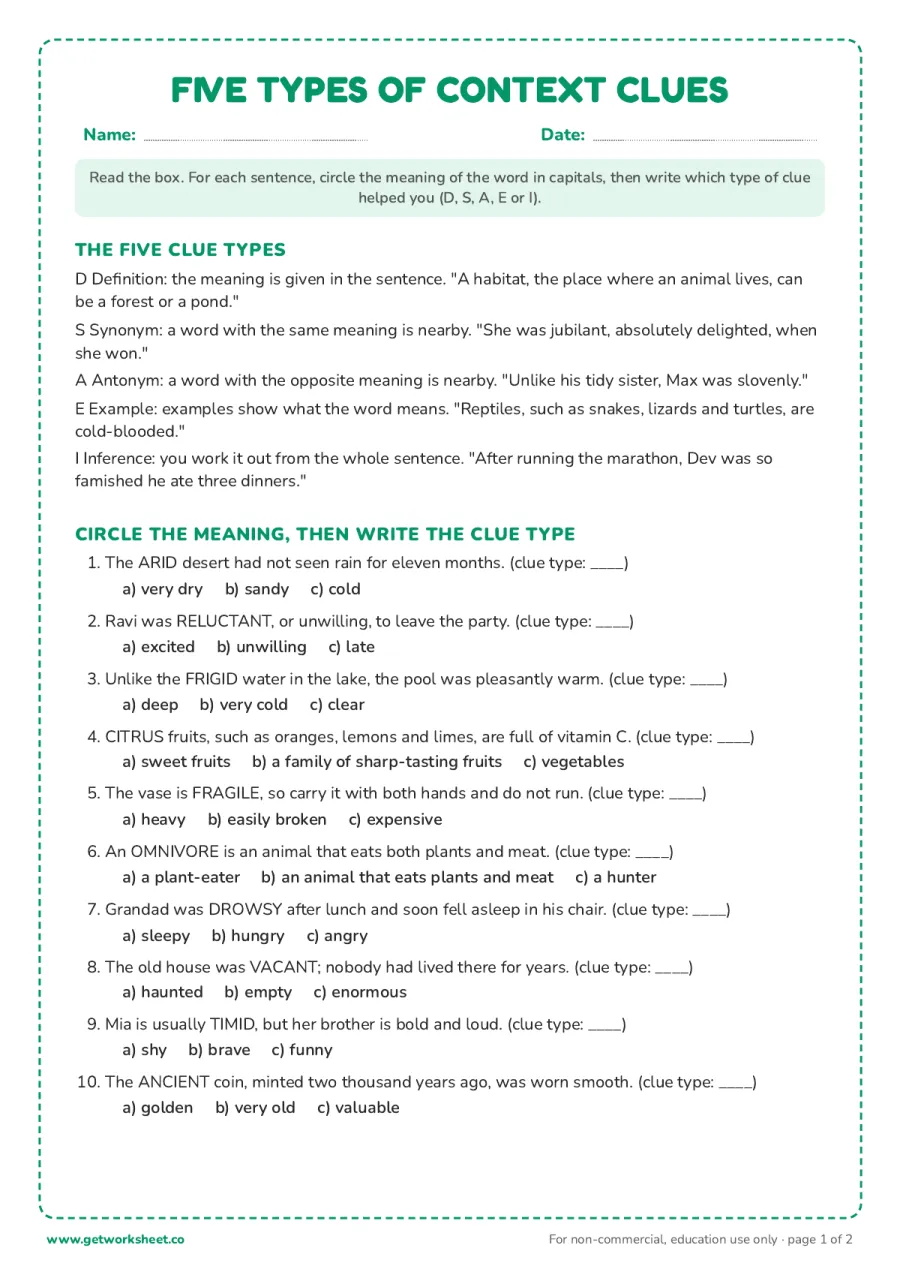
Five types of context clues: name the clue and the meaning in 10 sentences
A reference box for definition, synonym, antonym, example and inference clues, then ten sentences: choose the meaning of the bold word and name the type of clue that gave it away. Answer key on page 2.
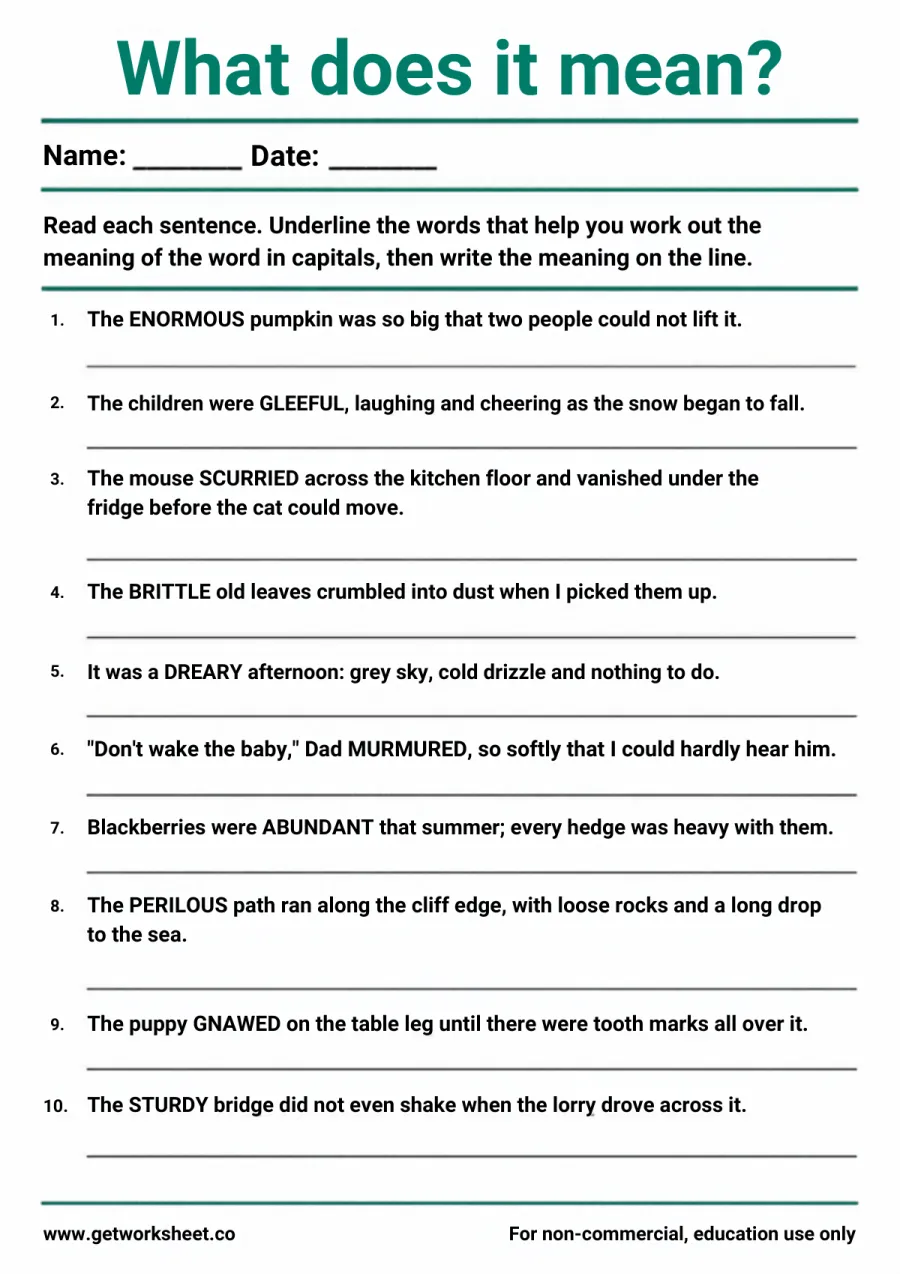
What does it mean? Define 10 words from their sentences and underline the clue
Ten sentences each containing one unfamiliar word in capitals. Students write what the word means and underline the words in the sentence that told them. Answer key on page 2.
Whole set
All 5 sheets in one PDF
Instant and ad-free. No account needed.
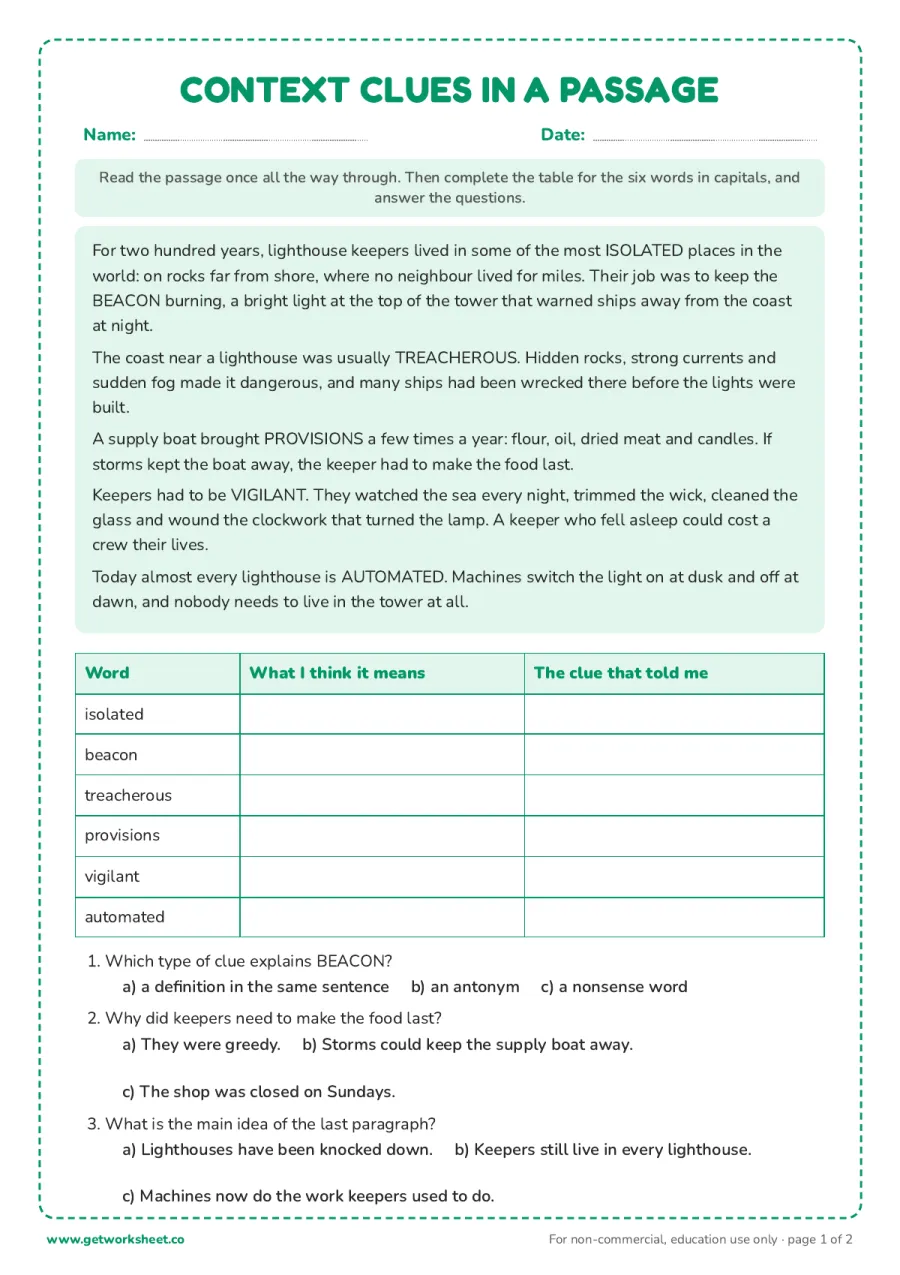
Context clues in a passage: 6 words to define while reading about the lighthouse
A 200-word informational passage about lighthouse keepers with six words in capitals. Students record what each word means and the clue they used, then answer three comprehension questions. Answer key on page 2.
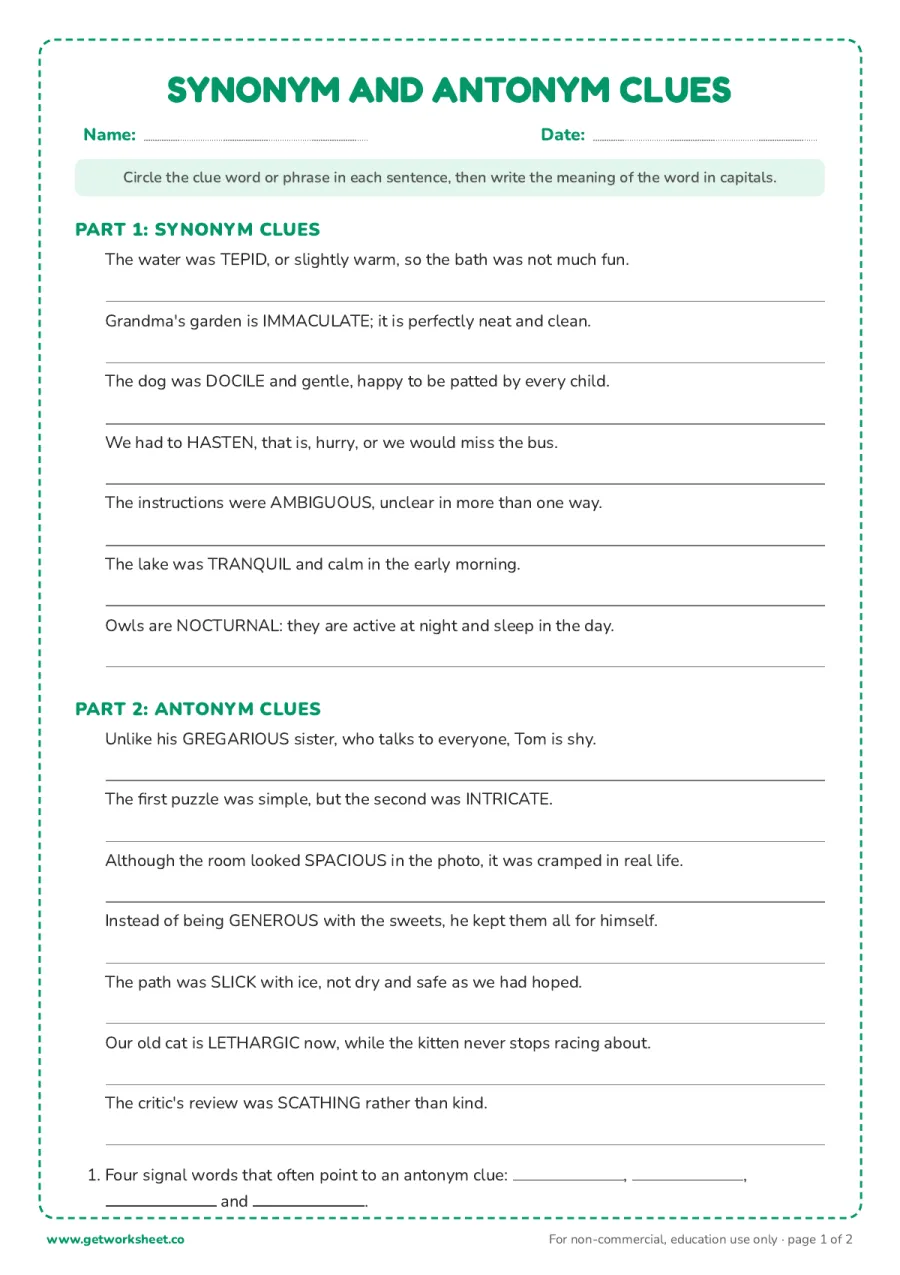
Synonym and antonym clues: 14 sentences with a restated or opposite word
Seven sentences where a synonym restates the hard word and seven where an antonym contrasts with it. Students write the meaning and circle the clue word, then say which signal words point to an antonym. Answer key on page 2.
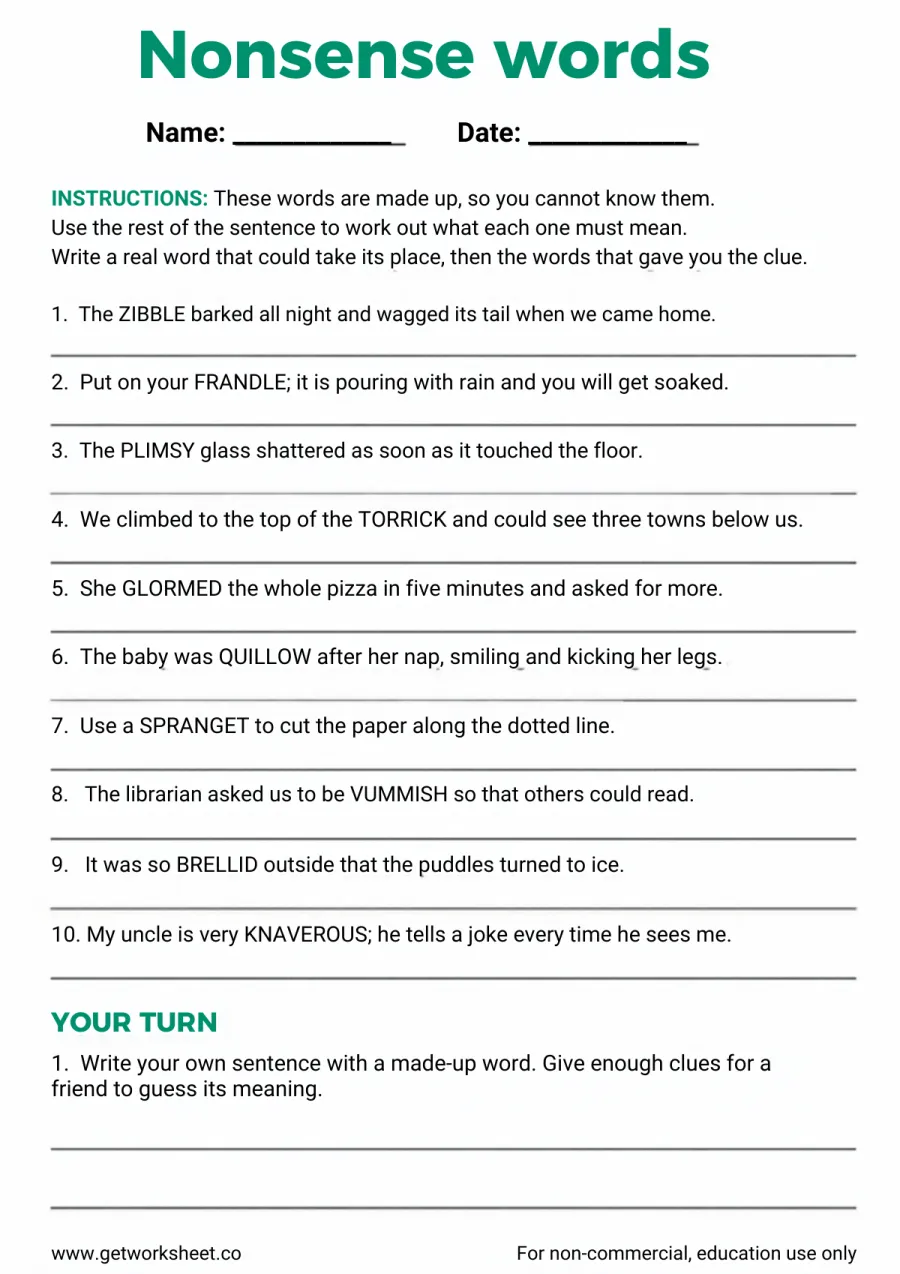
Nonsense words: work out 10 made-up words from context alone
Ten sentences with an invented word in capitals. Because the word cannot be looked up, students must use the context: they write a real word that could replace it and the evidence they used. Answer key on page 2.
AI worksheet generator
Make a worksheet like this for your class
The 5 sheets above are fixed. The generator writes a new context clues worksheet for your grade, with the question types and count you choose, in about 20 seconds. Pick a grade to start:
What you get
- A fresh set of questions on context clues, not a copy of the sheets above
- Multiple choice, fill in the blanks, true or false, open ended
- Answer key and print-ready PDF with Pro
Free account, 1 worksheets a week. No card.
Context clues are how readers learn most of the words they know: not from a dictionary, but from the sentence around an unfamiliar word. A student who reads "the arid desert had not seen rain for eleven months" and decides that arid means dry has done the whole job. These five worksheets teach that job explicitly: the five kinds of clue writers leave, how to spot the signal words, and how to check a guess against the rest of the text. The nonsense-word sheet proves the point: students can define a word that does not exist, as long as the context is good.
What's in this set
- Five types of context clues. The five clue types with an example each, ten multiple-choice sentences whose target words are defined by a different clue type, and a column to name the clue type used.
- What does it mean? Ten sentences with grade 3 to 5 vocabulary (enormous, gleeful, scurried, brittle, dreary, murmured, abundant, perilous, gnawed, sturdy) to define from context, with the clue words to underline.
- Context clues in a passage. An original passage on the work of lighthouse keepers with six target words (isolated, beacon, treacherous, provisions, vigilant, automated), a word/meaning/clue table, and three multiple-choice questions on the passage.
- Synonym and antonym clues. Two sets of seven sentences: synonym clues introduced by "or", commas and "that is"; antonym clues signalled by "but", "unlike", "although" and "instead of". A final question asks students to list the antonym signal words.
- Nonsense words. Ten sentences with made-up words (zibble, frandle, plimsy ...) whose meaning is fixed by the surrounding words; students supply a real replacement word and the evidence. A fun closing task asks them to write their own nonsense-word sentence.
What students will practice
- Using sentence-level context to work out the meaning of an unfamiliar word (CCSS L.2.4a, L.3.4a, L.4.4a, L.5.4a)
- Recognizing the five clue types: definition, synonym, antonym, example and inference
- Spotting signal words: "or", "that is" and commas for synonyms; "but", "unlike", "although", "instead of" for antonyms
- Underlining the evidence, not just guessing, and recording it in a word/meaning/clue table
- Applying the skill across a whole informational passage and then answering comprehension questions
- Explaining how they knew, which is the step that makes the skill transfer to independent reading
Free printable makers
Make your own context clues sheets
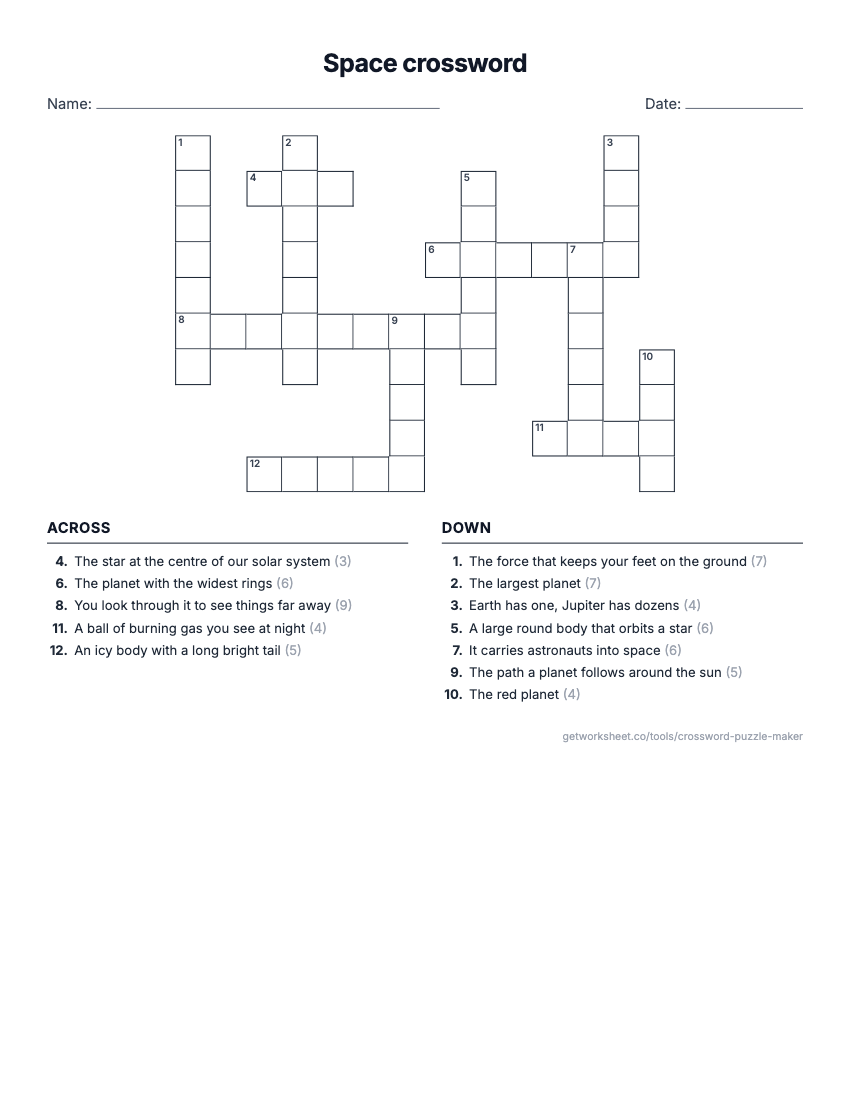
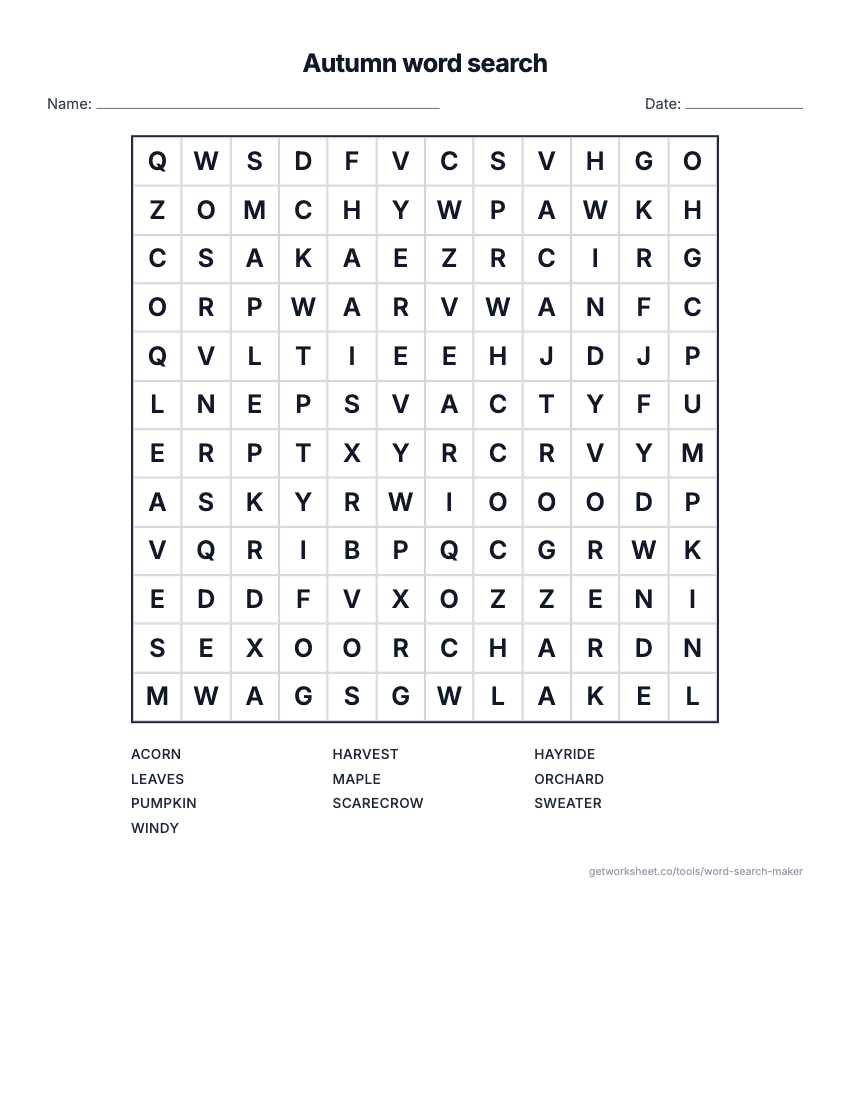
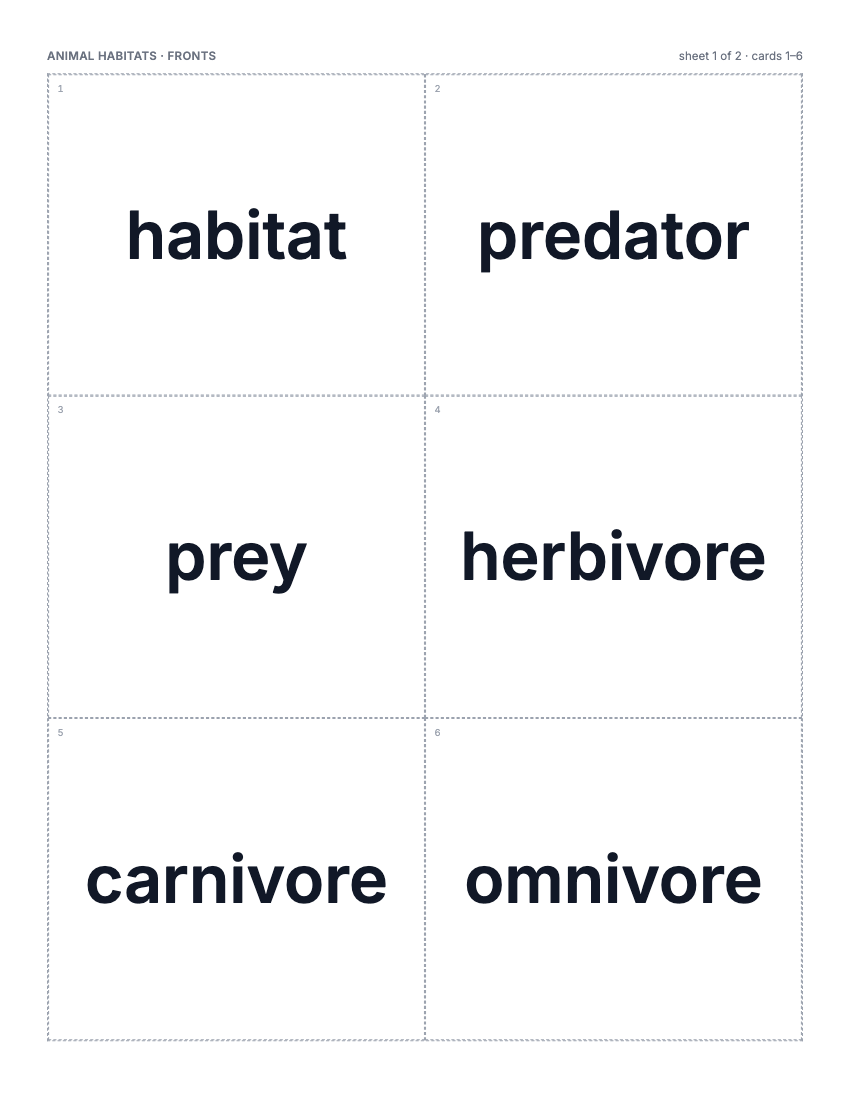
Type your own words or numbers and print in about 30 seconds. No account, no AI, answer key where it applies.
AI worksheet generator
Need a different context clues worksheet?
Generate a custom context clues worksheet: pick the grade, question types and count, and print it in about 20 seconds. Free accounts get 1 generation a week.
How to use these worksheets in class
- Teach the five types first. Five types of context clues gives one example of each in the box. Do the first three sentences together, saying the clue type aloud, before students continue alone.
- Evidence before answer. On What does it mean? make students underline the clue before they write the meaning. A meaning with no underlined evidence scores nothing; this is the habit the sheet exists to build.
- Read the passage twice. Context clues in a passage is closer to real reading: six words, one text. First read for the story of the lighthouse keepers, second read for the words. The table's third column ("the clue that told me") is the important one.
- Signal words on the wall. After Synonym and antonym clues, put the signal words from the final question on a poster: or, that is, and a comma for synonyms; unlike, but, although, instead of for antonyms.
- Nonsense words as the reward. Students enjoy Nonsense words and it makes the point better than any lecture: the meaning comes from the context. Collect the sentences they write in "Your turn" and use them as a class quiz.
- Grades 2 to 6. Grade 2 and 3 use the second and fifth sheets; grades 4 to 6 use all five.
Answer key
Every practice sheet carries its own answer key on page 2 of the PDF. The keys are repeated here for quick marking.
- Five types of context clues: Circle the meaning, then write the clue type: 1. a) very dry 2. b) unwilling 3. b) very cold 4. b) a family of sharp-tasting fruits 5. b) easily broken 6. b) an animal that eats plants and meat 7. a) sleepy 8. b) empty 9. a) shy 10. b) very old Clue types: 1 I, 2 D (or S), 3 A, 4 E, 5 I, 6 D, 7 I, 8 D, 9 A, 10 D (or I).
- What does it mean?: 1. very big / huge (clue: so big that two people could not lift it) 2. very happy / joyful (clue: laughing and cheering) 3. ran quickly with small steps (clue: before the cat could move, vanished) 4. easily broken, dry (clue: crumbled into dust) 5. dull and gloomy (clue: gray sky, cold drizzle, nothing to do) 6. said very quietly (clue: so softly that I could hardly hear) 7. plentiful, in large amounts (clue: every hedge was heavy with them) 8. dangerous (clue: cliff edge, loose rocks, long drop) 9. chewed (clue: tooth marks) 10. strong and solid (clue: did not even shake when the lorry drove across)
- Context clues in a passage: isolated | far away from other people, remote | on rocks far from shore, no neighbor for miles beacon | a warning light | a bright light at the top of the tower that warned ships treacherous | dangerous | hidden rocks, strong currents, sudden fog; made it dangerous provisions | supplies of food and materials | flour, oil, dried meat and candles vigilant | watchful, alert | watched the sea every night; a keeper who fell asleep ... automated | run by machines, without people | machines switch the light on and off; nobody needs to live there 1. a) a definition in the same sentence 2. b) Storms could keep the supply boat away. 3. c) Machines now do the work keepers used to do.
- Synonym and antonym clues: Part 1: synonym clues: 1. slightly warm (clue: or slightly warm) 2. perfectly neat and clean 3. gentle, easy to handle 4. hurry 5. unclear, with more than one meaning 6. calm, peaceful 7. active at night Part 2: antonym clues: 1. sociable, outgoing (opposite: shy) 2. complicated, detailed (opposite: simple) 3. roomy, with plenty of space (opposite: cramped) 4. giving, willing to share (opposite: kept them all) 5. slippery (opposite: dry and safe) 6. slow and sleepy, lacking energy (opposite: never stops racing) 7. harsh, very critical (opposite: kind) 1. unlike, but, although, instead of (also: while, rather than, not)
- Nonsense words: 1. dog (barked, wagged its tail) 2. raincoat (pouring with rain, soaked) 3. fragile / thin (shattered as soon as it touched the floor) 4. hill / mountain / tower (climbed, see towns below) 5. ate greedily / gobbled (whole pizza in five minutes) 6. happy / cheerful (smiling, kicking her legs) 7. pair of scissors (cut the paper) 8. quiet (so that others could read) 9. cold / freezing (puddles turned to ice) 10. funny / joking (tells a joke every time) Your turn: 1. Open-ended; check that the sentence contains at least one clear clue.
Common mistakes to watch for
- Guessing from the look of the word. "Frigid" is not "fridge" and "vacant" is not "vacation". Send students back to the sentence.
- Choosing a meaning that is true but not supported. The vase might be expensive, but the sentence only tells us it is easily broken.
- Missing antonym clues. Students read "unlike his tidy sister" and still write "tidy" for slovenly. The signal word tells them to flip the meaning.
- Vague meanings. "Bad" for treacherous or "nice" for tranquil. Ask for the most precise word the clues allow: dangerous, calm.
Frequently asked questions
What grade are these context clues worksheets for?
Grades 2 to 6. The vocabulary on the sheets ranges from grade 2 to 3 words (enormous, sturdy) to grade 5 and 6 words (ambiguous, scathing, gregarious); the passage is written at about a grade 4 level. Standards: CCSS L.2.4a through L.6.4a.
Do the worksheets include answer keys?
Yes. Every sheet has its key on page 2 and the keys are repeated on this page. For meanings, accept any synonym that the clues support.
What are the five types of context clues?
Definition (the meaning is stated), synonym (a similar word nearby), antonym (an opposite word nearby, usually with a signal like "but" or "unlike"), example (examples show the meaning) and inference (the meaning is worked out from the whole sentence). All five are on the first sheet.
Why include made-up words?
Because they remove the temptation to guess from memory. If a student can define "frandle" as a raincoat, they have used the context and nothing else, which is exactly the skill.
Related English worksheets
The synonyms and antonyms worksheets build the word knowledge that synonym and antonym clues rely on. For longer passages with questions, use the 3rd grade reading comprehension worksheets; the story elements worksheets cover the other half of reading a story.
Free library
Related collections
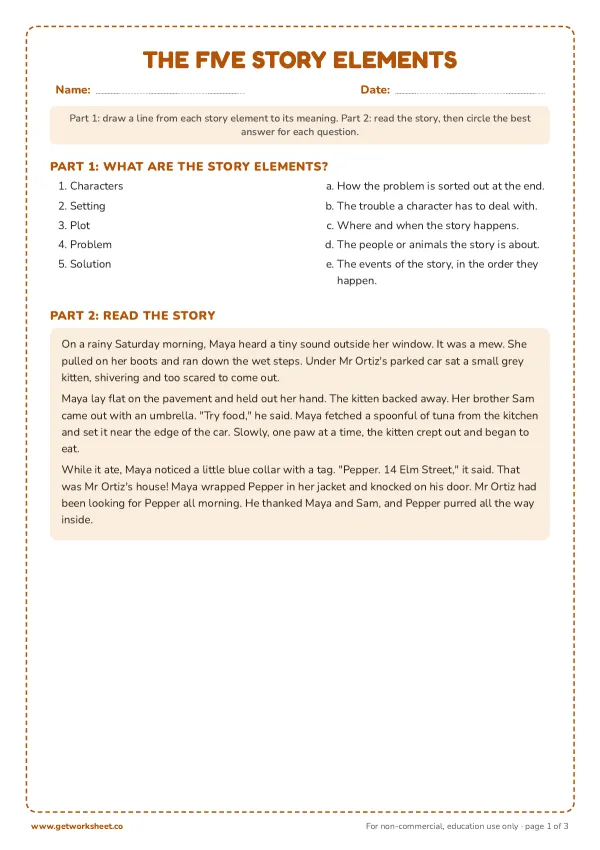
Free story elements worksheets
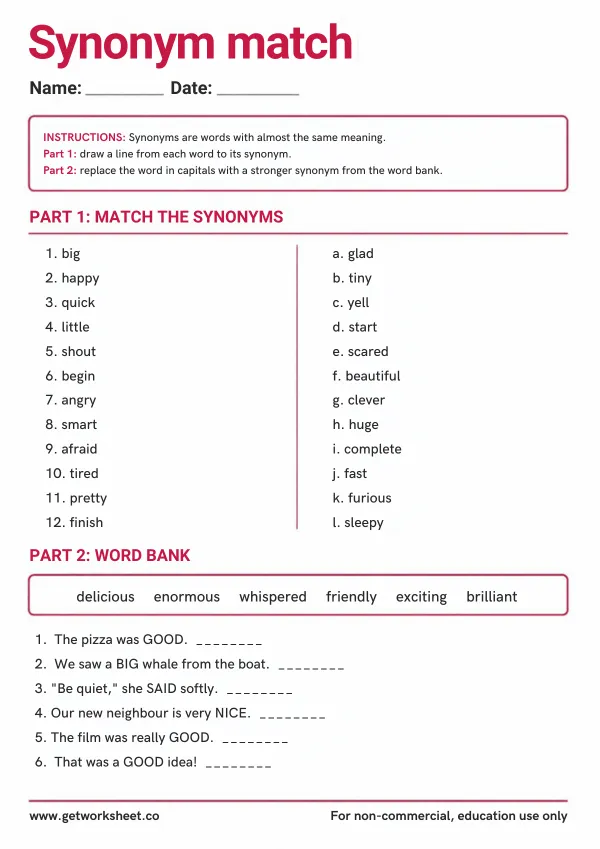
Free synonyms and antonyms worksheets
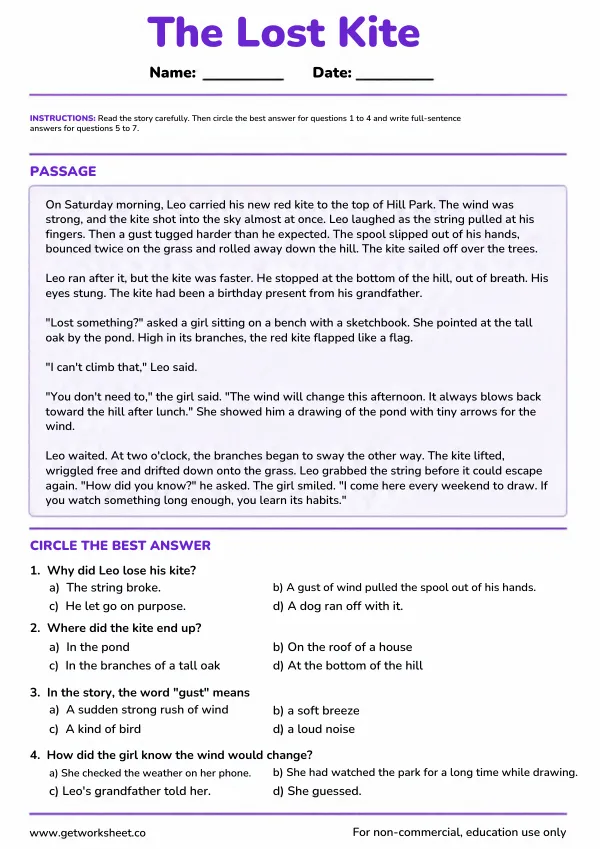
Free third grade reading comprehension worksheets
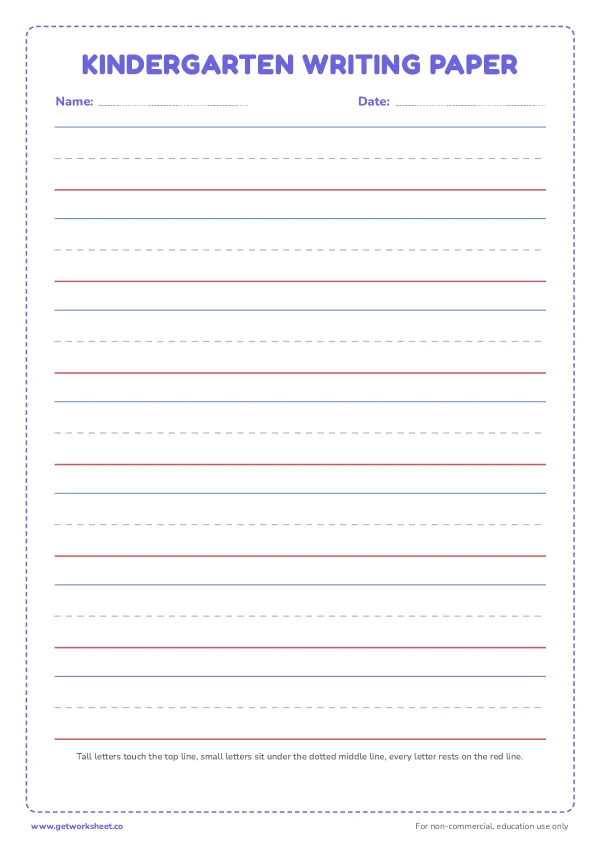
Free handwriting paper printables
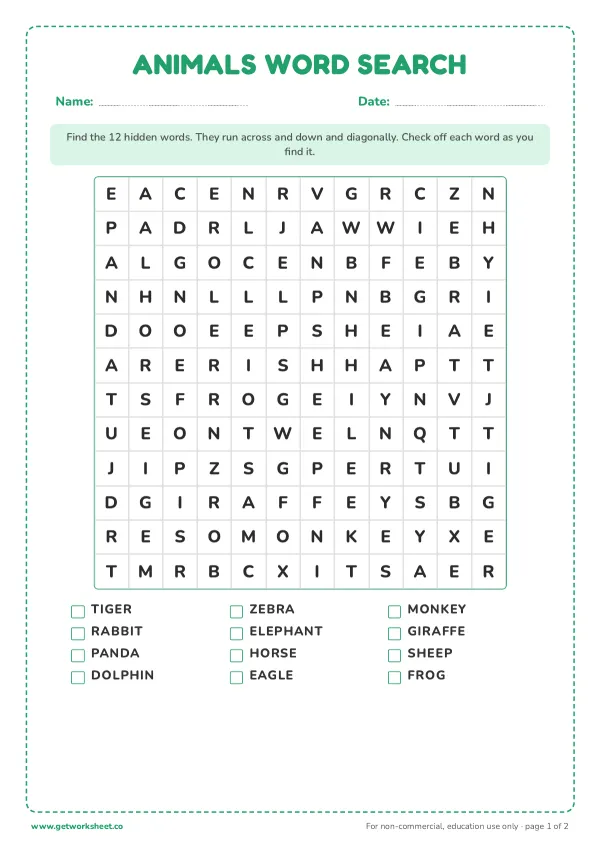
Free word search printables
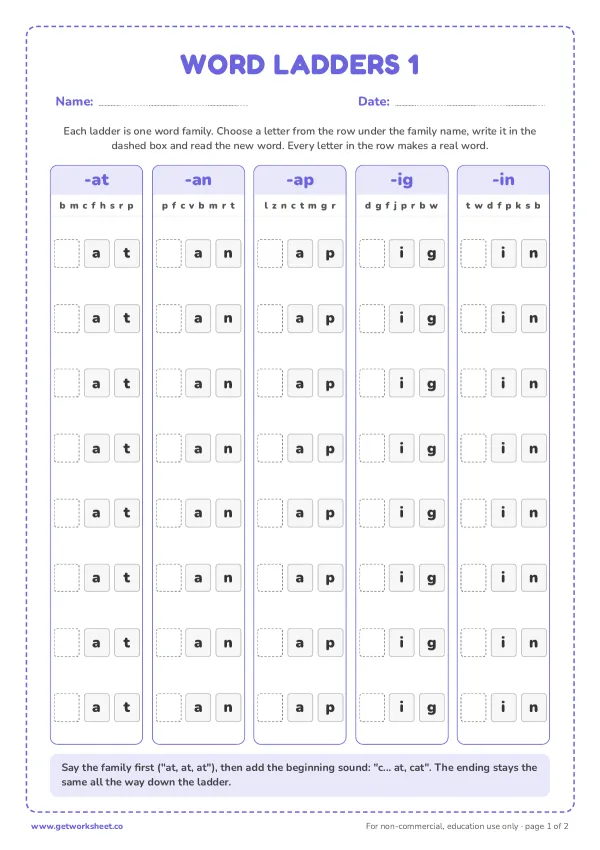
Free word families worksheets
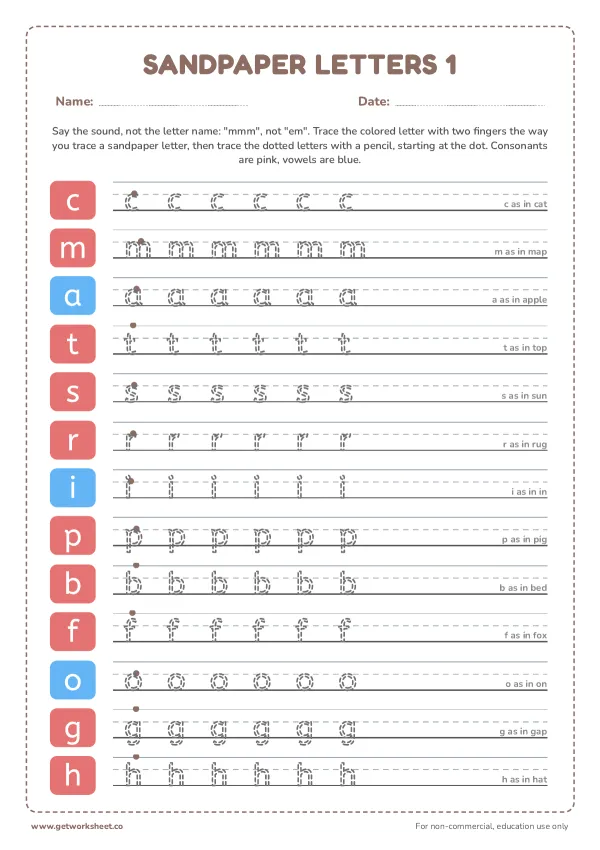
Free Montessori language worksheets
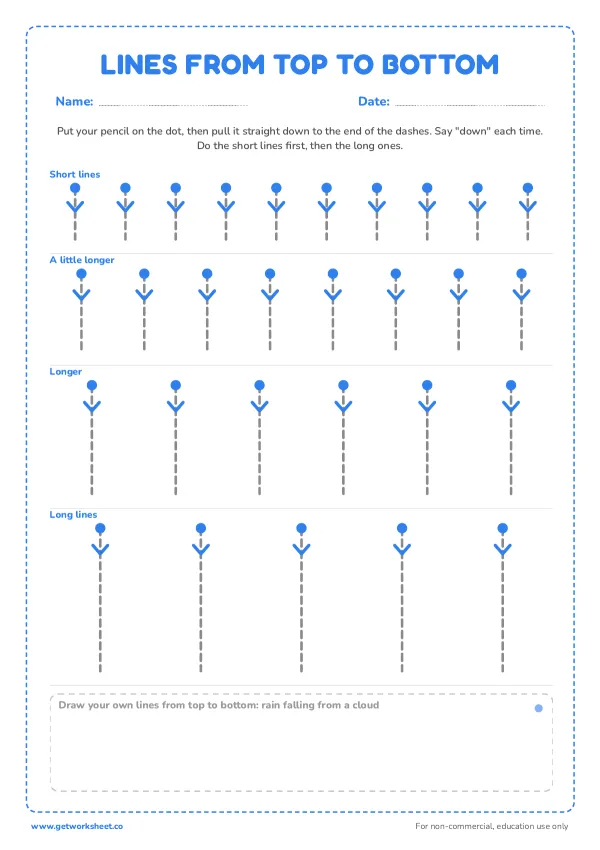
Free pre-writing worksheets
More worksheets
- Free sight words worksheets (Dolch and Fry)
- Free CVC words worksheets
- Free name tracing worksheets
- Free letter Z tracing worksheets
- Free letter Y tracing worksheets
- Free letter X tracing worksheets
- Free letter W tracing worksheets
- Free letter V tracing worksheets
- Free letter U tracing worksheets
- Free letter T tracing worksheets
- Free letter S tracing worksheets
- Free letter R tracing worksheets