Arts · Grades 3–8
Free shading worksheets
Free printable shading worksheets for art class: a value scale worksheet, shading forms (sphere, cube, cylinder, cone), six shading techniques with examples, and a still life to shade. PDF download.
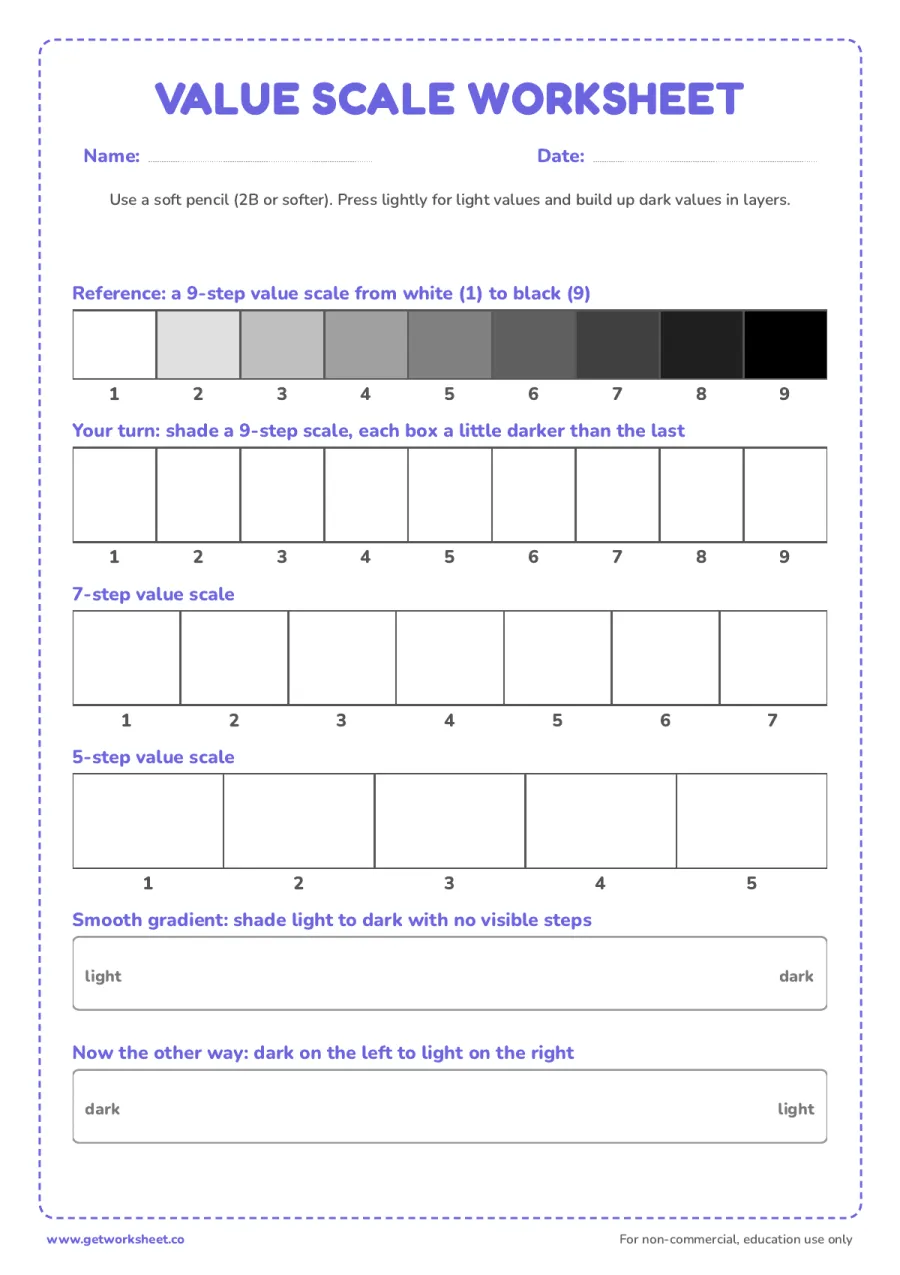
Value scale worksheet
A printed 9-step reference scale, blank 9-, 7- and 5-step scales to shade, and two smooth gradient bars. Free printable PDF.
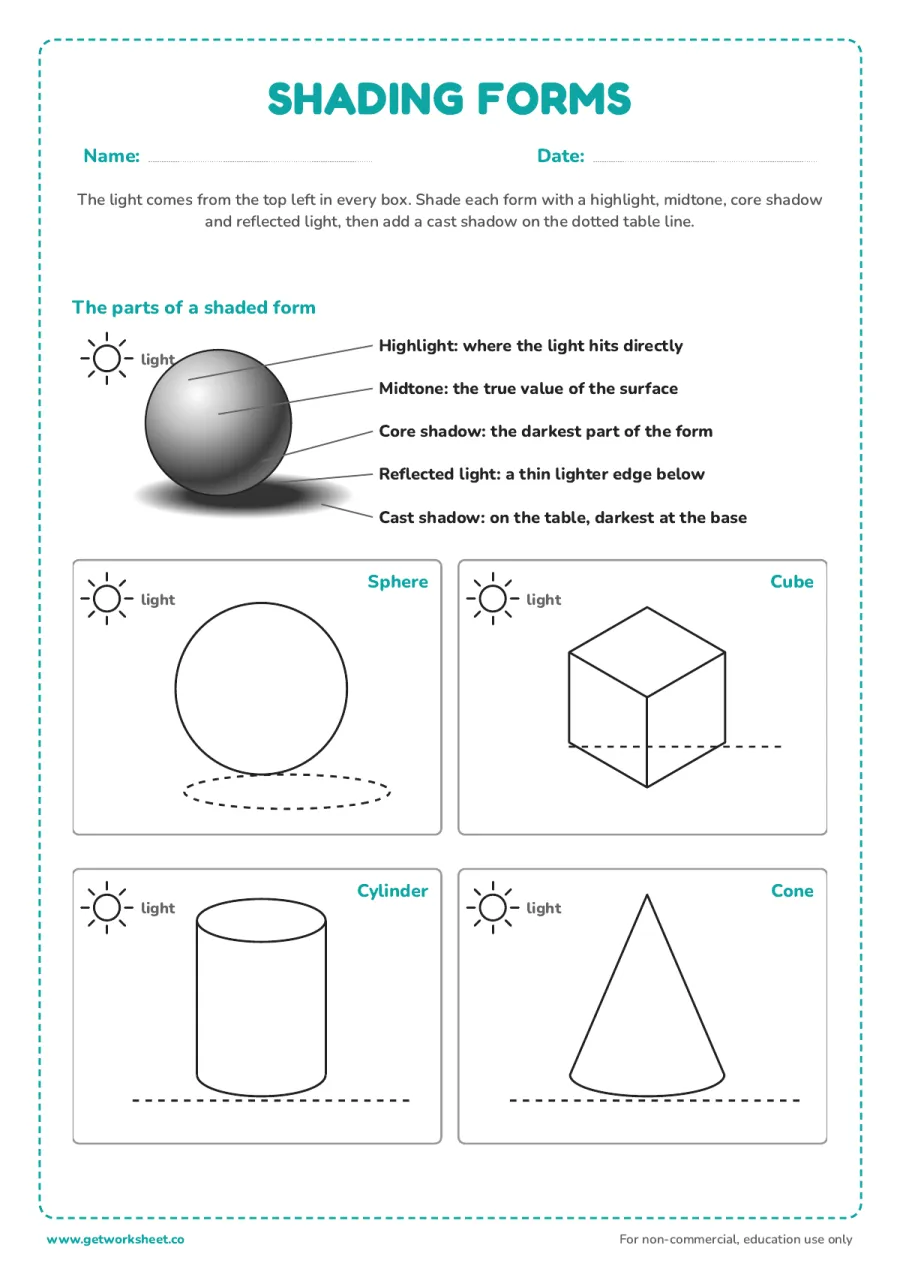
Shading forms: sphere, cube, cylinder and cone
A labelled diagram of highlight, midtone, core shadow, reflected light and cast shadow, then four forms to shade. Free printable PDF.
Whole set
All 4 in one PDF
- Every sheet on this page, one file
- No ads, no countdowns, print as often as you like
- Instant download, ad-free, no account needed
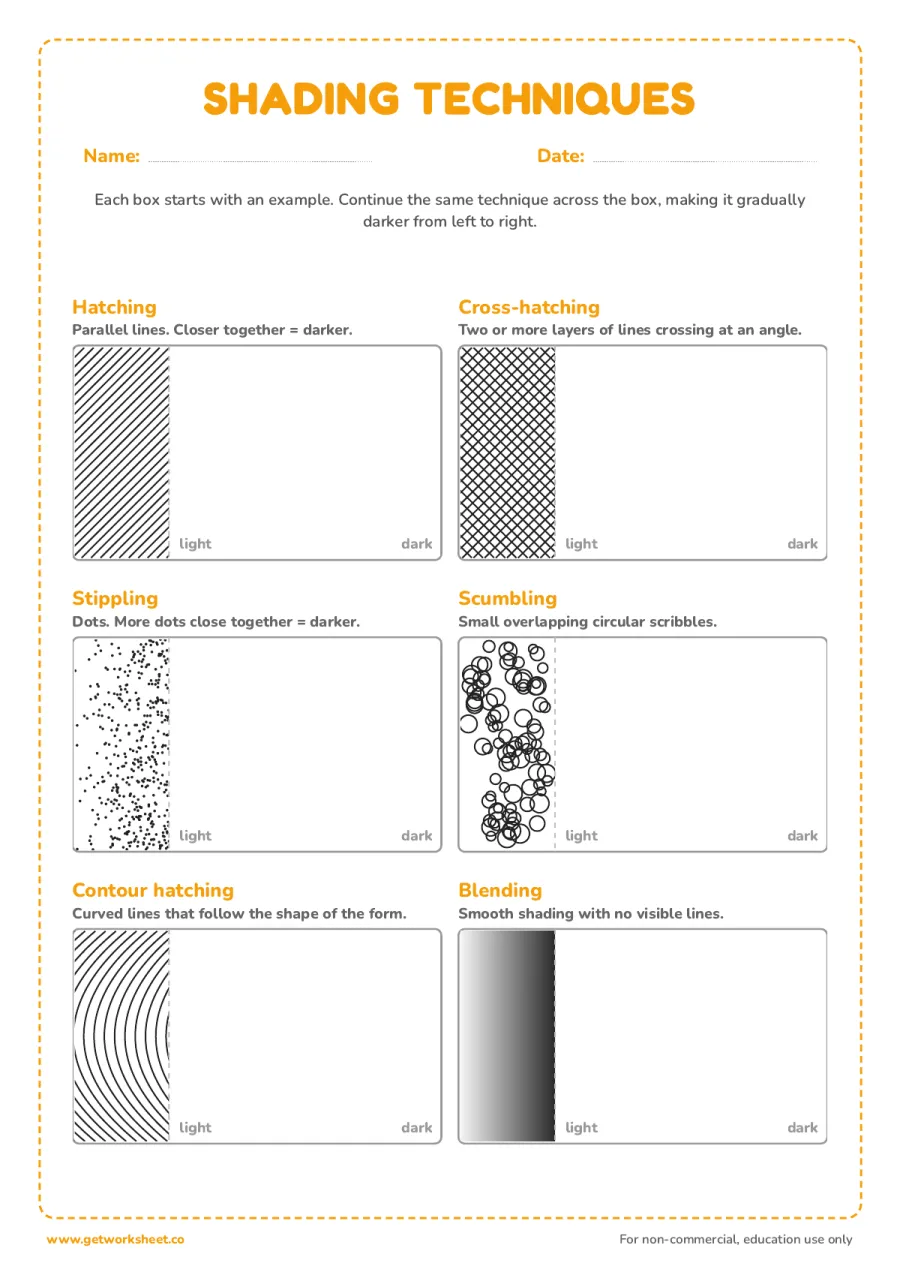
Shading techniques worksheet
Hatching, cross-hatching, stippling, scumbling, contour hatching and blending, each with a printed example to continue from light to dark. Free printable PDF.
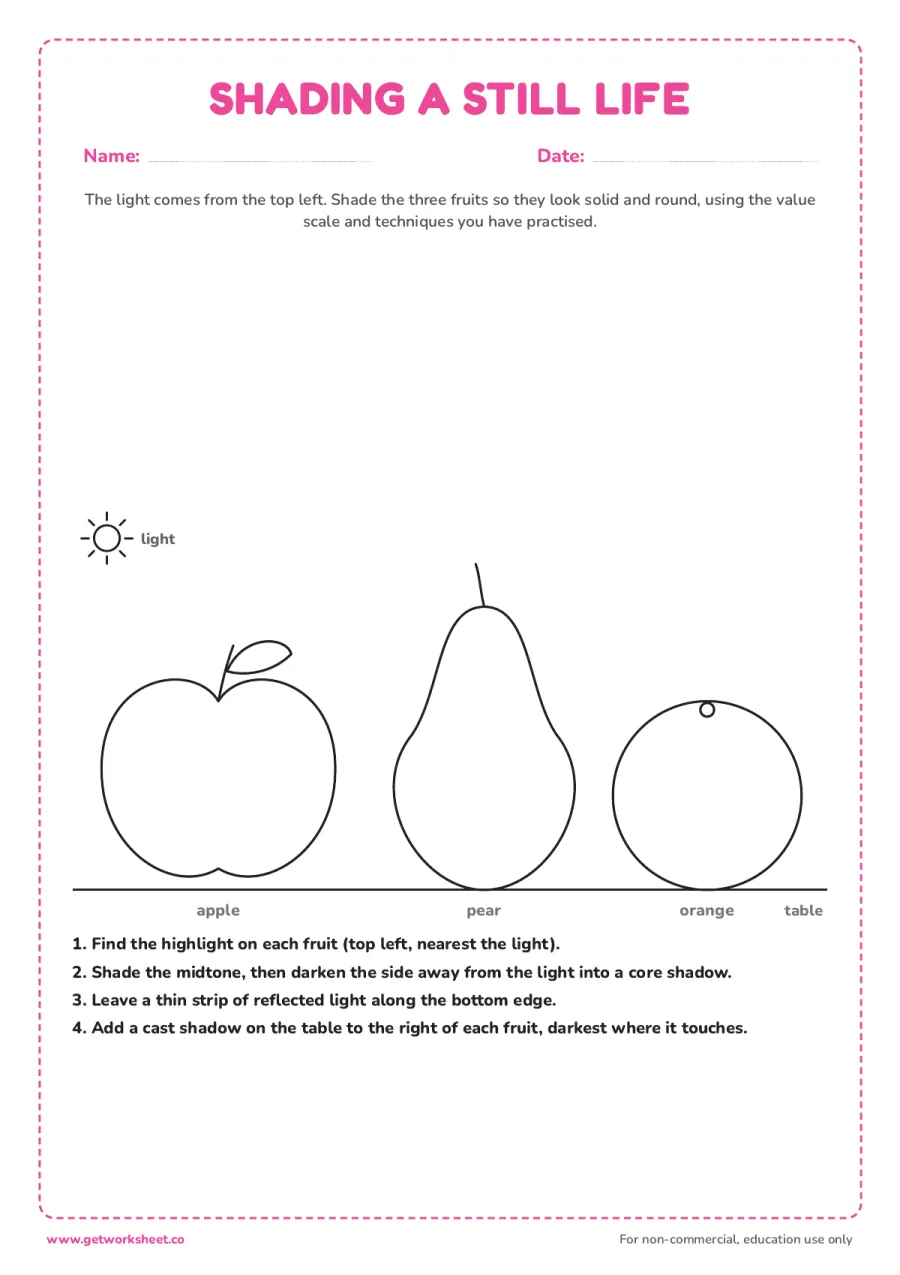
Shading a still life: apple, pear and orange
Three fruit outlines on a table with a light source and a four-step checklist for shading them. Free printable PDF.
AI worksheet generator
Make a worksheet like this for your class
The 4 sheets above are fixed. The generator writes a new shading worksheet for your grade, with the question types and count you choose, in about 20 seconds. Pick a grade to start:
What you get
- A fresh set of questions on shading, not a copy of the sheets above
- Multiple choice, fill in the blanks, true or false, open ended
- Answer key and print-ready PDF with Pro
Free account, 1 worksheets a week. No card.
Shading is what turns a flat outline into a solid-looking object, and it is a skill that can be taught step by step. These four shading worksheets follow the sequence most art teachers use. The value scale worksheet trains control of light and dark. The shading forms sheet labels the parts of a shaded sphere and gives a sphere, cube, cylinder and cone to shade with a fixed light source. The techniques sheet shows hatching, cross-hatching, stippling, scumbling, contour hatching and blending, each with a printed example to continue. The still life sheet puts it all together on an apple, a pear and an orange.
What Students Will Practice
- Controlling pencil pressure to produce a range of values from white to black
- Identifying highlight, midtone, core shadow, reflected light and cast shadow
- Shading the four basic forms with a consistent light source
- Six shading techniques and when each is useful
- Applying value to a simple still life so objects look round and solid
Value is one of the seven elements of art and appears in the art standards for grades 3 to 8 in the US and key stages 2 and 3 in England. These sheets suit ages 9 and up, including beginner adults.
Free printable makers
Make your own shading sheets
Type your own words or numbers and print in about 30 seconds. No account, no AI, answer key where it applies.
AI worksheet generator
Need a different shading worksheet?
Generate a custom shading worksheet: pick the grade, question types and count, and print it in about 20 seconds. Free accounts get 1 generation a week.
Teaching tips and common mistakes
How to Use These Worksheets
Print at 100% on A4 or US Letter paper, ideally on slightly heavier paper if you have it. Use a soft graphite pencil (2B or softer) and a good eraser. Work through the sheets in order over two to four lessons.
- Value scale worksheet. Study the printed 9-step reference, then shade the blank 9-, 7- and 5-step scales. The aim is even steps: each box a little darker than the last, with no jumps. Finish with the two smooth gradient bars, which are harder than they look.
- Shading forms. Read the labelled sphere at the top. Every box has the light coming from the top left. Start each form with a light layer everywhere except the highlight, then darken the side away from the light, leave a thin strip of reflected light at the bottom edge, and add a cast shadow on the dotted table line.
- Shading techniques. Each box has a printed example on the left. Continue it across the box, getting darker towards the right by spacing marks closer together (hatching, stippling), adding layers (cross-hatching) or pressing harder (blending).
- Still life. Apply the forms lesson to real objects: the apple and orange are spheres, the pear is a sphere on a cone. Follow the four-step checklist printed under the fruit.
- Compare and reflect. Pin the value scales side by side. Which steps are hardest to keep even? Most people struggle with the light end.
Common Mistakes to Watch For
- Outlining then filling: Shading should follow the form, not stop at a hard outline. Encourage lightening or losing the outline on the lit side.
- Jumping to black too fast: Values 2 to 5 are where most of a drawing lives. Build darks in layers.
- Inconsistent light source: If the highlight is top left, the cast shadow must fall bottom right. Check every form against the sun icon.
- Forgetting reflected light: Without the thin lighter strip at the bottom, spheres look like flat discs. It is the detail that makes forms look round.
- Smudging with a finger: Use a blending stump, tissue or the side of the pencil instead; fingers leave oil and uneven marks.
Frequently Asked Questions
What age are shading worksheets for?
Ages 9 and up. The value scale and techniques sheets work from about third grade; the forms and still life sheets are usually taught in middle school art, and adult beginners use the same progression.
What pencil should I use for shading?
A 2B pencil is a good all-round choice. Add a 4B or 6B for the darkest values and an HB for the lightest. Ordinary school pencils (HB) can reach only about value 6 on the 9-step scale.
What is a value scale?
A strip of boxes shaded from white to black in even steps. Nine steps is standard in art classes. Practising it trains the pressure control needed for every other kind of shading.
Which shading technique is best?
None is best; each has a use. Blending suits smooth objects like fruit, hatching and cross-hatching suit pen and quick sketches, stippling suits texture, and contour hatching describes curved forms. Artists usually combine two or three.
More Art Worksheets
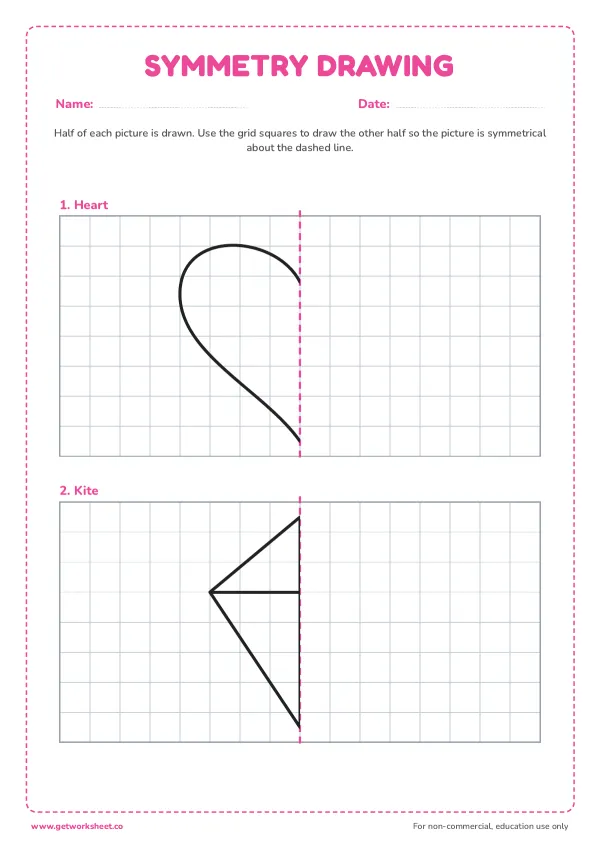
The elements of art worksheets introduce value alongside line, shape, form, space, color and texture. The color theory worksheets extend value into tints and shades of color. For drawing practice before shading, try the symmetry drawing worksheets and copy the picture worksheets, and see the famous artists worksheets for how masters used light and shadow.
Free library
Related collections
Free symmetry drawing worksheets
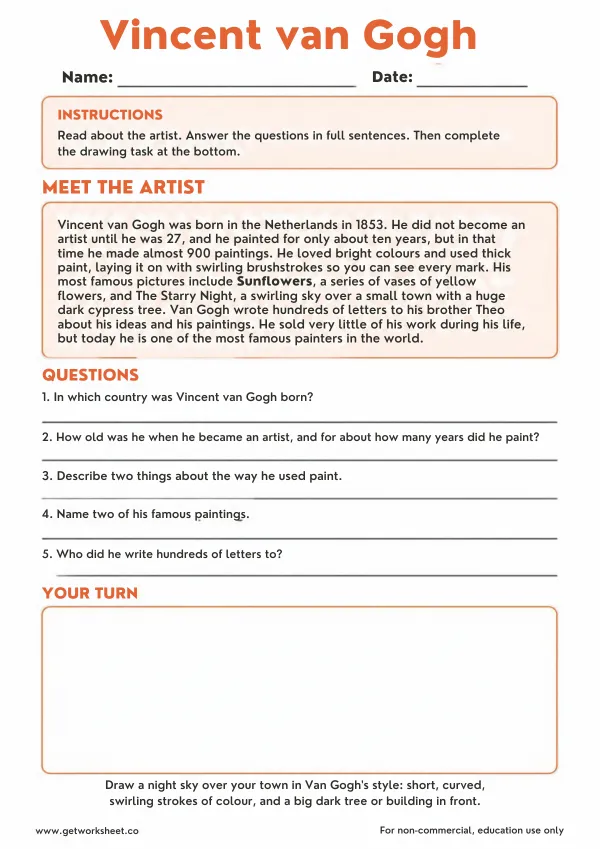
Free famous artists worksheets
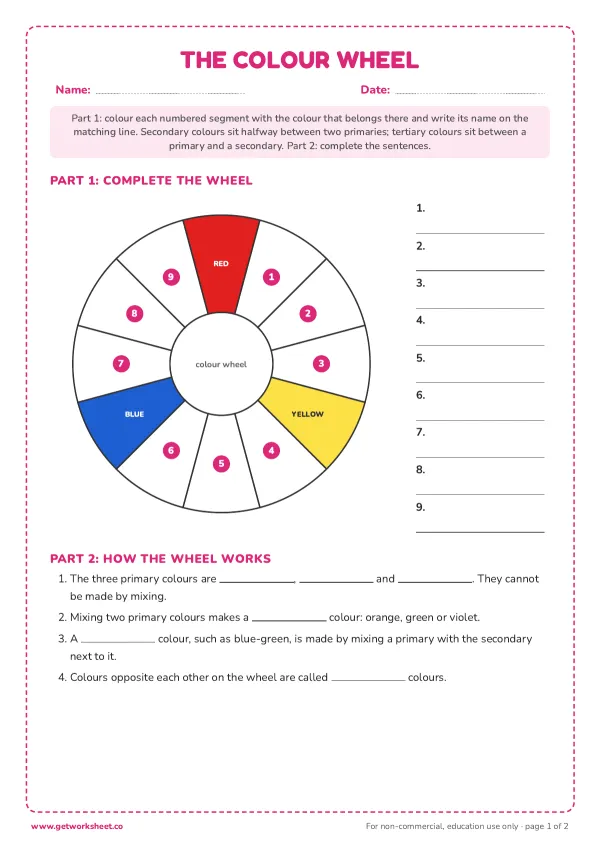
Free color theory worksheets
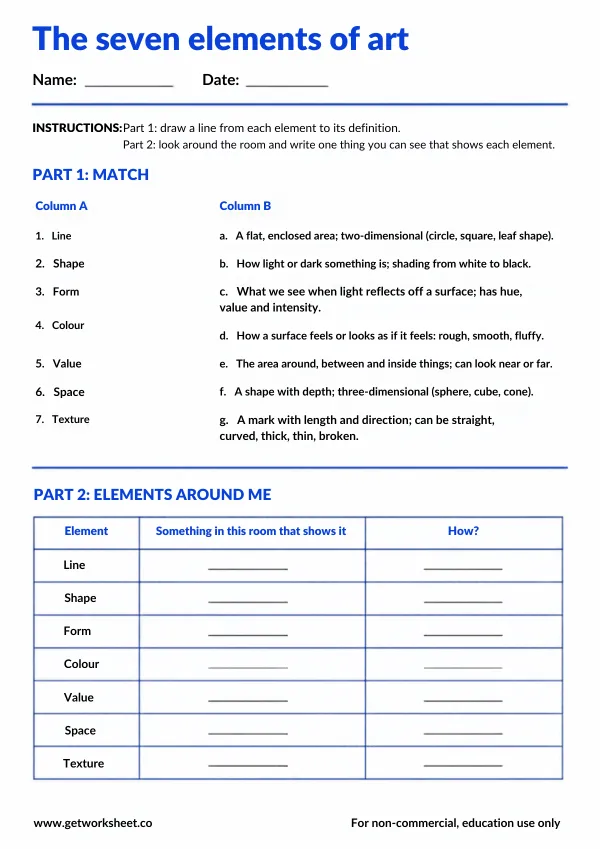
Free elements of art worksheets
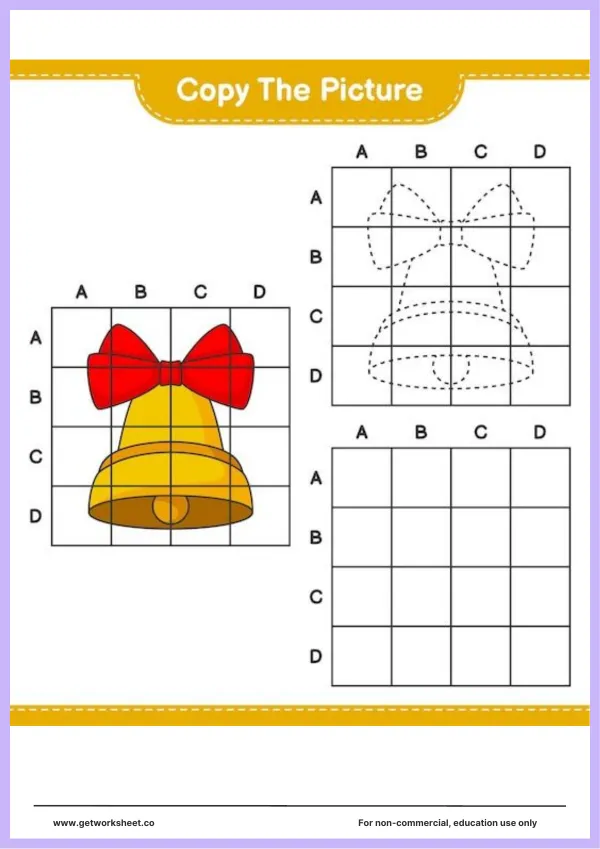
Free copy the picture worksheets
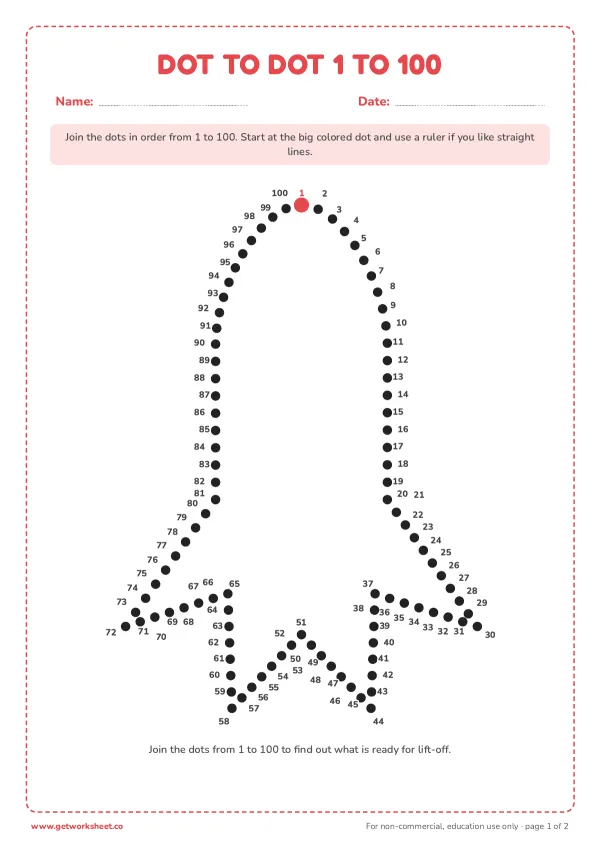
Free dot to dot 1-100 printables
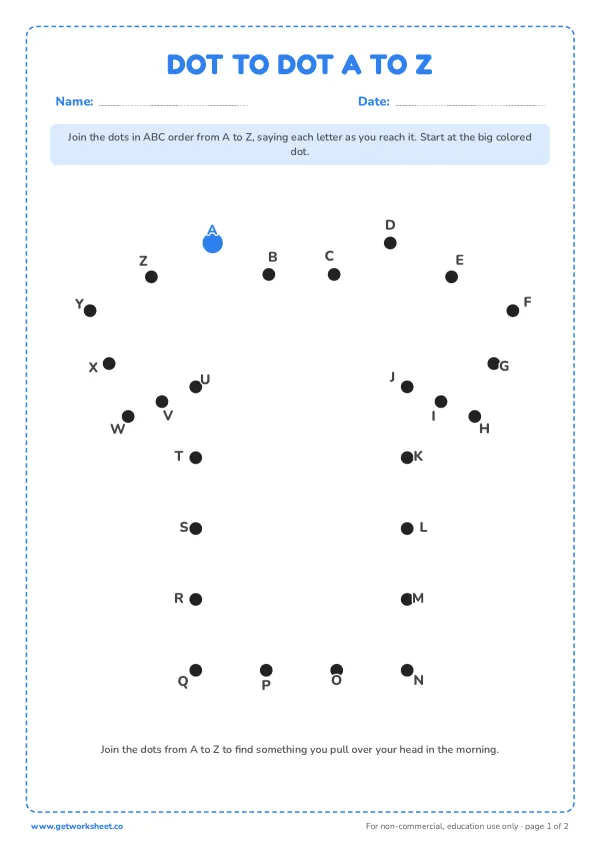
Free alphabet dot to dot worksheets
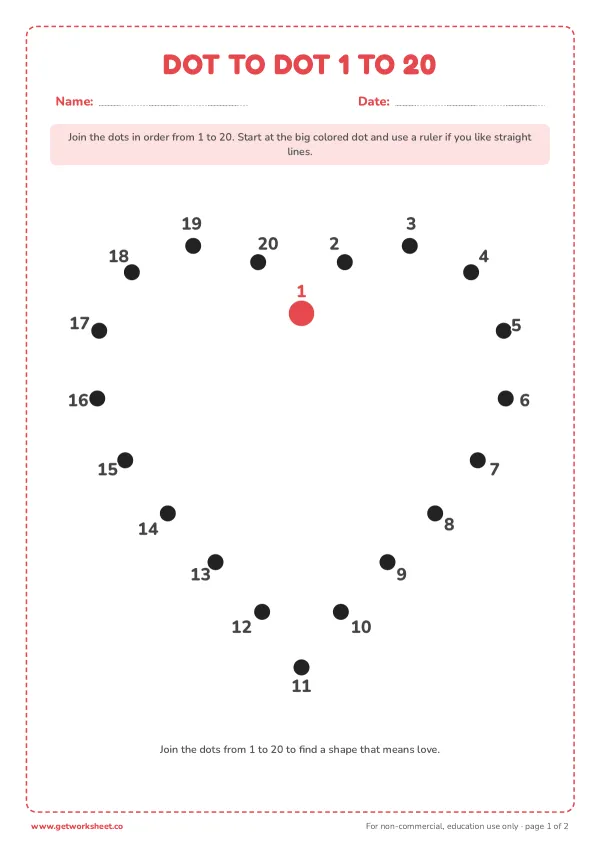
Free dot to dot 1-20 worksheets
More worksheets
- Free Montessori land and water forms worksheets
- Free color by number worksheets
- Free art styles worksheets
- Free hello kitty coloring pages
- Free Halloween coloring pages
- Free leprechaun coloring pages
- Free spring coloring pages
- Free summer coloring pages
- Free winter coloring pages
- Free fire truck coloring page printable
- Free Merry Christmas coloring pages
- Free connect the dots printable worksheets