Arts · Grades 3–8
Free art styles worksheets
Five printable art styles worksheets for grades 3 to 8 covering Realism, Impressionism, Pointillism, Expressionism, Cubism, Surrealism, Abstract Expressionism and Pop Art: match each movement to its look, artist and famous work.
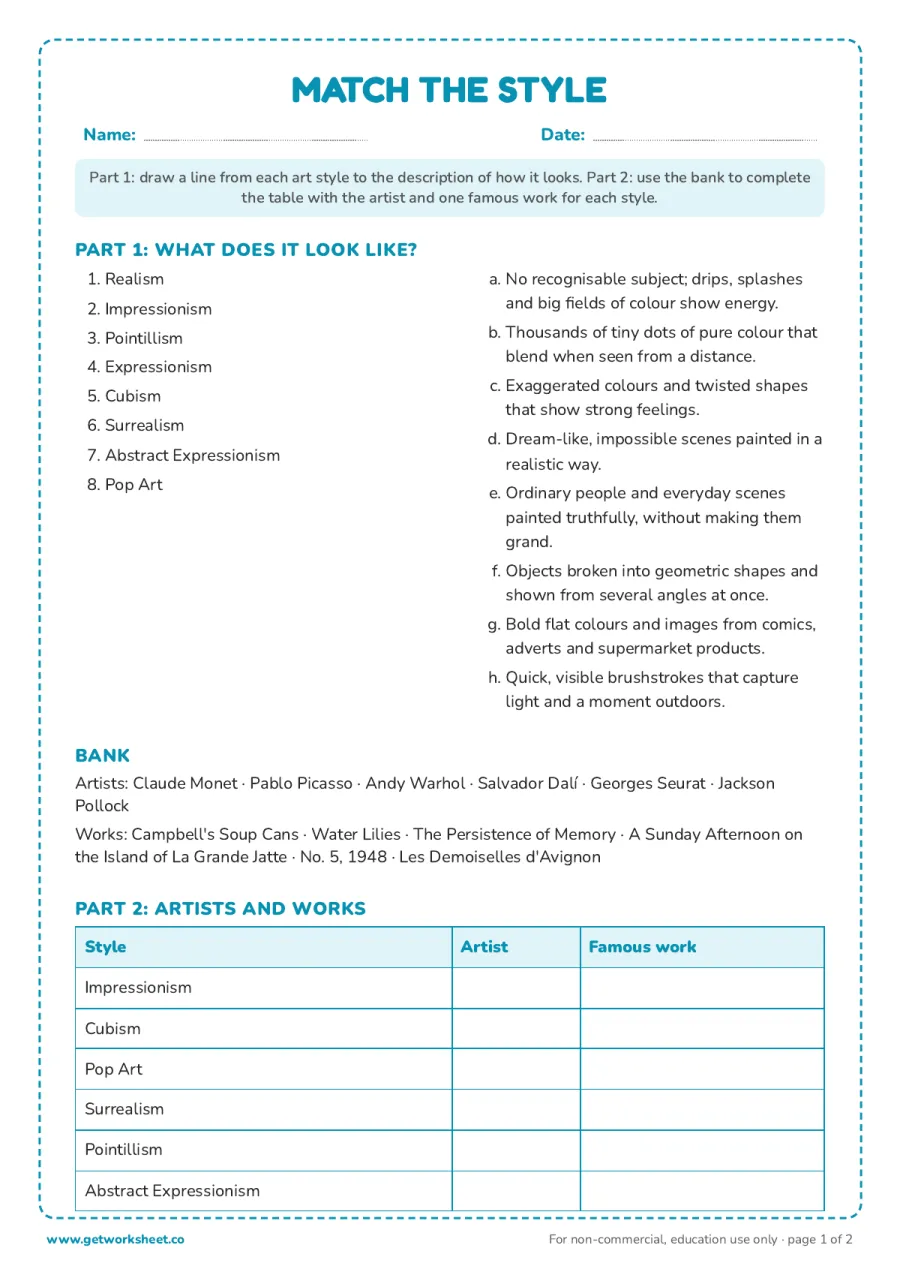
Match the style: 8 art movements, their look, their artists and a famous work
Match eight art movements (Realism, Impressionism, Pointillism, Expressionism, Cubism, Surrealism, Abstract Expressionism, Pop Art) to what they look like, then complete a table of artists and famous works from a bank. Answer key on page 2.
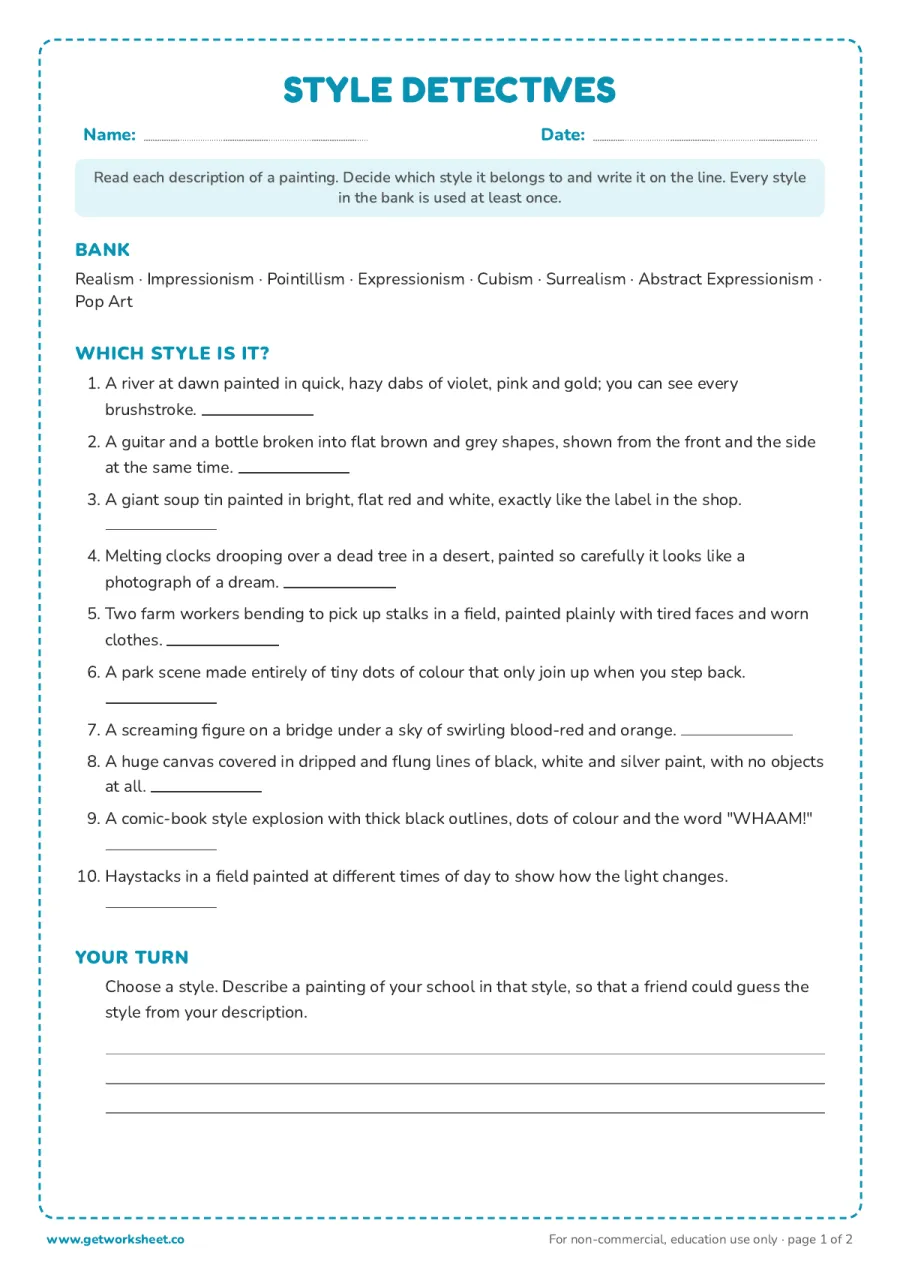
Style detectives: name the art style from 10 descriptions of paintings
Ten descriptions of imaginary paintings ("a river at dawn in hazy dabs of violet and gold", "a guitar shown from the front and the side at once"): students name the style each one belongs to, using a bank of eight. Answer key on page 2.
Whole set
All 5 sheets in one PDF
Instant and ad-free. No account needed.
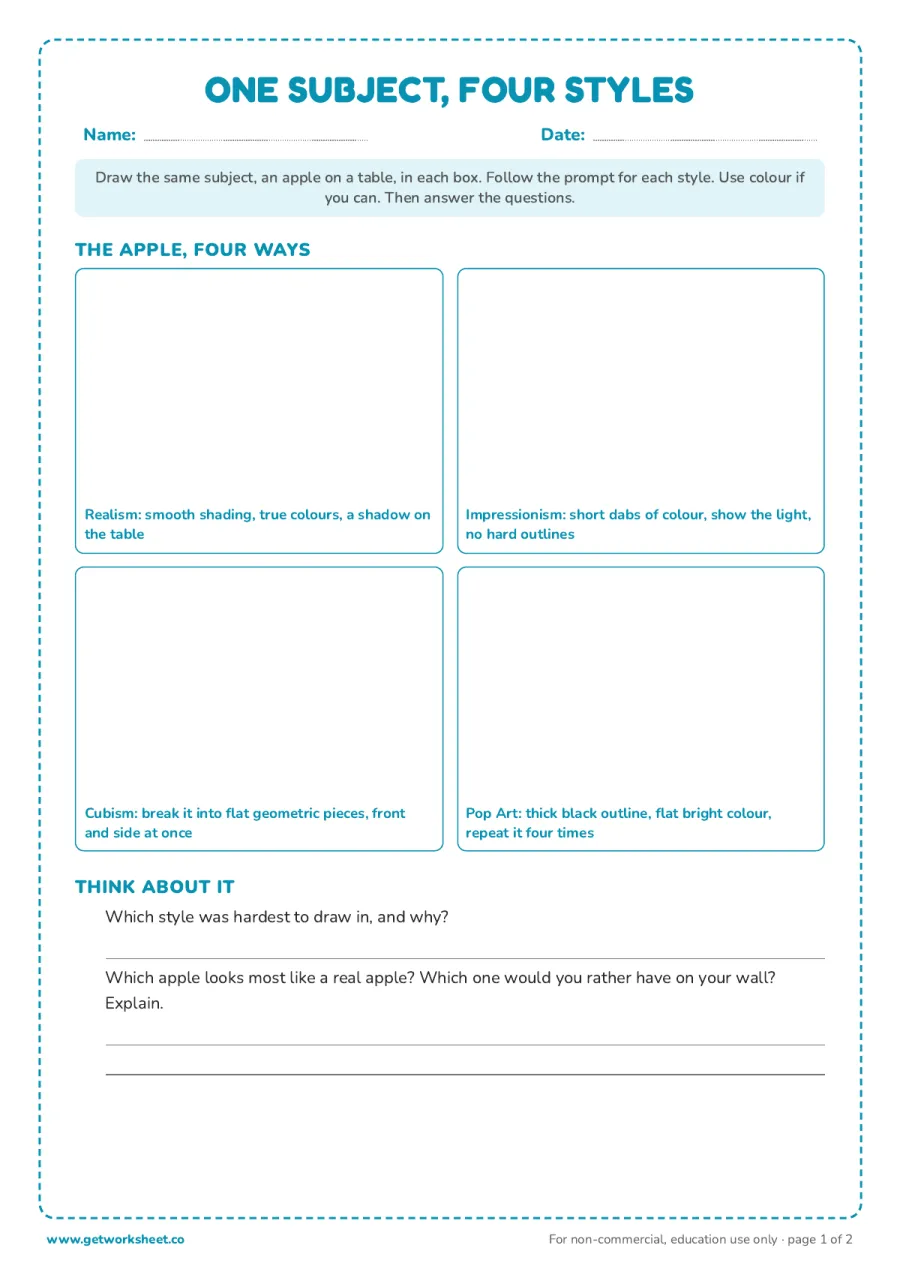
One subject, four styles: draw an apple on a table as Realism, Impressionism, Cubism and Pop Art
Four boxes to draw the same simple subject (an apple on a table) four ways: realistically, as an Impressionist, as a Cubist and as a Pop artist, with a prompt for each, then two reflection questions. No single right answer; the key describes what each box should show.
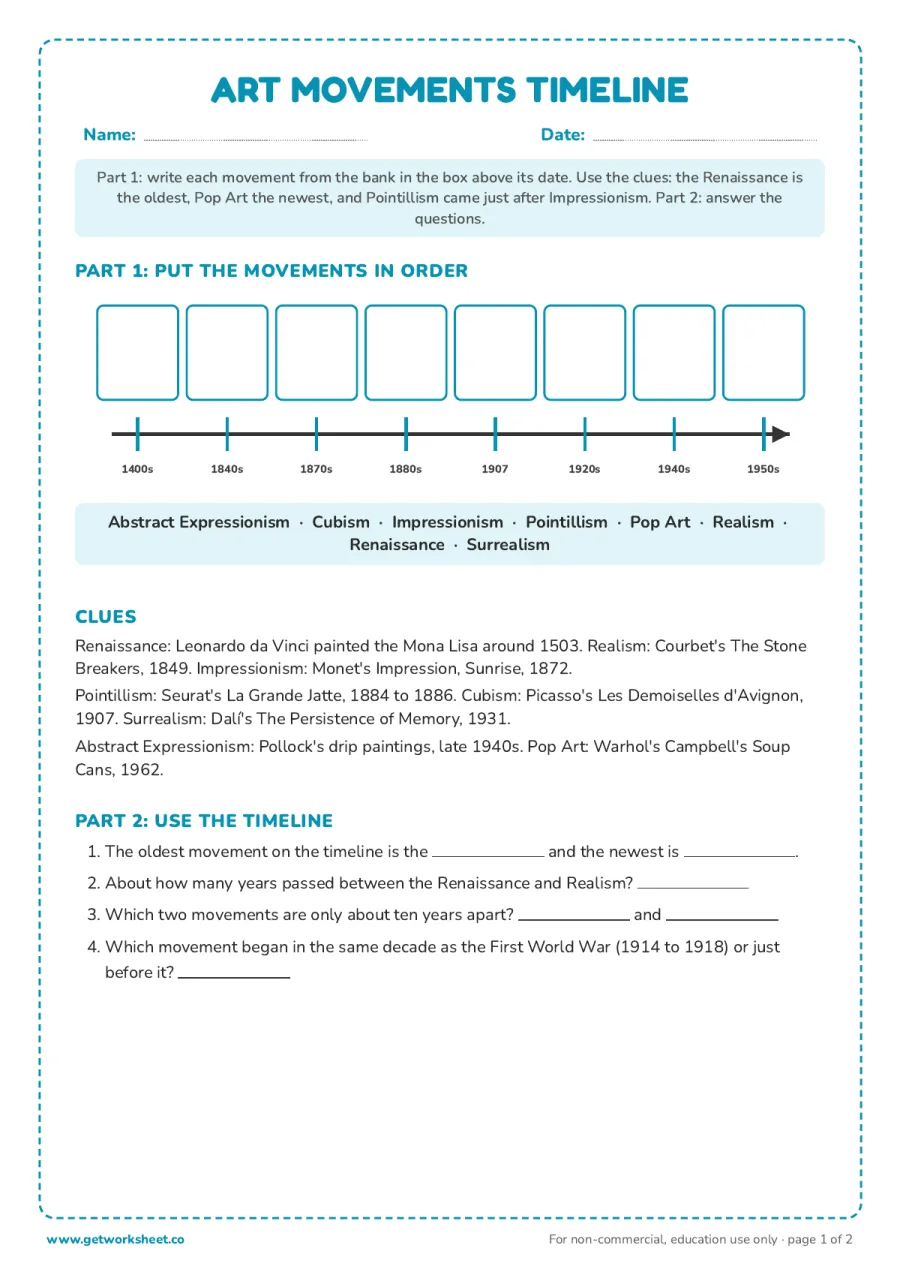
Art movements timeline: place 8 movements in order from the Renaissance to Pop Art
A dated timeline with eight empty boxes and a bank of eight movements to place in order, from the Renaissance in the 1400s to Pop Art in the 1950s, then four questions about the order. Answer key on page 2.
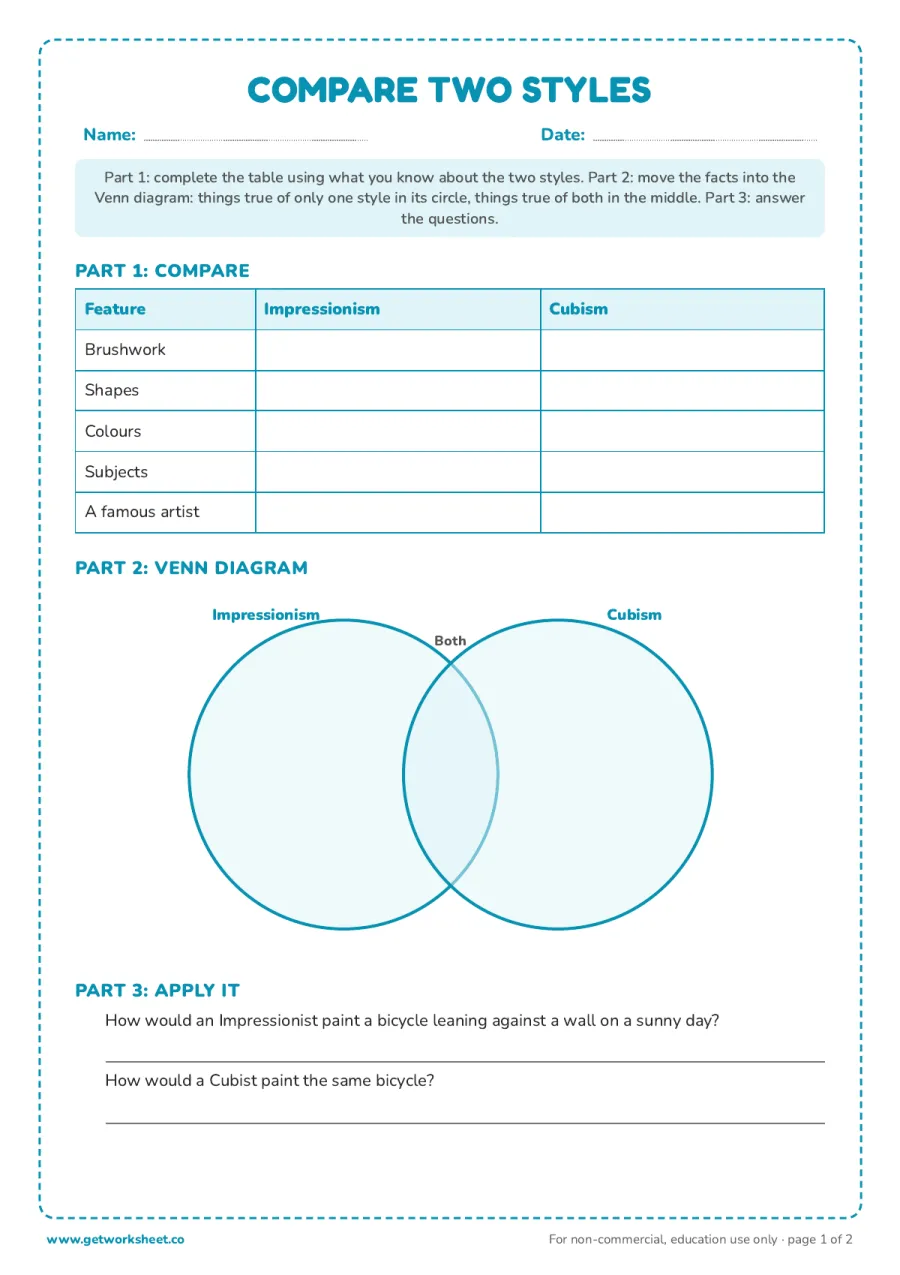
Compare two styles: Impressionism and Cubism in a Venn diagram and a feature table
A Venn diagram to compare Impressionism and Cubism, a feature table (brushwork, shapes, colour, subject, a famous artist) to complete for both, and two questions asking how each style would paint a bicycle. Answer key on page 2.
AI worksheet generator
Make a worksheet like this for your class
The 5 sheets above are fixed. The generator writes a new art styles worksheet for your grade, with the question types and count you choose, in about 20 seconds. Pick a grade to start:
What you get
- A fresh set of questions on art styles, not a copy of the sheets above
- Multiple choice, fill in the blanks, true or false, open ended
- Answer key and print-ready PDF with Pro
Free account, 1 worksheets a week. No card.
Art history for children works best as a game of recognition: can you tell an Impressionist painting from a Cubist one across the room, and say why? These five worksheets teach eight movements by what they look like first, then attach the artists, works and dates. Because the sheets describe paintings rather than reproduce them, no images are needed and there is nothing under copyright; pair them with a gallery website or a class visit and students will recognize what they see.
What's in this set
- Match the style. An eight-pair match of movement to visual description, then a six-row table (movement, artist, famous work) to complete from a bank: Monet, Picasso, Warhol, Dalí, Seurat and Pollock.
- Style detectives. Ten short painting descriptions to identify as Realism, Impressionism, Pointillism, Expressionism, Cubism, Surrealism, Abstract Expressionism or Pop Art, and two questions asking students to describe a painting of their own in a chosen style.
- One subject, four styles. Four drawing boxes with style prompts (smooth shading and true colors; dabs of color and light; flat geometric pieces from several angles; thick outlines, flat bright color, repeated) and two written reflection questions.
- Art movements timeline. A timeline with ticks for the 1400s, 1840s, 1870s, 1880s, 1907, 1920s, 1940s and 1950s, a bank of the eight movements in alphabetical order, and four fill-in questions comparing dates.
- Compare two styles. A two-circle Venn diagram (Impressionism, Cubism, Both), a five-row comparison table, and two written questions that apply each style to a new subject.
What students will practice
- Recognizing the visual characteristics of eight movements: Realism, Impressionism, Pointillism, Expressionism, Cubism, Surrealism, Abstract Expressionism and Pop Art (National Core Arts Standards VA:Re7.2, VA:Cn11.1)
- Linking each movement to a leading artist and one famous work
- Identifying a style from a description of a painting, and describing a painting so its style is clear
- Working in a style: the same subject drawn four ways (VA:Cr2.1)
- Placing the movements in chronological order and reasoning about the gaps between them
- Comparing two styles feature by feature and applying each to a new subject
Free printable makers
Make your own art styles sheets
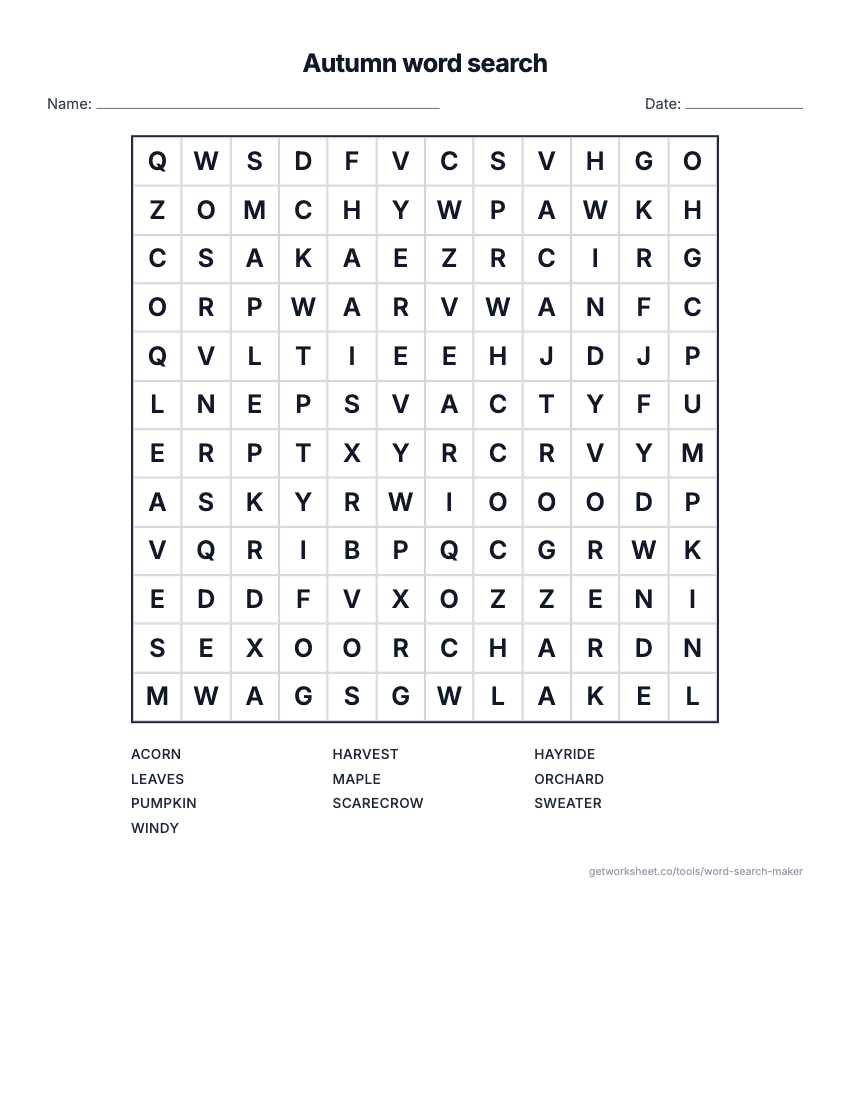
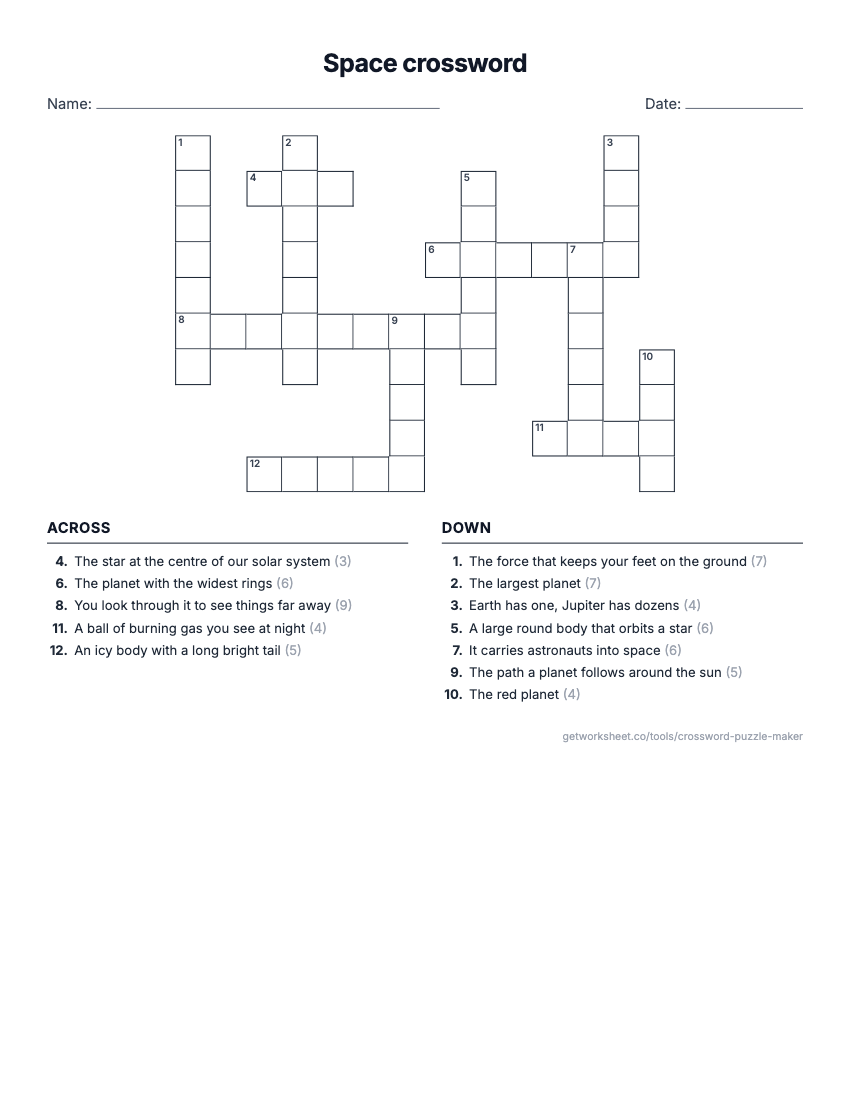
Type your own words or numbers and print in about 30 seconds. No account, no AI, answer key where it applies.
AI worksheet generator
Need a different art styles worksheet?
Generate a custom art styles worksheet: pick the grade, question types and count, and print it in about 20 seconds. Free accounts get 1 generation a week.
How to use these worksheets in class
- Start with pictures on the board. Project one painting per movement (any gallery website will do) while students complete Match the style. The descriptions on the sheet are written to match what they see.
- Detectives in pairs. Style detectives is quicker and more fun read aloud: one student reads the description, the partner names the style. The "Your turn" description at the end can be swapped and guessed.
- Make before you judge. One subject, four styles is the lesson students remember. Give them a real apple to look at and 12 minutes per box; the Cubist box always produces the best discussion.
- Timeline with the clues covered. Fold the clue box under first and let students order the movements from memory; then reveal the clues to check. The two questions about gaps make the dates mean something.
- Venn as a plenary. Compare two styles closes the unit. The table is the evidence, the Venn is the sorting, and the bicycle questions show whether students can transfer the idea.
- Grades 3 to 8. Grades 3 to 5 use the first three sheets; grades 6 to 8 use all five, and can extend the timeline with movements of their own choosing.
Answer key
Every practice sheet carries its own answer key on page 2 of the PDF. The keys are repeated here for quick marking.
- Match the style: Part 1: what does it look like?: Realism = Ordinary people and everyday scenes painted truthfully, without making them grand.; Impressionism = Quick, visible brushstrokes that capture light and a moment outdoors.; Pointillism = Thousands of tiny dots of pure color that blend when seen from a distance.; Expressionism = Exaggerated colors and twisted shapes that show strong feelings.; Cubism = Objects broken into geometric shapes and shown from several angles at once.; Surrealism = Dream-like, impossible scenes painted in a realistic way.; Abstract Expressionism = No recognizable subject; drips, splashes and big fields of color show energy.; Pop Art = Bold flat colors and images from comics, adverts and supermarket products. Part 2: artists and works: Impressionism | Claude Monet | Water Lilies Cubism | Pablo Picasso | Les Demoiselles d'Avignon Pop Art | Andy Warhol | Campbell's Soup Cans Surrealism | Salvador Dalí | The Persistence of Memory Pointillism | Georges Seurat | A Sunday Afternoon on the Island of La Grande Jatte Abstract Expressionism | Jackson Pollock | No. 5, 1948
- Style detectives: Which style is it?: 1. Impressionism 2. Cubism 3. Pop Art 4. Surrealism 5. Realism 6. Pointillism 7. Expressionism 8. Abstract Expressionism 9. Pop Art 10. Impressionism Your turn: 1. Open-ended; the description should include two or more features of the chosen style.
- One subject, four styles: The apple, four ways: Realism: shading and a cast shadow. Impressionism: visible dabs, no outlines. Cubism: geometric facets, several viewpoints. Pop Art: bold outline, flat color, repetition. Think about it: 1. Open-ended. 2. Open-ended; Realism usually looks most real, but any preference with a reason is acceptable.
- Art movements timeline: Part 1: put the movements in order: 1400s: Renaissance; 1840s: Realism; 1870s: Impressionism; 1880s: Pointillism; 1907: Cubism; 1920s: Surrealism; 1940s: Abstract Expressionism; 1950s: Pop Art Part 2: use the timeline: 1. Renaissance; Pop Art 2. about 400 years 3. Impressionism and Pointillism (or Realism and Impressionism, about 30 years, if argued) 4. Cubism (1907)
- Compare two styles: Part 1: compare: Brushwork | quick, loose, visible dabs | flat, careful, hard edges Shapes | soft, blurred, no outlines | geometric facets, several viewpoints at once Colors | bright, light-filled, pure colors side by side | often muted browns, greys and ochres (early Cubism) Subjects | landscapes, water, gardens, everyday scenes outdoors | still lifes, portraits, musical instruments A famous artist | Claude Monet (also Renoir, Degas) | Pablo Picasso (also Georges Braque) Part 2: Venn diagram: Both: painted in France; broke the rules of academic art; artists worked in groups; both changed how later artists painted. Part 3: apply it: 1. Sample: quick dabs of color, sunlight glinting on the metal, soft shadows, no hard outlines, perhaps painted outdoors. 2. Sample: the wheels, frame and wall broken into flat geometric shapes, seen from the side and above at once, in muted colors.
Common mistakes to watch for
- Impressionism versus Pointillism. Both are dabs of color; Pointillism is tiny, separate dots of pure color, Impressionism is loose strokes. Seurat and Monet side by side settle it.
- Surrealism as "weird". The point is impossible scenes painted realistically. Dalí's clocks look solid; that is what makes them strange.
- Abstract means messy. Pollock's drips are controlled and layered. Ask students to look for rhythm in the lines, not chaos.
- Pop Art as cartoons. Pop Art borrows from comics and adverts on purpose, to ask what counts as art. The style is about the source, not just the outlines.
- Dates as exact years. Movements have starting points, not birthdays. The timeline uses decades except where one painting marks the start (Cubism, 1907).
Frequently asked questions
What grade are these art styles worksheets for?
Grades 3 to 8. Matching, detectives and the four-styles drawing suit grades 3 to 5; the timeline and comparison sheets suit grades 5 to 8 (National Core Arts Standards VA:Re7.2, VA:Cn11.1).
Do the worksheets include answer keys?
Yes. Matching, detectives, the timeline and the comparison table have keys on page 2 and on this page. The drawing sheet's key describes what each box should show; there is no single right drawing.
Which art movements are covered?
Realism, Impressionism, Pointillism, Expressionism, Cubism, Surrealism, Abstract Expressionism and Pop Art, with the Renaissance as the starting point of the timeline. Artists named: Courbet, Monet, Seurat, Munch, Picasso, Dalí, Pollock, Warhol and Lichtenstein.
Are there pictures of the paintings on the worksheets?
No. The sheets describe paintings in words so that nothing under copyright is reproduced and so that students learn to recognize features rather than memorize one image. Show the real paintings from a gallery website alongside.
Why start the timeline at the Renaissance?
It gives students a fixed point they have usually heard of (Leonardo, the Mona Lisa) and shows how much later the modern movements came: about 400 years between the Renaissance and Realism, then eight movements in the next hundred years.
Related art worksheets
The famous artists worksheets give a page each to Monet, Picasso, Warhol and others named here. The elements of art worksheets supply the vocabulary (line, shape, color, value) used in the comparison table, and the color theory worksheets explain the color choices Impressionists and Pop artists made.
Free library
Related collections
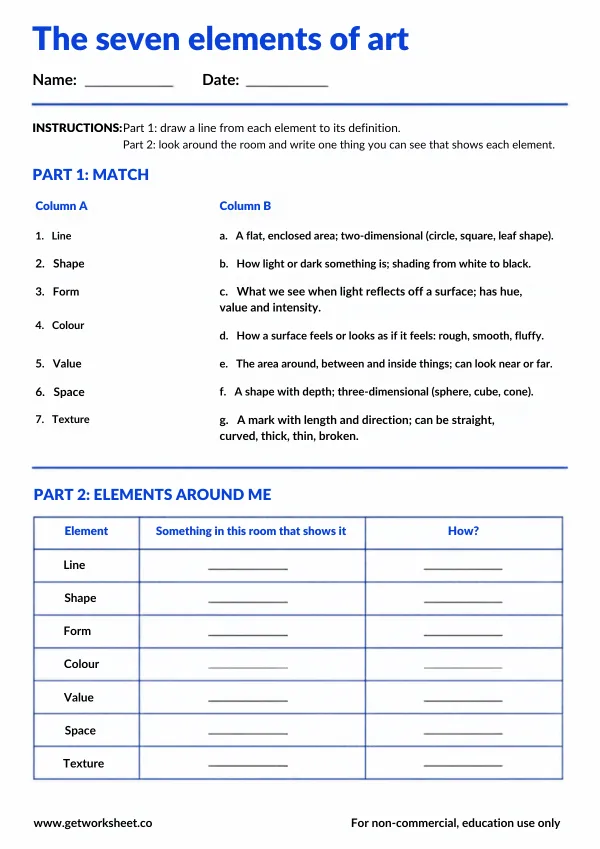
Free elements of art worksheets
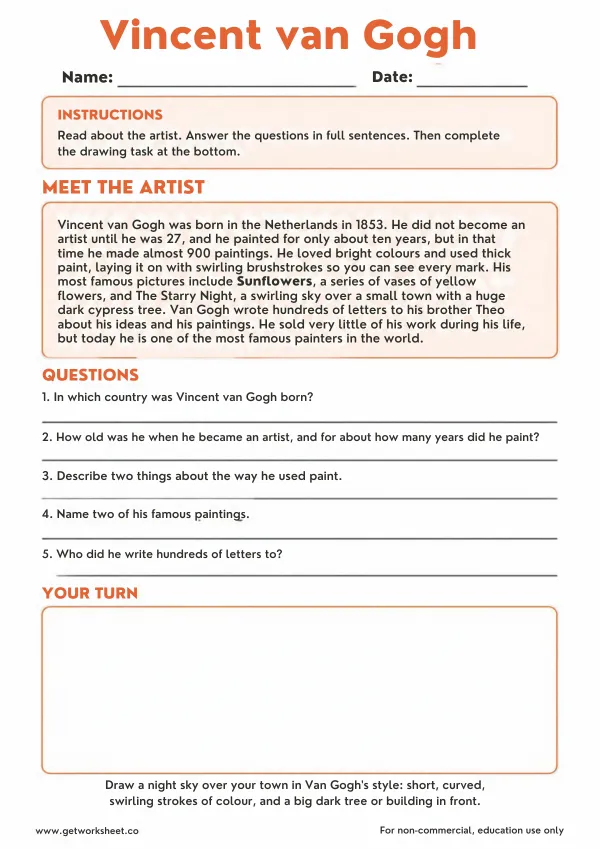
Free famous artists worksheets
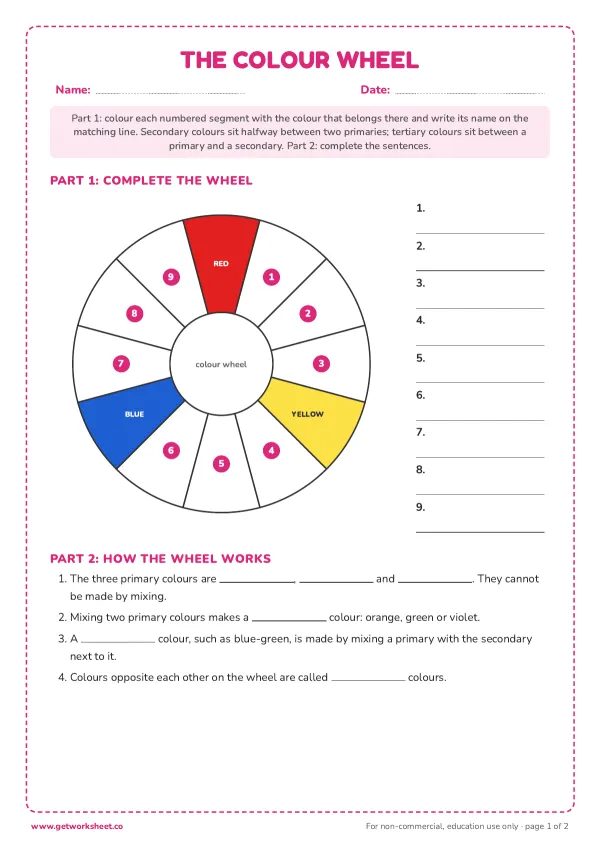
Free color theory worksheets
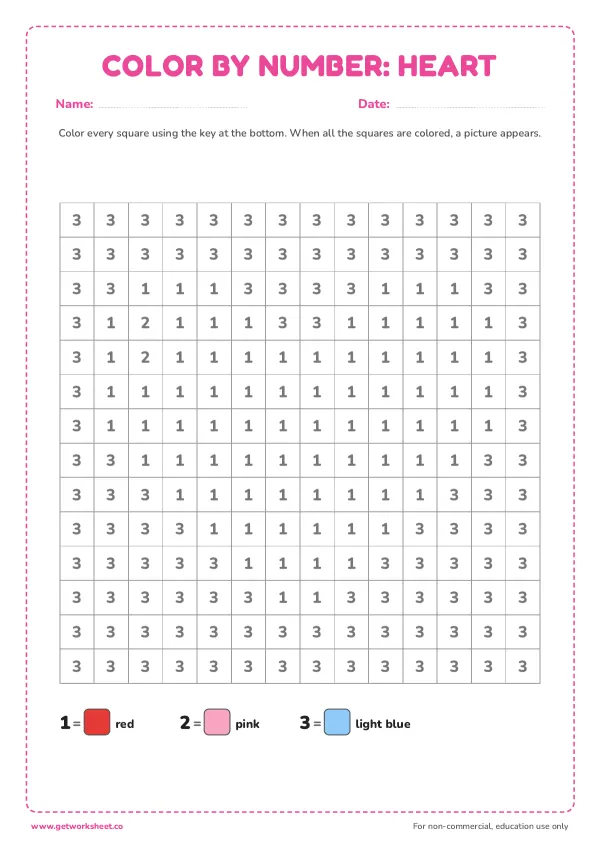
Free color by number worksheets
Free hello kitty coloring pages
Free Halloween coloring pages
Free copy the picture worksheets
Free leprechaun coloring pages
More worksheets
- Free spring coloring pages
- Free summer coloring pages
- Free winter coloring pages
- Free fire truck coloring page printable
- Free Merry Christmas coloring pages
- Free connect the dots printable worksheets
- Free printable vehicle coloring pages
- Free printable animal coloring pages
- Free printable number coloring pages