Arts · Grades 3–6
Free famous artists worksheets
Six printable famous artists worksheets for grades 3 to 6: one-page fact files on Vincent van Gogh, Leonardo da Vinci, Frida Kahlo, Pablo Picasso, Claude Monet and more, each with a reading passage. Answer keys on page 2 of every PDF.
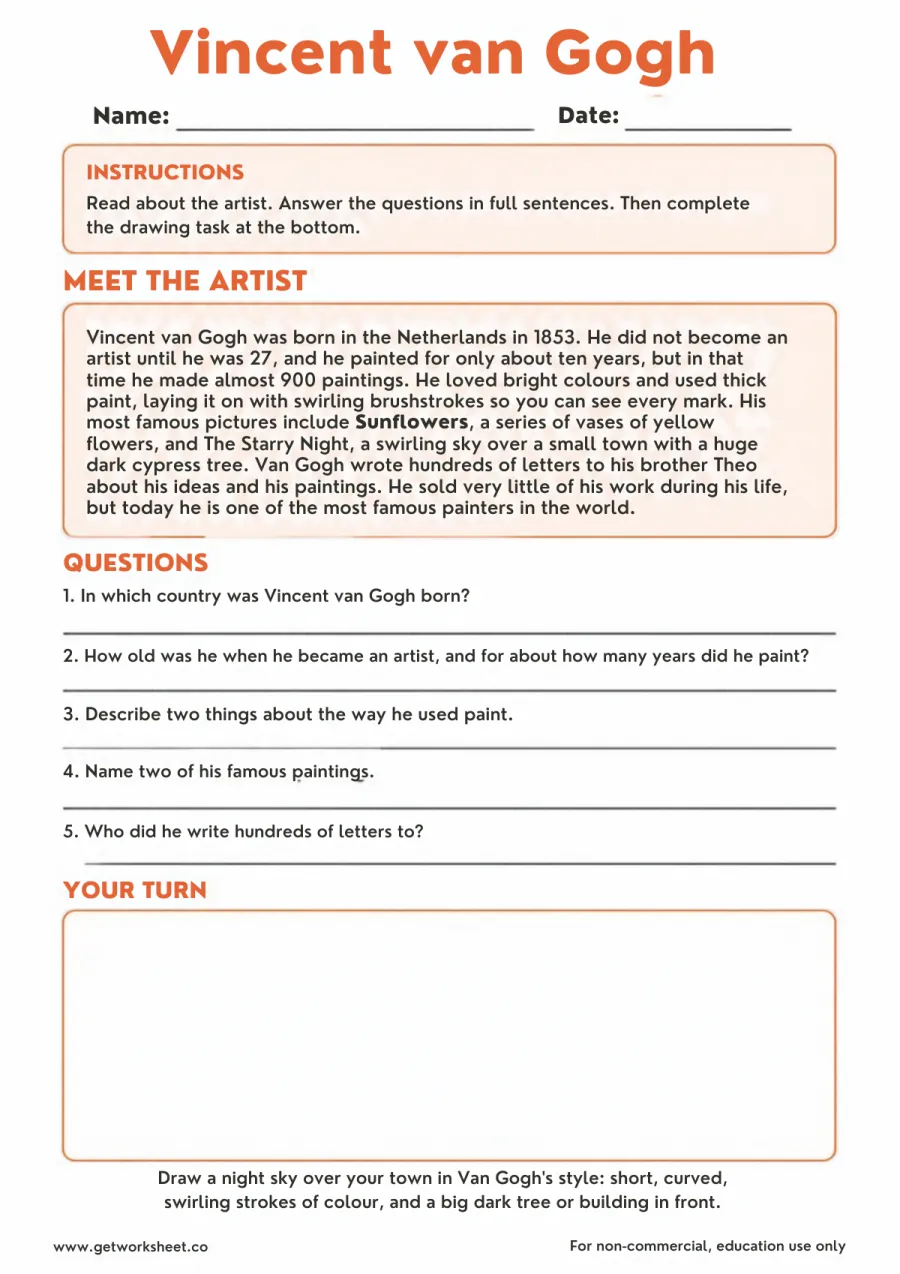
Vincent van Gogh fact file and comprehension
A short biography of Vincent van Gogh with five comprehension questions and a "paint a swirling night sky" drawing task. Answer key on page 2.
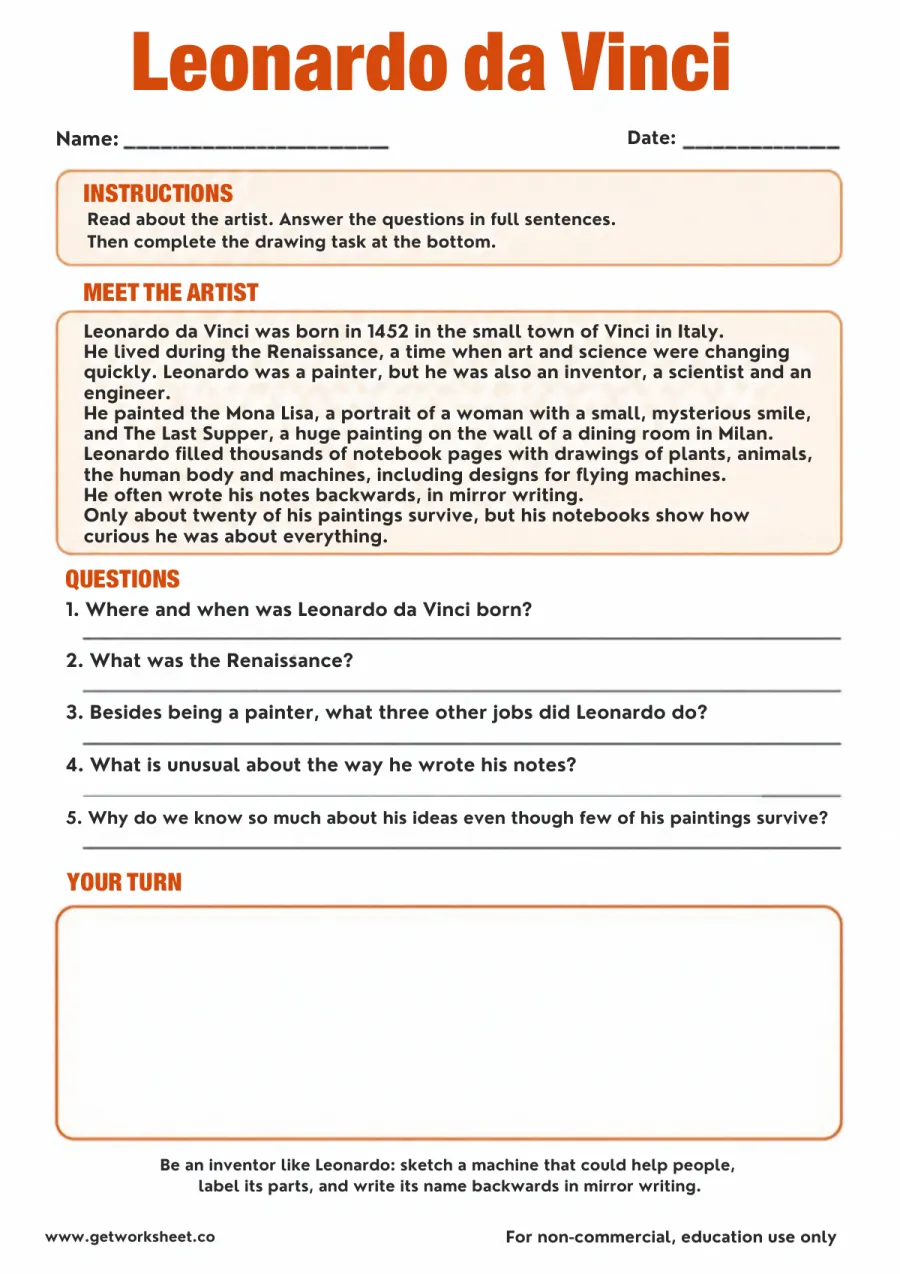
Leonardo da Vinci fact file and comprehension
A short biography of Leonardo da Vinci with five comprehension questions and an "invention notebook" drawing task. Answer key on page 2.
Whole set
All 6 sheets in one PDF
Instant and ad-free. No account needed.
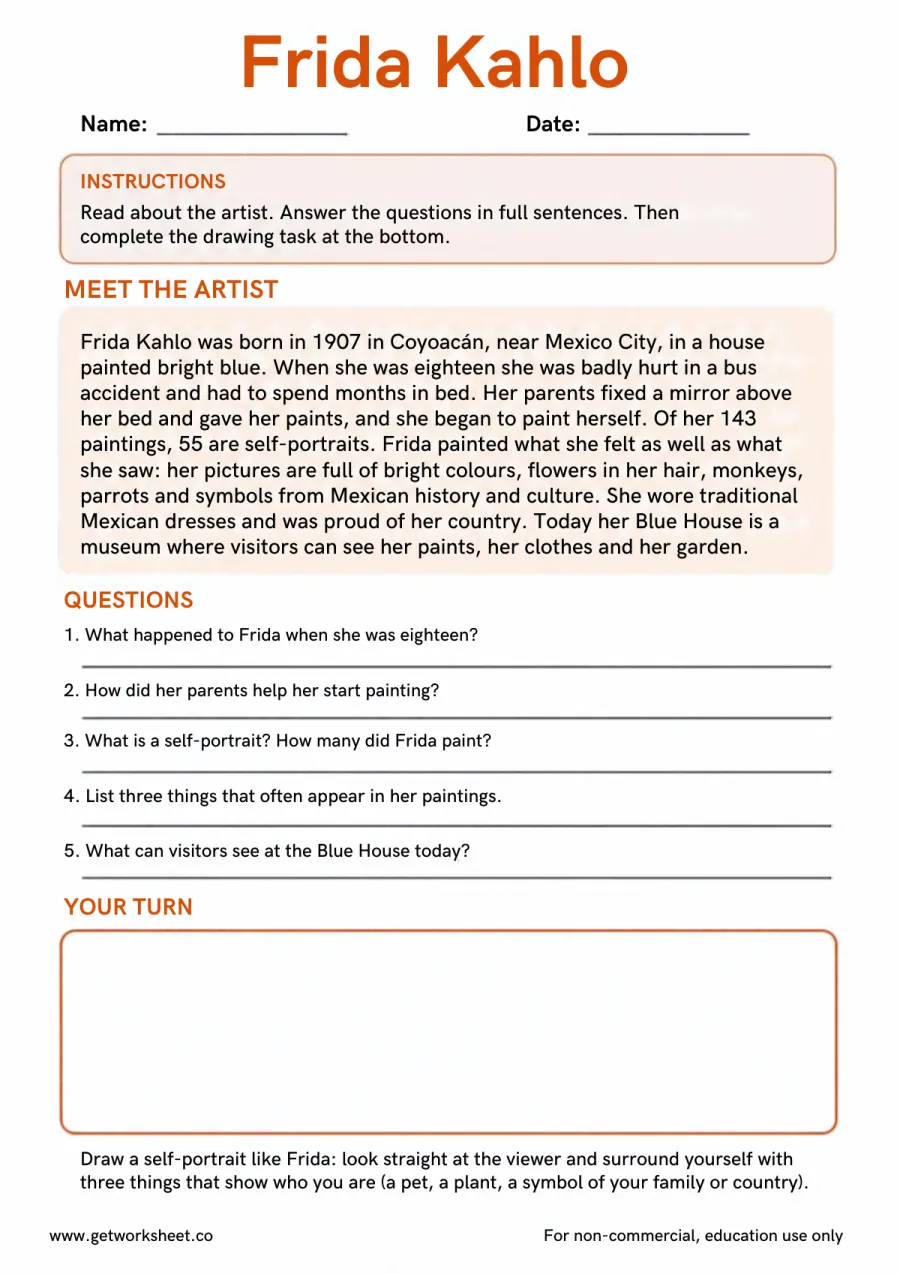
Frida Kahlo fact file and comprehension
A short biography of Frida Kahlo with five comprehension questions and a symbolic self-portrait task. Answer key on page 2.
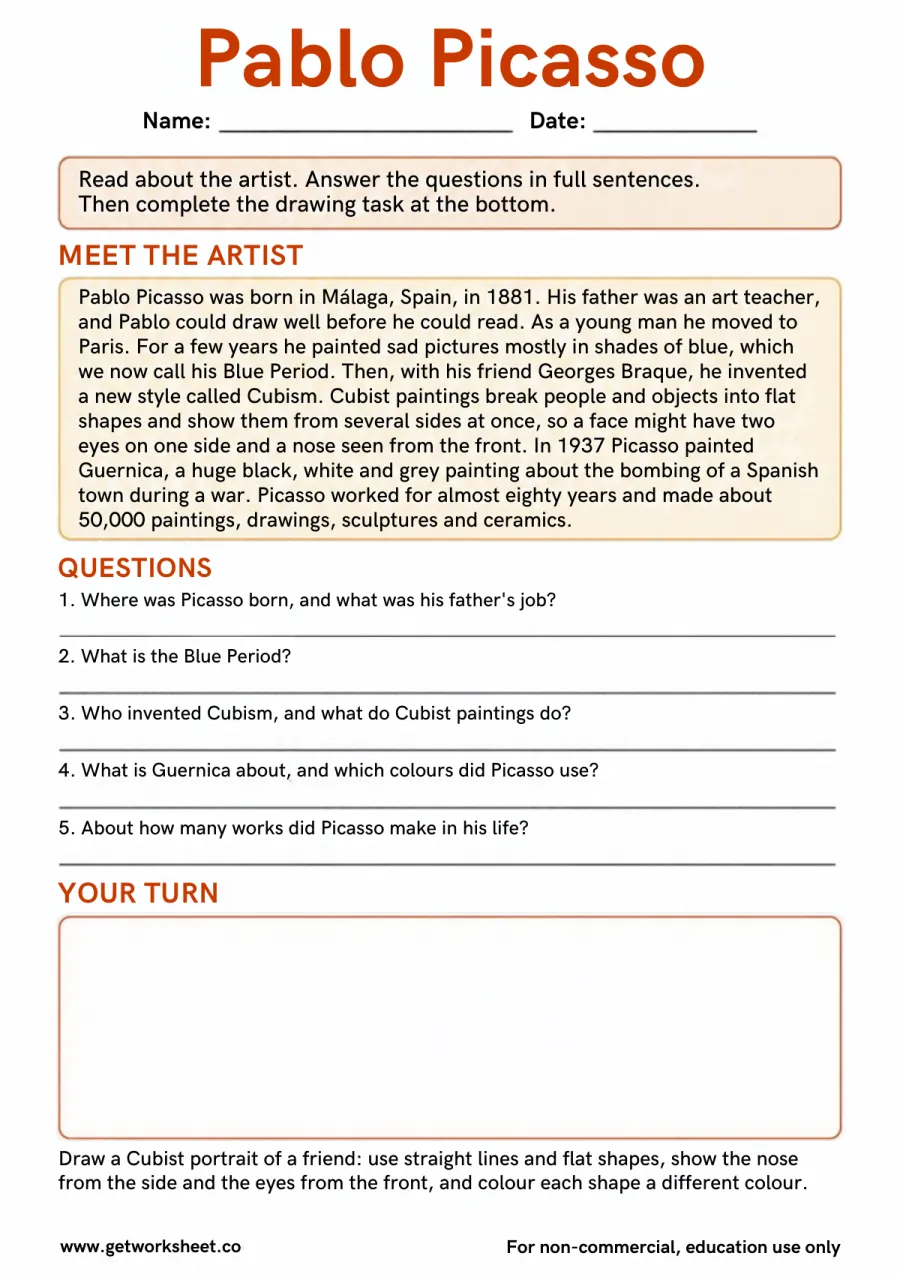
Pablo Picasso fact file and comprehension
A short biography of Pablo Picasso with five comprehension questions and a Cubist portrait task. Answer key on page 2.
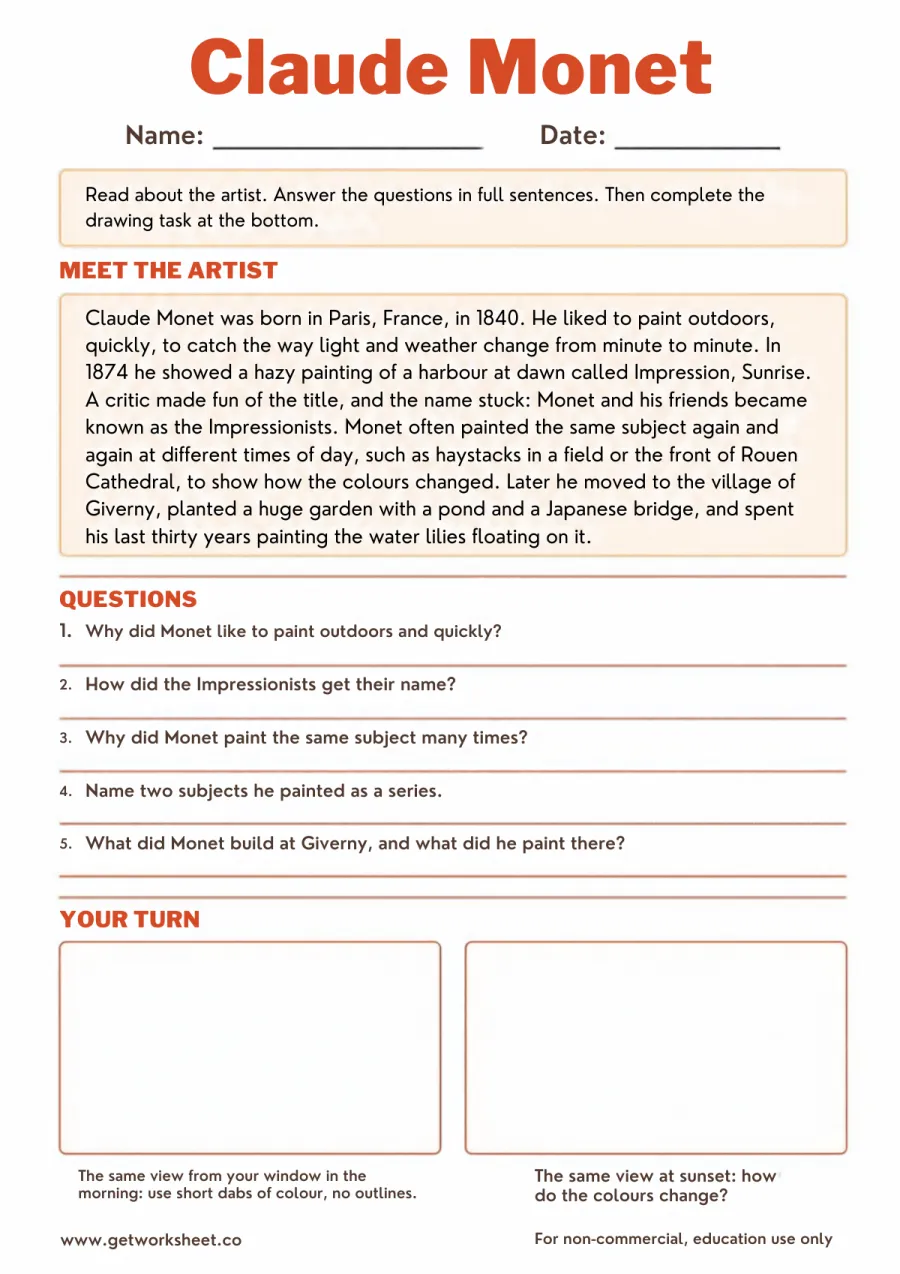
Claude Monet fact file and comprehension
A short biography of Claude Monet with five comprehension questions and a same-scene-two-lights drawing task. Answer key on page 2.
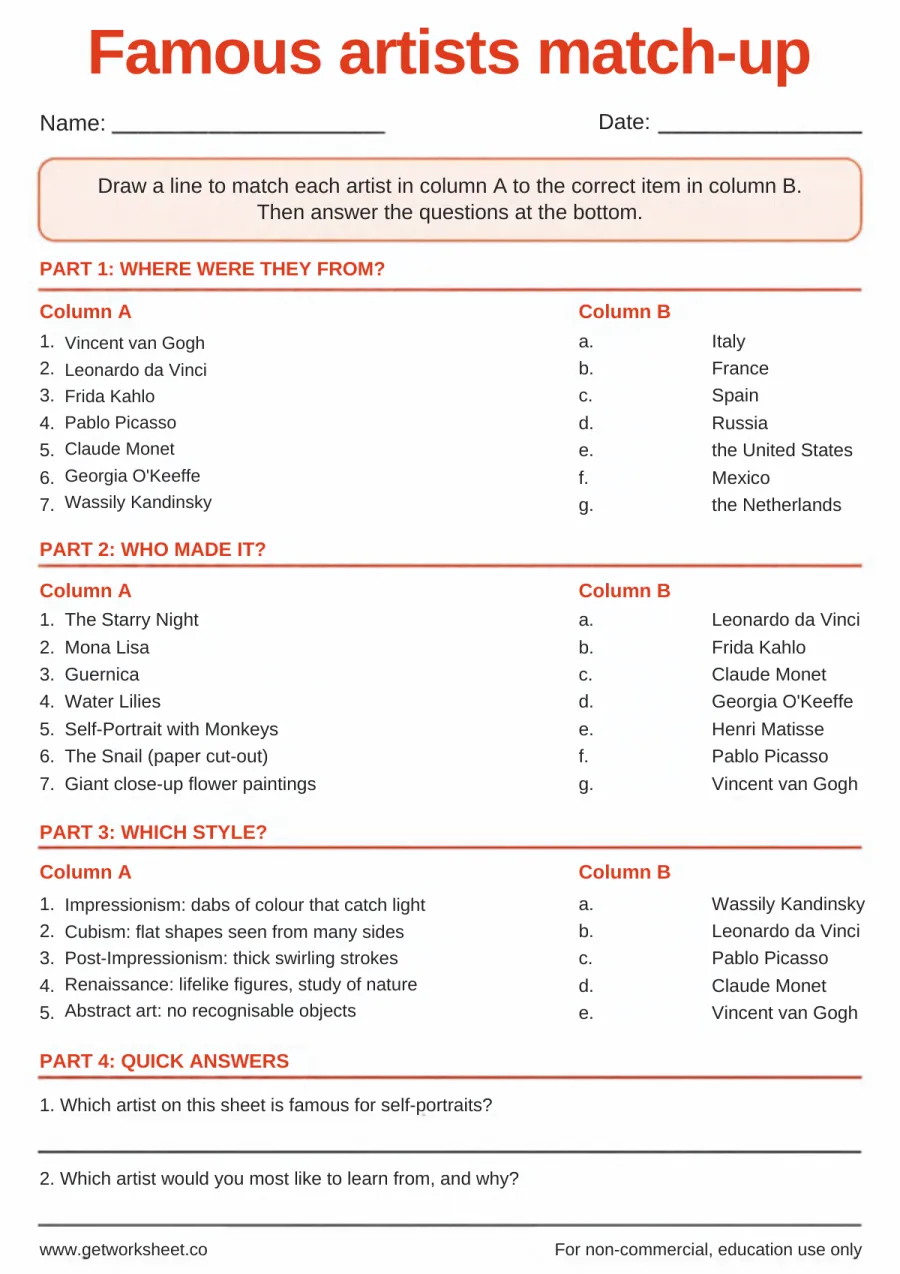
Famous artists match-up quiz (8 artists)
Match eight famous artists to their countries, their best-known works and their styles, then answer two quick questions. Answer key on page 2.
AI worksheet generator
Make a worksheet like this for your class
The 6 sheets above are fixed. The generator writes a new famous artists worksheet for your grade, with the question types and count you choose, in about 20 seconds. Pick a grade to start:
What you get
- A fresh set of questions on famous artists, not a copy of the sheets above
- Multiple choice, fill in the blanks, true or false, open ended
- Answer key and print-ready PDF with Pro
Free account, 1 worksheets a week. No card.
Each of these worksheets introduces one famous artist in a way an eight-year-old can read alone: a short biography, five comprehension questions, and a drawing task that asks the child to try the artist’s way of working rather than copy a painting. The sixth sheet is a match-up quiz covering eight artists, so the set works as a five-lesson unit with an end-of-unit check.
What's in this set
- Vincent van Gogh. A 130-word biography (Netherlands, 1853-1890; Sunflowers; The Starry Night; letters to his brother Theo; thick swirling brushstrokes), five questions and a swirling-sky drawing box.
- Leonardo da Vinci. Leonardo da Vinci (Italy, 1452-1519; Renaissance; Mona Lisa; The Last Supper; thousands of notebook pages in mirror writing; flying machines), five questions and an invention-sketch box.
- Frida Kahlo. Frida Kahlo (Mexico, 1907-1954; began painting after a bus accident at 18; 55 of her 143 paintings are self-portraits; flowers, animals and Mexican culture; the Blue House), five questions and a self-portrait box.
- Pablo Picasso. Pablo Picasso (Spain, 1881-1973; drew before he could talk properly; Blue Period; invented Cubism with Georges Braque; Guernica; about 50,000 works), five questions and a Cubist-face drawing box.
- Claude Monet. Claude Monet (France, 1840-1926; Impression, Sunrise gave Impressionism its name; painting outdoors; haystacks and Rouen Cathedral series; water lilies at Giverny), five questions and a two-box light-and-time drawing task.
- Famous artists match-up. Three matching tasks for eight artists (Van Gogh, Leonardo, Kahlo, Picasso, Monet, Georgia O’Keeffe, Henri Matisse, Wassily Kandinsky): country, famous work and style, plus two quick questions.
What students will practice
- Reading a short non-fiction passage and answering literal and inferential questions in full sentences (Common Core RI.3.1, RI.4.1)
- Learning the vocabulary of art history: portrait, self-portrait, series, Impressionism, Cubism, Renaissance, abstract
- Connecting an artist to a country, a period and a style, and explaining what makes each style recognizable
- Working in an artist’s manner: swirling strokes, dabs of color without outlines, flat Cubist shapes, symbolic self-portraits, annotated invention sketches (National Core Arts Standards VA:Cr2, VA:Re7)
- Giving a reasoned opinion about art in the final quick-answer question
Free printable makers
Make your own famous artists sheets
Type your own words or numbers and print in about 30 seconds. No account, no AI, answer key where it applies.
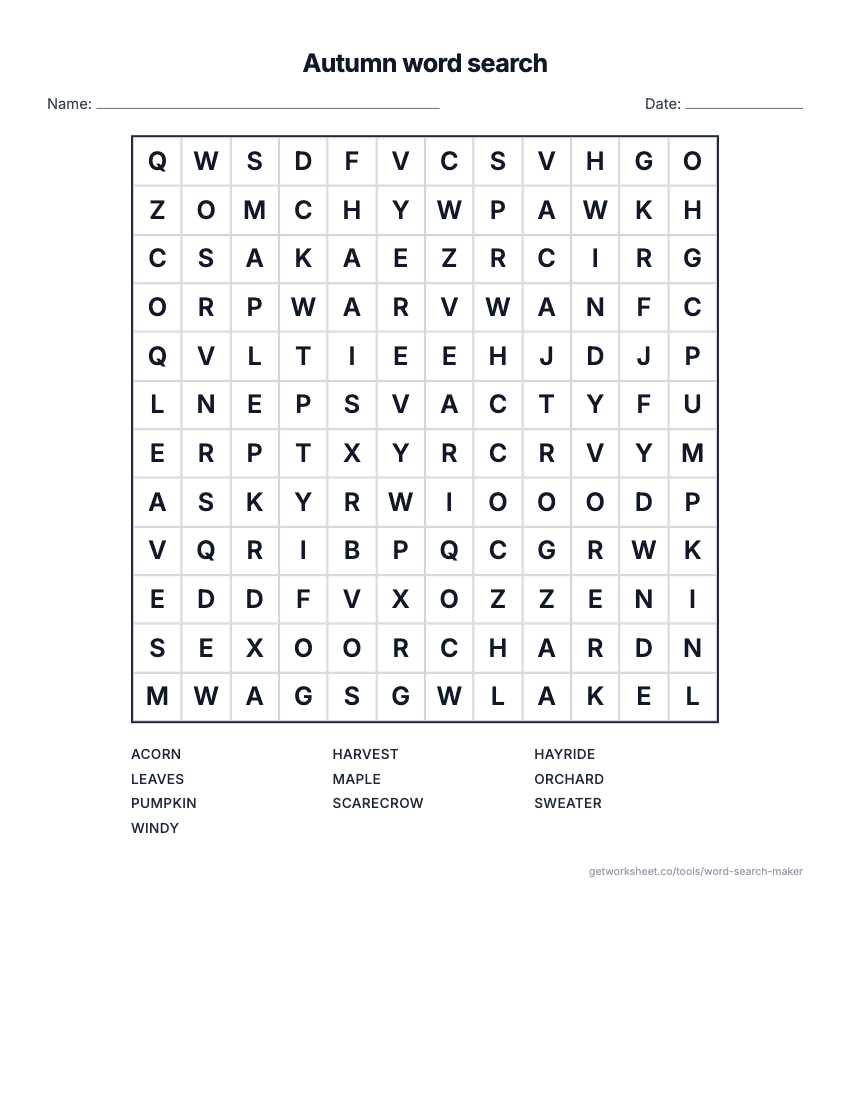
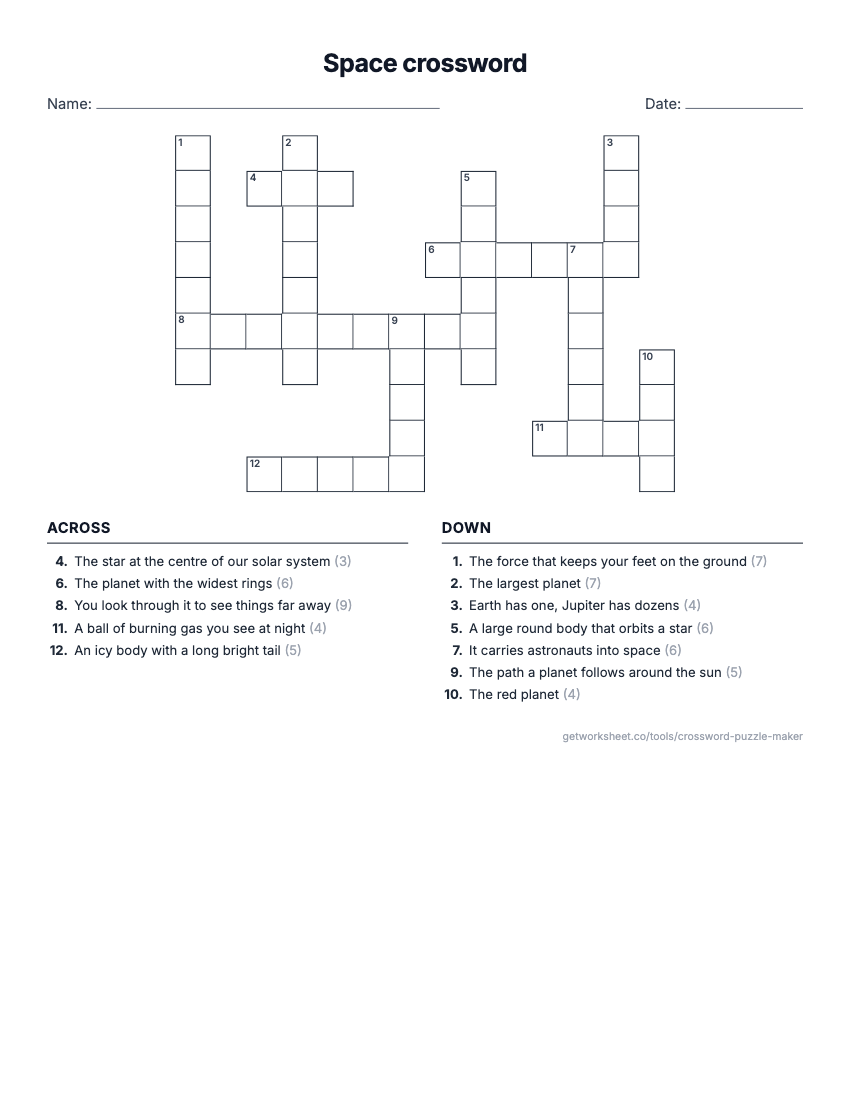
AI worksheet generator
Need a different famous artists worksheet?
Generate a custom famous artists worksheet: pick the grade, question types and count, and print it in about 20 seconds. Free accounts get 1 generation a week.
How to use these worksheets in class
- One artist a week. Project two or three of the artist’s real paintings on the board (they are easy to find online and the older ones are out of copyright), read the passage together, and let students answer the questions alone. Keep the drawing task for the art lesson later in the week so it has proper time and materials.
- Pair the reading with a technique. Van Gogh’s sheet works best with oil pastels or thick tempera; Monet’s with cotton buds and watercolour, no pencil outline allowed; Picasso’s with a ruler and colored pencils; Kahlo’s with a mirror per table; Leonardo’s with a fine black pen and a real mirror to check the backwards writing.
- Compare two artists. After Monet and Van Gogh, ask which painter cared more about light and which about feeling. After Picasso and Leonardo, ask which one wanted his pictures to look real. The comparisons are where the vocabulary sticks.
- Use the match-up as the assessment. The quiz introduces three artists not covered by the fact files (Georgia O’Keeffe, Henri Matisse, Wassily Kandinsky) so that fast finishers have something to look up.
- Home use. Each fact file is self-contained, so one sheet plus a search for the artist’s name on a tablet is a complete 30-minute activity.
Answer key
Every practice sheet carries its own answer key on page 2 of the PDF. The keys are repeated here for quick marking.
- Vincent van Gogh: Meet the artist: 1. The Netherlands. 2. 27 years old; he painted for about ten years. 3. He used bright colors and thick paint with swirling brushstrokes (visible marks). 4. Sunflowers and The Starry Night. 5. His brother Theo. Your turn: Drawing task; no single answer.
- Leonardo da Vinci: Meet the artist: 1. In Vinci, Italy, in 1452. 2. A time when art and science were changing quickly. 3. Inventor, scientist and engineer. 4. He wrote backwards, in mirror writing. 5. Because he filled thousands of notebook pages with drawings and notes. Your turn: Drawing task; no single answer.
- Frida Kahlo: Meet the artist: 1. She was badly hurt in a bus accident and spent months in bed. 2. They fixed a mirror above her bed and gave her paints. 3. A picture an artist makes of themselves; 55. 4. Any three of: bright colors, flowers in her hair, monkeys, parrots, symbols from Mexican history and culture. 5. Her paints, her clothes and her garden (it is a museum). Your turn: Drawing task; no single answer.
- Pablo Picasso: Meet the artist: 1. Málaga, Spain; his father was an art teacher. 2. A few years when Picasso painted sad pictures mostly in shades of blue. 3. Picasso and Georges Braque; they break people and objects into flat shapes and show them from several sides at once. 4. The bombing of a Spanish town during a war; black, white and gray. 5. About 50,000. Your turn: Drawing task; no single answer.
- Claude Monet: Meet the artist: 1. To catch the way light and weather change from minute to minute. 2. From Monet’s painting Impression, Sunrise, after a critic made fun of the title. 3. To show how the colors changed at different times of day. 4. Any two of: haystacks, Rouen Cathedral, water lilies. 5. A huge garden with a pond and a Japanese bridge; he painted the water lilies. Your turn: Drawing task; no single answer.
- Famous artists match-up: Part 1: where were they from?: Vincent van Gogh = the Netherlands; Leonardo da Vinci = Italy; Frida Kahlo = Mexico; Pablo Picasso = Spain; Claude Monet = France; Georgia O’Keeffe = the United States; Wassily Kandinsky = Russia Part 2: who made it?: The Starry Night = Vincent van Gogh; Mona Lisa = Leonardo da Vinci; Guernica = Pablo Picasso; Water Lilies = Claude Monet; Self-Portrait with Monkeys = Frida Kahlo; The Snail (paper cut-out) = Henri Matisse; Giant close-up flower paintings = Georgia O’Keeffe Part 3: which style?: Impressionism: dabs of color that catch light = Claude Monet; Cubism: flat shapes seen from many sides = Pablo Picasso; Post-Impressionism: thick swirling strokes = Vincent van Gogh; Renaissance: lifelike figures, study of nature = Leonardo da Vinci; Abstract art: no recognizable objects = Wassily Kandinsky Part 4: quick answers: 1. Frida Kahlo. 2. Any reasoned answer.
Common misconceptions
- "Old paintings are all realistic." Leonardo’s are; Van Gogh’s and Monet’s, painted four centuries later, are not trying to be. The fact files put dates in every passage so students can build a timeline.
- "Cubism means drawing cubes." It means showing several viewpoints at once with flat shapes. The drawing task (nose from the side, eyes from the front) makes the idea concrete.
- "Famous artists were famous in their lifetime." Van Gogh sold very little; the passage says so, and it is worth a class discussion about why.
Frequently asked questions
What grade are these famous artists worksheets for?
The passages are written at a grade 3 to 4 reading level (about 130 words each) and the questions and drawing tasks stretch to grade 6. Younger children can do the drawing tasks after an adult reads the passage aloud.
Which artists are included?
Fact files: Vincent van Gogh, Leonardo da Vinci, Frida Kahlo, Pablo Picasso and Claude Monet. The match-up quiz adds Georgia O’Keeffe, Henri Matisse and Wassily Kandinsky.
Do the worksheets show the artists’ paintings?
No. The sheets are text and drawing boxes, so nothing on them is under copyright and you can print freely. The passages name specific works so you can show them from a museum website or a library book.
Do they include answer keys?
Yes, on page 2 of each PDF and in the "Answer key" section above. The drawing tasks and the opinion question are open-ended.
Can I use them for a substitute lesson?
Yes. Each fact file needs only pencils and colored pencils, has the instructions printed on it, and takes about 30 to 40 minutes including the drawing.
Related art worksheets
Teach the vocabulary behind the styles with the elements of art worksheets and the color theory worksheets; the art styles worksheets go deeper into Impressionism, Cubism and abstract art. For drawing practice, the copy the picture worksheets build the observation skills Leonardo would have approved of.
Free library
Related collections
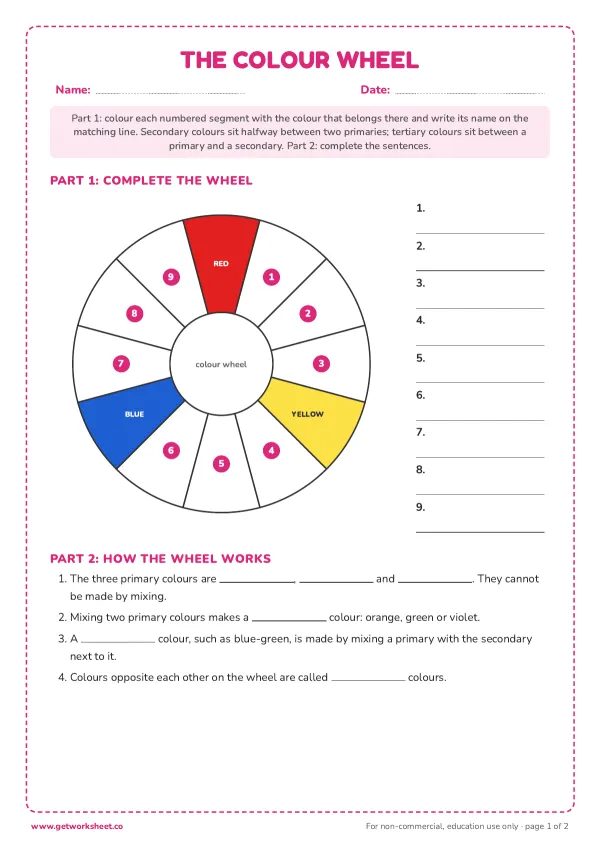
Free color theory worksheets
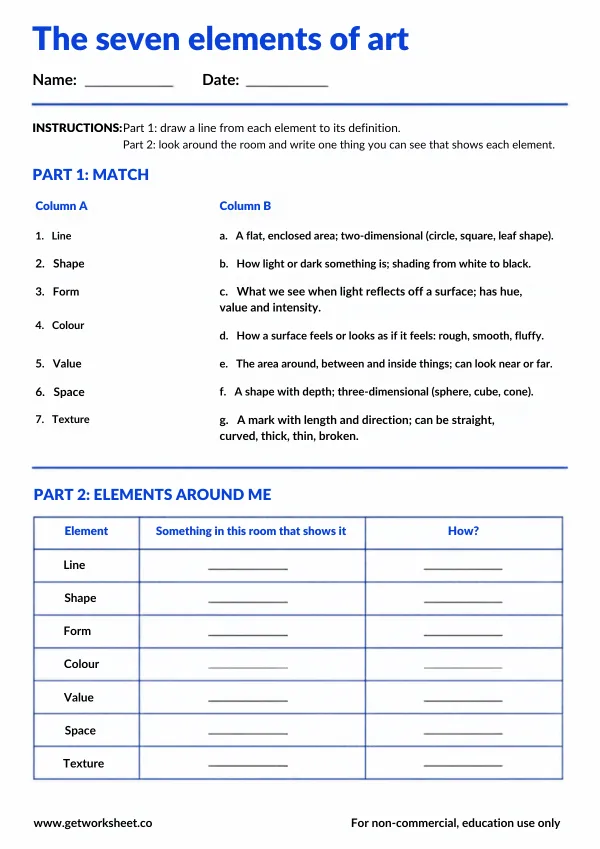
Free elements of art worksheets
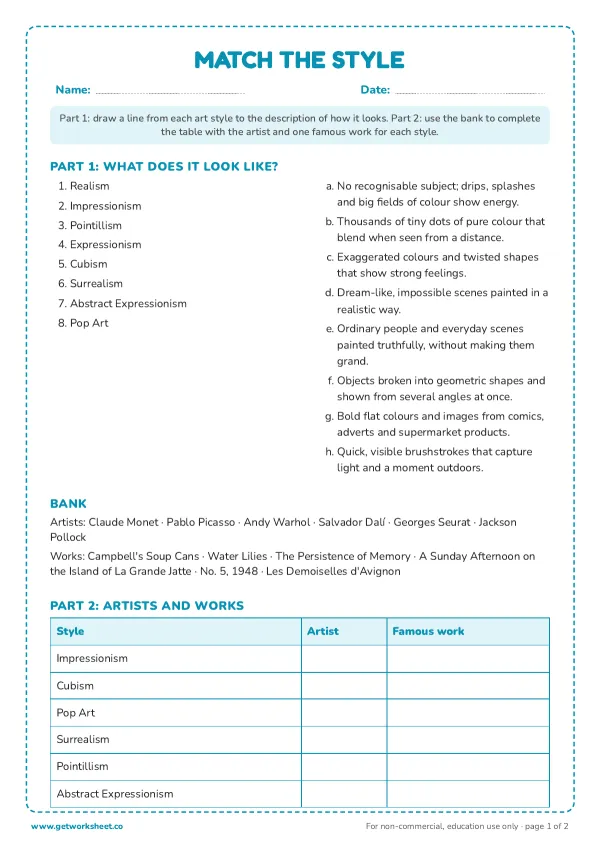
Free art styles worksheets
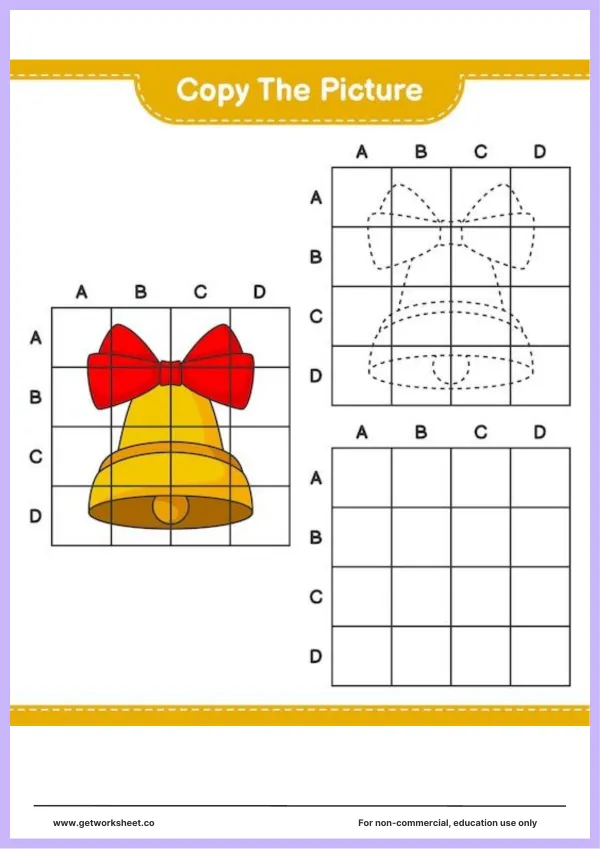
Free copy the picture worksheets
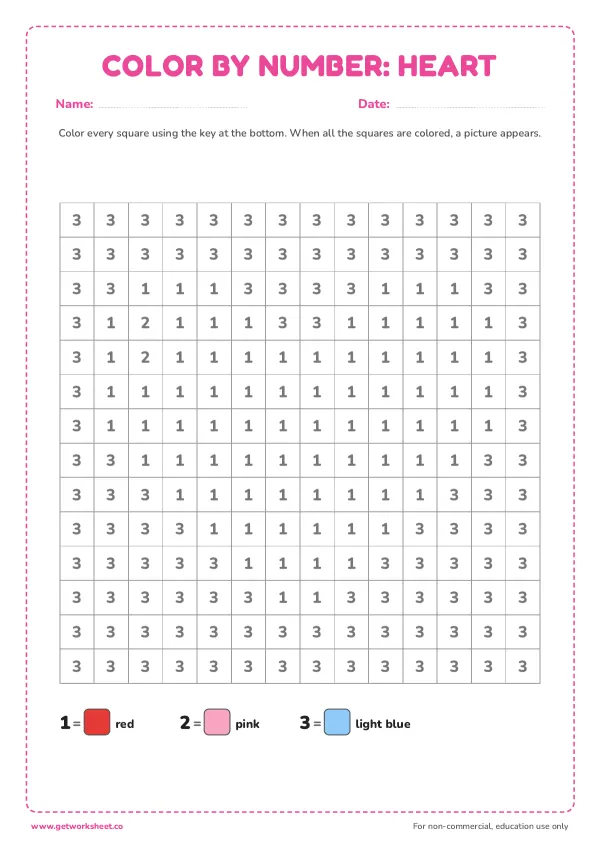
Free color by number worksheets
Free hello kitty coloring pages
Free Halloween coloring pages
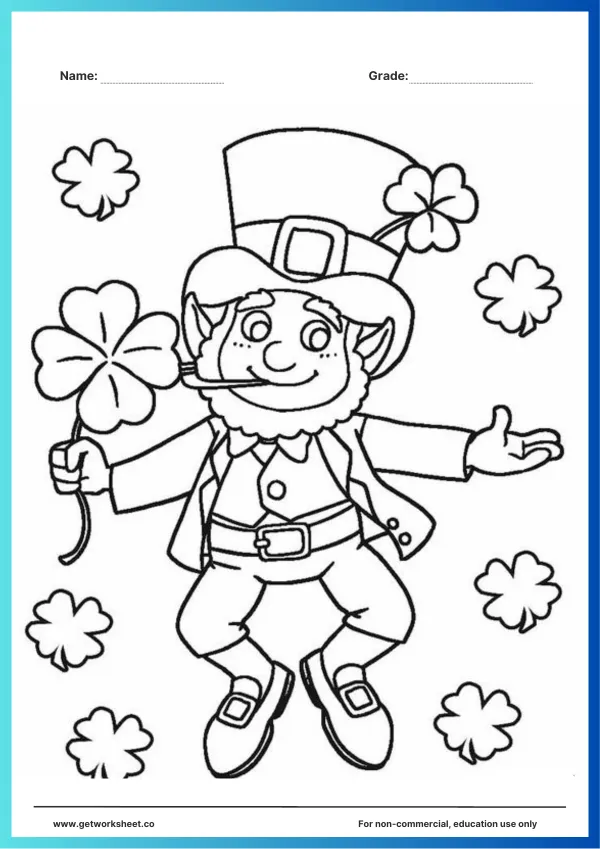
Free leprechaun coloring pages
More worksheets
- Free spring coloring pages
- Free summer coloring pages
- Free winter coloring pages
- Free fire truck coloring page printable
- Free Merry Christmas coloring pages
- Free connect the dots printable worksheets
- Free printable vehicle coloring pages
- Free printable animal coloring pages
- Free printable number coloring pages