Life skills · Ages 5–14
Free emotion thermometer printables
Seven free printable emotion thermometers for ages 5 to 14: a large 1 to 5 scale with a word and a face at each level to color up to, a 1 to 10 version for older students, a thermometer with coping strategies at each level, a blank one to fill in, a morning, midday and afternoon check-in log for a week, a feeling-size and problem-size pair, and four pocket cards to cut out.
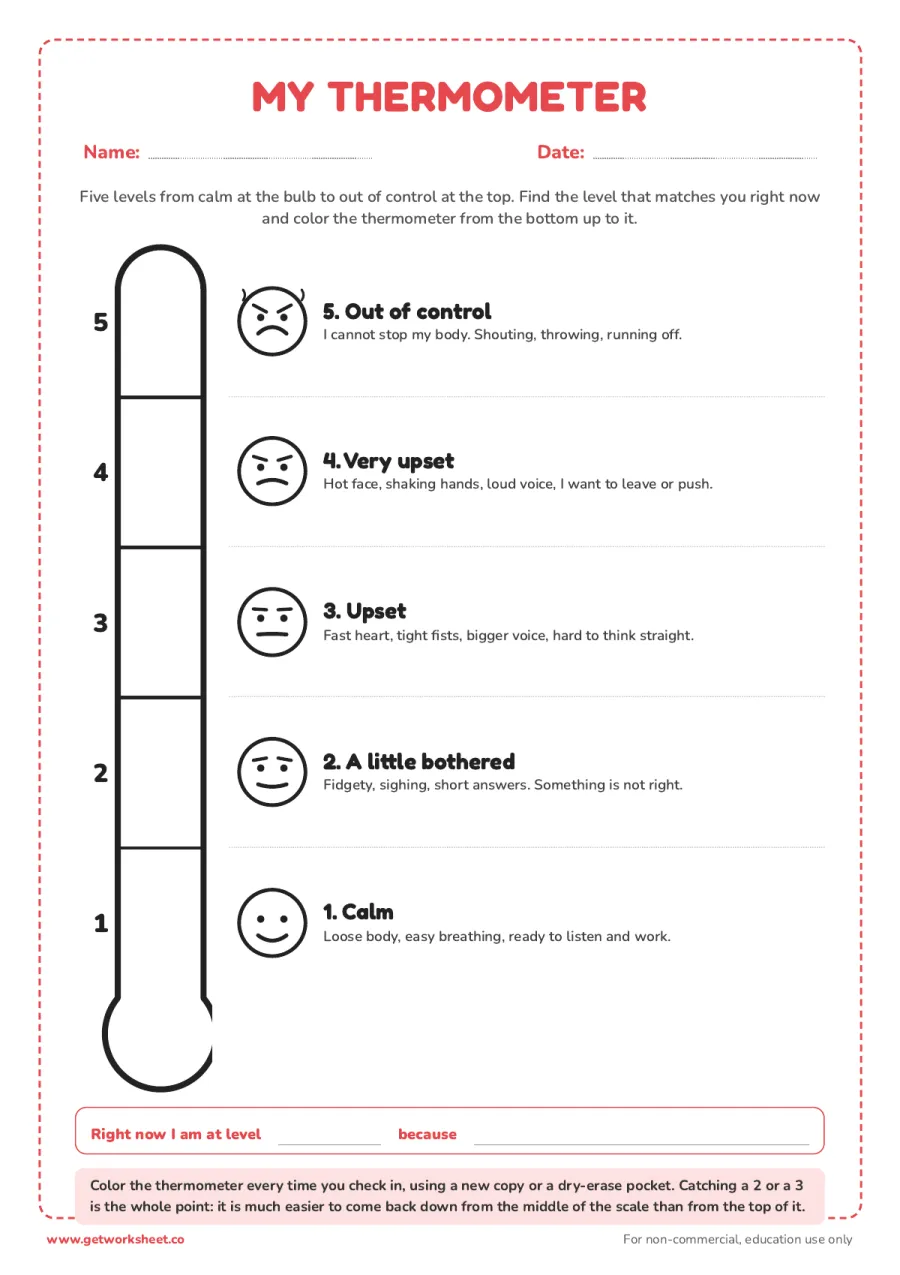
Emotion thermometer 1 to 5 (words and faces)
A large five-level thermometer to color from the bulb up: calm, a little bothered, upset, very upset and out of control, each with a face and the body signs that go with it. Free printable PDF.
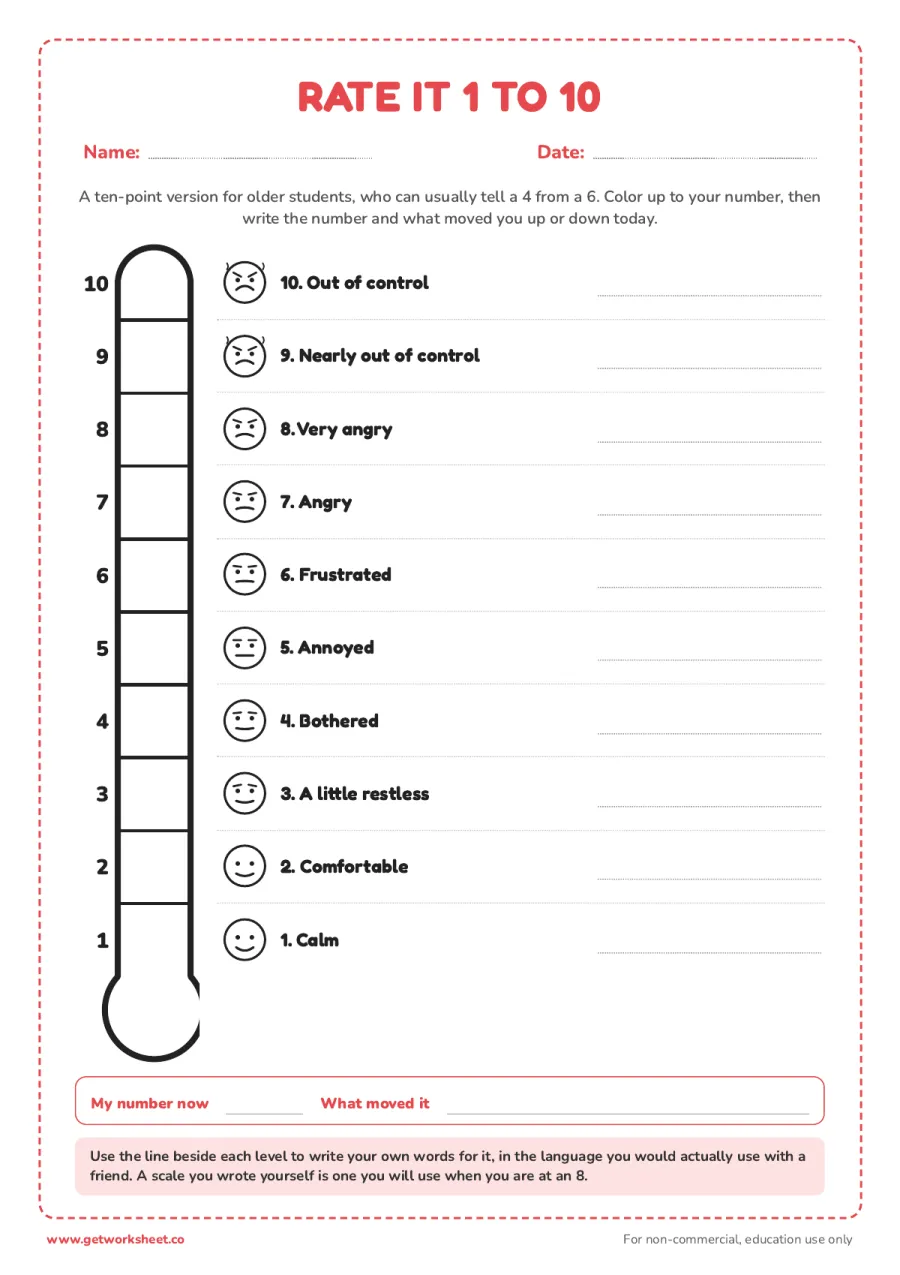
Emotion thermometer 1 to 10 for older students
A ten-point rating thermometer from calm (1) to out of control (10), each level with a small face, a word and a line to write your own wording. Free printable PDF.
Complete pack
All 7 + 5 bonus, one PDF
- The 7 free sheets on this page
- 5 bonus sheets you will not find anywhere else
- Instant download, ad-free, no account needed
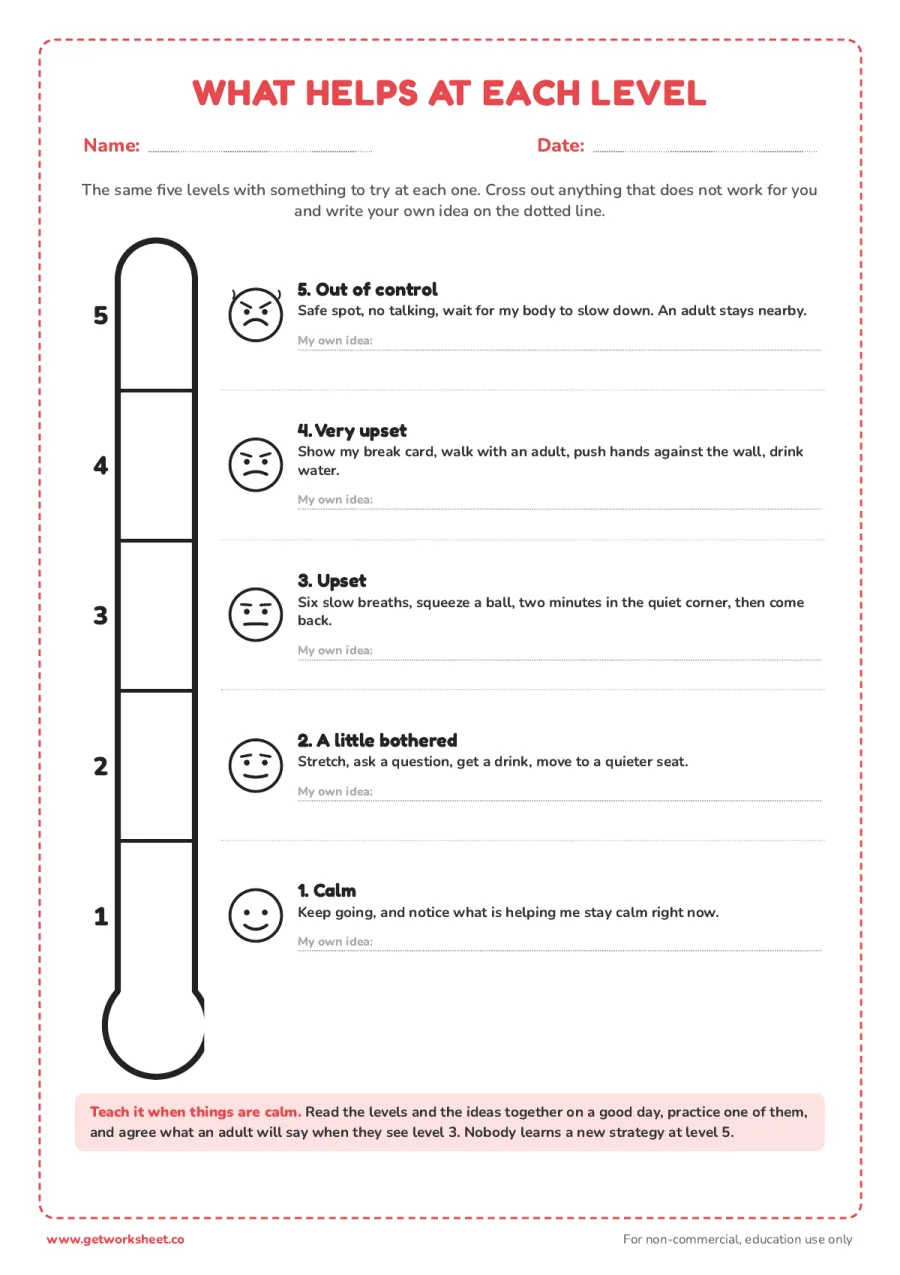
Emotion thermometer with coping strategies
The five-level thermometer with two or three things to try written beside each level, from stretching and a drink at level 2 to a safe spot at level 5, plus a line for the student's own idea. Free printable PDF.
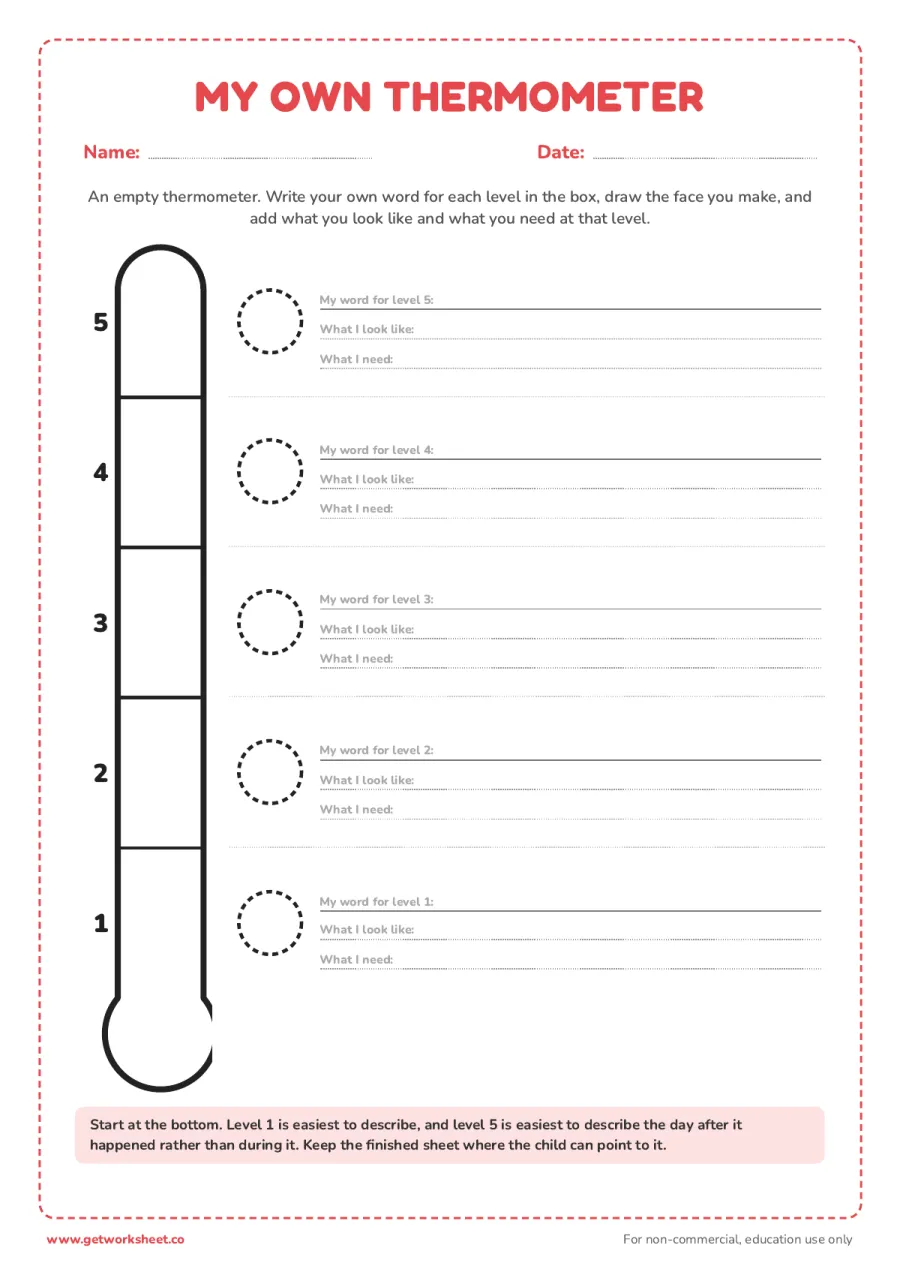
Blank emotion thermometer to fill in
An empty five-level thermometer: a box for the student's own word at each level, a circle to draw the face, and lines for what they look like and what they need. Free printable PDF.
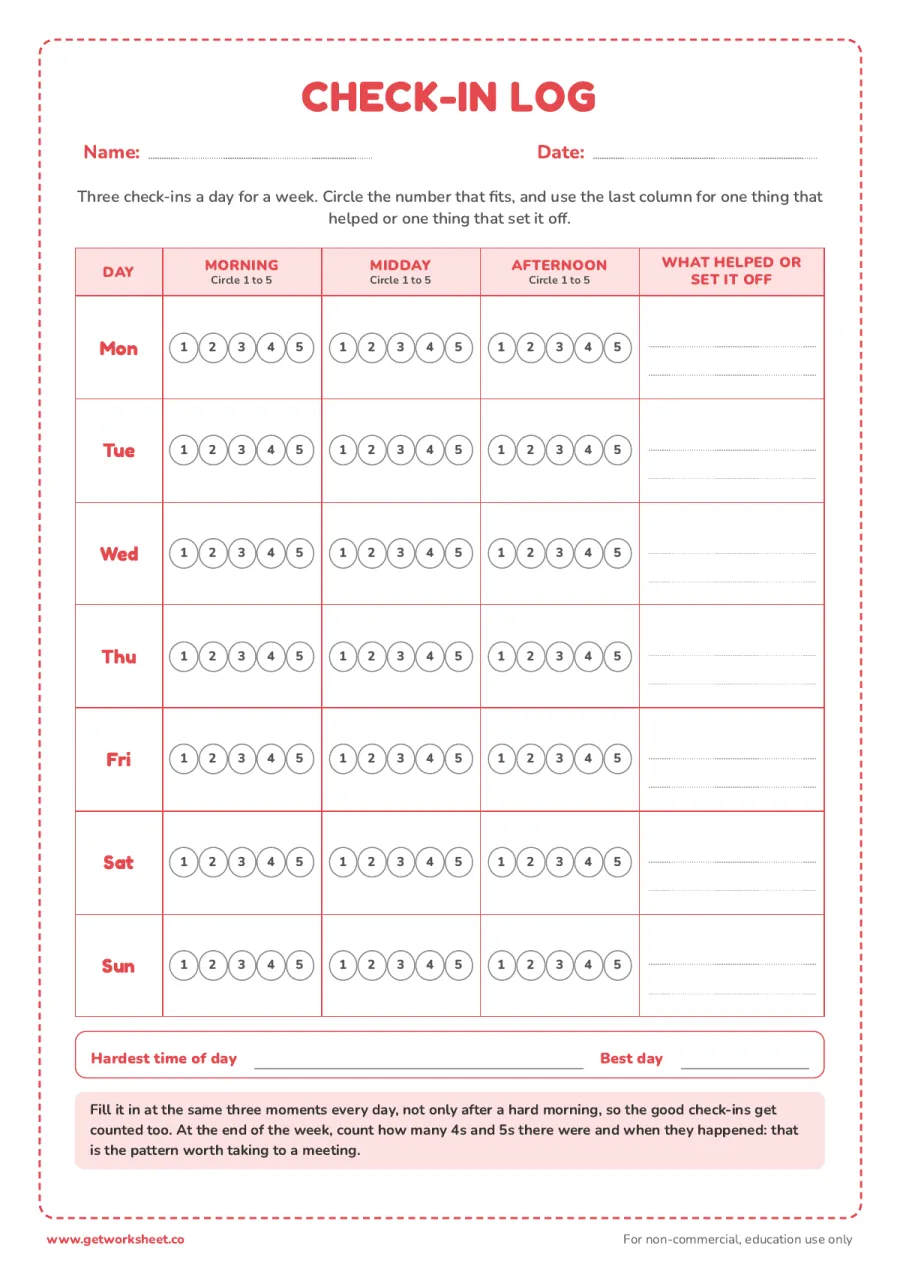
Daily check-in log (morning, midday, afternoon)
A week of check-ins: seven day rows with 1 to 5 to circle in the morning, at midday and in the afternoon, a notes column, and boxes for the hardest time of day and the best day. Free printable PDF.
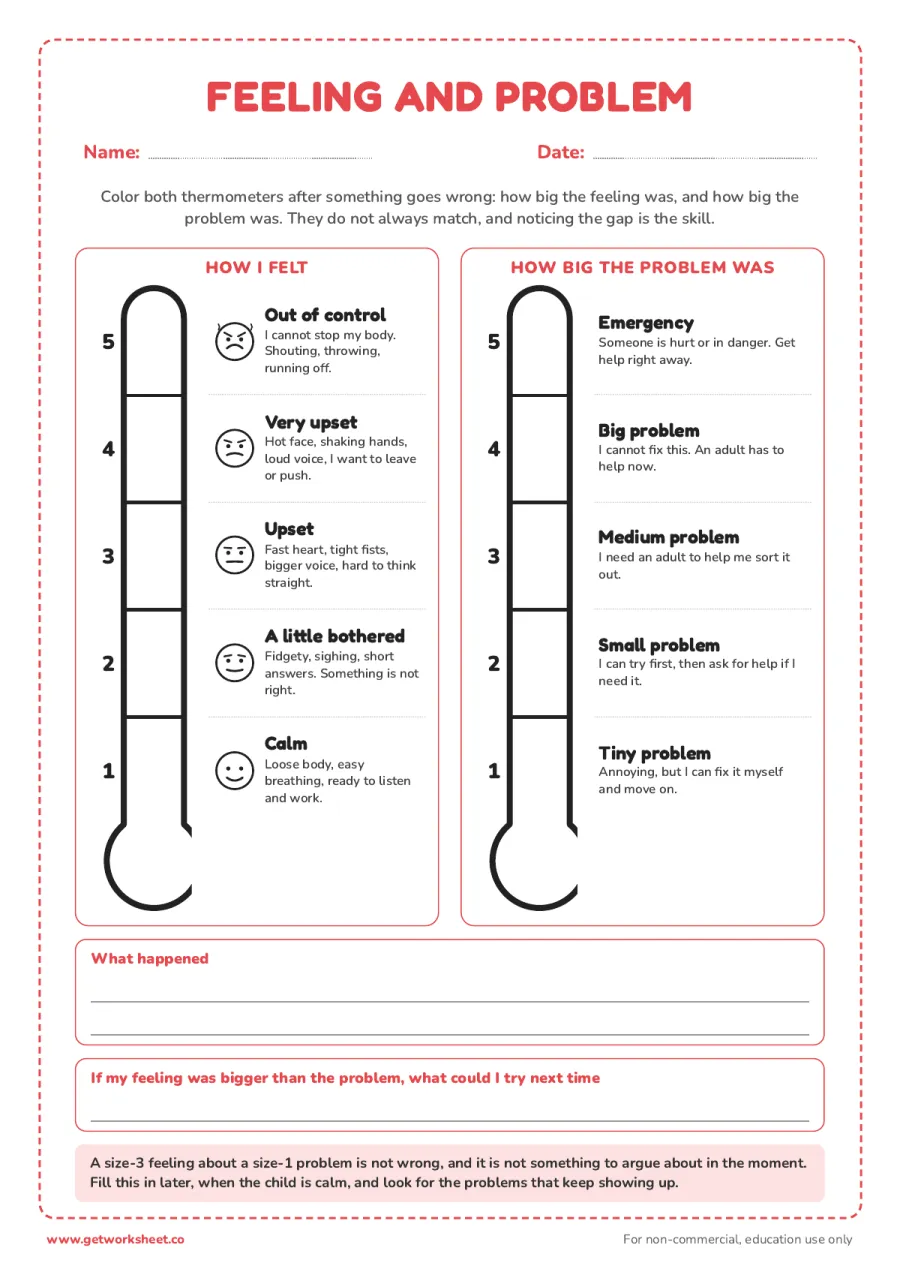
Two thermometers: how I felt and how big the problem was
Two five-level thermometers side by side, one for the size of the feeling and one for the size of the problem from tiny to emergency, with lines for what happened and what to try next time. Free printable PDF.
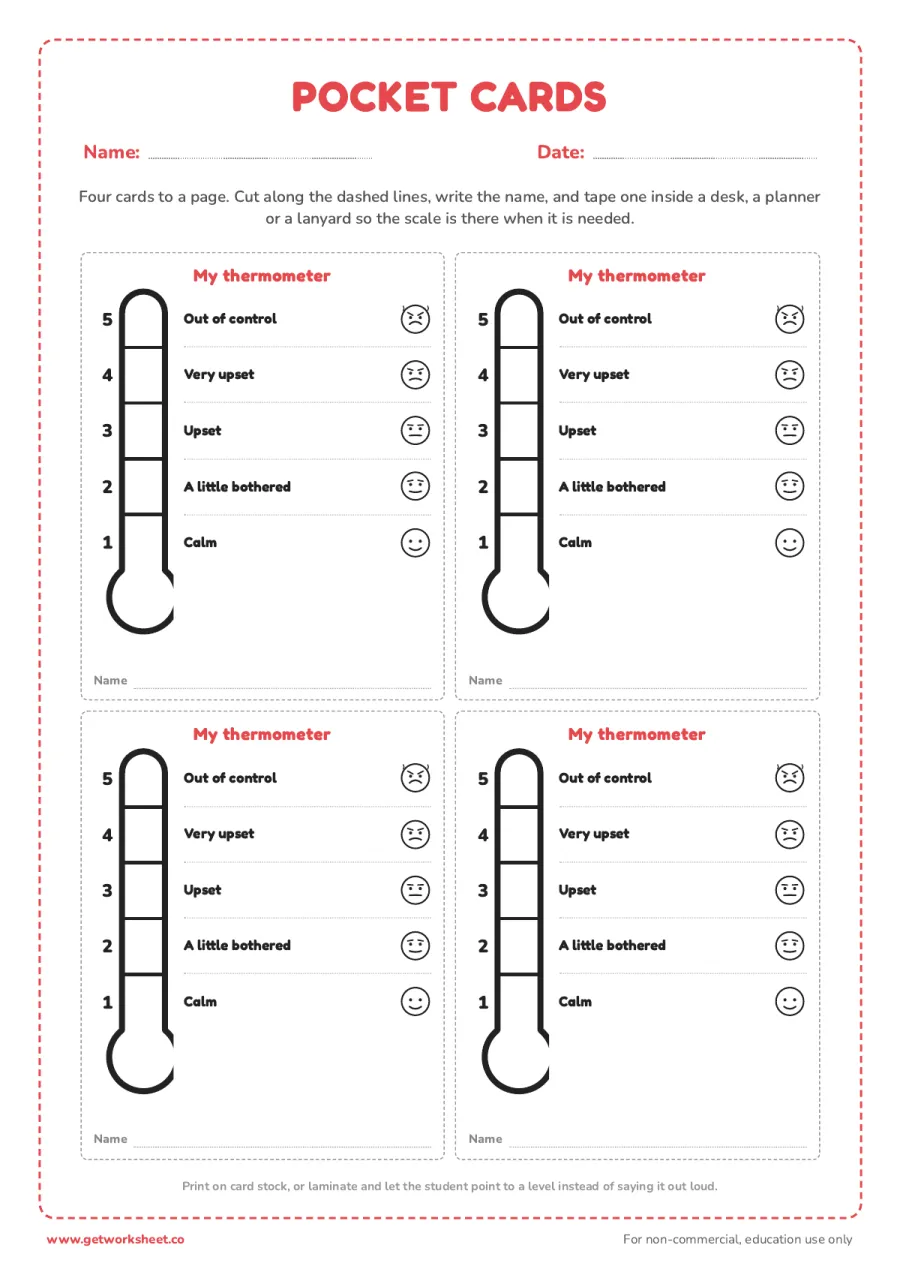
Pocket emotion thermometer cards (4 to a page)
Four small thermometer cards to cut out, each with the five levels, a face at each level and a name line, sized for a desk, a planner or a lanyard. Free printable PDF.
AI worksheet generator
Make a worksheet like this for your class
The 7 sheets above are fixed. The generator writes a new emotion thermometer printables worksheet for your grade, with the question types and count you choose, in about 20 seconds. Pick a grade to start:
What you get
- A fresh set of questions on emotion thermometer printables, not a copy of the sheets above
- Multiple choice, fill in the blanks, true or false, open ended
- Answer key and print-ready PDF with Pro
Free account, 1 worksheets a week. No card.
An emotion thermometer is a rating scale a child can see. Instead of asking a seven-year-old to explain how angry they are, you ask for a number, and a number is something they can give you before a feeling gets too big to talk about. Catching it early is the point: a 2 or a 3 can be turned around with a drink of water and a stretch, while a 5 has to be waited out. These seven printables use plain wording from calm to upset, with no color-coded zones and no named program, so they fit alongside whatever a school already uses.
What's in this set
- Emotion thermometer 1 to 5. A large thermometer to color from the bulb upward, with five levels beside it: calm, a little bothered, upset, very upset and out of control. Each has a face and the body signs that go with it, and the bottom strip asks for the level right now and why.
- Emotion thermometer 1 to 10. Ten points for older students, from calm (1) through annoyed (5) and angry (7) to out of control (10), with a small face at each level and a line for your own wording.
- Emotion thermometer with coping strategies. The five levels with two or three things to try printed beside each one, from a stretch and a drink at level 2 to a safe spot at level 5, plus a dotted line for the child's own idea.
- Blank emotion thermometer. Five empty levels: a line for the child's own word, a dashed circle to draw the face they make, and lines for what they look like and what they need at that level.
- Daily check-in log. Seven day rows with 1 to 5 to circle in the morning, at midday and in the afternoon, a notes column, and boxes for the hardest time of day and the best day.
- Two thermometers: how I felt and how big the problem was. A feeling scale and a problem-size scale side by side, from a tiny problem you can fix yourself up to an emergency, with lines for what happened and what to try next time.
- Pocket thermometer cards. Four small cards to a page with the five levels, a face at each level and a name line, sized to cut out and tape inside a desk, a planner or a lanyard.
Free printable makers
Make your own emotion thermometer printables sheets
Type your own words or numbers and print in about 30 seconds. No account, no AI, answer key where it applies.
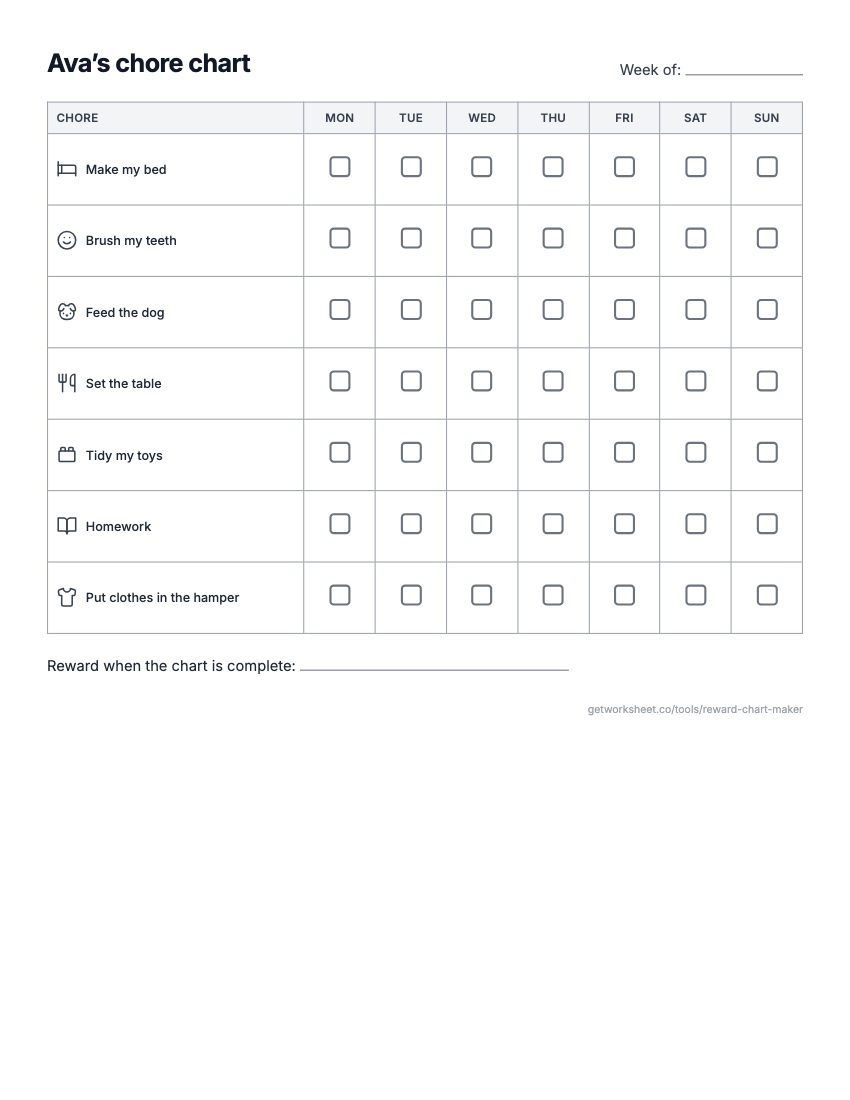 Reward chart and chore chart makerReward or sticker chart with a goal, Mon-Sun chore chart with pictures, behavior chart. Free to print.
 Visual schedule makerPicture schedules, First/Then and token boards. Free to print.
 Weekly planner and calendar makerWeekly planner, monthly calendar, daily schedule or lesson-plan grid on one sheet. Free to print.
AI worksheet generator
Need a different emotion thermometer printables worksheet?
Generate a custom emotion thermometer printables worksheet: pick the grade, question types and count, and print it in about 20 seconds. Free accounts get 1 generation a week.
Complete pack · $2.99
All 7 sheets above, plus 5 bonus sheets you will not find on this page
7 free sheets + 5 bonus sheets in one print-ready PDF with a contents page. Instant, no ads, no account; the link is emailed to you so it works on any device. The 7 sheets above stay free.
- BonusThermometer at home (parent version)
- BonusA week of ratings on one graph (staff summary)
- BonusPhoto thermometer (spaces for photographs)
- BonusWorded 1 to 10 scale with no faces
- BonusLevel and adult response agreement
One-time payment of $2.99. Card, Apple Pay or Google Pay. For home and classroom use.
- Bonus
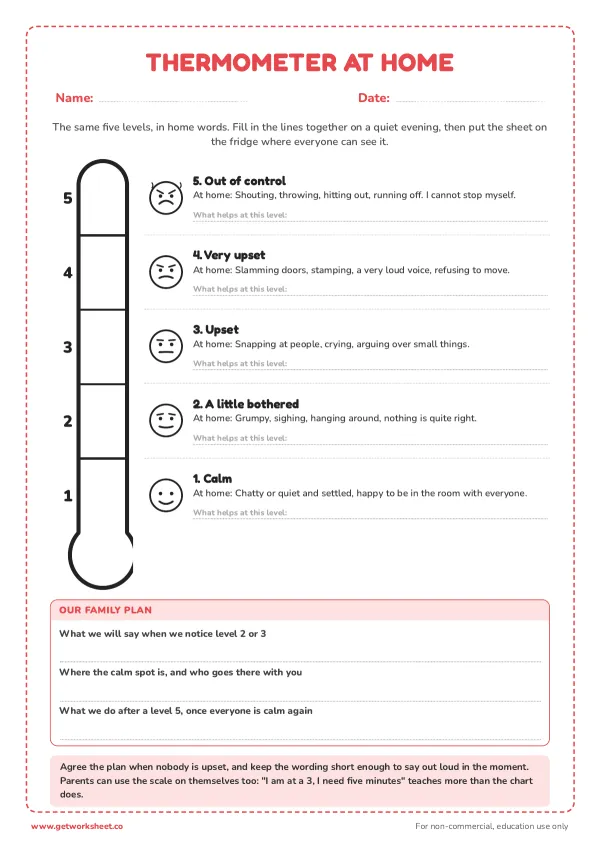 Thermometer at home (parent version)
- Bonus
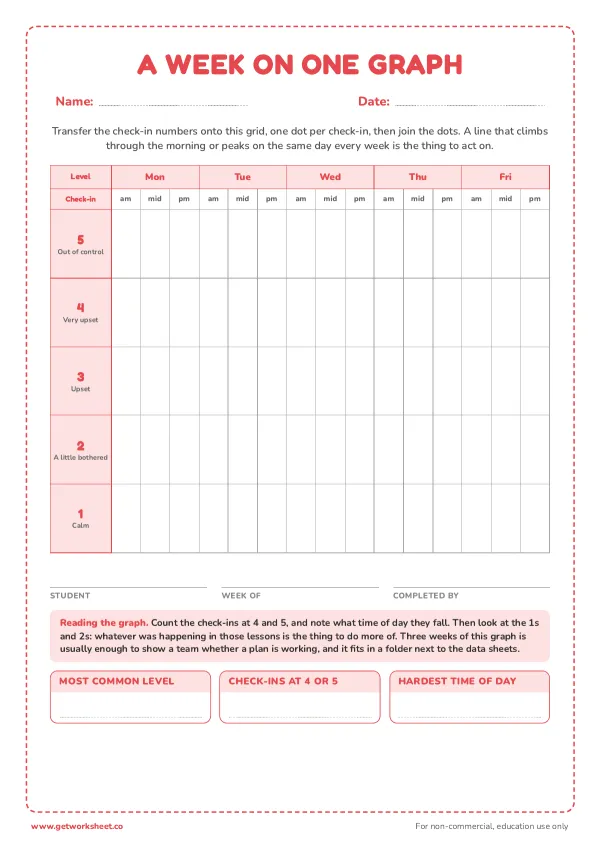 A week of ratings on one graph (staff summary)
- Bonus
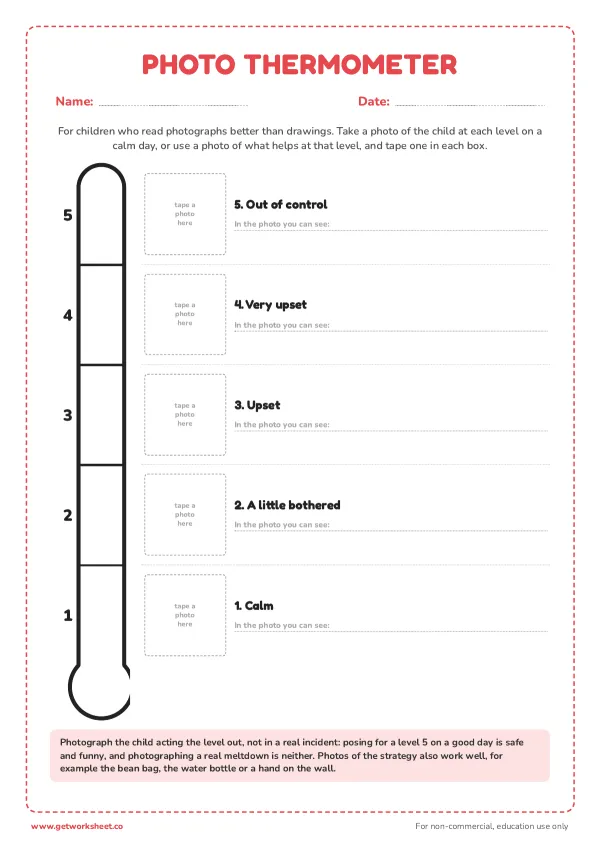 Photo thermometer (spaces for photographs)
- Bonus
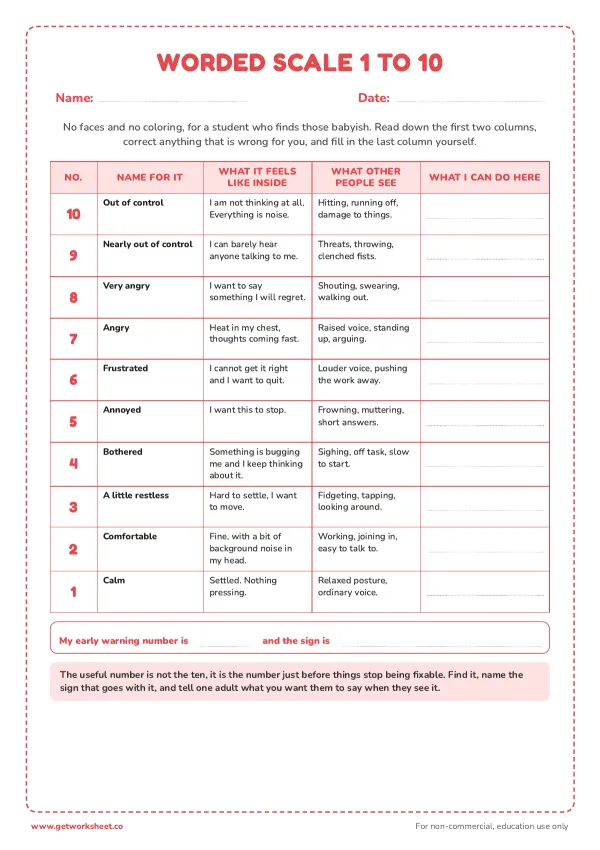 Worded 1 to 10 scale with no faces
- Bonus
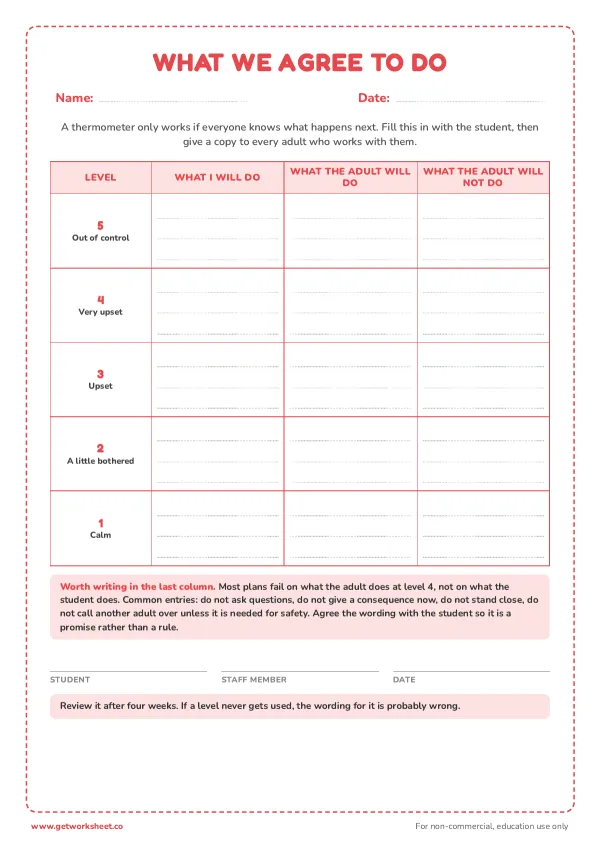 Level and adult response agreement
Teaching tips and common mistakes
How to use an emotion thermometer
Print at 100 percent on A4 or US Letter. Sheets 1, 3, 4, 6 and 7 suit roughly ages 5 to 11; the 1 to 10 version is written for ages 10 and up. Introduce the scale on a calm day, not during an incident: a child in the middle of a meltdown cannot learn a new tool, but can reach for a familiar one.
- Teach it in both directions. Ask for a number when things are good as well as when they are bad. If the only time anyone mentions the thermometer is when a child is already upset, it becomes something that happens to them when they are in trouble.
- Model it out loud. Adults can use the same scale on themselves. "I am at a 3 because of the noise, so I am going to take a breath" teaches more than the chart does.
- Make it physical. Laminate one page and color it with a dry-erase marker, or print a fresh copy for each check-in. Pointing at a level is easier than speaking for a child who has stopped talking.
- Agree what happens at each level. A rating is only useful if the adult response is predictable. Decide together what you will say at a 3 and what you will do at a 4, and keep to it.
- Use the check-in log for two weeks. Three ratings a day for a fortnight shows whether the hard moments cluster in the morning, before lunch or at the end of the day, which is usually more useful than any single rating.
Common mistakes
- Arguing with the number. If a child says 4 about something that looks like a 2 to you, that is information, not an error. Write it down and come back to it later.
- Only using the top of the scale. If every check-in is a 1 or a 5, the middle levels need rewording in the child's own language. The blank sheet exists for that.
- Adding a consequence to a rating. The moment a 4 leads to losing minutes of recess, honest ratings stop. Keep the scale separate from any consequence.
- Printing only the faces version. Older students often find faces babyish and will refuse the whole idea. Use the 1 to 10 page with them instead.
Frequently asked questions
What is an emotion thermometer?
A rating scale drawn as a thermometer, usually 1 to 5 or 1 to 10, that lets a child show how strong a feeling is rather than having to describe it. The child colors or points up to their level, and the adult can respond before the feeling reaches the top.
What age is it for?
The five-level pages work from about age 5, as soon as a child can order "a little" and "a lot". The 1 to 10 version suits ages 10 and up. Younger children usually need an adult to ask the question at set times rather than checking in on their own.
Does this set use a particular regulation program?
No. The levels are described in plain words from calm to out of control, with numbers rather than color names, so these pages can sit alongside whatever framework a school or clinic already uses without clashing with it.
How often should a child rate themselves?
Three times a day is a sensible start, which is what the check-in log is built around: once in the morning, once in the middle of the day and once in the afternoon. Extra check-ins around a known hard moment are worth adding.
Can I print these in black and white?
Yes. The thermometer is drawn as an empty tube with a bold outline so the child can color it in themselves, and every face is a line drawing, so nothing depends on color.
More printables for feelings and routines
A rating scale works best next to a visible routine and something to work toward. The reward chart printables and sticker charts cover the motivation side, the chore chart printables help with the home routines that often set a hard morning off, and the goal-setting worksheets for students let an older student choose one target of their own.
Free library
Related collections
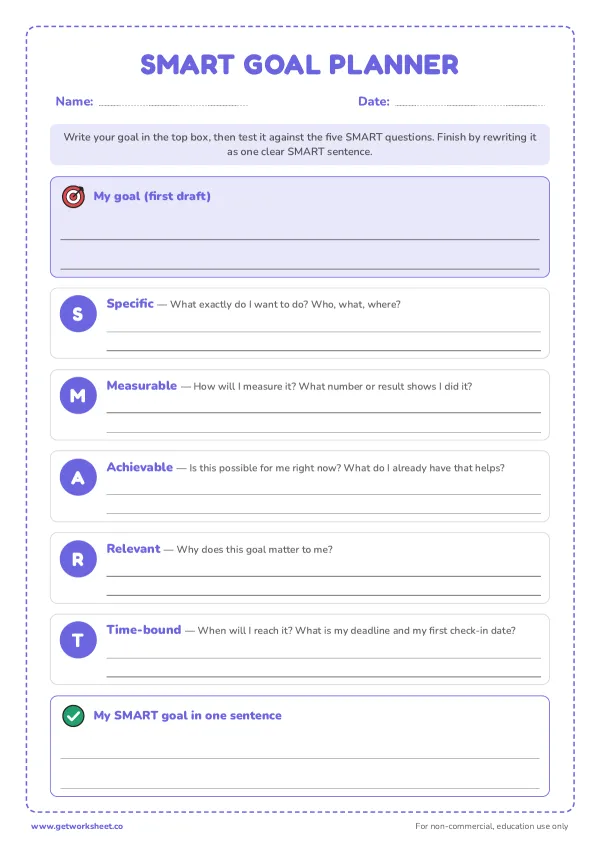
Free goal-setting worksheets for students
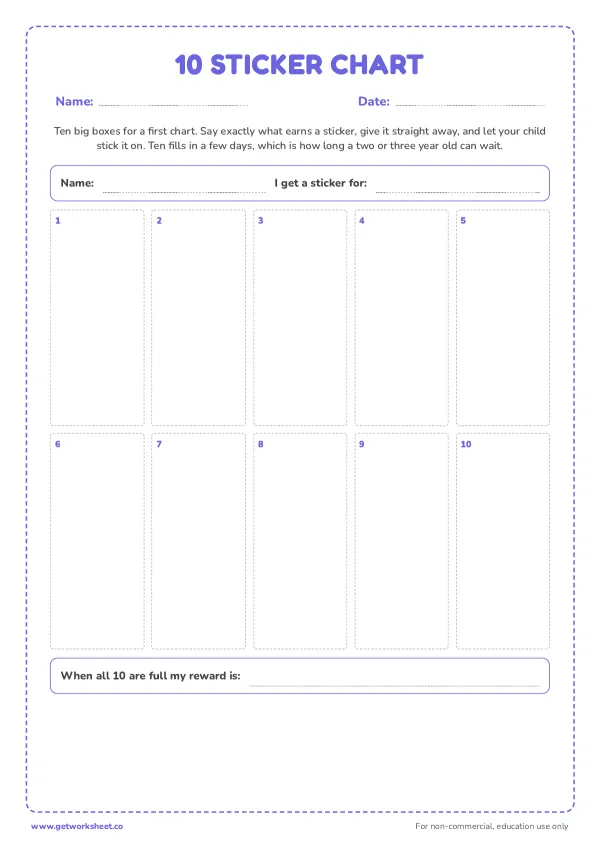
Free sticker chart printables
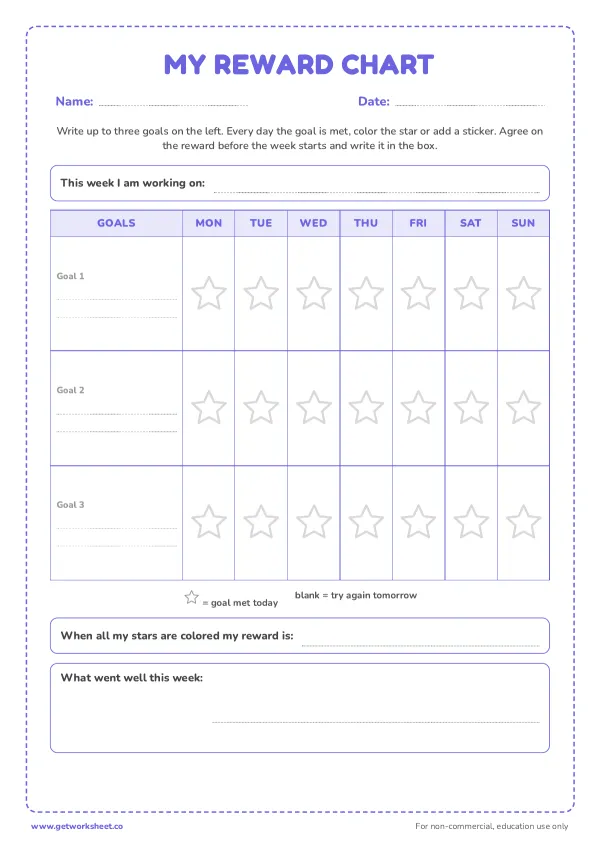
Free reward chart printables
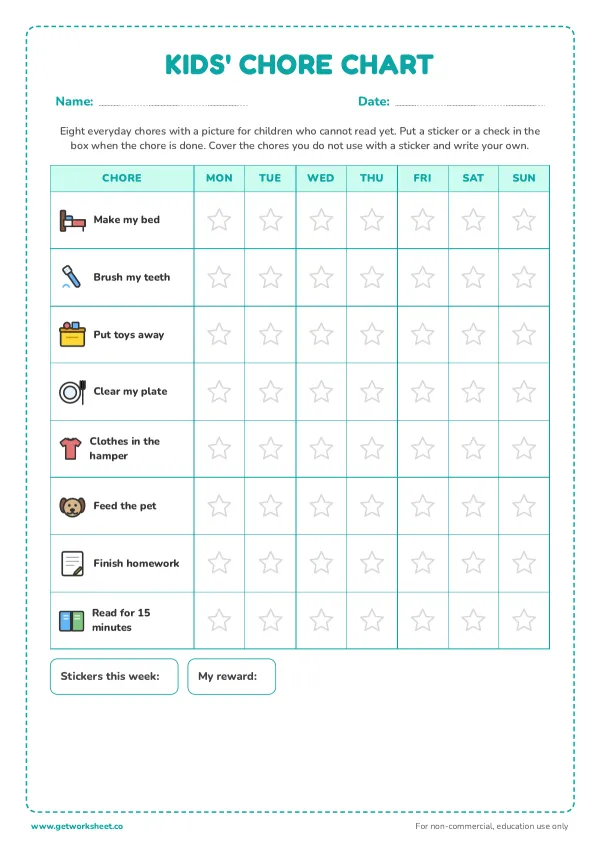
Free chore chart printables
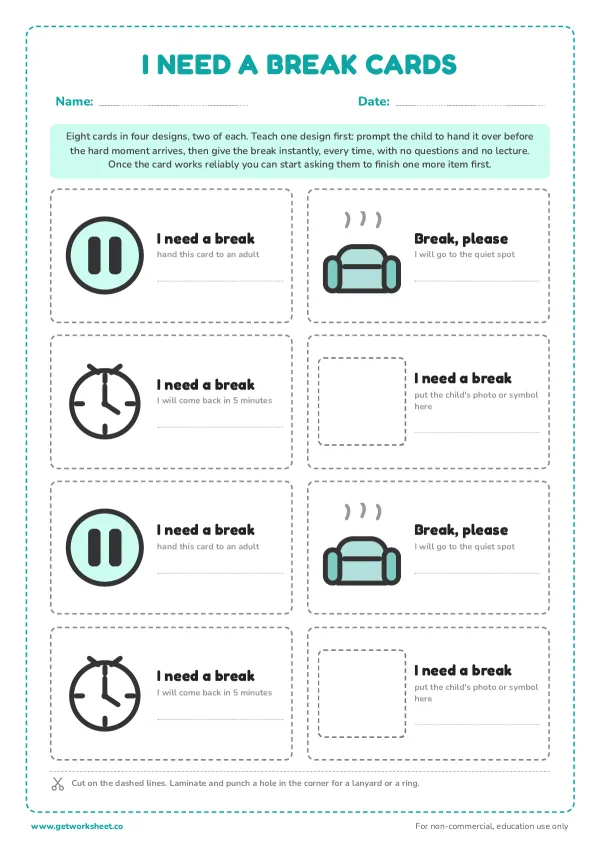
Free break card printables
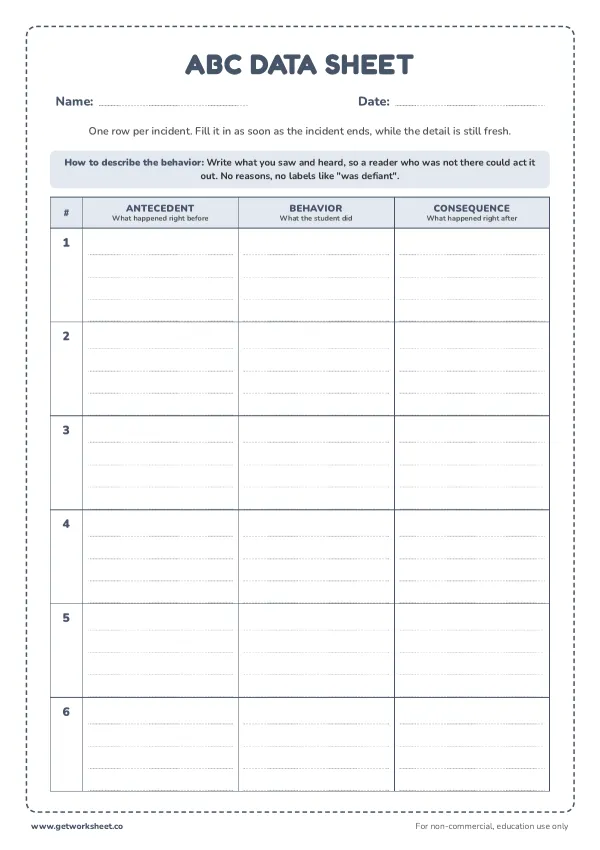
Free ABC data collection sheets
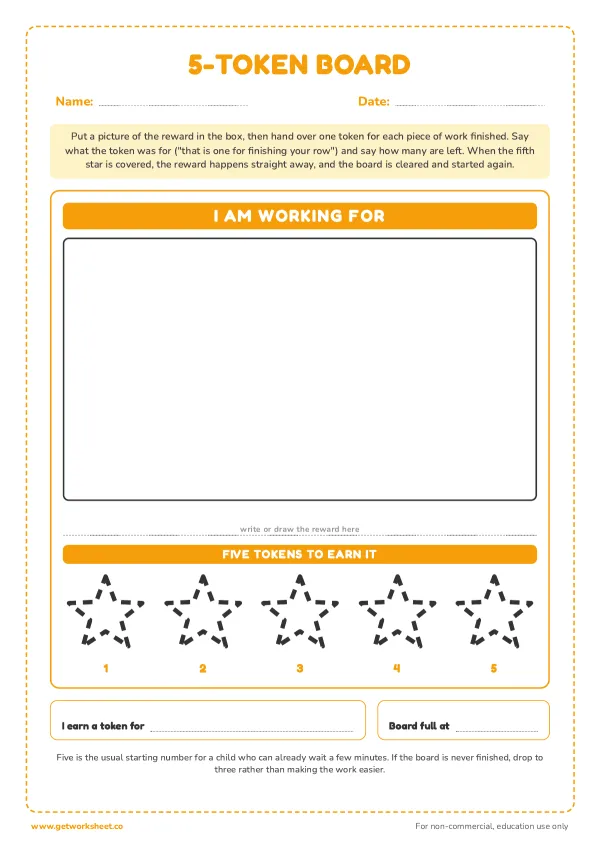
Free token board printables
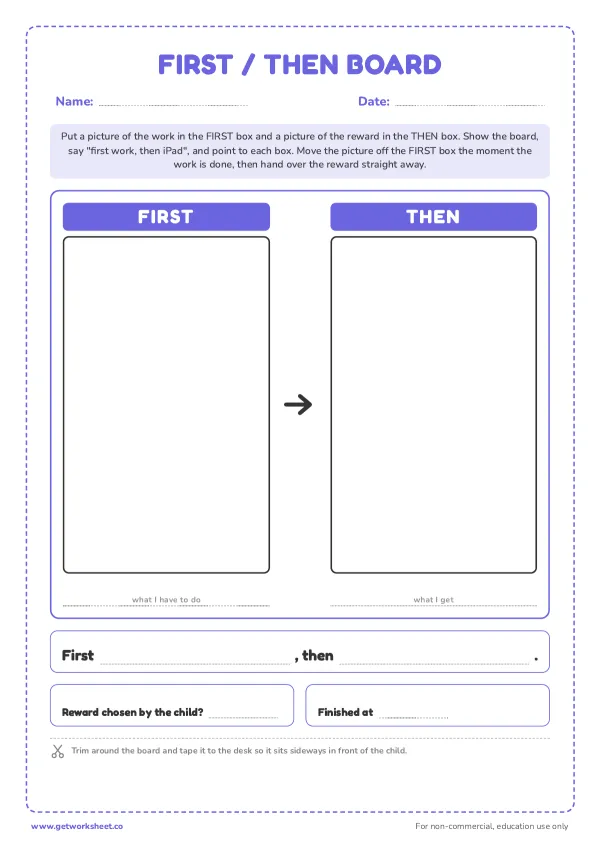
Free First-Then board printables
More worksheets
- Free emergency sub plans templates
- Free New Year's resolution worksheets
- Free reading log printables
- Free cutting practice worksheets
- Cooking Basics Worksheets
- Time Management Worksheets
- Free safety signs worksheets
- Money Management Worksheets
- Free i spy worksheets
- Free first day of school sign printables
- Free potty training chart printables
- Free all about me worksheets