Life skills · Ages 3–12
Free feelings chart printables
Free printable feelings charts for ages 3 to 12: a twelve-face chart with words, a seven-day "how do I feel today" check-in, a five-level feelings thermometer with body clues, a ten-word feelings vocabulary match, a "what can I do when I feel..." coping chart and a blank chart with twelve faces to draw.
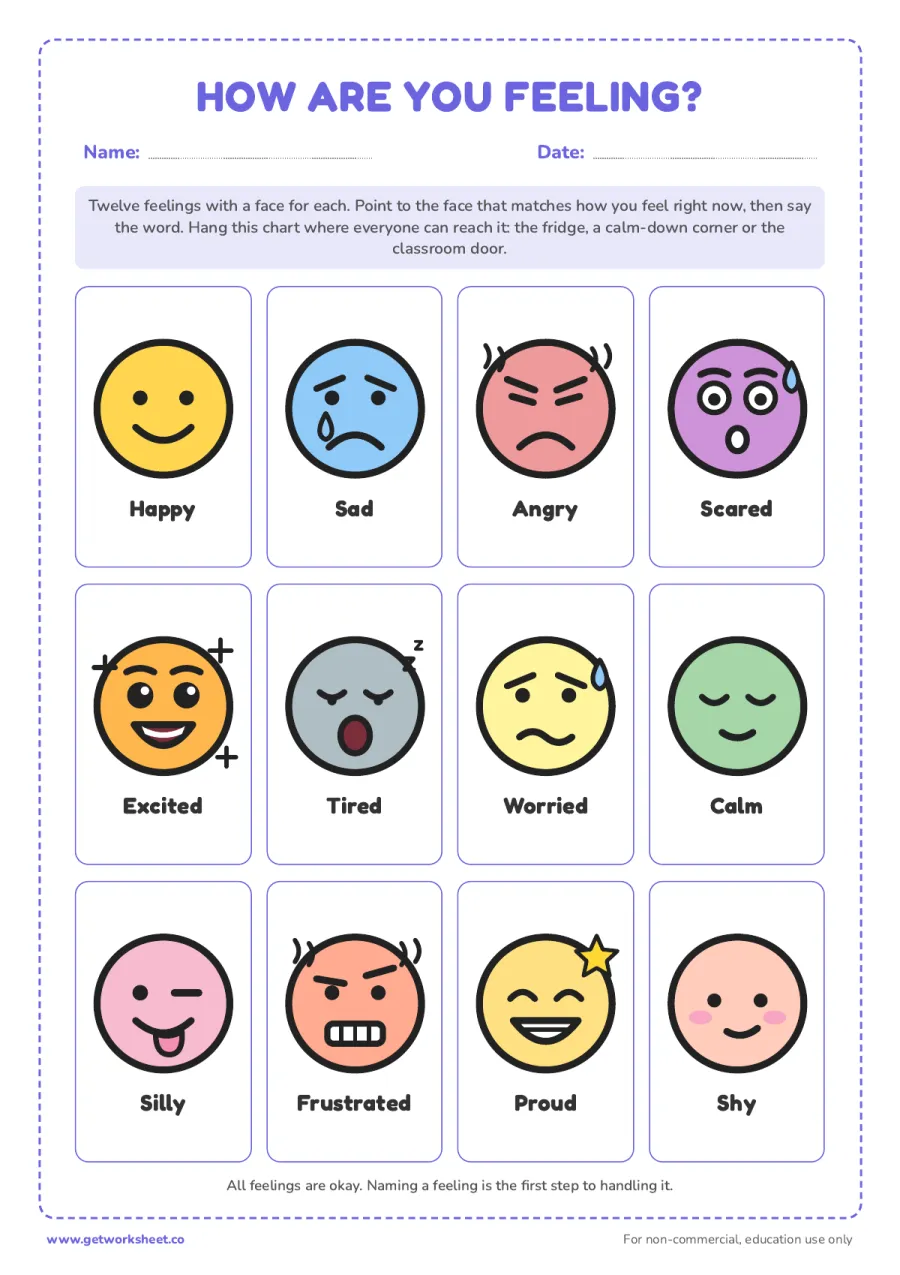
Feelings chart with 12 faces
Poster-style feelings chart: twelve cartoon faces with the words happy, sad, angry, scared, excited, tired, worried, calm, silly, frustrated, proud and shy. Bold outlines print in black and white. Free printable PDF.
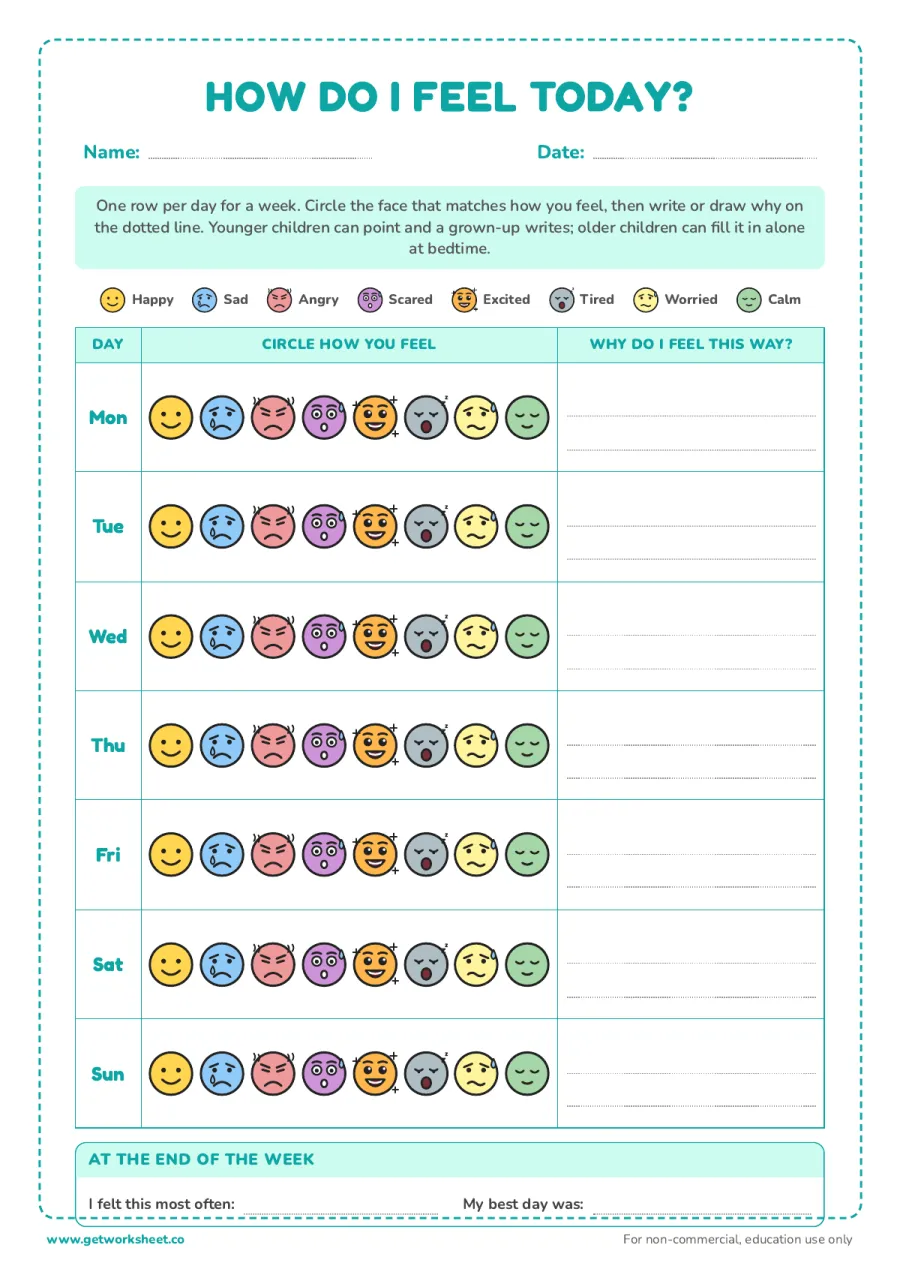
How do I feel today? Daily check-in
Seven-day feelings check-in: circle one of eight faces each day, write or draw why, and sum up the week at the bottom. Free printable PDF for home or classroom.
Whole set
All 6 in one PDF
- Every sheet on this page, one file
- No ads, no countdowns, print as often as you like
- Instant download, ad-free, no account needed
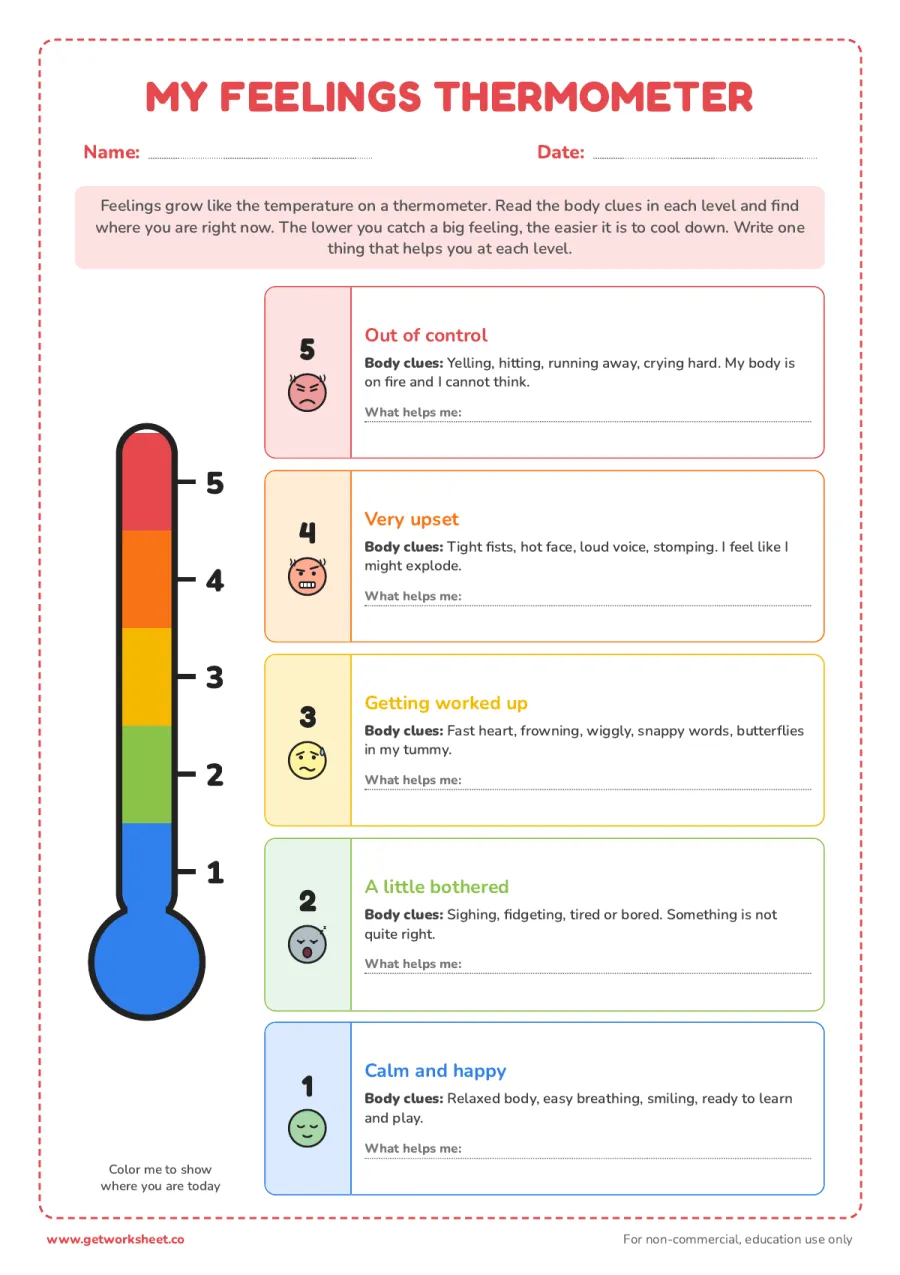
Feelings thermometer (1 to 5)
A five-level feelings thermometer from calm and happy (1) to out of control (5), each with its color, a face, body clues and a line to write what helps. Free printable PDF.
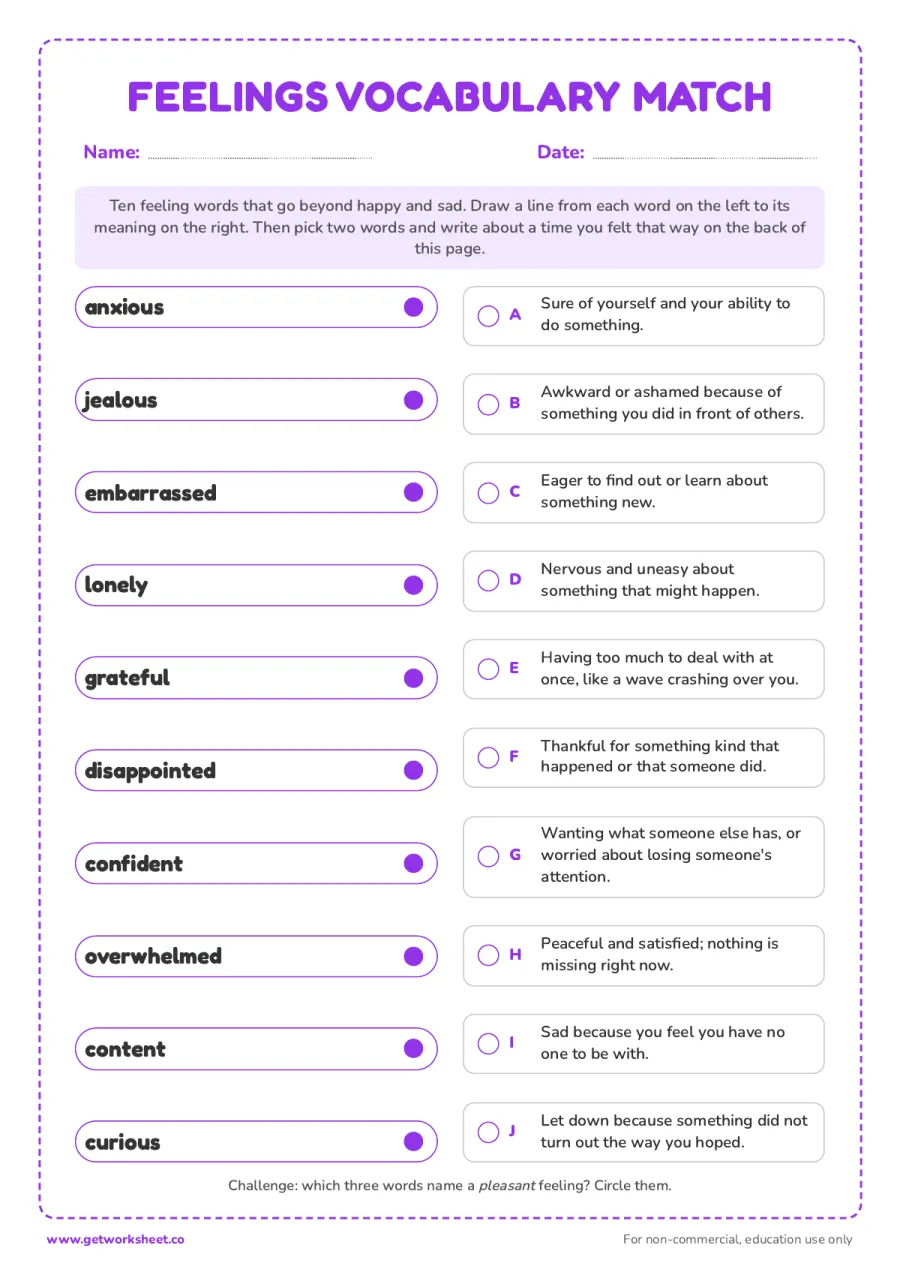
Feelings vocabulary match
Ten feeling words for older children (anxious, jealous, embarrassed, lonely, grateful, disappointed, confident, overwhelmed, content, curious) to match to their definitions. Free printable PDF.
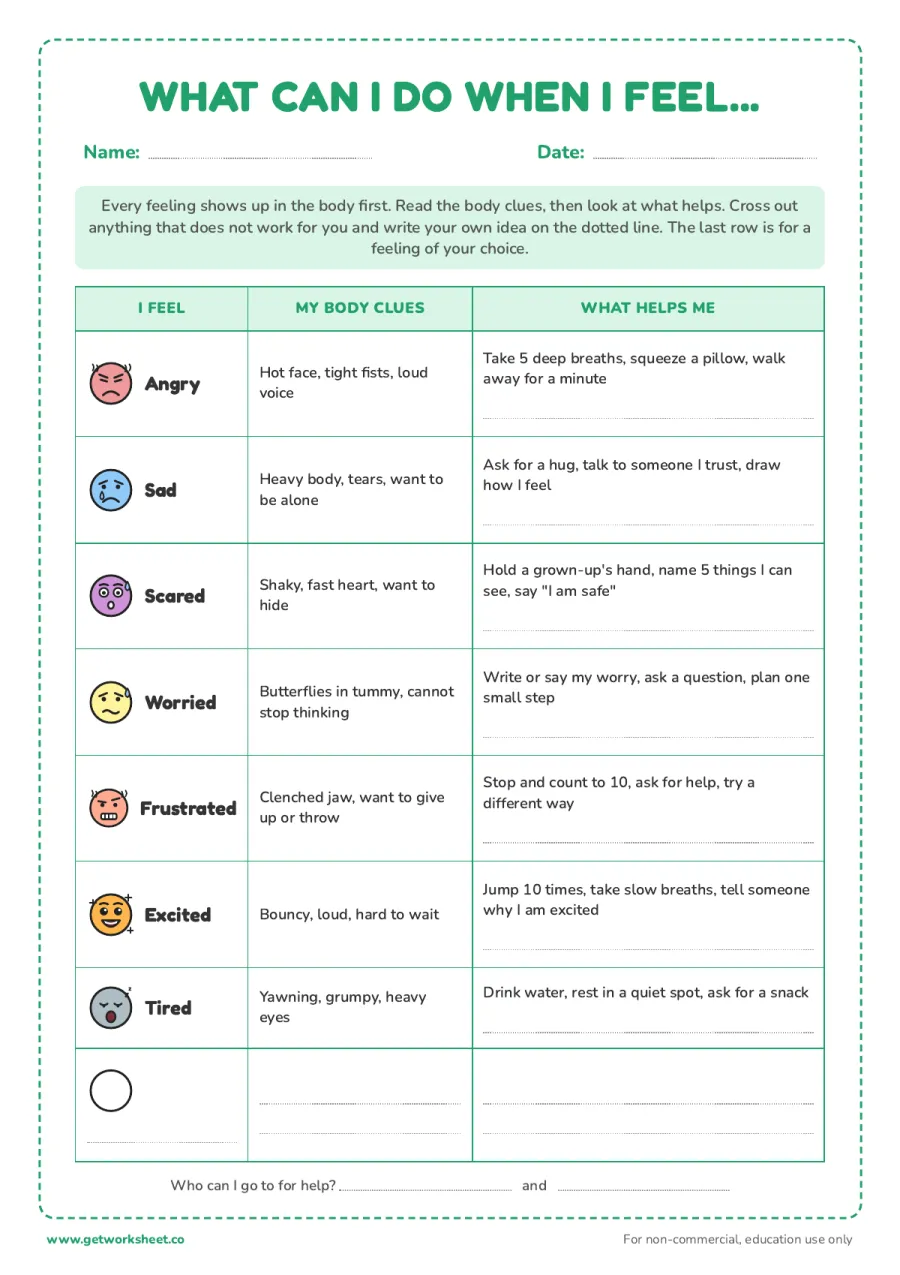
What can I do when I feel... chart
Coping chart for seven feelings: the feeling with its face, body clues and three things that help, plus a dotted line for the child's own idea and a blank row. Free printable PDF.
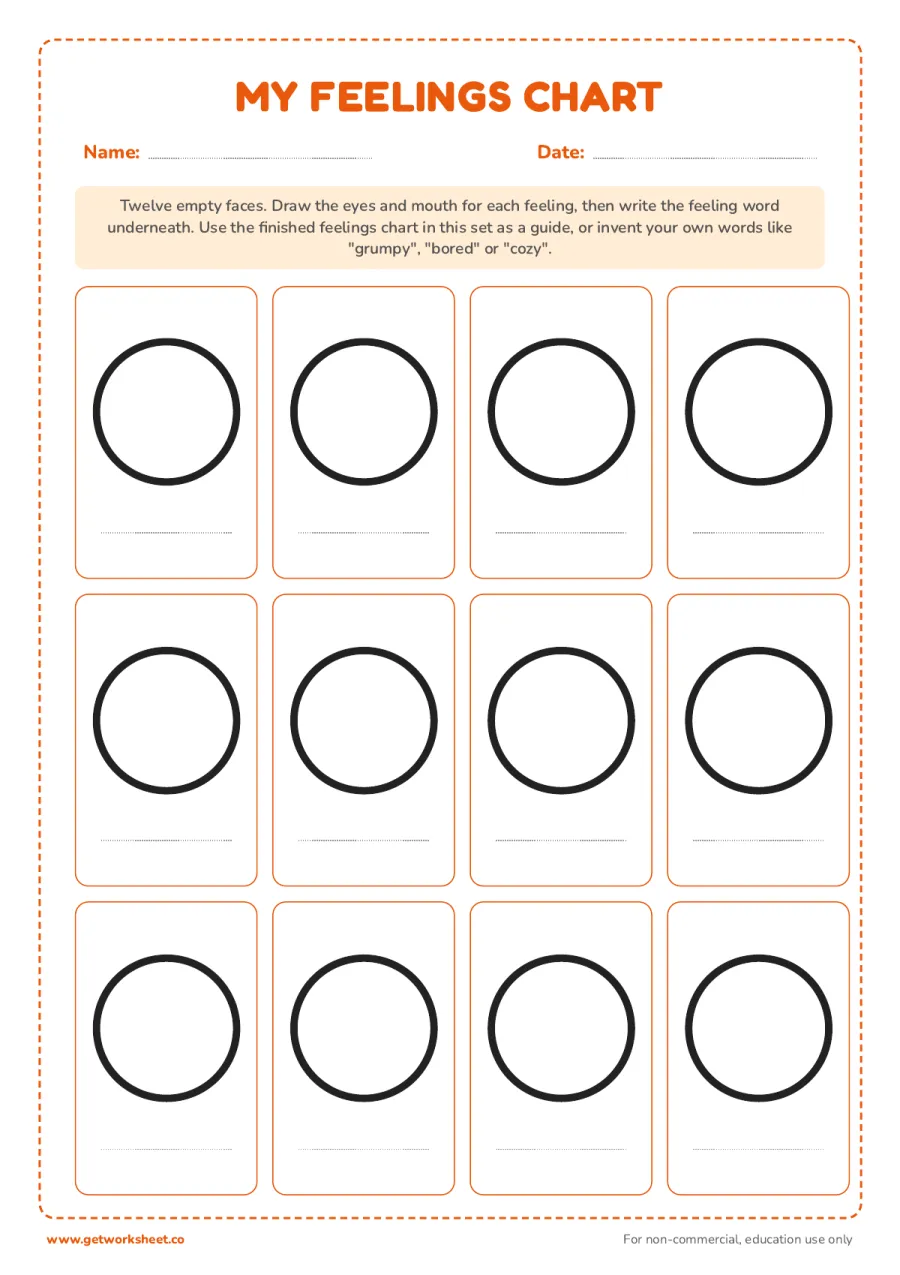
Blank feelings chart (draw the faces)
Twelve empty faces with a writing line under each: children draw the expression and write the feeling word. Free printable PDF.
AI worksheet generator
Make a worksheet like this for your class
The 6 sheets above are fixed. The generator writes a new feelings chart printables worksheet for your grade, with the question types and count you choose, in about 20 seconds. Pick a grade to start:
What you get
- A fresh set of questions on feelings chart printables, not a copy of the sheets above
- Multiple choice, fill in the blanks, true or false, open ended
- Answer key and print-ready PDF with Pro
Free account, 1 worksheets a week. No card.
Children handle big feelings better when they can name them. A feelings chart gives a three-year-old a face to point at before they have the word, gives a seven-year-old the word "frustrated" instead of "bad", and gives a parent, teacher or school counselor a calm way to open the conversation. This set of six printables starts with a poster-style chart of twelve feelings and builds on it: a daily check-in, a thermometer for noticing how strong a feeling is, a vocabulary page for older children, a coping chart and a blank chart to draw. Every face has a bold outline and a light fill, so the pages print clearly in color or black and white, and all six fit on A4 or US Letter.
What's in this set
- Feelings chart with 12 faces. Happy, sad, angry, scared, excited, tired, worried, calm, silly, frustrated, proud and shy, each as a large cartoon face with the word underneath. The reference chart for the rest of the set.
- How do I feel today? Daily check-in. One row per day for a week: circle one of eight faces, then write or draw why on two dotted lines. A short end-of-week summary at the bottom.
- Feelings thermometer (1 to 5). Five levels from "calm and happy" to "out of control", each with its own color, a face, the body clues that go with it and a line to write what helps at that level. A thermometer graphic to color on the left.
- Feelings vocabulary match. Ten feeling words beyond happy and sad (anxious, jealous, embarrassed, lonely, grateful, disappointed, confident, overwhelmed, content, curious) to match to their definitions by drawing lines.
- What can I do when I feel... chart. Seven feelings in a table with body clues and three things that help for each, a dotted line to add the child's own idea, a blank row for a feeling of their choice and a "who can I go to" line.
- Blank feelings chart. Twelve empty faces with a writing line under each: draw the expression, write the word.
What children practice
- Recognizing and naming feelings from facial expressions
- Noticing body clues (hot face, tight fists, butterflies) before a feeling gets big
- Rating how strong a feeling is, the first step in emotional regulation
- Linking a feeling to a strategy that helps
- Feelings vocabulary and definitions for upper elementary (grades 3 to 6)
Free printable makers
Make your own feelings chart printables sheets
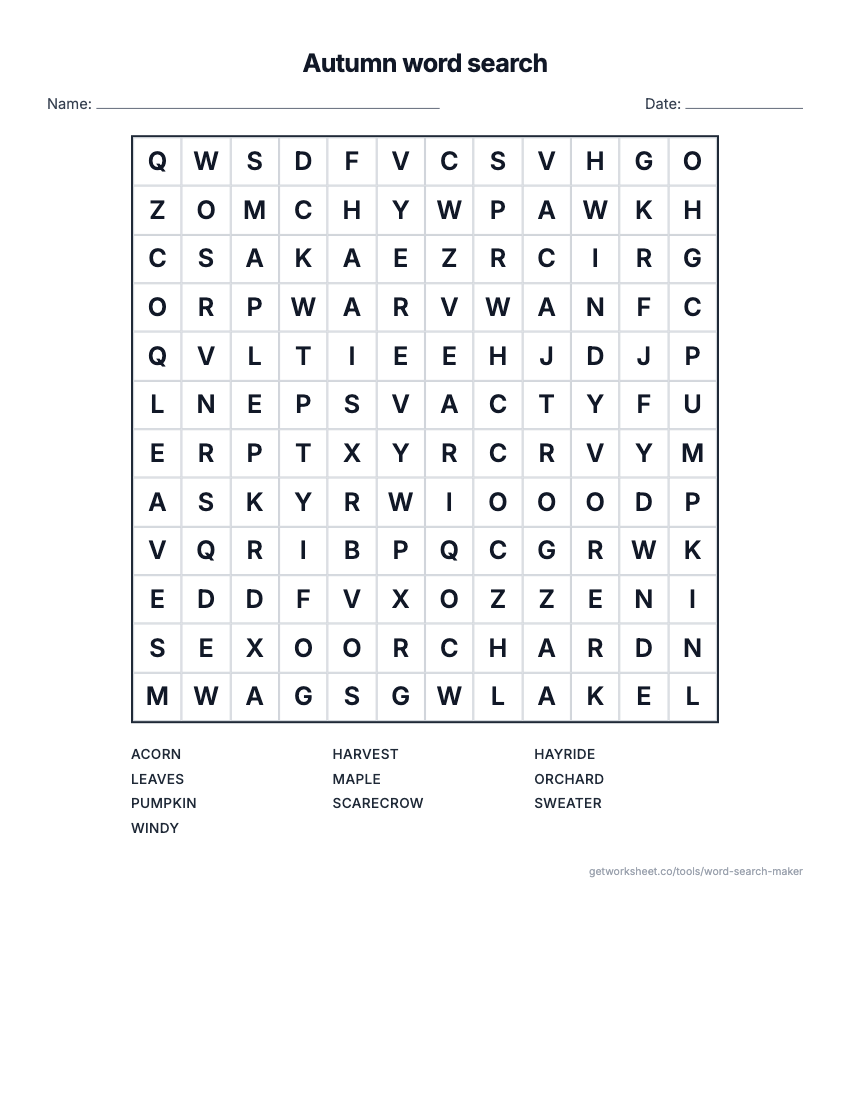
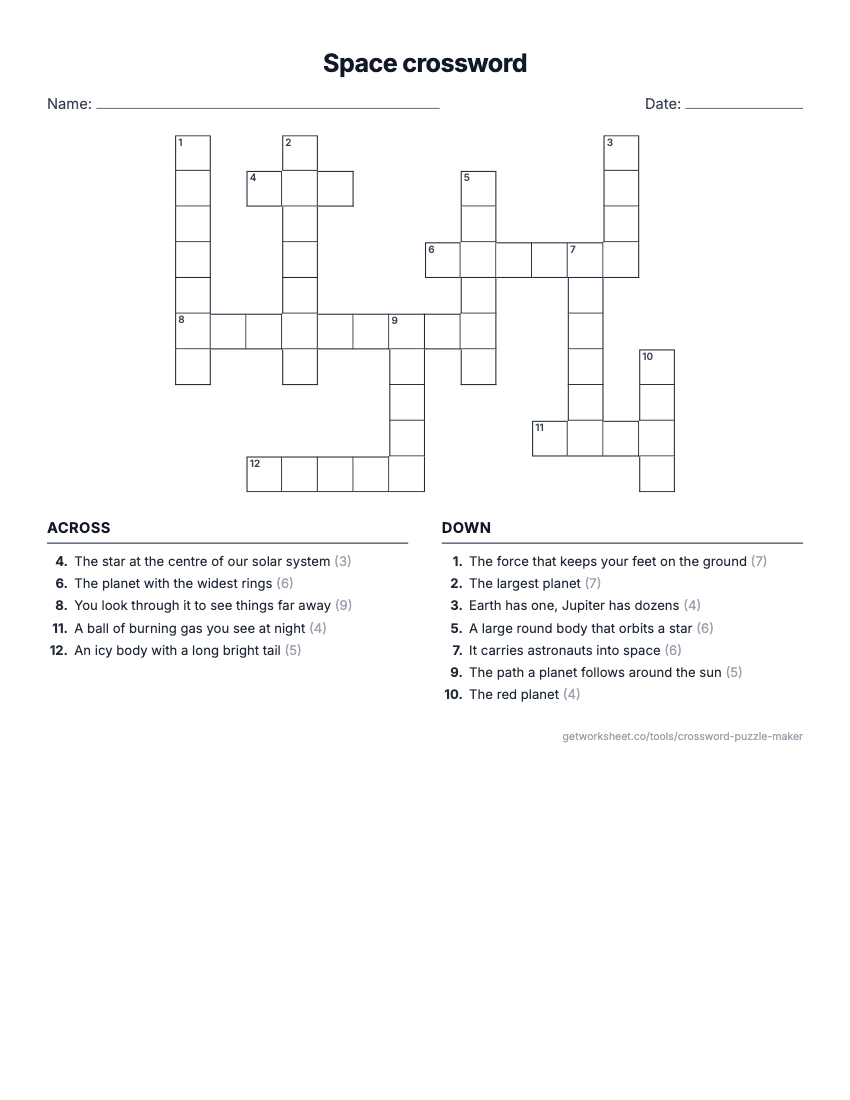
Type your own words or numbers and print in about 30 seconds. No account, no AI, answer key where it applies.
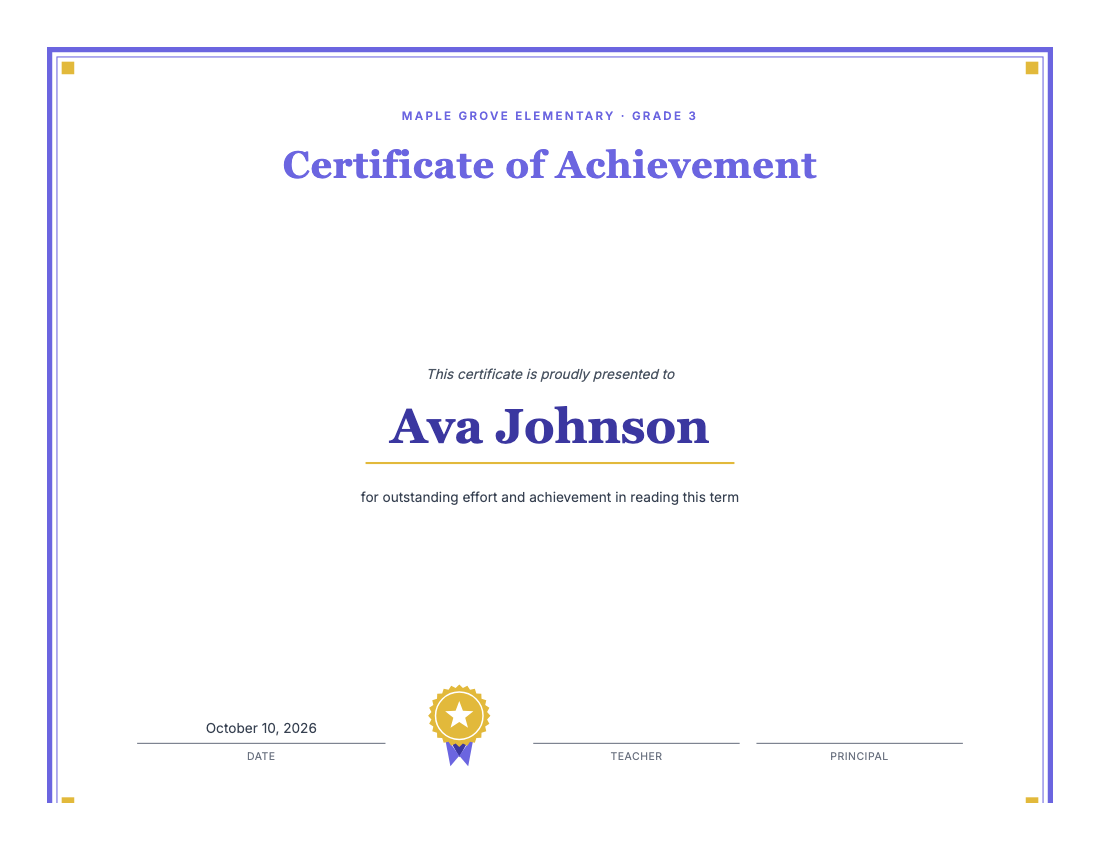
AI worksheet generator
Need a different feelings chart printables worksheet?
Generate a custom feelings chart printables worksheet: pick the grade, question types and count, and print it in about 20 seconds. Free accounts get 1 generation a week.
Teaching tips and common mistakes
How to use these feelings charts
Print at 100% on A4 or US Letter. The twelve-face chart and the blank chart suit ages 3 and up; the check-in, thermometer and coping chart work from about age 5; the vocabulary match is for ages 8 to 12. At home, keep the chart on the fridge or the bedroom door; in a classroom or counseling office, put it at child height near the calm-down corner.
- Feelings chart with 12 faces. At home, make it part of a routine: point to a face at breakfast or bedtime and say the word. Teachers can use it as a morning meeting check-in (children clip a peg to their face) and counselors as a non-verbal opener in a session. Laminate it; it will be touched a lot.
- How do I feel today? Daily check-in. Keep one on the fridge for a week and fill it in together at bedtime; the "why" line is where the conversation happens. In class, a stack by the door lets children check in silently as they arrive. Review the week together: which feeling showed up most, and which day was best?
- Feelings thermometer. Read the body clues out loud and ask "where are you right now?" on a calm day first, so the language exists before it is needed. Then, when a feeling starts to climb, point to the thermometer instead of talking: "you look like a 3; what helps at 3?" The "what helps me" lines turn it into a personal plan.
- Feelings vocabulary match. For older children at home or in a grade 3 to 6 classroom. After matching, ask for a sentence with each word, or have children sort the ten words into pleasant and unpleasant (the challenge at the bottom). Pairs well with a writing lesson on describing characters.
- What can I do when I feel... chart. Go through one row at a time, not all seven. Cross out strategies that do not fit your child and write a replacement; a strategy only works if the child chose it. Fill in the blank row with the feeling your family or class is working on right now, and the two "who can I go to" names.
- Blank feelings chart. Let the child draw the twelve faces from memory, or copy from the finished chart; both are useful. Older children can add feelings that are not on the main chart (bored, jealous, grumpy, cozy). Hang the child's own chart next to the printed one.
Tips from the counselor's office
- Name it to tame it. Naming a feeling out loud lowers its intensity. Model it yourself: "I am feeling frustrated because the printer jammed, so I am going to take a breath."
- All feelings are okay; all behaviors are not. The chart is for noticing feelings, never for punishing them. Separate "you feel angry" (fine) from "you hit" (not fine).
- Teach it calm, use it hot. Every page in this set should be introduced on a good day. A child in the middle of a meltdown cannot learn a new tool, but can reach for a familiar one.
Frequently asked questions
What age is a feelings chart for?
The twelve-face chart works from about age 3, when children start pointing to pictures and copying words. The check-in and thermometer suit ages 5 to 10, and the vocabulary match is written for ages 8 to 12. The blank chart works at any age; younger children draw, older children add new feeling words.
Which feelings are on the chart?
Happy, sad, angry, scared, excited, tired, worried, calm, silly, frustrated, proud and shy. The check-in sheet uses the eight most common of these so the row fits comfortably on the page, and the coping chart covers angry, sad, scared, worried, frustrated, excited and tired, with a blank row for one more.
Does this set use color zones?
The feelings thermometer uses five colors (blue, green, yellow, orange, red) from calm to out of control, so it sits naturally alongside any color-based emotional regulation approach your school already uses. The chart itself is organized by feeling, not by color, so it does not conflict with any particular program.
Can I print the charts in black and white?
Yes. Every face is drawn with a thick black outline and a light fill, so the expressions read clearly on a mono printer. Children can color the faces themselves, which is a good first activity with the chart.
Is this set free for classrooms and counseling offices?
Yes, for non-commercial educational use: a class set, a counselor's office, a therapy waiting room or a family fridge are all fine.
More printables
Once a child can name a feeling, the next step is a plan for it: the special education hub has free tools for behavior and routines, including the visual schedule maker for picture routines and the behavior intervention plan generator for children who need a written plan. For everyday motivation at home, see the reward chart printables and sticker charts, and the all about me worksheets for a gentle way to start talking about likes, dislikes and feelings.
Free library
Related collections
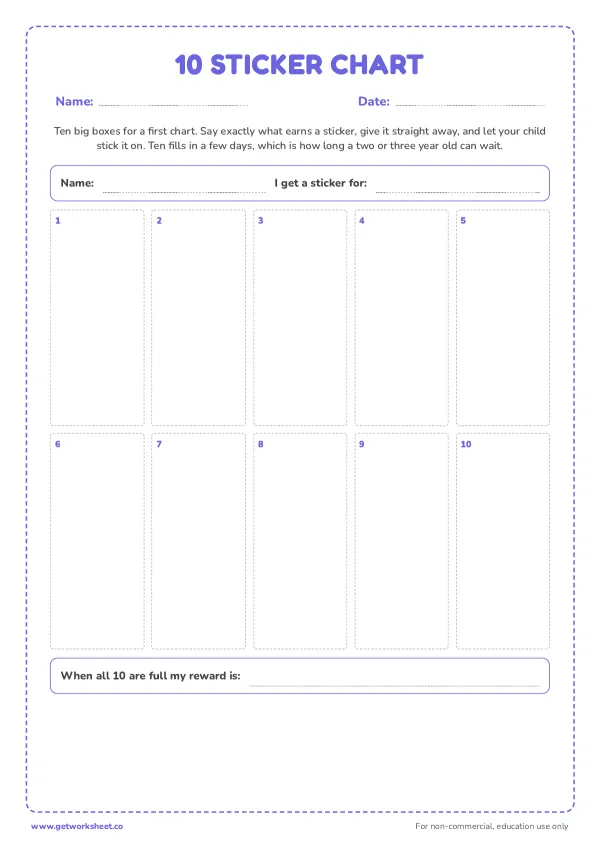
Free sticker chart printables
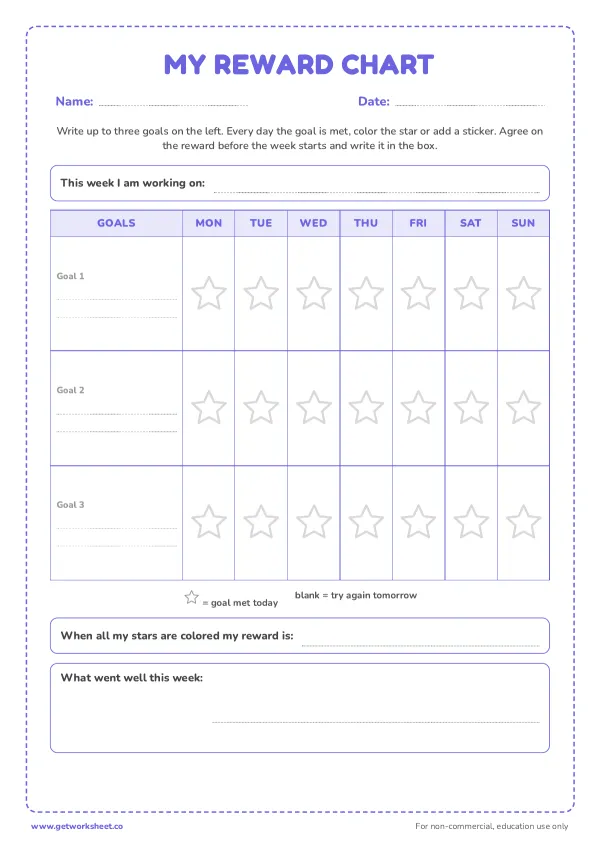
Free reward chart printables
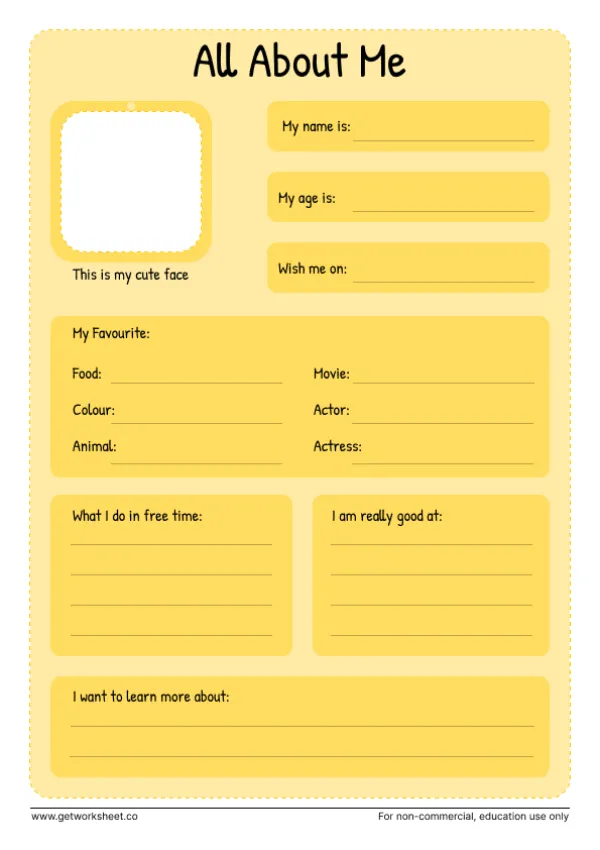
Free all about me worksheets
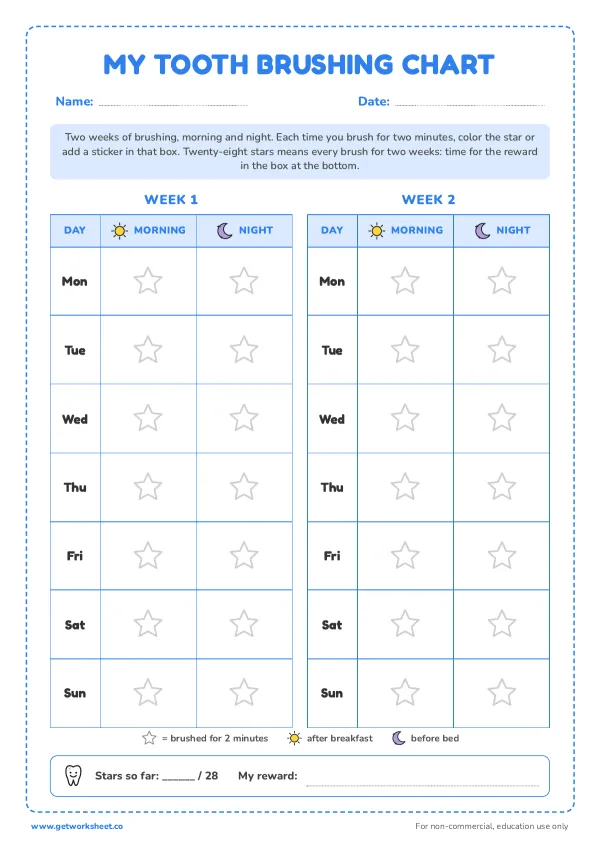
Free tooth brushing chart printables
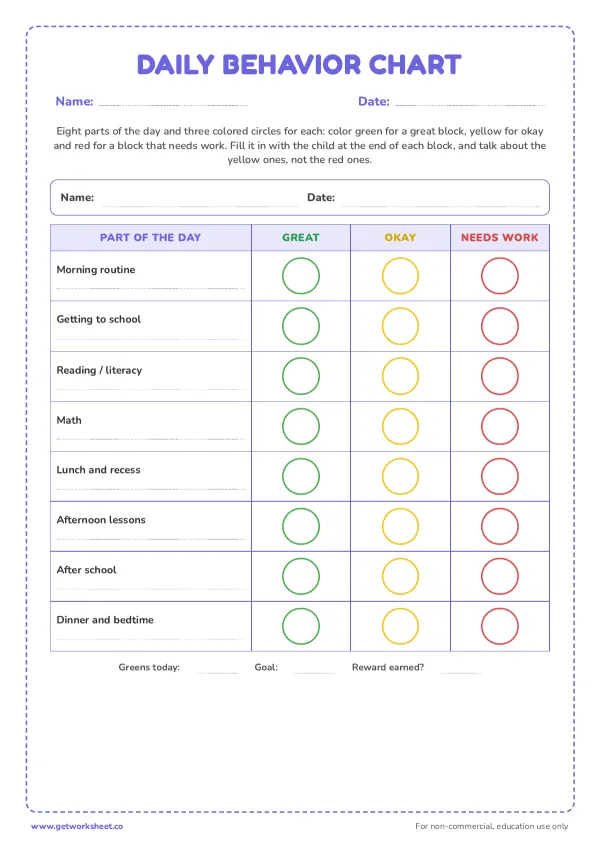
Free behavior chart printables
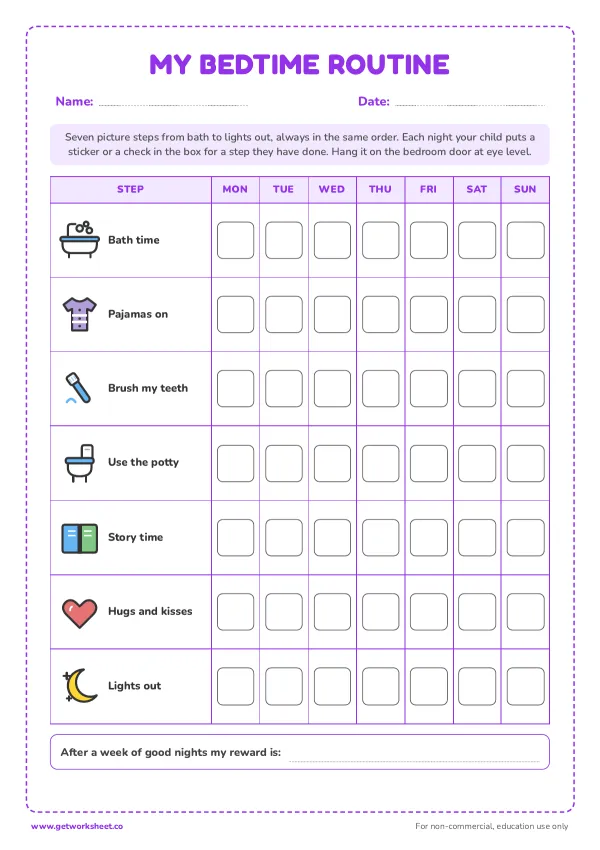
Free bedtime routine chart printables
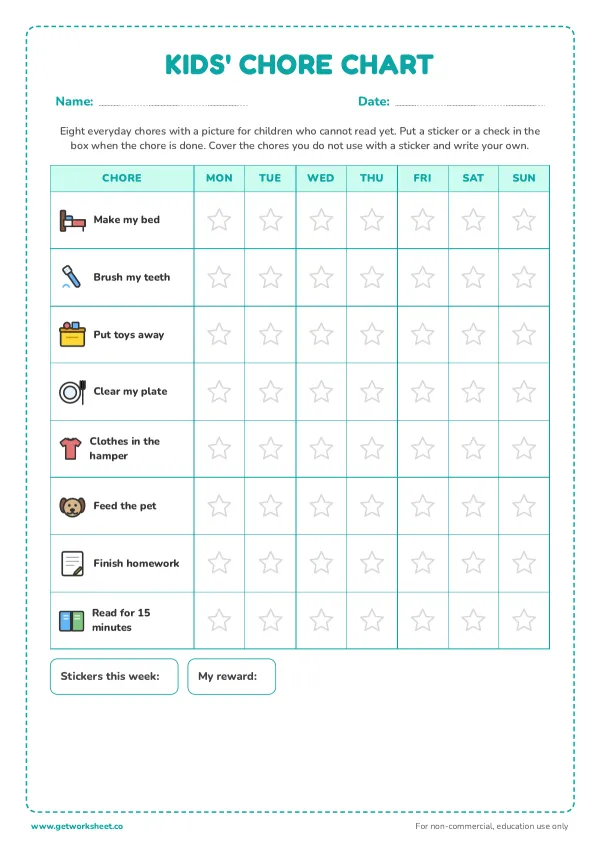
Free chore chart printables
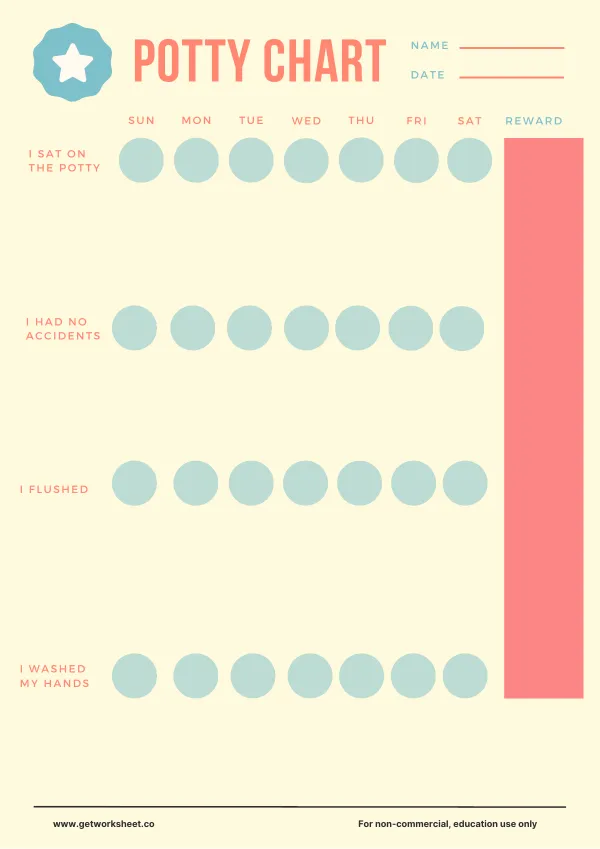
Free potty training chart printables
More worksheets
- Free emotion thermometer printables
- Free break card printables
- Free ABC data collection sheets
- Free token board printables
- Free First-Then board printables
- Free emergency sub plans templates
- Free goal-setting worksheets for students
- Free New Year's resolution worksheets
- Free reading log printables
- Free cutting practice worksheets
- Cooking Basics Worksheets
- Time Management Worksheets