Life skills · Preschool–Kindergarten
Free cutting practice worksheets
Free printable cutting practice worksheets for preschool and kindergarten scissor skills: snips and straight lines, zigzags, wavy lines, curves, spirals, six shapes to cut out, a cut and paste shape match, and paper chain strips.
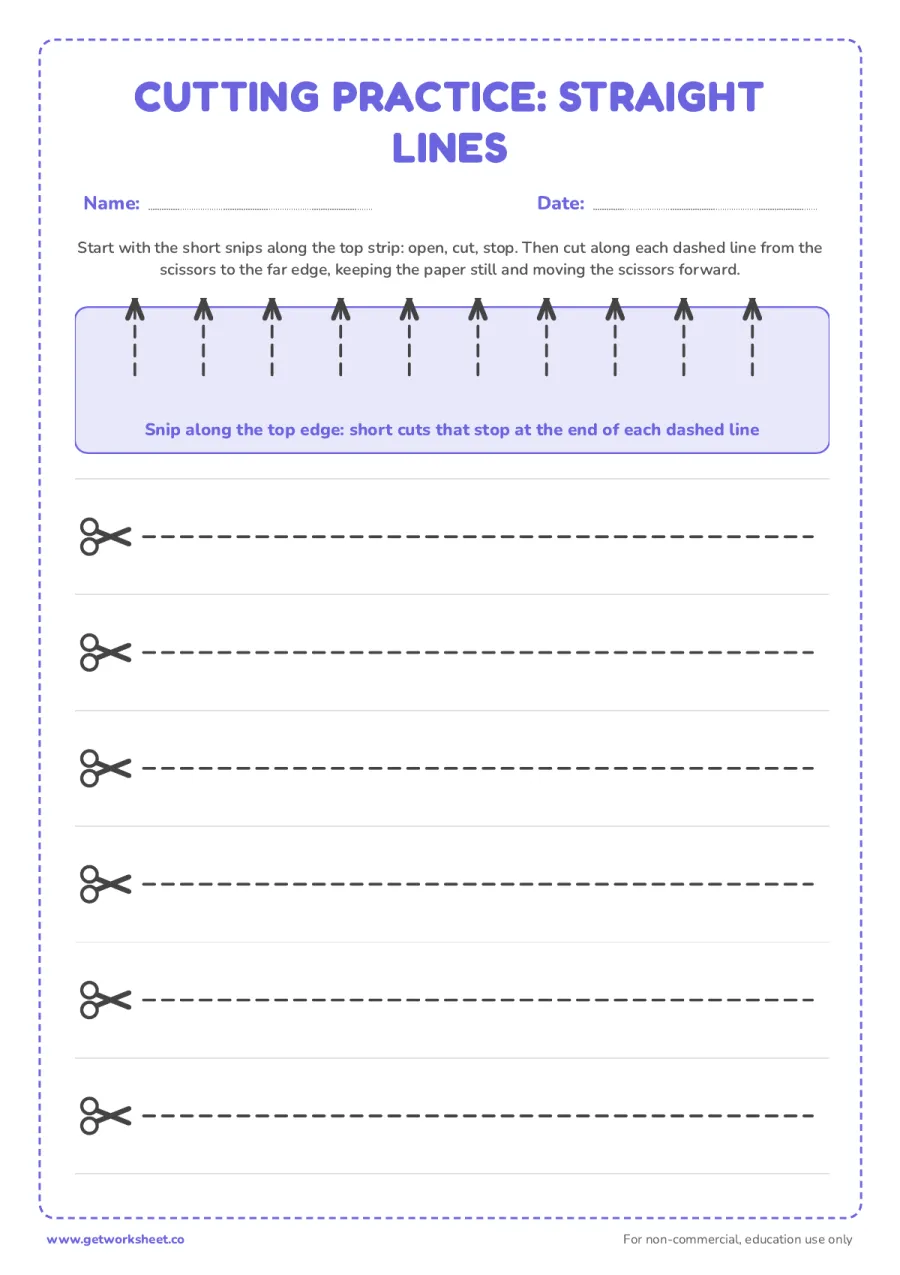
Cutting practice: snips and straight lines
A snipping strip (short cuts along the top edge) and six full-width straight lines, each in its own band with a scissors icon at the start. The first scissor skills sheet. Free printable PDF.
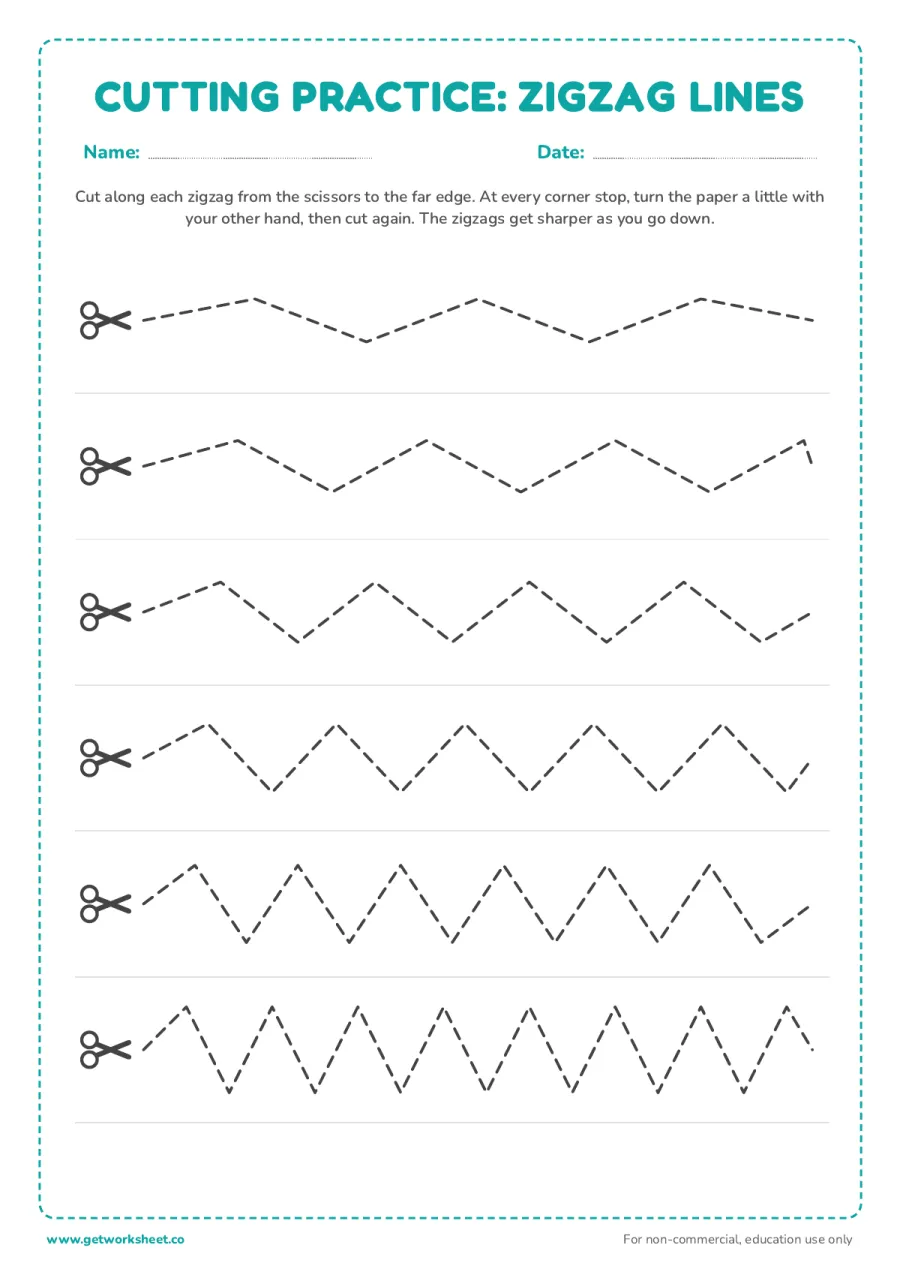
Cutting practice: zigzag lines
Six zigzag lines from gentle to sharp. Each corner is a stop-and-turn for the paper hand. Free printable PDF.
Whole set
All 8 sheets in one PDF
Instant and ad-free. No account needed.
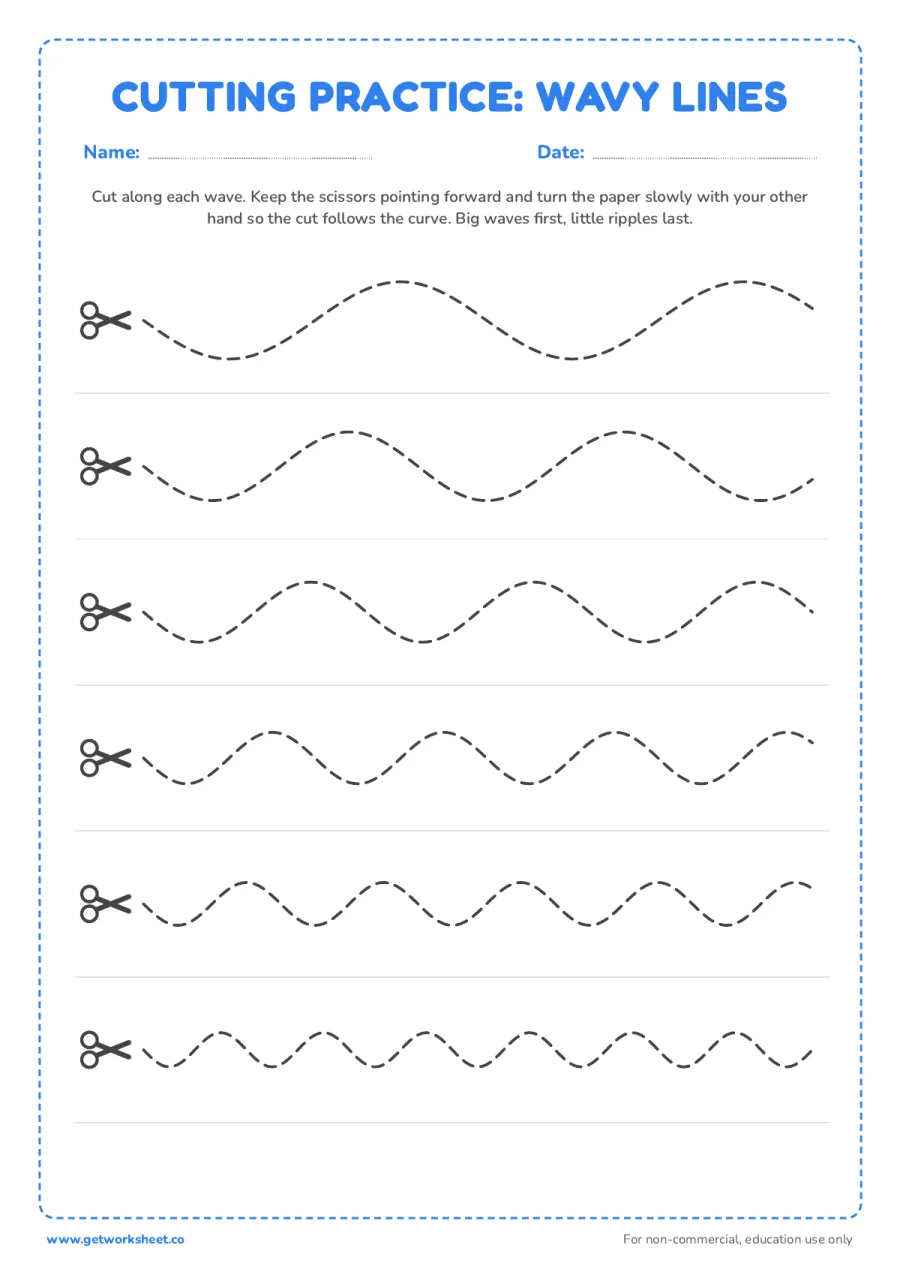
Cutting practice: wavy lines
Six wavy lines from big slow waves to small ripples. Practice turning the paper smoothly while cutting. Free printable PDF.
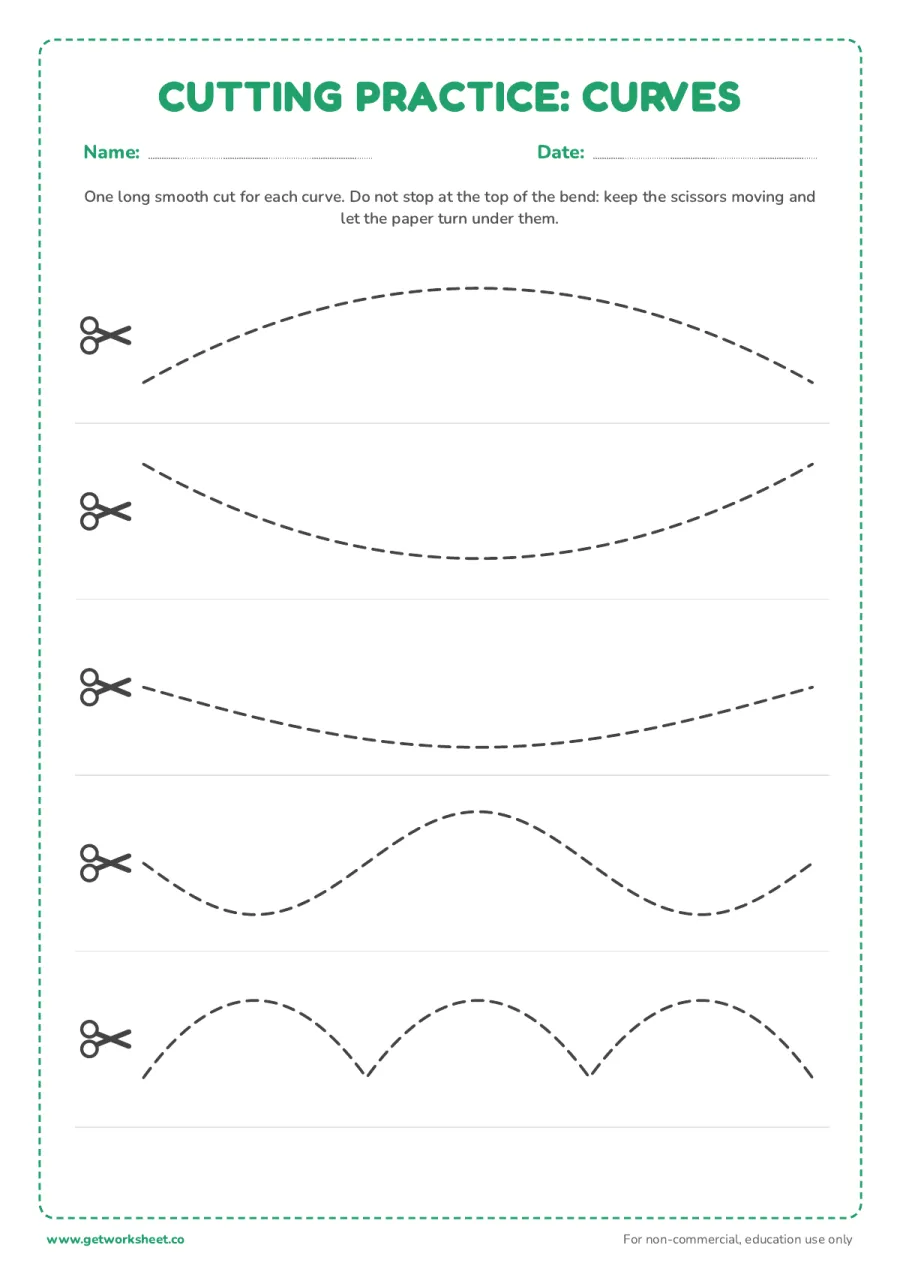
Cutting practice: curves and bends
Five long curves: a rainbow arc, a bowl, two S-bends and a row of hills. Longer smooth turns than the wavy lines. Free printable PDF.
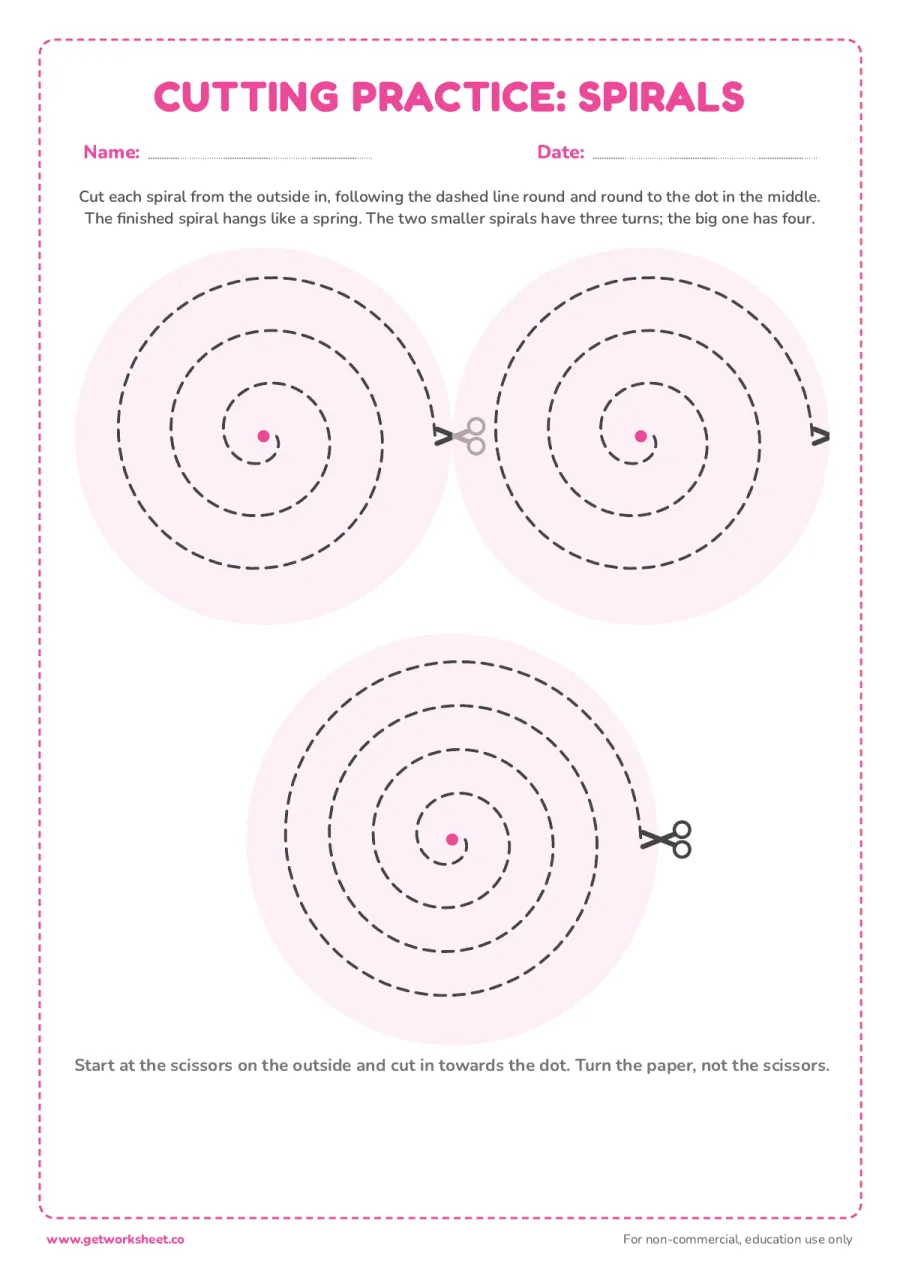
Cutting practice: spirals
Three large spirals (three, three and four turns) to cut from the outside in. Each finished spiral hangs like a spring. Free printable PDF.
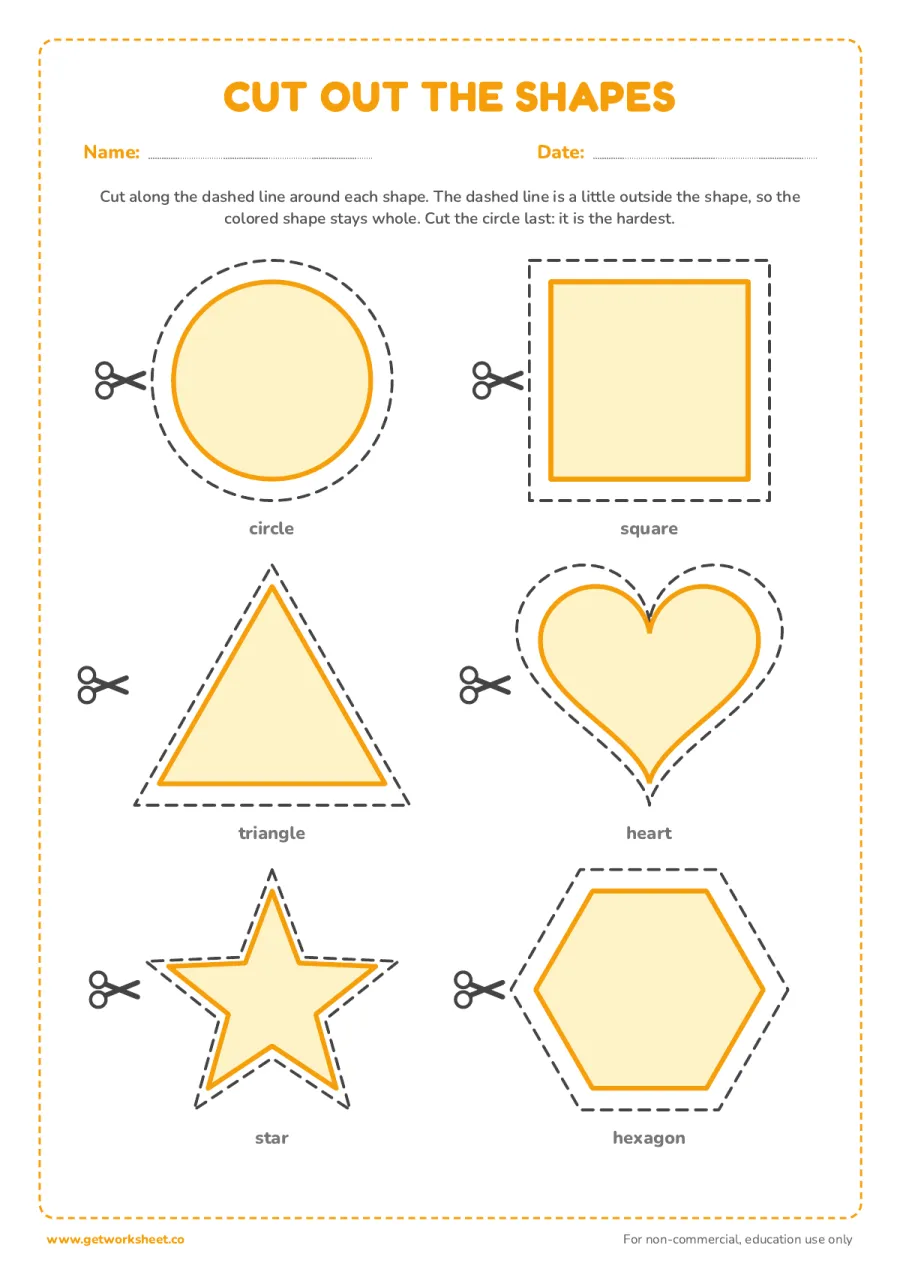
Cutting practice: cut out six shapes
Circle, square, triangle, heart, star and hexagon with a dashed cutting line just outside each shape so the colored shape stays whole. Free printable PDF.
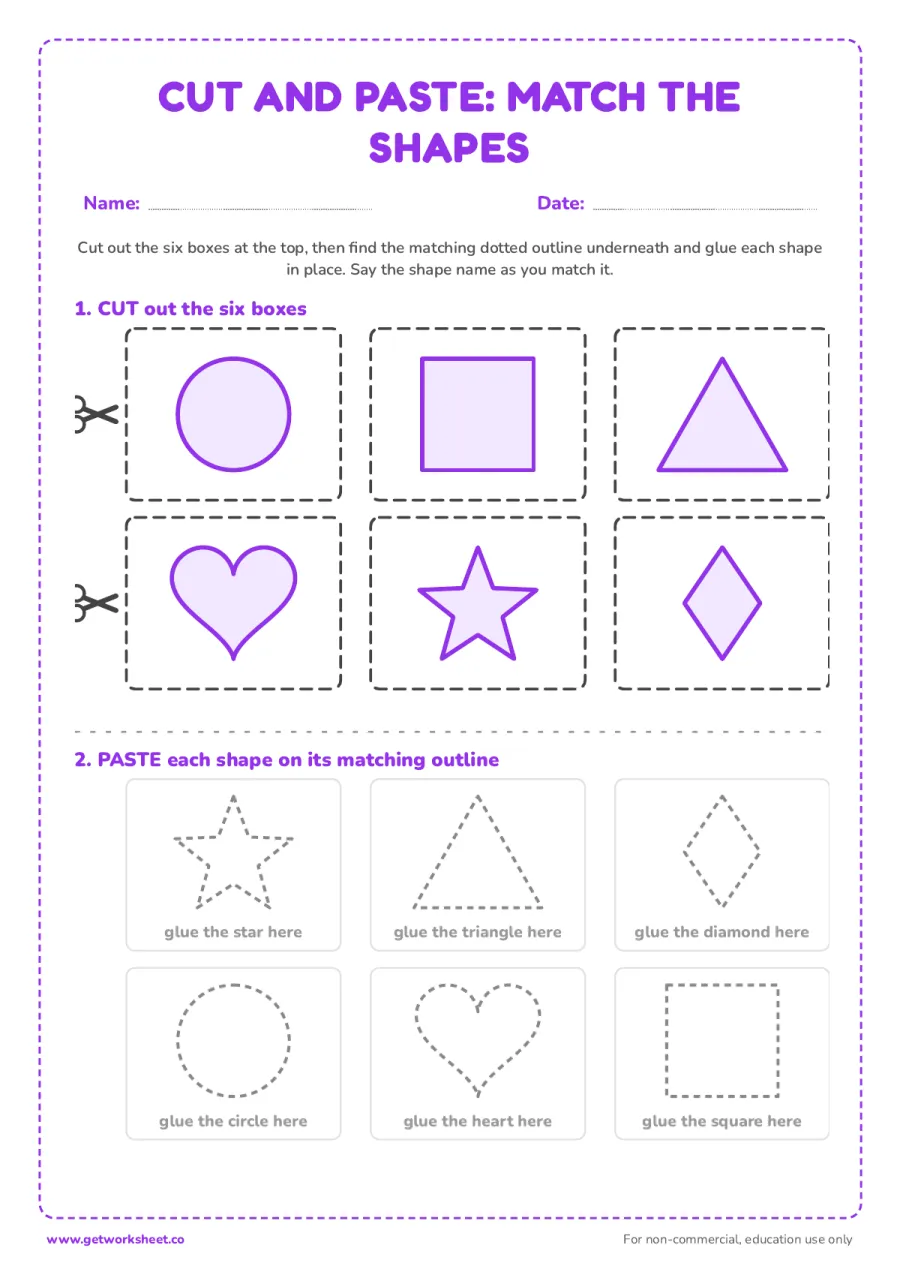
Cut and paste: match the shapes
Cut out six shape boxes, then glue each shape onto its matching dotted outline below. Scissors, glue and shape names in one activity. Free printable PDF.
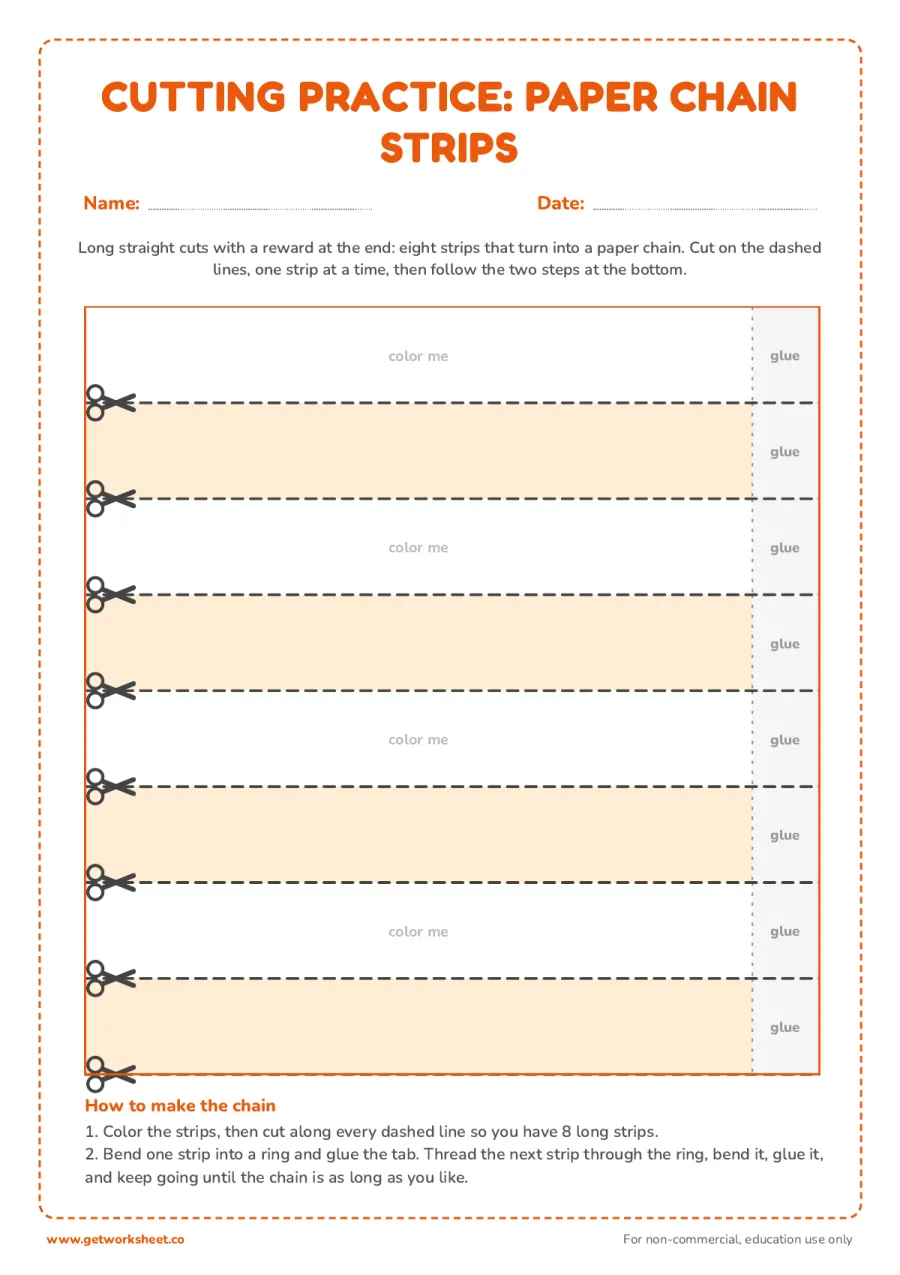
Cutting practice: paper chain strips
Eight long strips with a glue tab on each, to color, cut and link into a paper chain. Two-step instructions on the sheet. Free printable PDF.
AI worksheet generator
Make a worksheet like this for your class
The 8 sheets above are fixed. The generator writes a new cutting worksheet for your grade, with the question types and count you choose, in about 20 seconds. Pick a grade to start:
What you get
- A fresh set of questions on cutting, not a copy of the sheets above
- Multiple choice, fill in the blanks, true or false, open ended
- Answer key and print-ready PDF with Pro
Free account, 1 worksheets a week. No card.
Scissor skills come in a fixed order: snip, cut a straight line, turn a corner, follow a curve, go round a spiral, cut out a shape. These eight cutting practice worksheets follow that order one sheet at a time. Every cutting line is a thick dashed line that starts at a small scissors icon, sits in its own band so a child always knows where the next cut is, and runs all the way to the edge of the paper. The last three sheets give the cutting a purpose: shapes to cut out, a cut and paste shape match, and strips that link into a paper chain. Print on ordinary paper for a first go and on slightly heavier paper (card stock or 120 gsm) once a child can manage it; thicker paper is easier to hold and to cut.
What's in this set
- Snips and straight lines. A strip of short cuts along the top edge (open, cut, stop) and six full-width straight lines. Where every child starts.
- Zigzag lines. Six zigzags from gentle to sharp. Each corner is a stop and a turn of the paper.
- Wavy lines. Six waves from big slow bends to small ripples. The paper hand learns to turn while the scissors keep moving.
- Curves. A rainbow arc, a bowl, two S-bends and a row of hills: five long, smooth cuts.
- Spirals. Three large spirals to cut from the outside in. Each finished spiral hangs like a spring, which children love.
- Cut out the shapes. Circle, square, triangle, heart, star and hexagon, each with a dashed cutting line just outside the shape so the colored shape stays whole.
- Cut and paste: match the shapes. Cut out six shape boxes and glue each shape onto its dotted outline below. Scissors, glue and shape names in one activity.
- Paper chain strips. Eight long strips with glue tabs to color, cut and link into a chain. Instructions are on the sheet.
Cutting and pencil control grow together. Pair these with the line tracing worksheets for the same lines with a pencil, and with the shape tracing worksheets before the two shape sheets.
Free printable makers
Make your own cutting sheets
Type your own words or numbers and print in about 30 seconds. No account, no AI, answer key where it applies.
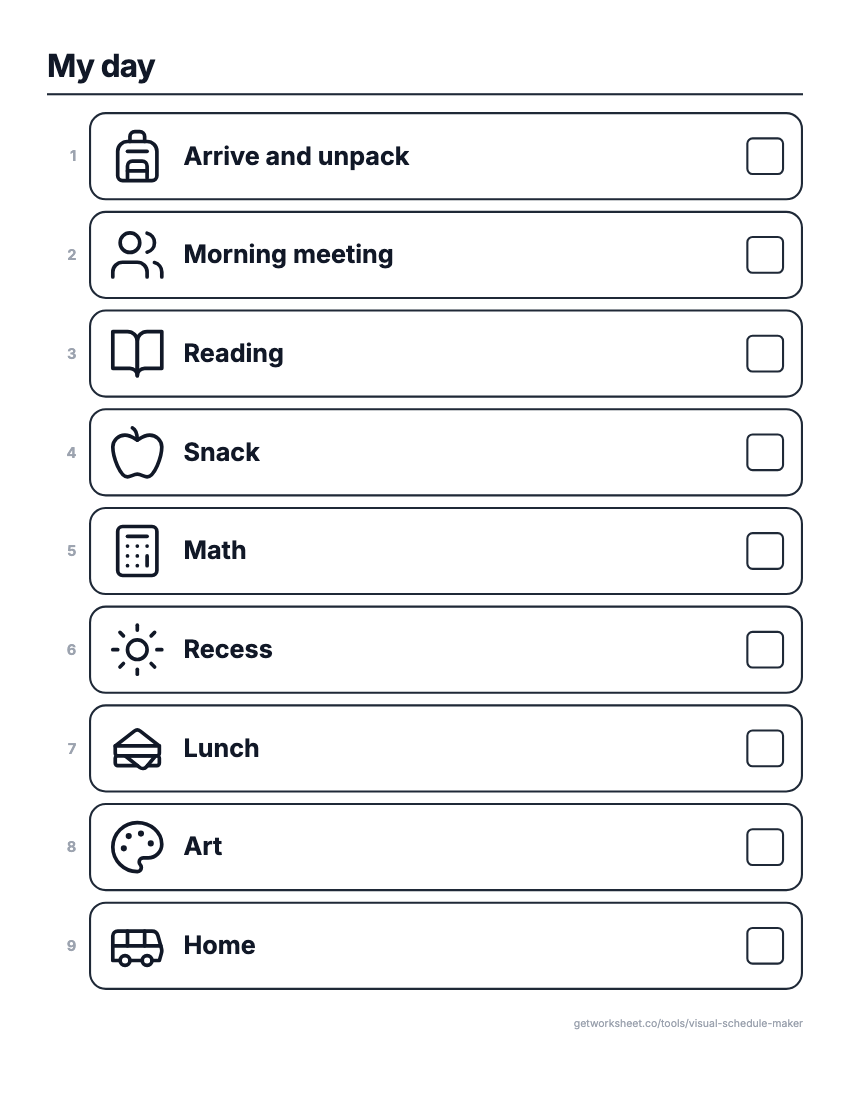 Visual schedule makerPicture schedules, First/Then and token boards. Free to print.
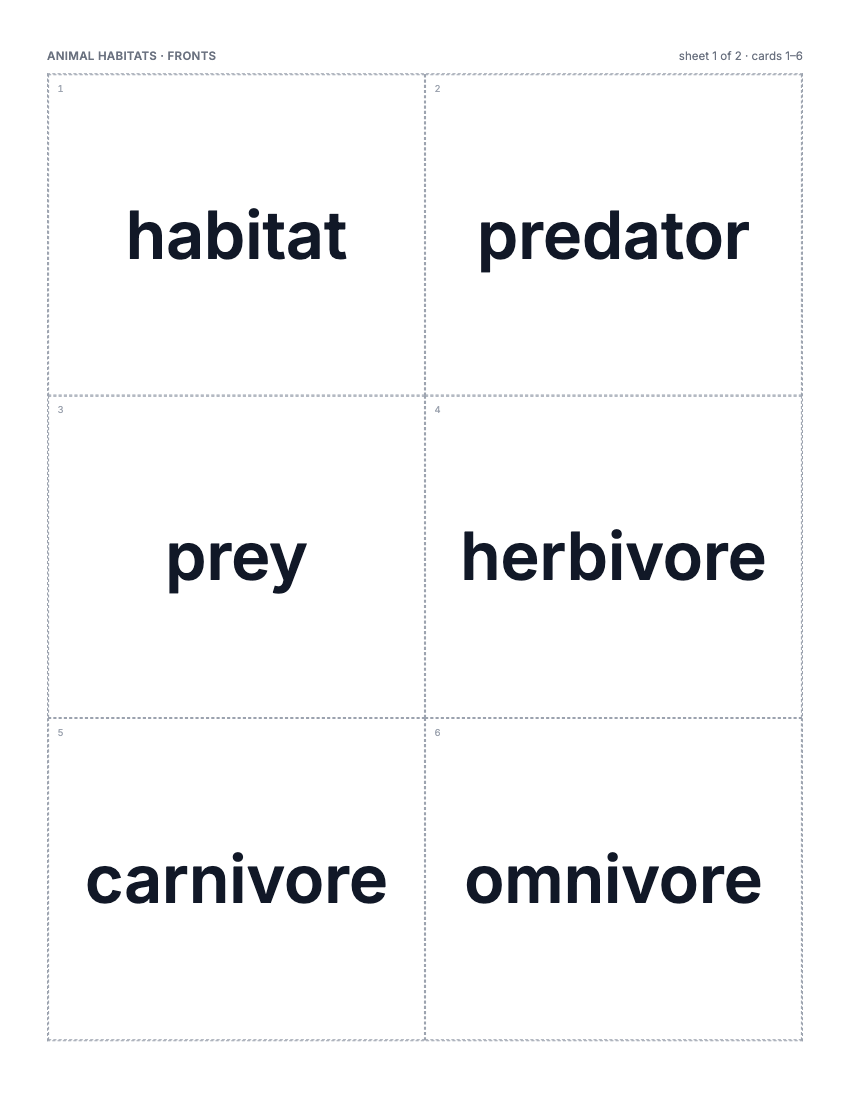 Flashcard makerVocabulary, math fact or sight word cards, 2-8 a page, two-sided or fold-over. Free to print.
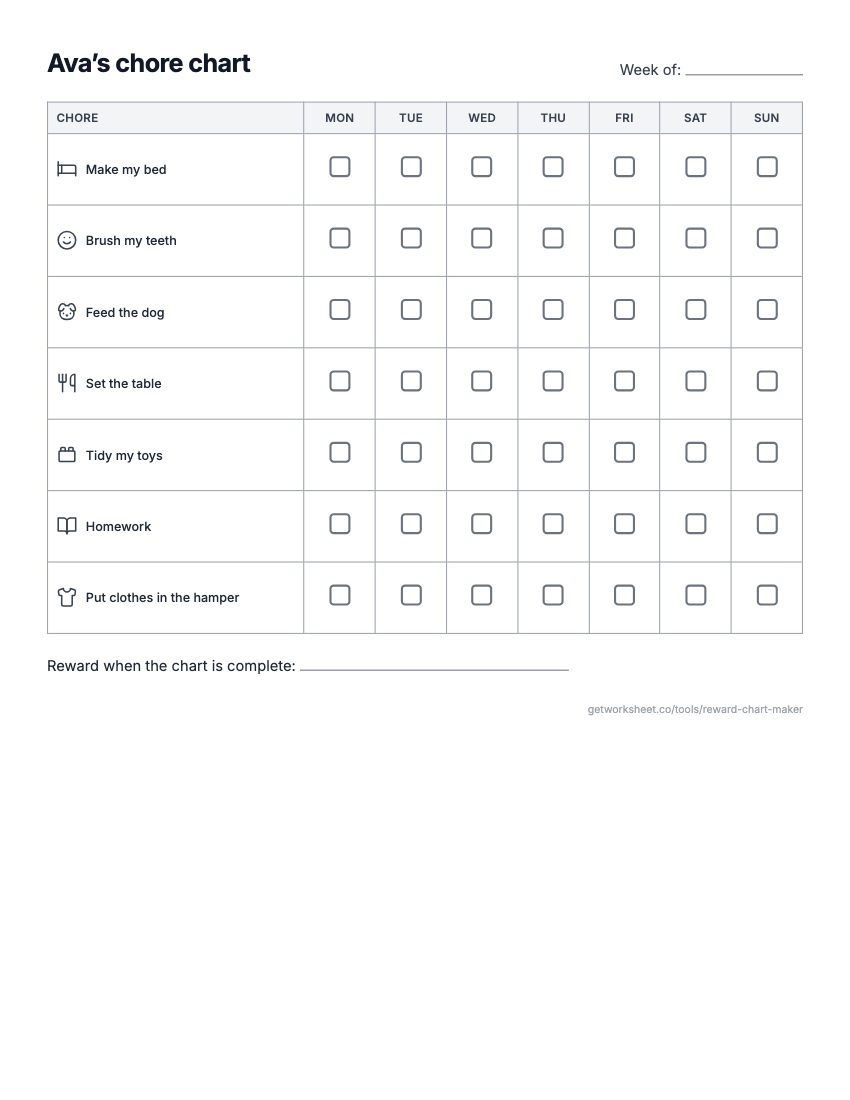 Reward chart and chore chart makerReward or sticker chart with a goal, Mon-Sun chore chart with pictures, behavior chart. Free to print.
AI worksheet generator
Need a different cutting worksheet?
Generate a custom cutting worksheet: pick the grade, question types and count, and print it in about 20 seconds. Free accounts get 1 generation a week.
How to use these worksheets
Ten minutes at a time is plenty; cutting is hard work for small hands. Use child scissors with blunt tips, about 13 cm (5 inches) long, and left-handed scissors for a left-handed child, since right-handed blades hide the cutting line from a left hand.
- Grip first. Thumb in the small hole on top, two fingers in the big hole, elbow tucked in, "thumbs up" so the blades point away. Say "open, close" together before the paper arrives. If the wrist twists, hold a small toy under the child's arm to keep the elbow in.
- Snips and straight lines. Hold the paper for the child on the first strip and let them make the snips. Then let them hold the paper at the far edge with the free hand while cutting along the lines. The free hand should move the paper, the scissors hand only opens and closes.
- Zigzag lines. Say "cut, stop, turn" at every corner. Rounded corners mean the child kept cutting while turning; sharp corners come with practice.
- Wavy lines and curves. The opposite skill: the scissors keep moving while the paper turns slowly. If the cut goes straight, the paper hand is not turning; guide it from behind.
- Spirals. Cut the outside ring first, then keep turning the paper as the ring gets smaller. Hold the finished spiral up by the center so it stretches out.
- Cut out the shapes. Cut roughly around the whole shape first to free it from the page, then cut on the dashed line. Corners on the square, star and hexagon: cut to the corner, stop, turn the paper, cut again. Do the circle last.
- Cut and paste. Cut the six boxes out, name each shape, find its outline, glue. A glue stick is easier than liquid glue at this age.
- Paper chain. Color before cutting so the strips stay flat. Cut on every dashed line, then follow the two steps at the bottom of the sheet. A chain of eight makes a small decoration; two sheets make one for a doorway.
Common mistakes to watch for
- Thumb pointing down. The hand rolls over and the blades tilt. Reset to thumbs up and check the elbow.
- Tearing instead of cutting. The scissors close all the way at the end of every stroke and the tips pull the paper. Cut with the middle of the blades and stop before they meet.
- Turning the scissors, not the paper. The wrist twists round the curve. Put your hand over the child's free hand and turn the paper together.
- Cutting the shape itself. The child follows the colored edge, not the dashed line. Point out that the dashed line is the road and the shape is the passenger.
Frequently asked questions
What age are cutting practice worksheets for?
Ages 3 to 6. Most three-year-olds can snip; four-year-olds cut straight lines and gentle curves; five-year-olds manage zigzags, spirals and simple shapes; cutting out a circle neatly is usually a kindergarten skill. The sheets are in that order, so start at the top and stop at the first sheet that is a struggle.
What kind of scissors should a preschooler use?
Blunt-tipped child scissors with two equal finger holes, or spring-loaded scissors that reopen themselves for a child who tires quickly. Left-handed children need left-handed scissors: with right-handed blades the top blade hides the line from a left-hander.
Why do the lines start with a scissors icon?
So the child knows where to begin and which direction to cut. Cutting always goes away from the body, from the scissors icon to the far edge of the page, and the free hand holds the paper at that far edge.
Should I use card or paper?
Ordinary printer paper is fine for the first sheets. Slightly heavier paper is easier to hold and gives cleaner cuts, so use card stock or 120 gsm paper for the shapes, the cut and paste sheet and the paper chain if you have it.
Do these worksheets need an answer key?
No. They are cutting pages with nothing to mark. The cut and paste sheet checks itself: every shape has exactly one matching outline.
More fine motor practice
The line tracing worksheets use the same straight, zigzag, wavy and spiral lines for a pencil. The shape tracing worksheets, circle tracing worksheets, square tracing worksheets and triangle tracing worksheets teach the shapes on the cut-out sheets, and the shapes flashcards give them names. The animal coloring pages are good cutting-out practice once the shapes are easy, and the all about me worksheets make a first booklet to cut and staple.
Free library
Related collections
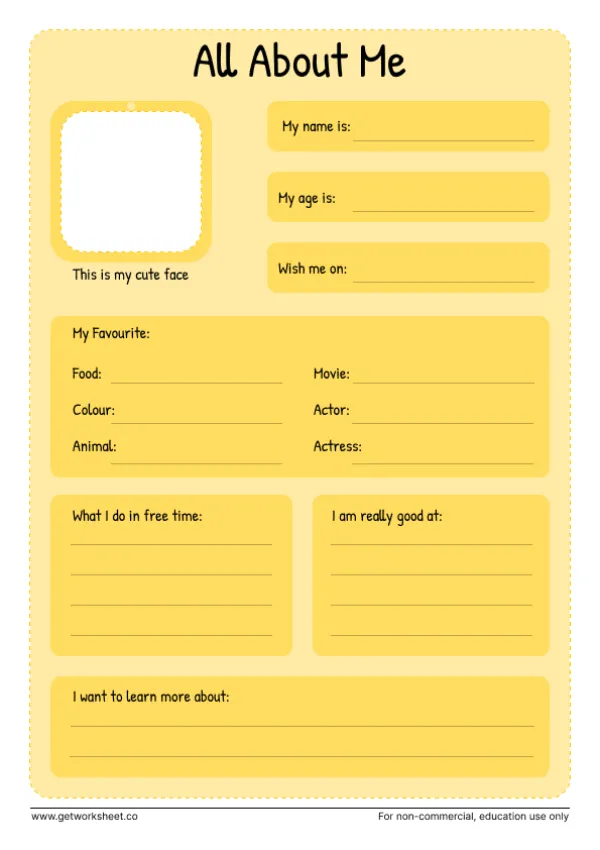
Free all about me worksheets
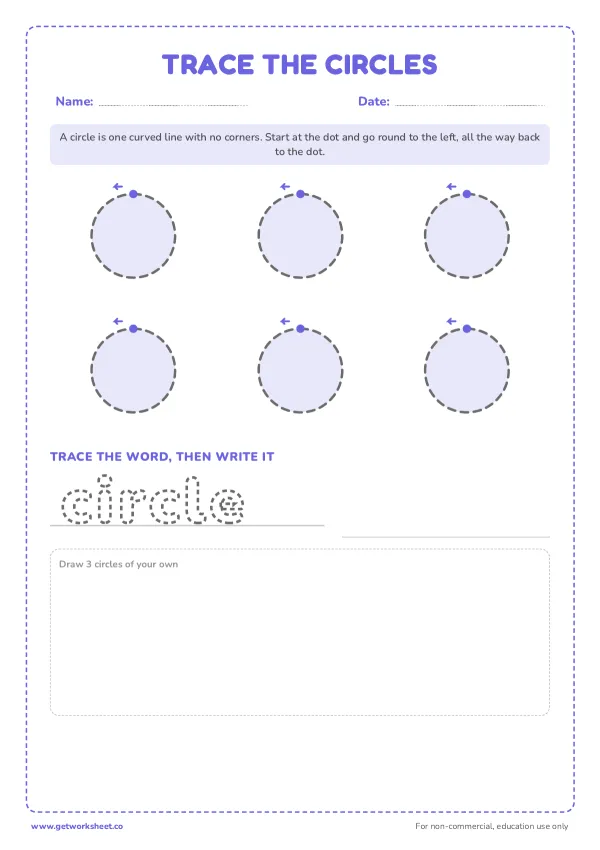
Free shape tracing worksheets
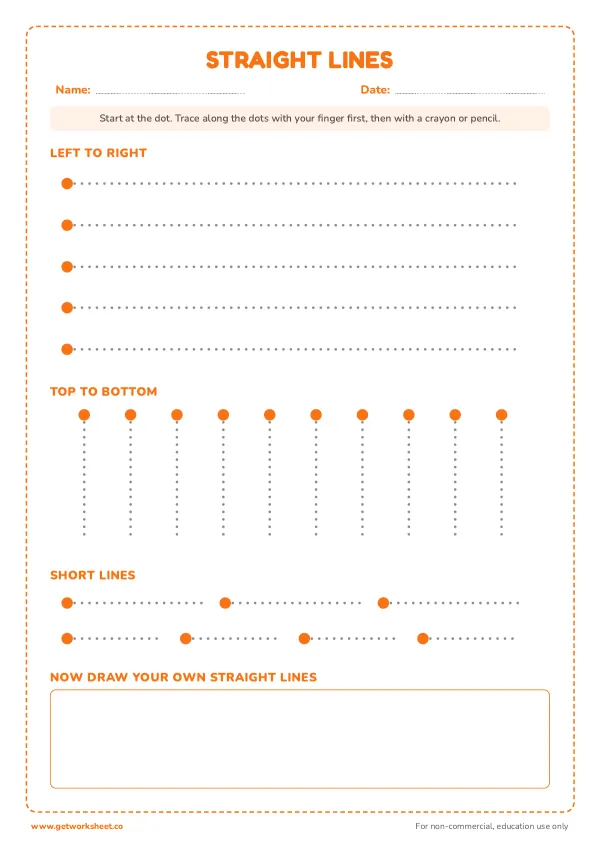
Free line tracing worksheets
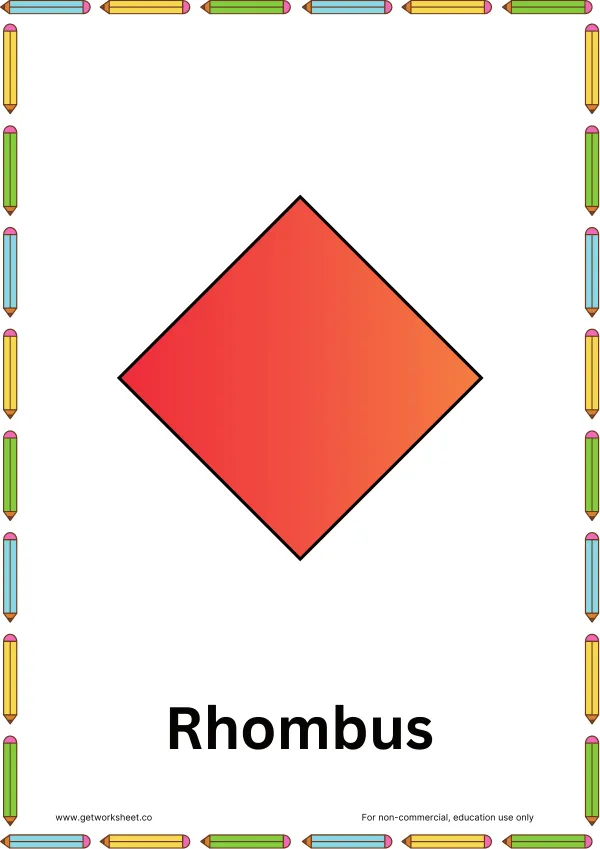
Free shapes flashcards
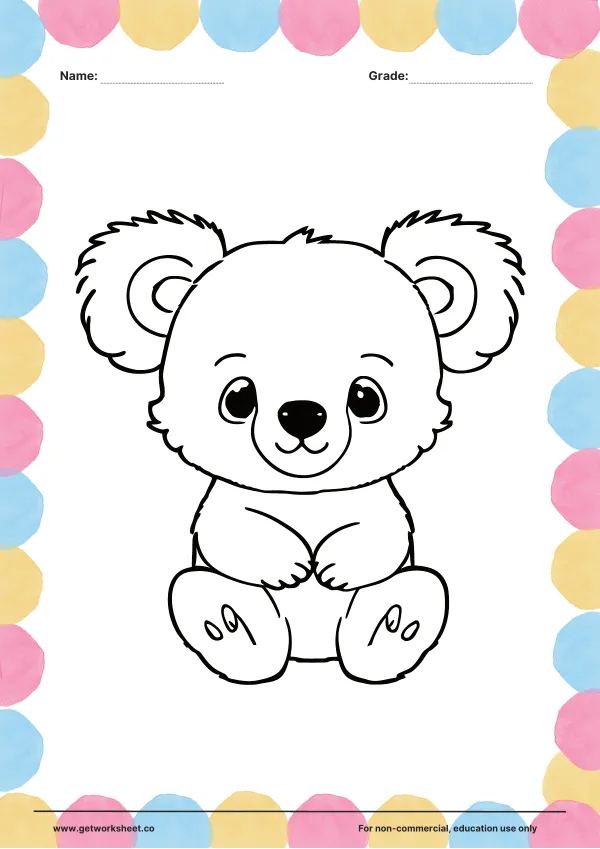
Free printable animal coloring pages
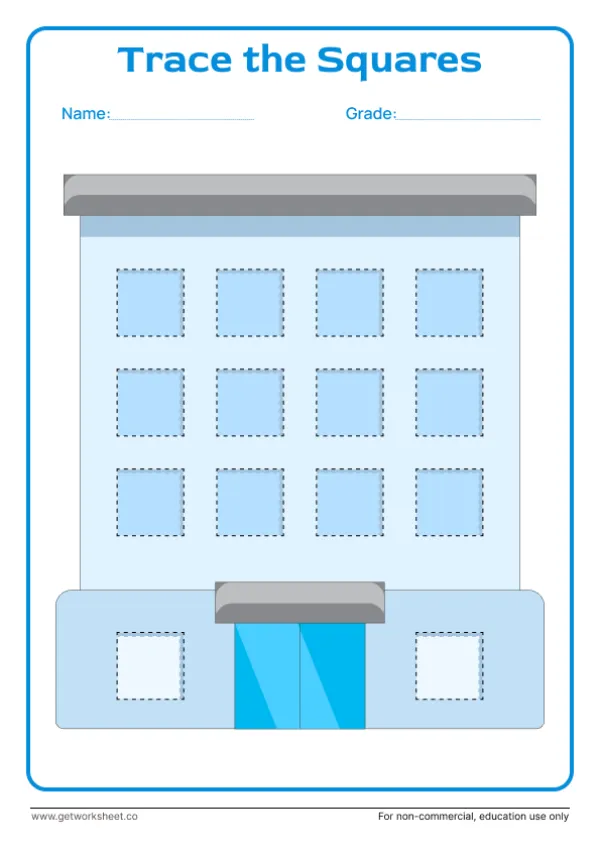
Free square tracing worksheets
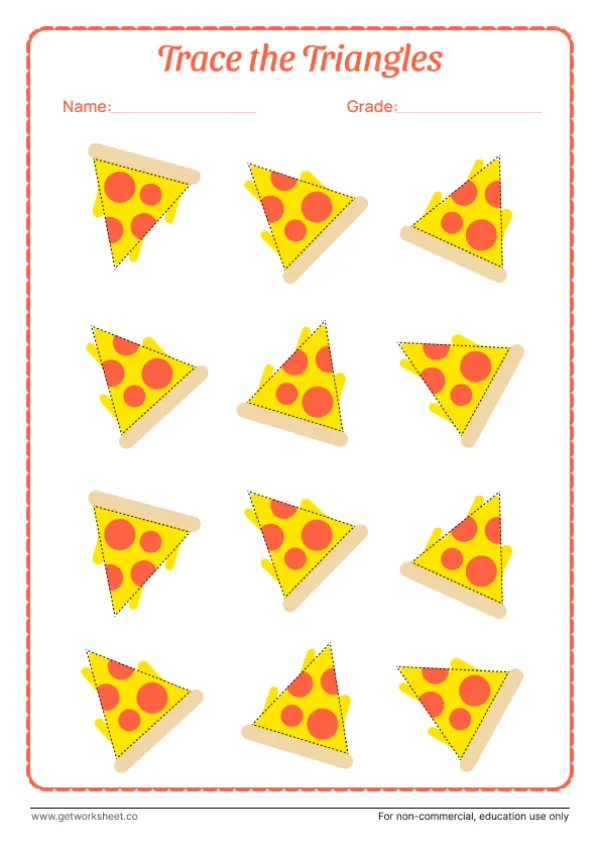
Free triangle tracing worksheets
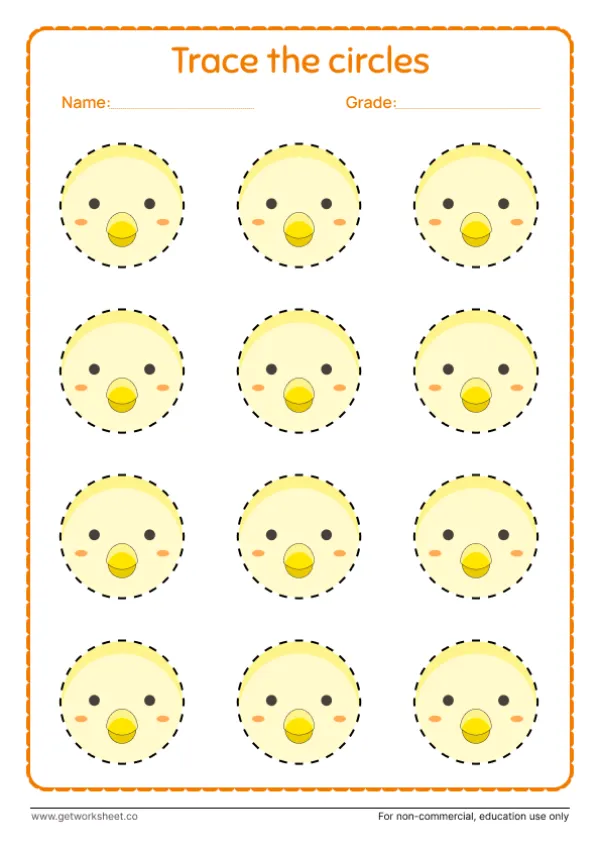
Free circle tracing worksheets
More worksheets
- Free sticker chart printables
- Free reward chart printables
- Free chore chart printables
- Free i spy worksheets
- Free first day of school sign printables
- Free potty training chart printables
- Free penguin worksheets
- Free snowman worksheets
- Free winter worksheets for preschool and kindergarten
- Free winter tracing worksheets
- Free heart tracing worksheets
- Free Montessori language worksheets