English · Preschool–Kindergarten
Free line tracing worksheets
Six printable line tracing worksheets for ages 3 to 5, in order of difficulty: straight lines, slanted lines, zigzags, wavy lines, loops and spirals. Pre-writing practice for pencil control before letters.
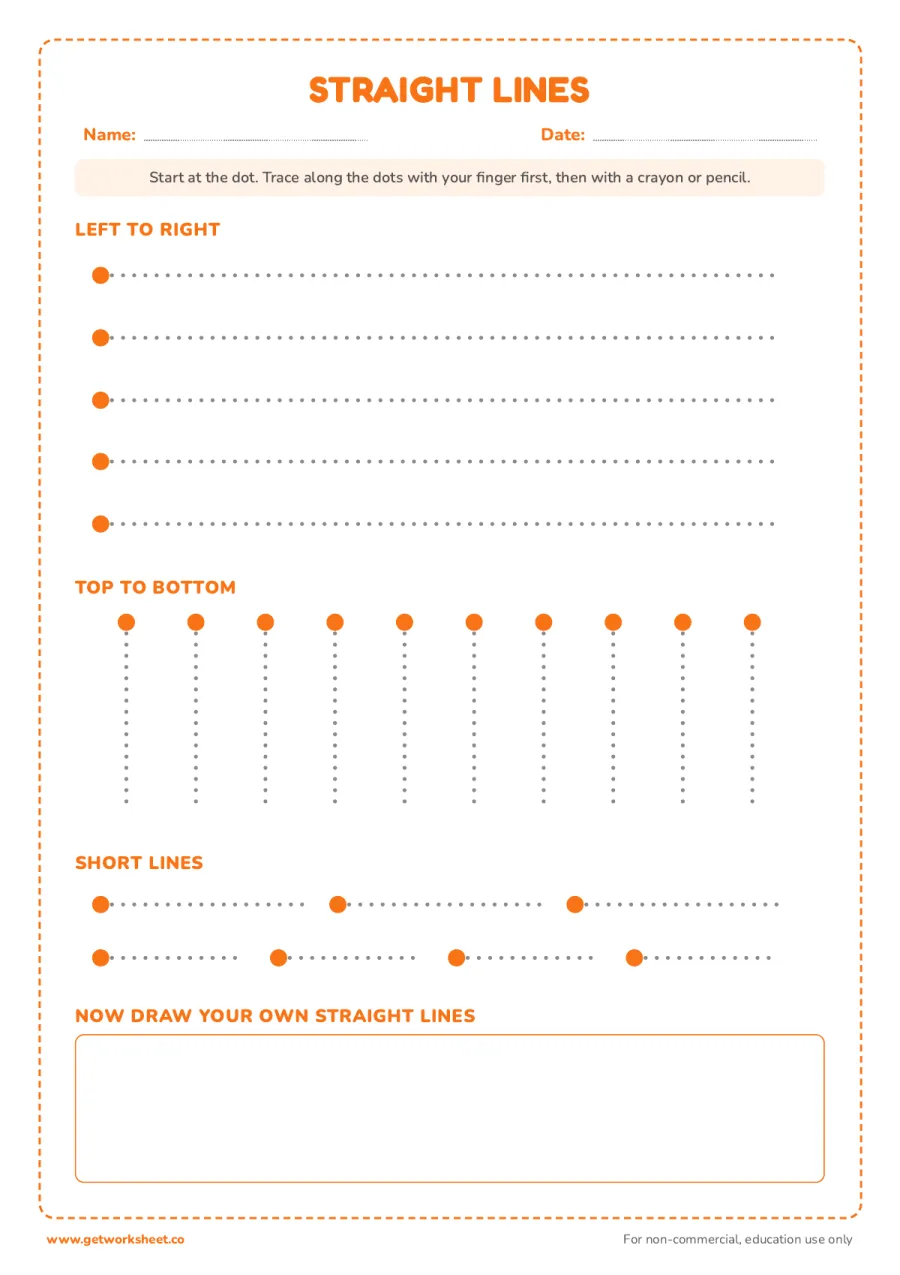
Straight lines: left to right and top to bottom
Five long horizontal lines, ten standing lines and two rows of short lines to trace. The first line-tracing sheet for children who are just starting to hold a crayon.
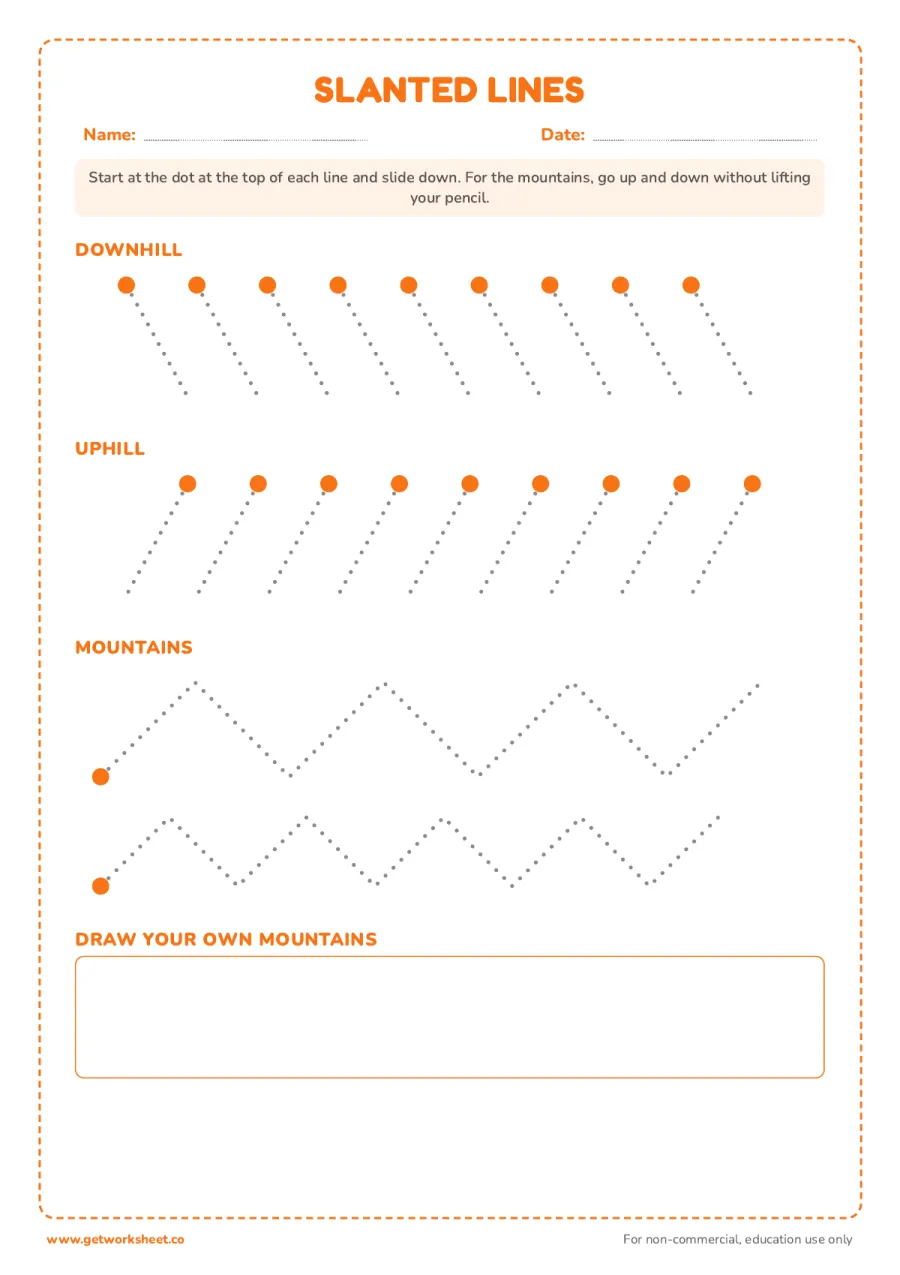
Slanted lines: downhill, uphill and mountains
Two blocks of slanted lines (down to the right, then down to the left) and two wide zigzag mountain ranges. Slants are the strokes in A, K, M, N, V, W, X, Y and Z.
Whole set
All 6 sheets in one PDF
Instant and ad-free. No account needed.
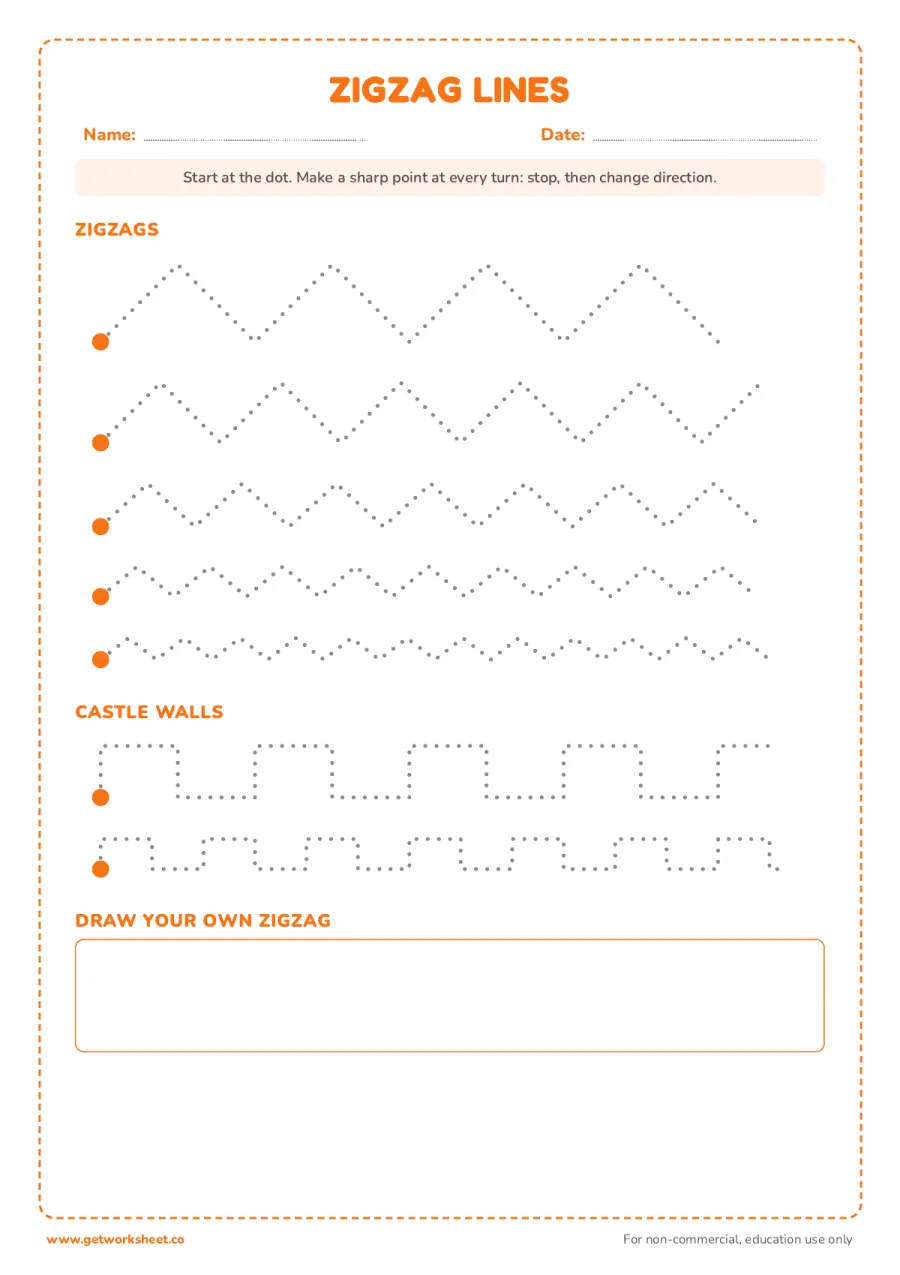
Zigzag lines: big to small, plus castle walls
Five zigzag lines that get smaller and tighter down the page, then two castle-wall lines (up, across, down, across). Builds the sharp changes of direction needed for W, M and Z.
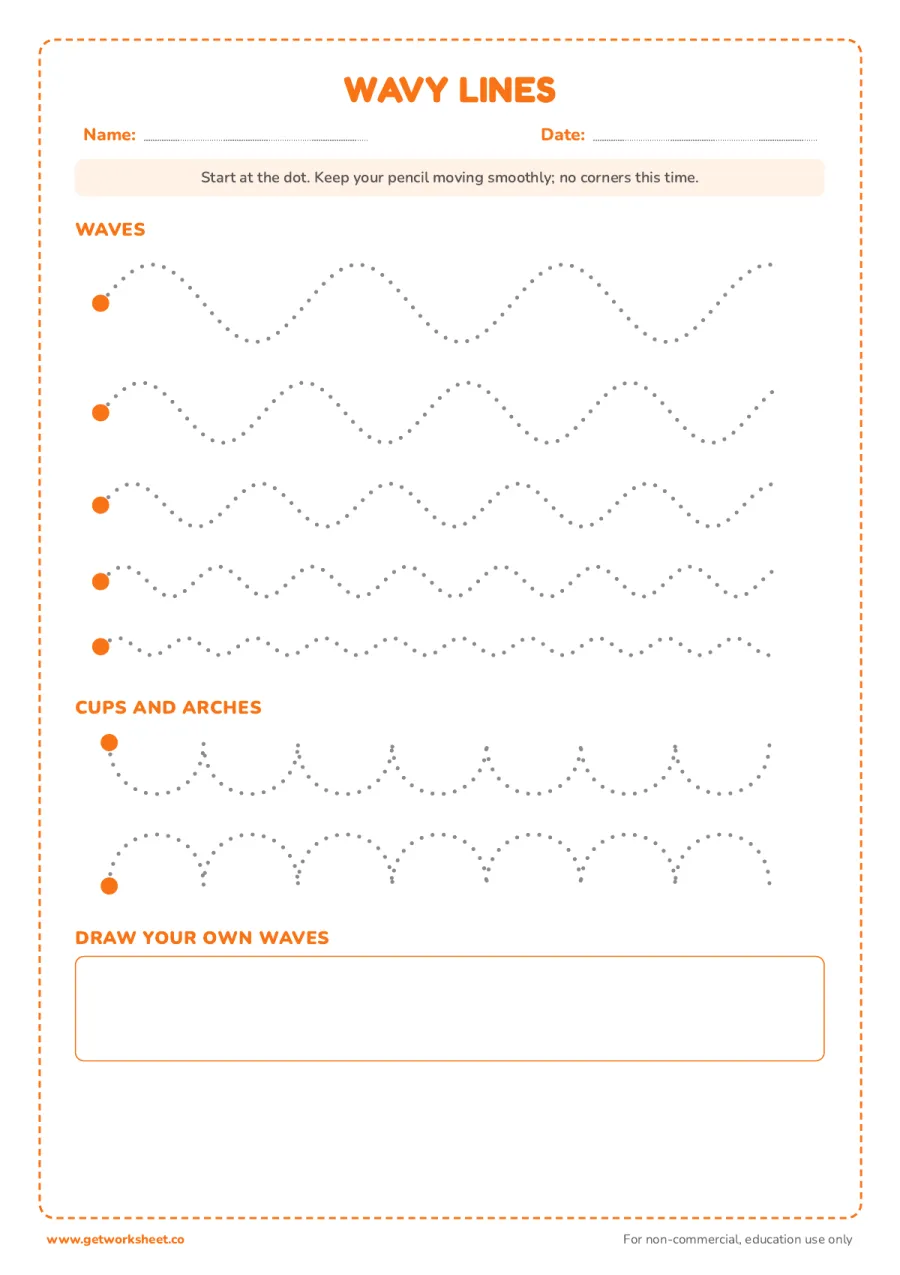
Wavy lines: big waves to little ripples
Five wavy lines from big rolling waves to little ripples, then a row of cups and a row of arches. Smooth curves are the strokes in c, o, s, u and n.
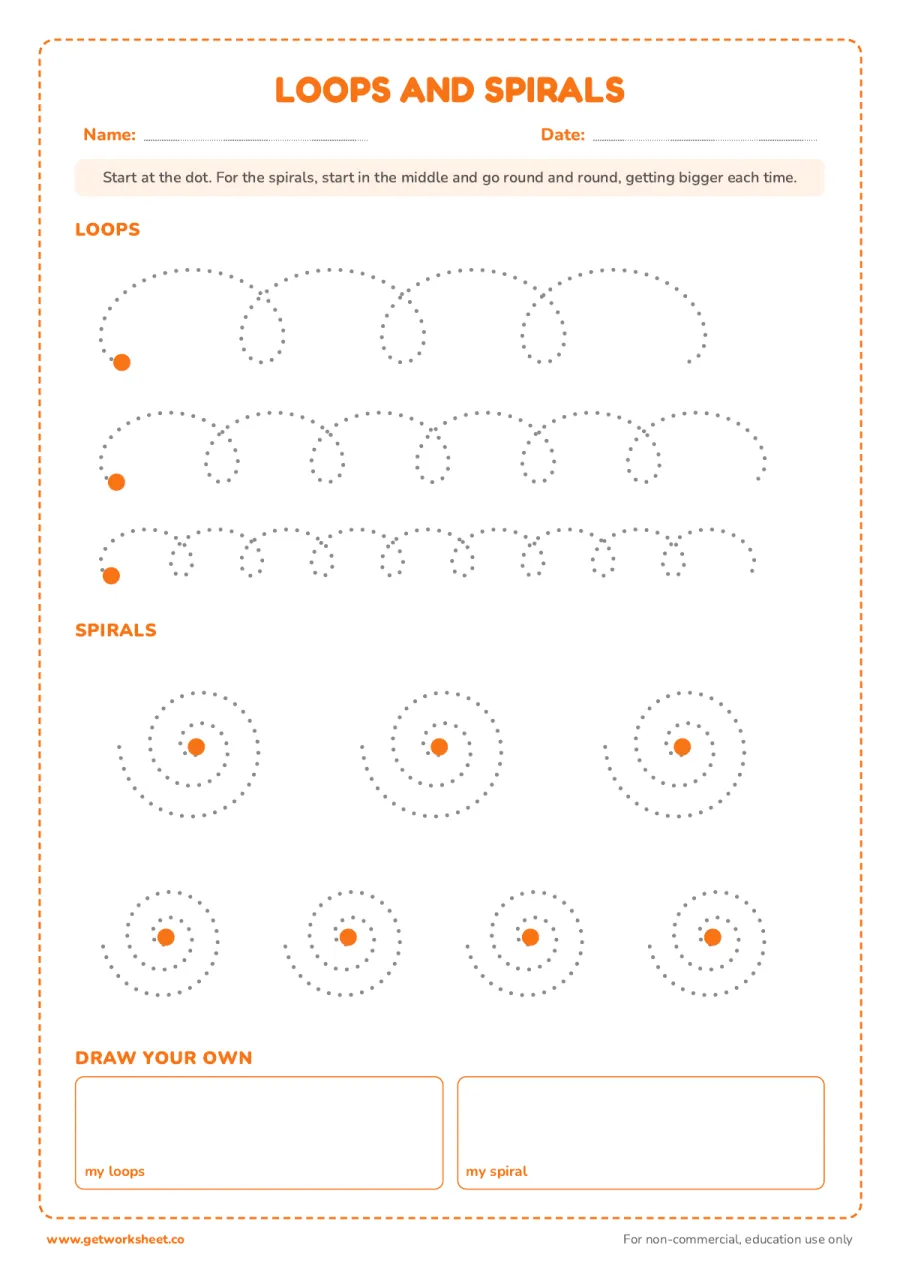
Loops and spirals (curves that cross)
Three rows of cursive-style loops, then six spirals that start in the middle and wind outwards. The hardest sheet in the set: curves that cross themselves.
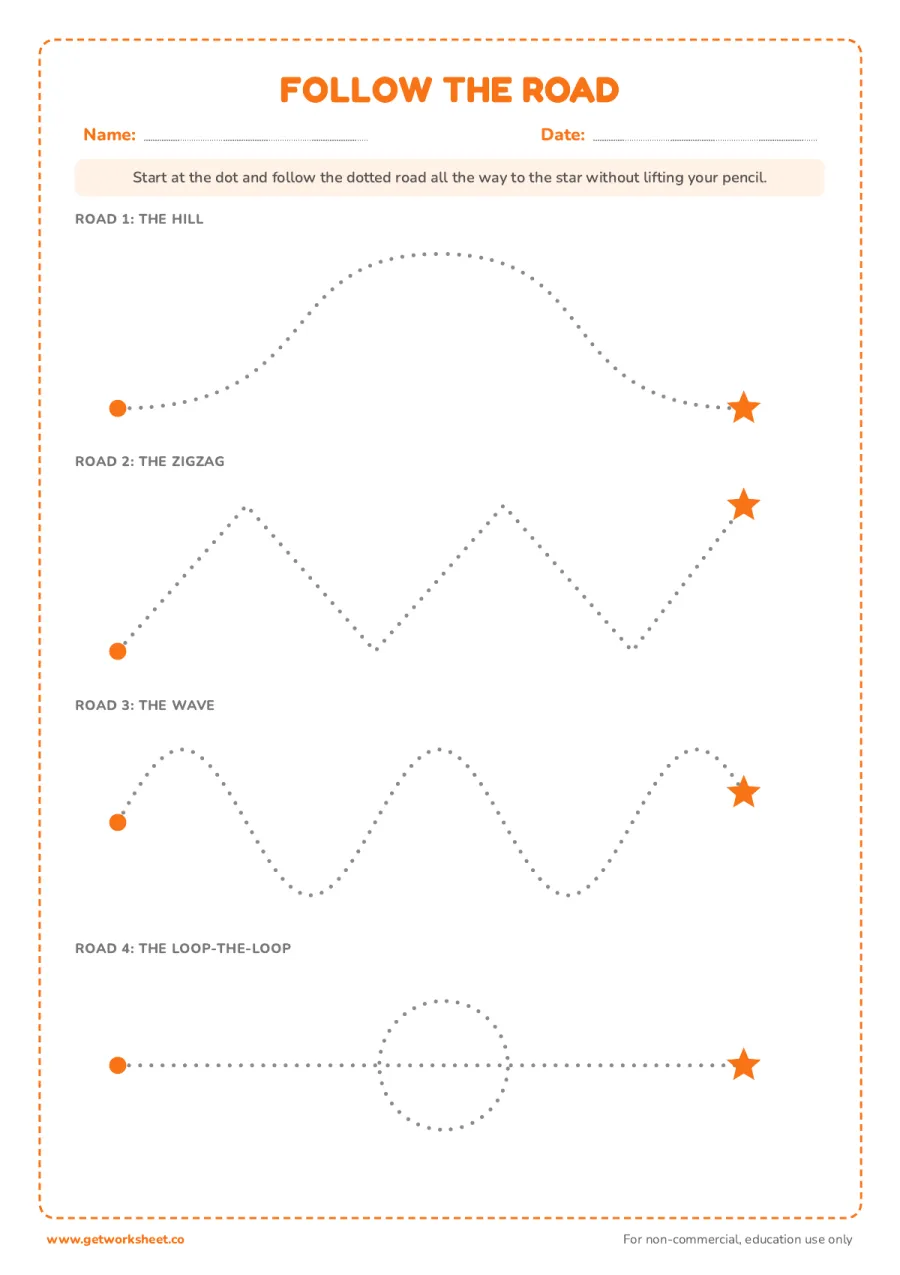
Follow the road: four dotted paths from dot to star
Four dotted roads (a hill, a zigzag, a wave and a loop-the-loop), each from a start dot to a star. Puts every stroke from the set together in one longer path.
AI worksheet generator
Make a worksheet like this for your class
The 6 sheets above are fixed. The generator writes a new line tracing worksheet for your grade, with the question types and count you choose, in about 20 seconds. Pick a grade to start:
What you get
- A fresh set of questions on line tracing, not a copy of the sheets above
- Multiple choice, fill in the blanks, true or false, open ended
- Answer key and print-ready PDF with Pro
Free account, 1 worksheets a week. No card.
Line tracing is the step before letters. A child who can pull a pencil left to right, drop it top to bottom, change direction at a point and keep a curve smooth already has every stroke in the alphabet. These six worksheets build those strokes in order, from single straight lines to roads that combine them, with a start dot on every line so children learn where a stroke begins.
What's in this set
- Straight lines. Five long left-to-right lines, ten top-to-bottom lines and two rows of short lines, each with a start dot. The easiest sheet in the set.
- Slanted lines. Nine downhill slants, nine uphill slants and two rows of tall mountain zigzags. Slanted strokes prepare for A, K, M, N, V, W, X, Y and Z.
- Zigzag lines. Five zigzags from big and wide to small and tight, then two castle-wall lines that turn corners. Practices stopping and changing direction.
- Wavy lines. Five wavy lines from big waves to small ripples, then a row of cups (u u u) and a row of arches (n n n). Smooth, continuous curves for c, o, s, u and n.
- Loops and spirals. Three rows of loops that get smaller, then six spirals to trace from the center out. Curves that cross over prepare for e, l and cursive joins.
- Follow the road. Four dotted roads, each from a start dot to a star: a hill, a zigzag, a wave and a loop-the-loop. One longer path per road to keep the pencil moving.
What children will practice
- Left-to-right and top-to-bottom movement, the directions used for reading and for almost every letter
- Stopping and changing direction sharply (zigzags, castle walls) versus keeping a curve smooth (waves, cups, arches)
- Crossing a line already drawn (loops and spirals), which children find hardest
- Staying on a path for a long stretch without lifting the pencil, the stamina needed for words and sentences
- A tripod pencil grip and a steady hand; the dotted line gives instant feedback when the pencil wanders
Free printable makers
Make your own line tracing sheets
Type your own words or numbers and print in about 30 seconds. No account, no AI, answer key where it applies.
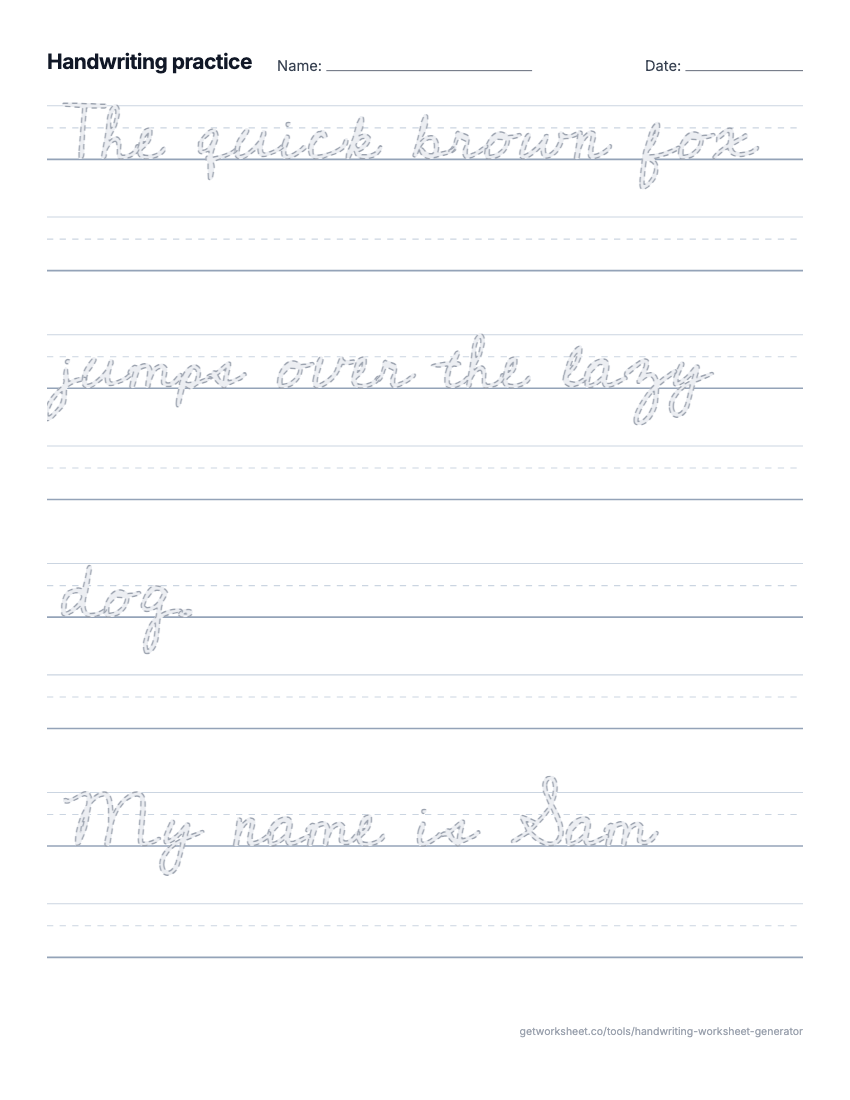 Handwriting worksheet generatorYour sentences as print or cursive tracing rows on guide lines. Free to print.
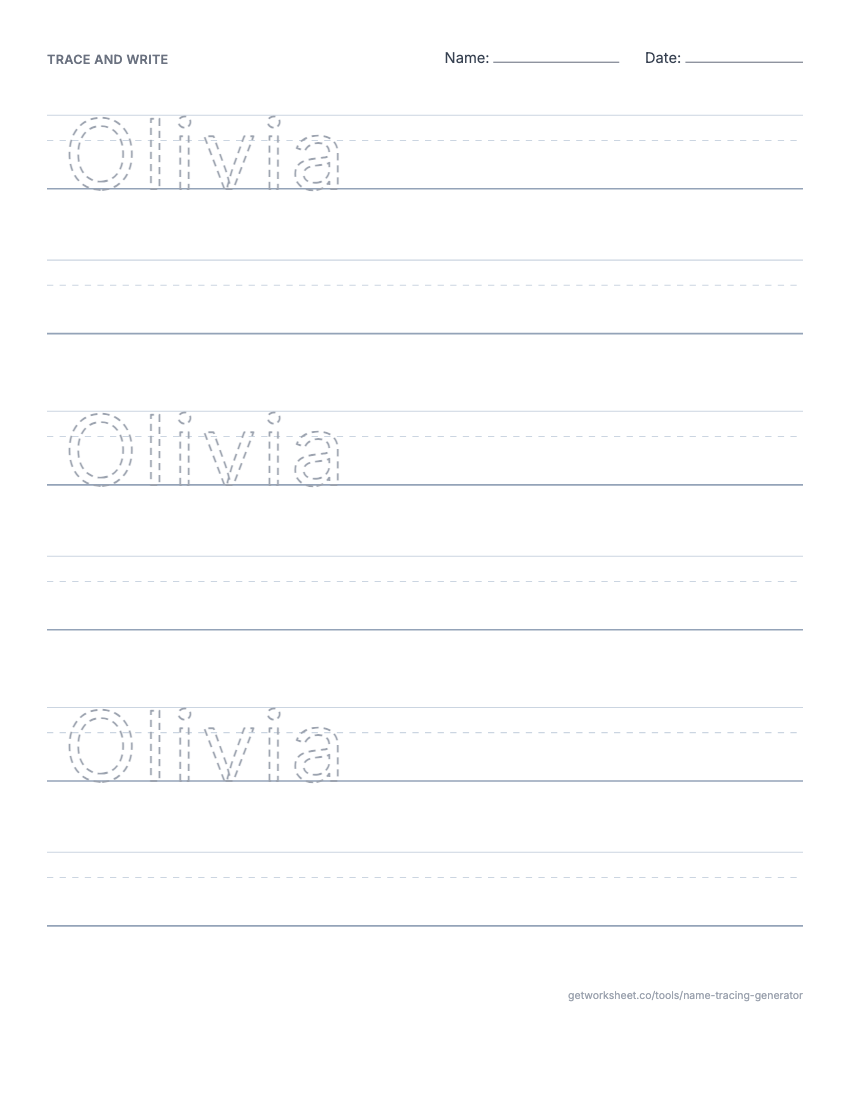 Name tracing generatorDashed, dotted or grey letters on handwriting lines. Free to print.
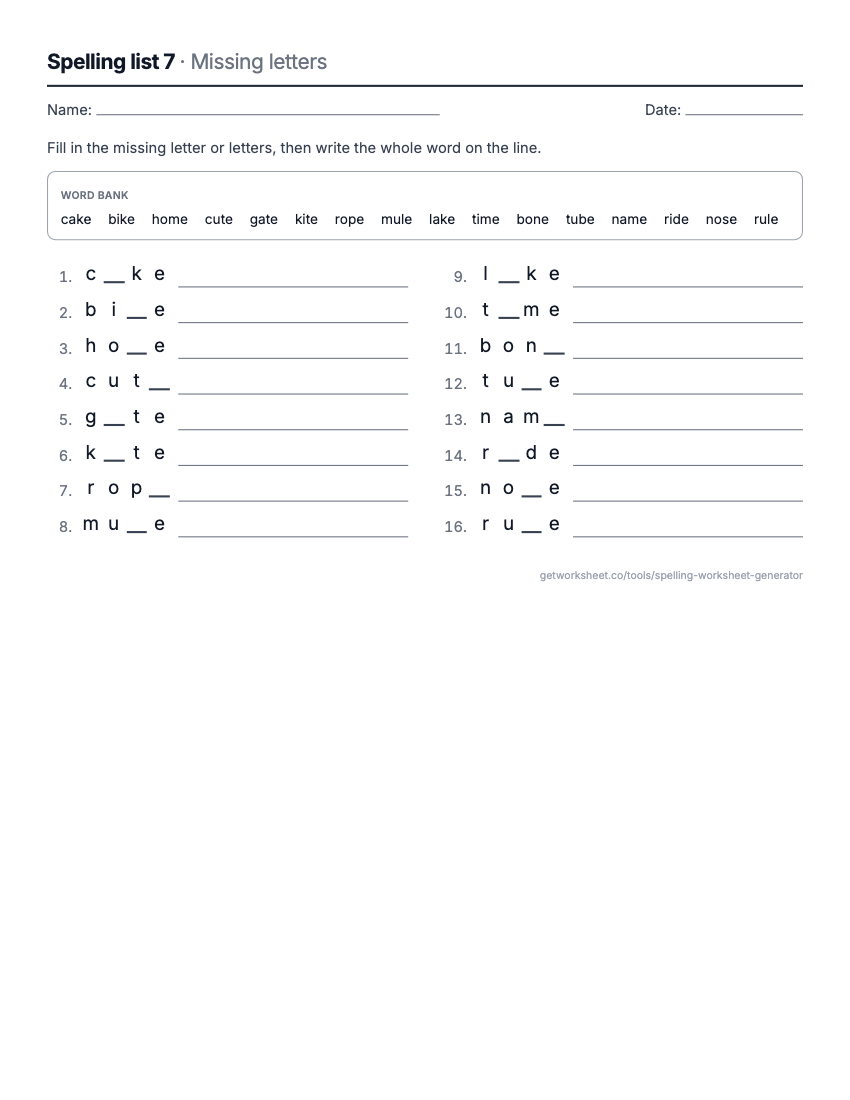 Spelling worksheet generatorTest sheet, scramble, missing letters, ABC order and key from one word list. Free to print.
AI worksheet generator
Need a different line tracing worksheet?
Generate a custom line tracing worksheet: pick the grade, question types and count, and print it in about 20 seconds. Free accounts get 1 generation a week.
How to use these worksheets at home or in class
- Finger first. Have the child trace each line with a finger before picking up a crayon. Big, whole-arm movements come first; the pencil version is the second pass.
- Start at the dot, every time. The orange dot marks where each stroke begins. Children who start letters in the wrong place later are usually children who were never shown a starting point. Say the direction out loud: "across", "down", "up and down", "round and round".
- One sheet a day, in order. Straight lines, then slants, zigzags, waves, loops and finally the roads. Moving on before a sheet is comfortable produces scribbled zigzags and flattened loops. Repeating a sheet is fine; print it again.
- Use a thick crayon or triangular pencil for the first sheets, then a normal pencil for the roads. Slide the sheet into a plastic sleeve and use a dry-wipe marker if you want to reuse it.
- Talk about the letters. "This slant is the start of A." "These cups are the bottom of u." Naming the letter each stroke belongs to makes the link to handwriting explicit; the handwriting worksheets are the natural next set.
Signs a child is ready to move on
- The pencil stays on or very close to the dots for a whole line
- Zigzags have real points, not rounded bumps; waves have no corners
- The child starts at the dot without being reminded
- They can finish a road without lifting the pencil or turning the paper
Frequently asked questions
What age are these line tracing worksheets for?
Ages 3 to 5: pre-K and kindergarten. Straight lines and slants suit most 3-year-olds; loops, spirals and the roads are usually right for 4- and 5-year-olds. Older children who need pencil-control practice can use the whole set too.
Which sheet should we start with?
Straight lines. The set is in order of difficulty: straight, slanted, zigzag, wavy, loops and spirals, then Follow the road, which combines all of them.
Do I need an answer key?
No. Tracing sheets have nothing to mark. Look at whether the pencil stayed on the dots, whether the child started at the dot and whether zigzags have sharp points and waves have none.
Why is there a dot at the start of every line?
Because where a stroke starts matters for handwriting. Letters are formed top to bottom and left to right, and children who learn a starting point on tracing lines carry that habit into letters.
Can I print them more than once?
Yes. The PDFs are free for home and classroom use, and repeating a sheet is exactly how the skill is built. Laminating a sheet or using a plastic sleeve with a dry-wipe marker also works.
Related worksheets
Shape tracing is the next step after lines: circle tracing, square tracing, triangle tracing and oval tracing each use the same dotted-line style. Then move to number tracing 1 to 20, the letter worksheets and the handwriting worksheets.
Free library
Related collections
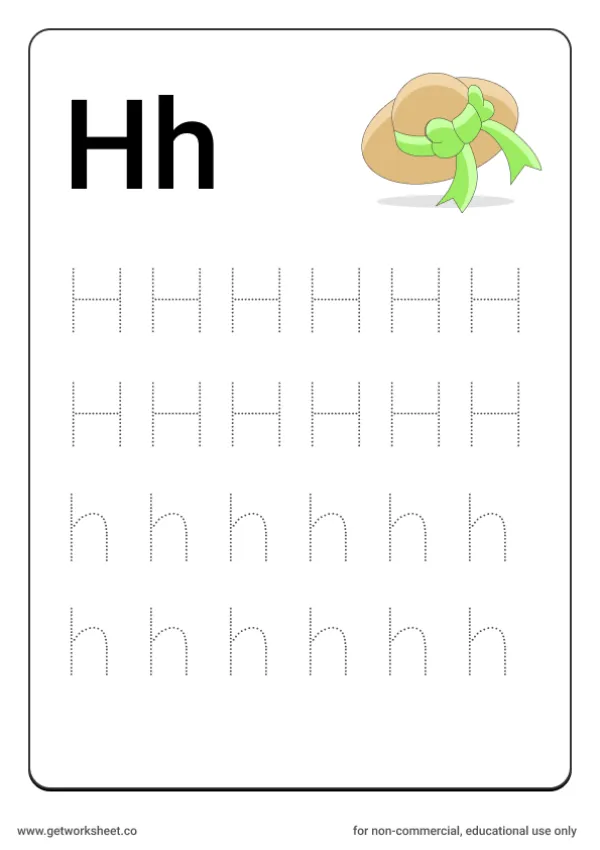
Free letter worksheets
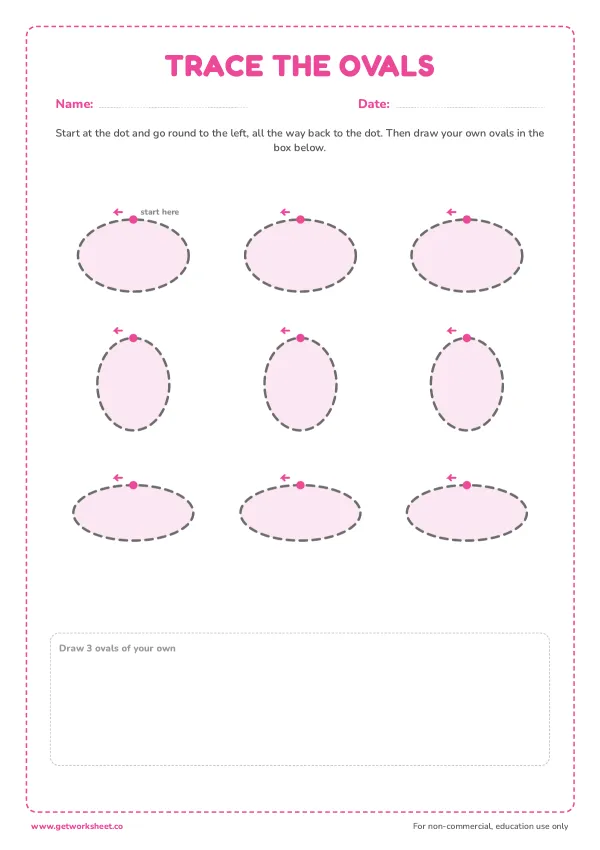
Free oval tracing worksheets
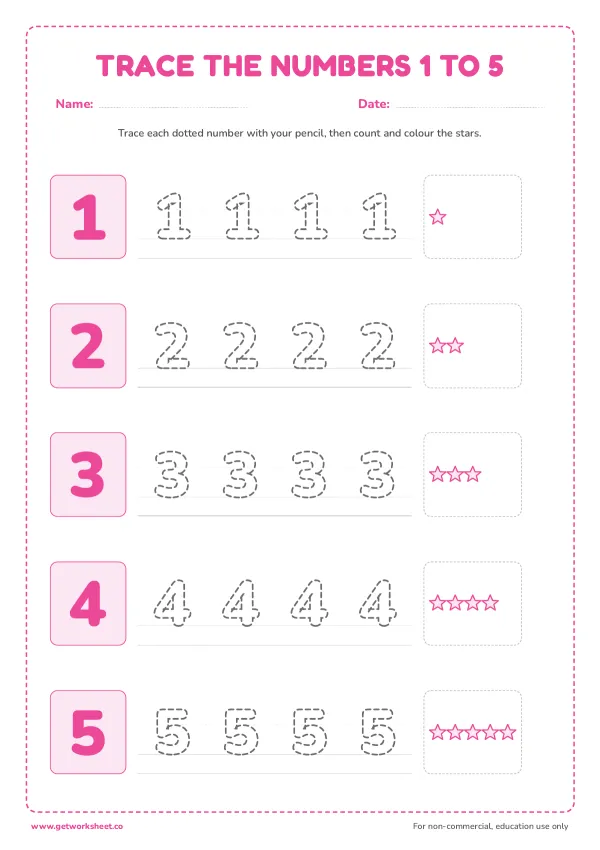
Free number tracing worksheets (1-20)
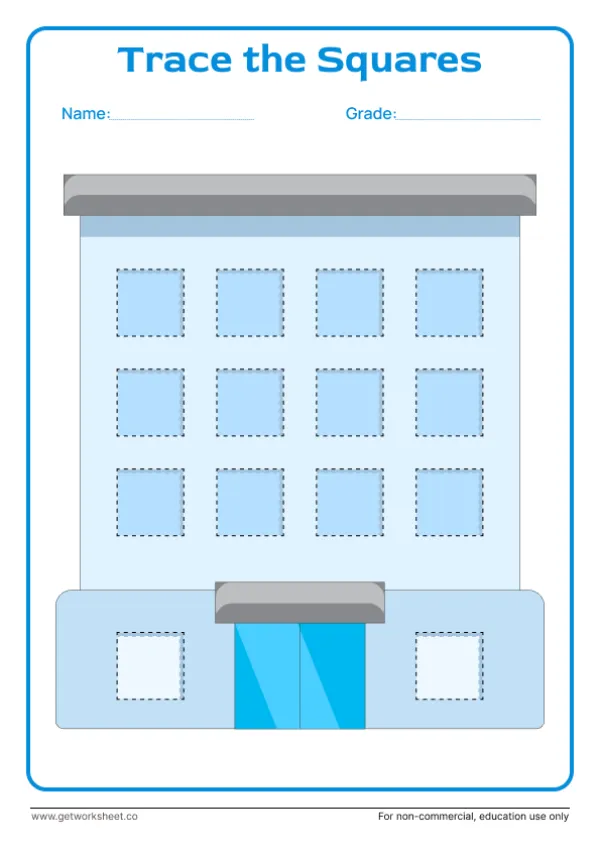
Free square tracing worksheets
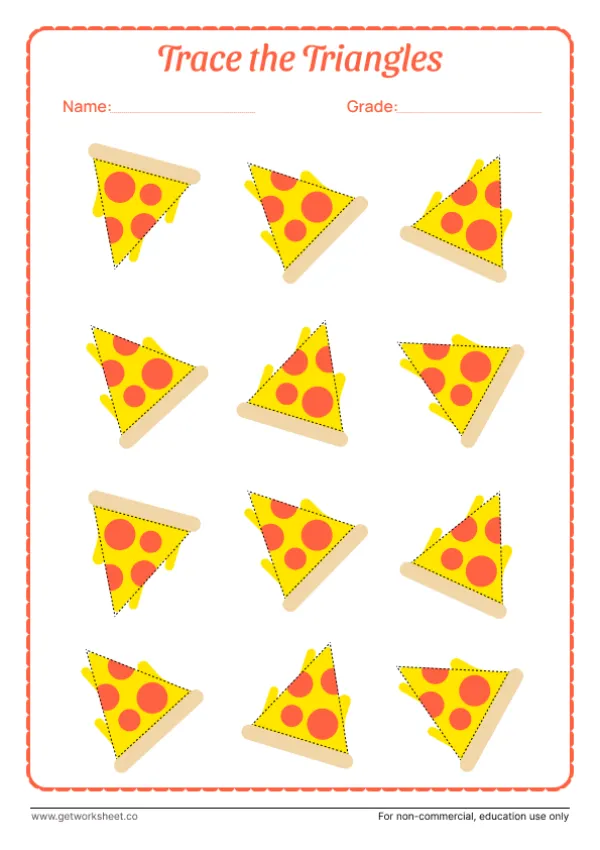
Free triangle tracing worksheets
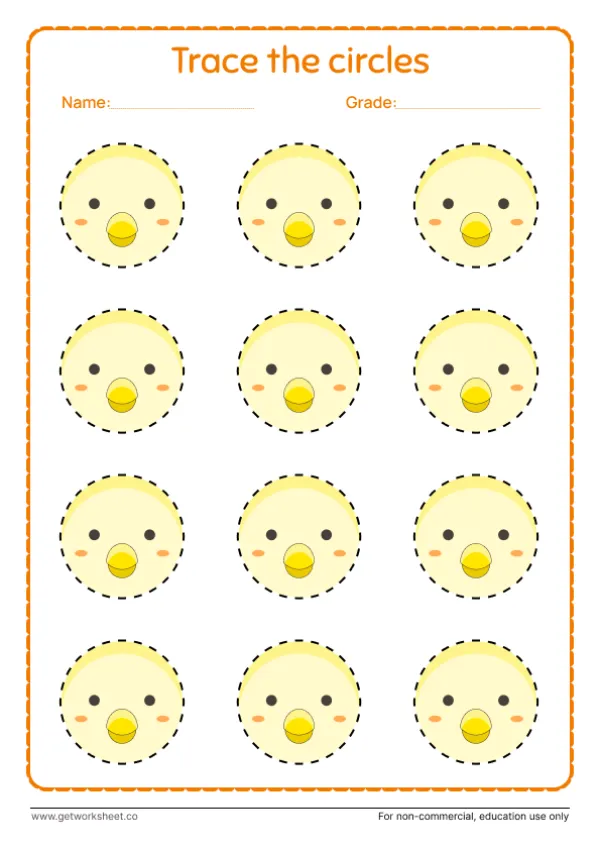
Free circle tracing worksheets
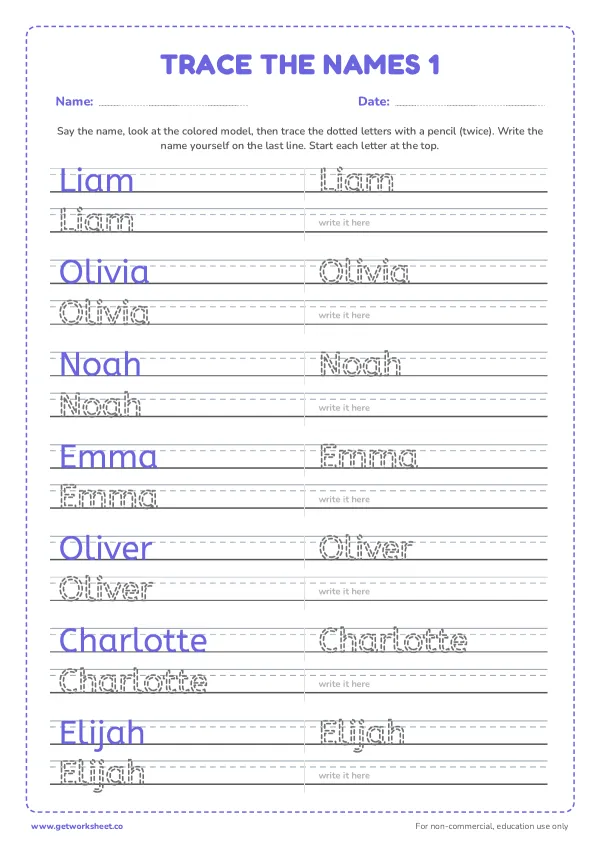
Free name tracing worksheets
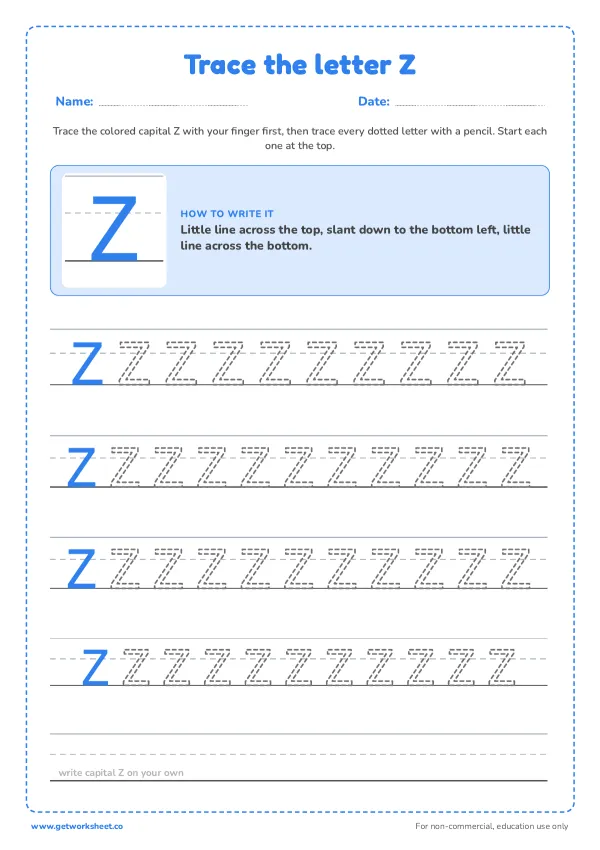
Free letter Z tracing worksheets
More worksheets
- Free letter Y tracing worksheets
- Free letter X tracing worksheets
- Free letter W tracing worksheets
- Free letter V tracing worksheets
- Free letter U tracing worksheets
- Free letter T tracing worksheets
- Free letter S tracing worksheets
- Free letter R tracing worksheets
- Free letter Q tracing worksheets
- Free letter P tracing worksheets
- Free letter O tracing worksheets
- Free letter N tracing worksheets