Life skills · Preschool–Grade 2
Free i spy worksheets
Five I spy count-and-write sheets for preschool to grade 2. Each page is a crowded picture on one theme: summer desserts, fruits, space, pets or vegetables. Count each kind and write the total.
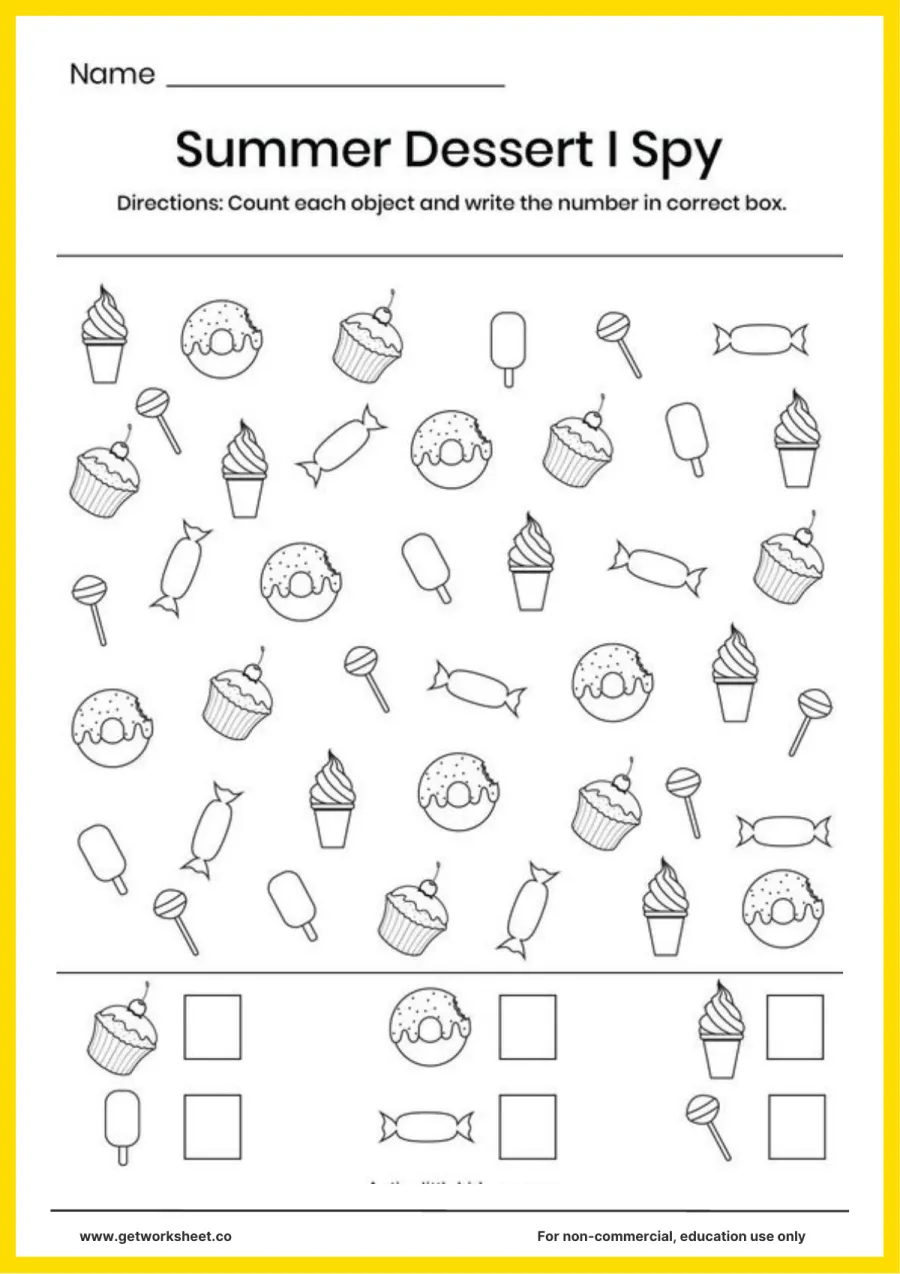
I spy: summer desserts (ice cream, donuts, cupcakes)
Search a page of summer treats, count each kind (cupcakes, donuts, ice cream cones, popsicles, candies, lollipops) and write the totals in the boxes.
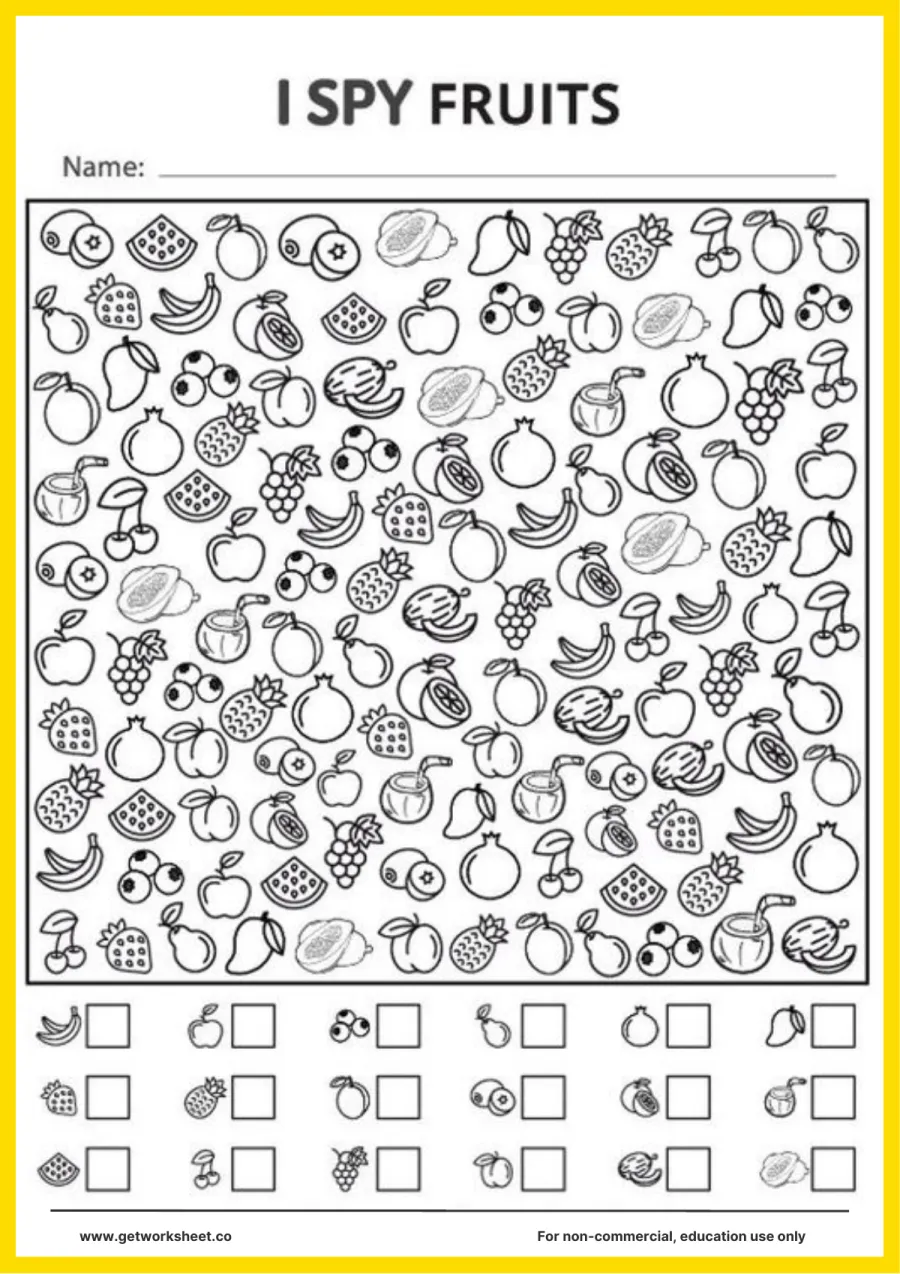
I spy: fruits (apples, bananas, grapes, pears)
Search a dense picture of fruits, count each type such as bananas, apples, grapes, cherries, pears and strawberries, and write the number by each one.
Whole set
All 5 sheets in one PDF
Instant and ad-free. No account needed.
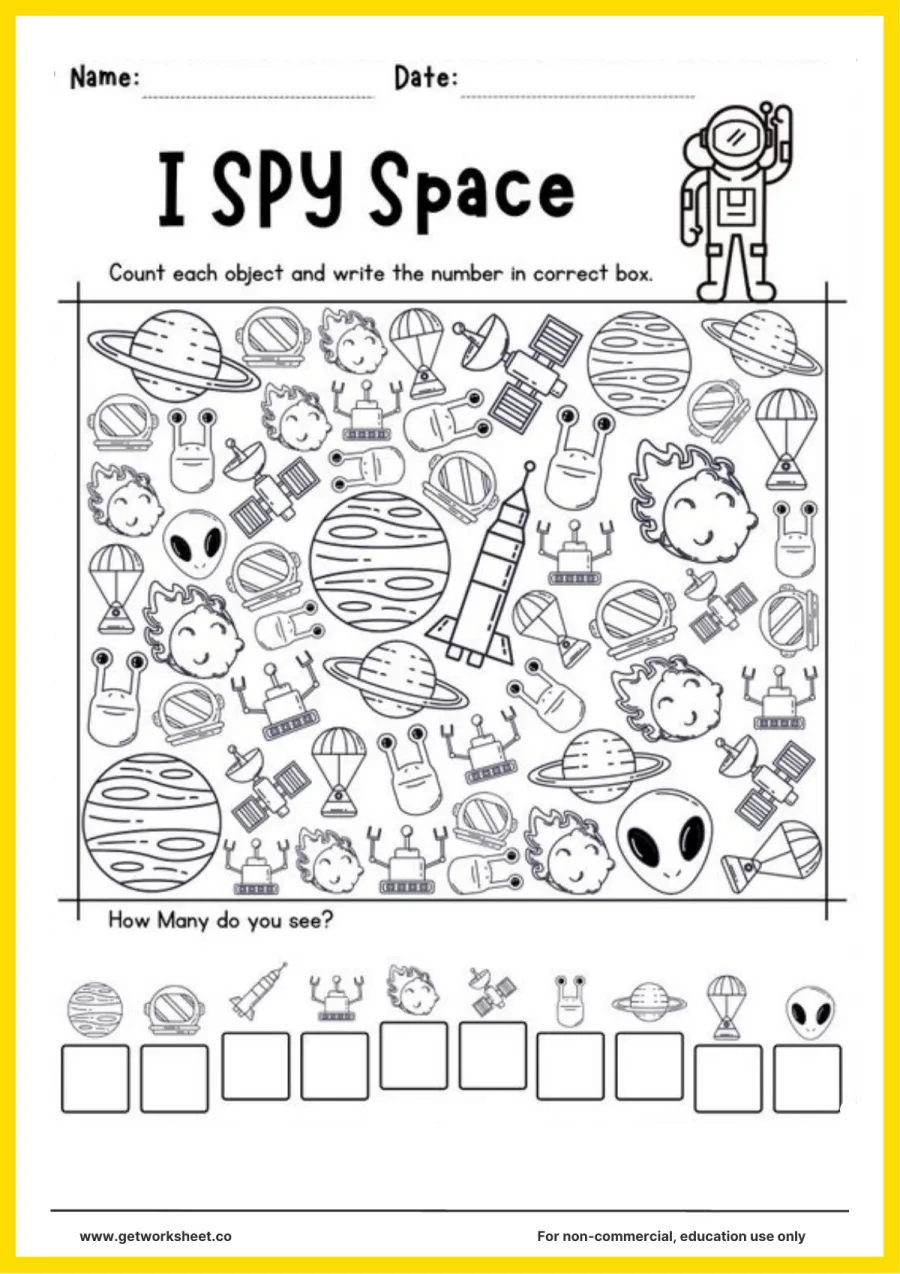
I spy: space (planets, rockets, aliens, astronauts)
Search a space scene for planets, rockets, aliens, astronauts, UFOs and satellites, count each one and write how many you see in the boxes.
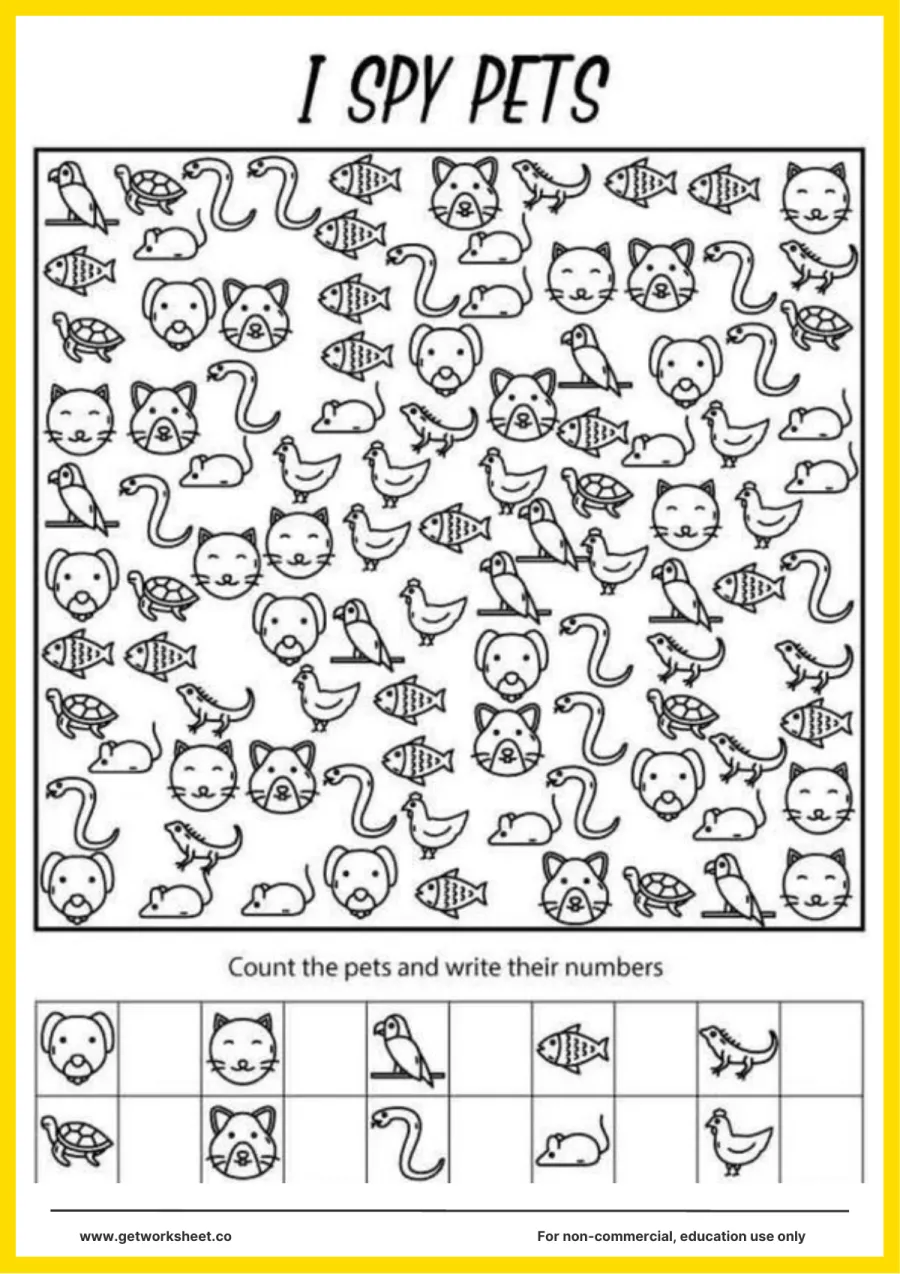
I spy: pets (cats, dogs, fish, birds, snakes)
Search a page full of pets, count the cats, dogs, fish, parrots, mice, snakes, turtles and chickens, and write each number in the table.
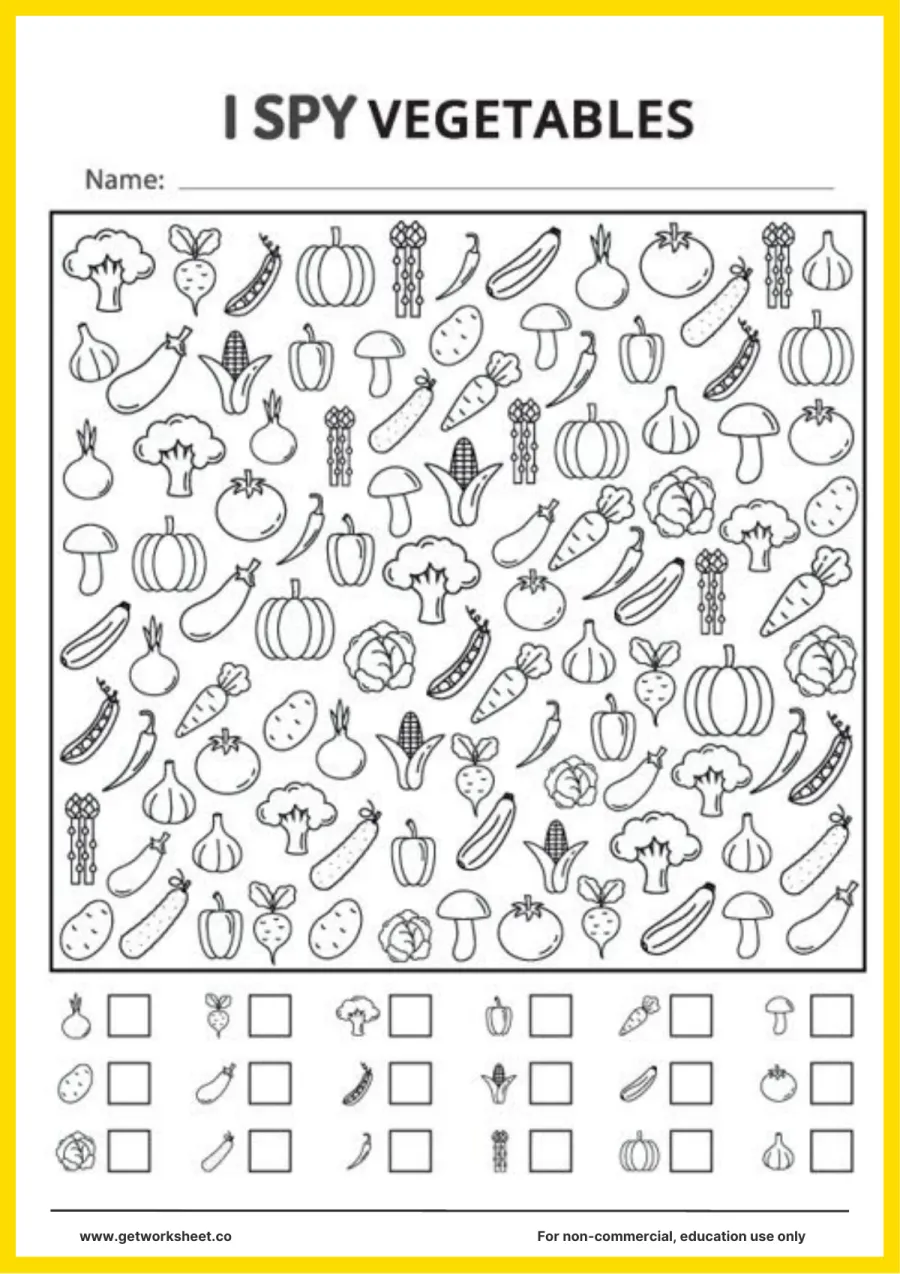
I spy: vegetables (carrots, broccoli, corn, peas)
Search a crowded picture of vegetables, count each kind such as carrots, broccoli, corn, peppers, tomatoes, mushrooms and peas, and write the totals.
AI worksheet generator
Make a worksheet like this for your class
The 5 sheets above are fixed. The generator writes a new i spy worksheet for your grade, with the question types and count you choose, in about 20 seconds. Pick a grade to start:
What you get
- A fresh set of questions on i spy, not a copy of the sheets above
- Multiple choice, fill in the blanks, true or false, open ended
- Answer key and print-ready PDF with Pro
Free account, 1 worksheets a week. No card.
These five I spy worksheets each fill a page with small pictures on one theme, and the child counts how many of each kind there are and writes the total in a box. The first is summer desserts: cupcakes, donuts, ice cream cones, popsicles, candies and lollipops. The second is fruit: bananas, apples, grapes, cherries, pears and strawberries. The third is a space scene with planets, rockets, aliens, astronauts, UFOs and satellites. The fourth is pets, with cats, dogs, fish, parrots, mice, snakes, turtles and chickens to count into a table, and the fifth is vegetables: carrots, broccoli, corn, peppers, tomatoes, mushrooms and peas.
Because the objects are scattered and mixed, children cannot glance and guess. They have to scan the whole page, tell a cupcake from a donut or a pear from an apple, keep a tally, and then write a numeral. That is counting, visual discrimination and number writing in one activity.
What Students Will Practice
- Counting six to eight kinds of object in a crowded picture and writing each total as a numeral
- Telling similar items apart, such as ice cream cones and popsicles, or peppers and tomatoes
- Scanning a whole page systematically so nothing is missed or counted twice
- Recording counts in answer boxes, or in a table as on the pets sheet
- Naming and sorting everyday objects by category: desserts, fruits, vegetables, pets and space
Free printable makers
Make your own i spy sheets
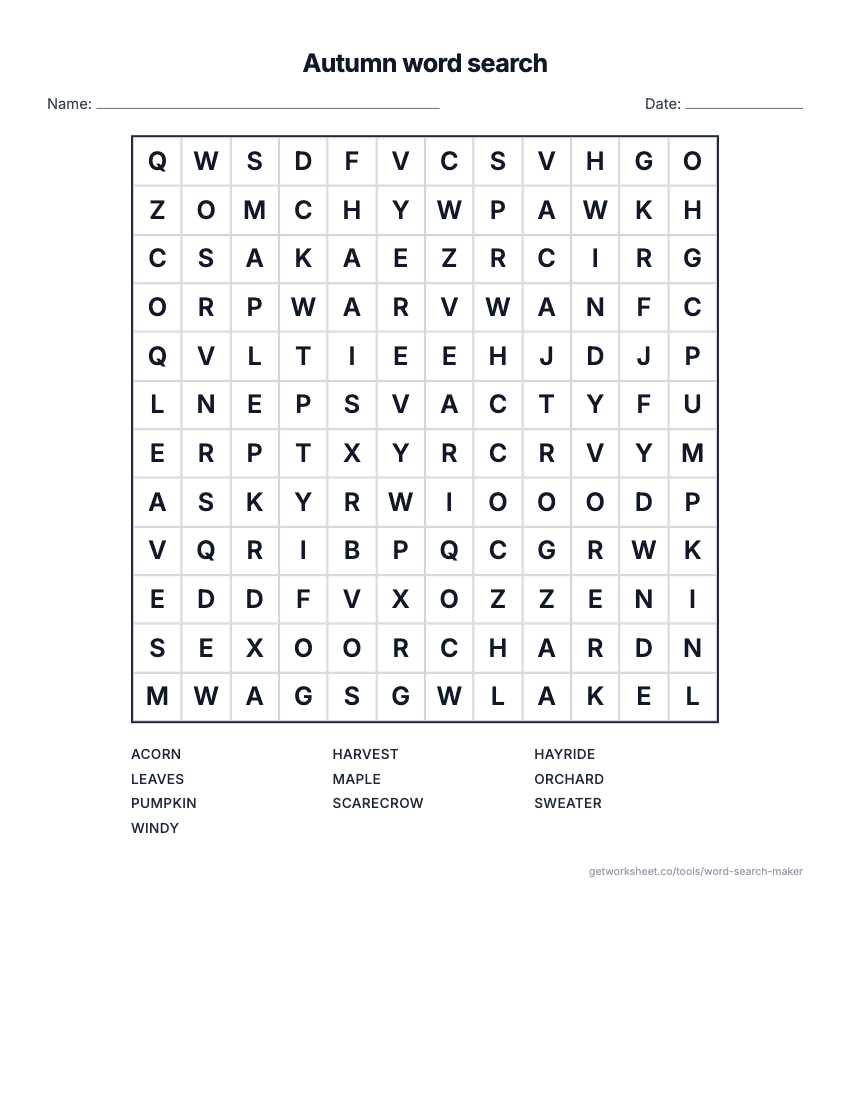
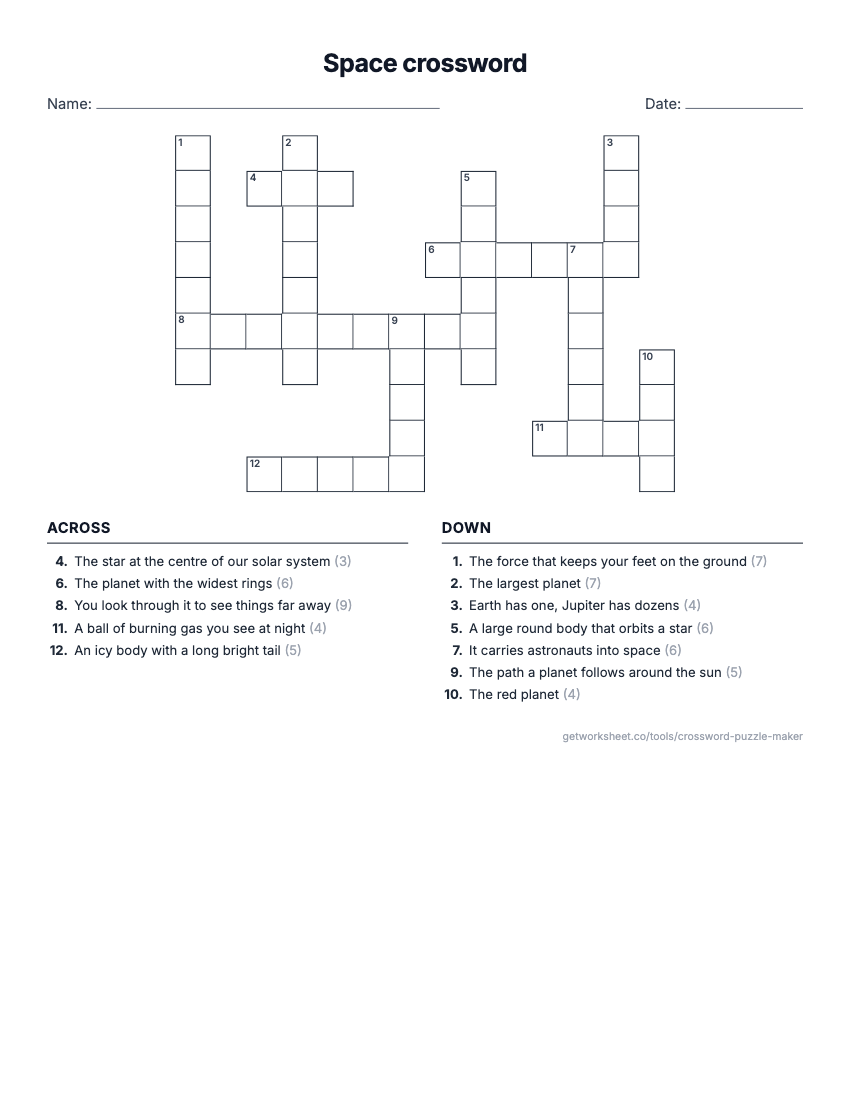
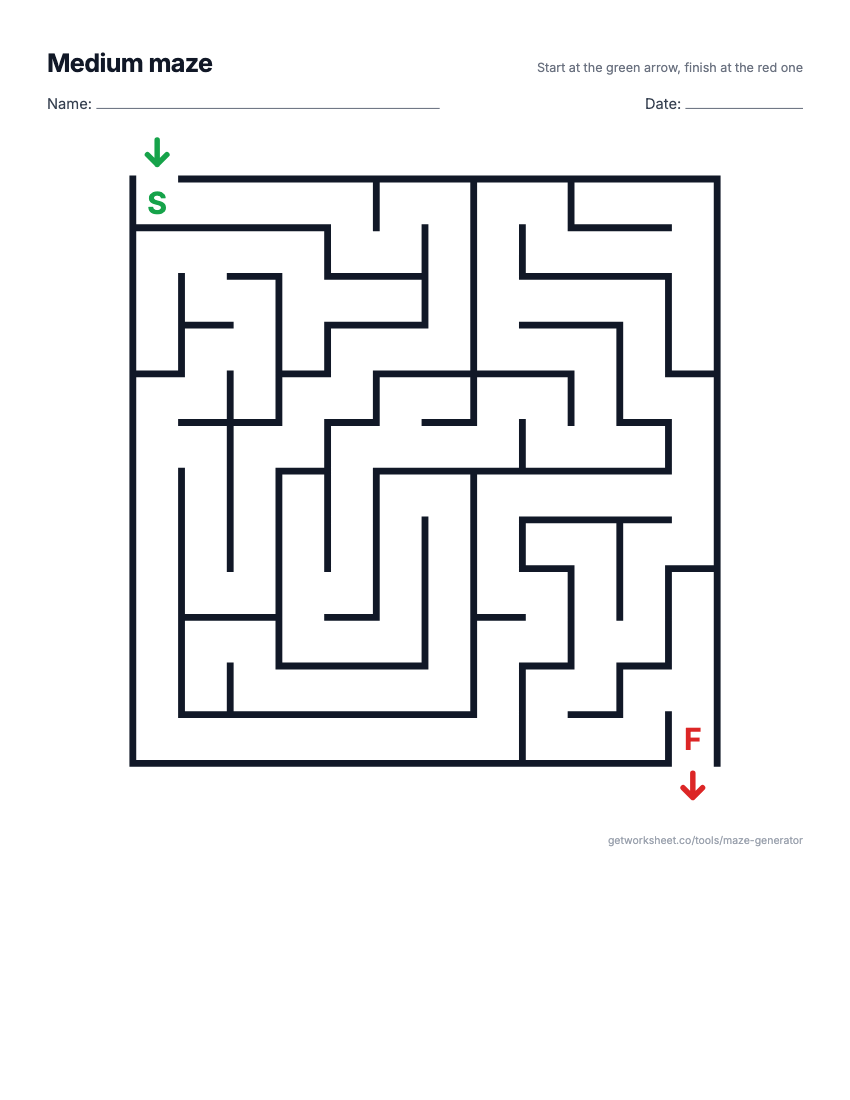
Type your own words or numbers and print in about 30 seconds. No account, no AI, answer key where it applies.
AI worksheet generator
Need a different i spy worksheet?
Generate a custom i spy worksheet: pick the grade, question types and count, and print it in about 20 seconds. Free accounts get 1 generation a week.
How to use these worksheets
Print at 100% on A4 or US Letter so the small pictures stay separate and countable. There is no answer key on page 2, so count the page yourself before you hand it over, or count along the first time. Give your child a crayon to cross off each item as it is counted.
- Summer desserts. A good first page, because the six kinds look clearly different. Before counting starts, have your child point to one cupcake, one donut and one popsicle so the categories are settled.
- Fruits. Pears and apples are the tricky pair. Compare the two shapes out loud first, then let them count. This is the sheet for a child who scans fast and guesses.
- Space. Use this one for vocabulary. Planet, rocket, astronaut, satellite and UFO are things many children know by picture but not by name, so say each word before the counting begins.
- Pets. Eight kinds and a table to fill in make this the hardest page. The table is the point: show your child how to work down it row by row instead of hunting around the picture at random.
- Vegetables. Peppers and tomatoes both read as round and red in a hurry. Ask your child to name each one out loud as they cross it off, which slows the scan to a useful speed.
Common mistakes to watch for
- Counting the same item twice. A crowded page invites it. Teach one system and reuse it on every sheet: cross each item off as it is counted, or sweep left to right, top to bottom.
- Guessing at similar shapes. Cherries counted as grapes, or corn counted as carrots, sink the total. When one number is wrong, recount that kind only rather than starting the whole page again.
- Reversed numerals in the boxes. A backwards 3 or 5 is normal at this age and is a writing problem, not a counting one. Fix the numeral, and point to a well-formed one on the page to copy.
- Losing the total on the way to the box. Young children count correctly, then forget. Have them say the number out loud and write it straight away before moving to the next kind.
Frequently asked questions
What grades are these for?
Preschool through second grade. A preschooler can do the desserts and fruits pages with help, while the pets page with its eight categories and a table suits first and second grade.
Is there an answer key?
No. Each sheet is the picture and the answer boxes only, so count the page once yourself if you want to check quickly, or recount together with your child.
Do they print in black and white?
Yes. The pictures are line drawings, so a mono printer is fine. Color printing helps a little on the vegetables and fruits pages, where color is one more clue for telling items apart.
What should we do before and after?
Before: name every kind of object on the page together. After: ask which kind there was most of and which least, which turns the finished boxes into a first comparison of numbers.
Can I use these in class?
Yes, they are free to print for your class or home. They work well as a morning warm up, a center activity or something to hand an early finisher.
More practice
For more counting with pictures, try count and color worksheets. Once your child can count reliably, missing number worksheets and number tracing worksheets for 1 to 20 work on writing the numerals in order. For the same careful looking without counting, use copy the picture worksheets.
Free library
Related collections
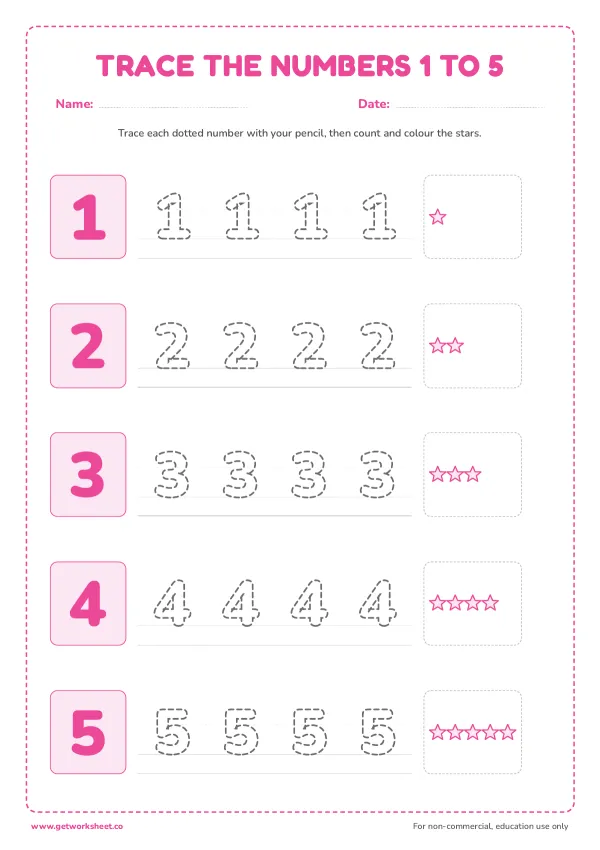
Free number tracing worksheets (1-20)
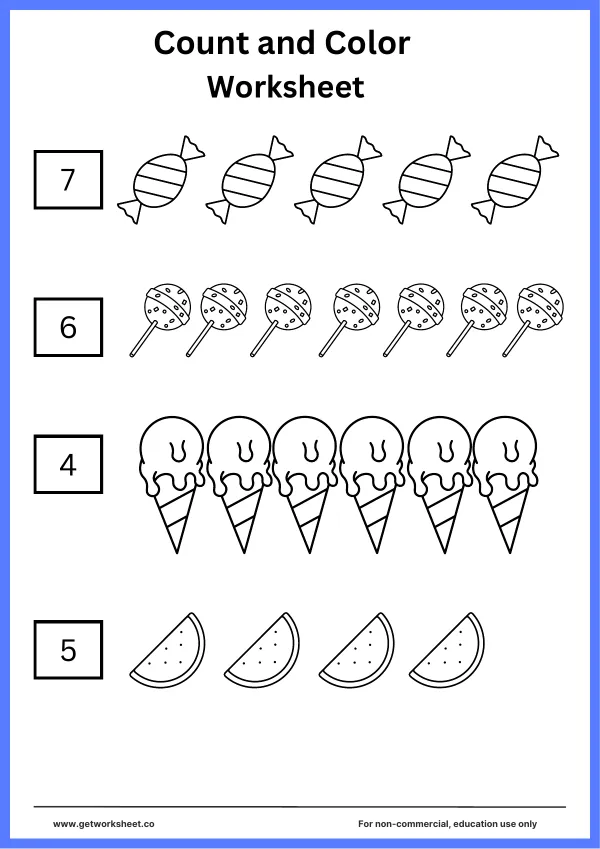
Free count and color worksheets
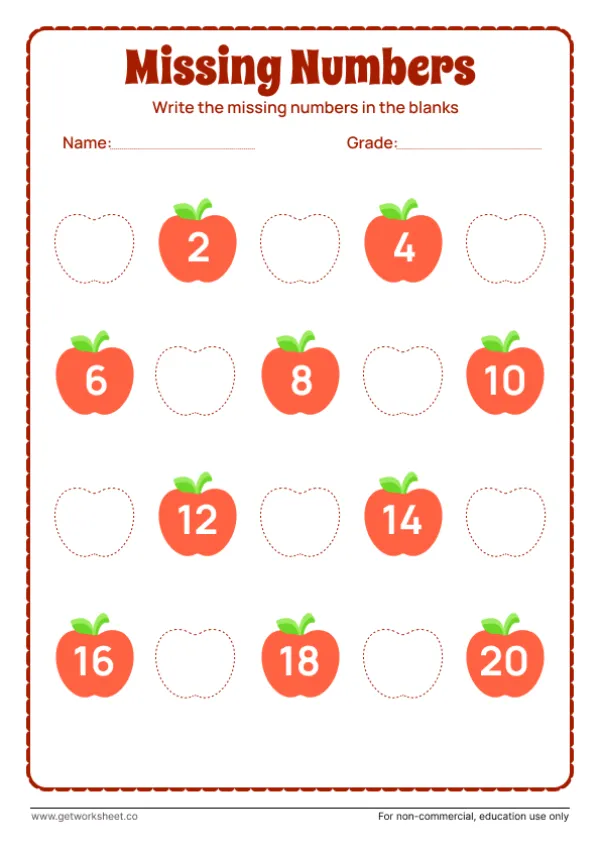
Free missing number worksheets
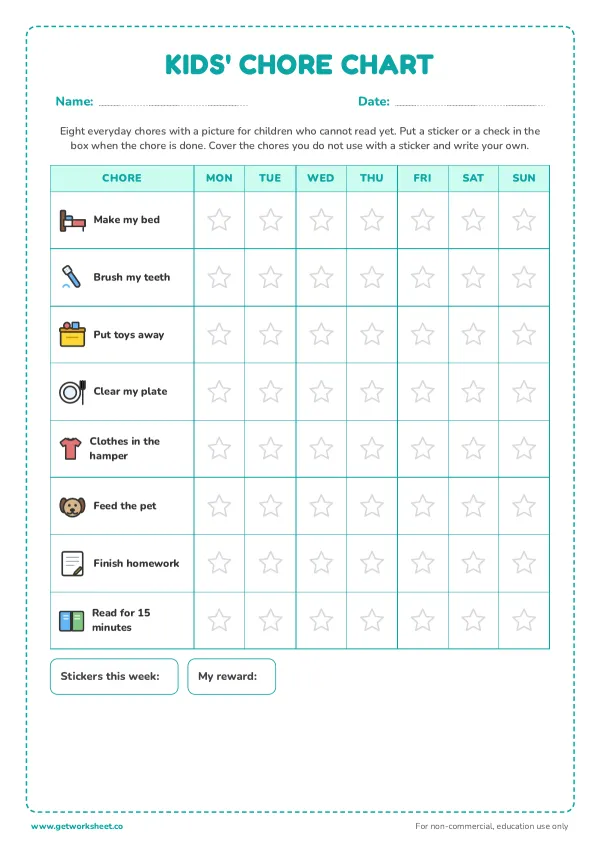
Free chore chart printables
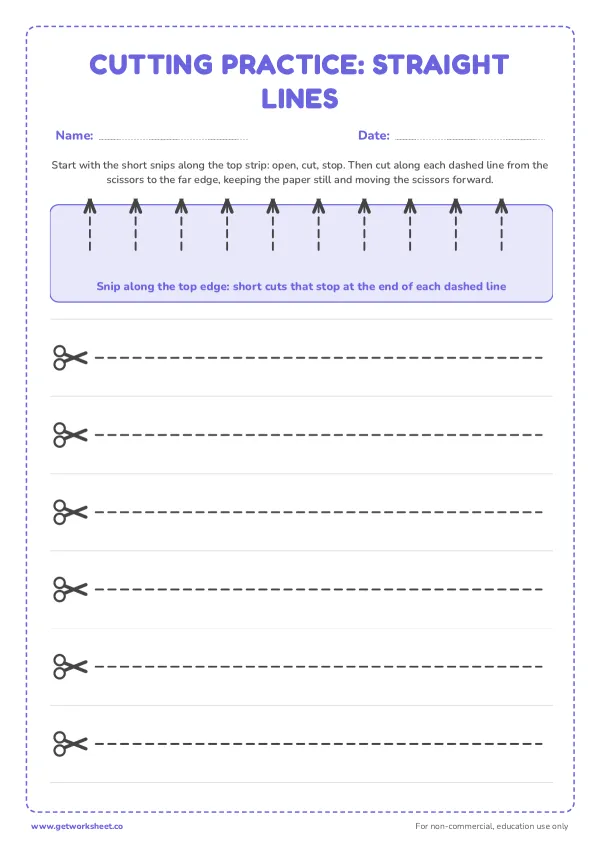
Free cutting practice worksheets
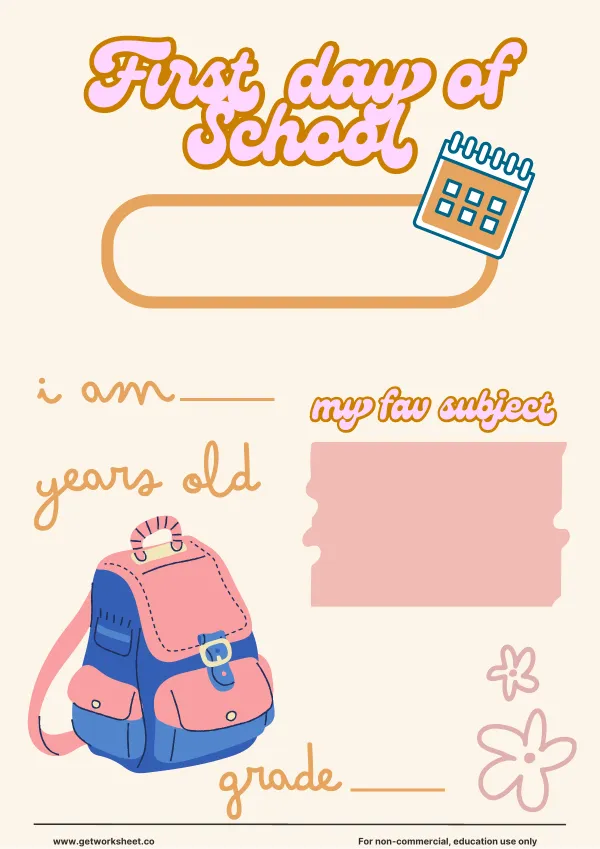
Free first day of school sign printables
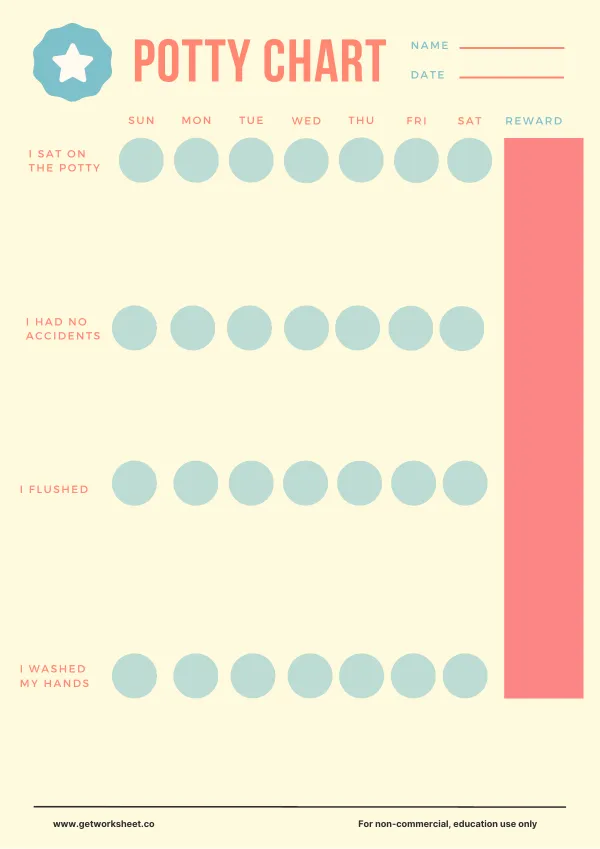
Free potty training chart printables
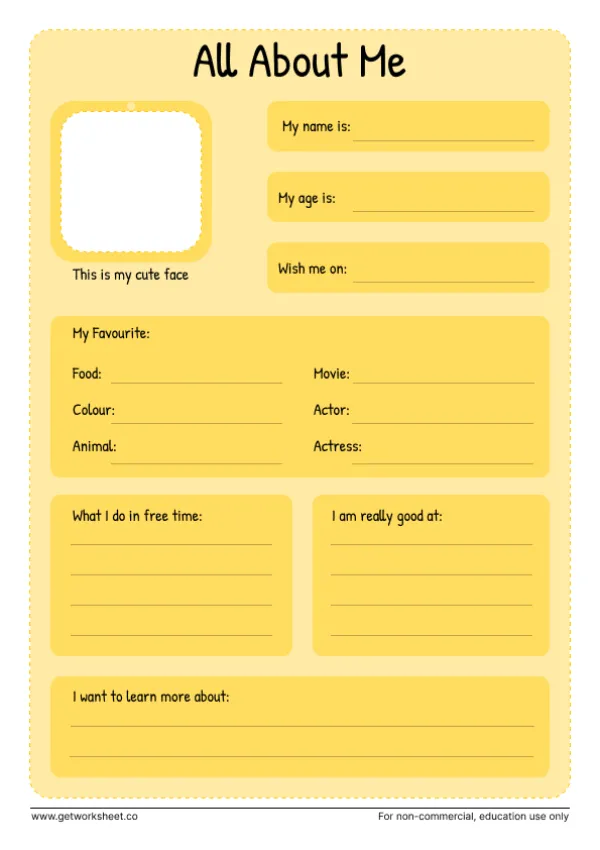
Free all about me worksheets
More worksheets
- Free copy the picture worksheets
- Free heart tracing worksheets
- Free Montessori language worksheets
- Free pre-writing worksheets
- Free Montessori math worksheets: one from every material
- Free name tracing worksheets
- Free shape tracing worksheets
- Free letter Z tracing worksheets
- Free letter Y tracing worksheets
- Free letter X tracing worksheets
- Free letter W tracing worksheets
- Free letter V tracing worksheets