Maths · Grades 3–4
Free area and perimeter worksheets
Free printable area and perimeter worksheets for grades 3 and 4: count squares on a grid, find the perimeter and area of labelled rectangles, work out both for the same shape, split compound L-shapes, and solve word problems with sketches. Answer keys included. PDF download.

Count the squares: area of 8 shapes in square units
Four rectangles and four irregular shapes (L, T, plus, stairs, U) on a unit grid; count the squares to find each area. Answer key on page 2.
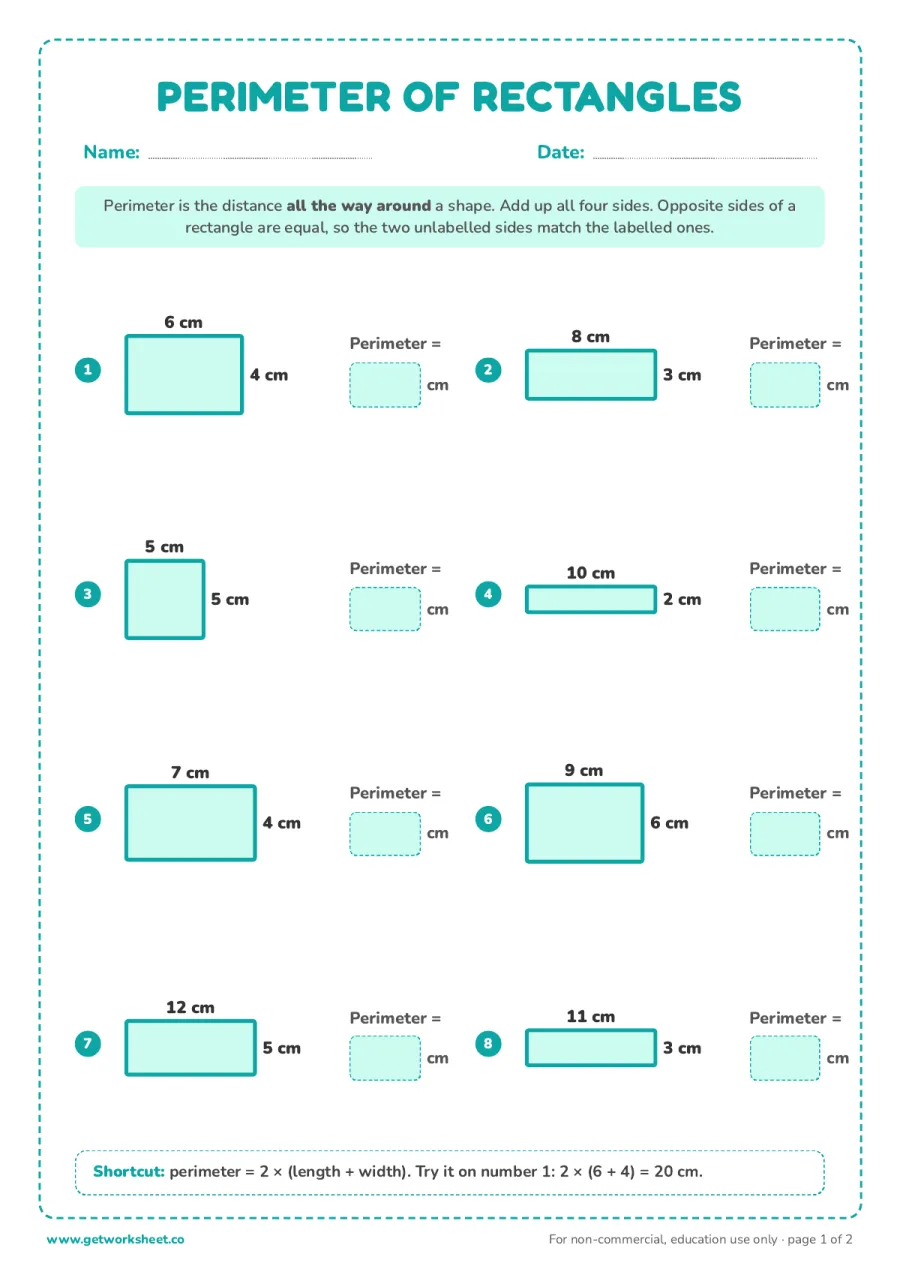
Perimeter of rectangles: 8 labelled rectangles in cm
Eight rectangles with length and width labelled in centimetres; add the sides to find the perimeter, with the 2 × (l + w) shortcut. Answer key on page 2.
Whole set
All 6 in one PDF
- Every sheet on this page, one file
- No ads, no countdowns, print as often as you like
- Instant download, ad-free, no account needed
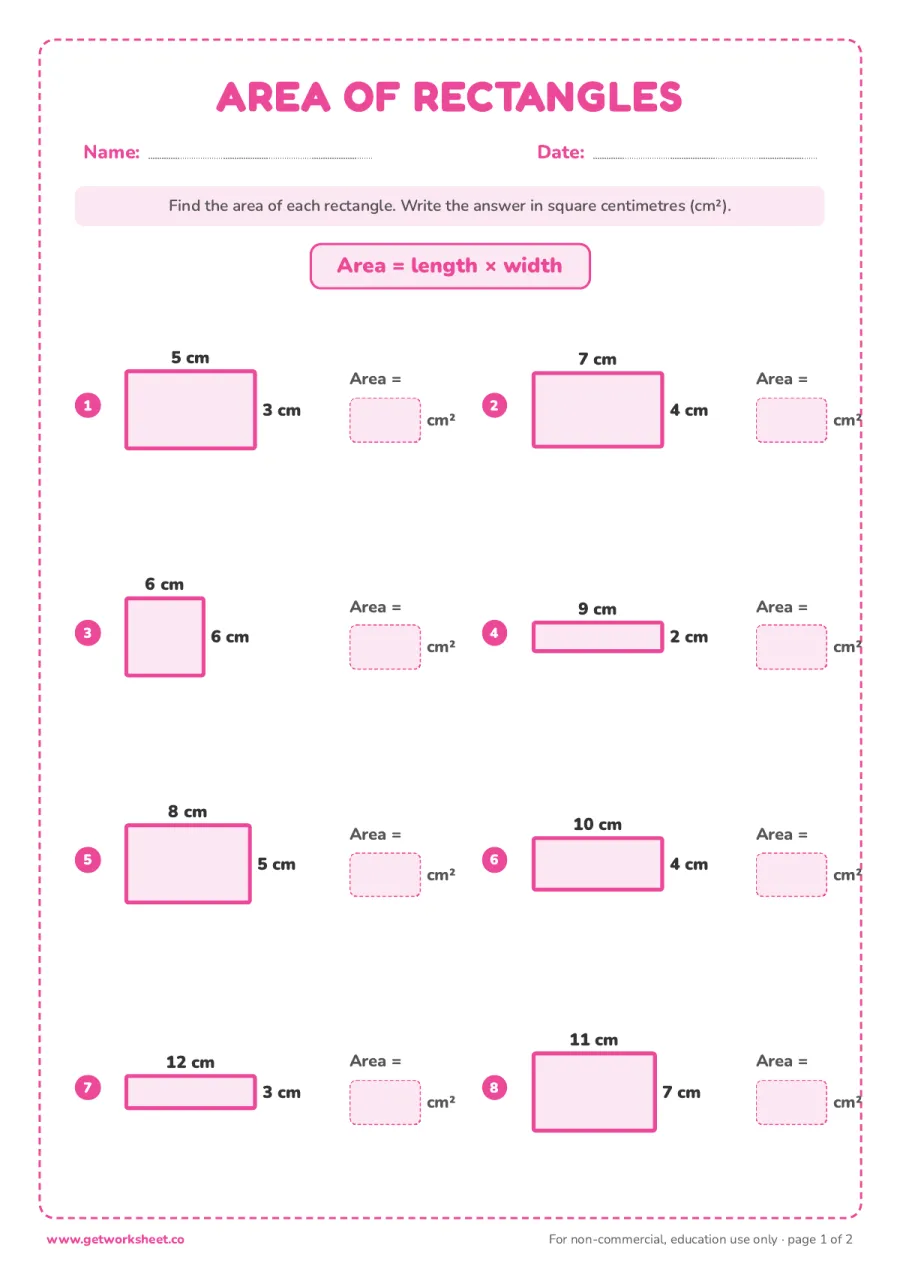
Area of rectangles: 8 problems using length × width
Eight labelled rectangles and a formula box; multiply length by width and answer in cm². Answer key on page 2 shows the multiplication.
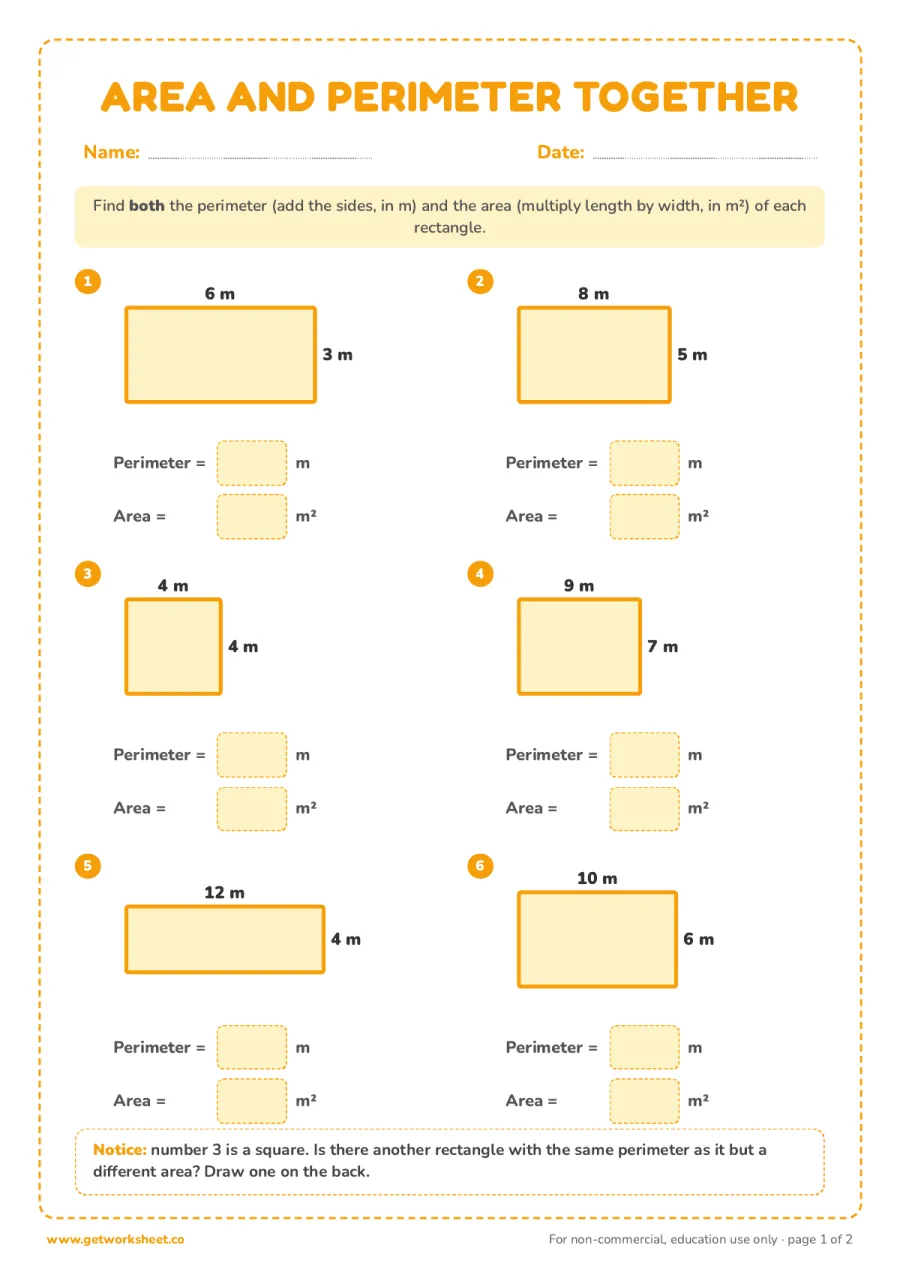
Area and perimeter together: 6 rectangles, both answers
Six rectangles in metres; find both the perimeter and the area of each, with a same-perimeter, different-area challenge. Answer key on page 2.
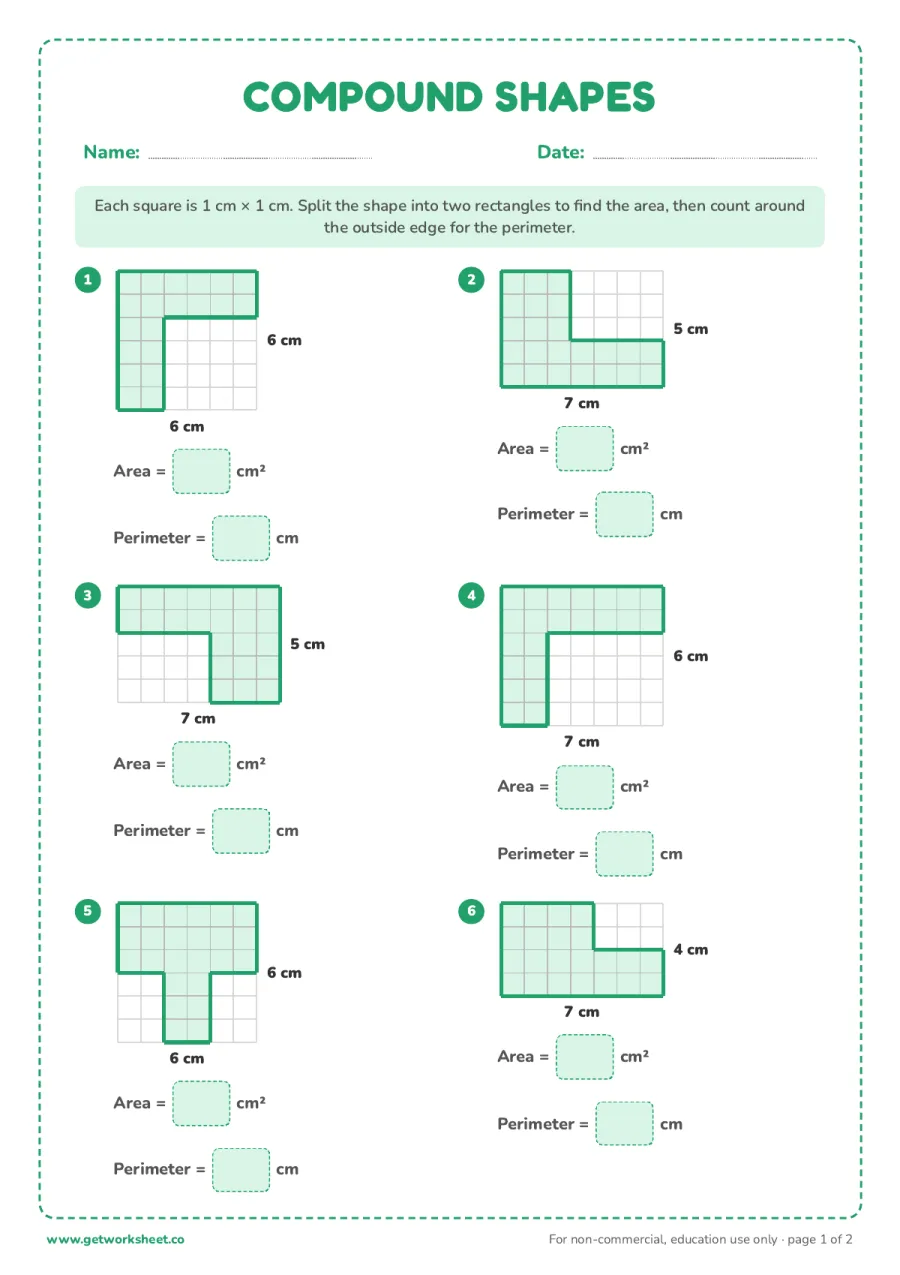
Compound shapes on a grid: area and perimeter of 6 L and T shapes
Six compound shapes on a centimetre grid; split into rectangles for the area and count the outside edges for the perimeter. Answer key on page 2.
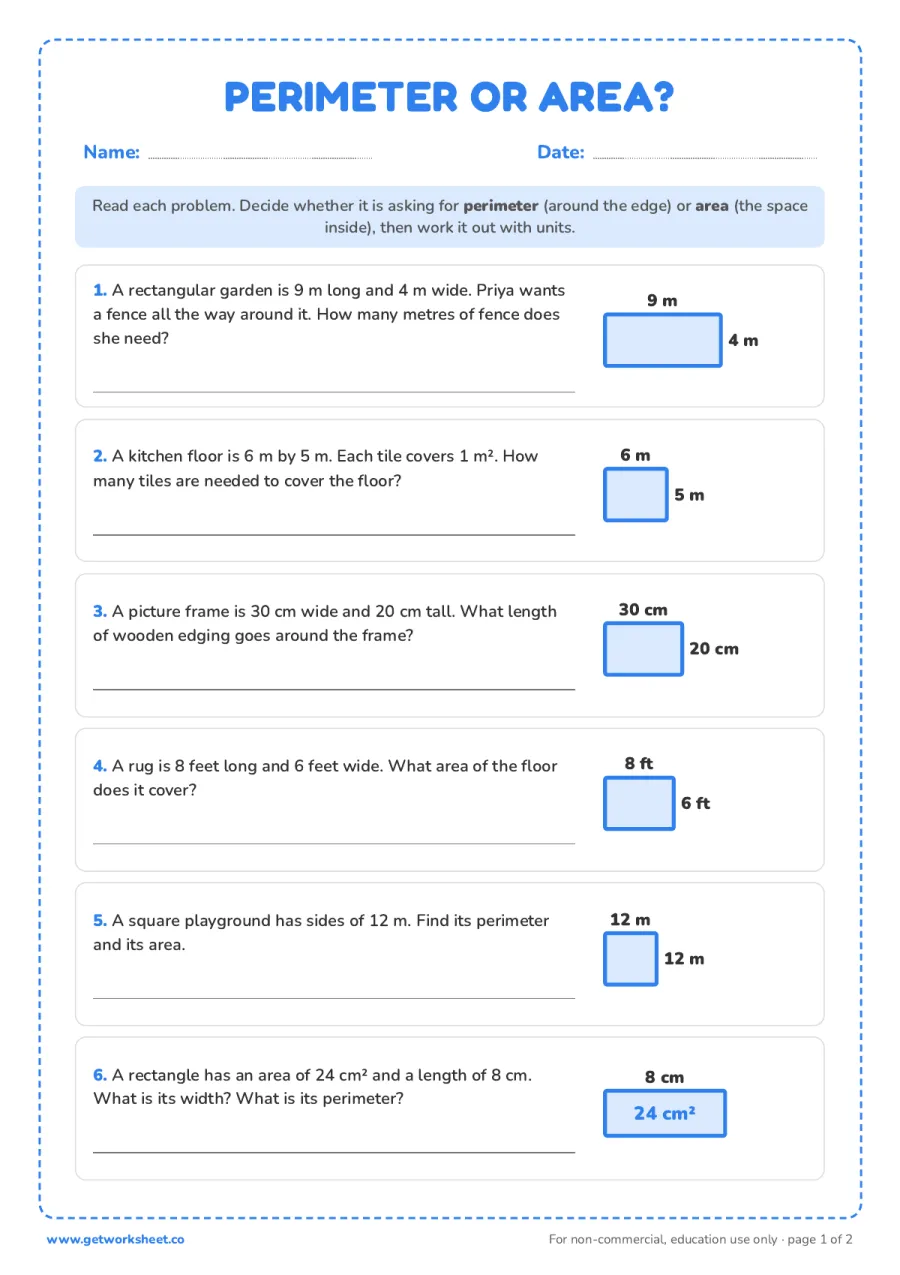
Area and perimeter word problems: 6 fences, floors and frames
Six real-life problems (fence, tiles, frame, rug, playground, missing width) each with a labelled sketch; decide perimeter or area and solve with units. Answer key on page 2.
AI worksheet generator
Make a worksheet like this for your class
The 6 sheets above are fixed. The generator writes a new area and perimeter worksheet for your grade, with the question types and count you choose, in about 20 seconds. Pick a grade to start:
What you get
- A fresh set of questions on area and perimeter, not a copy of the sheets above
- Multiple choice, fill in the blanks, true or false, open ended
- Answer key and print-ready PDF with Pro
Free account, 1 worksheets a week. No card.
Perimeter is the distance around the outside of a shape; area is the amount of space inside it. Children mix the two up for years unless they meet them side by side with clear pictures, so these six worksheets keep the drawings large, label every side, and ask for both measures on the same shape once each idea is secure. Every sheet has its answer key on page 2 of the PDF, with the working shown.
What’s in this set
- Count the squares: area of 8 shapes in square units. Four rectangles and four irregular shapes (an L, a T, a plus sign, a staircase and a U) drawn on a light grid. Students count unit squares to find each area, then check the shortcut for rectangles: one row times the number of rows.
- Perimeter of rectangles: 8 labelled rectangles in cm. Length and width are marked on each rectangle. Students add all four sides, using the fact that opposite sides are equal, and meet the 2 × (length + width) shortcut in a box at the bottom.
- Area of rectangles: 8 problems using length × width. A formula box heads the page; students multiply and answer in cm². The key shows the multiplication beside each answer.
- Area and perimeter together: 6 rectangles, both answers. Each rectangle (in metres) has a perimeter box and an area box, so students must decide which operation gives which measure. A challenge asks for a different rectangle with the same perimeter as the 4 m square.
- Compound shapes on a grid: area and perimeter of 6 L and T shapes. Each square is 1 cm. Students split the shape into two rectangles for the area and count around the outside for the perimeter.
- Perimeter or area? 6 word problems. A garden fence, a tiled floor, a picture frame, a rug, a square playground and a rectangle with a known area and a missing width. Each has a labelled sketch; students decide which measure the question asks for and answer with units.
What students will practice
- Understanding area as the number of unit squares that cover a shape without gaps or overlaps (CCSS 3.MD.C.5, 3.MD.C.6)
- Finding the area of a rectangle by multiplying side lengths and explaining why it matches counting (3.MD.C.7a, 3.MD.C.7b)
- Finding the perimeter of a polygon from its side lengths and using the properties of rectangles (3.MD.D.8)
- Decomposing a compound shape into rectangles and adding the areas (3.MD.C.7d)
- Applying the area and perimeter formulas for rectangles in real-world problems, including finding an unknown side (4.MD.A.3)
- Using the right units: cm and m for perimeter, cm² and m² for area
Free printable makers
Make your own area and perimeter sheets
Type your own words or numbers and print in about 30 seconds. No account, no AI, answer key where it applies.
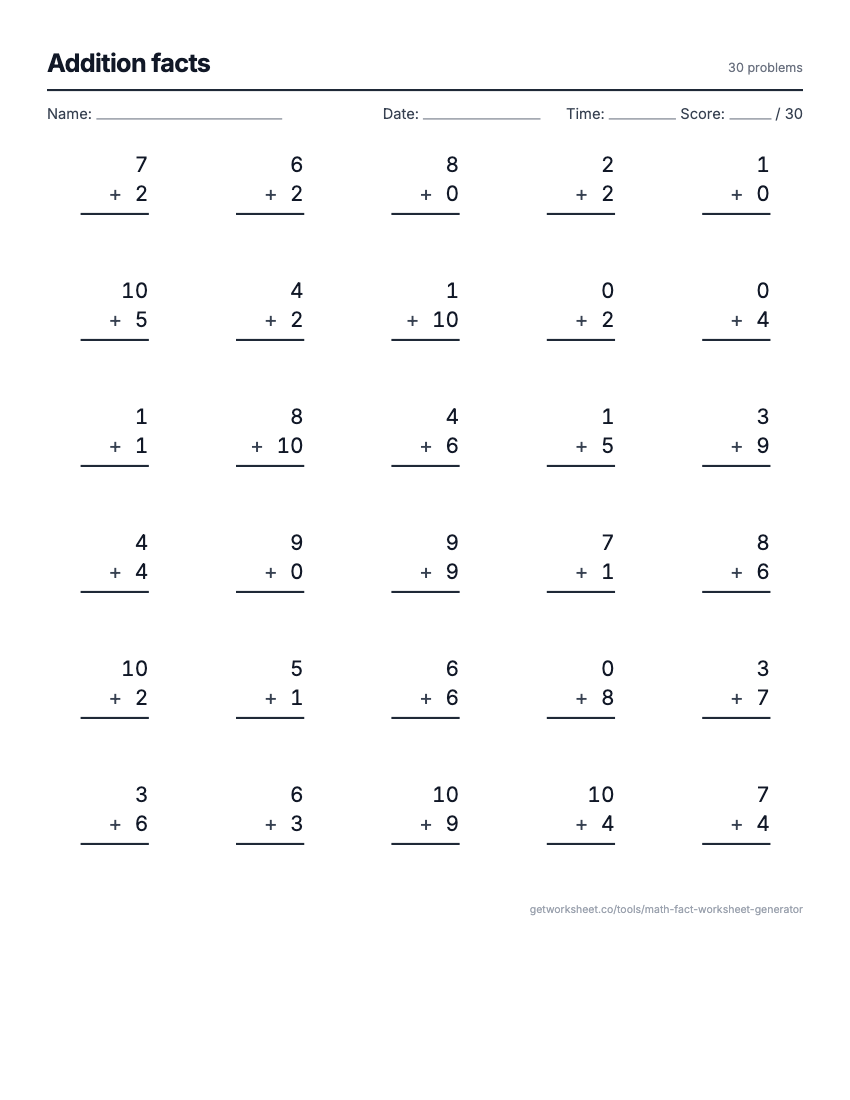 Math fact worksheet generatorAddition to division drills with an answer key. Free to print.
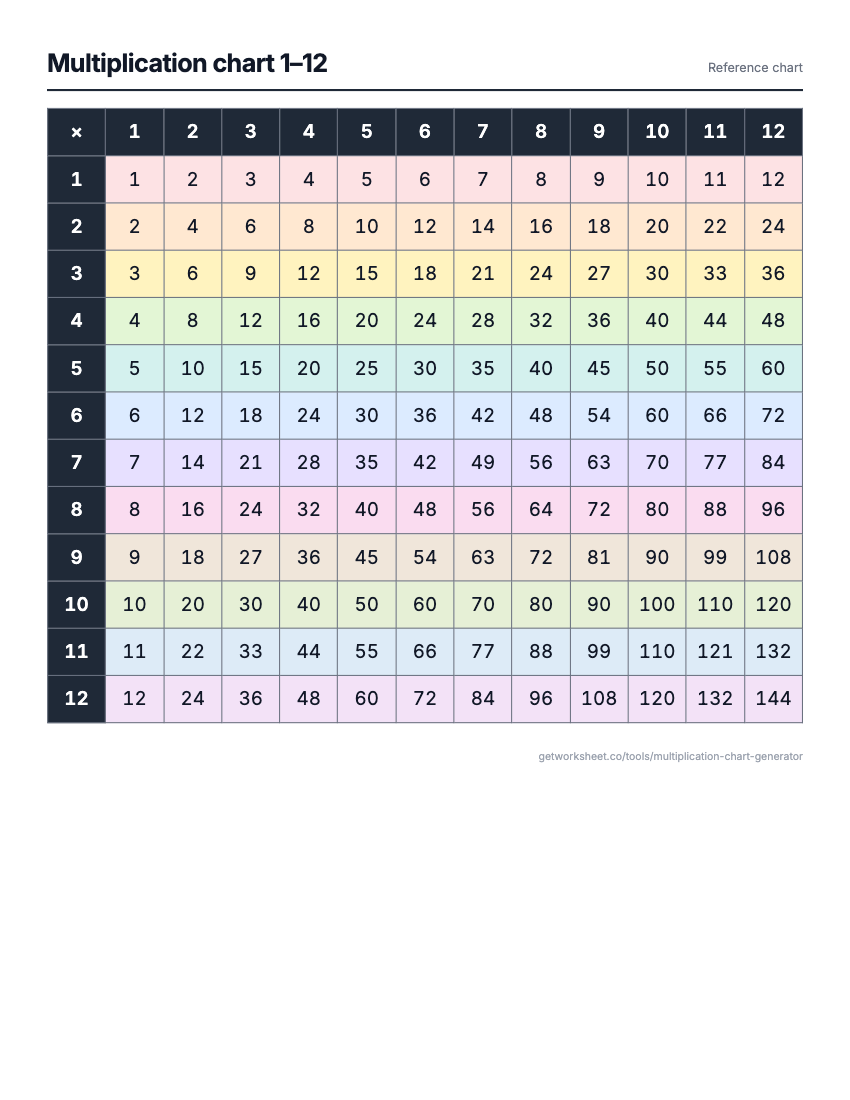 Multiplication chart generatorCharts to 15, full, blank or coloured, and times table tests with key. Free to print.
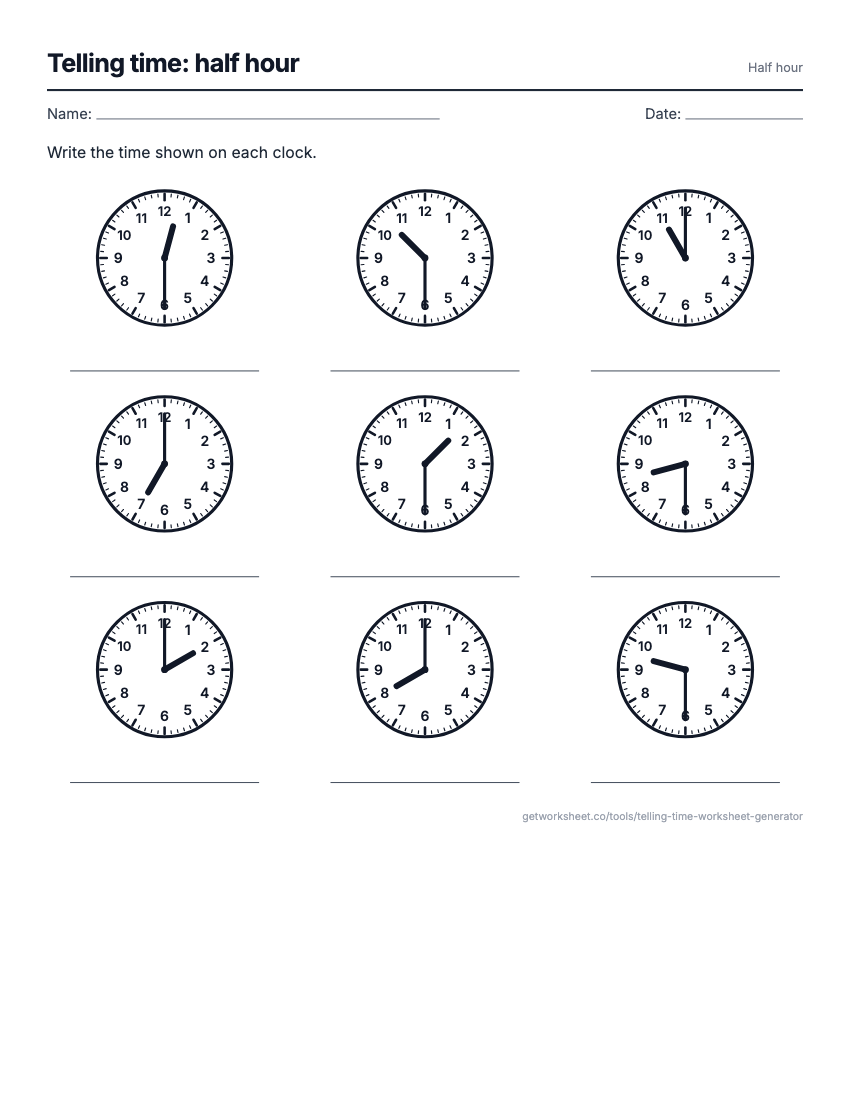 Telling time worksheet generatorAnalogue clocks to read, draw, match or add time to, with answer key. Free to print.
AI worksheet generator
Need a different area and perimeter worksheet?
Generate a custom area and perimeter worksheet: pick the grade, question types and count, and print it in about 20 seconds. Free accounts get 1 generation a week.
Teaching tips and common mistakes
How to use these worksheets
Print at 100% on A4 or US Letter paper. The order matters: area by counting, then perimeter, then area by formula, then both together, then compound shapes and problems.
- Count the squares. Have students put a small dot in each square as they count so nothing is counted twice; the irregular shapes make this necessary. Then ask them to test the shortcut on shapes 1, 2 and 4: count one row, multiply by the number of rows, compare.
- Perimeter. Trace the outline with a finger while saying the side lengths, including the two that are not labelled. Writing all four numbers in a row before adding (6 + 4 + 6 + 4) prevents skipped sides. Introduce 2 × (l + w) only after the long way is reliable.
- Area by formula. Point at the formula box and ask what each letter stands for on rectangle 1 before anyone multiplies. Insist on cm² in every answer; the little 2 is the reminder that area counts squares.
- Both together. This is the sheet that shows whether the two ideas are separate in a child’s mind. Ask “which answer would tell you how much fence to buy, and which how much grass seed?”. The challenge (a 4 × 4 square has perimeter 16 m; so does a 6 × 2 rectangle, with a different area) is a good discussion.
- Compound shapes. Draw one line to cut each shape into two rectangles, write the two areas and add. For the perimeter, count the outside edges of the grid squares all the way round; students often forget the inner corner edges of an L.
- Word problems. Before any calculation, students write P or A next to each problem. Problem 6 works backwards from an area of 24 cm² to a width of 3 cm, then asks for the perimeter, which needs both skills in sequence.
Common mistakes to watch for
- Adding when they should multiply: area of a 5 cm by 3 cm rectangle given as 8 or 16. Go back to counting squares: 5 in a row, 3 rows, 15 squares.
- Adding only the two labelled sides: perimeter of 6 by 4 given as 10. Trace the outline and count how many sides were walked along.
- Missing or wrong units: 15 cm for an area, 20 cm² for a perimeter. Perimeter is a length, so cm; area counts squares, so cm².
- Counting inner edges when finding the perimeter of a compound shape: only the outside edge counts. Colour the outline before counting.
- Assuming shapes with the same perimeter have the same area: the challenge on sheet four and the fence-versus-seed question address this directly.
Answer key
Page 2 of every PDF is the answer key. The keys show the working (the four sides added for perimeter, the multiplication for area, the split for compound shapes) so that a student who is close can see where the slip happened.
Frequently asked questions
What grade are area and perimeter worksheets for?
Area and perimeter are taught in third grade (age 8 to 9) in the Common Core and in Years 3 to 4 in the UK. Fourth grade applies the formulas to word problems and to finding a missing side. Sheets one to three suit third grade; four to six suit late third and fourth grade.
Should children learn area or perimeter first?
Area by counting squares is the more concrete idea, so it comes first on these sheets. Perimeter follows once children can name and measure sides. Teaching both in the same week and asking for both on the same shape (sheet four) is what stops the two being confused.
Why are the units cm² for area but cm for perimeter?
Perimeter is a length: you could walk it or measure it with string, so it is in centimetres or metres. Area is a count of squares that are 1 cm on each side, so it is in square centimetres, written cm². The unit itself reminds children which measure they found.
Are answer keys included?
Yes. Every PDF has two pages: the student sheet and an answer key with the working shown. Print page 1 for the class and keep page 2 for marking.
More practice
The area of a square is a square number, so the square numbers worksheets make a natural next step, and larger rectangles need the multi-digit multiplication worksheets. Children who are ready to move from flat shapes to solids can go on to the 3D shapes worksheets. Browse every set in the maths worksheets library.
Free library
Related collections
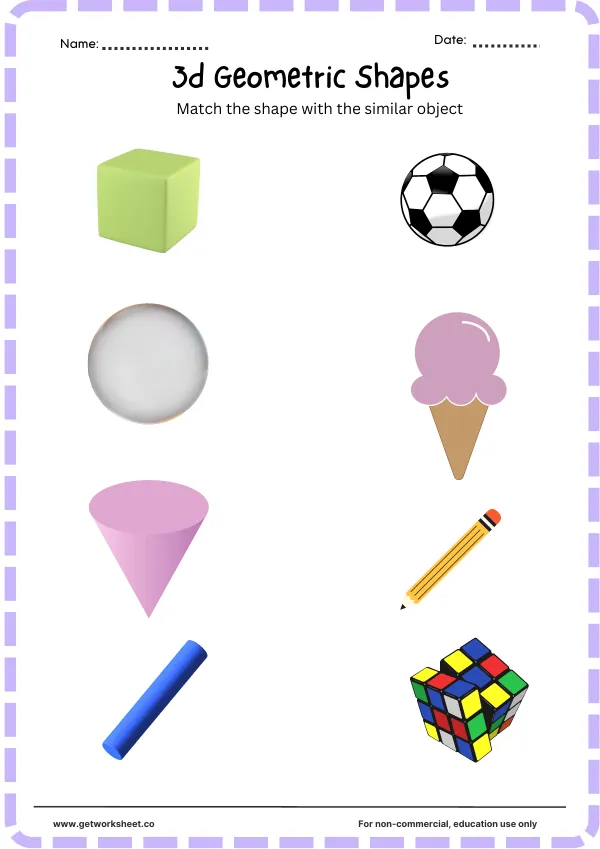
Free 3D shapes worksheets
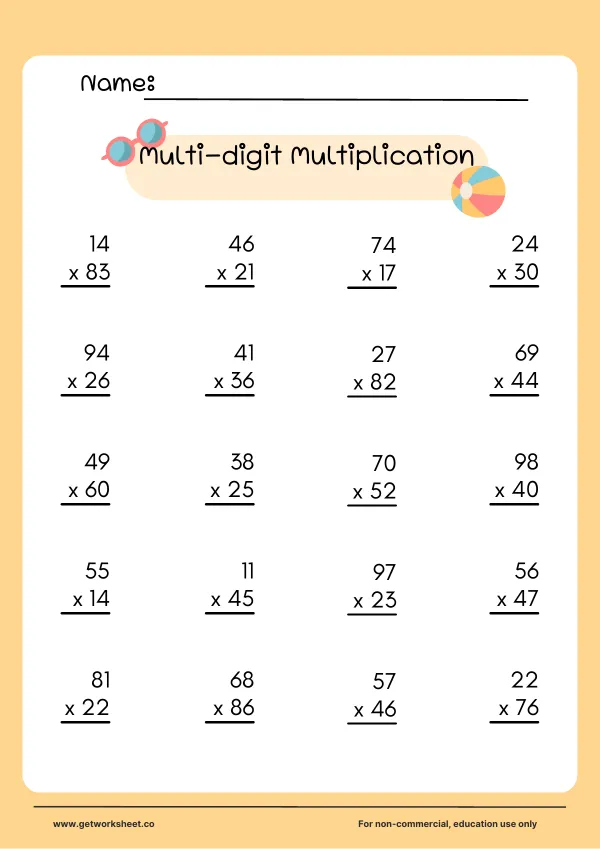
Free multi-digit multiplication worksheets
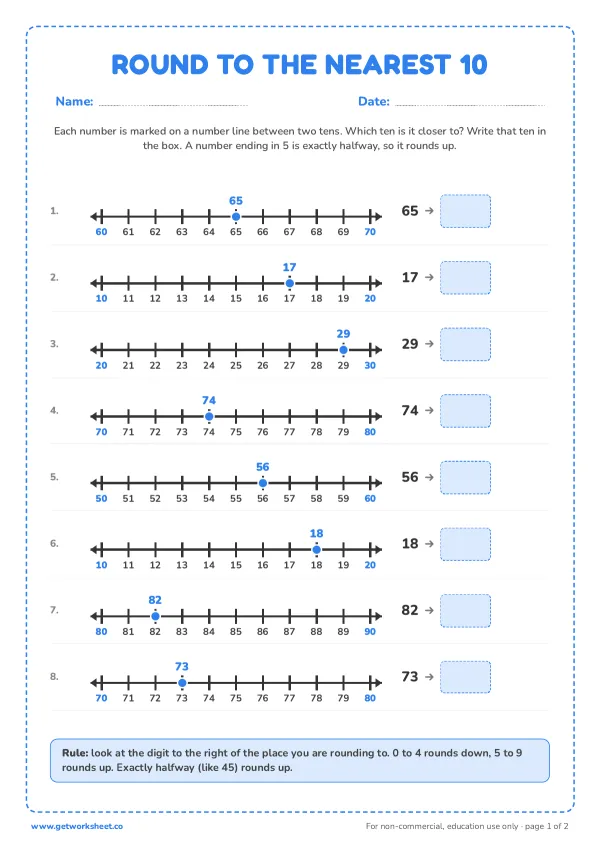
Free rounding numbers worksheets
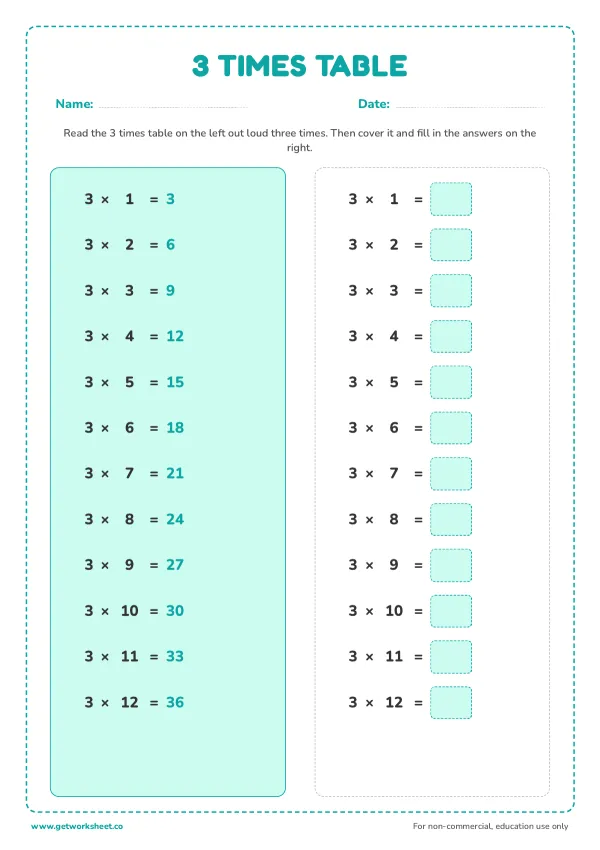
Free 3 times table worksheets
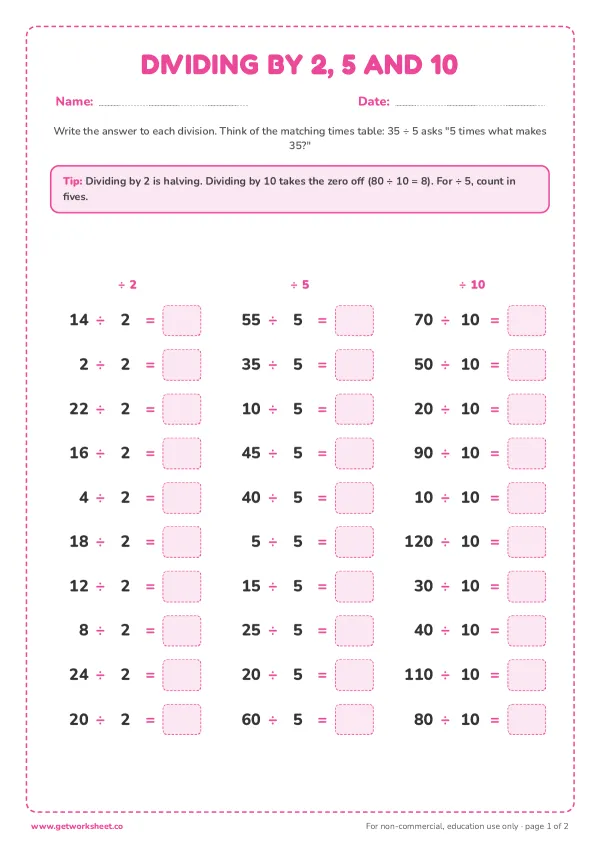
Free division facts worksheets
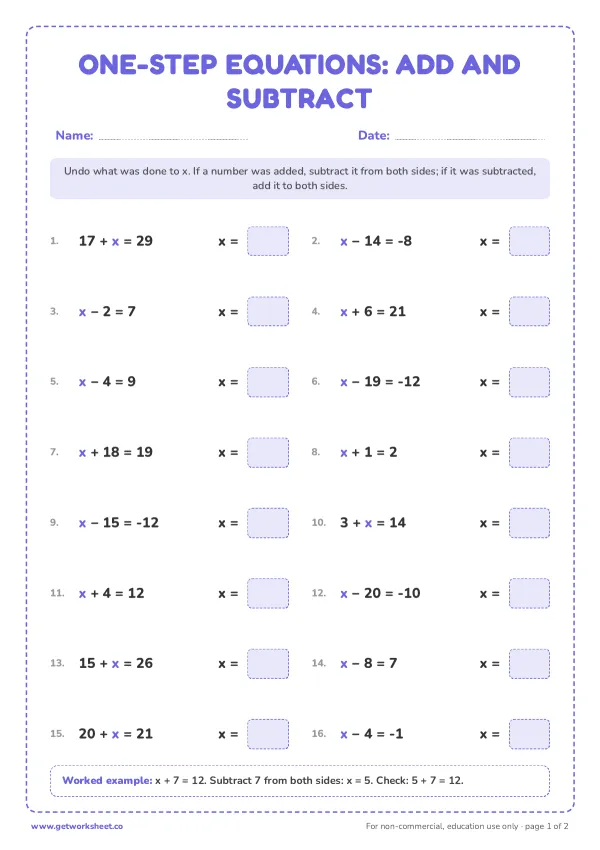
Free one-step equations worksheets
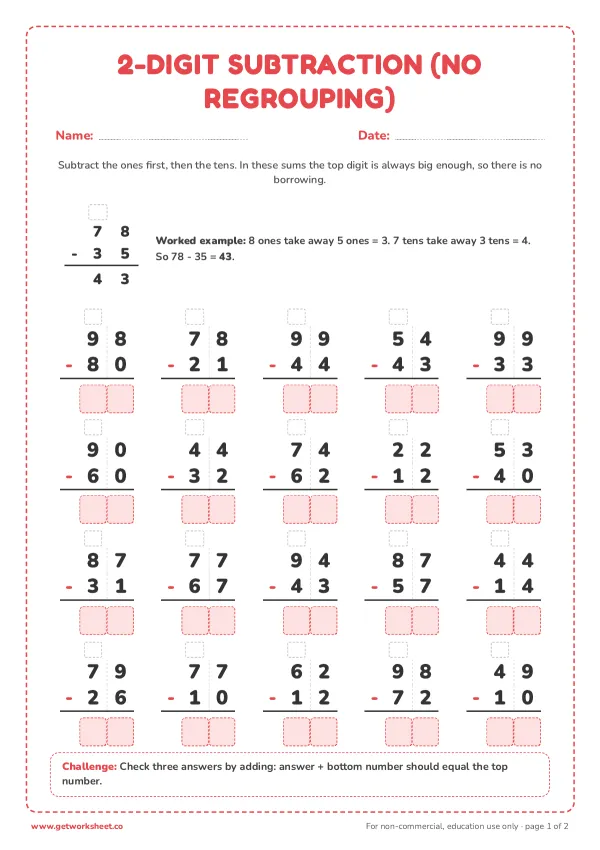
Free subtraction with regrouping worksheets
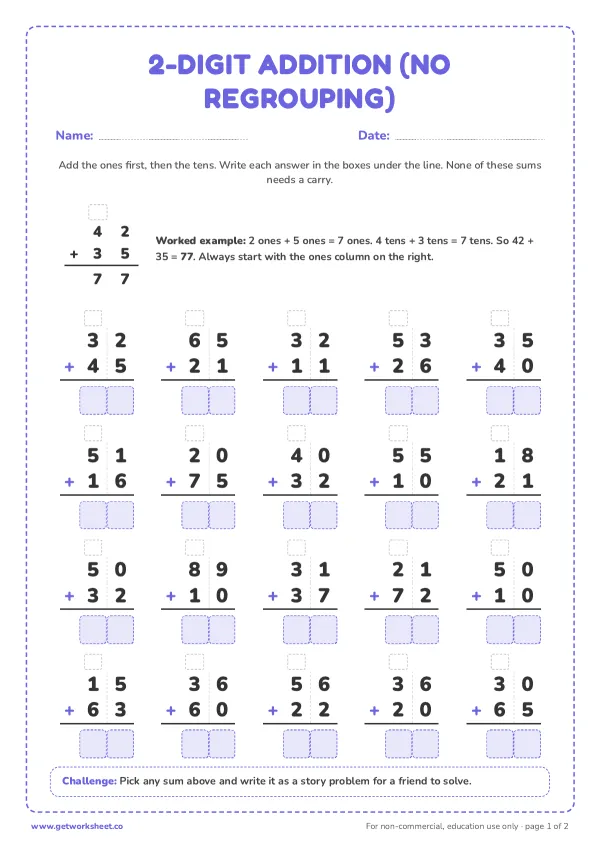
Free addition with regrouping worksheets
More worksheets
- Free equivalent fractions worksheets
- Free simplifying fractions worksheets
- Free comparing fractions worksheets
- Free telling time to the quarter hour worksheets
- Free fact families worksheets
- Free number bonds worksheets
- Free odd and even numbers worksheets
- Free Valentine math worksheets
- Free rekenrek worksheets
- Free Montessori geometric solids worksheets
- Free Montessori spindle box worksheets
- Free Montessori fraction circles worksheets