Free printable maker
Counting Money Worksheet Generator
US coins and bills drawn to size. Count the coins, make change from a bill, pick the group that is worth more, or write the amount in words. 6 to 12 problems with an answer key. Free, no account.
Prints the worksheet, then the answer key on its own page. Free, no account.
Count the money
8 problemsCount the coins and bills. Write the total.
- 1.Total:
- 2.Total:
- 3.Total:
- 4.Total:
- 5.Total:
- 6.Total:
- 7.Total:
- 8.Total:
Count the money · Answer key
8 problemsCount the coins and bills. Write the total.
- 1.Total: $0.67
- 2.Total: $0.81
- 3.Total: $0.21
- 4.Total: $0.86
- 5.Total: $0.62
- 6.Total: $0.45
- 7.Total: $0.62
- 8.Total: $0.27
getworksheet.co/tools/counting-money-worksheet-generator
Teaching money
From naming coins to making change
Counting money is skip counting with a twist: the coins are not in order of size, the biggest coin is not worth the most (a dime is smaller than a nickel and a penny), and the same total can be made many ways. Children who are fluent at counting by 5s, 10s and 25s still stumble when the coins are mixed, so the sequence that works is name the coins, count one kind, then count a mixed group largest-first.
Start with Count the money, only pennies and dimes allowed, totals under $1. Add nickels once “10, 20, 30, 35, 36” is comfortable, then quarters. Leave “Mix up the coin order” off at first so each group is shown largest-first, the way children are taught to count; turn it on when they can sort the coins in their head. Half dollars are off by default because few classrooms use them, but they are one click away for a challenge sheet.
Which is more? is the task that separates counting from understanding. Two groups side by side, often with more coins in the group that is worth less, force the child to count both and compare totals rather than coin piles. The answer key marks the group that wins and shows both totals.
Make change is a subtraction problem dressed as shopping. The sheet shows a priced item and the bill handed over; the child writes the change and, if you leave the dashed box on, draws the coins and bills that make it. Keep “Prices in 5¢ steps” ticked for second grade so the change can be made with nickels, dimes and quarters; untick it for pennies. The answer key gives the change and the fewest coins for it, which doubles as a counting-up check: 35¢ to $1 is a nickel, a dime and two quarters.
Write the amount connects the coins to the two notations children have to read: dollar notation ($0.47) and words (forty-seven cents, or two dollars and thirty cents once bills are included). Set the total to under $5 and tick “Include $1 bills” for the dollars-and-cents version.
Related practice: money management worksheets for budgeting and real-life totals, the addition and subtraction collections for the arithmetic underneath, and the math fact worksheet generator for quick drills on the facts that make counting coins automatic.
How it works
How to make a counting money worksheet
Three steps from a task to a sheet with its answer key.
- 1
Choose the task
Count the money, make change, which is more, or write the amount. Tick the coins to allow and set the total under $1 or under $5; for change, pick the bill the customer pays with.
- 2
Set the sheet
6 to 12 problems, 2 to 10 coins per group, mixed or largest-first coin order, an optional title and the answer key page.
- 3
Print
Letter or A4. The worksheet prints first and the answer key follows on its own page. Shuffle for a fresh set with the same settings.
Good to know
Questions, answered
Yes. Pick the task and the coins, print the worksheet and the answer key. No account, no watermark and no limit. The problems are generated in your browser, nothing is uploaded.
US pennies (1¢), nickels (5¢), dimes (10¢), quarters (25¢) and half dollars (50¢), drawn at their real relative sizes with the value and name printed on each coin, plus $1 bills for totals under $5 and $1, $5, $10 and $20 bills in the making-change task. Tick or untick any coin to control which ones appear.
Count the money (groups of 2 to 10 coins, totals under $1 or under $5), make change from a $1, $5, $10 or $20 bill with an optional box for drawing the coins, which group is worth more, and write the amount in dollar notation and in words. Each sheet holds 6, 8, 10 or 12 problems.
Yes. Every coin shows its value (for example 25¢) and its name, the five coins have five distinct sizes, and the dime, quarter and half dollar have a reeded edge like the real coins, so pennies and dimes do not blur together once the copper colour is gone.
Yes. Leave "Answer key page" ticked and the key prints after the worksheet with the totals filled in; the making-change key also lists the fewest coins and bills for each answer. The same settings always give the same sheet until you press Shuffle, so you can reprint one or hand out several versions.
More free printable makers
More sheets you can make right now
Each of these builds the printable in your browser: no account, no AI, no weekly limit, an answer key where one applies.
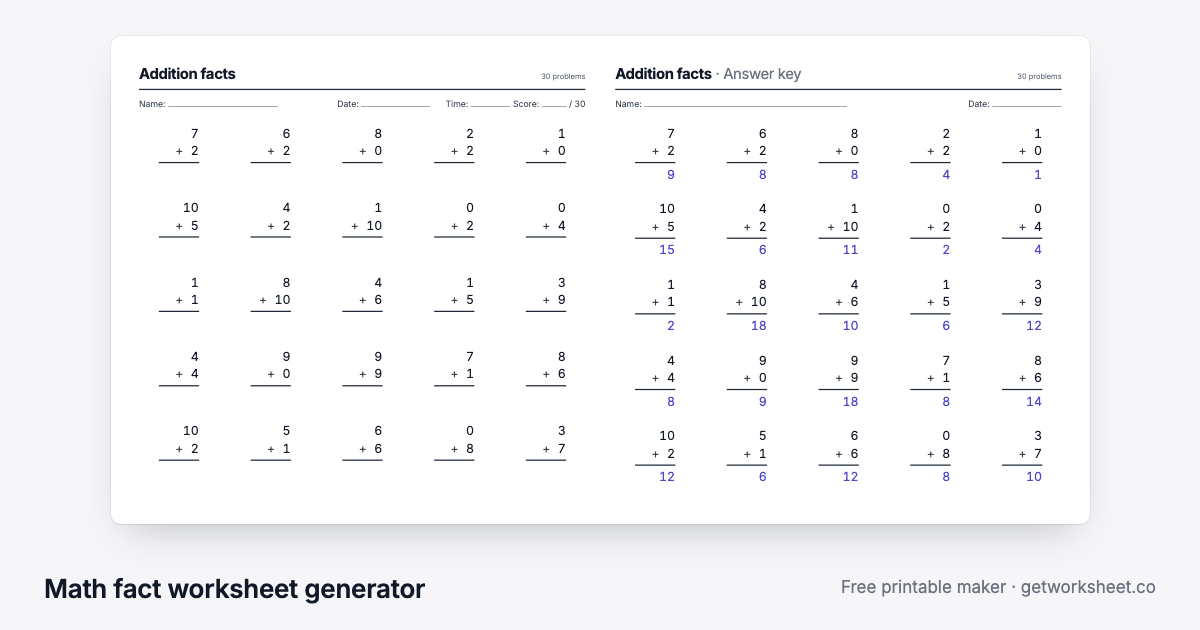 Math fact worksheet generatorAddition to division drills with an answer key. Free to print.
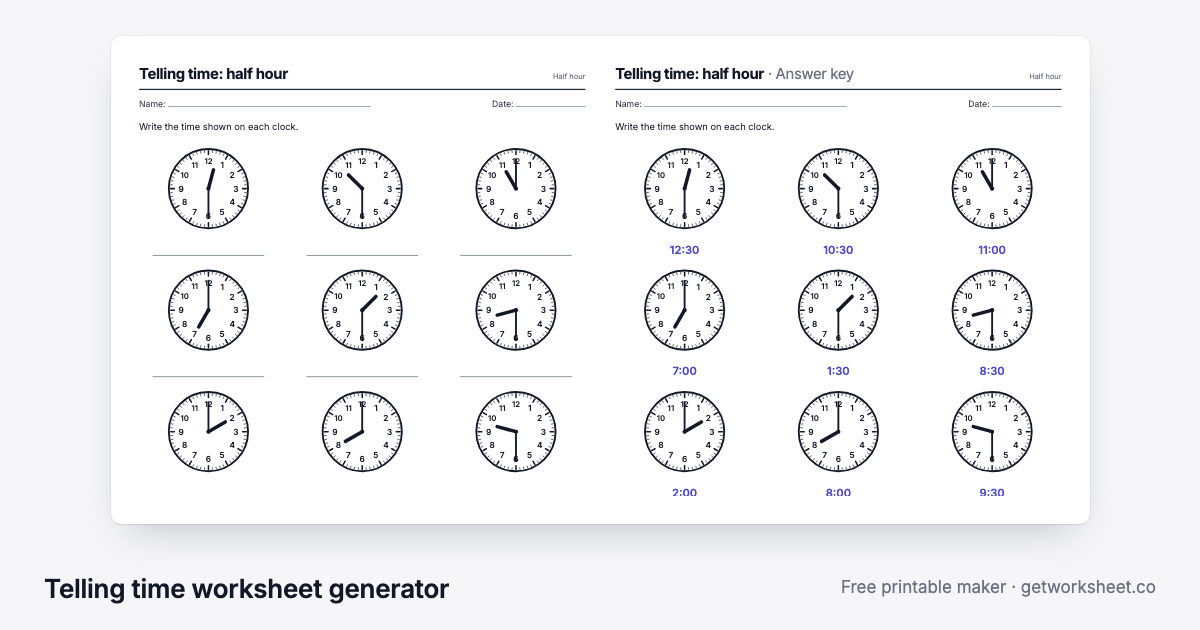 Telling time worksheet generatorAnalogue clocks to read, draw, match or add time to, with answer key. Free to print.
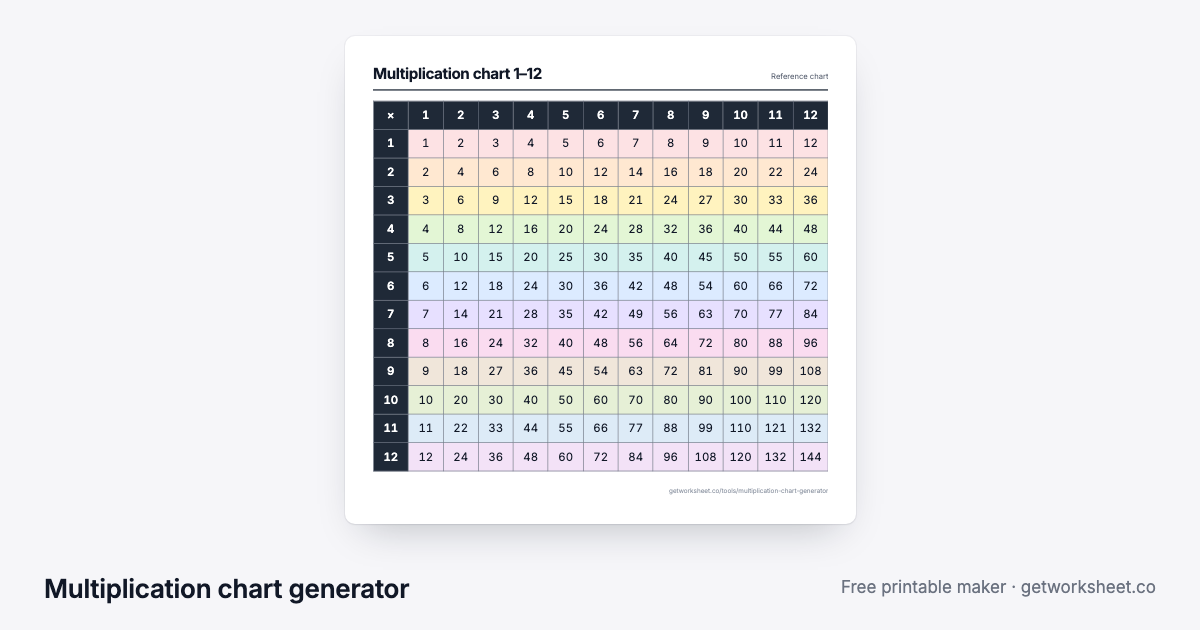 Multiplication chart generatorCharts to 15, full, blank or coloured, and times table tests with key. Free to print.
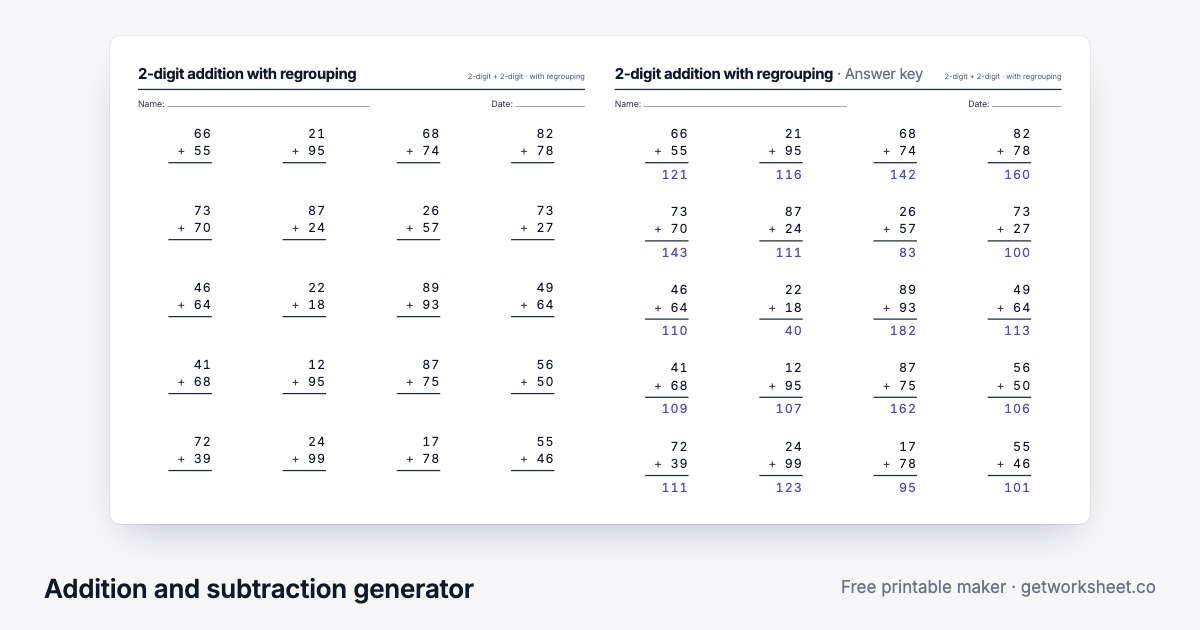 Addition and subtraction generatorColumn add and subtract, regrouping you control, boxes and key. Free to print.
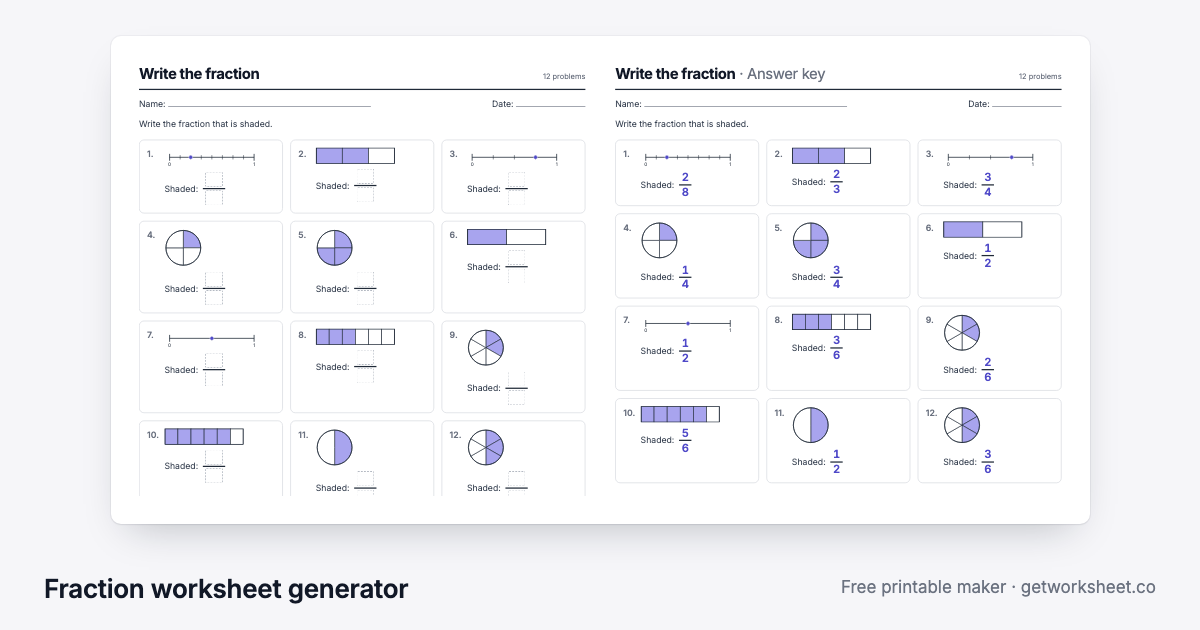 Fraction worksheet generatorVisual pie, bar and number-line models; equivalent, compare, add, subtract. Free to print.
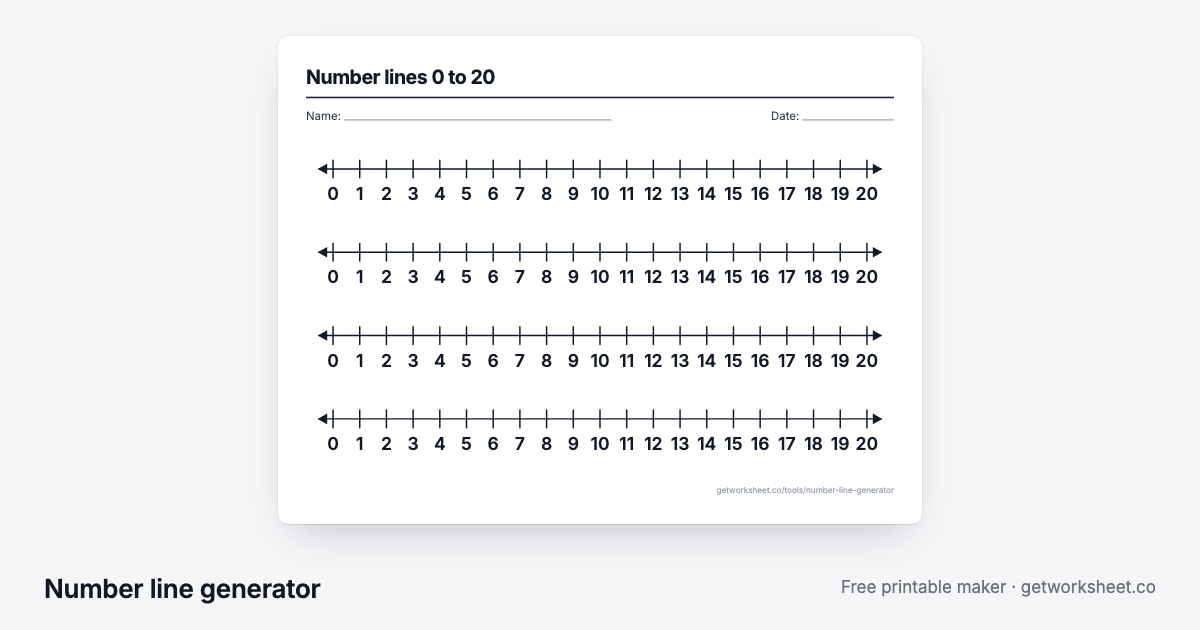 Number line generatorAny range and step, fractions and decimals, blank or missing numbers with a key. Free to print.
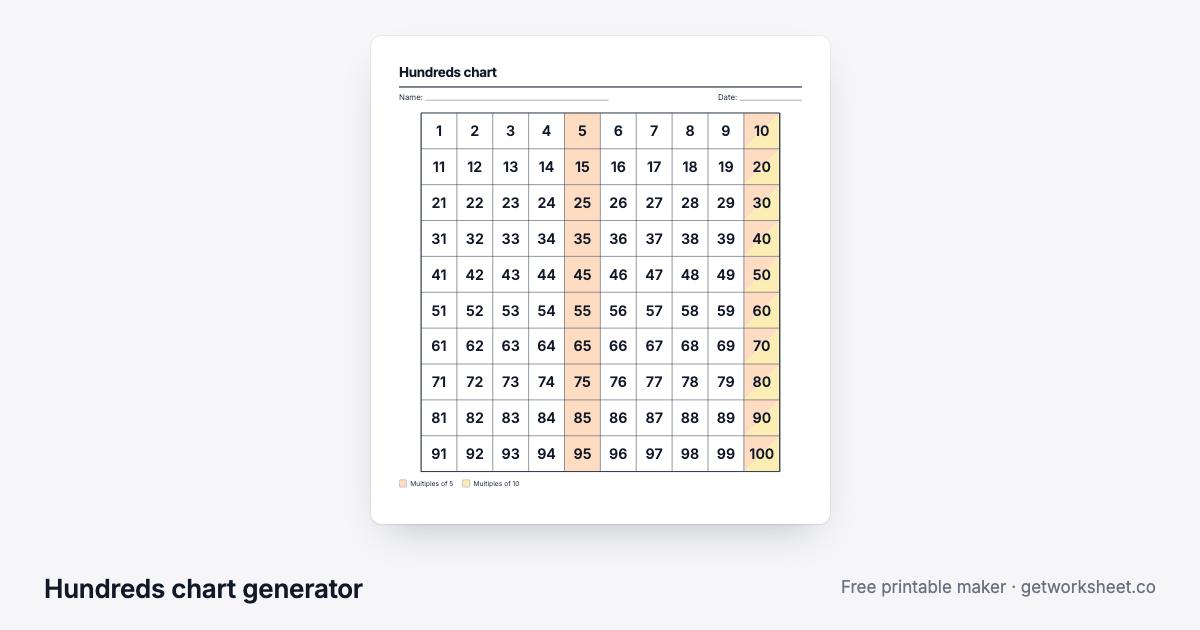 Hundreds chart generator1-100, 1-120 or 0-99, blank or missing numbers, skip-count colours, odd/even. Free to print.
- Worksheet generatorCustom worksheets for any topic, grade and question type.
- Lesson plan generatorStandards-aligned plans with objectives, activities and assessment.