Life skills · Grades 2–5
Money Management Worksheets
Three money management worksheets for grades 2 to 5, each with three multiple-choice word problems: how much more to save for a toy, the cost of several items and the total of a purchase.
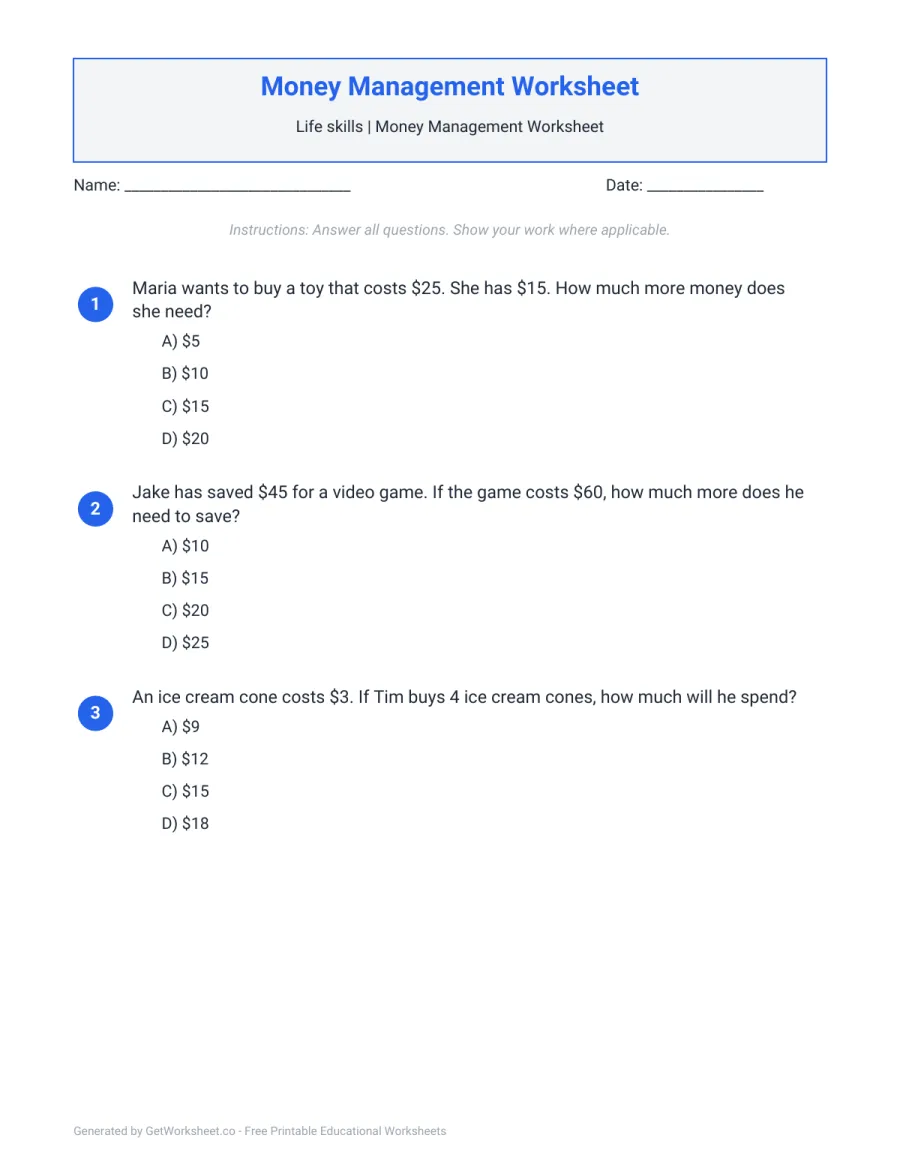
Money management: 3 saving and spending word problems
Three multiple-choice problems: how much more Maria needs for a $25 toy, what Jake still saves for a $60 game, and the cost of 4 ice creams. Free printable PDF.
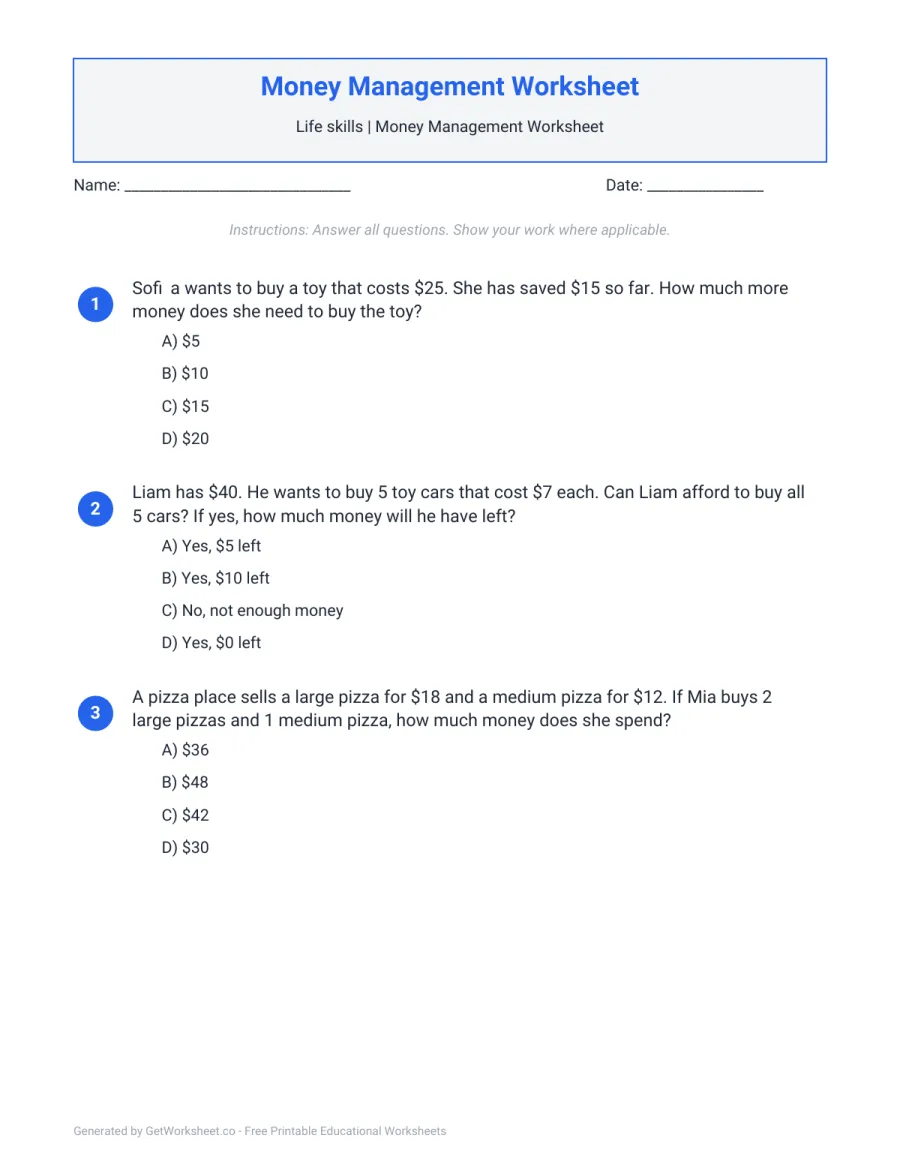
Money management: 3 problems on saving up and pizza totals
Three multiple-choice problems: money needed for a $25 toy, if $40 covers five $7 toy cars, and the bill for 2 large pizzas and 1 medium. Free printable PDF.
Whole set
All 3 sheets in one PDF
Instant and ad-free. No account needed.
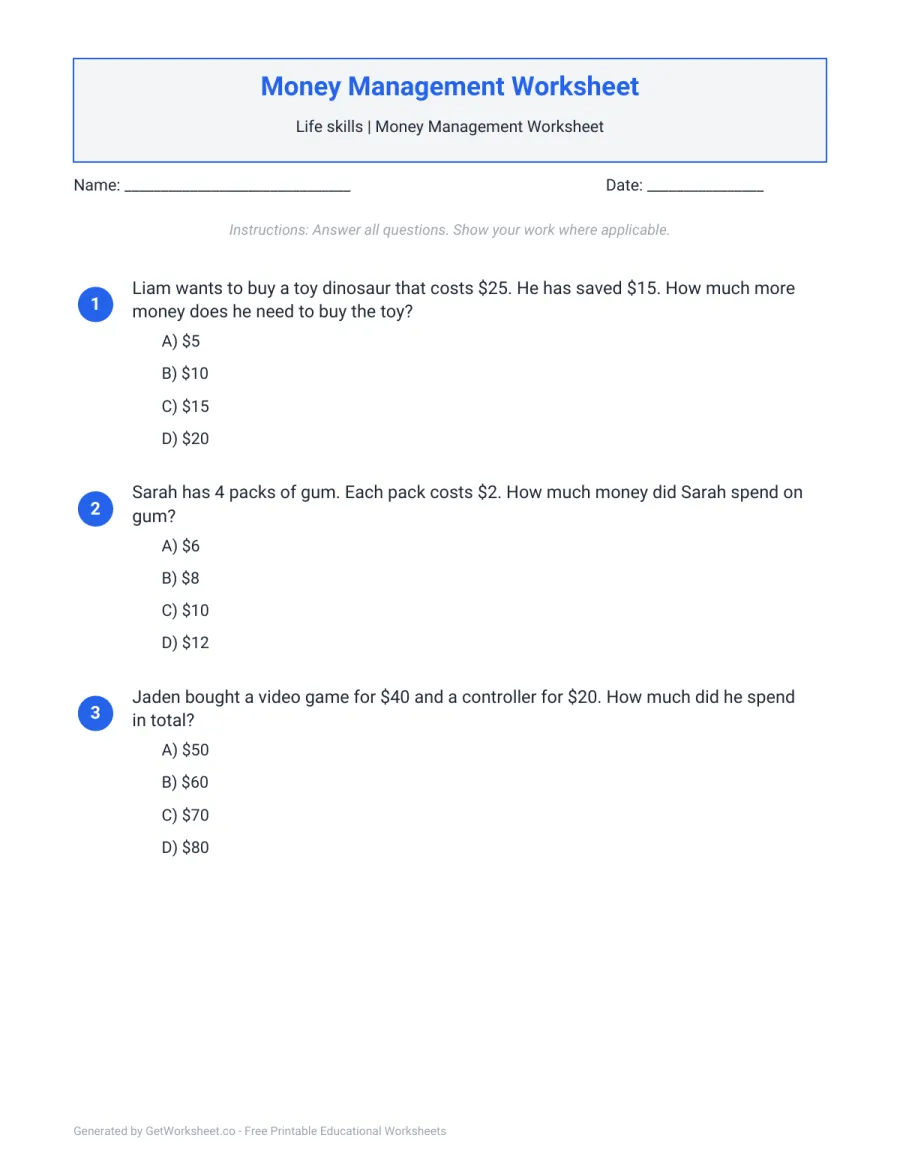
Money management: 3 problems on saving and adding purchases
Three multiple-choice problems: money still needed for a $25 toy dinosaur, 4 packs of gum at $2 each, and a $40 game plus a $20 controller. Free printable PDF.
AI worksheet generator
Make a worksheet like this for your class
The 3 sheets above are fixed. The generator writes a new money management worksheet for your grade, with the question types and count you choose, in about 20 seconds. Pick a grade to start:
What you get
- A fresh set of questions on money management, not a copy of the sheets above
- Multiple choice, fill in the blanks, true or false, open ended
- Answer key and print-ready PDF with Pro
Free account, 1 worksheets a week. No card.
These three money management worksheets each hold three multiple-choice word problems in whole dollars. The first asks how much more Maria needs for a $25 toy, what Jake still has to save for a $60 game and what four ice creams cost. The second returns to the $25 toy, asks whether $40 covers five $7 toy cars and totals a bill for two large pizzas and a medium. The third works out the money still needed for a $25 toy dinosaur, four packs of gum at $2 each and a $40 game plus a $20 controller. There are no coins or bills to count, no budget tables and no answer key; the child reads, calculates and circles A, B, C or D.
The same saving-up question appears on all three sheets in slightly different clothes, which makes the set useful for a child who needs the idea repeated: what I want, minus what I have, is what I still need.
What Students Will Practice
- Subtracting savings from a price to find how much more is needed
- Multiplying a unit price by a quantity, such as four ice creams or four packs of gum
- Adding two or three purchases to a total and checking whether a budget covers them
- Choosing the one correct answer from four in a short word problem
Free printable makers
Make your own money management sheets
Type your own words or numbers and print in about 30 seconds. No account, no AI, answer key where it applies.
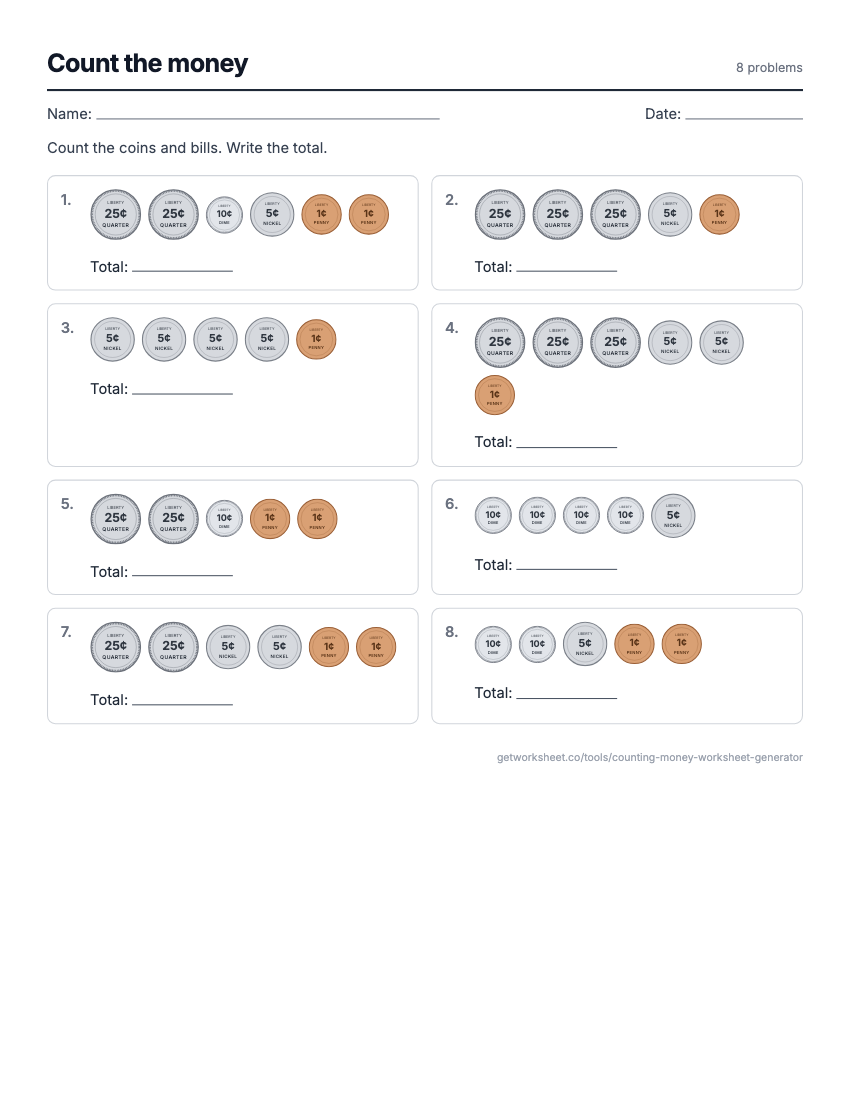 Counting money worksheet generatorCount US coins, make change, compare groups, write amounts. Answer key. Free to print.
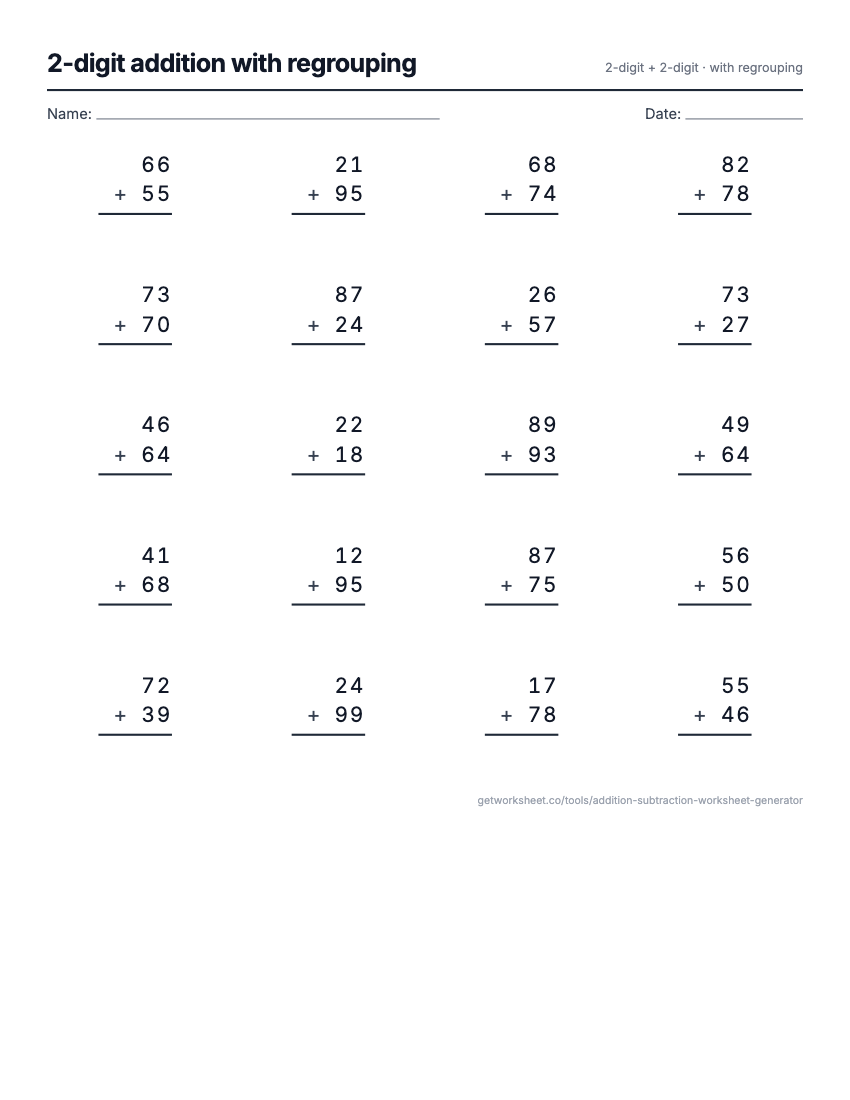 Addition and subtraction generatorColumn add and subtract, regrouping you control, boxes and key. Free to print.
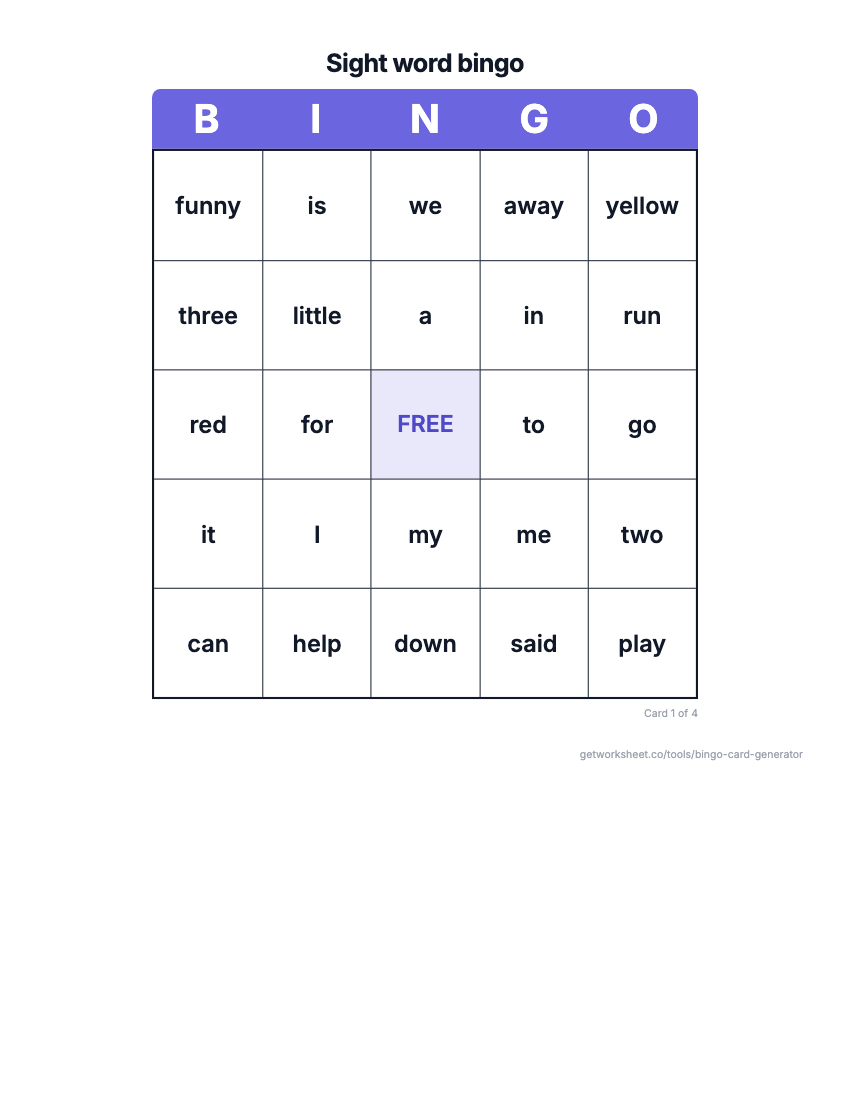 Bingo card generatorSight word, number, math fact or custom bingo cards with a call sheet. Free to print.
AI worksheet generator
Need a different money management worksheet?
Generate a custom money management worksheet: pick the grade, question types and count, and print it in about 20 seconds. Free accounts get 1 generation a week.
How to use these worksheets
Print at 100% on A4 or US Letter. There is no answer key on any of the three sheets, and the four choices sit close together, so work the problems yourself before you hand a page over. The sheets leave room to circle a letter but not much room to calculate, so give your child scratch paper alongside.
- Saving and spending: Maria, Jake and four ice creams. Start here. The first two problems are the same subtraction in different words, a price minus what has been saved, so have your child say that rule out loud before moving to the third problem, which needs multiplication instead.
- Saving up and pizza totals. The $40 for five $7 toy cars question is the one to slow down on: it is two steps, multiply first, then compare the answer against the $40. Ask for a spoken yes or no before any letter gets circled. The pizza problem is a plain sum of three prices.
- Saving and adding purchases. Use this sheet as the check, a few days after the other two. If your child can handle the $25 toy dinosaur, four packs of gum at $2 and a $40 game plus a $20 controller without prompting, the set has done its job.
Common mistakes to watch for
- Adding when the question asks how much more. The saving questions give a price and an amount saved, and children add the two. Have your child point to the goal and to what is in the piggy bank, then ask which number is bigger.
- Multiplying with the wrong pair of numbers. Four packs of gum at $2 each is 4 times 2, not 4 plus 2 and not $2 times the total. Write the unit price and the quantity in a column on scratch paper before multiplying.
- Circling a number that appeared in the question. The choices usually include $25 or $40 themselves. If the answer matches a price from the story exactly, that is a signal to check the work again.
- Skipping the second step. The budget questions and the multi-item totals need two calculations. Ask your child to say how many steps a problem has before starting it.
Frequently asked questions
What grades are these for?
Grades 2 to 5. A second grader can do the saving questions, which are subtraction within $100, while the unit price and budget questions suit grades 3 to 5.
Is there an answer key?
No. These sheets are the questions only, so work the nine problems yourself first or check them together with your child.
Do children need to count coins or bills?
No. Every amount is in whole dollars and there are no pictures of money to identify, no coin values and no budget tables. The skill is reading a short word problem and choosing the right operation.
Do they print in black and white?
Yes. The pages are text and answer choices, so a mono printer is fine and one sheet uses very little ink.
Can I use these in class?
Yes, they are free to print for a class or at home. Three problems is short enough for a warm up, an exit ticket or a small group task.
More practice
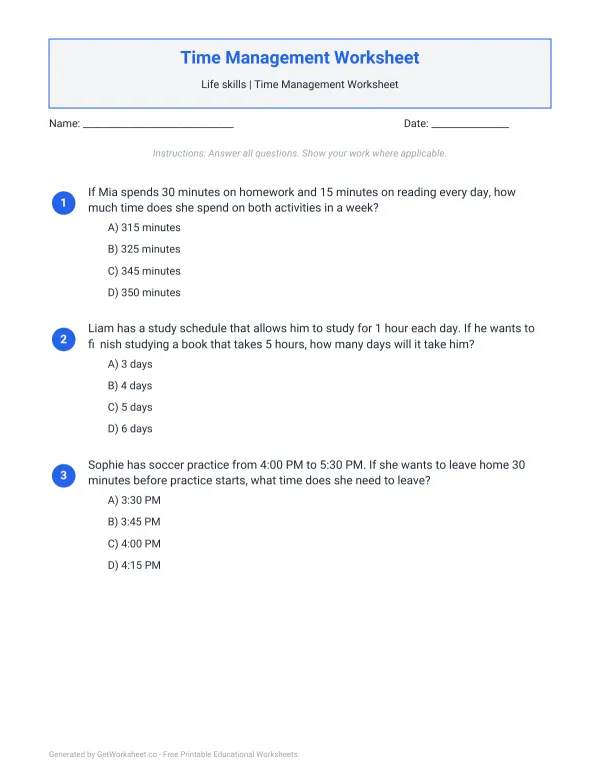
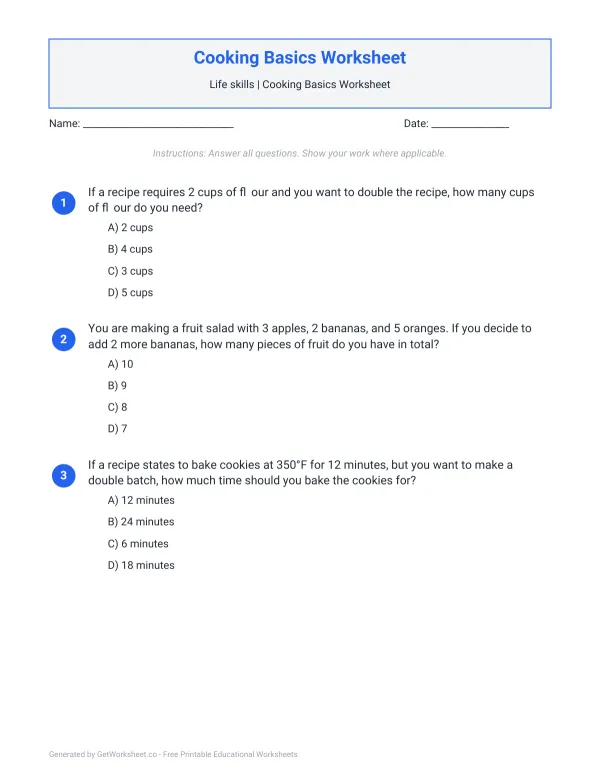
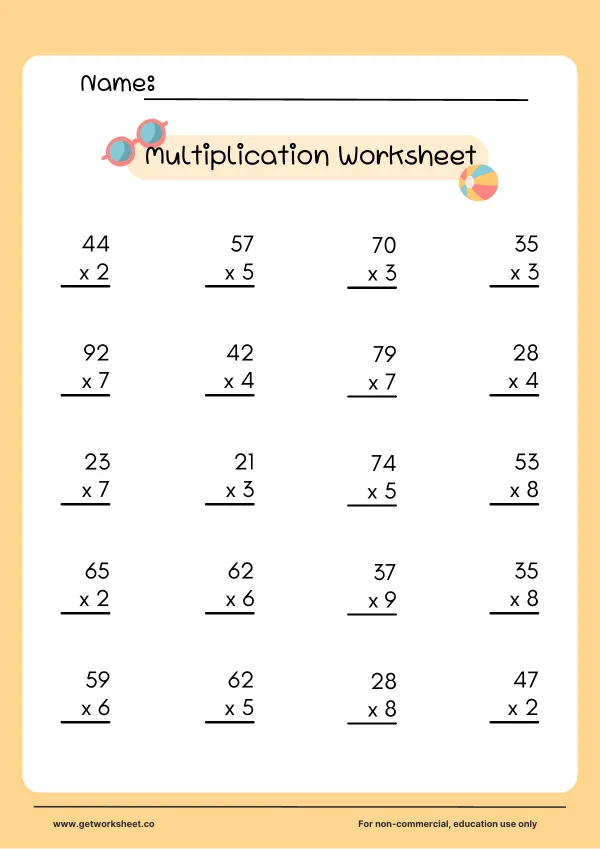
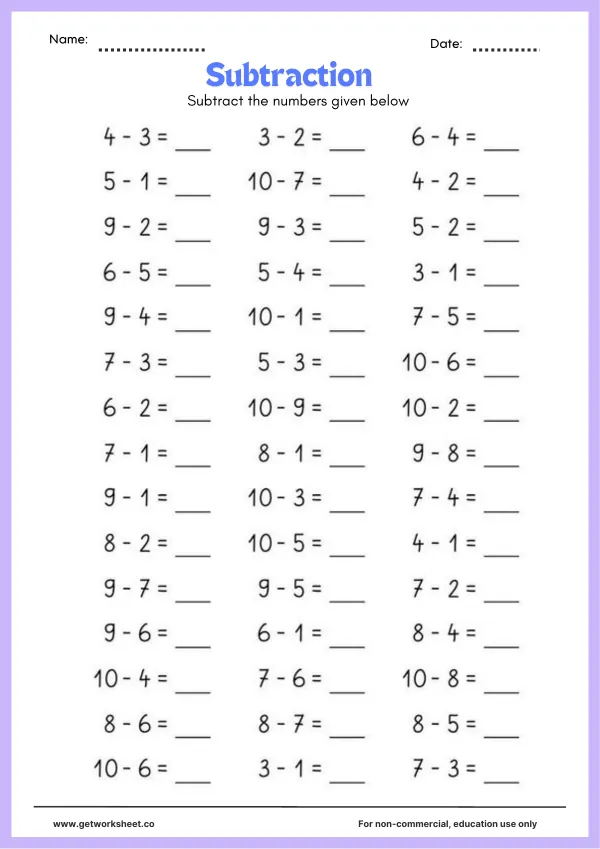
The arithmetic behind these questions is drilled on the subtraction worksheets and the multiplication worksheets, which is the place to go if the money is fine but the calculating is shaky. For more everyday skills in the same style, try time management worksheets and cooking basics worksheets.
Free library