Maths · Preschool–Kindergarten
Free Montessori number rods worksheets
Three Montessori number rods worksheets for preschool and kindergarten: count the red and blue segments of rods 1 to 10, match each rod to its number card, and color segments to build each rod.
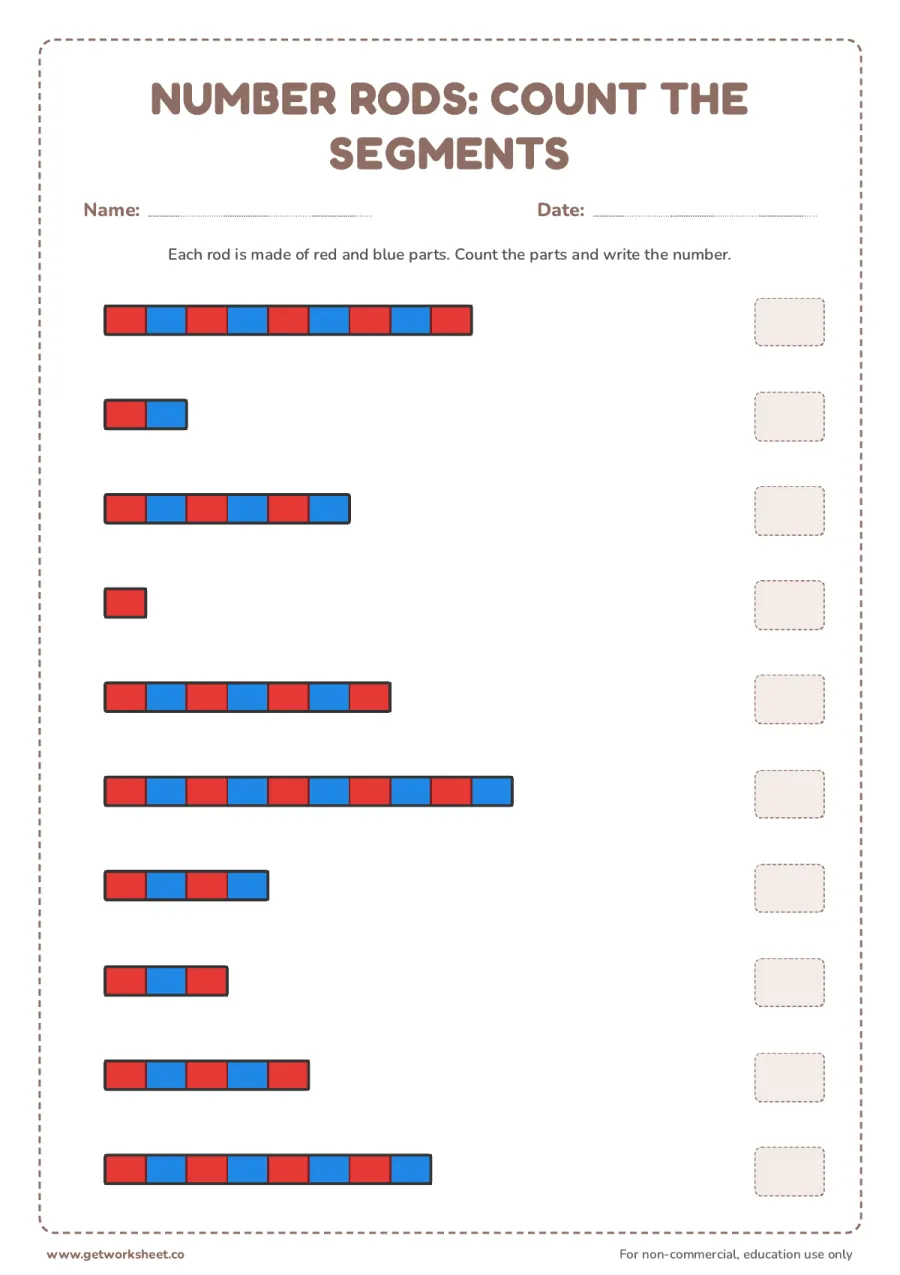
Number rods: count the segments
Red and blue rods 1 to 10 in mixed order; count the segments and write the number. Free printable PDF.
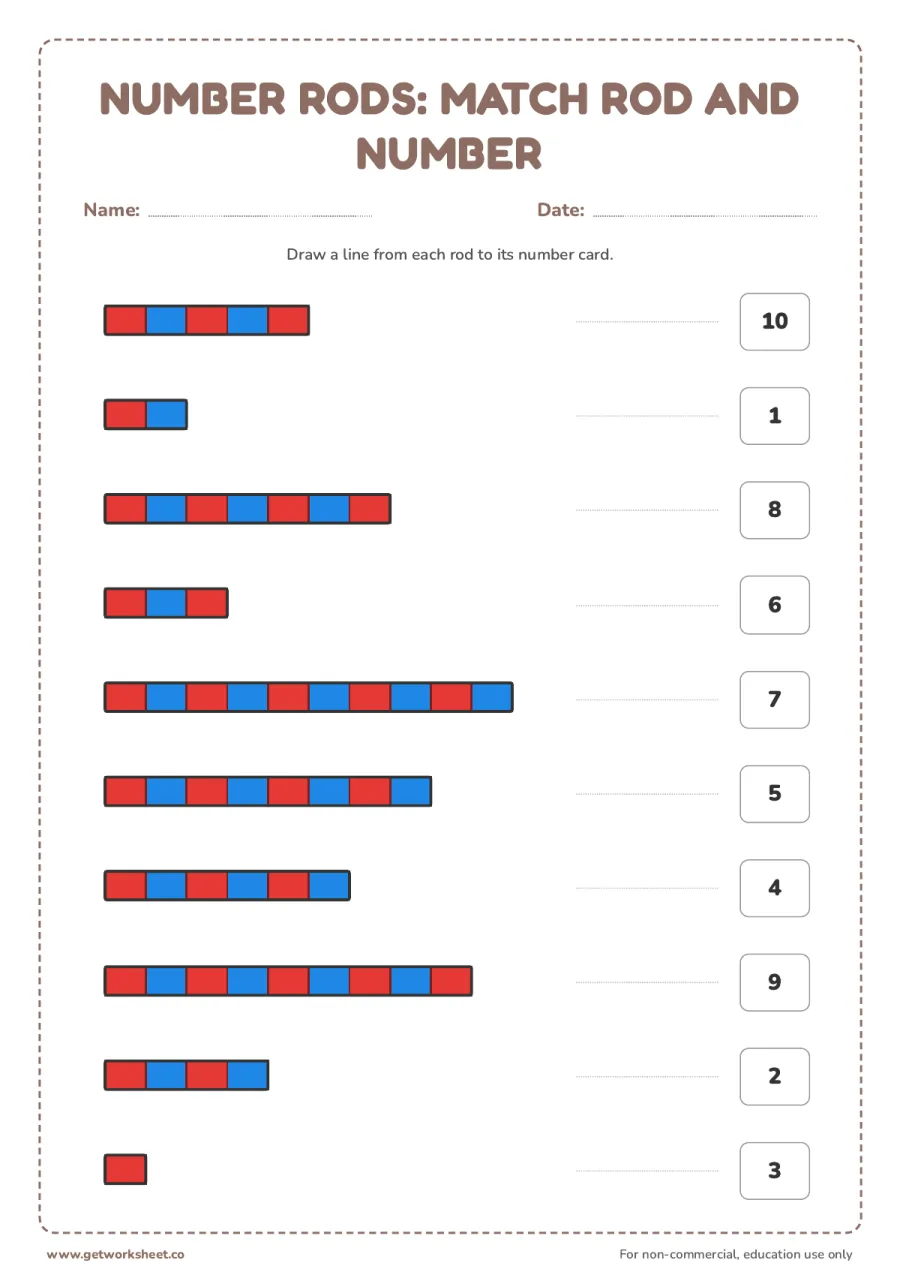
Number rods: match rod and number
Draw a line from each rod to its number card. Free printable PDF.
Complete pack
All 3 + 5 bonus, one PDF
- The 3 free sheets on this page
- 5 bonus sheets you will not find anywhere else
- Instant download, ad-free, no account needed
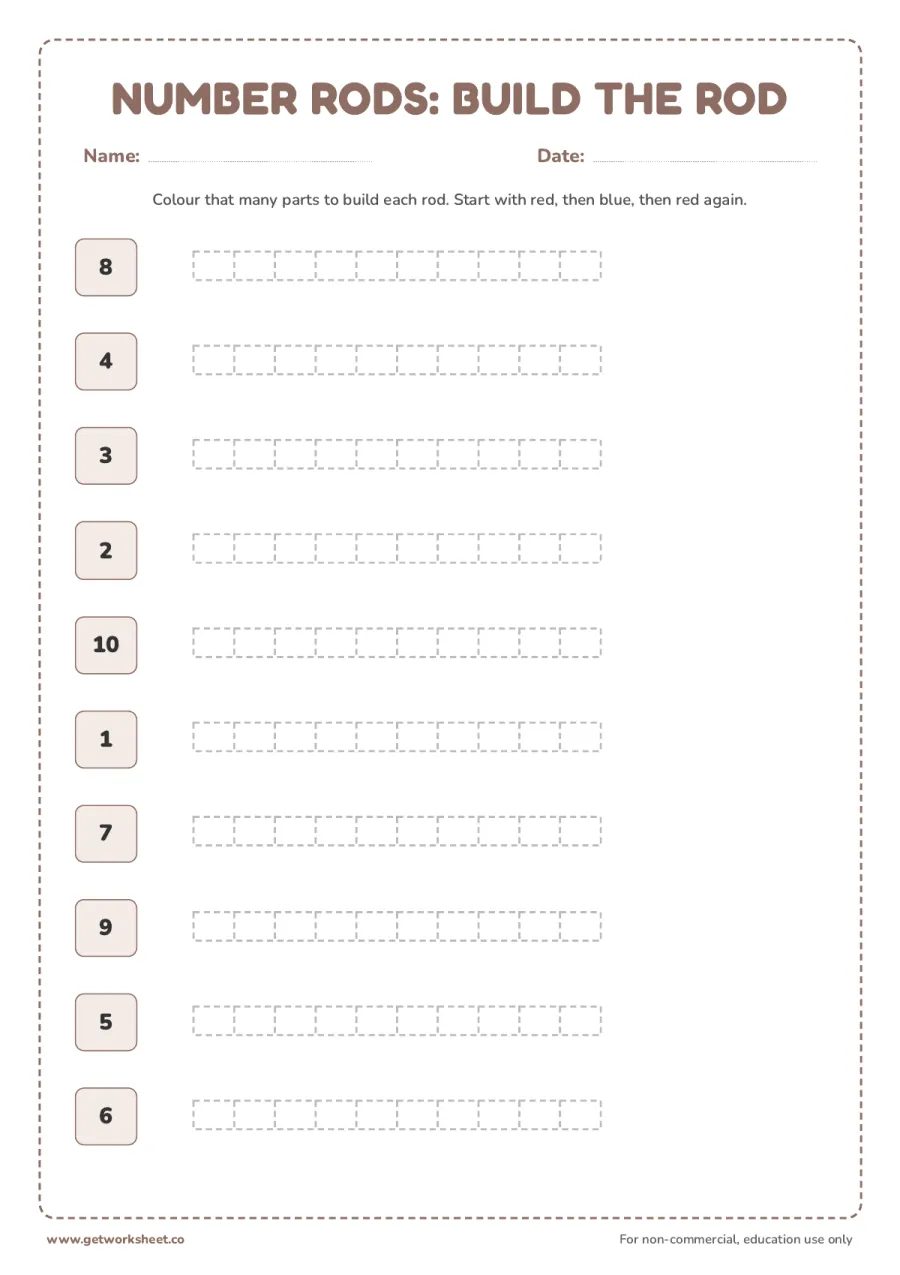
Number rods: build the rod
Colour red and blue segments to build each rod from 1 to 10. Free printable PDF.
AI worksheet generator
Make a worksheet like this for your class
The 3 sheets above are fixed. The generator writes a new montessori number rods worksheet for your grade, with the question types and count you choose, in about 20 seconds. Pick a grade to start:
What you get
- A fresh set of questions on montessori number rods, not a copy of the sheets above
- Multiple choice, fill in the blanks, true or false, open ended
- Answer key and print-ready PDF with Pro
Free account, 1 worksheets a week. No card.
Number rods are the first Montessori math material. Ten wooden rods grow from one segment to ten, and each segment is painted red or blue in turn, so the rod for 4 shows red, blue, red, blue. The child sees a number as a single length before ever seeing a numeral. These three worksheets follow the same progression a teacher would. The first, count the segments, shows the red and blue rods for 1 to 10 in mixed order; the child counts the segments and writes the number. The second, match rod and number, asks the child to draw a line from each rod to its number card. The third, build the rod, gives the number and the child colors red and blue segments to make each rod from 1 to 10.
The three sheets move from quantity to symbol and back again, which is the whole point of the material: a number names how many, not just a word in a counting chant.
What Students Will Practice
- Counting the segments of a rod from 1 to 10 on the count the segments sheet
- Understanding that each number is one more than the last, shown as one more segment
- Matching a quantity (the rod) to its symbol (the number card) with a drawn line
- Coloring segments in the red, blue, red pattern to build a given number
- Comparing lengths across the rods on the page: which rod is longer, which number is bigger
Free printable makers
Make your own montessori number rods sheets
Type your own words or numbers and print in about 30 seconds. No account, no AI, answer key where it applies.
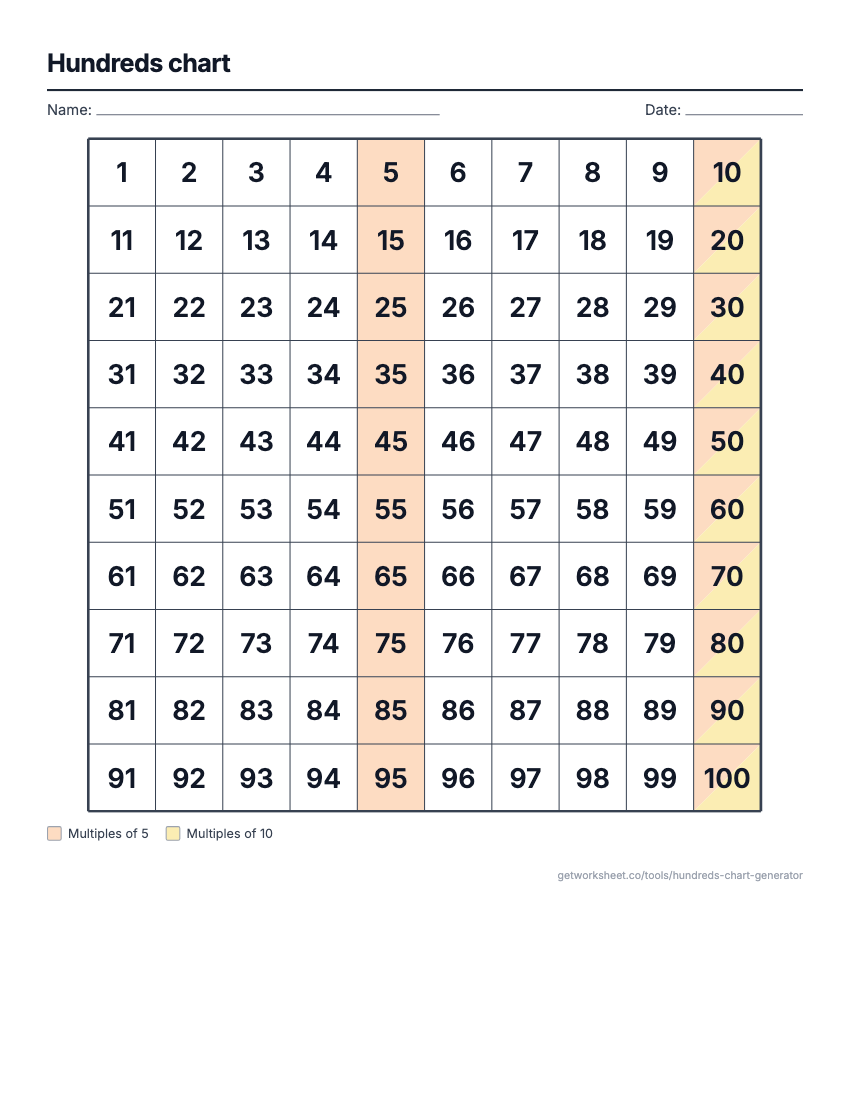 Hundreds chart generator1-100, 1-120 or 0-99, blank or missing numbers, skip-count colours, odd/even. Free to print.
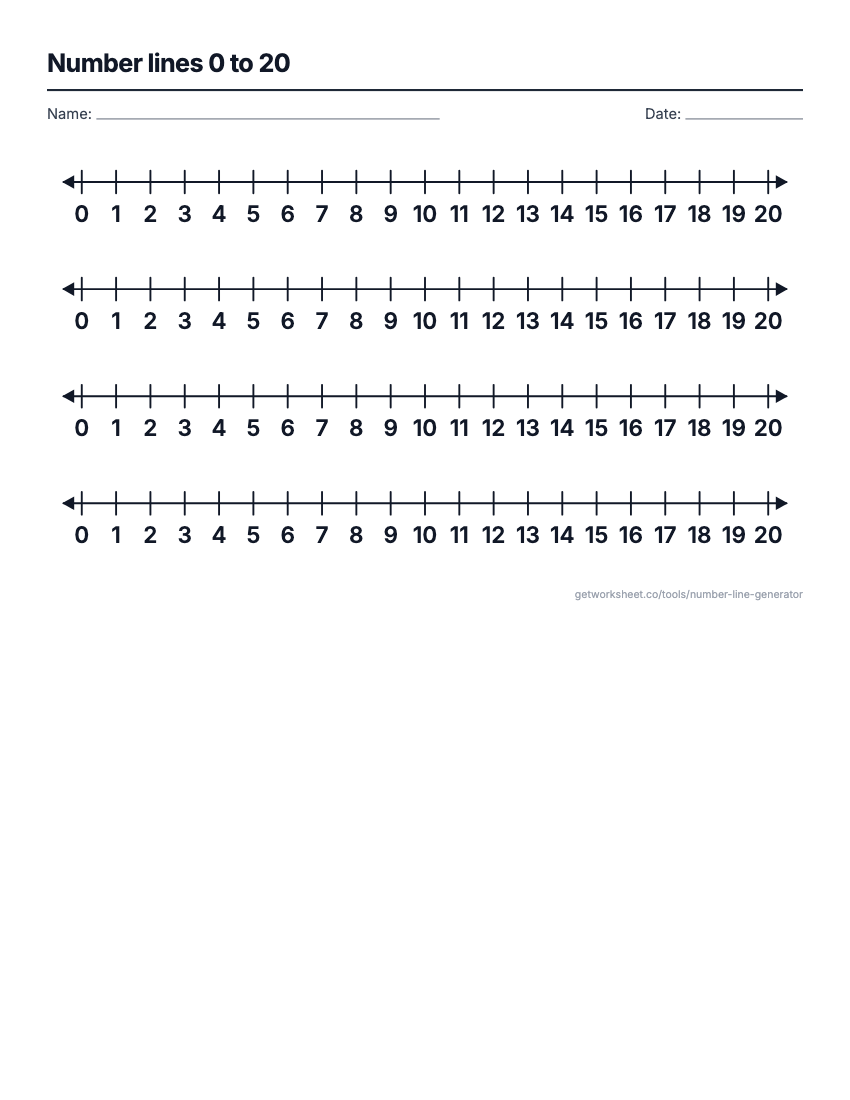 Number line generatorAny range and step, fractions and decimals, blank or missing numbers with a key. Free to print.
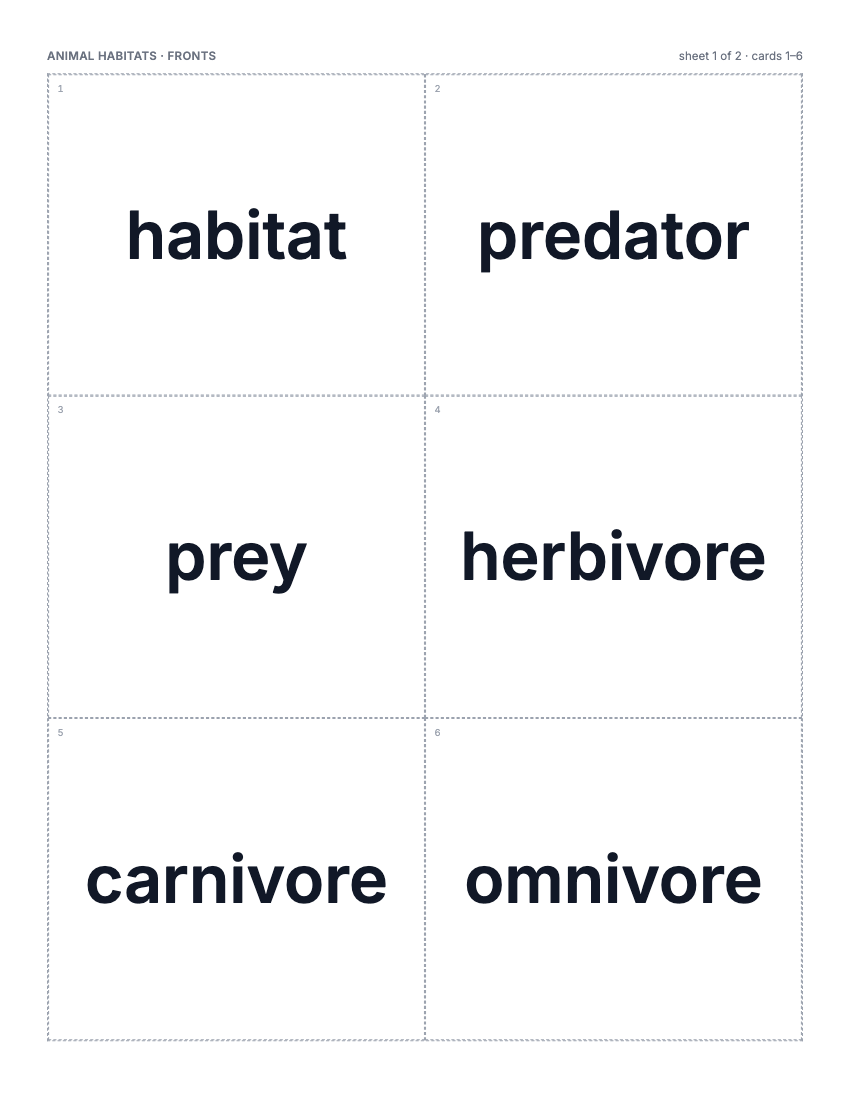 Flashcard makerVocabulary, math fact or sight word cards, 2-8 a page, two-sided or fold-over. Free to print.
AI worksheet generator
Need a different montessori number rods worksheet?
Generate a custom montessori number rods worksheet: pick the grade, question types and count, and print it in about 20 seconds. Free accounts get 1 generation a week.
Complete pack · $2.99
All 3 sheets above, plus 5 bonus sheets you will not find on this page
3 free sheets + 5 bonus sheets in one print-ready PDF with a contents page. Instant, no ads, no account; the link is emailed to you so it works on any device. The 3 sheets above stay free.
- BonusNumber rods: count the segments, set 2
- BonusNumber rods: match rod and number, set 2
- BonusNumber rods: add two rods
- BonusNumber rods: make ten
- BonusNumber rods: longer or shorter?
One-time payment of $2.99. Card, Apple Pay or Google Pay. For home and classroom use.
- Bonus
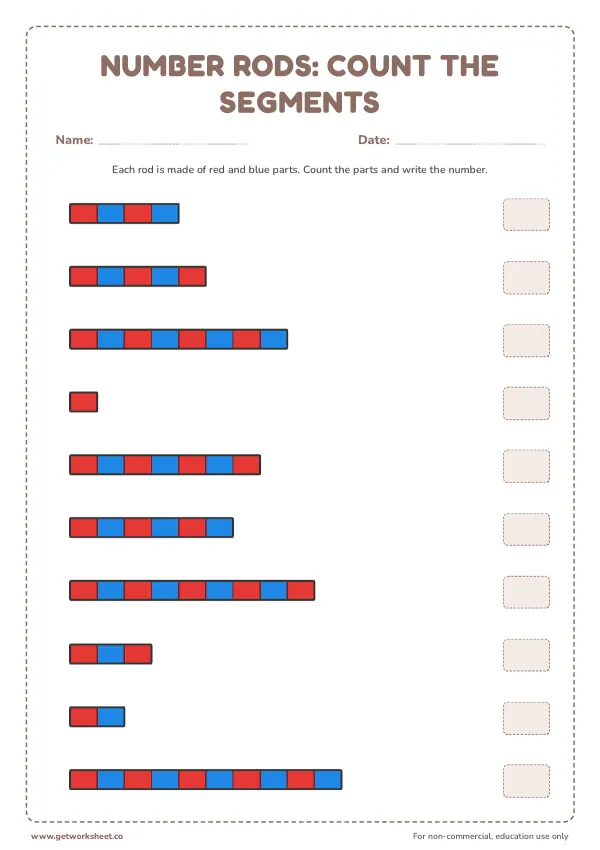 Number rods: count the segments, set 2
 - Bonus
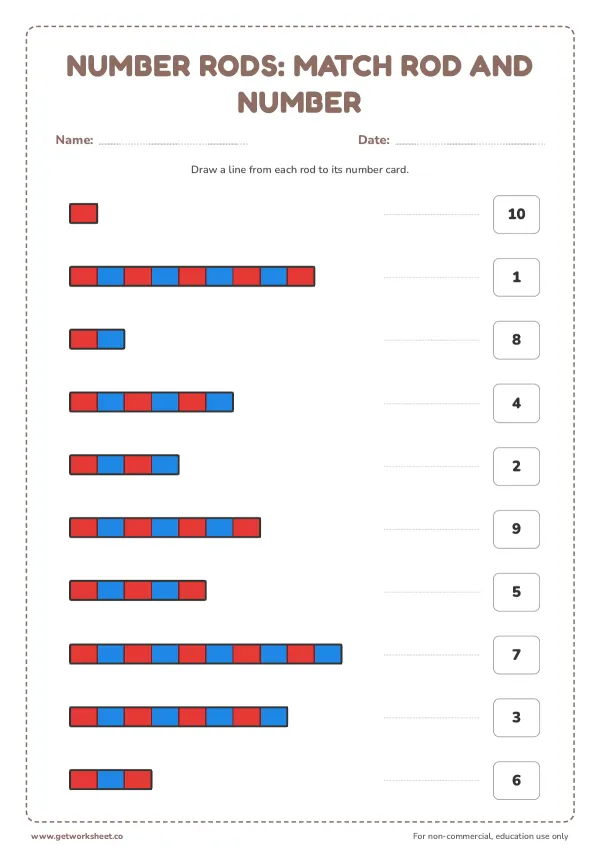 Number rods: match rod and number, set 2
 - Bonus
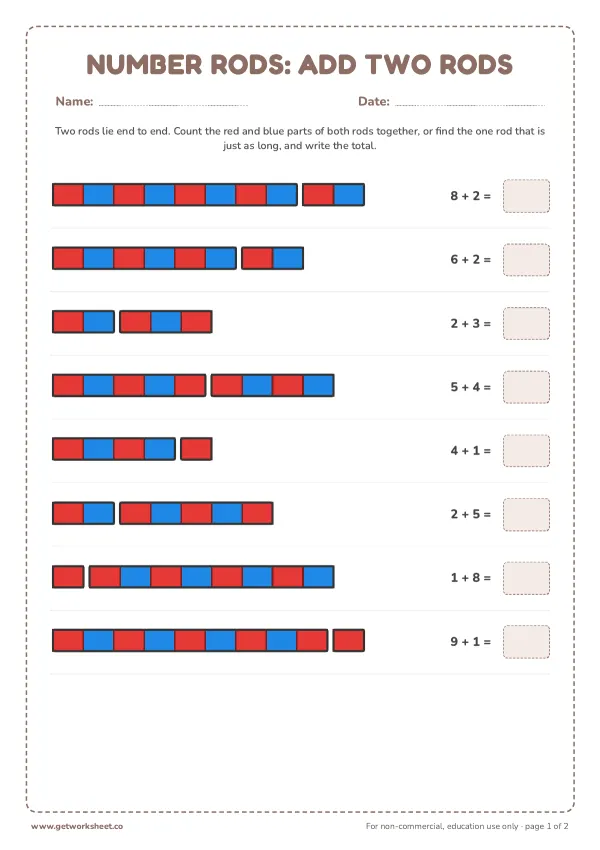 Number rods: add two rods
 - Bonus
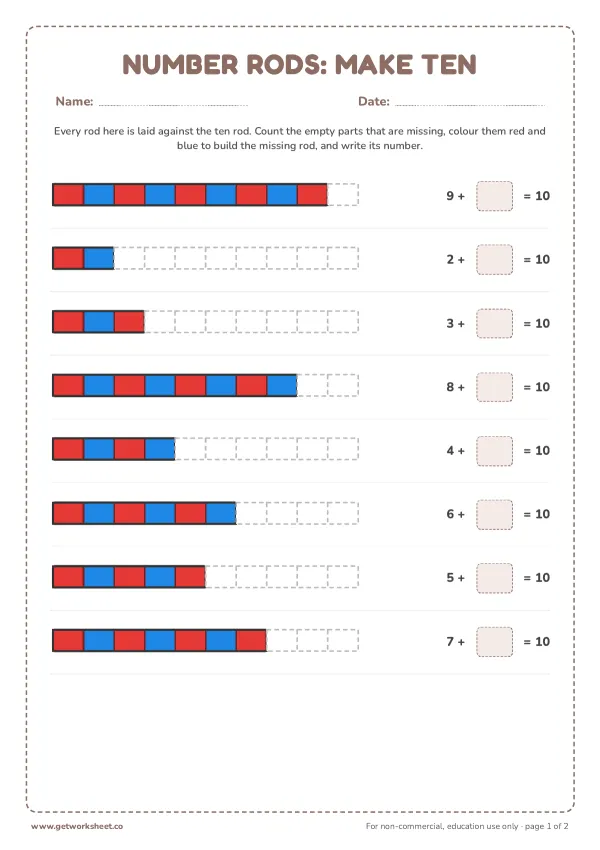 Number rods: make ten
 - Bonus
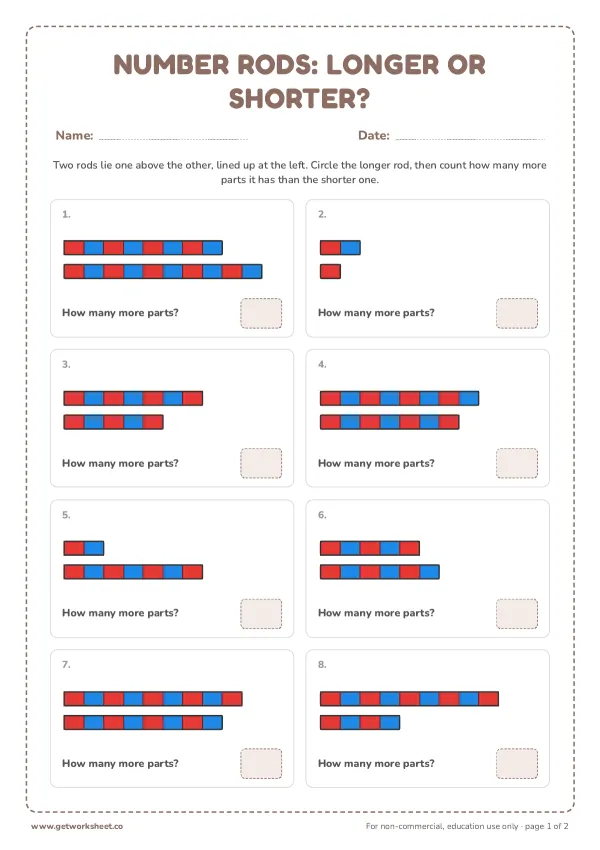 Number rods: longer or shorter?
Teaching tips and common mistakes
How to Use These Worksheets
Print at 100% on A4 or US Letter paper. Red and blue pencils are needed for sheet three.
- Sheet one: count the segments. Rods appear in mixed order. Have your child touch each segment and count aloud, then write the number in the box. Ask which rod is the longest before starting.
- Sheet two: match. Draw a line from each rod to its number card. If your child hesitates, cover the number cards and count the rod first, then find the card.
- Sheet three: build the rod. The number is given; the child colors that many segments, starting with red and alternating. This reverses the first sheet and checks true understanding.
- Put rods in order. After sheet one, ask your child to point to the rods in order from 1 to 10 on the page. With real rods, building the stair is the classic first exercise.
- Use the language. “This is three.” “Show me five.” “Which one is seven?” are the three-period lesson questions Montessori teachers use.
Common Mistakes to Watch For
- Counting segments twice: Move a finger from left to right and count each color change once.
- Coloring the right number but the wrong pattern: The alternating red and blue is what makes segments countable. Check the first segment is red.
- Judging by length without counting: Good instinct, but confirm by counting until it is reliable.
- Confusing 6 and 9 on the number cards: Common at this age. Point out that the card sits with its flat edge at the bottom.
Frequently Asked Questions
What are Montessori number rods?
Ten wooden rods from 10 cm to 1 meter long, divided into 10 cm segments painted alternately red and blue. The shortest rod is one red segment; the longest has ten segments. Children learn quantities 1 to 10 by handling and ordering them.
What age are number rods for?
Around 3½ to 4½, after the sensorial red rods and before sandpaper numerals. They are the first material in the Montessori math sequence.
Why are the segments red and blue?
So the child can count the segments and see that each rod is exactly one more than the last. The colors make the units visible without breaking the rod into pieces.
What comes after the number rods?
Sandpaper numerals, which introduce the written symbols, and then number rods and cards together, matching each rod to its numeral. Our sandpaper numerals and cards and counters worksheets cover that step.
More Montessori Maths
See the full sequence on the free Montessori worksheets page. The number rods lead directly to the sandpaper numerals and cards and counters worksheets and then the bead stair worksheets. Children who enjoy the rods often like the number tracing worksheets as their next paper activity.
Free library
Related collections
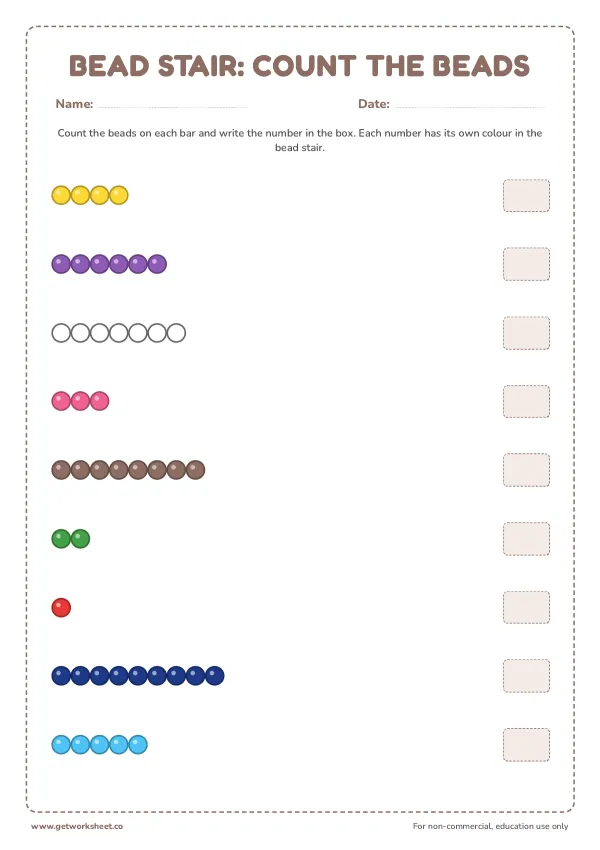
Free Montessori bead stair worksheets
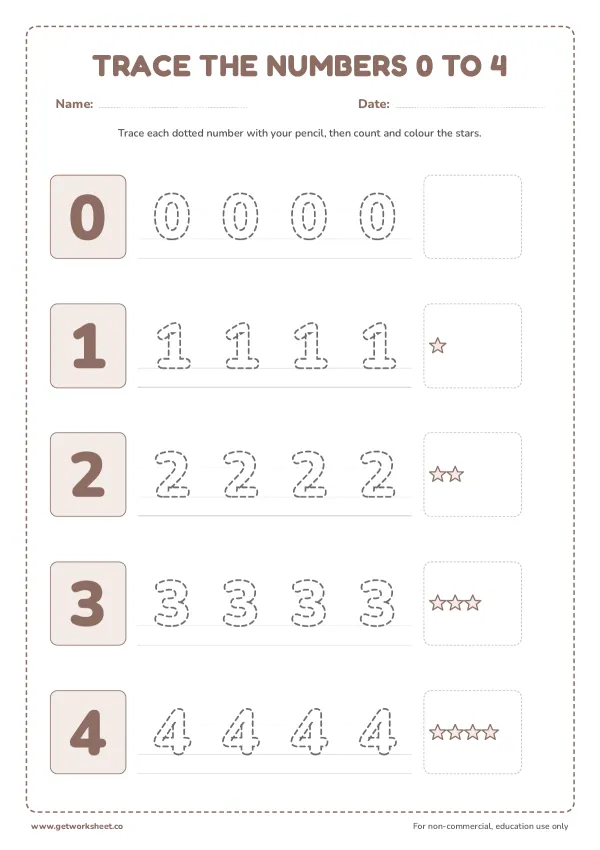
Free Montessori sandpaper numerals and cards and counters worksheets
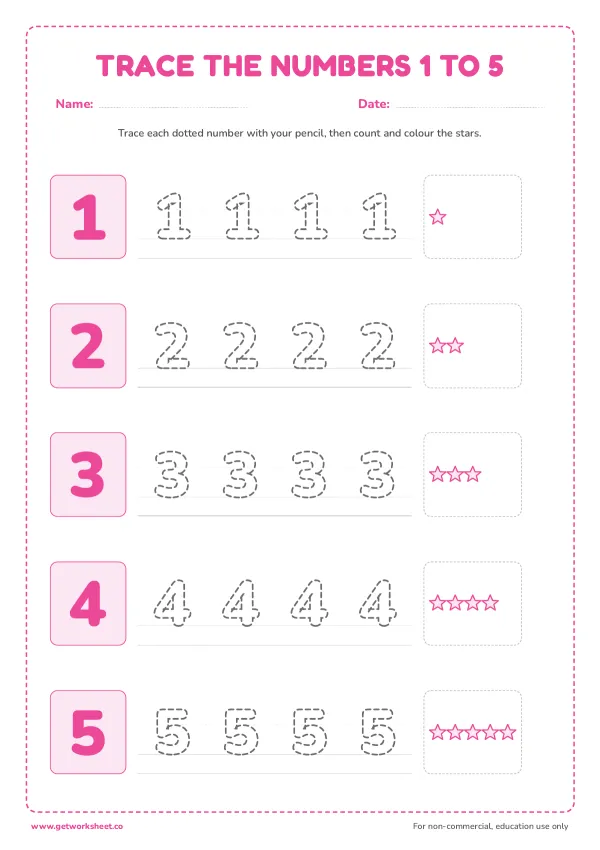
Free number tracing worksheets (1-20)
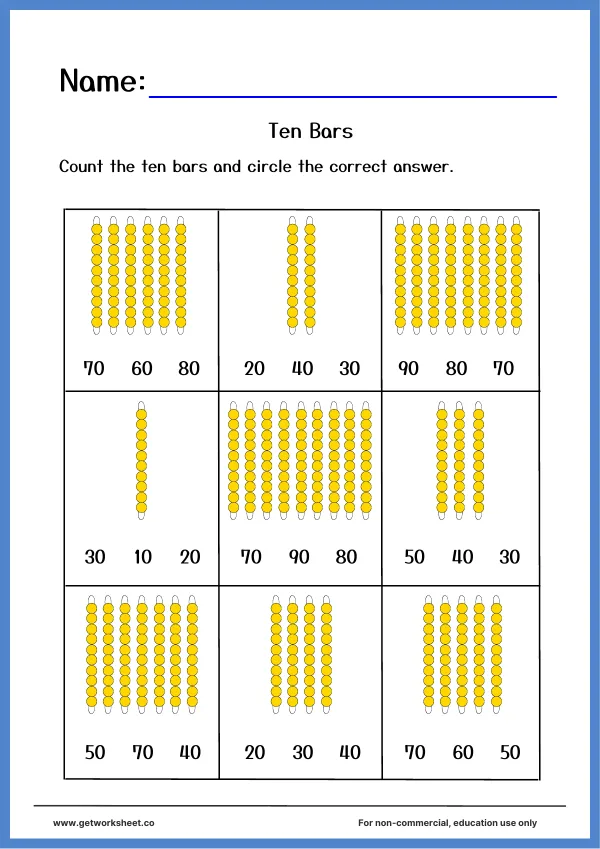
Free Montessori worksheets (PDF)
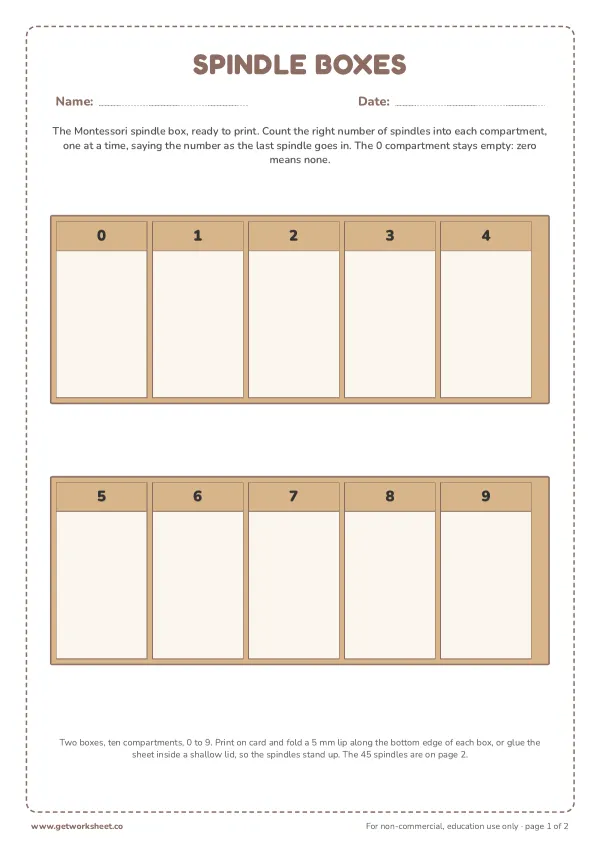
Free Montessori spindle box worksheets
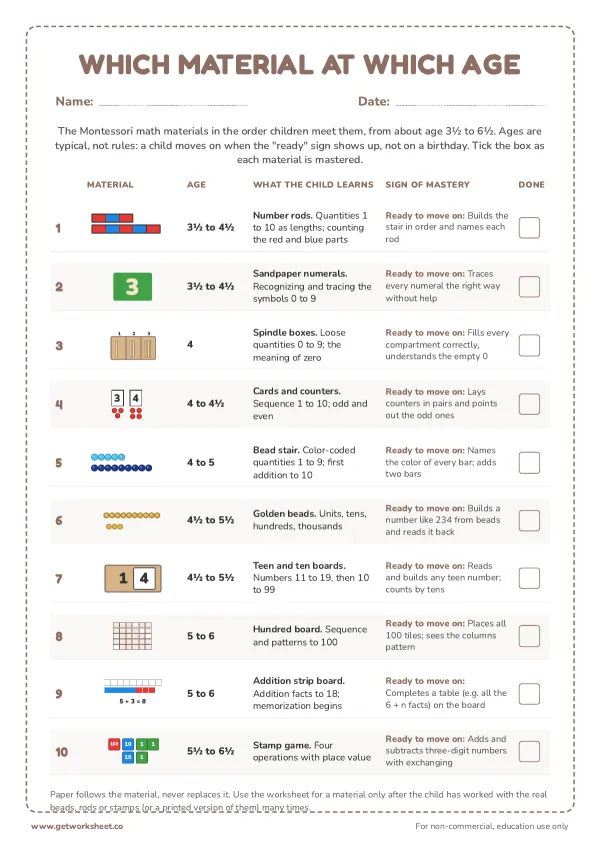
Free Montessori math worksheets: one from every material
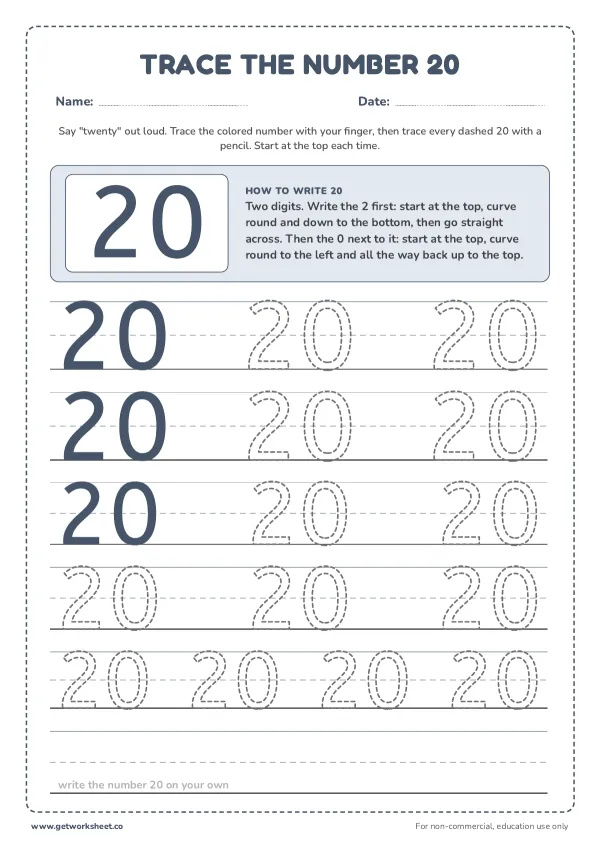
Free number 20 tracing worksheets
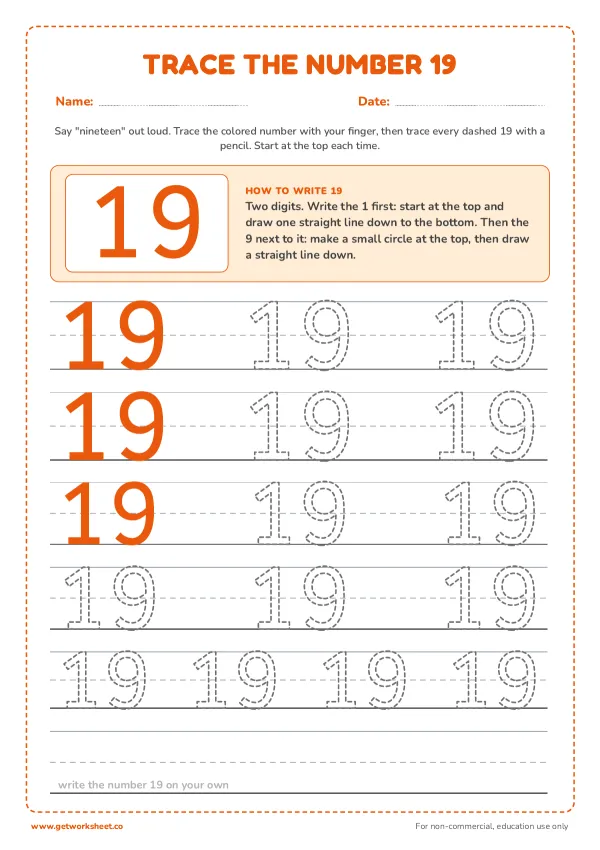
Free number 19 tracing worksheets
More worksheets
- Free number 18 tracing worksheets
- Free number 17 tracing worksheets
- Free number 16 tracing worksheets
- Free number 15 tracing worksheets
- Free number 14 tracing worksheets
- Free number 13 tracing worksheets
- Free number 12 tracing worksheets
- Free number 11 tracing worksheets
- Free number 10 tracing worksheets
- Free number 9 tracing worksheets
- Free number 8 tracing worksheets
- Free number 7 tracing worksheets