Maths · Grades 4–6
Free prime number worksheets
The 25 prime numbers from 1 to 100 are 2, 3, 5, 7, 11, 13, 17, 19, 23, 29, 31, 37, 41, 43, 47, 53, 59, 61, 67, 71, 73, 79, 83, 89 and 97. Print the chart (sheet 6) or practise with ten free worksheets with answer keys, grades 4 to 6.
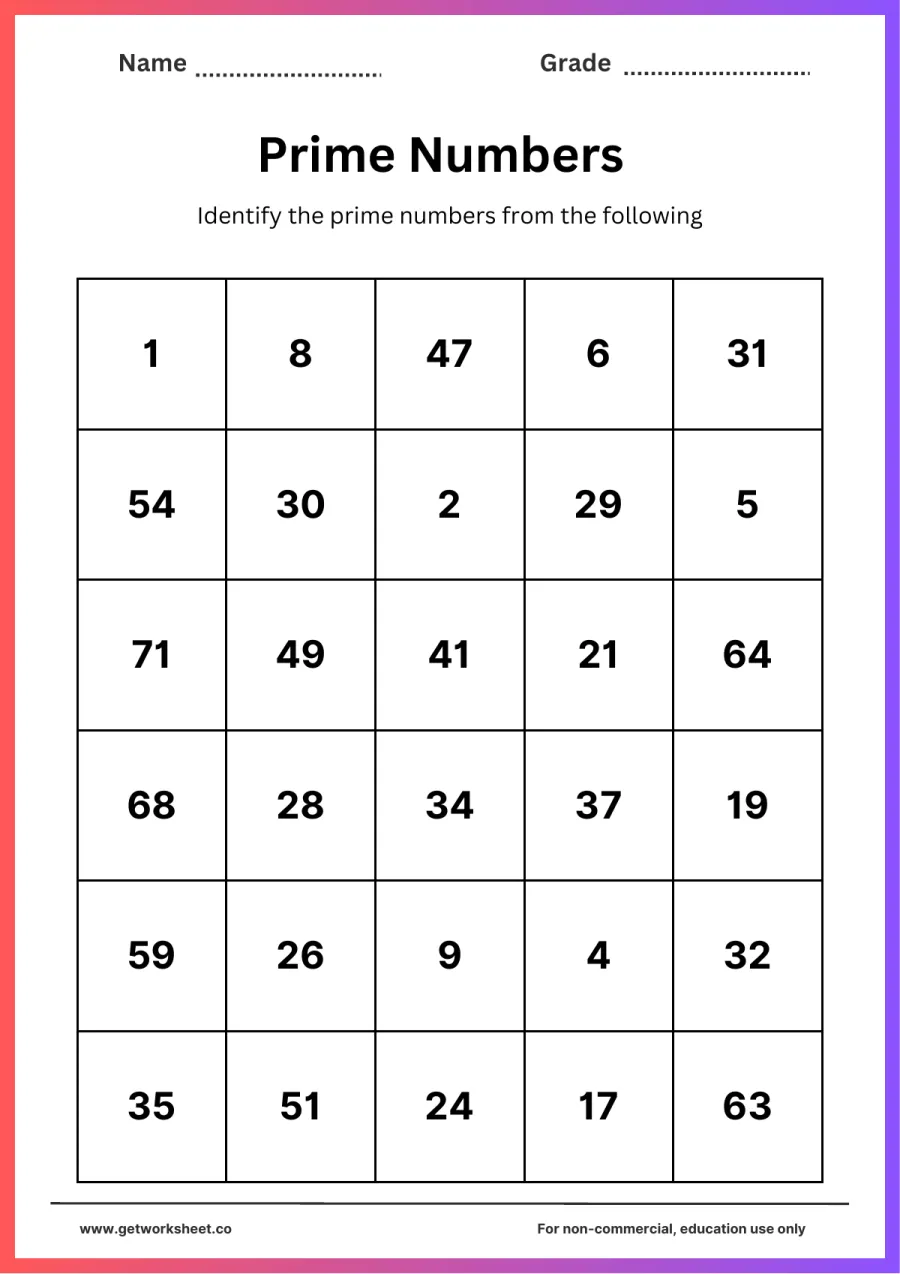
Circle the primes: 30 numbers from 1 to 71 (11 primes)
Identify the prime numbers in a grid of 30 numbers from 1 to 71, including 2, 29, 47 and 71; 11 of the 30 are prime.
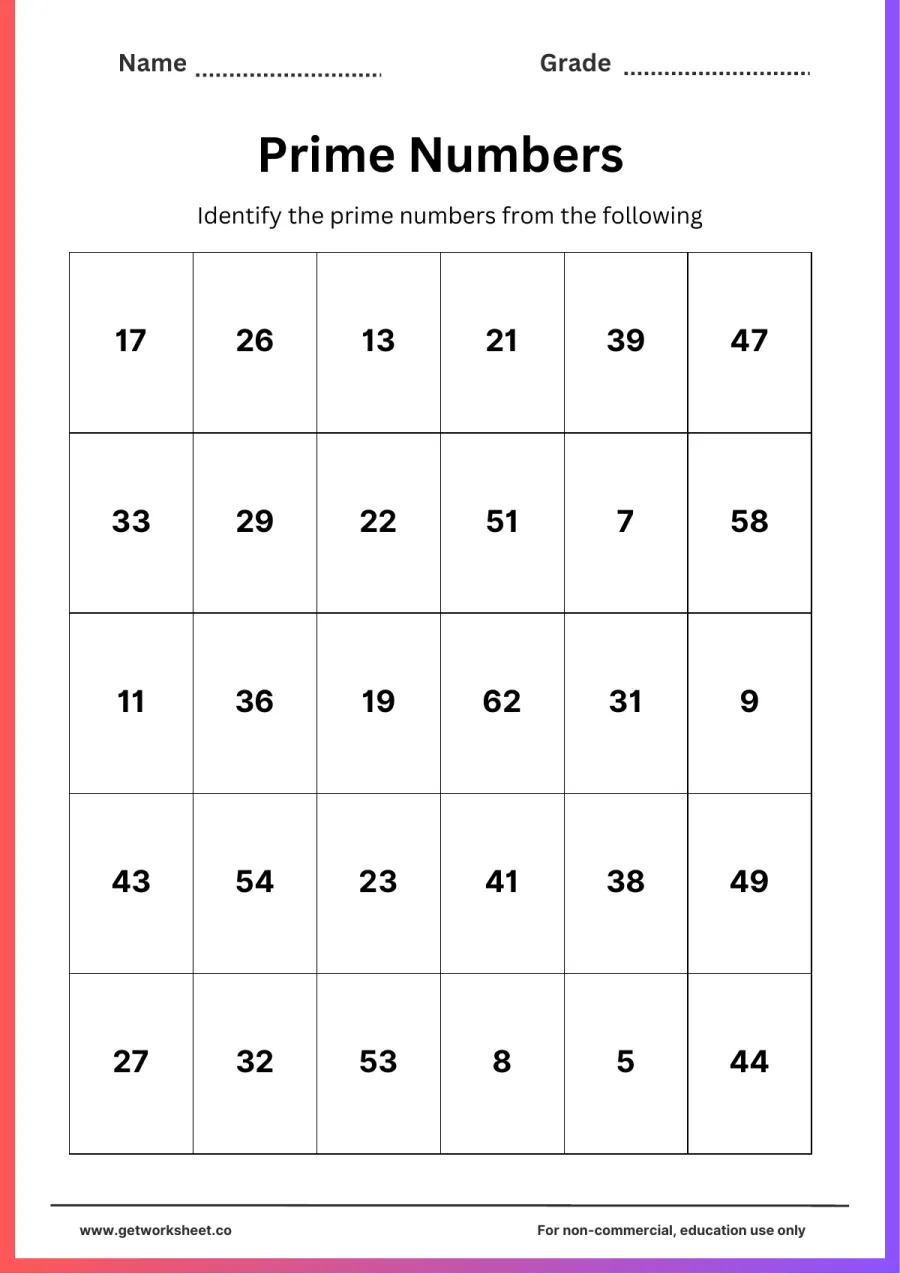
Circle the primes: 30 numbers from 5 to 62 (13 primes)
Identify the prime numbers in a grid of 30 numbers from 5 to 62, including 7, 13, 43 and 53; 13 of the 30 are prime.
Complete pack
All 10 sheets + 4 bonus sheets in one PDF
Instant and ad-free. No account needed.
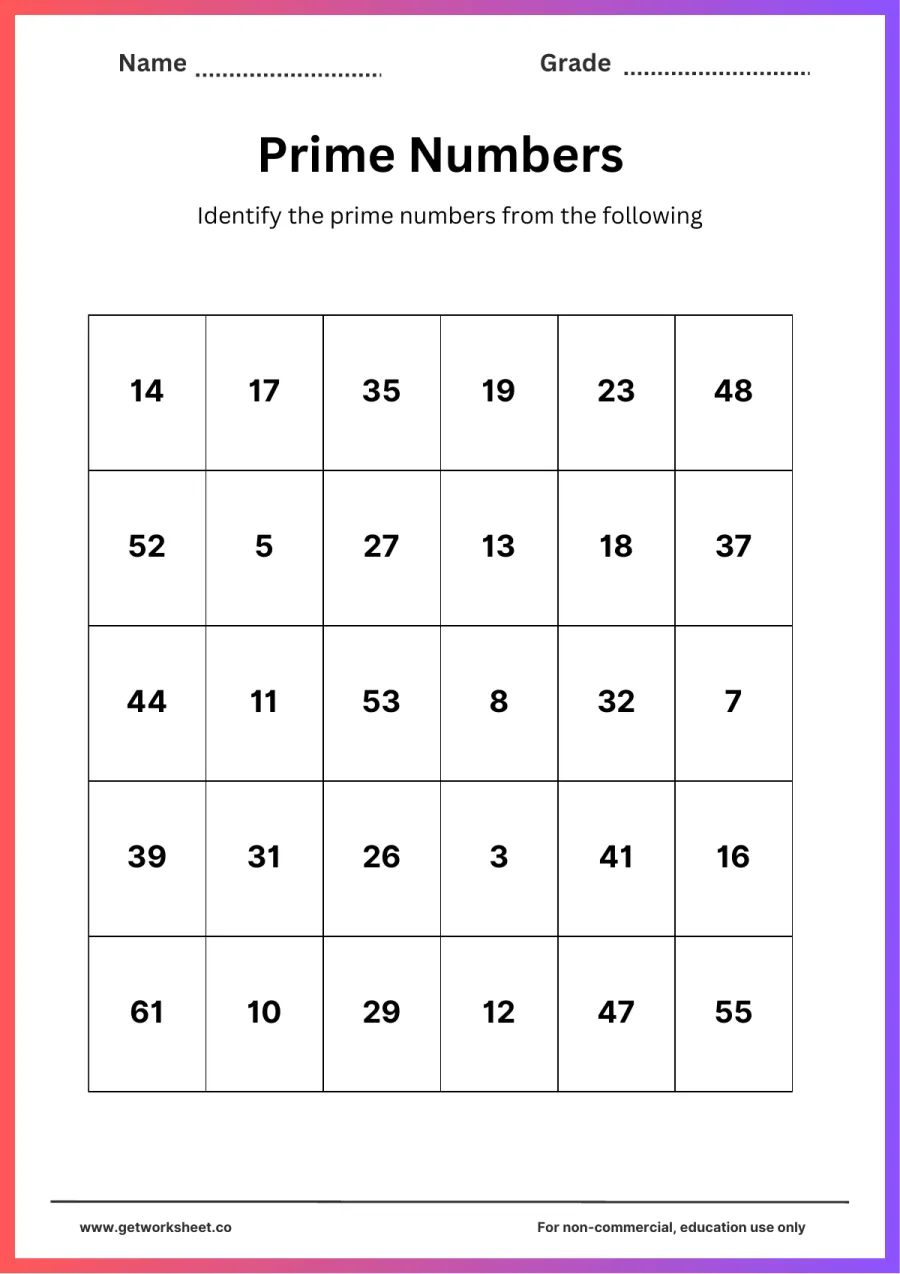
Circle the primes: 30 numbers from 3 to 61 (15 primes)
Identify the prime numbers in a grid of 30 numbers from 3 to 61, including 3, 23, 37 and 61; half of the 30 are prime.
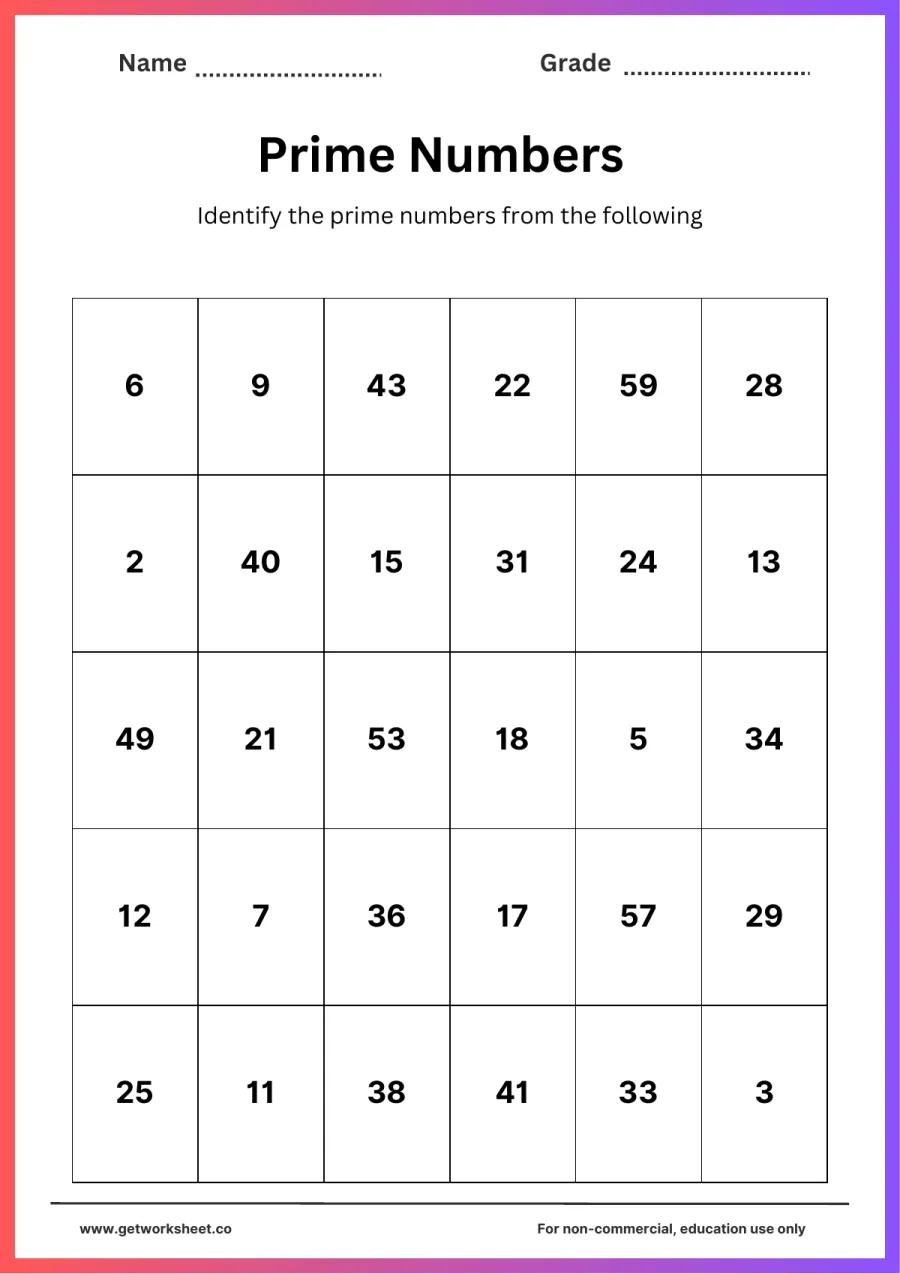
Circle the primes: 30 numbers from 2 to 59 (13 primes)
Identify the prime numbers in a grid of 30 numbers from 2 to 59, including 2, 17, 43 and 59; 13 of the 30 are prime.
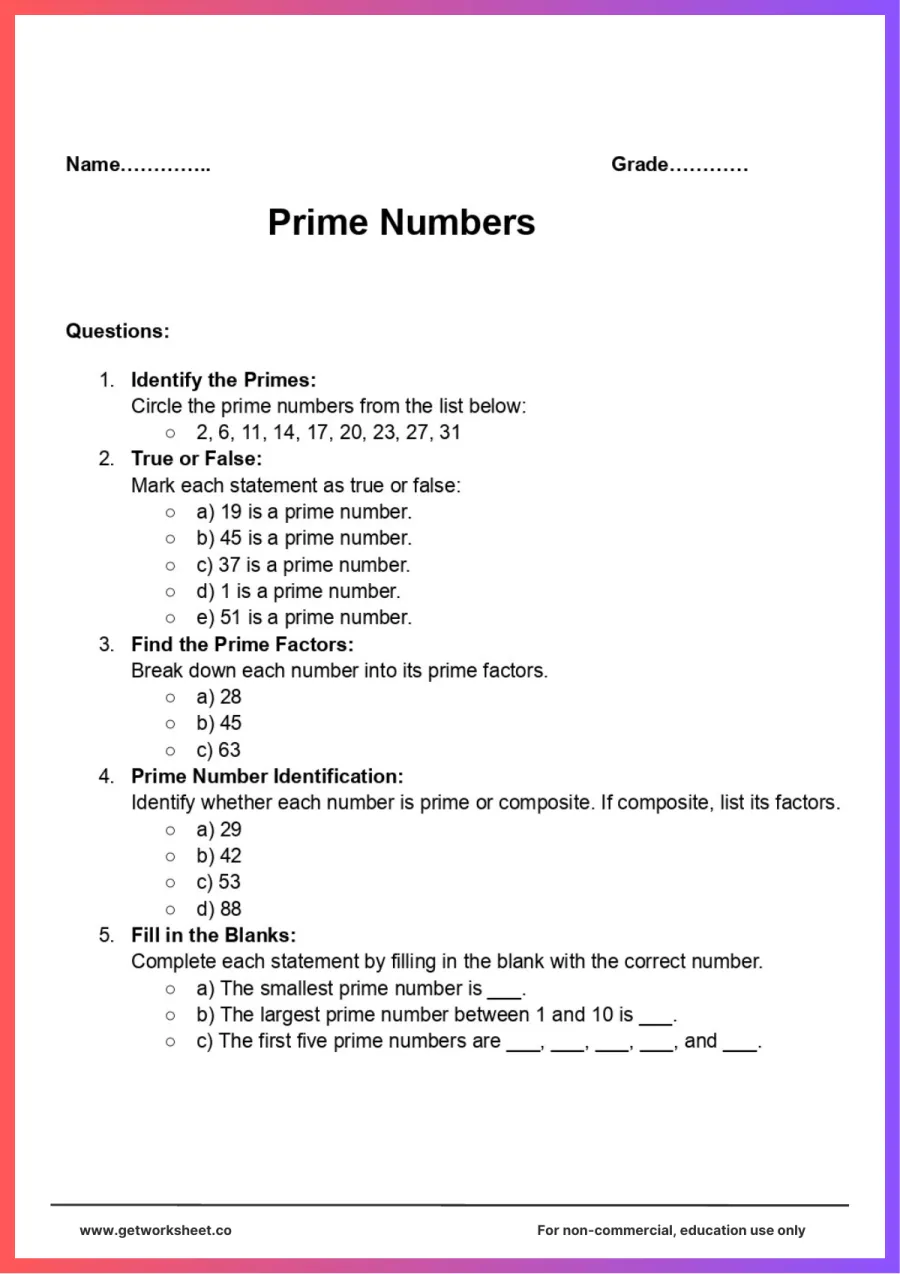
Prime numbers mixed review: true or false, prime factors, fill the blanks
Five short question types on one page: identify primes in a list, true or false, prime factors of 28, 45 and 63, prime or composite, and fill in the blanks. Free printable PDF.
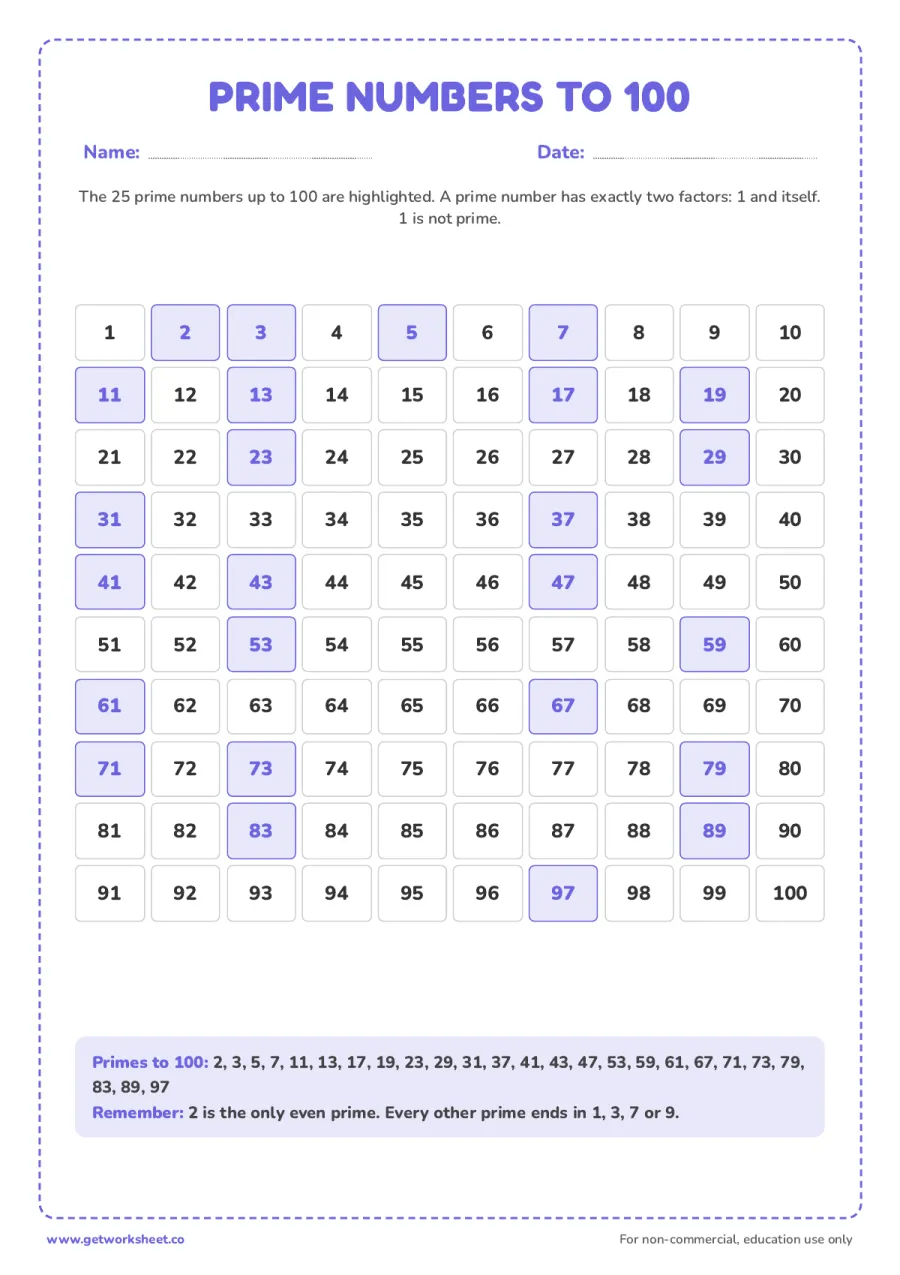
Prime numbers chart 1 to 100 with the 25 primes highlighted
Reference chart of 1 to 100 with the 25 primes highlighted, the definition of a prime, the list of primes and a note that 2 is the only even prime.
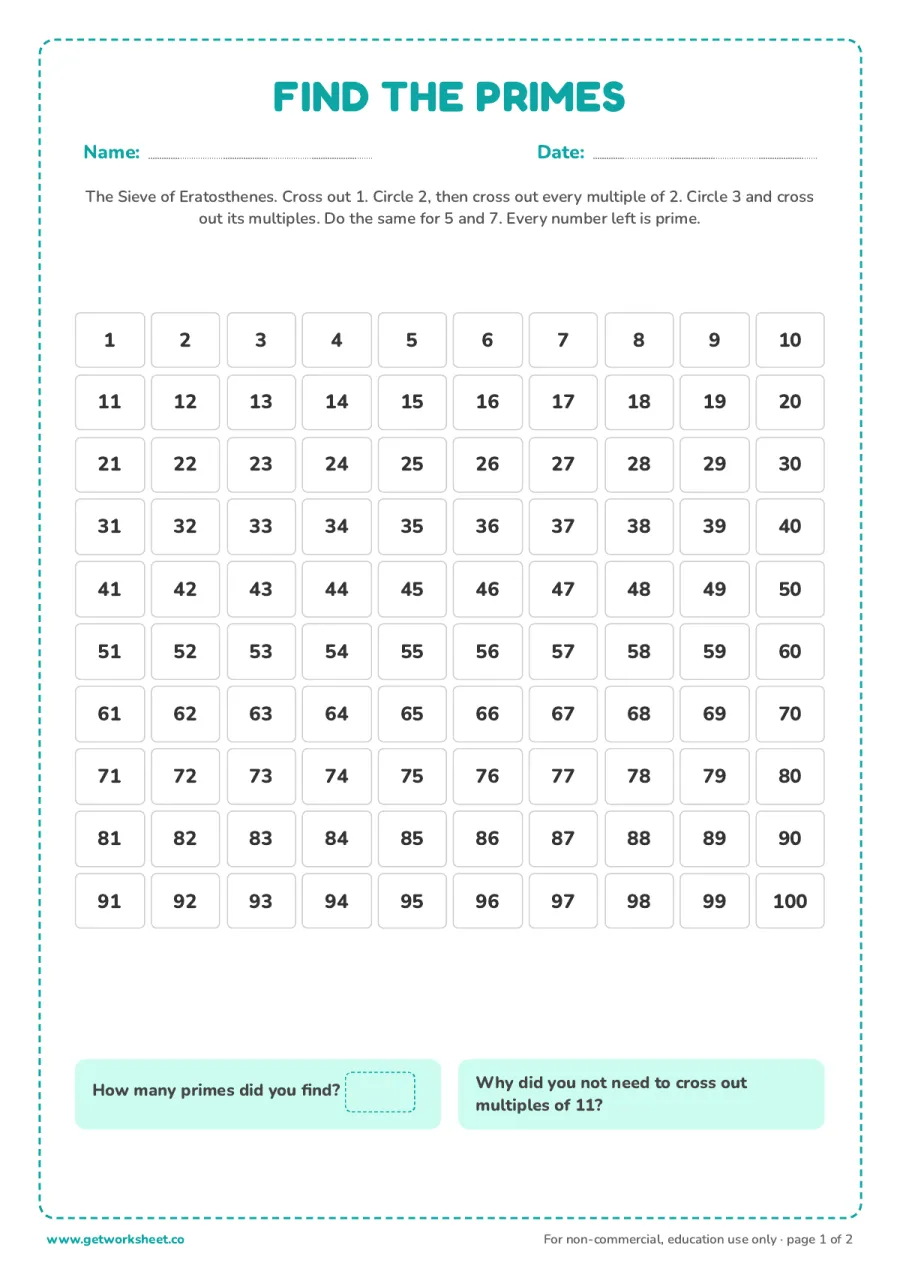
Sieve of Eratosthenes: find every prime up to 100
Cross out multiples of 2, 3, 5 and 7 on a 1 to 100 grid to leave the primes, then answer two questions about the method; 2 pages.
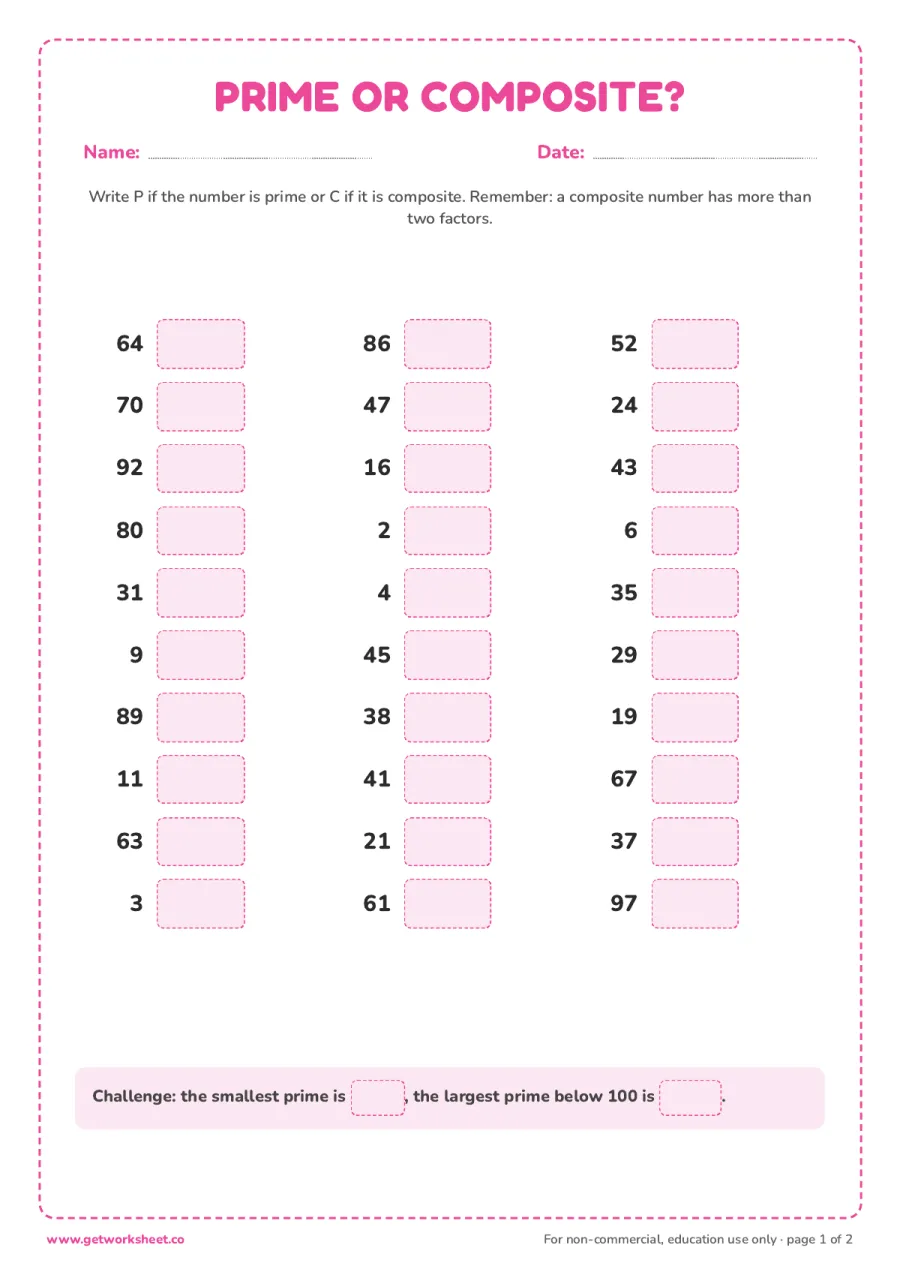
Prime or composite? 30 numbers to sort
Thirty numbers from 2 to 99 to label P or C, plus a challenge line. Answer key on page 2. Free printable PDF.
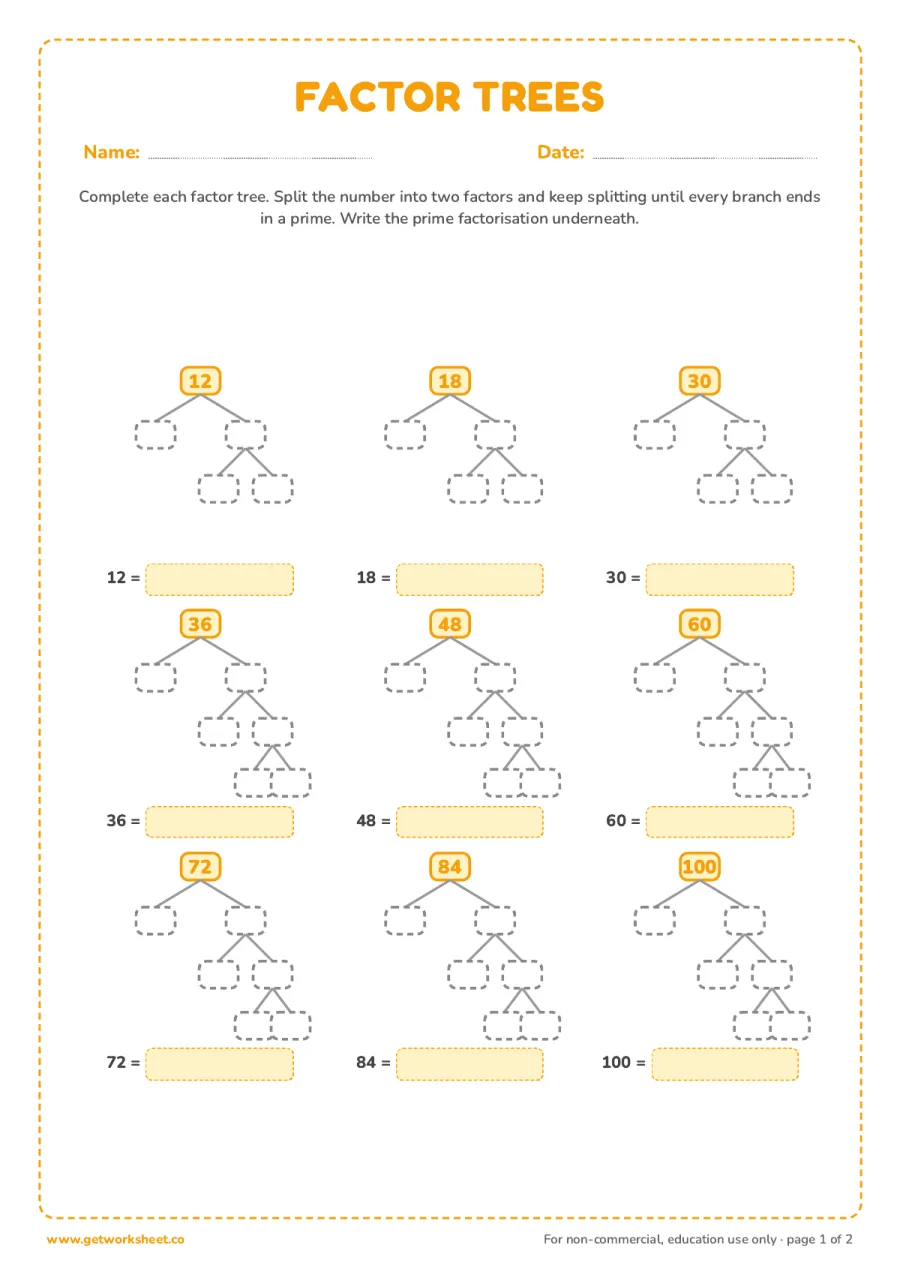
Factor trees: prime factorisation of 12 to 100, 9 numbers
Complete factor trees for 12, 18, 30, 36, 48, 60, 72, 84 and 100 and write each prime factorisation underneath; 2 pages.
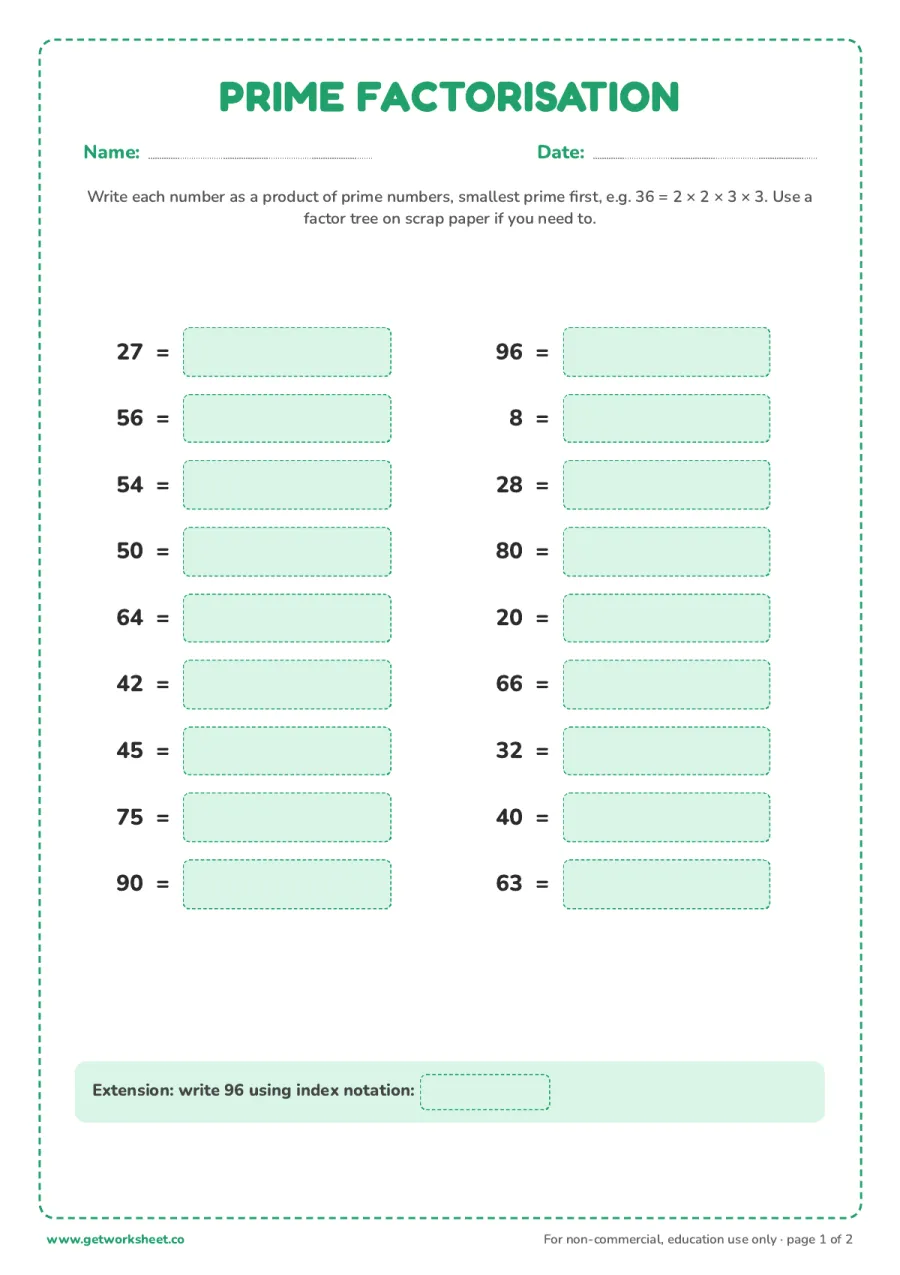
Prime factorisation practice
Eighteen numbers to write as a product of primes, with an index-notation extension. Answer key on page 2. Free printable PDF.
AI worksheet generator
Make a worksheet like this for your class
The 10 sheets above are fixed. The generator writes a new prime number worksheet for your grade, with the question types and count you choose, in about 20 seconds. Pick a grade to start:
What you get
- A fresh set of questions on prime number, not a copy of the sheets above
- Multiple choice, fill in the blanks, true or false, open ended
- Answer key and print-ready PDF with Pro
Free account, 1 worksheets a week. No card.
Prime numbers from 1 to 100
2, 3, 5, 7, 11, 13, 17, 19, 23, 29, 31, 37, 41, 43, 47, 53, 59, 61, 67, 71, 73, 79, 83, 89, 97. There are 25 primes below 100. Sheet 6 is a printable chart with all of them highlighted on a 1 to 100 grid.
- Is 1 a prime number? No. A prime has exactly two factors, 1 and itself, and 1 has only one.
- Is 2 prime? Yes, and it is the only even prime: every other even number divides by 2.
- Quick test: a number under 100 is prime if it is not divisible by 2, 3, 5 or 7 (and is not 1). So 29 is prime, 36 is not (36 = 2 x 2 x 3 x 3), and 51, 57 and 91 are not (3 x 17, 3 x 19, 7 x 13).
- Pattern: after 5, every prime ends in 1, 3, 7 or 9.
A prime number has exactly two factors, 1 and itself. That simple definition trips up a lot of students: 1 is not prime (it has one factor), 2 is the only even prime, and 51, 57 and 91 look prime but are not. These ten worksheets cover the whole topic for grades 4 to 6: quick circle-the-primes warm-ups, a reference chart of the 25 primes to 100, the Sieve of Eratosthenes so students discover the primes themselves, prime versus composite sorting, factor trees and prime factorisation. Every practice sheet built for this page carries its answer key on page 2.
What Students Will Practice
- Testing whether a number is prime by checking for factors other than 1 and itself
- Recognizing the primes to 100 and the patterns behind them (all primes after 2 are odd; all primes after 5 end in 1, 3, 7 or 9)
- Sorting numbers into prime and composite and explaining why
- Breaking a composite number into prime factors with a factor tree
- Writing a number as a product of primes, including index notation such as 2⁵ × 3
These skills sit under Common Core 4.OA.B.4 (find factor pairs, determine whether a number is prime or composite) and 6.NS.B.4 (greatest common factor), and in the UK national curriculum in Year 5 (know and use the vocabulary of prime numbers, prime factors and composite numbers; establish whether a number up to 100 is prime) and Year 6.
Free printable makers
Make your own prime number sheets
Type your own words or numbers and print in about 30 seconds. No account, no AI, answer key where it applies.
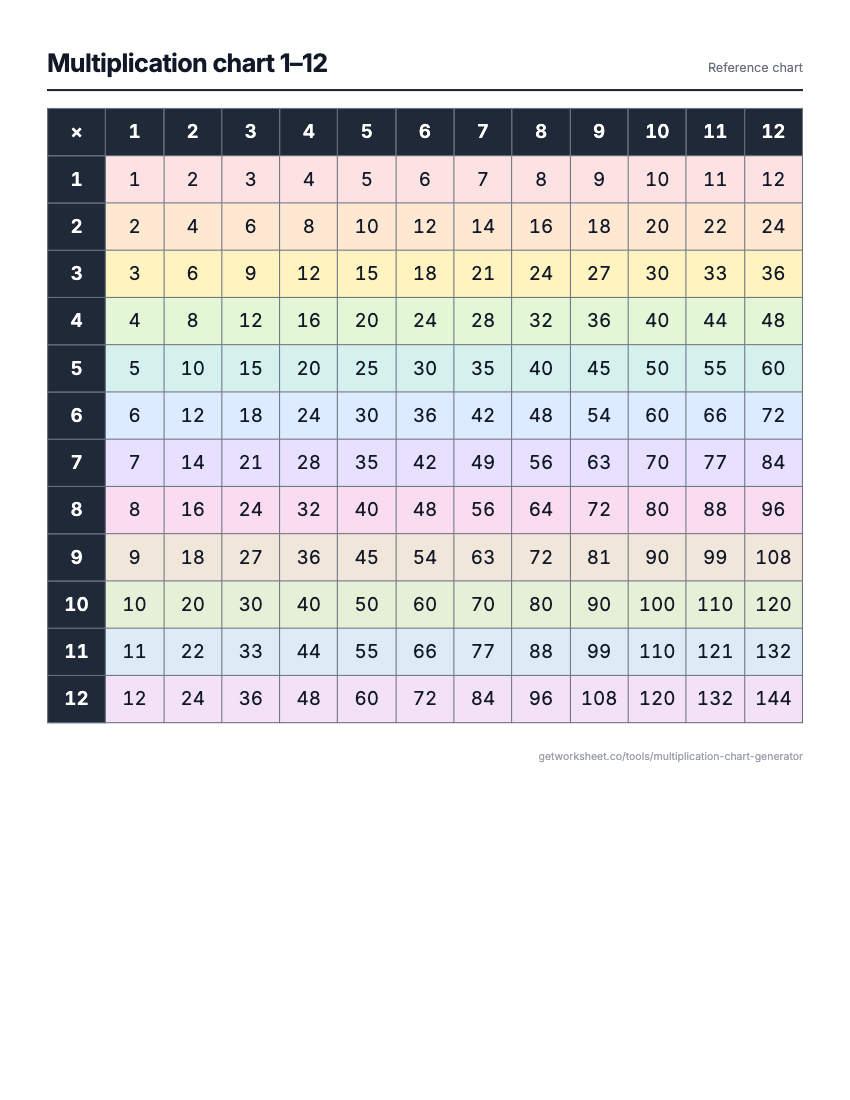 Multiplication chart generatorCharts to 15, full, blank or coloured, and times table tests with key. Free to print.
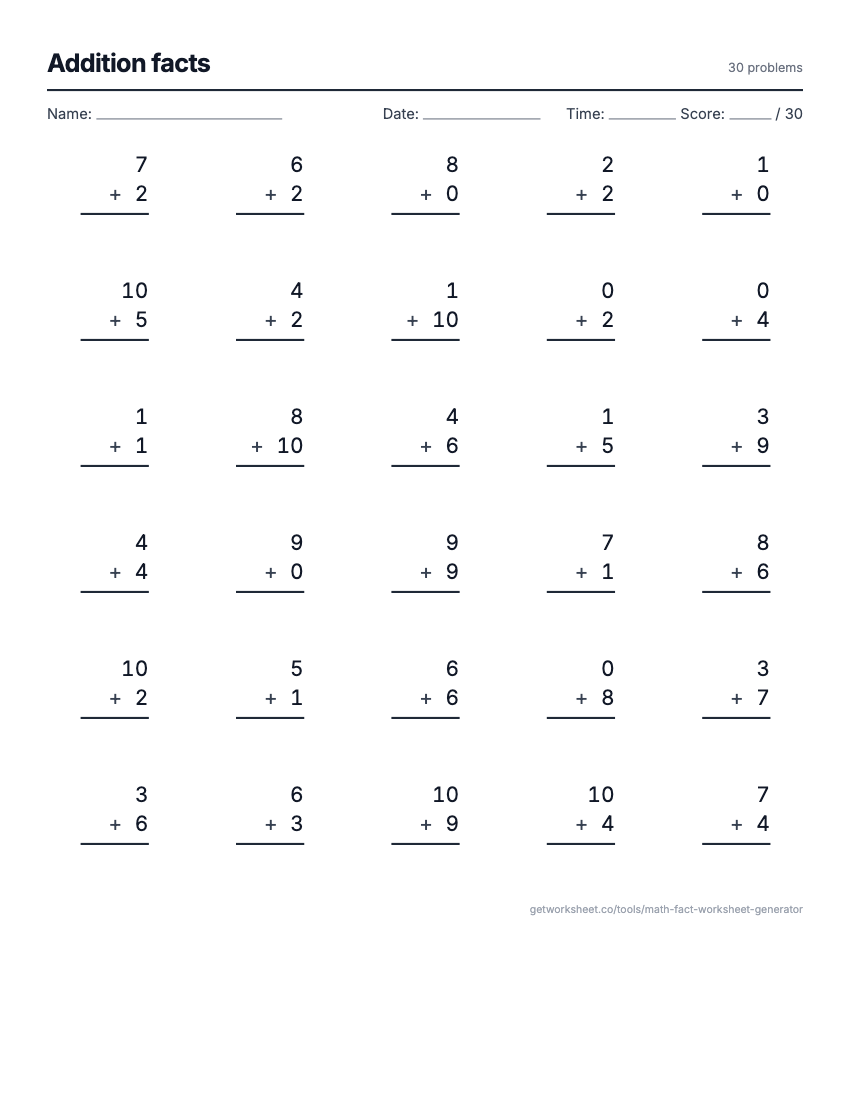 Math fact worksheet generatorAddition to division drills with an answer key. Free to print.
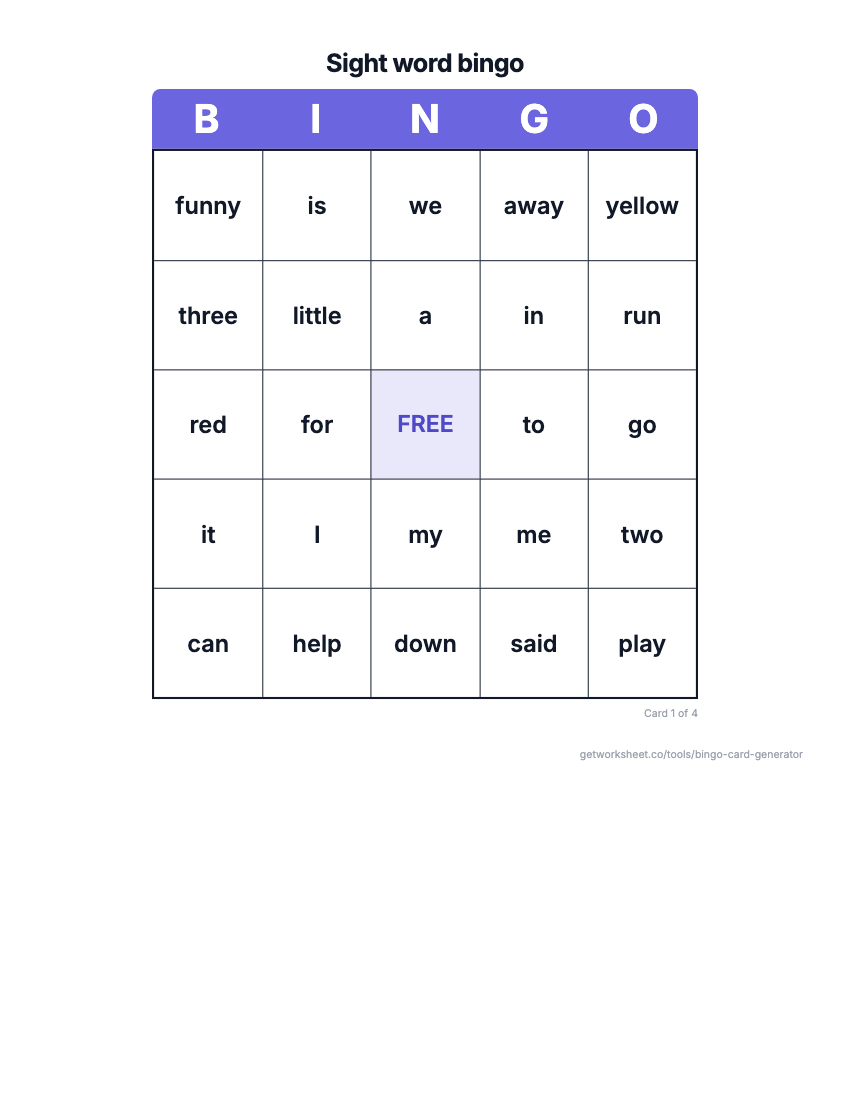 Bingo card generatorSight word, number, math fact or custom bingo cards with a call sheet. Free to print.
AI worksheet generator
Need a different prime number worksheet?
Generate a custom prime number worksheet: pick the grade, question types and count, and print it in about 20 seconds. Free accounts get 1 generation a week.
Complete pack · $1.99
All 10 sheets above, plus 4 bonus sheets you will not find on this page
10 free sheets + 4 bonus sheets in one print-ready PDF with a contents page. Instant, no ads, no account; the link is emailed to you so it works on any device. The 10 sheets above stay free.
- BonusPrime or composite? Set 2: 30 new numbers
- BonusPrime or composite? Set 3: 30 new numbers
- BonusPrime factorisation set 2: 18 new numbers
- BonusPrime factorisation set 3: larger numbers to 200
One-time payment of $1.99. Card, Apple Pay or Google Pay. For home and classroom use.
- Bonus
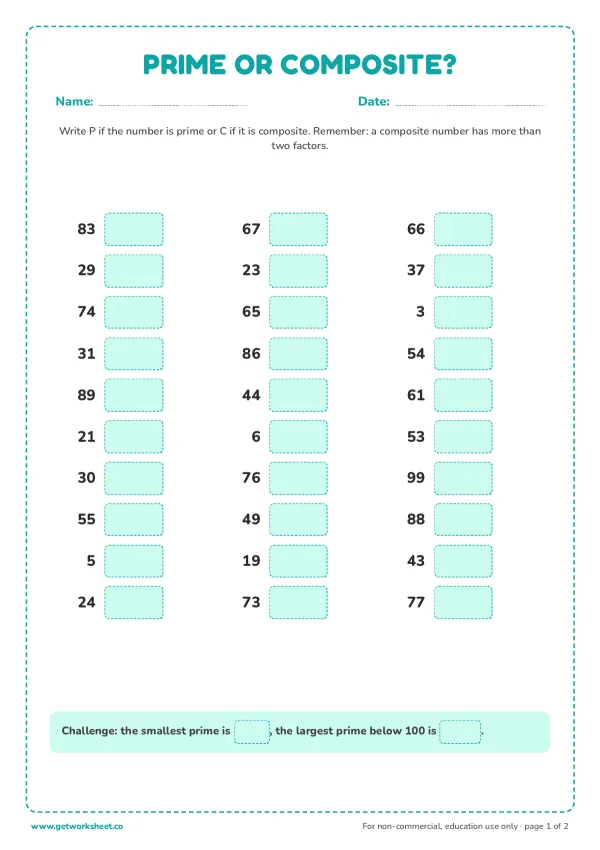 Prime or composite? Set 2: 30 new numbers
 - Bonus
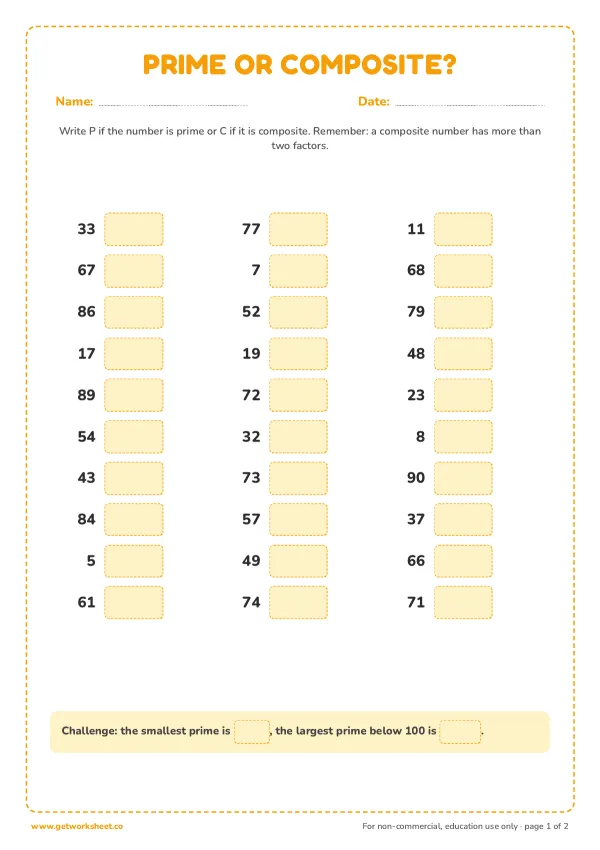 Prime or composite? Set 3: 30 new numbers
 - Bonus
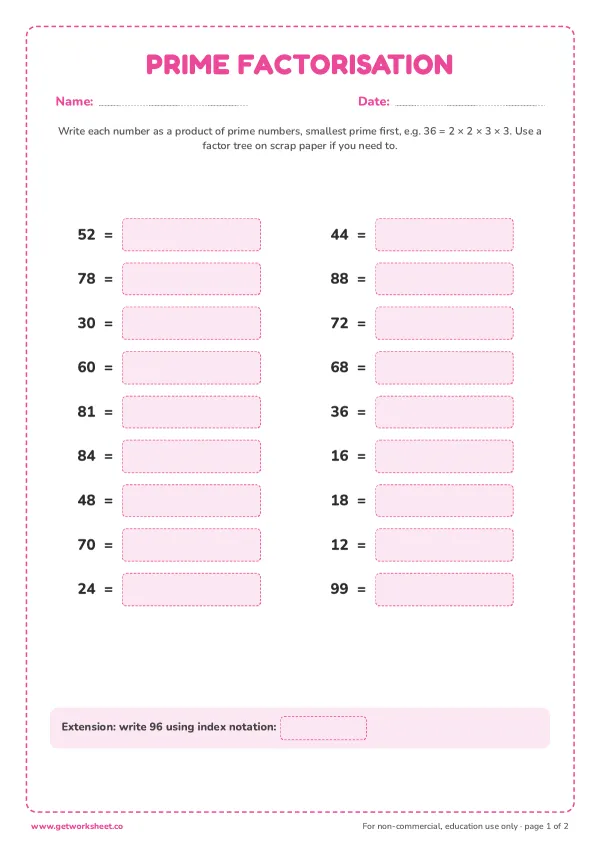 Prime factorisation set 2: 18 new numbers
 - Bonus
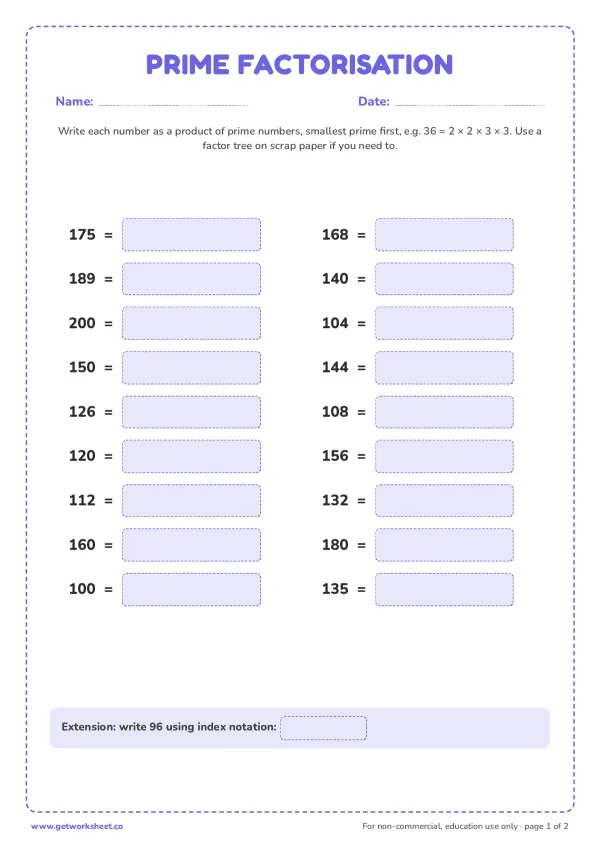 Prime factorisation set 3: larger numbers to 200
How to Use These Worksheets
Print at 100% on A4 or US Letter. The set runs from quick recall to reasoning, so pick the sheet that matches where your class is.
- Warm-ups: sheets 1 to 4. Thirty numbers, circle the primes. Five minutes each. Sheet 5 is a mixed review with true or false, prime factors and fill-the-blank questions.
- Teach the idea: sheets 6 and 7. Put the chart on the wall, then let students find the primes themselves with the Sieve of Eratosthenes: cross out 1, circle 2 and cross out its multiples, then 3, 5 and 7. Ask why they never needed to cross out multiples of 11.
- Check understanding: sheet 8. Prime or composite for thirty numbers, with the two challenge questions (smallest prime, largest prime under 100).
- Go deeper: sheets 9 and 10. Factor trees for 12 to 100, then prime factorisation written as a product of primes. The answer keys show the trees fully worked, so students can mark their own.
- Divisibility rules speed everything up. Even numbers, digit sums divisible by 3, numbers ending in 0 or 5. Teach them alongside sheet 7.
Common Mistakes to Watch For
- Calling 1 a prime: it has only one factor. Say “exactly two factors” every time.
- Calling 2 composite because it is even: 2 is prime; it is the only even prime.
- Trusting appearance: 51 = 3 × 17, 57 = 3 × 19, 91 = 7 × 13. The digit-sum test catches 51 and 57.
- Stopping a factor tree early: every branch must end in a prime. 6 and 9 are not finished.
- Listing factors instead of prime factors: the prime factorisation of 36 is 2 × 2 × 3 × 3, not 4 × 9.
Frequently Asked Questions
Is 1 a prime number?
No. A prime number has exactly two factors, 1 and itself. The number 1 has only one factor, so it is neither prime nor composite.
What are the prime numbers from 1 to 100?
2, 3, 5, 7, 11, 13, 17, 19, 23, 29, 31, 37, 41, 43, 47, 53, 59, 61, 67, 71, 73, 79, 83, 89 and 97. There are 25 of them. Sheet 6 is a printable chart with all of them highlighted.
What is the Sieve of Eratosthenes?
A 2,000-year-old method for finding primes: on a grid of numbers, cross out the multiples of each prime in turn (2, 3, 5, 7 ...). Whatever is left is prime. Sheet 7 walks students through it on a 1 to 100 grid.
How do I explain factor trees?
Split the number into any two factors, then keep splitting any factor that is not prime until every branch ends in a prime. The primes at the ends, multiplied together, give the prime factorisation. Different first splits give the same primes at the end, which is a good thing to let students discover.
What grade learns prime numbers?
Usually grade 4 or 5 (UK Year 5), once multiplication facts are secure. Prime factorisation and index notation come in grade 6.
Do the worksheets have answer keys?
Sheets 6 to 10 include their answer key as page 2 of the PDF. Sheets 1 to 5 are quick warm-ups; use the chart on sheet 6 to mark them.
More Number Practice
Prime factorisation leans on the times tables, so keep them sharp with the multi-digit multiplication worksheets and 2 times table worksheets. The hundreds chart worksheets make a good blank grid for another Sieve of Eratosthenes. The composite number worksheets are the partner set: five 16-number grids to sort into prime and composite, with factor lists.
Free library
Related collections
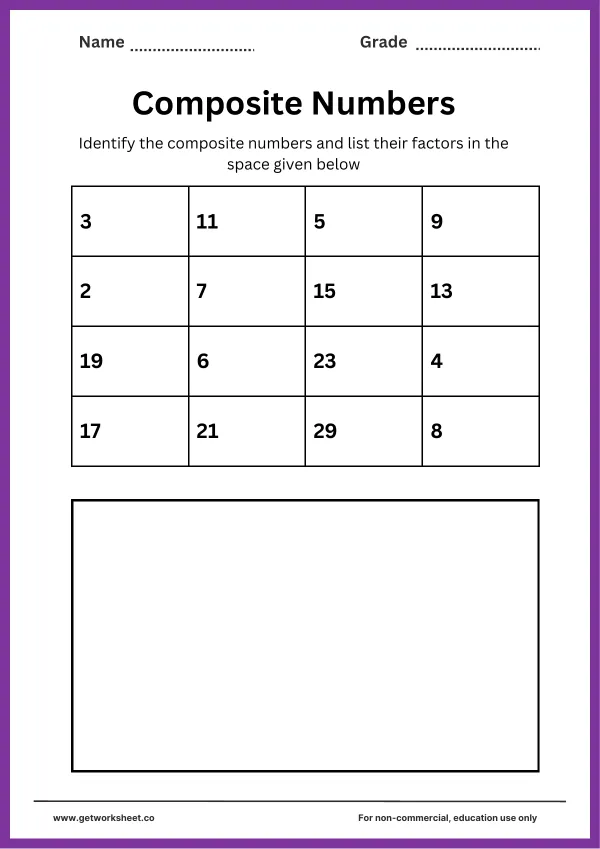
Free composite number worksheets
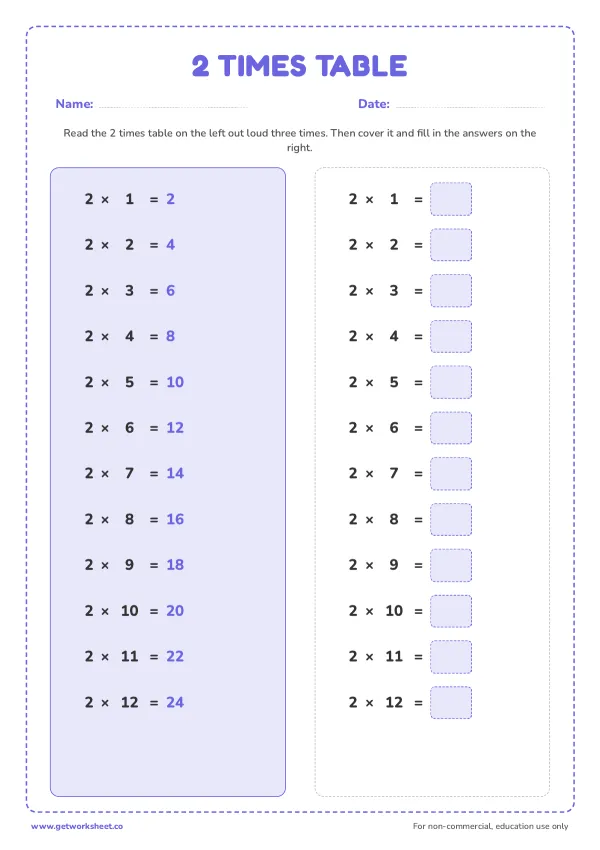
Free 2 times table worksheets
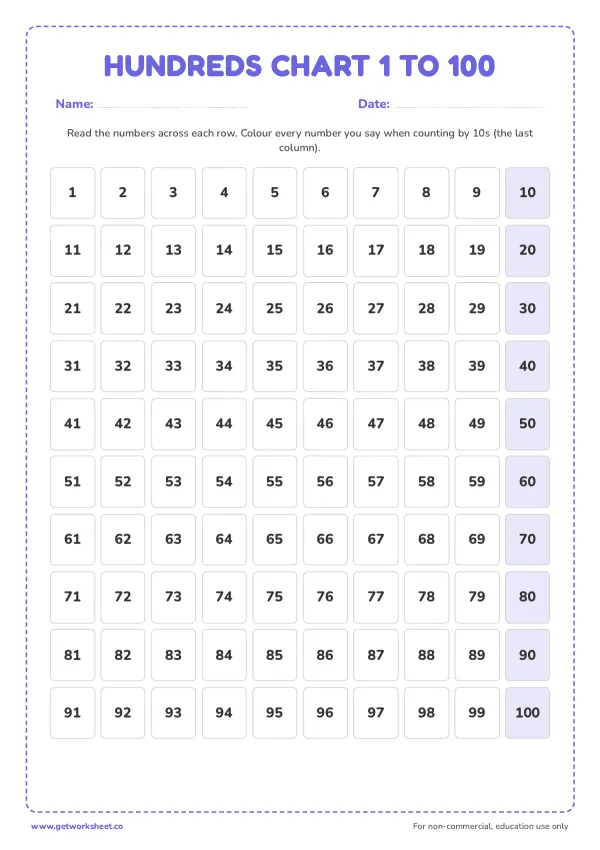
Free hundreds chart worksheets
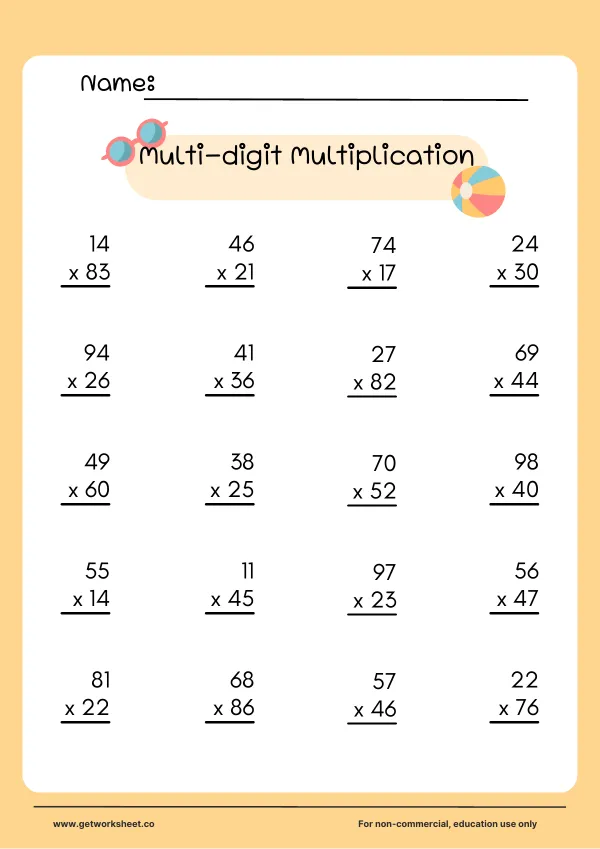
Free multi-digit multiplication worksheets
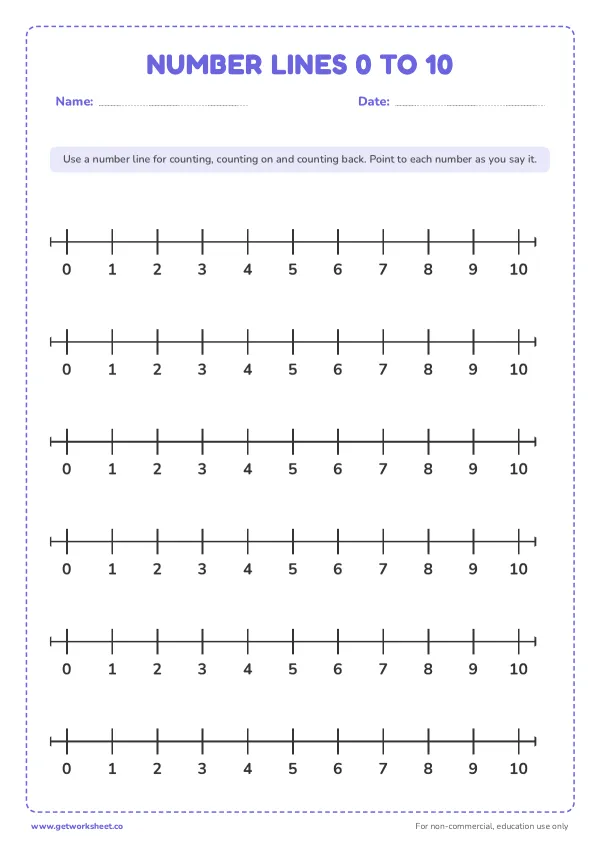
Free number line printables
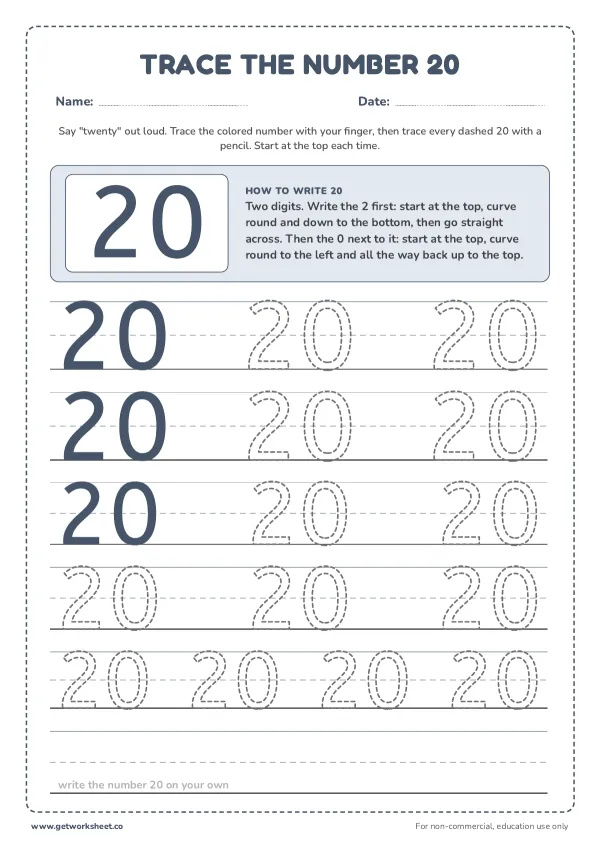
Free number 20 tracing worksheets
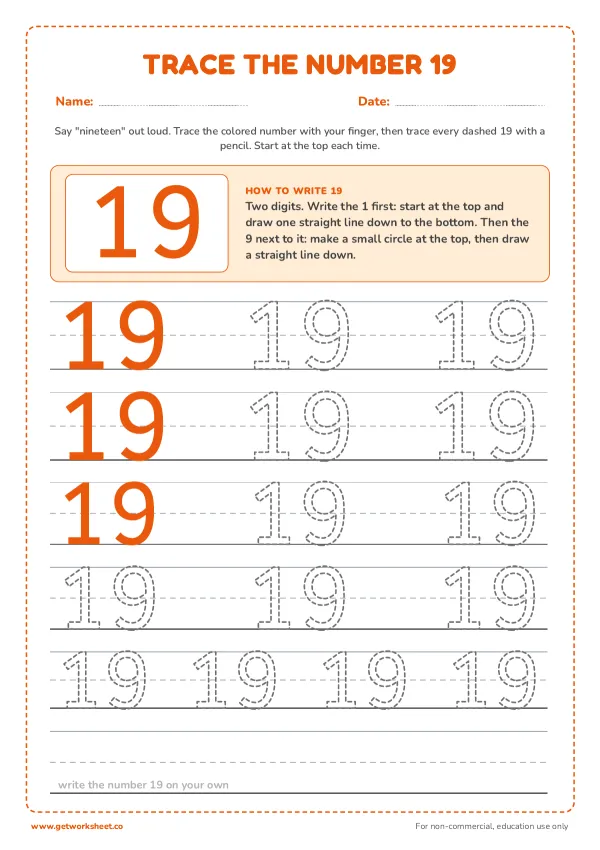
Free number 19 tracing worksheets
Free number 18 tracing worksheets
More worksheets
- Free number 17 tracing worksheets
- Free number 16 tracing worksheets
- Free number 15 tracing worksheets
- Free number 14 tracing worksheets
- Free number 13 tracing worksheets
- Free number 12 tracing worksheets
- Free number 11 tracing worksheets
- Free number 10 tracing worksheets
- Free number 9 tracing worksheets
- Free number 8 tracing worksheets
- Free number 7 tracing worksheets
- Free number 6 tracing worksheets