Free shapes flashcards
Free printable shapes flashcards for kids. Learn circles, squares, triangles, and more. Download PDF flashcards for preschool and kindergarten.
Shapes flashcards help young learners recognize and name basic geometric shapes — circles, squares, triangles, rectangles, ovals, and more. At this stage, children are building visual vocabulary. They need to see a triangle and instantly say "triangle" without having to count the sides every time. Flashcards make this automatic through repeated, quick-fire practice.
What Students Will Practice
- Identifying and naming 2D shapes on sight (circle, square, triangle, rectangle, oval, diamond, hexagon, star)
- Describing shape attributes (e.g., a triangle has 3 sides and 3 corners, a circle has no straight sides)
- Distinguishing between similar shapes (e.g., square vs rectangle — a square has 4 equal sides, a rectangle has 2 long and 2 short)
- Matching shapes to real-world objects (e.g., a clock is a circle, a door is a rectangle)
- Sorting shapes by number of sides, whether they have curves, or whether they are symmetric
Shape recognition is a foundational geometry skill expected in preschool and kindergarten, and it supports spatial reasoning that children use in math for years to come.
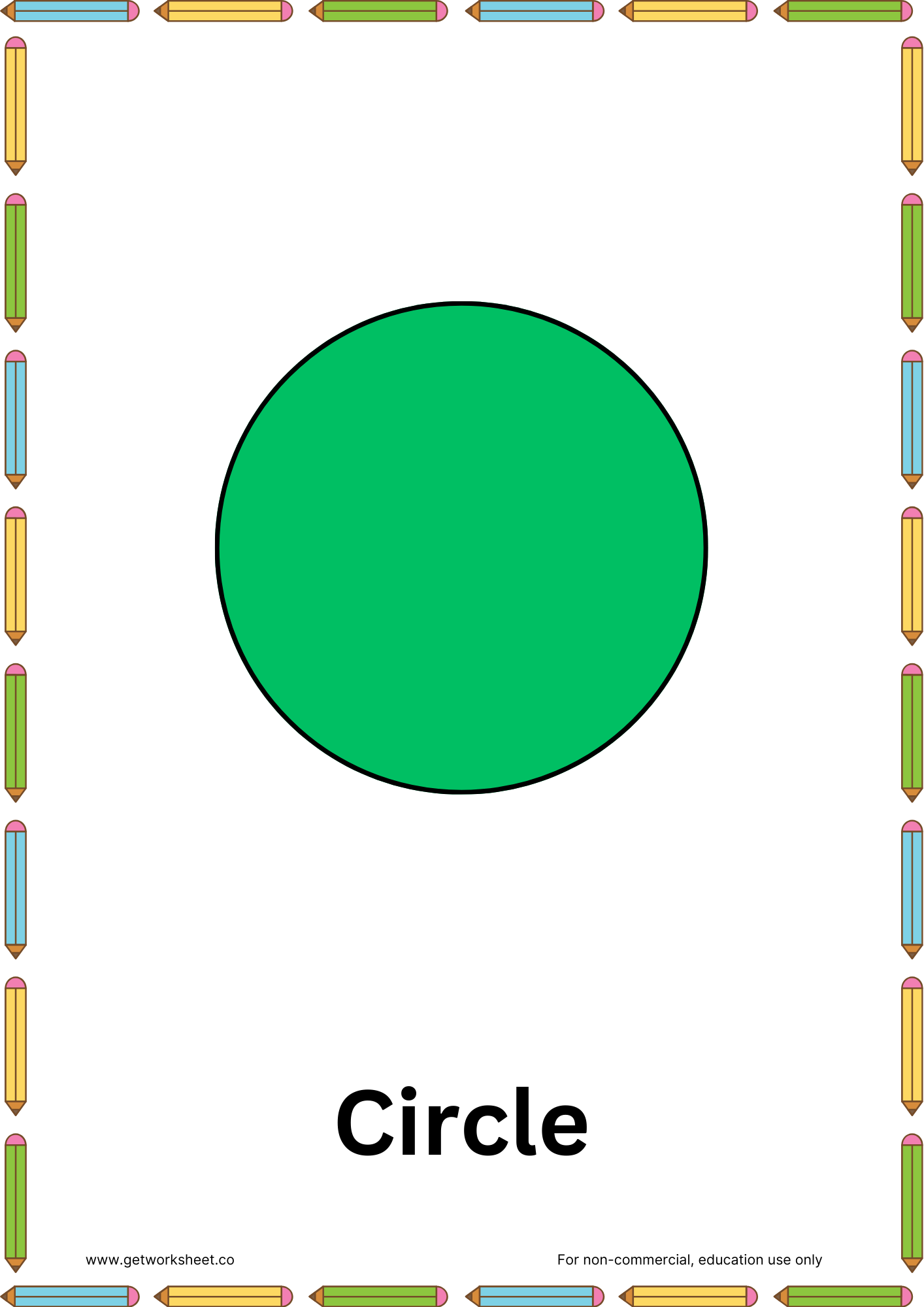
Shapes flashcards 5
Shapes flashcards 5
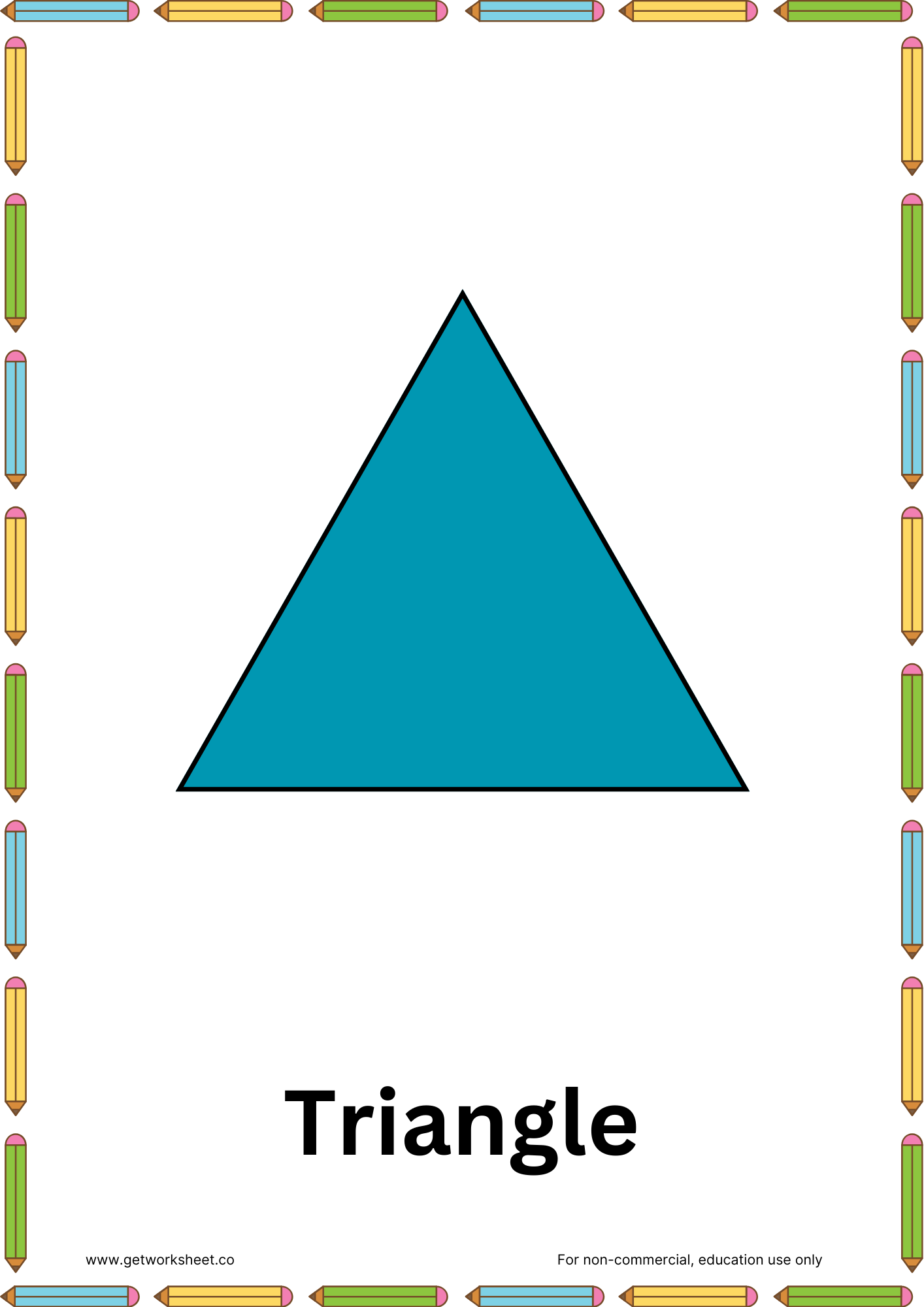
Shapes flashcards 4
Shapes flashcards 4
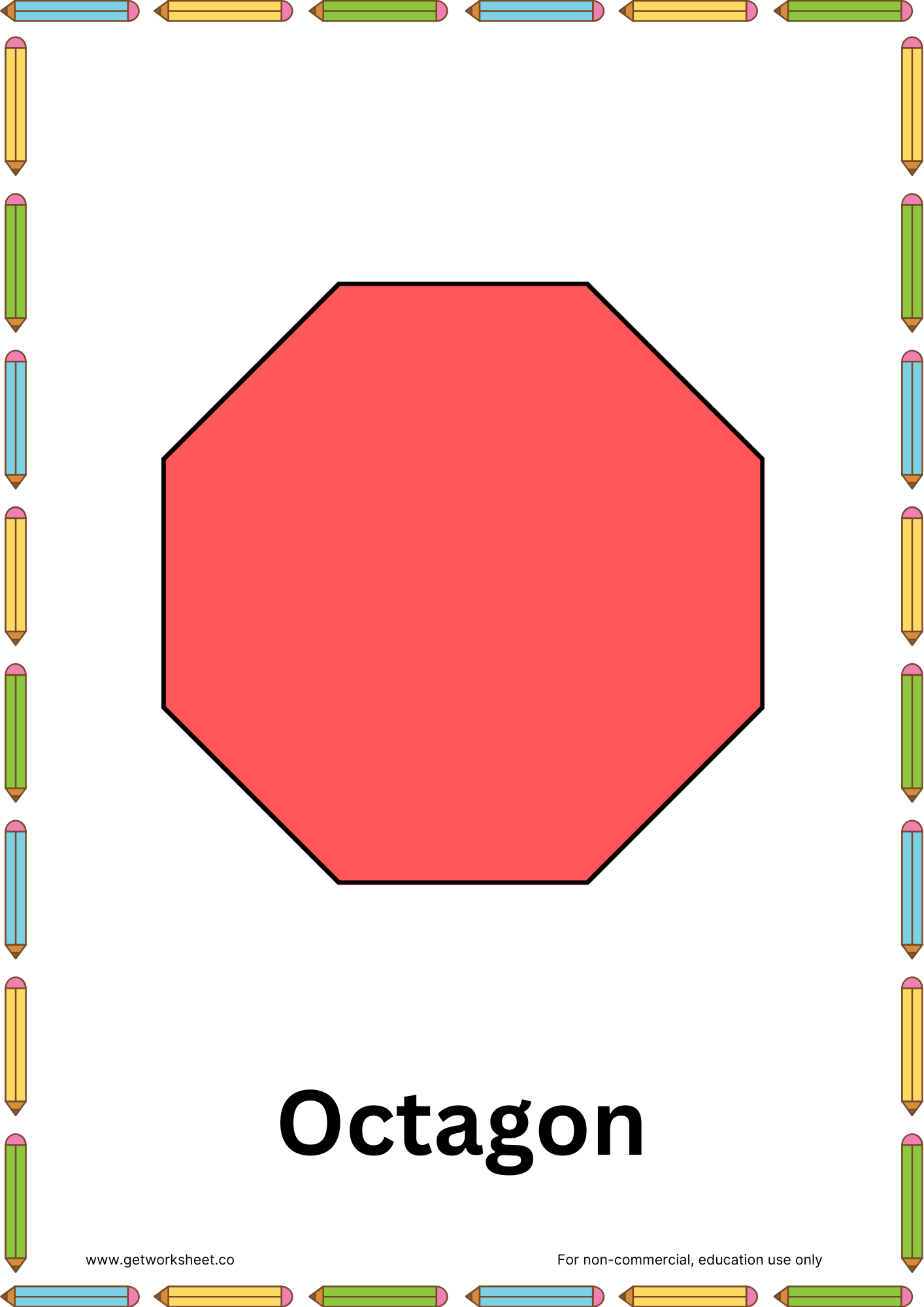
Shapes flashcards 3
Shapes flashcards 3
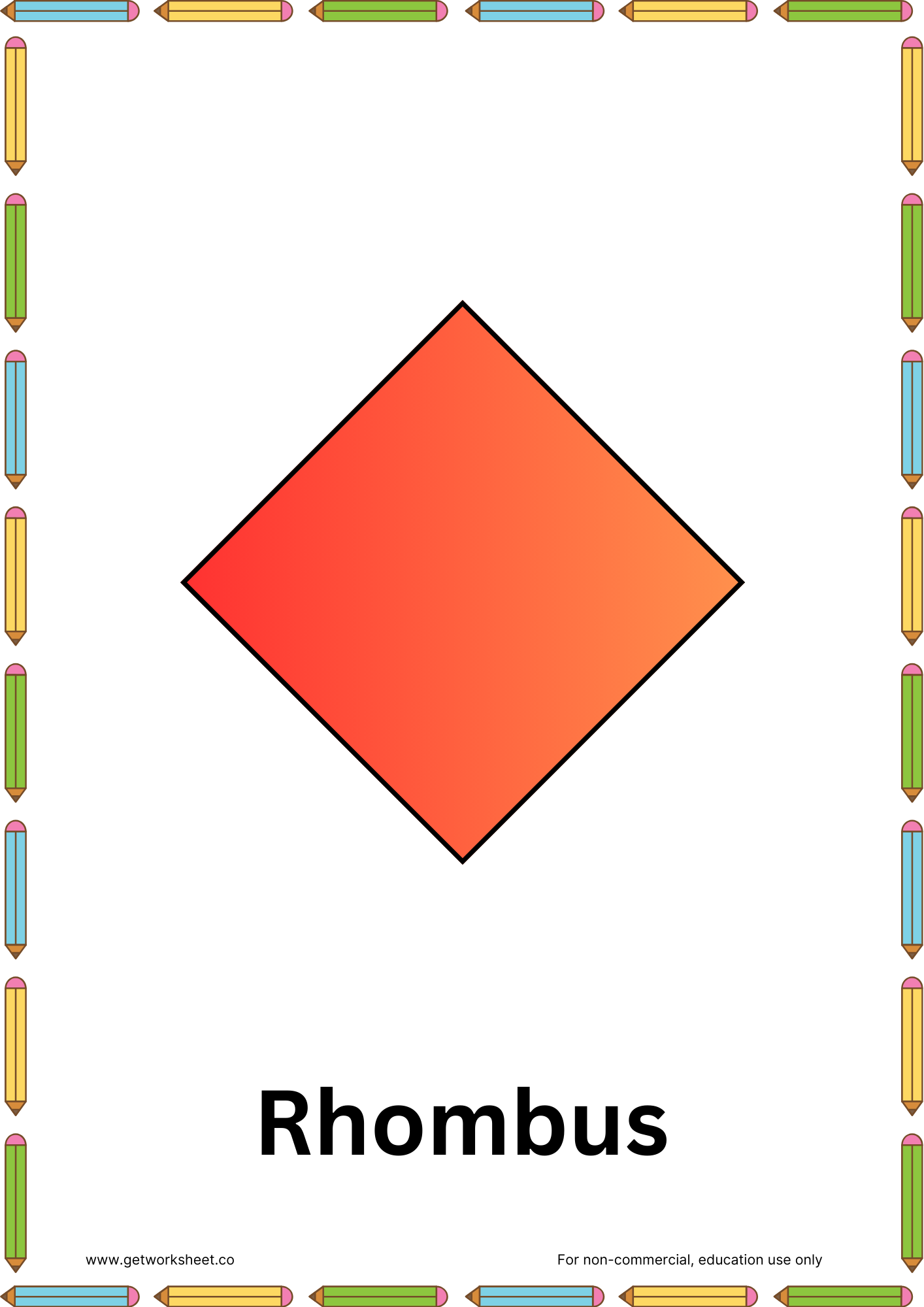
Shapes flashcards 2
Shapes flashcards 2
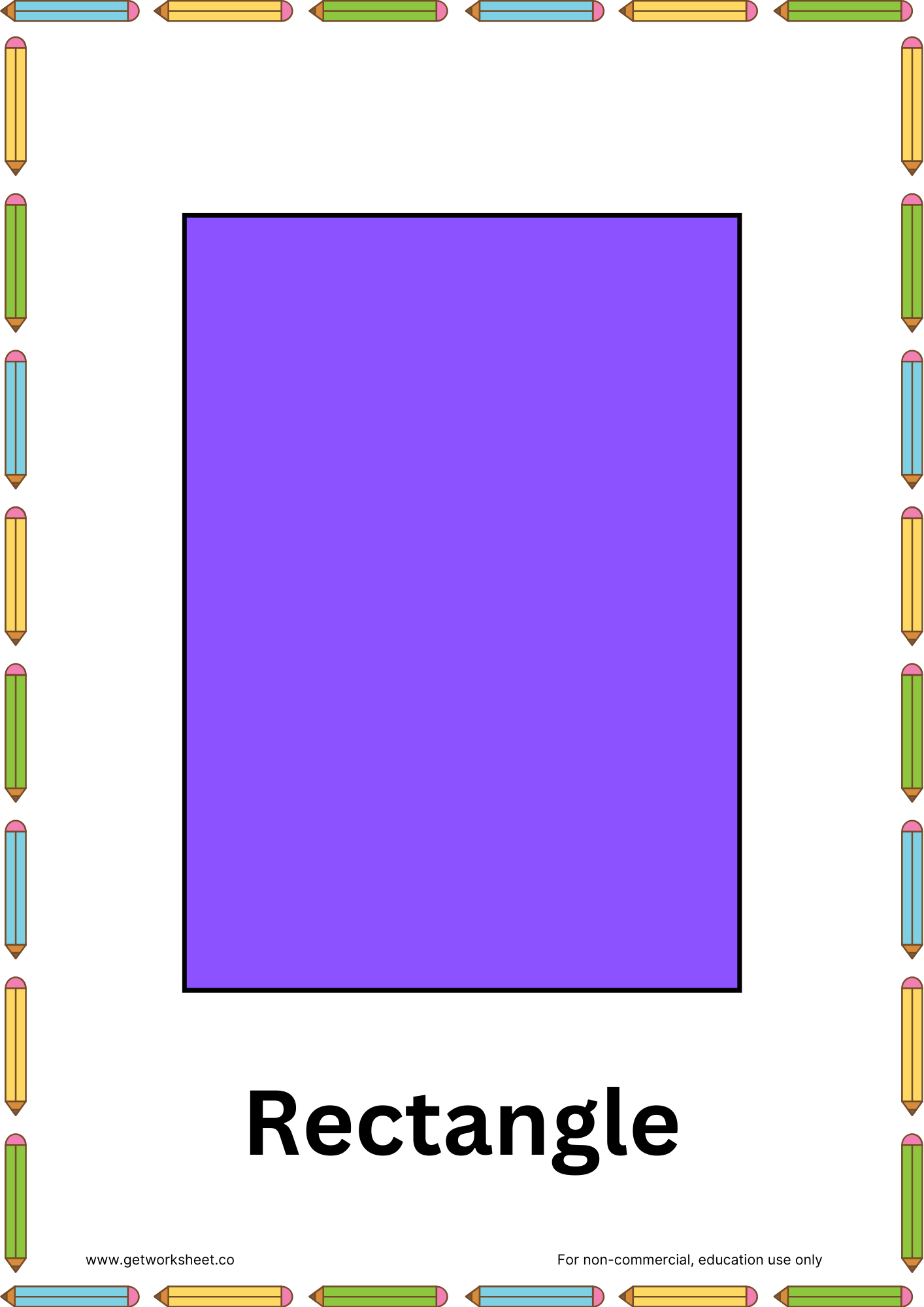
Shapes flashcards 1
Shapes flashcards 1
How to Use These Flashcards
Effective ways to practice with shapes flashcards.
- Flash each card for about 3 seconds and ask your child to name the shape. If they hesitate, say the name for them and come back to that card later. Speed builds automaticity — the goal is instant recognition, not slow reasoning.
- After naming the shape, ask a follow-up question: "How many sides does it have?" or "Can you find something in this room that is the same shape?" This deepens understanding beyond just label memorization.
- Play a sorting game: lay out all the cards and ask your child to group shapes by a shared attribute — all shapes with 4 sides, all shapes with curves, all shapes with more than 4 sides. This teaches classification.
- Use the flashcards face-down as a memory matching game. Print two copies, flip pairs, and match identical shapes. This adds a memory challenge to the shape recognition practice.
Common Mistakes to Watch For
- Calling all four-sided shapes "squares." Rectangles, rhombuses, and parallelograms are all four-sided but not squares. Point out what makes a square special: all four sides must be the same length AND all angles are 90 degrees.
- Saying a shape is "not a triangle" when it is rotated or flipped. Kids sometimes only recognize a triangle pointing up. Show triangles in different orientations to build flexible recognition.
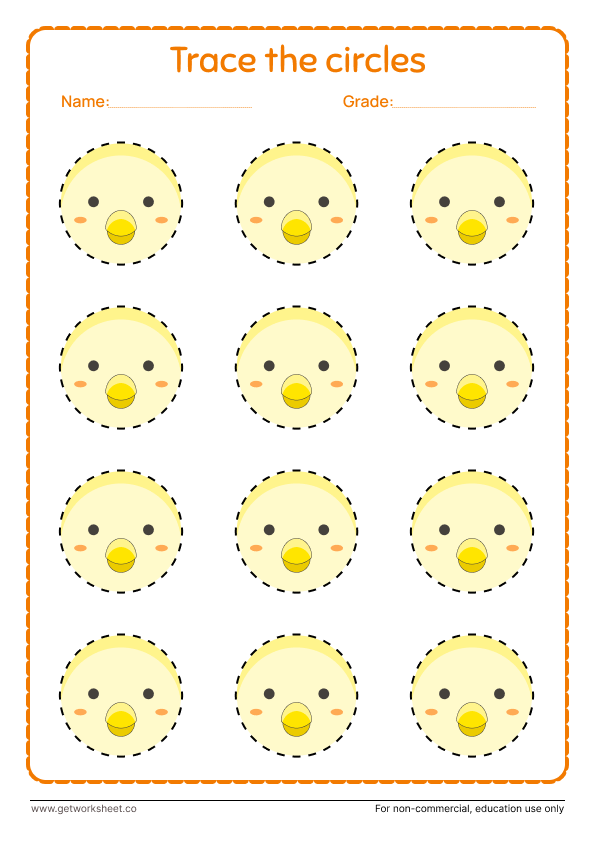
- Confusing ovals and circles. A circle is perfectly round — equal in every direction. An oval is stretched. Have your child trace both with their finger to feel the difference.
- Not knowing the difference between sides and corners. Use the terms consistently and physically point to each side and corner on the flashcard while counting them together.
Frequently Asked Questions
What shapes should my child learn first?
Start with circle, square, and triangle — these are the most common and easiest to distinguish. Add rectangle, oval, and diamond next. Hexagon, pentagon, and octagon can come later once the basics are solid.
How often should we practice with flashcards?
Five minutes a day is enough for preschoolers. Quick, frequent sessions are far more effective than long, infrequent ones. Aim for daily practice during a low-pressure time like after breakfast or before a story.
My child can name shapes on flashcards but not in real life. What should I do?
This is a transfer problem — they have not connected the abstract shape to the real world yet. Go on a "shape hunt" around your house or neighborhood. Point out circles (clocks, plates), rectangles (doors, books), and triangles (roof lines, pizza slices).
When should my child start learning 3D shapes?
Once they confidently name and describe all basic 2D shapes (usually by mid-kindergarten), introduce 3D shapes like sphere, cube, cylinder, and cone. Relate each 3D shape to its 2D face — a cube has square faces, a cylinder has circle faces.
After mastering shape recognition, children progress to combining shapes (putting two triangles together to make a rectangle) and basic symmetry activities, which build spatial reasoning for later geometry work.